1. The California Department of Motor Vehicles issued driver’s licenses to 605,000 undocumented residents under a new state program last year, the LA Times$ reports. The program was the result of legislation signed by Governor Jerry Brown, which grants undocumented workers the right to obtain driver’s licenses.
Charles Lester.
2. Numerous Democratic state lawmakers have joined the outpouring of support for California Coastal Commission Executive Director Charles Lester, who is under fire from pro-development forces that want to oust him because of his staunch defense of the environment, the LA Times$ reports. The agency has received more than 17,000 letters in recent weeks, and all but three have been in support of Lester. Governor Jerry Brown’s appointees on the commission want to fire Lester because he has opposed increasing development on the state’s coastline.
[jump]
4. The Berkeley Medical Cannabis Commission has selected three finalists for the city’s new dispensary permit: iCann Health Center, which would cater to the city’s senior population; Berkeley Innovative Health, which would be modeled after Hayward’s Garden of Eden dispensary; and Berkeley Compassionate Care Center, which would be housed in Amoeba Records on Telegraph Avenue, Berkeleyside reports.
Ramsey Orta and Jessica Hollie.
Credits: beortamedia.com
In 2011, Jessica Hollie, an Oakland native who goes by the name Bella Eiko, was a Chabot College student and award-winning speaker in the parliamentary debate league circuit when the Occupy Movement erupted. Hollie joined the protest and quickly distinguished herself as a grassroots citizen journalist. She amassed a big online following thanks to her deft use of social media and livestreaming. She guided thousands of online viewers through historic events like the shutdown of the Port of Oakland and documented clashes between police and protesters.
Around the same time Ramsey Orta was living in Staten Island and working as a landscaper. Orta, who was born and raised in Manhattan’s Lower East Side, had become friends the previous year with a man named Eric Garner. Like many working-class men of color in New York, the two were frequently stopped, frisked, and questioned by police. By then Orta was already filming the cops, both his own encounters with them, and what he witnessed on the streets. It was no coincidence then that on July 17, 2014 when a group of New York police officers surrounded, tackled, and choked Eric Garner to death for the crime of selling “loose cigarettes,” that Orta filmed the incident. The video – tragic, iconic, potent – was another turning point in the movement against police brutality.
Hollie and Orta got married last December. Hollie announced the news on her Facebook page by writing, “revolutionary love is a beautiful thing.” Since tying the knot, Orta and Hollie have been working to marry their grassroots media projects. They call their combined brand Bella Eiko Orta Media.
“We had a lot of admiration for each other before we met,” said Hollie in an interview.
[jump]
Both were attending a National Lawyer’s Guild Conference in Berkeley last year when they were introduced. “It got my attention that she was already in the movement,” said Orta. “She wasn’t just in it, she had history of doing her own work.” Orta fell in love fast.
After dating for a short time, the pair drove together from Oakland to Ferguson, Missouri where officer Darren Wilson had shot and killed Michael Brown in August 2014. They helped organize media training workshops and gave impromptu tips to activists about the best methods of recording encounters with the police. They participated in legal workshops, and they marched in the streets together.
“We have this curriculum that we give in a classroom setting,” said Hollie, “but we also go out and do hands on cop-watching in the community, a learn-as-you-go kind of experience. We try to arm people with the facts. We do roll-plays. And then we’re out on the streets with our cameras.”
Orta and Hollie are helping build WeCopWatch, a nonprofit dedicated to helping communities exercise their right to observe and record police activities. Oakland resident Jacob Crawford is one of the WeCopWatch core team members. Other WeCopWatch organizers include David Whitt of the Canfield Watchmen, a group founded in the days after the killing of Michael Brown to monitor the police, and Kevin Moore, the Baltimore resident who filmed the arrest of Freddie Gray.
Hollie said she grew up in a family steeped in the Black liberation movement and the labor movement, and that her work with Orta is just the latest extension of this tradition. “My father used to run with the Black Panthers when he was a teenager,” she said. “I grew up around union organizers.”
Orta was less involved in politics most of his life, but he said his mission now is to teach others to use technology and the law to defend themselves against police abuses of power. Orta said he has no choice at this point; he claims that the New York Police have been targeting him ever since he released footage of Garner’s killing. “Now I’m an activist, which has its pros and cons, but I’m trying to look at it in a positive way, as a motivation,” said Orta. “I see myself doing this forever.”
Most recently, Orta and Hollie had their cameras trained on sheriffs inside New York City’s Staten Island courthouse. Most young couples only go down to the courthouse once – to get married. But last month Hollie and Orta were in court for one of Orta’s hearings. Orta is being charged with selling marijuana to an undercover cop, and possession of a firearm. His supporters say the charges are “trumped up” efforts by the police to punish him for his activism. Orta and his supporters, including Erica Garner, the daughter of Eric Garner, were filming inside the courthouse hallway when sheriffs deputies confronted them and forced them to turn off their cameras. Once outside they hit record again.
Rather than taking off on a honeymoon like typical newlyweds, Hollie and Orta said they are planning to travel to Austin and Baltimore where they will be participating in WeCopWatch workshops. And of course they’ll be taking their cameras with them. As for wedding gifts, the couple is asking friends, family, and supporters to help fund media workshops in New York City.
“In no way has our relationship been a traditional one and our wedding gifts shouldn’t be either,” they wrote in a recent blogpost. “Instead of toasters and silverware or his and hers towels (as cute as that all is), Ramsey and I have decided that we would like to get out into the community.”
Californians, meet your first-ever Medical Marijuana Regulation chief — Lori Ajax.
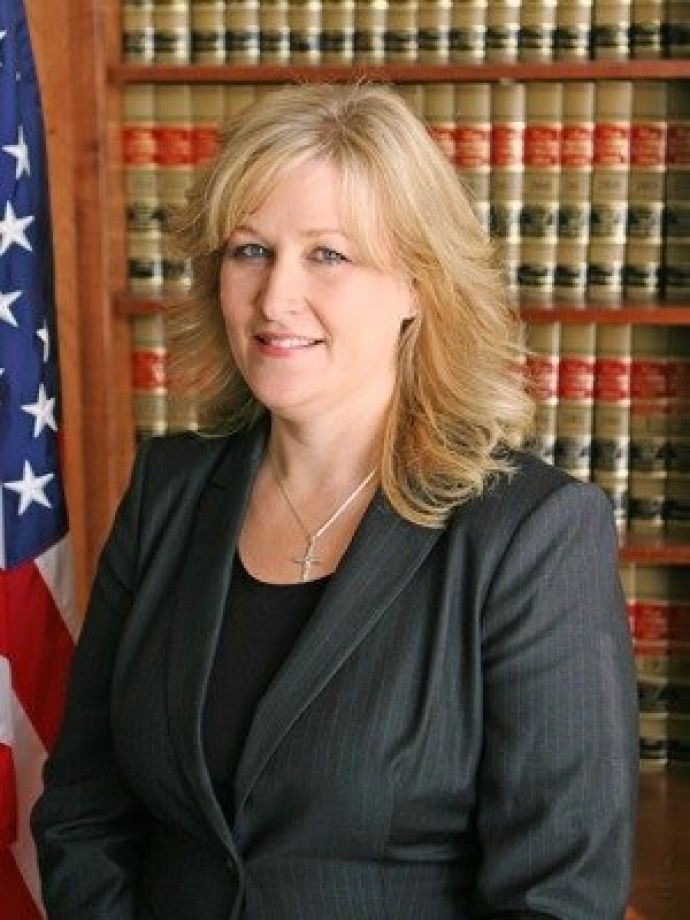
Lori Ajax.
Yesterday, Governor Jerry Brown announced that Ajax — currently the chief deputy director of the Alcoholic Beverage Control (ABC) — will head up the new Bureau of Medical Marijuana Regulation. As chief of the BMMR, Ajax will oversee the implementation and administration of California’s first-ever, seed-to-sale regulations on medical cannabis. Ajax’s appointment is subject to confirmation by the state Senate.
“Lori Ajax, 50, of Fair Oaks, has been appointed chief of the Bureau of Medical Marijuana Regulation at the California Department of Consumer Affairs. Ajax has been chief deputy director at the California Department of Alcoholic Beverage Control since 2014, where she has served in several positions since 1995, including deputy division chief, supervising agent in charge and supervising agent. She is a member of the National Liquor Law Enforcement Association and the St. Sava Mission Foundation. This position requires Senate confirmation and the compensation is $150,636. Ajax is a Republican.”
Cannabis industry reactions were enthusiastic, as a bureau chief is essential to making regulations work:
“We are excited to have an appointee so early in the year. Answers to a lot of outstanding regulatory questions depend on a functioning bureau,” stated Hezekiah Allen, executive director of the California Growers Association. “Having a bureau chief is a critical next step on this process.
“Our members want to see a functioning bureau as soon as possible,” Allen continued. “We are encouraged by Lori’s experience with state bureaucracy and familiarity with rural counties. This skill set should prove valuable as the state works to create a Bureau capable of protecting public safety and patients while ensuring level playing for licensees of all sizes in all communities around the state.”
[jump]
Ajax visited Harborside Health Center in 2014, reports state.
The appointment will also likely assuage cities and counties wary of medical marijuana. The ABC official is a fifty-year-old Republican from Fair Oaks, California — a mostly white, tiny Sacramento County suburb with bans on personal outdoor medical cannabis cultivation of a single plant. Unincorporated Sacramento County allows up to nine plants grown indoors. In July, Sacramento County declared medical pot cultivation a form of water waste. (For reference, the Sacramento County region has at least twenty golf courses.)
Her background at the ABC has some political overtones. Some medical marijuana activists — and police lobbyists — had pushed hard over the last three years to keep badge-and-gun carrying liquor officials at the ABC out of medical pot enforcement. Brown’s office had pushed for ABC control, sources said.
Ajax’s Bureau will hire forty to fifty staffers, reports state.
In other news, Governor Brown signed a bill to that could help sooth California’s rash of medical pot bans. The new law, AB 21, deletes a March deadline for localities to regulate medical pot or cede authority to state officials. Localities reacted to the deadline by banning most medical pot activity. The passage of AB 21 is already having an effect, with some localities tabling plans for bans.
Assemblymember Jim Wood urged local city council and Supervisors to listen to patients and move toward sensible regulations:
“Now that we have given local officials the time to take a thoughtful approach to regulating medical marijuana, I hope they will maximize that time by engaging with the public and having thorough discussions,” said Assemblyman Wood. “In 1996 the people of California voted to have a medical marijuana industry, but, frankly, state representatives dropped the ball. Years of apathy led to black markets, unsafe neighborhoods, environmental damage, and a culture of criminality. The historic regulations we passed last year put us on the path to fixing that and pushing the medical marijuana industry into the light. But to succeed, we need our local elected officials—both those who voted for outright bans because of deadline pressure, and those who are just now looking at the issue—to deliver solid policies that make sense for their communities.”
There’s a big sportsball game this weekend! Plus, Obama came out with a new Warriors-themed stand-up routine! What a time to be alive. If that’s not enough, find five other ways to enjoy your weekend below:
T.I. & Friends Super Bowl Finale After-Party
Apart from one glaring lapse in judgment that involved promoting the career of a rapper whose name rhymes with Igloo Australia, T.I. has enjoyed a long and storied rap career that began to gain traction in the early Aughts. While his image in the press recently has not always been favorable because of his refusal to acknowledge his protégé Iggy Azalea’s blatant cultural appropriation, there’s no denying T.I.’s le gacy of hits from the past decade-plus. Tracks like “Whatever You Like” and “U Don’t Know Me” have enduring appeal, earning him pop and rap royalty status, and his recent releases, such as “About the Money” featuring Young Thug, continue to keep him on the charts. Along with Gucci Mane, T.I. deserves credit for galvanizing Atlanta’s rap scene, ushering the rise of today’s Southern-indebted trap sound that’s currently dominating the airwaves. To celebrate Superbowl Weekend, T.I. performs at 1015 Folsom in San Francisco on February 7. — Nastia Voynovskaya Sun., Feb. 7, 9 p.m. $60-$100. 1015.com
Oakland Public Design Fair
Over Super Bowl weekend, downtown Oakland will likely look a little different. The folks over at Our City hope to include everyone in that transformation, even those not necessarily interested in sports. The design nonprofit puts together projects that invite viewers to reimagine the look of their cities, and from February 4–6, they will take over Frank Ogawa Plaza with a free design fair featuring twelve participatory installations. The works include “Block by Block,” a large-scale building block kit; “Jelly Fish,” a smartphone accessible website that will allow people to play music together in real time through speakers in the plaza; and a multi-player pedal-powered pump organ. Each installation is presented by a local artist, design team, or organization such as the West Oakland Youth Center. The fair’s theme is “play,” as Our City hopes the installations will activate the plaza’s potential as an urban playscape.— Sarah Burke Through Feb. 6. OurCity.is/Oakland
Chhoti Maa
Local rapper Chhoti Maa teamed up with fellow MC Madlines to start the music collective BrujaLyfe last year. Its first endeavor? A concert with a diverse lineup of female performers titled The Brujas You Couldn’t Kill. The provocative title helped the event gain traction on social media, resonating with a wave of self-identifying witches who tap into pagan spiritual practices to reconnect with traditions that colonialism had previously stamped out. In recent years, the term bruja, or witch, has become a potent vehicle of resistance for some Latinas and for women of other diasporas, as well. Chhoti Maa, who often rhymes in Spanish, invokes her Mexican roots in her work regularly. Outside of making music, she’s an activist and educator, and her lyrics frequently touch upon themes of resilience. She performs on February 6 at Venus Rising Collective’s showcase at The Legionnaire Saloon in Oakland. — N.V. Sat., Feb. 6, 9 p.m. $5, $7. LegionnaireSaloon.com
Credits: Courtesy Our CityLianne La Havas
In the music video for her breakout single, “Unstoppable,” English singer Lianne La Havas twirls around an empty room, showing off her poised, ballerina-like dance moves and rich, soulful voice, while bouncing her mane of curls. Though La Havas sings about romantic love — We are unstoppable — in the video, she is the embodiment of self-contained happiness, the kind that doesn’t rely on others for validation. In addition to being a talented vocalist, La Havas is also a multi-instrumentalist, and her album Blood, on which “Unstoppable” appears, is currently up for a Grammy. It’s a light, breezy pop record that La Havas began to write after an inspiring trip to Jamaica, where part of her family is from, and her songwriting contains palpable strains of island charm in its acoustic instrumentation. Catch her at The New Parish on February 9 with DJ Nina Sol. — N. V. Tue., Feb. 9, 8 p.m. $35, $38. TheNewParish.com
T.I.Little Erik
A tale not so much about death as it is about what follows in its wake, Little Erik is the latest adaptation by acclaimed writer and director Mark Jackson. Showing through February 28 at Aurora Theatre (2081 Addison St., Berkeley), the play is based on Norwegian playwright Henrik Ibsen’s Little Eyolf. This version is set in a mountain home just north of San Francisco and follows a couple as they reckon with their guilt — and each other — in the aftermath of the untimely death of their youngest son. Jackson, who the Express has twice named “Best Director” in the East Bay, is sure to bring all of his directorial might to the adaptation, which serves as this season’s mainstage production for Global Age Project 2.0, Aurora Theatre Company’s recently revamped new works initiative. More than one hundred years have passed since Little Eyolf was first performed, but Jackson seems to have transformed Ibsen’s classic play into one worth the contemplation of contemporary audiences.— Sarah Elizabeth Adler Through Feb. 28. 510-843-4822. $32-$52. AuroraTheatre.org
If your pockets are feelin’ light and you’re still yearning for more suggestions, we’ve got a ton, and these ones are all FREE! We’re Hungry: Got any East Bay news, events, video, or miscellany we should know about? Feed us at Sa*********@************ss.com.
1. In a stunning example of the Easy Bay’s deepening housing crisis, more than 17,000 people are competing with each other to live in 115 affordable units that are being built near the San Leandro BART station, the Bay Area News Group$ reports. Even though Bridge Housing, the developer building the housing, hasn’t even opened its application process for the below-market-rate units, the nonprofit has already received interest from 17,000 people. In nearby Hayward, affordable housing developer, Eden Housing, has more than 22,000 applicants on its waiting lists.
Wastewater injection is a process used in fracking and oil drilling.
2. New research shows that an oil drilling process, known as wastewater injection, has likely caused earthquakes in California, the AP reports, citing a study conducted by researchers at UC Santa Cruz, the University of Southern California, and two French universities. Wastewater injection, which involves shooting into the ground polluted water produced from oil drilling and is commonly used in fracking, almost certainly triggered a spate of earthquakes near Bakersfield in 2005. Researchers have already concluded that wastewater injection has caused earthquakes in Oklahoma and other states.
3. State lawmakers and environmental groups are criticizing a proposed deal that would bring energy from coal-powered plants to California’s electrical grid, the LA Times$ reports. The deal, proposed by the California Independent Operator, would create a partnership with PacificCorp, a company owned by billionaire Warren Buffet that operates coal plants in Wyoming and Utah. Critics say the deal, if it goes through, would expand the use of coal power and undercut California’s plan to phase out its reliance on fossil fuels.
[jump]
4. Governor Jerry Brown has nominated a Republican — Lori Ajax — to become the state’s first medical cannabis czar, the Chron reports. Yet despite Ajax’s political party affiliation, medical weed industry leaders are cautiously optimistic about the appointment, saying she appears to the right person for the job. Ajax is currently chief deputy director of the California Department of Alcoholic Beverage Control.
Phillips 66 refinery in Rodeo.
In a familiar tactic used by corporations wishing to avoid environmental regulation, lawyers for Phillips 66 submitted a last-minute, detailed letter challenging San Luis Obispo County’s assessment of its crude-by-rail project — two days before the county’s planning commission meeting to consider the proposal.
Phillips 66 proposes to build a rail spur to carry crude oil to its refinery along California’s main coastal rail line. (See “Crude-by-Rail Projects Face Key Votes,” 1/27.) Local and statewide opposition to the plan has focused on the dangers of shipping crude oil on rail lines in the county and along much of the California coast, including through Oakland, Berkeley, Emeryville, and Richmond. The county received statements and letters opposing the project from 23,000 people and organizations, and the county planning staff recommended that the project application be denied. Busloads of people from around California, as well as many San Luis Obispo County residents, have been planning to attend the planning commission hearing scheduled for today, February 4.
The letter from Phillips 66, which also operates a refinery in the East Bay city of Rodeo, attempts to answer residents’ fears of oil tanker explosions by assuring them that the company will probably not bring in oil fracked from North Dakota Bakken shale. This is the type of oil involved in many recent oil-train fires and explosions, including the one that killed 47 people in 2013. Other types of oil, however, also pose dangers of explosions, including the type most likely to come to the San Luis Obispo refinery: extra-polluting crude from the Canadian tar sands.
The main point of the Phillips 66 letter is that only the federal government can regulate railroads — so any attempt to use local land use rules to influence, even indirectly, anything that travels on the main rail lines is illegal. “Local governments do not have the authority to restrict a shipper’s access to the interstate rail network because they object to the impacts from the mainline rail operations,” the Phillips 66 lawyers argue. Environmental lawyers, however, say the legal line between federal and local jurisdiction is unclear and has been interpreted different ways in different cases.
[jump]
With their interpretation of the federal jurisdiction over railroads, Phillips 66 lawyers argue that the county has authority over only a very small portion of the project. The company then offers to reduce the number of trains using the rail spur each week from three to five. This reduction in traffic, the oil company’s lawyers wrote, would reduce “impacts from equipment and operations under the jurisdiction of the County . . . to less than significant.”
In other words, the county has authority over so little that the part it can regulate doesn’t contribute much pollution. “Less than significant” is a technical legal term meaning that there is an impact but it’s small enough that planners don’t have to take it into account.
The day after the county received Phillips 66’s letter, the Mesa Refinery Watch Group, a leading local opponent of the project, issued an angry response:
“Will this last minute bomb make the incredible threats of Phillips’ crude-by-rail plan disappear?
Will citizens not be breathing diesel exhaust from 900 locomotives in and out of our county each year?
Do the dangers of hauling and refining tar sands disappear?
Does the threat of exploding trains disappear?
Does the threat of tar sands oil spills, which can cost governments billions of dollars to clean up, disappear?
And, are our emergency services now somehow magically fully prepared to deal with oil train disasters?”
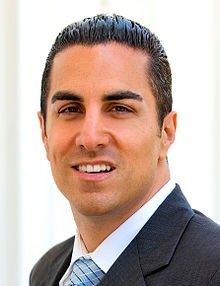
Mike Gatto.
1. Several lawmakers are proposing a statewide ballot measure that would break up the scandal-plagued California Public Utilities Commission, the SacBee$ reports. The plan, spearheaded by Assemblymember Mike Gatto, D-Los Angeles, would allow the state legislature to create a new regulatory agency to oversee the state’s troubled investor-owned utilities. The CPUC, which has been accused of being too cozy with the companies it regulates, has been rocked by scandals in recent in years, including the massive gasline leak in Southern California and the deadly pipeline blast in San Bruno.
2. The iconic West Oakland industrial arts studio, American Steel, may be forced to close to make way for new offices or retail outlets, the Chron$ reports. The owner of the American Steel warehouses, Maurice Kanbar, and his holding company, KS Properties One LLC, are trying to sell the property and demolish the buildings. Oakland Mayor Libby Schaaf has met with the owner in an attempt to find an alternative home for the 200 artists who use the sprawling arts studio.
[jump]
3. The states of California, Oregon, and Washington are refusing to help pay for an earthquake warning system, even though it could save thousands of lives when the next Big One hits, the LA Times$ reports. The states argue that the federal government should shoulder all the costs of the early warning system, while the feds say the states should pay their fair share.
4. Governor Jerry Brown signed legislation that eliminates a March 1 deadline for regulating medical marijuana in the state, the SacBee$ reports. Cities and counties throughout California have been rushing to ban medical cannabis activities because of fears that if they didn’t do so by March 1, then the state would take over regulatory powers from them.
6. A supermajority of Californians — 78 percent — favors requiring health warning labels on sugary drinks, the SacBee$ reports, citing a new Field Poll. In addition, 68 percent of state residents said they support new taxes on sugary beverages to fund school nutrition and physical activity programs.
Californians who support ending pot prohibition are not only facing swing voters, conservatives, and stoners against legalization this year, but they now also find themselves up against anti-tobacco officials, who aired their issues with the state’s leading initiatives yesterday.
In a new paper, researchers at UC San Francisco argue for Orwellian-style pot legalization: legal, but subject to unprecedented restrictions; and a multibillion-dollar propaganda campaign to stigmatize the herb and its users.
Legalization advocates said they support more reasonable, science-based restrictions on legal cannabis, as well as more research and public health outreach.
[jump]
Leading legalization initiatives already contain tens of thousands of words of regulations, and existing medical regulations are about 30,000 words long.
— eliminating the medical cannabis industry and merging it with the recreational one
— banning freedom of public assembly where cannabis consumption would be allowed
— curbing First Amendment rights in California to write about marijuana
— placing the regulation of the multi-billion industry, responsible for tens of thousands of jobs, in the hands of a few officials dedicated to eliminating pot use.
— and earmarking $340 million per year for research and anti-pot messaging
On eliminating medical marijuana, the researchers recommend:
“Separate medical and retail markets, with different rules, creates complexity that favors large corporate interests, so it is important to create a unitary market in which all legal sales are through a single retail market.”
On cutting industry input out of regulations:
“The regulatory licensing authorities defined in the pending marijuana legalization initiatives are agencies whose primary goals are to create a competitive marketplace for businesses, not protect public health.”
On working to stigmatize cannabis users:
“California use of tobacco, a legal product, has been dropping while use of marijuana, despite being illegal, is rising. The most efficient way to minimize marijuana use would be to use funds from taxes on marijuana sales to implement a marijuana prevention and control program … focused on reinforcing the nonsmoking norm… ; … Countering pro-marijuana influences in the community; … Reducing availability of marijuana and marijuana products; and promoting and supporting services that help marijuana users quit.”
On banning public places where adults can use cannabis together:
“… local and state smoke-free laws would not contain exemptions for indoor use in hospitality venues, marijuana retail stores, and marijuana clubs.”
The health researchers also recommend:
— a 5 milligram THC limit on all servings of cannabis and 10 milligram maximum THC limit per package
— half of cannabis packaging be devoted to warnings like “increased risk for addiction, cancer, reproductive toxicity, cardiovascular disease, respiratory, and neurological problems (long-lasting detrimental changes in brain function) … The labels would be large (at least 50% of packaging) on front and back, and not limited to just the sides.”
— state approval of all cannabis marketing. “Advertising and marketing statements and claims should be evidence-based and approved by the Department of Public Health. Marketing claims about the product improving sex, energy, sleep, weight reduction, vitamin supplements, among other health-related claims that would increase product appeal should be prohibited.”
In essence, anti-tobacco officials think cannabis should be treated exactly as if the United States were going back in time and first legalizing tobacco, even though the two are vastly different in terms of major health factors like addiction and cancer, said Paul Armentano, deputy director of NORML, on AirTalk yesterday:
“Again, we need to provide some context in this conversation.
Marijuana is not tobacco and marijuana is not alcohol. Tobacco is one of the leading causes of preventable death in this country. Marijuana doesn’t register on the radar screen. Alcohol contributes to four percent of all mortality worldwide, again cannabis does not show up on the radar.
The long-term effects on respiratory function and particularly on cancer that see directly association to tobacco smoke exposure we do not those same significant adverse effect in individuals that are exposed even to long-term marijuana smoke exposure.
While there may be some similarities in the composition of the combustive smoke itself, there are significant chemicals in tobacco versus marijuana and they do seem to have disparate effects on health.”
This “fanatic” nanny state is not likely to be implemented soon, wrote Dale Gieringer, with California NORML.
“If you’re into heavy-handed public health regulation, Stan [Glanz]’s your man. The report vastly inflates the health hazards of smoked marijuana, but concedes that it shouldn’t be criminalized. Rather, it calls for stigmatizing it as much as possible,” he wrote. “Fortunately, their ideas are unlikely to go anywhere, except in the remote possibility that Michael Bloomberg is elected president.”
In related news, anti-tobacco groups are again working to define any device that vaporizes or aerosolizes any plant as “smoking,” ignoring any known or future scientific differences between the two.
Pending bill AB 6 defines: ‘”smoking’ as inhaling, exhaling, burning, or carrying any lighted or heated cigar, cigarette, or pipe, or any other lighted or heated tobacco or plant product intended for inhalation, whether natural or synthetic, in any manner or in any form. Includes the use of an electronic smoking device that creates an aerosol or vapor, in any manner or in any form, or the use of any oral smoking device for the purpose of circumventing the prohibition of smoking.”
Welcome to the Mid-Week Menu, our roundup of East Bay food news.
1) Last week’s big news was the possibility that Genova Delicatessen’s Oakland retail shop, a fixture in Temescal since 1926, might close due to an impending rent increase. According to longtime general manager, Julio De La Cruz, the deli’s lease is set to expire at the beginning of June. Not much has changed since the Express first broke the story on Friday, but here’s a brief update:
[jump]
In a follow-up phone conversation, De La Cruz stressed that lease negotiations were ongoing, and said he wasn’t at liberty to say how much of a rent increase the landlords had demanded. Meanwhile, the California office of Rudd Properties, LLC, the Kansas City-based real estate company that owns Temescal Plaza, did not respond to a phone call requesting comment. The company’s holdings are mostly concentrated in the Napa Valley area. Leslie Rudd, the principal owner, is probably best known as the former owner of the Dean & Deluca gourmet grocery chain. Rudd’s investment company also owns Oakville Grocery (a Napa Valley institution) and several major wineries.
2) Marzano (4214 Park Blvd.), a well-regarded Italian restaurant that shuttered two years ago in Oakland’s Glenview neighborhood, will reopen as early as next week, Inside Scoop reports. The restaurant’s original chef and GM have bought the business, which will take over its old location on Park Boulevard, last occupied by the short-lived Growlers’ Arms. Marzano is aiming to reopen on February 11.
Former Pretty Lady owner Sung Son.
Credits: Chris Duffey/File photo
3) Berkeleyside Nosh confirms a rumor I heard a while back: that the West Oakland diner Pretty Lady (1733 Peralta St.) has had a change of ownership — specifically, that the restaurant is now owned by Rudy’s Can’t Fail Cafe co-owner Steve Mills. When I spoke to Sung Son — the Korean woman who previously owned Pretty Lady — a few months ago, she confirmed that she’d sold the place so that she could retire, but said she was still working at the diner several days a week for the time being. It’s unclear whether that’s still the case right now. In truth, Son’s fist bumps and Korean fusion dishes were a huge part of the restaurant’s appeal. We’ll have to wait and see how much of that gets preserved.
4) Mokka (3075 Telegraph Ave.), the South Berkeley cafe, will likely close in June, Berkeleyside Nosh reports. The owners cited concerns about the city’s rising minimum wage as a deciding factor.
5) In noting the closure of the Alameda location of the Best Lil Porkhouse barbecue restaurant, I neglected to mention the silver lining: A new location of the Korean restaurant Bowl’d will take over that spot in the South Shore Center.
6) In other barbecue-related news, Sauced BBQ & Spirits, a Livermore-based chain, will take over the recently vacated Pyramid Alehouse spot in Walnut Creek, Inside Scoop reports.
7) Not content to be pigeon-holed as a noodle restaurant, Ramen Shop (5812 College Ave., Oakland) is now open for breakfast on the weekends, Eater reports. The restaurant will serve coffee, tea, and housemade pastries.
8) Finally, ICYMI, this week’s Express is our first-ever “Love Issue,” which you should check out whether or not you plan on celebrating Valentine’s Day. I wrote about where the East Bay’s chef couples go to make out enjoy a nice dinner.
Got tips or suggestions? Email me at Luke (dot) Tsai (at) EastBayExpress (dot) com. Otherwise, keep in touch by following me on Twitter @theluketsai, or simply by posting a comment. I’ll read ‘em all.
1. The Sierra snowpack measured at slightly above normal — 114 percent — for this time of year, the SacBee$ reports. At Echo Summit, off state Highway 50, the snowpack measured higher — 130 percent. At this time last year, the snowpack in the same spot measured at just 12 percent. But the overall snowpack is not deep enough to bring the state out of the four-year-long drought. Although some of California’s largest reservoirs have started to fill up — including Folsom Lake — others, like Shasta and Oroville, remain relatively empty.
[jump]
3. State and federal officials are moving forward with a plan to remove four hydroelectric dams on the Klamath River in order to restore salmon runs, the SacBee$ reports. The move comes after the Republican-controlled Congress, which opposes dam removal, refused to greenlight a pact hammered out by the states of Oregon and California with the dam operators, along with environmental and indigenous groups.
Stories you shouldn’t miss:
1. The California Department of Motor Vehicles issued driver’s licenses to 605,000 undocumented residents under a new state program last year, the LA Times$ reports. The program was the result of legislation signed by Governor Jerry Brown, which grants undocumented workers the right to obtain driver’s licenses.
2. Numerous Democratic state lawmakers have joined the outpouring of support for...
Ramsey Orta and Jessica Hollie.
Credits: beortamedia.com
In 2011, Jessica Hollie, an Oakland native who goes by the name Bella Eiko, was a Chabot College student and award-winning speaker in the parliamentary debate league circuit when the Occupy Movement erupted. Hollie joined the protest and quickly distinguished herself as a grassroots citizen journalist. She amassed a big online following thanks to...
Californians, meet your first-ever Medical Marijuana Regulation chief — Lori Ajax.
Yesterday, Governor Jerry Brown announced that Ajax — currently the chief deputy director of the Alcoholic Beverage Control (ABC) — will head up the new Bureau of Medical Marijuana Regulation. As chief of the BMMR, Ajax will oversee the implementation and administration of California’s first-ever, seed-to-sale...
There's a big sportsball game this weekend! Plus, Obama came out with a new Warriors-themed stand-up routine! What a time to be alive. If that's not enough, find five other ways to enjoy your weekend below:
...
Stories you shouldn’t miss:
1. In a stunning example of the Easy Bay’s deepening housing crisis, more than 17,000 people are competing with each other to live in 115 affordable units that are being built near the San Leandro BART station, the Bay Area News Group$ reports. Even though Bridge Housing, the developer building the housing, hasn’t even opened its application...
In a familiar tactic used by corporations wishing to avoid environmental regulation, lawyers for Phillips 66 submitted a last-minute, detailed letter challenging San Luis Obispo County’s assessment of its crude-by-rail project — two days before the county’s planning commission meeting to consider the proposal.
Phillips 66 proposes to build a rail spur to carry crude oil to its refinery along...
Stories you shouldn’t miss:
1. Several lawmakers are proposing a statewide ballot measure that would break up the scandal-plagued California Public Utilities Commission, the SacBee$ reports. The plan, spearheaded by Assemblymember Mike Gatto, D-Los Angeles, would allow the state legislature to create a new regulatory agency to oversee the state’s troubled investor-owned utilities. The CPUC, which has been accused of...
Californians who support ending pot prohibition are not only facing swing voters, conservatives, and stoners against legalization this year, but they now also find themselves up against anti-tobacco officials, who aired their issues with the state's leading initiatives yesterday.
In a new paper, researchers at UC San Francisco argue for Orwellian-style pot legalization: legal,...
Genova Deli's stock-in-trade.
Credits: _E.T/Flickr (CC)
Welcome to the Mid-Week Menu, our roundup of East Bay food news.
1) Last week’s big news was the possibility that Genova Delicatessen’s Oakland retail shop, a fixture in Temescal since 1926, might close due to an impending rent increase. According to longtime general manager, Julio De La Cruz, the deli’s lease...
Stories you shouldn’t miss:
1. The Sierra snowpack measured at slightly above normal — 114 percent — for this time of year, the SacBee$ reports. At Echo Summit, off state Highway 50, the snowpack measured higher — 130 percent. At this time last year, the snowpack in the same spot measured at just 12 percent. But the overall snowpack is...