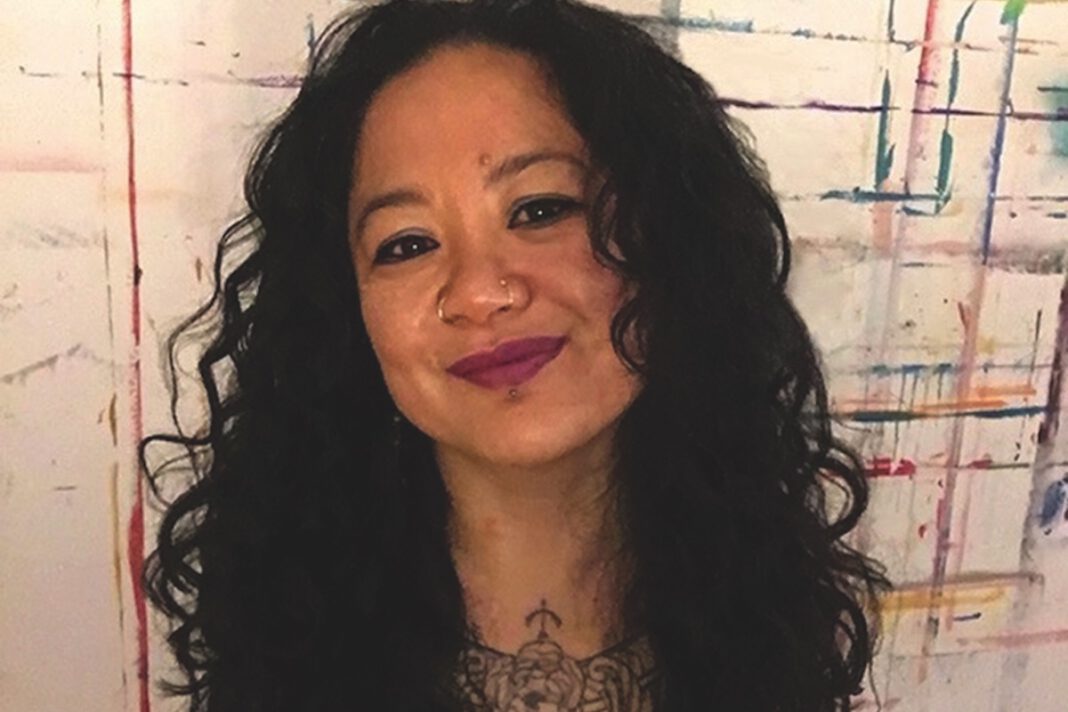
For as long as memory serves, visual art has been a means of connection, adaptation and survival for Cece Carpio. Expressed through paper, pencil, ink, acrylic and aerosol paint, or installations that might include sticks, fabric, shoes, bottles, blades, candles and more, the Oakland-based artist/educator tells stories highlighting the dignity of everyday people and others often overlooked.
Carpio’s great-grandmother raised her in the Philippines until she joined her parents in the Bay Area at age 12. A shy child able to speak English, but not fluently, Carpio relied on her skilled draftsmanship to establish herself and fit into the new surroundings so different from those in the tiny farming village where she grew up when she arrived in the United States.
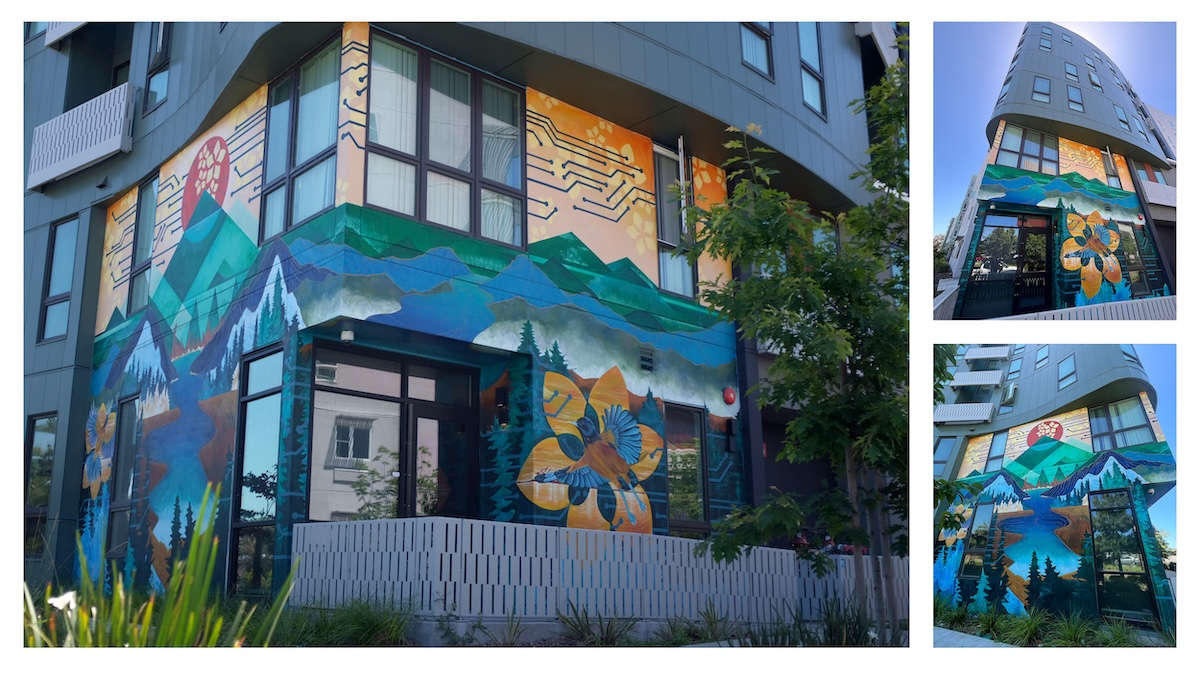
She received attention and scholarships in school and fellowships from professional organizations, and that validation led her to pursue a career in art. Eventually, Carpio found artistic purpose not only through exhibits in museums and galleries, but in creating murals and participating in multidisciplinary, collaborative projects locally, nationally and internationally.
Carpio recently served as galleries manager for the San Francisco Arts Commission, and was a public art advisor for the City of Oakland. She is now a full-time artist and part of the collective, Trust Your Struggle.
In an interview, she speaks of the influence her earliest years had on her artistic practices. “My great-grandmother was quite a magical woman and raised five generations,” Carpio says. “We lived in a village with dirt roads, huts. She was illiterate, so coming home from school, I’d illustrate stories for her. Harvesting on the farm, we’d talk, but she had few words. For my entertainment and communicating with her, I’d draw.”
Outdoors, Carpio arranged sticks on soil and scratched images onto leaves, creating art not to display her talent, but to engage. “I use the word ‘folkloric’ because my work now is still defined by art by the folks—working class peasants,” she says. “That translates to my getting a lot from what’s surrounding my work and who’s in it.”
Self-conscious about her accent and hesitant to speak publicly when she was young, Carpio says designing birthday flyers “made me cool in school.” Art became her method by which to navigate the world. The faces of working class people she saw highlighted “bigger than life” in murals on Bay Area buildings mingled with the Indigenous oral story traditions she held in her memory. Art allowed her imagination to expand. Without having to speak or perform, art provided friends and community. “It gave me a foundation,” she says. “Especially for an immigrant. I had a point to pivot from.”
Carpio travels frequently for work, study and solidarity activities. Growing up with limited means—the family did not own a car—makes her appreciate trips to the Philippines. There, the pull of familiar smells, cultural traditions and environment is significant, but travel to any location is valued for the freshness of the experience and unique discoveries, she insists.
Most works in Carpio’s portfolio center on visual storytelling and present timeless, universal themes that interact with modern culture. The “dialogue” between current events, ancient mythology, history and spirituality is fertile ground. Scratching below the surface opens up community conversations and inspiration to continue building relationships and dreams.
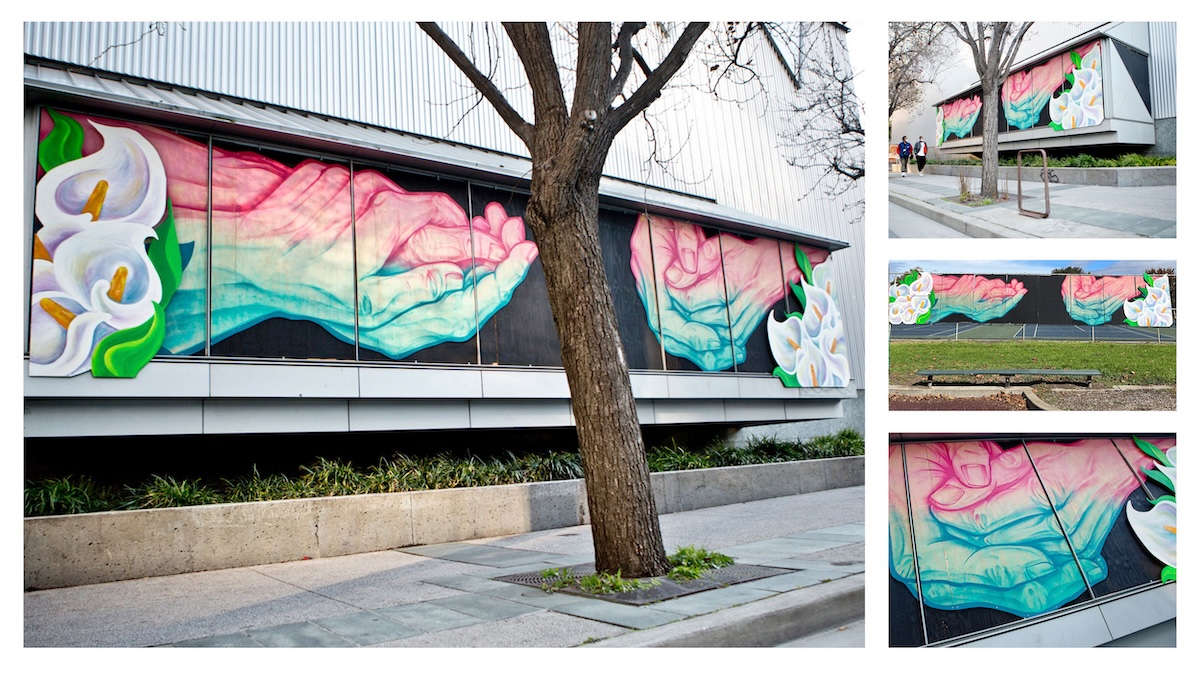
We Got Us is one example. “When the George Floyd verdict was released, folks were out on the street,” Carpio says. “We wanted to hold each other in this time of injustice. My role was to give visibility to what’s left behind after the protests and rallies are over. I got my homies, paint—and we decorated plywood with hands holding up tools of caring and healing.”
An installation, “Huktingan,” shows Indigenous women in different parts of the world playing sports—a runner in Mexico, a soccer player in Peru and a basketball player in the rice fields of the Philippines. The installation’s paintings, textiles, sports equipment and other objects are a form of offering, she says, adding that the women and cultures represent what are “hot stories to me.”
Carpio in 2026 received a $100,000 Rainin Arts Fellowship. Honored and humbled by the validation, she says the support arrived at a critical moment. “My livelihood is inconsistent at the current time with budget cuts in the arts,” she says. “It’s inspiring to know there are still institutions that deem my work important. It gives me motivation, space and time to imagine what’s next.”
What’s next are projects in San Francisco’s SoMa district and at Reem’s California restaurant in Jack London Square, and a Clinton Park re-imagining in East Oakland.
To learn more, visit cececarpio.com and krfoundation.org.