2. California’s high-speed rail system, which now is slated to come to the Bay Area first, still has serious funding issues, the Mercury News$ reports. A crucial part of the financing for the first major leg of the system — from Bakersfield to San Jose — is supposed to come from the state’s cap-and-trade program, but that greenhouse-gas reduction progam is scheduled to expire in 2020. Moreover, extending it could be difficult because of opposition from Republicans and some centrist Democrats.
[jump]
3. State officials declared that the massive methane gas leak near Porter Ranch in Southern California has been capped, and the 7,500 or so families who were forced to evacuate have been told that they can return home, the LA Times$ reports. However, many residents remain wary because the underground gas facility that leaked is still in operation.
4. And a controversial proposal that would have required porn performers to wear condoms, goggles, gloves, and other safety equipment failed to gain enough votes from the California Occupational Safety and Health Standards board during a hearing yesterday in Oakland, the Bay Area News Group$ reports. Proponents of the new rules said they were necessary to stop the spread of HIV, but members of the state’s porn industry said the proposed regulations would have put them out of business.
It’s the weekend! Rejoice! Here are five fun ways to enjoy yourself over the next three days.
Sugar Coma, DSTVV, and Morning Hands
Valentine’s Day can bring out all sorts of neuroses in people who aren’t secure in their relationship statuses — which is why Sgraffito Gallery in Emeryville is hosting a show billed as a “Post V-Day Cry Fest” for those that have reason to gripe about last week’s couples-centric holiday. The lineup includes the new Hole cover band Sugar Coma, featuring Candace Lazarou (the frontwoman of the abrasive, avant-garde rock band Mansion) and members of well-regarded, local punk bands Violence Creeps and The World. DSTVV, an Oakland band whose static-laden compositions contain strains of grunge, shoegaze, and noise, joins Sugar Coma on the bill. Morning Hands, a synth-pop off-shoot of Oakland EBM group Diesel Dudes, will provide a washed-out, mellow counterpoint to the other bands’ more aggressive sound. The show will include a Courtney Love costume contest, so don’t forget your smudged eyeliner, vintage negligees, fishnets, and combat boots.— Nastia Voynovskaya Sat., Feb. 20, 7 p.m. Facebook.com/SgraffitoGallery
Candace Lazarou.
Credits: MADELINE ALLARD
[jump]
Trash Talk
Originally from Sacramento, the hardcore band Trash Talk gained clout in the Bay Area in the late Aughts before signing to LA rap collective Odd Future’s eponymous record label. They were the first act on the label that wasn’t part of its originator, Tyler, the Creator’s, crew. Though it makes fast, violent rock, Trash Talk’s association with Odd Future gave it unlikely crossover appeal in the rap world, and the group has been known to play alongside hip-hop acts, such as Antwon, an LA rapper who got his start in Oakland’s warehouse party scene. After releasing its debut studio album in 2014, No Peace, Trash Talk collaborated with Brooklyn MCs Flatbush Zombies on several stoner rap tracks, including the excellent “92.92.” The band performs at Oakland Metro Operahouse on February 20 alongside Minus, Hell in the Cell, Culture Abuse, and Strangeways. — N. V.
Sat., Feb. 20, 7 p.m. $10. OaklandMetro.org
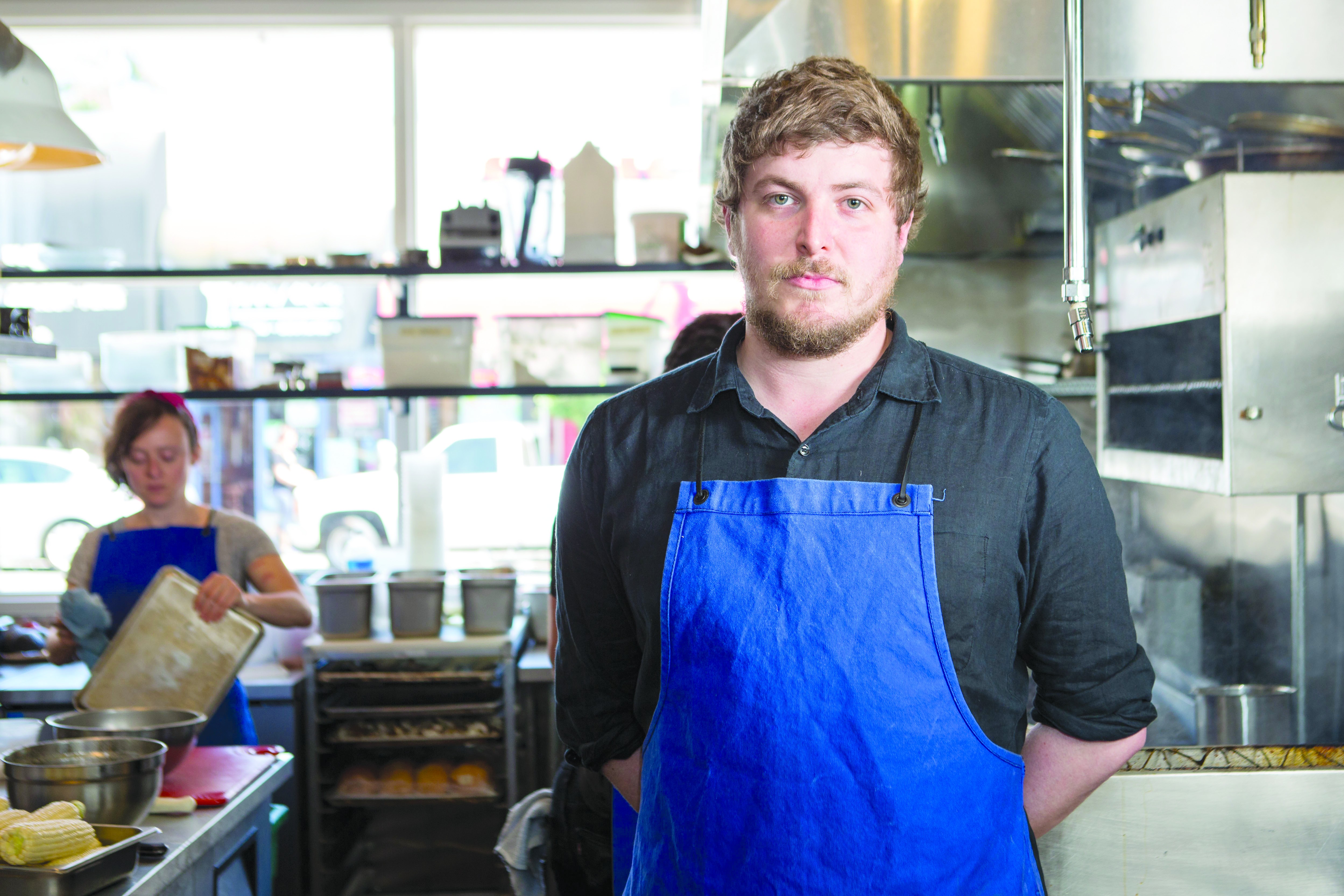
KronnerBurger chef Chris Kronner.
Credits: Bert JohnsonAging to Perfection
In a contest between aged beer and aged beef, the only definitive winners are those of us who get to stuff the pair of them in our gullets. That combination will be the theme of this beer-pairing dinner at KronnerBurger, which will double as a birthday celebration for Oakland-based beer guru Sayre Piotrkowski (who curated the pairings) and Craftsman Brewing founder Mark Jilg (whose company will supply the brews). On the menu will be 120-day aged Stemple Creek Ranch beef prepared three ways — beef tartare, smoked beef, and grilled rib-eye steak — each one paired with a different Craftsman sour ale. All dishes and beers will be available a la carte, or you can order the entire three-course meal with pairings for $50. No reservations needed. KronnerBurger’s regular menu will also be available.— Luke Tsai Sun., Feb. 21, 5:30-10 p.m. $50 or a la carte. KronnerBurger.com
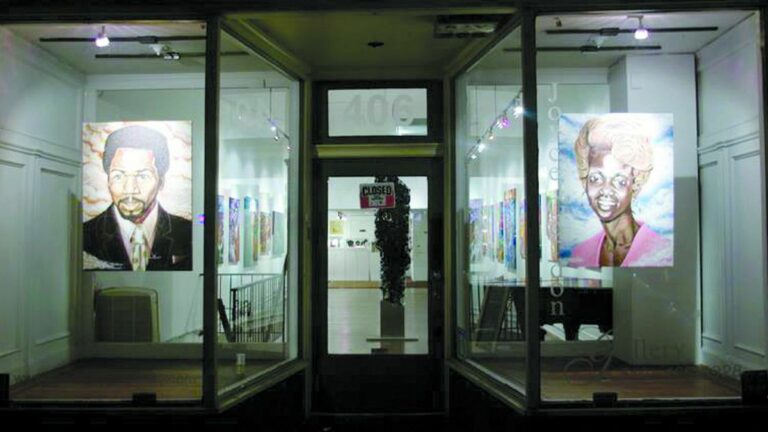
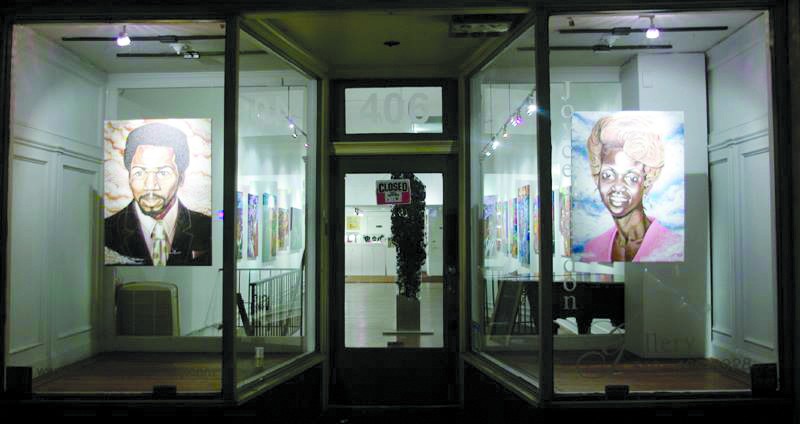
Exterior installation view.
Credits: Courtesy Joyce GordonAncestral Portals: Malik Seneferu
At Joyce Gordon Gallery (406 14th St., Oakland), Oakland’s prolific Malik Seneferu is celebrating Black History Month with a show about his family history. Ancestral Portals marks the culmination of the artist’s life-long dream to make contact with his long-deceased father’s relatives and learn more about his genealogical history. Last year, through a DNA ancestry mapping service, Seneferu was finally able to do that. Now, he celebrates that discovery through pen-and-ink tree drawings and a series of striking portraits featuring his parents and grandparents. On February 20, from 1–3 p.m., the gallery will host a panel discussion featuring Seneferu, members of his family, and representatives of 23andMe, the biotechnology company that helped Seneferu connect with his relatives.— Sarah Burke
Through February 27. Free. JoyceGordonGallery.com
Little Erik
Acclaimed Bay Area playwright Mark Jackson turns his attention to Bay Area tech culture in Little Erik, a family drama that plumbs a slew of weighty topics throughout its eighty-minute run. Currently showing at Aurora Theater (2081 Addison St., Berkeley) through February 28, the play centers on Joie (Marilee Talkington), a hot-shot tech executive whose love for her son, Erik, comes second to her devotion to her iPhone. Joie’s husband, Freddie (Joe Estlack), isn’t much better — he’d much rather travel the world aimlessly and dream about the past than maintain a presence in little Erik’s life. When tragedy strikes at their home just north of San Francisco, both realize that they’ve been substituting authentic personal connections for artificial ones. Despite lackluster chemistry between Talkington and Estlack, the otherwise gripping play delivers biting commentary about the consequences of a society consumed by technology.— Gillian Edevane
Through February 28. $32–$50. AuroraTheatre.org
If your pockets are feelin’ light and you’re still yearning for more suggestions, we’ve got a ton, and these ones are all FREE!We’re Hungry: Got any East Bay news, events, video, or miscellany we should know about? Feed us at Sa*********@************ss.com.
An award for the best-looking retail space in America may go to a pot club this year — a sign of increased sophistication in the $5 billion economic sector.
National cannabis retail designer Megan Stone is a finalist for the coveted 23rd Annual Association for Retail Environments Design Awards Competition — for her hash bar at the TruMed dispensary in Phoenix. Arizona has dozens of state-licensed dispensaries.
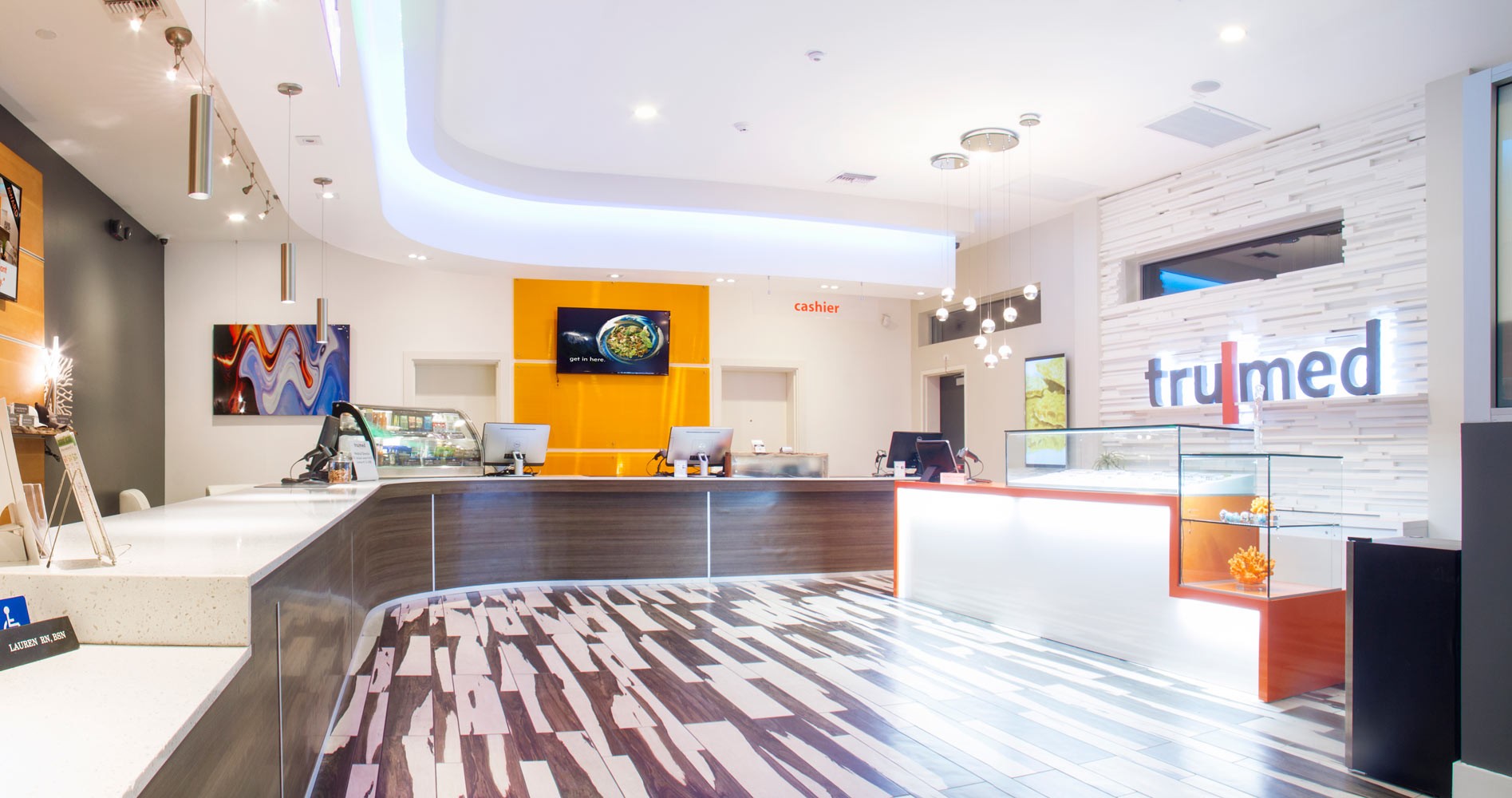
Megan Stone and the TruMed extract bar.
Credits: The High Road Design
[jump]
Stone joins finalists like CHANEL, Target, Timberland, and Nordstrom at the awards ceremony on March 23 in the Four Seasons in Las Vegas, part of the opening night of GlobalShop, a retail industry trade show.
Stone’s luminous display pops with the orange of CO2 extract oil and seemingly floats on a block of white.
“My goal was to display the product as though it were as luxurious as fine jewelry or as decadent as gourmet confections. In doing so, my client was able to set themselves apart from their competition and maintain their reputation as a connoisseur’s brand,” Stone states.
Stone’s three-year-old The High Road Design Studio has worked with dispensaries in Arizona, Washington, California, Colorado, New Mexico, Illinois, Nevada, Oregon, and New Hampshire.
Not to be outdone, Bay Area dispensaries are getting facelifts of their own, with San Francisco’s new Harvest featuring European interior design.
The late Vallejo rapper Mac Dre is an undisputed Bay Area music legend and godfather of the hyphy movement. A stylistic innovator and staunch proponent of individuality, he became a symbol of unapologetic self-expression as well as regional pride after his untimely death in 2004. Even twelve years after his passing, his iconic sound and exuberant persona continue to have a major influence on local hip-hop culture.
[jump]
While, locally, Mac Dre has a cult-like following, the level to which Bay Area rap fans worship him befuddles cultural outsiders. Now, however, Thizz Entertainment — Mac Dre’s former label that manages his estate — is releasing a documentary about the late artist: Mac Dre: Legend of the Bay. The feature film, due out online next Tuesday, includes interviews with Mac Dre’s friends, family, and big-name artists such as Wiz Khalifa and Warren G. It sheds light on the rapper’s cultural importance as well as his political outspokenness. Check out the trailer below.
[embed-1]
A secondary housing unit.
Credits: City of Seattle
The Oakland City Council this week gave final approval on new legislation that is intended to spur the construction of secondary housing units, also known as backyard cottages, throughout the city. The move is intended to help ease the affordable housing crisis by providing new, lower-cost rental housing stock and to benefit the environment by housing more residents near transit. Secondary housing units most often take the form of unattached, small cottages located on the same lot as a single family home.
The new rules ease height, floor space, and set back limits, and loosen parking requirements that are thought to have been a disincentive to homeowners who previously wanted to build a new backyard cottage. The new rules also allow homeowners to convert existing structures in their yards into housing.
The policy change was supported by Mayor Libby Schaaf and the entire city council and passed it unanimously.
But critics say the city council’s new rules contains poison pills that will effectively block the construction backyard units in a important amendments that could undermine the goal of addressing the affordable housing crisis through a boom in backyard cottages.
[jump]
A pro-housing group called Urbanists for a Livable Temescal Rockridge Area (ULTRA) wrote the city council in January pleading with the councul to withdraw amendments to the new rules that had been pushed by other Rockridge and Temescal groups. ULTRA argued that the amendments would effectively block the construction new secondary units. The council, however, ultimately declined to remove the amendments. One of the amendments requires that property owners
would reduce the geographic areas in Rockridge where the new rules apply. According to ULTRA’s letter, Rockridge residents lobbied the city council reduce the area along Telegraph Avenue where parking requirements would be relaxed to accommodate new backyard cottages. The council shrank the area from one-half of a mile along Telegraph Avenue to just one-quarter of a mile, but left every other transit corridor in the city at one-half mile. And Rockridge residents also lobbied to amend the rules so that residents of new backyard cottages built in neighborhoods with existing residential parking permit requirements cannot obtain a parking permit, unless they use one that is issued for the existing primary residence – not their cottage. Many of the streets in the Rockridge neighborhood require a residential parking permit.
“[T]he practical effect that very little of this housing will be built in Rockridge,” wrote ULTRA. “What we have here is yet another example of a privileged community within our city using the city code to further entrench their privilege.”
Another feature of the new rules criticized by affordable housing advocates was the refusal by the city council to bar newly built backyard cottages from being rented out as short-term hotel accommodations through web sites like Airbnb. Berkeley, by contrast, chose to ban rental of newly built backyard cottages as short-term hotel accommodations when it eased zoning rules last year in a similar effort to spur construction of new affordable housing.
“This had turned into the Airbnb enabling legislation,” Kevin Ray, an Oakland resident who lives near Lake Merritt, said during public comment at the city council meeting on Tuesday night. “Take the time to address the issue of short-term rentals before opening the gates to the economic forces of the latest tech bubble.”
1. The average monthly rent in Berkeley has increased by 12 percent in the past year and has reached $3,584, Berkeleyside reports, citing a recent report by Dee Williams-Ridley, Berkeley’s interim city manager. Williams-Ridley’s report was part of wide-ranging discussion among Berkeley elected officials, housing activists, and developers, concerning how to build more housing in the city. In the past 14 years, only 427 units of below-market-rate housing have been constructed in Berkeley.
3. The California Department of Fish and Wildlife has decided to keep the commercial Dungeness crab season closed until a dangerous neurotoxin is completely gone from coastal waters, the Chron reports. The toxin, domoic acid, which has kept the crab fishery closed all year, is still showing up in some areas.
[jump]
4. California’s high-speed rail system will be coming to the Bay Area much sooner than originally planned, under a revised proposal by state transportation officials, the Mercury News$ reports. The first major section of the state’s bullet train will be built between Bakersfield and San Jose, and then will be quickly extended to San Francisco. The original plan was to construct the first major rail section from the Central Valley to Los Angeles, but that part of the line will be costly and time-consuming because it must cross the rugged Tehachapi mountains.
5. And 63 percent of Tri-Valley residents living in Livermore, Pleasanton, Dublin, and part of San Ramon say they are now willing to drink tap water mixed with highly purified wastewater, the Bay Area News Group$ reports. Orange County residents have has been drinking purified wastewater for years.
One of the hefty combo plates at Mo’s Hut. RIP.
Credits: Bert Johnson/File photo
Welcome to the Mid-Week Menu, our roundup of East Bay food news.
1) We’re halfway through February, but news is still trickling in about restaurants that didn’t make it into the new year. One of Oakland’s biggest losses: Mo’s Hut (2676 Fruitvale Ave.), a low-key Samoan/Hawaiian spot that was one of my favorite new restaurants to open last year, had its last day of business on December 31. According to the restaurant’s Facebook announcement, the owners are searching for a new permanent location — but possibly not in Oakland. I will miss the grilled meats, crab mac salad, and warm hospitality.
[jump]
2) As if that weren’t bad enough, Berkeleyside Nosh notes that the Hawaiian plate-lunch restaurant Kau Kau Korner (1623 Park St., Alameda) also closed its doors at the end of 2015 — “due to unforeseen circumstances,” according to a Facebook post. So what is going on with the whole Polynesian food scene? Last year, the food gods gifted us with two solid Hawaiian/Polynesian spots. Now both are gone.
3) One last departure to announce: Capone’s Speakeasy (1400 Park St., Alameda) has also closed its doors. You may recall that the 1920s-style bar had one of the most inauspicious opening weekends of all time when its owner was arrested for public drunkenness and battery on a police officer — at the bar’s opening party.
Wood-grilled crab at Camino.
Credits: Bert Johnson/File photo
4) Crab lovers got good news last week when state officials lifted the ban on recreational Dungeness crab fishing. That said, it’s still unclear exactly when the commercial crab season will start, allowing local crab to make its way onto restaurant menus and into supermarket fresh tanks. The Chronicle reports that a crab industry task force has recommended that the state wait until crabs throughout the state are safe to eat to lift the ban rather than opening up just one section of the coast. One of the fears is that the start-of-season crab “derby” — the mad scramble (which I documented in my cover story last year) wherein upwards of 100,000 crab pots get dropped all at once in a relatively small area — would be even more chaotic than usual.
5) Belotti Ristorante E Bottega (5403 College Ave., Oakland) is now open in Rockridge, Inside Scoop reports. The Italian restaurant and market will focus almost exclusively on pasta — including a multi-course pasta tasting menu.
6) After some speculation that it had closed for good, it turns out that Ran Kanom Thai (3288 Pierce St., Richmond) has reopened under new ownership, a Chowhound poster reports. Located inside the Pacific East Mall, the restaurant now appears to have more of a Laotian focus to its menu.
8) Finally, I wrote about a new nonprofit restaurant that a national restaurant worker advocacy group is opening in East Oakland.
Got tips or suggestions? Email me at Luke (dot) Tsai (at) EastBayExpress (dot) com. Otherwise, keep in touch by following me on Twitter @theluketsai, or simply by posting a comment. I’ll read ‘em all.
Members of the Ecumenical Economic Empowerment Council support plans to ship coal through Oakland.
Credits: Darwin BondGraham
Last night, the Oakland City Council tabled a proposal to hire a consultant to help the city determine whether coal shipments will have negative health and safety impacts on residents and port workers. The decision to delay the contract vote was seen as a victory for anti-coal activists and a defeat for TLS, the company hoping to export millions of tons of coal from a planned marine terminal that will be built at the old Army Base site in West Oakland.
Earlier in the day, Oakland Mayor Libby Schaaf sent the councilmembers a letter requesting that they postpone the contract vote “so that we may further evaluate other, potentially more effective options,” to bar coal shipments through Oakland. “I remain strongly opposed to the transport of coal and crude oil through our city,” Schaaf wrote in her letter.
The council had been set to approve a $208,000 contract with Environmental Science Associates, but anti-coal activists raised concerns about the company’s track record. According to anti-coal groups, Environmental Science Associates recently authored an environmental report that found “negligible” impacts of shipping crude oil by rail through Benicia. Coal opponents feared the company would write a similar report, justifying coal shipments through Oakland.
[jump]
Coal supporters also attended last night’s council meeting. Members of Black clergy organization called the Ecumenical Economic Empowerment Council said during the public comment period that delaying a vote on the consultant was harming an important economic development project for the city, and specifically harming the Black community. The pro-coal pastors brought with them a group of students from the Men of Valor Academy, a program that helps formerly incarcerated men obtain job skills.
As I reported last week, members of the Ecumenical Economic Empowerment Council are hoping to obtain money from the coal project’s developer to fund their church and nonprofit programs.
“We have young men and women who are in need of good quality jobs,” said Pastor Michael Wallace of the Mount Zion Missionary Baptist Church. “Every time we procrastinate, or handle this in a dilatory manner, we are precluding them from getting an opportunity advance themselves.”
Pastor Kevin Barnes.
Credits: Darwin BondGraham
Pastor Kevin Barnes of the Abyssian Missionary Baptist Church was more forceful in his comments. Barnes said that shipping coal through Oakland is necessary to help Black boys develop into men and raise families. “Why are we delaying about these young men that want to be fathers?” Barnes asked the councilmembers. “Why are we delaying these men that want to stand up and take care of their family? Why are we delaying these men that want to be men?”
Derrick Muhammad, the business agent for the union ILWU Local 10, said the pro-coal pastors were being “disingenuous” to imply that unemployed and formerly incarcerated people living in Oakland would be given jobs building and operating the coal terminal. “I think it’s disingenuous to parade these brothers before the council talking about jobs. The trade organizations in this area typically do not have a practice of recruiting in the inner city of East and West Oakland,” said Muhammad. “They don’t have a practice of recruiting in the Black neighborhoods.” Muhammad also reminded the city council that the longshore workers union is opposed to coal.
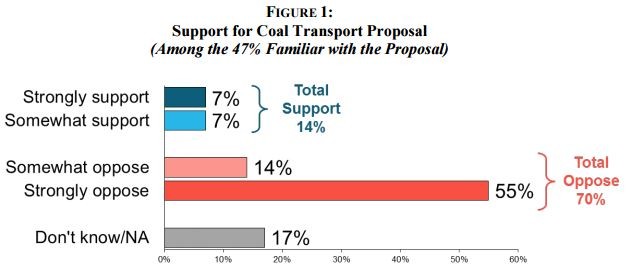
Also yesterday, the Sierra Club released the results of a poll which found that 75 percent of Oakland voters oppose transporting coal by rail through the city. The poll was conducted by FM3, an independent research firm based in Oakland. The full poll results and methodology are online here.
Medical pot patients are anything but stereotypical and are generally very satisfied with the botanical drug for a wide variety of reasons, new survey results indicate. The doctor-recommendation app HelloMD polled 17,000 patients in January, and got 1,400 respondents in seven days. While the new study’s generalizability is limited, the large, comprehensive survey shines some critical light on what’s going on and adds to the woefully thin public health literature on medical cannabis.
“… the prevailing perception of a medical marijuana patient is that of a masquerading recreational user (a stoner). … our research and analysis show a much larger portion be genuinely seeking an alternative to traditional medication for improved health and wellness. … 78% of those using cannabis for health and wellness are above the age of 25. … these people are highly educated working professionals. Many are parents. They could be your friends, your colleagues, or your neighbors. All of them have legitimate health issues.”
As one survey respondent wrote: “Without cannabis I would not be able to sleep at night peacefully, my migraines would overwhelm my daily life, and I would not be able to function.”
HelloMD enables online medical consultations for marijuana recommendations, as well as treatment information and advice.
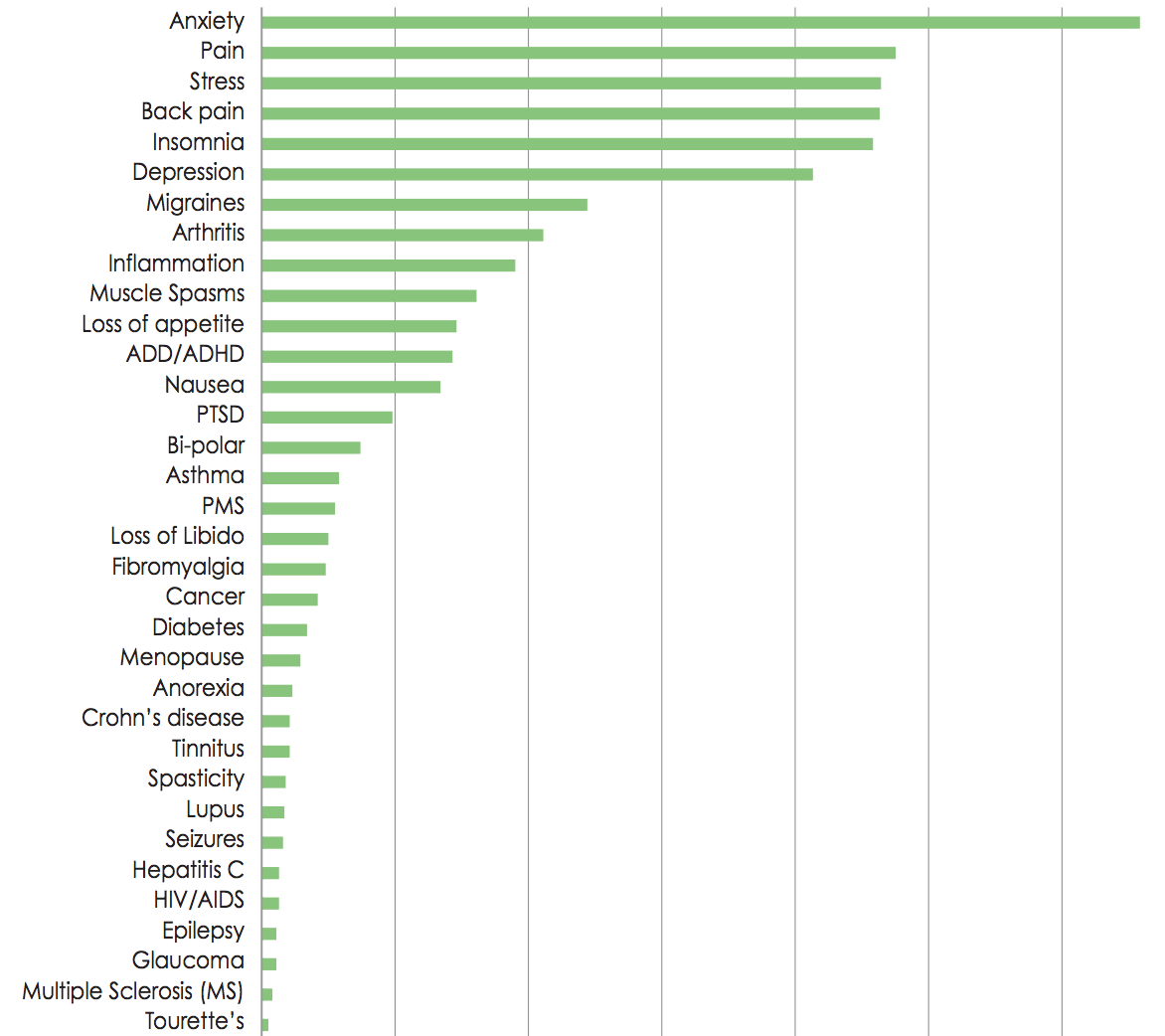
Common Indications, Effective Medication HelloMD found the most common indications for medical marijuana included chronic pain, anxiety, stress, and insomnia.
Credits: HelloMD
[jump]
Indications were diverse and ranged from very serious to everyday health and wellness concerns.
“Almost without exception the experience is overwhelmingly positive, with 85% reporting significant efficacy for treating their medical concerns, 77% stating that it “enhances their mood in a positive way.” 65% of people using cannabis consider it to be the primary treatment of choice for their condition, with many choosing to forgo other treatments, including prescription medications.”
“Respondents reported beneficial side effects of relaxation, mood elevation, better sleep, a replacement for the use of alcohol or as a libido or sexual enhancement.”
“Almost all users (76%) reported using cannabis for relaxation, and 65% for use as a sleep aid. 96% of users report that cannabis enhances their mood in a positive way, with 77% strongly agreeing.”
“79% of people agree that cannabis makes them feel sleepy, yet only 21% feel that it demotivates them, 85% of people feel that cannabis use enhances their creativity, Women are slightly more likely than men to use cannabis as a libido enhancer (8% vs 5%), Men are more likely to use cannabis as an alcohol replacement (10% vs 6.5%).”
“There were few to no reports of negative consequences of cannabis use, with over 96% of users either somewhat likely or highly likely to recommend cannabis use to friends, family or others seeking improved wellbeing.”
“I’m pain free for the first time in twenty years. It’s the best thing I’ve ever done,” said one respondent. The survey online survey canvassed patients ages 18 to 80 with a 31-question, binary- or multiple-choice-answer questionnaire. A text box allowed for comments.
Strains are Real Contrary to what critics say, the fact that different cannabis strains seem to have different effects isn’t some mass hallucination.
“86% of people agree that different strains create different feelings and effects, with 70% having found a favored strain that they turn to regularly. This is clearly therefore not just a tactic by producers to sell more products. We see a need for more research in this area, to produce repeatable, consistent results with patients as some strains clearly achieve more reliable results for different medical conditions.”
Inexact Science That said, almost one in three respondents don’t know the dosage they typically consume, in milligrams.
Gender, Age Gaps Women and older people tilted toward tinctures and topical creams, while the guys preferred smoking and vaping. … “Middle aged and elderly were more directed to pain management, while younger age groups are treating stress, anxiety, mental-health disorders, nausea and issues with appetite.”
Hook-Ups
Delivery services are nearly as popular as dispensaries, while one in five medical pot sales come from the black market.
“Cannabis use has been extremely beneficial to me. It has helped me quit drinking and keep my diet in check. I do not like to take pills and have had problems with sleeping pill addiction. Cannabis provides me with better relief from insomnia and pain without the side effects of pills,” wrote one respondent.
Cost
“72% of people spend at least $600 each year on cannabis products, with 22% spending at least $1,800 each year. Medical marijuana would appear to represent a significant potential savings to consumers over traditional pharmaceuticals.”
“I’m a disabled veteran with PTSD. Cannabis is what keeps me alive. Nothing else works. Nothing,” wrote a respondent.
1. In yet another sign that the California’s punishing drought is far from over and that this year’s El Nino may turn out to be a bust, state water officials announced that the overall snowpack in the Sierra is below normal for this time of year — it’s at 91 percent, the Chron$ reports. The snowpack in northern part of the Sierra is a bit better — 99 percent — but it needs to be much higher than that to help relieve the four-year drought.
Credits: Bert Johnson/File photo
2. Even though the recreational Dungeness crab season opened last week, an influential task force is recommending that the commercial crab season remain closed until the presence of a dangerous neurotoxin is completely gone from the West Coast, the Chron$ reports. The toxin — domoic acid — still exists in a few areas, including Bodega Bay and Fort Bragg. The state Department of Fish and Wildlife is expected to make a decision soon as to whether to accept the recommendation by the California Dungeness Crab Task Force to delay the season further.
3. A majority of Oakland residents — 56 percent — say they oppose the plan to transport coal through a new facility proposed at the old Oakland Army Base, the Trib$ reports, citing a new survey commissioned by the Sierra Club, which also opposes the coal plan. Opposition grew to 76 percent after respondents were told that the coal-train plan “could increase risk of asthma, bronchitis and cancer, and moves away from the city’s commitment to counter climate change.”
[jump]
4. State Democratic leaders are proposing to strengthen lobbying disclosure rules for the California Coastal Commission, in the wake of the controversial decision by commissioners last week to fire the agency’s executive director, a staunch advocate for protecting the environment, the LA Times$ reports. State Assembly Speaker Toni Atkins noted that a loophole in California law exempts the commission from disclosure of lobbying.
5. Governor Jerry Brown was able to reach a bipartisan agreement with sixteen governors to increase renewable power by dropping all mention of climate change in the pact, the Chron$ reports. Brown said it was important to not get “bogged down” with Republicans on the issue of global warming.
Stories you shouldn’t miss:
1. Oakland Mayor Libby Schaaf, along with other city, school, and county leaders, called on Governor Jerry Brown’s administration to release $45 million in affordable housing funds that were earmarked for the massive Brooklyn Basin project on the city’s waterfront, the Trib$ reports. The $45 million had been set aside by Oakland’s redevelopment agency ten years ago,...
It's the weekend! Rejoice! Here are five fun ways to enjoy yourself over the next three days.
Sugar Coma, DSTVV, and Morning Hands
Valentine’s Day can bring out all sorts of neuroses in people who aren’t secure in their relationship statuses — which is why Sgraffito Gallery in...
An award for the best-looking retail space in America may go to a pot club this year — a sign of increased sophistication in the $5 billion economic sector.
National cannabis retail designer Megan Stone is a finalist for the coveted 23rd Annual Association for Retail Environments Design Awards Competition — for her hash bar at...
The late Vallejo rapper Mac Dre is an undisputed Bay Area music legend and godfather of the hyphy movement. A stylistic innovator and staunch proponent of individuality, he became a symbol of unapologetic self-expression as well as regional pride after his untimely death in 2004. Even twelve years after his passing, his iconic sound and exuberant persona continue...
A secondary housing unit.
Credits: City of Seattle
The Oakland City Council this week gave final approval on new legislation that is intended to spur the construction of secondary housing units, also known as backyard cottages, throughout the city. The move is intended to help ease the affordable housing crisis by providing new, lower-cost rental housing stock and to benefit the...
Stories you shouldn’t miss:
1. The average monthly rent in Berkeley has increased by 12 percent in the past year and has reached $3,584, Berkeleyside reports, citing a recent report by Dee Williams-Ridley, Berkeley’s interim city manager. Williams-Ridley’s report was part of wide-ranging discussion among Berkeley elected officials, housing activists, and developers, concerning how to build more housing in the city....
One of the hefty combo plates at Mo's Hut. RIP.
Credits: Bert Johnson/File photo
Welcome to the Mid-Week Menu, our roundup of East Bay food news.
1) We’re halfway through February, but news is still trickling in about restaurants that didn’t make it into the new year. One of Oakland’s biggest losses: Mo’s Hut (2676 Fruitvale Ave.), a low-key Samoan/Hawaiian spot that...
Members of the Ecumenical Economic Empowerment Council support plans to ship coal through Oakland.
Credits: Darwin BondGraham
Last night, the Oakland City Council tabled a proposal to hire a consultant to help the city determine whether coal shipments will have negative health and safety impacts on residents and port workers. The decision to delay the contract vote was seen as a...
Medical pot patients are anything but stereotypical and are generally very satisfied with the botanical drug for a wide variety of reasons, new survey results indicate. The doctor-recommendation app HelloMD polled 17,000 patients in January, and got 1,400 respondents in seven days. While the new study’s generalizability is limited, the large, comprehensive survey shines some critical light on what’s...
Stories you shouldn’t miss:
1. In yet another sign that the California’s punishing drought is far from over and that this year’s El Nino may turn out to be a bust, state water officials announced that the overall snowpack in the Sierra is below normal for this time of year — it’s at 91 percent, the Chron$ reports. The snowpack in...