Will Oakland Lose Its Artistic Soul?

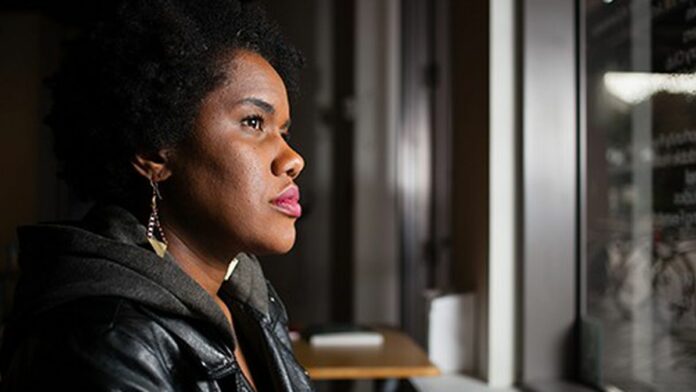
On the first Friday of February, during Oakland’s monthly street fair, patrons packed into Betti Ono Gallery in the heart of downtown. The gallery’s walls featured photos by Brittani Sensabaugh, depicting Black, disenfranchised communities across the country — including the deep East Oakland one where the artist grew up. With her mother by her side, Sensabaugh spoke about what she aims to achieve through her work: uplifting struggling communities by representing them authentically, rather than relying on harmful stereotypes. Afterward, a patron asked a question that seemed to have been on the minds of many: “What are your thoughts on gentrification?”

“I’ve got a lot of thoughts about that, but let me just keep it to a bare minimum,” Sensabaugh responded. “It’s not even the fact that they are coming in, it’s the fact that the people coming into the neighborhoods are not embracing the culture that is already there.”

At Betti Ono, conversations about art and politics are always entangled. Physically, the gallery itself offers a metaphor for that deliberate intersection. Tucked into the Broadway-facing edge of Frank Ogawa Plaza, the space occupies the same plot as City Hall, with its door mere yards from the city council chambers. There, it’s uniquely poised to bring the concerns of artists and culture makers to a place where they can’t be ignored by those in power — to amplify unheard voices on a stage at the center of the city.

But Betti Ono’s own voice is in danger of being silenced. Recently, the gallery’s founder and director, Anyka Barber, received notice from her landlord — the City of Oakland — that her rent was going up by 60 percent. That works out to $22,000 more a year, and the gallery can’t afford it. According to Barber, when she moved into the space five years ago, representatives from the city’s real estate department told her she would eventually be able to secure a long-term lease, and that the city would provide support for improvements on the space to accommodate her programming. But instead, the city has hiked the gallery’s rent every year.

Although Barber has been requesting a long-term lease from the start, the city has only offered her one-year leases, she said. And since the gallery’s last lease ended in December, she has been operating on a month-to-month basis — a situation that has greatly inhibited her ability to plan for future programming and apply for outside funding or loans, she said. The space is currently in limbo, she added, because representatives of the city’s real estate department have asked her to hang on until they decide whether they can offer her a lower rate. Meanwhile, she’s had to turn down artists and cultural organizations interested in collaborating. Soon, she’ll be launching an online fundraising campaign in hopes of keeping the gallery open.

“We don’t have a lease, which means we don’t have a home,” Barber said in a recent interview. “That’s a really, really hard thing to say about a space that has been intentional about creating space for people of color in Oakland, especially Black people, to feel like they belong and that they have just as much access to downtown and can celebrate themselves in public and be seen and be accepted and be protected just like any other group in the city should be able to do.”

The challenges facing Betti Ono Gallery are not unique. Although Oakland’s art and culture scene has blossomed during the past decade and gained widespread recognition for its vibrancy, a growing number of arts and cultural spaces are currently at risk of displacement. In fact, many have already shuttered, and artists and gallery owners are increasingly worried that Oakland may eventually lose its artistic soul.

For the past eight months, Barber has been working to stem the tide of displacement of Oakland’s artists and cultural spaces as one of the core leaders of Oakland Creative Neighborhoods Coalition (OCNC). Barber co-founded the group in June with Katherin Canton, a network coordinator with Emerging Arts Professionals San Francisco Bay Area, in hopes of organizing around rising concerns over Oakland’s arts community being priced out of the city. (Canton has since stepped away from her leadership role in the coalition due to time restraints, but well-known Oakland arts advocate Eric Arnold, a former Express staffer, has taken on a prominent role, among others.)

OCNC, which now has hundreds of members, initially came together in an attempt to draw city officials’ attention to the need for Oakland to hire more staffers in its cultural arts department before the 2015-2017 city budget was finalized in June of last year. The city has been without an arts commission since it disbanded in 2011.

The city’s cultural affairs department used to be robust: From 2001 until 2003, it had thirteen employees working specifically on arts-related matters. But since then, the department’s staffing has gotten consistently smaller. It also took a major cut during the recession. Today, it only has three full-time employees and one part-timer, with only two of those positions dealing directly with art and artists.

Pamela Mays McDonald, an OCNC member and External Affairs chair for Oakland Art Murmur, a nonprofit organization that supports and represents Oakland galleries, addressed the issue in a recent email: “The fact that the Cultural Arts Department has been kneecapped by having no commission of responsible citizens for advocacy and oversight, combined with being grossly underfunded and understaffed, leaves culture workers here defenseless against the onslaught of gentrification,” she wrote. “There is no institutional understanding that the arts are an economic engine for the area; they are not just a cynical lure to make a neighborhood pretty to attract outside investors.”

Nonetheless, during last year’s budget talks, the city council declined to increase the size of the department or reestablish the arts commission. Since then, OCNC has been working to narrow down a list of the arts community’s top priorities and concerns. So far, those have mostly focused on the need for more affordable housing, rent security for studios and creative spaces, and legislation that would immunize pre-existing cultural communities from noise complaints by new residents.

Another core concern for the coalition has been rallying artists to provide input for the Downtown Oakland Specific Plan. The city’s extensive planning process has been engaging with community members to produce a detailed vision for what downtown is going to look like if developers continue to invest in Oakland — how tall buildings will be, what kinds of occupants they will have, and how much affordable housing will be built. OCNC aims to ensure that the arts community is prominently positioned in that vision, so that the scene thrives in Oakland over many more decades.

Those involved with OCNC, and many groups of artists organizing alongside it, agree that now is a critical moment for Oakland’s creative contingent to make demands of the city, and for the city to be responsive to those demands — before Oakland loses its cultural identity.

“To be a world class city, to have all this cultural vibrancy and ‘diversity’ and all this specialness that everybody talks about, there needs to be a clear strategy to protect that and to grow that,” said Barber. “I think our city leadership could really set the stage for some really powerful new policies that could inform cities across the country and across the world.”


In the early Aughts, following the first dot-com crash, Oakland’s Uptown district was riddled with storefront vacancies, and rents were extremely cheap. So artists began to move in: DIY spaces Mama Buzz and Rock Paper Scissors Collective (RPSC) were some of the first to open up. Others soon followed, and during the next decade, the neighborhood transformed from a rarely walked, crime-ridden district to one with the densest aggregation of galleries in Oakland.

During the mid- to late Aughts, the migration of artists from San Francisco to Oakland started to hasten, as more artists were attracted by the East Bay’s affordable rents, its high prevalence of studio spaces, and DIY art culture. And in recent years, during the latest tech boom, San Franciscans have been moving across the bay in hordes, thereby driving up rents even further and making Oakland’s economic climate less accommodating to the low incomes of artists.

As rent prices have soared, even landlords who had been sympathetic to cultural spaces in the past are finding they can’t afford not to rent at market rate. And the depletion of affordable housing and workspaces is creating a strong sense of insecurity for artists and cultural professionals.

Last year, San Francisco’s arts commission conducted a survey of artists that work in the city and found that 72 percent of nearly six hundred respondents said they had either been displaced or were facing imminent displacement from their workspace, home, or both.

Last November, a taskforce appointed by Mayor Libby Schaaf to research artist housing and workspaces conducted a similar survey in Oakland and received more than nine hundred responses. The complete survey results have yet to be published, but a memorandum that the task force submitted to the mayor in late December outlined the main takeaways: While 70 percent of respondents said that they do not fear imminent displacement in their workspaces or homes, the majority felt that workspace and housing costs are the biggest challenge to being an artist in Oakland. In addition, half of the respondents said they are paying month-to-month for housing and workspace, rendering them particularly vulnerable, especially for those in commercial spaces because they have no rent control or rent protections.
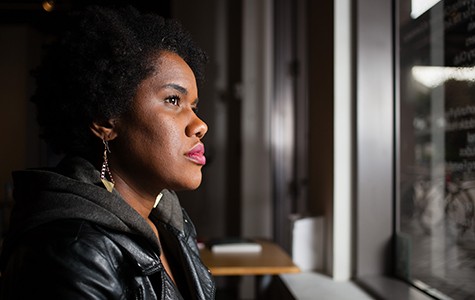
Kelley Kahn, who works on special projects for the mayor’s office and manages the task force, said in a recent interview that the results show that we’re currently in the midst of a critical window of time during which the city has an opportunity to prevent the same kind of creative exodus that San Francisco experienced. “The time is now to start intervening,” said Kahn. “And our interventions may actually have an impact because the artists have not left yet.”

But even before the survey was conducted, it was clear that Oakland’s artists were starting to face a crisis. For many, that realization came in July when Rock Paper Scissors Collective, a gallery and nonprofit community space that specializes in arts programming for low-income youth, announced that it could no longer afford the space it had occupied on the corner of 24th Street and Telegraph for eleven years. The landlord, who had long worked with the collective’s members to keep the rent affordable, finally decided to raise the rent to market-rate — more than triple what the collective had been paying. RPSC had been the last founding member of the First Friday art walk and Art Murmur — its organizing body of galleries — to still exist in the area.

“This space has become attractive to wealthier tenants because of the years of hard work we have put into building a community of engaged artists, musicians, and performers, and as a reward we are being kicked out to make way for a wealthier class of renters,” read the July 10 announcement from RPSC. “Will they share RPSC’s dedication to making art accessible for everyone? Will they be as community-focused? Will they stand in solidarity with the people of Oakland, as we have?”

The physical closure of RPSC (the collective is still doing programming out of other arts spaces) was followed by a series of similarly unsettling events. Also in July, the city declared that Humanist Hall, a community space on 27th Street, between Broadway and Telegraph Avenue, was a public nuisance due to noise complaints from neighbors. The city imposed a $3,500 fine and threatened daily $500 penalties if the complaints should persist. Not long after, a longtime West Oakland gospel church, Pleasant Grove Baptist Church, received similar threats of fines for noise complaints about its choir. And in September, as covered widely in the local press (including in the Express), a white Lake Merritt neighborhood resident called the police on a group of Samba Funk African drummers playing at the lake, resulting in a clash between drummers and Oakland police.

The issues collided at the fourth OCNC meeting in October, which was held at the Oakland Asian Cultural Center. In the crowd of about one hundred attendees was Oakland Museum of California director Lori Fogarty; Pleasant Grove Baptist Church pastor Thomas A. Harris III; Samba Funk African drummers; and curators, dancers, and visual artists of all stripes — all airing grievances about Oakland’s apparent cultural shift. At one point, Pastor Harris took the floor to passionately demand that the church community be included in the coalition’s campaign. In the moment of tension, Barber made it clear that she felt every issue that had been brought to the table was part of one complex struggle to fight displacement and cultural erasure in Oakland. “The issues that are impacting the churches are the same issues that are impacting the arts and culture community,” she asserted. “It’s not separate.”


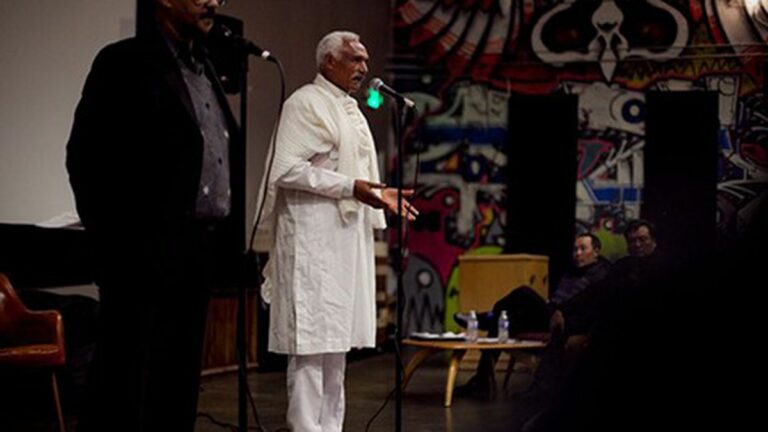
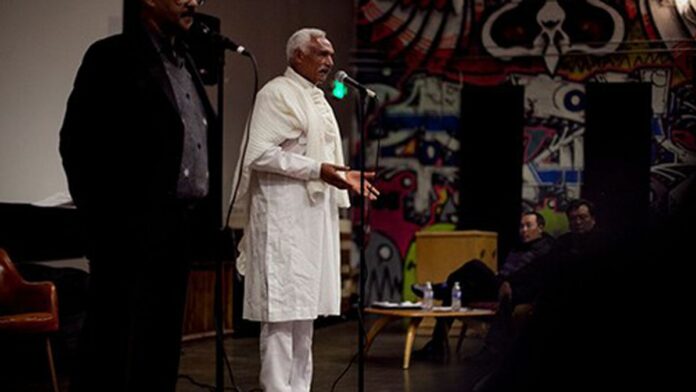
Marvin X Jackmon, a West Oakland native, co-founder of the Black Arts Movement, and seminal writer on Black radical politics, can often be found across the street from Betti Ono Gallery, at the intersection of Broadway and 14th Street, where for years he has set up his “academy on da corner.” There, Jackmon works to preserve Oakland’s legacy of Black radicalism — for which the 14th Street corridor has historically served as an anchor — while urging pedestrians to wake up to the reality of the Black struggle in America.
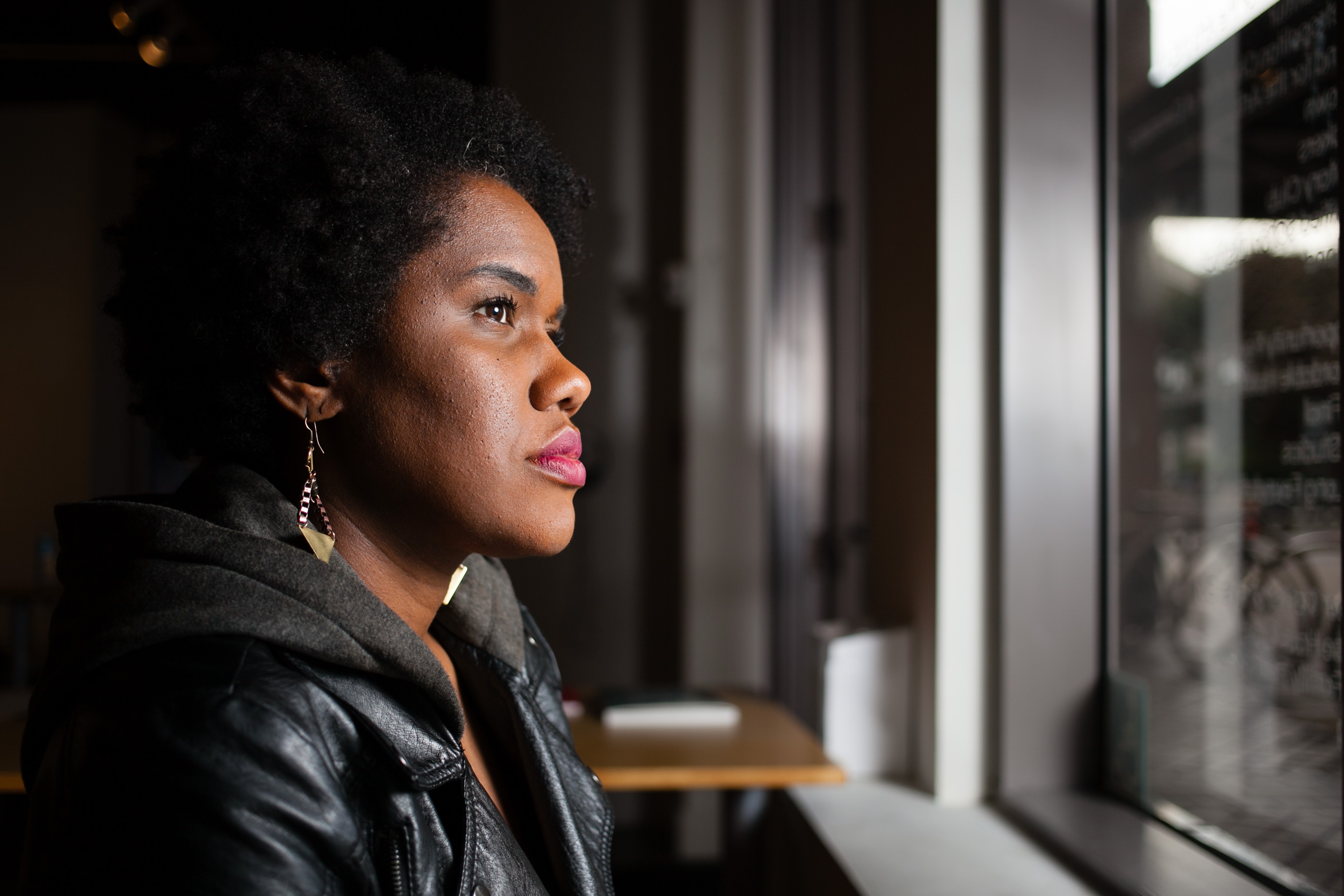
For the past year, Jackmon has also been an essential advocate for a resolution — sponsored by city council President Lynette Gibson McElhaney — to create a Black Arts Movement and Business District along 14th Street, from Oak Street to Frontage Road. The stretch includes Betti Ono, Geoffrey’s Inner Circle, the Niles Club, Joyce Gordon Gallery, Club Vinyl, The Malonga Casquelourd Center for the Arts, and a number of other longtime Black-owned businesses.

The Oakland City Council unanimously passed the resolution on January 19. As is, the official designation only entails signage for the district — Jackmon envisions Pan-African flags flying above the street. But proponents hope the council will also enact legislation that will ensure community members have a powerful voice in how the district develops and are protected from displacement. In a recent interview, Jackmon said that his ultimate goal is to build a trust fund that would allow for community members to acquire the buildings that their businesses inhabit. “The main point is how do we maintain the longevity of this district after what we went through in West Oakland, in the Fillmore, and what Harlem is going through right now?” said Jackmon. “It’s the same thing, so even if you build it, will it stand? And how long will it stand?”

At the January 19 council meeting, when the resolution was passed, a number of prominent community members urged councilmembers to not let the designation prove to be an empty gesture. “This is the first step, and I appreciate it, but there’s so much more that we need to do to ensure that we don’t become a relic and this Black Arts District is not just superficial, but we actually have Black bodies that are living in the city that can continue this legacy of artistic engagement and Black businesses,” said Carroll Fife of Oakland Alliance, a coalition for racial, social, and economic justice. “Folks at the Malonga Casquelourd Center … will they be able to impact the decisions that could displace them? Like the condo that is going up in front of the mural across the street from [the Malonga Center], what kind of say will these individuals who are part of this district, and who are business owners, have in the development of the city moving forward?”

Fife was referring to a 126-unit condominium project that’s planned for a parking lot across from the Malonga Casquelourd Center for the Arts, a historic home to some of Oakland’s most vital dance communities, such as Bantaba Dance Ensemble; Dance-A-Vision Entertainment; Diamano Coura West African Dance Company; Dimensions Dance Theater; and AXIS Dance Company, a company that works with disabled dancers. Members of the Malonga community have opposed the development in part because it would cover a large cultural mural that was the product of a three-year effort by the mural arts organization Community Rejuvenation Project (CRP). The mural project cost $80,000 — and nearly half of the money came from Oakland’s cultural funding program.

In a recent interview, CRP director Desi Mundo said that the city had initially recommended the wall as a location for the mural because it was blighted. To create the mural, CRP muralists interviewed Malonga’s artistic residents and Chinatown cultural leaders in order to create art that would depict the cultural legacy of the area and its resilience in the face of ongoing threats of gentrification. But only three months after the mural’s completion, Mundo learned about the development plans.
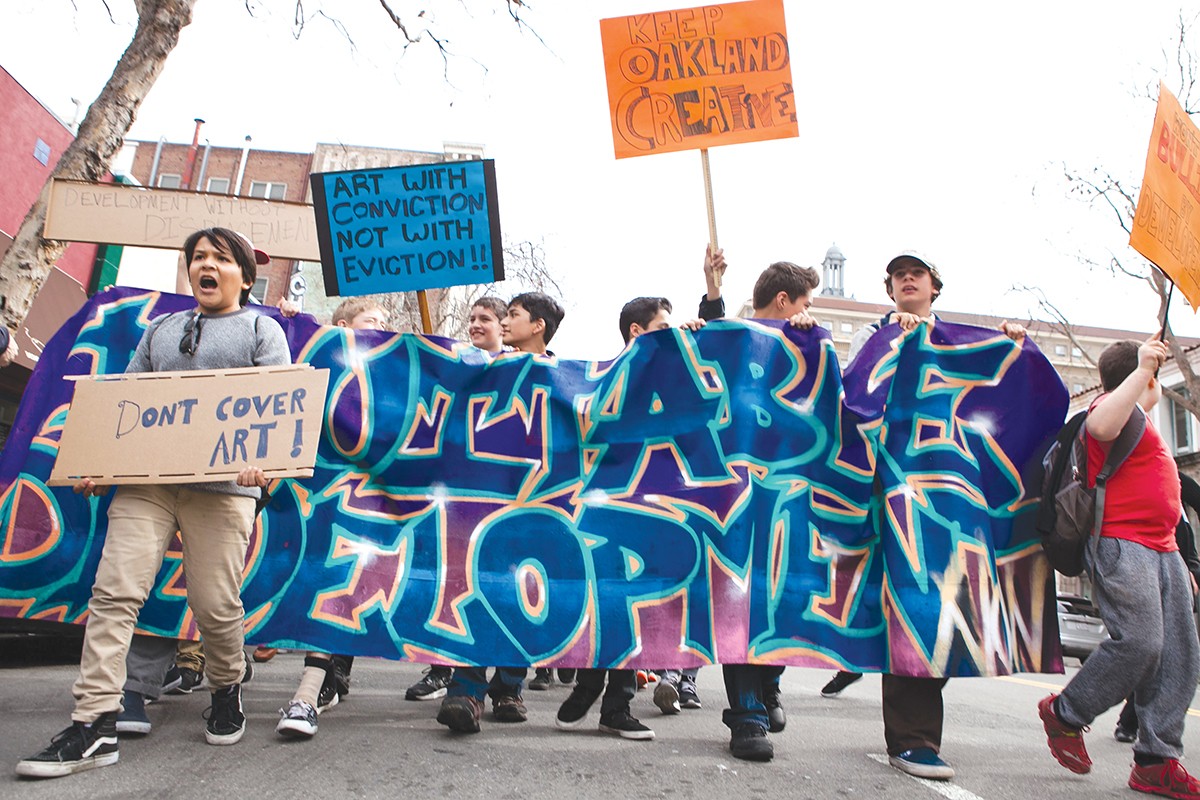
At a planning commission meeting earlier this month, developer Maria Poncel said her company, Bay Development, plans to help “kickstart” a replacement mural project on the Laney College campus to make up for CRP’s loss. But during public comment, Mundo urged the commissioners to delay the project’s approval until Poncel offers the CRP a memorandum of understanding concerning the funding.

“The idea that we’re just gonna be capable of re-raising all that money and that the developer won’t be responsible for it, even though they said that they would, feels very disingenuous to us,” Mundo later told me.

The planning commission, however, green-lighted the condo project without requiring a firm commitment from the developer, thereby seemingly not taking the community’s concerns into account.

Since the project’s approval, Mundo and others have filed an appeal of the decision and are waiting to be notified of when it will appear in front of the city council. They ask not that the project be denied, but that the developer include community benefits in the project, including funding 100 percent of the mural replacement costs. Supporters also marched on City Hall on February 11 to draw attention to their concerns.


On the evening of January 13, a group of Uptown artists and curators convened at the 25th Street Collective, pulling up about twenty mismatched chairs around a snack table. They were nervous that the city doesn’t care about preserving their neighborhood.

Signature Development Group, run by Michael Ghielmetti, has been buying up properties in the area in order to build condos. And, as the Express reported, the Oakland Planning and Building Department, at a planning commission meeting last fall, attempted to sneak through a zoning change that would have benefited Signature by allowing the developer to construct taller buildings than would normally be allowed in the area (see “Special Deal Would Benefit Influential Developer,” 11/4). After an uproar from gallerists, who are concerned about rising rents, construction inconveniences, and depleted natural light, the city postponed the decision.

Members of the Uptown artists contingent are also vying for their own cultural district designation. But they hope to have artist-protection legislation folded into the designation from the get-go, possibly including a requirement that a certain percentage of each new development in the area go toward cultural use. They are also considering proposing that the city offer landlords incentives, like tax breaks, in exchange for renting to cultural arts spaces at below market-rate.

Vessel Gallery owners Lonnie Lee and Ken Ehrhardt are currently spearheading an effort to write a resolution based on the community’s input, and rallying people to ask their city councilmembers to support it. Their hope is that if it gets passed, it can serve as a template for other cultural districts to be designated throughout the city.

Lee and Ehrhardt moved into the neighborhood before much was there in the way of art. Like many gallerists in Oakland, they completely renovated the space, which had once been a stable for the Oakland Fire Department’s horses. Now, the worn wooden floors and vaulted ceilings add a hip charm to the loft, which glows with natural light in the afternoon and often has a pleasant breeze passing through it. Such improvements, however, have also contributed to what makes the area enticing to developers and wealthier tenants.

“[Developers] say, ‘Oh, look at what the arts have done. Isn’t it cool? We want to buy property here. We want to be here because of them,” Lee said.

For some, the Uptown gallerists’ attempt to protect the area’s art scene is already too late. The 25th Street Collective — the venue for the January 13 meeting and a shared incubating space for local makers — will soon close. The collective’s rent recently shot up by nearly 40 percent, and by August, all of the resident artists will have to be out because they can no longer afford it.

But Hiroko Kurihara, founder of 25th Street Collective as well as Oakland Makers — an organization that supports small-scale local manufacturers and artisan producers — seems more concerned with the bigger picture. She’s worked at the intersection of manufacturing and social enterprise for many years, and has also been an active member of Mayor Schaaf’s Artist Affordable Housing and Workspace task force, which Kurihara has represented multiple times at meetings for the Downtown Oakland Specific Plan.

Kurihara is interested in creating a citywide cultural district that would try to reap funding benefits from the statewide California Arts Commission budget. That way, Oakland’s arts community won’t be divided. “There’s a little pot of money, and then all these competing interests end up squabbling over scraps,” said Kurihara. “We can’t do that if we’re gonna really try to coalesce and build a cultural arts-based community.”

But she’s also concerned with how the housing crisis crucially plays into the plight of Oakland’s artists. She argues that without development impact fees to pay for more affordable housing — a program that the city has yet to approve — attempts at saving art spaces will be futile, because there won’t be any artists left who can afford to live in Oakland.

“I understand that the mayor, her platform is ‘Made in Oakland,’ but she really needs to be able to say ‘Stayed in Oakland,'” said Kurihara in a recent interview. “And I understand that right now, the city doesn’t have the revenue [to build affordable housing], and there’s a fear that if we don’t create a transitional easing into what the impact fees are going to be that development will cease. But I think if you were to ask anybody — I mean anybody — if Oakland will remain dormant [if impact fees go into effect], it’s just not gonna happen.”
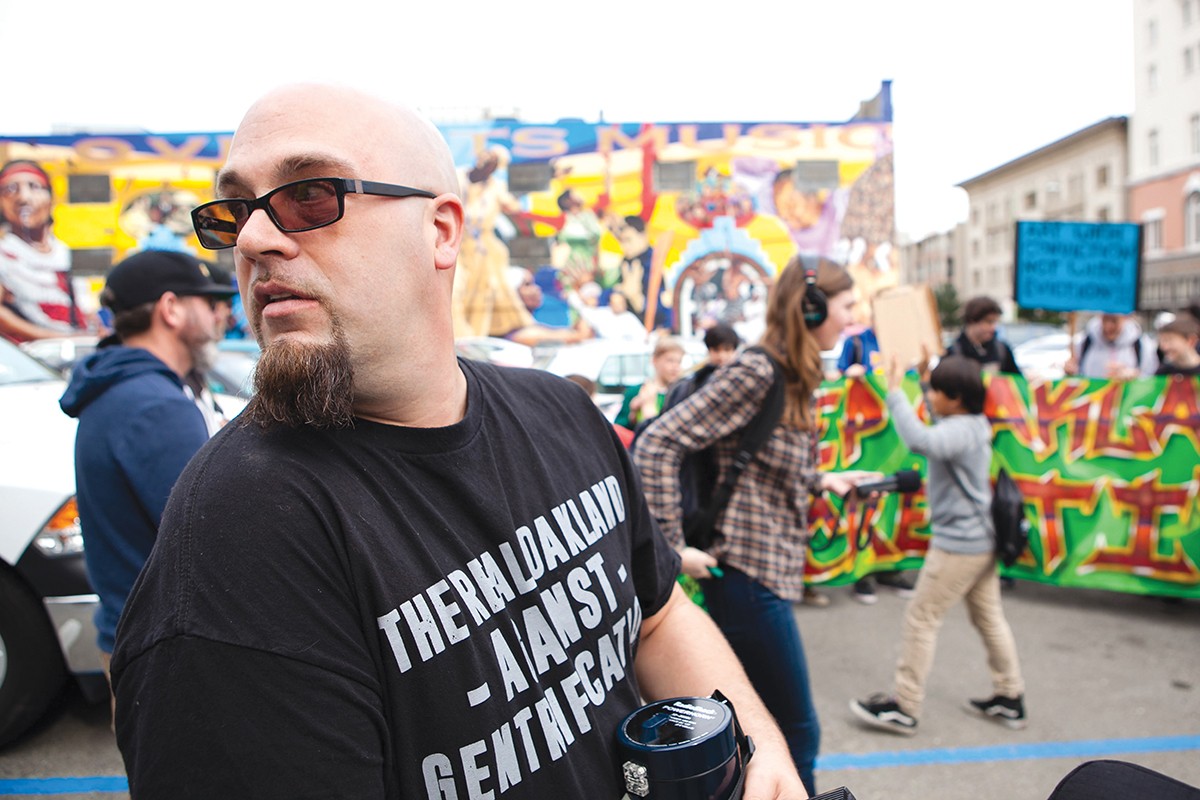
The city has been studying the idea of requiring market-rate developers to pay impact fees on new housing projects for more than a year. Earlier this month, a city council committee voted to move forward a plan to launch the fee program in September, but the full council is not expected to officially approve the proposal until sometime in March — at the earliest. Numerous other Bay Area cities, including both Berkeley and Emeryville, already have such fees in place to pay for affordable housing.

Kristi Holohan of RPSC said Schaaf recently assisted her in setting up a potential deal for RPSC to move into the bottom floor of a new condo project to be built by Signature Development Group on the parking lot directly behind the building that RPSC used to be in. Holohan said it would be a relief to finally find a space after months of being turned down by landlords all over the city, but she is also concerned that if there’s no affordable housing in the area, it may no longer be an appropriate place for RPSC’s programming.

“Are they going to have affordable housing?” Holohan asked, while painting a mural with youth in San Francisco. “Because we serve a demographic that is really diverse.”


At the January 22 opening of the newly expanded San Francisco Arts Commission galleries, attendees could barely move through the three exhibitions. The main gallery, which featured work by recently deceased East Bay artist Susan O’Malley, was packed so densely that you could barely hear internationally celebrated performance artist Guillermo Goméz-Peña giving a monologue in the center. Housed in the War Memorial Veterans Building, the galleries are a gorgeous new addition to the city’s arts landscape, yet the support that the galleries are meant to offer to local artists has arrived a few years too late. Most of the local artists who show there will likely be commuting from the East Bay.

Over the past few years, San Francisco has partnered with organizations like ArtSpan and The Community Arts Stabilization Trust (CAST) to preserve what’s left of its arts community. ArtSpan organizes art exhibitions in underutilized or vacant spaces in San Francisco. CAST is a nonprofit that uses foundation money to purchase buildings that are already inhabited by important cultural hubs, then leases the buildings back to them at an affordable rate with the intention of eventually selling it to them at the same price that the nonprofit originally paid.

Joshua Simon — who is CAST’s treasurer and is the executive director of the East Bay Asian Local Development Corporation (a nonprofit community development organization) and a member of Mayor Schaaf’s task force on artist housing and workspace — described the problem that CAST addresses as a “space chase.” That’s when buying property is just financially out of reach for arts organizations, leaving them perpetually vulnerable. CAST attempts to close that gap by buying an artspace and helping the arts organization build itself financially until it’s ready to purchase the space at the same price that CAST paid for it. In the last few years, CAST has acquired buildings for San Francisco’s CounterPulse and Luggage Store Gallery.

The memorandum that Schaaf’s task force submitted in December outlines the top strategies for preserving the arts in Oakland based on case studies from across the country. Most of them focus on ways for art spaces to achieve ownership and long-term affordability. One of the most promising strategies is to create an acquisition program for Oakland that’s modeled like CAST. Other strategies include creating community land trusts through which artists could collectively own properties; leasing underutilized city-owned buildings to artists at affordable rates (until tenants are found); incentivizing private developers to offer affordable, long-term artists spaces by using zoning tools; and greatly increasing available technical assistance and educational resources for artists. According to Kelley Kahn of the mayor’s task force, the city is currently devising programming for training artists and gallerists on topics such as how to negotiate a long-term protective lease, how to build a business plan, and how to get funding from foundations.

“Where Oakland is and where San Francisco is, I think there’s a lot more hope for Oakland,” Schaaf said in a recent interview. “I think we are intervening at a much earlier stage than San Francisco did. We are absolutely looking to learn lessons from San Francisco and avoid the displacement.”

But according to Kahn and Schaaf, in order to move forward with many of these strategies, it will be crucial to reinstate the city’s arts commission in order to work through complicated details. Kahn also pointed out that the last Oakland arts commission stopped meeting because they were having trouble reaching quorum. And she thinks that’s because the commission had very little power to influence the city and rarely dealt with heated issues. She and Schaaf also both want the city to resurrect the Cultural Affairs manager position that was cut a few years ago, and for the council to then heed both the commission and the cultural affairs manager’s recommendations.

“We also need someone who can just be mindful of the very issues we’re all talking about,” said Kahn. “About what does it mean to be an artist in Oakland? What kind of support can the city give them? What can we do from a real estate perspective to improve their ability to stay in Oakland? What can we do with our own arts and cultural space that we own? There’s a broader scope of work that needs to be held by this unit than they’re currently capable of doing.”

Schaaf said the city received a National Endowment for the Arts grant for the purpose of creating a cultural plan to preserve Oakland’s arts and to reestablish the city’s arts commission, but that process hasn’t started because Oakland needs a Cultural Affairs manager to lead it. Plus, the commission can’t be reinstated until the cultural arts department hires more staff to support it, she said. “I don’t think there’s anyone who does not support having a cultural arts commission,” said Schaaf. “It’s just that we don’t want to ask people to volunteer their time if there’s no staff support to provide them the assistance.” Schaaf, who has been mayor since January 2015, said she plans to bring forth legislation to the council on February 23 to reinstate the Cultural Affairs manager position.

Meanwhile, the full results and analysis of the task force’s survey will be publicly released in about a month, although it could be longer, according to Kahn. Schaaf said the Kenneth Rainin Foundation, a major funder of the arts, has agreed to partner with the city to move forward with some of the strategies presented by her task force. The Rainin Foundation recently formed its own working group to conduct a study of Oakland’s art ecosystem to identify how best to support those strategies, said Schaaf. When asked for a general timeline, she offered only that “work is underway.”


At the most recent presentation for the Downtown Oakland Specific Plan, which was held at the Malonga Casquelourd Center, the plans presented were meant to reflect adjustments made based on community input. For example, in the uptown area (technically called Koreatown Northgate), planners had applied a “surgical” approach to infill development so as not to displace galleries in the area, and plans for the 14th Street corridor were titled “Black Arts Movement and Business District.” The adjustments were somewhat promising, but seemed like baby steps to many.

As he presented, the planning head, Victor Dover, projected a slide that read “Development Without Displacement” in large, bold letters. But toward the end of the lengthy presentation, an older Black woman could not wait any longer. She walked in front of the audience to exit, and voiced angry concerns about local, Black-owned establishments having already been displaced because of development.

Soon, Betti Ono could be the next of those to go.

“We need something implemented right now. Today,” Barber told me. “We’ve needed it before the lease expired, and we’ve needed it for four or five years, so to say just hold on and at the same time we can’t even do business is damaging.”

“We’re being pushed out,” she continued. “We’re being priced out, and we need the city to act now. What are you waiting for?”

Correction: The original version of this report erroneously referred to AXIS Dance Company as Axis Dance Group.
The Past Is Never Dead

My new girlfriend blurted out that she had a cuckolding past with her ex-husband. She says her ex badgered her into arranging “dates” with strangers and that he picked the guys. Her ex would then watch her having sex with a guy in a hotel room. The ex only watched and didn’t take part. I am really bothered by her past. She says she did it only because her ex pressured her into it and she wanted to save her marriage, so she agreed. But I suspect she may have enjoyed it and may have been testing me to see if I wanted to be a cuck. What should I do? I am really torn by my feelings toward her.

Confused In NOVA

You suspect she may have enjoyed fucking those other men?

I hope she enjoyed fucking those other men — and you should too, CINOVA. Because even if cuckolding wasn’t her fantasy, even if she fucked those other men only to delight her shitty ex-husband, anyone who cares about this woman — and you do care about her, right? — should hope the experiences she had with those other men weren’t overwhelmingly negative, completely traumatizing, or utterly joyless.

And, yes, people will sometimes broach the subject of their own sexual interests/fantasies using the passive voice or a negative frame because they’re afraid of rejection or they want an easy out or both. (“My ex was into this kinda extreme thing, and I did it because I felt I had to.” “That’s gross.” “Yeah, I totally hated it.”) But cuckolding is almost always the husband’s fantasy — it’s rare for the wife to initiate cuckolding scenes/relationships — so odds are good that your girlfriend is telling you the truth about those other men being her ex-husband’s idea/fantasy and not hers.

As for whether she’s testing you: That’s a pretty easy test to fail, CINOVA. Open your mouth and say, “Cuckolding isn’t something I would ever want to do. The thought of you with another man isn’t a turn-on for me. Not at all.” It’s an easy F.

What should you do? If you can’t let this go, if you can’t get over the sex your girlfriend had with her ex-husband and those other men, if you can’t hope she had a good time regardless of whose idea it was, if you can’t take “I’m not interested in cuckolding you!” for an answer — if you can’t do all of that — then do your girlfriend a favor and break up with her. She just got out from under a shitty husband who pressured her into “cheating.” The last thing she needs now is a shitty boyfriend who shames her for “cheating.”

My husband is Native American. I’m white. We’ve been together sixteen years, raising a couple kids. We love each other very much, so this isn’t a deal breaker. I’ve got a thing for his long black hair. He’s a drop-dead gorgeous man, and while I gave up asking that he wear leggings or a breechcloth once in a while, I wish he would grow out his hair. I’m willing to wear (and do) anything he asks. He’s somewhere to the left of Sherman Alexie when it comes to this stuff, but could you tell me why I’m so wrong? He keeps his hair short, and the one time I made enough of a fuss, he grew it out and never washed it just to spite me. A long time ago, he participated in a sun dance, and he looked incredible. So I guess that makes me a blasphemous pervert, but really? Is asking for a couple of braids really so wrong?

Whitey McWhite Wife

I forwarded your e-mail to Sherman Alexie, the award-winning poet, novelist, essayist, and filmmaker. Your question must have touched a nerve, WMW, because Alexie’s response arrived while my computer was still making that woooosh-sending-e-mail sound. Now I’m going to step aside and let Alexie answer your question …

“What does ‘to the left of Sherman Alexie’ mean in this context? I doubt there are very many Native dudes more leftist than me! And long hair on Indian men is more conservative and more tribal, anyway — more ceremonial. More of a peacock thing, really. And a lot of work! My Native wife certainly misses my long hair. But I don’t miss the upkeep and I don’t miss answering questions about my hair. I mean, I cut my hair thirteen years ago (more than 25 percent of my life ago), and some people still ask me about it! Thirteen years! Also, Native men tend to cut their hair as they age. Long hair is generally a young Indian man’s gig, culturally speaking.

“I would venture that Native dude is tired of being romanticized, ethnocized, objectified. We Indians get enough of that shit in the outside world. Maybe this dude doesn’t want that in bed. Or maybe he just likes the way he looks with shorter hair. Because I am getting so gray, long hair would make me look like a warlock having a midlife crisis. Maybe this Indian dude is just sick of all the sociopolitical shit that comes with long hair. Maybe it kills his boner. Talking about it has certainly killed my boner.”

Why would you call blumkins “sexist”? Are you excluding the idea that gay, bi, and trans people might participate? There are many sexual practices that are degrading. If the partner consents, how is it “sexist”? Lastly, have you considered that a heterosexual female may want a blumkin of her own? I’m a heterosexual male, and I have no idea how you could defecate and remain erect — but to each his own! Your answer was irrational and sexist!

The Problem Isn’t Always Sexism

Go to Urban Dictionary and read every definition for “blumkin,” TPIAS. There are nine of them. We’ll wait.

While almost all of the proposed definitions — including the top one — are gendered (“Taking a nice shit while your woman is sucking your cock”), even definitions that aren’t gendered (“Getting a blowjob while taking a stinky shit”) include examples of usage that are gendered (“Anthony really enjoyed it when Christy gave him a blumkin last night”). While a gay dude could suck his man’s cock while he was taking a stinky shit, and while a trans man could go eat his cis girlfriend’s pussy while she was dropping a deuce, the whole conversation about blumkins — and since blumkins are mythical, TPIAS, the convo is all we’ve got — isn’t about consensual degrading sex play. It’s about the symbolic degradation of women.

And that’s sexist.

It’s like gerbiling: Everyone has a butthole, anyone can walk into a pet store and buy a gerbil, paper-towel tubes are everywhere. But gerbiling is always described as a gay sex act. The fact that straight, bi, asexual, or even deceased people could theoretically have their asses gerbiled doesn’t make joking about gerbiling not homophobic. The anatomical technicality doesn’t exonerate gerbiling. Same goes for blumkins.

So my ruling is final: Joking about gerbiling is homophobic (but funny if done right), just as joking about blumkins is sexist (ditto).

It’s always a little frustrating to read columns where we hear only one side of the story. Maybe you could solicit letters from both partners? A couple would agree in advance what the problem was and both send in a letter, but they should not read each other’s letters. Keep up the great work!

Just An Idea

I love this idea, JAI. Any game couples out there? Throuples welcome, too!

Co-Working Witch Wives: Swoon and Monica Canilao at Chandran Gallery

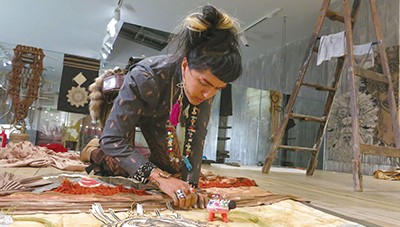
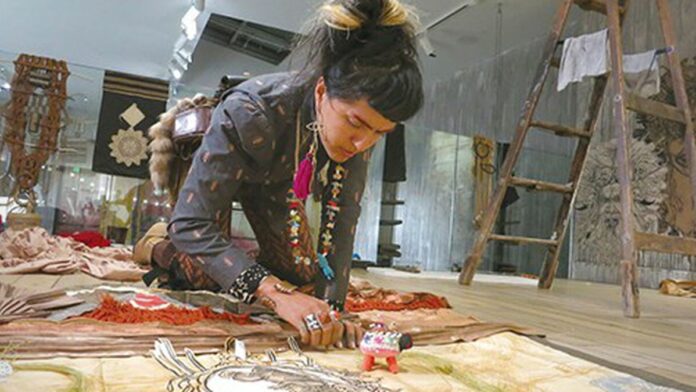
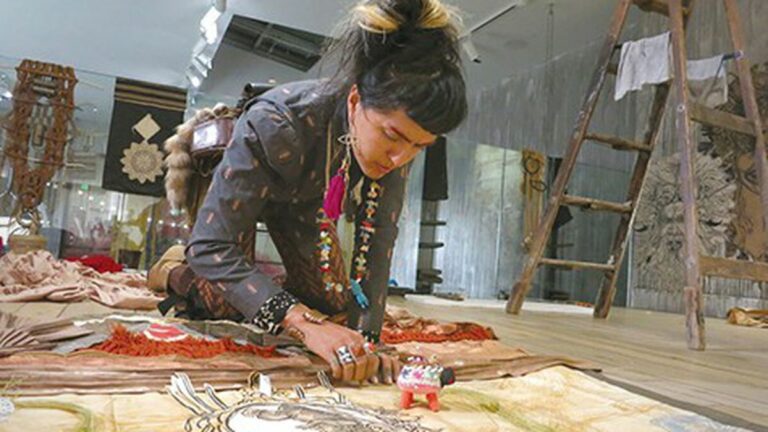
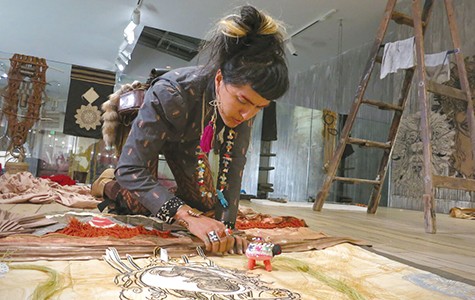
On Friday of last week, internationally famous street artist Caledonia Curry, better known as Swoon, and Oakland-based installation artist Monica Canilao hoisted a crown-like sculpture up toward the high ceilings of Chandran Gallery in San Francisco (459 Geary St.). Streams of lace and cloth draped down from the rounded framework, making it look more like an elaborate skirt or a dolled-up specter. In preparation for their joint show, Witch-Wife, opening on Friday, the two artists had entirely transformed the sprawling, white-wall gallery into an eclectic den, with heaps of fabric and paints strewn about the floor.

When you enter the gallery, Canilao’s whimsical assemblages of found objects adorn the right wall, and Swoon’s large, wheat paste portraits cover the left, then the two tracts intersect in the ground floor gallery (a high-ceilinged space that you descend into through an open staircase). There, the two have collaborated on an immersive installation with three core pieces — hanging sculptures that resemble feminine spirits consisting of printed figures by Swoon and textile adornments by Canilao. The artists have been referring to the sculptures as “witches” throughout the installation process, and each one is named after a female ancestor of one of the artists.

To talk with me, the two sat down on a bed of cushions and silky, patterned textiles piled on the floor. It was almost unclear whether the nest was part of the show, or if it was actually for resting. Conceptually, the boundary between the show and the artists’ personal lives is exceptionally porous as well — almost to the point where it seemed like a chore for them to describe the exhibit in non-emotional terms.

Primarily, they explained, Witch-Wife is about exploring intuition and the mystical consciousness that fuels dreams and creativity. As an example, Swoon pointed to instances in which her dreams have predicted the events of the following day — experiences that jolt her out of her rational day-to-day life. “It’s one of those things where you get this peek into this other way of knowing. It’s a small event, but it makes me question my sense of time, and my sense of space, and the way we understand the world,” she said. “I think that the act of making art is kind of always trying to tap that.”

While researching Witch-Wife, Swoon asked her great aunt if she had ever had a dream that predicted something. She replied that she always dreams of her great grandmother right before someone dies. After learning more about their female ancestors, the artists realized that, like objects, intuitive practices have long familial lineages, but are often not discussed because they are thought of as “witchy.” In the show, the two artists reaffirm this witchy intelligence through their creative practice, by listening to their intuition, their dreams, and each other.

Swoon and Canilao’s investigation into the creative process is underscored by the alchemical connection between them. The pair met about ten years ago in New York City when Canilao handed Swoon a patch onto which she had printed a bird. Swoon was immediately taken with her work. Two years later, in 2008, they had their first joint show at The Luggage Store gallery in San Francisco.

In general, Canilao is fascinated by evolving lineages. In her solo work, she primarily builds wall-hanging assemblages that resemble ornate altars with items from her vast personal library of collected objects — which includes everything from flecks of wallpaper found in abandoned houses to vintage jewelry boxes. The things she collects all hold a specific significance for her, depending on how she found or received them, or where she was at the time — literally and emotionally. But she also considers them heavy with their own history, which she works to transform into a new story through her art.

A few of her pieces in the show are assemblages made from disintegrating vintage pin-up posters that were given to her by a man whose estate she was helping to organize. Through ornamentation and collage, she aimed to reclaim them as empowered, rather than objectified, figures. Another is an ode to a friend who overdosed on heroin: At the top of a hanging assemblage, a black crow’s head juts out of the wall, carrying a dried poppy stamen in its mouth.

Swoon’s expressive, printed portraits on slightly off-white paper complement Canilao’s assemblages with a sense of antiquity. Some feature family members, while others feature people she met while working in other countries — a young girl from Haiti, a group of boys in Palestine. In one sun-shaped piece, a mother tenderly nurses a baby as pink ferns furl around her and bold, leafy patterns flow beneath.

When speaking about the upcoming exhibition, the pair continually interrupted each other’s answers, as if mutually interpreting their practices in real time — performing the concept of the show as they attempted to explain it. While both artists’ work pays homage to significant figures and moments that have influenced them throughout their lives, Witch-Wife as a whole celebrates the collaborative magnetism that is still evolving between them.

“People in general leave imprints on objects and things and people, and it ripples throughout everybody they’re related to, including your friendships,” said Canilao. “We’ve definitely both influenced each other’s work.”

Languages Treasured but Not Lost

In Chochenyo, one of eight languages spoken by the Ohlone people in the East Bay, there is no word for goodbye. Instead, one might say “utaspu meene,” which roughly translates to, “Take care of yourself.” To say goodbye would imply a final parting, rather than a brief separation, explained Vincent Medina, who first began reviving the language in 2010 after it had been dormant for more than seventy years.

Medina joined two other storytellers at the New Parkway Theater in Oakland this past December for the inaugural Treasure Languages Storytelling event, which celebrates indigenous and immigrant languages. Medina told the story of a hyena that saved a village from a blood-thirsty monster, first in Chochenyo, (and then translated in English), allowing the musicality of the language to shine through. A second event, planned for February 21 at Awaken Cafe in Oakland, will feature storytellers presenting tales in Dafin (Burkina Faso), Shona (Zimbabwe), and Twi (Ghana), among other languages. Steven Bird, a University of Melbourne professor who is currently a visiting scholar at UC Berkeley and who co-hosted the December event, adopted the term “treasure language” from speakers of Rama in Nicaragua who were tired of hearing that their language was “threatened” or “dying.” They preferred the term “treasure” because the language is “small and precious,” he said.

Bird, a computer scientist by training, began developing writing systems for ten treasure languages in West Africa in the mid-Nineties. Working with small and isolated communities in the Amazon and Papua New Guinea, he and a team of students eventually developed a mobile app to help these hard-to-reach communities record their languages before they fell out of use. The team piloted the app, called Aikuma, in 2012 in Papua New Guinea, where they also held the first storytelling event. When he arrived, fewer than 1,000 people spoke the local language, Usarufa, and of those, none were under thirty years old. The storytelling event was essential, he said, because it demonstrated to the younger generation that the elders in their community knew something they didn’t know, instilling pride in their special knowledge.

As the internet has contributed to globalization and increased dependence on the written word, communities that speak non-dominant languages are facing more pressure to adopt dominant ones, said Robyn Perry, a former student of Bird’s who co-hosted the Treasure Languages Storytelling event. It’s not just people living in remote or isolated areas who feel that pressure, but also immigrants and refugees living in urban centers, Perry said. For the past year, she and Bird have been working with refugees and immigrants living in the Bay Area to assess attitudes toward the loss of their native languages. Specifically, they’ve been working with Mien speakers from Laos and Vietnam and Tigrinya speakers from Eritrea and Ethiopia. For many immigrants, the problem is one of status, she said. “The message that is communicated to them is that they aren’t cool or special, and they need to work hard and put their nose down and become like mainstream American culture.”

There are also more insidious ways that governments use language to oppress native or indigenous cultures, Perry said. Such was the case with Chochenyo, Medina explained, when the first American settlers adopted a policy of exterminating the native residents. By the 1930s, only a handful of speakers remained. Fearing the language would be lost, John Harrington, a UC Berkeley linguist, began documenting Chochenyo speakers in Sunol. More than seventy years later, Medina relied on Harrington’s hand-written notes and voice recordings to painstakingly analyze the phonetic transcriptions in order to revive the sleeping tongue. Now, he is able to teach others and said there are about twenty people in the community who can speak with some level of fluency.

For Medina, learning the language allowed him to access a part of himself he didn’t know was missing, he said, giving him a deeper understanding of the ways his ancestors thought about the world. “There were songs about Mount Diablo or Mission Peak in Fremont, stories about bodies of stone being defeated in the underworld and stories that go to the very beginning of time,” Medina said. “It’s not just about relearning words, but also about connecting to a world view.”


A Guide to Noise Pop

Because Noise Pop, a large music and film event that takes place at various venues throughout San Francisco and the East Bay from February 19 through 28, is packed with film screenings and concerts featuring local and national acts, it’s best to create a game plan to take advantage of the many events taking place throughout the week. Unlike other local festivals, such as Outside Lands and Treasure Island, where attendees commit to a day or weekend’s worth of shows, at Noise Pop, the lack of structure makes it possible to curate your own experience. To help you navigate the festival, we’ve put together a list of live music you shouldn’t miss at this year’s edition.

Diane Coffee, Hazel English, Be Calm Honcho, and Dick Stusso

Tues., Feb. 23, 7 p.m. Brick & Mortar Music Hall (1710 Mission St., San Francisco). $15.

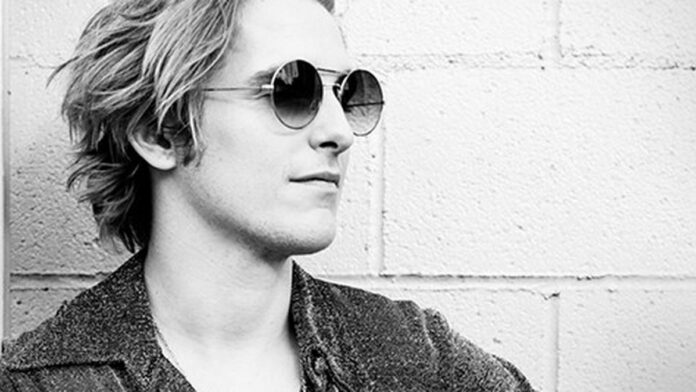
Diane Coffee is the solo project of garage-pop duo Foxygen’s drummer, Shaun Fleming, whose sensual brand of his indie and soul fusion has attracted new listeners and Foxygen fans alike. The show will also include Oakland’s electro-pop singer and Day Wave’s protégé Hazel English. Day Wave’s Jackson Phillips recently produced her single, “Never Going Home,” which is an endearingly simple, modern lullaby. The San Francisco soul ensemble Be Calm Honcho will yank the lineup out of its chillwave vibe with its soulful, high-energy take on Americana. Dick Stusso’s fuzzed-out, lo-fi country folk songs also showcase a novel take on traditional sounds.

Ringo Deathstarr, Bed., Plush, and Crush

Wed., Feb. 24, 7 p.m. Bottom of the Hill (1233 17th St., San Francisco, CA). $12.

The infamous Austin neo-psych rock band Ringo Deathstarr, which has a reputation for putting on unpredictable live shows, headlines Wednesday’s show at Bottom of the Hill. Because its performances can be so beautifully wild, this should be one of Noise Pop’s more spontaneous concerts. Bed., whose sparse rock songs are reminiscent of early Nineties alt-rock outfits such as The Lemonheads, will perform along with the noisy garage-pop band Crush from Oakland. Plush, which shares the bill, is a San Francisco shoegaze band known for its potent yet washed-out, reverb-laden rock ballads.

The Thermals, So Pitted, Cruel Summer, and Partybaby

Thur., Feb. 25, 8 p.m. Brick & Mortar Music Hall (1710 Mission St., San Francisco) $16.

Thursday’s headliners at Brick & Mortar Music Hall, The Thermals, just released its single, “My Heart Went Cold,” a punchy, pop-punk breakup anthem. Even if you haven’t heard the other bands on the lineup, The Thermals’ set should be reason enough to catch this show. So Pitted is a punk band that uses feedback as instrumentation in its abrasive compositions. In contrast, Cruel Summer evokes Jesus and Mary Chain with its chime-y, lyrical love songs. Partybaby is an interesting fusion of thrash and punk rock.

Wax Idols, Dinosaurs, and Carletta Sue Kay

Sat., Feb. 27, 8 p.m. The Knockout (3223 Mission St., San Francisco). $15.

Saturday’s show at The Knockout presents a rare opportunity to catch The Wax Idols in a small, intimate venue. Wax Idols is an all-female, self-proclaimed “sad-core” band that splits its time between Oakland and Los Angeles. It showboats a bit of mysterious bravado while blasting listeners with its complex, wall-of-sound-style instrumentation. The show will also include San Francisco based surf-punk band Dinosaurs and the soulful, cross-dressing crooner Carletta Sue Kay (which is the alter ego of singer-songwriter Randy Walker). Kay has been praised in The New York Times for her epic and powerful stage presence, as well as her work with The Magnetic Fields.

American Tragic by Wax Idols

DIIV, Dirty Ghosts, Creative Adult, and Fine Points

Sun., Feb. 28, 7:30 p.m. The Independent (628 Divisidero St., San Francisco). $22.

DIIV, one of the more well-known acts at Noise Pop this year, will close out the festival with its show on Sunday at The Independent. The band just released a new album, #IsTheIsAre, which frontman Zachary Cole Smith wrote from rehab. The emotional new release should yield a poignant live show. The lineup also features several notable Bay Area bands. The high-energy, dance-rock group Dirty Ghosts will perform along with the gritty, post-hardcore band Creative Adult and surf rock outfit Fine Points.

Casa Cubana’s New Clothes

Like so many peasant foods, a traditional Cuban ropa vieja (literally, “old clothes”) is a dish that showcases a kind of ingenuity born of necessity — leftover flank steak stewed for several hours until it is so tender that it falls apart like a set of worn-out rags. Served over a simple bowl of rice and beans, it is one of the world’s great comfort foods.

Casa Cubana, a lounge-y Cuban restaurant that opened two months ago in the old Vo’s space in Uptown Oakland, serves an updated version of the dish that the chef, appropriately, has dubbed ropa nueva. The flank steak has been replaced with brisket and supplemented with slices of grilled skirt steak. The traditional side of rice has been replaced with a giant yucca chip stuck upright in a mound of mashed sweet potatoes.

The dish is representative of the restaurant’s Latin fusion approach to Cuban cooking, which, depending on your point of view, might be cause for celebration — or perhaps a phone call to complain to your Cuban grandmother.  

The proprietors of the Casa Cubana are best known as the folks behind Izzy’s Steaks and Chops: Sam DuVall, a veteran restaurateur who has opened (and closed or sold) dozens of restaurants in the Bay Area during the past four decades, and his longtime executive chef, Joe Kohn. The restaurant is largely a reincarnation of Habana, a fashionable Cuban fusion spot that DuVall operated in San Francisco’s Nob Hill neighborhood during the mid-Aughts. With big palm fronds that welcome customers into the high-ceilinged bar area and selections from DuVall’s extensive Cuban art collection lining the walls, this is meant to be a place that evokes easy, breezy tropical living — the kind of restaurant where you can sit at the bar counter during happy hour and binge on ham croquettas and discounted mojitos.

In a phone interview, Kohn explained that he never had any desire to create a traditional Cuban restaurant — not back when he was the chef at Habana and not now at his new Uptown Oakland digs. “There are plenty of those,” he said. (To which my belated reply — at least with respect to the East Bay — is, “Where?”) Neither Kohn nor DuVall nor their Mexican-born chef de cuisine Enemias Jimenez claim any Cuban ancestry, though DuVall — whom Kohn described as “a real Cuba-phile” — has probably visited the island some fifty times over the years.

At Casa Cubana, Kohn has resurrected most of Habana’s most popular dishes — the seared duck breast and the guava-glazed pork ribs, for instance. But he has also made a number of tweaks to account for the preferences of today’s diner. For instance, the new restaurant has more California-friendly vegetarian options — including, Kohn pointed out with evident pride, a salad featuring dressing made with hemp seeds. The cooking techniques, too, have been updated. Most of the meat dishes, including the duck and the ribs, are now cooked sous vide — i.e., vacuum-packed and cooked slowly in a temperature-controlled water bath.

All of this is part of the restaurant’s effort to take traditional Cuban dishes and, in Kohn’s words, “bring it up a few notches.”

Whether you wind up celebrating these liberties or giving them the side-eye will probably depend in part on how you feel about the mixing of savory and sweet — a theme that dominated my meals at Casa Cubana from beginning to end.

Where that sweetness worked well was in cold dishes that made for a refreshing appetite primer. The Habana Cocktail was a tropical, Technicolor answer to the kind of shrimp cocktail you might find at a stuffy wedding reception: poached shrimp and fat cubes of avocado that we scooped from an old-fashioned sundae glass, chasing each bite with a sip of bracing, vinegary-sweet tomato water. The hearts of palm salad likewise pointed toward the tropics. Here, the sweetness of the toasted hazelnut vinaigrette was balanced by bitter greens and the vegetal, pickle-y juiciness of the nominative corazones.

Both of these were better than the tierra fritta, a kind of mixed vegetable fry that was one of the few starters I ordered that didn’t have a sweet component. (Anyone who has eaten at an Outback Steakhouse would recognize this as a clunkier, less skillfully fried stand-in for a “Bloomin’ Onion” — with greater vegetable variety, but little crunch, and batter that fell off at the slightest prod.)

Once you move onto the entrées, however, the pervasiveness of overly sweet elements may threaten to derail the meal. The lechon asado — i.e., slow-roasted pork shoulder — was emblematic of the kitchen’s strengths and its weaknesses. On the one hand, the thick slice of pork had been roasted to perfection in its fennel and citrus marinade so that it was savory and tender and just fatty enough. On the other hand, everything that came with the lechon was just bizarre — and bizarrely sweet. Over the past several centuries of culinary history, no one has been able to improve upon a humble, soulfully prepared plate of rice and beans. So it was inexplicable to me why Kohn chose to replace it with forbidden black rice, a slightly nutty varietal that’s often used in Asian desserts. Everything else on the plate was similarly dessert-like: chunks of pineapple and what appeared to be candied orange peel. (The one saving grace: Although Cuban food isn’t known for its spiciness, Casa Cubana makes a legitimately fiery housemade habanero hot sauce that’s available by request. Eating it with the pork almost helped balance out all that sweetness.)

As for the aforementioned ropa nueva, this was another dish that just confused me more than anything. Kohn described it as “meat two ways” — grilled steak with chimichurri sauce on top of what was essentially a tomato-based beef stew. Nothing was terribly wrong with any of the individual elements, but it also wasn’t clear how any of it went together. Without the usual rice accompaniment, there was nothing to soak up the ropa‘s meaty juices, and the purée of boniato (a kind of sweet potato) was spiked with so much cinnamon, it just reminded me of pumpkin pie.

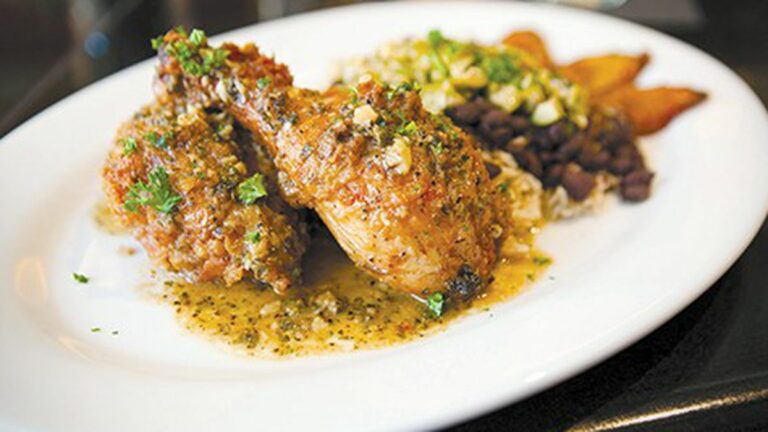
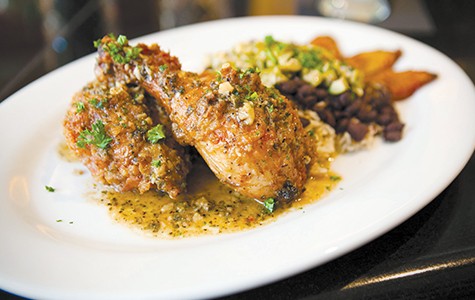
Still, there is real skill in this kitchen, which most often showed itself in the preparation of the meats themselves. My favorite dish was the pollo frito, a fried chicken dish for which the leg and thigh were first cooked sous vide for several hours, then skillet-fried to order and served in a rich, savory pan gravy made from the juices that had collected in the Cryovac bag. That gravy, and the fact that some fried plantains were the only sweet thing on the plate, was best thing about the dish. The second best thing: This was the one entrée I ordered that came with a mound of traditional — and very tasty — rice and beans.

Another highlight was a shrimp dish that came with an aromatic chile-coconut sauce. The dish also came with what might be the best tostones — i.e., fried smashed plantains — I’ve had in the East Bay. But the $22 entrée only came with two of those tostones — one tiny disc of double-fried bliss each for me and my dining partner. That stinginess was my biggest knock against an otherwise outstanding dish.

Perhaps it’s fitting that at a restaurant where so much of the menu skewed a little bit too sweet, the desserts, created by pastry chef Edgar Valenzuela, proved to be its most outstanding offerings. My favorite was a banana bread pudding that was simultaneously delicate — banana slices fanned out oh-so-prettily on top — and hearty. The pudding itself, made from housemade brioche, was so eggy and custardy, it was almost flan-like.

Surely this, too, wasn’t a dish indigenous to Cuba proper — a reminder that it’s what changes you make to a cuisine that matters, rather than whether you change it at all.


Tree Thomas Branches Out

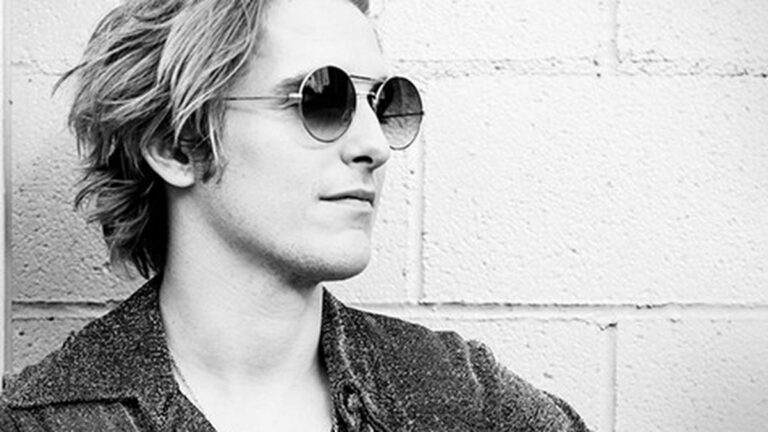
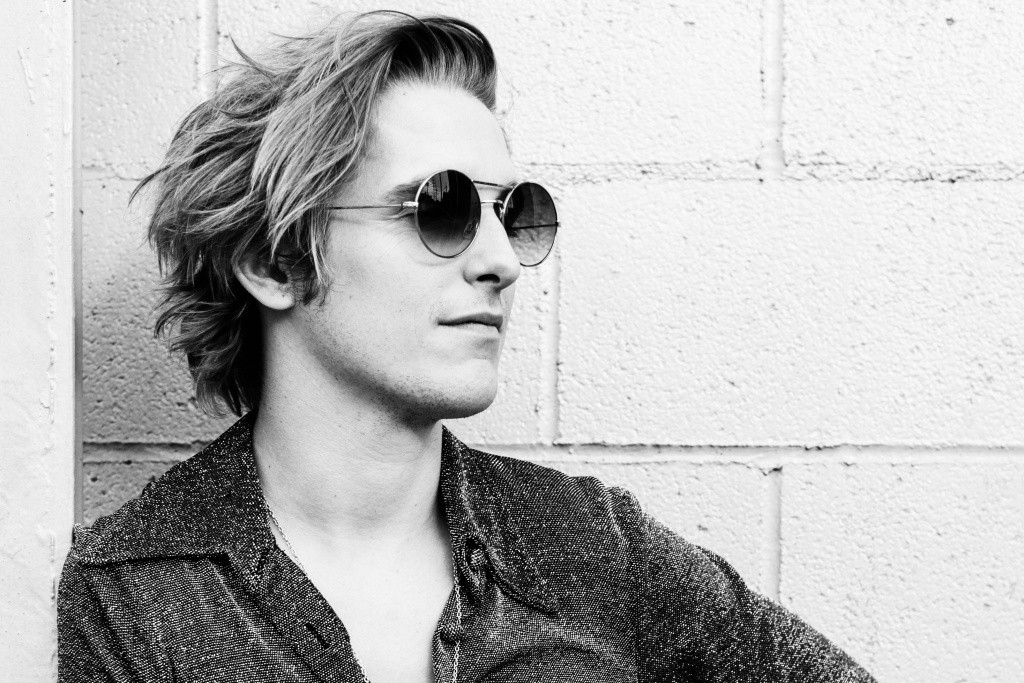
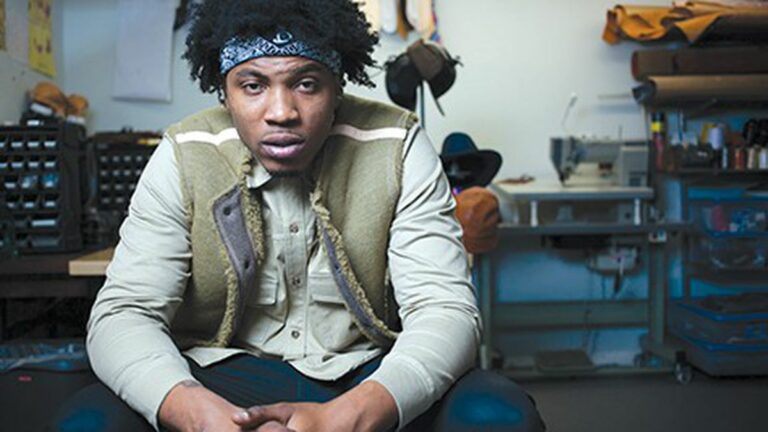
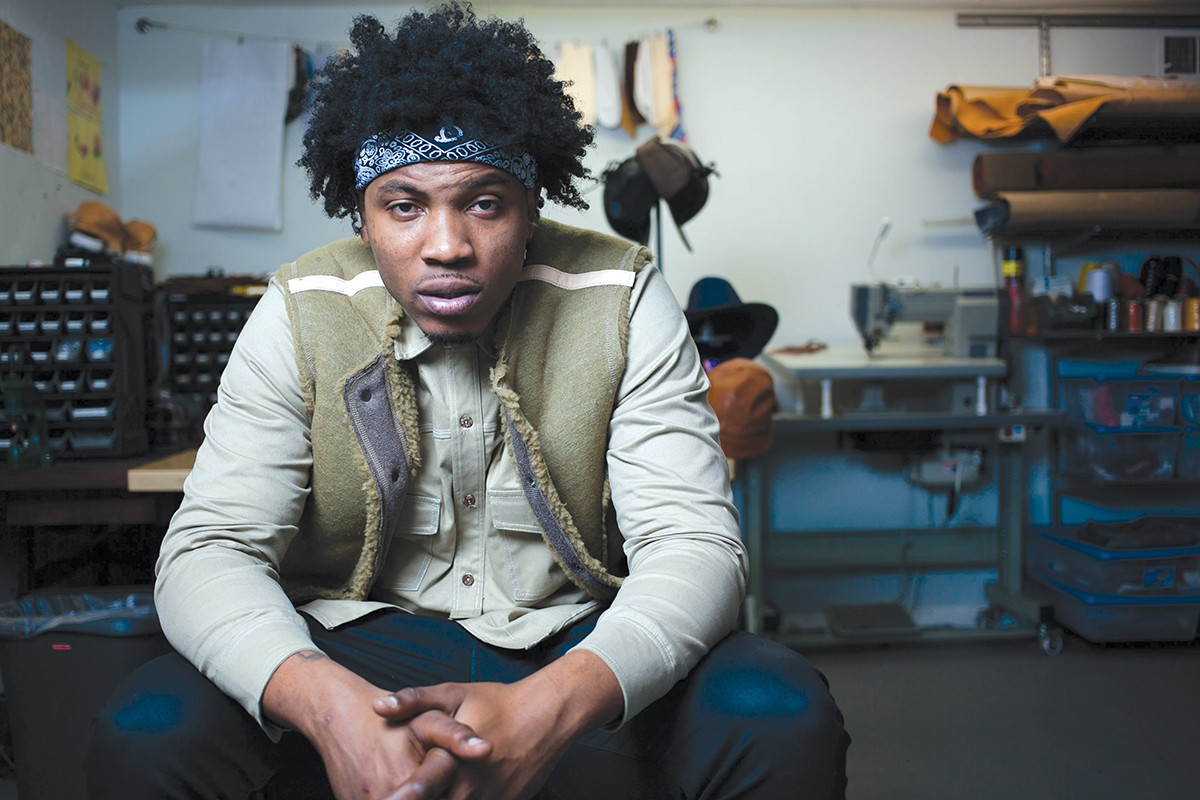
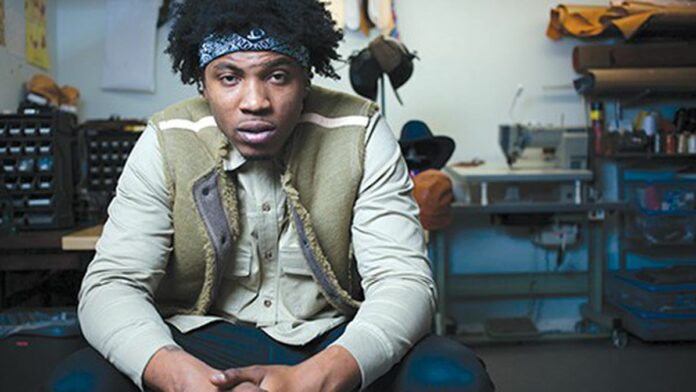
When I met up with emerging rapper Tree Thomas (born Phillip Thomas), at The Retail, a swanky menswear boutique in downtown Oakland, he was dressed in a sleek, beige button-down shirt and vest custom tailored to fit the former professional basketball player’s 6-foot-8-inch frame. A cross earring dangled from one ear and a black bandana pushed back his afro, adding quirky details to his otherwise classic look. As we walked through the storefront to get to his music studio in the back, he greeted customers with a regal air. It was easy to tell he embraces his role as a brand ambassador.

“I’m here every day helping with the brand and the clothing line and recording music,” said Thomas, as I marveled at the hand-sewn leather bags and shirts hanging on the racks. “I try to put that same basketball grind that I had into the music, since I’m transferring over. I think it’s all the same — the same hours you put in, the same work ethic, the same sacrifices.”

Outside of making music, Thomas helps run the Oakland-based fashion label Calculated Clothing. The brand’s founder, Thomas’ longtime friend Calculated Cal, recently opened The Retail on 15th Street next to the stretch of up-and-coming shops and galleries at the center of the budding Second Saturdays art walk. Thomas is a partner and unofficial design consultant for the new business, and his music studio is nestled in the back of the shop, behind Cal’s workspace with its arrays of vintage sewing machines, sheets of dyed and distressed leathers, and sample clothing.

Locally and nationally, the worlds of rap, fashion, and sports are more intertwined than ever this year. Marshawn Lynch, the newly retired Seattle Seahawks running back and Oakland native, just opened his Beast Mode athletic wear store in Old Oakland, and he’s also been known to hang out with Mistah F.A.B. and E-40 and spit bars from time to time. East Bay rapper-turned-spiritual guru Lil B has taken to Twitter to leverage curses on several NBA players, which has added a layer of superstition to the Warriors’ supernaturally successful season. And Richmond rapper IAMSU recently performed his new single, “Game Time,” at halftime during the Sacramento Kings’ game against the LA Lakers.

This conflation of pop cultural realms is fertile ground for the 26-year-old Thomas’ move into music and apparel. A few years ago, he was a college basketball player with a promising career ahead. After his 2012 graduation from Portland State University, he was recruited to the national team of Malta, a small island nation off the coast of Italy, where he lived and played professionally for nearly two years.

Thomas had been rapping and making beats since high school, and he said that when he was living in Europe, his lax practice schedule afforded him plenty of free time to work on his creative practice. In Malta, he penned his debut mixtape, 2013’s Peach Street, so named after the street he grew up on off 96th Avenue in East Oakland.

After returning to the Bay Area two years ago, Thomas retired from sports and turned his full focus on his artistic and entrepreneurial endeavors. In 2015, he released a self-titled, six-track EP. While Peach Street included a smattering of Nineties-indebted beats with a jazzy flavor, on Tree Thomas, the rapper streamlines his focus toward a trap sound with a bass-heavy knock and layers of psychedelic instrumentation that bring out the melodic qualities of his otherwise rugged flow. While its beats come from several different producers, Thomas’ vocals work particularly well over Trippy Sanders’ productions, such as “Selfie$” and “D2D$,” with wobbly, ominous synths destabilizing Thomas’ otherwise straightforward rap style and adding a foreboding ambience.

Meanwhile, on “4T$,” which features IAMSU and Kevin Gates, a rising rap star from Louisiana, Thomas plays with Auto-Tuned rap singing in the hook — a style he’s currently evolving for his upcoming album with the production crew The Elevaterz, whose credits include making beats for Berner, Migos, and Wiz Khalifa.

Thomas’ work in the fashion industry has landed him some important connections that helped him lay a solid foundation for his music career. His alliance with Gates, whose album Isaiah debuted at number two on Billboard earlier this month, has been particularly fortuitous.

Gates found out about Calculated Clothing through mutual friends in the music industry, Thomas said, and eventually invited Thomas to perform with him at South by Southwest, the annual music festival in Austin, Texas, in 2014. Since then, Thomas has opened for Gates at several of his West Coast shows. While Gates was an emerging artist when they met, he’s recently become one of today’s most talked-about rappers. When he came to the Bay Area to perform at The Regency Ballroom in San Francisco last week, Thomas was his local connection, and Gates even spent time recording and hanging out in Thomas’ studio in the back of The Retail.

“It’s been very inspiring and motivating … being with him in the studio and seeing how he works,” said Thomas. “He’s a great thinker, he speaks what’s on his mind at all times, and he’s talented. It’s good being in the presence of someone who’s doing well and still being supportive.”

Currently, Thomas is putting finishing touches on his EP with The Elevaterz, which is now in the mixing and mastering phase. The project is still untitled, but Thomas said that it’s due to come out later this spring. The snippets of it he played for me in the studio were more along the lines of his new single, “DYFH” — a Sanders-produced, brooding meditation about jealousy — than the hustling anthems of the Tree Thomas EP. His experimentation with singing and more melodic production has given rise to more sentimental, vulnerable lyrics, he explained. In addition to romantic relationships, many of the songs are about his new best friend: a pit bull he rescued last summer.

“I’m a real emo dude when it comes to music, so a lot of my music is about relationships. That’s when it’s natural.”

Free Will Astrology

Aries (March 21–April 19): “Old paint on a canvas, as it ages, sometimes becomes transparent,” said playwright Lillian Hellman. “When that happens, it is possible to see the original lines: a tree will show through a woman’s dress, a child makes way for a dog, a large boat is no longer on an open sea.” Why does this happen? Because the painter changed his or her mind. Early images were replaced, painted over. I suspect that a metaphorical version of this is underway in your life. Certain choices you made in the past got supplanted by choices you made later. They disappeared from view. But now those older possibilities are re-emerging for your consideration. I’m not saying what you should do about them. I simply want to alert you to their ghostly presence so they don’t cause confusion.

Taurus (April 20–May 20): Let’s talk about your mouth. Since your words flow out of it, you use it to create and shape a lot of your experiences. Your mouth is also the place where food and drink enter your body, as well as some of the air you breathe. So it’s crucial to fueling every move you make. You experience the beloved sense of taste in your mouth. You use your mouth for kissing and other amorous activities. With its help, you sing, moan, shout, and laugh. It’s quite expressive, too. As you move its many muscles, you send out an array of emotional signals. I’ve provided this summary in the hope of inspiring you to celebrate your mouth, Taurus. It’s prime time to enhance your appreciation of its blessings!

Gemini (May 21–June 20): Coloring books for adults are best-sellers. Tightly-wound folks relieve their stress by using crayons and markers to brighten up black-and-white drawings of butterflies, flowers, mandalas, and pretty fishes. I highly recommend that you avoid this type of recreation in the next three weeks, as it would send the wrong message to your subconscious mind. You should expend as little energy as possible working within frameworks that others have made. You need to focus on designing and constructing your own frameworks.

Cancer (June 21–July 22): The Old Testament book of Leviticus presents a long list of forbidden activities, and declares that anyone who commits them should be punished. You’re not supposed to get tattoos, have messy hair, consult oracles, work on Sunday, wear clothes that blend wool and linen, plant different seeds in the same field, or eat snails, prawns, pigs, and crabs. (It’s okay to buy slaves, though.) We laugh at how absurd it would be for us to obey these outdated rules and prohibitions, and yet many of us retain a superstitious loyalty toward guidelines and beliefs that are almost equally obsolete. Here’s the good news, Cancerian: Now is an excellent time to dismantle or purge your own fossilized formulas.

Leo (July 23–Aug. 22): “I would not talk so much about myself if there were anybody else whom I knew as well,” said the philosopher and naturalist Henry David Thoreau. In accordance with your astrological constitution, Leo, I authorize you to use this declaration as your own almost any time you feel like it. But I do suggest that you make an exception to the rule during the next four weeks. In my opinion, it will be time to focus on increasing your understanding of the people you care about — even if that effort takes time and energy away from your quest for ultimate self-knowledge. Don’t worry: You can return to emphasizing Thoreau’s perspective by the equinox.

Virgo (Aug. 23–Sept. 22): You are entering the inquisitive phase of your astrological cycle. One of the best ways to thrive during the coming weeks will be to ask more questions than you have asked since you were five years old. Curiosity and good listening skills will be superpowers that you should you strive to activate. For now, what matters most is not what you already know but rather what you need to find out. It’s a favorable time to gather information about riddles and mysteries that have perplexed you for a long time. Be super-receptive and extra wide-eyed!

Libra (Sept. 23–Oct. 22): Poet Barbara Hamby says the Russian word ostyt can be used to describe “a cup of tea that is too hot, but after you walk to the next room, and return, it is too cool.” A little birdie told me that this may be an apt metaphor for a current situation in your life. I completely understand if you wish the tea had lost less of its original warmth, and was exactly the temperature you like, neither burning nor tepid. But that won’t happen unless you try to reheat it, which would change the taste. So what should you do? One way or the other, a compromise will be necessary. Do you want the lukewarm tea or the hot tea with a different flavor?

Scorpio (Oct. 23–Nov. 21): Russian writer Ivan Turgenev was a Scorpio. Midway through his first novel Rudin, his main character Dmitrii Nikolaevich Rudin alludes to a problem that affects many Scorpios. “Do you see that apple tree?” Rudin asks a woman companion. “It is broken by the weight and abundance of its own fruit.” Ouch! I want very much for you Scorpios to be spared a fate like that in the coming weeks. That’s why I propose that you scheme about how you will express the immense creativity that will be welling up in you. Don’t let your lush and succulent output go to waste.

Sagittarius (Nov. 22–Dec. 21): Asking you Sagittarians to be patient may be akin to ordering a bonfire to burn more politely. But it’s my duty to inform you of the cosmic tendencies, so I will request your forbearance for now. How about some nuances to make it more palatable? Here’s a quote from author David G. Allen: “Patience is the calm acceptance that things can happen in a different order than the one you have in mind.” Novelist Gustave Flaubert: “Talent is a long patience.” French playwright Moliere: “Trees that are slow to grow bear the best fruit.” Writer Anne Lamott: “Hope is a revolutionary patience.” I’ve saved the best for last, from Russian novelist Irène Némirovsky: “Waiting is erotic.”

Capricorn (Dec. 22–Jan. 19): “If you ask for help it comes, but not in any way you’d ever know.” Poet Gary Snyder said that, and now I’m passing it on to you, Capricorn. The coming weeks will be an excellent time for you to think deeply about the precise kinds of help you would most benefit from—even as you loosen up your expectations about how your requests for aid might be fulfilled. Be aggressive in seeking assistance, but ready and willing to be surprised as it arrives.

Aquarius (Jan. 20–Feb. 18): For a limited time only, 153 is your lucky number. Mauve and olive are your colors of destiny, the platypus is your power animal, and torn burlap mended with silk thread is your magic texture. I realize that all of this may sound odd, but it’s the straight-up truth. The nature of the cosmic rhythms are rather erratic right now. To be in maximum alignment with the irregular opportunities that are headed your way, you should probably make yourself magnificently mysterious, even to yourself. To quote an old teacher, this might be a good time to be “so unpredictable that not even you yourself knows what’s going to happen.”

Pisces (Feb. 19–March 20): In the long-running TV show M*A*S*H*, the character known as Sidney Freedman was a psychiatrist who did his best to nurture the mental health of the soldiers in his care. He sometimes departed from conventional therapeutic approaches. In the series finale, he delivered the following speech, which I believe is highly pertinent to your current quest for good mental hygiene: “I told you people something a long time ago, and it’s just as pertinent today as it was then. Ladies and gentlemen, take my advice: Pull down your pants and slide on the ice.”

Letters for the Week of February 17, 2016

“When Landlords Lie,” News, 2/3

What Happened?

I used to be proud to be an American. Now, not so much. When did such brazen greed take over our towns, cities, and country?

Janet Butler, Alameda

Sue the Landlord

Why wasn’t the health department called about the substandard apartment in the bottom of the building where the landlord allegedly claimed to have been living without electricity, etc.?

This landlord needs to be sued for disrupting the peace and hurting perfectly reasonable tenants for profit.

Roberta Llewellyn, Sebastapol

“The Real Brooklyn,” Then and Now, 2/3

Great Job!

Brilliant article. Thank you for bringing to light the rich history of our area. Parts of Trestle Glen were also included in Brooklyn.

Steve Kopff, Oakland

“Trapped: Parts One and Two,” Features, 1/6 and 1/13

Parole Board Members Exhibit ‘Sick Behavior’

The two in-depth articles on the California parole board illustrate mental problems — not of the inmates seeking parole — but of parole board members. I’m no mental health professional, but I see cruelty and sadism in the actions of the board members toward the inmates during the parole hearings. Their “reasons” for denying parole are nothing more than excuses for their own sick behavior. They also exhibit the same range of attitudes (smug, self-satisfied, judgmental, and unreasonable) that I have seen in criminal court from district attorneys, judges, and even bailiffs, treating inmates and their friends and families with contempt.

Jan Van Dusen, Oakland

Miscellaneous Letter

Ditch the Hopium

In the wake of the historic Paris Agreement signed in December, Bill McKibben of 350.org urged us to hold global leaders accountable to the 1.5 degrees Celsius limit they set at the latest United Nations Climate Change Conference, the COP21. McKibben made a solid point: Although world leaders have pledged to limit temperature rise to 1.5 degrees, their actual plans commit the world to a 3.5-degree increase. This would very likely derail civilization, destabilize the biosphere, and cause mass human and non-human die-offs. McKibben dubs that dissonance the difference between “hope and action.”

We can no longer afford to hope. So called #ClimateHope has not brought us closer to justice for our species but rather closer to calamity. Furthermore, hope as an emotion depends on fear, and we cannot afford to fear anymore than necessary in these trying times.

It’s not about the environment anymore; the very survival of humanity is at stake. Indeed, as Mary Robinson, the former president of Ireland, has said: Climate change is the greatest human rights issue in the world today.

So what of survival? Survival depends on us doing the following. Firstly, we must keep it in the ground: Force the fossil fuel industry to power down by any means necessary, leaving untapped at least 80 percent of the world’s remaining fossil fuels. Equally important is to re-carbonize the soil: Immediately transition agriculture from degenerative industrial modes to regenerative, agro-ecological systems.

At the same time, we’ve got to uproot the toxic system of capitalism — which got us into this quandary in the first place. Instead of capitalism, we need to create localized, living, regenerative economies that are mostly self-sufficient.

Fourth on the list: immediate, sustained climate reparations to the tune of trillions of dollars from Europe and North America, whose consumption caused the climate crisis, to the poorer Global Southern countries that need the money to adapt to climate chaos. Moreover, the Global Southern countries are being hit hardest by climatic changes and are least responsible for the problem. Lastly, we must reforest land and revitalize ecosystems, putting even more carbon into the soil where it belongs.

Some suggest that keeping fossil fuels in the ground is enough, but it isn’t. Only by uprooting capitalism, ensuring equitable monetary reparations to developing countries for climate injustice, and re-carbonizing the soil through regenerative agriculture do we have a chance at making it this century.

Colin Murphy, Oakland

Run, Jesse, Run

0

Coming as it does in the midst of the latest chapter in America’s ongoing agony over racial relations, the historical sports drama Race is ideally positioned to be a high-impact cultural think piece — or at least a rip-roaring affirmation of the importance of African-American heroes. Something like 42, or even Selma. That’s what we were hoping for, but director Stephen Hopkins’ retelling of the legend of track and field superstar Jesse Owens (played by actor Stephan James) and his four-gold-medal triumph over hatred in the 1936 Berlin Olympic Games lacks the snap, crackle, and pop such a true-story victory deserves.

The saga of Owens’ heroism is a compelling one. Despite his slight stature, J.C. “Shorty” Owens — the name Jesse came from a reporter’s misunderstanding — rises from his humble Cleveland background to the heights of US track and field, starting with a stint at Ohio State University alongside coach Larry Snyder (Jason Sudeikis). With Snyder as his mentor, the supremely talented sprinter/long-jumper makes the US Olympic team in time for an epic confrontation in Berlin: the Americans, including Black and Jewish athletes, up against Hitler’s “Aryan supermen.” When Owens collects the gold it’s a major loss of face for Herr Anti-Diversity.

Actor James projects his own quiet brand of downtrodden dignity, but for some unknown reason the screenplay — by UK writers Joe Shrapnel and Anna Waterhouse — contrives to make Jesse look uncomfortably dull. At one point, Jesse’s wife Ruth (Shanice Banton) admonishes her husband: “Don’t think too much, it’s not what you’re good at.” That’s an odd line of dialogue for the bio of a sports legend. Owens is not exactly a willful ball of fire à la Jackie Robinson, but why belabor the point? The athletic action scenes at the Olympics are fine and dandy. So is Sudeikis as the principled coach Snyder. But when Jesse’s not running and jumping, he seems to recede into the scenery.

Behind all this lurk two or three subplots, most intriguingly the actions of the US Olympic committee and its flamboyantly patrician leader, Avery Brundage, in a scenery-chewing performance by Jeremy Irons. To boycott Hitler’s Olympics, or not to boycott? The largest irony of several in the film is the firmly planted idea that to Jesse and his fellow Black competitors, the race hatred of the Nazis — with prissy propaganda minister Joseph Goebbels (Barnaby Metschurat) out front — appears only slightly worse than what they’re experiencing every day back home in the states.

Let’s not even try to surmise what the filmmakers meant by portraying the notorious Leni Riefenstahl (Carice van Houten), Nazi auteur of Olympia and Triumph of the Will, as a sympathetic charmer. How dare director Hopkins and his writers make Riefenstahl a more dynamic character than Owens? Race, a Canadian-French-German production, mixes its messages and dilutes its advocacy to the point where it’s almost incomprehensible. With the current Academy Award protests as a persistent real-life backdrop, couldn’t anyone come up with a better portrait of Jesse Owens and his times than this?


Will Oakland Lose Its Artistic Soul?

On the first Friday of February, during Oakland's monthly street fair, patrons packed into Betti Ono Gallery in the heart of downtown. The gallery's walls featured photos by Brittani Sensabaugh, depicting Black, disenfranchised communities across the country — including the deep East Oakland one where the artist grew up. With her mother by her side, Sensabaugh spoke...

The Past Is Never Dead

My new girlfriend blurted out that she had a cuckolding past with her ex-husband. She says her ex badgered her into arranging "dates" with strangers and that he picked the guys. Her ex would then watch her having sex with a guy in a hotel room. The ex only watched and didn't take part. I am really bothered by...

Co-Working Witch Wives: Swoon and Monica Canilao at Chandran Gallery

On Friday of last week, internationally famous street artist Caledonia Curry, better known as Swoon, and Oakland-based installation artist Monica Canilao hoisted a crown-like sculpture up toward the high ceilings of Chandran Gallery in San Francisco (459 Geary St.). Streams of lace and cloth draped down from the rounded framework, making it look more like an elaborate skirt or...

Languages Treasured but Not Lost

In Chochenyo, one of eight languages spoken by the Ohlone people in the East Bay, there is no word for goodbye. Instead, one might say "utaspu meene," which roughly translates to, "Take care of yourself." To say goodbye would imply a final parting, rather than a brief separation, explained Vincent Medina, who first began reviving the language in 2010...

A Guide to Noise Pop

Because Noise Pop, a large music and film event that takes place at various venues throughout San Francisco and the East Bay from February 19 through 28, is packed with film screenings and concerts featuring local and national acts, it's best to create a game plan to take advantage of the many events taking place throughout the week. Unlike...

Casa Cubana’s New Clothes

Like so many peasant foods, a traditional Cuban ropa vieja (literally, "old clothes") is a dish that showcases a kind of ingenuity born of necessity — leftover flank steak stewed for several hours until it is so tender that it falls apart like a set of worn-out rags. Served over a simple bowl of rice and beans, it is...

Tree Thomas Branches Out

When I met up with emerging rapper Tree Thomas (born Phillip Thomas), at The Retail, a swanky menswear boutique in downtown Oakland, he was dressed in a sleek, beige button-down shirt and vest custom tailored to fit the former professional basketball player's 6-foot-8-inch frame. A cross earring dangled from one ear and a black bandana pushed back his afro,...

Free Will Astrology

Free Will Astrology: Week of Nov. 27
Aries (March 21–April 19): "Old paint on a canvas, as it ages, sometimes becomes transparent," said playwright Lillian Hellman. "When that happens, it is possible to see the original lines: a tree will show through a woman's dress, a child makes way for a dog, a large boat is no longer on an open sea." Why does this happen?...

Letters for the Week of February 17, 2016

"When Landlords Lie," News, 2/3 What Happened? I used to be proud to be an American. Now, not so much. When did such brazen greed take over our towns, cities, and country? Janet Butler, Alameda Sue the Landlord Why wasn't the health department called about the substandard apartment in the bottom of the building where the landlord allegedly claimed to have been living without...

Run, Jesse, Run

Coming as it does in the midst of the latest chapter in America's ongoing agony over racial relations, the historical sports drama Race is ideally positioned to be a high-impact cultural think piece — or at least a rip-roaring affirmation of the importance of African-American heroes. Something like 42, or even Selma. That's what we were hoping for, but...
19,045FansLike
17,709FollowersFollow
61,790FollowersFollow