
Berkeley’s Rep’s Amélie Proves Both Charming and Tiring

When director Jean-Pierre Jeunet’s film Amélie was released stateside in 2001, it quickly charmed audiences and critics nationwide. For a while, the delightful film about a mischievous waitress helping others was inescapable — it took Hollywood award season by storm, and forever put the film’s French leading lady, Audrey Tautau, on Tinsel Town’s radar. Now, Berkeley Repertory is attempting to charm us all over again with the world premiere of a musical adaptation of the film — and, for the most part, it’s succeeding.

Expectations for the production — which is rumored to have Broadway ambitions — run high. Samantha Barks, who last stunned audiences with her impeccable vocals as Eponine in the film adaptation of Les Miserables, replaces Tautau as the titular pixie. The credits also include Tony-award-winning director Pam MacKinnon, playwright Craig Lucas, and Daniel Masse and Nathan Tysen, who combined their talents to produce the whimsical musical score. But even someone without that background knowledge would only need to see the first two minutes of the play to know it’s a well-produced affair. It opens with a bang of a musical number featuring the full cast, and the song and dance doesn’t let up until the lights in the theater dim for the final time.

The Parisian story spins around Amélie, who the audience first meets as a child. Fans of the movie will remember that her parents are the germaphobic, overprotective type, and the stage adaptation hits a home run in presenting the numerous precautions they take with their only child. In what is perhaps the cutest scene, a young Amélie (played by the adorable Savvy Crawford) sits on a kitchen table serenading her best and only friend — her pet fish. Meanwhile, her parents sing the joys of keeping her cloistered at home — no bad influences, no germs, no public school. When the young Amélie belts out that she has the “best mom” and “best dad” in the world, the irony makes for bittersweet laughter. She has no idea that her upbringing is far from the norm.

Given her unusual childhood, it makes sense that the adult Amélie would go on to develop substantial issues when it comes to forming connections with people. Rather than actually making the effort to talk with her cafe coworkers and Montmartre neighbors, she settles for secretly bringing joy to them through anonymous good deeds. That keeps her content for a while, and she does a damn good job of it, but when she falls head over heels for the eccentric Nino (Adam Chanler-Berat), she realizes that meddling in the affairs of others might not be the best substitute for real relationships. What follows is a whimsical and occasionally witty exercise in the values of intimacy and the consequences of self-imposed isolation.

The finest moments of the play are those that delve into the protagonist’s fantasies, and luckily, there are loads of them. Amélie — who traipses around the stage in a delicate dress and combat boots — dreams of singing with Elton John, talks to her fish (the only member of the cast who even attempts a French accent), and sends an anthropomorphized garden gnome on a journey across the world. These random breaks from reality showcase Banks as a dazzling vocalist, while also hosting dynamic musical numbers featuring the full cast of Montmartre residents, all of whom are a pleasure to watch.

That being said, this new play is far from perfect. Generally speaking, any adaptation that stays faithful to the original should be lauded for not sullying the source material. But that is where Amélie: A New Musical hits one of its rare speed bumps. There is too much tiring exposition.

A large portion of the nearly two-hour play is spent unnecessarily explaining why Amélie is the way she is, and there are a few too many side stories unfolding. While these B and C plots worked well in the film, some of them inadvertently delay the actual plot of the play: a young woman runs around Paris making others happy, while simultaneously rejecting opportunities to find some happiness of her own. It’s a strong story, but its effect is weakened when it takes a half-hour to set up, and then another hour and fifteen minutes to unfold. The stage time would have been better spent fleshing out of the stories that are actually worth expanding, such as the scenes between Amélie and her wise neighbor (Tony Sheldon), which felt too fleeting.

Still, there’s plenty to love in Amélie: A New Musical. If it makes it to Broadway, I hope the talented cast goes along for the ride.

How to Write Good Poetry Really Fast

In October 2012, Oakland artist and writer Tom Comitta secured the domain name NaNoWriNiMo.org. That’s just one syllable away from NaNoWriMo.org, the website for National Novel Writing Month — home of the annual challenge in which writers around the country attempt to write a whole novel during the month of November. But Comitta’s insertion of an extra syllable suggested that one month was too long. His website looked exactly the same as NaNoWriMo’s, except every logo said “National Novel Writing Night Month.” His challenge: Write a full novel in one evening and publish it online immediately, then repeat throughout the month of November.

For Comitta, NaNoWriNiMo was a catalyst in an ongoing process of developing methods of speedwriting. He has written forty books in the last four years. Now, they are on view in First Thought Worst Thought, his new solo show at Royal NoneSuch Gallery (4231 Telegraph Ave., Oakland).

Rather than being a rapid narrative genius, Comitta preaches an expanded approach to literature. His works are often abstract, conceptual pieces, sometimes written in English and other times written in currency symbols, punctuation, or chunks of appropriated text. They mostly contain narratives, but usually the kind constituted by a vague ebb and flow or a feeling of crescendo then subsequent collapse. In many of his books, Comitta employs the letter as an aesthetic symbol. He attempts to follow through on every idea that he has.

When you walk into First Thought Worst Thought, the gallery looks as though it’s been transformed into a dainty bookstore. There’s a copy of George Orwell’s 1984 on the shelf, except it’s actually a book by Comitta called 1948 by George Orwell that is the text of a legal document with every one, nine, four, and eight massively blown-up. There’s also The Idiot, which is the text from Fyodor Dostoyevsky’s famous novel of the same name, except printed entirely in the font Comic Sans. Joining them is Z by Andy Warhol, which Comitta aptly describes as “a collection of Zs with a big name attached to it.”

But not all of Comitta’s books could be written in a night. The Anniversary Show is a challenging but enchanting book made up of text found in signage and scraps of paper inside the SFMOMA over the course of ten months. I Can See You But I Know You’re There is 37 tracings of photographs that show up when you Google the phrase “I Can See You But I know You’re There,” made entirely out of computer punctuation. For On the Road Not Taken, Comitta started with a story by John Muir and deleted every reference to the “unnatural” and “human” for as long as he could take it, drawing attention to Muir’s distinction between nature and culture by actually enacting it.

One of Comitta’s books is a manual for how to use his “soUNDtext” computer program, which is also included in the show at Royal NoneSuch. The software translates text into sound, allowing the user to input any text and decide what sound packet to filter it through, or even make a sound packet of their own. The packets that Comitta has available range from “Frogs and Cats” to slimy sounds he made with his mouth. While much of Comitta’s work challenges the practice of reading by requiring the reader to comprehend an aesthetic composition, or urging the reader to rethink literary composition, “soUNDtext” makes a more direct intervention into the reading process. By reassigning sonic values to each character rather than reading them conventionally, letters become notes for the composition of improvisational noise music when phrases are written — or “pasted” — into the input box. The output is rarely melodic, but, in the show as a whole, melody is clearly not the objective — anything avowed to a prescribed notion of worth and beauty was immediately asked to leave.

At the entrance to the show, a video montage called “How to Write Good Poetry” cements that point pretty well. It’s found footage from YouTube videos and advertisements that use poetry clichés. The awkward video blogs and beer ads are forced and exhausted, punctuating the novelty of Comitta’s work. The artist doesn’t openly theorize about the perceived limitations of literature, but matter-of-factly presents viewers with works that defy their existence. Only one book, titled after the name of the show (or vice-versa, perhaps), playfully offers insight into the intention behind each piece. And through that narrow window of explanation, First Thought Worst Thought strikes the rare chord of being cleverly comedic, visually intriguing, and conceptually challenging all at once.

The Winners and Losers of California’s New Medical Marijuana Regulations

This week or next, California Governor Jerry Brown likely will sign into law three bills to regulate the world’s oldest and largest commercial medical cannabis economy. And during the next few years California’s $2.3 billion medi-pot industry will be transformed by official state licensing, legal profit-taking, and regulatory oversight, including mandatory weed-testing.

“Overall, this a pretty good bill,” said Sean Luse, president of the California Cannabis Industry Association. “It’s not going to destroy medical marijuana in California. It’ll cost more money and effort to be compliant. But it’s certainly doable.”

The new rules also promise to create winners and losers. Let’s look at a few.

Winners:

Patients

Nothing changes for patients, really. A doctor will still be able to recommend cannabis for them, and patients will still be able grow their own (assuming local laws allow it). They will also still be able to have a caregiver grow it for them. Dispensaries will remain open. In a few years, all medical cannabis for sale will be lab-tested for mold, pesticides, and potency. And extracts will become cleaner, and licensed manufacturers will make butane hash oil in certified facilities, instead of blowing up garages.

Regulated Dispensaries

California has hundreds of dispensaries with local permits that will have an early advantage under the state’s new dual local-state licensing system.

Small Farmers in the Emerald Triangle

Regulations are a big win for small farms in counties that want pot agriculture. The state has unlimited amounts of small-scale farming licenses to hand out, but will limit large-scale farm licenses and also cap the total acreage licensed to one person.

Industry, Investors, and Lobbyists

The state’s medical cannabis industry will be for-profit for the first time. Profits will unleash investors who want to provide capital in exchange for future revenues. “We’ll see a lot more investment made into this industry,” said Luse.

Profits likely will also be plowed into advocacy. In 2015, money equals political speech, and the voice of cannabis will grow immeasurably louder. “All the other industries can build a warchest and contribute to candidates,” said cannabis attorney Khurshid Khoja. “Why should that be any different for us?

Licensed Distributors

Regulations mandate a licensed cannabis courier sector. It’ll likely belong to those with clean records and experience in distribution of a regulated substances — like alcohol.

Unions

Legislation sponsor Assemblymember Rob Bonta’s biggest donors are unions, and the new rules are very labor-friendly. Any California pot company with twenty or more employees must have a “labor neutrality agreement” with the United Food and Commercial Workers Union. UFCW director Jim Araby could not name one other industry subject to such a mandate.

Enthusiastic Rule-Followers

It’s ironic: the outlaws who grew weed and agitated for its legalization are among the least likely to go legal, because it will involve FBI background checks; filling out lengthy forms; paying licensing fees and taxes; pulling water permits; and even attending city council and regulatory meetings.

“The Wild West mentality is not going to survive in this industry,” said Khoja. “The business culture is going to change. It’ll be more transparent, regulated, and tax-paying. That means being involved in the process. It’s time we take our place in the system alongside other industry.”

Losers:

Some Caregivers; Collectives

The rules will cap the number of patients a caregiver can have at five. Anything higher runs into commercial marijuana licensing rules. California also will phase out collectives and cooperatives one year after the first commercial licenses are issued — around 2017.

Pot Speakeasies in Ban Towns

The new regulations rest atop a 2013 California Supreme Court decision, which ruled that cities and counties can ban almost any medical marijuana activity. And when a city later chooses to permit dispensaries, scofflaws may be last in line for local permits.

“If you’re opening up in defiance of local rules, it’s maybe not a good, long-term business strategy,” said Khoja. “There is going to be a premium on participating in the local government process.”

Big Farmers in Butte

Some conservative counties with mega-farms, such as Butte, will likely never permit commercial cultivation. Fees and taxes from the industry will be used to target outlaws.

Vertically Integrated Stores

The new rules prevent a storefront from also owning farms, a courier fleet, and extraction and testing labs. This ban on “vertical integration” will be a major industry target for cleanup legislation next year. Harborside Health Center’s Stephen DeAngelo said last week that banning vertical integration increases costs. 

Mixed Bag:

Bargain Shoppers

In the short term, prices could rise in some places to reflect the cost of new regulations. But in the long term, regulations will lower prices by reducing the enormous “risk premium” paid for pot. In Washington, where pot is legal, the wholesale price of weed crashed to $1 per gram in 2014.

Correction: The original version of this story misspelled Sean Luse’s last name.

Corrections for the Week of September 23, 2015

Our September 16 Then and Now column, “An Oakland Waterway Reborn,” misstated the date of the Friends of Sausal Creek’s annual native plant sale. It will be on October 25 — not October 26.

Free Will Astrology

Aries (March 21–April 19): You are destined to become a master of fire. It’s your birthright to become skilled in the arts of kindling and warming and illuminating and energizing. Eventually, you will develop a fine knack for knowing when it’s appropriate to turn the heat up high, and when it’s right to simmer with a slow, steady glow. You will wield your flames with discernment and compassion, rarely or never with prideful rage. You will have a special power to accomplish creative destruction and avoid harmful destruction. I’m pleased at the progress you are making toward these noble goals, but there’s room for improvement. During the next eight weeks, you can speed up your evolution.

Taurus (April 20–May 20): Taurus-born physicist Wolfgang Pauli won a Nobel Prize for his research. His accomplishment? The Nobel Committee said he discovered “a new law of nature,” and named it after him: the Pauli Principle. And yet when he was a younger man, he testified, “Physics is much too difficult for me and I wish I were a film comedian or something like that and that I had never heard anything about physics!” I imagine you might now be feeling a comparable frustration about something for which you have substantial potential, Taurus. In the spirit of Pauli’s perseverance, I urge you to keep at it.

Gemini (May 21–June 20): In 1921, the French city of Biarritz hosted an international kissing contest. After evaluating the participants’ efforts, the panel of judges declared that Spanish kisses were “vampiric,” while those of Italians were “burning,” English were “tepid,” Russians were “eruptive,” French were “chaste,” and Americans were “flaccid.” Whatever nationality you are, Gemini, I hope you will eschew those paradigms — and all other paradigms, as well. Now is an excellent time to experiment with and hone your own unique style of kissing. I’m tempted to suggest that you raise your levels of tenderness and wildness, but I’d rather you ignore all advice and trust your intuition.

Cancer (June 21–July 22): The astrological omens suggest you could get caught up in dreaming about what might have been. I’m afraid you might cling to outworn traditions and resuscitate wistful wishes that have little relevance for the future. You may even be tempted to wander through the labyrinth of your memories, hoping to steep yourself in old feelings that weren’t even good medicine for you when you first experienced them. But I hope you will override these inclinations, and instead act on the aphorism, “If you don’t study the past, you will probably repeat it.” Right now, the best reason to remember the old days is to rebel against them and prevent them from draining your energy.

Leo (July 23–Aug. 22): You may laugh more in the next fourteen days than you have during any comparable fourteen-day period since you were five years old. At least I hope you will. It will be the best possible tonic for your physical and mental health. Even more than usual, laughter has the power to heal your wounds, alert you to secrets hiding in plain sight, and awaken your dormant potentials. Luckily, I suspect that life will conspire to bring about this happy development. A steady stream of antics and whimsies and amusing paradoxes is headed your way. Be alert for the opportunities.

Virgo (Aug. 23–Sept. 22): It’s a favorable time to fantasize about how to suck more cash into your life. You have entered a phase when economic mojo is easier to conjure than usual. Are you ready to engage in some practical measures to take advantage of the cosmic trend? And by that I don’t mean playing the lottery or stealing strangers’ wallets or scanning the sidewalk for fallen money as you stroll. Get intensely real and serious about enhancing your financial fortunes. What are three specific ways you’re ignorant about getting and handling money? Educate yourself.

Libra (Sept. 23–Oct. 22): “I feel like a wet seed wild in the hot blind earth,” wrote author William Faulkner. Some astrologers would say that it’s unlikely a Libra would ever say such a thing — that it’s too primal a feeling for your refined, dignified tribe; too lush and unruly. But I disagree with that view. Faulkner himself was a Libra! And I am quite sure that you are now or will soon be like a wet seed in the hot blind earth — fierce to sprout and grow with almost feral abandon.

Scorpio (Oct. 23–Nov. 21): You and I both know that you can heal the sick and raise the dead and turn water into wine — or at least perform the metaphorical equivalent of those magical acts. Especially when the pressure is on, you have the power to attract the help of mysterious forces and unexpected interventions. I love that about you! When people around you are rendered fuzzy and inert by life’s puzzling riddles, you are often the best hope for activating constructive responses. According to my analysis of upcoming cosmic trends, these skills will be in high demand during the coming weeks.

Sagittarius (Nov. 22–Dec. 21): Some astrologers regard the planet Saturn as a sour tyrant that cramps our style and squelches our freedom. But here’s my hypothesis: Behind Saturn’s austere mask is a benevolent teacher and guide. She pressures us to focus and concentrate. She pushes us to harness and discipline our unique gifts. It’s true that some people resist these cosmic nudges. They prefer to meander all over the place, trying out roles they’re not suited for and indulging in the perverse luxury of neglecting their deepest desires. For them, Saturn seems like a dour taskmaster, spoiling their lazy fun. I trust that you Sagittarians will develop a dynamic relationship with Saturn as she cruises through your sign for the next 26 months. With her help, you can deepen your devotion to your life’s most crucial goals.

Capricorn (Dec. 22–Jan. 19): The coming weeks will be a favorable time to break a spell you’ve been under, or shatter an illusion you have been caught up in, or burst free from a trance you have felt powerless to escape. If you are moved to seek help from a shaman, witch, or therapist, please do so. But I bet you could accomplish the feat all by yourself. Trust your hunches! Here’s one approach you could try: Tap into both your primal anger and your primal joy. In your mind’s eye, envision situations that tempt you to hate life and envision situations that inspire you love life. With this volatile blend as your fuel, you can explode the hold of the spell, illusion, or trance.

Aquarius (Jan. 20–Feb. 18): “Go to the edge of the cliff and jump off. Build your wings on the way down.” So advised author Ray Bradbury. That strategy is too nerve-wracking for a cautious person like me. I prefer to meticulously build and thoroughly test my wings before trying a quantum leap. But I have observed that Aquarius is one of the three signs of the zodiac most likely to succeed with this approach. And according to my astrological calculations, the coming weeks will be a time when your talent for building robust wings in mid-air will be even more effective than usual.

Pisces (Feb. 19–March 20): You are being tempted to make deeper commitments and to give more of yourself. Should you? Is it in your interests to mingle your destiny more thoroughly with the destinies of others? Will you benefit from trying to cultivate more engaged forms of intimacy? As is true for most big questions, there are no neat, simple answers. Exploring stronger connections would ultimately be both messy and rewarding. Here’s an inquiry that might bring clarity as you ponder the possibility of merging your fortunes more closely with allies or potential allies: Will deeper commitments with them inspire you to love yourself dearly, treat yourself with impeccable kindness, and be a superb ally to yourself?

One-Night Stands

Thursday, September 24

Romeo is Bleeding (93 min., 2015). Matatu Festival of Stories (Starline Social Club, Oakland, 7:00)

Radical Reels Film Tour (112 min., 2015). Eight short films from the Banff Mountain Film Festival to benefit the Snowlands Network (California Theatre, Berkeley, 7:00)

Vessel (90 min., 2014). A benefit for Fund Texas Choice (Rialto Cinemas Elmwood, Berkeley 7:00)

Sicario (121 min., 2015). (California Theater, 7:00)

Incorruptible (94 min., 2015). Matatu Festival of Stories (The Flight Deck, Oakland, 7:30)

The Birds (119 min., 1963). (UA Berkeley 7, Berkeley, 9:00)

Tangerine (88 min., 2015). (The New Parkway, Oakland, 9:30)

Friday,
September 25

Grease (110 min., 1978). (Redwood Heights Recreation Center, Oakland, 7:00)

Red Leaves (90 min., 2015). Matatu Festival of Stories (Flight Deck, 7:00)

ASNI: Courage, Passion & Glamor in Ethiopia (80 min., 2013). (Starline, 8:00)

South Park: Bigger, Longer, and Uncut (81 min., 1999). (Parkway, 10:30)

Saturday, September 26

Archeology of Memory (88 min., 2008). (La Peña Cultural Center, Berkeley, 12:00)

Fashion House Marga Weimans (53 min., 2015). Matatu Festival of Stories (Flight Deck, 5:00)

Stretch and Bobbito (96 min., 2015). Matatu Festival of Stories (Starline, 7:00)

A Separate Wind (99 min., 2014). In Spanish, 2015 Latino Film Festival (La Peña, 7:00)

Crumbs (60 min., 2015). Matatu Festival of Stories (Flight Deck, 7:30)

Sunday,
September 27

The Lego Movie (100 min., 2014). A benefit for Easter Seals (Parkway, 12:30)

Life After (77 min., 2015). In Spanish, 2015 Latino Film Festival (La Peña, 7:00)

The 40-Year-Old Virgin (116 min., 2005). (Parkway, 9:30)

Monday,
September 28

Black President (86 min., 2015). Matatu Festival of Stories (Starline, 9:30)

Tuesday,
September 29

Grease (110 min., 1978). (Redwood Heights, Oakland 7:00)

The Death of “Superman Lives:” What Happened? (104 min., 2015). Followed by a Q&A with director Jon Schnepp and producer Holly Payne (Parkway, 7:00)

The Beaux’ Strategem (45 min., 2015). National Theater Live (Elmwood, 7:00)

Wednesday, September 30

Rosewater (103 min., 2014). Screening and discussion (Stephens Hall, Room 340, Sultan Conference Room, UC Berkeley, 6:00)

The Big Combo (84 min., 1955). (California Theater, 6:00, 9:30)

Three to Infinity: Beyond Two Genders (84 min., 2015). (Parkway, 6:30)

Iron Giant (120min., 2015). (AMC Bay Street 16, Emeryville, 7:00)

Urbanized (85 min., 2011). Rebel Architecture (Humanist Hall, Oakland, 7:30)

Attack on Titan, Part One (90 min., 2015). (Elmwood, 7:30)

The Burglar (90 min., 1957). (California Theater, 7:45)

‘Everest’ Is Alternately Corny and Moving

0

A few quick notes on Baltasar Kormákur’s fictionalized mountain climbing adventure Everest: At least it has the guts to address the current traffic jam of climbers (and their left-behind trash) caused by reckless amateurs trying to conquer the world’s highest mountain. Based on true events from 1996 and filmed in Nepal and Italy, the movie’s virtues are the same as its faults — those extra touches of drama and characterization that documentaries can’t quite provide. Alternately corny and moving.

Expedition leader Rob (Jason Clarke) has his hands full taking care of the Texan with bad eyesight (Josh Brolin), the humble postal worker who has something to prove (John Hawkes), the expert climber with a drug problem (Jake Gyllenhaal), et al., while wives Keira Knightley and Robin Wright fret at home and the base camp expedition manager (Emily Watson) worries that there won’t be enough “clients at the top” — that’s bad for business. As in car chase movies, the more realistic the stunts, the less spectacular they appear on screen. Accidents happen. Nasty weather on the descent. Oxygen, ropes, and lack of same. As in all thrillers, we try to guess who will live and who will die.

See Meru; North Face; K2: Siren of the Himalayas; The Eiger Sanction; The Blue Light (as well as White Hell of Pitz Palu); Touching the Void; Beyond the Edge; and Alive before you see this one, but see it eventually.

OMF: Oakland Moving Forward

Oakland native and entrepreneur Alfonso Dominquez spends a great deal of time thinking about how to keep Oakland’s cultural capital from leaving the city. A founder of Oakland Music Festival, he is also the co-owner of several well regarded local businesses — including the swanky Era Art Bar and Lounge and Mexican restaurant Tamarindo Antojeria. In addition, he’s a co-founder of Popuphood, an entrepreneurship incubator that places up-and-coming small businesses in vacant storefronts.

Oakland Music Festival, however, is Dominguez’ passion — and his riskiest project. In 2013, its first year, the festival didn’t turn a profit and his original business partners dropped out. Undaunted, Dominguez stuck with the enterprise and partnered with publicist Hunter Marshall. The two of them now run the event with the help of a small team.

Since its inception, OMF has expanded to span several blocks in Uptown and multiple venues. Taking place on September 26, this year’s edition features an eclectic mix of East Bay acts, including Los Rakas, the bilingual hip-hop duo headlining the fest, as well as Shmoplife rapper Kool John and environmentalist pop quartet Trails and Ways. Buzz-worthy up-and-comers from other cities also top the bill, including East Coast future bounce purveyor GoldLink and LA singer and producer Anderson .Paak, who recently gained renown for his multiple features on Dr. Dre’s final album, Compton.

While last year’s iteration focused almost exclusively on music, this Saturday, OMF promises to bring an audiovisual experience to Oakland’s streets. The event will feature interactive installations and live mural painting. Local artists will trick out the festival’s five stages — which will be located around the intersection of 22nd and Franklin streets, as well as inside Clubs 21 and BNB — with custom set designs.

OMF’s emphasis on East Bay talent sets it apart from other local festivals. Treasure Island and Outside Lands, for instance, hardly book any Bay Area acts and feature many of the same headliners as other similar events around the country. OMF, on the other hand, has managed to book a majority-local lineup every year.

However, one of the biggest challenges for the organizers has been to maintain OMF’s local appeal and affordability as the event continues to grow. Though Dominguez’ goal is to expand the festival into a national attraction as widely attended as Austin’s South by Southwest or Art Basel Miami Beach, he is wary of the homogeneous, corporate feel of mainstream music and arts festivals and is determined to keep OMF a platform primarily for Oakland talent.

With its roster of East Bay performers, vendors, artists, and sponsors, OMF certainly appeals to Oaklanders’ love for all things made in their backyard. Dominguez explained in an interview that this is part of his overarching endeavor to stimulate the local economy through various retail and entertainment ventures. “This is a social enterprise: You can do profit and do good at the same time,” he said. “How do we sustain and foster Oakland’s cultural authenticity? That’s our vision.”

Last year, however, critics (including me, in my review for the Express) pointed out that although the festival featured many strong East Bay acts in its early time slots, it was devoid of Oakland headliners — which seemed like a major oversight considering OMF’s purportedly hyper-local focus. In our conversation, Dominguez contended that because of the Bay Area’s well-documented lack of music industry infrastructure, there was a limited pool of potential local headliners that could sell enough tickets to cover the festival’s costs. With Los Rakas and Kool John among OMF’s biggest acts this year, however, Dominguez has demonstrated his commitment to keeping the festival East Bay-centric even as it expands its scope.

Other must-see local performers at this year’s event include rapper L-Deez, who rhymes with a gravelly, hyphy-infected flow over bare-bones drum beats that evoke late-Eighties party rap. Also, make sure to catch Noodles, a DJ who works closely with rising Oakland singer Kehlani, as well as up-and-coming rappers Duckwrth (whom we featured on the cover of our September 2 issue) and Caleborate. Both skillfully combine personal confessions with poignant cultural observations in their lyrics, and are known for energetic live shows.

Also not to be missed are Oakland Faders, a DJ collective that has been championing the East Bay’s underground hip-hop scene for nearly two decades, and Devi Genuone, an Oakland songstress who infuses her electro pop tunes with elements of jazz and soul.

Booking lesser-known, but promising local acts alongside nationally recognized performers is part of Dominguez’ strategy — not only to generate ticket sales, but to expose festivalgoers to local talent they may not have previously heard. “For instance, people came to see [headliner] Dom Kennedy last year but they didn’t know about [local rapper] Queens D.Light,” he said. “So that cross-pollination is really important and something we strive for.”

Dominguez’ ultimate goal, he explained, is to create more platforms for Oakland musicians so that living and working here can be sustainable. In addition to an annual festival, OMF has become something of a promotional outfit. Dominguez and his team regularly throw shows throughout the year and have several events in the works, including a music industry speaker panel that will involve local creative professionals and members of city government. The acronym OMF, Dominguez said, also symbolizes Oakland Moving Forward — a mantra that defines his approach to his many entrepreneurial projects.

“We want to retain the industry here, and that is our goal,” he said. “I hear [artists] say all the time, ‘There’s no way to make money here, I gotta move to LA or New York.’ How can we do something about that? We have to make sure artists get paid, designers get paid, and venues and recording studios get supported.”

Oakland’s Head of Revenue Forced Out Amid Contract Scandal

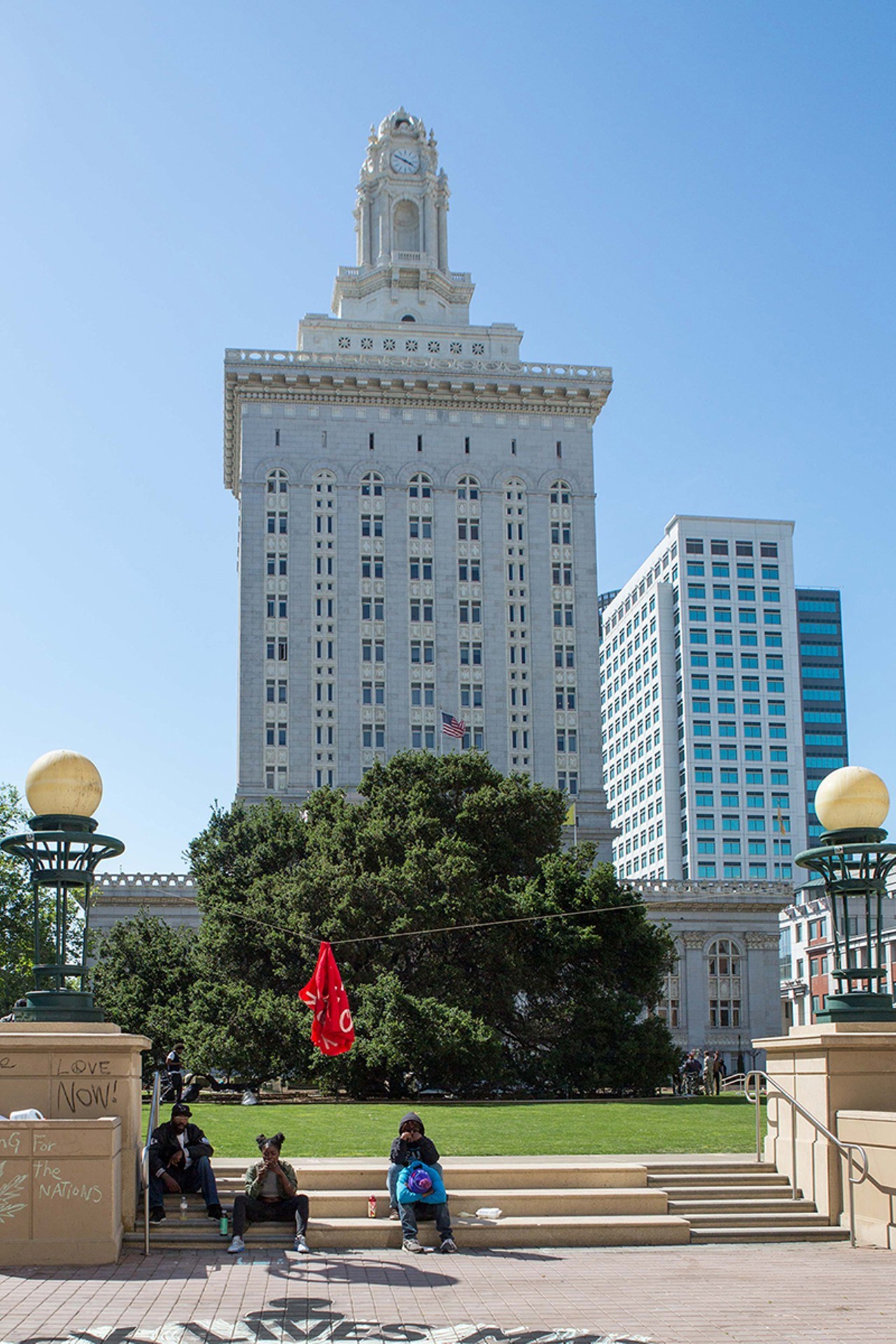
Oakland City Administrator Sabrina Landreth has forced out the city’s head of revenue, David McPherson, according to multiple city sources who asked not to be identified because personnel matters are considered confidential. The move comes after Oakland was sued for breach of contract by a company that alleges McPherson stole their software.

City spokesperson Karen Boyd would neither confirm nor deny that McPherson has been put on leave by Landreth. Boyd did write in an email, however, that Margaret O’Brien, a revenue analyst, is “filling in as Revenue Administrator” in place of McPherson. Several city staff members said McPherson has been placed on indefinite leave while the city tries to resolve questions about his handling of contracts. Staffers said senior city officials have made it clear to them in meetings that McPherson is being replaced.

[jump] McPherson arrived in Oakland in 2010. Earlier this year year, it came to light that Oakland’s revenue administration, under McPherson’s watch, had become entangled in a complex contract dispute with a vendor, causing the vendor to file a lawsuit against Oakland. McPherson also overpaid the vendor, Progressive Solutions, Inc., $1.16 million without the required authorization from the city council.

McPherson also handed out lucrative work to several other companies, but paid them without any contracts, in violation of city policy. The payments were flagged by another city employee as an example of contract splitting, a tactic used to pay vendors large amounts of money while hiding these payments from superiors and elected officials.

In June, McPherson told the Express he was unaware of the payments and blamed them on a subordinate. “We stopped doing business with them as soon as this issue was brought to my attention,” he wrote in an email. “The person I relied on to know the proper procedures was not properly trained to do this before I came to the city.”

As I reported at the time, two of the companies that McPherson paid tens of thousands of dollars without a contract, were members of the California Municipal Revenue and Tax Association (CMRTA). McPherson was the president of the CMRTA in 2002 and 2003. In 2013, he sat on the CMRTA board of directors and served a third term as the group’s president.

On the agenda for today’s closed session meeting of the Oakland City Council is a discussion about the contract dispute with PSI.

I recently interviewed McPherson about taxing short-term rental landlords who operate through platforms such as Airbnb. McPherson signed a tax agreement with Airbnb earlier this year to allow Oakland to collect hotel taxes from visitors staying in short-term rentals.

Drug War’s End: Oregon Is Expunging Pot Records

Oregon has taken the lead in righting some of the wrongs of the War on Weed. On Monday, The New York Times reported on Oregon’s leadership in expunging marijuana violations from citizens’ records.

Even simple pot tickets can haunt someone for the rest of his or her life, sabotaging job hiring and other milestones. So Portland’s Metropolitan Public Defender’s office is running “expungement clinics” to forever seal records of past pot crimes.

The Times interviewed a 43-year-old mother dogged by a pot ticket from her twenties. She handed a bong to a cop more than two decades ago, and it has disqualified her for jobs and she couldn’t volunteer at her kid’s school. Now, no one will see that conviction ever again.

[jump]


No state has gone further than Oregon, experts say.

Anyone with any low-level felony or misdemeanor on their record that’s at least ten years old can wipe their record clean, if they have not re-offended. In 2016, more serious felony pot convictions, like growing, will be eligible for record sealing.

One new law says courts must use the standards of current law — full marijuana legalization — when considering clearing records. Citizens who were under 21 at the time of their bust are eligible for fast-track records-clearing.

The Times notes:
Clearing a record of past convictions, even in states where recreational marijuana has been legalized, remains controversial. In Colorado, prosecutors have wide latitude to oppose such applications and often do, especially in cases in which a person faced more serious felony charges, like drug manufacturing, but pleaded guilty to a lesser offense like simple possession.

California also faces the massive issue of people currently and formerly incarcerated for acts that might no longer be a crime.

For the first time in a century, certain marijuana activity is fully legal in the state under new California medical marijuana regulations. Patients don’t just have “limited immunity”, new license-holders will be 100 percent legal. The catch is: felony convictions, say for distributing marijuana, disqualify potential licensees. Senate Bill 643 reads:
“The licensing authority may deny the application for licensure or renewal of a state license if any of the following conditions apply: … The applicant or licensee has been convicted of an offense that is substantially related to the qualifications, functions, or duties of the business or profession for which the application is made, … includ[ing]…:
(A) A felony conviction for the illegal possession for sale, sale, manufacture, transportation, or cultivation of a controlled substance.
(B) A violent felony conviction, …
(C) A serious felony conviction, …
(D) A felony conviction involving fraud, deceit, or embezzlement.”
Any adult-use legalization initiative that appears on the ballot will face controversy for either releasing people convicted of crimes that no longer exist, or keeping them in jail.

Groups like the California ACLU and the California NAACP are also working to ensure that former pot felons can get licensed in the legal industry.

Berkeley’s Rep’s Amélie Proves Both Charming and Tiring

When director Jean-Pierre Jeunet's film Amélie was released stateside in 2001, it quickly charmed audiences and critics nationwide. For a while, the delightful film about a mischievous waitress helping others was inescapable — it took Hollywood award season by storm, and forever put the film's French leading lady, Audrey Tautau, on Tinsel Town's radar. Now, Berkeley Repertory is attempting...

How to Write Good Poetry Really Fast

In October 2012, Oakland artist and writer Tom Comitta secured the domain name NaNoWriNiMo.org. That's just one syllable away from NaNoWriMo.org, the website for National Novel Writing Month — home of the annual challenge in which writers around the country attempt to write a whole novel during the month of November. But Comitta's insertion of an extra syllable suggested...

The Winners and Losers of California’s New Medical Marijuana Regulations

This week or next, California Governor Jerry Brown likely will sign into law three bills to regulate the world's oldest and largest commercial medical cannabis economy. And during the next few years California's $2.3 billion medi-pot industry will be transformed by official state licensing, legal profit-taking, and regulatory oversight, including mandatory weed-testing. "Overall, this a pretty good bill," said Sean...

Corrections for the Week of September 23, 2015

Our September 16 Then and Now column, "An Oakland Waterway Reborn," misstated the date of the Friends of Sausal Creek's annual native plant sale. It will be on October 25 — not October 26.

Free Will Astrology

Aries (March 21–April 19): You are destined to become a master of fire. It's your birthright to become skilled in the arts of kindling and warming and illuminating and energizing. Eventually, you will develop a fine knack for knowing when it's appropriate to turn the heat up high, and when it's right to simmer with a slow, steady glow....

One-Night Stands

Thursday, September 24 Romeo is Bleeding (93 min., 2015). Matatu Festival of Stories (Starline Social Club, Oakland, 7:00) Radical Reels Film Tour (112 min., 2015). Eight short films from the Banff Mountain Film Festival to benefit the Snowlands Network (California Theatre, Berkeley, 7:00) Vessel (90 min., 2014). A benefit for Fund Texas Choice (Rialto Cinemas Elmwood, Berkeley 7:00) Sicario (121 min., 2015). (California...

‘Everest’ Is Alternately Corny and Moving

A few quick notes on Baltasar Kormákur's fictionalized mountain climbing adventure Everest: At least it has the guts to address the current traffic jam of climbers (and their left-behind trash) caused by reckless amateurs trying to conquer the world's highest mountain. Based on true events from 1996 and filmed in Nepal and Italy, the movie's virtues are the same...

OMF: Oakland Moving Forward

Oakland native and entrepreneur Alfonso Dominquez spends a great deal of time thinking about how to keep Oakland's cultural capital from leaving the city. A founder of Oakland Music Festival, he is also the co-owner of several well regarded local businesses — including the swanky Era Art Bar and Lounge and Mexican restaurant Tamarindo Antojeria. In addition, he's a...

Oakland’s Head of Revenue Forced Out Amid Contract Scandal

Oakland City Hall. Credits: Bert Johnson / file photo Oakland City Administrator Sabrina Landreth has forced out the city’s head of revenue, David McPherson, according to multiple city sources who asked not to be identified because personnel matters are considered confidential. The move comes after Oakland was sued for breach of contract by a company that alleges McPherson stole their software. ...

Drug War’s End: Oregon Is Expunging Pot Records

Oregon has taken the lead in righting some of the wrongs of the War on Weed. On Monday, The New York Times reported on Oregon’s leadership in expunging marijuana violations from citizens’ records. Even simple pot tickets can haunt someone for the rest of his or her life, sabotaging job hiring and other milestones. So Portland’s Metropolitan Public...
19,045FansLike
17,709FollowersFollow
61,790FollowersFollow