Oakland Favors Bank Over Bus Riders

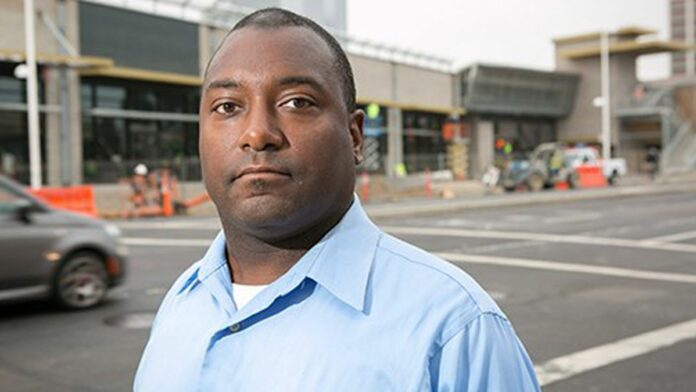
Kenya Wheeler, a North Oakland resident, doesn’t own a car and relies on public transit to travel around the Bay Area. To get to downtown Oakland from his home, which is just east of Alta Bates Summit Medical Center, Wheeler often takes the Line 51 bus, one of AC Transit’s most widely used bus routes. In recent months, he has noticed confusion and frustration from his fellow commuters on the southbound 51A Line, which goes from Rockridge BART on College Avenue to Broadway and then south to Alameda. That’s because the City of Oakland, heeding the demands of an area bank, forced AC Transit to remove a key bus stop at Broadway and 30th Street — one that, according to Wheeler, many elderly residents and people going to appointments at the adjacent medical center had frequently used.

“This is a large senior population … and people are having to walk farther,” said Wheeler, who is also a transportation planner for the San Francisco Municipal Transportation Agency and a member of the advocacy group Transport Oakland. “When winter hits, it’s going to be a lot more inconvenient.”

While the elimination of a single bus stop may seem relatively inconsequential, the process that led to the removal of the stop sheds light on the ways in which the City of Oakland at times fails to prioritize public transit and neglects its own pro-transit planning policies, according to advocates. In this case, top city officials ignored the requests of AC Transit and the needs of Line 51 riders and instead caved to the demands of Summit Bank, which did not want a bus stop in front of its business because bank officials expressed fears about having bus riders stand next to the bank’s entrance, according to interviews and email records. The loss of the stop was frustrating enough to AC Transit that the agency’s general manager sent a letter to city officials expressing dismay about Oakland’s decision-making process for bus stop locations.

“This case is just so egregious,” said Greg Harper, a longtime AC Transit board member whose district includes the Broadway and 30th stop, in an interview. “Summit Bank prefers that the bus stop not be located in front of the bank. But by all measures of safety and convenience, that’s exactly where it belongs. … This shouldn’t stand. A lot of people are going to suffer.”

Records show that city officials and AC Transit initially agreed to move an existing southbound Line 51A stop from the north side of Broadway and 30th to the south side as part of a major retail development proposal anchored by a new Sprouts Farmers Market grocery store at 3001–3039 Broadway. The Oakland Planning Commission approved that relocation of the stop as part of the project’s environmental impact report, which was finalized in 2013. AC Transit also supported the move, because it’s generally more efficient and safer to have bus stops located on the “far side” of intersections after a traffic light.

But after a lengthy public review process for the Sprouts project and final city approvals for the bus relocation, representatives of Summit Bank, which is located at 2969 Broadway, right next to the planned new bus stop, began to flood the city with complaints. In April, John Flores, then-Oakland’s interim city administrator, wrote in a letter to AC transit that the proposed relocation in front of Summit Bank “received extremely strong objections from the bank’s representatives.” At that point, however, the developer of the Sprouts project had already begun construction and designed its project with an outdoor seating area and main entrance that could not accommodate a bus stop, Flores wrote.

As a result, city officials proposed to move the stop one block to Broadway and 29th Street — a relocation that AC Transit said was not viable, given that it would be only 500 feet away from the next stop at Broadway and 28th Street. Regarding that proposed alternative, Kathleen Kelly, AC Transit’s then-interim general manager, wrote to Flores and other city officials in June, “From the perspective of the bus rider that is already on the bus, stopping twice in a 500-foot span is frustrating, especially if there is nothing that specifically generates ridership at 29th Street.” Because of the city’s refusal to put a stop in front of the bank, AC Transit had no option but to remove it altogether, Kelly wrote, adding, “I would be remiss not to express AC Transit’s disappointment in the process and outcome. … AC Transit is left not only without an improved bus stop but also without our existing stop which has served the surrounding community for many years.”

Emails show that high-ranking city officials were insistent that AC Transit accommodate the bank’s demands. In one email to multiple AC Transit representatives, Rachel Flynn, the city’s director of city planning, wrote: “Summit Bank will fight a bus stop no matter what you offer.” Shirley Nelson, the bank’s founder, had contacted the city council and Mayor Libby Schaaf and had “brought her entire Board into stopping the bus stop at the bank,” Flynn wrote. In that same email, Flynn urged AC Transit to endorse an alternative option.

Critics of the city’s actions pointed out that Summit Bank is politically connected. Campaign finance records show that the bank’s top executives donated a total of $4,600 to Schaaf’s mayoral campaign in 2014. Nelson personally donated $700 to Schaaf, which is the maximum allowed by law.

“This is pure politics,” said Harper. “The bank was saying they thought it would be dangerous to have a bus stop there for people using the bank. … It takes a strong city staff to say that’s just not right.”

Representatives of Summit Bank, Schaaf’s spokesperson Erica Terry Derryck, and the mayor’s transportation policy director Matt Nichols did not respond to requests for comment.

In an interview, Flynn said that in addition to expressing concerns about a bus stop posing a safety threat to its customers leaving the business with money, Summit Bank officials also told her that they didn’t want to lose any street parking. “They felt very, very strongly about it,” she said. When I asked Flynn if the city believed the bank’s concerns about safety were legitimate, she responded: “I didn’t understand it. But that was their argument and we had to take them at their word.” The city tried to work out a compromise with Summit Bank, Sprouts, and AC Transit, but the parties could not agree on a location, Flynn said.

Sprouts officials also did not respond to requests for comment.

AC Transit spokesperson Michele Joseph said in an interview that the agency was not pleased with the outcome. “We’re disappointed because we feel like this was really the most advantageous stop for our ridership,” she said, referring to the Broadway and 30th location. Under the new alignment, bus riders must now walk an extra two blocks to get to their medical center-area appointments.

Data from AC Transit, which Transport Oakland obtained and provided to me, shows that prior to the removal of the stop last fall, on an average weekday, 72 people got on and 44 people got off at the 30th Street southbound stop.

Advocates also pointed out that the removal of a bus stop clearly contradicts the goals of the city’s Broadway Valdez District Specific Plan, a detailed blueprint for development in the area that the city council adopted last year. The plan stated that the city should collaborate with AC Transit to improve bus service along Broadway and move bus stops to the far-side corners of intersections. Oakland further has a “transit first” policy and a number of other pro-sustainability policies on the books dedicated to improving access to public transit — not reducing it.

“This area is supposed to have robust transit and it doesn’t,” said Chris Peeples, president of the AC Transit board of directors. Peeples, who had a stroke several years ago and does not walk long distances, noted that his doctor is on 30th Street just off of Broadway and that he now has to walk farther to get to the bus when he’s leaving appointments.

It’s also backward to have a major new retail site lack a bus stop in one direction — especially considering that this intersection is not directly near a BART station, local activists and environmentalists said. “This really lets down the residents who live in the neighborhood,” said Joel Devalcourt, East Bay regional representative of the Greenbelt Alliance, an advocacy group.

Activists said the city’s decision to favor a bank over bus riders further illustrates the urgent need for an Oakland Department of Transportation — a new agency that Schaaf proposed earlier this year, but has not yet launched. Unlike San Francisco and other cities, Oakland doesn’t have a dedicated transit agency — a problem that makes it easier for a single business to pressure the city to make a decision that clearly ignores best practices of transportation planning, said Liz Brisson, co-founder of Transport Oakland. “This process was wrong,” she said. “Oakland must consider transit an integral part of making the city work.”

A Richmond Taco Crawl

The ingredients for a successful taco crawl are simple: a light breakfast, loose-fitting pants, and, if possible, an entourage of non-finicky eaters — so that the ordering and sharing of tacos don’t turn into a prolonged exercise in multi-front negotiation. Most important: You need a worthy destination. And right now there might not be a Mexican food scene in the Bay Area more vibrant than the one centered on Richmond’s 23rd Street, where the concentration of high-quality taquerias and taco trucks is second to none, though they may be less famous, collectively, than those in Oakland’s Fruitvale district.

On a bright Sunday afternoon in early September, there was a languid feel to the neighborhood; the clusters of beauty salons, laundromats, and tire shops that line the street were mostly closed for the day. Only the restaurants and taco stands hummed with activity, each one just a few doors from the next, so that traveling even one mile’s distance — by foot or bicycle, if you want to stave off the encroaching food coma between stops — will take you past dozens of traditional, family-centered places hawking crisp-edged carnitas, steaming bowls of menudo, and so many delicious $1.50 tacos I could barely keep count.

Located in the parking lot of the La Raza Market, just off 23rd Street, Tacos La Raza (2131 Macdonald Ave., Richmond) is your basic taco shack, the facade painted the telltale white, red, and green of the Mexican flag. La Raza offers the quintessential taco experience for the purist who has no concern for amenities. Taco for taco, this is about as good as it gets: The al pastor was exquisite — juicy nubbins of pork that were blackened at the edges, just chewy and fatty enough, and topped with a tongue-searing salsa roja. The cabeza, too, ranked among the best I’ve had — tender, like any decent cabeza, but also meaty and full-flavored, unlike the blandly soft specimens that are more typical. At La Raza, the adventurous eater can also indulge in harder-to-find cuts: the soft richness of the sesos (cow brains), the crunch of the tripas (fried chitlins), and a version of suadero (aka rose meat) that was reminiscent of lush, slow-braised brisket. The only problem with starting my taco crawl here: Everything was so good, I forgot to pace myself.

Next stop, Tacos Los Primos (550 23rd St.), a taco truck located in a vast parking lot, and parked flush against a blocky building advertising “Tires New & Used.” Here, as often as not, the vibe is one of a big family party — a tented area set up with picnic tables seems crowded all the time as upbeat music plays from one of the big trucks parked nearby. As for the tacos, the suadero and the cabeza were solid, but the al pastor — served the traditional way, with the pork sliced off a spinning vertical spit — was the highlight. The meat was a bit leaner and drier than La Raza’s version, but it was also more intensely seasoned — a thick coat of adobe-like, bright-red marinade. Pro tip: The $1 tacos on Tuesdays are an incredible deal.

Portumex (721 23rd St.), an old-school spot that has been around for close to thirty years, has more Americanized-Mexican leanings than the other places I visited. That may sound like a drawback unless, like me, you grew up in a place where Taco Bell-style hard-shell beef tacos passed for Mexican food — and still occasionally get a craving for the stuff. Portumex’s version was better than anything I had as a kid: a fried-tortilla shell stuffed with fistfuls of lettuce, cheese, and a satisfyingly juicy slurry of well-seasoned ground beef. The place is more sit-down restaurant than taqueria, and the prices — starting at $3 a taco — reflect that difference. I’d skip most of the standard meats, but the freshly fried chips were excellent, and both the classic chile relleño and the sloppy, but very tasty, mayonnaise-dabbed grilled fish tacos are well worth a try. Plus, the restaurant’s side patio area, a little garden sanctuary decked out with Catholic paraphernalia, might be the most pleasant place in the area to enjoy a quiet lunch.

When the taqueros at Los Mexicanos Deli (779 23rd St.) are hitting on all cylinders, the saucy and well-blackened al pastor is as good as any I’ve ever had. Even on a slightly off day, when everything veered a little too salty, there was still plenty of deliciousness to be found — particularly the little crispy bits in the house-made chorizo and the carnitas, each the recipient of a quick sear on the griddle. Los Mexicanos is also a great place to try a Jalisco-style al vapor-style taco, which comes on tortillas that are steamed rather than griddled, so they wind up soft, slightly-slimy, and lily-white. An al vapor taco is always topped with tender, plainly seasoned meats — in my case, a heap of roughly chopped lengua topped with green salsa. Of all the taquerias I visited, Los Mexicanos offers the most abundant spread of free vegetables: soft, vinegary carrots and little soft-cooked onions, in addition to the usual lime wedges, radish slices, and pickled jalapenos. This would also be a good point in the crawl to quench your thirst: A neon-green agua fresca made with spinach, pineapple, and lime proved to be exceptionally refreshing.

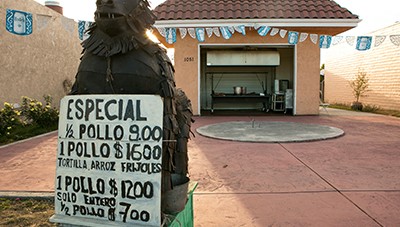
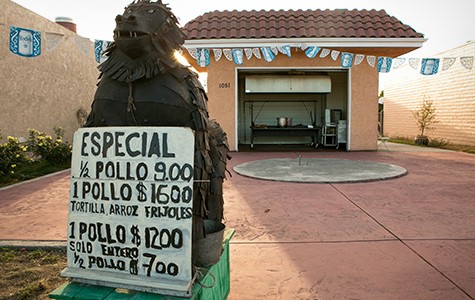
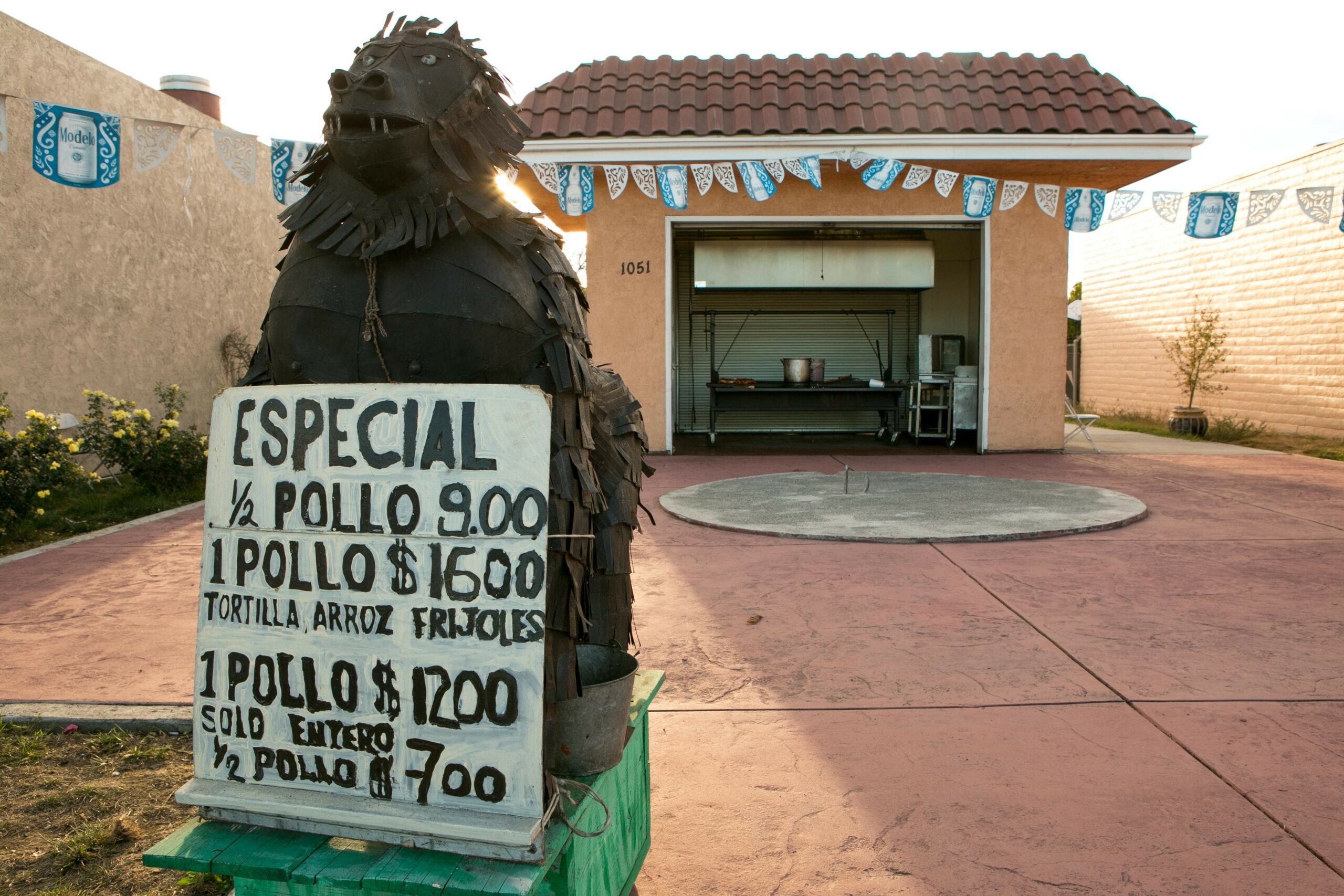
The most charming and idiosyncratic of the places on my taco crawl was La Selva Taqueria (1049 23rd St.), where the first thing you’ll see and smell is the long charcoal grill set up in an adjacent garage. On top, a row of whole spatchcocked chickens slowly cook — for hours, completely unattended, it seemed. The interior of the restaurant has a safari/rainforest motif — apes and lush vegetation on one side; lions and elephants on the other, with a panther stalking us from atop the salsa bar. The specialty of the house is that grilled chicken — pollo al carbon — which was delicious beyond expectation, thanks to the sublime combination of the smokiness of the meat and the tangy heat of the excellent housemade salsa verde. Next time, I’ll just order a whole chicken to share, and build my own tacos. Other highlights: the al pastor, which had sweet bits of caramelized onion mixed in, and the carne asada, which was cut into little bits that resembled Korean bugolgi instead of the usual big chunks of steak.

Hidden inside the La Granja grocery store, several blocks off the main drag, Tacos y Tortas Carlos (1025 13th St.) is a relative newcomer to the area that’s well worth seeking out. Here, amid the fluorescent lights and endless aisles of a supermarket, you’ll find this homey little bistro set up to look like someone’s colorfully painted living room — complete with a mock window adorned with faux flower pots. As for the tacos, avoid the bland, dry carnitas and go instead go for the al pastor, which turned out to be one of my favorites: chewy, wonderfully greasy, and full-flavored enough that it didn’t even need salsa. The specialty of the house is the beef barbacoa — a juicy mass of shredded beef served on corn tortillas that had been pan-fried, until the outer surfaces were crisp and golden. But the most pleasant surprise was the consome de barbacoa, a soup made from the beef drippings, studded with raw onion and tender bits of meat and fat. Served in a blue mug, the consome was rich and restorative, and at just $2, stood as a resounding rebuke to every shamelessly overpriced “bone broth” on the market.

The other specialty at Tacos y Tortas Carlos is the torta ahogada, a kind of sauce-drenched sandwich. But if, after devouring some two dozen tacos, you can stand the thought of eating a sandwich, then you, sir or madam, are a more committed taco crawler than I.

The One-Stop Market Invasion

Inside a building with taped-over windows at the corner of 17th and Webster streets in Oakland lies a mish-mash of objects: a row of boxed cabinets lining one wall, a lone stove propped against a pillar, piled papers sitting atop a barrel table, and a narrow mezzanine overlooking blue-tape outlines on a hardwood floor. This fall, the owners of the soon-to-open Howden Market hope to turn the space into a different kind of eclecticism: a shop where customers can stop by on their lunch break and grab anything from a cup of coffee and jar of artisan jam to a wrap for on-the-go eating or a smattering of groceries for later.

The opening of Howden Market is part of a larger trend in Oakland and speaks to the changing culinary habits of households, not just here, but throughout the country. Since the middle of the 20th century, people have been spending less time cooking, according to a 2013 study in Nutrition Journal. Yet the trend toward eating out has leveled off, meaning that people want to cut down on cooking time but still eat in their own homes. Not surprisingly, the NPD Group, a market research company, predicted in 2013 that the takeout food industry would grow by 10 percent over the next decade.

And a number of up-and-coming businesses in Oakland are putting a local spin on this trend, championing the convenience of prepared food along with goals like sustainability and community-building. Doug Washington, who plans to soon open the Grand Fare market at 3265 Grand Avenue, pointed to his own increased reliance on prepared food as one of the reasons for launching a business with a large takeout focus. “You get home and I just want to hang out with my kids,” he said. “I don’t want to spend the next two hours in the kitchen.” The market, set to open this fall, will offer a range of takeout fare in addition to a flower shop, coffee, ice cream, charcuterie, cheese, and other curated food products.

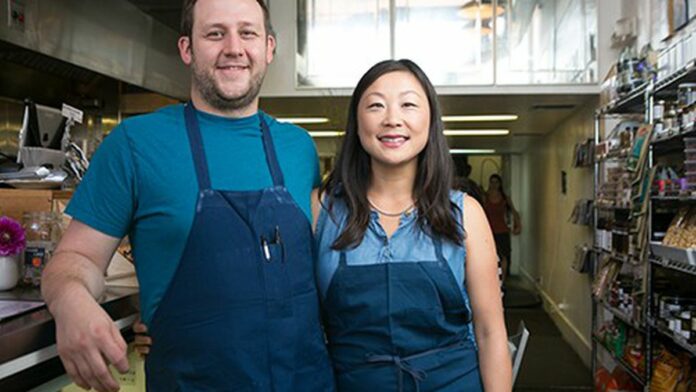
Newberry Market — which is set to open next year at 1954 Telegraph Avenue, on the ground floor of the former Sears building, now owned by Uber — also plans to offer takeout options in a market setting, albeit with its own distinctive touches. “Loren and I kept meeting for lunch — that kind of seemed to be the common denominator for us,” said Ann Thai, who, along with Loren Goodwin, is behind Newberry Market. “All we could find in the Uptown area was sit-down restaurants.”

Aside from serving prepared food — as well as offering recipes for some dishes for those who aren’t too pressed for time to cook — the 20,000-square-foot Newberry Market will function as a grocery store complete with flower and butcher shops. According to Goodwin and Thai, aspects that will distinguish the market from other grocery stores that serve takeout, such as, say, Whole Foods, include a concierge desk to give customers one-on-one help, and the elimination of aisles in the store’s configuration.

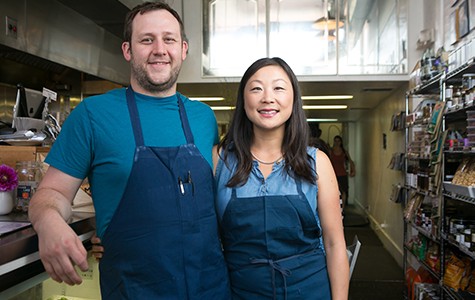
Less than a ten-minute walk away, the 2,300-square-foot Howden Market aims to serve a similar function in a smaller space. Located next to Spice Monkey Restaurant & Bar and owned by the same people, the market will offer the same specialty teas and spices that Spice Monkey is known for, in addition to take-home meals, beer and wine, and a small selection of groceries. General Manager Russell Bass likened the market to a “sustainable convenience store,” where one might simultaneously grab a to-go lunch and pick up food for the next meal.

Prepared food to go is also emerging more in the local restaurant scene. Communite Table, which opened last year at 4171 MacArthur Boulevard, began with the primary aim of providing to-go options. A large deli display showcases pork and turkey meatloaf and roasted yam and black bean salad; customers can also sit down for lunch in a teal-and-white dining area reminiscent of well-kept kitchen. Owner Michele LeProhn sees the takeout trend as partly a consequence of the popularity of eating out. “[People] want to have some of those same options at home, but they can’t do it themselves,” she said.

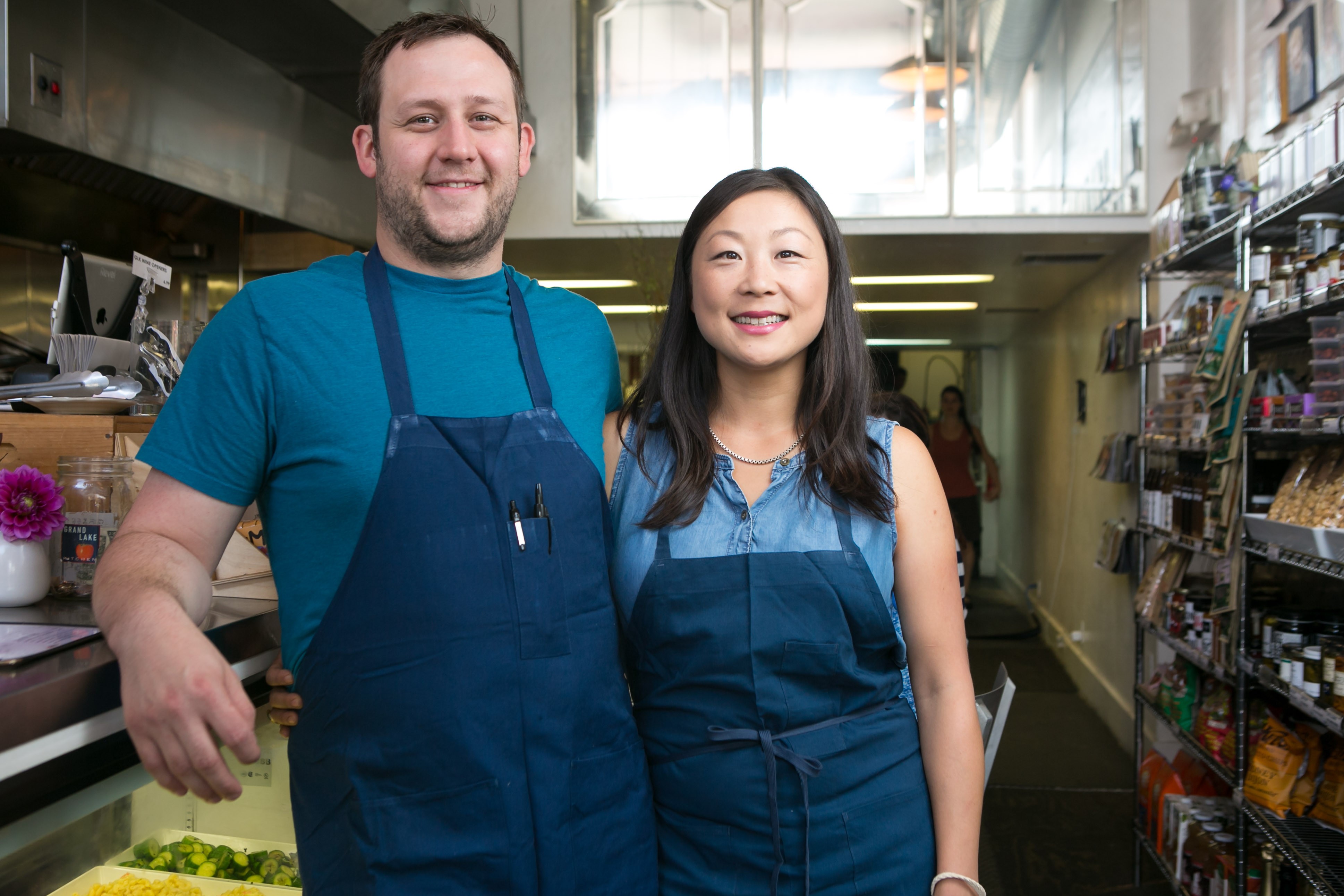
Unlike Communite Table, Grand Lake Kitchen at 576 Grand Avenue is more of a restaurant at its core, according to co-owner May Seto Wasem. Still, the restaurant does a lot of takeout orders and has a varied deli selection, as well as a small section of grocery items and beer and wine. “It was a little bit sleepy over here,” Seto Wasem said of her neighborhood when she moved in. “There was nothing that was convenient or fast.”

These hybrids of takeout and sit-down food businesses have local precursors — LeProhn, in fact, took inspiration from her former workplace, Poulet in Berkeley (1685 Shattuck Ave.). Marilyn Rinzler founded Poulet in 1979, recalling that, at the time, “There hardly was any takeout food [in Berkeley]. The process didn’t exist — there was basically pizza or takeout Chinese. Whole Foods wasn’t here. Berkeley Bowl wasn’t here.”

Poulet mainly serves chicken, salad, and sandwiches and offers space for dining in, but makes most of its sales through takeout orders. Rinzler said she’s seen prepared food become increasingly popular, noting the existence of new food services that are delivery-only, further upping convenience. Beyond catering to the trend, though, Rinzler sees Poulet as having become a fixture on its side of Berkeley — an endpoint that most of the new purveyors of takeout food in Oakland hope to reach, despite their focus on grab-and-go food. “We have a lot of regulars,” Rinzler said. “We’re just a neighborhood place.”

Caitlin Doughty

You never forget the first corpse you shave — at least author Caitlin Doughty hasn’t. In her early twenties, Doughty took her first job at a mortuary in Oakland, turning her lifelong fascination with death into a career. On October 1, the Los Angeles-based mortician and death theorist is returning to the Bay Area to discuss her New York Times best-selling book, Smoke Gets in Your Eyes: And Other Lessons from the Crematory at the Berkeley Public Library, North Branch (1170 The Alameda, Berkeley). In the same tone that one might use to recall a first kiss or first time having sex, Doughty walks her readers through all those awkward post-mortem moments. Delving into the often uncomfortable topic of mortality, she recounts the strange history of cremation and undertaking with an explorer’s eye for bizarre and fascinating funeral practices from across the globe and throughout history. Those especially fascinated with death may be excited to hear that folks from Berkeley’s the Bone Room (the best place to find real skulls, fossils, mounted insects, etc.) will also be there co-presenting the event. Doughty’s appearances are often over-crowded, so organizers ask that everyone RSVP in advance.

Collective Intervention: ‘Public Works: Artists’ Interventions 1970s–Now’

First off, it’s important to applaud Public Works: Artists’ Interventions 1970s–Now for being an all-female show that’s not about being an all-female show. The fact that gender isn’t mentioned in the title of the exhibition (and only once, casually, in the show’s official statement) is a subtle-yet-clear kick in the crotch of the status quo, and the force of its simple matter-of-factness rings throughout the exhibition. Guest curated for the Mills College Art Museum by Christian L. Frock and Tanya Zimbardo, the show actually has little to do with being a woman — except in the intersectional ways that everything women do has to do with being a woman, of course. Rather, Public Works is about the dynamics of manipulating and reclaiming public space through art, exposing its invisible social framework.

Public Works is most captivating when highlighting works that engage others —thus becoming public in terms of authorship and not just setting — opening the door for a multiplicity of outcomes. Among these is a forty-minute video documenting Tania Bruguera’s participatory performance Tatlin’s Whisper #6, which took place at the 2009 Havana Biennial. For the piece, Bruguera set up a podium and mic in front of a stately backdrop, then invited audience members to step up to enjoy one minute of uncensored speech while flanked by faux military guards who place real white doves on their shoulders. She also passed out two hundred flash disposable cameras and asked the crowd to continually snap shots as each member of the public briefly became a Fidel Castro-esque figure with echo-y, amplified speech that sounded authoritative no matter the content. Most of the sentiments expressed were political critiques that are normally denied a platform in Cuba.

Another memorable piece is Laurie Jo Reynolds’ ongoing project in collaboration with Jeanine Oleson and Jean Casella of Solitary Watch in which they solicited photo requests from prisoners in solitary confinement in Tamms Correctional Center — a notorious supermax prison in southern Illinois. Reynolds worked with former inmates, their families, artists, and activists, to form Tamms Year Ten, a grassroots initiative to advocate for the closure of the decade-old facility — which eventually happened in 2013. She and her collaborators asked men living in solitary confinement for 23 hours a day to fill out forms requesting any photo — real or imaginary — and then had artists render those images. The range of displayed requests and products is a bleak window into the hopeless and deprived psyches of the prisoners: simple photos of the block an inmate used to live on, a photo of a Southern California sunset, a prisoner’s mom with money and a mansion, a photograph of an inmate with wild lions.

Stephanie Syjuco’s 2013 Bedazzle a Tech Bus, which asked Bay Area artists to design skins for San Francisco commuter buses then digitally mocked them up and entered them in an actual competition to decorate a Genentech bus, similarly provided a platform for others to vocalize their perspectives. Meanwhile, Candy Chang presented a riff on nametag stickers that read “I WISH THIS WAS ­­­_______,” prompting users to recognize their ability to influence their environment, pushing back on forces such as gentrification with a mere slap of a sticker.

The pieces mentioned above are among those that shine in Public Works, but others with intriguing conceptual foundations fall slightly flat for their lack of striking presentation — an inevitable challenge when recounting ephemeral artworks.

The curation of the works is impressive in scope, but it also resists imposing an overarching interpretation by avoiding the opportunity to lay out a clear argument about what public, socially engaged art achieves. Each piece is presented distinctly, leaving it to the viewer to connect the dots. In doing so, subtly, Public Works challenges the audience to engage on a more attentive level than usual, using interventions by others as a platform to reflect the viewer’s own potential to determine the experience of shared space.

BPA Studies Raise Concerns for Baby Girls

Girls born to mothers with high levels of BPA in their systems during the first trimester of pregnancy weigh less at birth than babies with lower exposure, according to a new study released last week. The study adds to evidence that fetal exposure to the ubiquitous chemical bisphenol-A (BPA) may contribute to fetal developmental problems. Low birth weights are linked to a host of health problems later in life, such as obesity, diabetes, infertility, and heart disease.

Researchers tested mothers’ blood during their first trimester and at delivery for BPA, and tested umbilical cord blood after delivery. They tested for both BPA and “conjugated BPA,” the form BPA takes after the body processes it. Bottom line: more BPA in women’s blood meant babies weighed less. For every doubling in free, or unconjugated, BPA in the mothers’ first-term blood, babies weighed, on average, 6.5 ounces less. The research was published in The Journal of Clinical Endocrinology & Metabolism.

Similarly, for every doubling of free-BPA in the woman’s blood at birth, babies weighed on average 3 ounces less. “Having small babies at birth is a risk factor for a whole bunch of different things,” said Laura Vandenberg, assistant professor of environmental health at the University of Massachusetts, Amherst who was not involved in the study.

Another recent study from China found BPA levels in mothers’ urine was linked to low birth weights. That study also found a much stronger association with baby girls.

Unfortunately for pregnant women, BPA — used to make polycarbonate plastic and found in some food cans and paper receipts — is found in most people. Earlier this year, California mandated warning labels for products made with BPA. And in 2011, the state banned BPA in baby bottles and sippy cups, but the chemical is still widely used in food containers. In fact, even the most diligent mothers-to-be may find it challenging to avoid contact with BPA.

The strong link between fetal exposure to BPA during the first trimester and birth weights makes sense, said Vasantha Padmanabhan, senior author of the study and professor of pediatrics, obstetrics and gynecology, molecular and integrative physiology, and environmental health sciences at the University of Michigan. “When you think about development, early in the pregnancy is a critical time — when fetuses are most sensitive to insults such as stress, environmental chemicals — that’s why we looked at the first trimester,” she said.

About 8 percent of babies born in the United States suffer from low birth weights, considered less than 5.5 pounds, according to the US Centers for Disease Control and Prevention. Other possible contributors to low birth weights include smoking or drinking alcohol during pregnancy, mothers’ lack of weight gain, mothers’ age, and stress.

The University of Michigan study doesn’t prove BPA caused low birth weights. But it could play a role, as the chemical mimics hormones and can disrupt endocrine systems. Even though BPA clears from the body quickly, scientists suspect it could bind to receptors or could be stored in fat for release later. Proper functioning of these receptors is critical to organ development and function.

The American Chemistry Council, which represents chemical manufacturers, said the study provides “no meaningful information on the safety of BPA.” The council has defended BPA as safe as used in food packaging. Steve Hentges, a representative of the council, called into question using blood to measure BPA exposure. He also suggested that BPA from another source contaminated the blood samples.

Padmanabhan said the study and BPA measurements “represent a true life scenario,” because blood was drawn with a researcher present to ensure no plastic contact.

The researchers did not find a link between BPA levels and baby boys’ weights. It’s not clear why the exposure was only linked to lower birth weights in girls, but the work suggests that females might be more susceptible to BPA exposure before birth.

In the recent Chinese study, which ran from 2012 to 2014, researchers selected 452 mother-infant pairs from Wuhan, the most populous city in Central China. They collected urine samples from the mothers at delivery and measured for BPA. Using birth weight data obtained from medical records, the researchers then evaluated the relationship between urinary BPA levels and low birth weight.

They found that mothers of newborns with lower birth weights had significantly higher BPA levels in their urine than the control mothers, according to the study published in Environment International. They also found that the association between low birth weight and higher BPA levels was more pronounced among baby girls, which also suggested that female babies might be more susceptible to BPA than males.

The Chinese study also didn’t prove BPA caused the low birth weights. But in 2013, findings from a Dutch study suggested that BPA exposure at levels commonly found in people may slow fetal growth. In addition, a 2014 study linked high BPA levels in the placenta to lower birth weights.

Sunday Assembly East Bay: A Spiritual Church Without God

On a recent Sunday morning in Oakland’s Pill Hill neighborhood, the sound of voices raised in song spilled out onto Fairmount Avenue from the open doorway of the Oakland Peace Center. Inside the hall, some fifty people stood in front of their folding chairs, swaying and singing along with the lyrics displayed on a large projection screen at the front of the room. It was a church-service scene typical of any Sunday morning.

But then it sank in: The song into which the congregation was pouring its collective soul was not a church hymn. It was Sister Sledge’s “We Are Family.”

We – are – family!/ I got all my sisters with me!

We – are – family!/Get up ev’rybody and sing!

Founded in 2013 by two London comedians disenchanted with organized religion, the secular Sunday Assembly has been called an “atheist church,” but that description doesn’t quite harness the mix of characters — agnostics, atheists, Unitarians, secular Jews, and non-religious and formerly religious individuals of all stripes — who attend on the last Sunday of every month.

Oakland’s assembly, known as Sunday Assembly East Bay, draws some fifty to seventy attendees each month and is one of nearly seventy assemblies that currently exist around the world.

The “church” part of “atheist church” is accurate in that assembly members congregate in a hall for a formal hour-long program that involves singing (often something by the Beatles or Bill Withers), readings, listening to a speaker, and passing a donation basket, followed by an informal potluck. But beyond that, it’s all up to each attendee’s discretion. Sing, or don’t sing. Agree with the speaker, or don’t. Believe in whatever spirituality, or lack thereof, you’d like to. The only thing that’s asked of attendees is that they keep the gathering friendly, apolitical, and non-religious.

“I think what was really exciting to me about Sunday Assembly was that it’s new,” said Dan Lawlor, a regular attendee, in an interview, comparing Sunday Assembly to other congregations one might attend. “For better or for worse, it doesn’t have five hundred years of baggage. You can create it.”

Fellow attendee Debra Wong, who identifies as atheist, said simply, “This feels like a space where I can be my whole self.”

Sunday Assembly has a motto — “Live better, help often, wonder more” — that could best be described as humanist, more indicative of a celebration of life than a call for anti-theism. Organizers strive to keep their assemblies “radically inclusive,” just as welcoming of a regular attendee’s visiting Protestant grandma as of a die-hard Richard Dawkins devotee.

“We’ve got the best parts of a church,” Oakland’s assembly advertises on its Meetup group page, “without any of the religious dogma.”

British comedians Pippa Evans and Sanderson Jones first hit upon the idea of “atheist church” while driving together to a stand-up gig in Bath, Great Britain, two years ago. Riffing about church in the car, they began reflecting on the real joy people seemed to derive from their sense of religious and spiritual community. (Evans had grown up Christian; Jones didn’t identify as religious but quite enjoyed Christmas concerts.) What about a church for non-believers? they wondered out loud.

That January, Evans and Jones staged the first Sunday Assembly service in London. It wasn’t a tongue-in-cheek shtick. They were serious about the space they were offering, just as they were about offering it in a way that turned religion on its head. More than two hundred people showed up to the first event. At the next event, there were three hundred, prompting Evans and Jones to begin holding two services a day. Then people started contacting them from all over the globe, asking them how to start their own.

So that November, Evans and Jones set out on a Sunday Assembly “world tour” to bring their secular service to audiences in Europe, North America, and Australia. The comedians connected with organizers interested in helping to set up Sunday Assembly events in their own cities. The local organizers were responsible for setting up logistics and finding speakers. Evans and Jones would show up to support the event.

Enter Oakland resident Daniel McCoy. McCoy, who had left Pentecostalism as a teenager and now identifies as atheist, had read about London’s first successful Sunday Assembly in The Guardian. When he heard that the founders were bringing the assembly stateside, he was interested in getting involved. An acquaintance of McCoy’s, who happened to be organizing a Sunday Assembly tour stop in San Jose, persuaded McCoy to serve as the assembly’s main speaker there.

McCoy has a long resume of public speaking engagements thanks to his job as an “illumination materialist” at Pixar, so he gamely agreed to speak. In preparation, he wrote a talk about one of his greatest personal inspirations, Carl Sagan. In particular, McCoy drew from a Sagan lecture called “Pale Blue Dot” — a reference to Earth as seen from beyond the rings of Saturn — in which Sagan, as McCoy described it, “talks about how everything human, everything that’s ever happened, every person that ever lived, happened on this pale blue pixel” called Earth. It’s a perspective encompassing both smallness and interconnectedness, and McCoy finds it so moving that he watches the lecture online every year on Sagan’s birthday.

McCoy’s Pale Blue Dot talk at the Sunday Assembly in San Jose went swimmingly. He could tell, because, in the middle of it, Sunday Assembly co-founder Sanderson Jones, who was in the audience, bounded up excitedly to find the Sagan video on a laptop.

“We all watched the Pale Blue Dot together, just spur of the moment,” McCoy said, recalling Jones’ rangy excitement, the ensuing silence in the room, and the sense of collective wonder as, onscreen, a tiny blue planet became dwarfed by Saturn’s immensity. “I said to myself, ‘I want to go to a church that finds this sacred.'”

The next day, at Jones’ urging, McCoy gave the same talk at a Sunday Assembly tour stop in San Francisco. Then McCoy became a founding organizer of the Oakland-based Sunday Assembly, which held its first assembly at Humanist Hall in January 2014.

McCoy had found a new spiritual gathering: one that would celebrate the wonder of the Pale Blue Dot.

Godless congregations are not a new idea, in and of themselves. Oakland’s Manifesto Bicycles hosted an irregular Sunday morning social event called Bike Church (now defunct) for years, and back in 2004, another British comedian started a cult called Join Me whose mission to “be nice” attracted thousands of followers — er, “joinees” — around the world.

What seems to set Sunday Assembly apart is its organizers’ earnest attempt to build real-life, everyday community. Outside of the monthly meetings, local Sunday Assemblies across the world also host “smoups” (short for “small groups”) to help facilitate the regular social interactions integral to building community. Oakland’s various assembly members host monthly smoups for hiking, discussing philosophy, reading out loud, and, of course, singing.

The global Sunday Assembly movement is also rapidly expanding and formalizing. Sanderson Jones now works on Sunday Assembly full-time, helping to launch new assemblies and ensuring that existing assemblies adhere to a formal accreditation process — a necessary bit of bureaucracy, because, as he and Evans wrote on Sunday Assembly’s website, “It only takes one newspaper headline of ‘CHILD SACRIFICED AT SUNDAY ASSEMBLY’ to pee in the pool for everyone.”

Oakland’s Sunday Assembly is also formalizing. In March, the assembly elected its first seven board members, including McCoy, Lawlor, and Wong. Its core members now face the same challenges that Sunday Assemblies across the world are answering in different ways: How does a congregation form a coherent group identity without the guidance of dogma, history, or a god? Can such a community truly be inclusive of everyone without losing its own identity?

Lawlor said those questions — of group identity, of community, of what it means to “do good” without politics or dogma — are reflective of the possibilities that lie ahead.

“Any place where people gather and do good is something that we need, and all people deserve that, not just people who have a traditional understanding of religion,” Lawlor said.


The Gentle Thich Nhat Hanh

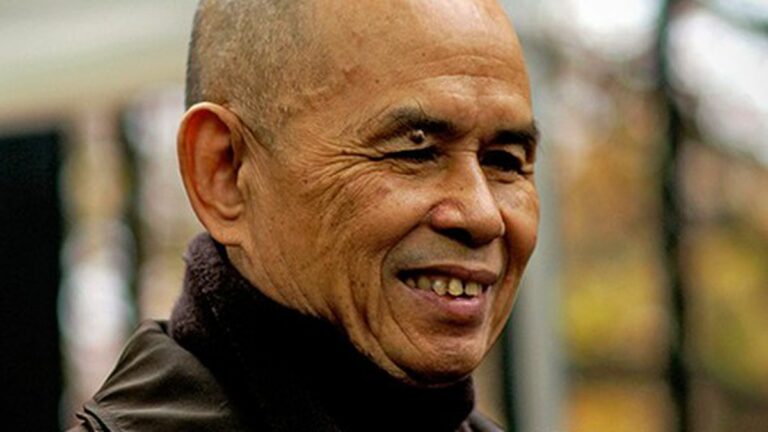
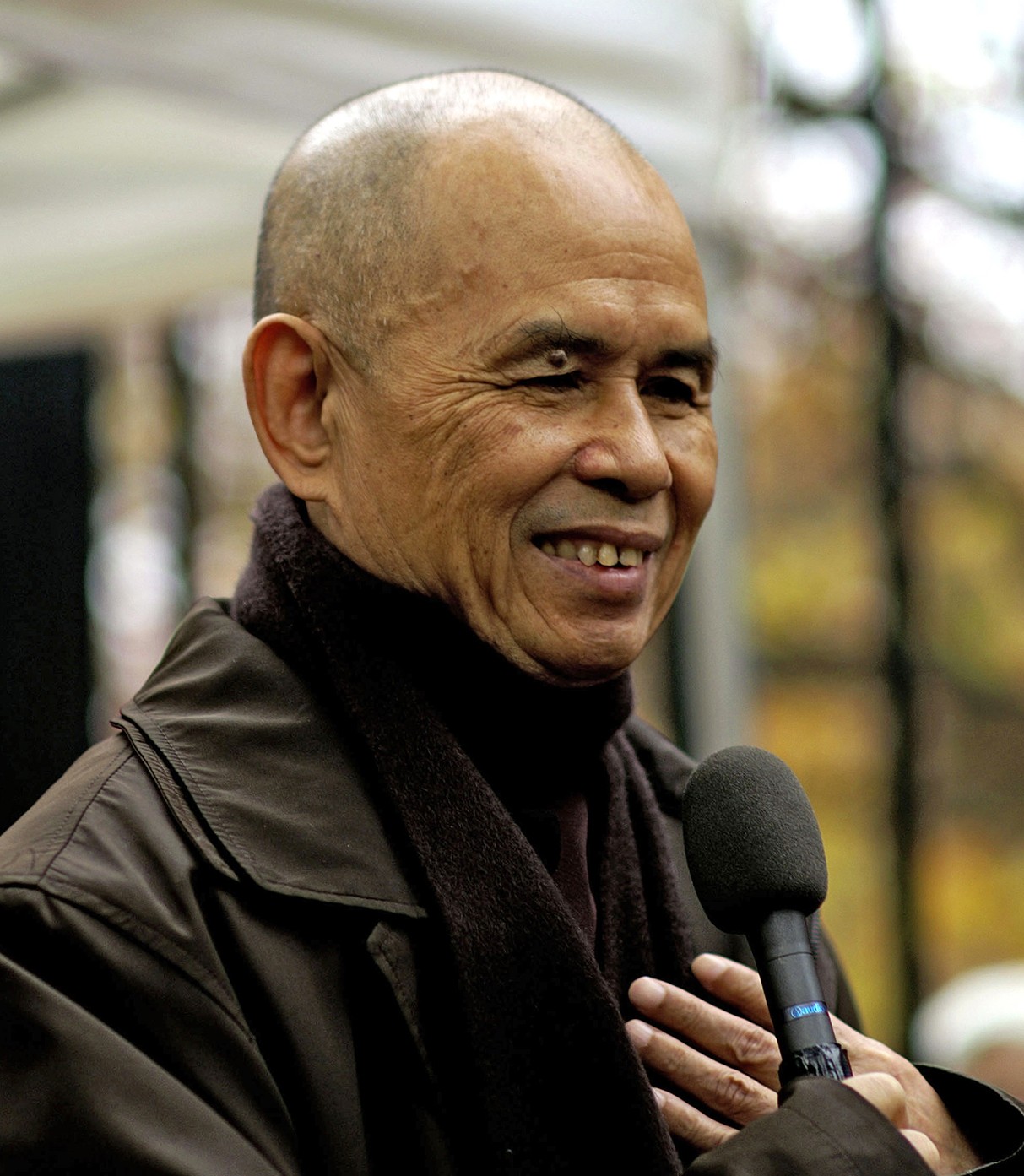
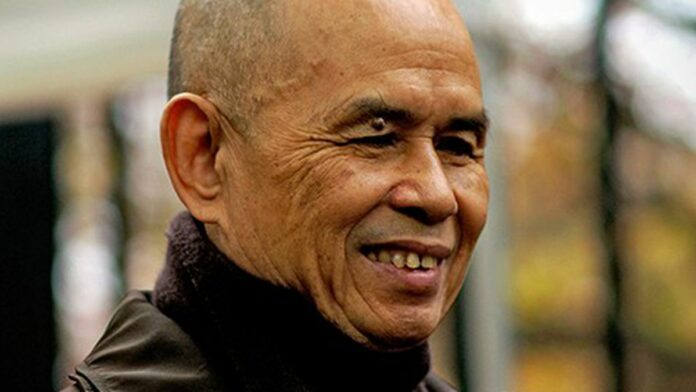
Thich Nhat Hanh, one of the most inspiring figures of the 20th century, is currently receiving medical care in the Bay Area. Hanh suffered a serious stroke late last year and has been convalescing ever since. Doctors at UC San Francisco Medical Center have provided him with a variety of treatments.

A Vietnamese Buddhist monk, academic, and prolific author, Hanh pioneered the concept of “Engaged Buddhism,” a gentle activism that has influenced many who yearn for mindful awareness and social change. His life has been the embodiment of compassion, honesty, and courage — and an illustration that pacifism need not mean passivity.

Hanh became a public figure during the Vietnam War, at a time of startling iconic images of Buddhist monks in Vietnam burning themselves as part of the resistance to war. In 1965, Hanh wrote to Dr. Martin Luther King Jr., linking the struggle of Black Americans to the resistance in Vietnam and asking King to take a stand. “What the monks said in the letters they left before burning themselves aimed only at alarming, at moving the hearts of the oppressors and at calling the attention of the world to the suffering endured then by the Vietnamese,” Hanh wrote. “To burn oneself by fire is to prove that what one is saying is of the utmost importance. There is nothing more painful than burning oneself. To say something while experiencing this kind of pain is to say it with the utmost of courage, frankness, determination and sincerity.” Soon after, King delivered his legendary speech against the war, “A Time to Break Silence,” at New York’s Riverside Church.

In 1967, King nominated Hanh for a Nobel Peace Prize. Hanh, King wrote, was “an apostle of peace and non-violence, cruelly separated from his own people while they are oppressed by a vicious war which has grown to threaten the sanity and security of the entire world.” To give Hanh the prize would be a reminder “that men of good will stand ready to lead warring elements out of an abyss of hatred and destruction. It would re-awaken men to the teaching of beauty and love found in peace. It would help to revive hopes for a new order of justice and harmony.” Unfortunately, the prize committee awarded no prize that year.

Hanh’s work on issues of war, peace, and freedom did not end when the United States left Vietnam. In 2006, he wrote President George W. Bush, imploring him to end the US war in the Middle East. “It is our brothers that we kill over there. They are our brothers, God tells us so, and we also know it,” Hanh wrote. “They may not see us as brothers because of their anger, their misunderstanding, and their discrimination. But with some awakening, we can see things in a different way, and this will allow us to respond differently to the situation.”

And, along with the Dalai Lama, Hanh has supported efforts by Buddhists for religious freedom in Tibet. Crucially, in his unrelenting work for good, Hanh has taught the value of means as well as ends. In a talk “Awakening the Heart,” available on YouTube, he said, “When another person makes you suffer, it is because he suffers deeply within himself, and his suffering is spilling over. He does not need punishment; he needs help. That’s the message he is sending.”

In his book Interbeing, Hanh listed fourteen precepts of Engaged Buddhism. Among them are direct challenges to the orthodoxy of our economic and political system today, in which people are often valued only as “human capital.” They include “Do not accumulate wealth while millions are hungry,” and “Do not invest in companies that deprive others of their chance to live.” With this focus, he is distinct from the Dalai Lama, the more famous Buddhist public figure. In 2014, the Dalai Lama inexplicably cozied up to Wall Street, appearing with hedge fund managers in New York City on a panel sponsored by the American Enterprise Institute and Dan Loeb, a notorious opponent of public education. At the event, Loeb preached the view that financial markets “make the world a better place.” After Loeb’s presentation, the Dalai Lama, according to press reports, said that Loeb gave a “wonderful” presentation, and that through the session he developed “more respect” for capitalism. It is hard to imagine Hanh saying these words.

Hanh is a fervent believer in the power of meditation and awareness when frankly practiced, especially when directed toward progressive social interaction. His teachings on meditation are accessible, and constantly remind readers to keep attention to the rhythm of breath. His attitude is quite different from today’s corporate “mindfulness” craze. From Silicon Valley to Wall Street, companies are pushing employees to meditate. The theory is that corporate meditation is a “good investment” for a company, making employees more productive and the company more profitable. While any meditation that alleviates suffering and makes one think and feel more deeply is a good thing, this corporate fad is far from Hanh’s vision of meditation.

Finally, in classical Buddhism, meditation and enlightenment are often considered an individualistic ethic. But for Hanh, enlightenment is only possible when one “stays in touch” with the world. The interrelatedness of life is foundational to his writings; his aspiration for “interbeing” fosters an appreciative understanding that one’s apparently separate self is actually thoroughly intertwined with other selves. In our atomized world, his vision of a sharing life should be cherished. During his life, he also has established a number of loving communities, including the Deer Park Monastery in Southern California. In Community as a Resource, he quotes a story from the Buddha, “The nature of a community is harmony, and harmony can be realized by following the Six Concords … sharing space, sharing the essentials of daily life, observing the same precepts, using only words that contribute to harmony, sharing insights and understanding, and respecting each other’s viewpoints.”

These are fine words in our fractured world where politicians promote constant fear and hatred of others. Thich Nhat Hanh’s life is a magnificent example of activism and compassion. Do yourself a favor and pick up one of his books.

And breathe — in and out.

One-Night Stands

Thursday, October 1

Tapped (76 min., 2009). Followed by a discussion with Liz Solorio of Food and Water Watch, Juliana Gonzales of The Watershed Project and Matt Freiberg, chair of the Berkeley Climate Action Coalition water committee. (Berkeley Fellowship of Unitarian Universalists’ Hall, Berkeley, 6:30)

Rifftrax Live: Miami Connection (83 min., 1987). (AMC Bay Street 16, Berkeley, 8:00)

Tangled Heart Strings (2015). Followed by a Q&A with Tangled Heart director Madison Young (The New Parkway, Oakland, 9:00)

Army of Darkness (81 min., 1992). (UA Berkeley 7, Berkeley, 9:00)

Coraline (100 min., 2009). (Parkway, 9:30)

Friday, October 2

Indiana Jones and the Temple of Doom (118 min., 1984). (Redwood Heights Recreation Center, Oakland, 7:00)

Up (96 min., 2009). (Willard Park, Berkeley, 7:30)

Ayotzinapa: Crónica de un crimen de estado (2014). In Spanish (UC Berkeley, Kroeber Hall, Room 160, 7:00)

Saturday, October 3

The Black Panthers: Vanguard of the Revolution (113 min., 2015). Followed by a Q&A with Director Stanley Nelson (Piedmont Theatre, Oakland, 1:00, 4:15, 7:00)

Farewell (90 min., 2015). In Portuguese (La Peña Cultural Arts Center, Berkeley, 7:00)

Three to Infinity: Beyond two genders (84 min., 2015). (Parkway, 3:00)

Sunday, October 4

The Black Panthers: Vanguard of the Revolution (113 min., 2015). Followed by a Q&A with Director Stanley Nelson (Shattuck Cinemas, Berkeley, 1:00, 4:15, 7:00)

Iron Giant (120min., 2015). (AMC Bay Street 16, Emeryville, 7:00)

Monday, October 5

Gremlins II – The New Batch (106 min., 1990). (Alameda Free Library, Alameda, 5:30)

Tuesday, October 6

Becoming Bulletproof (80 min., 2014). (Parkway, 6:30)

Secrets of Silicon Valley (60 min., 2001). Presented by the Berkeley FILM Foundation with a post-film Q&A with directors Alan Snitow and Deborah Kaufman (Parkway, 7:00)

Wednesday,
October 7

TRAILHEAD: Discovering Oakland’s Gateway to the Redwoods (20 min., 2015). (Chabot Space & Science Center, Oakland, 5:30)

Wild Tales (122 min., 2014). In Spanish with English subtitles (UC Berkeley, Hearst Field Annex, Room A0001, 7:00)

The Beaux’ Strategem (45 min., 2015). National Theater Live (Elmwood, 7:00)

Asshole Moves

I’ve been dating this guy for almost two months. It’s been pretty good, except the sex isn’t really the best. I have this other male friend who has had a crush on me. Long story short: My friend made a move on me the other night. I told him I couldn’t, and he knew why, but to be honest, I was insanely turned on by his forwardness. He apologized, but a week later we hung out, and I told him that it really intrigued me, and we ended up having crazy cool sex — satisfying in all the ways the guy I’m dating isn’t. I haven’t told the guy I’m seeing about this and I don’t plan to. But I feel guilty. I keep rationalizing that we have never had a talk about exclusivity, and I therefore have no obligation to him. I want to keep fucking my friend, but I also enjoy dating this other guy. Am I an asshole? Am I obligated to disclose that I’m not interested in monogamy with him?

Too Many Intrigues

Are you an asshole? That can’t be ruled out, TMI, but I can’t make a determination with the limited data you’ve provided. One asshole move — and cheating on Mr. Two Months was definitely an asshole move — does not an asshole make. We know this because while everyone is guilty of the occasional asshole move, not everyone is an asshole. Assholes are made when asshole moves come one right after the other, and an ever-thickening layer of asshole moves hardens into total assholery.

Anyway, while you might not have had a conversation with the guy you’re currently dating/cheating on about exclusivity, you wouldn’t feel guilty about what/who you did if you didn’t think Mr. Two Months was operating under the assumption that you two were exclusive. So the cheating was an asshole move and your rationalization, as you seem to be aware, is a pile of self-serving bullshit that’s equal parts transparent and unnecessary. Because as much as you like hanging out with Mr. Two Months, the sex hasn’t been good for you and you haven’t been good to him. Don’t negotiate a nonmonogamous agreement. End it.

I am a 23-year-old straight male who has a pattern of getting into long-distance relationships that become semi-long-term relationships before I get depressed by the monotony of it all and wind up breaking up with the person. I resolved that in the relationship I’m currently in — nine months and counting — I would keep it casual, which resulted in it turning into an open mono/poly relationship, meaning I’m poly and she’s monogamous. She is great, cute, and intelligent, and there is nothing destructive or dishonest about our relationship. I just find myself not wanting to talk to her every day, and the weekly Skype calls feel like a chore. We have a great time when we visit each other, but I only feel like catching up when I see her in person. Is this the price I have to pay to keep her happy?

Not An Asshole

I’ve read that young people don’t make phone calls anymore — talking on the phone is for olds (full disclosure: We olds hardly speak to each other on the phone anymore, either) — so I’m surprised your young-and-mono GF wants to hear your young-and-poly voice on a daily basis. I think you should propose a young-and-fun compromise: texting instead of phoning during the week and a Skype/masturbation session on the weekend.

I’m a straight 28-year-old female, in a relationship with my boyfriend for two years. We live together, and on the weekends we care for his kid. We are very much in love and have a supportive, happy relationship. I’ve always had a hard time being monogamous. In every relationship, I tend to get a wandering eye around the two-year mark. Recently, I went by myself to see a friend’s band and ended up meeting a man I had an insane chemistry with. We spent the whole evening together and wound up making out before I literally ran away. The next day, stone cold sober, I called him, drove to his house, and we fucked like crazy. It was animalistic and intense, and I felt like a fucking porn star. It was awesome. My boyfriend and I have sex that I truly enjoy, and I usually get off, but he struggles to be dominant, rough, or talk dirty, which are things I really get off on. He says he’s too self-conscious to be dominant in bed. This stranger did all the things I wish my boyfriend would do. To test the waters, I casually mentioned an arrangement where we could sleep with other people, and he said he wasn’t into it. If I’m happy in my relationship, and the sex we have is consistently good, sometimes amazing, is that enough? Am I giving up on an aspect of my sexuality if I stay with him, or am I just looking for excuses to fuck other people?

Likes It All Rough

A loving and supportive partner, a happy relationship, and good sex that occasionally tips into the amazing column — yeah, most people would tell you that’s not only enough, LIAR, it’s a better relationship than the one they’re currently in, recently left, or ever hope to find. But the fact that most people would like to trade places with you isn’t relevant, LIAR, because what you have with your boyfriend isn’t enough for you. You want love, happiness, stability, and the freedom to fuck other guys — and you would want that freedom even if your boyfriend was capable of dominating you in the sack just the way you like.

Seeing as you know this about yourself — seeing as you know that monogamy isn’t for you (see: the wandering eye at 24 months, the fucking that other guy at his place) — making a monogamous commitment you know you can’t keep is an asshole move. So here’s what you’re gonna do: Tell your lovely, loving boyfriend that nonmonogamy is a non-negotiable. You are willing, of course, to negotiate with him about the form your open relationship might take, but you must make it clear to him that a closed relationship is a recipe for disaster — because sooner or later, you will cheat on him.

If he fights on that point, LIAR, if he tells you that he’s sure you’re capable of being monogamous, then you can tell him that by “sooner or later” you meant “last week, with this dude I met in a bar.”

I think your answer to BFF last week missed an essential piece of information. She refers to herself as engaging in “drunken” threesomes and hookups. I think she needs to examine her own behavior, not that of her roommate and FWB, and the fact that her relationships seem to be fueled by the effects of her alcohol consumption. I’m guessing her letter was fuzzy for a reason. It was probably written in a drunken haze. Nothing you say will get through to her unless you address her use of alcohol.

Alcohol Not The Solution

Full disclosure: I was drinking when I wrote my response to BFF. So just as it’s possible that alcohol played a role in the drama BFF described, it’s possible I neglected to point that fact out because I was a little drunky myself.

Oakland Favors Bank Over Bus Riders

Kenya Wheeler, a North Oakland resident, doesn't own a car and relies on public transit to travel around the Bay Area. To get to downtown Oakland from his home, which is just east of Alta Bates Summit Medical Center, Wheeler often takes the Line 51 bus, one of AC Transit's most widely used bus routes. In recent months, he...

A Richmond Taco Crawl

The ingredients for a successful taco crawl are simple: a light breakfast, loose-fitting pants, and, if possible, an entourage of non-finicky eaters — so that the ordering and sharing of tacos don't turn into a prolonged exercise in multi-front negotiation. Most important: You need a worthy destination. And right now there might not be a Mexican food...

The One-Stop Market Invasion

Inside a building with taped-over windows at the corner of 17th and Webster streets in Oakland lies a mish-mash of objects: a row of boxed cabinets lining one wall, a lone stove propped against a pillar, piled papers sitting atop a barrel table, and a narrow mezzanine overlooking blue-tape outlines on a hardwood floor. This fall, the...

Caitlin Doughty

You never forget the first corpse you shave — at least author Caitlin Doughty hasn’t.

Collective Intervention: ‘Public Works: Artists’ Interventions 1970s–Now’

First off, it's important to applaud Public Works: Artists' Interventions 1970s–Now for being an all-female show that's not about being an all-female show. The fact that gender isn't mentioned in the title of the exhibition (and only once, casually, in the show's official statement) is a subtle-yet-clear kick in the crotch of the status quo, and the...

BPA Studies Raise Concerns for Baby Girls

Girls born to mothers with high levels of BPA in their systems during the first trimester of pregnancy weigh less at birth than babies with lower exposure, according to a new study released last week. The study adds to evidence that fetal exposure to the ubiquitous chemical bisphenol-A (BPA) may contribute to fetal developmental problems. Low birth weights are...

Sunday Assembly East Bay: A Spiritual Church Without God

On a recent Sunday morning in Oakland's Pill Hill neighborhood, the sound of voices raised in song spilled out onto Fairmount Avenue from the open doorway of the Oakland Peace Center. Inside the hall, some fifty people stood in front of their folding chairs, swaying and singing along with the lyrics displayed on a large projection screen...

The Gentle Thich Nhat Hanh

Thich Nhat Hanh, one of the most inspiring figures of the 20th century, is currently receiving medical care in the Bay Area. Hanh suffered a serious stroke late last year and has been convalescing ever since. Doctors at UC San Francisco Medical Center have provided him with a variety of treatments. A Vietnamese Buddhist monk, academic, and prolific author, Hanh...

One-Night Stands

Thursday, October 1 Tapped (76 min., 2009). Followed by a discussion with Liz Solorio of Food and Water Watch, Juliana Gonzales of The Watershed Project and Matt Freiberg, chair of the Berkeley Climate Action Coalition water committee. (Berkeley Fellowship of Unitarian Universalists' Hall, Berkeley, 6:30) Rifftrax Live: Miami Connection (83 min., 1987). (AMC Bay Street 16, Berkeley, 8:00) Tangled Heart Strings (2015)....

Asshole Moves

I've been dating this guy for almost two months. It's been pretty good, except the sex isn't really the best. I have this other male friend who has had a crush on me. Long story short: My friend made a move on me the other night. I told him I couldn't, and he knew why, but to be honest,...
19,045FansLike
17,709FollowersFollow
61,790FollowersFollow