For the past half-decade, Governor Jerry Brown has positioned himself as a world leader in the fight against climate change. And his efforts have mostly paid off — as evidenced by the fawning media coverage Brown received earlier this year when he met with Pope Francis to discuss the dangers of global warming. But a recent series of investigative stories by the Associated Press have confirmed what many environmentalists have been arguing for years — that Brown’s reputation as a climate hawk is largely a work of fiction, a triumph of style over substance.
The most recent AP bombshell by reporter Ellen Knickmeyer, published last week, revealed that Brown ordered state regulators last year to conduct a special study on the potential for oil drilling and mining on his family ranch near the Sacramento Valley town of Williams. You read that right: Governor Climate Leader wanted to know whether it was possible to drill for fossil fuels on his own land, so he ordered state regulators, working on the public’s dime, to conduct a special 51-page analysis for him.
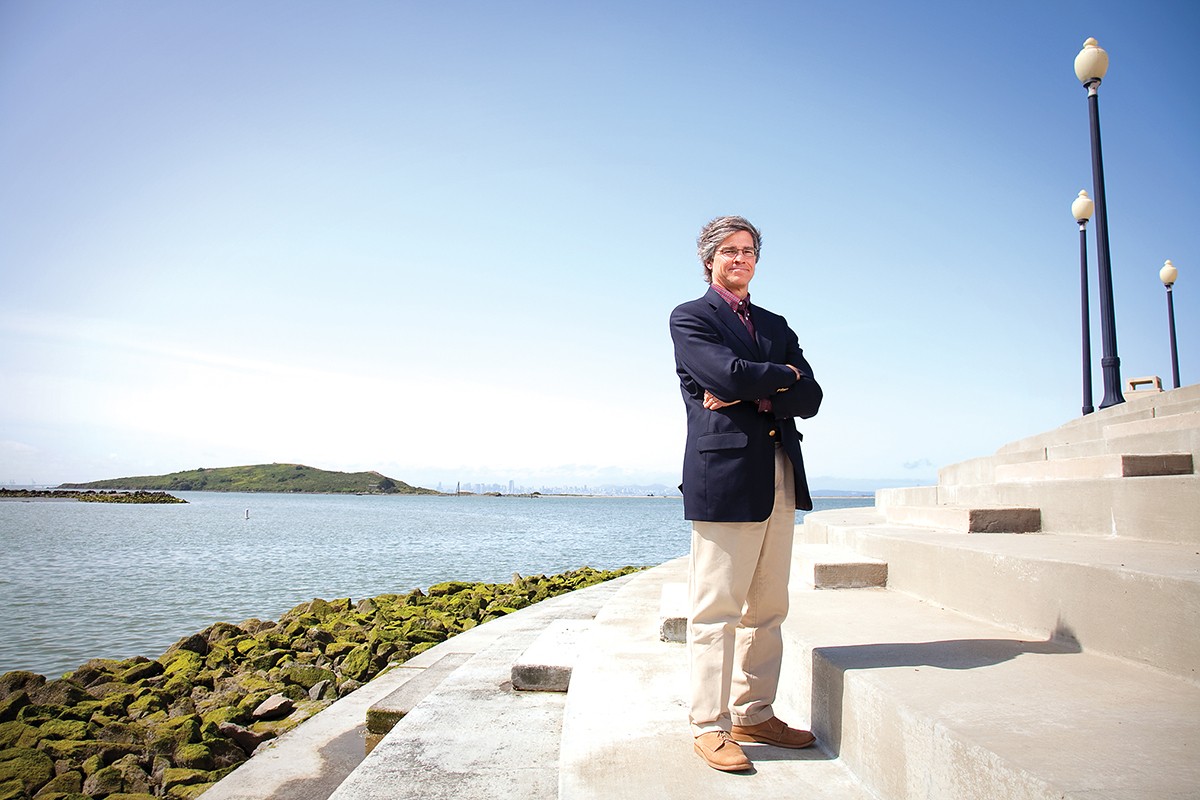
Gov. Jerry Brown.
Knickmeyer followed up with the revelation, published earlier this week, that a state mapping specialist, Jennie Catalano of the California Department of Conservation, has filed a whistleblower complaint, contending that she has faced retaliation because she objected to being ordered to perform the oil drilling analysis for the governor. Knickmeyer also quoted a former top state regulator who said Brown was livid when he found out that a subordinate, Steve Bohlen, put the governor’s order for the oil drilling study in an email — because the email could be uncovered later via a Public Records Act request.
Michael Stettner, former longtime manager for the state’s oil and gas division, told the AP that current and former state regulators said Brown was “extremely upset with Bohlen using the email to communicate with him. I’m putting it nicely compared to the graphic way it was described to me.”
Brown administration officials have tried to downplay the AP’s findings by claiming that state regulators routinely hand out the same type of information the governor requested to private citizens when they ask, and that Brown didn’t violate state laws that prohibit public officials from using public resources for their own benefit. But the AP talked to four oil industry professionals and three former longtime state oil and gas regulators who all said they could not recall the state ever conducting a detailed mapping analysis and assessment — like the governor ordered — for a private individual. Stettner called the Brown administration’s claims “pure BS.”
And that’s not all. Last month, the AP also reported that Brown fired top oil and gas regulators in 2011 after they had warned him that his order to override key environmental safeguards — so as to expedite fracking in the state — would violate state and federal laws. Brown later bragged that his decision to terminate the regulators in the California Division of Oil, Gas and Geothermal Resources (DOGGR) and replace them with industry-friendly ones led to the speedier approval of oil drilling permits. Earlier this year, the state acknowledged that the oil drilling operations approved after the firings had resulted in the contamination of underground water supplies for drinking and irrigation.
These revelations have come to light thanks to a federal lawsuit filed by Central Valley farmers who contend that Brown sought to expand oil drilling in California in exchange for huge campaign contributions from oil companies for his 2012 tax measure. The farmers and environmentalist allege that these pay-to-play deals have resulted in polluted water supplies.
Brown’s spokespeople have repeatedly claimed that the allegations are “baseless,” and they’ve pointed to the governor’s public stances on climate change as proof that he’s had no quid-quo-pro arrangements with the fossil fuel industry.
But many environmentalists have argued otherwise for years. In fact, some dubbed the governor “Big Oil Brown” after he blocked legislation in 2013 that would have temporarily banned fracking in the state. That move also came after he received millions in campaign donations from the oil industry — not only for his 2012 tax measure, but also for his campaigns for governor and state attorney general, and for his two Oakland charter schools (see “Fracking Jerry Brown,” 10/2/13).
Brown also came under fire from enviros this summer because he stood on the sidelines as the oil industry spent millions on lobbying and attack ads in an effort to kill his plan to reduce gas consumption in the state by 50 percent by 2030. The governor didn’t publicly fight back until just before the end of the legislative session — after it was clear that Big Oil had already won (see “California’s Missing Climate Hawk,” 9/2).
Brown then followed up by handing Big Oil another victory: He appointed a former oil industry executive in October to a top regulatory post in DOGGR, as reported by environmental journalist Dan Bacher on the Express‘ website. Hollin Kretzmann of the Center for Biological Diversity noted that the appointment was just more of the same for Big Oil Brown. “[His] administration has shown a blatant disregard for the law, and time after time it has sacrificed California’s water and public health in favor of oil industry profits.”
At the Exploratorium in San Francisco on a recent Thursday night — when the playful science education museum stays open late for adults-only fun — the resident forest of interactive installations was alight with engagement. As knobs turned and screens flashed, some groups captured their shadows on light sensitive wallpaper while others roamed from one station to the next, learning about magnetism, light waves, and gravitational pull.
Meanwhile, I sat down on the floor in the middle of a busy walkway with two people I had just met to perform a “prose score” written by Exploratorium artist-in-residence Zarouhie Abdalian. Prose scores are compositions that rethink the types of actions that can make up a performance, often while breaking down the distinction between audience and performer. The notation typically comes in the form of written instructions. This past Sunday, Abdalian staged a performance of prose scores that inspired her own — from pioneering experimental composers such as Pauline Oliveros and Fluxus artists such as Mieko Shiomi — that partially involved a stage of musicians scrambling to retrieve sheet music being blown off of their music stands by an industrial-sized fan.
Zarouhie Abdalian.
Credits: Courtesy of Amy Snyder
Zarouhie Abdalian.
Credits: Courtesy of Amy Snyder
Abdalian’s score is called Functions, and it comes as a suite of note cards that can be chosen at random. They are installed in the museum in the form of laminated decks along with a collection of optional props — small flags, ribbons, drum sticks. The only guideline provided is that the instructions on the cards should be performed by a group of three or more people. My group chose a card that read, “Show that you’re disobeying.” So, after some deliberation, we decided to sit in a line in the middle of the floor. Others read, “Arrange yourselves as to show that you outnumber the others,” and, “Become unrecognizable.” The cryptic ambiguity is every card’s crux, and from it sprouts the processes of improvised group organization that Abdalian is interested in.
Abdalian is an Oakland-based artist whose interdisciplinary practice often involves attempts to disrupt conventional modes of operating within a given space. Her interventions are typically subtle audio or visual cues that differ only slightly from what would be expected but take the viewer off guard. For her 2013 installation “Occasional Music,” which was commissioned by the San Francisco Museum of Modern Art as part of the 2012 SECA Award Exhibition, she installed hidden bells on the tops of buildings in Oakland’s Frank Ogawa Plaza, and each bell chimed in a random sequence at a random time every day for five months. Although subtle, the seemingly arbitrary ringing drew attention to the ways in which bells can function as cues to direct actions within an environment — signaling the end of recess or the turn of the hour, for example.
But the Exploratorium is an unconventional kind of space. There, subtle audio or visual cues would be lost amid the sensory overload of whizzing gadgets. Plus, social conventions are already eroded by the playscape quality of the museum. Abdalian thus opted to exploit that unconventional quality by directly dealing with the actions in the space — specifically focusing on group dynamics.
The Exploratorium was founded by Frank Oppenheimer, a scientist who was scarred by his involvement in the production of the first atomic bomb. Reflecting on his experience, Oppenheimer had a utopian vision of creating a resource for people to learn about science in hopes that it would make them more engaged, empowered citizens. “The only way that that’s really useful is if that knowledge is made common,” Abdalian pointed out in an interview, “And the only way that that knowledge can be made common is if we’re able to negotiate the terms of a group.”
Abdalian’s process was also shaped by the Black Lives Matter protests in Oakland and the traditions of Carnivale and Mardi Gras in her home town of New Orleans. “It also stems from formal concerns with the way groups in real space organize themselves in order to block or to announce or to know who each other is,” she said. At protests, shorthand words like “mic check” allow groups of strangers to develop and manage a specific power dynamic without assigning one leader. In a loosely analogous way, Abdalian’s cards require participants to negotiate decision-making and distribute power, always addressing an unspecified “you” that could include just one person or any number of people.
Like most installations at the Exploratorium, Functions is a simplified demonstration of something with serious consequences. At its fundamental form, the score asks complex questions about collectivity and power — who is included in “you,” and who makes that call.
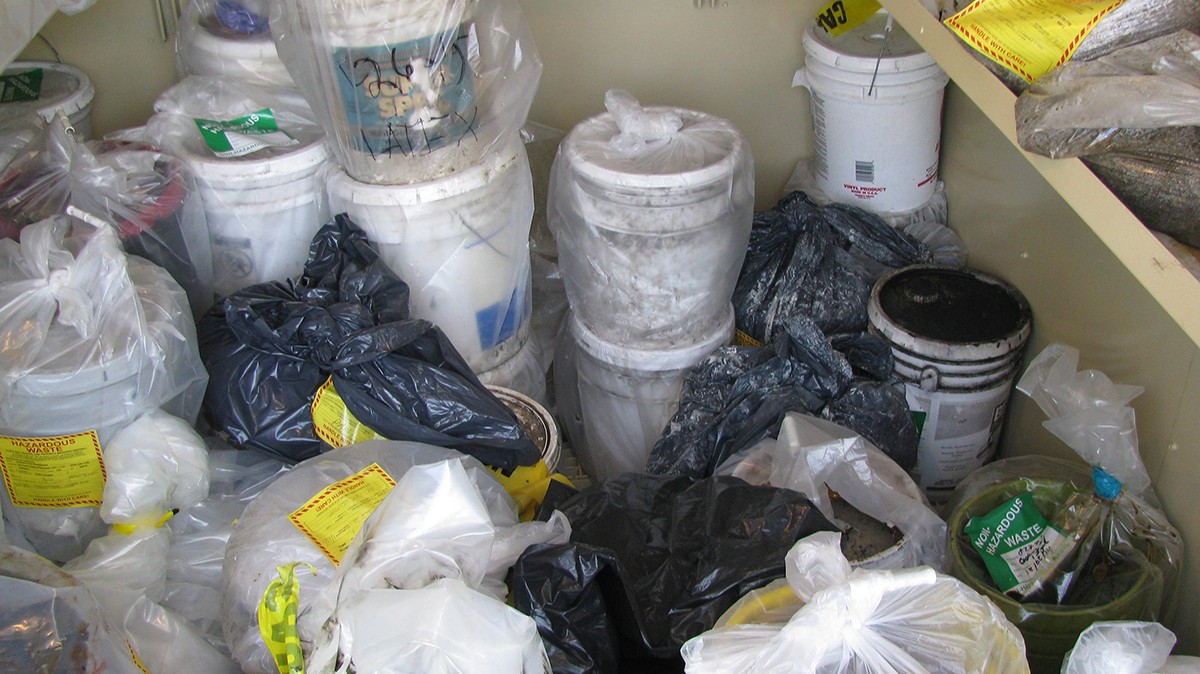
On Thursday, March 19, a truck owned by the Arthur Young Debris Removal company pulled into a parking lot at the City of Oakland’s sprawling maintenance and storage yard on Edgewater Drive, just across Interstate 880 from the coliseum. Several employees of the small, privately owned company stepped out of the truck and were greeted by Oakland Fire Department staffers. Together, they walked over to a small shed-like building that has several lockers. Inside the lockers were hazardous materials in drums, canisters, bags, and boxes.
According to firefighters who witnessed the scene, but whom the Express has agreed not to identify because they fear retaliation from the city, the Arthur Young employees removed the hazardous waste, but took few precautions, piling the waste haphazardly into the back of their truck. The workers, who appeared to be day laborers, packed corrosive and flammable substances beside poisonous powders and liquids. Then after filling the truck bed, they drove off city property.
In a recent inspection, the new county-run CUPA found numerous safety violations at Oakland’s maintenance and storage yard on Edgewater Drive in East Oakland.
Credits: Bert Johnson
Zac Unger, vice president of the Oakland firefighters’ union, said the fire department “hasn’t seemed committed to supporting” the hazardous materials program.
Credits: Bert Johnson/File Photo
But they didn’t get very far. A California Highway Patrol officer intercepted them and ordered them to return to the Oakland maintenance and storage yard with their dangerous cargo. Investigators from the California Department of Toxic Substances Control (DTSC) arrived soon after and gathered evidence. The Oakland Fire Department dispatched its own hazmat team to the site. Firefighters dressed in full-body protective suits and breathing compressed air sealed off the area to contain leaking chemicals and test them.
Credits: Roxanne Pasibe
If that sounds like a crime scene, that’s because the City of Oakland and Arthur Young were breaking the law. Arthur Young Debris Removal has never been authorized by the state to transport hazardous waste, records show. And according to firefighters, the company’s employees have never been trained to handle hazardous materials. Yet Oakland employed the company for years — without a contract — to pick up toxic chemicals from various locations around the city and to dispose of the waste, according to records obtained by the Express. From 2013 to the day of the interdicted waste shipment, the Oakland Fire Department paid Arthur Young Debris Removal $51,987 to transport and dispose of hazardous waste, according to city records obtained through a California Public Records Act request.
Officials with DTSC and the Alameda County District Attorney’s Office declined to comment on the shipment they intercepted in March, beyond confirming the fact that the incident occurred and that they’re investigating the city’s handling of toxic waste and its payments of tens of thousands of dollars to Arthur Young Debris Removal to pick up, ship, and dispose of hazardous materials. Authorities would not say whether the investigation is criminal or civil in nature, or whether they plan to file charges.
But the city’s illegal shipments of toxic waste are just a small part of a much bigger problem that has festered for more than a decade. Public records and interviews with state regulators show that since the early 2000s, the Oakland Fire Department has repeatedly failed to protect city residents from hazardous materials stored and used at hundreds of locations, inspect businesses and other facilities, and enforce state hazardous materials laws.
These failures repeatedly put Oakland residents — mostly in low-income areas of the city’s flatlands — at risk. Every day, people living or working near underground storage tanks containing fuels, lubricants and other noxious liquids, ran the risk of exposure to toxic plumes and fumes because the fire department had failed to inspect the sites and or had done so improperly. And firefighters, themselves, were at risk of being burned or poisoned because their own department had failed to do the inspections necessary to identify all the sites in the city where deadly materials are stored.
But that’s not all: The state has also uncovered financial discrepancies in how Oakland handled more than a million dollars in funds that were supposed to be dedicated to the city’s hazardous waste program. In addition, the city illegally transferred another quarter million dollars of hazmat program funds into Oakland’s general fund. Moreover, both city and fire officials have provided few answers to account for these failures of management, which have thus far gone unreported in the news media.
At this point, it’s unclear what state authorities plan to do regarding their investigation into Oakland’s illegal shipments of toxic materials. But the state has already taken action to address the city’s larger failure to protect the public. Last January, the California Environmental Protection Agency (Cal EPA) stripped the Oakland Fire Department of its responsibilities for protecting residents from hazardous materials, and placed the job in the hands of Alameda County. That decision will have far reaching consequences, including costs to the City of Oakland.
Public records also show that members of the city council and other top Oakland officials knew all along about the continuing failure of the fire department to correct numerous deficiencies in its hazardous waste inspection and enforcement program. They also knew the program’s money had been illegally steered into the city’s general fund, and that other budget irregularities indicated that the department had used its funds in questionable ways.
Yet for years, the problems deepened and placed the public and city employees in danger of toxic exposure every day.
Most of the story about the Oakland Fire Department’s chronic failure to protect residents and its own staff is told in grueling detail in hundreds of pages of correspondence between the state and city officials dating back to 2001. That year, California’s Division of Occupational Health and Safety (Cal OSHA) declared that Oakland fire officials had willfully failed to train firefighters on how to handle and clean up hazardous waste. The regulatory agency ordered the city to fix the problem, and the situation briefly improved. But then in 2003, an anonymous whistleblower contacted state officials alleging that the same safety violations were still plaguing the department.
In October of that year, when state regulators visited West Oakland’s Fire Station 3, where the city’s hazmat team was based, they found hazardous waste leaking from containers, ignitable waste left carelessly in an area accessible to the public, and incompatible types of chemicals stored next to one another, creating potential dangers ranging from combustion and explosion to poisonous gas clouds. What’s more, the city’s own hazardous waste inspection program had not inspected the fire station. The state also found that Oakland was still failing to train the fire department’s hazmat team members in their most basic duties, despite Cal OSHA’s earlier order. Finally, the state discovered that Oakland had been illegally transporting hazardous waste without valid registration.
This mini-scandal led to a $50,000 fine for the city, and some bad press at the time (see our story, “Welcome to Oakland; Please Don’t Spill,” 5/12/2004). But the state wasn’t trying to punish Oakland. The main goal was to bring the city’s hazardous waste program into compliance with state laws. So the city signed a consent judgment with the state, forcing the Oakland Fire Department to store waste correctly and to ensure its own employees were trained properly. “No entity should consider itself exempt from properly managing hazardous waste,” said Timothy Swickard, director of the DTSC, upon announcing the penalty and judgment at the time.
For several years following the consent decree, the fire department, by most accounts, carried out its hazmat responsibilities sufficiently. Firefighters received training on how to handle toxins, the department securely stored hazardous waste at city facilities, and the city only employed registered companies to transport toxic garbage, when it wasn’t doing the job itself.
Credits: Roxanne Pasibe
But the city’s biggest hazardous materials program, a dedicated unit within the fire department that inspected factories, auto shops, warehouses, and other facilities for hazardous waste violations, continued to experience problems. This program is known as the certified unified program agency, or CUPA (pronounced “koopa”). The Oakland Fire Department’s CUPA was the main regulator in charge of keeping track of the multitude of facilities in Oakland that store, generate, and handle hazardous materials. Oakland’s CUPA was also responsible for inspecting underground tanks containing toxic chemicals. If someone generating or storing hazardous materials violated state rules, accidentally or willfully, Oakland’s CUPA was the frontline enforcer that would identify a problem and order the violator into compliance.
According to California EPA Assistant Secretary Jim Bohon, who oversees all 82 CUPAs in the state, including county environmental health agencies and city fire departments, the state legislature created the CUPAs in the 1990s to establish a single local regulator for hazardous waste laws. “In the early 1990s, the business community found itself being regulated by everyone under the sun,” Bohon explained in a recent interview. “A single company could have eighteen agencies that regulated it and charged fees.
“If you were a fire department — and there were a lot that had programs that dealt with hazardous materials storage — you had the option of being grandfathered into the new program,” Bohon continued. “So these fire agencies all over the state that were managing these programs, they had to decide whether they would give it over to the county or keep it. Oakland had a program in place, and opted to transition into the unified program in the mid 1990s.”
To make sure all local CUPAs perform at a level sufficient to protect public health, state officials with Cal EPA, DTSC, the State Water Resources Control Board, and the Office of Emergency Services conduct periodic evaluations. And each evaluation of Oakland’s CUPA over the years has uncovered problems, although the program showed some improvements in the mid Aughts. By the end of the decade, Oakland’s program had deteriorated once again. In 2008, state evaluators found eighteen major problems, including the fact that Oakland’s CUPA wasn’t following up on citations issued to businesses that violated hazardous waste storage and handling rules, thereby creating a toothless enforcement situation. The Oakland CUPA also wasn’t requiring businesses to submit inventories of hazardous materials on an annual basis, meaning the city had no idea what kinds of dangerous substances were being stored in factories and shops. Oakland’s CUPA was also allowing gas stations and other facilities with underground tanks filled with toxins to operate without annual inspections or to operate with expired permits.
According to Zac Unger, vice president of the Oakland firefighters’ union IAFF Local 55, the CUPA’s failure to catalog and track hazardous materials throughout Oakland put firefighters in danger. For example, if firefighters rushed into a burning building, but didn’t know about poisonous or highly flammable materials kept inside, they could be maimed or killed, Unger said in an interview.
In 2012, the results of the state’s valuation of Oakland’s CUPA were so troubling that regulators decided to open a direct line of communication with the city’s top officials. This time, instead of writing only to Oakland Fire Chief Teresa Deloach Reed, who was appointed to the job eight months earlier, and LeRoy Griffin, the assistant fire marshal who for many years ran Oakland’s CUPA, Cal EPA addressed its letter to then-city council President Larry Reid. Other city officials, including then-City Administrator Deanna Santana and City Attorney Barbara Parker were cc’d on the letter. Cal EPA stated bluntly that Oakland’s performance was “unsatisfactory.” The state found 24 deficiencies this time; some were carry-overs from previous inspections that had never been adequately addressed, but others were new problems. Things were so bad that state officials warned Oakland that if it couldn’t get its CUPA program up to grade, the state would consider taking this responsibility away.
The Oakland Fire Department struggled to correct the failures identified in the 2012 evaluation. By October 2014, the department had only addressed half of the problems to the satisfaction of the state, according to Cal EPA records. The problems ranged from poor recordkeeping to lack of training to mismanagement of program funds. And Oakland’s CUPA was not inspecting and keeping track of the hazardous materials located in businesses, nor those stored and handled by other public agencies.
On January 5, following twelve years of attempts to fix Oakland’s broken CUPA program, the state decided to pull the plug — an action officially called decertification. In a letter addressed to then-council President Pat Kernighan, state Secretary for Environmental Protection Matthew Rodriquez wrote that Oakland would need to hand over all of its CUPA program files to Alameda County in March. He also asked the city to itemize funds that its CUPA controlled and explained that most of this money, possibly upwards of a million dollars, would need to be transferred to Alameda County.
Attached to Rodriquez’s letter was a 180-page summary of all the failings of OFD’s CUPA program. Oakland became the first CUPA program ever decertified by the state, although it didn’t make the news. Instead, the city was quietly stripped of its duties to protect the health and safety of its residents and employees.
“This didn’t happen overnight,” said Cal EPA’s Bohon. “We went through a very long process. We worked with Oakland fire for years to get their program in order.”
The risks and costs that Oakland incurred by letting its CUPA program fall to pieces are very real. Just one example: Oakland’s CUPA failed for years to properly inspect underground storage tanks throughout the city to ensure they weren’t leaking. According to Cal EPA, Oakland’s attempts to correct this deficiency were “problematic,” partly because Assistant Fire Marshal Griffin, who was conducting inspections, was not trained and certified to do so. Oakland’s CUPA also kept such poor records that state officials could not tell which tanks might have been inspected and when.
By not properly inspecting underground tanks, Oakland’s CUPA ran the risk of allowing an undetected leak to contaminate groundwater. The damages that result from a leak aren’t hypothetical. When oil, gas, and other chemicals seep into the earth, they spread out in plumes carried by flows of groundwater. Toxic plumes can then rise to the surface and release dangerous levels of chemicals into the air. Plants, including fruit trees and vegetables, can absorb harmful levels of poisonous compounds. Leaky tanks effectively ruin real estate and prevent it from being used in the future as housing. Cleaning up a single polluted site can cost taxpayers hundreds of thousands — or even millions — of dollars depending on the severity of the pollution.
There are plenty of examples scattered throughout Oakland of land ruined by leaks from buried tanks. For example, in 1995, a fuel delivery worker discovered gasoline and diesel leaking from tanks and pipes at the fueling station at the corner of Adeline and 5th Street in West Oakland. Four fuel tanks were excavated in 1999 and removed from the site, but the damage was done. Over the past 15 years, the state has spent $949,341 on cleanup efforts, including trucking away 2,100 tons of toxic dirt and 33,000 gallons of groundwater poisoned by MTBE, gasoline, diesel, benzene, and other toxic chemicals, according to records maintained by the state water board. The property is now considered a brownfield, which means it can’t be developed into housing, and activities like child and elder care are banned on the site.
Investigators are probing the illegal shipment of hazardous materials, like those photographed here in February, by the city through contractor Arthur Young Debris Removal company.
The Rinehart fuel station where the leak occurred is still in operation today, now with newer, stronger tanks installed. But the state still requires inspections because even new tanks and pipes can break. According to Cal EPA’s last evaluation of Oakland’s CUPA, the fire department could not produce any records to prove that it had inspected the underground storage tanks at Adeline and 5th. In fact, state regulators found that Oakland CUPA’s had failed to inspect or had no records of inspecting underground tanks at twelve sites in East, West, and North Oakland. Some of these sites are gas stations with buried fuel tanks located within yards of houses and apartment buildings.
Moreover, some of the underground tank inspections that Oakland’s CUPA performed were carried out by Griffin, despite the fact that he never obtained a license to do the inspections. “[W]e traced the records back and confirmed that for eight years he had not been certified, so all the inspections he conducted were not valid,” said Laura Fisher, chief of California’s underground storage tank leak prevention unit, which is part of the State Water Resources Control Board.
The state requires tank inspectors to be licensed by the International Code Council, a professional association of code inspectors and fire officials that promulgates the highest standards and educates inspectors. According to state records, Griffin took the licensing exam once in 2013 and twice in 2014, but the city never produced documentation that he successfully passed the exam. In late 2014, the Oakland CUPA notified the state that rather than have Griffin become a licensed inspector, he would simply stop conducting inspections.
But that solution only inflamed another problem: the Oakland CUPA had too few staffers, especially inspectors. According to fire department employees who spoke to the Express on the condition of anonymity, Oakland’s CUPA was never staffed at a realistic level to handle the workload it faced. Oakland’s CUPA had three inspectors for the entire city. By contrast, the Berkeley CUPA program has two inspectors even though Berkeley has far fewer facilities that handle and store hazardous materials.
“We understand that [Oakland] has a tremendous amount of sites and work,” said Barney Chan of the Alameda County Environmental Health Department, the agency that is taking over CUPA responsibilities in Oakland from OFD. According to Chan, Alameda County may hire as many as eight to ten new staffers to handle the workload, including four inspectors, plus a full-time manager. But the county, which Chan described as also not having optimal resources to handle its existing hazardous materials inspection work, hasn’t made any decisions yet.
During the recession, the city laid off one of Oakland’s CUPA administrative staff, according to fire department employees. This left the program in disarray. Griffin, meanwhile, was also in charge of vegetation management, a major responsibility in a city in which tens of thousands of homes and businesses are located in the hills amid dry brush, grass, and trees. The city also tasked Oakland’s CUPA program staffers with enforcing Oakland’s stormwater runoff regulations, even though these are not part of a CUPA’s responsibilities.
According to Fisher, Oakland appears to have overburdened its CUPA inspectors with too many responsibilities. She said that for underground tank inspections, the city needed two to three inspectors, working full-time, in order to keep tabs on the 145 to 160 sites with buried tanks in Oakland. Instead, the fire department had piled multiple other inspection duties on its CUPA staffers, and each was equally complex and time-consuming. “They failed to meet the annual inspection frequency,” said Fisher, referring to the underground tanks. “This may have been because of other elements or other assignments the inspectors were working on.”
Dangerous storage lockers like this one, photographed in early 2015, have been commonplace in Oakland for the past decade.
Griffin retired last year, and according to sources with the city, he died last week, and therefore was unable to comment for this report. Current and former fire department staffers say Griffin was often stretched thin, running the city’s CUPA program with few resources, and that while he often advocated for more staff, the CUPA program was never a priority for the department’s leaders, or for city officials.
Two weeks after I requested an interview with Oakland Fire Chief Reed, and one week after I sent her a list of questions, she said last Friday that she did not have time to respond.
The reason why Oakland maintained such a tiny staff responsible for Oakland’s sweeping CUPA responsibilities is a mystery. Like other CUPAs, Oakland’s hazardous waste inspection and enforcement program was self-funded from fees and fines imposed on regulated businesses and other entities. In other words, Oakland’s CUPA did not rely on the city’s constantly strained budget to fund itself. In fact, state officials found that Oakland’s CUPA often over-billed businesses and pocketed more money than it needed to run the program. According to state evaluators, Oakland Fire Department staffers who ran the CUPA program between 2010 and 2012 “billed more than the necessary and reasonable cost to implement the [CUPA] program.” The overbillings and lack of staff appears to have left the Oakland CUPA program flush with cash — funds that the city chose not to spend to improve and grow CUPA activities. In 2014, state officials discovered that Oakland’s CUPA was sitting on a surplus of $1.46 million — an amount that was 174 percent larger than the program’s total expenditures in the previous fiscal year. The surplus would have been enough to hire at least seven more inspectors to the CUPA program for one year. State evaluators also discovered that the city had transferred $249,096 in CUPA revenue to Oakland’s general fund to plug the city’s ailing budget, which is an illegal use of the program’s funds.
Now that the state has stripped Oakland of its CUPA responsibilities, the city will very likely incur yearly expenses charged by the county for inspection of multiple city-run warehouses, shops, and yards where hazardous materials are stored. And if Oakland city departments, like public works or fire, violate state laws regarding the storage and handling of hazardous waste, they will be fined by the county.
If recent developments in the Oakland Fire Department are any indication, it’s likely the city will be spending a lot of money on fines. In August, the new county-run CUPA for Oakland inspected the fire department’s hazardous waste storage lockers at the city maintenance and storage yard on Edgewater Drive — the same facility where the city and Arthur Young were caught back in March improperly transporting waste. The county inspectors found numerous safety violations.
According to an inspection report dated August 21, the Oakland Fire Department was still improperly labeling, handling, and storing hazardous waste. County inspectors observed toxic materials stored in containers that were “corroded, cut open, not secured, damaged and leaking.”
What’s more, the facility could not produce hazardous waste manifests — the documents that identify and track hazardous waste from where it’s picked up to where it’s disposed of, and who transported it. According to the county CUPA inspectors’ report: “hazardous waste is disposed every 90 days [from the city’s Edgewater location] which should result in a minimum of 12 manifests.” The CUPA inspectors could find no copies of manifests on site, and the fire department provided them with none. Meanwhile, the DTSC, the state agency that maintains copies of every manifest generated in California, has only two records for the city facility. This means that there were at least ten shipments of hazardous waste by the City of Oakland in which the city has no idea where the waste ended up.
The missing manifests and shipments appear to all point back to the Oakland Fire Department’s questionable reliance on the Arthur Young Debris Removal company to take toxic materials off the city’s hands. In their inspection report, the county’s CUPA inspectors wrote that fire department employees told them prior to March of this year that Arthur Young was paid to haul away every shipment of waste. County inspectors noted, however, that Arthur Young is not in the DTSC’s database of registered hazardous waste transporters. The inspectors concluded: “OFD did not use a registered hazardous waste hauler to transport hazardous waste and did not have records of the final destination of the hazardous waste.”
OFD could not provide any records that it had inspected the Rinehart fuel station, a toxic brownfield site.
Credits: Bert Johnson
So where did the flammable, corrosive, toxic, poisonous, and just plain horrible piles of garbage end up? I called Arthur Young Debris Removal to find out. A receptionist who answered the phone said that Arthur Young, the founder and owner of the company, sold his business recently, and that the new company has changed its name to DeSilva Enterprises. She said she would pass my telephone number along to Arthur Young, but he did not return my call. I sent a message to several email addresses used in previous years by Young, but received no response. DeSilva Enterprises was incorporated in August 2014. Its business address is a condo in the city of San Pablo, but little other information is available about the company. According to records on file at the Secretary of State’s Office, DeSilva Enterprises is run by William De Camargo Silva of Kentfield.
The signatures approving numerous payments in the amount of $3,999 to Arthur Young Debris Removal to transport hazardous waste off City of Oakland property were signed by Oakland’s former CUPA manager Griffin. But despite repeatedly paying Arthur Young to haul toxic waste, the city never signed a contract with the company.
It’s unclear how Arthur Young, a junk disposal entrepreneur from East Oakland, ended up being paid at least $51,987 to illegally transport and dispose of hazardous waste for the city over multiple years. But this isn’t the first time Arthur Young’s work for Oakland has raised eyebrows. In 2008, Antoinette Renwick, an inspection services manager for Oakland’s Community and Economic Development Agency, approved six blight abatement contracts with Arthur Young Debris Removal worth $118,545 to pick up piles of trash left on Oakland’s streets and at blighted properties. The approvals violated city and state conflict of interest laws because Renwick’s sister was once married to Arthur Young; Renwick and Young had a financial relationship; and the two had been friends for more than thirty years, according to the findings of a state Fair Political Practices Commission investigation. In 2005, Young loaned Renwick $30,000 to help her pay her taxes. That meant Renwick still owed tens of thousands of dollars to Young at the same time she was awarding his company lucrative blight abatement contracts. The FPPC fined Renwick $6,500 for her part in illegally steering contracts to Young. Young, however, wasn’t punished.
Whether or not state law enforcement officials or the Alameda County District Attorney will take action against the City of Oakland and Arthur Young for illegally transporting hazardous waste remains unclear. But word inside the fire department is that recent events have once again caused top officials to pay more attention, and things are slowly getting better. “The people we have on our hazmat team are dedicated and hardworking, but the department has not been training a new group quickly enough to take on this job, and the department hasn’t seemed committed to supporting the program,” said firefighter Unger. Whether or not OFD can maintain any improvements it makes in hazmat training and the safety of its own hazardous materials storage and transport activities is anyone’s guess.
One thing is for sure, however. With the city’s CUPA decertified and handed over the county, Oakland will no longer be able to expose residents and city employees to toxic threats through flawed inspections and insufficient enforcement of environmental laws.
Spotlight, currently in theaters, shows the dark side of the Irish Catholic condition, but there’s an antidote of the sweetest and most unforced kind — John Crowley’s Brooklyn, with a lustrous performance by Saoirse Ronan.
Eilis Lacey (Ronan) has the looks and demeanor of the stereotypical small-town Irish maiden of the past — modest, demure, sincere, devout yet forthright, with downcast eyes and the seemingly translucent milk-white skin of a china angel. And yet Eilis’ problems (her name is pronounced AY-lish) are familiarly modern, à la the early 1950s. She lives at home with her widowed mother and sister and works for a horrid shopkeeper, dreaming of one day becoming an accountant. So when she gets the chance to emigrate to the United States under the sponsorship of a family friend priest (Jim Broadbent) who lives there, she opts for the promise of Brooklyn over the poverty and narrow-mindedness of Enniscorthy, County Wexford.
Saoirse Ronan stars as Eilis Lacey in Brooklyn.Saoirse Ronan stars as Eilis Lacey in Brooklyn.
Brooklyn in the Fifties: the Dodgers at Ebbets Field, a boarding house run by a nosy biddy, sales job at a department store (with Mad Men‘s Jessica Paré as a sympathetic manager), folk dancing in the church basement, trips to the beach at Coney Island, and a true-blue Italian-American guy named Tony (Emory Cohen). The immigrant experience as a dream come true, the type of narrative Americans never get tired of.
We’ve watched Ronan grow up on screen in everything from Atonement to The Lovely Bones to Hanna to The Way Back to How I Live Now, but her Eilis, the actress’ “first adult role” at age 21, is something she must have been saving up for as part of her career trajectory. It’s a character and a part to treasure, carefully drawn by screenwriter Nick Hornby from Colm Tóibín’s novel. Nothing could be simpler nor more heartwarming. Eilis is “calm, civilized, and charming,” as she matter-of-factly describes her own dependable old-country ways. So is Brooklyn, a beautiful time capsule from somewhere over the rainbow.
Richard Poe, a wealthy and politically active developer, walked up to the podium at a recent Richmond City Council meeting with his wife and three-year-old son in tow. While Poe’s son did his best to hold up an enlarged, sweepstakes-style check made out for $2 million, Poe began to ramble disjointedly about an unnamed development project, petitions, negativity, phases, and solar panels. Through the maze of non-sequiturs, Poe seemed to be saying that he would give the city a $2 million up-front payment if the council awarded him preferential treatment and allowed his proposed project to skip the city’s normal vetting and approval process.
“As you know,” Poe told the councilmembers, “most developers pay as they go, but we pay in advance.”
While Poe’s short speech was difficult to follow at times, councilmembers had little doubt that he was talking about his so-called “Richmond Riviera” project, a controversial proposal to build 59 upscale, single-family homes on land that he owns on Richmond’s waterfront. Poe completed his application for his suburban-style project in September 2014, according to city documents. But in February, just before the city’s design review board was going to consider the proposal, Poe pulled his application and announced he would instead seek voter-approval for it.
Poe has since pushed a signature-gathering effort that qualified the petition for the November 2016 ballot. The measure calls for altering the city’s general plan — a document that took years of work and reflects the input of thousands of Richmond residents — to suit Poe’s desires. And in another apparent attempt to exert his personal interests on city politics, Poe has funded a petition drive calling for a reduction in City Manager Bill Lindsay’s salary and benefits. The county is still verifying the signatures on that petition.
This is not the first time that Poe, scion of the wealthy real estate family that oversaw the development of Richmond Marina, has used his wealth to get want he wants in Richmond. Last year, a subsidiary of one of Poe’s companies and another developer funded a hit-piece mailer campaign attacking Measure C, which sought to establish a property tax to keep the financially struggling Doctors Medical Center from closing. Measure C failed, in part due to Poe’s efforts, and the only hospital that served working-class and low-income families in the western part of Contra Costa County shuttered its doors in April. Poe has also formed shadowy political committees to influence Richmond council elections and has commissioned polls that always seem to determine Richmond voters are remarkably in line with his interests. Poe is also known to launch expensive glossy mailer campaigns attacking city officials who cross him.
Citing Poe’s vindictiveness, numerous city officials and residents asked their names not be used in this story. Poe did not return calls or emails requesting comment.
A possible reason for why Poe put his proposed Richmond Riviera project on the ballot is because he sensed the council was not happy with it in light of the city’s plan for dense urban development at that location. The five-acre site has been designated as an “activity zone” in the city’s general plan, which the council adopted in 2012.
For decades, large, dense developments have bypassed Richmond, while cities like San Francisco, Oakland, Emeryville, and Berkeley have undergone revenue-generating building booms. That’s why the Richmond general plan designated Poe’s five-acre site as “high intensity mixed use” and zoned the site for structures of up to 135 feet and residential density of up to 625 units. But Poe wants to build 59 expensive, single-family homes with a maximum height of 35 feet. City officials are alarmed with Poe’s plan because it would generate far less property tax revenue, and people who purchase suburban-style homes tend to be much less tolerant of noise, traffic, and retail activity, all of which are zoned for the area.
The site is in the middle of a growing economic center that includes the Craneway Pavilion, a historic, 45,000-square-foot event center that hosts wide range of events, from intimate company parties to major music concerts. Next to the Craneway are Assemble Restaurant and the Rosie the Riveter WWII Home Front National Historical Park Visitor Center.
Perhaps most important, a ferry terminal, with direct service to San Francisco, is scheduled to begin operating right next door to Poe’s property in 2018. The Water Emergency Transportation Authority, which will operate the ferry, is relying heavily on dense development along the Richmond waterfront to support the ferry with commuters for the seventeen-minute trip to San Francisco. Poe’s project might generate eight to ten regular commuters while a denser one could generate hundreds, according to a city official.
Another Richmond developer, whom the Express agreed to not identify, said the ballot measure benefitting Poe could have negative repercussions on development in Richmond. “I have trouble wrapping my mind around why [Poe] would go with less density. His project makes no sense for the location,” the developer said. “In my opinion, there’s no way he should use the ballot to try and bypass the city’s approval process. It’s a terrible precedent.”
Meanwhile, Poe’s petition to lower Lindsay’s salary appears to be based on anger and resentment. Lindsay took the city’s top administrator job in 2005 at a time when Richmond’s reputation was in shambles after decades of corruption, poor financial management, and high crime rates. Lindsay hired all new department heads, including Police Chief Chris Magnus, who reorganized the police department and has spearheaded an unprecedented nine-year decline in violent crime in the city.
City Manager Bill Lindsay (above) would have his salary slashed by a ballot measure backed by developer Richard Poe, who wants to build a suburban-style housing development on the Richmond waterfront.
Credits: Joseph Schell/File photo
Lindsay also set out to transform Richmond’s gloomy reputation for being backward and overshadowed by heavy polluting industries into a modern city that is willing to invest in its residents. Lindsay oversaw the updating of the Richmond General Plan 2030, a sweeping policy document that has fifteen elements (in California, cities are only required to have seven). The document, adopted in 2012, will guide the city’s future in terms of land use, economic development, transportation, open space conversion, and arts and culture. Richmond’s general plan also dedicates an entire element dedicated to community health and wellness — conditions that Richmond’s previous administrators and elected officials had neglected.
But Poe is clearly not happy with the plan — or Lindsay. In February, Poe was behind a glossy attack flier that criticized Lindsay’s salary, which is just under $412,000, as being more than twice that of Governor Jerry Brown. Poe’s ballot petition would limit the city manager’s total compensation to a much lower amount based on recent household income figures. The formula would reduce Lindsay’s total annual compensation to $272,945, a pay cut that would almost certainly result in Lindsay seeking employment elsewhere.
Mayor Tom Butt, a Lindsay supporter, said Poe’s salary formula is nonsensical and does not take into account that cities have different administrative needs based on local commerce, geographic location, poverty rates, and other social issues. “Lindsay is among the best paid city managers in the Bay Area but certainly not at the top. He doesn’t even make the top ten list in either pay per resident or pay per city employee,” Butt wrote in his email newsletter. “Placing an arbitrary cap on the city manager’s compensation has no rational basis, particularly when it is tied to nothing related to the nature of or qualifications for the job.”
Poe has portrayed his petition as seeking government fiscal responsibility, but a closer look raises questions about his true motivations. For example, Poe fails to mention that Lindsay’s compensation is not even the highest in Richmond. In 2013, Lindsay’s salary and benefits came in sixth after five fire captains and a battalion chief, all of whom collected thousands in overtime, city records show.
Moreover, Poe has publicly expressed frustration toward Lindsay and the city for not purchasing one of his buildings to house City Hall. Instead, the city spent $100 million, mostly in bond funds, to renovate the historic Civic Center Plaza. On Nextdoor.com, a social networking site, Poe made plain his contempt for the renovation and for Lindsay. “This was under the watch of this city manager. Indeed, people forget what’s in our file, the city could have bought [the building] in Marina Bay that I own for at the time $12 million.” Poe wrote on October 10. “I strongly spoke out against the city building what we call a $101 million Taj Mahal … in Richmond … . However, those that wanted to waste taxpayers’ money branded me as self-serving.”
Poe was kicked off Nextdoor last month when network managers discovered his neighborhood, “The Richmond Riviera,” did not yet exist and that his main residence is not in the Richmond Marina. According to public records, Poe has identified himself as a resident of Florida for a substantial portion of the past decade. Multiple sources also said that Poe told them that he plans to retire to a newly purchased mansion in Florida.
Clarification: In a comment appended to this story, Richard Poe disputed an assertion made in the original version of this story that he recently purchased a mansion in Florida. The story has been clarified as a result.
Last week, Bay Area crab lovers got the news they feared: Due to toxin levels too high for safe consumption, the California Department of Fish and Wildlife decided to delay the commercial Dungeness crab fishing season indefinitely. The toxin, known as domoic acid, is the result of an unusually large algal bloom likely caused by warm waters off the coast of California. When consumed in large quantities, domoic acid can cause diarrhea, nausea, and, in severe cases, permanent damage to short-term memory and even death.
Originally slated to start on November 15, the crab season won’t begin until wildlife officials determine that the domoic acid levels in the crabs have lowered to a safe level for human consumption — a delay that puts what’s estimated to be a $60-million-a-year industry in peril.
Camino will only serve local Dungeness crabs.
Credits: Bert Johnson/File photo
Dungeness crab.
Credits: Bert Johnson/File photo
Although news of the delay had barely broken, seafood-oriented restaurants around the East Bay were already changing their plans for the start of the crab season. For the past couple of years, Homestead (4029 Piedmont Ave., Oakland) has hosted a big, family-style crab feed on the Wednesday before Thanksgiving. Last Friday, the farm-to-table restaurant announced that the pre-Thanksgiving meal would be reformatted to a clam bake. And Camino (3917 Grand Ave., Oakland) will forego its wintertime tradition of serving Monday night prix-fixe dinners that feature Dungeness crabs grilled in the restaurant’s wood-burning fireplace.
The crabs are Camino’s most popular item, but chef and co-owner Russell Moore said the restaurant is committed to serving only local seafood. Moore now plans to feature boudin blanc for the restaurant’s next set of prix-fixe dinners, starting on Monday, November 16. The sausages are actually the restaurant’s second-most requested item, but the demands of the crab season have often left him with little time to make them, Moore said.
“What I’m not going to do is just try to buy crabs from farther away or anything like that,” he said. “Some things are more important than business.”
The constantly changing nature of the menus at seasonal, locavore restaurants, such as Homestead and Camino, makes it easier for those businesses to take a wait-and-see approach when it comes to the Dungeness crab season. For now, Moore said he’s going to operate under the assumption that the season will be canceled altogether and then adapt accordingly if and when the crabs eventually come through. Homestead co-owner Elizabeth Sassen is taking a similar approach, but said her bigger concern is how the delay (and potential loss) of the crab season will affect the Bay Area economy and what it says about the overall well-being of the ocean — especially if this year’s algal bloom problem was at least partly impacted by global climate change, as some suspect.
Camino will only serve local Dungeness crabs.
Credits: Bert Johnson/File photo
As I reported in my January cover story, “Shell-Shocked,” the Bay Area’s Dungeness crab fishery is unique in the sense that about 80 percent of each year’s catch is concentrated in the first two or three weeks of the season — a mad scramble that fishermen refer to as the “derby.” Pushing that derby back a few weeks might not in itself be a critical blow for local crab fishermen, but the loss of the traditional Thanksgiving rush will certainly hurt. Paul Johnson, owner of Berkeley’s Monterey Fish Market (1582 Hopkins St.), explained that part of the problem is the crab fishermen have already spent weeks getting their gear ready for the crab season. They may not have the proper equipment or licenses to fish for something else in the meantime. For better or worse, all they can do is wait.
The only sliver of good news for local fishermen: Most years, a huge number of big fishing boats from Oregon and Washington come down for the derby, scooping up a disproportionate amount of crab in those first few weeks. Tom Worthington, who runs Monterey Fish Market’s wholesale operation, said that once the delay of the season was announced, most of those big boats immediately packed up and headed back north — presumably to get ready for the northern Dungeness crab season, which for now is slated to begin on December 1. If the Bay Area season does eventually open, it’s possible that local fishermen might actually bring in a bigger share of the haul.
“It’s a potential silver lining with a delayed paycheck,” Worthington said.
It’s also possible that all this talk of toxins has turned some customers off of Dungeness crabs altogether, at least for the time being. Nelson German, chef-owner of the seafood restaurant AlaMar (100 Grand Ave., #111), seems to believe that’s the case, and he’s decided not to serve crab at his restaurant as a result. “I think the public will refrain from ordering any crabs at this time, no matter where the restaurant says it originates from,” he said.
Come to me, ye cornhole enthusiasts and preachers of the gospel of West Coast IPA, and you will find — in Oakland — a beer garden for every occasion or frame of mind. The Town has a rooftop beer garden where sports fans gather in front of flat-screen TVs to watch the big game under the stars. There’s a backyard beer garden that resembles a tree fort, where customers sip draft beer in the shadow of three majestic redwoods. And there’s even a waterfront beer garden you can pull up to in a sailboat.
Now it’s time to welcome Drake’s Dealership to the fold. And it might serve the best food of the bunch.
Diners at Drake’s can get comfy on Adirondack chairs, alongside a blazing fire pit.
Credits: Bert JohnsonThis fairly traditional version of poutine has some surprising elements.
Credits: Bert Johnson
The brewpub, located at the site of a former Dodge auto dealer, is tucked away in the back section of the Hive complex — Uptown’s ritzy, walled-off romper room for young urban professionals. It’s the latest venture from the folks behind the San Leandro-based Drake’s Brewing Company (as well as Jupiter and Triple Rock in Berkeley). And if you’ve heard anything at all about the new brewpub, it almost certainly had to do with its open-air patio, which is massive and lovely and hits all the classic notes: low-slung Adirondack chairs, fire pits, and lights strung up over the magnolia trees. Everything is spread out and rustic and designed to make you feel more like you’re hanging out on well-manicured picnic grounds than eating at an actual restaurant. It’s no coincidence that most of the menu items can be eaten with your hands.
Drake’s is a fairly big-name brewery, and when the big-name breweries decide to open restaurants, they tend to be … just fine — a step up from the TGI Fridays of the world, but with similarly generic food offerings that lean heavily on middle-of-the-road burgers, pizzas, and fried things. The idea, of course, is to get people to drink more beer, not to provide any kind of memorable culinary experience. (I’m looking at you, Pyramid Alehouse and Gordon Biersch.)
On its face, Drake’s Dealership follows the same basic template. There’s wood-fired pizza, a burger, and an assortment of bar-snack-y appetizers; few dishes veer from the typical American comfort food playbook. But even if it isn’t apparent from reading the menu, chef Taylor Smith likes to dabble in modern cooking techniques and whole-animal butchery, and puts more care into each dish than you’d expect from a super-sized, 350-seat beer garden that cranks out massive quantities of food and booze every night. In short, the food is better than it really needs to be.
Have you, for instance, ever tried New Haven-style pizza? At Drake’s, these oblong, wood-fired pies — served in a metal cafeteria tray — are the centerpiece of the menu. A variant on a standard Neapolitan-style thin-crust pizza, New Haven pies are traditionally cooked in coal ovens, whose blazing heat Smith approximates by cranking his wood ovens up to as hot as 800 degrees. You can opt for a traditional “apizza,” which is topped only with tomato sauce, oregano and pecorino romano, or a more California-inflected pie with figs, goat cheese, and what not. But I kept it simple with the “Uptown,” which was topped with fennel sausage and thick double-smoked bacon: a straightforward, winning combination. The well-blistered crust had a nice chew and was delicious, thanks to a long fermentation of the dough.
A globally inspired take on duck leg confit was one of several duck dishes on the menu.
Credits: Bert Johnson
But the best part of the pizza was the duck egg (or “dinosaur egg,” as our server quipped) that was available as an optional add-on. Slow-cooked in an immersion circulator to exactly 62.5 degrees Celsius, the egg’s yolk oozed — as thick and viscous as a pat of soft cheese — when you cut into it, so you could spread an extra bit of richness onto each slice as you ate. This was one example, Smith said, of how he likes to “drop the science” on basic bar food dishes.
The egg yolk was also just one of many items on the menu that incorporated some element of duck — a nod to the waterfowl in the Drake’s logo. (A “drake” is, of course, the proper term for a male duck.) The restaurant also serves an excellent, and fairly traditional, version of poutine — the Québécois specialty of gravy- and cheese curd-topped fries. But in this case, the dish’s velvety, deeply savory brown gravy is made by simmering the bones, giblets, and other odd scraps left over from the thirty or so whole ducks the kitchen breaks down each week.
Pizza topped with a slow-cooked duck egg.
Credits: Bert Johnson
Smith cited his duck confit as an example of what he described as a “respect-no-borders” approach to New American cooking, borrowing ingredients and techniques from international cuisines with abandon. In this case, the duck leg had been marinated in koji (a Japanese fermented-rice concoction) before getting cooked in its own fat (a French technique), and was served with grits, roasted mushrooms, macerated cherries, and cubes of fried paneer (an Indian cheese) that I initially mistook for tofu. The dish’s core ingredients (the duck, the mushrooms, and the cherries) made for a classic fall dish, but it’s a tribute to Smith’s restraint and sense of balance that even the most random additions — paneer? — more or less worked.
You can also add a confit duck leg ($10) or a hunk of roasted duck breast ($9) to any of the restaurant’s selection of meal-size salads — though how you’ll feel about that depends on how amenable you are to the idea of dropping more than $20 on a salad.
Smith is probably selling himself short when he says he’s under no delusions that the food is anything more than a side attraction at a place where the craft beer is meant to be the star. But it is true that Drake’s makes very good beer, and the nice thing about drinking at the Dealership is that it offers a host of seasonal, limited-edition taps: the bright, citrusy “70×7” unfiltered IPA, for instance, and a smoked porter that was as creamy as a milkshake.
And while there are a handful of entrées like the duck confit, a much bigger swath of the menu is dedicated to bar snacks and small plates that are meant to be shared with a group. I loved the caraway seed-flecked soft pretzels (made by the Oakland-based Salt Point Pretzel Company) and Smith’s take on a Southern-style Frito pie — warm corn chips topped with a spicy-sweet tomato-based beef chili and a slightly boozy bacon fondue, all served inside a split-open Frito bag, as is traditional. Heartier eaters might opt for the muffuletta, a take on the New Orleans deli staple — as giant a sandwich, and as thickly stuffed with mortadella, soppressata, and capicola, as one could ask, though I wished the olive-relish topping had more olive oil and more of the traditional tangy, pickle-y elements.
For such a large and relatively new eatery, the service was reasonably friendly and efficient — though it’s only fair to note that the staff’s attention tended to get spread thin as the evening wore on and the patio got increasingly packed. My only other complaint: Brewpub or not, for a restaurant that is as family-friendly as this one — with kids at literally every other table — it was somewhat off-putting that there wasn’t a single dessert option that didn’t prominently feature beer.
A globally inspired take on duck leg confit was one of several duck dishes on the menu.
Credits: Bert Johnson
But let’s be real: You’re mainly here for that patio, anyway — to squeeze next to your date on one of those Adirondack chairs, alongside a blazing fire pit; to be loud with your friends; to drink too much beer, and, while you’re at it, to maybe share a couple of pizzas and a plate of poutine. For all of that, Drake’s Dealership does its job very well indeed.
For most Americans, especially those in law enforcement and news gathering, the public opinion tipping point on the issue of child sexual abuse by adult authority figures came on January 6, 2002, when the Boston Globe published a bombshell investigation of pedophilic crimes committed under the nose of the Roman Catholic church in that city. Tom McCarthy’s Spotlight tells the story and the story behind the story in a brisk, businesslike fashion from the newspaper’s point of view, buoyed by sharp performances from a large cast of character actors.
Ask anyone who has ever worked in one — there’s no place in the world quite so alive as a newsroom an hour before deadline. A flurry of activity but also of ideas, people pinging off each other, a clatter of opinions, the talk of the town. Of course, print publications are not what they used to be, and today’s broadcast and online media offer a degree of heat but little light. With that in mind, the central subplot of Spotlight — the title refers to the Globe‘s hush-hush squad of investigative reporters — functions as a tribute to the time-consuming, old-fashioned business of developing sources, knocking on doors, asking the same questions day after day, boiling down mountains of hearsay and random information, and either coming up with a usable story, or throwing it all away and going after something else. A romantic concept? Yes, but in its way a microcosm of democracy.
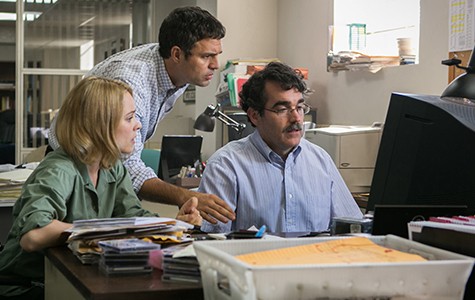
Spotlight focuses on the Boston Globe’s investigative team that uncovered wide-ranging child abuse within the Catholic church.
Spotlight focuses on the Boston Globe’s investigative team that uncovered wide-ranging child abuse within the Catholic church.
Now picture a newsroom staffed by Mark Ruffalo (as reporter Mark Rezendes), Michael Keaton (as Spotlight team editor Walter “Robbie” Robinson), Rachel McAdams (reporter Sacha Pfeiffer), Brian d’Arcy James (reporter Matt Carroll), John Slattery (editor Ben Bradlee Jr.), and Liev Schreiber (editor-in-chief Marty Baron). Contrast their feverish digging with Stanley Tucci as victims’ advocate Mitchell Garabedian, and Billy Crudup and Jamey Sheridan as apologists for the church. Ruffalo and Keaton stand out (they usually do, in every movie they’re in), but each vivid personality in the drama — screenplay by director McCarthy (The Visitor) and Josh Singer (The Fifth Estate) — down to the smallest character, tells its own piece of the complicated, discouraging tale.
The account of predatory priests and brothers violating children, then being shielded by church hierarchy, was the epitome of a “usable story” in Boston in 2002. In McCarthy’s film, seemingly every cop, bailiff, turnkey, judge, businessperson, politician, leg-breaker, and bartender in the city turns a peculiar shade of gray and turns his or her head away when the words “priest” and “child molestation” come up in the same sentence. Boston is utterly church-ridden. Almost no one has the guts to squeal what everyone knows.
And yet, on the other side, when we hear from a pathetic figure like Phil Saviano (played by Neal Huff), who was raped for years by his parish priest and is still haunted by the memory, we suffer along with him. Worse still, we learn that certain ecclesiastical pedophiles target poor boys and girls because, to those kids, a priest is the ultimate authority figure, one step away from God. How can you say no when God wants you to give him a blowjob?
In Spotlight, the scenario overshadows the acting and filmmaking techniques. It’s so grim we’ll probably only want to look at it once, but we’re happy that someone cared enough to confront evil.
Nef the Pharaoh (Tonee Hayes) seemed antsy when I met him last week at a recording studio in Pacheco, an East Bay suburb near Concord. Since his hit, “Big Tymin,” earned him a deal with E-40’s Sick Wid It Records earlier this year, the twenty-year-old Vallejo rapper has been in non-stop creative mode.
A few days after our interview, Nef would play a packed release show at the New Parish in downtown Oakland to celebrate his new, self-titled EP. But that afternoon, he appeared anxious to get back to work on his debut album, My Great Impression. As we chatted in the secluded entryway of his studio, a beat emanated from inside whenever someone opened the door. Nef occasionally trailed off in between answers to check his phone or exchange words with his gaggle of collaborators, who seemed eager for him to return to the booth.
With his new EP, Nef the Pharaoh proves he’s more than “the ‘Big Tymin’ guy.”
Credits: Bert Johnson
Nef the Pharaoh.
Credits: Bert Johnson
In contrast to his cocky lyrics, Nef is soft-spoken in person, with the body language of someone who hasn’t quite gotten over his childhood shyness. A small tattoo of an ankh, the ancient Egyptian symbol of eternal life, sits between his eyebrows. “When I was in high school, we started studying ancient Egypt and I got hooked into that and how my people were once kings and queens,” he explained. The tattoo is a nod to his moniker’s origin — and his voracious ambition.
Though “Big Tymin” is ubiquitously popular, Nef sees it as only the beginning of his career. Instead of coasting on his current success, he’s bent on writing an impactful first album that will top his impressive foray into the music industry. “Big Tymin” is still on heavy rotation on 106.1 KMEL and at local clubs, and has millions of plays on YouTube and SoundCloud. It’s also featured on Spotify’s taste-making Rap Caviar playlist, which includes mostly mainstream artists such as Young Thug and Future. A remix by Ty Dolla $ign and YG appears on Nef’s new EP and helped boost “Big Tymin’s” national reach.
“Big Tymin” has the makings to become a Bay Area hip-hop classic, but the popularity of the track has its pitfalls. Nef said that he sees how an artist in his position could easily get trapped under the one-hit-wonder label. My Great Impression, he explained, will be his opportunity to demonstrate his versatile songwriting abilities and show the world that his first hit was not a fluke.
“If you allow yourself … you will be the ‘Big Tymin’ guy,” he said. “[You can’t] slack off and be like, ”Big Tymin’ is poppin’, it’s on the radio, I’m cool,’ when it’s not like that. You should think of it as, ‘Your song’s on the radio everywhere, it’s poppin’ right now, so that’s more drive to get another one on the radio while the door is open and everybody’s looking at you.'”
With his new EP, Nef the Pharaoh proves he’s more than “the ‘Big Tymin’ guy.”
Credits: Bert Johnson
Fortunately, Nef couldn’t have a better mentor to help him navigate the music industry than E-40, Vallejo’s most well-known rapper since the late Mac Dre. E-40 has been a definitive voice of Bay Area hip-hop since the early Nineties, and his 2006 album, My Ghetto Report Card, soundtracked the hyphy movement with hits such as “Tell Me When to Go.” Considered one of the most successful independent artists in the industry, he’s remained a trendsetter throughout different eras of hip-hop and his output has been consistently prolific and well-received. (“Choices,” which Rick Ross and Migos recently remixed, is his latest hit.)
Getting a feature on an E-40 song is a benchmark for up-and-coming Bay Area rappers, and E-40 is picky about whom he chooses to put on. His decision to take on Nef as a protégé is even more of an anomaly. “That’s a blessing, to be around 40 and getting his game every day and getting his knowledge,” said Nef. “It’s like the rapper’s guide to longevity. … He’s always up-to-date. You can go into a coma for five years, come back, and have nothing but a CD player with E-40 CDs and catch up with time.”
Outside of music, E-40 is involved in a number of entrepreneurial projects — most notably, his line of alcoholic beverages, Earl Stevens Selections. Already, Nef seems to be following his lead. His collection of pre-rolled joints with Egyptian-themed packaging will soon be available at various Bay Area cannabis clubs, and he’s preparing to launch an apparel line and his own record label, KILFMB. KILFMB, Nef explained, stands for Keep It Lit for My Brothers — an acronym that invokes living life to the fullest in honor of those who can’t. “It’s basically what I stand for, what I rap for,” he added.
Nef said his initial meeting with E-40 went down the way he described it in his verse on the first song they did together, “707,” an homage to their shared North Bay area code. One day, Nef unexpectedly got a call from Cousin Fik, another rapper from Vallejo. Fik said that E-40 listened to Nef’s earlier mixtapes and wanted him to do a verse on “707.” That same day, Nef finalized the details with E-40 over the phone and recorded his feature.
“Shout out to Cousin Fik,” Nef enthused. “Cousin Fik always keeps his ears to the youngsters of Vallejo.”
Not long after that, E-40 recruited Nef to Sick Wid It, which put out his long-awaited, self-titled EP last week. The project features “Big Tymin” and “Boss Me,” another big, upbeat party anthem, but also delves into vulnerable themes that fans might not expect from the young lyricist. While “Boss Me” and “Meantime” are graphic and raunchy, the EP’s other tracks eschew shock factor in favor of subtle, poetic verses.
“Come Pick Me Up” is the project’s unexpected stand-out song and a testament to Nef’s capacity for insightful storytelling. On it, he reflects on his tumultuous upbringing, becoming a father at a young age, and the cycle of poverty and crime in his South Vallejo neighborhood. Amid personal confessions, he delivers poignant societal observations: Probably would have been dead or in jail, on some mainy shit/You glamorize the hood and poverty, I came from it. The high-pitched vocal sample on the track’s beat comes in like the sun peaking through the clouds on a rainy day, and “Come Pick Me Up” ends on an optimistic note despite the somber subject matter it addresses.
Though Nef the Pharaoh has generated a lot of buzz on social media, the rapper seems unfazed. He said that while he’s proud of the songs on his EP, he’s confident My Great Impression will be his definitive artistic statement.
“There’s a bunch of good music on there, but there’s only six songs,” he shrugged. “It’s for people whose stomachs weren’t all the way full. It’s gonna give them something to hold them off until the album comes out. … And I want people to talk about that album for years — talk about those songs; talk about how they felt when they heard that music.”
After losing his job as a fitness instructor, Clive Salmon spent most of 2013 living out of his car in Hayward. Struggling with homelessness and unemployment, his financial troubles worsened in April of that year when he received a traffic ticket for talking on his cellphone while driving in San Lorenzo. Unable to pay the $172 fine, he eventually received an additional $300 “failure to pay” civil assessment, and the Department of Motor Vehicles suspended his driver’s license. Combined with another ticket for “following too closely,” and a second failure-to-pay charge tied to that offense, he owed more than $1,000 to Alameda County Traffic Court by early 2014.
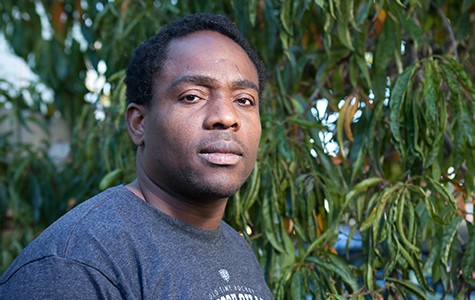
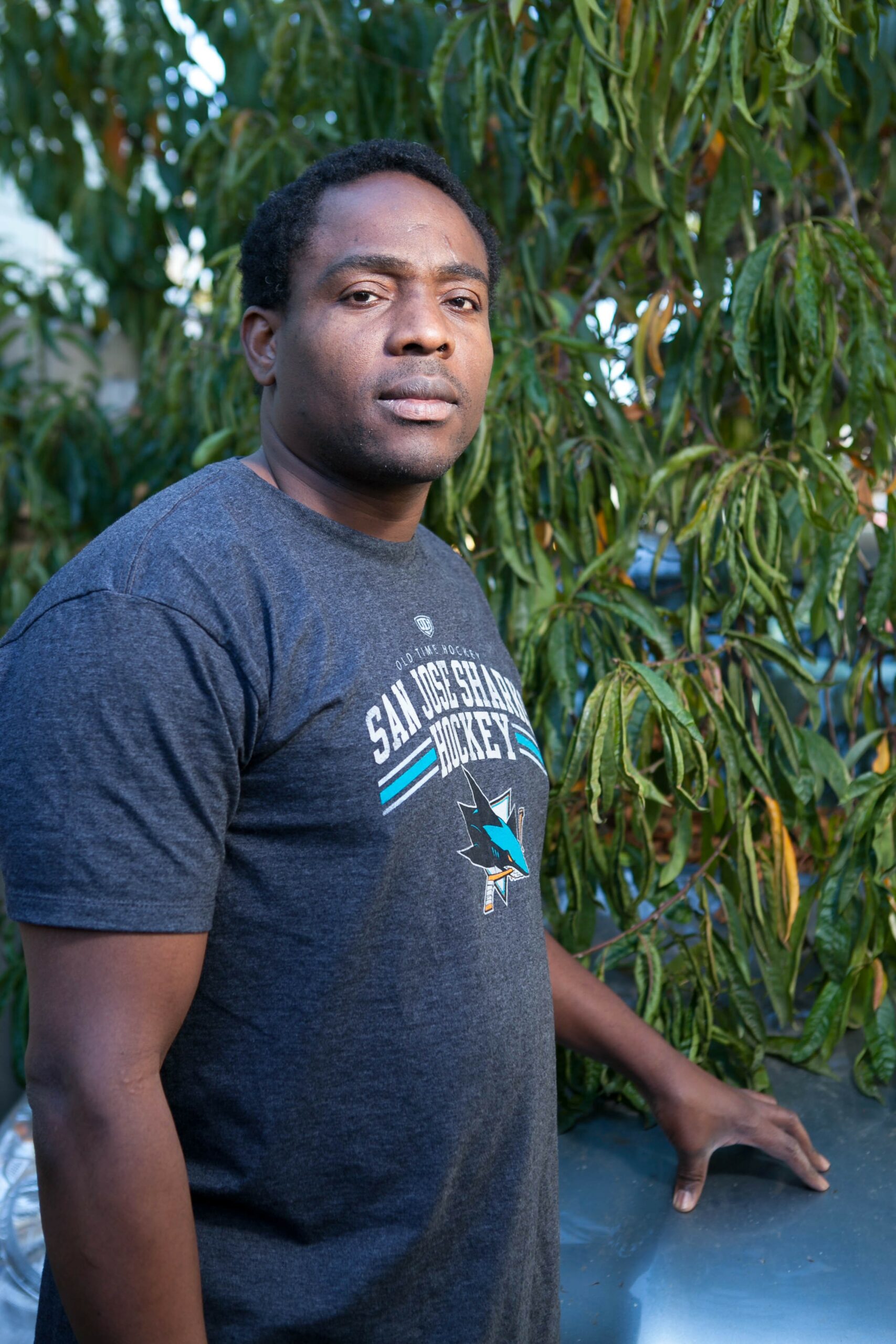
In a recent interview, Salmon said he has lost three job opportunities because he doesn’t have a driver’s license. “It’s really frustrating to know that the government is trying to get money from you, but at the same time, you’re not given an opportunity to earn money to pay them,” said Salmon, who is 43 years old and now lives in East Oakland. “I’m just trying to stay strong and hold my head up.”
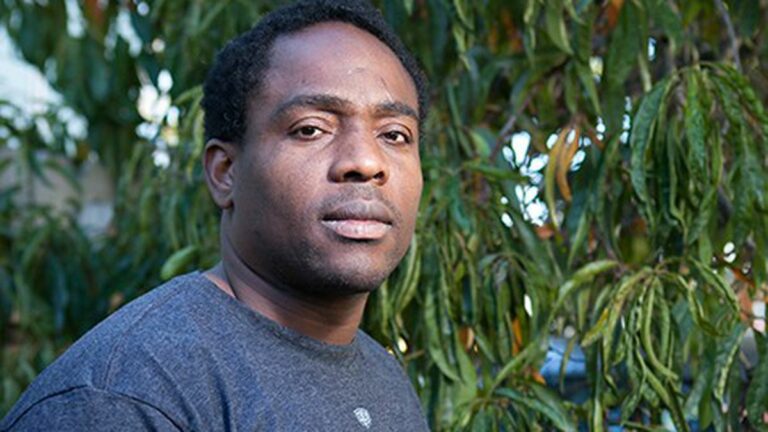
Clive Salmon lost job opportunities due to his traffic fines — and the amnesty program isn’t helping him.
Credits: Bert JohnsonClive Salmon lost job opportunities due to his traffic fines — and the amnesty program isn’t helping him.
Credits: Bert Johnson
Salmon is exactly the kind of person Governor Jerry Brown said he intended to help earlier this year when he signed into law a traffic “amnesty program” aimed at providing some relief for poor people saddled with insurmountable debts and suspended licenses. As part of that program, which launched October 1, people with traffic debts can get their licenses reinstated while they are in the process of making payments — instead of being stuck with a suspension until they pay off all of their debt. But when Salmon tried to apply for the amnesty program last week, AllianceOne — the for-profit company that handles debt collection services for Alameda County — gave him bad news: He could only get his license back if he made an upfront payment of $957 — nearly the full amount he owes from the two tickets.
According to the East Bay Community Law Center — a nonprofit that is assisting Salmon and provided me with documentation of his fines — his case illustrates one of many ways in which California’s amnesty program is failing the very people it is supposed to serve. In particular, the court systems in both Alameda and Contra Costa counties have implemented numerous policies that make the benefits of the program inaccessible to the East Bay’s poorest residents.
In April, California made national headlines when civil rights and legal aid groups published a damning report showing how courts trap people in poverty with exorbitant fines and fees for minor traffic infractions — and automatic license suspensions when they miss a payment or court date. The report estimated that 4.2 million people have lost their driving privileges as a result of these punitive policies, which disproportionately impact low-income people of color. Stuck with massive debts and suspended licenses, people lose jobs, miss medical appointments, struggle with childcare, and get more tickets and fines for driving without a license.
Brown, who described traffic court as a “hellhole of desperation” for low-income people, said his amnesty initiative would help remedy this crisis. Under the program, which ends March 31, 2017, people with unpaid traffic debts can get 50-percent reductions on the fines they owe. But that’s only if their tickets were due before January 2, 2013. Low-income residents — who receive certain public benefits or live below the federal poverty level — can receive 80 percent reductions on pre-2013 tickets. Defendants can also get their licenses reinstated if they are “in good standing” on a debt payment plan. People with tickets due after January 1, 2013 are not eligible for any debt reductions, but they can apply to get their licenses back while they’re making payments.
But the law does not define what it means to be “in good standing” on a payment plan and allows counties to establish specific policies. Advocates who pushed for amnesty said they expected courts to return licenses to anyone actively making payments. That means that people with payment plans — which could be $15 a month for a low-income person out of work — should get their licenses back if they’ve paid an installment. That would match the intent of the law and could also benefit the courts; if people can drive again, they’re much more likely to have income and be able to continue paying monthly dues.
But Alameda County Superior Court interpreted this portion of the amnesty law in a way that renders it meaningless for many people with large debts. The court only considers people to be in “good standing” if they pay off every single monthly payment they’ve missed. For Salmon, that means nearly his entire debt. That’s impossible for him, considering that he has no income and is also ineligible for any reduction because his tickets came after the 2013 cutoff. “You have to pay in full, which is not the purpose of the program,” said Alex Kaplan, an East Bay Community Law Center intern who helped Salmon call AllianceOne last week.
Robert Fleshman, a supervisor with the Judicial Council, the policymaking body of California courts, said he did not know of any other county that had instituted this portion of the amnesty program in such a strict way. The council wrote amnesty implementation guidelines and encouraged county courts to honor the anti-poverty goals of the law, he explained: “In those areas where it’s gray, be generous and compassionate.”
There are additional ways in which both Alameda and Contra Costa courts have disappointed advocates with their amnesty programs. All people seeking the 50- or 80-percent reductions in those counties must pay an upfront $50 participation fee. The amnesty law allows this, but also gives counties the option to waive the fee for low-income people. Los Angeles County Superior Court, for example, is waiving the fee for all participants who qualify for the 80-percent reduction, and San Francisco County’s Human Services Agency is covering the $50 fee for some low-income residents.
In an interview, I described Salmon’s case to Chad Finke, court executive officer for Alameda County Superior Court. Finke said the court could potentially reconsider its policy for determining whether a defendant is in “good standing” on a payment plan. “There doesn’t seem to be a uniform statewide definition,” he said. “Our staff originally interpreted ‘good standing’ to mean you make good on all the payments you missed. … Our court is willing to look at that again.” He said the $50 fee was necessary to cover costs of the program.
Contra Costa Superior Court, in theory, has a fairer license reinstatement policy than Alameda County. Defendants who pay one installment are considered in “good standing,” according to Contra Costa court spokesperson Mimi Zemmelman. But AllianceOne oversees this process and has made unreasonable payment demands, according to advocates. Adam Poe, a Richmond-based staff attorney with Bay Area Legal Aid Society, said that AllianceOne recently required one of his clients who owes thousands in traffic court debts to pay an $800 down payment to be in good standing. “The program itself is designed to give people with no money … an opportunity to get their license reinstated,” Poe said. “This defeats the entire purpose.”
Dana Isaac, an attorney with the San Francisco-based Lawyers’ Committee for Civil Rights, said she also had a number of concerns about AllianceOne’s tactics in San Francisco. The debt collection company has incorrectly told clients that they aren’t eligible for the amnesty program when, in fact, they did qualify for a license reinstatement. She said it also appears that AllianceOne has set arbitrary payment plans in a way that could shut out low-income residents. The company told one of her clients that she would have to pay $100 per month on an amnesty payment plan — a rate the woman could not afford. When the client called back hours later and got a different representative, she was able to get a $25 per month agreement. “Having an attorney or advocate on the phone with you makes a huge difference,” Isaac added.
The state Office of the Attorney General last month issued a consumer alert warning that debt collection companies were spreading misinformation about the amnesty program, but a spokesperson declined to identify the vendors. AllianceOne is one of the most commonly used companies across the state for traffic court debt collection. AllianceOne spokesperson Mark Pfeiffer did not respond to multiple phone calls and emails requesting comment for this report.
Attorneys throughout the Bay Area said they were also frustrated that people with tickets in multiple counties have to navigate different systems. Many have to pay $50 participation fees for each county and also have to set up separate payment plans with each court — even if AllianceOne is the collector responsible for all of their tickets. Advocates said it is common for Bay Area residents to have unpaid tickets in multiple counties. That’s because many end up getting caught driving with a suspended license and also due to the fact that many Black drivers are subject to racially biased police stops and thus more likely to rack up numerous tickets for minor offenses.
Even if county courts and AllianceOne implemented the amnesty program in a way that was fairer and simpler, the initiative still has many shortcomings, advocates said. For people with post-2013 tickets, courts and debt collectors are still refusing to consider people’s ability to pay when setting the initial fines, which means the system continues to disproportionately hurt the poor. And if the courts continue to punish debtors with license suspensions, regardless of their financial situation, low-income drivers will continue to get caught in a cycle of poverty. Critics of the system have pushed for legislation that would require courts to implement sliding-scale fines based on people’s income and integrate community service alternatives into traffic court hearings.
“The most troubling thing about amnesty is that it doesn’t get at the underlying problem of license suspensions,” said Mari Castaldi, program coordinator with East Bay Community Law Center. “In another year’s time, there’s going to be another half million people across the state who have their licenses suspended.”
For the past half-decade, Governor Jerry Brown has positioned himself as a world leader in the fight against climate change. And his efforts have mostly paid off — as evidenced by the fawning media coverage Brown received earlier this year when he met with Pope Francis to discuss the dangers of global warming. But a recent series of investigative...
At the Exploratorium in San Francisco on a recent Thursday night — when the playful science education museum stays open late for adults-only fun — the resident forest of interactive installations was alight with engagement. As knobs turned and screens flashed, some groups captured their shadows on light sensitive wallpaper while others roamed from one station to the next,...
On Thursday, March 19, a truck owned by the Arthur Young Debris Removal company pulled into a parking lot at the City of Oakland's sprawling maintenance and storage yard on Edgewater Drive, just across Interstate 880 from the coliseum. Several employees of the small, privately owned company stepped out of the truck and were greeted by Oakland...
Spotlight, currently in theaters, shows the dark side of the Irish Catholic condition, but there's an antidote of the sweetest and most unforced kind — John Crowley's Brooklyn, with a lustrous performance by Saoirse Ronan.
Eilis Lacey (Ronan) has the looks and demeanor of the stereotypical small-town Irish maiden of the past — modest, demure, sincere, devout yet forthright, with...
Richard Poe, a wealthy and politically active developer, walked up to the podium at a recent Richmond City Council meeting with his wife and three-year-old son in tow. While Poe's son did his best to hold up an enlarged, sweepstakes-style check made out for $2 million, Poe began to ramble disjointedly about an unnamed development project, petitions,...
Last week, Bay Area crab lovers got the news they feared: Due to toxin levels too high for safe consumption, the California Department of Fish and Wildlife decided to delay the commercial Dungeness crab fishing season indefinitely. The toxin, known as domoic acid, is the result of an unusually large algal bloom likely caused by warm waters...
Come to me, ye cornhole enthusiasts and preachers of the gospel of West Coast IPA, and you will find — in Oakland — a beer garden for every occasion or frame of mind. The Town has a rooftop beer garden where sports fans gather in front of flat-screen TVs to watch the big game under the stars....
For most Americans, especially those in law enforcement and news gathering, the public opinion tipping point on the issue of child sexual abuse by adult authority figures came on January 6, 2002, when the Boston Globe published a bombshell investigation of pedophilic crimes committed under the nose of the Roman Catholic church in that city. Tom McCarthy's Spotlight tells...
Nef the Pharaoh (Tonee Hayes) seemed antsy when I met him last week at a recording studio in Pacheco, an East Bay suburb near Concord. Since his hit, "Big Tymin," earned him a deal with E-40's Sick Wid It Records earlier this year, the twenty-year-old Vallejo rapper has been in non-stop creative mode.
A few days...
After losing his job as a fitness instructor, Clive Salmon spent most of 2013 living out of his car in Hayward. Struggling with homelessness and unemployment, his financial troubles worsened in April of that year when he received a traffic ticket for talking on his cellphone while driving in San Lorenzo. Unable to pay the $172 fine, he eventually...