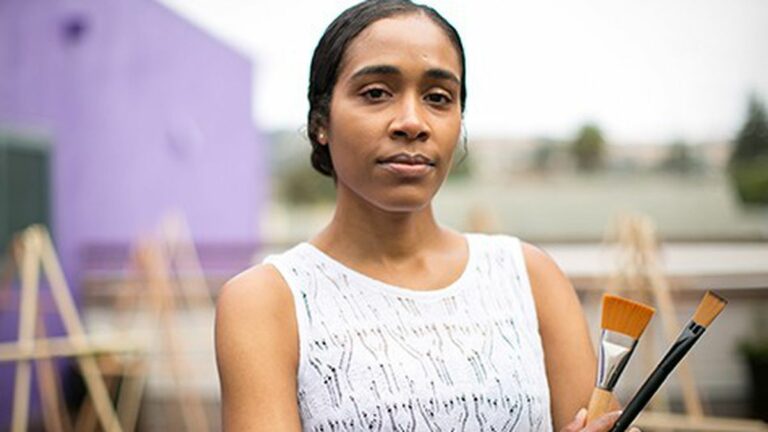
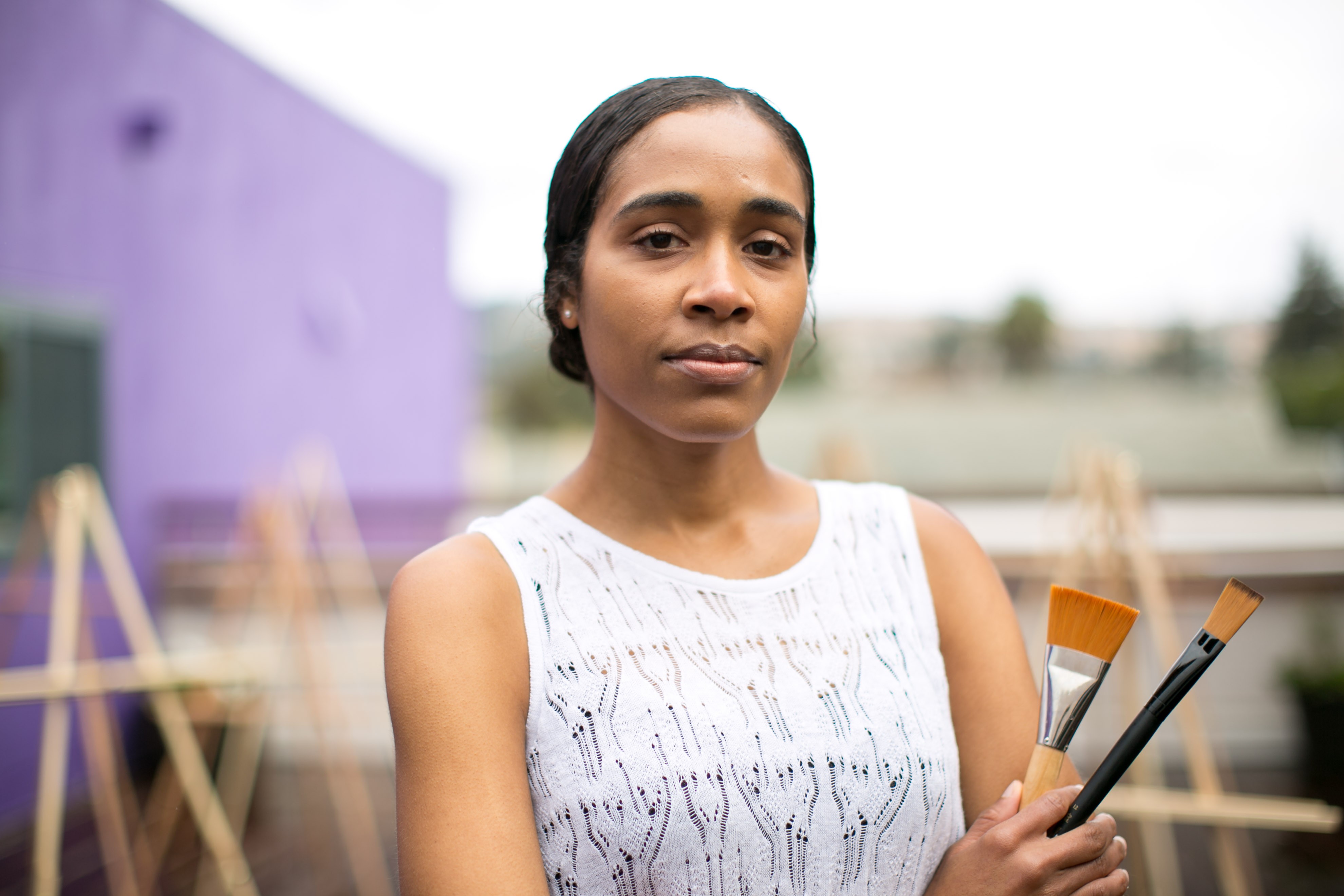
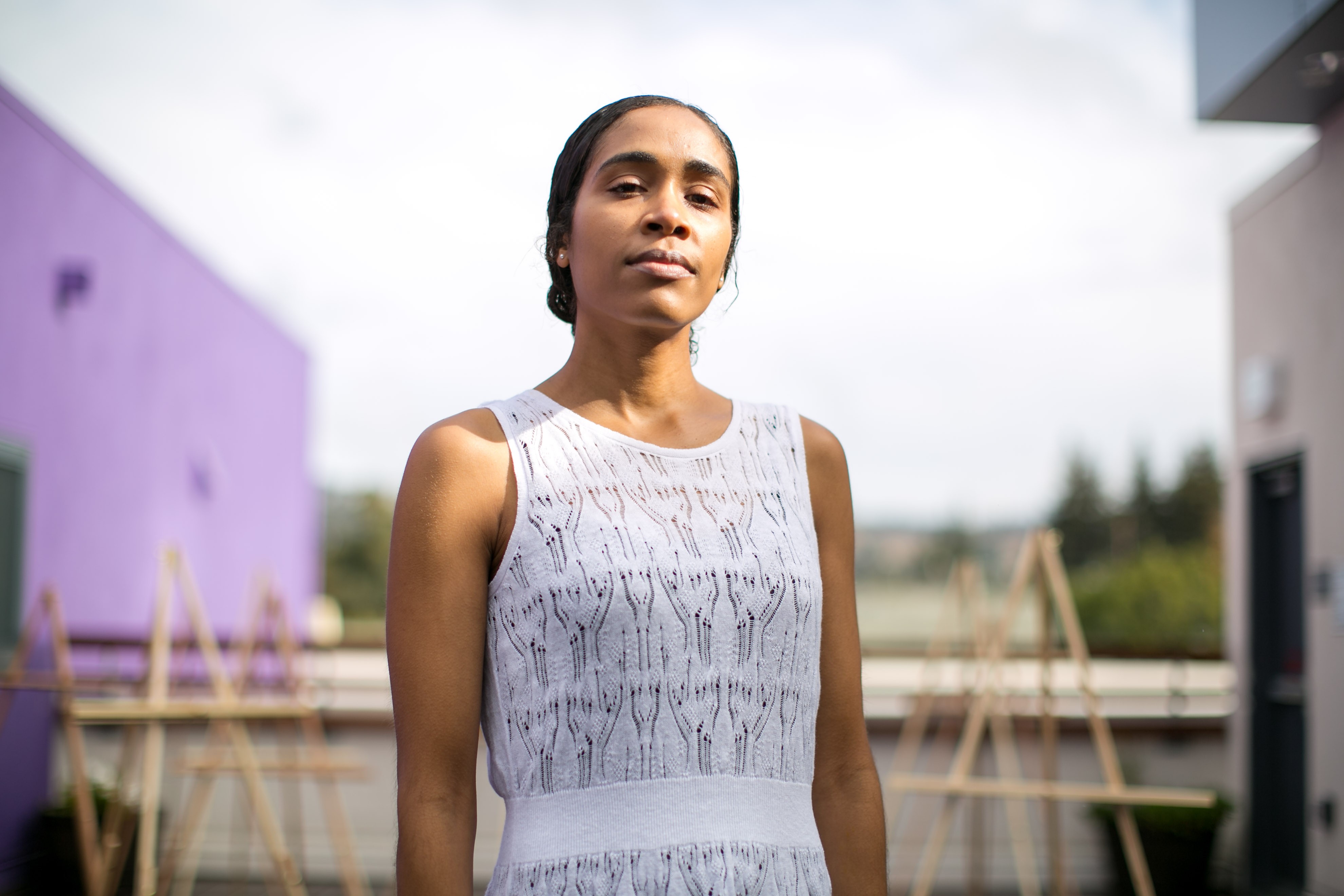
Nia Imara Captures the Faces of Oakland’s Housing Crisis

Last Saturday afternoon at the East Oakland Youth Development Center, Oaklanders of various ages and walks of life lined up to have their portraits taken for Nia Imara’s photography project, Generation of Oakland: The People’s Portrait. Over the course of five hours, Imara photographed and interviewed dozens of families and individuals, most of them Black Oakland natives who have in some way been affected by the city’s housing crisis.

“It’s this feeling of not belonging even though I was born and raised here,” one woman said when Imara asked her to define the word “gentrification” as she photographed her and her teenage son. The woman told Imara about how she and her husband bought a house in the Dimond district more than twenty years ago, before it was a “desirable” place to live, and raised two children there. Now, she and her family feel increasingly alienated as the neighborhood’s demographics shift and property values rise. She and her husband fear that her children might not be able to afford to raise families there when they get older. “Our neighborhood is now this place to have dogs and strollers, which is nice, but at what cost?”

Imara’s next subject was a middle-aged woman who came alone. She shared that her family is gathering funds to buy back her father’s West Oakland house, which is under foreclosure. They are among the three Black families left on their block. Meanwhile, their new, white neighbors are paying more than $2,000 a month for one-bedroom apartments.

While many of Imara’s subjects shared heartrending accounts, there were uplifting ones, as well: An elderly woman fondly described helping raise more than a dozen grandkids and great-grandkids, as well as countless other children from her neighborhood. Two teenage girls in Girl Scout vests rolled their eyes as their mother proudly told Imara about their scholastic accomplishments.

Imara plans to use the photos, videos, and interviews she gathered for Generation of Oakland to build an online archive and interactive multimedia platform. The goal of the project, which doesn’t yet have a publication date, is to document Oakland natives’ reactions to the city’s growing income inequality and resulting displacement, which has hit communities of color the hardest.

“Unfortunately, many of these changes [in Oakland] are happening without the input of people who have been here for so long,” said Imara, whose family has been in the city for three generations. “So that was why I wanted to do this project: To be able to tell our stories about what’s happening in our own terms. … No one is going to tell it for us. You hear things in the news from time to time about gentrification in Oakland, but it’s rarely by and about the people who are dealing with the biggest impacts of it.”

Generation of Oakland is a passion project that departs from Imara’s other work. In addition to being an accomplished oil painter, she is the first Black woman to have received a PhD in astrophysics from UC Berkeley, and is currently a post-doctoral fellow at the Harvard-Smithsonian Center for Astrophysics in Cambridge, Massachusetts. While she said that she typically views her work as an artist and scientist as separate, her background as a researcher informed her approach to collecting photos and interviews for Generation of Oakland because the project required her to take on the role of a sociologist more so than an artist.

Imara received funding for the project through The California Endowment and the Akonadi Foundation. She executed the photo shoot and interviews with the help of a team of volunteers who came from several East Bay organizations, including East Oakland Youth Development Center, Communities for a Better Environment, and the African American studies department at Merritt College. The volunteers from these organizations involved people from their communities, which helped Imara find a wide range of subjects to photograph — especially working-class people without immediate connections to activist circles or the art world.

While Imara said that the primary focus of Generation of Oakland is for folks to tell their stories, she also hopes that highlighting the human element of Oakland’s housing crisis will create empathy from more privileged groups. In turn, that awareness could spur concrete policy change and mitigate the impacts of widespread displacement.

“On one hand it’s for the people who showed up today,” she said. “But if we’re lucky, maybe it will get to other people in Oakland who have the power to make some of the decisions about what’s happening — whether that’s city government or people with money who are running businesses.”

While Generation of Oakland deals with heavy themes grounded in the present, Imara’s oil paintings — which were on display at the East Oakland Youth Development Center for her temporary exhibition, Lumiphilia — presented a different vision. Each canvas featured a figure — usually a Black woman — luxuriating in a lush, dreamlike setting filled with light and color. The idyllic scenes in her paintings, Imara explained, represent her hopes for marginalized communities to transcend oppressive circumstances and achieve freedom and prosperity.

“The great tragedy of many poor communities, many communities of color, or people who have been marginalized is that we haven’t been allowed to achieve our full potential,” said Imara. “So my dream for Oakland, and this world that we live in, is that all the barriers that are preventing people from reaching their full potential are going to be broken down. And to do that, we’re going to struggle.”


Letters for the week of October 28-Nov. 3

“Saving Chinatown,” Feature, 10/28

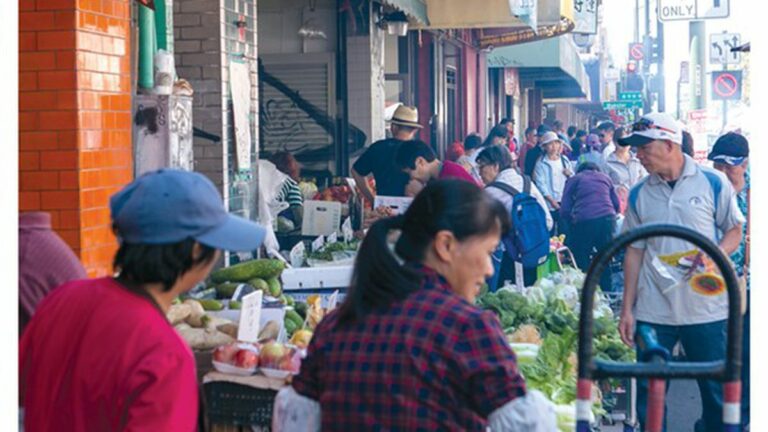
Chinatowns Deserve Protection

Congratulations, Luke Tsai, for an extremely thorough and thought-provoking look at Chinatowns, many of which have already disappeared in the United States. The saving of San Francisco’s Chinatown, before and after 1906, when politicians and business interests tried to relocate all Chinese to the Bay View, was both an economic and civil rights battle. Unlike later displacements — by redevelopment — of Japanese-Americans from Nihonmachi and African-Americans from the Western Addition/Lower Fillmore, an intact Chinatown incubated an evolution of a strong Chinese-American culture. San Francisco’s Chinatown deserves public investments and legal protections to strengthen its economic ripple benefits, to preserve its unique architecture and character, and to honor it as the birthplace of Chinese culture in America.

Thanks again for this great article.

Howard Wong, American Institute of Architects, San Francisco

A Labyrinth of Distractions

I’m generally quite fond of Luke Tsai’s work for the Express; I love his restaurant reviews and highly respect his intelligence. However, as with his coverage of “Afrika Town,” this piece relies far too much on the standard Oakland rap about “displacement,” the ostensible antidote to which is the entrenchment of “traditional” ghetto cultures in traditional ghettos.

The story of new life in Chinatown gets short shrift here and is treated as an afterthought in a short paragraph near the end that begins with, “There’s also no question that plenty of good things are already happening in Chinatown …” Most of that story is missing. Instead, we’re led through a labyrinth of distractions. Not a word about the (relatively) new Guilin Noodle Shop or the booming Malaysian restaurant, Chili Padi. Luke knows about them — he’s written wonderful reviews — but here, they don’t fit the narrative. (Meanwhile, I’ll have to try the new Fortune some late night, now that New Gold Medal is no longer open past midnight — perhaps the most obvious change in Chinatown this past year — another item missing from this story.)

Examples of other Chinatowns? Why mention only DC? Why is there not a word here about Flushing, or Sunset Park — or Houston’s new Chinatown, which thrives in the suburbs while its old “traditional” Chinatown has been displaced? (For that matter, Manhattan’s old Chinatown has expanded to “displace” much of Little Italy.) Times change, and so, too, does the world’s mix of occupations and cities’ interplay of ethnicities. For that matter, so do the fluid, ever-porous boundaries of neighborhoods.

The techies resented by so-called community activists (aka professional agitators) are, in reality, tomorrow’s working class — and many of them are Asian. They (along with UC students commuting from Berkeley) patronize the slew of new bubble tea joints in and out of Chinatown, and if they buy their fish and vegetables at Whole Foods, the reason is increased concern with the wholesomeness and quality of the goods, evidently by (among others) Asians themselves. In Oakland, some who claim to celebrate diversity are often the quickest to rail against “intruders.” The contradiction — and the bitter irony — is all too obvious.

Mitchell Halberstadt, Oakland

“Oakland Struggles to Hold Banks Accountable,” News, 10/28

Wrong Title

Why isn’t this article titled “Oakland Struggles to hold City Hall accountable?” Although the city council is ultimately responsible for lapses in contract language (as they have the final approval), they have so much on their plate that they must rely on staff to implement their policies correctly. How many people were fired due to the failure to follow the council’s instructions regarding the contract? I would wager that not only did no one get fired, but that the responsible staff got a cushy annual raise, as usual. Oakland, how about getting your own house in order?

Jim Mellander, El Sobrante

Let’s Ban the Bad Banks

I think it is time the City of Oakland should stop “struggling to hold banks accountable” and simple accept the fact that Wall Street banks cannot be trusted. As the Express has explained, the banks have a long history of redlining East Oakland (refusing to make loans in low-income neighbors), and more recently, offering predatory mortgages which led to “more than 10,000 foreclosures” in Oakland.  Further, while it may be “frustrating” to Councilmember Larry Reid that JP Morgan Chase bank closed its only branch in his district, it’s hardly surprising given the bank’s felony status. Yes, that is correct; JP Morgan Chase & Co. is a convicted felon.

You may not have heard about it in the mainstream media, but on May 20, 2015, the US Department of Justice announced that four major banks — JP Morgan Chase & Co., Citigroup Inc., Barclays Bank PLC, and the Royal Bank of Scotland — agreed to plead guilty to felony charges of conspiring to manipulate the price of US dollars and Euros exchanged in the foreign currency exchange spot market. The banks have agreed to pay criminal fines totaling more than $2.5 billion. Each bank agreed to pay a criminal fine in proportion to their involvement in the conspiracy as follows: Citigroup at $925 million; Barclays at $650 million; JP Morgan at $550 million; and Royal Bank of Scotland at $395 million.      

Also, on May 20, 2015, the Federal Reserve announced that it also was imposing separate fines totaling more than $1.8 billion against six banks for their unsafe and unsound practices in the foreign exchange markets. JP Morgan Chase was one of the six banks fined by the Federal Reserve. The fines are among the largest ever assessed by the Federal Reserve, including $342 million each for UBS, Barclays, Citigroup, and JP Morgan Chase; $274 million for Royal Bank of Scotland, and $205 million for Bank of America Corporation.

The behavior of these banks is offensive and clearly displays a Wall Street culture in which several big banks broke the law even after years of strong criticism and increased regulation following the economic crisis. One trader is quoted as saying, “The less competition the better.” A Barclay’s vice president was caught saying, “If you ain’t cheating, you ain’t trying.”  

There are three steps that can be taken right now to stop Wall Street banks from further harming the citizens of Oakland. First, the city council can enact a law banning for ten years all future business with any bank convicted of a felony. It seems to me that Oakland should be able to find a bank that actually serves the needs of Oakland citizens. Second, the city council should establish a committee with the responsibility of creating a municipal or regional public bank that actually serves the needs of the community. (North Dakota has had a public bank since 1919.) Third, in the short term, someone needs to create a nonprofit financial organization to replace these check cashing outlets.

Criminal conduct and wrongful behavior by Wall Street banks should not be rewarded with future business dealings. Indeed, what Oakland needs to do is to create a financial institution that can serve the needs of Oakland citizens and stop trying to hold Walls Street banks accountable.

Craig A. Brandt, Oakland

“Oakland’s Sweeping Plan for Parking,” News, 10/28

The Plan Will Hurt Poor Drivers

I’d like to see the income levels of the people who park in a downtown after a plan like this is implemented. I’ve looked on the web but haven’t found the info. I suspect the plan is appropriate only for folks who can afford the higher rates. The plan’s rate increases are modest now, but as downtown gets more high-rises, won’t we see higher and higher rates? LA’s rates went up 50 percent. It seems reasonable that fewer and fewer people will be able to pay the higher rates, especially all the service workers that a downtown needs. Where will they park? At Laney College?

On top of the income disparity issue, the city is supporting reducing the parking spaces required in downtown high-rises. That will put more cars on the street, and they won’t be able to park nearby.

For what it’s worth, this kind of market-based transportation planning, otherwise known as “them that’s got more,” [is similar to] diamond lanes that are being converted to money lanes so that single-occupancy cars can use the diamond lanes. Guess what kind of cars we’ll see in the money lanes?

See the trend?

Mike Bradley, Oakland

Relax, It Works

The approach that the Oakland mayor’s office is undertaking is a proven method to ensure healthy parking turnover. It reduces congestion, emissions, and eliminates the need to build costly parking garages. It also is an excellent strategy for enhancing business traffic.

Folks should take a deep breath and suppress their instinctual negative impetus to lash out against any change, especially an approach that has been shown to work time and time again!

Ryan Wiggins Wolfe, Long Beach

“Staircases to the Past,” Then and Now, 10/28

They Need Repair

Every decade or so someone writes about our unique staircase heritage, but it’s been a very long time since Oakland has done anything to prevent them from further deterioration.

During the last building boom, the city tried to close some of them on my street, as they are admittedly in bad shape. But we protested that with more houses and lots more cars on our narrow little street, we needed them even more in the event of a fire or other catastrophe. At this point, we can barely use one in particular. We would love the city to take on repairing this necessary staircase as I was assured they would the last decade this subject was brought up.

Pamela Drake, Oakland

Some Have Been Repaired

I used to use a group of these stairs to get to carpooling on Park [Lane] from Crocker Highlands. [They were] mostly falling apart but effective. Now, at least in Crocker-Highlands, some paths have railings and repaired stairs. Many were wood and in disarray, especially from Sunnyhills Road to Trestle Glen Road.

Charlton Holland, Oakland

Don’t Forget El Cerrito

To the Berkeley Path Wanderers Association and Oakland Urban Paths can be added the new kid on the steps: El Cerrito Trail Trekkers. This volunteer group is making El Cerrito “path friendly” with its myriad new additions.

A list and maps of the paths can be found on their website: ECTrailTrekkers.org.

Check it out!

Bee Montigue, Richmond

“What Was Withheld,” Culture Spy, 10/21

Carland Rocks!

Beautiful! Thank you! I love Tammy Rae Carland and her work forever and ever — since we were teenagers!

Elin Slavick, Hiroshima, Japan

“From Electrifying Collaborations to Forgettable Muzak,” Music, 10/21

You’re Wrong

Wow. I guess you’re not into indie rock. May want to try to not be so biased. Some of the bands on Sunday were amazing, like Viet Cong and Father John Misty. The National is an amazingly talented, cohesive band.

Alison Wilson Bockman, Oakland

“Oakland’s Culture Clash,” Seven Days, 10/14

‘Secret’ Is Perfect for Schaaf

Libby Schaaf is ridiculed for good reason: “Secret sauce” is a lame expression for dealing with the complex reality that is Oakland.

“Secret” on the other hand is a perfect word for Schaaf’s administration, which has offered no plans for dealing with Oakland’s real problems — taking care of our most deprived citizens. Those are not the people who participate in the art or culture scene or who dine at expensive, trendy restaurants.

They are people who are subject to violence on a daily basis, whether from their neighbors or the police, whose children don’t do well in school and whose needs for family support are not recognized in any meaningful way by City Hall.

Oakland has no plans or other programmatic approaches to improving public safety, for providing the ten or fifteen thousand jobs required for adequate employment for the now-unemployed or underemployed, for dealing with the downsides of gentrification, or for providing affordable housing for those who are being displaced.

“Secret sauce” indeed.

Hobart Johnson, Oakland

“A Park to Nowhere?” Eco Watch, 10/14

Form Should Follow Function

No response from the Oakland Planning Department? What a surprise. The design concept for this huge wooden deck is questionable, at best. The materials are not warm and attracting, and what do you do when you get there? The reality for this deck and much of this “new” open space west of Interstate 880 (Brooklyn Basin) is that the general public will have little, if any incentive to brave the constant traffic gridlock to get here. The people who will live in this development will be the only people utilizing this open space most of the time.

A basic urban design concept is that form follows function. You don’t design an open space area based on cost and maintenance requirements and then figure out how it can be used. You should interact with the public to determine what kind of programming for the space is desired by the community and that should drive the design. The city should be very cautious and the citizens very diligent. [Signature Development Group] seems to be very good at promising the world on the front end and then finding ways to minimize the commitment on the back end. Maybe the planning director can find some time while sharing seminar appearances with developers to ensure that community benefits are maintained in the manner promised when the entitlements are granted.

Gary Patton, former deputy director of Planning and Zoning for the City of Oakland, Hayward

A Rat Haven?

Architect Peter Birkholz of the [Oakland Landmark Preservation Advisory Board] brought up an interesting point that the proposed deck would be raised slightly from the concrete. I think he called it a potential “rat haven.”

Naomi Schiff, Oakland

It Should Be a Promenade

It should have a promenade along the water with benches and trees and lighting, and the rest should be green open space with a sidewalk dotted with street trees on the street side. Kids need places to run and play. Families need places to sit in the sun and picnic while enjoying the bay view. A well lit and designed promenade invites people to walk, skate, walk their dogs, etc., every day of the week. Think Marina Green, muscle beach, Huntington Beach.

Wood along the waterfront is not realistic and would be too expensive to maintain over the years in that large amount. I have seen promenades interspersed with rectangular planting areas of trees and shrubs surrounded by seating that were beautiful. Huntington Beach has designs of whales and fish etched into their cement promenade.

Allison Villarante, San Pablo

“Racial Profiling via Nextdoor.com,” Feature, 10/7

You Nailed It

I’m a sixteen-year resident of Oakland with African-American kids, and my experience with Nextdoor Golden Gate crime and safety posts has been exactly the same appalling study in unchecked white privilege as that described by the article.

The acceptance of racial and economic diversity that made my neighborhood appealing when I first moved here has been replaced by a feeling of my kids being unsafe roaming the neighborhood due to online racial profiling. I’m really thankful for this article for finally bringing this online racial profiling out into the public view.

I’m no lawyer, but I would be interested to see legal paths emerge for people to fight the racial profiling activity of the online groups like Nextdoor. I believe when innocent people of color in the neighborhood are no longer able to do normal activities — kids playing in a yard, waiting for a bus, jogging, etc. — for fear of online retribution, it must be punishable under a number of statutes. The first one that comes to mind is the anti cyber-bullying law.

Perhaps there could be legal punishment under slander statutes for spreading false information online indicating that innocent individuals are criminal suspects. I have even seen photos of minors shared online with notes about their current locations. I’m not sure which of these laws would apply to stalking minors, but I imagine there must be some penalty under anti-stalking and child predator protection laws.

I’m hoping some kind of class action lawsuit emerges and maybe the ACLU can put a stop to this once and for all.

Eileen Kaur Alden, Oakland

Here’s a Suggestion

I suggest a transformative class for people identifying as white: “Beyond the Culture of Separation” at Impact Hub in Oakland. I participated last year and did another level of personal work around my own learned racism and the institutionalized racism in the United States. The support of a community of other whites is critical in order to face our fears, shame, anger, and other responses. That’s what lies at the roots of this behavior and mindset. This is what needs to change. I wonder what might shift if OPD police dispatchers and officers, Nextdoor staff, and neighborhood leads went through this education?

Nika Quirk, Sonoma (formerly of Oakland)

Here’s Another Example

Here’s what [racism on Nextdoor.com] looks like:

“Creepy guy alert!!

Around 8:00 Sunday night May 11, a creepy guy was hovering around by my mom’s car as I tried to say goodbye. He was hanging back to see where I was going to — near the corner of 4th Avenue and 11th Street [at the] back door! He turned the corner so I told my mom to take off and I bolted to [the] front entrance. Got in safely and got big guys for backup from neighbors in [the] hall!!! Thanks — & — (and their friends).

He continued to look odd as he very slowly walked out of sight to 10th Street but was looking back the whole way. This was one of the few times I didn’t have my pepper spray with me and I wished I had it handy. Please always remember to stay alert and let our community know if a strange person is hanging out. We can form a group and deter them from hanging out on our block!!!! Thanks to our wonderful community[.] I feel safe in our building!

Description: Creepy guy was early 30s, dark brown hair, grubby clothes but not looking like a bum. Tan skin [but] hard to place ethnically. He was just lurking around and clearly wasn’t walking from point A to point B. I could tell he was going to try to hang back to talk to me but his mannerisms were off. Drug user I’m guessing.”

When I asked what he had done to make her feel threatened and pointed out that I’m 32, Latino but often confused for Asian, a flaming homosexual with big gay mannerisms, who shops thrift and drifts while smoking, I was told I “couldn’t understand because I’m not a woman.”

Because life is peachy when you’re a brown man, I guess — and I have no reason to fear the police.

Edward Cervantes, Oakland

Don’t Blame Nextdoor

While it is absolutely shitty that people are using Nextdoor to racially profile their neighbors, let’s be sure not to blame the website for everything. I’ve been a user since launch, and while I have noticed some downright disgusting posts by neighbors, I have also noticed how helpful it is to be connected to the neighborhood this way. People need to regulate themselves — that’s not Nextdoor’s job. I am glad this issue is being brought to light to a broader audience now and hope that we can move away from condemning the platform that facilitated this conversation and start talking about how we can better educate our neighbors about how to talk with more sensitivity, kindness, and intelligence about integration in their neighborhoods.

Kate Regan, Oakland

Get Off of Nextdoor

Thanks for covering this issue. The neighborhood listservs have gotten increasingly out of hand.

We live in Oakland in a $650,000–$900,000 neighborhood, on a cul-de-sac that is racially mixed, with most of the surrounding neighborhood being very stable and diverse. We have lived here for 24 years with essentially no problems.

During the mortgage meltdown era, there appeared to have been a large uptick in street muggings and burglaries. A group of neighbors, apparently led by fearful women who live alone, started broadcasting accounts of each incident. A private patrol was hired.

Soon came the tipping point for me: I had assembled a short list of email addresses for just our surrounding neighbors. This list appeared to have been appropriated by a longtime local realtor, a white woman. I started receiving postings from her along the lines of “in all the decades I have lived here, I have never seen crime so bad … when you see someone who does not look like they belong here be sure to speak up.”

I posted back, asking who was moderating the list, and requesting to be removed from it. That triggered a series of abusive email messages from this realtor and from some of her friends. I had previously been in the real estate business myself, but had retired and made that clear in my initial posting.

Later I learned from another agent that the white realtor had been writing the same sorts of things on Facebook, where she was challenged by someone on the basis of clear implicit racism. A similar nasty exchange ensued, and the challenger told the realtor not to contact them anymore.

In real estate, as in every profession, there are only a few bad apples who besmirch the public image of the vast majority of agents, who have the highest ethical standards and serve the community in good faith.

But follow the money: If residents are afraid of crime, they are more apt to list their homes for sale and realtors can do more business. Gosh, wasn’t that the way it worked in California before fair housing laws were enacted?

Neighbors express surprise that I now refuse to be on any of the “home alert” Yahoo groups or Nextdoor. But there is no downside to opting out. I am blissfully ignorant of the fear-mongering, the racism, and the appeals for our family to kick in to pay for the rent-a-cops.

Amelia S. Marshall, Oakland

OPD Deserves Some of the Blame

After years of participation on local Yahoo groups, skimming hundreds of those “suspicious person/car” reports, maybe I’ve seen a dozen posts where a crime was prevented or a bad guy arrested etc. because of a post.

It seemed to be more a way for people to deal with their helplessness with high crime here. Sometimes it was a Rorschach test of the person reporting.

Local Oakland Yahoo groups have a much higher percentage of such reports then Northern Oakland Nextdoor. But Glenfriends [Glenview’s neighborhood association] has a lower percentage than Temescal or Rockridge.

Right or wrong, many Oakland Yahoo group members feel such reporting is the main purpose of Yahoo groups.

Before we get pissed off at each other, we can transfer some blame to OPD, which encouraged people to report on Yahoo but didn’t train people how to accurately report useful info without the distortion of their fears and biases.

Len Raphael, Oakland

Hogwash!

There is very little talk of race on Nextdoor.com. I use it for sharing gardening tips and leaving miscellaneous things in front of my house for someone to have. Often, people do ask questions like “Was that gunfire on High Street?” Never have I seen racial profiling. Why stir the pot, Express?

Garry Ovalbach, Oakland

Well Done!

Provocative article, and very thoughtful, constructive, and civil comments [online] all around. Boy, I wish I encountered this substance and tone more frequently. Thanks, Express readers, and the East Bay community!

Zabrae Valentine, Oakland

One-Night Stands

Thursday, November 12

The Exiles (72 min., 1961). Followed by a multimedia project and panel discussion (Toll Room, Alumni House, UC Berkeley, Berkeley, 4:00)

24th Berkeley Video and Film Festival. (East Bay Media Center, Berkeley, 6:00-11:00)

American Revolutionary: The Evolution of Grace Lee Boggs (82 min., 2013). (Berkeley Fellowship of Unitarian Universalists’ Hall, Berkeley, 7:00)

Risky Business (108 min., 1983). (UA Berkeley 7, Berkeley, 9:00)

Juno (96 min., 2007). (The New Parkway, Oakland, 9:30)

The Blacksmith and The General (120 min., 1922). (Rialto Cinemas Cerrito, El Cerrito, 9:30)

Friday, November 13

Mystery Science Theatre 3000. (Parkway, 10:30)

Life of Pi (127 min., 2012) and Hugo (126 min., 2011). Double Bill Weekend (Grand Lake Theater, Oakland, 11:45 a.m., 4:45, 10:00)

Butch Cassidy and the Sundance Kid (110 min., 1969). (Berkeley Public Library, Central Branch, Berkeley, 3:00)

24th Berkeley Video and Film Festival. (East Bay Media Center, 6:00-11:00)

The Rocky Horror Picture Show (100 min., 1975). (Albany Twin, Albany, 12:00 midnight)

Saturday, November 14

The Royal Opera: Marriage of Figaro (220 min., 2015). (Rialto Cinemas Elmwood, Berkeley, 10:00 a.m.)

24th Berkeley Video and Film Festival. (East Bay Media Center, 6:00-11:00)

Godfather (175 min., 1972) and Godfather II (202 min., 1974). Double Bill Weekend (Grand Lake, 1:15, 8:30)

Of Men and War (142 min., 2014). Followed by a Q&A with director Laurent Becue-Renards and Fred Gusman (Parkway, 2:45)

Sunday, November 15

24th Berkeley Video and Film Festival. (East Bay Media Center, 6:00-11:00)

Lawrence of Arabia (216 min., 1962) and Doctor Zhivago (197 min., 1965). (Grand Lake, 11:45 a.m., 7:30)

An American Ascent (69 min., 2014). A benefit for Bay Area Wilderness Training (Parkway, 12:30)

Bolshoi Ballet: Jewels (150 min., 2015). (AMC Bay Street 16, Berkeley, 12:55)

Monday, November 16

Ghost in the Shell: The New Movie (100 min., 2015). (Elmwood, 7:30)

Tuesday, November 17

Surviving Eugenics (44 min., 2015). Being Human in a Biotech Age (Room 470, Stephens Hall, UC Berkeley, 4:00)

The Maze Runner (). (Oakland Public Library, Elmhurst Branch, Oakland, 4:00)

Ken Burns: The National Parks – America’s Best Idea (). (Alameda Free Library, Alameda, 6:00)

Korla (78 min., 2014). Followed by a Q&A with director John Turner (Parkway, 7:00)

Wednesday, November 18

Hunger Games: Mockingjay Part 1 (123 min., 2014) and Part 2 (137 min., 2015). (Grand Lake, Part 1 at 4:30, Part 2 at 7:00)

Hunger Games: Mockingjay Part 1 (123 min., 2014) and Part 2 (137 min., 2015). (UA Berkeley, 4:30)

Hunger Games: Mockingjay Part 1 (123 min., 2014) and Part 2 (137 min., 2015). (Jack London Stadium 9, Oakland, 4:30)

Hunger Games: Mockingjay Part 1 (123 min., 2014) and Part 2 (137 min., 2015). (Bay Street, 4:30)

Mr. Kaplan (98 min., 98 min., 2014). Spanish with English subtitles (Room 2040, Valley Life Sciences Building, UC Berkeley, 7:00)

Last Day of Freedom (32 min., 2015). (Pearson Theater at Meyer Sound, Berkeley, 7:30)

Citizenfour (114 min., 2014). (Humanist Hall, Oakland, 7:30) 

Broadway, Babies

I’m a hetero guy in need of advice. Back in college, I met this girl. Suffice it to say she was into me but I had some shit to work through. So we ended up being a missed connection, romantically. Despite that, we still became fast friends. I’m less awkward now, in large part because our friendship changed my life. We each married other people, and everything worked out great. Except I still love her. I think about her often, want to share things about my life with her, find myself wanting to rely on her when things are tough. I don’t know what to do with it. On one hand, she means an awful lot to me — she is the kind of friend that comes along once in a lifetime — and I know that I mean a lot to her. So this is a relationship worth protecting, even as asymmetrical as it is. On the other hand, these feelings are starting to seem kind of pathetic. We are barely part of each other’s lives anymore — do I even have a right to feel the way I do? I see three options, each of which is shit. (1) Keep my feelings to myself and endure/enjoy a painful but deeply meaningful friendship. (2) Disappear, either abruptly or gradually, with no explanation. Or (3) damn the torpedoes and bare my soul, which might painfully explode the relationship. After years of option 1, I am strongly leaning toward option 3 — just blowing shit wide open and dealing with whatever happens.

No Good At Acronyms

You’re going to need a gay dude to act on the advice I’m about to give you — and not just any gay dude, NGAA, but the kind of gay dude who obsesses about Broadway musicals. And not just any gay dude who obsesses about Broadway musicals, but the kind of Broadway-musical-obsessed gay dude who has good taste. (Look through his record collection: If Joseph and the Amazing Technicolor Dreamcoat is in there and Mame isn’t, he does not have good taste.)

Okay, here’s my advice: Listen to the original Broadway cast recordings of Company, Follies, and A Little Night Music — music and lyrics, in all three cases, by Stephen Sondheim (peace be upon him). Yes, you can get all three recordings on iTunes, NGAA, but you need to listen to them on vinyl, and you need to discuss these shows, and three songs in particular, with someone who already knows them by heart. Hence the need for a gay dude with good taste in Broadway musicals and an extensive collection of original Broadway cast recordings — on vinyl. As any Broadway-musical-obsessed gay man will tell you: Epiphanies, insights, and breakthroughs come most reliably in moments of silence, i.e., when you have to flip the record over.

Here are the songs you need to pay close attention to: “Sorry-Grateful” from Company, “The Road You Didn’t Take” from Follies, and “Send in the Clowns” from A Little Night Music. (You might be a little too fragile for “Too Many Mornings” and “Losing My Mind,” both from Follies.) Listen over and over again — until you know the lyrics of all three songs by heart. Discuss what these songs mean with your new gay friend. Then you’ll know what to do.

A friend of mine talks about his sex life almost constantly. Not quite like bragging, more matter-of-fact. For instance, out of the blue he will come out with this: “I was sitting in a bar and this broad looks at me and asks if I want to fuck. She had the tightest pussy I’ve ever had.” It just seems like conversation for him. I’m baffled by this. What’s going on with him?

Not So Talky

I want to say something like this: “The amount of pussy and/or cock a man is actually getting exists in inverse proportion to the amount of pussy and/or cock a man brags about getting.” But it ain’t necessarily so. (“It Ain’t Necessarily So,” Porgy and Bess, music by George Gershwin, lyrics by Ira Gershwin.) I’ve known plenty of guys who bragged constantly about getting tons of ass, and they weren’t all liars. Almost every one of them, however, was deeply insecure — they bragged about the ass they were getting because they feared people saw them as guys who couldn’t get ass in a donkey storm.

I was stroking my partner and went for the lube, when he informed me that he prefers to have his handjobs sans lube. He says that lube is messy. For the past three years, he has raved about my handjobs and said my skills are professional level, and never once did he complain about the lube. I attempted to follow through, but all my old techniques didn’t work. I asked him to show me how, what he likes, and he said just do the same as I’ve always done. The sliding, gliding, twisting motions that I usually use, all with a reasonable amount of squeezing, just DO NOT WORK without lube. My hand stuck to the dampish skin and would not slide. He says I am making a big deal out of nothing, but I am upset. One of the best tools in my sexual toolbox has just been rendered unusable.

Sincerely Laments Obstructed Wanking

You need to listen to the original Broadway cast recording of Wicked, music and lyrics by Stephen Schwartz. When Idina Menzel sings “Defying Gravity,” pretend she’s singing “defying aridity.” Apparently that’s your boyfriend’s superpower, or his cock’s superpower: aridity — being without moisture, extremely dry, parched” — is no impediment to pleasure. And it’s not an uncommon superpower, SLOW. Lots of guys prefer lubeless handjobs. So have your boyfriend jack himself off while you listen to Wicked, see what works for him, and then try not to make a big deal — try not to make any sort of deal — out of his handjob preferences going forward.

I usually like your advice, Dan, but I was dismayed when both you and Peter Staley got it wrong in your response to STATUS, the woman who was preparing to divorce her HIV+ husband after the revelation of another affair. You both seemed to think she was trying to get her husband sent to prison. I think she was trying to avoid that outcome! She wants her husband to tell the truth in therapy, but she’s concerned doing so will land him in prison. Here’s something else you both missed: When someone tells a therapist what they have already done, the reporting requirements are far less stringent than when a patient tells what they plan on doing. If a therapist believes a patient is likely to harm themselves or others in the future, the therapist may have to act. Patient confidentiality carries a lot of weight when it comes to past actions.

Really Regular Reader

You weren’t the only reader who came to STATUS’ defense. It’s possible Peter and I got it wrong — our familiarity with cases where vengeful exes abused reporting laws to go after HIV+ people may have colored our response. On the off chance I got it wrong, RRR, I’m going to need to be punished. It should be something that really hurts. Oh, I know: I’ll listen to the original Broadway cast recording of Joseph and the Amazing Technicolor Dreamcoat. Twice.

Oakland’s Balletic Turf Recital

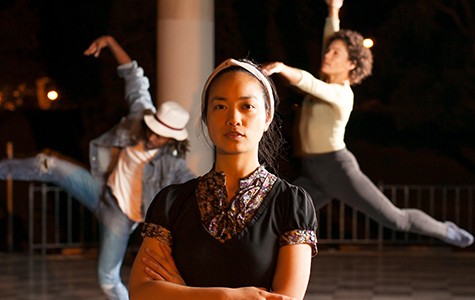
Turf dancers are typically seen busking on BART trains as they pass beneath the bay or enacting sidewalk soliloquys on the streets of Oakland. Technically stunning, the fluid dance form is of the people, performed on the same ground as the audience — followed by a tip hat.

By contrast, contemporary ballet still retains the elitist tinge of its origins in royal courts. Ballerinas command theater sets, captivating audiences at grant-funded, ticketed events. That disparity in stage setting is symbolic of complex cultural differences — the ways in which the professional fine art world privileges certain art forms and how others thrive outside it.

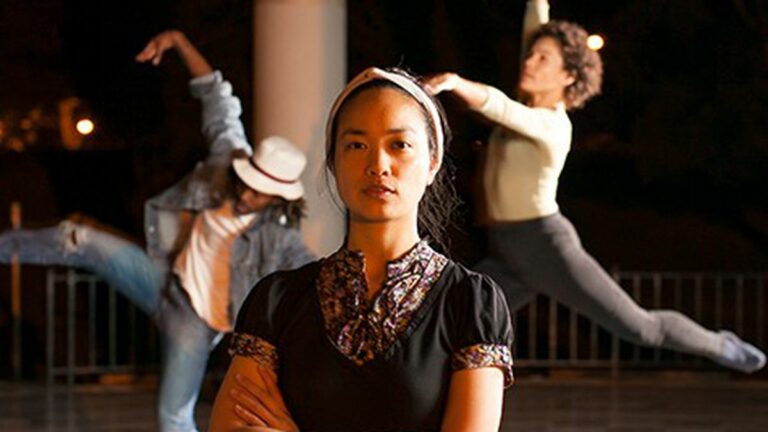
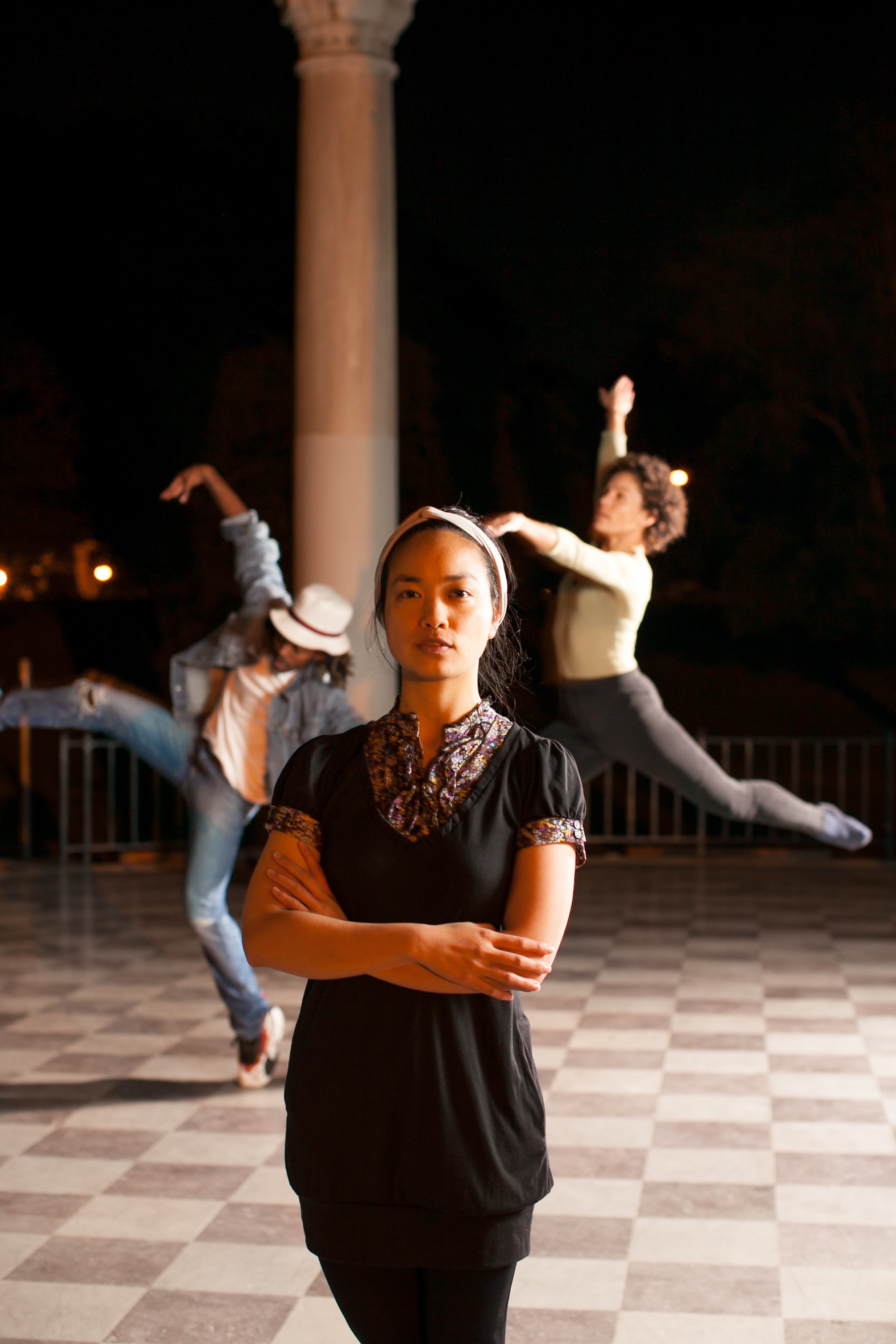
Artistically, one discipline is no more legitimate than the other. But dancer My-Linh Le wants to know what would happen if their two settings were to collide. If turf and ballet dancers were to take the stage together, what differences would fall away and what similarities would emerge?

Le is currently crowdfunding a project called Mud Water Theatre in hopes of answering that question. Her vision is to bring together twelve dancers — six classically trained ballerinas and six turf dancers — to tell a story together, narrated through spoken word. “I’m not saying [turf dancers] are unhappy performing for people that just pass by them all the time in places where they can be easily ignored,” says Le in the Kickstarter video for her campaign. “But it’s a personal goal of mine to put their art on a platform where it might be more appreciated, because it’s just as technical and beautiful as any other dance that we give grants and stage time to.”

Le began learning both ballet and “popping” (a street dance style with some similarities to turfing) as a senior in high school, but she deliberately kept her two practices separate in order to fit in. After studying dance theater as an undergraduate at UCLA, she attended law school at UC Davis. Now, she lives in Oakland and splits her time between dancing and practicing law. She is in a longstanding Bay Area popping crew called Playboyz Inc. — the first female member since its inception in 1981.

Le stands out among her fellow Playboyz not only because she’s a woman, but also because she has come to embrace her instinctive inclination to let ballet techniques seep into her popping practice. A couple years ago, when she finally decided to give into the urge to merge the two styles, she realized that the result looked similar to turfing in many ways. Although she knew that turf dancing wasn’t a direct reference to ballet, she found that its molten movements, graceful pirouetting, and gestural poetics offered an undeniable similarity to the age-old dance form. “I thought, well, if they’re not doing it on purpose, it would be really interesting to explore where that comes from,” Le said in interview. “Maybe it’s just a totally separate thing, and maybe it’s in our nature to be graceful and to be fluid and smooth in our movement.”

With encouragement from TURFinc’s famous Johnny 5, Le decided to stage a conversation between the two styles. But when she first brought in the dancers for rehearsal, it wasn’t so smooth. Different dance backgrounds meant different expectations about choreography and collaboration. She described it as two groups speaking two different languages. By the end of the session, though, they fell into step with one another. “They’re gonna be learning from each other,” Le said, “but not each other’s vocabulary exactly — more like how to cross these barriers of understanding and connect but stay true to their own styles.”

Mud Water has already been accepted to perform at the DIRT dance festival at Dance Mission Theater in January. But Le was only able to hold two rehearsals before her tentative cast fell apart. Without any money upfront, she couldn’t get any turf dancers to commit to the project.

“They just can’t afford the time and cost to come into a studio and rehearse for nothing,” said Le. “And I don’t want them to. They deserve to get paid.” But Le was shut out of the grant world because she hasn’t produced a professional show in the past year — a common requirement. So, she’s hoping to crowd fund $8,000 by November 19. As of Monday, she had raised just over $4,500.

The name “Mud Water” was inspired by the lotus, the Chinese symbol of enlightenment. Although the flower grows through muddy water, it emerges as a pristine symbol of beauty. For Le, both ballet and turf dancing represent a similar kind of self-realization. “[The similarity] makes you think, it’s gotta be human nature,” said Le. “Like something really deep, embedded in our subconscious, that comes out maybe because of pressures or because of the waters of experiences — the really challenging things that life throws at us — and that’s what I really want to explore in this project.”


Black Lives Matter and Labor Activists Protest at District Attorney Nancy O’Malley’s Office

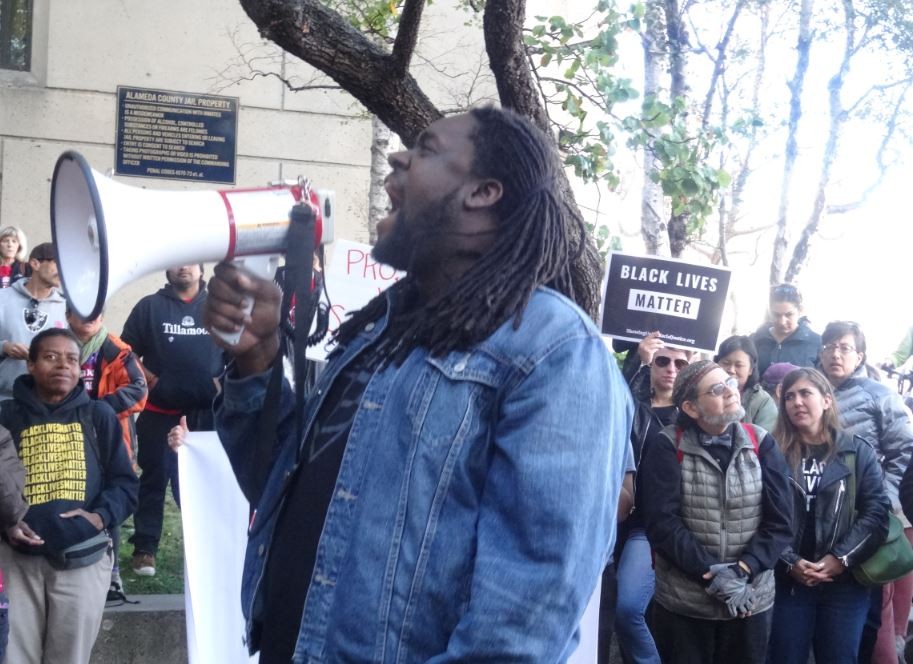
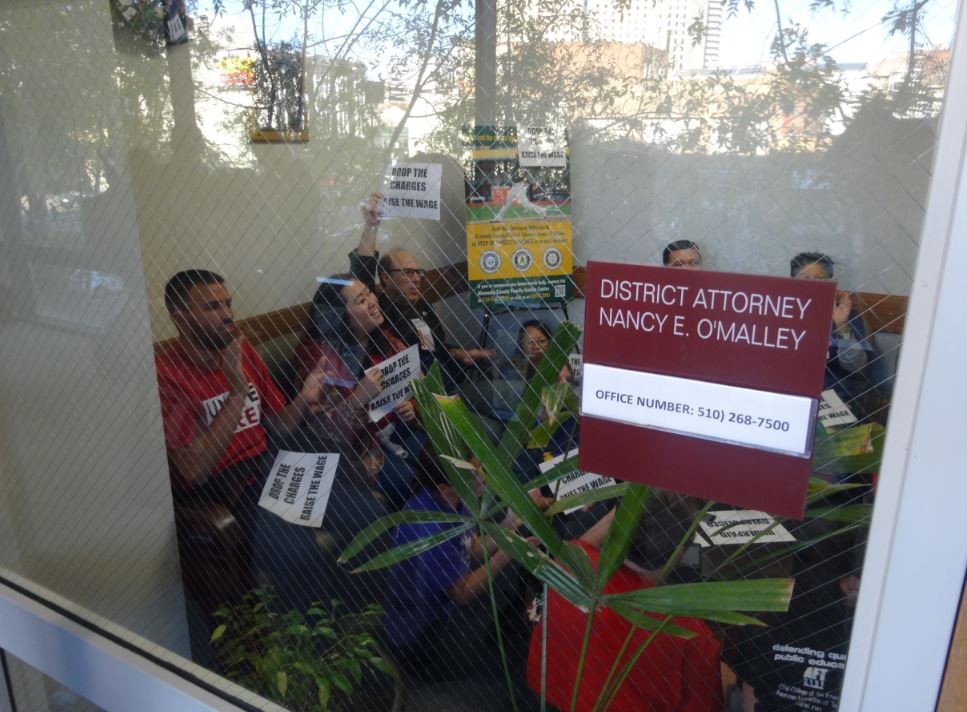
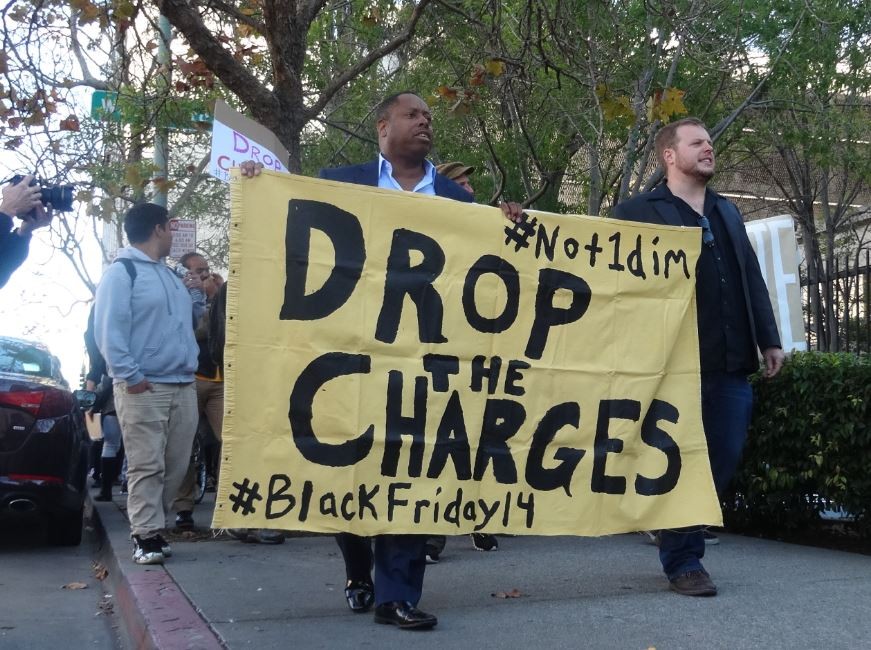
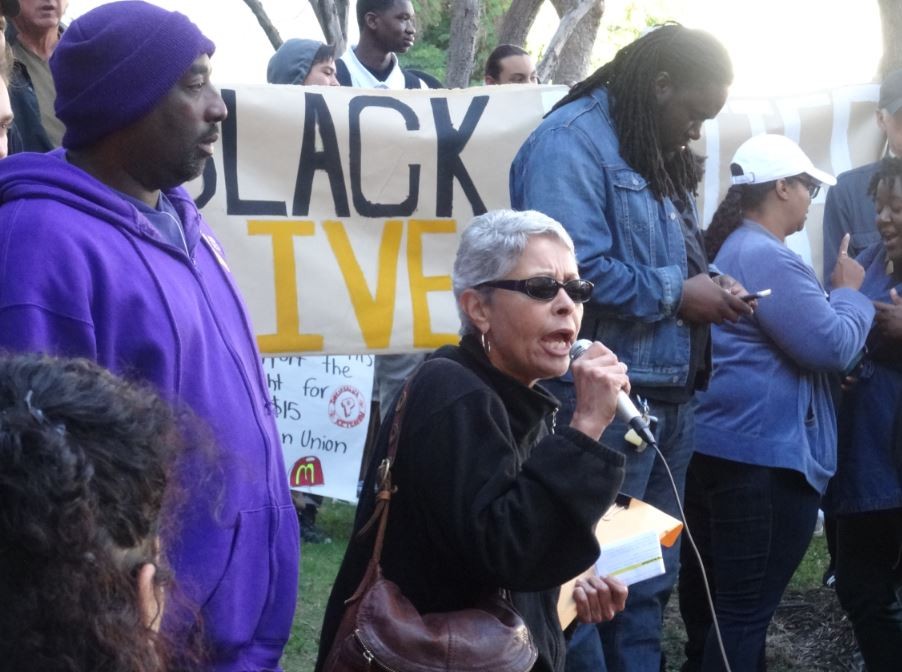
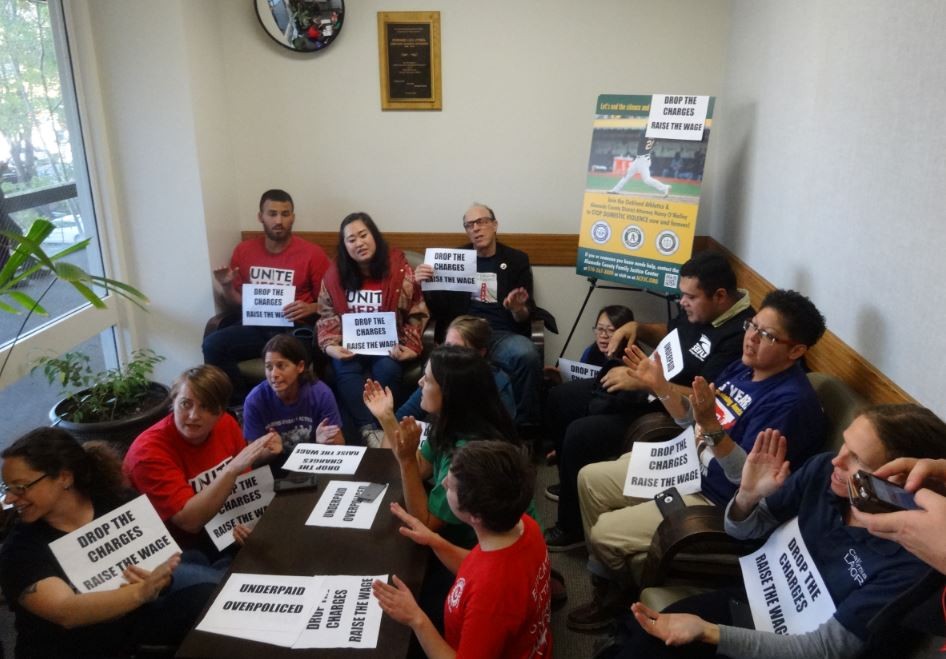
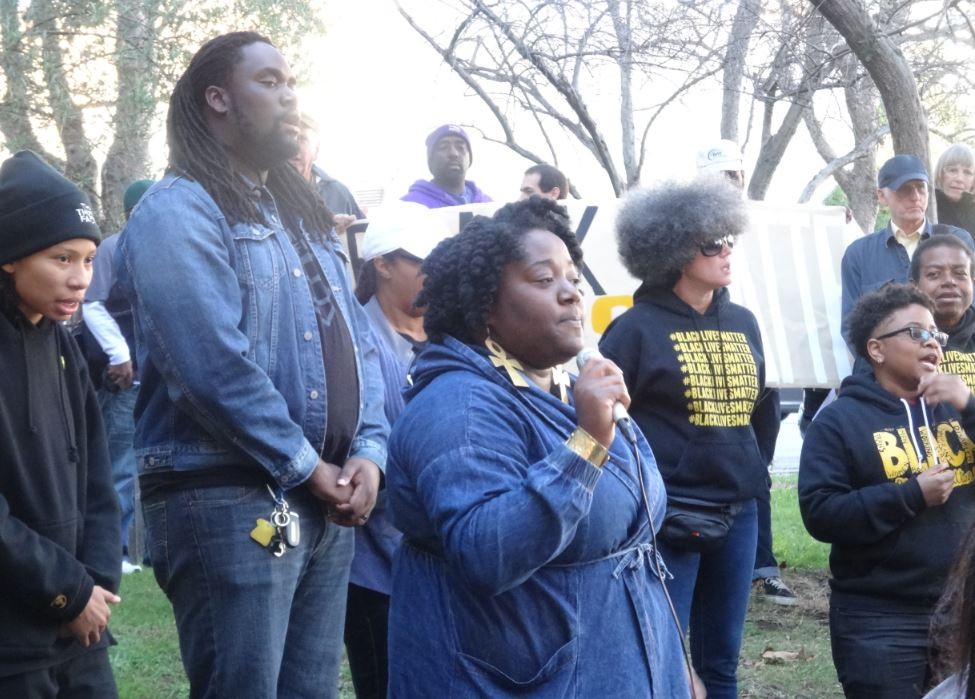
Black Lives Matter activists and the Bay Area labor movement combined forces today for a protest at the offices of Alameda County District Attorney Nancy O’Malley. The action included a sit-in inside O’Malley’s office by labor union leaders who are calling on the DA to drop charges against a group of activists known as the Black Friday 14.

In November 2014, the Black Friday 14 shut down BART services by blocking a train at the West Oakland BART station. Although the BART board of directors dropped a request that the activists pay tens of thousands of dollars in restitution, DA O’Mally has continued with plans to prosecute the group.

[jump]

In May, the Alameda County Labor Council dis-invited DA O’Malley from an awards celebration in her honor after she refused a back-channel request by the unions to drop charges against the Black Friday 14.

The rally at O’Malley’s Oakland office today coincided with a national day of action by the Fight for $15 movement of low-wage workers who are seeking higher pay and better working conditions. In Oakland and across the Bay Area, fast-food and other low-pay workers held rallies outside restaurants and other employers.

Fight for $15 workers converged on DA O’Malley’s office this afternoon to join members of the Black Friday 14 and their supporters.

During a “Black worker speak-out” in front of the courthouse, protesters talked about connections they see between the struggle by Black Americans against police brutality and inequality in the justice system, and economic inequalities such as low wages.

“This fight cannot be separated from labor’s fight,” said Millie Cleveland, and organizer with SEIU 1021.

Union leaders from UNITE HERE Local 2, UNITE HERE Local 2850, SEIU Local 1021 and SEIU USWW, AFSCME Local 3299, AFT Local 2121, UESF and UAW Local 2865 all took part in the sit-in inside DA O’Malley’s office.

Dungeness Crab Season Delay Prompts East Bay Restaurants and Fishmongers to Switch Gears

Last week, Bay Area crab lovers got the news they feared: Due to toxin levels too high for safe consumption, the California Department of Fish and Wildlife decided to delay the commercial Dungeness crab fishing season indefinitely. The toxin, known as domoic acid, is the result of an unusually large algal bloom likely caused by warm waters off the coast of California. When consumed in large quantities, domoic acid can cause diarrhea, nausea, and, in severe cases, permanent damage to short-term memory and even death.

Originally slated to start on November 15, the crab season won’t begin until wildlife officials determine that the domoic acid levels in the crabs have lowered to a safe level for human consumption — a delay that puts what’s estimated to be a $60-million-a-year industry in peril.

See also: 
Shell-Shocked

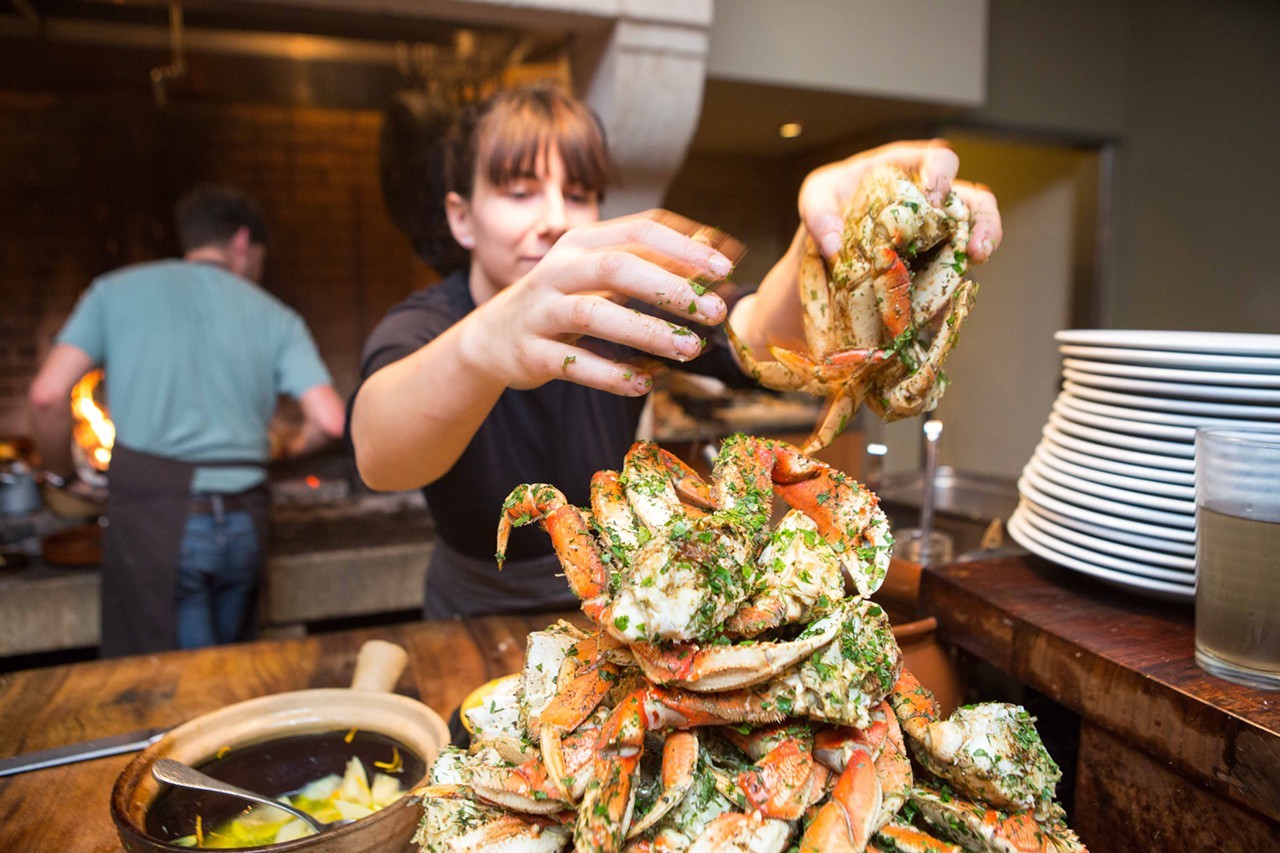
[jump] Although news of the delay had barely broken, seafood-oriented restaurants around the East Bay were already changing their plans for the start of the crab season. For the past couple of years, Homestead (4029 Piedmont Ave., Oakland) has hosted a big, family-style crab feed on the Wednesday before Thanksgiving. Last Friday, the farm-to-table restaurant announced that the pre-Thanksgiving meal would be reformatted to a clam bake. And Camino (3917 Grand Ave., Oakland) will forego its wintertime tradition of serving Monday night prix-fixe dinners that feature Dungeness crabs grilled in the restaurant’s wood-burning fireplace.

The crabs are Camino’s most popular item, but chef and co-owner Russell Moore said the restaurant is committed to serving only local seafood. Moore now plans to feature boudin blanc for the restaurant’s next set of prix-fixe dinners, starting on Monday, November 16. The sausages are actually the restaurant’s second-most requested item, but the demands of the crab season have often left him with little time to make them, Moore said.

“What I’m not going to do is just try to buy crabs from farther away or anything like that,” he said. “Some things are more important than business.”

The constantly changing nature of the menus at seasonal, locavore restaurants, such as Homestead and Camino, makes it easier for those businesses to take a wait-and-see approach when it comes to the Dungeness crab season. For now, Moore said he’s going to operate under the assumption that the season will be canceled altogether and then adapt accordingly if and when the crabs eventually come through. Homestead co-owner Elizabeth Sassen is taking a similar approach, but said her bigger concern is how the delay (and potential loss) of the crab season will affect the Bay Area economy and what it says about the overall well-being of the ocean — especially if this year’s algal bloom problem was at least partly impacted by global climate change, as some suspect.

As I reported in my January cover story, “Shell-Shocked,” the Bay Area’s Dungeness crab fishery is unique in the sense that about 80 percent of each year’s catch is concentrated in the first two or three weeks of the season — a mad scramble that fishermen refer to as the “derby.” Pushing that derby back a few weeks might not in itself be a critical blow for local crab fishermen, but the loss of the traditional Thanksgiving rush will certainly hurt. Paul Johnson, owner of Berkeley’s Monterey Fish Market (1582 Hopkins St.), explained that part of the problem is the crab fishermen have already spent weeks getting their gear ready for the crab season. They may not have the proper equipment or licenses to fish for something else in the meantime. For better or worse, all they can do is wait.

The only sliver of good news for local fishermen: Most years, a huge number of big fishing boats from Oregon and Washington come down for the derby, scooping up a disproportionate amount of crab in those first few weeks. Tom Worthington, who runs Monterey Fish Market’s wholesale operation, said that once the delay of the season was announced, most of those big boats immediately packed up and headed back north — presumably to get ready for the northern Dungeness crab season, which for now is slated to begin on December 1. If the Bay Area season does eventually open, it’s possible that local fishermen might actually bring in a bigger share of the haul.

“It’s a potential silver lining with a delayed paycheck,” Worthington said.

Meanwhile, restaurants that source their crab from out of state will likely continue to be able to do so. For instance, the proprietors of Hang Ten Boiler, an Asian-Cajun restaurant with locations in Alameda and Hayward, told me they get all of their crabs from Seattle, Washington, and don’t anticipate being affected by the delay. 

It’s also possible that all this talk of toxins has turned some customers off of Dungeness crabs altogether, at least for the time being. Nelson German, chef-owner of the seafood restaurant AlaMar (100 Grand Ave., #111), seems to believe that’s the case, and he’s decided not to serve crab at his restaurant as a result. “I think the public will refrain from ordering any crabs at this time, no matter where the restaurant says it originates from,” he said.

Bernie Pushes Hillary Further Left on Legalization

Democratic presidential candidate Bernie Sanders’ promise to end federal cannabis prohibition last week has pushed frontrunner Hillary Clinton into changing her position on pot.

“While the Republicans (except for Rand Paul) are sticking with the Reagan-era drug position, the Dems are competing to be the cool parent,” writes Debra Borchardt with Forbes.

Clinton updated her position on pot on Saturday at a townhall in South Carolina, saying she’d do more than allow states to chart their own course. She said that as president, she would move marijuana from the top of the federal list of dangerous drugs to second place, “so that researchers at universities, national institutes of health can start researching the best way to use it.”

That’s a big promise from potentially the next POTUS.


[jump]

That statement drew a response from Sanders, who not only called for totally de-scheduling cannabis, but filed a bill to do so in the Senate: “I’m glad to see Secretary Clinton is beginning to address an issue that my legislation addressed. But her approach ignored the major issue. Secretary Clinton would classify marijuana in the same category as cocaine and continue to make marijuana a federally regulated substance.”

About 700,000 Americans are arrested for pot, each year. Blacks are up to thirty times more likely to be busted for weed, despite having similar usage rates to whites. About 58 percent of Americans support ending cannabis prohibition.

NORML’s Allen St Pierre told MarketWatch:  “[Clinton] has put her finger up to the wind and has detected this change in support,” he says. “These things were hardly discussed ten to twenty years ago.”

Clinton’s updated position comes amid continental shifts. Canada’s new president Justin Trudeau is pro-legalization, and the Mexico Supreme Court ruled in favor of decriminalizing personal possession and cultivation of cannabis. The war on cannabis in the Americas started in Mexico in the 1800s.

Tuesday Must Reads: Whistleblower Files Complaint Over Gov. Brown’s Oil Demand; UC Pushes Forward with Plan to Up State Student Enrollment

Stories you shouldn’t miss:

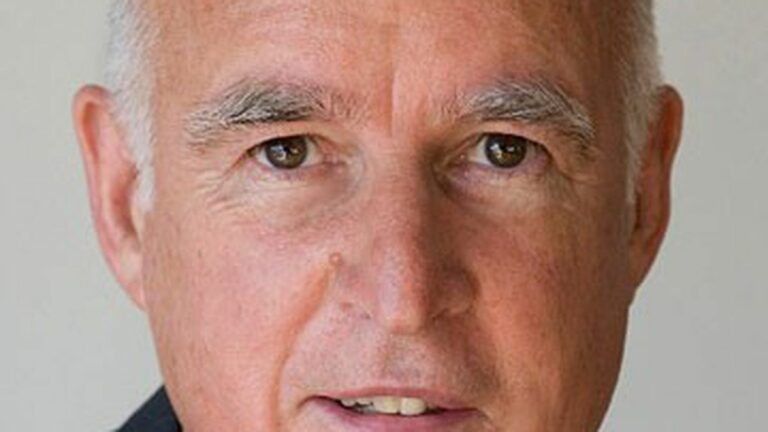
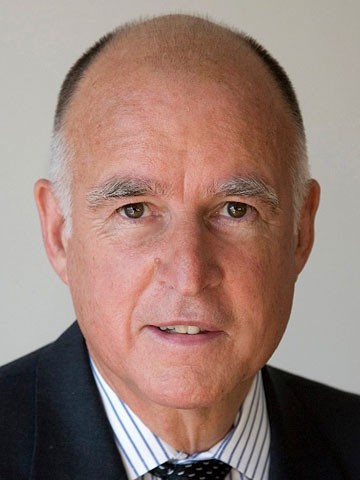
1. A state regulator has filed a whistleblower complaint over being ordered to conduct a special analysis for Governor Jerry Brown on the possibility of drilling for oil on his family ranch in Northern California, the AP reports. The oil and gas regulator, Jennie Catalano, said she faced retaliation after she complained about having to conduct the analysis for the governor, according to her attorney. The Brown administration has maintained that the work done for the governor was routine and didn’t violate state laws that prohibit public officials from using public resources for personal gain. But oil industry executives and former state regulators say they know of no other similar situation in which the state has provided the type of detailed analysis that Brown received. Regulators also said Brown became angry when an underling put the governor’s order in writing in the form of an email.

2. UC President Janet Napolitano is pushing forward with her plan to increase enrollment of California students by 10,000 over the next three years, the SacBee$ reports. The UC system has come under heavy criticism for increasing the number of out-of-state students who pay higher tuition in recent years to close funding gaps. Under Napolitano’s plan, the UC system would up enrollment of state students by 5,000 next fall — and another 2,500 during each of the following two years. The plan would qualify UC for $25 million in extra funding from the legislature.

[jump] 3. SeaWorld announced that it plans to end its controversial shows involving orcas at its San Diego amusement park, the LA Times$ reports. But animal rights activists note that SeaWorld still plans to keep the wild animals in enclosed water tanks for spectator amusement.

4. The California Supreme Court let stand a lower ruling that requires so-called “dark money” groups — nonprofits that engage in political campaigns but refuse to reveal their donors — to disclose the identities of their contributors to the state Attorney General’s Office, the AP reports (via ABC). However, the attorney general will not be allowed to publicly disclose the information.

5. And the Obama administration plans to ask the US Supreme Court to overturn an appellate court ruling that blocked the president’s executive order to allow 5 million undocumented immigrants to stay in the country while they obtain work permits, the LA Times$ reports.

Max Savage Show Episode 3

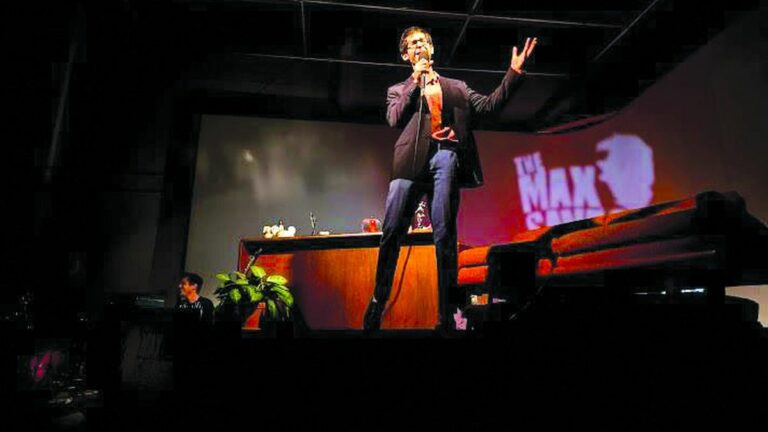
Oakland’s own Pop-Up Magazine-styled live talk show is back with its third installment of absurd antics and local celebrity guests. This time, it will be held at the Starline Social Club (645 West Grand Avenue, Oakland) on November 12 at 7:30 p.m. Aside from awkwardly funny host Max Savage Levenson himself, the stage will be graced with 99% Invisible podcast host Avery Trufelman, the Express’ own marijuana expert David Downs, plus former Express staffer, recent lesbian haiku anthology author, and prolific sex writer Anna Pulley. Local indie-rock act Waterstrider will be the musical guest, while Astronauts, etc will provide the DJ set. Apparently there’s a very special super secret musical guest to top the night off, as well. The two rules of the Max Savage show are that nothing gets filmed and all the proceeds go to the organization Art for Oakland Kids. Other than that, anything goes.

Nia Imara Captures the Faces of Oakland’s Housing Crisis

Last Saturday afternoon at the East Oakland Youth Development Center, Oaklanders of various ages and walks of life lined up to have their portraits taken for Nia Imara's photography project, Generation of Oakland: The People's Portrait. Over the course of five hours, Imara photographed and interviewed dozens of families and individuals, most of them Black Oakland natives...

Letters for the week of October 28-Nov. 3

"Saving Chinatown," Feature, 10/28 Chinatowns Deserve Protection Congratulations, Luke Tsai, for an extremely thorough and thought-provoking look at Chinatowns, many of which have already disappeared in the United States. The saving of San Francisco's Chinatown, before and after 1906, when politicians and business interests tried to relocate all Chinese to the Bay View, was both an economic and civil rights battle....

One-Night Stands

Thursday, November 12 The Exiles (72 min., 1961). Followed by a multimedia project and panel discussion (Toll Room, Alumni House, UC Berkeley, Berkeley, 4:00) 24th Berkeley Video and Film Festival. (East Bay Media Center, Berkeley, 6:00-11:00) American Revolutionary: The Evolution of Grace Lee Boggs (82 min., 2013). (Berkeley Fellowship of Unitarian Universalists' Hall, Berkeley, 7:00) Risky Business (108 min., 1983). (UA Berkeley 7,...

Broadway, Babies

I'm a hetero guy in need of advice. Back in college, I met this girl. Suffice it to say she was into me but I had some shit to work through. So we ended up being a missed connection, romantically. Despite that, we still became fast friends. I'm less awkward now, in large part because our friendship changed my...

Oakland’s Balletic Turf Recital

Turf dancers are typically seen busking on BART trains as they pass beneath the bay or enacting sidewalk soliloquys on the streets of Oakland. Technically stunning, the fluid dance form is of the people, performed on the same ground as the audience — followed by a tip hat. By contrast, contemporary ballet still retains the elitist...

Black Lives Matter and Labor Activists Protest at District Attorney Nancy O’Malley’s Office

Black Friday 14 supporters, labor unions, workers and others rallied outside of District Attorney Nancy O'Malley's office today. Credits: Darwin BondGraham Black Lives Matter activists and the Bay Area labor movement combined forces today for a protest at the offices of Alameda County District Attorney Nancy O’Malley. The action included a sit-in inside O’Malley’s office by labor union leaders who are...

Dungeness Crab Season Delay Prompts East Bay Restaurants and Fishmongers to Switch Gears

The most popular item at Camino is the grilled Dungeness crab. Credits: Bert Johnson/File photo Last week, Bay Area crab lovers got the news they feared: Due to toxin levels too high for safe consumption, the California Department of Fish and Wildlife decided to delay the commercial Dungeness crab fishing season indefinitely. The toxin, known as domoic acid, is the result...

Bernie Pushes Hillary Further Left on Legalization

Democratic presidential candidate Bernie Sanders’ promise to end federal cannabis prohibition last week has pushed frontrunner Hillary Clinton into changing her position on pot. “While the Republicans (except for Rand Paul) are sticking with the Reagan-era drug position, the Dems are competing to be the cool parent,” writes Debra Borchardt with Forbes. Clinton updated her position on pot on Saturday at...

Tuesday Must Reads: Whistleblower Files Complaint Over Gov. Brown’s Oil Demand; UC Pushes Forward with Plan to Up State Student Enrollment

Stories you shouldn’t miss: 1. A state regulator has filed a whistleblower complaint over being ordered to conduct a special analysis for Governor Jerry Brown on the possibility of drilling for oil on his family ranch in Northern California, the AP reports. The oil and gas regulator, Jennie Catalano, said she faced retaliation after she complained about having to conduct the...

Max Savage Show Episode 3

Oakland’s own Pop-Up Magazine-styled live talk show is back with its third installment of absurd antics and local celebrity guests. This time, it will be held at the Starline Social Club (645 West Grand Avenue, Oakland) on November 12 at 7:30 p.m. Aside from awkwardly funny host Max Savage Levenson himself, the stage will be graced with 99% Invisible...
19,045FansLike
17,709FollowersFollow
61,790FollowersFollow