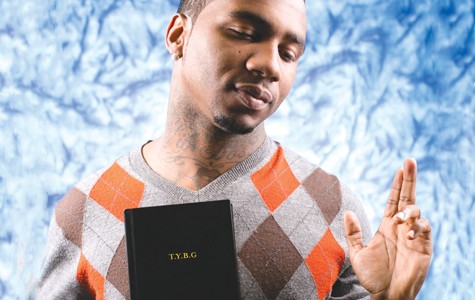

Communing with the Based God

East Bay rapper Lil B (Brandon McCartney), 26, has had one of the most unusual career trajectories in the music industry, and is perhaps one of the most influential yet easily dismissed artists out there today. Although he has a remarkably devoted fan base, his popularity still mystifies the uninitiated, and he continues to face backlash for his staunchly unorthodox approach to, well, pretty much everything.

For starters, Lil B, who grew up in Berkeley, has been manically prolific over the years, and at times, his volume of musical releases has reached an almost Shakespearean level. During the past six years, he has self-released dozens of mixtapes and thousands of songs, including an impressive five-gigabyte mixtape that contained more than 850 freestyles, which he dropped in 2012 in addition to several other album-length projects. While hip-hop purists have doubted Lil B’s technical skills as a rapper, his idiosyncratic, unrehearsed-sounding flow was a precursor to the sing-song, adlib-filled style that dominates the radio today. Given the stylistic turns that hip-hop has taken in recent years, his early solo releases at the end of the Aughts and beginning of the 2010s have proven to be ahead of their time.


But rapping is just one of Lil B’s occupations, and a large part of his appeal comes from his self-appointed role as a spiritual guru. His fans hail him as the Based God, and his eponymous philosophy, which he describes only with the adjective “based,” centers on maintaining a positive outlook, respecting all living things, and staying curious about all that life has to offer.

Although Lil B doesn’t explicitly brand himself as a religious leader, his social media following is vast and cult-like. He frequently posts affirmations, life advice, and Based God-centric memes on Twitter and Facebook to the adulation of millions of followers. When he follows fans back, they often respond with the fervor of someone who spotted the Virgin Mary’s silhouette on a piece of toast. Dedicated fans call themselves the Bitch Mob and sign posts with #ProtectLilB and #TYBG (Thank You Based God). He has given guest lectures akin to religious sermons at UCLA, MIT, and NYU that have included teachings such as, “Pay attention to bugs and insects and how they vibe.”

Then, there’s Lil B’s role as a cultural commentator. Because of his large social media presence, he gained national attention for levying a “curse” on Oklahoma City Thunder forward Kevin Durant after the basketball star decried Lil B’s musical ability on Twitter. The Thunder subsequently failed to win an NBA championship, and Durant has been plagued by a series of injuries, prompting memes and internet lore about the Based God’s curse. After Lil B cursed Houston Rockets player James Harden last spring for imitating the rapper’s signature cooking dance without attribution, the Golden State Warriors won the Western Conference Finals against the Rockets, and the rest was history.

The uncanniness of the Based God curse prompted several major sports outlets, including ESPN and CBS Sports, to interview Lil B about his seemingly supernatural powers. As more media outlets picked up the story, the national spotlight on this curious public figure even led several news networks — including CNN and MSNBC — to interview Lil B about his predictions for the 2016 presidential election. (He’s voting for Bernie Sanders, though he confirmed that Hillary Clinton has not been cursed.)

How an unsigned, DIY artist could become such a bizarre and powerful cultural icon continues to befuddle casual observers. But after spending an afternoon with Lil B, I came to realize that one of the main reasons his multitudes of followers are so drawn to him — other than the music and the memes — is his willingness to be publicly vulnerable and, in doing so, affirm others’ experiences and struggles.
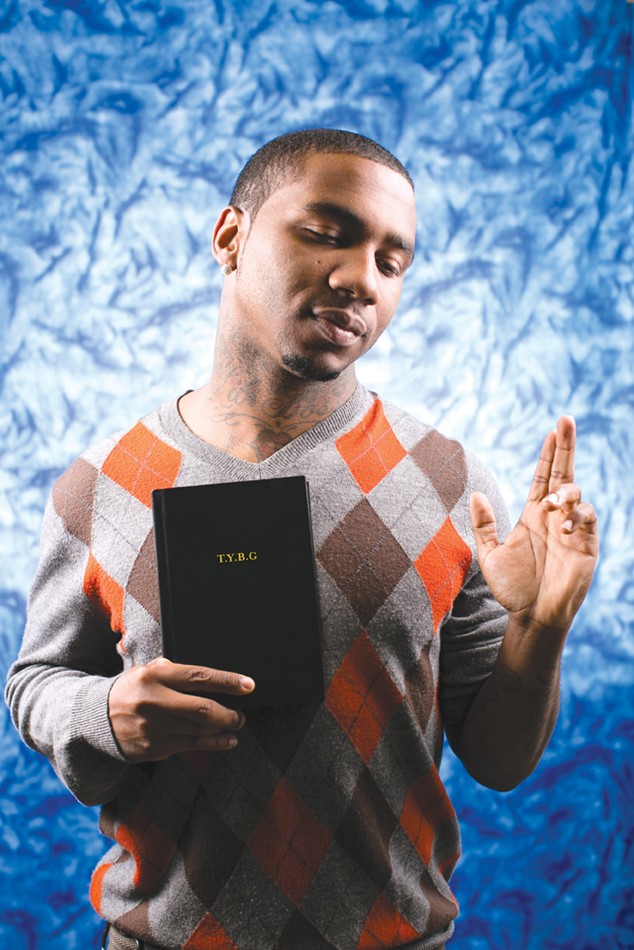
Indeed, when Lil B came to the Express’ office in Oakland for a photo shoot, I was surprised by his immediate warmth and openness. After he put on a playlist of his favorite Antony and the Johnsons songs, our conversation turned to personal topics at times as the band’s melancholic piano ballads played in the background. We even chatted about what music we like to cry to, our favorite Facebook emojis (we both love the chubby, cartoon cat Pusheen), weird body insecurities, and other secrets I would only ever disclose to my closest friends. It was then that I realized that there’s not really a code you have to crack to get Lil B: You pretty much just have to be open to his kindness.

“I feel like when I speak unfiltered, people respond to it in a good way,” said Lil B, reflecting on his recent mainstream media attention. “When I speak how I feel, I get rewarded for it — whether people love what I say, don’t understand what I say, or go against what I’m saying.”

Despite the fact that fans and the media have mythologized and even deified Lil B, there are plenty of contradictions in his messaging. While many of his songs promote positive thinking and social justice, some of his lyrics also have blatantly misogynistic themes that seem incompatible with his overall happy-go-lucky, pacifist public persona.

On one hand, there are tracks like “All Women” from his mixtape Rain in England, on which he celebrates women of all ages, ethnicities, shapes, and sizes, rhyming, Have you appreciated a woman’s knowledge?/Pay attention to her comments. But then there are farcically offensive lyrics on songs such as “Swag My Bitch Up” — on which Lil B says I respect women/And I respect all people/But I don’t love hoes/They suck dick and they’re evil — or “Murder Rate,” where he raps If you don’t twerk we gon’ up the murder rate.

As a listener, it’s sometimes difficult to mediate these mixed messages or decide when to take Lil B seriously. So is he playing different characters?

“The Lil B entertainment experience is a mix of a lot of different emotions,” he explained. “It’s on the level of me being a movie director or content creator. I look at the Lil B entertainment experience the same way: different scenes, different locations.”

While sometimes the explicitness in his lyrics is gratuitous, if anything, the id-like contradictions in Lil B’s music have allowed him to avoid the kind of holier-than-thou preachiness — both in his music and public image — that people often find off-putting about conscious rap. Across his body of work and social media presence, Lil B has purposely exposed the flaws in his thinking as a way to demonstrate his commitment to learning and self-improvement (which may be a more effective way to spur social change than telling people how to live).

Earlier this year, for instance, he faced a backlash for tweeting offensive comments about trans women. After his followers responded with criticism, he admitted his ignorance, tweeting, “I wanna say I love you and I apologize for that transphobic comment I made today and shows how immature and still insensitive I am,” and “my insecurity comes from deep-rooted issues and respecting women’s boundaries.” While his initial comments were undeniably sexist, declaring his willingness to learn from his mistakes was far more authentic than the PR-team-manufactured celebrity apologies we often see in the media.

Lil B said that over the past year, he has made it a point to reveal his flaws in order to humanize himself in the public eye and demonstrate the transformative power of self-reflection. “I choose to be transparent and honest because people can see me learning and see my mistakes so it’s not a shock,” he added. “I want people to really know me and know Lil B — really just know the flaws and love them; really know who you’re supporting.”

He also pointed out that there is a critical distinction between Lil B and the Based God, and that the Based God is the model for his behavior rather than his identity proper. While he often refers to himself as the Based God in his songs, he explained that the Based God is a higher being that works through him, adding that the Based God came to him through doing hundreds of based freestyles: “The Based God is perfect, and Lil B wants to be the Based God — I really want to be the Based God.”

Interestingly enough, out of Lil B’s extensive musical output, the only projects he attributes to the Based God are Choices and Flowers and Tears 4 God, which he said he “executive produced” with the Based God. Neither of these are hip-hop mixtapes — they’re atonal, ambient electronic albums that Lil B describes as “classical music.” Though the two lengthy, experimental releases were derided as amateurish in the press, Lil B said that he is proud of the works because they truly reflect what he sees as the Based God’s essence. The Based God also makes an appearance on Rain in England, which features Lil B rapping over similarly challenging, new age-y electronic tracks.

In 2015, Lil B’s musical output slowed down considerably in comparison to past years. Previously, he would release off-the-cuff freestyles without giving it much thought. But apart from a based freestyle mixtape he did with Chance the Rapper called Free, he has spent the better part of this year working on his long-awaited release, Thugged Out Pissed Off. His slower, more deliberate songwriting process is part of his goal to make Lil B “more accessible” in 2016, he said, though he wouldn’t reveal specifics about what he intends to do to make that happen.

Has anything changed about Lil B’s songwriting approach? “My music is inspired by life and inspired by what I’m going through. I never force my music, either. This year, there was a lot of learning and a lot of lessons — being in an apartment and having the neighbor’s house blowing up next door, burning me out of my apartment,” he said, referencing the fire that devastated his then-Concord duplex last January. “It was a lot of blessings and learning experiences, too, from lecturing at UCLA and MIT, to my apartment burning down, to The Jacka dying and another friend passing away, to learning more about adult life, to making sure you don’t get too serious and still have fun.”

Thugged Out Pissed Off, Lil B said, is a platform for him to process these life difficulties and growing pains.

“There’s gonna be a lot of different emotions and feelings, and a lot of stuff out the journal,” he said. “I got a chance to get a lot of angry stuff out — just anything that I felt. A lot of positivity, too. A lot of gems, a lot of knowledge on there. And just a lot of stuff in general that’s really gonna shock people and have people on edge — I think that’s really what Thugged Out Pissed Off represents.”

Last year, Lil B released an impactful single titled “No Black Person is Ugly,” a rallying cry against systemic racism that came out just as Black Lives Matter protestors began to take to the streets across the country. In a similar vein, he hopes Thugged Out Pissed Off will speak to people form marginalized communities, which he explained is one of his key missions as an artist.

“I want to help people that might not be getting too much attention from the city — high crime rate areas. I’m trying to figure out ways I can bring hope, love, plant trees — and that’s not a joke, I really do plant trees.”

Correction: The file size of Lil B’s mixtape with over 850 songs was five gigabytes, not megabytes.


Alameda Landlord Who Evicted 33 Families Slams Councilmembers

The Alameda landlord who has become the face for greater rent control restriction after he issued notices of eviction to 33 families in the Bay View Apartments last month, sent an inflammatory letter to city leaders strongly opposing regulations that support tenants’ rights. Matt Sridhar, the CEO of San Jose-based Sridhar Equities, LLC, also slammed a proposal to establish rent control in Alameda, and criticized Oakland for its rent control regulations.

In a three-page email sent to the mayor and city council just hours before a 65-day moratorium on rents and eviction was approved on November 4, Sridhar the new landlord at the Bay View Apartments, commonly referred to by its address, 470 Central (Avenue), said he would sell the property if rent control is enacted in Alameda.

Sridhar accused Alameda city leaders of caving to political pressure being applied by many tenants fearful of steeply rising rents and mass evictions in the city. “I am surprised and disappointed that Alameda would entertain this politically-motivated and reactionary agenda that simply interferes with free market enterprise and creates substantial government bureaucracy.” In boldface type, he continued, “I will tell you with certainty that if you pass rent control, I will SELL my property in Alameda and move on to improve another town.”

In an interview, Sridhar said he does not regret sending the letter, which was obtained through a public records request. “This is what you call a storm in a tea kettle,” he said. “I don’t regret it. People are free to speak the truth.” The entire situation with the mass evictions at the Bay View Apartments, he added, “is counterproductive for the town and personally a waste of my time.”


[jump] Sridhar, who said he built his equity firm from little, voiced strong criticism of Alameda’s elected officials and their handling of the moratorium last month and the revisions they approved on December 1. “The council is totally incompetent,” he told me. “They chose to change the moratorium because they don’t know what they’re doing. They have three lawyers [on the council] and a two-page moratorium. They didn’t know what was in it?”

Sridhar moved to evict all the tenants at 470 Central just days after the council enacted a moratorium on evictions in the city. Sridhar took advantage of a loophole in the moratorium that allowed evictions of landlords plan to do major capital improvements on the building. Earlier this week, the council voted to close that loophole.

When I asked about a well-read opinion piece by Don Lindsey, an influential landlord’s advocate in Alameda, that charged Sridhar with “acting out of panic” by quickly issuing the mass evictions last month, Sridhar lashed back. “He’s small-time. I don’t care about what he thinks.”

Sridhar wrote in his letter to the council that he plans a complete large-scale renovation of the Bay View Apartments. “Every project we do improves the lives and quality of our residents.” He later told me the building currently loses up to $30,000 a month and is unsafe. “470 Central is not the American Dream,” said Sridhar. “It needs to be renovated. … Alameda is very unappreciative.”

In the letter, Sridhar boasts of his altruism, writing that he once footed the bill for an uninsured tenant’s kidney dialysis. In the interview, Sridhar said he also helped a former tenant pay for college and often wrote them college recommendations. “I’m not the villain here,” he told me.

Sridhar also alleged in our interview that attorneys from a nonprofit tenants group called Tenants Together are using the renters at 470 Central as political pawns in order to push for rent control in Alameda. “Nothing would benefit them more than to have tenants on the streets,” he said. “We’re the only one helping the tenants.”

Last week, one renter at 470 Central said he and his neighbors would not leave after the 60-day eviction notice expires in mid January. Sridhar told me, “It’s not realistic that they will be there for an indefinite time. At some point an attorney working for a nonprofit might give me some problems, but we’re a company that paid $6 million for a building and are planning $2 million in renovations. We have money to litigate.”

Catherin Pauling, a spokesperson for the Alameda Renters Coalition, said Sridhar is resorting to scare tactics. “This is exactly what his company did while trying to circumvent the moratorium and kick families out of their homes over the holidays. He couldn’t bully the Bay View residents, so now he’s trying to bully our city council.”

Much of Sridhar’s letter to the council read like a manifesto in opposition to rent control. He also alleged that nonprofits will use rent control restrictions to game the courts and “encourage tenants to demand jury trials for every simple eviction case…and then ‘shake down’ landlords for $10,000–$15,000 to move out.” Sridhar wrote he has been engaged regularly in such cases. “While this is something I can afford to fight and do so regularly, what will the ‘mom and pop’ and retired owners do?”

He also asserted in his letter that rent control in Oakland is squeezing small-time landlords. “The City of Oakland is too stupid to realize who they are hurting,” he wrote. Sridhar also pointed to San Leandro, which has no rent control restrictions as example of what Alameda should follow, rather than Oakland, which does have rent control. “I suggest you simply take a short drive from San Leandro into Oakland,” he wrote. “You will see property dilapidation and the effects of rent control. Is this what you want for our city? I don’t think people understand the nonsense that comes with this type of regulation.”

California’s Leading Legalization Initiative Gathers Momentum

California’s leading legalization initiative is gathering momentum, and has announced a raft of amendments that add input from hundreds of stakeholders and consolidated support from the main rival legalization group.

Proponents of the Adult Use of Marijuana Act (AUMA) formally amended their initiative with the Secretary of State on Monday — boosting protections for children, workers, and small canna-businesses.

Also, the board of ReformCA, a rival to AUMA, formally withdrew its own proposal, and six ReformCA Board Members voiced their support for AUMA.


[jump] An AUMA release todays states that ReformCA board members endorsing AUMA include leading figures in the legalization movement:
  • David Bronner, CEO of North America’s top-selling brand of natural soaps
  • Nate Bradley, Executive Director, California Cannabis Industry Association
  • Stacia Cosner, Deputy Director, Students for Sensible Drug Policy
  • Neill Franklin, Executive Director, Law Enforcement Against Prohibition (LEAP)
  • Antonio Gonzalez, President of the Latino Voters League and the William C. Velasquez Institute in Los Angeles 
  • Richard Lee, founder of Oaksterdam University in Oakland
Also, Dr. Larry Bedard, co-proponent of the ReformCA measure and former President of the American College of Emergency Physicians, has withdrawn as a official proponent of ReformCA and now supports AUMA.
 
An AUMA release also states that over the weekend, a majority of the ReformCA Board formally agreed to vote to withdraw the ReformCA measure from the ballot qualification process. ReformCA has not made any public statements.
 
“We have carefully reviewed amendments submitted by the proponents of the Adult Use of Marijuana Act, and we’re convinced it’s time to endorse that initiative and unite everyone behind a single, consensus measure to achieve a legal, regulated system, which a majority of voters have consistently said they want,” stated Bronner, in an AUMA release Tuesday.
 
“This amended measure strikes a thoughtful balance between civil liberties and protecting public safety and the safety and health of our children,” stated Franklin.  “I’m pleased to endorse it and have every confidence it will pass in November.”   
 
“As amended, this measure reflects the voices and vision of communities all across California,” stated Gonzalez.  “This represents best practices and the best chance California has to replace a failed system of prohibition with an effective, legal and regulated system that protects children, workers and small businesses.”
 
Last week, Lee announced his support for AUMA.

AUMA’s official proponents are Dr. Donald O. Lyman, an award-winning physician and former chief of the Division of Chronic Disease and Injury Control at the California Department of Public Health, and environmentalist Michael Sutton, former president of the California Fish and Game Commission and former vice president of National Audubon Society.

Launched on November 2, AUMA has the support of leading reform groups Drug Policy Alliance and Marijuana Policy Project, as well as technologist-turned-philanthropist Sean Parker. The group should have the funds for a $20 million campaign.

But the emergence of a well-funded, well-connected leader is also polarizing existing groups. Groups from legalization’s far left as well as some mainstream legalizers have joined right-wing conservatives in publicly opposing AUMA — each for their own reasons. 

AUMA’s new updates Monday sought to mollify some of those concerns.

The group states that amendments include:
·         Mandates the toughest and most explicit warning labels on marijuana products, including an American Medical Association-recommended message that marijuana use during pregnancy or breastfeeding may be harmful.

·         Enhances the strict ban on advertising to minors to clarify that marketing to minors is also strictly prohibited, as is all health-related advertising for non-medical marijuana.

·         Requires a comprehensive study to determine effectiveness of the packaging and labeling requirements and advertising and marketing restrictions on preventing underage access to non-medical marijuana.

·         Provides funding for a public information campaign, emphasizing that marijuana remains illegal for anyone under the age of 21.

·         Accelerates funding for expert outcome research on the effects of the new law, including its impact on minors and whether teen use decreases (as it has in other states with legal, regulated systems such as Colorado).
 
Maintaining Local Control
 
·         Aligns with the bipartisan medical marijuana legislation to provide complete local control over non-medical marijuana businesses within their jurisdiction, including the authority to ban commercial marijuana activity by ordinance.

·         Ensures that local governments which allow commercial marijuana businesses to operate have the authority to determine the time, manner and location of those businesses within their jurisdiction.

·         Ensures that local governments have the authority to establish their own taxes on medical and non-medical marijuana consistent with existing state law.  Explicit authority to do so is granted to counties.

·         Requires state licensing authorities to take action to suspend or revoke a state marijuana business license when notified that a corresponding local license has been revoked, ensuring businesses must remain in compliance with local laws to operate.
 
Protecting Workers in an Expanding Industry
·         Requires state regulators to set specific safety standards for drivers and vehicles that are employed in the legal commercial distribution of marijuana.

·         Clarifies that the labor peace agreements included in the medical marijuana legislation will also extend to this new law.

·         Clarifies that labor violations are grounds for disciplinary action against a marijuana business licensee, including potential suspension or revocation.

·         Clarifies that all administrative costs of the new law must be fully funded, including reasonable costs for state agencies to oversee workplace safety.

·         Mandates the state comprehensively study which workplace safety standards are necessary to fully protect marijuana workers, including against risks unique to the industry.
 
Preventing Monopolies and Encouraging Small Business Growth   
 
·         To allow smaller growers to establish themselves in a legal, regulated market, large cultivation licenses (as defined by the medical marijuana legislation) for non-medical marijuana will not be issued for the first five years the new law is in effect.

·         Only after those first five years can large cultivation licenses be issued at the discretion of state regulators but they must include the same restrictions on vertical integration that are contained in the medical marijuana legislation.

·         Strengthens opportunities for minority-owned businesses to enter the legal, regulated marijuana market.

·         Sets a September 1, 2016 deadline for existing medical marijuana businesses to come into compliance with current law and qualify for priority licensing under AUMA, providing greater access for existing small businesses to enter the legal, regulated market.

·         Requires public universities in California to conduct a study and issue recommendations on whether additional protections are needed to prevent unlawful monopolies or anti-competitive behavior.  Additional technical amendments and suggested changes were included to provide increased clarity to state regulators.
We’ll have more analysis and reactions this week.

How the Kuciukai Crumbles: Alameda Now Home to the Only Lithuanian Bakery on the West Coast

When Vaidas Sukys first opened Mama Papa Lithuania (1241 Park St.) in 2013, I wrote about how the quaint little restaurant in Alameda was the only Lithuanian restaurant on the entire West Coast — the only place I knew of in the Bay Area where a potato dumpling lover could throw back a couple of Svyturys lagers and munch on dark rye bread imported from a village in Lithuania.

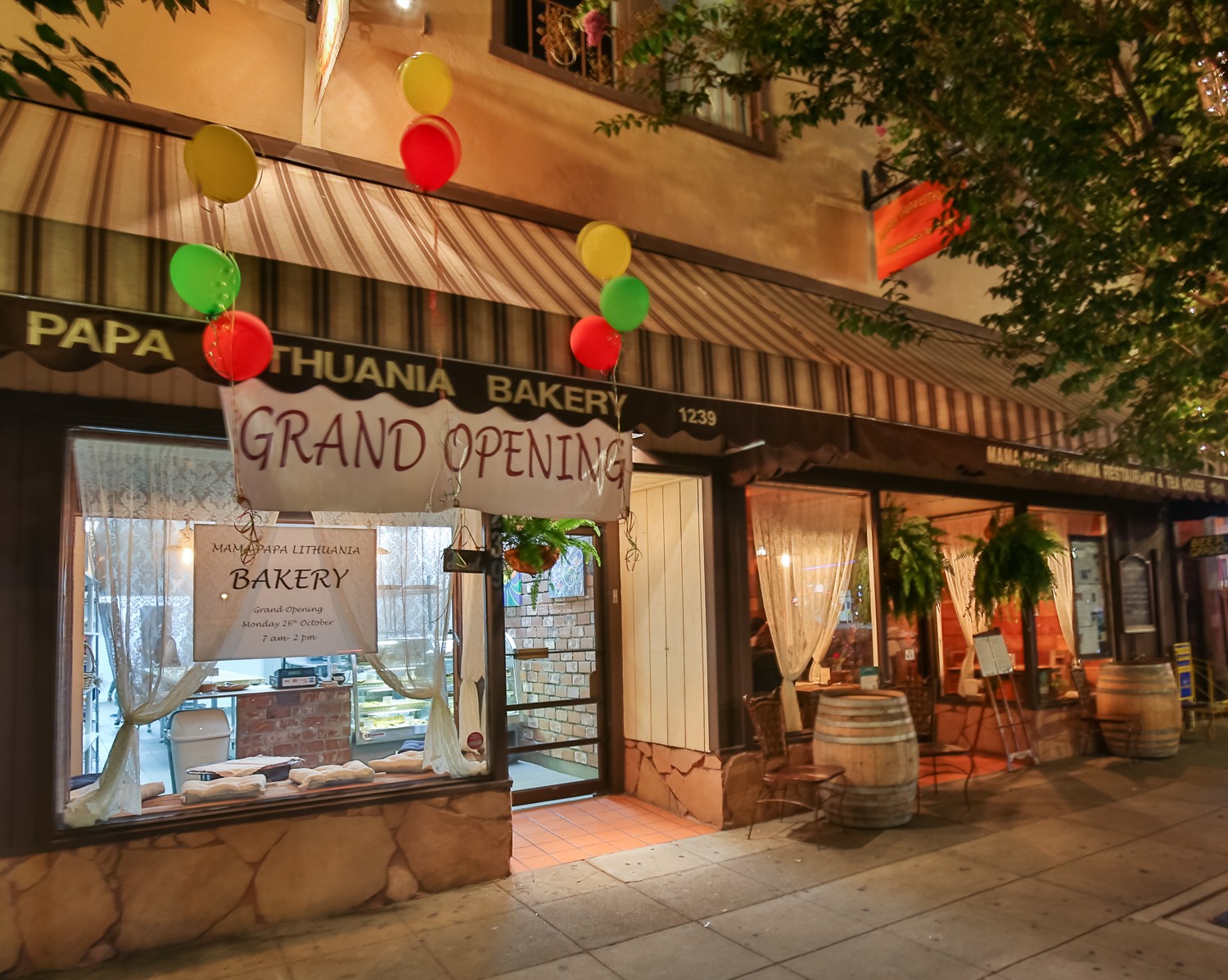
Now, Sukys is once again on the cutting edge of the Bay Area’s Eastern European food scene: About a month ago, he opened Mama Papa Lithuania Bakery (1239 Park St.) — apparently the only full-fledged Lithuanian bakery on the West Coast — in a space formerly occupied by a barber shop, right next door to the restaurant.

[jump] Oh, you didn’t know Lithuanian baked goods were a thing? Sukys is more than happy to give a primer on the large selection of cakes and pastries that Danute Sukiene — the bakery’s namesake “mama” and, not coincidentally, Sukys’s real-life mother — cranks out each day.

The showstopper is a dessert that longtime patrons of the Mama Papa Lithuania restaurant know very well: the delicate, seven-layer honey cake known as medutis, which combines cake infused with the smoky sweetness of roasted honey with a tangy sour cream filling. As of Monday, the Mama Papa website boasted that 24,528 slices of the cake had been sold since the restaurant opened. But at the bakery, you can buy a whole cake — gorgeously decorated, and big enough to serve four to six — for a modest $20. (Larger sizes are also available.) I might just have to order one the next time my birthday rolls around.

But Mama Papa Lithuania Bakery sells all kinds of Old World treats you won’t find at any other bakery in the area — from recipes Sukiene mastered when she ran a bakery back in Lithuania. According to Sukys, the confection that catches the most eyes is something called a Boletus Mushroom, named after the mushroom species (aka the porcini) it bears a striking resemblance to — so much so, Sukys said, that customers often ask if it’s a real mushroom. These are big, iPhone 6-sized cookies made with honey dough, with “caps” that are coated with chocolate and “stems” coated with meringue. In Lithuania, these are a traditional festival treat.

“Kids would walk around, and instead of lollipops, they ate mushrooms,” Sukys said.

Meanwhile, Christmas is apparently a big deal in Lithuania, and perhaps you’re wondering if the only Lithuanian bakery in town is doing anything special for the holidays. You’re in luck: Starting this week, Sukys said, the bakery will sell the Christmas biscuits known as kučiukai for about $3 a container. Each of these little pastries is about the size of an olive and is only lightly sweetened and flavored mainly with poppy seeds. Because consumption of dairy products is forbidden during Kūčios, the traditional Lithuanian Christmas Eve dinner, the kučiukai are typically served floating in a kind of soup or “milk” made by soaking crushed poppy seeds.

You’ll have to make the poppy milk yourself. But for all your other Lithuanian pastry needs, all you need to do is head over to Alameda.

Tuesday Must Reads: NFL May Help Develop Raiders Stadium in Oakland; Support for Warriors’ Arena in San Francisco Plummets

Stories you shouldn’t miss:

1. The National Football League may decide to help develop a new stadium for the Raiders in Oakland, the Bay Area News Group$ reports. The NFL is reportedly interested in Oakland’s Coliseum City plan, which would include housing, retail, and restaurants and bars, along with a new Raiders’ facility. The NFL’s interest in Oakland could be a signal that the league plans to approve the relocation of the St. Louis Rams and the San Diego Chargers to Los Angeles — but not the Raiders.

2. Support among San Francisco residents for plans by the Golden State Warriors to build a new arena on the city’s waterfront has nosedived in the past six months, Bay City News reports (via the Trib$), citing new poll commissioned by opponents of the proposed arena. The poll showed that only 49 percent of San Francisco residents approve of the arena proposal — down by 12 percentage points since July. In addition, when told of the traffic problems the arena would cause for UCSF Medical Center, residents’ support plummeted to just 38 percent, with 59 percent opposed.

3. The Oakland City Council may declare an emergency shelter crisis tonight for homeless people in the city, the Trib$ reports. The declaration would allow Oakland to convert nonresidential buildings — like warehouses — into emergency shelters for the city’s 1,400 homeless people living in tents or on the street.

4. The San Jose City Council, meanwhile, may establish a tent city for homeless people, the Mercury News$ reports. Last month, the City of Seattle opened a tent city for its homeless population.


[jump] 5. The Berkeley Unified School District has dropped its opposition to a plan to build a large housing development in downtown after reaching an agreement with the developer of the proposed eighteen-story high-rise, the Bay Area News Group$ reports. The deal calls for the developer to address issues of noise, pollution, traffic, and construction hours that had concerned the school board.

6. And Republican presidential frontrunner Donald Trump called for closing the US borders to Muslims in the wake of the San Bernardino and Paris attacks, but his announcement was quickly denounced by other GOP candidates, the AP reports (via SF Gate).

Juhu Beach Club Goes Global with New Hong Kong Location

For fans of Juhu Beach Club (5179 Telegraph Ave., Oakland), Temescal’s hot-pink purveyor of fragrant Indian curries and slider-like pavs, it will come as no surprise that the wildly popular restaurant would eventually open a second location — but in Hong Kong?

[jump] That was the news chef-owner Preeti Mistry dropped on Twitter late last week: not that she was pursuing the possibility of a future project, but that Juhu Beach Club’s location in Hong Kong’s trendy Soho district was already open for business — with nary an advance peep to the Bay Area’s food press corps, it seems. It might have been the most low-key global expansion of an East Bay brand in recent memory.

Of course, the restaurant’s Asian outpost has been in the works for several months. In an email, Mistry — who is in Hong Kong for the next week getting the new restaurant off the ground — said her business partner and wife Ann Nadeau, who travels to Hong Kong frequently for work, felt the city’s cosmopolitan character and vibrant dining scene would make it a great fit for Juhu Beach Club.

As for the menu for the Hong Kong location, Mistry said she plans to keep it fairly similar to the Oakland original, though she might tweak spice levels to account for local preferences. She’ll offer some of the Indian-Chinese dishes she’s had success with in Oakland (the sweet-and-sour “Manchurian Cauliflower,” for instance), but that won’t be a big emphasis. And she said she definitely doesn’t plan on watering down her approach.

“It’s the Indian and California influence that is really exciting to the audience in Hong Kong,” Mistry said.

Brenmar

On his latest EP, Award Remixes, New York producer Brenmar follows up his previous release, Award, with more intense cuts of its original tracks, heightening the drama with pulsating house beats, trap handclaps, crunchy synth lines, and big, regal horn samples that evoke Baauer’s “Harlem Shake.” A number of guest vocalists make appearances on Award and Remixes: UNiiQU3 talk-raps in a sassy monotone on “Hula Hoop” and Ro James sensually croons an ode to big booties on “Plenty to Spare.” Brenmar has an ear for pairing rappers and singers with beats cobbled together from obscure, regional club genres, making different styles of dance music such as footwork and baile funk accessible in the process. He performs at Shadow Ultra Lounge on December 10 with LSDXOXO — a producer of melancholic, R&B-inflected house music who once described his aesthetic on Twitter as “crying in the club” — and Oakland DJ and promoter Bobby Peru of Sick Sad World fame.

East Bay Alternative Book and Zine Fest

Five years ago, two Bay Area zinesters decided it was high time for the East Bay to have its own celebration of indie media, and in true East Bay fashion, DIY-ed the first East Bay Alternative Press Book Fair. What began with roughly fifty participants has since mushroomed into a mega zine fest, with more than 120 zine authors and small presses tabling this year. Renamed in 2012 as the “East Bay Alternative Book and Zine Festival,” or EBABZ for short (pronounced “e-babes”), this year’s event on December 12 at Berkeley City College (2050 Center St.) will include a panel discussion with Rad American Women A-Z author Kate Schatz and illustrator Miriam Klein Stahl, an exhibit by Milvia Street (Berkeley City College’s art and literary journal), a book binding workshop with local artist Soleil Summers, and a panel on DIY zine- and book-making. “ZZ Tops,” a free reading party at E.M. Wolfman General Interest Small Bookstore (410 13th St., Oakland) will be kicking off the festival on December 11. Presenters at the pre-fest include Nia King, author of the zines Angry Black-White Girl and The First 7-Inch Was Better: How I Became an Ex-Punk; Enola Dismay of No Gods No Mattress; musician and comic creator Andrew Goldfarb; the Queer Anxiety Babiez Distro, a zine that focuses on queerness, gender, and mental health; and Mujeres al Frente, a collective of teachers, artists, and healers.

We Have the Technology

For her new book, We Have the Technology: How Biohackers, Foodies, Physicians, and Scientists Are Transforming Human Perception, author Kara Platoni spent a year researching in science labs, military bases, biohackers’ basements, and anywhere else that she could find people studying at the forefront of sensory science. Platoni is an Oakland-based writer, UC Berkeley Graduate School of Journalism alum-turned-lecturer, and former Express staffer. Her new book probes into everything from perfumers creating scents that can stimulate the memories of Alzheimer’s patients to scientists developing virtual limbs that offer a sense of touch — ultimately investigating the questions of what’s real, and how much of out reality is created through perception. Platoni will be celebrating the books release this Thursday at the UC Berkeley J-School at 7 p.m. The evening will feature a Q&A between Platoni and Eric Simons, author of The Secret Lives of Sports Fans and the editorial director of Bay Nature. It will also feature a musical performance by Teresa Lee and the Phony Platonis.

Kelela

In a recent BBC Radio 1 interview, Kanye West coined the term “fütch,” a contraction of “future” so ahead of the game that it doesn’t yet exist in the English language. “Fütch” is a good way to describe Kelela’s brand of pop, which combines her airy, angelic vocals with sparse, austere beats that clang with thunderous percussion and mechanical-sounding samples. On the title track of her new EP, Hallucinogen, the singer loops her voice while keyboard melodies warp slightly out of tune. Eventually, Kelela’s singing speeds up until her words become a collage of indecipherable syllables. As her voice becomes increasingly processed, the beat also reveals its glitches. The track highlights the imperfections of computerized processes we typically consider infallible while positioning Kelela as something of a cyborg. As the cover of her 2014 album, Cut 4 Me — on which Kelela appears as a hologram — suggests, her work often deals with the interplay between human and machine in our increasingly digitized world. Kelela performs at The Independent with singer Lafawndah.

Communing with the Based God

East Bay rapper Lil B (Brandon McCartney), 26, has had one of the most unusual career trajectories in the music industry, and is perhaps one of the most influential yet easily dismissed artists out there today. Although he has a remarkably devoted fan base, his popularity still mystifies the uninitiated, and he continues to...

Alameda Landlord Who Evicted 33 Families Slams Councilmembers

Tenants at the Bay View Apartments received eviction notices from Sridhar. Credits: Steven Tavares/File photo The Alameda landlord who has become the face for greater rent control restriction after he issued notices of eviction to 33 families in the Bay View Apartments last month, sent an inflammatory letter to city leaders strongly opposing regulations that support tenants’ rights. Matt Sridhar, the...

California’s Leading Legalization Initiative Gathers Momentum

California’s leading legalization initiative is gathering momentum, and has announced a raft of amendments that add input from hundreds of stakeholders and consolidated support from the main rival legalization group. Proponents of the Adult Use of Marijuana Act (AUMA) formally amended their initiative with the Secretary of State on Monday — boosting protections for children, workers, and small...

How the Kuciukai Crumbles: Alameda Now Home to the Only Lithuanian Bakery on the West Coast

The seven-layer honey cake known as medutis. Credits: Mama Papa Lithuania When Vaidas Sukys first opened Mama Papa Lithuania (1241 Park St.) in 2013, I wrote about how the quaint little restaurant in Alameda was the only Lithuanian restaurant on the entire West Coast — the only place I knew of in the Bay Area where a potato dumpling lover could...

Tuesday Must Reads: NFL May Help Develop Raiders Stadium in Oakland; Support for Warriors’ Arena in San Francisco Plummets

Stories you shouldn’t miss: 1. The National Football League may decide to help develop a new stadium for the Raiders in Oakland, the Bay Area News Group$ reports. The NFL is reportedly interested in Oakland’s Coliseum City plan, which would include housing, retail, and restaurants and bars, along with a new Raiders' facility. The NFL’s interest in Oakland could be a...

Juhu Beach Club Goes Global with New Hong Kong Location

The interior of Juhu Beach Club's newly opened location in Hong Kong. Credits: Juhu Beach Club For fans of Juhu Beach Club (5179 Telegraph Ave., Oakland), Temescal’s hot-pink purveyor of fragrant Indian curries and slider-like pavs, it will come as no surprise that the wildly popular restaurant would eventually open a second location — but in Hong Kong? That was the...

Brenmar

On his latest EP, Award Remixes, New York producer Brenmar follows up his previous release, Award, with more intense cuts of its original tracks, heightening the drama with pulsating house beats, trap handclaps, crunchy synth lines, and big, regal horn samples that evoke Baauer’s “Harlem Shake.” A number of guest vocalists make appearances on Award and Remixes: UNiiQU3 talk-raps...

East Bay Alternative Book and Zine Fest

Five years ago, two Bay Area zinesters decided it was high time for the East Bay to have its own celebration of indie media, and in true East Bay fashion, DIY-ed the first East Bay Alternative Press Book Fair. What began with roughly fifty participants has since mushroomed into a mega zine fest, with more than 120 zine authors...

We Have the Technology

For her new book, We Have the Technology: How Biohackers, Foodies, Physicians, and Scientists Are Transforming Human Perception, author Kara Platoni spent a year researching in science labs, military bases, biohackers’ basements, and anywhere else that she could find people studying at the forefront of sensory science. Platoni is an Oakland-based writer, UC Berkeley Graduate School of Journalism alum-turned-lecturer,...

Kelela

In a recent BBC Radio 1 interview, Kanye West coined the term “fütch,” a contraction of “future” so ahead of the game that it doesn’t yet exist in the English language. “Fütch” is a good way to describe Kelela’s brand of pop, which combines her airy, angelic vocals with sparse, austere beats that clang with thunderous percussion and mechanical-sounding...
19,045FansLike
17,709FollowersFollow
61,790FollowersFollow