Our December 2 Seven Days column, “A Missed Opportunity,” misstated the month in which the San Francisco Chronicle reported that the San Francisco Police Department, under Police Chief Greg Suhr, had gotten worse in recent years when it comes to targeting people of color. It was June 2015 — not July.
Also, our December 2 music story, “Off-the-Cuff Instrumentation & Astral Neo-Soul,” incorrectly stated that Ghost & the City opened for The Internet at the New Parish in Oakland. It was actually at The Catalyst in Santa Cruz.
Good choices. Also try camping at Hendy Woods State Park in the Anderson Valley, Mendocino. It’s not too far away, and you have the entire Mendocino Coast to explore. There’s also much wine tasting, most of which is still free. Good restaurants, too.
Kurt Schoeneman, Boonville
“Oakland Eyes Affordable Housing Plan in Secret,” News, 11/25
A Lack of Political Will
Your article points out accurately that previous policy makers in Oakland have consistently delayed and avoided an inclusionary housing ordinance. However, the one nuance to the story is that the Blue Ribbon Commission members were selected by both mayors [Jerry] Brown and [Ron] Dellums. Instead of secret meetings of invited guests only, that commission, composed of members selected by the council, held public meetings in every district in the city. In fact, there were seventeen public meetings over a four-month period to solicit comments from the community.
For the most part, the same players listed in this article were a part of that process. Jeff Levin was one of the city staff members facilitating the process and Linda Hausrath prepared the background economic analysis for the recommendations forwarded to the city council.
After the recommendations were presented in the fall of 2008, the city council did nothing. It is ironic that [ex-Councilmember] Jane Brunner would suggest in the article that the only two reasons why nothing happened was fear of discouraging development and campaign contributions. The fact is that the economic analysis of the housing market in 2008 revealed that the only neighborhoods where property values would reasonably support inclusionary fees were primarily in her district. Temescal and Rockridge were the places where, in theory, affordable housing fees would not discourage new projects. Can you imagine Brunner leading a public discussion about affordable housing being built in two of Oakland’s special white neighborhoods? Brunner did not have the will or courage to make that happen. As a result, nothing happened.
I don’t know what is going on currently in the planning department, but every time we should be hearing from the planning director about public process and policy, it seems like there are more secret meetings and Mike Ghielmetti [president of Signature Development Group] is speaking.
With the increase in citywide property values in the current housing bubble, there is no question that the time to adopt an inclusionary ordinance is now. More delays or a failure to act is not because of the lack of information. It would once again be fear and the lack of political will.
Isn’t it amazing that many cities throughout the state have addressed this issue years ago, and Oakland still somehow can’t seem to get anything done?
Gary Patton, former deputy director of Planning and Zoning for the City of Oakland, Hayward
“Goodbye, Mr. Magnus,” News, 11/25
Please Promote from Within
Awesome story about an awesome chief. Fascinating analysis that the mass departure of (incompetent) department heads during a financial crisis actually enabled a positive transformation.
I’ll miss Chief Chris Magnus more than I can say. As a fifteen-year Richmond resident, I can attest to how dramatically things changed from an often adversarial relationship with the police to an outstanding one. I hope the new chief is promoted from within so we get someone who reflects Magnus’ values.
Janis Mara, Richmond
“Market on Hold,” What The Fork, 11/25
Too Bad
It was such a great location, and the outdoor space was so special, but the kinks in the service and offerings [at Grand Fare Market] were to be expected for such an ambitious and needed facility. Oh, well.
Lydia Nayo, Oakland
Good Idea, Poor Execution
As an architect, and a retail specialist, I was disappointed but not surprised to hear of this closure. Grand Fare had absolutely no organizational logic or flow. It was completely unclear where the customer should order, what they should order, or where they should pay. Hot entrees, cold salads, cold cuts, cheese, bread, wine — choices and prices were not displayed or adequately listed on the menu. The staffing levels were off the chart (one evening I observed thirteen staffers waiting on four customers) and the hours (seven days week until 8 a.m.–10 p.m.) were unrealistically ambitious. The staffers were completely untrained and did not appear to understand their roles — for example, no one in the deli area knew how to use the meat slicer. I waited in line at the cashier for ten minutes once while the “bartender” stood by the second register and looked indifferent.
I had hoped that Grand Fare would be a wonderful addition to the neighborhood and a great resource for busy professionals who need a quick fix for dinner, more like The Pasta Shop in Rockridge. I urge the owners to carefully study the way The Pasta Shop displays their prepared foods and organizes the ordering, preparing, and cashier process — a successful process refined after many years of trial and error. It would be wonderful to see the restaurant return after some thoughtful analysis and reorganization — the customer base is definitely there.
Jessica Seaton, San Rafael
“Letters to the Future,” Feature, 11/18
Ten Reasons to Act on Climate Change
To reinforce the cogent statements regarding possible futures, here are ten reasons we all should be very concerned about climate change:
1. Science academies worldwide, 97 percent of climate scientists, and 99.9 percent of peer-reviewed papers on the issue in respected scientific journals argue that climate change is real, is largely caused by human activities, and poses great threats to humanity.
2. Every decade since the 1970s has been warmer than the previous decade, and all of the sixteen warmest years since temperature records were kept in 1880 have occurred since 1998. 2014 was the warmest year recorded and 2015 is on track to exceed it by a mile.
3. Polar icecaps and glaciers worldwide have been melting rapidly, faster than scientific projections.
4. There has been an increase in the number and severity of droughts, wildfires, storms, and floods. There seem to be stories about this almost daily on TV news.
5. California has been subjected to so many severe climate events (heat waves, droughts, wildfires, and mudslides when heavy rains occur) recently that its governor, Jerry Brown, stated that, “Humanity is on a collision course with nature.”
6. Many climates experts believe that we are close to a tipping point when climate change will spiral out of control, with disastrous consequences, unless major positive changes soon occur.
7. While climate scientists believe that 350 parts per million (ppm) of atmospheric CO2 is a threshold value for climate stability, the world reached 400 ppm in 2014, and the amount is increasing by 2–3 ppm per year.
8. While climate scientists hope that temperature increases can be limited to two degrees Celsius (3.6 degrees Fahrenheit), largely because that is the best that can be hoped for with current trends and momentum, the world is now on track for an average increase of 4–5 degrees Celsius, which would produce a world with almost unimaginably negative climate events.
9. The Pentagon and other military groups believe that climate change will increase the potential for instability, terrorism, and war by reducing access to food and clean water and by causing tens of millions of desperate refugees fleeing from droughts, wildfire, floods, storms, and other effects of climate change.
10. The conservative group ConservAmerica (ConservAmerica.org), formerly known as “Republicans for Environmental Protection,” is very concerned about climate change threats. They are working to end the denial about climate threats and the urgency of working to avert them on the part of the vast majority of Republicans, but so far with very limited success.
Richard Schwartz, New York City
“Oakland’s Sweeping Plan for Parking,” News, 10/28
It’s Not for Oakland
Parking plans of the sort suggested here have long been used in European central downtown areas for the purposes of streamlining access to parking and thus access to shopping and other urban activities. These plans can help improve the quality of the street environment by reducing noise and other pollution which results from “search traffic” (drivers repeatedly circling looking for close-by parking).
Improvements like these can make a big difference in area economic vitality but such plans cannot be viewed as revenue enhancers. In fact, such plans are invariably costly for the cities that implement them properly.
There are real and critical barriers to successful implementation of such plans in the United States, and especially in Oakland. Costs include pervasive high-quality signage to direct traffic to nearby off-street parking so that search traffic is effectively discouraged. Off-street parking, whether in lots or garages, is not free, and garages aren’t cheap to construct.
All aspects of the local area environment must be properly coordinated in a plan: Sidewalks and streets must be pedestrian- and bicycle-friendly. Public transit must be easily available.
What is most likely to happen in Oakland is that a half-baked plan will be approved by the council, which will then be inadequately funded. The net result will be that a mayor can talk about how progressive Oakland is, but life on the street won’t change a bit.
Hobart Johnson, Oakland
“Racial Profiling via Nextdoor.com,” Feature, 10/7
It’s About Class Shaming
Neighborhood message boards are being used for destructive purposes besides racial profiling, and neighbor bashing is becoming more prevalent as the downtown districts in Oakland continue to grow. “Class shaming” is the term for the anti-social behavior instigated by people who perceive themselves to be more (monetarily) “relevant” because they live in neighborhoods downtown that are now expensive. Usually these people are transplants and believe they run the “new” neighborhood.
My wife and I grew up in Oakland. When we first moved to Old Town Square (Old City) we experienced class shaming. We were approached by an odd young neighbor in the building who informed us they were a “longtime resident” and wanted to “warn us” about which neighbors we should avoid and why. The neighbor told us a slew of horrible lies about people we barely knew to turn us against them (neighbor is a child abuser, drug addict, cheating alcoholic, crazy liar, etc.) and seemed agitated that new people were moving in. We decided it was better to keep to ourselves, and the neighbor retaliated by slandering us to the neighbors so we would look like liars.
We later learned from another neighbor who was a psychiatrist, who had also had problems with this person, that the neighbor had mental illness and used message boards to hurt neighbors’ reputations. He explained that people who class shame others feel unworthy and will attack anyone, regardless of their race, because they degrade peoples’ characters and scrutinize their material wealth as a measure of their “worth” instead. They use catchphrases like “betterment of the neighborhood,” “family friendly,” or “people like them” to socially include or exclude people and divide the community. They join every neighborhood group available so they have more access to spread lies and to create sub-groups.
This neighbor enlisted other neighbors with her lies and told them to attack our family, our businesses, and anything they could based on the information she was giving them. But our children suffered the most. How do you explain to a child why adults are being bullies? Moreover, how can these people live with themselves? Our neighbors went to great lengths, even to the point of nearly breaking the law, to try and make us move. Those neighbors who harassed us are now under investigation for related issues, but the neighborhood has noticeably suffered. Attacking your neighbors only tears communities apart, it doesn’t make them stronger. And it makes shamers look stupid. Put that message on your board.
John Tam, Oakland
Berkeley Nextdoor Is for Racists
I recently resigned my Berkeley Nextdoor registration because the site “leads” are conservative and racist, and they censor comments simply because they disagree with the comments.
Recently, I read a post on Nextdoor about a homeless friend of mine. This guy is very well known in downtown Berkeley and, for real, gets along well with the Berkeley Police Department. He does the landscaping for police headquarters!! But the censors allowed someone to accuse this sweet, harmless but apparently mentally ill person of being a heroin addict (he is not a heroin addict), accused him of violence (he is as gentle as a lamb and actually fears being assaulted himself), and of being a thief who “steals” garbage. Substitute the n-word for homeless and you will see how grossly unacceptable it is to write about a recognizable human being and accuse that person of being a heroin addict, violent, and a criminal. But on Nextdoor, they let that comment stay up and they censored people who defended their homeless friend. It is not okay to grossly malign a homeless person, as if they don’t count as a human or as a citizen with civil rights.
Nextdoor chooses strange community “leads” who have total power to censor opinions, and they seem to censor them when they simply disagree with an opinion.
I wish the Express would do a story about the racist “suspicions” that are steadily posted on Nextdoor. If you go by Nextdoor in Berkeley, all crime is done by Black people.
Another time I got censored — some Nextdoor regular was frequently posting about what he believes, with no legal proof, is a gang of stolen bike thieves or an open stolen bike market. He sees a few Black males in Civic Center Park and bingo, he characterizes it as an open stolen bike market. So I wrote to point out, since I am a law school grad (but not licensed in California), that the guy had no evidentiary foundation for accusing a few guys hanging out with bikes as criminals — and I got censored/erased.
As far as I can tell, conservatism, bigotry, and racism are the baseline for Berkeley Nextdoor.
Tree Fitzpatrick, Berkeley
Miscellaneous Letter
Lighten Up
Geez, you guys are becoming as bad as the Oakland Tribune and the San Francisco Chronicle in that if it isn’t bad news about Oakland, it isn’t news about Oakland. What with crime, terrorism, rising rents, police brutality, evil Kaiser, coal, etc., etc., I don’t want to bury my head in the sand but just once in while, [I want to find] one of your advertisers, movies, restaurants, and bars without wading through doom and gloom. Really, there are good things in Oakland, after all.
Historically, New Year’s Day was always the one day a year when women in traditional Japanese households weren’t required to cook. Instead, in the days leading up to January 1, housewives would prepare extravagant bento boxes — known as osechi ryori — filled with foods that could be eaten on the first day of the New Year. Hopscotch (1915 San Pablo Ave., Oakland) chef Kyle Itani’s $80 five-course New Year’s Eve prix-fixe dinner will pay homage to that tradition with a first course that will feature a sampling of traditional osechi foods, including kuromame (sweet black beans) and dashimaki (a kind of rolled egg omelet). The rest of the Japanese-inspired meal will include three other savory courses and a dessert, and an optional beverage pairing — a mix of beer, wine, and cocktails — will be available for $38. — L.T.
La Orquestra La Moderna Tradición.
Oxtail stew.
Credits: Bert Johnson/File photo
Patti Smith will play the Fillmore on December 29, 30, and 31.
Comal adobe shrimp quesadilla.
Credits: Christian Young
Once again, the folks at Top Ten Social are offering a buffet of East Bay events for the classy New Year’s Eve partier. Beginning at 7:30 p.m., there will be a dinner party at Ozumo Japanese restaurant (2251 Broadway, Oakland) that features a sushi bar, ramen bar, kushi, dessert, and passed hors d’oeuvres such as tempura shiitake, spicy tuna tartar, sake cups (candy glazed salmon with shiso cream cheese in an endive leaf), and tsukune (housemade chicken and pork meatballs with spicy karashi mustard and green onion). Afterward, Sinkane will provide his smooth blend of jazz, funk, and Sudanese pop as a soundtrack, along with Proof and Wazir. Then, starting at 10 p.m., there will be a party at the new high-end Mexican restaurant Calavera (2337 Broadway, Oakland) featuring Joe Quixx and Wonway spinning a cocktail of Latin, funk, reggae, hip-hop, and house music. And at Lungomare (1 Broadway, Oakland), both inside and on the heated, waterfront patio, the party will focus on spectacular turntable techniques with the Triple Threat DJs Apollo, Shortkut, and Vinroc, alongside host Fran Boogie. If you can’t decide which party you’d like to go to, it doesn’t matter. General admission tickets, which are between $24 and $46 depending on when you purchase, get you into all of the parties — so you can decide last minute or even pop between all three throughout the night. For $65 (or $75 if you lag), you’ll be treated to the Ozumo dinner party as well. — S.B.
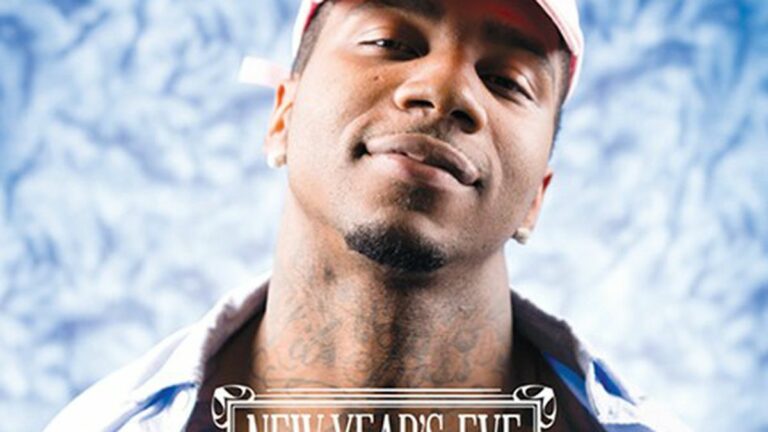
Berkeley-bred rapper Lil B has had a strange and unparalleled career trajectory that began with his first hit, “Vans,” which he released as a teenager with his group, The Pack, at the peak of the hyphy movement. After Lil B split off as a solo artist, he gained a large and loyal following for his prolific music releases, active social media presence, and “based” philosophy, which promotes peace, positivity, and compassion for all living things. While 2012 and 2013 were particularly busy years for Lil B, during which he released dozens of mixtapes and thousands of songs, he has become considerably more deliberate and methodical about putting out music. He made waves in 2014 with his Ultimate Bitch mixtape, which contained the single “No Black Person is Ugly,” a rallying cry for racial equality amid the burgeoning Black Lives Matter protests. While fans wait for Lil B’s forthcoming Thugged Out Pissed Off mixtape, they can see the Based God live at The Regency Ballroom (1300 Van Ness Ave., San Francisco) on New Year’s Eve for the Lil B & Friends show. (Turn to page 63 for our music story on Lil B, “Communing with the Based God.”) — N.V.
With its picturesque back patio and elegant, NorCal-meets-Oaxacan cuisine, Comal (2020 Shattuck Ave., Berkeley) is probably the nicest Mexican restaurant in Berkeley. All things considered, the restaurant’s annual New Year’s Eve party actually offers a decent opportunity to sample chef Matt Gandin’s food on the cheap. The $45 price of admission buys an entire night’s worth of antojitos (little street snacks) such as adobo shrimp-wild nettle quesadillas, jalapeño-requeson flautas, chorizo molotes (fried masa dumplings), and mole negro chicken wings. Booze — and plenty of it — will be sold a la carte. Make no mistake, though: This is a dance party, not a dinner party. Local DJ Jose Ruiz will spin a mix of Latin and funk, and all the tables in the dining room will be cleared out to form a massive dance floor. This year’s festivities will have a Mexican wrestling theme, with each of the first three hundred guests receiving a colorful lucha libre mask. You can snag advance tickets via Ticketfly.com. — L.T.
New Year’s Eve Comedy Fiesta: Latino Power Edition!
For the fourth year in a row, Brava Theater Center (2781 24th Street, San Francisco) will be ringing in the new year with laughs. With a lineup that boasts the region’s best Latino comics, the show is billed as the place to be on New Year’s Eve for “stand-up comedy lovers, dancing fools, feministas, radical dudes, non-binary-ballers, and progressive party animals.” Donald Trump punchlines will abound, as well as sharp witticisms that hit the politically conscious Bay Area funny bone. The night will be headlined by Lydia Popovich, the hilarious host and producer of the Layover’s monthly all female stand up showcase, Ladies Love. Popovich will also welcome special guests, including comedian Chris Storin; Los Angeles’ iconic Chicana lesbian playwright and comedian Monica Palacios; humorous storyteller Baruch Porras-Hernandez; and San Francisco Mission district native and comic Betty Pazmiño. The night will be hosted by acclaimed San Francisco comic Marga Gomez. After the show, “Brava’s Countdown Dance Party” will begin, climaxing in free champagne, refreshments, and party favors. — S.B.
Lil B & Friends will be play The Regency Ballroom on December 31.
Credits: Bert Johnson
La Orquestra La Moderna Tradición
Folks looking to dance the last night of the year away will find La Peña Cultural Center (3105 Shattuck Ave., Berkeley) a good place to spend New Year’s Eve. This year, eleven-piece Afro-Cuban band La Orchestra la Moderna Tradición will be drawing dancers out onto the floor with irresistible rhythms that hark back to the Havana social clubs of the 1950s. Woodwinds, violins, and horns weave together for a jazzy, big-band swing sound while lead singer Eduardo Herrera’s voice sails above the layered Latin rhythms. The group, which formed in 1996, has toured from Alaska to El Paso and abroad, performing at the Lincoln Center in New York, the Smithsonian Institute, the San Francisco Jazz Festival, and the Telluride Jazz Festival, among others. — E.B.
Traditionally, New Year’s Eve is the time of year when restaurants offer a big blowout prix-fixe meal. So it’s refreshing to see at least one restaurant, Uptown Oakland’s Kingston 11 (2270 Telegraph Ave.), going the opposite route. Instead of a prix-fixe, the Jamaican eatery will offer a truncated version of its regular food menu that includes options for vegetarians, all at a slightly reduced price — maybe a 15 percent discount, chef Nigel Jones said. At around 10 p.m., the staff will clear out the tables and Ryan the Operator and the Shaolin Band will kick off a free reggae show. Best of all, merrymakers who stick around until the countdown to midnight can take part in a free champagne toast. — L.T.
Dec. 31, 5 p.m.–1 a.m. (dinner service until 10 p.m.), a la carte, no cover charge. Kingston11Eats.com
[image-13]
Sister Crayon, Collaj, and Hi Scores
Sacramento-to-Oakland transplants Terra Lopez and Dani Fernandez make brooding, atmospheric pop tracks with melancholic undertones as Sister Crayon. Lopez, the duo’s vocalist, started the group as a solo folk project that put her poetry to acoustic guitar. She took Sister Crayon in a dark, electronic direction after she met Fernandez when Fernandez came to her house to buy her mixer. Since that fateful meeting, the two musicians have put out several releases, including their recent Devoted, which juxtaposes Fernandez’ moody, sparse beats with Lopez’ architectural vocal arrangements. Sister Crayon performs on December 30 at Rickshaw Stop (155 Fell St., San Francisco) with Hi Scores, a duo composed of producer Jason Stinnett of the now-defunct hip-hop group Hottub and Janaysa Lambert of the indie pop trio Mortar & Pestle. Hi Scores combines four-to-the-floor, analog house production with Lambert’s soulful, emotive singing. Collaj, a singer-producer who makes laidback, bubbly electro-pop, will be joining them, as well. — N.V.
For 25 years, the New Year’s Eve Black Comedy Explosion has been bringing humor to the holidays with lineups of national talent. This year’s show, which will take place at the Paramount Theatre (2025 Broadway St., Oakland), will be an old-school comedy romp headlined by the prolific comic icon George Wallace. Joining Wallace will be comedian and actor Tommy Davidson (In Living Color); Conan writer, Black-ish actor, and Chicago comic Deon Cole; and Foxxhole radio host Speedy. The World Famous Rick & Russ Show will be spinning records and the celebrations will be punctuated by a balloon drop at midnight. Although the lineup would be even better with some female talent, spleens will still split — and there’s no place more beautiful to spend New Year’s Eve than under the vaulted ceiling of the historic Paramount. — S.B.
Reggae fans looking for somewhere to celebrate the start of the new year should head to the New Parish for its New Year’s Eve Bash, which features a solid lineup of local reggae acts. King I-Vier, a former KMEL DJ who runs several reggae parties around the Bay Area, will spin rare reggae and dancehall jams along with a crew of other DJs, including Leydis. DJ Leydis, who is also based in the Bay Area, is originally from Cuba and was a pioneering figure in the Cuban hip-hop movement. She’s also a spoken word poet and activist, and was a vocal opponent of United States’ embargo against Cuba before President Obama significantly loosened it earlier this year. Jah Yzer, a local reggae vocalist and producer originally from Miami, will also perform. There will be a champagne toast at midnight and a surprise performance by a special guest. — N.V.
Con Funk Shun
With the bass thumping and horns blaring, Con Funk Shun will bring a bit of the 1970s funk and soul era to the Historic BAL Theatre (14808 East 14th St., San Leandro) for a return New Year’s Eve performance. The seven-member band is known equally for its velvety smooth ballads and brassy party anthems. Originally formed in Vallejo under the moniker “Project Soul,” Con Funk Shun earned its stage chops as the backup band for Stax Records artists, The Soul Children. Three years after releasing its first album in 1973, the group was signed to Mercury Records and proceeded to release another ten albums over the next decade, at least four of which went gold. But disputes between members led to the band’s dissolution in 1986. Songwriter and vocalist Felton Pilate went on to be the in-house record producer and songwriter for M.C. Hammer. Rhythm guitarist and lead vocalist Michael Cooper also had a successful run as a solo artist, with several hit songs. The group got back together in 1993 and continue to tour and produce new music. Their high-energy, choreographed show — with high kicks and quick spins between back beats — makes it hard to stay off the dance floor. — E.B.
If you’d like your New Year’s Eve celebration to have an upscale Aztec slant, Calavera (2237 Broadway, Oakland) will serve a special New Year’s Eve feast dedicated to “the Aztec blood moon.” A local DJ (to be announced) who will get a rollicking dance party started at 10:30 p.m., but the focus here is on craft cocktails and good food. In fact, Calavera’s a la carte menu might just be the swankiest food-centric New Year’s Eve option in town, with $13–$21 specialty cocktails (including one mezcal-based concoction, the New Moon, whose ingredients include foie gras and a mysterious “golden ice moon”), a $68 steak for two, and $24 tacos that feature sturgeon caviar and marrow-poached lobster. — L.T.
Dec. 31, 5:30–2 a.m. (last seating for dinner at 11 p.m.), a la carte. CalaveraOakland.com
[image-15]
Light On! Kwanzaa
For many people, New Year’s Eve is a time of retrospection, an opportunity to look back over the past year and reflect on personal progress and setbacks. In that vein, but with a more community-oriented focus, the Oakland Public Library is inviting residents to its West Oakland branch (1801 Adeline St.) to celebrate the fifth day of Kwanzaa, which is dedicated to the principle Nia, or purpose. According to Kwanzaa principles, this day is dedicated to making the collective vocation that of building and developing community. The Oakland Public Library will host a candle-lighting ceremony, including the naming of African ancestors, and presenters will discuss the symbols and principles of Kwanzaa. Attendees will also receive a short historical story and share in rhythms and songs. — E.B.
New Year’s Eve elicits expectations of grandeur that can be stressful — as if every day lived that year didn’t count if the last one doesn’t trump them all. If you’re seeking such a mind-bendingly extravagant night, New Bohemia NYE will calm your anxieties. Held annually inside San Francisco’s historic Armory building (1800 Mission St.), past years looked like a mix between Burning Man, Las Vegas’ Electric Daisy Carnival, and a sexy vaudeville circus show. The sprawling party will feature four stages, headlined by British DJ duo Stanton Warriors, Dutch-American producer The Scumfrog, London-based tech-funk producer Meat Katie, and also London-based DJ Ben Coda. The Vau de Vire Society will be providing acrobatic theatrics while ten other DJs fill every corner of the festival with pounding bass. Past years have boasted massive luminescent sculptures, industrial playscapes, a forest of lasers, and combinations of the three that can only be described as fantastical large-scale art. But of course, tickets don’t come cheap. They range from $70 for general admission to $175 for VIP access to an entire private floor of festivities. — S.B.
The virtuosic electronic compositions of Steven Ellison, aka Flying Lotus, deftly blend elements of hip-hop, jazz, and noise, so it should be no surprise that he is the grand-nephew of famed jazz pianist Alice Coltrane. Though his instruments of choice are a laptop and drum machine, Ellison’s production utilizes nuanced melodies and challenging rhythm structures that evoke his family’s boundary-pushing contributions to music in the 20th century. Flying Lotus’ experimental edge makes him appeal to hip-hop heads and niche, electronic music fans alike. While his 2012 album, Cosomogramma, was glitchy and frantic with a digitized sonic palette, his latest release, You’re Dead!, has a more nostalgic, analog feel with an emphasis on jazz percussion and psychedelic electric guitar instrumentals. Kendrick Lamar and Snoop Dogg lend vocals to the album. (And Flying Lotus has production credits on Lamar’s landmark release, To Pimp a Butterfly.) He performs at 1015 Folsom (1015 Folsom St., San Francisco) on New Year’s Eve with Thundercat — a bassist, vocalist, and his frequent collaborator — and Clams Casino, another producer of ambient instrumentals with hip-hop roots. — N.V.
Lil B & Friends will be play The Regency Ballroom on December 31.
Credits: Bert Johnson
Patti Smith & Her Band, ‘Horses’ Tour
Forty years ago, 28-year-old Patti Smith released the album, Horses, lending a poet’s sensibility to the fury of the New York City punk rock movement. To celebrate the album’s anniversary, she’s taking the record on tour, playing it in its entirety across Europe and the United States, including over three nights at The Fillmore (1805 Geary Blvd.) in San Francisco. Often called the “godmother of punk rock,” Smith’s Horses left an indelible mark on the emerging genre while simultaneously carving out a path for women in rock music. Smith described it in a 2004 interview with National Public Radio as “three-chord rock merged with the power of words.” Her voice on the album can at times be soft and pleading. But more often, it rises to booming timbres, careens and expands, stretching to the point of breaking. In video recordings of her early performances of the album, Smith trains her steely gaze beyond the audience, infusing the songs with a kinetic, almost frenzied energy. Since the album’s debut, the Punk Poet Laureate has released ten more albums, written two memoirs — including Just Kids, which won the National Book Award in 2010 — and was inducted into the Rock and Roll Hall of Fame. Now 68 years old (she’ll celebrate her 69th birthday on Dec. 30), it’s hard to know when another opportunity to see the songstress live will again come around. — E.B.
Dec. 29 & 30 at 7 p.m., $39.50 or Dec. 31 at 8 p.m., $75. TheFillmore.com
Hoppin’ John at FuseBOX
For another low-key alternative to your typical oysters-and-champagne evening, let me kindly direct your attention to West Oakland’s FuseBOX (2311 Magnolia St.), one of many wonderful East Bay restaurants that simply plan to serve their usual Thursday night menu this New Year’s Eve. Which isn’t to say that Ellen Sebastian Chang and Sunhui Chang, the owners of this tiny dynamo of a Korean restaurant, won’t have any surprises up their sleeve: Every dinner guest will receive a complimentary bite of Hoppin’ John, a peas and rice dish that’s traditionally eaten in the American South to bring prosperity in the new year. When Sebastian Chang was a kid, her mother would put a new penny in the pot, and whoever got the coin in his or her bowl would get an extra helping of good fortune. FuseBOX’s Hoppin’ John will be penny-free, but the sentiment still holds. With all the grim news the world has suffered in the past year, couldn’t we all use some good luck in 2016? — L.T.
The Uptown and Hubba Hubba Revue’s New Year’s Eve Bash
After shutting its doors last November, the Uptown nightclub and its neon guitar signage have sat unused down the street from the Fox Theater (1938 Telegraph Ave., Oakland). But on New Year’s Eve, the club will come alight once again — complete with nipple tassels. The grand reopening party will also be a turn-of-the-year burlesque bash featuring a long lineup of scantily costumed dancers including those from San Francisco’s famously elaborate and Hubba Hubba Revue. Audiences can expect pin-up bombshells offering variety-show-style antics more engaging than a simple striptease. Hosts will be Kingfish, Alexa von Kickinface, and Maggie Motorboat — the names themselves are enough introduction. Plus, Lee Pression and the Nails will be bringing its sinister swing music to the night, so there will be no shortage of dancing. If you’re looking for a throwback event with sharp, retro style for ringing in the new, then the $20 entry ($25 at the door) will be worth it. — S.B.
Shannon and the Clams has long been a fixture of Oakland’s rock scene, and its garage-pop tunes are rife with nostalgia for the doo-wop harmonies of Sixties girl groups and warbled surf guitar licks of the Beach Boys. The trio incorporates these influences into its music through a grittier, more punk-influenced filter: Its distorted instrumentation and Shannon Shaw’s robust, guttural vocals lend its music a darker edge. Earlier this year, Shannon and the Clams released its fourth album, Gone by the Dawn, which critics lauded for its savvy use of retro sounds to cobble together a novel aesthetic. Cody Blanchard’s guitar playing on the album has a noticeable Americana influence, though it often evolves vintage-sounding, country-western arrangements into psychedelic instrumentation that adds an experimental dimension to the record. Before they head on a national tour, Shannon and the Clams will ring in 2016 at Great American Music Hall (859 O’Farrell St., San Francisco) with the influential San Francisco pop four-piece Sonny and the Sunsets. — N.V.
Correction: The original version of this report misstated the date for the event, “Light On! Kwanzaa.” It is December 30, not 31. It also incorrectly stated that food would be included with the ticket price for La Orchestra la Moderna Tradición’s performance at La Peña Cultural Center. Food will be available for purchase from Los Cilantros, which is located in the center’s adjacent cafe space.
Highsmith, Haynes, Blanchett. For moviegoers of a certain contrarian disposition, those three names attached to an upcoming film are all they need to know to anticipate a rewarding time in the dark.
First and foremost is Patricia Highsmith, the sublimely unhappy author of the Ripley series, Strangers on a Train, The Cry of the Owl, and numerous other downbeat literary properties turned into suspenseful films. Indie writer-director Todd Haynes has specialized in melodramatic explorations of sexual-cultural role-playing, including Far from Heaven, the Bob Dylan tribute I’m Not There, and the TV mini-series remake of Mildred Pierce. His early short Superstar: The Karen Carpenter Story, a hysterically “tragic” celebrity bio using Barbie dolls as actors, remains a cult classic. Meanwhile actress Cate Blanchett, a veteran of various Highsmith and Haynes projects, is probably the movie world’s most compelling portrayer of histrionically agitated characters.
Rooney Mara (L) and Cate Blanchett star in Carol.
Rooney Mara (L) and Cate Blanchett star in Carol.
Haynes’ new release Carol, a twisted soap opera for urban cineastes, unites all three of these combustible creative personalities. And if it’s not exactly the triumph it intends to be, at least it gives us discreet samples of the emotional turmoil and careless carnality many of us crave at this time of year, while other audiences are filing into multiplexes in search of reassuring romances and animated bedtime stories.
In the prim 1950s, in a meticulously staged Manhattan, shy, unfulfilled Therese Belivet works as a retail clerk in Frankenberg’s department store, selling toys to distracted housewives during the Christmas season. Dark-haired, wide-eyed Therese, as played by Rooney Mara, belongs to the same meek and mousey sorority as the young Audrey Hepburn (whom she closely resembles), in that all she needs in order to blossom into full radiance is to fall in love.
She does, in a way. Therese is spotted in the store by Carol Aird (Blanchett), a sophisticated suburban matron with a rich husband she hates (Kyle Chandler) and a jaded eye for unspoiled innocence. If Mara’s Therese is a virginal Hepburnian nymph, the bitter, vulpine Carol assumes the Lauren Bacall part, circa 1950’s Young Man with a Horn. Carol absent-mindedly purchases an electric train from Therese, but the ride she really wants to take with her new friend is a road trip to the deepest Midwest, where no one knows them. Before long they’re both in “morality clause” territory, the same general Eisenhower-era bind Haynes visited in Far from Heaven. The Squaresville Fifties doesn’t understand two women, one of them a respectable wife and mother, playing footsies in motel rooms. Therese doesn’t really grasp her admirer, either. The only person who knows exactly what she wants is Carol.
Blanchett and Mara fit their parts well. The paneled cocktail lounges, the Billie Holiday records, Therese’s movie critic boyfriend (John Magaro), short cigarettes, Carol’s confidante/servant Abby (Sarah Paulson); Therese’s flair for photography (she might turn out to be Vivian Maier!) — Haynes’ vision of the era captures the repressed sensuality as well as the open hostility. But we don’t get much satisfaction out of witnessing this particular Highsmith predator closing in for the kill. The blood runs cold. Even their orgasms are smothered.
There have been better Patricia Highsmith fictions. There have been better Todd Haynes movies. There have been better Cate Blanchett roles. There probably have not been any better Rooney Mara acting jobs — we finally “get” her, just in time for her appearance in the new Terence Malick. Final score: 3-1. Carol loses.
Fans of classic 20th century Hollywood, British, and French films could easily spend the entire winter holiday season cooped up watching old Alfred Hitchcock and François Truffaut home videos and be perfectly satisfied. But the time comes when we want to learn more about these two filmmakers, to suss out their philosophies and working methods. That’s where Hitchcock, subtitled “A Definitive Study of Alfred Hitchcock by Francois Truffaut,” comes in handy.
First published in 1966 and now available in various print and e-editions (an original hardcover sells for more than $1,000), Truffaut’s endlessly influential book examines every film Hitchcock directed in chronological order — redacted from a marathon week-long interview session between the two men, in a bungalow on the Universal lot in 1962. For Truffaut, the Hitchcock Q&A was just as important as one of his own films and required just as much preparation.
For François Truffaut, the Alfred Hitchcock Q&A was just as important as one of his own films and required just as much preparation.
For François Truffaut, the Alfred Hitchcock Q&A was just as important as one of his own films and required just as much preparation.
However, fans no longer have to rely on turning the pages. Filmmaker Kent Jones’ new documentary Hitchcock/Truffaut essentially covers the same ground as the book, with the added attraction of period footage shot during the interview plus a glorious cavalcade of clips and stills from both directors’ films. The result is something movie lovers will want to return to again and again.
Another thing the doc has over the book is a gallery of testimonials by such modern-day film people as David Fincher (“What I love about Vertigo is that it’s so perverted”); Arnaud Desplechin (“He’s fascinated by what terrifies him, until there is no longer a difference between what makes him tremble with fear, or quiver with love”); Kiyoshi Kurosawa (on the “kiss” in Notorious: “A perfectly demonic shot, no matter how many times you watch it”); and Richard Linklater (“I imagine he just sat alone and these images came to him, and he never questioned it”).
But as usual, Hitch himself is the star of the show. Above all, he remains an enormously appealing personality. Any excuse will do to gaze at a Hitchcock proposition. “I’m never satisfied with the ordinary,” he explains. “I don’t do well with the ordinary.” Take Hitchcock/Truffaut to bed on a winter’s night — all that stress and anxiety is good for you. If the images give you colorful dreams, so much the better. Proclaims the Master of Suspense: “Logic is dull.”
Sonya Rapoport was ahead of her time. She was one of the first women to earn a master’s degree in painting, which she received form UC Berkeley in 1949. And from there she delved into experimentation with early digital media, creating interactive installations that used computer programs to gather and reconfigure data — often integrating emotion and computing in a manner commonplace today but unheard of at the time. She is now remembered for a 66-year-long career of conceptual work that coopted scientific language to relay feminist critiques. The solo show Sonya Rapoport: Final Works culminates Krowswork’s year-long experimental residency program. The artist was nearly finished creating new work for the show when she died at the age of 91 this past June. Rapoport knew her time was limited, and her last two projects, “Yes or No” and “The Transitive Property of Equality,” reflect on her lengthy career with parting observations. The show also includes an interactive installation that Rapoport designed in collaboration with her assistant, artist Farley Gwazda. The piece collects reactions related to the work in the show and records them in a “holographic database.” Final Works is a fascinating retrospective with a rare, personal tone.
Aries (March 21–April 19): “Happiness sneaks through a door you didn’t know that you left open,” said actor John Barrymore. I hope you’ve left open a lot of those doors, Aries. The more there are, the happier you will be. This is the week of all weeks when joy, pleasure, and even zany bliss are likely to find their ways into your life from unexpected sources and unanticipated directions. If you’re lucky, you also have a few forgotten cracks and neglected gaps where fierce delights and crisp wonders can come wandering in.
Taurus (April 20–May 20): What state of mind do you desire the most? What is the quality of being that you aspire to inhabit more and more as you grow older? Maybe it’s the feeling of being deeply appreciated, or the ability to see things as they really are, or an intuitive wisdom about how to cultivate vibrant relationships. I invite you to set an intention to cultivate this singular experience with all your passion and ingenuity. The time is right. Make a pact with yourself.
Gemini (May 21–June 20): Like Metallica jamming with Nicki Minaj and Death Cab for Cutie on a passage from Mozart’s opera The Magic Flute, you are redefining the meanings of the words “hybrid,” “amalgam,” and “hodgepodge.” You’re mixing metaphors with panache. You’re building bridges with cheeky verve. Some of your blends are messy mishmashes, but more often they are synergistic successes. With the power granted to me by the gods of mixing and matching, I hereby authorize you to keep splurging on the urge to merge. This is your special time to experiment with the magic of combining things that have rarely or never been combined.
Cancer (June 21–July 22): I hope you can figure out the difference between the fake cure and the real cure. And once you know which is which, I hope you will do the right thing rather than the sentimental thing. For best results, keep these considerations in mind: The fake cure may taste sweeter than the real one. It may also be better packaged and more alluringly promoted. In fact, the only advantage the real cure may have over the fake one is that it will actually work to heal you.
Leo (July 23–Aug. 22): There’s a sinuous, serpentine quality about you these days. It’s as if you are the elegant and crafty hero of an epic myth set in the ancient future. You are sweeter and saucier than usual, edgier and more extravagantly emotive. You are somehow both a repository of tantalizing secrets and a fount of arousing revelations. As I meditate on the magic you embody, I am reminded of a passage from Laini Taylor’s fantasy novel Daughter of Smoke & Bone: “She tastes like nectar and salt. Nectar and salt and apples. Pollen and stars and hinges. She tastes like fairy tales. Swan maiden at midnight. Cream on the tip of a fox’s tongue. She tastes like hope.”
Virgo (Aug. 23–Sept. 22): I bought an old horoscope book at a garage sale for 25 cents. The cover was missing and some pages were water-damaged, so parts of it were hard to decipher. But the following passage jumped out at me: “In romantic matters, Virgos initially tend to be cool, even standoffish. Their perfectionism may interfere with their ability to follow through on promising beginnings. But if they ever allow themselves to relax and go further, they will eventually ignite. And then, watch out! Their passion will generate intense heat and light.” I suspect that this description may apply to you in the coming weeks. Let’s hope you will trust your intuition about which possibilities warrant your caution and which deserve your opening.
Libra (Sept. 23–Oct. 22): “The secret of being a bore is to tell everything,” said French writer Voltaire. I agree, and add these thoughts: To tell everything also tempts you to wrongly imagine that you have everything completely figured out. Furthermore, it may compromise your leverage in dicey situations where other people are using information as a weapon. So the moral of the current story is this: Don’t tell everything! I realize this could be hard, since you are a good talker these days; your ability to express yourself is at a peak. So what should you do? Whenever you speak, aim for quality over quantity. And always weave in a bit of mystery.
Scorpio (Oct. 23–Nov. 21): Ducks are the most unflappable creatures I know. Cats are often regarded as the top practitioners of the “I don’t give a fuck” attitude, but I think ducks outshine them. When domestic felines exhibit their classic aloofness, there’s sometimes a subtext of annoyance or contempt. But ducks are consistently as imperturbable as Zen masters. Right now, as I gaze out my office window, I’m watching five of them swim calmly, with easygoing nonchalance, against the swift current of the creek in the torrential rain. I invite you to be like ducks in the coming days. Now is an excellent time to practice the high art of truly not giving a fuck.
Sagittarius (Nov. 22–Dec. 21): My old friend Jeff started working at a gambling casino in Atlantic City. “You’ve gone over to the dark side!” I kidded. He acknowledged that ninety percent of the casino’s visitors lose money gambling. On the bright side, he said, 95 percent of them leave happy. I don’t encourage you to do this kind of gambling in the near future, Sagittarius. It’s true that you will be riding a lucky streak. But smarter, surer risks will be a better way to channel your good fortune. So here’s the bottom line: In whatever way you choose to bet or speculate, don’t let your lively spirits trick you into relying on pure impulsiveness. Do the research. Perform your due diligence. It’s not enough just to be entertained. The goal is to both have fun and be successful.
Capricorn (Dec. 22–Jan. 19): Ancient Greek philosopher Epicurus was a pioneer thinker whose ideas helped pave the way for the development of science. Believe nothing, he taught, unless you can evaluate it through your personal observation and logical analysis. Using this admirable approach, he determined that the size of our sun is about two feet in diameter. I’m guessing that you have made comparable misestimates about at least two facts of life, Capricorn. They seem quite reasonable but are very wrong. The good news is that you will soon be relieved of those mistakes. After some initial disruption, you will feel liberated.
Aquarius (Jan. 20–Feb. 18): Aquarian inventor Thomas Edison owned 1,093 patents. Nicknamed “The Wizard of Menlo Park,” he devised the first practical electrical light bulb, the movie camera, the alkaline storage battery, and many more useful things. The creation he loved best was the phonograph. It was the first machine in history that could record and reproduce sound. Edison bragged that no one else had ever made such a wonderful instrument. It was “absolutely original.” I bring this to your attention, Aquarius, because I think you’re due for an outbreak of absolute originality. What are the most unique gifts you have to offer? In addition to those you already know about, new ones may be ready to emerge.
Pisces (Feb. 19–March 20): Here’s an experiment that makes good astrological sense for you to try in the coming weeks. Whenever you feel a tinge of frustration, immediately say, “I am an irrepressible source of power and freedom and love.” Anytime you notice a trace of inadequacy rising up in you, or a touch of blame, or a taste of anger, declare, “I am an irresistible magnet for power and freedom and love.” If you’re bothered by a mistake you made, or a flash of ignorance expressed by another person, or a maddening glitch in the flow of the life force, stop what you’re doing, interrupt the irritation, and proclaim, “I am awash in power and freedom and love.”
Chris Weidenbach, co-chair of the English Department at Laney College, frequently sees students placed in inappropriate classes their first year. Before they enroll in courses at the community college in Oakland, students take a placement exam designed to determine English proficiency. But because the test lacks a writing portion — it only includes a multiple-choice reading comprehension section and a basic grammar assessment — students wind up in advanced courses that are too difficult for them, said Weidenbach. These students, often non-native English speakers, struggle to keep up and can slow down a higher-level class, he said. At the same time, some strong writers who aren’t good at multiple-choice questions occasionally end up in courses that are too easy. “We have no confidence in the existing assessment tool,” said Weidenbach, who is also chair of the college’s professional development committee.
In 2014, when Laney administrators asked instructors to submit proposals for projects targeting academic innovation, Weidenbach wrote a plan to add a diagnostic essay to the assessment. The costs would be minimal — mainly just to cover extra staff time for grading the essays — but the benefits could be huge: helping students get on the right track with their first-year English classes. “It’d be more accurate,” he said.
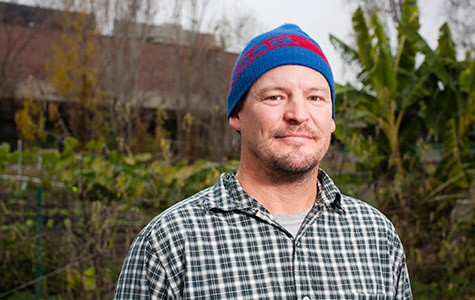
Chris Weidenbach, co-chair of Laney College’s English Department, hasn’t received funding for a proposed project to improve academics — even though there is available parcel tax money set aside for projects.
Credits: Bert Johnson
Chris Weidenbach, co-chair of Laney College’s English Department, hasn’t received funding for a proposed project to improve academics — even though there is available parcel tax money set aside for projects.
Credits: Bert Johnson
But a year-and-a-half after Weidenbach submitted his proposal, the college has not provided funding for his plan or reformed the assessments, he said. His June 2014 proposal, a copy of which he provided to me, sought financing through the college’s “Student Success” program, which is funded by a parcel tax called Measure B. In June 2012, 73 percent of Alameda County voters approved Measure B, a $48-per-year tax aimed at raising roughly $8 million annually for educational programs at the Peralta Community College District. The district, which in recent years has been hit hard by state budget cuts, includes Laney and Merritt colleges in Oakland, Berkeley City College, and College of Alameda.
At Laney, however, faculty and staff have recently raised a number of concerns about Measure B allocations — specifically questioning why, across the district, administrators have failed to spend millions in tax revenues. Financial documents show that, starting with the 2013–14 budget, the district has maintained a sizable Measure B surplus. As such, the colleges have not taken advantage of all available funding for students, a fact that instructors said was especially frustrating considering how cash-strapped the district is and considering that faculty members have put forward specific proposals — like Weidenbach’s assessment plan — that are ready to be implemented. In interviews for this report, Peralta and Laney administrators said critics were mischaracterizing the budgets.
“All of this money is supposed to be used to increase the levels of student success,” said Cynthia Mahabir, a Laney College sociology instructor and representative of the Peralta Federation of Teachers (PFT), the union for district faculty members. “But student services are not being provided … and there’s money that’s just not being used.”
The district’s budget reports show that in fiscal year 2012–13, the first year the county collected Measure B taxes, the district received $7.7 million total. The district, however, only spent $5.5 million of the funding that year — primarily on the salaries of part-time instructors and other staff and on various supplies and equipment. By the end of fiscal year 2013–14, the surplus had grown from $2.2 million to $2.6 million. And an October Measure B report stated that at the end of the 2014–15 fiscal year, the district still had $1.8 million in unspent funds. It’s unclear how much Measure B funding the colleges are spending this current fiscal year. But critics said it seems clear that, even though new parcel tax revenues are coming in each year, the colleges continue to sit on millions of dollars that instructors could be using for essential student services.
“We’ve got the money, but it isn’t being spent,” said James Blake, former president of Laney College’s Classified Senate, the governing body that represents a wide range of non-faculty staff. “There is no accountability.”
In the three years prior to the passage of Measure B, the district lost roughly $30 million in state funding due to budget cuts. The parcel tax was aimed in large part to help fill that gap and restore some basic instructor, staff, and equipment funding. In 2014, the district also set aside some of the Measure B money for a program it called Peralta Accountability for Student Success (PASS). PASS was designed to give instructors and college administrators an opportunity to propose and implement specific educational programs aimed at closing the achievement gap.
Records show that Laney College administrators last spring requested that instructors submit proposals for spending the Measure B money designated for PASS. But budget data suggests the college has spent very little of its total PASS allocation — a lack of spending that appears to account for a large portion of the overall unspent Measure B funds districtwide. Ronald Little, vice chancellor of finance and administration for the district, provided me data last week showing that in 2014–15, Laney College only used 27 percent of its PASS funds. It had $1 million at the start of the year and spent a mere $270,000.
Weidenbach said Laney administrators initially praised his PASS proposal to enhance English assessments, which he was hoping to implement by fall 2014. But since last year, he has received no communication as to why his plan wasn’t funded and said it remains unclear how Laney is using PASS funds. “It would just be a little bit of extra money,” he said of his plan.
The fact that Laney has not invested a significant portion of the money is all the more frustrating given that the threat of cuts still looms. In October, the college’s vice president of instruction sent an email to all department chairs (a copy of which I obtained) stating that the college needed to make cuts in the spring 2016 class schedule due to budget shortfalls: “[I]t appears that we are over budget by a significant amount in salaries for part-time faculty,” the email stated, requesting that chairs identify classes for possible cancellations.
More troubling, Laney College has failed to disclose basic information about how it has spent and plans to spend its Measure B money. In October, in response to a formal request of a Peralta deputy chancellor, officials from Berkeley City College, College of Alameda, and Merritt College all gave presentations at a district committee meeting about their various PASS programs. Laney College, however, did not provide any report or information. This inaction prompted the Laney College Faculty Senate to pass a formal resolution last month demanding that Laney’s president, Elñora Tena Webb, follow through with the district’s original request and provide a report. The other three colleges have all also published detailed PASS reports online.
“That is a failure on the part of the bureaucratic management,” said Mahabir, adding, “students are losing out.” She said there are, for example, extensive needs for increased tutoring services, noting that some of her sociology students have recently been unable to access tutors due to a lack of resources and instead have had to rely on other classmates for help. She also said many instructors lack consistent access to basic technological equipment, such as projectors. As a union rep, Mahabir has also advocated for increased resources for part-time faculty, who often struggle with a lack of institutional support and salary benefits (see “Faculty Punished for Speech?” 3/4). In addition to overhauling the English assessments, Weidenbach said the unspent PASS money could pay for more academic counselors, which could make it easier for students to navigate their studies.
In an interview, Vice Chancellor Little said the district has not spent all of its Measure B money in part because of the November 2012 passage of Proposition 30, a statewide ballot measure that provided new revenues for community colleges. Though Prop 30 and Measure B aren’t technically related to each other, the measures had similar objectives of providing funding for student services. Little said the district had not anticipated that it would receive Prop 30 funds when it wrote its first Measure B budget and as a result, had a “surplus” at the end of the first year Measure B was in place. He said the district created the PASS program as a way to invest the extra Measure B funds that went unspent. Once all the colleges spend all of their dedicated PASS money, he said, there won’t be Measure B money leftover.
Peralta spokesperson Jeffrey Heyman added that the colleges have been thoughtful in how they allocate the PASS money — instead of spending it all at once. “It’s a misnomer that it’s not being spent,” he said.
In an interview, Laney President Webb said that the Faculty Senate resolution urging her to follow through with a PASS report was unnecessary and that she intends to release a document soon. “I want to make certain that everything is accurate,” she said when asked about the delay. She further contended that Little’s financial data showing low expenditures in Laney’s PASS funds does not reflect a range of budget allocations the college has already made — even if the programs haven’t actually started. “The majority of the funds were allocated,” Webb said. She declined to comment on the English Department proposal to improve placement exams and whether the college planned to implement it.
“There’s nowhere to go to the bathroom around here,” said Rick Briscoe, who is homeless and has been living on the streets of Berkeley for about a year now. Although the city does have public restrooms, the closest ones to where Briscoe hangs out are several blocks away, which makes it difficult for him because of recent health problems. He said he’s also hesitant to leave his belongings unattended for long. “It’s not easy to pack all this stuff up — it can take forty minutes!” he said, as he pointed to his things sprawled around him on the Shattuck Avenue sidewalk.
Homeless advocates say that people like Briscoe will be deeply impacted by new measures that the Berkeley City Council recently greenlighted to deal with the city’s homeless population. The measures are designed to eliminate urinating and defecating in public parks and open spaces, and to prevent homeless people from sleeping in planters boxes for trees.
Night on the Streets Catholic Worker volunteers distribute breakfast to people living outside on Shattuck Avenue in Berkeley.
Credits: Bert Johnson
J.C. Orton.
“We want people to use the bathrooms — that’s the bottom line,” said Berkeley Councilmember Linda Maio, who backed the new measures. “If the police have to urge them to do that because they see them doing their business, then they’ll be much more likely to do it now that the language is strengthened.”
The controversy over Berkeley’s new measures has received a substantial amount of news coverage. But some experts say that what has been overlooked in the debate is the lack of access that many homeless people have to restrooms. Briscoe said that if it were not for some shopkeepers who let him use their facilities after their customers leave, he would have few choices.
“The thing that resonates with most people is that lack of toilets really leads to this global burden of disease caused by diarrhea. From the public health perspective, I think that’s the biggest issue,” said Rachel Sklar, a public health researcher at the Environmental Health Sciences Department of UC Berkeley’s School of Public Health. Sklar’s work goes beyond urban toilets, to focus on the 2.5 billion people globally who lack reliable, safe access to a bathroom, although the problem certainly isn’t limited to the developing world.
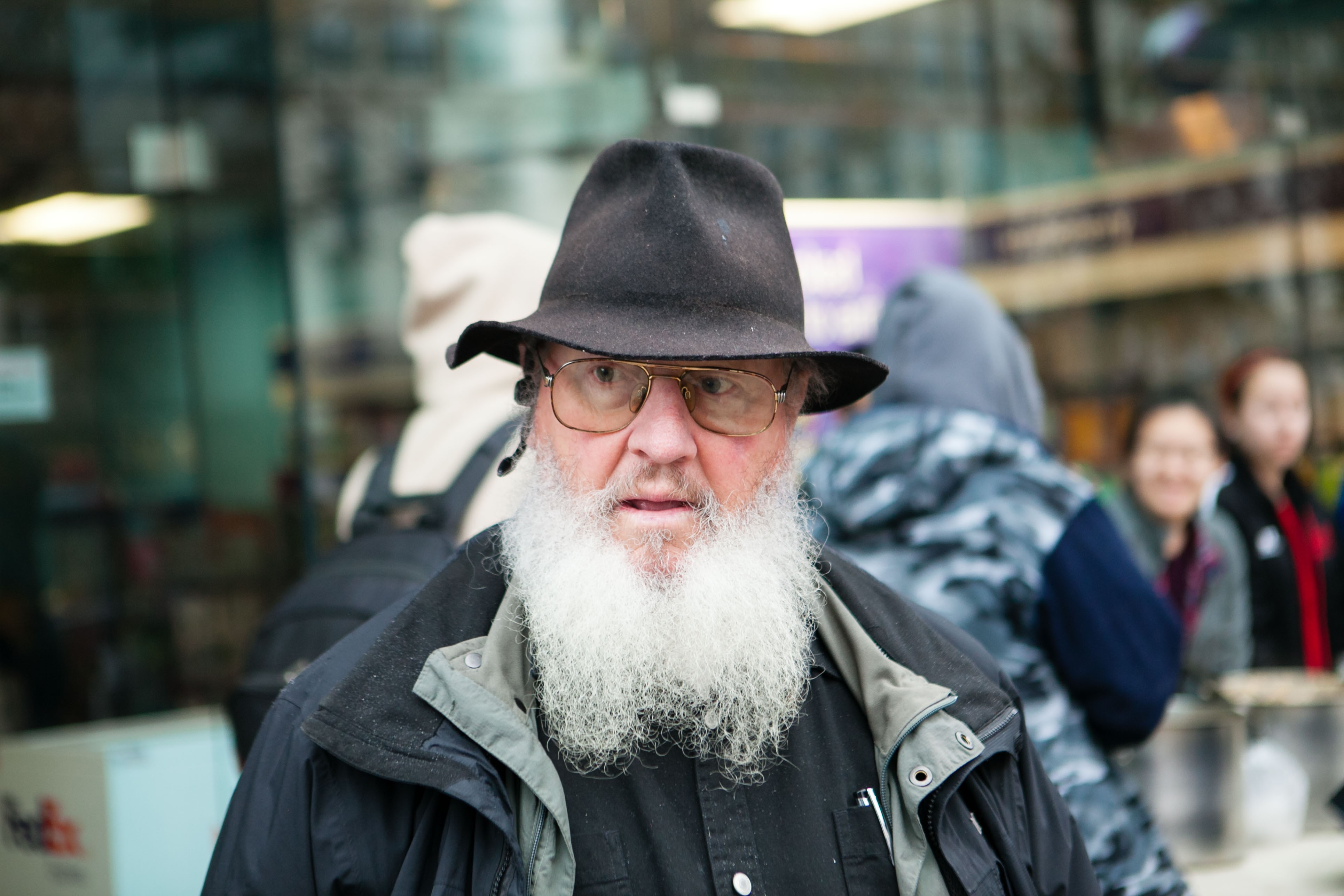
J.C. Orton of Night on the Streets Catholic Worker says the public toilets in Berkeley are “horrible.”
Credits: Bert Johnson
In the wealthy Bay Area, the scarcity of clean, safe restrooms remains a harsh reality for many people. According to the Alameda Countywide Homeless Count and Survey Report, more than 4,200 homeless persons were estimated to be living in Alameda County at the time of the last survey in 2013. Of those, about 2,300 were categorized as “unsheltered persons,” or people not housed in a shelter or transitional housing service.
Maio said the council recognizes the need for restrooms that are open around the clock, but she also pointed out the challenges with providing them. “We had a bathroom at People’s Park, which required a person to be there. It became a place where people did drugs, it was pretty horrible,” she said. She also mentioned the public toilets behind City Hall, which are closed for part of the day. “This is a bathroom in a building, and it’s closed from 10 [a.m.] to 4 [p.m.] because we found people in there during the day engaging in sexual acts. … That was not good.”
Outside a McDonald’s on Shattuck, Neil Mortensen agreed that downtown Berkeley is a challenging place to find a public restroom for homeless people like him. Recently, they seem to be even less available, and the ones that are open often have a line, he said. “I understand that they’re worried about prostitution and drugs,” he said, “but these things have been going on for years. In the meantime, we need a place to go to the bathroom!”
The council is looking into ways to meet the demand for more public restrooms. Options include keeping some public restrooms open 24 hours, adding mobile shower units, which would include restrooms, or fostering a relationship with BART. The transit agency closed its underground public restrooms after the 9/11 terrorist attacks, based on a recommendation of the US Department of Homeland Security. “The recommendation still stands. BART directors, staff, and BART police are reviewing options of reopening the closed restrooms if remodeled in a way that keeps them safe,” BART spokesperson Alicia Trost wrote in an email to me. “We want to provide a restroom, but safety is important as underground stations continue to be a threat.”
Homeless advocates say that Berkeley’s new measures won’t work without more public restrooms — and will only serve to criminalize homeless people for a problem that isn’t their fault. “The public toilets are better described as shit houses! They’re absolutely horrible,” said. J.C. Orton, who works with the Berkeley-based group, Night on the Streets Catholic Worker.
Each year, in an effort to get local high school students to think about the plight of homeless people with empathy, Orton sends out a group of students with no wallets, keys, or phones for a day and challenges them to find a toilet to use without being a paying customer. “It’s a poor, poor job that the government and private citizens and businesses have done with regards to providing access to toilet facilities,” he said. “And I don’t mean just toilet bowls and urinals, but showers, sinks — the whole bit.”
J.C. Orton of Night on the Streets Catholic Worker says the public toilets in Berkeley are “horrible.”
Credits: Bert Johnson
Orton added that the porta-potties installed by the city are unfit for use. “I suggested to people, ‘Go ahead and use the public toilet that’s over there, the porta-potty-type toilet the city puts up,'” he said. “They go in there, and say, ‘Oh I can’t do that.’ Homeless people are considered by some as second-class citizens — they’ll just make do. But this is one main problem, is that the toilets that are there, that are public, they’re absolutely horrible!”
According to the city website, Berkeley has 24 public restroom locations. The hours of availability range from 5:15 a.m. to 2 a.m., but that changes by the day of the week and by location. None are currently open continuously.
“We do have a maintenance schedule for all of them,” said city spokesperson Matthai Chakko. “If there are complaints, then we try and figure out different ways to change the maintenance schedule, or increase the maintenance schedule. We do our best, but if people have complaints, they can always let us know.”
Cost is a factor in scaling up sanitation efforts. According to estimates compiled by BART staff, installation of a street level restroom unit can cost $300,000 to $400,000, while an underground restroom could cost anywhere between $100,000 to $525,000. Continued maintenance for a street level unit could cost $30,000 each year, while an underground restroom could cost $75,000 to $100,000. “Obviously, we don’t have unlimited funds, so seeing how we can be more efficient and still meet our residents’ needs is super important,” Chakko said.
Delivery-only dispensaries have done business in the Bay Area for years alongside the more prominent brick-and-mortar dispensaries that most residents are familiar with. Due to the cap on storefront dispensary permits (currently only eight allowed in Oakland), these delivery-only services exist in a robust and fairly saturated space. But we operate in the shadows, without the protection of clear laws that are established for the brick and mortars. The City of Oakland is currently considering an increase in its number of licenses, and for the first time, a formal acknowledgement of the delivery-only market.
We urge the Oakland City Council to allow for an unlimited number of delivery-only permits, to increase accessibility for patients, allow growth of existing community-based collectives, and to capitalize on the potential tax revenue for the city. Taking this step should be part of a commonsense local regulatory plan that respects and supports the responsible cannabis businesses and benefits patients. This will help to build relationships with law enforcement, incentivize cannabis businesses to develop high-level operating standards, and enable those businesses to contribute to the city’s tax base.
As an African-American woman who bootstrapped my collective one year ago, I hope the city continues to lift barriers that limit the innovation and economic opportunities that the cannabis collectives can provide in Oakland. As an entrepreneur, I personally developed and implemented a business plan that I am living out each day. But my efforts are not without risk. Our collective works hard to serve our patients seven days a week without the benefit of angel investors, police protection, or even a clear legal framework. We are not here as a way to supplement another business — this is our primary focus, our passion, and our purpose. We are ready to be allowed to be proud of that.
We believe in cannabis culture: a culture that embraces art, music, love, and most significantly, the medically proven, healing benefits of the plant. We support the funding of cannabis research and education, and we exist to support patients who have been denied access to medicine that can profoundly improve their lives. Additionally, we encourage the opportunities for economic independence that the cannabis industry has brought for women and people of color.
Supporting patients and the canna community is our mission, not an afterthought. Many in this industry have given up careers, put their families at risk, and formed collectives despite the lack of access to funding — and all with the constant fear of everything from the inability to reenter the workforce to federal prosecution.
Permit limits encourage an unfair advantage in Oakland’s cannabis industry and stall the growth opportunities for brave new collectives. This is a critical moment for the city as it decides how to promote access to cannabis for patients, and it is a turning point for Oakland’s entrepreneurs who are ready to bring our passion, innovation, and tax revenue to the community. There is a need in the cannabis community for cautious creativity that operates without attracting unwanted attention. This careful inventiveness informs how we disseminate information to patients, the way we develop apps, hold job fairs, serve cannabis dinners, host product education events, and sponsor research.
Our patient community includes women, veterans, seniors, student athletes, working professionals, and critically ill patients who do not have access to a storefront. There has been significant growth in the number of diverse entrepreneurs ensuring that patients have access to the widest range of treatment options available. Delivery-only dispensaries provide alternative outlets for those products.
We are members of a community of like-minded collective members who support our patients and promote responsible consumption. The beauty of cannabis is not only that it heals, but it unifies. We share cannabis, we pass it, and we “gift” it to those that need it. It is our hope that Oakland’s cannabis professionals can find a way to keep that spirit alive.
Our December 2 Seven Days column, "A Missed Opportunity," misstated the month in which the San Francisco Chronicle reported that the San Francisco Police Department, under Police Chief Greg Suhr, had gotten worse in recent years when it comes to targeting people of color. It was June 2015 — not July.
Also, our December 2 music story, "Off-the-Cuff Instrumentation &...
"Family Friendly Getaways," Holiday Guide, 11/25
Here's Another Idea
Good choices. Also try camping at Hendy Woods State Park in the Anderson Valley, Mendocino. It's not too far away, and you have the entire Mendocino Coast to explore. There's also much wine tasting, most of which is still free. Good restaurants, too.
Kurt Schoeneman, Boonville
"Oakland Eyes Affordable Housing Plan in Secret," News,...
Japanese-Inspired New Year's Feast at Hopscotch
Historically, New Year's Day was always the one day a year when women in traditional Japanese households weren't required to cook. Instead, in the days leading up to January 1, housewives would prepare extravagant bento boxes — known as osechi ryori — filled...
Highsmith, Haynes, Blanchett. For moviegoers of a certain contrarian disposition, those three names attached to an upcoming film are all they need to know to anticipate a rewarding time in the dark.
First and foremost is Patricia Highsmith, the sublimely unhappy author of the Ripley series, Strangers on a Train, The Cry of the Owl, and numerous other downbeat literary...
Fans of classic 20th century Hollywood, British, and French films could easily spend the entire winter holiday season cooped up watching old Alfred Hitchcock and François Truffaut home videos and be perfectly satisfied. But the time comes when we want to learn more about these two filmmakers, to suss out their philosophies and working methods. That's where Hitchcock, subtitled...
Sonya Rapoport was ahead of her time. She was one of the first women to earn a master’s degree in painting, which she received form UC Berkeley in 1949. And from there she delved into experimentation with early digital media, creating interactive installations that used computer programs to gather and reconfigure data — often integrating emotion and computing in...
Aries (March 21–April 19): "Happiness sneaks through a door you didn't know that you left open," said actor John Barrymore. I hope you've left open a lot of those doors, Aries. The more there are, the happier you will be. This is the week of all weeks when joy, pleasure, and even zany bliss are likely to find their...
Chris Weidenbach, co-chair of the English Department at Laney College, frequently sees students placed in inappropriate classes their first year. Before they enroll in courses at the community college in Oakland, students take a placement exam designed to determine English proficiency. But because the test lacks a writing portion — it only includes a multiple-choice reading comprehension section and...
"There's nowhere to go to the bathroom around here," said Rick Briscoe, who is homeless and has been living on the streets of Berkeley for about a year now. Although the city does have public restrooms, the closest ones to where Briscoe hangs out are several blocks away, which makes it...
Delivery-only dispensaries have done business in the Bay Area for years alongside the more prominent brick-and-mortar dispensaries that most residents are familiar with. Due to the cap on storefront dispensary permits (currently only eight allowed in Oakland), these delivery-only services exist in a robust and fairly saturated space. But we operate in the shadows, without the protection of clear...