Wednesday Must Reads: Muslim Americans Attacked at Lake Chabot; Berkeley Council Okays 18-Story Housing Tower

Stories you shouldn’t miss:

1. A group of Muslim Americans who were picnicking near Lake Chabot were attacked by an angry woman who hurled racist and religious slurs at them before throwing coffee in the face of one of the picnickers, the Bay Area News Group$ reports. Part of the attack was captured on video, and in it, the woman attacker screams at the group, “You are very deceived by Satan.” The East Bay Regional Park District police are investigating the attack.

2. The Berkeley City Council approved an eighteen-story housing tower for the city’s downtown late last night, the Bay Area News Group$ reports. The mixed-use project, known as 211 Harold Way, will include 302 market-rate apartments and about 10,900 square feet of ground-floor commercial space. The developer will pay the city $17 million in community benefits, plus another $6 million in fees to the city’s affordable housing fund. The project also will include the refurbishment of the Shattuck Cinemas.

3. The San Francisco Board of Supervisors gave the final greenlight to the Golden State Warriors’ plans to build a new arena on the city’s waterfront, the Chron reports. Opponents of the project, however, plan to file suit to block it, contending that it will cause a traffic nightmare for UCSF Medical Center.


[jump] 4. The season’s first major storm is expected to bring heavy rains and high winds into the Bay Area early tomorrow, along with thunderstorms and perhaps even hail, the Chron reports.

5. FEMA officials warn that El Niño storms in California this winter could cause huge amounts of damage, including widespread flooding and mudslides, the Chron reports.

6. In an attempt to prevent another mass die off of salmon in the Sacramento River, California water officials plan to keep more water in Shasta Lake next year, the SacBee$ reports. As the Express reported last week, Chinook salmon have experienced two mass die offs in a row because water officials have failed to maintain enough cold water in the lake and have instead shipped it to Central Valley farmers.

7. California members of Congress, including Barbara Lee of Oakland, are urging state regulators to not penalize homeowners who have installed rooftop solar, the LA Times$ reports. State regulators are considering a request by PG&E to raise prices by up to 20 percent for homeowners with rooftop solar, because the utility maintains that solar users don’t pay their fair share for the electrical grid.

8. And federal Judge Thelton Henderson capped the total criminal penalty that PG&E must pay for the deadly San Bruno pipeline disaster at $562 million, the Chron$ reports. Henderson said that US Supreme Court precedent prevented him from granting a request by prosecutors to seek a fine of up to $1.1 billion against the utility.

Study: Oakland’s Housing Affordability Crisis Is the Worst Among Major US Cities

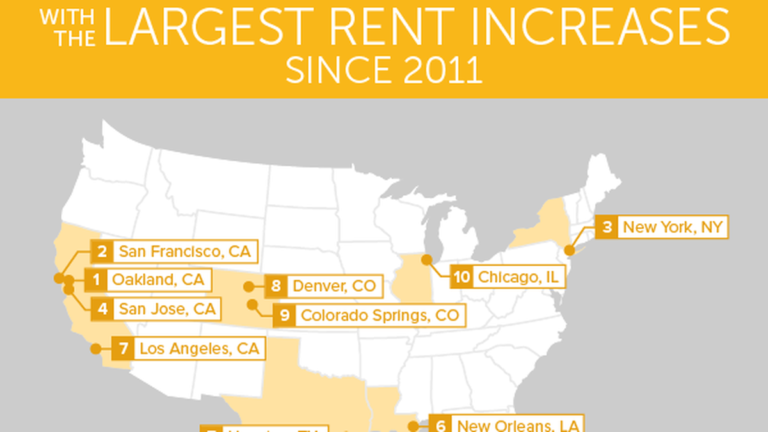
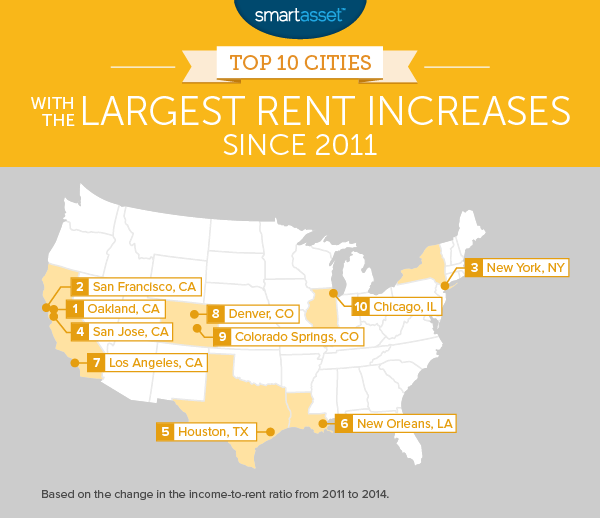
Yet another survey was published today showing that rents in big cities are rising fast. But today’s survey, conducted by SmartAsset, shows that since 2011 Oakland’s fair market rent prices have far outpaced every other big US city, and that housing affordability in Oakland is slipping out of the hands of most of its residents. If the average Oakland renter had to move tomorrow into a market-rate rental apartment, they would need to pay a staggering 70 percent of their income on rent.

[jump]

According to SmartAsset, fair market rents in Oakland have nearly doubled since 2011. But the median income earned by city residents has only increased by 11.3 percent. This means that average rent as a percent of median income increased from 44 percent in 2011 to 70 percent today. 

“No one who lives in the Bay Area will be surprised to learn that the region is becoming unaffordable more quickly than any other in the US,” wrote SmartAsset’s data editor Nick Wallace in a blogpost published today. “While incomes have increased in recent years, they have not kept pace with skyrocketing rent. This is especially true in Oakland.”

Other cities are seeing similar gaps grow between the average person’s income and rental prices, but they are much lower than Oakland. For example, in San Francisco, rent as a percent of income was 36 percent in 2011. Today it’s 48 percent. Among the fifty cities SmartAsset studied, only New York City residents pay more of their total income in rent than Oaklanders.

San Jose and Los Angeles were also in the top ten cities identified by SmartAsset that saw the biggest percent increases in rents relative to incomes.

As the Express has reported over the past several years, long-time Oakland tenants are being pushed out of the city as rents rise and landlords seek to reap windfall profits. Families are being priced out of the single-family home market by big corporate investors and big private investors who are buying houses as investments, houses which are exempt from rent control.

Oakland’s leaders have known for years about the city and region’s housing crisis, and solutions have been proposed over the past two decades, including recent efforts to adopt a basket of affordable housing policies, and more specific efforts to fund affordable housing through new fees. Oakland has made some progress, moving forward with new rules to increase density through reduced parking and promote the construction of new backyard rental units. Other policies like inclusionary zoning have been repeatedly killed by developers and their lobbyists, however. And some Oakland officials have failed to acknowledge the housing crisis.

Overall, Oakland’s leaders have yet to take action on policies that would have the biggest impact, and time is running out to shape the current economic boom in an equitable way.


Catholic Charities, Alameda County District Attorney to Create Safe Houses for Child Trafficking Victims

Alameda County District Attorney Nancy O’Malley announced a new initiative on Tuesday to create housing for child victims of trafficking and sexual exploitation. Her office is partnering with Catholic Charities of the East Bay to open up multiple local safe houses that will provide a range of services to youth who have been victimized. Catholic Charities, a local nonprofit, aims to open a first safe house, which would have capacity for twenty youth, by the end of 2016, according to O’Malley spokesperson Teresa Drenick.

The announcement comes as O’Malley’s office and elected officials in Oakland have increasingly received criticism for promoting anti-trafficking measures that critics say do little to help child victims and instead further criminalize adult sex workers — a topic I covered in a recent news story. Sex worker advocates have long argued that police, prosecutors, and city officials conflate child trafficking with consensual adult sex work through overly broad enforcement efforts that result in increased arrests and police harassment of adult women and their clients. O’Malley’s office in particular has faced pushback for its partnership with Demand Abolition, a nonprofit that advocates for the eradication of all sex work. As I outlined in my recent story, state data further shows that Alameda County has also continued the questionable tactic of arresting minors for “prostitution” even though all youth involved in sex trade are legally considered trafficking victims. 

[jump] The new housing initiative would seem to at least partially address the complaint from advocates that government officials should be more focused on providing services to vulnerable youth instead of devoting resources to arresting kids or consenting sex workers. The district attorney’s office has defended the practice of arresting minors as a last resort to help get youth off the street and away from dangerous predators. Critics say social service agencies should be leading efforts to provide housing and other services to kids — with efforts that don’t involve arrests or jail time. Drenick told me that the new safe houses will do outreach through a wide range of partners that interact with child victims of exploitation, including law enforcement, social service agencies, nonprofit groups, and medical providers.

See Also:
‘There is No Such Thing As a Child Prostitute’  
Oakland’s Threat to Sex Workers


The plan is to open four safe houses over the next five years. Catholic Charities is in the process of securing the first house, though once it does, the location will remain confidential to protect the safety of residents. “What’s unique about this is it’s not just a shelter and a bed. They will be really intensive in the services they provide,” Drenick said, noting that the safe houses would provide medical care, case management, therapy, educational support, and other services. 

Catholic Charities is currently raising funds the for the safe houses, and although the district attorney is partnering in the effort, the prosecutor’s office will not be allocating funds for the program, Drenick said. Victims of all religious affiliations will be accepted. 

O’Malley announced the initiative at a press conference this morning alongside Bishop Michael Barber of the Oakland Diocese and Chuck Fernandez, chief executive officer of Catholic Charities of the East Bay. “I am certain these efforts will become a model for all communities to work together to combat human trafficking,” O’Malley said in a statement. “To effectively put an end to this criminal enterprise, we must provide safe places for the young victims to live while they heal, recover and rebuild their lives, while regaining their sense of dignity and security. These homes will set a path for their future to be as bright as we hope for all of our children.”

Keystone 2.0

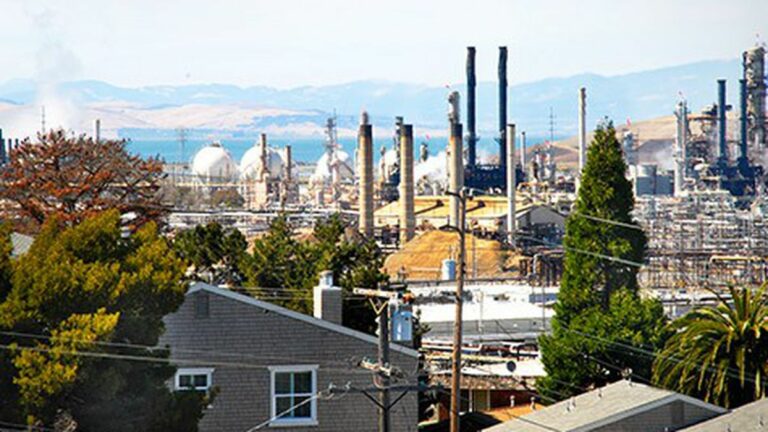
Now that President Barack Obama has blocked construction of the Keystone XL pipeline, the Bay Area has emerged as a new battleground in the struggle to keep dirty tar sands oil in the ground — a goal that scientists say is critical to avoiding a climate change catastrophe. In fact, even before the defeat of the Keystone XL, Canadian oil investors — desperate to get their landlocked crude to market — were already planning an “invasion” of tar sands oil to the West Coast, according to a report issued last spring by the Natural Resources Defense Council. And local environmentalists are concerned that this invasion will occur at refineries in the Bay Area, including three in the East Bay: the Chevron refinery in Richmond, the Phillips 66 refinery in Rodeo, and the Tesoro refinery in Martinez. Environmentalists are also worried about the Valero refinery in Benicia.

A coalition of community, labor, and environmental groups is hoping to block the invasion by convincing local regulators to establish strict regulations on pollution from these oil refineries. But staffers for the Bay Area Air Quality Management District, which is in charge of enacting such regulations, have instead put forward proposed rules for regulating refinery emissions that the coalition says are far too weak and time-consuming, and thus would in effect give the tar sands invasion a greenlight in the region.

The stakes are enormous. Refining oil from tar sands, compared to conventional crude oil, not only produces three times the amount of “greenhouse gases” that cause climate change but also much more of the pollution that makes refinery neighbors sick.

If the Bay Area can keep tar sands out, it will form another link in the “thin green line” against extra-dirty fossil fuel — tar sands oil and coal — on the West Coast. In Canada, First Nations indigenous people have so far stalled plans to build two pipelines to carry tar sands oil to the coast. And community protests defeated three projects to ship coal from ports in the state of Washington. Then last month, Canada’s new liberal prime minister, Justin Trudeau, announced a moratorium on oil shipments from northern British Columbia. In addition, earlier this fall, the City of Portland banned new oil, coal, and gas projects. Plus, East Bay residents have been fighting to keep coal out of Oakland.

Currently, cheap Saudi crude oil that has been flooding the global market is temporarily slowing tar sands sales worldwide. But a June report from the Canadian Association of Petroleum Producers said they are still planning for “a strong and growing demand for Canadian oil in Washington, California, Asia, and Europe.”

“Bay Area refineries are closest to being able to handle tar sands crude,” said Greg Karras, senior scientist for the Oakland-based Communities for a Better Environment (CBE). That’s because the region’s refineries are already geared toward refining heavy, dirty California oil, which refineries in Asia are not equipped to process. So, Karras said, the Bay Area could become “the gas station of the Pacific Rim.”

Karras contends that the current low price of crude oil is a “blip” and will not hold back the tar sands invasion for long. “When you get to the dregs of any non-renewable resource, the price is more volatile,” he noted. Some members of the Refinery Action Collaborative (RAC), the community-labor-environmental coalition fighting pollution from refineries, call their current campaign “Keystone 2.0”

For his part, Jack Broadbent, executive director of the air district, has asserted that the proposed regulations on Bay Area refineries would impose “the most stringent [pollution] reductions we believe are possible” — a claim that environmentalists strongly criticize.

The RAC, the air district, and representatives of the oil industry have been wrangling over the proposed rules for three years. The showdown was supposed to occur next week, on December 16, when the board would finally vote on the plans. But last week, after a contentious hearing lasting more than four hours, the air district decided to postpone the vote.

In that meeting, Karras charged that the proposals would cause “imminent and irreversible harm” by allowing refineries to import tar sands oil.

But Gregory Nudd, air quality program manager, said that while he agreed that the refineries’ old sources of crude oil are drying up, he said, “We don’t think that necessarily means tar sands. There’s North Dakota, Iraq … it will be based on market conditions at the time.”

But a report that CBE submitted last month to the air district cited the Canadian petroleum producers’ plans for the West Coast as well as statements from Tesoro, Valero, and Phillips 66 about their intention to use tar sands oil. Chevron owns a 20-percent interest in a major Canadian tar sands project, according to its website.

Eric Stevenson, air district director of technical projects, said in an interview that the proposed rules would be the strictest in the nation — monitoring pollution more closely and requiring refineries to meet more stringent health standards than anywhere else.

But Karras said increased pollution from tar sands oil would slip through these proposed rules. His technical studies of projects at local refineries, he said, show they’re already getting ready for tar sands crude. “This capital investment will lock in the infrastructure for tar sands for decades,” Karras added. The projects, he said, will be up and running before the process spelled out in the rules is completed.

CBE’s comments identified other problems: The regulations rely on refineries’ own reports of pollution data, and they exclude emissions from accidents or transporting fuel. In addition, some very harmful contaminants are not currently tracked, including “ultra fine particulate matter” — tiny particles that embed in lungs and organs, causing respiratory and other illnesses. And refineries can exceed limits if fixing the problem would not be “cost-effective.”

The RAC submitted its own proposal last March, calling on the air district to cap the amount of pollution at each refinery to what it is producing now. Yet despite repeated requests from air district board members, air district staffers have so far failed to submit a report analyzing this proposal.

Air district managers contend that they don’t have the legal authority to impose such caps. Basing caps on average emissions in the last three years, as CBE suggested, is “arbitrary,” said Stevenson. “There’s nothing that ties it to any air-quality standard.” Stevenson said that because refineries usually produce less pollution than their permit allows, a cap at current levels would lower the amount they could emit “without a scientific rationale.”

But CBE lawyer Roger Lin countered that “there’s no vested right to pollute. A cap based on actual emissions is a simple, cheap, and reasonable solution to the problem of higher emissions from refining lower-quality oil.” Andres Soto of CBE added, “Public health focuses on prevention. Our proposal gets at that.”

But after the November 30 meeting, the future of Bay Area refinery regulation is unclear. Broadbent convinced the board to postpone a vote, saying, “Staff wants time to further consider what we’ve heard today,” including objections from refinery representatives as well as the community coalition. He estimated that the rule on emissions monitoring would be ready for a vote in the next few months but gave no timeline for the rule on emissions limits.

“Meanwhile there are no refinery-wide limits,” said Karras after the meeting. “Are they going to propose to set them by X date or give up on them?”

Soup of the Day at Cafe Kim Thuy

You are undoubtedly familiar with the class of Asian restaurant that features a menu spanning several pages of tiny, single-spaced text and so many variations on the same handful of themes (noodles, rice bowls, barbecued meats, and so forth) that the mind reels trying to decipher what the true specialties of the house might be, and to assemble some semblance of a balanced meal.

It can be a comfort, then, to eat at a restaurant like Cafe Kim Thuy, a tiny Vietnamese lunch spot that, with a couple of exceptions, only serves a single dish each day. Here, there’s no question what the star of the show is: Soupy noodle dishes reign supreme — one for every day of the week, almost always a lesser-known regional variety. The restaurant’s very existence is the latest sign that Oakland’s Vietnamese noodle-loving populace is starting to branch out beyond pho.

Cafe Kim Thuy is a sleepy-looking place, the shades pulled down more often than not, giving the appearance that the restaurant is perpetually closed. A small indoor koi pond is the most traditionally Asian decor element, but if you’ve spent enough time at this kind of OG noodle joint, you’ll recognize many of the other accoutrements: the plethora of potted plants, the caddy of hot sauces, the absurdly large wall-mounted speakers (which, given that the restaurant closes at 5 p.m., speaks to the possibility of after-hours karaoke parties), and the YouTube video of midriff-baring Asian import models — projected onto a big flat-screen TV in a continuous loop during one of my visits.

Chances are, you haven’t come to Kim Thuy for the ambience. Or, if you’re like me and you prefer your Asian restaurants a little rough around the edges, you’ll appreciate the atmospherics of, say, the older gentleman casually smoking a cigarette at another table.

This is the kind of family business where a different auntie or cousin might wait on your table during each visit. But the heart and soul of the place is its namesake, Kim Thuy Do, the restaurant’s self-taught chef. Do grew up in Saigon (aka Ho Chi Minh City), the daughter of transplants from the northern Vietnamese city of Hanoi, and credits her mother with teaching her how to cook. That background helps explain why Cafe Kim Thuy’s menu, limited as it is to little beyond a single noodle soup for each day of the week, includes regional specialties from such a wide swath of the country. In particular, the restaurant serves a couple of Hanoi dishes I haven’t seen anywhere else in the East Bay.

If you only plan to give Cafe Kim Thuy one shot, let it be on a Friday when the restaurant serves what is both its best and hardest-to-find dish — bun cha ca, a fish ball noodle soup that has roots in Hanoi. Do’s version of the dish features slippery, spaghetti-like rice noodles and a peppery broth made by slowly simmering chicken bones and a whole fish — either a striped bass or a catfish whose meaty flesh Do later takes off the bone to serve in the bowl. The dish was topped off with fried shallots, which infused the soup with a deep earthiness, and a flurry of fresh dill — a Hanoi signature — which added an herbaceous freshness.

But the centerpieces of the bun cha ca were the tofu-like blocks of fish cake (which Do makes in-house) and the several varieties of toothsome fish balls of the sort you might buy at an Asian market for making hot pot. I was fond of the pointy-tipped ones that were shaped something like engorged Hershey’s Kisses. Do calls these “surprise fish balls.” Bite in, and you’ll discover that they’re filled with a slurry of bright-orange fish roe: a delicious surprise indeed.

On Mondays, the soup of the day is bun moc, another noodle soup from Hanoi that you’ll rarely find at Vietnamese restaurants in the United States. If the theme of the bun cha ca was fish, Kim Thuy’s bun moc is all about the pork — a pork broth, fresh pork meatballs that were studded with chopped shiitake mushroom, minced-pork balls (again, the pre-cooked kind you put in hot pot), and slices of steamed pork roll — which, pocked as they were with black peppercorns, looked something like Italian mortadella. Add to all of that a generous portion of skinny, slurpable rice noodles, and you have a decently satisfying bowl — though, in truth, the broth itself was thin and fairly bland. (This may be by design: A Vietnamese friend told me this is why bun moc tends to be especially popular among the elderly.)

On Wednesdays, the restaurant offers a very serviceable version of bun mam, the fermented fish noodle soup that hails from the Soc Trang province, near the southernmost tip of Vietnam. Cafe Kim Thuy’s bun mam was more rustic and featured a sweeter, less pungent broth than the namesake soup at nearby Bun Mam Soc Trang, my gold standard for the dish. Even though this version wasn’t as good, I was impressed by the sheer abundance of the toppings — the roast pork, catfish, shrimp, and squid. And the broth was tasty enough after I doctored it with fermented shrimp paste, adding a dose of salty umami to balance out that sweetness.

To round out the week, Cafe Kim Thuy serves bun rieu (a tomato-based noodle soup with crab-flavored meatballs) on Tuesdays, bun bo Hue (pho‘s more lemongrass-y cousin) on Thursdays, and beef stew curry noodles on Saturdays. And, although the daily soups are pretty much the whole show, there’s also a short “daily menu” with a few interesting-sounding dishes — chicken pho and a Vietnamese chicken-and-rice dish, among others. But none of these ever seemed to be available. One exception was a rice plate with Korean-style grilled short ribs, which were decent — a serviceable lunch for someone craving red meat. The standout, though, was the fried chicken wings, which were nothing like the sticky, spicy, fish sauce-heavy specimens that almost every Southeast Asian restaurant serves. Instead, these were seasoned simply with salt and pepper, with just a hint of chili heat. As plump and tender as you could hope for, each wing jiggled with little pockets of soft, delicious fat. A scattering of fried garlic added earthiness and crunch.

At the end of the day, Cafe Kim Thuy has the kind of shortcomings you might expect to find at a small, understaffed, family-run place. Service could be a little bit haphazard. Items we were told weren’t on offer during a given day turned out, lo and behold, to be available after all when we inquired about them again a few minutes later — alas, after we’d already committed to other dishes. You might have a hard time tracking someone down to settle your bill.

But there’s also a sincerity and a palpable warmth to a place like this. Especially for those of us who grew up in Asian households and had mothers (or fathers) who made this kind of food — not bun cha ca, per se, but some equivalent home-style dishes — the restaurant feels a little bit like home.

During my first visit to Cafe Kim Thuy, I didn’t realize the restaurant had yet to set up its credit card machine, and I wound up a couple dollars short. Do said I could just pay her back when I had the chance. When I promised I’d return the very next week, she smiled and said, “Good boy.” That’s the type of place this is.

A Rash of Medical Pot Bans

Two months after California regulated medical marijuana for the first time, patients and the billion-dollar industry are facing a mixed set of reactions from cities and counties around the state. Oakland and Sacramento are crafting “cannabis enterprise zones” to reap the tax windfall from ten types of newly state-licensed medical pot activities. And with the clarity of the new state rules, Marin County and the cities of Santa Cruz and Long Beach are advancing toward permitting dispensaries or other activity. The battleground city of San Diego has three licensed clubs open, and more on the way. And even the Southern California desert town of Adelanto is aiming to wean itself from its private prison tax base by becoming the cannabis mega-grow capital of the state.

But in a darker picture, patients in other areas are facing an organized, statewide effort to shut down safe access to medical marijuana this Christmas. “There’s a lot of positives and negatives,” said Nate Bradley, executive director of the California Cannabis Industry Association (CCIA).

A March 1 deadline to enact local regulations on medical pot that was included in the Medical Marijuana Regulation and Safety Act (MMRSA) has generated a rash of the most restrictive bans that California patients have ever faced. Even though the state legislature is widely expected to repeal the deadline, about 25 California cities and counties are in the process of enacting bans on marijuana activity up to and including banning the indoor cultivation of a single plant.

Just last week, medical marijuana activity bans moved forward or were enacted in Manhattan Beach, Calistoga, Santa Maria, Irvine, Arroyo Grande, Fountain Valley, and parts of the Napa Valley region. Delivery services are now banned on Catalina Island. About six new localities are joining the ban list each week. Experts say that cities have been spooked into thinking they only have until March 1 to ban all medical cannabis cultivation, or the state will ram pot farms down localities’ throats.

The League of California Cities has been holding webinars for every city attorney in the state on how they can ban any medical cannabis activity. The league will hold a physical “Informational Briefing on Medical Marijuana” — featuring police and attorneys who teach cities how to legally ban all access — on December 11 in San Luis Obispo and in Rancho Cordova on January 13.

“The March 1 deadline has been overblown,” said Hezekiah Allen, executive director of the California Growers Association (CGA). “It’s created a false sense of urgency for a lot of people. … We’re seeing some pretty poorly though-out local policy.”

MMRSA has become a windfall for law firms that make money writing medical cannabis bans and billing cities, said Sean Donahoe, a statewide cannabis lobbyist. “The localities right now are over-reacting based on misinformation,” he said.

Patient and industry groups are scrambling to counter the league in city halls and county seats. “The fight has moved from the state capitol to the local government,” said Bradley.

The CGA held two policy summits for local officials in Nevada City and Santa Cruz in December. The group is drafting model ordinances and providing a local legal framework for future local regulations.

Activist groups are also urging folks to register to vote, join groups like the Brownie Mary Democratic Clubs of California, and show up to council meetings. “The bridge needs to be built,” said Allen. “Let them see you. We’re not fighting the local government any longer or law enforcement any longer. The war is over if we let it go.”

CGA and CCIA membership enrollment has spiked to ten times above normal since MMRSA passed. “I think [MMRSA] was the catalyst. It really kicked things into high gear,” said Allen. Winning over local governments “is going to be the most challenging thing we’ve ever done, and there’s nothing we’ve ever done that’s worth more,” he added.

Donahoe said that in certain areas of the state, there’s a disconnect in terms of where voters and elected leaders are on the topic versus old-guard city staffers — especially the local city attorney, sheriff, or police chief. The easiest thing for uneducated city staffer to do is ban all activity rather than craft local regulations. By contrast, medical cannabis providers are falling over themselves to play by any and all new rules.

In the Bay Area, Eaze medical cannabis delivery and IncrediMeds edibles are touting their compliance with MMRSA rules. “We’re saying, ‘We can’t wait to be licensed,'” said Allen. “There’s a lot of enthusiasm to comply. ‘What are the rules? We’ll follow them if you won’t kick down our doors anymore? Great!’ It’s the social contract at its finest.”

Many capital insiders are saying that the March 1 deadline for cities to exert sole regulatory authority over medical cannabis cultivation activity in their jurisdiction will be rolled back. A representative from Assembly Rob Bonta’s office told a Santa Cruz crowd earlier this month that “leadership has already agreed that the March 1 deadline shall be deleted,” Donahoe said.

“I expect a lot of this freak-out that’s happening will mellow out over the next few months,” said Allen.

“It’s going to be a mixed bag,” added Bradley. “As most people start to see it working, they’re going to flip [to support access].”

One-Night Stands

Thursday, December 10

Skylight (TBA, 2015). National Theater Live (Rialto Cinemas Elmwood, Berkeley, 7:00)

Phil Ochs: There But For Fortune (96 min., 2010). (Berkeley Fellowship of Unitarian Universalists’ Hall, Berkeley, 7:00)

The Shop Around the Corner (99 min., 1940). (Rialto Cinemas Cerrito, El Cerrito, 9:30)

Bad Santa (91 min., 2003). (The New Parkway Theater, Oakland, 9:45)

Mystery Science Theater 3000 (97 min., 1988). (Parkway, 10:30)

Friday, December 11

Good Bye, Lenin! (121 min., 2003). (Berkeley Public Library, Central Branch, Oakland, 3:00)

The Wizard of Oz (102 min., 1939). Movie classics (Paramount Theatre, Oakland, 8:00)

Saturday, December 12

The Lady of the Camellias (TBA, 2015). The Bolshoi Ballet 2015-16 Season (Elmwood, 10:00 a.m.)

The Magic Flute (120 min., 2015). Metropolitan Opera Encore (AMC Bay Street 16, Emeryville, 12:55)

K2 and the Invisible Footmen (54 min., 2015). (La Pena Cultural Center, Berkeley, 3:00)

Sunday, December 13

Home Alone (103 min., 1990). (Parkway, 12:40)

Female Trouble (89 min., 1974). The Bechdel Test movie night (Parkway, 5:00)

A Gay Girl in Damascus (84 min., 2015). (Parkway, 9:20)

Tuesday, December 15

How the Grinch Stole Christmas (26 min., 1966). (Oakland Public Library, Dimond Branch, Oakland, 7:00)

In The Red (TBA, 2015). Followed by a post-film Q&A with Sean Gasciè, Dexter Harris, Wellington Jackson, and Superior Court Judge Trina Thompson (Parkway, 7:00)

Jane Eyre (TBA, 2015). National Theatre Live (Elmwood, 7:00)

Santa & The Cream Bunny (120 min., 1972). RiffTrax (Bay Street, 7:30)

Wednesday, December 16

The Nightmare Before Christmas (76 min., 1993). Bike-in movie (Oakland Public Library, Main Branch, 5:30)

The Magic Flute (120 min., 2015). Metropolitan Opera Encore (Bay Street, 6:30)

Coriolanus (TBA, 2015). National Theatre Live (Cerrito, 7:00)

Triumph of Life, Episode Three: The Eternal Arms Race (60 min., 2001). (Humanist Hall, Oakland, 7:30)

How the Kuciukai Crumbles at Mama Papa Lithuania Bakery

When Vaidas Sukys first opened Mama Papa Lithuania (1241 Park St.) in 2013, I wrote about how the quaint little restaurant in Alameda was the only Lithuanian restaurant on the entire West Coast — the only place I knew of in the Bay Area where a potato dumpling lover could throw back a couple of Svyturys lagers and munch on dark rye bread imported from a village in Lithuania.

Now, Sukys is once again on the cutting edge of the Bay Area’s Eastern European food scene: About a month ago, he opened Mama Papa Lithuania Bakery (1239 Park St.) — apparently the only full-fledged Lithuanian bakery on the West Coast — in a space formerly occupied by a barber shop, right next door to the restaurant.

Oh, you didn’t know Lithuanian baked goods were a thing? Sukys is more than happy to give a primer on the large selection of cakes and pastries that Danute Sukiene — the bakery’s namesake “mama” and, not coincidentally, Sukys’s real-life mother — cranks out each day.

The showstopper is a dessert that longtime patrons of the Mama Papa Lithuania restaurant know very well: the delicate, seven-layer honey cake known as medutis, which combines cake infused with the smoky sweetness of roasted honey with a tangy sour cream filling. As of Monday, the Mama Papa website boasted that 24,528 slices of the cake had been sold since the restaurant opened. But at the bakery, you can buy a whole cake — gorgeously decorated, and big enough to serve four to six — for a modest $20. I might just have to order one the next time my birthday rolls around.

But Mama Papa Lithuania Bakery sells all kinds of Old World treats you won’t find at any other bakery in the area — from recipes Sukiene mastered when she ran a bakery back in Lithuania. According to Sukys, the confection that catches the most eyes is something called a Boletus Mushroom, named after the mushroom species (aka the porcini) it bears a striking resemblance to — so much so, Sukys said, that customers often ask if it’s a real mushroom. These are big, iPhone 6-sized cookies made with honey dough, with “caps” that are coated with chocolate and “stems” coated with meringue. In Lithuania, these are a traditional festival treat.

“Kids would walk around, and instead of lollipops, they ate mushrooms,” Sukys said.

Meanwhile, Christmas is apparently a big deal in Lithuania, and perhaps you’re wondering if the only Lithuanian bakery in town is doing anything special for the holidays. You’re in luck: Starting this week, Sukys said, the bakery will sell the Christmas biscuits known as kuciukai for about $3 a container.

Each of these little pastries is about the size of an olive and is only lightly sweetened and flavored mainly with poppy seeds. Because consumption of dairy products is forbidden during Kucios, the traditional Lithuanian Christmas Eve dinner, the kuciukai are typically served floating in a kind of soup or “milk” made by soaking crushed poppy seeds.

You’ll have to make the poppy milk yourself. But for all your other Lithuanian pastry needs, all you need to do is head over to Alameda.

Going Global

For fans of Juhu Beach Club (5179 Telegraph Ave., Oakland), Temescal’s hot pink purveyor of fragrant Indian curries and slider-like pavs, it will come as no surprise that the wildly popular restaurant would eventually open a second location — but in Hong Kong?

That was the news chef-owner Preeti Mistry dropped on Twitter late last week: not that she was pursuing the possibility of a future project, but that Juhu Beach Club’s location in Hong Kong’s trendy Soho district was already open for business — with nary an advance peep to the Bay Area’s food press corps. It might have been the most low-key global expansion of an East Bay brand in recent memory.

Of course, the restaurant’s Asian outpost has been in the works for several months. In an email, Mistry — who is in Hong Kong this week getting the new restaurant off the ground — said her business partner and wife Ann Nadeau, who travels to Hong Kong frequently for work, felt the city’s cosmopolitan character and vibrant dining scene would make it a great fit for Juhu Beach Club.

As for the menu for the Hong Kong location, Mistry said she plans to keep it fairly similar to the Oakland original, though she might tweak spice levels to account for local preferences. She’ll offer some of the Indian-Chinese dishes she’s had success with in Oakland (the sweet-and-sour “Manchurian Cauliflower,” for instance), but that won’t be a big emphasis, and she said she definitely doesn’t plan to water down her approach.

“It’s the Indian and California influence that is really exciting to the audience in Hong Kong,” Mistry said.

Corrections for the Week of December 2

Our December 2 Seven Days column, “A Missed Opportunity,” misstated the month in which the San Francisco Chronicle reported that the San Francisco Police Department, under Police Chief Greg Suhr, had gotten worse in recent years when it comes to targeting people of color. It was June 2015 — not July.

Also, our December 2 music story, “Off-the-Cuff Instrumentation & Astral Neo-Soul,” incorrectly stated that Ghost & the City opened for The Internet at the New Parish in Oakland. It was actually at The Catalyst in Santa Cruz.

Letters for the week of November 25-December 1

“Family Friendly Getaways,” Holiday Guide, 11/25

Here’s Another Idea

Good choices. Also try camping at Hendy Woods State Park in the Anderson Valley, Mendocino. It’s not too far away, and you have the entire Mendocino Coast to explore. There’s also much wine tasting, most of which is still free. Good restaurants, too.

Kurt Schoeneman, Boonville

“Oakland Eyes Affordable Housing Plan in Secret,” News, 11/25

A Lack of Political Will

Your article points out accurately that previous policy makers in Oakland have consistently delayed and avoided an inclusionary housing ordinance. However, the one nuance to the story is that the Blue Ribbon Commission members were selected by both mayors [Jerry] Brown and [Ron] Dellums. Instead of secret meetings of invited guests only, that commission, composed of members selected by the council, held public meetings in every district in the city. In fact, there were seventeen public meetings over a four-month period to solicit comments from the community.

For the most part, the same players listed in this article were a part of that process. Jeff Levin was one of the city staff members facilitating the process and Linda Hausrath prepared the background economic analysis for the recommendations forwarded to the city council.

After the recommendations were presented in the fall of 2008, the city council did nothing. It is ironic that [ex-Councilmember] Jane Brunner would suggest in the article that the only two reasons why nothing happened was fear of discouraging development and campaign contributions. The fact is that the economic analysis of the housing market in 2008 revealed that the only neighborhoods where property values would reasonably support inclusionary fees were primarily in her district. Temescal and Rockridge were the places where, in theory, affordable housing fees would not discourage new projects. Can you imagine Brunner leading a public discussion about affordable housing being built in two of Oakland’s special white neighborhoods? Brunner did not have the will or courage to make that happen. As a result, nothing happened.

I don’t know what is going on currently in the planning department, but every time we should be hearing from the planning director about public process and policy, it seems like there are more secret meetings and Mike Ghielmetti [president of Signature Development Group] is speaking.

With the increase in citywide property values in the current housing bubble, there is no question that the time to adopt an inclusionary ordinance is now. More delays or a failure to act is not because of the lack of information. It would once again be fear and the lack of political will.

Isn’t it amazing that many cities throughout the state have addressed this issue years ago, and Oakland still somehow can’t seem to get anything done?

Gary Patton, former deputy director of Planning and Zoning for the City of Oakland, Hayward

“Goodbye, Mr. Magnus,” News, 11/25

Please Promote from Within

Awesome story about an awesome chief. Fascinating analysis that the mass departure of (incompetent) department heads during a financial crisis actually enabled a positive transformation.

I’ll miss Chief Chris Magnus more than I can say. As a fifteen-year Richmond resident, I can attest to how dramatically things changed from an often adversarial relationship with the police to an outstanding one. I hope the new chief is promoted from within so we get someone who reflects Magnus’ values.

Janis Mara, Richmond

“Market on Hold,” What The Fork, 11/25

Too Bad

It was such a great location, and the outdoor space was so special, but the kinks in the service and offerings [at Grand Fare Market] were to be expected for such an ambitious and needed facility. Oh, well.

Lydia Nayo, Oakland

Good Idea, Poor Execution

As an architect, and a retail specialist, I was disappointed but not surprised to hear of this closure. Grand Fare had absolutely no organizational logic or flow. It was completely unclear where the customer should order, what they should order, or where they should pay. Hot entrees, cold salads, cold cuts, cheese, bread, wine — choices and prices were not displayed or adequately listed on the menu. The staffing levels were off the chart (one evening I observed thirteen staffers waiting on four customers) and the hours (seven days week until 8 a.m.–10 p.m.) were unrealistically ambitious. The staffers were completely untrained and did not appear to understand their roles — for example, no one in the deli area knew how to use the meat slicer. I waited in line at the cashier for ten minutes once while the “bartender” stood by the second register and looked indifferent.

I had hoped that Grand Fare would be a wonderful addition to the neighborhood and a great resource for busy professionals who need a quick fix for dinner, more like The Pasta Shop in Rockridge. I urge the owners to carefully study the way The Pasta Shop displays their prepared foods and organizes the ordering, preparing, and cashier process — a successful process refined after many years of trial and error. It would be wonderful to see the restaurant return after some thoughtful analysis and reorganization — the customer base is definitely there.

Jessica Seaton, San Rafael

“Letters to the Future,” Feature, 11/18

Ten Reasons to Act on Climate Change

To reinforce the cogent statements regarding possible futures, here are ten reasons we all should be very concerned about climate change:

1. Science academies worldwide, 97 percent of climate scientists, and 99.9 percent of peer-reviewed papers on the issue in respected scientific journals argue that climate change is real, is largely caused by human activities, and poses great threats to humanity.

2. Every decade since the 1970s has been warmer than the previous decade, and all of the sixteen warmest years since temperature records were kept in 1880 have occurred since 1998. 2014 was the warmest year recorded and 2015 is on track to exceed it by a mile.

3. Polar icecaps and glaciers worldwide have been melting rapidly, faster than scientific projections.

4. There has been an increase in the number and severity of droughts, wildfires, storms, and floods. There seem to be stories about this almost daily on TV news.

5. California has been subjected to so many severe climate events (heat waves, droughts, wildfires, and mudslides when heavy rains occur) recently that its governor, Jerry Brown, stated that, “Humanity is on a collision course with nature.”

6. Many climates experts believe that we are close to a tipping point when climate change will spiral out of control, with disastrous consequences, unless major positive changes soon occur.

7. While climate scientists believe that 350 parts per million (ppm) of atmospheric CO2 is a threshold value for climate stability, the world reached 400 ppm in 2014, and the amount is increasing by 2–3 ppm per year.

8. While climate scientists hope that temperature increases can be limited to two degrees Celsius (3.6 degrees Fahrenheit), largely because that is the best that can be hoped for with current trends and momentum, the world is now on track for an average increase of 4–5 degrees Celsius, which would produce a world with almost unimaginably negative climate events.

9. The Pentagon and other military groups believe that climate change will increase the potential for instability, terrorism, and war by reducing access to food and clean water and by causing tens of millions of desperate refugees fleeing from droughts, wildfire, floods, storms, and other effects of climate change.

10. The conservative group ConservAmerica (ConservAmerica.org), formerly known as “Republicans for Environmental Protection,” is very concerned about climate change threats. They are working to end the denial about climate threats and the urgency of working to avert them on the part of the vast majority of Republicans, but so far with very limited success.

Richard Schwartz, New York City

“Oakland’s Sweeping Plan for Parking,” News, 10/28

It’s Not for Oakland

Parking plans of the sort suggested here have long been used in European central downtown areas for the purposes of streamlining access to parking and thus access to shopping and other urban activities. These plans can help improve the quality of the street environment by reducing noise and other pollution which results from “search traffic” (drivers repeatedly circling looking for close-by parking).

Improvements like these can make a big difference in area economic vitality but such plans cannot be viewed as revenue enhancers. In fact, such plans are invariably costly for the cities that implement them properly.

There are real and critical barriers to successful implementation of such plans in the United States, and especially in Oakland. Costs include pervasive high-quality signage to direct traffic to nearby off-street parking so that search traffic is effectively discouraged. Off-street parking, whether in lots or garages, is not free, and garages aren’t cheap to construct.

All aspects of the local area environment must be properly coordinated in a plan: Sidewalks and streets must be pedestrian- and bicycle-friendly. Public transit must be easily available.

What is most likely to happen in Oakland is that a half-baked plan will be approved by the council, which will then be inadequately funded. The net result will be that a mayor can talk about how progressive Oakland is, but life on the street won’t change a bit.

Hobart Johnson, Oakland

“Racial Profiling via Nextdoor.com,” Feature, 10/7

It’s About Class Shaming

Neighborhood message boards are being used for destructive purposes besides racial profiling, and neighbor bashing is becoming more prevalent as the downtown districts in Oakland continue to grow. “Class shaming” is the term for the anti-social behavior instigated by people who perceive themselves to be more (monetarily) “relevant” because they live in neighborhoods downtown that are now expensive. Usually these people are transplants and believe they run the “new” neighborhood.

My wife and I grew up in Oakland. When we first moved to Old Town Square (Old City) we experienced class shaming. We were approached by an odd young neighbor in the building who informed us they were a “longtime resident” and wanted to “warn us” about which neighbors we should avoid and why. The neighbor told us a slew of horrible lies about people we barely knew to turn us against them (neighbor is a child abuser, drug addict, cheating alcoholic, crazy liar, etc.) and seemed agitated that new people were moving in. We decided it was better to keep to ourselves, and the neighbor retaliated by slandering us to the neighbors so we would look like liars.

We later learned from another neighbor who was a psychiatrist, who had also had problems with this person, that the neighbor had mental illness and used message boards to hurt neighbors’ reputations. He explained that people who class shame others feel unworthy and will attack anyone, regardless of their race, because they degrade peoples’ characters and scrutinize their material wealth as a measure of their “worth” instead. They use catchphrases like “betterment of the neighborhood,” “family friendly,” or “people like them” to socially include or exclude people and divide the community. They join every neighborhood group available so they have more access to spread lies and to create sub-groups.

This neighbor enlisted other neighbors with her lies and told them to attack our family, our businesses, and anything they could based on the information she was giving them. But our children suffered the most. How do you explain to a child why adults are being bullies? Moreover, how can these people live with themselves? Our neighbors went to great lengths, even to the point of nearly breaking the law, to try and make us move. Those neighbors who harassed us are now under investigation for related issues, but the neighborhood has noticeably suffered. Attacking your neighbors only tears communities apart, it doesn’t make them stronger. And it makes shamers look stupid. Put that message on your board.

John Tam, Oakland

Berkeley Nextdoor Is for Racists

I recently resigned my Berkeley Nextdoor registration because the site “leads” are conservative and racist, and they censor comments simply because they disagree with the comments.

Recently, I read a post on Nextdoor about a homeless friend of mine. This guy is very well known in downtown Berkeley and, for real, gets along well with the Berkeley Police Department. He does the landscaping for police headquarters!! But the censors allowed someone to accuse this sweet, harmless but apparently mentally ill person of being a heroin addict (he is not a heroin addict), accused him of violence (he is as gentle as a lamb and actually fears being assaulted himself), and of being a thief who “steals” garbage. Substitute the n-word for homeless and you will see how grossly unacceptable it is to write about a recognizable human being and accuse that person of being a heroin addict, violent, and a criminal. But on Nextdoor, they let that comment stay up and they censored people who defended their homeless friend. It is not okay to grossly malign a homeless person, as if they don’t count as a human or as a citizen with civil rights.

Nextdoor chooses strange community “leads” who have total power to censor opinions, and they seem to censor them when they simply disagree with an opinion.

I wish the Express would do a story about the racist “suspicions” that are steadily posted on Nextdoor. If you go by Nextdoor in Berkeley, all crime is done by Black people.

Another time I got censored — some Nextdoor regular was frequently posting about what he believes, with no legal proof, is a gang of stolen bike thieves or an open stolen bike market. He sees a few Black males in Civic Center Park and bingo, he characterizes it as an open stolen bike market. So I wrote to point out, since I am a law school grad (but not licensed in California), that the guy had no evidentiary foundation for accusing a few guys hanging out with bikes as criminals — and I got censored/erased.

As far as I can tell, conservatism, bigotry, and racism are the baseline for Berkeley Nextdoor.

Tree Fitzpatrick, Berkeley

Miscellaneous Letter

Lighten Up

Geez, you guys are becoming as bad as the Oakland Tribune and the San Francisco Chronicle in that if it isn’t bad news about Oakland, it isn’t news about Oakland. What with crime, terrorism, rising rents, police brutality, evil Kaiser, coal, etc., etc., I don’t want to bury my head in the sand but just once in while, [I want to find] one of your advertisers, movies, restaurants, and bars without wading through doom and gloom. Really, there are good things in Oakland, after all.

Clive Scullion, Oakland

Wednesday Must Reads: Muslim Americans Attacked at Lake Chabot; Berkeley Council Okays 18-Story Housing Tower

Stories you shouldn’t miss: 1. A group of Muslim Americans who were picnicking near Lake Chabot were attacked by an angry woman who hurled racist and religious slurs at them before throwing coffee in the face of one of the picnickers, the Bay Area News Group$ reports. Part of the attack was captured on video, and in it, the woman attacker...

Study: Oakland’s Housing Affordability Crisis Is the Worst Among Major US Cities

Yet another survey was published today showing that rents in big cities are rising fast. But today's survey, conducted by SmartAsset, shows that since 2011 Oakland's fair market rent prices have far outpaced every other big US city, and that housing affordability in Oakland is slipping out of the hands of most of its residents. If the average Oakland...

Catholic Charities, Alameda County District Attorney to Create Safe Houses for Child Trafficking Victims

Nancy O'Malley (right). Credits: Alameda County District Attorney Alameda County District Attorney Nancy O’Malley announced a new initiative on Tuesday to create housing for child victims of trafficking and sexual exploitation. Her office is partnering with Catholic Charities of the East Bay to open up multiple local safe houses that will provide a range of services to youth who have been...

Keystone 2.0

Now that President Barack Obama has blocked construction of the Keystone XL pipeline, the Bay Area has emerged as a new battleground in the struggle to keep dirty tar sands oil in the ground — a goal that scientists say is critical to avoiding a climate change catastrophe. In fact, even before the defeat of the Keystone XL, Canadian...

Soup of the Day at Cafe Kim Thuy

You are undoubtedly familiar with the class of Asian restaurant that features a menu spanning several pages of tiny, single-spaced text and so many variations on the same handful of themes (noodles, rice bowls, barbecued meats, and so forth) that the mind reels trying to decipher what the true specialties of the house might be, and to assemble some...

A Rash of Medical Pot Bans

Two months after California regulated medical marijuana for the first time, patients and the billion-dollar industry are facing a mixed set of reactions from cities and counties around the state. Oakland and Sacramento are crafting "cannabis enterprise zones" to reap the tax windfall from ten types of newly state-licensed medical pot activities. And with the clarity of the new...

One-Night Stands

Thursday, December 10 Skylight (TBA, 2015). National Theater Live (Rialto Cinemas Elmwood, Berkeley, 7:00) Phil Ochs: There But For Fortune (96 min., 2010). (Berkeley Fellowship of Unitarian Universalists' Hall, Berkeley, 7:00) The Shop Around the Corner (99 min., 1940). (Rialto Cinemas Cerrito, El Cerrito, 9:30) Bad Santa (91 min., 2003). (The New Parkway Theater, Oakland, 9:45) Mystery Science Theater 3000 (97 min., 1988). (Parkway,...

How the Kuciukai Crumbles at Mama Papa Lithuania Bakery

When Vaidas Sukys first opened Mama Papa Lithuania (1241 Park St.) in 2013, I wrote about how the quaint little restaurant in Alameda was the only Lithuanian restaurant on the entire West Coast — the only place I knew of in the Bay Area where a potato dumpling lover could throw back a couple of Svyturys lagers...

Corrections for the Week of December 2

Our December 2 Seven Days column, "A Missed Opportunity," misstated the month in which the San Francisco Chronicle reported that the San Francisco Police Department, under Police Chief Greg Suhr, had gotten worse in recent years when it comes to targeting people of color. It was June 2015 — not July. Also, our December 2 music story, "Off-the-Cuff Instrumentation &...

Letters for the week of November 25-December 1

"Family Friendly Getaways," Holiday Guide, 11/25 Here's Another Idea Good choices. Also try camping at Hendy Woods State Park in the Anderson Valley, Mendocino. It's not too far away, and you have the entire Mendocino Coast to explore. There's also much wine tasting, most of which is still free. Good restaurants, too. Kurt Schoeneman, Boonville "Oakland Eyes Affordable Housing Plan in Secret," News,...
19,045FansLike
17,709FollowersFollow
61,790FollowersFollow