Singer-songwriter Metal Mother is a purveyor of dark, synth-driven pop who made a name for herself in Oakland’s DIY warehouse party scene before relocating to Los Angeles to work on her forthcoming album. She describes herself as an “acid-drenched techno pagan” and fills her music with haunting vocal harmonies and distorted keyboard melodies that call to mind current left-field pop stars such as FKA Twigs and Grimes as well as earlier acts such as the Eighties industrial band Skinny Puppy. She returns to the Bay Area for her December 18 show at El Rio in San Francisco. Violent Vicky, another Southern California-based singer, shares the bill. While Violent Vicky has a similar penchant for ominous yet danceable sounds, her work is rooted in house and disco, with pulsating, four-to-the-floor beats that foreground looming synth lines and gritty, punk-inflected vocals. Her lyrics are often about seduction, but Violent Vicky uses her blunt humor to rail against capitalism and the male gaze.
The likelihood of California cannabis legalization increased dramatically Saturday night when the leading initiative — the Adult Use of Marijuana Act — garnered crucial endorsements from community leader Tim Blake, organizer of the world’s biggest outdoor organic cannabis competition, The Emerald Cup.
“You know what, I’m going to endorse this thing,” Blake said, to a mix of applause and outrage among activists assembled for a legalization debate at the Cup in Sonoma County.
A united effort to legalize adult use cannabis in California has a 55-percent chance to succeed in 2016, experts conclude, while an effort fractured by in-fighting would almost certainly fail.
AUMA’s official proponents are noted physician Donald Lyman and environmentalist Michael Sutton, and the proposal is rapidly gaining momentum.
Leading reform groups Marijuana Policy Project, Drug Policy Alliance, and the California Cannabis Industry Association have endorsed the measure.
Last week, rival group ReformCA withdrew from the race, with at least six ReformCA board members endorsing AUMA.
One of the cultivation’s community’s biggest leaders, Blake, joined them Saturday — stating that AUMA is the only chance for progress in 2016. No other group has the funds or coalition to run a winning initiative in 2016, he said. Ten groups have filed initiatives.
The Emerald Cup organizer and industry icon Tim Blake, far left, talks back to heckler Kevin Saunders during a legalization debate Saturday.
Credits: David Downs
“I’m for an initiative where we should get more, but … you’re still dealing with the cops and the counties that want to opt in and out, the Chambers of Commerce, and all those people and they’re not going to bend,” he said.
“So then it comes down to, ‘those [other groups] don’t have a chance.’ I like them, [but] … they don’t have a chance in the next ten years to get it done.
“We have a chance right now to do this, and I’m not thrilled with some of the aspects,” he continued. “But I’m going to end up endorsing this. ”
[jump]
Blake said he will await a title and summary for AUMA “before I finalize that, but I’m going to endorse this, because we’re going to stop the people raiding people. We’re going to make this legal.”
Scattered applause met Blake’s comments. About half of the audience polled said they would vote for AUMA. Half of the die-hard cannabis crowd did not.
San Jose activist Kevin Saunders, working for a rival legalization camp, stood up and shouted at Blake “your credibility is at stake! One ounce?! Six plants?! This is a giveaway!” he said, referring to the personal possession and cultivation limits in AUMA.
Attorney Matt Kumin jumped down from the stage to help escort Saunders away from the debate.
California Cannabis Industry Association Executive Director Nate Bradley said incremental reform will win the day. “We’re not going to get everything all at once,” he said. “[AUMA] is not perfect. It’s right in the middle.”
Competing initiative writer and Sacramento attorney George Mull also voiced his grudging support for AUMA Saturday night — leaving just a few fringe legalization groups actively opposing the initiative.
Rival legalizer Dave Hodges of San Jose said he will wait to see the official title and summary for AUMA before endorsing it or not, but “we’re going to support an initiative that moves us forward.”
Hodges said his group had “no champion” with $20 million in the bank to support his alternative. “Raising money on a grassroots effort is very difficult,” he said.
One word hurled around like an epithet by activists Saturday night — “Sean Parker” — a multi-billionaire technologist/philanthropist whose support ignited AUMA’s lift-off and polarized some existing players. Activists said they don’t know Parker, fear his intentions, or just feel left out of the historic process.
Kumin said the multibillion-dollar cannabis industry had a decade to get organized and fund a more liberal alternative and can only blame itself.
“You could have gone out into your backyards and dug up the millions of dollars you have buried out there, but you didn’t,” he said.
“It’s not child’s play here, you guys,” said Kumin. “You need the money.”
Kumin asked for a show of hands of who would give $1,000 to an AUMA rival. One person raised their hand. “See,” said Kumin. “[The community] looks like children who can’t cut their way out of a wet paper bag.”
“Bottom line is George [Mull] and Dave [Hodges],” said Blake, “you know your initiatives are not going to go through. This is the only initiative that has a chance.”
###
In other news, the California Attorney General estimates that adult use legalization could generate up to $1 billion per year in tax revenue.
1. Federal Judge Thelton Henderson strongly criticized the City of Oakland for its failure to implement reforms in police use-of-force incidents and set a deadline of December 21 for the city to comply, the Trib$ reports. Henderson, who oversees Oakland’s decade-plus police reform efforts, said the city, the police department, and the Oakland police union have been dragging their feet on instituting a reform plan developed by Independent Monitor Robert Warshaw. The judge said that if the city fails to meet the December 21 deadline, then Warshaw will unilaterally implement the reforms himself.
2. The City of Oakland and Alameda County are moving forward on a plan to quickly pay off the $100 million in remaining debt on the Coliseum site in order to speed up the process to build a new stadium for the Oakland Raiders, the Chron$ reports. Under the proposed deal, the county would pay off the debt — which was created by the remodel of the Coliseum to bring the Raiders back from Los Angeles in 1995 — and the city would then repay the county for its half during the next several years. The proposal would relieve the Coliseum site from indebtedness, thereby making it easier to develop.
5. The Republican establishment is preparing for a brokered convention next summer as Donald Trump continues to enjoy a commanding lead for the GOP presidential nomination in the polls, the Washington Post$ reports. GOP leaders are concerned that Trump, with his anti-Muslim and anti-Latino rhetoric, cannot win the general election.
6. And world leaders agreed to a landmark climate change deal in Paris that is designed to keep global temperatures from rising more than 2 degrees Celsius — although critics say the deal does not go far enough.
1. PG&E is seeking to penalize residents of cities that opt to create or join clean energy consortiums, the Chron$ reports. Critics contend that PG&E’s request to penalize residents is yet another attempt by the utility to maintain its monopoly over energy distribution and to dissuade cities from going green. The penalties, which still must be approved by state regulators, would force Marin Clean Energy’s customers, for example, including residents of Richmond, to pay $30.6 million. PG&E maintains that it needs to institute the penalties in order to remain viable.
2. The sea lion population off the California coast is still in bad shape — likely because of unusually warm ocean temperatures that are impacting the animals’ food supply, the Chron reports. Numerous emaciated California sea lion pups have been stranded on beaches, and the pups weighed 31 percent below their normal weight this fall — the lowest average in more than four decades.
[jump]
4. Oakland A’s president Billy Beane made the list again of the East Bay’s biggest water hogs, although he lowered his water usage from 6,000 gallons a day to 3,565, the Bay Area News Group$ reports. Other big name water wasters include “San Francisco Giants catcher Buster Posey; Roy Jacuzzi, inventor of the namesake whirlpool tub; and Motley Crue lead singer Vince Neil.”
5. Hundreds of teachers in the West Contra Costa school district, which includes Richmond and El Cerrito, rallied for higher wages this week, the CoCo Times$ reports. On average, teachers in the district are paid $5,000 less than the county average and $10,000 less than their peers in Alameda County.
6. And Uber took a potentially significant hit this week when a judge expanded the class of drivers who could be considered employees of the company rather than independent contractors, the Chron$ reports. Federal Judge Edward Chen also ruled that drivers may be entitled to the IRS mileage reimbursement of 57 cents a mile.
Once you’re finished fawning over the Lil B portraiture gracing this week’s Express, here’s our list of five other ways to spend your time this weekend. On Monday, you can go back to fawning, we promise.
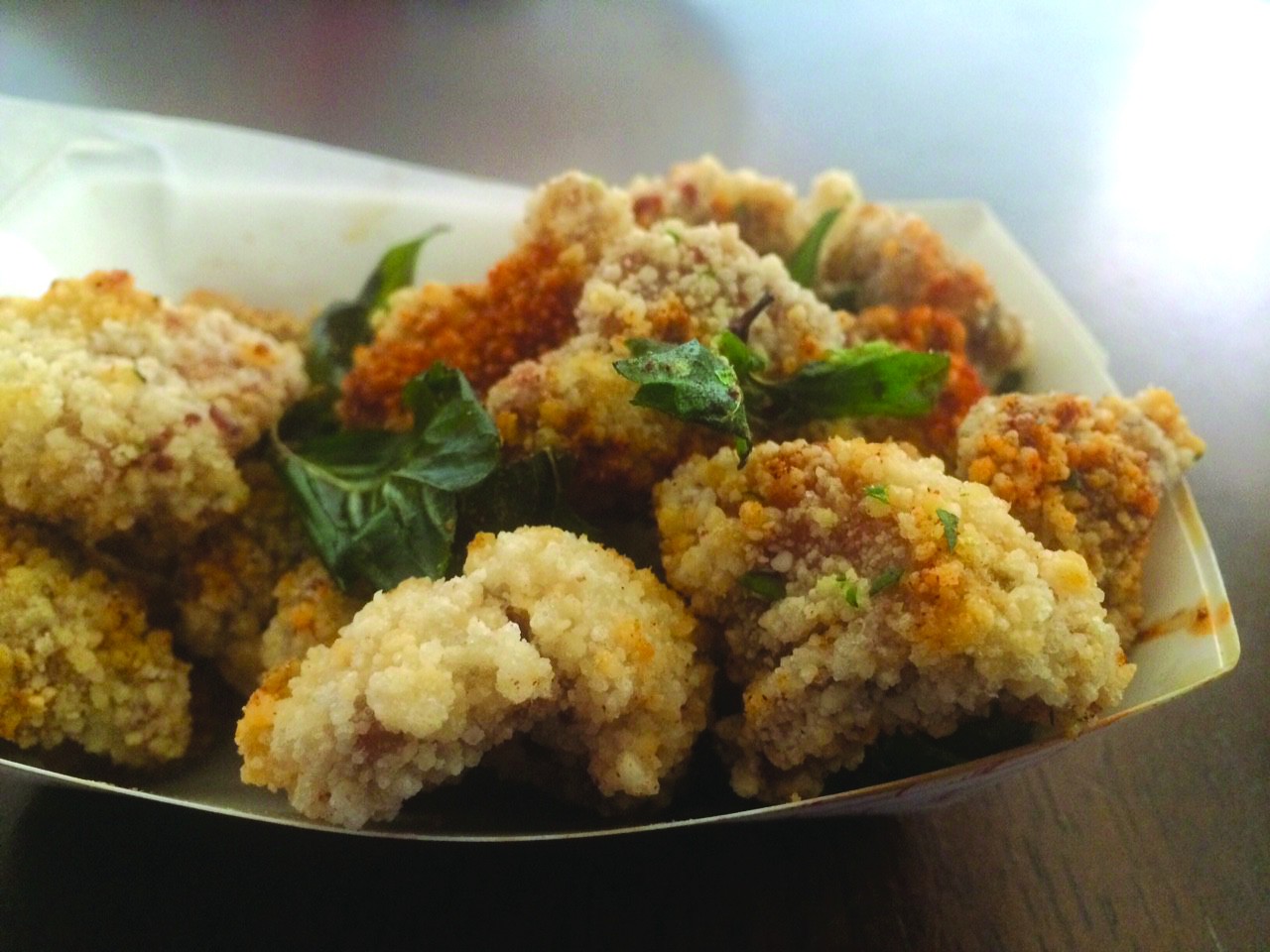
The popcorn chicken,Pop-Up Market at Taiwan Bento
Holiday shopping can be a dreary, thankless task — a lose-lose choice between getting pummeled by crowds at the shopping mall or contributing to the death of the local economy if you buy everything online. Pop-up markets like the one at Taiwan Bento (412 22nd St., Oakland) offer an attractive alternative. Choose from a carefully curated selection of one-of-a-kind gifts while supporting local jewelry makers and succulent-arrangers. In the meantime, since this particular pop-up is being held at one of Oakland’s most appealing Taiwanese restaurants, you’ll have no shortage of food to keep you going: Beer, boba tea drinks, and snacks such as Taiwan Bento’s signature Taiwanese-style popcorn chicken will be sold at happy hour prices all day long, and another local food artisan — We the Minis — will be on hand hawking cupcakes. — Luke Tsai
Fri., Dec. 11, 12-7 p.m. and Sun., Dec. 13, 12-7 p.m. Free. TaiwanBento.us
[jump]
The Awkward Ladies Club presents zines about breaking up, a decade of drinking and tweets from your dad.East Bay Alternative Press Book Fair
Five years ago, two Bay Area zinesters decided it was high time for the East Bay to have its own celebration of indie media, and in true East Bay fashion, DIY-ed the first East Bay Alternative Press Book Fair. What began with roughly fifty participants has since mushroomed into a mega zine fest, with more than 120 zine authors and small presses tabling this year. Renamed in 2012 as the “East Bay Alternative Book and Zine Festival,” or EBABZ for short (pronounced “e-babes”), this year’s event on December 12 at Berkeley City College (2050 Center St.) will include a panel discussion with Rad American Women A-Z author Kate Schatz and illustrator Miriam Klein Stahl, an exhibit by Milvia Street (Berkeley City College’s art and literary journal), a book binding workshop with local artist Soleil Summers, and a panel on DIY zine- and book-making. “ZZ Tops,” a free reading party at E.M. Wolfman General Interest Small Bookstore (410 13th St., Oakland) will be kicking off the festival on December 11. Presenters at the pre-fest include Nia King, author of the zines Angry Black-White Girl and The First 7-Inch Was Better: How I Became an Ex-Punk; Enola Dismay of No Gods No Mattress; musician and comic creator Andrew Goldfarb; the Queer Anxiety Babiez Distro, a zine that focuses on queerness, gender, and mental health; and Mujeres al Frente, a collective of teachers, artists, and healers. — Erin Baldassari
Sat., Dec. 12, 10 a.m.-5 p.m. $TBA. EastBayAlternativeBookAndZineFest.com
Shruggs.
Credits: Bert Johnson/FileWinter Vibrations
In an effort to combat negative stereotypes about their native Bay Area, cousins Mamou Kilambi and Odilcia Balondola started the blog Nook and Kranny, which highlights local music, art, food, and other facets of culture mostly produced by fellow people of color. The duo, who call themselves Les Jumelles (or, “the twins”), will be taking their mission from URL to IRL at Sunday’s Winter Vibrations concert, which features a lineup of mostly local DJs and hip-hop and R&B artists. In addition to DJs Shruggs and Spencer Stevens on the decks, rappers TyreseJohnsonMusic, Oops, and K.E.L.L.S. and singers Rayana Jay and AprilFoolChild will perform at the event. While the lineup is eclectic, the musicians on the bill share a penchant for left-field aesthetics, soulful and earthy sounds, and introspective lyricism. Winter Vibrations will also include a spoken-word poetry reading. — Nastia Voynovskaya Sun., Dec. 13, 7 p.m. $5. NookAndKranny.com
Sonya Rapoport.Final Works
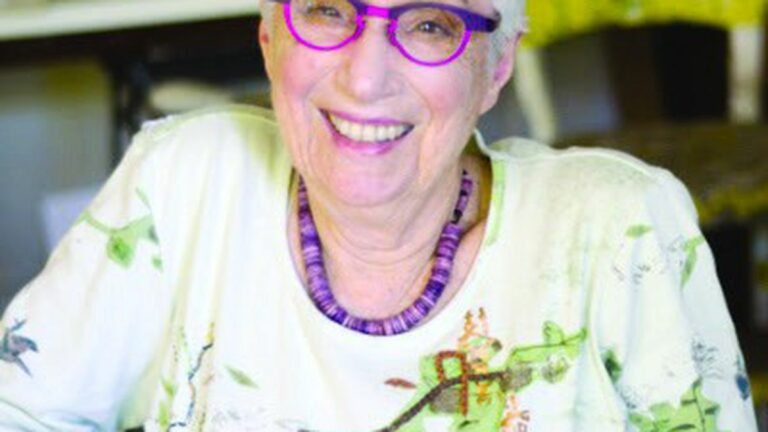
Sonya Rapoport was ahead of her time. She was one of the first women to earn a master’s degree in painting, which she received form UC Berkeley in 1949. And from there she delved into experimentation with early digital media, creating interactive installations that used computer programs to gather and reconfigure data — often integrating emotion and computing in a manner commonplace today but unheard of at the time. She is now remembered for a 66-year-long career of conceptual work that coopted scientific language to relay feminist critiques. The solo show Sonya Rapoport: Final Works culminates Krowswork’s year-long experimental residency program. The artist was nearly finished creating new work for the show when she died at the age of 91 this past June. Rapoport knew her time was limited, and her last two projects, “Yes or No” and “The Transitive Property of Equality,” reflect on her lengthy career with parting observations. The show also includes an interactive installation that Rapoport designed in collaboration with her assistant, artist Farley Gwazda. The piece collects reactions related to the work in the show and records them in a “holographic database.” Final Works is a fascinating retrospective with a rare, personal tone. — Sarah Burke
Through Dec. 19. Free. Krowswork.com
Lukaza Branfman-Verissimo.
Credits: Bert JohnsonFalamos pra fora Reception
The main component of Lukaza Branfman-Verissimo’s current show at E.M. Wolfman, Falamos pray fora, is a time-based process piece that’s an active archiving endeavor. During four sessions of public drop-in story collecting hours segmented throughout the show (Dec. 8, 12, and 19, and Jan. 5), the artist will ask participants to share stories of speaking out, record them, and collaborate with the storyteller to envision a sculptural manifestation of their story. She will then create that sculpture in her own style — often involving raw wood, screen-printing, and indigo textiles. The sculptures will gradually fill the shelves, until storytellers are invited to retrieve the pieces when the show closes on January 15. — Sarah Burke
There will be a reception and story collecting session for Falamos pra fora at E.M. Wolfman, 410 13th St., Oakland, on Dec. 12, 6 p.m. Other sessions will take place Dec. 8, 7–9 p.m., Dec. 19, 2–5 p.m., and Jan. 5, 7–9 p.m. Free. WolfmanHomeRepair.com
If your pockets are feelin’ light and you’re still yearning for more suggestions, we’ve got a ton, and these ones are all FREE! We’re Hungry: Got any East Bay news, events, video, or miscellany we should know about? Feed us at Sa*********@************ss.com.
On the surface of it, The Danish Girl is an ideal example of the Holiday Season Award-Seeking Syndrome — the familiar entertainment-biz game of stacking the deck of movie releases with big-name projects in the last quarter of the year, in order to be more readily considered for such year-end recognition as Golden Globe and Oscar nominations and film critics’ awards.
The Danish Girl is heavily front-loaded with familiar contestants’ brand names. Actor Eddie Redmayne won a Best Actor Oscar last winter for his portrayal of Stephen Hawking in The Theory of Everything. Filmmaker Tom Hooper took home his own Academy Award in 2011, as Best Director, for The King’s Speech. The plot of Redmayne and Hooper’s new movie revolves around a currently hot lifestyle topic: the predicament of a successful artist who comes to the realization that he’s a woman trapped in a man’s body. And from what we could see in the previews, the settings are outrageously decorous, another plus for anything aspiring to exalted coffee-table-picture status. For all these reasons we were prepared to disdain The Danish Girl — or at least to be mildly bored by two hours of calculated good taste lightly brushed with non-threatening rebelliousness.
Alicia Vikander and Eddie Redmayne in The Danish Girl.
Alicia Vikander and Eddie Redmayne in The Danish Girl.
Look how wrong we can be. The Danish Girl — with a screenplay by Lucinda Coxon from a novel by David Ebershoff — turns out to be one of the most entertaining releases of the season, a deep-dish drama with performances and milieu to match. In the role of Einar Wegener, a successful Danish landscape painter of the 1920s with a secret identity, Redmayne has the wisdom to sneak up on the money shots of him in full female regalia, gradually, one step at a time. His is the dilemma of a man who cares so fervently for his art, his artistic temperament, and the encouragement of his wife, Gerda (Alicia Vikander), that once his creative passion is unleashed, there’s no stopping it. Einar’s female persona is every bit as important to him, and to Gerda, as his much-sought-after paintings. His inner femininity is an expression of his soul.
Strong as Redmayne’s performance is, it’s overshadowed by Vikander’s Gerda. It comes as a shock to her when her husband goes from modeling in a gown for one of her paintings to adopting the name “Lili Elbe” and leading his life as a woman. This especially in light of the fact that compared to Einar’s popularity, Gerda’s own painting career is lackluster — at least until she begins using the enigmatic Lili as her signature model.
In such previous roles as the selfless WWI heroine in Testament of Youth and the sex robot in Ex Machina, Swedish actress Vikander has applied herself ably if unthrillingly to roles that seemed external. Her Gerda Wegener is a different matter entirely, intimate and spontaneous, the picture of the early-20th-century avant-garde. At first baffled, then threatened, then fully settled into acceptance of her husband’s transformation, Gerda stages a transformation of her own — in company with her equally flummoxed friend Hans Axgil (played by Matthias Schoenaerts), and finally on her own terms, as Lili’s devoted helpmate.
Director Hooper coaxes ultra-personal performances out of both his leads, arranging them in a remarkable series of extravagant Beaux-Arts interiors in Copenhagen and Paris (wondrous production design by Eve Stewart). The star-crossed Wegeners are the epitome of liberated artistic lovers, shocking the squares and frightening the horses — except that between themselves, they’re as sweetly tentative as a pair of schoolchildren playing “Show me yours, and I’ll show you mine.”
The Express won thirteen awards, including ten first-place honors, in the 38th Greater Bay Area Journalism Awards contest. The Express won the most first-place awards of any non-daily newspaper in the annual contest for journalism excellence, sponsored by the San Francisco Peninsula Press Club. The winners were announced last weekend, and the contest was for news reports published in 2014.
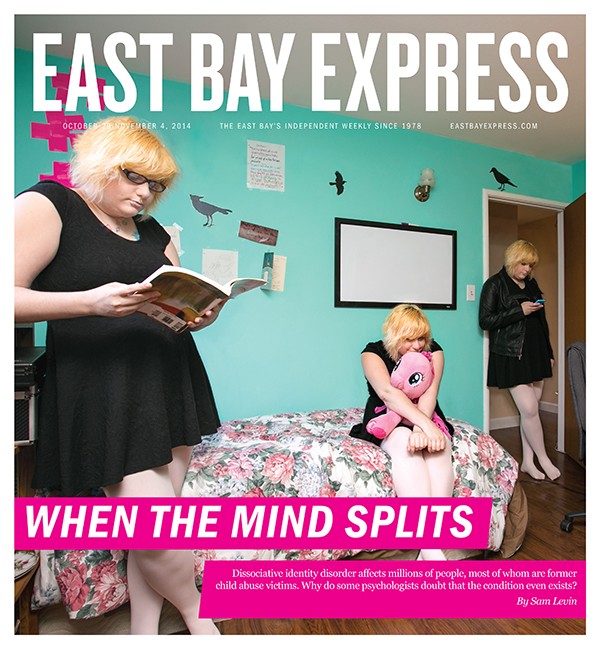
This story and the cover image both won awards.
Credits: Photo by Bert Johnson/Illustration by Roxanne Pasibe
Senior staff writer Sam Levin won two first-place awards. He won in the serious feature category for his October 29, 2014 cover story, “When the Mind Splits,” which explored the impacts of dissociative identity disorder and the controversy surrounding the illness. Levin also won first place in the business/technology category for his January 8, 2014 cover story, “When Corporations Want Profits, They Don’t Ask for Permission,” which examined the recent trend of large retailing companies stealing the work of independent artists.
Staff writer Darwin BondGraham won a first-place award in the best news story category for his May 28, 2014 feature, “The Strike Force that Never Struck,” which revealed the failures of California Attorney General Kamala Harris’ mortgage fraud task force.
[jump]
Art director Roxanne Pasibe and photo editor Bert Johnson shared a second-place award in the page design category for the October 29, 2014 cover of the Express, featuring the story, “When the Mind Splits.” Johnson took the award-winning photo and Pasibe did the illustration.
Arts and culture editor Sarah Burke won a third-place award in the specialty feature category for her October 15, 2014 cover story, “Moral Combat,” which explored the vicious harassment campaign leveled at women in the video gaming industry. This story also has won two other first-place awards in other journalism contests.
Former music editor Sam Lefebvre won first place in the entertainment category for his November 19, 2014 cover story, “The Tyranny of Free,” which examined Pandora’s business strategy of keeping royalty payments low to struggling musicians.
Former co-editor Kathleen Richards won first place in the light feature category for her June 25, 2014 cover story, “Hunting with a Rat,” which chronicled her outing of wild boar hunting with a motorcycle club leader.
Contributors Jake Nicol and Julian Mark shared a first-place award in the best series category for their two-part series on the healthcare giant Kaiser, called “Deadly Delays.” Nicol’s part-one story, “A Flawed Model for Care” (8/13/14), examined Kaiser’s repeated failures to provide adequate mental health care to patients. Mark’s part-two story, “Gambling with Children” (8/20/14), looked at Kaiser’s controversial decision to close pediatric care services to children in the East Bay.
Contributor David Bacon won a first-place award in the photo series category for his August 6, 2014 cover story, “Living on the Streets of Oakland,” a photo essay that examined the plight of homeless people in the Bay Area’s third largest city.
Former contributor Ali Winston won a first-place award in the analysis/investigative category for his September 17, 2014 cover story, “Why Oakland Can’t Fire Bad Cops,” which examined the biased and incompetent investigations into police misconduct in the city.
Former contributor Joaquin Palomino won a first-place award in the continuing coverage category for his groundbreaking reports on the California drought and water issues, “California’s Thirsty Almonds” (2/5/14) and “The Water Tunnel Boondoggle” (5/13/14).
In addition, Express calendar and web editor Erin Baldassari won a first-place award in the breaking news category for digital media for her coverage of Black Lives Matter protests in Berkeley and Oakland in December 2014 when she was working for Bay City News Service.
Californians are already beginning to forget the near-biblical devastation wrought by the 2015 fire season. But Bloom Farms’ Mike Ray cannot.
The medical cannabis entrepreneur’s childhood home burned down in the Butte County inferno, along with hundreds of thousands of dollars of medical cannabis crops. The Valley and Butte fires of 2015 were two of the most destructive blazes in California history and were declared federal disasters by President Obama. Ray was one of thousands of farmers and residents wiped out by the massive blaze, and he is one of the few with the fire insurance to rebuild.
The Butte County inferno of 2015.
Credits: (via Instagram)
[jump]
Now, winter is setting in. Drenching rains and freezing cold have come to poor, rural California towns where many are still homeless and sleeping in tents or shelters. It’s cataclysmic, and East Bay medical cannabis patients can do a little bit to help.
This week, Ray emailed me that Bloom Farms and Oakland dispensary Magnolia Wellness will work together to raise $25,000 this holiday season for fire relief. Bloom Farms will provide its Highlighter vape pens to Magnolia Wellness free of charge, and the revenue generated by those pens’ sales will go to fire relief in Calaveras. The goal is to get the money to groups serving families in need by January, Ray said.
In other Magnolia news, the fire relief drive was approved by longtime East Bay activist and legalization figure Debby Goldsberry, who has announced today via our podcast, The Hash, that she is now the executive director for Magnolia Wellness.
High Times Freedom Fighter of the Year, Goldsberry is a former executive at Berkeley Patients Group and had been a brand ambassador at Magnolia Wellness, which is open near Jack London Square.
The Oaksterdam lecturer and ReformCA Board Member started in cannabis activism in college in Illinois in the early Eighties and for three decades has helped nurture the movement into the massive, momentous force it is today.
Listen to Goldsberry describe the early days of the Cannabis Action Network and the Hemp Tour, as well as what’s in store for the future of legalization.
A planned project for a massive crude oil terminal in the East Bay is now dead after more than two years of community protest. Last month, WesPac Energy Group quietly withdrew its application to ship crude oil into the city and store it in rebuilt tanks located in a residential area near downtown Pittsburg in Contra Costa County. WesPac spokesperson Art Diefenbach told the Contra Costa Times that the company’s decision was the result of current low prices for oil, although he acknowledged that community opposition was also a factor.
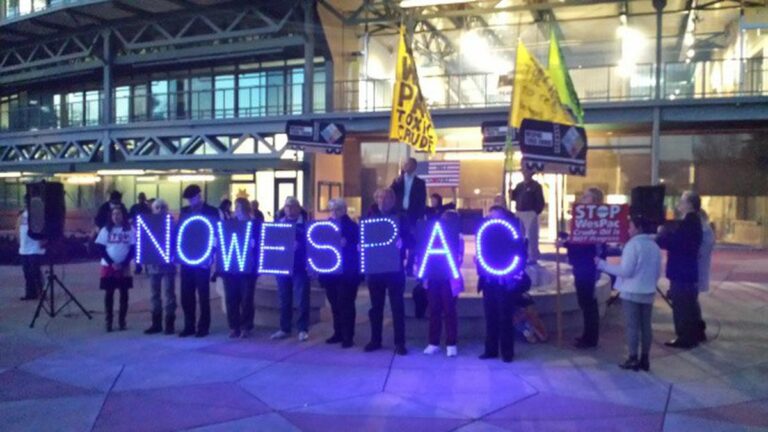
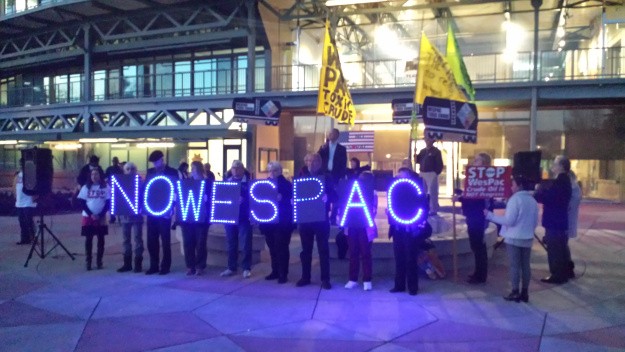
Activists with the Pittsburg Defense Council demonstrate against the proposed WesPac oil terminal in 2014.
Credits: Pittsburg Defense Council/File photo
“I know the oil industry is taking a turn for the worse with the glut of oil,” said Pittsburg resident Lyanna Monterrey, a leader of the opposition to the project. “But we were a thorn in their side. We delayed it long enough for the downturn to happen.”
Like most residents, Monterrey learned about the proposed project more than two years after WesPac first filed its application to the city in summer 2011. The city council, she commented, “did not do a good job to let us know this was coming.”
[jump]
Monterrey added that when she heard about the proposal in the fall of 2013, she felt “it was wrong to put something like this in the middle of the city. It wasn’t safe. I knew if people knew about it they would not want it. I felt like I had to get the word out, like Paul Revere.” She drew up a petition and started going door to door in her neighborhood. Quickly, she said, “the community mobilized on a grassroots level.” Environmental organizations, including Communities for a Better Environment, the National Resources Defense Council, and the Sunflower Alliance, she said, provided key support.
Willie Sims, who represented the local NAACP and the Pittsburg Black Residents Association in the movement against the project, recalled that in January 2014, “there was a big protest march with people coming from all over the East Bay.”
Speakers included local pastor Greg Osorio and other community leaders, representatives of environmental organizations, and local youth sharing songs and poetry. They pointed to the dangers of fire and explosions from the shipping and storage of crude oil in the middle of a residential area. Increased air pollution from the project, they said, would add to an already high level of harmful pollution from the city’s existing industrial facilities. Possible spills and leaks from an increase
in oil shipping also threatened Contra Costa County’s water supply and bay water quality.
In the same month, California Attorney General Kamala Harris wrote a letter to the City of Pittsburg detailing many problems she saw in the environmental review of the project, including risks to the community and environment, as well as social justice and legal issues. Kalli Graham, who cofounded the Pittsburg Defense Council to fight the WesPac proposal, said community activists prompted Harris’s action. “We had sent some letters to her. She never responded to us directly, but she did send the letter to the city.”
In February 2014, the city council ordered WesPac to go back to the drawing board for a new environmental review. From that time until April 2015, the project seemed dormant. Then WesPac announced it would continue to pursue the storage and shipping project but without the highly controversial plan to bring in some of the oil by rail. Another environmental review of the project, in July 2015, prompted another outpouring of community opposition, as well as letters of concern from the Contra Costa Water District and the Bay Area Air Quality Management District.
“We just kept at it and kept at it and kept at it,” Graham said. “We screamed and hollered at anybody that would listen.” A Pittsburg Defense Council victory message earlier this week described a vigorous campaign of community meetings, door-knocking, and grassroots collection of air samples showing that pollution was already at danger levels. “We lobbied our city and county officials . . . [and] spoke at countless planning commission and city council meetings,” the message said.
Both Graham and Monterrey expressed disappointment at the city council’s role in the process. “They said they had to remain neutral,” Monterrey said. But, Graham pointed out, “they’re supposed to represent us.” Sims of the NAACP said political pressure on the council definitely had an effect. “If the city council had approved WesPac, they would have faced a potential recall,” he commented.
“The tireless legwork of the community,” built up pressure against the proposal, Monterrey said. “We got the youth involved – that was important – and they had a youth rally at city hall. There were lawn signs throughout the community. We got the school board and the hospital board to write letters. We flew in a survivor from Quebec [where 47 people died in an explosion of a train carrying crude oil]. She spoke at the First Baptist Church and the high school. It was very emotional, made the issue very personal.”
The Pittsburg Defense Council announcement encouraged people to celebrate at next Monday’s city council meeting, where the end of the project will become official. The group is offering “victory yard signs” to attendees.
Welcome to the Mid-Week Menu, our roundup of East Bay food news.
1) In what may be the unlikeliest restaurant collaboration of the year, the Starline Social Club (2236 Martin Luther King, Jr. Way, Oakland) — the highbrow bar-food specialist — will now serve mostly Burmese dishes by way of East Oakland hole-in-the-wall Grocery Cafe (2248 10th Ave.), Inside Scoop reports. Apparently, chef Austin Holey will assume a more advisory role at Starline, and, under the tutelage of Grocery Cafe owner William Lue, the bar’s remaining kitchen staff will start cranking out samosas and tea leaf salads (while keeping a handful of popular bar-snacky items on the menu).
[jump]
I have so many questions: To what extent will Starline retain/emulate Grocery Cafe’s bargain-basement prices? Will the bar’s clientele embrace what is a rather sharp change in direction? Will they, for instance, embrace the funk of the funkiest tea leaf salad in town? Time will tell, but I know this much: Grocery Cafe is pretty much the best.
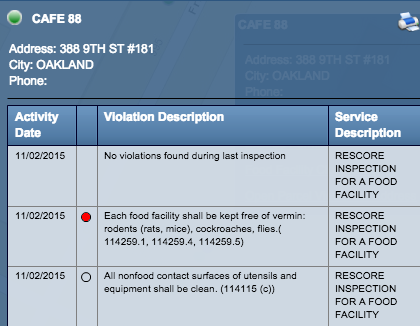
2) After a health department scare earlier this year, Cafe 88 (388 9th St., #181), the popular rice-plate slinger in Oakland Chinatown’s Pacific Renaissance Plaza, is closed once again — possibly due to what appears to have been an ongoing vermin issue (judging on the results of a November 2 health inspection). The busy lunch spot specialized in barbecued meats and served what was probably my favorite Cantonese-style roast pig in the city. At this point, it’s unclear whether the restaurant will reopen — as of this morning, the phone line was disconnected.
3) Get pumped, noodle slurpers: Itani Ramen (1736 Telegraph Ave., Oakland), Hopscotch chef Kyle Itani’s highly anticipated ramen restaurant in Uptown Oakland, is getting close. Eater reports that the restaurant is scheduled to open on January 18. Look for $12–$14 (tip-inclusive) bowls and a rotating selection of regional styles. Prior to this project, Itani had hosted a semi-regular late-night ramen pop-up that I really loved.
4) In other ramen news, Berkeleyside Nosh reports that Shiba Ramen, the fast-food ramen shop in the newly revamped Emeryville Public Market food court, plans to softly open this week. Read my story about how two ex-chemists plan to remove the unnecessary fuss — and expense — that they see in America’s trendy high-end ramen shops.
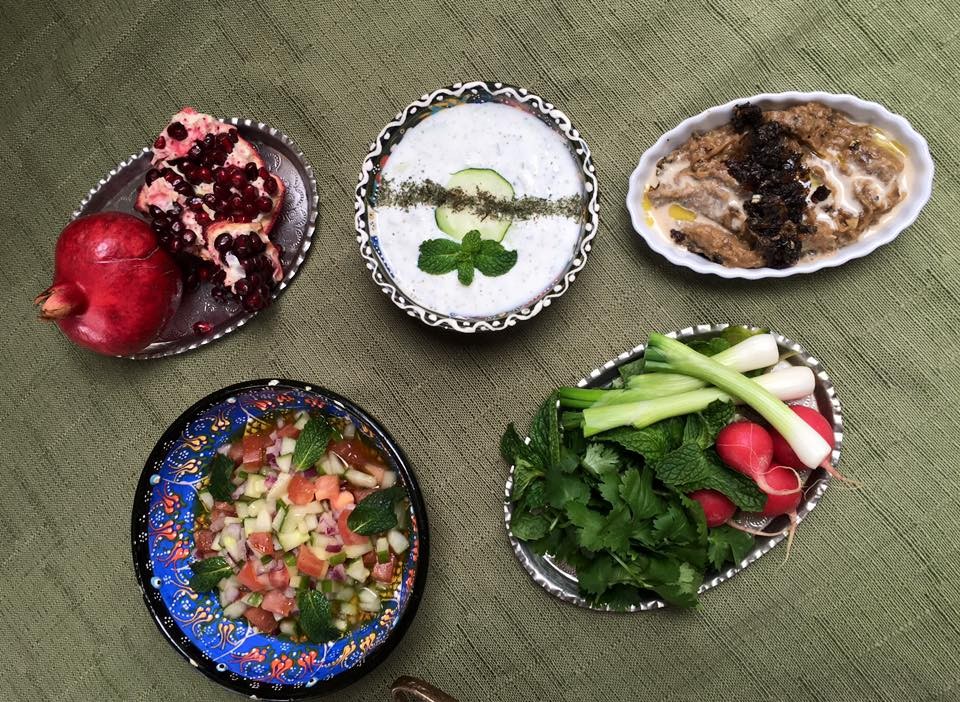
5) Oakland’s Rooz Cafe (1918 Park Blvd.) is hosting an Iranian pop-up dinner this Friday, December 11, starting at 8 p.m. The family-style meal is a collaboration between chefs Parisa Khodabakhsh and Peter Jackson. Tickets are $45.
Singer-songwriter Metal Mother is a purveyor of dark, synth-driven pop who made a name for herself in Oakland’s DIY warehouse party scene before relocating to Los Angeles to work on her forthcoming album. She describes herself as an “acid-drenched techno pagan” and fills her music with haunting vocal harmonies and distorted keyboard melodies that call to mind current left-field...
The likelihood of California cannabis legalization increased dramatically Saturday night when the leading initiative — the Adult Use of Marijuana Act — garnered crucial endorsements from community leader Tim Blake, organizer of the world's biggest outdoor organic cannabis competition, The Emerald Cup.
“You know what, I’m going to endorse this thing,” Blake said, to a mix of applause and outrage...
Stories you shouldn’t miss:
1. Federal Judge Thelton Henderson strongly criticized the City of Oakland for its failure to implement reforms in police use-of-force incidents and set a deadline of December 21 for the city to comply, the Trib$ reports. Henderson, who oversees Oakland’s decade-plus police reform efforts, said the city, the police department, and the Oakland police union have been...
Stories you shouldn’t miss:
1. PG&E is seeking to penalize residents of cities that opt to create or join clean energy consortiums, the Chron$ reports. Critics contend that PG&E’s request to penalize residents is yet another attempt by the utility to maintain its monopoly over energy distribution and to dissuade cities from going green. The penalties, which still must be approved...
Once you're finished fawning over the Lil B portraiture gracing this week's Express, here's our list of five other ways to spend your time this weekend. On Monday, you can go back to fawning, we promise.
Pop-Up Market at Taiwan Bento
Holiday shopping can be a dreary, thankless task — a lose-lose choice between getting pummeled...
On the surface of it, The Danish Girl is an ideal example of the Holiday Season Award-Seeking Syndrome — the familiar entertainment-biz game of stacking the deck of movie releases with big-name projects in the last quarter of the year, in order to be more readily considered for such year-end recognition as Golden Globe and Oscar nominations and film...
The Express won thirteen awards, including ten first-place honors, in the 38th Greater Bay Area Journalism Awards contest. The Express won the most first-place awards of any non-daily newspaper in the annual contest for journalism excellence, sponsored by the San Francisco Peninsula Press Club. The winners were announced last weekend, and the contest was for news reports published in 2014.
This...
Californians are already beginning to forget the near-biblical devastation wrought by the 2015 fire season. But Bloom Farms’ Mike Ray cannot.
The medical cannabis entrepreneur’s childhood home burned down in the Butte County inferno, along with hundreds of thousands of dollars of medical cannabis crops. The Valley and Butte fires of 2015 were two of the most destructive...
A planned project for a massive crude oil terminal in the East Bay is now dead after more than two years of community protest. Last month, WesPac Energy Group quietly withdrew its application to ship crude oil into the city and store it in rebuilt tanks located in a residential area near downtown Pittsburg in Contra Costa County. WesPac...
Grocery Cafe's funky tea leaf salad.
Credits: Bert Johnson/File photo
Welcome to the Mid-Week Menu, our roundup of East Bay food news.
1) In what may be the unlikeliest restaurant collaboration of the year, the Starline Social Club (2236 Martin Luther King, Jr. Way, Oakland) — the highbrow bar-food specialist — will now serve mostly Burmese dishes by way of East Oakland...