The Real Brooklyn by the Bay

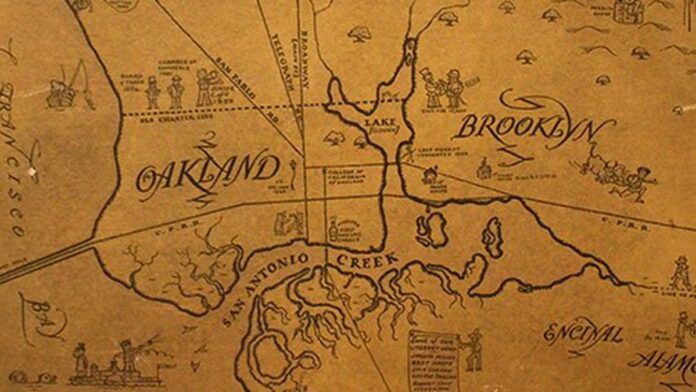
As increasing numbers of people arrive in the East Bay after being priced out of San Francisco, it seems that everyone — including The New York Times — has dubbed Oakland “Brooklyn by the Bay.” It’s easy to see the comparison: Both are (slightly) more affordable spots that draw young people and creative types from their wealthier and more celebrated neighbors. But did you know that much of East Oakland actually used to be called Brooklyn?

“The town of Brooklyn was small and short-lived,” said local historian Gene Anderson, who leads tours of the area for Oakland Urban Paths. “It only existed from 1856 until 1872.”

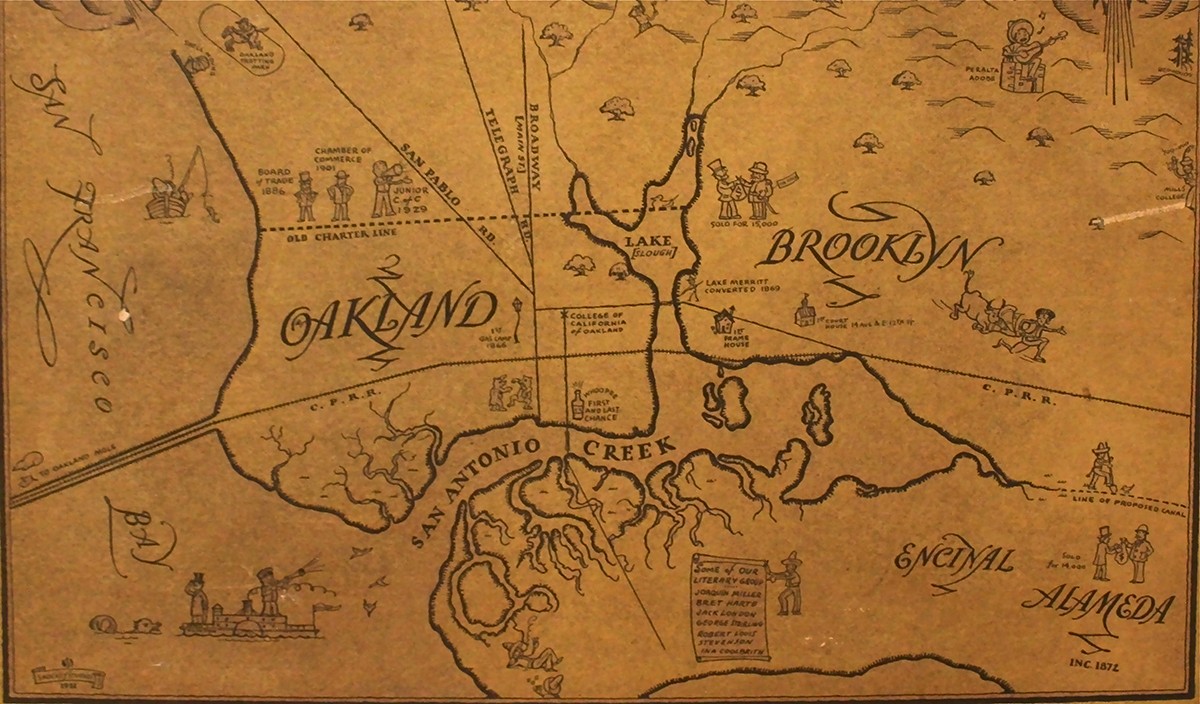
In the 1850s, much of the land that now falls within Oakland city limits consisted of an assortment of smaller towns. Brooklyn was formed from the combination of these villages, eventually stretching from the eastern edge of Lake Merritt to what is now Fruitvale Avenue, and from what is now MacArthur Boulevard to the shores of San Francisco Bay.

One of these towns was San Antonio, founded in 1851 when James B. Larue, an early pioneer in the region, purchased a swath of land from Luis Maria Peralta’s Rancho San Antonio. This land is still known as the neighborhood of San Antonio. Larue built a wharf at East 11th Street and 14th Avenue, as well as the town’s first store. He later went on to found the Oakland and San Antonio Steam Navigation Company, a ferry line that transported daytrippers from San Francisco and loggers to work in the East Bay hills.

Another town that made up what would become Brooklyn was Clinton — which, like San Antonio, is now known as the neighborhood of Clinton. In 1849, failed gold miner Moses Chase built a wood-frame house — one of, if not the earliest in the area — at the corner of East 8th Street and 4th Avenue. The house, now long gone, stood on what is now part of Laney College.

Chase joined with three brothers, Robert, William, and Edward Patten, who had come to the East Bay on a whaling boat in 1850, to lease 640 acres of Peralta’s Rancho San Antonio. The town they founded together in 1854 was named for Chase’s late fiancée, Mary Ellen Clinton.

In 1856, a few years after San Antonio and Clinton were founded, the two settlements joined together to create the town of Brooklyn. Our Brooklyn didn’t derive its name from New York’s famous borough — at least not directly. Instead, it was named after the ship Brooklyn, which, in 1846, carried more than two hundred Mormon settlers from New York to California. One of those settlers was Thomas Eagar, who became a member of the Alameda County Board of Supervisors. It was Eagar who suggested the consolidation, as well as the name of the new town.

Many businesses and churches quickly sprang up in Brooklyn. The town gained a shoe and boot factory when it absorbed the adjacent village of Lynn (now the neighborhood of Lynn) in 1870. In 1871, Brooklyn’s enormous two hundred-room Tubbs Hotel opened, occupying a whole city block between what is now 4th and 5th avenues on East 12th Street. Gertrude Stein’s family lived in the hotel for about a year when she was a young child. Other guests included Treasure Island author Robert Louis Stevenson, as well as Key System founder Francis Marion “Borax” Smith. Unfortunately, in 1893, after the hotel was partially destroyed in a fire, it was demolished.

In addition to urban developments, the town of Brooklyn housed a park called Independence Square (now San Antonio Park), where “all public festivities, as well as rodeos and hangings, were held,” according to the May 7, 1914 issue of the Oakland Tribune. Brooklyn was governed by a board of trustees, led by the town’s first and only mayor, Harrison Allen Mayhew, who was elected three times. Town Hall was constructed in 1850 and burned down on March 25, 1921.

On October 21, 1872, a majority of Brooklyn’s 1,800 citizens voted to allow annexation by Oakland, believing that “both places will grow faster and more rapidly obtain a position of commercial importance,” according to that week’s Brooklyn Home Journal. Despite this, the town retained its own identity, with many businesses (and one street, Brooklyn Avenue, near Park Boulevard) keeping the appellation. The Central Pacific Railroad station was called Brooklyn until 1883, when the Southern Pacific Railroad took over the line and renamed the stop East Oakland.

Today, what was once Brooklyn is now part of East Oakland, encompassing the neighborhoods of Bella Vista, Cleveland Heights, Clinton, East Peralta, Highland Park, Highland Terrace, Ivy Hill, Lynn, and San Antonio. “Many people think of the area as mostly newer apartments and stores, but there are [still] numerous beautiful Victorians,” said Anderson. “If, instead of driving through on International [Boulevard] or one of the other main streets, people take the time to explore, they’ll realize just how much [Brooklyn] history is still around.” Oakland Urban Paths’ (OaklandUrbanPaths.org) next walk, on February 13, will explore the former Brooklyn area of Cleveland Heights and the “Borax” Smith estate in Ivy Hill.

So the next time you see Oakland compared to that other hipster haven 3,000 miles to the east, allow our own Brooklyn to serve as a reminder that Oakland has a culture and history all its own.

Correction: The original version of this column misspelled the last name of Thomas Eagar, the settler who suggested that the towns of Clinton and San Antonio consolidate into one called Brooklyn.


Free Will Astrology

Aries (March 21–April 19): The Bible’s Book of Exodus tells the story of the time Moses almost met God. “Show me your glory, please,” the prophet says to his deity, who’s hiding. “You cannot see my face,” God replies, “but I will show you my back parts.” That’s good enough for Moses. He agrees. I hope that you, too, will be satisfied with a tantalizingly partial epiphany, Aries. I’m pretty sure that if you ask nicely, you can get a glimpse of a splendor that’s as meaningful to you as God was to Moses. It may only be the “back parts,” but that should still stir you and enrich you.

Taurus (April 20–May 20): The archaic English word “quaintrelle” refers to a woman who treats her life as a work of art. She is passionate about cultivating beauty and pleasure and wit in everything she is and does. But she’s not a narcissistic socialite. She’s not a snooty slave to elitist notions of style. Her aim is higher and sweeter: to be an impeccable, well-crafted fount of inspiration and blessings. I propose that we resuscitate and tinker with this term, and make it available to you. In 2016, you Tauruses of all genders will be inclined to incorporate elements of the quaintrelle, and you will also be skilled at doing so. If you have not yet dived in to this fun work, start now!

Gemini (May 21–June 20): Sufi teacher (and Gemini) Idries Shah offered this teaching: “They say that when Fortune knocks, you should open the door. But why should you make Fortune knock, by keeping the door shut?” Let’s make this your featured meditation, Gemini. If there is anywhere in your life where proverbial doors are shut — either in the world outside of you or the world inside of you — unlock them and open them wide. Make it easy for Fortune to reach you.

Cancer (June 21–July 22): Many Cancerians harbor a chronic ache of melancholy about what they’re missing. The unavailable experience in question could be an adventure they wish they were having or an absent ally they long to be near or a goal they wish they had time to pursue. That’s the bad news. The good news is that you can harness the chronic ache. In fact, it’s your birthright as a Cancerian to do so. If you summon the willpower to pull yourself up out of the melancholy, you can turn its mild poison into a fuel that drives you to get at least some of what you’ve been missing. Now is a favorable time to do just that.

Leo (July 23­–Aug. 22): How will the next chapter of your story unfold? I suspect there are two possible scenarios. In one version, the abundance of choices overwhelms you. You get bogged down in an exciting but debilitating muddle, and become frazzled, frenetic, and overwrought. In the other possible scenario, you navigate your way through the lavish freedom with finesse. Your intuition reveals exactly how to make good use of the fertile contradictions. You’re crafty, adaptable, and effective. So which way will you go? How will the tale unfold? I think it’s completely up to you. Blind fate will have little to do with it. For best results, all you have to do is stay in close touch with the shining vision of what you really want.

Virgo (Aug. 23–Sept. 22): To hell with my suffering, wrote Arthur Rimbaud in his poem “May Banners.” I suggest you make that your mantra for now. Anytime you feel a sour thought impinging on your perceptions, say, “To hell with my suffering.” And then immediately follow it up with an expostulation from another Rimbaud poem, “It’s all too beautiful.” Be ruthless about this, Virgo. If you sense an imminent outbreak of pettiness, or if a critical voice in your head blurts out a curse, or if a pesky ghost nags you, simply say, “To hell with my suffering,” and then, “It’s all too beautiful.” In this way, you can take advantage of the fact that you now have more power over your emotional pain than usual.

Libra (Sept. 23–Oct. 22): “I like people who unbalance me,” says Irish writer Colum McCann. Normally I wouldn’t dream of encouraging you to make the same declaration, Libra. My instinct is to help you do everything necessary to maintain harmony. But now is one of those rare times when you can thrive on what happens when you become a bit tilted or uneven or irregular. That’s because the influences that unbalance you will be the same influences that tickle your fancy and charge your batteries and ring your bell and sizzle your bacon.


Scorpio (Oct. 23–Nov. 21): The African Association was a 19th-century British group dedicated to exploring West Africa. Its members hoped to remedy Europeans’ ignorance about the area’s geography. In one of the Association’s most ambitious projects, it commissioned an adventurer named Henry Nicholls to discover the origin and to chart the course of the legendary Niger River. Nicholls and his crew set out by ship in their quest, traveling north up a river that emptied into the Gulf of Guinea. They didn’t realize, and never figured out, that they were already on the Niger River. I’m wondering if there’s a comparable situation going on in your life, Scorpio. You may be looking for something that you have already found.

Sagittarius (Nov. 22–Dec. 21): Richard P. Feynman was a brilliant physicist who won a Nobel Prize in 1965 for his pioneering work in quantum electrodynamics. He also played the bongo drums and was a competent artist. But excessive pride was not a problem for him. “I’m smart enough to know that I’m dumb,” he testified. “The first principle is that you must not fool yourself — and you are the easiest person to fool.” I suggest you adopt him as your role model for the next two weeks, Sagittarius. All of us need periodic reminders that we’ve got a lot to learn, and this is your time. Be extra vigilant in protecting yourself from your own misinformation and misdirection.

Capricorn (Dec. 22–Jan. 19): Food connoisseur Anthony Bourdain has a TV show that enables him to travel the globe indulging in his love of exotic cuisine. He takes his sensual delights seriously. In Charleston, South Carolina, he was ecstatic to experience the flavorful bliss of soft-shell crab with lemon pasta and shaved bottarga. “Frankly,” he told his dining companion, “I’d slit my best friend’s throat for this.” Bourdain was exaggerating for comic effect, but I’m concerned you may actually feel that strongly about the gratifications that are almost within your grasp. I have no problem with you getting super-intense in pursuit of your enjoyment. But please stop short of taking extreme measures. You know why.

Aquarius (Jan. 20–Feb. 18): You may sometimes be drawn to people or places or ideas long before they can give you their gifts. Although you sense their potential value, you might have to ripen before you’ll be ready to receive their full bounty. Here’s how author Elias Canetti expressed it: “There are books, that one has for twenty years without reading them, that one always keeps at hand, yet one carefully refrains from reading even a complete sentence. Then after twenty years, there comes a moment when suddenly, as though under a high compulsion, one cannot help taking in such a book from beginning to end, at one sitting: it is like a revelation.” I foresee a comparable transition happening for you, Aquarius.

Pisces (Feb. 19–March 20): The Leaning Tower of Pisa is eight stories high, including its belfry, and tilts sideways at a four-degree angle. When builders started construction back in 1173, they laid a weak foundation in unstable soil, and the building has never stood straight since then. And yet it is the most lucrative tourist attraction in the city of Pisa, and one of the top ten in Italy. Its flaw is the source of its fame and glory. What’s the equivalent in your world, Pisces? Now is a favorable time to take new or extra advantage of something you consider imperfect or blemished.

‘Lullaby for a Country’: A Gesture Toward Peace

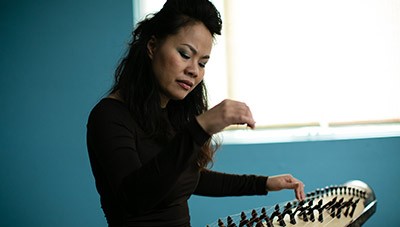
Emmy Award-winning composer Vanessa Vân-­Ánh Võ premiered her concert piece, The Odyssey — From Vietnam to America, at Yerba Buena Center for the Arts in San Francisco last month, although she had initially conceptualized the work after arriving in the United States in 2001.

When Võ was growing up in Vietnam, the Vietnam War and its aftermath loomed in the background of day-to-day life, and lingering animosity remained between the people of the country’s northern and southern regions. After emigrating to the Bay Area, she met people of diverse backgrounds and experiences, including Vietnamese refugees and American veterans, who exposed her to a range of perspectives on the conflict. Hearing stories from all sides allowed her to see the ways in which war and tragedy have a ripple effect across cultures and generations, she said in a recent interview.

Võ’s research led her to interview Vietnamese “boat people” — a term often used to refer to the millions of refugees that left Vietnam by boat after 1975 — and she said their stories were a major impetus for The Odyssey. She recalled the account of one woman in particular whose young son was taken by Thai pirates at sea. Another man told her about how he had to push his dying brother into the ocean so that, after he died, the other survivors wouldn’t use his body for food. Võ recalled that after hearing harrowing tales such as these, she envisioned The Odyssey as a plea for peace across boarders — and a step toward healing through music. She said the piece has especially resonated with audiences, because it contains many parallels to today’s refugee crisis.

The Odyssey is a tense and challenging work that uses traditional Vietnamese and Western musical instruments and video footage. Though it just had its world premiere, Võ is already preparing to perform her follow-up work, Lullaby for a Country, which she will debut at the Oakland East Bay Symphony’s Notes from Vietnam concert on February 12 at the Paramount Theatre in Oakland.

Lullaby for a Country contains four movements: Love, Yearning, Sorrow, and New Dawn. With the orchestra accompanying her, Võ will play the dan tranh, which is a horizontal, harp-like instrument with a hollow, acoustic chamber. While traditional dan tranhs have sixteen strings, Võ custom-designed a longer version with nineteen strings to allow her a broader range of expressive possibilities. She plucks, bends, and strums its strings to create warped tones with a sinewy flexibility. The dan tranh can take on a weeping quality as Võ bends its strings to their maximum.

While Võ said Lullaby for a Country speaks to the triumph of the human spirit, she also sees it as a way to release the grief she explores in The Odyssey. “After all this, we all need healing. We need to really reflect and think how we can spread our love instead of hatred.”

When I met Võ last weekend, she was preparing to host a group of music students in her Fremont studio. Teaching traditional music to Vietnamese-American youth is her other occupation — an opportunity she had to fight for while growing up in Vietnam.

While Võ’s parents recognized her musical talents early on, young musicians typically learn traditional Vietnamese instruments through a master-apprentice system, and, most of the time, masters choose male apprentices from their own families. However, Võ was undeterred and vied for three years to train with her first dan tranh master until he finally accepted her as a student. While her own approach is considerably laxer, her teaching work is one way of keeping Vietnamese traditions alive in the United States.

Over the years, Võ has performed in many prestigious American institutions, including Carnegie Hall, and she works extensively with the well-known Kronos Quartet. Her platform has given her the opportunity to not only speak directly to the Vietnamese-American community, but also educate the general public about Vietnam’s culture and history, which she said are some of the most rewarding aspects of her work.

“For many people in the West, maybe they know about Vietnam through the war, but they stop knowing what truly Vietnam is now,” she said. “So, I think through the music, that can bring and share more, not only through the sound, but it creates a feeling and a picture in the audience’s mind.”

Where East Bay Chefs Canoodle

0

Running a restaurant is notoriously grueling work, with long hours that run late into the night — conditions that aren’t exactly conducive to an active love life. And when both members of a couple work in the industry, date nights really tend to be few and far between. It should come as no surprise, then, that the East Bay’s chef couples make the most of these rare opportunities for romance — and you know they make sure to eat well.

Liz Sassen, who is chef and co-owner of the Piedmont Avenue restaurant Homestead with her husband Fred Sassen, said one of the most memorable dates was the first meal they ate at Duende (468 19th St.), a stylish Spanish restaurant in Uptown Oakland. There, they shared paella and a chuletón — a giant 48-ounce Piedmontese steak meant to feed four people, but the two of them polished it off on the their own, eating mostly with their bare hands.

Apart from the deliciousness of the food, Sassen said what she and her husband appreciated was how the restaurant’s coziness and warmth helped them to do what they’re almost never able to do when they dine out — shut off their “work brains” and truly relax.

Sassen said that a lot of the time when she visits other restaurants, her mind can’t help but spin with numbers: How much does that table cost? What’s the profit margin on this dish?

Duende, she said, is one of a handful of East Bay restaurants where they’re able to tune all of that out — where a romantic dinner doesn’t inevitably turn into a business dinner.

Gail Lillian and Sal Bednarz are one of the East Bay restaurant scene’s power couples: She runs Liba Falafel’s fleet of food trucks, as well as its Uptown Oakland brick-and-mortar shop; he owns a pair of restaurants — Victory Burger and Actual Cafe — in North Oakland. Lillian and Bednarz list Vik’s Chaat (2390 Fourth St., Berkeley) and Benchmark Pizzeria (1568 Oak View Ave., Kensington) among their date-night haunts. But for anniversaries and other special celebrations, the couple usually winds up sharing a meal at Ippuku (2130 Center St., Berkeley), a sleek izakaya where the private booths and tables help create a feeling of intimacy, Bednarz said. It doesn’t hurt, either, that the food is so good. Bednarz and Lillian’s favorite dishes include bacon-wrapped mochi, whole grilled squid, and, for an unexpectedly sexy dessert, soft-serve ice cream with a sweet soy sauce reduction drizzled on top.

For other restaurant couples, too, certain eateries hold sentimental appeal because of milestones they celebrated there. Andrew and Sequoia Vennari, who own the Laurel district breakfast-and-lunch spot Sequoia Diner, had their first date at the Rockridge staple Wood Tavern (6317 College Ave., Oakland), and they never stopped going back — including when they celebrated their engagement a few years back. “It’s our nostalgic place,” Sequoia said, adding that they’ll usually go for a late lunch that might include “a bunch of Bloody Marys and a giant bowl of fries.” Plus, as Andrew quipped, in reference to Wood Tavern’s most famous sandwich, “Can you think of a more romantic meat than pastrami?”  

Meanwhile, Jay Porter, who co-owns The Half Orange and Salsipuedes with his wife Katie Mayfield, say they have started a recent tradition of having Chris Kronner — the chef-owner of KronnerBurger (4063 Piedmont Ave., Oakland) — cook their anniversary dinner. Last year, it was an Italian-themed pop-up that Kronner hosted at the wine bar Ordinaire (3354 Grand Ave., Oakland). This year, it was four-course dinner at KronnerBurger whose centerpiece was a ninety-day, dry-aged, grass-fed ribeye steak.

Of course, like the rest of us, chefs don’t spend all of their time thinking about food — or at least not just about food. Sometimes, they like to incorporate some post-meal extracurriculars into their date night plans. Preeti Mistry, chef-owner of Temescal’s Juhu Beach Club, said that she and her wife Ann Nadeau (a co-owner at the restaurant, although she isn’t involved in its day-to-day operations) don’t care much for traditionally “romantic” eateries, which tend to be more upscale. Instead, their weekly dose of romance typically starts each Sunday — Mistry’s day off — with brunch at Boot and Shoe Service (3308 Grand Ave., Oakland): pizza, zeppole (Italian doughnuts), Bloody Marys and gin-based Bloody Margarets, and whatever interesting seasonal salad is on the menu. Afterward, they’ll walk it all off by climbing some of the hidden staircases that wind through that part of Oakland’s Lower Hills — inevitably passing through some fancy, architecturally interesting neighborhoods.

“You get the nature part, but you also get the, ‘Oh my God, look at that house. What if we could afford to live there?'” Mistry said.

Ellen Sebastian Chang and Sunhui Chang own FuseBOX, a tiny Korean restaurant in West Oakland. Sebastian Chang said their go-to date spot is Yume (1428 Park St., Alameda), an upstairs sushi restaurant where the soundtrack is jazz and the sushi is always impeccably prepared. After dinner, they’ll walk down the block to High Scores Arcade (1414 Park St.) for a few rounds of pinball. It’s a great way to digest and to “get your body bumping into something hard and noisy” — something physical that’s sexy in its own way, Sebastian Chang said.

Of course, if you know anything about Yume, you might have heard about all of the sushi restaurant’s esoteric “rules” — about how to sit, how to pick up the sushi, and what time you have to show up to get a table. Before she ate there for the first time several years ago, Sebastian Chang had heard that chef Hideki Aomizu would prepare special dishes for customers he likes, so there was this pressure to make a good impression, too. It all added up to make the lead-up to dinner somewhat stressful, she admitted. In a sense, she found the whole experience to be the perfect metaphor for the tension and excitement you feel when you’re first trying to date someone.

And, when all was said and done, Sebastian Chang and her husband had this wonderful, intimate dinner that they’ll never forget. And that, she said, is what love — and the restaurant business — is all about: “We’re in a memory business. You want to create an experience for someone that adds to their memories.”

A Bay Area Playlist for Getting It On

Valentine’s Day is corny as hell, and if you, like me, are in your twenties, it also almost always turns out to be a disappointment if you try to make it a big deal. But even if requisite displays of affection brought to you by consumer capitalism aren’t your jam, most of us can agree that the prospect of having sex is pretty cool, whether it’s with your long-term partner or someone new. If you’re one of the lucky ones planning to get laid, or just practicing some self-love, here’s a selection of new music by Bay Area artists to add to your body-party playlist. So queue this up on SoundCloud, light some candles, and don’t forget to take the necessary safety precautions.

P-Lo, “Make It Last” featuring 1-O.A.K.

P-Lo’s “Make It Last” opens like a sultry, simmering R&B slow jam but quickly picks up the pace, building up into a four-to-the-floor, minimal house beat before slowing back down to an undulating rhythm. The track is the lead single off P-Lo’s new mixtape, Before Anything, on which — in a somewhat unexpected move — the rapper shows off his sensual side. In his verses, he raps about the various ways he will cater to a woman’s pleasure (always a win in my book). 1-O.A.K. punctuates P-Lo’s verses with raspy crooning that ramps up the sex appeal.

Kossisko, “Across the Room”

If you’re single on Valentine’s Day, going out to a function where there will be lots of other unattached people is a good way to spend your night — sometimes better than polishing off a bottle of red wine while Netflix-and-chilling by yourself. And around mid February, a lot of cruising is bound to go down. Take it from Kossisko, the Berkeley singer who was known as the rapper 100s in his past life. His disco-inflected dance track “Across the Room” is an ode to the attractive strangers you’re bound to run into when you put yourself out there. And even if you don’t take anyone home, its infectious beat is enough to inspire you to strut across the dance floor.

Double Duchess, “Gifted”

Variety is key for a satisfying sex life — which is one of the takeaways from San Francisco electropop duo Double Duchess’ “Gifted.” Hey boy, I heard you’re gifted/Show me something that I’ve been missing all this time, croons Krylon, the group’s lead vocalist, in a whisper of a falsetto over an oceanic beat with lush layers of synths. The track’s slow-paced groove speeds up into a frenetic beat that pairs the fast-paced percussion of Chicago footwork with droning, whale-song melodies that, when played in the right context, could inspire a state of wild abandon.

Rayven Justice, “Hit or Nah” featuring French Montana and Keyshia Cole

Sometimes, in situations in which all parties’ boundaries will be respected, it can be best to forget politeness and express your sexual desires frankly. Oakland singer Rayven Justice, whose clapper “Hit or Nah,” featuring heavyweights French Montana and Keyshia Cole, extols the virtues of telling it like it is to your potential mate. Allow this R&B banger to soundtrack your exit from the dance floor and into the bedroom.

Rayana Jay, “Queen of Diamonds” featuring Dayvid Michael

Rayana Jay’s “Queen of Diamonds,” the standout track from the rising Richmond singer’s debut EP, 21, speaks directly to everyone’s inner freak. Jay, whose vocals have been featured on many recent Bay Area rap releases, such as Azure’s Leap Year and P-Lo’s Before Anything, has a soulful voice and penchant for angelic harmonies and ear-pleasing productions with layers of rich string arrangements and twinkling keys. On “Queen of Diamonds,” her record’s strip club anthem, her lyrics are candidly sex-positive, sweet, and devotional.

Jay Ant, “I Feel”

A little spanking and hair-pulling among consenting partners can go a long way — a topic Jay Ant doesn’t shy away from in “I Feel,” one of the sultrier songs from his new mixtape, White Rabbit. The rambunctious track is a sensual slapper that oscillates between hyphy and R&B, allowing Jay Ant to experiment with various vocal styles — rhyming, singing, and even reciting poetry. While somewhat explicit, the song is also tender, with the rapper detailing how he will spoil his mate in and outside of the bedroom. If you want to leave your crush smitten, take notes.

MicahTron, “Squirt”

MicahTron has held it down for both San Francisco’s rap scene and LGBT party scene for years. A queer woman herself, she often uses her lyrics to discuss the finer points of giving and receiving pleasure for the ladies. So, fittingly, her single “Squirt,” is as much a party anthem as it is an ode to female ejaculation. Over the elastic bounce of J-Matic’s hyperactive beat, she unleashes her motor-mouth flow, bouncing between punchline-filled boasts about her talents on the mic and in the bedroom. This is a club banger for the most climactic part of your night — whatever that may entail.

Kehlani, “Down for You” featuring BJ the Chicago Kid

There’s a reason why Nelly and Kelly Rowland, Ja Rule and Ashanti, Ja Rule and J. Lo, Ja Rule and Christina Milian — or, hell, Ja Rule and anybody — was a winning formula for an R&B hit in the early 2000s. There’s something magical that happens when two vocalists with musical chemistry join forces for a sappy, romantic love song set to a bumping-and-grinding beat. Oakland’s Kehlani and BJ the Chicago Kid tap into their seductive powers in their duet “Down for You” from Kehlani’s You Should Be Here. The piano-driven track evokes Nineties R&B slow jams, and its sparse beat allows the two vocalists to show off their formidable ranges, oozing sensuality in the process.

Ka’Ra Kersey, “Mystical King”

You just finished your bedroom activities with your boo and — since love is in the air — you’re now wrapped in a tender embrace, basking in that lovely, post-coital afterglow. Berkeley singer Ka’Ra Kersey’s ode to her ideal partner, “Mystical King,” is an excellent track for such a moment. In her husky voice, Kersey delivers soulful verses about adventuring with her lover to an enchanted land where they can deepen their blossoming connection. You inspire me to be free, she croons as her voice flutters over a resounding trap bass line. The song’s sexy groove might have you ready for round two before it’s over.

Hype Space

0

On the Tuesday of the 2016 Sundance Film Festival, social media exploded with response to a movie called AbracaDeborah. Starring Kristen Wiig and James Marsden, it was praised on Twitter by professional critics as “a statement on human loneliness,” “wondrous,” and “profound, heartbreaking, and sublime.”

Also, the movie didn’t actually exist.

Initiated as a lark by Uproxx critic Mike Ryan, the gag made its way through a film-writers party (full disclosure: I was one of those participating). It hit Twitter hard enough that the official @SundanceFestNow account had to ask “Please, please maniacs — stop DM’ing us about whether or not there are tickets available to AbracaDeborah.” And it provided a marvelous lesson in the way hype can take control of the festival conversation: Everyone is so eager to be on board with the Next Big Thing, it almost doesn’t even matter if that thing is actually a thing.

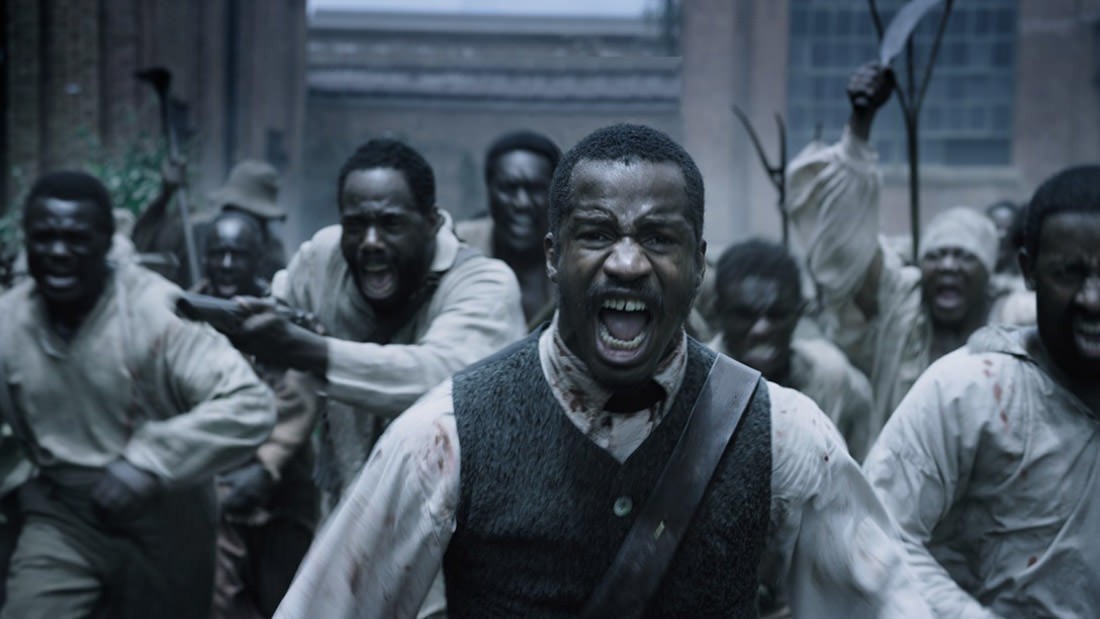
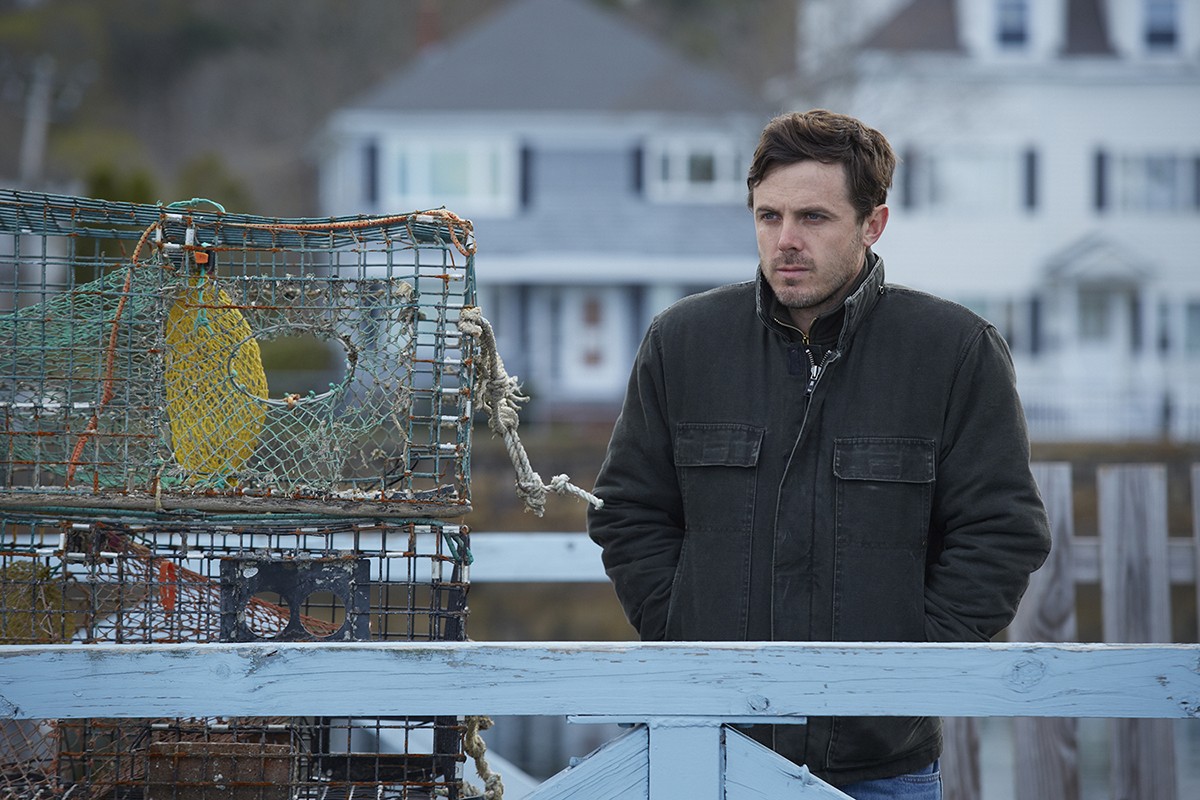
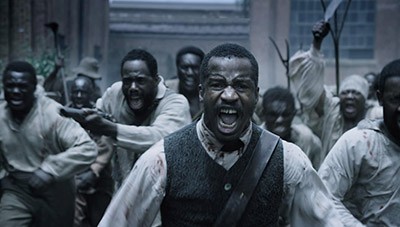
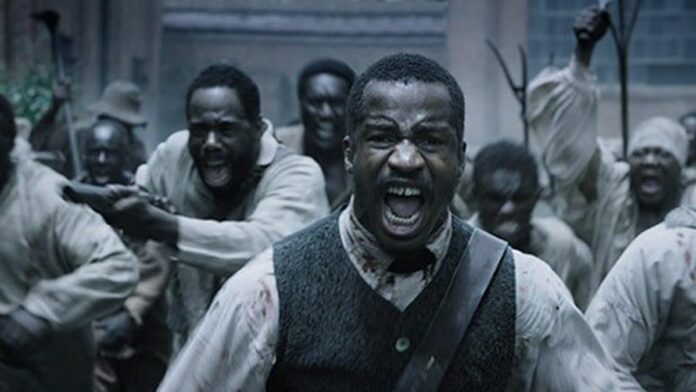
As it happened, many of the festival’s most talked-about movies actually deserved the attention. Nate Parker’s incendiary The Birth of a Nation — about slave-preacher Nat Turner and the 1831 insurrection he led — landed the biggest distribution deal in festival history ($17.5 million), ahead of the film winning both the Audience Award and Grand Jury Prize in the US Dramatic Competition. Reaction was similarly euphoric for Kenneth Lonergan’s latest grief study Manchester by the Sea, featuring a stunning lead performance by Casey Affleck; it pulled in yet another eight-figure deal via Netflix and Roadside Attractions.

But “buzz” took a different turn with respect to another high-profile US Dramatic Competition’s entry: Swiss Army Man, starring Paul Dano as a man stranded on a deserted island who gets a chance at salvation when a dead body (Daniel Radcliffe) washes ashore. Industry reports focused on walkouts at the premiere screening, as it became obvious that a central plot point was that the dead body’s intestinal gases could have a useful purpose. Those reports ignored the reality that walk-outs at Sundance premieres have usually involved industry types who decide that they can’t sell the movie, and thus race off to see something else they might be able to sell. As a result, Swiss Army Man‘s Sundance coverage went overwhelmingly for describing it as the “farting corpse movie,” ignoring the way that filmmakers Daniel Scheinert and Daniel Kwan created a lovely exploration of how the things we find shameful and embarrassing keep people isolated.

The focus on big buzz stories also too often relegates some of the festival’s best movies to the sidelines, because they don’t have the biggest stars or inspire the biggest bidding wars. The single best film at Sundance 2016 may have been Tickled, a New Zealand documentary about a journalist whose initially light-hearted inquiries about “competitive endurance tickling” videos he found online leads him into a darkly fascinating story full of cyber-bullying and legal threats. While on some level this is an inspiring story about a reporter doing the hard, potentially dangerous work of exposing a criminal, it also digs into hidden fetish sub-cultures, and how it might bother people that those sub-cultures need to remain hidden — and does all of this while remaining thoroughly entertaining.

The lower profile World Cinema categories also produced two wildly different festival highlights. Elite Zexer’s World Cinema Grand Jury Prize-winning Sand Storm — set in an Israeli Bedouin community — explores topics like patriarchy and arranged marriages in a way that never feels like a lecture, while showcasing a trio of superb central performances. On the lighter side, Jacqueline (Argentine) turned a fake documentary about a would-be government conspiracy whistle-blower into a story about making something from nothing; aside from its goofy humor at the expense of the fictional director’s flailing attempts at manufacturing drama, it became an almost heartbreaking look at the things we do to try leave a mark in the world.

But mostly, what a festival like Sundance can do is give you a chance to see artists taking chances. Robert Greene’s documentary Kate Plays Christine told the story of an actor named Kate Lyn Shiel doing research into the role of Christine Chubbuck — a news anchor who committed suicide on air in 1974 — and transformed it into a radical critique of why we feel the need to have certain stories told at all. The documentary NUTS! employed simple animations and a savvy use of unreliable narration to create a distinctive biography of an American medical “pioneer.” And Anna Rose Holmer’s The Fits told the story of an eleven-year-old girl’s distinctive coming-of-age through allegory and magical realism (in addition to the breakout lead performance by Royalty Hightower).

Maybe the fact that Hightower was among several standout adolescent and pre-adolescent performances — Markees Christmas in Morris from America; J.J. Totah in Other People; Julian Dennison in Hunt for the Wilderpeople — highlights both the blessing and the curse of Sundance. Unlike many international film festivals filled with established filmmakers, Sundance is about discovery. It’s thrilling being part of the first time a great new movie introduces a great new talent. The hype can be crazy-making, but it can be built on love. We all wish we could be in the theater for the next AbracaDeborah.

J. Stalin: ‘Heartfelt, Gangster Rhythm’

J. Stalin (Jovan Smith), a disciple of Bay Area mob music, the soulful gangster rap that preceded the hyphy movement, revealed a surprisingly sentimental side in the artwork of his latest album, Tears of Joy. The cover features a double exposure-style photo of a downcast Stalin with a single tear rolling down his cheek. The larger portrait contains another image depicting him as a doting father, standing on an idyllic hillside, tossing his toddler son into the air.

Although many of the album’s songs are dark reflections of life on the streets of Stalin’s native West Oakland, the record also contains vulnerable moments that point to his maturation as a lyricist. The 29-year-old rapper — whose first album, On Behalf of the Streets, came out ten years ago — still wears a tough exterior. But he’s no longer hiding his sensitive side for the sake of upholding a hard image.

For an artist who has remained steadily prolific for a decade — weathering the rise and eventual dissipation of the hyphy movement — this new approach is refreshing and reinvigorates the classic, Bay Area mob sound that he has steadfastly stuck with throughout the years. Though Stalin hasn’t received much national recognition, he’s part of a certain group of rappers — including Messy Marv, Beeda Weeda, and Husalah — who have helped shape the Bay Area’s hip-hop scene without achieving widespread commercial success in their own right. Stalin embodies the unpolished, streetwise aesthetic that has long defined the regional hip-hop underground, where he’s been a key player for a long time.

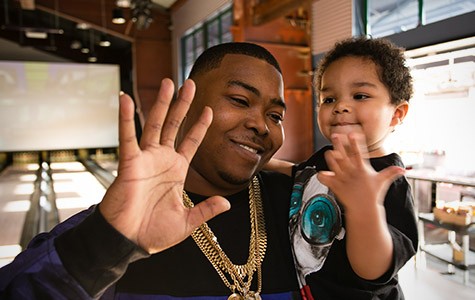
I met up with the rapper recently at Plank, an upscale Oakland bowling alley where he was celebrating his birthday with friends. Between rounds of competitive trash-talking and tequila shots, he stepped away from the bowling lanes for the interview. Though his answers to my questions were somewhat curt, he was surprisingly candid about personal topics. In his matter-of-fact style, he opened up about the recent painful experiences he poured into his lyrics on Tears of Joy. The birth of his son two years ago, he said, was a turning point in his life that prompted him to be more honest with himself, and his evolution is apparent in his lyrics.

“I was going through problems that money couldn’t fix.” As he reflected on various life events that inspired the record, his brow furrowed. “If they were financial problems — I have money, I could have just paid whatever off. But … I was going through custody battles with my son’s mom and trust issues with my mom — I found out my family was stealing from me and stuff.”

Indeed, themes of relationships gone awry, loved ones’ deaths, escaping poverty, and coping with family members’ drug addictions emerge throughout the album, although Stalin couches them in cinematic narratives of organized crime, money, and sex. While some of the songs sensationalize the lifestyle of a drug dealer in expected ways, others demonstrate emotional dimensionality, broaching topics such as redemption and forgiveness. Tracks like “I’m Sorry” and “Mama’s Boy” (which, appropriately, features Mistah F.A.B., whose love for his late mother is apparent throughout his body of work) foreground these sober themes over gorgeous, soaring beats with strains of smooth jazz instrumentation and gospel vocal arrangements.

When I asked Stalin whether he was hesitant to show his emotional side to his fans, the rapper shrugged, remarking that it had hardly occurred to him. “If I was younger, I may have thought about it,” he said. “But now I try to give people the real me and it’s up to them if they like it or accept it or not. If I’m crying, it’s the real me. If I’m fighting or trying to break up a fight, that’s the real me. Whatever I’m doing at this time or day, at my age, it’s the real me.”

“Think U Ready,” featuring the late Jacka — a central mob music purveyor who was gunned down by an unknown assailant a year ago — provides another one of the record’s more emotive moments. Stalin and The Jacka’s sing-song verses float like wisps of smoke over a lush, spacious beat with melancholic keyboard flourishes and echoing choral samples. Stalin follows up the track with “Jacka’s Prayer,” on which, in contrast, his flow is sturdy and defiant. He confronts his mortality throughout its verses, and positions himself as the torchbearer of The Jacka’s legacy.

The references to The Jacka’s untimely death — as well as tracks like “Face Shots,” which Stalin said he wrote in response to another one of his friends surviving a gunshot wound to the head — seek to illuminate issues of systemic inequality and resulting crime in Oakland’s most vulnerable communities, Stalin said.

“Everybody talkin’ about ‘Pray for Paris’ — pray for Oakland!” he exclaimed, visibly vexed. “I’m shedding a light about what happens in the Black community that goes unspoken of in the white community because it’s not happening to white people.”

While Tears of Joy certainly doesn’t eschew sober themes, it’s also accessible and contains many genuinely fun moments. “Bye Felicia,” for instance, is a triumphant track about moving on from an ex. Its soulful hook demonstrates Stalin’s singing chops, and its jaunty beat lends it a sense of levity.

Over the past decade, Stalin has been exceedingly prolific, releasing a new mixtape or album nearly every sixty days. Though he’s currently touring the West Coast to promote Tears of Joy, he’s already gearing up to drop his next album, On Behalf of the Streets II, which will come out this spring on the ten-year anniversary of his debut release. He’s also working on producing his first feature film, The Last Week Before Summer, which he said will reimagine the 1983 comedy Risky Business with an all-Black cast.

But his main ambition is to make his label, Livewire Records, a national enterprise — which is as much an investment in his own career’s longevity as it is in the longevity of Bay Area mob music, especially as gentrification continues to displace Oakland’s working-class Black community.

“[It’s] heartfelt, gangster rhythm,” Stalin said. “We gotta keep the mob music alive. Rest in peace, Jacka.”

California Doctors Endorse Leading Legalization Initiative

California’s leading physician organization, the California Medical Association (CMA) has announced its formal endorsement of the state’s leading ballot initiative to tax and regulate adult cannabis use — dubbed the Adult Use of Marijuana Act. It’s one of the biggest endorsements of AUMA so far.

Ending failed cannabis prohibition and regulating the botanical drug allows for greater medical breakthroughs, medical pot patient care, and quality control, the CMA stated.

The endorsement from the group of 41,000 doctors doesn’t mean they encourage pot use or smoking the drug.

But taxing and regulating the billion dollar cannabis industry benefits public health through better monitoring and research, which can inform further health policy adjustments. With cannabis illegal, none of that happens. More than half of Californians have tried pot, and an estimated one in twenty California adults have used it medicinally. 

[jump] Legalizing cannabis will also reduce what doctors call the “improper diversion” of “non-symptomatic patients into California’s medical marijuana system.”

“The California Medical Association believes the Adult Use of Marijuana Act is a comprehensive and thoughtfully constructed measure that will allow state officials to better protect public health by clarifying the role of physicians, controlling and regulating marijuana use by responsible adults and keeping it out of the hands of children,” stated Steven Larson, MD, MPH, president of California Medical Association.

“Medical marijuana should be strictly regulated like medicine to ensure safe and appropriate use by patients with legitimate health conditions and adult-use marijuana should be regulated like alcohol. This measure – along with the recently-passed medical marijuana bills — will ensure the State of California does both – while keeping the public health and public interest as paramount concerns,” Larson stated.

The Adult Use of Marijuana Act would end more than one hundred years of cannabis prohibition in California — and would legalize the possession, cultivation, use, transfer, and sale of pot. Adults 21 years and older would be limited to carrying an ounce in public, and grow up to six plants in private. California finance officials estimate the state could reap $1 billion per year in tax revenue, which would be used to fund pot regulations, research, environmental remediation, mental health care, and teen education.

AUMA’s organizers have reported $1.25 million in campaign donations — the most of any group.

A collection of conservative groups are teaming up with a few pot legalization advocates to oppose the end of weed prohibition in California. The groups claim the measure either goes too far toward liberalizing cannabis laws, or doesn’t go far enough, respectively.

The California Medical Association first recommended legalization in a historic 2011 white paper.


In other legalization news, Arizona legalization organizers launched a billboard that talks up the safety of cannabis compared to alcohol this week — a point US Surgeon General Joycelyn Elders echoed in the Chronicle today. (Elders speaks in San Francisco next weekend.)

The Arizona billboard seeks to turn heads at a massive, Coors-sponsored golf tournament known as the “greatest party on grass.”

Two adult cannabis fans relax in a field with the caption, “If beer and golf make for the ‘greatest party on grass’ … Why can’t adults enjoy a safer party on grass?”

“We’re glad that Arizona residents have the opportunity to attend the Open, consume alcoholic beverages, and enjoy the ‘greatest party on grass,’” stated Campaign to Regulate Marijuana Like Alcohol chairperson J.P. Holyoak. “If spectators can enjoy a beer or cocktail at the TPC, adults should not be arrested for enjoying a little marijuana at a backyard picnic. It is, quite literally, a safer party on grass.”

Activists are collecting signatures for a November ballot initiative to make pot legal for adults 21 years old or over in Arizona.

“Our state took a shot at marijuana prohibition and landed in a hazard,” Holyoak stated. “We are giving Arizona a mulligan on its marijuana policy and letting voters take another swing at it this fall.”

And over in Maine, the Campaign to Regulate Marijuana Like Alcohol turned in more than 100,000 petition signatures Monday, to qualify for the November ballot.

Tuesday Must Reads: Health of California Forests Worse Than Feared; Big Oil Pumped Moderate Lawmakers with Big Money

Stories you shouldn’t miss:

1. California’s forests are in much worse shape than previously thought because of the four-year drought, the Chron$ reports, citing a new comprehensive US Forest Service study. The state’s 21 million acres of national forests include “vast stretches of dead and dying trees ravaged by insects” and are susceptible to “more volatile wildfires” and “increases in invasive plants.”

2. After lobbyists for the powerful oil industry convinced state lawmakers to gut a pivotal climate change bill last September, oil companies showered centrist legislators with $250,000 in campaign funds, the Bay Area News Group$ reports. At Big Oil’s request, the legislators removed a provision of SB 350 that sought to slash the consumption of gasoline by half in the state by 2030.

3. Just 3 percent of California’s juvenile winter-run salmon population survived last year, because of a lack of cold water in the Sacramento River, the AP reports (via the SacBee$). It was the second straight year of mass die off for the winter-run Chinook. Water managers blamed the drought, but fishermen and environmental groups said poor water management, including diverting too much water for Central Valley agribusiness, was also to blame.


[jump] 4. The winter rains have dissipated the toxic algae blooms that closed Lake Temescal in Oakland and Lake Anza in Berkeley, Berkeleyside reports. The East Bay Regional Park District closed both of the lakes last year, but park officials say the lakes are now algae free.

5. The University of California has admitted liability in the death of a 21-year-old Cal football player who died in 2014 during a strenuous workout, the Chron$ reports. The family of Ted Agu sued the university for wrongful death, contending that coaches and trainers didn’t do enough to save the young man when he was obviously struggling.

6. Oakland Raiders owner Mark Davis is seeking a one-year lease extension at the Coliseum, but he still has not committed to staying in Oakland for the long-term, the Chron reports. Late last week, Davis toured potential stadium sites in Las Vegas with casino magnate Sheldon Adelson.

7. And Hillary Clinton and Bernie Sanders ended up in a virtual tie in the Iowa Democratic caucuses, the nation’s first presidential election battle of 2016. On the Republican side, Ted Cruz finished first, followed by Donald Trump and Marco Rubio.

T.I.’s Super Bowl Finale After-Party

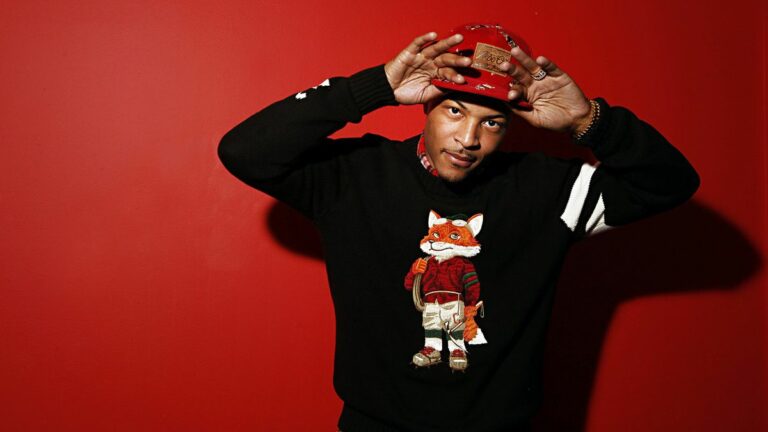
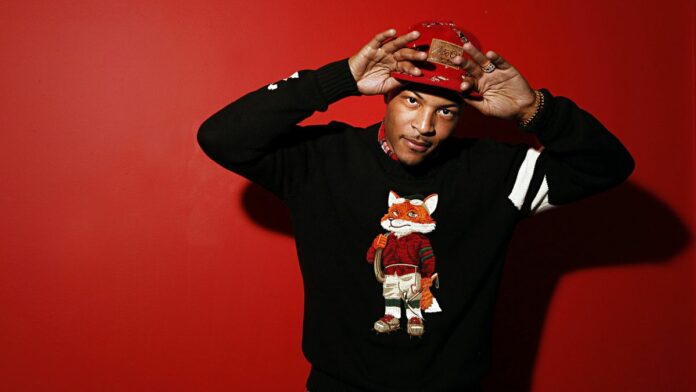
Apart from one glaring lapse in judgment that involved promoting the career of a rapper whose name rhymes with Igloo Australia, T.I. has enjoyed a long and storied rap career that began to gain traction in the early Aughts. While his image in the press recently has not always been favorable because of his refusal to acknowledge his protégé Iggy Azalea’s blatant cultural appropriation, there’s no denying T.I.’s legacy of hits from the past decade-plus. Tracks like “Whatever You Like” and “U Don’t Know Me” have enduring appeal, earning him pop and rap royalty status, and his recent releases, such as “About the Money” featuring Young Thug, continue to keep him on the charts. Along with Gucci Mane, T.I. deserves credit for galvanizing Atlanta’s rap scene, ushering the rise of today’s Southern-indebted trap sound that’s currently dominating the airwaves. To celebrate Superbowl Weekend, T.I. performs at 1015 Folsom in San Francisco on February 7.

The Real Brooklyn by the Bay

As increasing numbers of people arrive in the East Bay after being priced out of San Francisco, it seems that everyone — including The New York Times — has dubbed Oakland "Brooklyn by the Bay." It's easy to see the comparison: Both are (slightly) more affordable spots that draw young people and creative types from their wealthier and more...

Free Will Astrology

Aries (March 21–April 19): The Bible's Book of Exodus tells the story of the time Moses almost met God. "Show me your glory, please," the prophet says to his deity, who's hiding. "You cannot see my face," God replies, "but I will show you my back parts." That's good enough for Moses. He agrees. I hope that you, too,...

‘Lullaby for a Country’: A Gesture Toward Peace

Emmy Award-winning composer Vanessa Vân-­Ánh Võ premiered her concert piece, The Odyssey — From Vietnam to America, at Yerba Buena Center for the Arts in San Francisco last month, although she had initially conceptualized the work after arriving in the United States in 2001. When Võ was growing up in Vietnam, the Vietnam War and its aftermath loomed in the...

Where East Bay Chefs Canoodle

Running a restaurant is notoriously grueling work, with long hours that run late into the night — conditions that aren't exactly conducive to an active love life. And when both members of a couple work in the industry, date nights really tend to be few and far between. It should come as no surprise, then, that the East Bay's...

A Bay Area Playlist for Getting It On

Valentine's Day is corny as hell, and if you, like me, are in your twenties, it also almost always turns out to be a disappointment if you try to make it a big deal. But even if requisite displays of affection brought to you by consumer capitalism aren't your jam, most of us can agree that the prospect of having sex...

Hype Space

On the Tuesday of the 2016 Sundance Film Festival, social media exploded with response to a movie called AbracaDeborah. Starring Kristen Wiig and James Marsden, it was praised on Twitter by professional critics as "a statement on human loneliness," "wondrous," and "profound, heartbreaking, and sublime." Also, the movie didn't actually exist. Initiated as a lark by Uproxx critic Mike Ryan, the...

J. Stalin: ‘Heartfelt, Gangster Rhythm’

J. Stalin (Jovan Smith), a disciple of Bay Area mob music, the soulful gangster rap that preceded the hyphy movement, revealed a surprisingly sentimental side in the artwork of his latest album, Tears of Joy. The cover features a double exposure-style photo of a downcast Stalin with a single tear rolling down his cheek. The larger portrait contains another...

California Doctors Endorse Leading Legalization Initiative

California’s leading physician organization, the California Medical Association (CMA) has announced its formal endorsement of the state’s leading ballot initiative to tax and regulate adult cannabis use — dubbed the Adult Use of Marijuana Act. It's one of the biggest endorsements of AUMA so far. Ending failed cannabis prohibition and regulating the botanical drug allows for greater medical...

Tuesday Must Reads: Health of California Forests Worse Than Feared; Big Oil Pumped Moderate Lawmakers with Big Money

Stories you shouldn’t miss: 1. California’s forests are in much worse shape than previously thought because of the four-year drought, the Chron$ reports, citing a new comprehensive US Forest Service study. The state’s 21 million acres of national forests include “vast stretches of dead and dying trees ravaged by insects” and are susceptible to “more volatile wildfires” and “increases in invasive...

T.I.’s Super Bowl Finale After-Party

Apart from one glaring lapse in judgment that involved promoting the career of a rapper whose name rhymes with Igloo Australia, T.I. has enjoyed a long and storied rap career that began to gain traction in the early Aughts. While his image in the press recently has not always been favorable because of his refusal to acknowledge his protégé...
19,045FansLike
17,709FollowersFollow
61,790FollowersFollow