New East Bay Bike Share Program Not Yet Serving the Poor

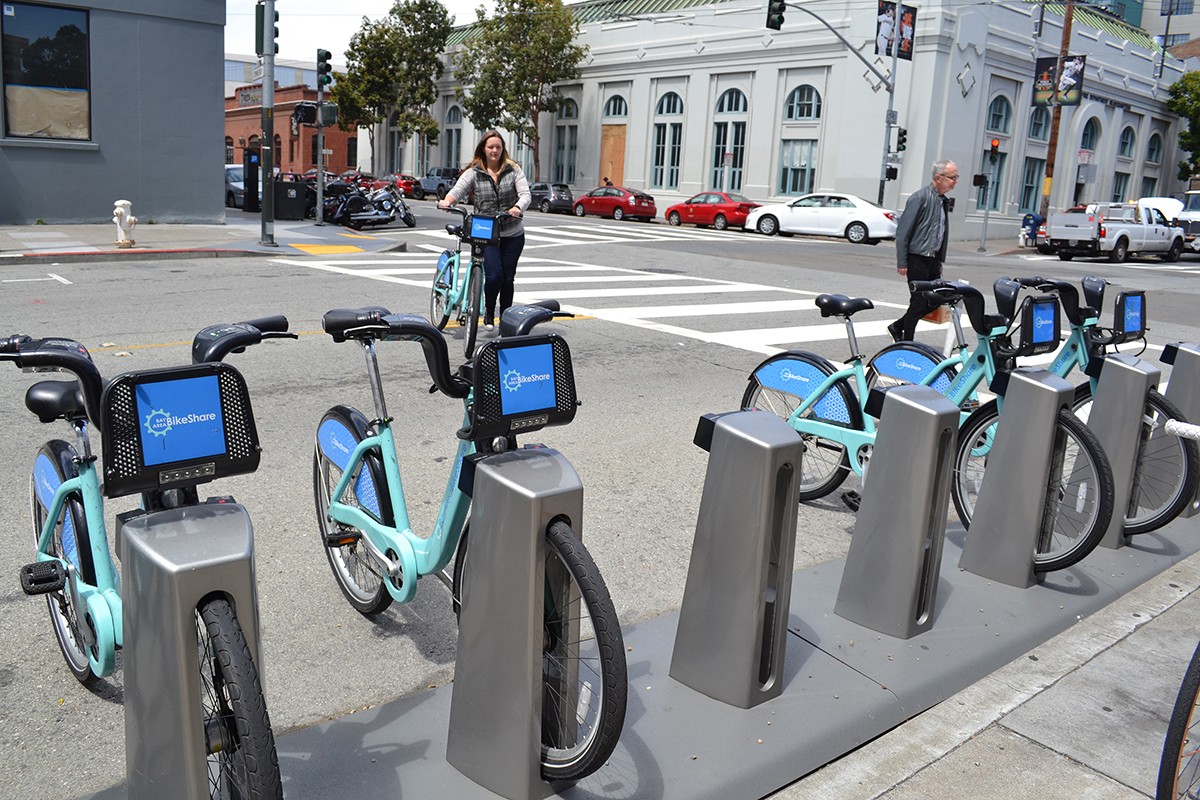
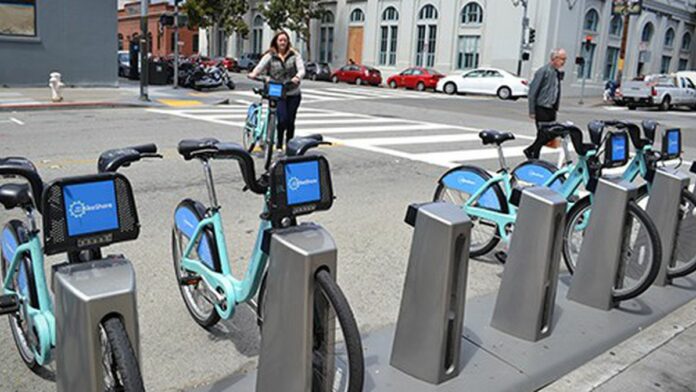
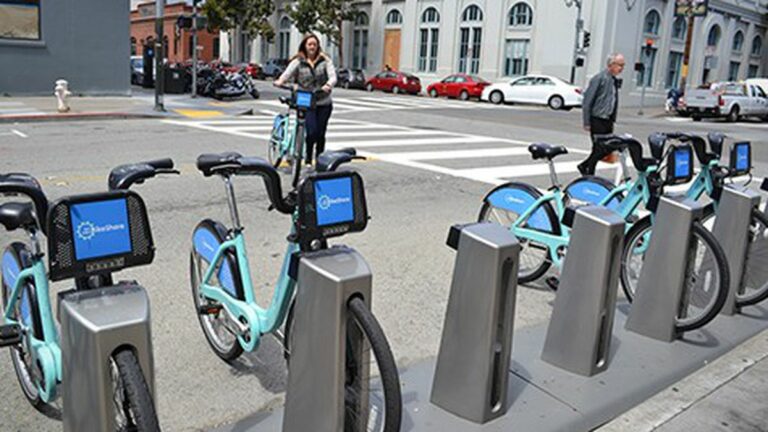
The Metropolitan Transportation Commission (MTC) announced last May that Bay Area Bike Share would expand across five Bay Area cities, bringing 1,400 bikes to Oakland, Berkeley, and Emeryville by 2017. More recently, several components of the East Bay’s bike share program have been debated in a series of ongoing public workshops, including where to install bike stations. But perhaps the biggest question facing the program is how to make bike sharing equitable.

Under the current plan, the price of an annual membership would be $88, but could rise to $149 by the time the program kicks off this fall, thereby making the East Bay home to one of the most expensive bike share systems in the nation. Bay Area Bike Share Outreach and Communications manager Paolo Cosulich-Schwartz said the potential price hike stems from the fact that the program is transitioning from public to private financing. The higher rates would pay for operations and maintaining bikes and stations and would help fund a revenue-sharing program with MTC. “The San Francisco-San Jose pilot program had been operating under a heavily subsidized system,” Cosulich-Schwartz said.

The private-public partnership with Motivate, the largest bike share operator in the country, will include a discounted membership — $60 annually — for low-income users. But some bike activists note that the MTC contract states that only those enrolled in PG&E’s California Alternate Rates for Energy (CARE) Program qualify for the reduced rate, leaving out a significant number of people who aren’t registered for utility services or are homeless.

On January 12, Oakland’s Bicyclist & Pedestrian Advisory Commission, which advises and recommends policies for safe pedestrian and bikeway systems, released a letter that the group had sent to the Oakland City Council’s Public Works committee in support of the new program, but with the potential finance barriers at the top of the list of items to consider as the plan moves forward. “The $149 annual membership fee ($60 low-income) will make it one of the most expensive Bikeshare systems in the country. In order to create a positive perception of the service, opportunities need to be sought to further reduce the cost to users, especially for low-income individuals,” the letter stated. “Overtime fees may more likely be accrued by users in lower-income neighborhoods on the edges of the service area, and we suggest addressing this issue within the low-income discount membership structure.”

Robert Prinz, a BPAC commissioner and Bike East Bay education director, said in an interview that he’s hopeful the bike share program can be beneficial both to Motivate and to riders, but said there is still plenty of work to do in terms of making bike share more equitable. “There’s a lot of holes in that plan we need to address,” he said.

Prinz said he sees the shift to private funding as both a good and bad opportunity. On the one hand, there are going to be a lot more bikes on the road. But groups like BPAC and Bike East Bay now have less influence over the system, including determining subsidized programs and equitable-access plans. “Higher density and a large number of bikes is great,” he said. “But it’s not just about the number of bikes, it’s also about where they are so people have convenient places to ride.”

City bike share programs across the nation have garnered positive reviews for safety and for clearing up traffic, encouraging physical activity, and reducing carbon emissions. But they’ve also struggled to make transportation more accessible to those with low or zero income.

A study conducted by the Mineta Transportation Institute (MTI) in 2012 found that income distribution of bike sharing members skews toward a higher-income level relative to the population for each of the cities surveyed. It also showed that individuals with higher levels of education were more likely to use the bike share system; in both Salt Lake City and Minneapolis-St. Paul (counted as one city in the analysis), the study found that more than 80 percent of bike share members had a bachelor’s degree or higher.

Susan Shaheen, an adjunct professor and co-director of the Institute of Transportation Studies’ Transportation Sustainability Research Center at UC Berkeley who was the lead researcher in the 2012 and 2014 MTI bike sharing studies, said in an interview that pricing is an important part of bike share programs. At the time of Shaheen’s study, the median price for an annual membership in bike share programs nationwide was about $65. Shaheen said the number has likely gone up in recent years, and noted that Citi Bike in New York raised its annual membership prices from $95 to $149 in 2014.

Shaheen said an annual price of $149 makes sense if a portion of the funds help subsidize low-income riders. However, she points out that price isn’t the only barrier for accessing bike share programs. Some people who don’t live close to a bike share station, or “doc zone,” get penalized with overage charges because of the time it takes to return a bike. In addition, the program requires users to have a credit card to purchase a membership. “Are these bikes available to lower-income [people] geographically and financially? Are these individuals banked or unbanked?” she asked. “There are questions relating to equity that don’t even have to do with the price.”

Shaheen said Bay Area bike share planners should analyze the best practices of other cities. One example is Pronto Cycle Share in Seattle, another Motivate-operated system, which teamed up with affordable housing providers to offer discounted annual rates as low as $20 per year.

There’s also Hubway, a Motivate-operated city bike share program owned by the cities of Boston, Cambridge, Brookline, and Somerville in Massachusetts. Rather than having Motivate administer low-income passes, the City of Boston offers eligible residents annual memberships of just $5 — along with a free helmet and additional thirty-minute usage period, in case they live a long distance from a doc zone. Eligibility is determined by a member’s income level. The City of Boston also hosts a “Prescribe-A-Bike” system setup with local physicians who can refer low-income patients for a $5 Hubway annual membership. Currently, subsidized members make up about 15 percent of the Hubway’s 13,000 members.

Cosulich-Schwartz emphasized that Bay Area Bike Share is still working out the details, and that initiatives to improve accessibility may eventually arise. For instance, he said that discounted rates that currently apply to residents enrolled in MUNI’s lifeline program could also be employed by its East Bay counterpart, and there’s even been talk of implementing retail storefronts where users could pay in cash. However, any plan to include people who aren’t signed up for utility services or don’t have credit cards has yet to be officially included in the deal.

Either way, Shaheen stressed that not all cities are the same, and thus not all pricing models will work the same. “In the absence of research and understanding, it’s hard to know if the user and operator sides are both achieving economic equity and environmental sustainability,” she said, making public participation at this stage ever more crucial.

“There’s still ongoing outreach for people who want to plan for this,” Prinz said. “We have such a good opportunity to get bike share right and make it equitable here in the Bay Area.”

Whatta Other Countries Got that We Ain’t Got?

0

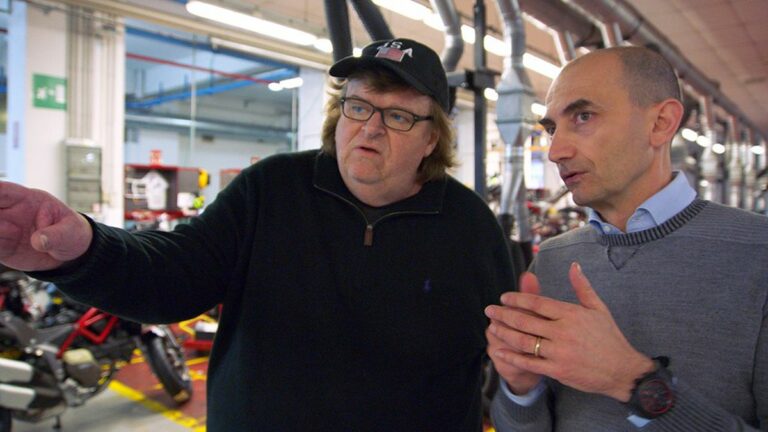
Despite its title, Michael Moore’s film Where to Invade Next doesn’t have quite the urgency of the outraged exposés that made him one of the world’s best-known makers of documentary op-eds. Instead of the frontal assaults on America’s gun culture (Bowling for Columbine), its health care system (Sicko), or the spurious war on terrorism (Fahrenheit 9/11), Moore’s new one has more in common with the calm despair of Capitalism: A Love Story. The film is a wistful, laugh-to-keep-from-crying examination of what it means to be an ordinary 99-per-center in 21st-century America, as seen in contrast to other societies. Seems we’re missing out on a lot.

The movie’s title is an ironic joke. Moore explains that since we haven’t won a war outright since The Big One — World War II — it’s high time we picked on one of those small Caucasian countries, mostly in Europe, that have something we’d actually want. Like government-mandated annual eight-week paid vacations for all workers.

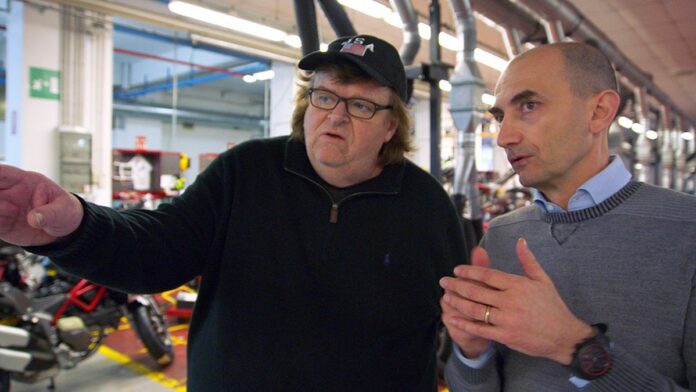
Dressed in his customary sloppy jeans and Detroit Tigers baseball cap and looking like an unmade bed, Moore drops in on Johnny and Cristina, an Italian married couple, and discovers that not only do they get eight weeks paid, a national health plan, five months’ paid maternity leave, and a two-hour workday lunch break when they go home and eat their mostaccioli, but every December they receive a “thirteenth-month” paycheck so they can afford to have some fun — the idea being that they work the other twelve months to pay their bills and need the thirteenth month’s pay to recharge their batteries. Moore is flabbergasted as he sits listening to this. So are we. No wonder Italians always look as if they’ve just had sex.

Johnny and Cristina are shocked to learn that in the USA, the government does not require companies to offer any kind of paid vacation whatsoever. As he tours places like Germany (where union workers sit on corporate boards), Portugal (no drug laws), Slovenia (free university education for everyone), Norway (relaxed prisons without walls), Finland (no homework for schoolkids; all tuition is illegal), and Iceland (greedy bankers sent to prison; women assume more control of society), Moore gets plenty of sympathy from the people he talks to. One of the most poignant visits is to a public middle-school in France, where the students eat gourmet meals and receive sex education. When the French students take a look at a typical American school lunch, they wince. “You know it’s bad when the French pity you,” observes Moore.

One of the movie’s stops is the North African country of Tunisia, where women’s rights are guaranteed by the state, as are free abortions and free women’s health clinics — this in an Arab country where 99 percent of the people are Sunni Muslim. Will wonders never cease? Moore’s point, as always, is that Americans have always been among the world’s leaders in free thinking and fairness, but that we’ve lost our way. Where to Invade Next? Maybe we should start at home.

Editor’s Note: The first paragraph of this review was inadvertently cut when we uploaded it to the web. It has been restored.

Oakland May Green-Light Eight New Pot Clubs a Year

The Oakland City Council could green-light up to eight new medical cannabis dispensaries per year, as well approve dozens of related licenses for cultivation, testing, edibles, and pot extracts at its meeting on Tuesday, February 16. Under the sweeping plan pushed by staffers in Mayor Libby Schaaf’s administration, Oakland would also issue new licenses for delivery-only dispensaries, lounges, transportation services, and analytical labs. The plan also would generate millions of dollars in new tax revenue for the city; increase safety by reducing the need for a black market for medical pot; add more local jobs; and produce safer medical cannabis supplies on a smaller carbon footprint, according to city staffers.

Many in the industry are cheering the plan. “It’s long overdue,” said Dale Sky Jones, chancellor of Oaksterdam University in the city’s Uptown district. “But I trust Oakland to continue to be the leader.”

“Oakland’s always been at the forefront of the legal cannabis movement,” said BLUM dispensary Executive Director Salwa Ibrahim. “It’s only appropriate the city continue to expand its legislation in ways that allow our industry room to thrive, innovate, and compete with the rest of the country.”

Currently, Oakland is falling behind other cities, city staffers report, and needs to align its laws with the new state regulations. Oakland trails San Francisco and Sacramento in dispensaries per capita. Oakland’s eight licensed dispensaries paid more than $4 million in taxes in 2015, and revenues should grow 28 percent in 2016, staffers estimate.

Californians legalized medical marijuana in 1996, but the legislature did not enact state regulations until 2015. Oakland had been blazing its own trail, first in 1998 with the opening of the Oakland Cannabis Buyer’s Cooperative, and again in 2004 with four licensed dispensaries, plus four more in 2011. Oakland drew federal threats of prosecution for licensing medical cultivation in 2010, but current policies from the Obama administration steer prosecutors away from targeting state-regulated pot commerce. California lawmakers regulated medical pot from seed to sale in October with the passage of the Medical Marijuana Regulation and Safety Act (MMRSA).

MMRSA bestows unprecedented legitimacy on state-licensed canna-businesses, and is super-charging the billion-dollar industry’s growth this year. While many cities reacted to MMRSA with bans, others are seeing green and cashing in.

MMRSA calls for about ten new license types covering most aspects of the pot trade, and the state’s dual licensing structure lets localities choose how much activity they want. Oakland’s Cannabis Regulatory Commission advised the city to daylight the already-robust underground pot economy in Oakland, and city staffers are recommending that the council do just that.

“Oakland has fallen behind other jurisdictions,” states a report written by Greg Minor, assistant to City Administrator Sabrina Landreth. “Unregulated non-dispensary activities have resulted in electrical fires (stemming from flawed indoor cannabis cultivation), violent crime (such as robberies, burglaries, and even homicides), and the use of pesticides and fertilizers that run counter to the crop’s medical purpose.

“By aligning with state law,” Minor’s report continued, “the city will … encourage unregulated medical cannabis operators in Oakland to come into the light.”

Staffers recommend lifting the city’s cap on dispensaries and replacing it with zoning-driven limits — like San Francisco does. Dispensaries would also be able to cluster “in certain areas and not in others, depending on the character of the area,” according to Minor’s report. A 600-foot buffer would continue to prevent licensees from setting up shop near schools and youth centers. A new type of delivery-only dispensary permit is also needed to control the dozen-plus operators that already exist, staffers report. “[Deliveries] have operated in and out of Oakland for several years, largely in a clandestine fashion,” Minor’s report states. “Further, that number could rise as smart phone app delivery services continue to develop and satisfy the consumer demand for convenience. Delivery services also serve an important function for elderly and disabled individuals who cannot easily travel to brick-and-mortar facilities.”

C.R.A.F.T. delivery collective operator Alan Sorrentino applauded the recommendation, saying it showed that “the city’s commitment to providing patients with increased access to quality tested medicine.”

The city may issue about sixty permits for commercial gardens, kitchens, transportation services, and other categories this year. Most commercial pot activity would have to occur in industrial-zoned areas of town near the waterfront. Commercial home-growing in residential areas would not be allowed. However, small kitchens and collective gardens might be exempt, provided that small scale edibles producers meet “cottage food operations” requirements under California’s Homemade Food Act. Also exempt from permitting would be small-scale collective or personal cultivation of gardens up to 96 square-feet in size with up to 32 square-feet of canopy.

Lastly, Oakland may get vape lounges. Patients want it, other cities allow it, and they’re not bothersome. Lounges cut down on the number of people smoking in cars and provide a place to medicate for the many low-income patients barred from doing so in their apartments or other dwellings.

Getting into Arboreal’s Headspace

0

It’s easy to tune out the rest of the world when listening to Arboreal’s intricately arranged electronic tracks. The songs build up and then strip back down, enveloping listeners in muted jazz-samples and field recordings from nature and the producer’s indoor surroundings. He layers the sound of reeds rattling, raindrops falling, or leaves rustling over expansive keys and sparse back beats. His textured instrumentals make fitting backdrops for that long ride home – when your mind scans over the day’s events and memories float in and out of your awareness as the bus or train rumbles through the landscape.

The Oakland producer, born Aaron Robbins, took on the name Arboreal, or “of the trees,” as a metaphor for using music as a safe haven of sorts. The field recordings in his work, he explained, offer an opportunity for listeners to escape into their imaginations. “When there’s a real atmosphere recording of something outside that’s in the music or behind it, it really feels like you’re in a place,” Arboreal said. “[They’re] sounds that feel comforting — like you’re by yourself or you’re just kind of in your own head.”

anymore / yet by arboreal

It’s no surprise then that Arboreal began developing his music during a particularly tumultuous period in his life. The eighteen-year-old Oakland native attended three different high schools and spent his junior year taking online courses. His parents got divorced around his sophomore year, he said, and he also went through a “super long, convoluted, and difficult” relationship during that time.

“High school was kind of a crazy time,” he said. “I just focused on music one hundred percent, every day after school. It got to the point where I wasn’t really doing any homework or anything for most of high school. It all sort of flew by.”

Sitting in his sparsely-decorated apartment in Oakland’s Cleveland Heights neighborhood, the Laney College freshman admitted that he’s pretty happy with the direction his life has taken since high school graduation. The electronic music collective Somewhere to Hide dropped his debut album, anymore/yet, last December, a project he had spent the past eighteen or so months producing. He’s been performing with Vallejo producer Sela Oner at the latter’s recurring beats showcase at Studio Grand, Very Clean, the next iteration of which is planned for February 13. And, he’s collaborating with Somewhere to Hide singer/producer Wool (Emily Chaves) on a split cassette tape that he said will come out within the next few months.

Arboreal said that pop and hip-hop’s evolution towards atmospheric beats inspired him to head in the same direction himself, with artists such as Main Attrakionz, a well-regarded Oakland rap duo, opting for washed-out, ambient production in their releases.

Much like the collages made from National Geographic cutouts that decorate his room, Arboreal’s tracks on anymore/yet juxtapose unrelated yet harmonious sounds. On the album’s first single, “to the forest,” a splinter of a vocal sample forms the song’s spine, over which he plies brittle snare snaps and subtle bass notes to create a verdant tonal milieu. While most of the tracks have a hazy and effervescent quality, the two-minute track “gas” takes an ominous turn with a menacing organ melody treading over forbidding undertones. The album oscillates between genres, mixing house, two-step, and hip-hop. And without many decipherable lyrics, listeners are free to interpret the instrumentals any way they like.

Arboreal didn’t set out to make a cohesive project. anymore/yet came about after a deal to produce an EP for an LA label fell through, he said. It wasn’t until he assembled the tracks alongside others he was working on that a cohesive theme emerged. The title of the album was rooted in a feeling of detachment, or as Arboreal put it, “Not being one hundred percent present. Always looking towards the future or just looking at the past, and not knowing where to go.” He was quick to admit it was an honest reflection of where he is in his life, both in terms of defining his own path as an adult, and refining his musical style.

“Creating music, I feel like it’s me putting my energy out there,” he said. “You can tell whatever tale you want.”

Oakland Aims to Allow Food Trucks to Operate All Over the City

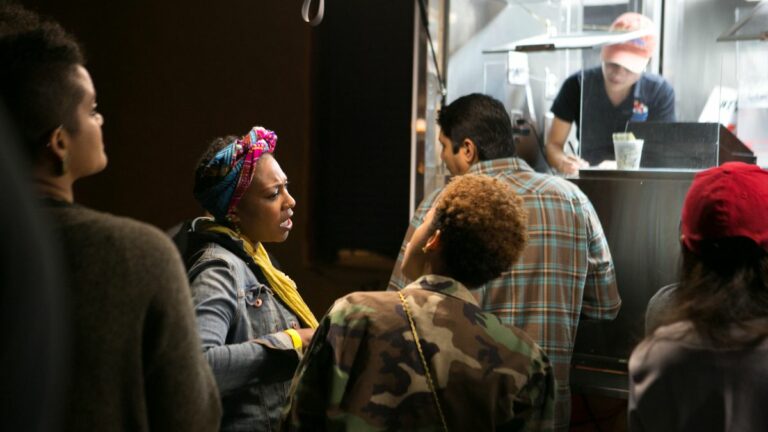
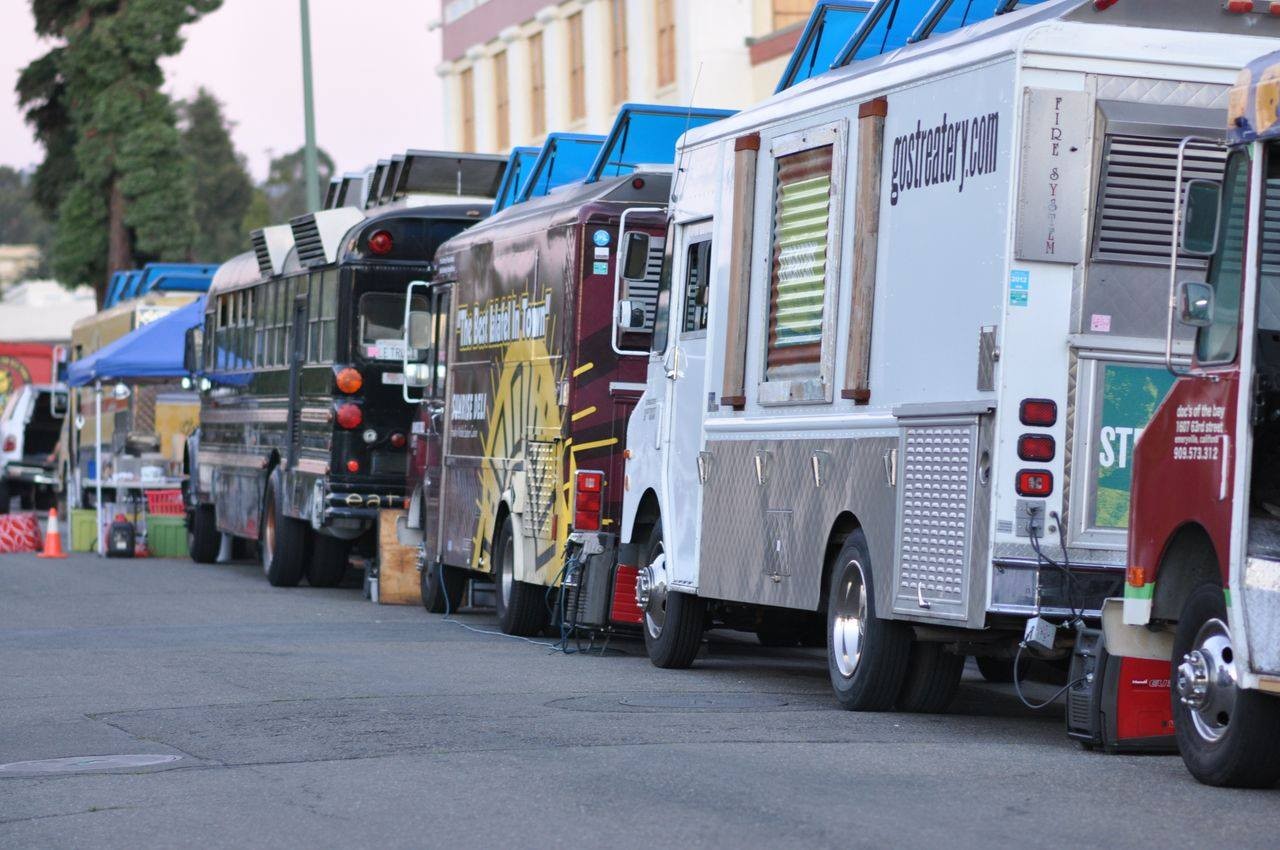
Off the Grid-style mobile food gatherings might have taken the Bay Area by storm, but here in Oakland, the food truck revolution hasn’t gained much traction. It’s been limited, for the most part, to East Oakland’s vaunted taco truck scene and a handful of high-profile events elsewhere in the city.

But all that may be about to change. The city recently unveiled a proposal for a new mobile food policy that would greatly expand opportunities for local food truck operators.  

In theory, your favorite Fruitvale taco truck would now be able to set up shop on, say, Piedmont Avenue. And it would become much easier for individual food trucks to get permission to pull up to a metered parking space in Oakland to do business, the way they do in other cities that have a vibrant street food culture.

Gail Lillian, proprietor of Liba Falafel and a pioneer of Oakland’s recent gourmet food truck movement, said she was impressed that the proposal doesn’t “over-legislate the process,” forcing mobile food entrepreneurs to jump through unnecessary hoops. In an email, Lillian wrote, “Oakland has written a permit process that treats food trucks like any other legitimate business, deserving of opportunity, instead of treating them like entities that should apologize for their business models.”

That said, Lillian also acknowledged that Oakland is very late to the game in terms of creating a comprehensive food truck policy. (The Express has documented the often painfully slow process since at least 2011.)

Mobile food advocates might argue that the current proposal is some ten years overdue, given that the pilot program that provided legal sanction for the Fruitvale district’s vibrant pushcart and taco truck scene — but restricted it to a narrow strip of land along International Boulevard — hasn’t expanded to other parts of Oakland since its creation in 2001. And while “food pods” — i.e., clusters of three or more trucks that convene weekly at an approved location — have been legal in Oakland on a limited basis since 2012, you can count on one hand the number that have really caught on. Contrast that with a city like Portland, which has nearly fifty active food pods.  

It’s not for a lack of desire. For the past five years, officials in Oakland’s Planning Department have spoken of their intent to create a permanent, all-encompassing mobile food policy for the city, and have at various points conducted surveys designed to kickstart that process. And yet prior to this new draft policy, there had been little tangible progress.

Devan Reiff, the city planner who was tapped last year to spearhead the development of a new policy, said there have been many reasons for the delay. City planners working on the mobile food policy kept getting pulled off the job to deal with higher-priority matters. In addition, planners kept getting bogged down over the lack of any viable mechanism for the enforcement of mobile food regulations — beyond the unlikely prospect of dumping another responsibility on the city’s overstretched police department. Under the new proposal, the task of enforcing food truck regulations will be assigned to newly budgeted positions in the City Administrator’s Office, Reiff explained.

In any case, the proposed changes are sweeping. Perhaps most significantly, the areas in Oakland where individual food trucks that aren’t part of a weekly food pod would be greatly expanded beyond International Boulevard’s lonchera corridor, and would include all of the city’s major commercial districts — including downtown, Temescal, Rockridge, Piedmont Avenue, and beyond. That means that individual trucks such as Liba Falafel will be free to do what they’ve never been able to do before legally: to, for instance, pull up to a metered parking space in downtown for a couple hours of lunch business, provided that they adhere to some basic restrictions with respect to distance from schools, restaurants, and other mobile food vendors.

The new policy would also mean that taco trucks in Fruitvale would now have a viable way to expand their operations beyond East Oakland — either with a setup similar to what you typically find in Fruitvale (i.e., in private lots) or, again, parked at a meter. In addition, the city’s food pod program would be expanded, allowing each individual pod organizer to run five different weekly pods (instead of just two). What Reiff described as “Portland-style” food pods — a group of trucks or carts set up on a permanent basis on private property —would also be permitted.

Karen Hester, who organizes the Bites Off Broadway and Bites at the Lake food pods — both currently on hiatus for the winter — said that while the new proposal is a big improvement on the city’s existing mobile food regulations, she still finds the language in the draft policy to be too restrictive and “nitpicky.” Hester took particular issue with the blanket restriction against food trucks selling alcohol, which she said could be a deciding factor in whether she continues to operate her Lake Merritt food pod.

Mobile food entrepreneurs, brick-and-mortar business owners, taco enthusiasts, and various other stakeholders will have until February 19 to submit preliminary feedback on the city’s draft proposal by emailing Reiff at DR****@*****nd.net. After that, Reiff will write a draft of the actual ordinance, which he hopes will be ready to be reviewed by the planning commission in late April or May. From there, the law would need to be discussed at two city council meetings before getting passed into law.

Free Will Astrology

Aries (March 21–April 19): “Love is a fire,” declared Aries actress Joan Crawford. “But whether it’s going to warm your hearth or burn down your house, you can never tell.” I disagree with her conclusion. There are practical steps you can take to ensure that love’s fire warms but doesn’t burn. Start with these strategies: Suffuse your libido with compassion. Imbue your romantic fervor with empathy. Instill your animal passions and instinctual longings with affectionate tenderness. If you catch your sexual urges driving you toward narcissists who are no damn good for you, firmly redirect those sexual urges toward emotionally intelligent, self-responsible beauties.

Taurus (April 20–May 20): Fifteenth-century writer Thomas à Kempis thought that real love could arouse enormous fortitude in the person who loves. “Love feels no burden,” he wrote. “It attempts what is above its strength, pleads no excuse of impossibility; for it thinks all things lawful for itself, and all things possible.” As you might imagine, the “real love” he was referring to is not the kind that’s motivated by egotism, power drives, blind lust, or insecurity. I think you know what I mean, Taurus, because in the past few months you have had unprecedented access to the primal glory that Thomas referred to. And in the coming months you will have even more. What do you plan to do with all that mojo?

Gemini (May 21–June 20): Gemini novelist Elizabeth Bowen (1899–1973) was fascinated in “life with the lid on and what happens when the lid comes off.” She knew both states from her own experience. “When you love someone,” she mused about the times the lid had come off, “all your saved-up wishes start coming out.” In accordance with the astrological omens, I propose that you engage in the following three-part exercise. First, identify a part of your life that has the lid tightly clamped over it. Second, visualize the suppressed feelings and saved-up wishes that might pour forth if you took the lid off. Third, do what it takes to love someone so well that you’ll knock the lid off.

Cancer (June 21–July 22): “No one has ever loved anyone the way everyone wants to be loved,” wrote author Mignon McLaughlin. I think that may be true. The gap between what we yearn for and what we actually get is never fully closed. Nevertheless, I suggest that you strive to refute McLaughlin’s curse in the coming days. Why? Because you now have an enhanced capacity to love the people you care about in ways they want to be loved. So be experimental with your tenderness. Take the risk of going beyond what you’ve been willing or able to give before. Trust your fertile imagination to guide your ingenious empathy.

Leo (July 23–Aug. 22): Here’s the counsel of French writer Anatole France: “You learn to speak by speaking, to study by studying, to run by running, to work by working; in just the same way, you learn to love by loving.” What he says is always true, but it’s especially apropos for you Leos in the coming weeks. You now have a special talent for learning more about love by loving deeply, excitedly, and imaginatively. To add further nuance and inspiration, meditate on this advice from author Aldous Huxley: “There isn’t any formula or method. You learn to love by loving — by paying attention and doing what one thereby discovers has to be done.”

Virgo (Aug. 23–Sept. 22): “I do not trust people who don’t love themselves and yet tell me, ‘I love you,'” said author Maya Angelou. She concludes: “There is an African saying: Be careful when a naked person offers you a shirt.” With this in mind, I invite you to take inventory of the allies and relatives whose relationships are most important to you. How well do they love themselves? Is there anything you could do to help them upgrade their love for themselves? If their self-love is lacking, what might you do to protect yourself from that problem?

Libra (Sept. 23–Oct. 22): “Only love interests me,” declared painter Marc Chagall, “and I am only in contact with things that revolve around love.” That seems like an impossibly high standard. Our daily adventures bring us into proximity with loveless messes all the time. It’s hard to focus on love to the exclusion of all other concerns. But it’s a worthy goal to strive toward Chagall’s ideal for short bursts of time. And the coming weeks happen to be a favorable phase for you to do just that. Your success may be partial, but dramatic nonetheless.

Scorpio (Oct. 23–Nov. 21): “A coward is incapable of exhibiting love,” said Mahatma Gandhi. “It is the prerogative of the brave.” That’s my challenge to you, Scorpio. In accordance with the astrological currents, I urge you to stoke your uninhibited audacity so you can press onward toward the frontiers of intimacy. It’s not enough to be wilder, and it’s not enough to be freer. To fulfill love’s potential in the next chapter of your story, you’ve got to be wilder, freer, and bolder.

Sagittarius (Nov. 22–Dec. 21): “It is not lack of love but lack of friendship that makes unhappy marriages,” said Friedrich Nietzsche. He believed that if you want to join your fortunes with another’s, you should ask yourself whether you will enjoy your conversations with this person for the next thirty years­ — because that’s what you’ll be doing much of the time you’re together. How do you measure up to this gold standard, Sagittarius? What role does friendship play in your romantic adventures? If there’s anything lacking, now is an excellent time to seek improvements. Start with yourself, of course. How could you infuse more camaraderie into the way you express love? What might you do to upgrade your skills as a conversationalist?

Capricorn (Dec. 22–Jan. 19): “Love isn’t something you find,” says singer Loretta Lynn. “Love is something that finds you.” Singer Kylie Minogue concurs: “You need a lot of luck to find people with whom you want to spend your life. Love is like a lottery.” I think these perspectives are at best misleading, and at worst debilitating. They imply we have no power to shape our relationship with love. My view is different. I say there’s a lot we can do to attract intimate allies who teach us, stimulate us, and fulfill us. Like what? 1. We clarify what qualities we want in a partner, and we make sure that those qualities are also healthy for us. 2. We get free of unconscious conditioning that’s at odds with our conscious values. 3. We work to transform ourselves into lovable collaborators who communicate well. Anything else? What can you do to make sure love isn’t a lottery?

Aquarius (Jan. 20–Feb. 18): “We all have the potential to fall in love a thousand times in our lifetime,” writes Chuck Klosterman. “It’s easy. But there are certain people you love who do something else; they define how you classify what love is supposed to feel like. You’ll meet maybe four or five of these people over the span of eighty years.” He concludes, “A lover like this sets the template for what you will always love about other people.” I suspect that you have either recently met or will soon meet such a person, Aquarius. Or else you are on the verge of going deeper than ever before with an ally you have known for a while. That’s why I think what happens in the next six months will put an enduring stamp on your relationship with intimacy.

Pisces (Feb. 19–March 20): Sixteenth-century Italian poet Torquato Tasso described one of love’s best blessings. He said your lover can reunite you with “a piece of your soul that you never knew was missing.” You Pisceans are in a phase when this act of grace is more possible than usual. The revelatory boon may emerge because of the chemistry stirred up by a sparkly new affiliation. Or it may arise thanks to a familiar relationship that is entering unfamiliar territory.

Letters for the Week of February 10, 2016

“Crude-By-Rail Projects Face Key Votes,” Eco Watch, 1/27

Ignorance Is Bliss?

Having worked 35 years as a railroad conductor on freight trains, I find it amusing to suddenly find the public up in arms over the proposed transit of oil trains through the Bay Area.

For a decade or more, eighty tank cars have come through weekly, full of volatile ethanol, and are transported daily around the Bay to mix with gasoline and keep our California air clean. Really dangerous cars of chlorine have been transported throughout the Bay Area for decades that are off-loaded safely to make bleach and swimming pool cleaners and are added to our drinking water so we don’t get biological diseases.

There are five refineries producing all kinds of dangerous by-products of crude oil like liquid petroleum gas and anhydrous ammonia, and all are transported throughout the Bay Area in hundreds of rail cars daily with rarely an incident.

Suddenly heavy crude oil on a train is a problem? Ignorance is bliss, I guess.

Brian Lewis, Richmond

“Remembering Chris Thompson,” News, 1/27

RIP Chris Thompson

I’m sorry to hear about Chris’ passing. I remember several years ago, in my first go-around on the council, mentioning to him that I lived in Barrington Hall in the mid-Eighties while I was an undergrad at Cal, and that Kriss Worthington was the hall monitor (so to speak) at another UCB co-op I lived at later. Whether he lived in the co-ops I can’t recall him saying, but we definitely got a chuckle about the Barrington reference. RIP.

Tony Daysog, Alameda city councilmember, Alameda

Great Tribute

A tribute to a great writer by some of the best writers in the Bay Area. Especially happy to see John Raeside’s tribute, having been a devoted Express reader since 1979. Thanks to all, and especially to Chris Thompson, who I never knew but whose work I deeply respected.

Janis Mara, Richmond

“The Return of Don Perata,” Seven Days, 1/13

More of the Same

Obviously, California is devoid of qualified attorneys. Why else would the Coliseum Authority hire a firm whose attorneys have no license to practice in California? This is just more of the same. One more example of a politically corrupt, incompetent family tree of current and ex-Oakland city councilmembers (Nate Miley) being exposed.

The legal requirement to post a public meeting agenda is a basic requirement that every public official should know. Be sure that Don Perata has his tentacles reaching far into this decision. Raising money for Miley’s reelection run seems to me to be a reasonable exchange for this firm’s services — in an alternate universe.

The question is how long will the citizens of Oakland and Alameda County allow this shady political behavior to continue? As Dr. Phil would say, you teach people how to treat you.

Gary Patton, Hayward

“Racial Profiling Via Nextdoor.com,” Feature, 10/7

Sad and Embarrassed

As an Oakland resident in the Dimond district, on a very mixed street, this makes me sad and embarrassed. I did participate in a discussion on this topic on Nextdoor.com and suggested that rather than being suspicious of our neighbors, we should get out and get to know them. I love the diversity of Oakland and would hate to see that change.

P.S. I love the drummers by the lake.

L.J. Roberts, Oakland

Miscellaneous Letter

A Family-Friendly Downtown

Like many Oaklanders, I’ve been engaged in a lot of discussions lately about what our downtown should look like in the future. I’ve heard a growing desire among locals to keep it creative, homegrown, equitable, and affordable, and I’ve read plenty of recommendations to make it more developer-, transit-, and business-friendly. I agree with most of these principles, but if we’re truly going to have a downtown for everyone, I believe we must also make downtown Oakland more family-friendly.

While some parents would never think of raising their children in downtown, many young families are currently living the urban dream. In my experience, Old Oakland, in particular, is an incredibly convenient and friendly place to raise a family. My husband and I have biked our daughters to affordable daycare, walked to work, shopped at small businesses and local farmers’ markets, and spent hours at the nearby public libraries and parks.

Over the past six years, we’ve enjoyed many other downtown family-friendly destinations, like the New Parkway’s all ages theater with sofas and bean bags; Plank’s kid-friendly bowling alley, arcade, and beer garden; and Friday night food trucks and cultural programming at the Oakland Museum of California. And then there’s the Oakland Ice Center, the Museum of Children’s Art, the Downtown YMCA, the Oakland Asian Cultural Center and Fairyland, the country’s first storybook theme park.

Six generations of my family have grown up and grown old in downtown, in and around Chinatown and Old Oakland, but the unfortunate reality is that while there’s always been family-friendly amenities, there’s hardly any family-sized housing options available nowadays. So it’s no surprise that early this year, we — like other families we know — reluctantly moved to the edge of town, where we could find a little more space for our growing girls. But we’re not the only ones. Over the last thirteen years that I lived downtown, I bid farewell to many families of all incomes being sized out and priced out of downtown.

For too long, developers have been maximizing profits by building a disproportionate number of studios, lofts, luxury one-bedroom units, and millennial micro-units, which fetch high per-square-foot rents and prices. Without incentives or requirements to include affordable or family-sized units, three-bedrooms for rent or sale have become extremely rare, if not nonexistent, in downtown. Even the number of two-bedroom units were significantly less than one-bedroom construction during much of our last building cycle.

Between 2000 and 2010, more than 2,300 condominiums were built in downtown. Of those, only 47 units, or about 2 percent, were three-bedroom units. Only five homes have sold with three or more bedrooms in downtown [as of October] 2015 and there are hardly ever any family-sized rentals on Craigslist. Meanwhile, the number of children in Oakland dropped 16 percent during that same time period, four times faster than Alameda County’s (3.9 percent decline) and more than almost every other large city in the country.

Fortunately, it’s not too late to build a more family-friendly Oakland, and there are good reasons for prioritizing it without delay. As other cities have shown, there are benefits that would come with including families of all ages and incomes as a flavorful ingredient in our “secret sauce.” Building family-sized housing downtown for all incomes furthers race and social justice goals by reducing household transportation costs and increasing housing near jobs. More families in downtown increase urban density and reduce the region’s environmental footprint. And family-sized housing in downtown also creates greater economic competitiveness and fuels hyper-local spending.

According to researchers at Cornell University, “Families with young children are a source of economic growth, because:

1. Families with children spend the most in the local economy.

2. Services for children are an important part of local and regional economies.

3. Investment in children builds a productive future workforce leading to long-term growth.”

How can we grow a downtown for more families? We’ve got a lot going for us. In addition to all the attractions, families, and youth organizations, downtown Oakland already has quality public, private, and specialty schools for all ages, giving it a distinct competitive advantage over many nearby downtowns.

But we need to do much better at accommodating more families in downtown, so here are my recommendations for making our downtown even more family-friendly:

1. Engage parents, youth, and family-friendly advocates. Family-friendly cities are intentionally created when they are included in the visioning and design process. More coordination is also needed to bring the school district and leaders of downtown youth and family-serving organizations into planning conversations.

2. Encourage the development of more family-size housing. We need a lot more three bedrooms, and housing for all ages, all incomes, and a range of household sizes. Emeryville has already stepped up and is offering incentives for developing housing for a range of incomes and household sizes. We can do the same.

3. Infuse family-friendly and flexible design principles into planning. So let’s add more playful public spaces, more outdoor family dining, and more street art by our youth. Developers should also be encouraged to design units following family friendly design guidelines and flexible design principles allowing households to reconfigure their units as their needs change.

4. Make sure downtown is safe for our children. Anything less is not acceptable for anyone. Families downtown will not destroy urban nightlife. Car break-ins, gun violence, and unsafe streets occurring around restaurants, entertainment, or nightclubs will. Downtown residents habituate to many urban sounds, but no one ever gets used to the sound of gunfire. So let’s make sure our parks, streets, sidewalks, and transit systems are safe for everyone, all day and all night long.

Oakland is rapidly changing, but with leadership, engagement, and careful planning, we can and should do everything possible to keep our children and youth in the city. After all, a family-friendly downtown and a family-friendly Oakland are in everyone’s best interest.

Tiffany Eng, Oakland, representing the Family Friendly Oakland campaign, FamilyFriendlyOakland.org and @FamilyOakland

Correction

Our February 3 Then and Now column, “The Real Brooklyn,” misspelled the last name of Thomas Eagar, the settler who suggested that the towns of Clinton and San Antonio consolidate into a town called Brooklyn, which was in an area now known as East Oakland.

Cold Beat Changes the Tempo

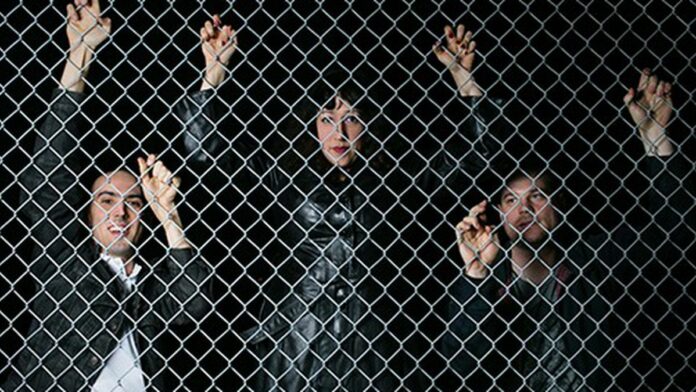
On a recent Tuesday night, Kyle King and Jackson Blumgart of the shoegaze-y pop-punk trio Cold Beat tooled around with an array of drum machines, synthesizers, and samplers in their warehouse studio in Oakland’s San Antonio neighborhood. The bandmates connected their various pieces of equipment with a web of cables that spread across the floor as I chatted with Hannah Lew, Cold Beat’s bandleader. King started messing around with a clubby dance beat on one of his keyboards before stopping himself.

“This isn’t what our music sounds like, by the way,” he laughed, turning to me. Despite needing to rehearse for several upcoming shows, the members of Cold Beat had dedicated the night’s practice to experimenting with new material. The trio’s excitement to create something together was palpable.

The band, which Lew founded in 2011, has recently hit its collaborative stride. After several membership changes, including deciding to move forward without a live drummer, they have finally solidified their lineup. And while Lew started out as Cold Beat’s chief songwriter, on its last album, 2015’s Into the Air, she, King, and Blumgart began to develop a rapport as co-composers. (King has been playing with Lew since 2012 and Blumgart joined the band in 2014.).

Also telling of their newfound creative synergy: Lew used to do Cold Beat interviews alone, but throughout our conversation, she deferred certain questions to King and Blumgart, who gladly chimed in as they set up their gear. Over room-temperature beers from a twelve-pack on the studio floor, the trio traded bits of life experience and technical expertise, referencing inside jokes throughout.

Lew, a 35-year-old San Francisco native, is a longtime fixture in the Bay Area punk scene. She gained a cult following locally and nationally through her previous band, the punchier, more garage-y Grass Widow. Grass Widow released its debut in 2009 on the indie rock label Captured Tracks — which, at the time, also featured national acts such as Thee Oh Sees and The Fresh & Onlys on its roster.

While Grass Widow never got quite as big as its labelmates, its notoriety positioned Lew as an influential auteur in the Bay Area scene. In addition to amassing a considerable following as the bandleader of Cold Beat, she founded the label Crime on the Moon in 2012, through which she has put out the band’s releases digitally and on vinyl. Crime on the Moon has also released other standout, local projects, including Tropic Green’s excellent experimental electropop record, Golden Light (see my story “In Tune with the Moon,” 12/16/2015).

After changing drummers four times since the band’s first release in 2012, the members of Cold Beat decided to have King and Blumgart playing their beats live on a drum machine during performances instead. This new approach, the bandmates explained, allows them to retain the organic element of their stage shows while maintaining a consistent and more electronic sound.

Consistency between their recorded and live material was something the members of Cold Beat had previously struggled with, they admitted. Each time they changed percussionists, their live sound changed, too.

“If you’re constantly changing the drummer, it’s like you’re changing the heartbeat [of the music],” Blumgart said. “So if we are able to do that on our own, we can keep moving forward instead of working to get back to where we were every time.”

However, despite the fact that two different drummers played on Into the Air (including the Express’ former music editor, Sam Lefebvre), the record still retains its cohesiveness, largely thanks to the current trio’s masterful arrangements of electronic effects and punk instrumentation. “Cracks” is a particularly good example, with a pulsating bass line driving its unrelenting rhythm. As it builds intensity, sharp, wiry synths clash with shrill guitar riffs. The even rhythm section balances out these unbridled qualities, and Lew’s lo-fi vocals punctuate the bouts of dense playing.

“Clouds” is an electronic, instrumental interlude that demonstrates the band’s penchant for cultivating a big sound even when fewer musicians are involved. Wobbly synth lines undulate over the tapping of an 808 drum machine, with various tones — some smooth and glassy, others scratchy and brittle — creating a dynamic interplay of layers. The track segues into “Spirals,” another synth-driven song that transforms the tactile qualities of “Clouds” into a danceable rhythm with an Eighties, New Wave feel.

Though Cold Beat regularly plays alongside other Bay Area bands and participates in the tight-knit, local punk community, its experimentation with electronic elements makes the band difficult to classify, and its catchy yet category-resistant sound has lent it crossover appeal. Notably, it’s one of the few groups that have managed to remain in Oakland’s underground scene while garnering attention from national publications, such as Pitchfork, NPR, and Rolling Stone. But underground publications, such as Maximum Rocknroll, have also championed the group’s music. In fact, this week, Cold Beat is slated to perform at MRR‘s festival, Still Not Quiet on the Western Front.

Because of the punk scene’s DIY ethos and, in some cases, distaste for the mainstream media, many bands don’t expand their reach beyond the house show and underground venue circuit. Lew observed that this sort of thinking ultimately limits a band’s potential reach, adding that as she’s gotten older, she finds herself less concerned with being part of a scene and more interested in making art that speaks to people from a variety of backgrounds.

“I generally don’t really make music for the validation of my peers, necessarily, or for a small community. I want to make things that are available to anyone,” she said.

King added, “I know that the music that influences me was not made by people who look like me or necessarily think like me. … I think there’s a desire somewhere to reach out even further.”

Coal Money Divides Oakland’s Churches

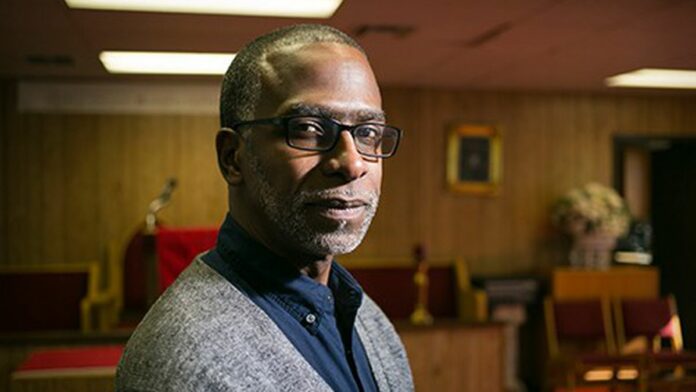
Reverend Ken Chambers’ Westside Missionary Baptist Church is located on Willow Street in West Oakland, just half a mile from the bustling railroad yard where dozens of trains pass each day. The locomotives pull mostly sealed shipping containers filled with furniture, fruits and nuts, and electronics to and from the city’s busy seaport. But soon these tracks could become the busiest corridor for shipping coal on the West Coast.

Terminal Logistics Solutions (TLS), a company headed by former Port of Oakland Executive Director Jerry Bridges, is proposing to ship millions of tons of coal through a marine terminal that will be built on the old Army Base. If the coal plan moves forward, Chambers fears that members of his congregation would be poisoned by toxic dust blowing from train cars, silos, and conveyors. Chambers is also concerned about the effects of burning coal in the global climate. But Chambers isn’t just fighting the developer TLS to stop the project. He is also pushing back against a group of politically influential Oakland clergy who have lined up behind TLS and coal.

Oakland’s Black clergy members are split on the question of coal, and part of the reason is the money that Bridges has promised to churches that support the plan, according to numerous sources.

Last December, Chambers attended a meeting of Oakland pastors at the Greater St. Paul Church in Uptown to discuss the issue of coal. Bridges of TLS spoke to the pastors, promising jobs at the marine terminal, and stating that there would be no negative health and safety impacts. Then Bridges thanked Bishop Bob Jackson, leader of Acts Full Gospel Church for supporting coal. And according to Chambers and other sources, Jackson thanked Bridges for the financial contribution that Bridges had made to the Acts Full Gospel Church’s youth program.

“Jerry said he’d already given money to Bishop Bob Jackson’s church youth program,” said Chambers in an interview. “And Bishop Jackson thanked him for the donation. He’s been bought off.”

Jackson did not return multiple phone calls and emails seeking comment for this story. But numerous sources confirmed that Bridges told the group of pastors that he gave money to Jackson’s church. Furthermore, sources say Bridges has been in talks with Jackson and other pastors about setting up a fund to channel cash from coal shipments to their churches and nonprofits — if the pastors can convince the Oakland City Council to approve coal shipments through the city.

Pro-coal church leaders have organized themselves into a group called the Ecumenical Economic Empowerment Council. Members of the group appeared at a December 8 council meeting to urge the councilmembers to approve the coal plan. “We would like to see this project moving forward as soon as possible,” said Pastor Joseph Simmons of the Greater St. Paul Missionary Baptist Church, to the council. “And we would like to see that there’s not any more information going into the public that scares the public.”

Simmons wrote in an email to the Express that the Ecumenical Economic Empowerment Council is pro-coal because of the jobs it will generate for Oakland residents. “With the very high level of gentrification that has been occurring in Oakland (West Oakland, specifically), people need quality jobs and careers to live where the rents are escalating to be the highest in the country,” wrote Simmons. Simmons also denied that Bridges has contributed money to any churches, or made any promises to fund churches with coal money. “There are no promises to any of our churches or us as individuals in any way,” Simmons wrote. “The community benefits program has not been discussed with us. How this will be done should be discussed with TLS officials.”

Bridges did not respond to multiple phone calls and emails seeking comment for this story. TLS’s official website states that the company will “grow strategic partnerships with community and faith-based organizations to make a positive and meaningful impact by committing funds,” and that “TLS will commit funds based upon the annual throughput of the terminal[.]”

As the Express reported last fall, members of the West Oakland Environmental Indicators Project (WOEIP), a West Oakland nonprofit, said Bridges offered the organization money on the condition that the group help line up support for coal shipments through the city (See “Buying Support for Coal,” 9/21). Margaret Gordon, co-founder of WOEIP, said at the time that her organization rejected the offer because coal would pollute Oakland and other communities along the rail line, and would also drive climate change when it is burned in foreign countries.

Gordon said in a recent interview that there are multiple problems with the money Bridges is offering to churches and possibly other organizations. “These dollars that Bridges is offering to these ministers, is this separate from what the city and Oakland Global Trade and Logistics have already implemented, or is this a separate deal?” asked Gordon.

Gordon said that the original community benefits package with Prologis CCIG Oakland Global, the master developer of the former Army Base, was negotiated between the city and the developer in order to ensure transparency and to provide benefits to the most impacted communities and to the city as a whole. Gordon said Bridges, whose company has a separate, private business agreement with Oakland Global, appears to be negotiating side deals in secret to gain political support for his project. “Who gave the authority to Jerry Bridges to do such a thing?” Gordon asked. “How do they choose who they give dollars to? And is this money dependent on coal?”

Reverend George Cummings of Imani Community Church, who also opposes the plan to ship coal through the city, said the coal plan has divided the city’s Black clergy. Cummings said he attended some of the earlier meetings between the pastors and Bridges, and said the meetings only took place once the coal plan was made public. “They weren’t talking to clergy until they ran into trouble at the city council, and then all of sudden they wanted to engage the faith community in a conversation,” said Cummings. “They are interested in making money. That’s okay. I’m not mad at them — but not at the expense of the community and people’s health.”

Chambers, who is a cancer survivor, said his children grew up struggling with asthma. “I’m very sensitive to any unhealthy air quality that I would breathe, or that my family and my parishioners would have to breathe,” he said. Chambers has been organizing meetings of other Oakland clergy and community members against coal.

The council isn’t expected to make a decision on coal any time soon. City staffers are in the process of hiring Environmental Science Associates, a San Francisco-based consulting company, to analyze potential health and safety impacts of shipping coal through Oakland. A draft report will not be ready until June, according to city records. If the report shows that shipping coal through the TLS marine terminal would harm the health and safety of workers or city residents, the council could exercise a clause in its contract with Prologis CCIG Oakland Global to block the coal plan.

Oakland Aims to Allow Food Trucks to Operate All Over the City

Off the Grid-style mobile food gatherings might have taken the Bay Area by storm, but here in Oakland, the food truck revolution hasn’t gained much traction. It’s been limited, for the most part, to East Oakland’s vaunted taco truck scene and a handful of high-profile events elsewhere in the city.

But all that may be about to change. The city recently unveiled a proposal for a new mobile food policy that would greatly expand opportunities for local food truck operators. In theory, your favorite Fruitvale taco truck would now be able to set up shop on, say, Piedmont Avenue. And it would become much easier for individual food trucks to get permission to pull up to a metered parking space in Oakland to do business, the way they do in other cities that have a vibrant street food culture.

[jump] Gail Lillian, proprietor of Liba Falafel and a pioneer of Oakland’s recent gourmet food truck movement, said she was impressed that the proposal doesn’t “over-legislate the process,” forcing mobile food entrepreneurs to jump through unnecessary hoops. In an email, Lillian wrote, “Oakland has written a permit process that treats food trucks like any other legitimate business, deserving of opportunity, instead of treating them like entities that should apologize for their business models.”

That said, Lillian also acknowledged that Oakland is very late to the game in terms of creating a comprehensive food truck policy. (Indeed, the Express has been documenting the often painfully slow process since at least 2011.)

Mobile food advocates might argue that the current proposal is some ten years overdue, given that the pilot program that provided legal sanction for the Fruitvale district’s vibrant pushcart and taco truck scene — but restricted it to a narrow strip of land along International Boulevard — hasn’t expanded to other parts of Oakland since its creation in 2001. And while “food pods” — i.e., clusters of three or more trucks that convene weekly at an approved location — have been legal in Oakland on a limited basis since 2012, you can count on one hand the number that have really caught on. Contrast that with a city like Portland, which has nearly fifty active food pods

It’s not for a lack of desire. For the past five years, officials in Oakland’s Planning Department have spoken of their intent to create a permanent, all-encompassing mobile food policy for the city, and have at various points conducted surveys designed to kickstart that process. And yet prior to this new draft policy, there had been little tangible progress.

Devan Reiff, the city planner who was tapped last year to spearhead the development of a new policy, said there have been many reasons for the delay. City planners working on the mobile food policy kept getting pulled off the job to deal with higher-priority matters — the city’s various neighborhood specific plans, in particular. In addition, planners kept getting bogged down over the lack of any viable mechanism for the enforcement of mobile food regulations — beyond the unlikely prospect of dumping another responsibility on the city’s overstretched police department. Under the new proposal, the task of enforcing food truck regulations will be assigned to newly budgeted positions in the City Administrator’s Office, Reiff explained.

In any case, the proposed changes are sweeping in their scope. Perhaps most significantly, the areas in Oakland where individual food trucks that aren’t part of a weekly food pod would be greatly expanded beyond International Boulevard’s lonchera corridor, and would include all of the city’s major commercial districts — including wide swaths of downtown, Temescal, Rockridge, Piedmont Avenue, and beyond. That means that individual trucks such as Liba Falafel will be free to do what they’ve never been able to do before legally: to, for instance, pull up to a metered parking space in downtown for a couple hours of lunch business, provided that they adhere to some basic restrictions with respect to distance from schools, restaurants, and other mobile food vendors.

The new policy would also mean that churro carts and taco trucks in Fruitvale would now have a viable way to expand their operations beyond East Oakland — either with a setup similar to what you typically find in Fruitvale (i.e., in private lots) or, again, parked at a meter. And hot dog cart-style food trailers would be allowed to set up on public sidewalks for the first time.  

The city’s food pod program would also be expanded, allowing each individual pod organizer to run five different weekly pods (instead of just two). What Reiff described as “Portland-style” food pods — a group of trucks or pushcarts set up on a permanent basis on private property —would also be permitted. You can read the entire draft proposal (in English and Spanish) on the city Planning and Building Department’s mobile food vending webpage.

Karen Hester, who organizes the Bites Off Broadway and Bites at the Lake food pods — both currently on hiatus for the winter — said that while the new proposal is a big improvement on the city’s existing mobile food regulations, she still finds the language in the draft policy to be
too restrictive and “nitpicky.” Hester took particular issue with the blanket restriction against food trucks selling alcohol, which she said could be a deciding factor in whether she continues to operate her Lake Merritt food pod.

Reading through the proposal, it’s easy to see how certain provisions — the alcohol restriction, for instance — might have been included to head off opposition from local bar and restaurant owners, who have at times been wary of, if not outright opposed to, the additional competition that an expanded food truck scene would represent.

Reiff put it more tactfully: “The streets of Oakland have many users, and we’re just trying to balance those different users.”

Mobile food entrepreneurs, brick-and-mortar business owners, taco enthusiasts, and various other stakeholders will have until February 19 to submit preliminary feedback on the city’s draft proposal by emailing Reiff at DR****@*****nd.net. After that, Reiff will write a draft of the actual ordinance, which he hopes will be ready to be reviewed by the planning commission in late April or May. From there, the law would need to be discussed at two city council meetings before getting passed into law. 

New East Bay Bike Share Program Not Yet Serving the Poor

The Metropolitan Transportation Commission (MTC) announced last May that Bay Area Bike Share would expand across five Bay Area cities, bringing 1,400 bikes to Oakland, Berkeley, and Emeryville by 2017. More recently, several components of the East Bay's bike share program have been debated in a series of ongoing public workshops, including where to install bike stations. But perhaps...

Whatta Other Countries Got that We Ain’t Got?

Despite its title, Michael Moore’s film Where to Invade Next doesn’t have quite the urgency of the outraged exposés that made him one of the world’s best-known makers of documentary op-eds. Instead of the frontal assaults on America’s gun culture (Bowling for Columbine), its health care system (Sicko), or the spurious war on terrorism (Fahrenheit 9/11), Moore’s new one...

Oakland May Green-Light Eight New Pot Clubs a Year

The Oakland City Council could green-light up to eight new medical cannabis dispensaries per year, as well approve dozens of related licenses for cultivation, testing, edibles, and pot extracts at its meeting on Tuesday, February 16. Under the sweeping plan pushed by staffers in Mayor Libby Schaaf's administration, Oakland would also issue new licenses for delivery-only dispensaries, lounges, transportation...

Getting into Arboreal’s Headspace

It's easy to tune out the rest of the world when listening to Arboreal's intricately arranged electronic tracks. The songs build up and then strip back down, enveloping listeners in muted jazz-samples and field recordings from nature and the producer's indoor surroundings. He layers the sound of reeds rattling, raindrops falling, or leaves rustling over expansive keys and sparse...

Oakland Aims to Allow Food Trucks to Operate All Over the City

Off the Grid-style mobile food gatherings might have taken the Bay Area by storm, but here in Oakland, the food truck revolution hasn't gained much traction. It's been limited, for the most part, to East Oakland's vaunted taco truck scene and a handful of high-profile events elsewhere in the city. But all that may be about to change. The city recently...

Free Will Astrology

Aries (March 21–April 19): "Love is a fire," declared Aries actress Joan Crawford. "But whether it's going to warm your hearth or burn down your house, you can never tell." I disagree with her conclusion. There are practical steps you can take to ensure that love's fire warms but doesn't burn. Start with these strategies: Suffuse your libido with...

Letters for the Week of February 10, 2016

"Crude-By-Rail Projects Face Key Votes," Eco Watch, 1/27 Ignorance Is Bliss? Having worked 35 years as a railroad conductor on freight trains, I find it amusing to suddenly find the public up in arms over the proposed transit of oil trains through the Bay Area. For a decade or more, eighty tank cars have come through weekly, full of volatile ethanol, and...

Cold Beat Changes the Tempo

On a recent Tuesday night, Kyle King and Jackson Blumgart of the shoegaze-y pop-punk trio Cold Beat tooled around with an array of drum machines, synthesizers, and samplers in their warehouse studio in Oakland's San Antonio neighborhood. The bandmates connected their various pieces of equipment with a web of cables that spread across the floor as I chatted with...

Coal Money Divides Oakland’s Churches

Reverend Ken Chambers' Westside Missionary Baptist Church is located on Willow Street in West Oakland, just half a mile from the bustling railroad yard where dozens of trains pass each day. The locomotives pull mostly sealed shipping containers filled with furniture, fruits and nuts, and electronics to and from the city's busy seaport. But soon these tracks could become...

Oakland Aims to Allow Food Trucks to Operate All Over the City

An evening event at Tacos Sinaloa in East Oakland. Credits: Bert Johnson Off the Grid-style mobile food gatherings might have taken the Bay Area by storm, but here in Oakland, the food truck revolution hasn’t gained much traction. It’s been limited, for the most part, to East Oakland’s vaunted taco truck scene and a handful of high-profile events elsewhere in the city. But...
19,045FansLike
17,709FollowersFollow
61,790FollowersFollow