
But What About Black Girls?

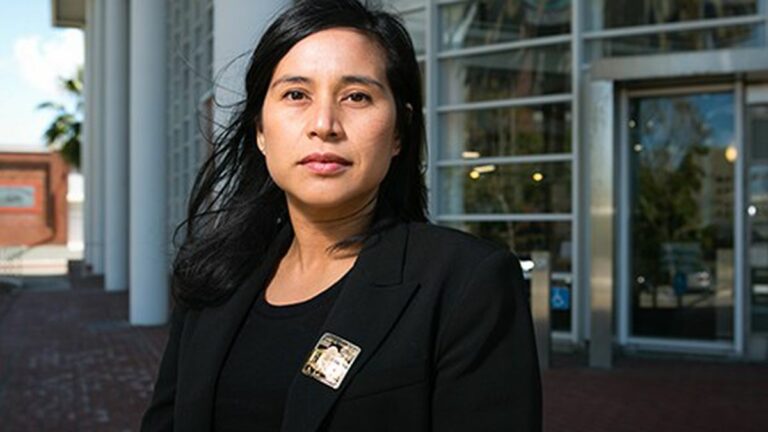
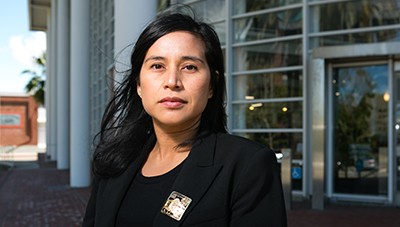
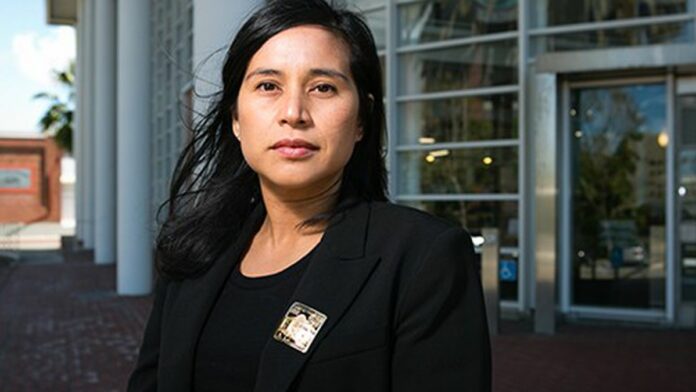
Bay Area author and social justice scholar Monique W. Morris’ new non-fiction book, Pushout: The Criminalization of Black Girls in Schools, begins with a description of the day that Morris met a girl named Danisha. It was 2001 and Morris was at a juvenile detention facility to hold a discussion about her recently released novel, Too Beautiful for Words, a sad story about a young, Black, Oakland girl who gets lured into an exploitative sex-trafficking scheme. During the discussion, a dark-skinned, baby-faced girl stood to introduce herself: “Well, my name is Danisha, and I’m eleven years old,” she said. “And I’m a ho, that’s what I do.”

The exchange has haunted Morris ever since, and was only one of many that eventually motivated her to write Pushout. “Since that day, I have encountered many more Danishas in and out of detention facilities — girls struggling to overcome the exploitative conditions of poverty and abuse, who roam hallways and streets wondering if anyone really cares about their well-being,” Morris writes.


Morris is a native San Franciscan who has for a long time been producing scholarship centered at the intersection of race, gender, and the criminal justice system — specifically, working with youth whose lives have been derailed by disciplinary confinement. While she was writing reports for the National Council on Crime and Delinquency, she decided to write a novel in order to creatively channel some of her feelings toward the content of her work. Furthermore, she saw the novel as a way to reach audiences that wouldn’t normally read her dense scholarship. Indeed, Too Beautiful for Words became popular among girls in juvenile detention centers, and Morris found herself entering those spaces as an author rather than a researcher, having more intimate conversations than she had been able to before. “Especially with the girls who had been commercially trafficked, a lot of them had read the novel,” Morris told me in a recent interview. “So they trusted me differently to handle their stories and to not judge them and to try to explore paths out of this life.”

It was at that point that Morris began to realize the extent to which girls’ narratives were being excluded from the rising national conversation about the “school-to-prison pipeline” — a term that refers to the institutional policies and practices that push America’s most at-risk students out of schools and into the juvenile and criminal justice system, employing incarceration where better education is needed. “We haven’t really engaged the particular vulnerabilities of girls,” said Morris, “So we masculinize their experience by only responding to the school-to-prison pipeline in terms of what’s happening to boys.”

Beginning in 2011, Morris interviewed over one hundred Black girls across the country for Push Out, determined to amplify their voices and represent the wide range of ways in which girls are pushed into confinement. And in the book — which masterfully sways between quoting their narratives and dismantling the specific practices, policies, biases, and stereotypes that work against them — the girls’ voices feel searingly present. Even those who would consider themselves well-informed youth advocates will be astounded by the stories, which lead one to realize the extent to which reports on the subject often speak in place of girls — effectively silencing their personal perspectives.

Halfway through the book, Morris brings up Jennifer. The then sixteen-year-old Bay Area youth had not been to school in three years when Morris interviewed her in 2013. She had been in and out of foster care since she was young and was known for running away from homes. When she was twelve, she was already a rape survivor, and her rapist was forcing her to sell her body. At school, she was bullied by other students for not having nice clothes, and at her various foster homes she was made to feel worthless. “[They] told me I’m stupid and never going to be anything. And I believed it, and so that’s when I went back to prostitution,” she told Morris.

When Jennifer decided to “run the streets” instead of going to school, her teachers never called her foster parents. And when Morris asked her if anyone had ever attempted to help her, she said: “No. Nobody really helped me… so all this stuff I go through, I go through myself. I encourage myself.”

Rather than centering solely on the failure of schools, Morris’ book is adamantly focused on girls and their experiences (and from a decidedly intersectional lens, meaning that ‘Black girls’ includes youth questioning their gender, Black Latina girls, and many other iterations of the identity). It’s about the multitude of complex ways in which, from a young age, social conditioning inside and outside the classroom works to convince many young, Black girls that school is not the place for them.

Each chapter is primed with a nursery rhyme. One example reads: Mama’s in the kitchen burnin’ rice / Daddy’s outside, shootin’ dice / Brother’s in jail, raisin’ hell / Sister’s on the corner, sellin’ fruit cocktail… The inclusion of the rhymes succinctly hones in on how damaging pervasive assumptions about Black identity can be. “I grew up in California. I knew people who grew up in Detroit. We were singing the same songs priming us for victimization,” said Morris. “There’s a lot of stuff that’s packed into how we prime our girls in particular to prepare for this life of victimization and struggle that I wanted to explore because by not exploring it … it’s left to fester.”

And Morris explores those assumptions with gripping expertise, exposing the way that Black girls are often stereotyped in America. For example, she unpacks the trope of Black girls as having “attitude” and being seen as loud, disruptive, or threatening when, in fact, they are reacting to harm. Often compounded by the notion of being “ghetto,” this stereotype works against them in both schools and broader contexts, causing the adults in power to see them as deserving of criminalization. “As adults in this community, we have a responsibility to enact policies and practices that respond to that harm and seek to repair that harm — not to punish the girls for learning that harm is the way to deal with issues because they have been harmed,” said Morris.

For that reason, there are sections of Morris’ book that are explicitly meant to educate adults — parents, teachers, and policymakers — about their own implicit biases so that they can begin to correct the way they relate to Black girls. But, most of all, Morris wrote the book for the girls whose stories are presented within it and the thousands of others out there having similar experiences. “I want them to understand that they are sacred and they are loved,” said Morris. “… and I want the concerned community of adults that are working with them to understand the exact same thing: That our girls are sacred and our girls should feel like they are loved.”

Destiny Arts Puts Movement in the Movement

Early on in Seed Language: A New Identity, a young woman playing Alicia Garza, co-founder of Black Lives Matter, recites the names of women who have been killed by the police. Four dancers hang from the rafters on wires above her, evoking bodies hung from trees. As she says the names, the hanging dancers flip, alternating between hanging feetfirst and headfirst. Other dancers walk slowly around the stage, some collapsing to the ground as more names ring out. It’s one of several startlingly powerful moments in a show where words and movement frequently combine to create a greater whole. It’s also not the only time the production, which opened at Laney College’s Odell Johnson Theater last weekend, delves into death and loss.

Nicole Klaymoon, one of the show’s artistic directors and the founder of the Embodiment Project, a San Francisco street dance company, thinks that, as a society, we would benefit from more collective mourning. “When you talk about state violence and the sanctioned violence on people of color, there’s a lot of grief there,” she said. “Human beings are designed to grieve in community. We don’t need to carry this alone.”

Seed Language, a collaboration between Embodiment Project and Oakland-based Destiny Arts Youth Performance Company, aims to foster that grieving process. The production blends documentary-style theater and hip-hop dance to explore race and racism in America. In the show, teens from the youth company perform monologues based on recordings and interviews they conducted with notable Bay Area activists, including educator and former Black Panther leader Ericka Huggins; filmmaker Shakti Butler; and anti-racism writer Tim Wise.

Dance might not seem like an obvious place to engage in social activism, but according to Sarah Crowell, the artistic director of Destiny Arts Center, it’s fertile ground for instigating action. “There are all of these civil rights movements, and yet where’s the movement in the movement? How do we move something if our bodies aren’t moving?”

The choreography in Seed Language glides between translating spoken words and accentuating them. In the piece “Crabs in a Barrel,” Ericka Huggins (played by Camille Schmitt) describes her experience growing up among various shades of poor people. While her mother told her that being poor made them all the same, she discovered battle lines based on race. As Schmitt speaks Huggins’ words, a cluster of dancers grab, push, and lift each other, embodying the futility of internalized oppression. It’s a literal interpretation, but the effect is visceral and dynamic, giving audiences a sense of what it’s like to be against one another and never get out.

The words “interpretive dance” tend to be followed by derisive eye rolls, but the performances in Seed Language manage to be heavy hitting without being heavy-handed. “People crack jokes about interpretive dance, but literal translation of text or song is age old,” said Crowell. “There’s something about it that adds an accent to what’s being said. It’s like saying, ‘This is important.'”

Other pieces in the show take a less direct approach. In one, Jon Lee vogues while talking about tensions and parallels between Black communities and Asian Pacific Islanders. He doesn’t act out the words, but his frenetic-yet-fluid movements draw you in, forcing you to pay attention.

“When juxtaposed with a monologue that’s based in someone’s lived experience, movement can convey the subtext of that monologue,” said Klaymoon. “What’s inside the body? What are the emotions underneath those words? That’s what I’m really reaching for.”

Often the emotions underneath those words are gut-wrenchingly painful, but Seed Language refuses to leave its audience in sorrow. The finale is a series of seven ecstatic, joyful dances.

Klaymoon believes that in order to fully access joy, we need to fully grieve. If the experience of watching Seed Language is any proof, she’s definitely onto something. After coming through the production’s difficult passages, the exuberant ending feels like a rush of hope.

Crowell echoed this sentiment. “True change, on a personal level and on a social level, only happens when we’re willing to look at the hard truth,” she said. “Dance provides a vehicle for both going into the hard places and absolutely coming out of them.”

Corrections for the Week of March 30, 2016

Our March 23 music story, “‘Til Queendom Come,” incorrectly stated that Queen Crescent’s former bassist Eni Loicy Pela is still in the band. Queen Crescent’s current bassist is Eden Savage.

Antoinette Serves Hotel Food for the One Percent

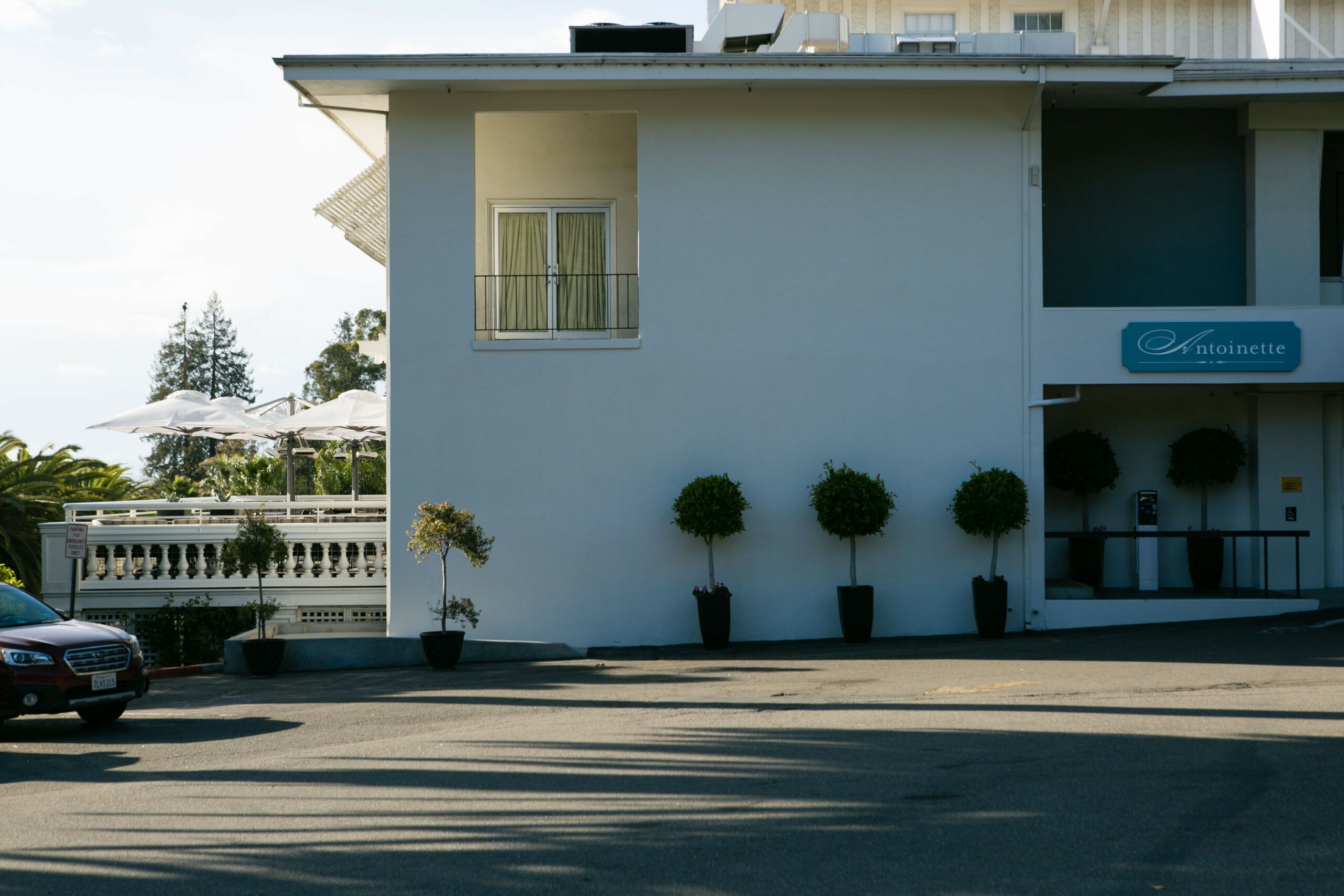
You won’t find much if you do a Google search for Antoinette, the new French brasserie located inside the recently renovated and rebranded “Claremont Club & Spa, A Fairmont Hotel” — a few preview stories written months before the restaurant actually opened, a handful of blurry photos on Yelp, and that’s about it. As of this printing, Antoinette’s various social media accounts are a blank slate, and there isn’t even a sample menu posted on the hotel or restaurant websites.

It’s an odd marketing strategy that the folks at The Claremont have deployed — to continue to withhold every scrap of potentially useful information from prospective customers nearly two months after Antoinette opened to the public. Even odder is the fact that the Oakland landmark’s PR arm maintained about five days of radio silence after I contacted the hotel for a routine follow-up interview. My requests to speak to the chef ultimately went unanswered, and no one ever got around to responding to my list of fact-checking questions.

Then again, maybe the decision to keep Antoinette in stealth mode makes sense when you consider my two dispiriting, at times baffling, visits to the brasserie. The truth of the matter is that Antoinette isn’t a very good restaurant right now — and the fact that it’s also one of the most expensive restaurants in the entire East Bay makes it awfully hard to give it the benefit of the doubt.

Late last year, when The Claremont announced the news that it would be opening Antoinette, it seemed that there was reason to feel excited. Housed in the old Paragon space, with its million-dollar panoramic views, the restaurant would be the first East Bay venture for Dominique Crenn — she of two Michelin stars and a reputation for being one of San Francisco’s most brilliant chefs.

Crenn’s role was only that of consultant and “curator,” with fine-dining veteran Justin Mauz taking on day-to-day chef duties. But initial announcements stressed that Crenn would be the driving force behind Antoinette, both in terms of menu and overall concept — a harking back to the luxuriousness of Europe’s grand hotels, and a modern take on the classic French brasserie. As Crenn told the food blog Eater, “I want to bring the beauty and elegance of a brasserie back to what it should be.” That’s all well and good: The East Bay could use an excellent high-end French restaurant.

As much as the folks running the restaurant have endeavored to keep information about it out of the public eye, I had done enough preliminary research to know I was in for an $80- or $100-a-person kind of dinner. At that price point, you walk in expecting something grand — the kind of pampering and professionalism that you might experience at, say, Commis or Chez Panisse.

But what you get, mostly, is a nice view of the bay. In nearly every other respect, Antoinette fell short. The atmosphere was that of your run-of-the-mill busy hotel restaurant — which is to say that the decor was blandly elegant (though the banquette that kept sliding on my dining companion didn’t exactly bespeak luxury), and the soundtrack to our meal was a perpetual clanging of pots and plates.

Mostly, though, I just couldn’t get over how clumsy the service was. Five minutes after we started eating one dish, our waiter rushed back to the table in a huff to hand us slightly smaller forks, which, he insisted, were essential. Later, he leaned over the table for a good fifteen seconds while he fumbled to rearrange our knife and fork — “it has to be perfect,” he said — so that they lay parallel in the middle of the table. Throughout dinner, members of the waitstaff kept coming over to offer or remove silverware, or to hover next to our table in a similarly haphazard, half-apologetic way.

As for the food, each dish featured some unusual ingredient or modern cooking technique, but much of it was more interesting than it was delicious. I started one meal with the “basil-fed escargot” ($16), which sounded like a Portlandia joke until I read up on how that particular diet is meant to foster tenderness and a clean flavor. This was one of a handful of dishes that came topped with so much white foam — that bugaboo for those skeptical of modern gastronomy — that it threatened to become the main feature. The foam tasted just like pesto, but its frothiness, combined with the sliminess of the escargot and the viscosity of the herb sauce underneath, made for a dish that was downright unappetizing from a textural standpoint.

One of the things that makes Antoinette feel even more expensive than it actually is the amount of menu space dedicated to large-format entrées that are meant to be shared between two to four diners — and are priced from $75 to a whopping $165 (for a duck). How much of a market can there be for that kind of extravagant family-style dining that you would dedicate two to three menu slots to it each night, leaving only about five options for diners seeking a more traditional entrée? And I certainly didn’t feel the roasted monkfish tail was worth its $75 price tag. The fish had been deboned and cut into thick slices that were arranged around a mound of couscous, then topped with a layer of bouillabaisse that had been turned into a foam. In keeping with its popular description as “poor man’s lobster,” the monkfish had an appealing meaty texture, but the meat was somewhat dry and blandly seasoned — a hint of curry flavor and plenty of salt, but nothing that kept our interest.

Odd, too, was the fact that our server did a hard sell on the “Nicoise” dessert ($12) that consisted of black olives, white chocolate, and beets. “Don’t think about the individual parts,” he said, promising that when we ate them all together it would be — and here he put his fingertips up to his lips and kissed them, like Italian waiters always do in the movies — “so good.” Not the case: The white chocolate cake was fine, but a smear of olive tapenade added a salty brininess that was as off-putting as you might imagine, and a yellow beet sorbet just made me think of cold borscht. Worst of all were the long strands of pickled beet, which I crunched through as though eating a salad. It was the kind of dessert that works well in the context of a long-form tasting menu — a single bite that you’d mull over, noting all the disparate flavor components before remarking, “That’s interesting.” And then you’d move on to the next bite. Instead, we had to muster up the willpower to finish the whole damn plate.


All this isn’t to say that it isn’t possible to have a good meal at Antoinette. Start with the Salade Lyonnaise ($16), which was one of the better versions I’ve had — a classic combination of bitter salad greens, smoky bacon lardons, and a runny egg yolk that mixed beautifully with the bracing vinaigrette. What put the dish over the top were very thin slices of lardo (made with extra-fatty Mangalitsa pork), which melted its luxurious savoriness into the salad once everything was tossed together. The fried sweetbreads ($17) were another solid appetizer — slightly under-seasoned, perhaps, but the sweetbreads’ rich, livery flavor was nicely complemented by warm dates stuffed with oozy, melted foie gras. And the coq au vin ($31) was French comfort food at its finest: two chicken legs braised until they were as tender as you can imagine and served in a pool of red wine sauce that was tasty enough that it almost made me shell out the extra $7 I would have had to pay for an order of bread. Almost.

I think, on some level, when people heard that Dominique Crenn was opening a French brasserie in Oakland, this is the kind of food they hoped for — comforting French dishes done well, perhaps with a bit of extra refinement. Given the restaurant’s lack of a response to even the most basic of queries, it’s hard to know who to blame for the fact that — for now, anyway — it is so difficult for diners to have that kind of experience.

Flyover Fabulism

0

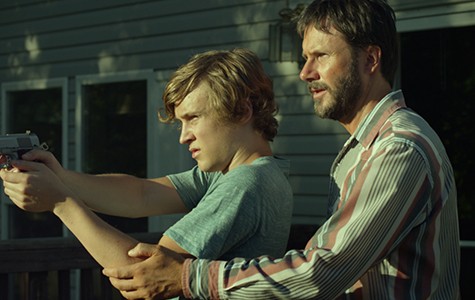
Ryder is so nervous, he’s ready to burst into flames. From his vantage point in the back seat of the family car carrying him (Logan Miller), his mother Cindy (Robin Weigert), and his father Don (Richard Schiff) to a family reunion in the Nebraska countryside, the California high-schooler has plenty to be apprehensive about. In addition to standard-brand adolescent angst and the ordeal of socializing with dimly remembered Midwestern relatives, Ryder’s number one worry is extremely personal: Are you going to tell them I’m gay? His parents’ hasty assurances don’t help in the slightest. Ryan feels trapped.

Writer-director Matt Sobel assembles quite a cauldron of awkward social moments in Take Me to the River, his first film in the director’s chair. Ryder’s relatives turn out to be the sort of nominally polite, taciturn folks who get their kicks from pickup trucks, playing horseshoes, and cheering for Cornhuskers football. Ryder, for his part, refuses to blend in, choosing to wear a pair of red short shorts and a scoop-neck T-shirt to the big picnic lunch. A pair of his cousins razz him about his shorts in true locker-room style, but all Ryder does is mince his way through the veiled insults. All the while, mother Cindy hovers nervously, kowtowing to her family — it’s her side they’re visiting — and doing everything but holding her son’s hand as he gamely tries to relate.

The country cousin that seems to warm up to Ryder the most is nine-year-old Molly (played by child actress Ursula Parker), a pixie-ish, long-haired blond whose antics with her newfound California cousin stop just short of seeming unusually sexual for the circumstances. As written by Sobel and played with startling sensuality by little Miss Parker, Molly exudes an uncomfortable knowingness with Ryder, as if she were leading him into a strange adventure. If we were to replace an old barn with an enchanted cottage and the cornfields with a brooding forest, we’d be in deepest Brothers Grimm territory in a flash. That is, Grimm with a side order of Vladimir Nabokov. Ryder follows his little cousin to some of her favorite spots on the farm, things happen (offscreen and on), grownup tempers flare, and Sobel’s excellent cast of character actors mix it up with maximum tension and more than a little taboo-crazed queasiness.

Other reviewers may spell out Ryder and Molly’s misadventures — with Cindy and her redneck brother, Ryder’s Uncle Keith (Josh Hamilton, radiating pent-up violence), circling and swooping — but we won’t do that. You’ll have to see for yourself what a slender plot line, well-chosen parts, and skillful directing can achieve with a handful of rich characters and a deceptively peaceful setting. Behind the repressed menace of the situation and the ominous role-playing of Miller, Weigert, Hamilton, and Parker, Take Me to the River delivers the unmentionable in the guise of the unexplainable and framed in the unavoidable, for a moviegoer’s curious delight. The moral of the story: Be careful when you find yourself in Flyover Land.

Too $hort’s 30th Anniversary Show Couldn’t Have Been Long Enough

Saturday night’s Too $hort show at The Fox Theater felt like the concert equivalent of a late-career museum retrospective — with as much ceremoniousness and fanfare as one might expect for an artist who has been canonized as an all-time great.

Everyone recognizes Too $hort as a rap legend — and a force in Oakland music, period. But at the concert, which was billed as his anniversary show celebrating thirty years in the industry, Too $hort confirmed his icon status with a hugely entertaining, dynamic set. In addition to flexing his skills on the mic, he punctuated his performance with bits of nostalgic storytelling, Oakland history, and surprise performances from fellow OGs E-40, Raphael Saadiq, Richie Rich, and Freddy B., in addition to younger artists such as Mistah F.A.B., and — in lieu of the late Eazy E — Lil Eazy E, the West Coast legend’s son.

Between songs, Short Dog’s many colleagues and longtime supporters gave impassioned speeches about his significance to rap history. Many people touted the hustle and imagination it took for him to transcend hip-hop trends and stay relevant in a genre that’s typically considered a young person’s game for over three decades.

After all, Too $hort was forty years old when he released “Blow the Whistle” in 2006. And though it’s now regarded as a quintessential hyphy classic, as the rapper pointed out in a recent video interview with the rap blog HipHopDX, he was already well-established in his career when it came out and didn’t need another hit. That’s the thing about Too $hort: Hits flow out of him. He’s unstoppable.

Inside the dimly lit Fox Theater, with its ornate, art deco interior, Too $hort took the stage looking like a rock star in a black shirt and ox blood leather pants — which he later traded for an all-black look decked out with shimmering, gold rhinestones. Instead of a DJ, he performed with a huge, nine-piece-or-so band (the number of musicians, backup singers, and friends on stage seemed to grow throughout the evening, so I wasn’t sure on the final count).

The crowd varied in age and ethnicity, though there was a large presence of Black folks in their forties and fifties. Copes, one of Too $hort’s old friends, was selling reprints of his original Oakland City Players T-shirts emblazoned with a Playboy Bunny over the Town skyline — a design that was popular locally in the Eighties and Nineties. He coined Oakland’s famous nickname, Oaktown, in the Eighties, and he had a binder full of old articles and photos to prove it. The night felt like a celebration of Oakland culture and history that, refreshingly, didn’t promote gentrification.

Though a lot of folks love hyphy-era Too $hort, his set list made it clear that the earlier, funkier parts of his catalogue are what he holds dear. While, sometimes, rap shows with live ensembles can often come off as overwrought, the musicians jived well with Too $hort’s music, and their playing never overshadowed his verbal dexterity. In fact, the band added a new sense of dynamism to Too $hort’s mob music classics.

During “Freaky Tales” — a track from 1989’s Born to Mack in which Too $hort recounts various sexual exploits over a hypnotic bass line for over nine minutes — his band launched into a Phish-style jam session. Too $hort made it a point to highlight that he cares about musicianship throughout the night. At one point, he invited Kev Choice, his pianist who is also a well-known Oakland rapper in his own right, to launch into a lengthy keyboard solo. The crowd gleefully cheered on his ostentatious, jazzy playing.

There were plenty of surprises throughout the night, as a throng of local legends took turns joining Too $hort on stage. E-40 — probably Too $hort’s only living equal in terms of gatekeeper status in the Bay Area rap scene — gave a heartfelt speech about his and $hort’s long friendship and creative partnership. The two of them performed the player anthem “Bitch” off Forty Water’s Revenue Retrievin’, and the elated crowd screamed along to every instance of “biatch” — Too $hort’s favorite word, as he famously explains in “Blow the Whistle.”

Though Freddy B. was one of Too $hort’s lesser-known guests, his appearance was by far one of the most special. He and Too $hort regaled the audience with tales from their days selling tapes together in the Eighties in East Oakland. Freddy B. recalled how people would commission him and $hort to dedicate personalized freestyles to them called “special requests,” which the duo would do for fifty to a hundred dollars a pop. “We were getting paper,” said Freddy B. His understatement provoked uproarious laughter. “In fact, we’re still getting paper.”

Raphael Saadiq joined Too $hort on stage for a large portion of the night, which was also a rare treat. Though he was the original lead vocalist of Toni! Tony! Toné!, the group reunited without him in 1998 following a hiatus during the early Nineties. Saadiq has enjoyed a successful solo career and done notable behind-the-scenes work with D’Angelo and The Roots, but his work with Toni! Tony! Toné! is one of his biggest contributions to Oakland music history and R&B in general. He regaled the crowd with his impressive vocal chops and, at one point, even brought out his bass.

Mistah F.A.B., who is famous for his incredible ability to freestyle for indefinite lengths of time (Fabby Davis is the prince of the O / The freestyle king, man, everybody know, as he rightfully declared in “N.E.W. Oakland”), also joined Too $hort for an extensive portion of the evening. F.A.B. freestyled at length about the history of the hyphy movement and Too $hort’s cultural importance, upping the concert’s sentimental factor even more as a slideshow of Too $hort’s album covers played in the background.

The show’s plush setting and flashy presentation was befitting of Too $hort’s extensive accomplishments as an artist. But it also spoke to how much mainstream America has embraced hip-hop. Too $hort’s sleazy stage banter and raunchy rhymes contrasted with The Fox Theater’s museum-like environment, and I felt a sense of satisfaction from witnessing him flagrantly subvert the Eurocentric concept of “low” and “high” art forms.

Too $hort came up during the Reagan era, at the height of the AIDS and crack epidemics — a time when mainstream media vilified rappers for creating art that reflected the struggles Black communities were facing. Hearing Too $hort perform his timeless piece of storytelling rap, “The Ghetto” — with Raphael Saadiq crooning its soulful hook — was a poignant reminder that, inherently, hip-hop is an affront to white supremacy and the police state.

While Too $hort is well known for his pimp persona, his sexually explicit lyrics often overshadow the strong contingent of socially and politically conscious content in his music. And while much of his oeuvre is admittedly pretty sexist, Too $hort had something of a feminist awakening in 2012 following an in-depth Ebony interview with the scholar Dream Hampton, in which they had a frank conversation about the dual burdens of racism and misogyny that Black women face.

While it would be an overstatement to say that Too $hort has wholly reformed the misogynistic tendencies in his work, it was commendable that at one point in the night, he announced that there were too many male voices on stage. He later brought out a female MC to finish the last verse on “Don’t Fight the Feelin'” from his first studio album, Life Is … Too $hort (Sadly, I didn’t catch her name, but she was raw).

The evening ended with an unexpected speech from Peggy Moore, Mayor Schaaf’s Senior Special Adviser. She honored Too $hort with a letter of recognition for his contributions to the performing arts in Alameda County. Seeing Too $hort get an official designation from the local government was as much a testament to his artistic accomplishments as it was a reminder that Oakland is an exceptional place thanks to people like him — not because of its recent influx of yuppies.

After Moore left the stage, Too $hort brought back E-40, Saadiq, Richie Rich, Mistah F.A.B., Freddy B., and the rest of the guests from throughout the night. He gestured to his band as if he wanted to do an encore, but the house lights had already been turned on and venue staff were beginning to usher people out of the theater. As with all magical evenings, the show didn’t feel nearly long enough. But Too $hort already knew that in 1988 when he pointed out that Life Is … Too $hort.

Emeryville and San Leandro to Legalize Medical Marijuana

During a special study session on March 15, Emeryville city councilmembers called for an urgency ordinance to immediately legalize the delivery of medical marijuana into Emeryville by existing regional providers. “I have heard from people who are in pain,” said Councilmember Nora Davis, referring to Emeryville patients who have had trouble obtaining cannabis because of the city’s twenty-year ban on medical marijuana. Emeryville’s leaders also want to eventually permit at least one medical marijuana dispensary to serve its 10,000-person population, and they could go so far as to deem Emeryville a cannabis laboratory hub, analogous to its thriving biotech industry, where pot entrepreneurs would be encouraged to develop and test marijuana medicines. In San Leandro, Harborside Health Center is expected to begin construction on the city’s first dispensary in the next few weeks. San Leandro officials believe Harborside will generate tax revenue for the city, one of many benefits. The shift in both cities’ approach to medical marijuana is a sign that new state laws are helping spur growth of the legal cannabis industry at the local level.

The Emeryville city council’s study session marked a new chapter in the tiny, strategically located city’s history. Ever since enactment of Proposition 215 in 1996, which allowed for the use of medical marijuana, Emeryville has maintained a total ban on all commercial pot activity including cultivation, transportation, and retail. Emeryville’s shift on pot policy is one of the clearest examples so far that new statewide pro-medical cannabis regulations are incubating local progress.

Last year, the California state legislature passed a comprehensive medical marijuana law called the Medical Marijuana Regulation and Safety Act (MMRSA). MMRSA’s dual licensing structure requires medical marijuana businesses to obtain both local and state permits. The law also forces local jurisdictions to either craft local rules or eventually cede regulatory authority to the state. Most cities initially went the easiest regulatory route and implemented total bans. But now more cities are beginning to allow marijuana deliveries, dispensaries, and sometimes even cultivation.

Emeryville is one of many cities that have been spurred by the MMRSA to rethink their ban. At their recent study session, Emeryville Mayor Dianne Martinez and councilmembers Nora Davis, Ruth Atkin, and Jac Asher asked city staffers and experts in the audience about the nuts and bolts of the medical marijuana industry, including how to get medical marijuana cards and how much a growing pot plant might stink.

By the end of the meeting, Davis called for an immediate urgency ordinance to legalize medical pot deliveries. She said that for years, providers have refused to deliver pot in Emeryville due to the city’s ban. Many are worried that they could be arrested or charged with a crime, and that patients are suffering as a result. The idea was approved unanimously by the council. The urgency ordinance could come back at the next council meeting in early April. If passed, it will take effect immediately.

Over the long term, Emeryville’s city councilmembers said they want details on where to put a single medical pot dispensary that could be converted into a recreational shop if state voters eventually decide to fully legalized marijuana. One aspect of the pot business that Emeryville councilmembers said they would not permit, however, is cannabis farming, due mainly to space constraints. Emeryville is just 640 acres in size, and the city has a policy of approving permits based on the “highest, best use” for the space. Currently Emeryville is focusing on building more housing, parks, and retail.

“Let’s leave [farming] to Humboldt,” said council member Atkin.

Instead, Emeryville’s leaders want more detailed options for cannabis distributor permits and cannabis labs, they told staff. Emeryville could end up generating a substantial amount of local tax revenue from the industry. Staff noted that San Leandro’s soon-to-open dispensary alone could generate about $61,000 in local taxes in 2016, and around $110,000 in 2017. Emeryville’s leaders hope to emulate San Leandro’s rules in some form.

“I think this could be very important in setting the table […] so that we will be well-poised to take advantage of medical marijuana as an industry,” said Martinez.

Atkins said permitting vape lounges for patients who could not consume marijuana in multi-unit apartment and condo buildings would be another important consideration. Representatives from the Emeryville Police Department had only one comment during the entire study session; they called for adequate security among any pot providers who are allowed to operate in Emeryville so that marijuana businesses don’t become nuisances or targets of crime.

Emeryville is part of a quirky patchwork of East Bay local government medical pot regimes, running from total prohibitions in Albany and Alameda to robust industries in Oakland and Berkeley. But councilmember Jac Asher said that San Leandro’s developing cannabis regulations are a good model to follow. And because of its long-standing total ban, Emeryville has a blank slate upon which to craft its new cannabis regulations. It can capitalize on the MMRSA in specific ways that cities with legacy medical pot laws cannot, staff attorneys for the city said.

San Leandro could have its first and only legal medical marijuana dispensary open by August of this year. In 2015, San Leandro’s city council approved Harborside Health Center’s plan to run a single permitted dispensary. Harborside is currently seeking building permits to alter 1965 Marina Boulevard, a commercial building just off Interstate 880, and down the street from Kaiser Permanente’s San Leandro Medical Center. Harborside founder Stephen DeAngelo expects to begin construction in the next three to six weeks, he said in an interview.

Finding the right location for the dispensary has been the main challenge. DeAngelo said that it is difficult to find landlords who are willing to lease to any cannabis business. Cannabis is still illegal under federal law, and in the last five years US Attorneys in California have threatened to seize the property of hundreds of commercial landlords up and down the state for renting to pot enterprises. And while the US Congress zeroed out funding for this property seizure program in December 2014, many commercial and industrial landlords still worry about having their property seized if it’s knowingly leased to a cannabis business that becomes the target of a federal enforcement action.

Another challenge for Harborside in San Leandro was space. Harborside needed a place big enough to handle hundreds of patients per day, with lots of parking for Tri-Valley commuters who will likely drive over the hill and access medical marijuana there because it’s closer to Livermore, Dublin, and Pleasanton than existing dispensaries in Oakland and Berkeley. “We’re all about convenience for people going about their daily routine,” said DeAngelo.

Harborside’s San Leandro location will look and function much like Harborside’s Oakland and San Jose dispensaries — with the clean, well-lit, friendly and secure vibe of a groovy bank. The San Leandro location will also include a beefed up center for cannabis cultivators. Harborside has partnered with Dark Heart Nursery to run a super-sized clone section that will “really be able to give growers the time and attention they need,” said DeAngelo. Clones are small, starter pot plants that gardeners purchase and grow out at their home, or another location.

San Leandro’s large Latino and Mandarin-speaking populations are also spurring Harborside to hire multilingual staff in order to offer educational materials and better service. “Shame on us,” said DeAngelo. “We have not done enough outreach into immigrant communities and speakers of foreign languages.”

Deliveries in Emeryville and a dispensary in San Leandro are the latest signs of a historic thaw in relations between small towns and the medical cannabis industry, DeAngelo said. The Alameda County Board of Supervisors is also rethinking the county ban on medical pot. “I think what you’re seeing is that the message of MMRSA has been both some comfort to local jurisdictions to move ahead with regulations, and it also gives them a bit of a prod to do that under MMRSA,” said DeAngelo.

While hundreds of cities continue to ban medical cannabis access, “it’s their loss,” said DeAngelo. Harborside has also volunteered a percentage of their gross revenue to the City of San Leandro as a kind of development impact fee that can be used to offset any increased need for police and fire services, or transportation infrastructure that will be associated with the growth of the medical marijuana industry.

“We’re not creating a new industry, but a new kind of industry model all businesses should embrace,” DeAngelo said. “The day is going to come when the vast majority of cities and towns in California are going to embrace cannabis, and there will be a few little islands of folks who do not. When you look at the number of jobs, the tax revenue, and public safety benefits that the cannabis industry brings, there’s no doubt in my mind we will start seeing competition among cities soon, rather than bans.”

Brookings Bombshell: America Needs High-Quality Marijuana Medications

John Hudak, a researcher with the nonpartisan Brookings Institution think tank, concluded in a March 22 study that the White House and Congress must act immediately to save American lives by passing the CARERS act, a marijuana liberalization law that would lift barriers to medical marijuana research, protect doctors and patients, and ultimately re-schedule marijuana so that therapeutic formulations can be made available in all 50 states and territories.


[jump] Children are dying due to the absence of safe, tested, uniform pot products, Hudak writes in “The Medical Marijuana Mess — A prescription for fixing a broken policy. Parents are becoming refugees in their own country — moving thousands of miles to experiment with non-standardized marijuana regimens far from their home states. For those that can’t move, an unregulated, online industry of extract sellers like Morgue Juice has popped up promising cure-alls to meet vast demand.

Hudak essentially says this is all unconscionable and that we need to immediately re-schedule marijuana, and de-schedule CBD as drugs. The medical marijuana movement began far away from such mainstream institutions like Brookings, in places like Oakland, which helped pass Proposition 215 in 1996 and made marijuana crime its lowest police enforcement priority under Measure Z. Oakland has among the most robust medical cannabis industries in the world, with lab-testing and third party-certified products widely available on shelves and for delivery. In other parts of California, however, access to advanced medical cannabis formulas is as limited as Virginia, where medical pot is still banned.

According to Hudak, medical marijuana policy in the United States is putting Americans at risk:
“The federal government keeps people who live in states that don’t have medical marijuana programs from accessing a product that could benefit their health. And even as it prevents some people from having it, it erects barriers against research into the safety and efficacy of a product used by tens of thousands if not hundreds of thousands of people who do live in states that have legalized it,” Hudak writes. “The president and Congress have a duty to design laws that reflect modern policy realities and that advance medical research. Comprehensive reform is needed in three key areas: research, access, and legal protection.”

“Federal marijuana policy is contradictory and unsustainable. It has consequences for state and local governments, business owners, doctors, patients, and families. Marijuana prohibition was designed to criminalize the illicit drug trade, but it has victimized innocent Americans.”

Hudak’s report  is a must-read for federal legislators and activists at the local and state level. It further validates what activists have been saying for years, and what many have gone to jail for — that cannabis therapies work, and science proves it.

Hudak follows The Collins family of Virginia who were forced to split up in order to treat their 13 year-old daughter’s catastrophic, intractable seizure disorder, which is managed by an extract of THC-A (the raw, non-psychoactive form of THC, pot’s main active ingredient). According to Hudak:
“Beth and Jennifer did not run from crime or war or famine. They did not flee from some country ruled by a murderous despot to a less dangerous place. They are Americans who found it necessary to move from their home in Virginia to another state in order to seek treatment for Jennifer’s serious medical condition—a treatment that was illegal according to the laws of both Virginia and the federal government.”
[embed-1]
Hudak also profiles Washington DC Rabbi Jeffrey Kahn who joins the growing ranks of community leaders who are acknowledging marijuana’s palliative uses. The Rabbi sells medical cannabis six miles from the White House.

“Like many such owners, Rabbi Kahn feels he is providing his customers with a critical medical treatment. In fact, his decision to go into this business was inspired in part by the suffering of his in‐laws. When he opened the Center, he dedicated it to them. Their 1952 honeymoon photo—which could double for a black‐and‐white beach movie still—hangs in a prominent position across from the welcome desk. A half century after that photo was taken he watched them suffer and eventually die from serious medical issues. His father‐in‐law had spent decades battling multiple sclerosis—a battle occasionally alleviated by puffing on black‐market marijuana. His mother‐in‐law had lung cancer. The doctor who diagnosed it told her she might be able to mitigate the devastating effects of chemo and radiation by using marijuana. But she died before the family could find a dealer.

Those experiences gave Rabbi Kahn a new perspective on pot, and a desire to serve those in need of it. Now he has patients suffering from the same illnesses his in‐laws died of who are finding relief at his dispensary.

The federal government, however, views the rabbi not as a health care provider offering much needed treatment to the afflicted and the vulnerable, but as a drug dealer.”

America also needs to lift its one-farm stranglehold on research-grade cannabis, which “disrupts rather than facilitates research,” Hudak concluded. “The federal government should license additional grow facilities to ensure both product diversity and safety.”

Hudak calls for a White House summit “focusing on research into the efficacy of marijuana as medicine, and call on Congress to direct additional resources to the topic.”

And Hudak also recommends that the federal government to partner with local governments, businesses, and research institutions in states where medical marijuana is legal. “Since more than 149 million Americans live in states with medical marijuana programs, these public‐private research partnerships could serve as the world’s most comprehensive clearinghouses for data on medical cannabis’s uses, successes, failures, side effects, doses, and strengths,” writes Hudak.

An Alameda Couple Wants to Turn Their 122-Year-Old Victorian into a Restaurant

For their newest project, husband-and-wife restaurateurs Bobeck Parandian and Joann Guitarte want to take an old Victorian house on a quiet, tree-lined residential street in Alameda and convert it into a full-service French-Creole restaurant. And not just any old house: The restaurant that Guitarte and Parandian are calling La Maison — literally, “the house” — will be located in the 122-year-old Queen Anne Victorian at 721 Santa Clara Avenue that has been their place of residence for the past ten years.

[jump] Indeed, as Guitarte explained, if all goes according to plan, about one year from now, she and Parandian will be on the market for a new place to live.
Guitarte and Parandian are perhaps best known as the owners of Cafe Jolie, a French restaurant housed in a commercial complex that’s just down the street from their home. (They also own a pizzeria called Bowzer’s Pizza on the other side of town.) But the inspiration for turning their house into a restaurant came relatively recently, during trips to the New Orleans area to visit Parandian’s father, Guitarte said. There, in the French Quarter, they came across multiple Victorians that had been converted into restaurants or other businesses. Each time, Guitarte’s reaction was, “This looks just like our house.” And so the seed of the idea for La Maison was sown.

Guitarte, who is the chef for all of the couple’s restaurants, said the menu will be a kind of California spin on traditional French-Creole cuisine, and while she’s still in the early stages of experimenting with recipes, she definitely plans to include her own versions of signature dishes such as a po’boy sandwich, gumbo, jambalaya, and red beans and rice. Gravies will be a little bit less heavy to account for Californians’ tastes. “The flavors are there, but we won’t overdo it,” she said.

Of course, the real novelty of the project will be the feeling of eating at a restaurant that had at one point been someone’s house. Parandian will do all of the design work himself: Not much will be done to the exterior, but the plan is to carve out enough space to seat about fifty people inside, in addition to installing a large commercial-grade kitchen. There will be garden seating for another thirty diners in the backyard. The idea, Guitarte said, will be to create a kind of “synergy” on the West End of Alameda. With the Saturday farmers’ market, Cafe Jolie, and several other shops all just steps away, the hope is to create a lively, community-oriented atmosphere that’s not unlike the French Quarter — if perhaps on a smaller scale.

Last month, the couple’s plan passed its first major hurdle when Alameda’s planning board voted six-to-one to change the property’s zoning designation, though the lone dissenting vote hinted at the fact that the project does have some detractors. Guitarte acknowledged that some residents in the neighborhood have expressed concern that there will be excessive noise in the evenings due to the outdoor seating area — especially since there are several apartment complexes in the house’s immediate vicinity. Guitarte suspects that the city will address those concerns by placing restrictions on how late the restaurant is allowed to stay open. According to Guitarte, Alameda’s reputation as a sleepy island community where everyone goes to bed early might end up rendering those fears moot: At Cafe Jolie, for instance, she said she rarely seats her last customer for the night much later than 8:30 p.m.

Of course, during a time when much of the East Bay is dealing with a major housing crisis, some might feel uneasy about the prospect of converting a residential property into a restaurant. That said, most of the recent discussion in Alameda has centered on affordable housing, especially on the rental market — a designation that would have never really applied to this particular house anyway, Guitarte argued.

At the end of the day, Guitarte hopes the new restaurant will wind up helping to enhance the charming, homegrown vibe that has long been the island city’s stock in trade — especially, she said, in the face of a recent influx of big-box businesses such as Target and In-N-Out.

The next bridge Guitarte and Paranthian will need to cross in order to make La Maison a reality is city council approval. After that, there will be an extensive build-out process that will include putting in a new concrete foundation, as well as major plumbing and gas work for the kitchen. The earliest Guitarte foresees the restaurant opening is sometime in the summer of 2017.   

Nick Dong: Cosmic Dance

The concept behind Nick Dong’s current show at Mercury 20 Gallery (475 25th St.), Cosmic Dance, came to the artist during a session of meditation. With the show, Dong aims to offer a collection of “unexplainable objects” that inhabit an ambiguous space between perception and reality. Indeed, the series of installations is both dazzling and bewildering. In “Ghost of Graviton,” what looks like a metallic talisman in the shape of a rounded cone levitates atop a whimsical wall-hanging pedestal and spins slowly in midair, projecting swirling light onto the gallery’s black walls. In “Force of Gravity,” a metallic cube rotates in the center of a mirrored, concave platform atop an upside-down pyramid inserted into a table. Hovering above the arrangement with no clear source, spots of light form a midair sculpture that slowly moves, as if breathing. There will be a closing reception for Dong’s show during First Friday on April 1 from 6–9 p.m. If you haven’t experienced the exhibit already, make sure not to miss it.

But What About Black Girls?

Bay Area author and social justice scholar Monique W. Morris' new non-fiction book, Pushout: The Criminalization of Black Girls in Schools, begins with a description of the day that Morris met a girl named Danisha. It was 2001 and Morris was at a juvenile detention facility to hold a discussion about her recently released novel, Too Beautiful for Words,...

Destiny Arts Puts Movement in the Movement

Early on in Seed Language: A New Identity, a young woman playing Alicia Garza, co-founder of Black Lives Matter, recites the names of women who have been killed by the police. Four dancers hang from the rafters on wires above her, evoking bodies hung from trees. As she says the names, the hanging dancers flip, alternating between hanging feetfirst...

Corrections for the Week of March 30, 2016

Our March 23 music story, "'Til Queendom Come," incorrectly stated that Queen Crescent's former bassist Eni Loicy Pela is still in the band. Queen Crescent's current bassist is Eden Savage.

Antoinette Serves Hotel Food for the One Percent

You won't find much if you do a Google search for Antoinette, the new French brasserie located inside the recently renovated and rebranded "Claremont Club & Spa, A Fairmont Hotel" — a few preview stories written months before the restaurant actually opened, a handful of blurry photos on Yelp, and that's about it. As of this printing, Antoinette's various...

Flyover Fabulism

Ryder is so nervous, he's ready to burst into flames. From his vantage point in the back seat of the family car carrying him (Logan Miller), his mother Cindy (Robin Weigert), and his father Don (Richard Schiff) to a family reunion in the Nebraska countryside, the California high-schooler has plenty to be apprehensive about. In addition to standard-brand adolescent...

Too $hort’s 30th Anniversary Show Couldn’t Have Been Long Enough

Saturday night's Too $hort show at The Fox Theater felt like the concert equivalent of a late-career museum retrospective — with as much ceremoniousness and fanfare as one might expect for an artist who has been canonized as an all-time great. Everyone recognizes Too $hort as a rap legend — and a force in Oakland music, period. But at the...

Emeryville and San Leandro to Legalize Medical Marijuana

During a special study session on March 15, Emeryville city councilmembers called for an urgency ordinance to immediately legalize the delivery of medical marijuana into Emeryville by existing regional providers. "I have heard from people who are in pain," said Councilmember Nora Davis, referring to Emeryville patients who have had trouble obtaining cannabis because of the city's twenty-year ban...

Brookings Bombshell: America Needs High-Quality Marijuana Medications

John Hudak, a researcher with the nonpartisan Brookings Institution think tank, concluded in a March 22 study that the White House and Congress must act immediately to save American lives by passing the CARERS act, a marijuana liberalization law that would lift barriers to medical marijuana research, protect doctors and patients, and ultimately re-schedule marijuana so that therapeutic formulations can...

An Alameda Couple Wants to Turn Their 122-Year-Old Victorian into a Restaurant

The future site of La Maison. Credits: Bert Johnson For their newest project, husband-and-wife restaurateurs Bobeck Parandian and Joann Guitarte want to take an old Victorian house on a quiet, tree-lined residential street in Alameda and convert it into a full-service French-Creole restaurant. And not just any old house: The restaurant that Guitarte and Parandian are calling La Maison — literally,...

Nick Dong: Cosmic Dance

The concept behind Nick Dong’s current show at Mercury 20 Gallery (475 25th St.), Cosmic Dance, came to the artist during a session of meditation. With the show, Dong aims to offer a collection of “unexplainable objects” that inhabit an ambiguous space between perception and reality. Indeed, the series of installations is both dazzling and bewildering. In “Ghost of...
19,045FansLike
17,709FollowersFollow
61,790FollowersFollow