Goldberg and Elisabeth have formed the company “Maya & Whoopi” and are launching a line of products to battle menstrual cramps, including CBD-rich cannabis edibles, tinctures, topical rubs, and a THC-infused bath soak it describes as “profoundly relaxing.”
[jump]
Whoopi Goldberg and Maya Elisabeth, of new company “Maya and Whoopi.”
Credits: via Vanity Fair
“For me, I feel like if you don’t want to get high high, this is a product specifically just to get rid of discomfort,” Goldberg told Vanity Fair. “Smoking a joint is fine, but most people can’t smoke a joint and go to work.”
The advent of a medical cannabis product partnership involving Goldberg, who is the co-host of ABC’s The View — which has 3.9 million national viewers — signifies the arrival of mainstream cannabis.
Goldberg is among the most mainstream celebrities in support of medical marijuana. She even penned a love letter to her vape pen in The Denver Post in 2014, and has championed medical cannabis on The View. Most celebrity pot tie-ins have resulted in super-strong strains like Khalifa Kush, B-Real’s Jet Fuel OG, or Marley Naturals’ Girl Scout Cookies. Maya and Whoopi are doing something remarkably different, akin to Melissa Etheridge’s wine tincture.
Treating PMS has long been considered a “niche” in the male-dominated cannabis world, but “this niche is half the population on the earth,” Goldberg told Vanity Fair. “This seems to be people flippantly blowing you off, which is what you get whenever you start talking about cramps. They weren’t thinking how do you target this? I have grown granddaughters who have severe cramps, so I said this is what I want to work on.”
A growing number of clinical trials support the conclusion that in some patients the active ingredients in cannabis, including THC and CBD, can treat pain, cramping, and depression associated with menstruation. Cannabis has been used to treat menstrual issues for thousands of years, researchers have noted.
Maya & Whoopi products should be available as early as April in California. Maya’s award-winning Om Edibles line-up is currently available in Oakland and San Francisco.
Correction: an earlier version of this story misspelled the name of Vanity Fair magazine as “Vanity Faire.”
A still image from a police officer body camera video showing a Hayward police officer holding a shotgun loaded with less-lethal ammunition at Berkeley protest in 2014.
Alameda County Superior Court Judge Evilio Grillo declined to issue a decision yesterday in a case that could have far-reaching implications for public access to police officer body camera video. At the center of the case is a dispute over a $3,247.47 bill that the City of Hayward submitted to the National Lawyers Guild (NLG) in response to a Public Records Act request. Last year the NLG had requested body camera footage from multiple Hayward police officers who were deployed to conduct crowd control operations in Berkeley during a 2014 Black Lives Matter protest. Protesters have alleged that the officers illegally used less-lethal weapons against them. Hayward officials responded to the NLG’s records request by having a city employee spend 35.5 hours redacting audio and visual material from the footage. The city then charged the NLG for the employee’s time, which it valued at $72.50 per hour.
The ACLU of Northern California and the Law Offices of Amitai Schwartz filed a lawsuit opposing the charges. In court yesterday, Schwartz argued that while the California Public Records Act does allow a city to charge a requestor for the direct cost of duplicating a record, and also for “extracting” information from a record to produce a new record, the law does not permit a city to charge a requester for costs associated with redacting information contained in an existing record such as a video. According to Schwartz, the city of Hayward is impeding the goals of police accountability and government transparency by charging an exorbitant sum for the videos. A normal person, or a police watchdog group with less resources than the National Lawyers Guild or ACLU, would not be able to pay over $3,000 to obtain police body camera footage, Schwartz argued.
During brief oral arguments in court, Judge Grillo attempted several times to boil the the case down to one simple issue. He wondered aloud how to strike a balance between the financial burden that is imposed on a city that has to expend considerable time and money redacting records like a police video, and the public’s interest in accessing certain records that might reveal examples of police misconduct or civil rights violations.
“In balancing the burden to the city and the public interest, would you say, where the public interest in releasing a record is very high, that it can overcome the city’s financial burden?” Grillo asked attorneys for both sides.
“Yes,” answered Schwartz.
“No, I don’t agree,” answered Justin Nishioka, deputy city attorney for the City of Hayward.
Nishioka said that in prior cases where courts have ruled that a public agency must foot the bill for a particularly burdensome and expensive records request, the requester was a death row inmate facing imminent murder by the state, and therefore the state’s financial burden paled in comparison to the inmate’s interests in pleading his case. That case involved LaTwon Weaver, a Black man who was sentenced to death in 1992 for robbery and murder. Weaver made a Public Records Act request for documents from the San Diego District Attorney’s Office pertaining to possible racial bias in the charging of homicide suspects, but the district attorney denied the request on the grounds that it was overly “burdensome” because it would take a county employee up to 40 hours to sift through the records at a cost of approximately $3,400. The state court of appeals sided with Weaver, however, and forced the district attorney to produce the records and not bill Weaver for the cost.
But in the present case, Nishioka argued, the public interest served by allowing Hayward to recoup its costs were more significant than the public interest that might be served by providing the NLG with police body camera footage.
Judge Grillo responded with another question, asking whether the attorneys thought that releasing police body camera video served a public interest in holding police officers accountable: “What if it was a person in the street who thought they were about to be murdered by the police … or regular-old police conduct on the street that people would think would not be justified?” asked Grillo.
Schwartz responded that the requester is irrelevant, and that the true measure is the public interest broadly conceived. Referring to the Weaver case, Schwartz said the court’s decision wasn’t based on Weaver’s interest, but rather the public’s interest that the death penalty be fairly and efficiently administered. Similarly, Schwartz argued that the public as a whole — not just a few protesters or attorneys alleging police misconduct at a specific demonstration — has an interest in ensuring that police officers carry out constitutional policing and do not engage in misconduct.
“Every day we find police officers sued, officers convicted, exonerated, due to body camera footage. This is probably one of the most important advances to police accountability in years,” Schwartz said about police body camera records.
“In the face of overwhelming public interest favoring disclosure the city presented a bill, 35 hours of work on the videos,” said Schwartz. “For an individual it would have been highly prohibitive to be charged over $3,000 for disclosure of recordings of street police behavior.”
Nishioka countered that perhaps the state Public Records Act has fallen behind technological progress, and that Hayward is merely trying to recoup its costs for extracting video evidence, a process lawmakers did not foresee. “The problem is that the California Public Records Act has fallen behind the technological landscape,” said Nishioka. “The ruling we’re seeking brings the PRA to the present day. Extraction can be charged to the requester.”
Grillo again attempted to focus the the case on a core question, suggesting this time that it all hinges on what the definition of “extraction” is. According to Hayward’s attorneys, the video redaction process its employee used was a form of extraction. Under the Public Records Act, a city can recover full costs from the requester for work performed in extracting a record, per Section 6253.9(b)(2) of the Records Act which states:
“[T]he requester shall bear the cost of producing a copy of the record, including the cost to construct a record, and the cost of programming and computer services necessary to produce a copy of the record when either of the following applies … The request would require data compilation, extraction, or programming to produce the record.”
Schwartz countered that the process of redacting a video is not the same as extracting information to produce a record. Instead, it is a process of segregating exempt material that is contained in a preexisting record which on the whole must be disclosed as a public record — a police body camera video.
“Here we have videos which on the whole are non-exempt,” said Schwartz. “It was a segregation process they carried out which they’re now calling extraction. If there’s a problem with the statute, the solution is to go to the legislature and get them to solve it, not to ask a court to come up with something that wasn’t in the statute.”
Judge Grillo appeared to agree with this reading of the law. “If you already have a video, it’s editing a record,” Grillo said about the redaction process. But Grillo did not come to a decision on what the exact definition of extraction is, or whether redacting a video amounts to extraction under the law.
“This all boils down to what extraction is, doesn’t it?” said Grillo.
“Yes,” answered Hayward’s attorney Nishioka.
It’s unclear when Grillo will issue a final decision in the case.
Growing up in Miami, Robert Battle was immersed in the rich musical tradition of his church community from a young age. He was a shy child and he had to wear braces to correct his bowed legs. In middle school, he saw a performance of the dance piece Revelations, choreographer Alvin Ailey’s seminal tribute to the African-American cultural experience. And for Battle, who is Black, the show was, indeed, revelatory. Inspired by the performance, when he outgrew his need for leg braces, he pursued his love of dance. “When I found dance, it was where I could best express myself … I wasn’t necessarily fearless, but I could work with the fear and express some of my innermost experiences, or thoughts, or ideas. It was liberating,” said Battle. “My life now is dedicated to dance because I know the power of dance to transform.”
Today, Battle is artistic director of the Alvin Ailey American Dance Theater — the company that inspired him in his youth. With Battle at the helm, tapping into dance’s transformative power remains the mission of the company, which began its annual residency at Cal Performances (Zellerbach Hall, Bancroft Way at Dana St., Berkeley) on March 29 and will continue to perform every day through April 3.
Alvin Ailey American Dance Theater.
Credits: Andrew Eccles
The Alvin Ailey American Dance Theater has performed at Cal Performances every year since 1986, making Berkeley the city that it has most frequently performed in outside of New York City, where it’ is based. And for a company that uses dance as a vehicle for social change and advocacy, Berkeley is an apt second home. This year, the company’s six-day residency includes the West Coast premiere of four works, two of which were choreographed by Battle with such themes in mind.
The first of Battle’s works receiving its West Coast debut is No Longer Silent, which is set to a score by Erwin Schulhoff, a Czechoslovakian composer. Schulhoff’s life and career were cut short by World War II, when the composer died in a concentration camp. For Battle, choreographing a contemporary piece to Schulhoff’s score is a reminder that tragedies like war and genocide are not relegated to the past, but persist into the present day.
Awakening, Battle’s second work receiving its West Coast premiere, was Battle’s first piece of choreography for the company after being named artistic director in 2011. It is set to a score by composer John Mackey and depicts the transformation of a community in the aftermath of a cataclysmic event. “Out of the chaos, a leader is born,” Battle explained. “By the second section, he accepts his task, his role, his calling, and the community pushes him forward.”
Other works debuting on the West Coast during this residency include Exodus, which is choreographed by Rennie Harris and set to a score that combines gospel, house music, and spoken word poetry. Harris, a noted hip-hop choreographer, is the founder of Rennie Harris Puremovement, a dance company dedicated to honoring and preserving hip-hop’s social, cultural, and artistic significance. Choreographer Ronald K. Brown’s Cuban-inspired Open Door, which is set to music by Arturo O’Farrill and the Afro-Latin Jazz Orchestra, draws on another deeply influential musical tradition. In addition to these local debuts, the company will also perform several well-known pieces during its residency, including Ailey’s Revelations (1960) and Cry (1971).
This year, Cal Performances is also offering several events intended to deepen the longstanding relationship between the Alvin Ailey American Dance Theater and the Berkeley community, including “Berkeley Dances Revelations,” a series of workshops held on April 2 (10:00–10:30 a.m., 10:45–11:15 a.m., and 11:30 a.m.–12:00 p.m.) that will culminate in a flashmob-style performance of a portion of Revelations in front of UC Berkeley’s Campanile tower from 12:30–1:00 p.m.
In all, Battle has curated a program that honors both the company’s seminal works while incorporating a diversity of newer pieces. And he’s confident that dance is as vibrantly relevant and necessary today as it ever has been. “This company that is almost sixty years old is not only surviving, but thriving,” he said. “[We continue] to make work and to do work that feeds the soul. … Coming to see a live performance is a ritual that must continue, because it is so important that, in times like these…we come and witness the power of dance to transform.”
I was honored to speak at JCCSF — Jewish Community Center of San Francisco — last week as a part of their “Uninhibited: About Sex” lecture series. The audience submitted questions on cards, which were ably put to me by Jourdan Abel, who was wearing a wonderful uterus-themed sweater. (Check out my Instagram account — @dansavage — to see Abel’s sweater!) Here are some of the questions submitted by the uninhibited JCCSF audience that Abel and I didn’t manage to get to during our conversation.
I had the best sex of my life with my ex. He fucked me hard, had a huge cock, and made me eat his come with a spoon. I loved it. Needless to say, we were incompatible in other ways. My current BF is vanilla. Very. Vanilla. When I masturbate, I think about my ex and can’t help but wish my current guy would make me slurp his come up from a utensil. We are very compatible in other (non-sex) ways. Am I doomed to fantasize about my ex?
You are — unless you open up to your current BF about what’s missing in your sex life and/or get his permission to get your hard-fucking/spoon-feeding needs met elsewhere.
How do you combat homophobic remarks in a culture that condones and promotes homophobic tendencies?
You combat homophobia — and misogyny, its big sister — one terrified middle-schooler at a time. Bearing in mind, of course, that “terrified middle-schooler” is a state of mind, not an age bracket.
Got any advice for a bi girl, formerly submissive, who wants to start dominating men?
Move to San Francisco — oh, wait. You’re already in San Francisco. Leave the house — get involved in local kink orgs, if you aren’t already involved, check out local sex-positive events (BawdyStorytelling.com is a great place to start), and let people know what you’re looking for. There’s no shortage of submissive guys in the Bay Area, and no shortage of dominant women up for mentoring women who are curious about topping.
In gay male relationships, what can you say about the psychological boundary between being alpha in the world and beta in bed?
The boundary between Alpha In World/Beta In Bed is pretty fucking porous — it’s not studded with guard towers, barbed wire, and death strips, à la the Berlin Wall. (Google it, kids.) That boundary only exists in our heads. And once we get that fact through our thick heads, not only do we discover that the alpha/beta boundary is easily crossed, we quickly learn that crossing it repeatedly — brutally and joyfully violating it at will — is a total blast.
Is Savage your real last name? It’s mine, too! My mother kept her maiden name, I took her name, and she’s a sex therapist! We’re both huge fans. Could you say hi to Dr. Linda Savage? She’ll die!
Hi, Dr. Linda Savage! Please don’t die.
What do you do when you can’t make your partner come?
Me? I hand him back his dick and go get myself some ice cream — but you shouldn’t do what I do when you can’t make your partner come. Here’s what you should do: Keep trying, ask your partner what they need, and encourage them, if need be, to “finish themselves off” (without pouting, without laying a guilt trip on them about how they’ve made you feel inadequate, and without treating them like they’re broken). Cheerfully offer to hold ’em or play with their tits or eat their ass while they finish themselves off — or, hell, offer to go get ’em ice cream. Whatever helps!
Porn is so accessible today. How has it affected society?
One positive effect (among many): Porn’s wider accessibility forced us to stop pretending there’s one kind of sex — heterosexual, man-on-top — that absolutely everyone is interested in. Thanks to the interwebs, we can track what people are actually searching for (it’s not all hetero), where they’re searching for it (a shout-out to the great state of Utah, which has the highest porn consumption rates per capita in the nation!), and how long they’re lingering over it (long enough to finish themselves off).
One negative effect (among many): The ubiquity of porn coupled with the general lousiness of sex education — in the United States and Canada — has resulted in porn doing something it isn’t designed to do and consequently does not do well. And that would be, of course, educating young people about sex. If we don’t want porn doing that, and we don’t, we need to create comprehensive sex ed programs that cover everything — hetero sex, queer sex, partnered sex, solo sex, gender identity, consent, kinks, and how to be a thoughtful, informed, and critical consumer of porn.
What is the one thing that concerns you most about the current political climate/election cycle?
Donald Trump getting the Republican nomination. I’m not at all concerned about the potential destruction/implosion of the GOP — those fuckers have it coming — but with the likelihood of political violence. I’m concerned that Black and brown people — Mexicans, Muslims, African Americans — will be subjected to more political/social/economic violence than they already are. People will die as a direct result of Trump getting the GOP nomination. This is a terrifying moment.
What kind of sexual fluid or act would you name after Donald Trump?
Trump, as I pointed out in a previous column, already has an alternate/more accurate meaning. There is no authority higher than the Oxford English Dictionary, and here’s what you’ll find under “trump” at oed.com: “in reference to a sound like a trumpet… the act of breaking wind audibly.” So remember, kids, when you see Donald Trump standing in front of a microphone… Trump isn’t talking. He’s trumping.
What is the etiquette when it comes to social media and open relationships?
It all depends on the preferences of the couple/throuple/quad/squad in question. If a particular couple, etc., wants to maintain the appearance of being monogamous, if they want to avoid stigma, judgment, freaked out parents, etc., then they’re not going to want evidence of their open relationship popping up all over Facebook and/or Instagram. If there’s internal disagreement in a particular couple/throuple/quad/squad about keeping things quiet on social media, not outing the person(s) who want to keep things discreet may be the price of admission their other partners have to pay.
What was your favorite aspect of the orgy held in honor of your 50th birthday?
The fact that I wasn’t invited. #NotAnOrgyFan
“Uninhibited: About Sex” continues at the JCCSF through the end of May. Upcoming speakers and events include Esther Perel, Seth Stephens-Davidowitz, Nicole Prause, Jules Howard, films, poetry readings, and live musical performances. For a full schedule of events: jccsf.org/arts-ideas/uninhibited.
For their newest project, husband-and-wife restaurateurs Bobeck Parandian and Joann Guitarte want to take an old Victorian house on a quiet, tree-lined residential street in Alameda and convert it into a full-service French-Creole restaurant. And not just any old house: The restaurant that Guitarte and Parandian are calling La Maison — literally, “the house” — will be located in the 122-year-old Queen Anne Victorian at 721 Santa Clara Avenue that has been their place of residence for the past ten years.
Indeed, as Guitarte explained, if all goes according to plan, about one year from now, she and Parandian will be on the market for a new place to live.
The future site of La Maison.
Credits: Bert Johnson
Guitarte and Parandian are perhaps best known as the owners of Cafe Jolie, a French restaurant housed in a commercial complex that’s just down the street from their home. (They also own a pizzeria called Bowzer’s Pizza on the other side of town.) But the inspiration for turning their house into a restaurant came relatively recently, during trips to the New Orleans area to visit Parandian’s father, Guitarte said. There, in the French Quarter, they continuously came across multiple Victorians that had been converted into restaurants or other businesses. Each time, Guitarte’s reaction was, “This looks just like our house.” And so the seed of the idea for La Maison was sown.
Guitarte, who is the chef for all of the couple’s restaurants, said the menu will be a kind of California spin on traditional French-Creole cuisine, and while she’s still in the early stages of experimenting with recipes, she definitely plans to include her own versions of signature dishes such as a po’boy sandwich, gumbo, jambalaya, and red beans and rice. Gravies will be a little bit less heavy to account for Californians’ tastes. “The flavors are there, but we won’t overdo it,” she said.
Of course, the real novelty of the project will be the feeling of eating at a restaurant that had at one point been someone’s house. Parandian will do all of the design work himself: Not much will be done to the exterior, but the plan is to carve out enough space to seat about fifty people inside, in addition to installing a large commercial-grade kitchen. There will be garden seating for another thirty diners in the backyard. The idea, Guitarte said, will be to create a kind of “synergy” on the West End of Alameda. With the Saturday farmers’ market, Cafe Jolie, and several other shops all just steps away, the hope is to create a lively, community-oriented atmosphere that’s not unlike the French Quarter — if perhaps on a smaller scale.
Last month, the couple’s plan passed its first major hurdle when Alameda’s planning board voted six-to-one to change the property’s zoning designation, though the lone dissenting vote hinted at the fact that the project does have some detractors. Guitarte acknowledged that some residents in the neighborhood have expressed concern that there will be excessive noise in the evenings due to the outdoor seating area — especially since there are several apartment complexes in the house’s immediate vicinity. Guitarte suspects that the city will address those concerns by placing restrictions on how late the restaurant is allowed to stay open. According to Guitarte, Alameda’s reputation as a sleepy island community where everyone goes to bed early might end up rendering those fears moot: At Cafe Jolie, for instance, she said she rarely seats her last customer for the night much later than 8:30 p.m.
Of course, during a time when much of the East Bay is dealing with a major housing crisis, some might feel uneasy about the prospect of converting a residential property into a restaurant. That said, most of the recent discussion in Alameda has centered on affordable housing, especially on the rental market — a designation that would have never really applied to this particular house anyway, Guitarte argued.
At the end of the day, Guitarte hopes the new restaurant will wind up helping to enhance the charming, homegrown vibe that has long been the island city’s stock in trade — especially, she said, in the face of a recent influx of big-box businesses such as Target and In-N-Out.
The next bridge Guitarte and Paranthian will need to cross in order to make La Maison a reality is city council approval. After that, there will be an extensive build-out process that will include putting in a new concrete foundation, as well as major plumbing and gas work for the kitchen. The earliest Guitarte foresees the restaurant opening is sometime in the summer of 2017.
Aries (March 21-April 19): According to my astrological analysis, you would benefit profoundly from taking a ride in a jet fighter plane 70,000 feet above the earth. In fact, I think you really need to experience weightlessness as you soar faster than the speed of sound. Luckily, there’s an organization, MiGFlug (MigFlug.com), that can provide you with this healing thrill. (I just hope you can afford the $18,000 price tag.) APRIL FOOL! I do in fact think you should treat yourself to unprecedented thrills and transcendent adventures. But I bet you can accomplish that without being quite so extravagant.
Taurus (April 20-May 20): “People only get really interesting when they start to rattle the bars of their cages,” says philosopher Alain de Botton. If that’s true, Taurus, you must be on the verge of becoming very interesting. Metaphorically speaking, you’re not just rattling the bars of your cage. You’re also smacking your tin cup against the bars and trying to saw through them with your plastic knife. APRIL FOOL! I lied. You’re not literally in a prison cell. And I got a bit carried away with the metaphor. But there is a grain of truth to what I said. You are getting close to breaking free of at least some of your mind-forged manacles. And it’s making you more attractive and intriguing.
Gemini (May 21-June 20): If I had to decide what natural phenomenon you most closely resemble right now, I’d consider comparing you to a warm, restless breeze or a busily playful dolphin. But my first choice would be the mushrooms known as Schizophyllum commune. They’re highly adaptable: able to go dormant when the weather’s dry and spring to life when rain comes. They really get around, too, making their homes on every continent except Antarctica. But the main reason I’d link you with them is that they come in over 28,000 different sexes. Their versatility is unprecedented. APRIL FOOL! I exaggerated a bit. It’s true that these days you’re polymorphous and multifaceted and well-rounded. But you’re probably not capable of expressing 28,000 varieties of anything.
Cancer (June 21-July 22): “Whatever it is you’re seeking won’t come in the form you’re expecting,” warns Japanese novelist Haruki Murakami. If that’s true, why bother? Why expend all your precious yearning if the net result won’t even satisfy your yearning? That’s why I advise you to abandon your beloved plans! Save your energy for trivial wishes. That way you won’t be disappointed when they are fulfilled in unanticipated ways. APRIL FOOL! I was messing with you. It’s true that what you want won’t arrive in the form you’re expecting. But I bet the result will be even better than what you expected.
Leo (July 23-Aug. 22): You’re due to make a pilgrimage, aren’t you? It might be time to shave your head, sell your possessions, and head out on a long trek to a holy place where you can get back in touch with what the hell you’re doing here on this planet. APRIL FOOL! I was kidding about the head-shaving and possessions-dumping. On the other hand, there might be value in embarking on a less melodramatic pilgrimage. I think you’re ready to seek radical bliss of a higher order — and get back in touch with what the hell you’re doing here on this planet.
Virgo (Aug. 23-Sept. 22): Are you ready to fight the monster? Do you have the courage and strength and stamina and guile to overcome the ugly beast that’s blocking the path to the treasure? If not, turn around and head back to your comfort zone until you’re better prepared. APRIL FOOL! I lied. There is a monster, but it’s not the literal embodiment of a beastly adversary. Rather, it’s inside you. It’s an unripe part of yourself that needs to be taught and tamed and cared for. Until you develop a better relationship with it, it will just keep testing you. (P.S. Now would be a good time to develop a better relationship with it.)
Libra (Sept. 23-Oct. 22): Your advice for the near future comes from poet Stephen Dunn. “If the Devil sits down,” he says, “offer companionship, tell her you’ve always admired her magnificent, false moves.” I think that’s an excellent plan, Libra! Maybe you’ll even be lucky enough to make the acquaintance of many different devils with a wide variety of magnificent, false moves. APRIL FOOL! I lied. In fact, I think you should avoid contact with all devils, no matter how enticing they might be. Now is a key time to surround yourself with positive influences.
Scorpio (Oct. 23-Nov. 21): In 1841, a British medical journal prescribed the following remedy for the common cold: “Nail a hat on the wall near the foot of your bed, then retire to that bed, and drink spirits until you see two hats.” My expert astrological analysis reveals that this treatment is likely to cure not just the sniffles, but also any other discomforts you’re suffering from, whether physical or emotional or spiritual. So I hope you own a hat, hammer, and nails. APRIL FOOL! I lied. The method I suggested probably won’t help alleviate what ails you. But here’s a strategy that might: Get rid of anything that’s superfluous, rotten, outdated, or burdensome.
Sagittarius (Nov. 22-Dec. 21): To begin your oracle, I’ll borrow the words of author Ray Bradbury: “May you be in love every day for the next 20,000 days, and out of that love, remake a world.” I have reason to believe that this optimistic projection has a good chance of coming true for you. Imagine it, Sagittarius: daily swoons of delight and rapture from now until the year 2071. APRIL FOOL! I lied, sort of. It would be foolish to predict that you’ll be giddy with amorous feelings nonstop for the next 54 years and 10 months. On the other hand, I don’t think it’s unrealistic for you to expect a lot of that sweet stuff over the course of the next three weeks.
Capricorn (Dec. 22-Jan. 19): “I am tired of being brave,” groaned Anne Sexton in one of her poems. “I’m sick of following my dreams,” moaned comedian Mitch Hedberg, adding, “I’m just going to ask my dreams where they’re going and hook up with them later.” In my opinion, Capricorn, you have every right to unleash grumbles similar to Hedberg’s and Sexton’s. APRIL FOOL! The advice I just gave you is only half-correct. It’s true that you need and deserve a respite from your earnest struggles. Now is indeed a good time to take a break so you can recharge your spiritual batteries. But don’t you dare feel sorry for yourself.
Aquarius (Jan. 20-Feb. 18): In 1991, hikers in the Italian Alps discovered the well-preserved corpse of a Bronze Age hunter. Buried in the frigid terrain, the man who came to be known as Otzi the Iceman had been there for 5,000 years. Soon the museum that claimed his body began receiving inquiries from women who wanted to be impregnated with Otzi’s sperm. I think this is an apt metaphor for you, Aquarius. Consider the possibility that you might benefit from being fertilized by an influence from long ago. APRIL FOOL! I was just messing with you. It’s true you can generate good mojo by engaging with inspirational influences from the past. But I’d never urge you to be guided by a vulgar metaphor related to Otzi’s sperm.
Pisces (Feb. 19-March 20): Caligula was an eccentric Roman emperor who had a physical resemblance to a goat. He was sensitive about it. That’s why he made it illegal for anyone to refer to goats in his company. I mention this, Pisces, because I’d like to propose a list of words you should forbid to be used in your presence during the coming weeks: “money,” “cash,” “finances,” “loot,” “savings,” or “investments.” Why? Because I’m afraid it would be distracting, even confusing or embarrassing, for you to think about these sore subjects right now. APRIL FOOL! I lied. The truth is, now is a perfect time for you to be focused on getting richer quicker.
On a Tuesday evening in January, people gathered at SoleSpace in downtown Oakland for a panel titled, “Shades of Green: The State of Cannabis in California for People of Color.” Supernova Women — a recently formed organization led by female entrepreneurs of color working in cannabis — organized the event, and it brought out an avid, intergenerational crowd of mostly Black and brown folks with varying levels of interest and experience working in the industry.
The impetus behind the gathering was the fact that currently, Oakland finds itself at a critical juncture in the roll out of its regulatory policies regarding medical marijuana. While there are only eight licenses for cannabis dispensaries in the city at present, on April 26 the city council is scheduled to vote on whether to approve eight more licenses per year, starting this year, creating additional opportunities for entrepreneurs who have been operating in the underground market to go legit. The city is also considering implementing other cannabis licenses that would legitimize grow operations, delivery services, edibles and topicals companies, testing labs, and other marijuana-related businesses that are currently operating in a legal gray area.
Amber Senter (L), Nina Parks, and Sunshine Lencho (R) are the co-founders of Supernova Women.
Credits: Bert Johnson
Attorney Endria Richardson believes felony convictions shouldn’t exclude people from the cannabis industry.
Credits: Bert Johnson
Felicia Shaw of Mystic Herbal Body Care said she understands that distrust of law enforcement could prevent some cannabis entrepreneurs of color from going legit.
Credits: Bert Johnson
Claudia Mercado said that the mainstream medical cannabis industry often resembles a “boys’ club.”
Credits: Bert Johnson
Assistant City Administrators Gregory Minor (L) and Joe DeVries (R) said they are working to create equitable cannabis policies that could repair some of the damage created by the War on Drugs.
Credits: Bert Johnson
The women behind Supernova are Sunshine Lencho, an attorney who offers legal services to cannabis businesses; Amber Senter, chief operations officer at Magnolia Wellness, one of Oakland’s eight existing dispensaries; and Nina Parks, who owns Mirage Medicinal, a cannabis delivery service based in San Francisco. The three women formed an alliance after crossing paths at various networking events for cannabis entrepreneurs, where they said they often found themselves to be the only women of color in the room. Concerned with social justice and the welfare of their communities, they founded Supernova as a way to advocate for people of color in the industry at a time when the legal weed market’s major players — both in Oakland and nationally — are overwhelmingly white and male.
But they face serious challenges in their goal of integrating the medical cannabis industry. Advocates note that Blacks and Latinos have been and continue to be disproportionately criminalized in all aspects of the US criminal justice system, from racial profiling in arrests to harsher sentencing in the court system. As a result, people of color who operate underground marijuana businesses are understandably wary about coming out of the shadows. While many white cannabis entrepreneurs pride themselves in being outlaws, for many people of color, blatantly breaking the law is not an option. “I would never be able to say to my brother or sister to be an outlaw with the police, when I know the experience of what an interaction with police can lead to,” said one of the speakers, Lanese Martin, who is Black and is the founder of CannaBizWatch, a watchdog organization advocating for a progressive cannabis policy. The audience met her statement with knowing nods.
Despite recent reforms, law enforcement statistics show that police and prosecutors continue to target people of color for drug crimes in hugely disproportionate numbers. Blacks and Latinos are convicted for marijuana-related felonies — such as possession with intent to sell, which is still a felony in the state — at much higher rates than their white counterparts, even though studies show that Black and white people use marijuana at about the same rates. According to the report “Crime in California,” which was released by the state attorney general’s office in July 2015, 18 percent of arrestees for marijuana-related felonies in 2014 in the state were Black even though, according to the 2010 census, only about 6 percent of California’s population is Black. Meanwhile, white people constituted 31 percent of arrestees even though they made up more than 40 percent of the state population in 2010.
The costs associated with launching a legal cannabis business also present disproportionate challenges for people of color. Depending on the type of marijuana business one wants to start, the total costs needed to pay for product, branding, operations, and licensing fees can range from several thousand to several hundred thousand dollars. And because marijuana is still federally illegal, taking out a small business loan is not an option — which presents a significant barrier to entry for those who don’t have disposable income or cash savings.
Another major factor that could prevent many cannabis entrepreneurs of color from going legit is Senate Bill 643, one of the bills that make up California’s new Medical Marijuana Regulation and Safety Act (MMRSA). SB 643 allows state and local licensing boards to deny cannabis business licenses to people with felony records, including those with drug felony convictions. As a result, a large number of folks who were ensnared by the War on Drugs are at risk being systematically excluded from a burgeoning, hugely profitable new market.
According to the BuzzFeed report “How Black People Are Being Shut Out of America’s Weed Boom,” published last month, only about 1 percent of cannabis club owners nationwide are Black. In Colorado, where the weed industry has produced a huge tax revenue surplus for the state, galvanized its tourism industry, and earned an estimated $700 million in profits in the first year of legalization — 2014 — there is only one pot shop owned by a Black woman among hundreds that have opened.
In short, white men, who are the least likely to be targeted by the US criminal justice system for drug crimes, despite the fact that they use drugs as much as people of color, and who are the most likely to have access to personal savings and private investors, have effectively cornered the lawful marijuana market in states that have legalized it. And the people of color who have been instrumental in supplying the nation’s underground marijuana market for decades remain marginalized.
Nonetheless, Lencho, Senter, and Parks remain hopeful about Oakland and their prospects for increasing the number of people of color in the local medical weed industry. They note that cannabis regulation in Oakland is still in its nascent stages, and the legal marijuana industry here is still being established. They created Supernova to galvanize people of color interested in joining the legal cannabis industry, and to help the people who have historically been growing and selling cannabis or making topicals and edibles underground.
But advocates say that if the institutional barriers prohibiting the very people most heavily affected by the War on Drugs are not addressed, and people of color who have historically earned income in the marijuana trade in the underground market are not able to legitimize their businesses, then a similar fate to that of the tech industry will befall the cannabis industry. The enormous profits that cannabis will generate in California in coming years will mostly enrich our society’s most privileged group.
“We decided that it was important that we form an organization that filled what was clearly a need to bridge the gap between women of color who are active in the industry and our communities,” said Lencho, in a separate interview following the panel. “It’s hard for us to focus on the business case for cannabis when, at the same time, people who look like us are still going to jail in the hundreds here in Oakland. The public perception is that cannabis is this thing that is about to be regulated, and it’s a free-for-all here in California, and Oakland is like the Amsterdam of the West. But the reality is very different depending on what you look like. It was important for us to bring a voice to that and also create a space where that can be discussed.”
According to the 2013 ACLU study, “The War on Marijuana in Black and White: Billions of Dollars Wasted on Racially Biased Arrests,” the War on Drugs was a major factor in causing the US prison population to increase by 52 percent between 1990 and 2010. In addition, the number of people arrested for marijuana offenses during that time period soared by 188 percent.
But arrests and incarceration for marijuana impacted some communities more than others. In 2010, Black people were 3.72 times more likely to be arrested for marijuana possession than their white counterparts — a disparity that increased by 32.7 percent between 2001 and 2010.
Of course, all those drug arrests failed to curb the use of recreational marijuana. According to the 2010 National Survey on Drug Use and Health, 39.3 percent of Americans reported having used marijuana in their lifetimes, and 17.4 percent of them had used it the past month. And, as the ACLU found in its study, Blacks and whites use cannabis at roughly the same rates. Yet despite the similarities in marijuana consumption rates, the disparities in arrests remain pronounced on a national scale. In the American West, according to the ACLU, the disparity is not as wide, though it is still substantial: Blacks are twice as likely to be arrested for marijuana possession than whites.
Although Proposition 47, approved by California voters in 2014, downgraded six nonviolent offenses from felonies to misdemeanors, selling any amount of marijuana remains a felony. Marijuana cultivation is also still a felony for people who are not cannabis patients, and even those who have doctors’ recommendations are only allowed to grow for personal use and are prohibited from distributing the plant to others. The reason that some of California’s weed delivery services and grow operations are legal is because state law allows exceptions for licensed, non-profit cannabis patients’ collectives to provide marijuana-related services to their members. And because state laws are vague about how those collectives should operate, a wide variety of cannabis businesses have popped up that are technically in compliance with the state law, though often unregulated by local governments, as is the case in Oakland.
Endria Richardson, one of the speakers from the Supernova panel and a staff attorney at the nonprofit Legal Services for Prisoners with Children, argues that California’s new medical marijuana regulations will block large numbers of Blacks and Latinos from prospering from the state’s rapidly expanding medi-weed industry. SB 643, which Governor Jerry Brown signed into law last October as part of MMRSA, states that individuals with felony convictions for the sale, possession for sale, manufacture, transportation, or cultivation of a controlled substance can be denied licenses by the state to distribute medical pot. Richardson said that state officials could use MMRSA, which takes effect in 2018, to shut people out of the medical pot industry simply because they engaged in growing or selling marijuana before it was legalized and were caught and convicted.
Under MMRSA, individuals who want to open cannabis businesses will be required to obtain licenses from the state as well as the city in which they’re operating. Traditionally, the City of Oakland has only prohibited people from obtaining medical cannabis dispensary licenses if they have been convicted of serious or violent crimes — but not marijuana-related offenses. But when the state sets up its licensing regime by 2018, even if the City of Oakland doesn’t use drug-related felonies to deny people licenses, the State of California could still do so — prohibiting those individuals from operating even if the city government approves. These state regulations could feasibly override Oakland’s more progressive policies, which could erect a significant barrier to entry for people who have been criminalized by the War on Drugs.
The state’s more conservative stance on felony drug convictions reflects the US Department of Justice’s eight guidelines for state regulation of medical marijuana. These official guidelines stipulate that states are responsible for preventing state-authorized marijuana activity from being used a pretext for trafficking other drugs, as well as preventing revenue from state-regulated marijuana sales from going to criminal enterprises. But when applied on a practical level, this policy is contradictory because it denies people the right to sell marijuana legally simply because they’ve sold marijuana before it was legalized. And this policy implies that people who have been involved in marijuana sales are involved in other criminal activity, which is not always the case.
If state licensing agencies fail to take into consideration the details of the felony conviction, how long ago it was, and what the person has done since then to rehabilitate him or herself, then the implementation of MMRSA could bar a significant number of people who were unfairly targeted during the War on Drugs — many of them Black and Latino — from operating cannabis businesses legally, according to advocates. If that were to happen, the distribution of wealth from Oakland’s cannabis industry would not be equitable. “You basically will see communities that haven’t been as impacted by prohibition gaining the most from legalization,” Richardson said.
Because landlords and employers can still use felony convictions to discriminate against people for jobs and housing and, until recently, drug-related felonies barred many Californians from receiving food stamps and cash assistance, Prop 47 represented a crucial step in helping perpetrators of victimless crimes move on from their pasts. But in terms of making the medical marijuana industry more equitable, Richardson said it hasn’t gone far enough.
“There are still a lot of drug-related crimes that are still felonies,” said Richardson. “Possession with intent to sell is still a felony, and that can be charged just based on the amount of drugs you had, whether you had paraphernalia on you, or whether the drugs you had were separated into separate baggies rather than having one baggy, or if the officer just felt like you were gonna sell them.”
Richardson added that the state’s medical cannabis industry will continue to remain segregated until there are no barriers to licensing for people with felony convictions. “I think that’s the most important thing that can even the playing field a little bit more.”
Felicia Shaw, who owns the topicals company Mystic Herbal Body Care and is an instructor of topical applications at Oaksterdam University, echoed Richardson’s sentiments in a recent phone interview. Shaw, who is Black, began as an underground marijuana grower before transitioning into making cannabis-infused topicals for pain relief, which she now sells at dozens of cannabis clubs throughout the Bay Area. Though her business complies with state and local laws, she said that, given the history of criminalization of Black and Latino people for drug possession, she understands why cannabis entrepreneurs of color would not feel comfortable coming forward to apply for licenses, let alone lobbying local and state governments for more equitable policies.
“I’m sure you know Black people and Mexican people have been the ones being arrested and have served the most harsh time for selling weed over the years,” she said. “So you would think, ‘Wow, this is an opportunity we would all jump on.’ But it’s actually the opposite because we get targeted [by the police] a lot more for pull-overs and stuff like that.”
Shaw also said that many Black and Latino marijuana business operators are afraid to expose themselves to local and state licensing authorities because of the drug war’s impact on their communities. “Why would we want to come out of the darkness and into the light where we can get even more picked on?”
She continued, “Because people of color are usually targeted by police, I keep [my business] low-key. I make enough money so that I can pay my bills and enjoy my life and still be free.”
Claudia Mercado, an Oakland entrepreneur who was born in Mexico and raised in Oakland’s Fruitvale district, said in an interview that many Latinos with working-class backgrounds similar to hers have justifiable fears about entering the legal cannabis business.
“If you think about the black market in East Oakland, it’s going to be hard for people to come out because there’s a cost to going legit,” she said. “And if you’ve been making decent money to get by on the black market, why do you wanna go legit, what’s the incentive? If you’ve been persecuted for so long, what is going to give you the confidence to step out? Who’s going to guarantee you’re not going to get busted, and that you’re gonna be okay if you’ve lived your life in fight or flight mode?”
Mercado has an MBA degree from Mills College and has built her business acumen working in corporate America. She said this has helped her navigate the legal gray areas of the medical marijuana business. She now works in marketing and business development for the topicals company Sweet Releaf, and she recently incorporated a patients’ collective with another colleague in San Francisco to help her legitimize her grow operation.
The purpose of the Supernova panel was to educate the public about the legal issues at play surrounding cannabis regulations and the options available for people to enter the industry. But it also turned into an informal networking event, with people volunteering different skillsets related to their work in the cannabis industry. One woman asked if anyone wanted to pool resources to rent a commercial kitchen for making edibles and topicals. People offered resources for legal advice and leads on warehouse spaces for cultivation. Though the networking portion of the event was unplanned, organizers Senter, Lencho, and Parks welcomed it.
According to the founders of Supernova, networking is a vital part of running a cannabis business. Entrepreneurs often help one another by sharing information on upcoming legislation and city council meetings, business advice, and safety precautions for dealing with large amounts of cash and lucrative product.
“You can’t Google how to run a dispensary,” said Andrea Unsworth, who owns the cannabis delivery company StashTwist and is also the chairwoman of the Bay Area chapter of the cannabis entrepreneurship organization Women Grow. Unsworth, who is Black, said that opening a delivery service was one way for her to operate legally, given Oakland’s current cap of eight storefront dispensary licenses. But running her business has not been easy, as she often fears for the safety of her drivers and questions whether law enforcement would be on her side if something bad were to happen.
But attending networking events can be costly. While the Supernova panel was free, according to Lencho, the admission price to attend a mainstream cannabis conference is typically in the hundreds of dollars. As a result, the attendees at cannabis networking events tend to be overwhelmingly wealthy and white. Those who don’t have the time or money to attend them are essentially missing out on vital sources of information.
“I’ve been going to local hearings in Berkeley and Oakland,” said Lencho, “and the only reason you know they’re happening is because you’re tapped into the industry and people are reminding you about the schedule of events, and you have people who are telling you about the upcoming conferences. If you have no idea that this is happening, which I think is the case with the vast majority of people living in this area, you’re going to wake up in 2018, you’re going to hear about these licensing applications, and you’re going to be like, ‘Wait, what? I didn’t even know this was going on.'”
Cannabis networking events also provide entrepreneurs with the chance to make business connections: Topicals makers and growers can meet dispensary owners, for instance, which would improve their chances of getting their products in clubs. If networking events are structured in such a way that is not accessible to low-income folks, many people of color will effectively be barred from the industry.
“I’m not assuming that all people of color are low-income, or living check-to-check, but if you’ve been around weed [on the underground market], chances are you’re not very affluent,” said Claudia Mercado. “And finding the time to attend those meetings is very time-consuming.”
While felony convictions likely will prohibit many people from becoming licensed to start their own cannabis businesses, one would think that a way for them to still profit from the cannabis industry would be through getting a job at a local dispensary. According to Andrew Silva, a San Francisco attorney who works with local cannabis businesses to make sure they’re in compliance with state and local laws, dispensaries typically pay above the minimum wage.
“People with felonies are currently being employed by dispensaries, and it’s a really good resource for them, because they pay well,” said Silva, who used to make a living working at cannabis dispensaries before starting his law practice.
However, the cannabis entrepreneurs of color interviewed for this story echoed the sentiment that most of the cannabis clubs in Oakland — with the exception of places like Purple Heart, which is Black-owned, and Magnolia Wellness, which has a reputation for having a diverse staff — and around the Bay Area tend to have majority-white staff, even in entry-level positions.
Shaw, owner of Mystic Herbal Body Care, said that since she began selling her product at local dispensaries in 2009, she has seldom encountered people of color in managerial positions at dispensaries — a trend she often sees reflected in the racial makeup of the rest of the staff. Shaw said that she has applied to numerous dispensary jobs that she considered herself obviously qualified for — since she is an experienced grower, topicals maker, and business owner — but she has frequently been rejected. She has often wondered whether racially biased hiring practices were the reason.
“It’s very disturbing, and it bothers me a lot, because Black and Mexican people might not be able to start the business, but we sure need jobs,” she said. “And it would be great to do something in the cannabis industry, where you don’t have to get drug tested and you get to deal with something that’s so fun and be part of this whole movement. It kind of breaks my heart. … Unless it’s a Black-owned club, you usually don’t see any Black people working there, not even budtenders.”
Debby Goldsberry, executive director of Magnolia Wellness, said in an interview that she prides herself in the fact that her staff at Magnolia, including its six-person leadership team, is diverse in terms of ethnicity, age, and gender. Because West Oakland, where Magnolia Wellness is located, has a large population of people of color, Goldsberry said that many of her employees started out as patients, which is a central reason why her staff reflects the community Magnolia serves. “If you’re hiring right and you’re job-posting right, you’re creating jobs that match your community — that’s the fix,” she said.
However, Goldsberry has run into roadblocks when attempting to reach unemployed people from Oakland’s most vulnerable communities. Many nonprofits that help people find employment are prohibited from advertising dispensary jobs because those nonprofits receive federal funding, and cannabis is illegal under federal law. But Goldsberry said she’s working with the City of Oakland to develop solutions to make sure her job postings reach Oakland’s economically marginalized communities.
“We’d like to see the medical marijuana program employ previously unemployed Oaklanders,” she said. “I think it’d be incredible if we looked at the unemployment metrics of Oakland in a year or two years and found that the numbers have gone significantly down because we’ve employed people into the medical marijuana industry.”
As for the City of Oakland, it requires that at least 50 percent of a dispensary’s staff be Oakland residents, and that half of those residents come from census tracts with high unemployment rates. However, the city can’t legally hold private businesses accountable for racially diverse hiring.
What needs to change, then, is the cannabis industry’s culture, advocates say. According to Claudia Mercado, because of the insular nature of cannabis networking events and the lack of outreach from white-owned cannabis businesses to local communities, implicit biases go unchecked when it comes to hiring.
“If you think about the tech industry, it’s a good ol’ boys club,” said Mercado. “The weed industry is the same. If you’re not besties with the dispensary owners, or you don’t fit the profile of the budtenders who buy the weed, they could easily discriminate [against] you.”
The Oakland City Council is scheduled to determine on April 26 whether to approve eight more dispensary permits per year, as well as new license types that would help regulate cannabis delivery services, edibles kitchens, testing labs, and commercial grow operations, creating potential opportunities for entrepreneurs of color to enter the local market. But with venture capitalists and tech moguls interested in cannabis’ profitability (billionaire and early Facebook investor Sean Parker is a central backer of California’s recreational, adult-use 2016 ballot initiative, the Control, Regulate and Tax Adult Use of Marijuana Act), there will likely be well-connected, moneyed individuals vying for Oakland’s limited number of storefront dispensary licenses. According to a study by Arcview Market Research, the nationwide legal cannabis industry grew in 2014 from $1.5 billion to $2.7 billion — a figure that has certainly piqued the interest of wealthy investors.
But City of Oakland officials are currently pursuing different options for making sure that the city’s cannabis industry is as equitable as possible under the current laws. “As of last quarter, 2015, 50 percent of all dispensary employees are Oakland residents,” said Gregory Minor, one of Oakland’s Assistant City Administrators who handle cannabis policy. “But it’s part of a broader conversation of providing equity, employment opportunities for Oakland residents, and then, also, specifically for victims of the War on Drugs. And to make sure they’re not left out of this growing industry, we’re looking at a variety of measures, whether it’s mandates for local hiring or incentive-based tax relief if you hire former parolees or probationers.”
One option the city is pursuing to increase equity in the cannabis industry is to create pathways for formerly incarcerated individuals to get medical marijuana jobs. “We’d like to create a pipeline for those who were incarcerated by the drug war to have opportunities — career opportunities — in this industry, to the best of our ability, so that we can repair the damage done by the misguided federal War on Drugs,” said Assistant City Administrator Joe DeVries, who is also helping craft Oakland’s marijuana regulations.
Under Measure Y, which passed in 2004 (and was renewed in 2014 as Measure Z), a portion of Oakland taxpayer money goes to social programs intended to prevent recidivism in formerly incarcerated people, and the city already has a pool of former inmates to work with through employment organizations such as Oakland Unite. “If we can take this industry that’s offering well-paid jobs to workers who don’t necessarily have to have college degrees, we can take these folks who were sent to jail as part of the drug war and help — you know, since we already work with this population in the city and the city taxpayers pay for that work,” said DeVries. “We’re going to be meeting with the people who do that work to see if we can plug them directly into jobs with these new businesses by giving these businesses tax credits to hire [formerly incarcerated individuals].”
DeVries and Minor are also pushing to create a policy to give tax incentives or licensing fee reductions to cannabis businesses that employ formerly incarcerated individuals, especially those who have been imprisoned for cannabis offenses. They said the value of these incentives would be determined by how long the formerly incarcerated individual stays employed at the business — a stipulation meant to encourage businesses to invest in training.
But while, as Minor pointed out, these policies look good on paper, the city must be adequately staffed to track cannabis industry hiring practices, and to make sure specific companies are in compliance with city regulations and incentives. This is a major challenge in Oakland, a city with limited resources.
If the city council approves policies to regulate cannabis businesses that are not dispensaries — such as grow operations, delivery services, testing labs, and edibles and topicals manufacturers — there will be considerably more opportunities for entrepreneurs of color, especially if there is no limit on licenses for marijuana businesses that are not brick-and-mortar storefronts. Richardson, the attorney working with Legal Services for Prisoners with Children, suggested that the city should look into adopting policies that would encourage people to start cannabis businesses with alternative ownership models, such as worker-owned cooperatives. “Those can decrease the barriers to ownership for people who have less capital to start with and open up their own shops,” she explained.
But above all else, the biggest factor that could limit the same people the War on Drugs preyed upon from entering the legal cannabis business is the potential ban on people with drug-related felonies from obtaining state licenses. If folks from low-income areas who have traditionally supplemented their incomes with marijuana sales aren’t able to enter the industry legitimately, then once marijuana is fully legalized for adult recreational use, there will be major, widespread job loss in the underground economy as the burgeoning mainstream marijuana industry, dominated by whites, takes over the market.
And according to Columbia University professor Sudhir Venkatesh, a scholar on gang activity who was quoted in the April 2015 article “The Racist End to the War on Drugs” on Salon.com, people who are displaced from the underground cannabis industry may be pushed into more dangerous sectors of the economy, resulting in an uptick of other illegal activity, which would further fuel the prison industrial complex.
But not all of Oakland’s policies on cannabis have been written, and the city is examining marijuana regulations with what Karen Boyd, spokesperson for the City Administrator’s Office, described as a “lens of equity.”
When SB 643 takes effect in two years, it will empower the state to deny licenses to people with felony drug convictions. But in the meantime, DeVries and Minor said that they do not recommend that the City of Oakland deny licenses based on marijuana-related felonies. However, it will ultimately be up to the Oakland City Council to determine the specifics of Oakland’s new licensing requirements when it meets on April 26. Minor and DeVries also said that they plan to further review the city’s background check requirements for cannabis licenses to address policies that could disproportionately affect communities of color, which they believe were unfairly criminalized during the War on Drugs.
Because MMRSA won’t be fully implemented until 2018, local regulations will take precedence until the state rolls out its own licensing process. And because Oakland has historically been a leader in medical marijuana policy, DeVries and Minor said that they are confident that if the City of Oakland approves enough cannabis licenses under its more progressive policies before 2018, it is possible that Oakland will influence the way state policy is implemented in regards to felony drug convictions. “If we have a robust licensing system in place, then the state should honor that,” said DeVries.
Andrea Unsworth of StashTwist said that it is also helpful that Oakland has a culture of conscious consumers who understand the value of supporting businesses owned and staffed by people of color and women. And according to the organizers of Supernova, it is a vital time for cannabis entrepreneurs of color to join forces and advocate for their interests to change the industry’s culture, and lobby for more equitable state and local regulations. Since I met Lencho, Senter, and Parks at their first panel at SoleSpace in January, Supernova has hosted several other educational panels that are free and open to the public in order to better educate local communities of color about their rights, job opportunities, and upcoming legislation.
“Once the regs come out, we’re going to read them, we’re going to analyze them, we’re going to report them to our constituents,” said Lencho. “And we’re going to do the feedback to the people writing the regulations so they can understand, and they can have a record of how these things are impacting us. So five years from now we’re not going to turn around and be like, ‘How did that happen?'”
I applaud Senator Loni Hancock for her strong stance opposing new coal and fossil fuel infrastructure in California. It is imperative that we massively reduce our use of fossil fuels as soon as possible in order to avoid catastrophic environmental impacts from human-induced climate change. Reducing and eliminating new fossil fuel infrastructure is an important step in that direction.
However, the senator is making one major, and unfortunately common climate science mistake, that regarding mitigation with offsets. (One of Hancock’s bills calls on any developer proposing a coal export facility to “fully mitigate” the CO2 emissions that would result from burning the coal transported through it.) The science shows that it is physically impossible to neutralize (i.e. offset) the emissions from our burning of fossil fuels. This is an issue that in other instances the East Bay Express is excellent at calling into question, but in this article the assumption was left unchallenged.
California’s cap-and-trade scheme is premised upon a common, but erroneous assumption that we can compensate in any meaningful way with offsets for the irreversible emissions impacts from burning fossil fuels. Stakeholders who opposed this assumption in the development of California climate policy have been marginalized, and offsets have gained acceptance, in spite of the dubious nature of the science that is used to justify offsets on environmental, social, and economic grounds. Perhaps another important legacy that Hancock could leave is to require a rigorous scientific assessment of California’s cap-and-trade program, whose environmental and social impacts have yet to be reviewed in a substantial manner. The incredible effort to inhibit new fossil fuel infrastructure would be complimented by a policy push to see that California climate policy is informed by the best available climate science.
Gary Graham Hughes, Berkeley
Bamboozled
It is amazing that, in such a political year, the people of Utah are allowing themselves to be bamboozled. The Utah end of this deal is as crooked as a summer day is long. At this end, it is appalling that Phil Tagami would get involved in this fiasco. If Asian countries are importing less natural gas than expected from nearby Australia, if Russia has more natural gas than Europe wants to buy, and if China is cutting back on coal production and burning so that people in Beijing can keep breathing, who will buy this coal? The only winners in this deal will be the investment bankers selling the Utah bonds. People, don’t you get it?
Ken Gibson, Oakland
Exporting Coal is Madness
Senator Loni Hancock has introduced four bills to the state legislature that, if passed, will prevent Oakland from exporting coal to Asia, which the city is now considering doing. Too many politicians roll over and play dead when offered money by the fossil fuel industry. Given that January and February of this year are so far off the top of the charts when it comes to high temperatures, all of human society should be accelerating our move to get off fossil fuels, rather than figuring out ways to burn more of them. Exporting coal to burn in Asia is madness as it will contribute to rising sea levels in the Bay Area, more droughts, floods, fires, and more violent storms and hurricanes. Is that a future we want to give to our children and grandchildren?
Chris Darling, Richmond
Coal Guys Get Rich
We have heard about bankrupt corporations and cities not being able to pay their pension obligations. We have also heard about mining companies having enormous clean-up obligations that they have self-bonded, essentially insuring themselves with their own assets. We also remember the 2008 financial crisis in the US. Years ago, while working at the EPA, I heard talk about a mining company in Nevada where the directors issued themselves large bonuses and then declared the company bankrupt. I wonder what happened to their clean-up obligations and their workers’ pensions. I see a pattern there that I claim could be operative in Bowie Resource Partners plan with Oakland and Terminal Logistics Solutions. I shall try to describe it.
The market for coal is collapsing and the value of coal companies’ stock has greatly declined. Bowie has reportedly been buying up other bankrupt coal companies. Clearly, Bowie has been telling their financiers that they have a plan to sell all that coal overseas by shipping it through Oakland. The financiers use that claim to take their enormous fees and commissions for making the deals. They then get to walk away. The directors of Terminal Logistics Solutions take their inflated salaries, and whatever bonuses that they have been able to arrange for themselves from Bowie, and also prepare to leave the scene.
And just when the whole scheme is about to be exposed, when the entire fraudulent plan is just about to come crashing down, then the directors of Bowie give themselves large bonuses and declare the company bankrupt, just as was done by that mining operation in Nevada.
The workers at TLS will lose their jobs and pensions. Oakland will be left with a bankrupt and useless coal export terminal on a prime piece of San Francisco Bay waterfront property that it has to tear down and clean up. We will have even more citizens with asthma and other coal-related diseases. Utah will be left with a worthless investment in California.
But Tagami will have closed his deal and claimed success. Lots of money will have been made. The TLS and Bowie guys are rich. The financiers are even richer than before. It is the average citizen in Oakland and Utah who is poorer.
As opposed to waiting for this to happen, I suggest that we should stop it right here and now. All that the Oakland City Council needs to do is to pass the necessary ordinance. Granted that Oakland may get sued. However, now that we are aware that the plan is to dedicate the entirety of the Oakland bulk terminal to coal, and coal was not even mentioned in the environmental impact statement, it is hard to believe that such a lawsuit will have much credibility, even with the people who might bring it. Let’s prevent this disaster before it occurs.
David Gassman, Oakland
“Saint Andrews Plaza: More Than a Triangle,” News, 3/9
Provide Services
I used to work at Trouble House, a program for recovering addicts that was part of West Oakland Health Center located across the street from Saint Andrews Plaza. Is North Oakland Baptist church still on 32nd Street? My dear father use to live in the senior building on the corner. And there is a childcare center nearby. Even with these places mostly still there, it seems that no one planned to support these positive assets in the community. My question is; why? All of these services are needed. Just add some decent housing and provide security. And we all know there needs to be more services for the homeless, the mentally ill, and the chronically homeless. Unless we consciously provide services, people will not just disappear. It really can be done.
Adrianne Brown, Pittsburg, CA
Correction
Our March 23 music story, “‘Til Queendom Come,” incorrectly stated that Queen Crescent’s former bassist Eni Loicy Pela is still in the band. Queen Crescent’s current bassist is Eden Savage.
Country music legend Hank Williams was a sad and lonely guy. That much is a given. But that’s no reason for the makers of the Williams biopic I Saw the Light to grind him into the carpet the way they do. Give the poor ol’ boy a break.
Right off the bat, Tom Hiddleston doesn’t fit the part in any way except the obvious skinny-body resemblance. If filmmaker Marc Abraham’s sole intention was to depict Williams as some sort of soul-sucking Alabama crooner/vampire in the mold of Hiddleston’s roles in Crimson Peak, Thor: The Dark World, or Only Lovers Left Alive, the gaunt English actor might have been an apt, if conversation-killing, choice. But Williams was so much more than that. Don’t take our word for it —consult the works of Johnny Cash, Keith Richards, Bob Dylan, or Greil Marcus if you have any doubts about what Hank Williams means to American music.
Tom Hiddleston stars in I Saw the Light.
Producer-turned-writer-director Abraham (the RoboCop remake, Children of Men) imagines the artist in a ceaseless struggle against disapproval. From the very beginning of the chronological stack-up, Williams is hectored by everyone he knows, every moment of the day. His mother Lillie (Cherry Jones) is a harpy who only pauses her controlling mechanism to complain about Audrey, Hank’s grumpy wife (Elizabeth Olsen). When Williams is feeling sorry for himself, which happens in just about every scene, he pictures Audrey and Lillie as leeches attached to his checkbook. The main “other women” in his checkerboard life, played by Wrenn Schmidt and Maddie Hasson, follow along similar lines. Even the Grand Ole Opry has its doubts, at first. People trouble everywhere. Only music publisher Fred Rose (Bradley Whitford) believes in Hank — if only the guy could kick the booze, pills, and floozies, i.e., the things that made Hank Hank.
It’s true that Williams was a dry-out/drunk-tank recidivist. As a contrast to that, the film spends very little time showing its subject engaged in the act of creation, writing songs or at work in the recording studio. There’s a scene in which Williams walks out onto the street in New York after a career triumph. Characteristically, he feels an emptiness. Instead of letting him, say, randomly walk into a bar where one of his songs is playing on the jukebox and quietly observe the faces of the customers drinking in his high, lonesome, wolf-tone howling voice (which Hiddleston does not possess — but credit him for giving it his best shot), the scene jump-cuts away to yet another misunderstanding. In a nutshell, that’s what’s wrong with this inert, static movie, with its lead-balloon non-sequitur dialogue. Hank Williams was a beautiful loser but I Saw the Light fails to reveal his beauty.
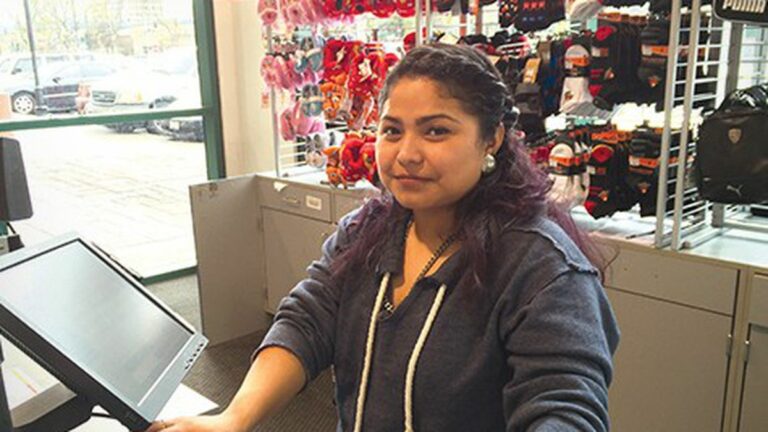
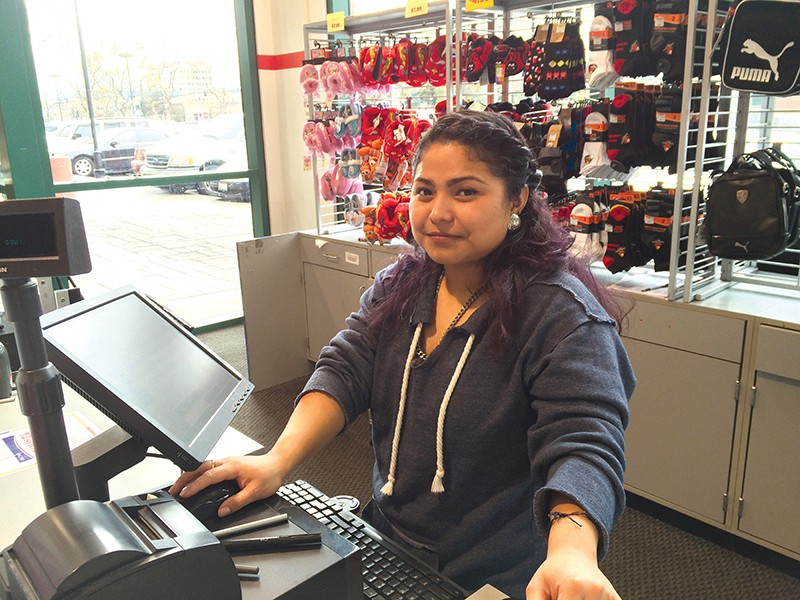
Cinthia Nucamendi recently purchased a car to get to her job at DB Shoes in the Powell Street Mall in Emeryville, and to transport her younger brother to and from his school. But her employer has kept her on an unreliable work schedule with too few hours that causes her to run low on money. As a result, there have been times she has been forced to choose between making payments on her car, and buying groceries. Her job’s unpredictable hours, and the demands of her bosses, are the source of intense stress for Nucamendi. Recently, her manager asked her to come to work an hour early, giving her only five minutes notice via a text message, she told the Emeryville city council at its March 15 meeting. And earlier this month, she was unable to make a critical meeting at her brother’s school because of another surprise schedule change. “Because of my unpredictable and unreliable schedule, I am forced to choose between giving up important personal matters in my life with my family, or make money to be able to make ends meet,” she told the city’s leaders.
Nucamendi is not alone. According to a recent survey of more than one hundred Emeryville retail and fast-food workers, unpredictable schedules are hurting working families. “They have chaotic work schedules that don’t allow them to plan for their lives,” said Jennifer Lin, deputy director of the East Bay Alliance for a Sustainable Economy (EBASE), one of the organizations that issued the report. The survey found that 68 percent of Emeryville’s retail and fast-food workers are working part time, but two-thirds want more hours, and 80 percent have schedules that fluctuate week-to-week. The study also showed that more than half the workers were scheduled for back-to-back closing and opening shifts — called “clopenings” — leaving them fewer than eleven hours for rest, commuting, and family time.
Cinthia Nucamendi said her unreliable work schedule interferes with her schooling and family life.
Credits: Courtesy of ACCE
After testimony from Nucamendi and other workers, the majority of Emeryville’s city council members told the city attorney they wanted to make a study of worker-scheduling policies a high priority. The city’s interest in addressing hours and scheduling issues faced by its service sector workforce follows on last year’s minimum wage increase. Last June, Emeryville raised its municipal minimum wage to what was then the highest in the nation: $12.25 an hour, or $14.44 in workplaces with more than 55 employees. But Mayor Dianne Martinez said the testimony of workers like Nucamendi made it clear that increasing the minimum wage has not done enough to lift up Emeryville workers so that they can afford to live in the region. Because so many are working part-time schedules, their higher pay isn’t translating into a higher income. “We want to do what we can,” said Martinez.
San Francisco adopted a city policy on scheduling last year, said Lin, and other cities, including Washington DC and Seattle, are considering the idea. “It’s the next wave of issues to address income inequity,” Lin said. Retail schedules are chaotic because many retail and fast-food outlets operate with what Lin described as “bare minimum staffing,” calling in workers as needed, and sending them home on slow days. “We’re focusing on large corporate retail stores because those are the ones that have the resources and profit margins to do this easily,” Lin said about policy changes her organization is proposing.
In an interview, Nucamendi explained how this scheduling pattern affects her life. She is a full-time student and has been the primary caregiver for her younger brother, now twelve, since he was born. Both her parents work so many hours that the job of caring for her brother fell to her, starting when she was in middle school. “It’s kind of crazy with the schedule changes,” she said. “They were cutting [my] hours, but I needed the money to support my family.”
As she juggles school, work, and home responsibilities, she said one of the main things she needs is more certainty with respect to the hours she is expected to work. “It would really help me so much to plan everything out because now it’s just so stressful.” Nucamendi said she has never refused extra shifts. “I’m afraid when I do need the hours, they won’t give them to me,” she said.
She has finally persuaded the store to give her a regular schedule, she said, but when she started her training as a medical assistant, her manager scheduled her on days she needed to study, and she failed the first-week final exam as a result. During the whole first week, Nucamendi only had one day to do homework. “I went three days without sleeping. Running on Red Bulls,” she said.
Alejandra, another Emeryville retail worker who didn’t want to give her last name or identify her employer, works in the Bay Street Mall. “We have an app where we check the schedule,” she told the city council, “but sometimes they add a day and don’t let me know. You don’t get used to having a routine that works.”
Alejandra has also experienced the “clopening” shift: “I would close at 10 [p.m.] and have to be back there at eight in the morning. You feel so tired. I don’t understand why it has to be so bad. They’ve been understaffed most of the time I’ve been there.”
ACCE and EBASE gave the city council a list of policies they said would help: post schedules at least three weeks in advance, give current workers first dibs on additional hours so they would have a greater opportunity to work full-time, allow workers enough time to rest between shifts, and allow workers to request schedules and refuse unfair schedules without retaliation.
“These policies would interfere with our store making a schedule,” said Javier Lopez, a manager at the Marshall’s store in the Powell Street Mall. He said Marshall’s already posts schedules three weeks in advance, lets workers request schedules, and lets them refuse shifts without retaliation. But he said his store does schedule the same person to close at night and come in the next morning, and Marshall’s also frequently calls employees at the last minute to fill in shifts of other workers who call in sick.
“Schedules fluctuate because this is retail,” said Phil, an assistant manager at an Emeryville retailer who did not want to give his last name, nor identify his employer. “Certain times are busier than others, it depends on the season.”
Other managers contacted for this story declined to comment.
Emeryville’s Mayor Martinez, who made retail scheduling a key point in her last state-of-the-city address, said that after the city passed the minimum wage ordinance, some employers complained that they had not had enough input in the new law, and that the council hadn’t held enough community meetings. As a result, the city is approaching the scheduling issue more carefully. “The city staff want to take a neutral approach, dig into everything, really study how this has worked in the only city where it’s been done [San Francisco],” said Martinez.
The next step, she said, is a study session in which city staff will present their findings to the council. Officials will continue to meet with workers’ advocates and also with employers. “It’s going to take some time to do it right,” said Martinez.
“Just the fact that they did make it a priority gives me some hope,” Nucamendi said. “As retail workers, we cannot keep doing this. If you want effective workers, you have to meet us halfway. It’s not like we’re asking for a lot – just things anybody would want.”
Whoopi Goldberg announced in Vanity Fair magazine today that she is developing a mainstream medical cannabis product line with East Bay edibles-maker Maya Elisabeth, who we profiled last week in our 2016 TASTE issue.
Goldberg and Elisabeth have formed the company “Maya & Whoopi” and are launching a line of products to battle menstrual cramps, including CBD-rich cannabis...
Alameda County Superior Court Judge Evilio Grillo declined to issue a decision yesterday in a case that could have far-reaching implications for public access to police officer body camera video. At the center of the case is a dispute over a $3,247.47 bill that the City of Hayward submitted to the National Lawyers Guild (NLG) in response to a...
Growing up in Miami, Robert Battle was immersed in the rich musical tradition of his church community from a young age. He was a shy child and he had to wear braces to correct his bowed legs. In middle school, he saw a performance of the dance piece Revelations, choreographer Alvin Ailey's seminal tribute to the African-American cultural experience....
I was honored to speak at JCCSF — Jewish Community Center of San Francisco — last week as a part of their "Uninhibited: About Sex" lecture series. The audience submitted questions on cards, which were ably put to me by Jourdan Abel, who was wearing a wonderful uterus-themed sweater. (Check out my Instagram account — @dansavage — to see...
For their newest project, husband-and-wife restaurateurs Bobeck Parandian and Joann Guitarte want to take an old Victorian house on a quiet, tree-lined residential street in Alameda and convert it into a full-service French-Creole restaurant. And not just any old house: The restaurant that Guitarte and Parandian are calling La Maison — literally, "the house" — will be located in...
Aries (March 21-April 19): According to my astrological analysis, you would benefit profoundly from taking a ride in a jet fighter plane 70,000 feet above the earth. In fact, I think you really need to experience weightlessness as you soar faster than the speed of sound. Luckily, there's an organization, MiGFlug (MigFlug.com), that can provide you with this healing...
On a Tuesday evening in January, people gathered at SoleSpace in downtown Oakland for a panel titled, "Shades of Green: The State of Cannabis in California for People of Color." Supernova Women — a recently formed organization led by female entrepreneurs of color working in cannabis — organized the event, and it brought out an avid, intergenerational crowd of...
"The Senator Versus Coal," News, 3/16
Erroneous Assumption
I applaud Senator Loni Hancock for her strong stance opposing new coal and fossil fuel infrastructure in California. It is imperative that we massively reduce our use of fossil fuels as soon as possible in order to avoid catastrophic environmental impacts from human-induced climate change. Reducing and eliminating new fossil fuel infrastructure is...
Country music legend Hank Williams was a sad and lonely guy. That much is a given. But that's no reason for the makers of the Williams biopic I Saw the Light to grind him into the carpet the way they do. Give the poor ol' boy a break.
Right off the bat, Tom Hiddleston doesn't fit the part in any...
Cinthia Nucamendi recently purchased a car to get to her job at DB Shoes in the Powell Street Mall in Emeryville, and to transport her younger brother to and from his school. But her employer has kept her on an unreliable work schedule with too few hours that causes her to run low on money. As a result, there...