Berkeley Progressives Say Mayor Bates’ Housing Plan is a “Blueprint for Gentrification”

Berkeley Mayor Tom Bates recently released a list of thirteen recommendations to spur housing development to address Berkeley’s staggering affordable housing crisis. Some residents, however, see several components of mayor’s plan as an invitation for further displacement in Berkeley, where, according to a recent city staff report, the median rent jumped 12 percent in the last year alone.

[jump]
Bates’ recommendations, which will appear before the Berkeley City Council at their April 5 meeting, include proposals to increase the density bonus program’s income thresholds for multi-family housing, alter zoning and height limits for buildings, and increase the Affordable Housing Mitigation Fee from $28,000 to $34,000, but discount the fee for developers who pay early.

For Berkeley residents like Kate Harrison, a member of the Berkeley Progressive Alliance, the proposal has several flaws. Harrison said that the city’s own research shows that the current Affordable Housing Mitigation Fee — a charge on market-rate development projects that helps fund affordable housing in the city — could be raised higher than the mayor’s suggested amount, thereby generating more money for low-income housing. Though $34,000 was found in the study to be the amount that would still allow a for reasonable rate of return on new market-rate housing construction, meaning it would still attract developers, Bates is proposing to add an alternative option to keep the fee at $28,000 for those who pay early. Harrison said the plan gives an unnecessarily large financial benefit to developers and will cost the city precious affordable housing funds.

“The amount is wrong,” said Harrison, “the discount is way to big.”

But Bates’ says the financial feasibility portion for developers is important. “[$34,000] is a fairly big change. We have been at $28,00 and haven’t had too many takers,” Bates told the Express in an interview. “This also allows us to go to from 10 to 20 percent affordable units [in lieu of paying the fee], and [developers] will have to provide that housing or pay into the trust fund. We are trying to reach a balance by letting the developers make that decision.” 

“It may not be obvious to people,” Bates continued, “but by expanding the numbers from 10 to 20 percent, almost doubling what we have done on the commercial side, we will be incentivizing and getting more money in the housing trust fund to build affordable housing.”

In addition, Bates mentioned that the $28,000 discount fee may be raised, but that it will ultimately be up to the Council to decide.

Bates also said long zoning and permitting processes was another reason why he thinks the city would be better off if it can incentivize developers to pay immediately with the discount. “We thought we would be better off if we could use the money immediately,” he said.

Harrison also said that the city should be raising affordable housing development funds from other sources, but these sources aren’t even being considered. “For example, six of the council members are in favor of a landlord tax to reflect the fact that housing prices have gone up a heck of a lot,” said Harrison. “We see a $69 million increase in profit by landlords, a small amount of that should be taxed.”

For Harrison, another major issue with the mayor’s proposed funding source is that it relies on developers to generate revenue. “It is a good source of funding, but [it] only comes into play when you are building new things,” she said. “Use part of the [real estate] transfer tax for affordable housing, or add a tax on short term rentals like Airbnb and put it into the housing fund.”

Another member of the Berkeley Progressive Alliance, Rob Wrenn, also cited issues with the proposal. Wrenn said that the city’ density bonus program, an addition to the state density bonus program, a mechanism that allows developers to build more units above what exiting zoning rules allow in exchange for affordable housing on site, still wasn’t targeting low-income families.

Bates’ suggestion calls for a density bonus that will rise 15 percent above the existing 35 percent maximum density bonus currently allowed by the state. However, the additional units will only be granted to developers who add units affordable to households earning up to 120 percent of the area median income (AMI), or those who pay a fee for moderate-income housing.

Through the higher AMI target, Bates’ recommendation states that the City will be aiming to address the needs of moderate workforce households, which range from 80-120 percent AMI. “There is no sign of rent increases slowing and the 2015 nexus study demonstrated that 2014 households at 100 percent AMI need rental assistance,” the proposal reads.

“When developers come in they normally pay the State Density Bonus, so they provide for the 10 percent and 50 percent AMI and they get a 35 percent increase in the building,” Bates said. “But the market is so high that it really forces out all working class housing. The teachers, firefights, waiters and waitress can’t do it because rental prices are too high. But they don’t qualify for the low end and they can’t afford the high. The idea with City Density Bonus was to give an additional bonus if they provide housing for the working families.” 

Wrenn thinks the 120 percent AMI limit is too high and that it will divert affordable housing funds away from the majority of the region’s renters who make far less money.

“For a family of four, 120 percent of median income in Alameda County is $112,200. In Berkeley, renter households have a median income of only $38,539 and 82 percent of renter households have incomes below $100,000,” Wrenn wrote on the Berkeley Daily Planet. “Giving a bonus that benefits people at 120 percent of median income is questionable. The City’s Affordable Housing Nexus Study concluded that ‘households earning 100 percent of AMI or less are typically unable to afford the average market rate unit in Berkeley.’”

“There are no community benefits attached to these changes,” Harrison added. “If changes are to be made, the community deserves balanced development.”

Harrison, Wrenn and several other residents I spoke with also said that the mayor’s original suggestion to pass by-right approval for certain housing developments will undercut the City’s planning code.

“Right now, if you want to build something within the planning code, it doesn’t need a public hearing. But if I want to do anything outside of [the planning code], then it does,” Harrison said. “What this would say is that developers have the right to develop in certain corridors without that process. The attempt is to change the zoning in big swaths to allow taller buildings, and I’m not sure this can be done legally without changing the general plan.”

Robert Lauriston, a neighborhood activist in Berkeley, expressed similar worries. “Bates wants to eliminate community oversight over what gets built and make deals privately at city hall. In some cases neighbors won’t find out about what’s going on not until demolition starts.”

However, it seems Bates has already taken these grievances into consideration. 

“I am withdrawing the by-right approval proposal,” Bates said. “If it were to proceed, certain designated areas wouldn’t have to go through a long process if they met certain conditions like emergency efficiency and car parking. It wouldn’t be like they just suddenly open up the flood gates, but I’m not going forward with it.”

For Lauriston, a crucial element that still isn’t being addressed in the mayor’s housing emergency plan are its underlying causes, like rising home prices caused by the tech industry. “[The tech boom] brought high paying jobs to San Francisco and the Silicon Valley, and now those people are moving to Berkeley,” Lauriston continued. “Home prices in my neighborhood have doubled. I moved here twenty years ago, but I could not afford to more here today. The mayor isn’t doing anything to address that but build more market-rate housing so those people can move here.”

While opponents say there are positive elements to the mayor’s suggested plan — such as a request that the Rent Stabilization Board waive registration fees in order to incentivize landlords to rent to Section 8 tenants — many have said the suggestions are helping developers more than residents in need of housing.

“Bates proposal is a blueprint for the gentrification of Berkeley,” Wrenn said in an email. “It promotes massive development of for-profit market rate housing, while doing next to nothing to help non-profit developers and land trusts to build housing that people can actually afford.”

In response to the criticism, Bates said, “this is a package of ideas, all of which will go to the council, the planning commission, and our housing and community development [department], so none will be passed immediately. It will have tons of public scrutiny, people will have time to discuss these issues.” 

Town Business: Housing Emergency; Biff’s Demolition; “Love Life”; Pop Tax

In response to rapidly rising rents and roughly 1,000 eviction notices each month, the Oakland City Council will vote this week on an emergency ordinance that would impose a moratorium on certain types of rent increases and no-fault evictions. The council is also expected to approve demolition of the old Biff’s Coffee Shop building to make way for 255 apartments and retail shops. Finally, City Council President Lynette Gibson McElhaney wants Oakland’s official city motto to be “Love Life.”

[jump] Housing emergency: On Tuesday night the Oakland City Council is expected to declare a housing emergency, and to enact a moratorium on rent increases and affirm the city’s ban on no-fault evictions for tens of thousands of apartments that are protected by the existing Rent Adjustment Ordinance and the Just Cause for Eviction Ordinance.

There will be two versions of the housing emergency ordinance before the council. One was drafted by a coalition of organizations that brought the idea of an emergency housing ordinance to the city council’s rules committee back on March 10, and succeeded in getting the item scheduled for a vote. The groups behind that effort included the John George Democratic Club, Post Salon, Oakland Alliance, Wellstone Democratic Renewal Club, and Block By Block Organizing Network. The other version of the ordinance was drafted by City Council President Lynette Gibson McElhaney in response to pressure from these groups.

The version of the ordinance drafted by the community groups states simply that there would be “a 90-day moratorium on no-cause evictions and on rent increases not authorized by existing rent control provisions, so that the City can develop and implement strategies that protect and expand access for Oakland renters to housing which they can afford with their existing incomes.”

McElhaney’s version of the ordinance goes into a little more detail. Her ordinance would impose a 90-day moratorium on rent increases that are in excess of the annual inflation-adjusted amount currently authorized by Oakland’s Rent Adjustment Ordinance. But McElhaney’s ordinance would still allow landlords to petition the rent board to increase rents higher than the CPI-linked amount in order to obtain a “fair rate of return.”

McElhaney’s moratorium would cover units that are currently subject to Oakland’s Rent Adjustment Ordinance, but it would also end exemption for 2–3 unit, owner-occupied buildings. About 56 percent of Oakland’s rental housing stock is already covered by the Rent Adjustment Ordinance, and adding 2–3 unit, owner-occupied buildings would mean that a firm majority of rental housing stock would be covered under the moratorium.

McElhaney’s ordinance would also discontinue the exemption for buildings that are “substantially rehabilitated.” Under the current rules, landlords who expend 50 percent or more of the cost of constructing a new building in order to rehabilitate an existing apartment building can gain exemption from Oakland’s rent adjustment rules. McElhaney’s emergency ordinance would end this exemption for 90 days.

Finally, McElhaney’s version calls for administrative citations and even civil penalties for landlords who violate the 90-day moratorium. Both versions of the ordinance could be renewed beyond 90 days.

Neither version of the emergency ordinance would prevent landlords who own buildings constructed after 1983 from raising rents as much as they want, due to Costa Hawkins, a state law that bans rent control on apartments built after that date. Costa Hawkins also prevents the council from protecting tenants in single family homes and condos from big rent increases and no-fault evictions. The city’s existing just cause ordinance also exempts post-1983 units also from eviction protections, meaning that the 90-day moratorium on evictions would not apply to these rental units.

Biff’s Demolition: The city council is expected to green light the demolition of Biff’s Coffee Shop, the circular, Jetson-esque building on 27th Street just off Broadway in Oakland’s Broadway-Valdez neighborhood. The Hanover Company, a Texas-based developer, is proposing to tear Biff’s down in order to build a six-story, 255-unit apartment building atop ground floor retail space that will front Broadway.

Opponents believe that tearing down Biff’s would deprive Oakland of a historic resource, and they want to see the restaurant re-opened. Biff’s Coffee Shop was built in the early 1960s and was incredibly popular in its time. It was one of Northern California’s few examples of “Googie” architecture, a modernist style that included circular shapes, gravity-defying appearances, and an orientation befitting automobile lifestyles.
The Hanover proposal, which already gained approval from the planning commission, is to fill the block with dense housing and retail, and to de-emphasize parking and automobiles, instead catering to the lifestyles of high-income urban workers.

“Love Life”: LoEshe Adanma Lacy was shot and killed in 1997 near McClymond’s high school. She was only 16, and struck by a bullet intended for someone else. After her death, Lacy’s family set up the Love Life Foundation — one of many groups in Oakland created after the tragic death of a young person that seeks to reduce street violence. The foundation was named after Lacy, whose first name, LoEshe, means “love life” in the Ibo language. Ibo is an indigenous Nigerian language.

If the council adopts “Love Life” as Oakland’s motto, they will likely also install the words on signs at entrances to Oakland. Doing so would cost between $4,670 and $21,084. Other options include dedicating one of Oakland’s parks as “Love Life Park,” naming a street “Love Life Avenue,” or naming a city fund that provides violence reduction resources the “Love Life Fund.”

Pop tax: It increasingly looks like there will be a sugar-sweetened beverage tax on Oakland’s November ballot. According to numerous medical studies, sweetened drinks are a leading source of diabetes and tooth decay, and taxing sugary drinks has been proven to reduce consumption and raise revenue that can be used for nutritional education programs.

Councilmembers Annie Campbell Washington, Desley Brooks, and Rebecca Kaplan are proposing a tax of one cent per fluid ounce upon the initial distribution of sugary drinks in the city. According to a letter written by the councilmembers, the tax could raise $10 to $12 million a year for Oakland.

In 2014 Berkeley became the first US city to pass a soda tax, but not without resistance. The American Beverage Association, an industry group representing companies like Coca-Cola and PepsiCo, spent $2.4 million in an effort to defeat the measure. The Oakland sugary drink tax will likely draw even more fire from the soda pop industry.

Correction: the original version of this article stated that there are over 1,000 evictions each month in Oakland. The City of Oakland does not track evictions and does not know how many evictions there are. But according to the Oakland Community Development Department, there were 11,050 eviction notices filed by landlords with the city from January 1, 2015 to February 29, 2016.

Cholita Linda Won’t Be Coming to Lakeshore Avenue After All

Earlier this year, I reported that diners in the Lake Merritt area would soon be feasting on Baja-style fish tacos, as Cholita Linda, Temescal’s wildly popular taqueria and pan-Latin restaurant, was set to open a second location at 3256 Lakeshore Avenue — the old Burrito Shop spot.

It turns out I jumped the gun: In an interview, Cholita Linda co-owner Murat Sozeri told me that landlords Barry and Elaine Gilbert backed out of their months-long “handshake agreement” last week, and have instead decided to lease the storefront to a falafel shop — despite the fact that the proprietors of Cholita Linda had already invested a significant amount of money into the restaurant.

See also:
Que Linda!

[jump]

Sozeri said he and the property owners agreed to terms and signed a letter of intent late last year — at which point the Gilberts and their real estate broker kept putting off sending over an actual lease for him to sign, all the while assuring Sozeri that the space was his. Then, in early March, the Gilberts finally sent over a lease that, according to Sozeri, was riddled with typos. Sozeri said that when his attorney sent an edited version of the lease back to the property owners, the broker told him the Gilberts were unhappy with the changes — and that they had, in fact, received a stronger bid from another potential tenant. Last week, the broker informed him that the Gilberts had decided to accept the other offer — from the aforementioned falafel shop.

I wasn’t able to reach the Gilberts for comment, but in a statement, their broker, Steve Banker of LCB Associates, stressed that the letter of intent was non-binding and said, “During the lease review, Cholita Linda attempted to change the economics of the agreed-to transaction.”

That’s a claim that Sozeri denies vehemently. He said the only things that his attorney corrected on the lease were typos and overly vague language, and that everything was kept consistent with the terms laid out in the letter of intent.

The worst thing about the last-minute change of heart? Sozeri said he’s already spent thousands of dollars on on an architect, an engineer, a food service designer, and more — all under the assumption that the deal was all but done, and that the Gilberts weren’t still entertaining other offers.    

“If there would have been doubt, I wouldn’t have done all that,” Sozeri said. “We got screwed.”

For now, Sozeri isn’t considering any other expansion plans for Cholita Linda. It’s time to move on, he said. As for the Lakeshore residents who were hoping to have fish tacos close to home — they’ll have to move on too.  

El Cerrito Gets a Himalayan Market

For many true food adventurers, restaurants are a dime a dozen, and it’s the international markets — tucked away in ethnic enclaves and at remote suburban strip malls — that are often the real treasure trove.

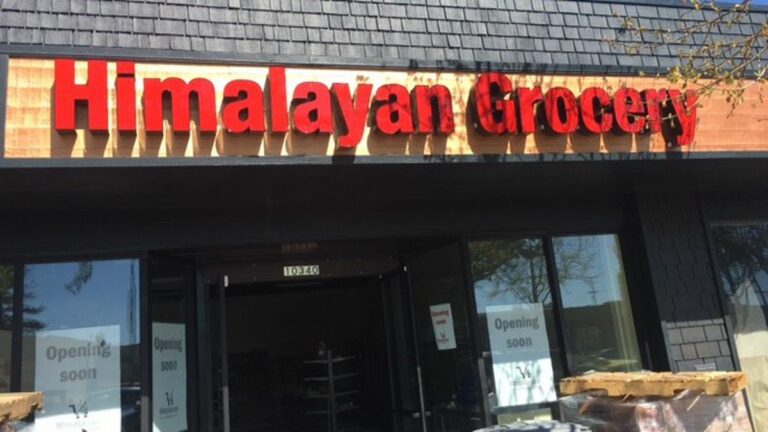
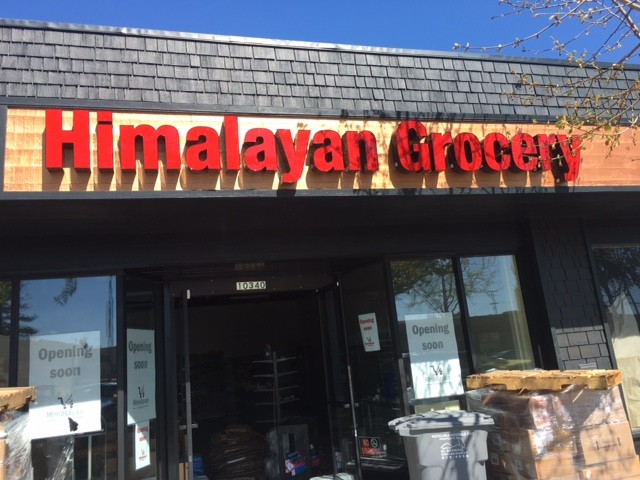
Here in the East Bay, the latest addition is Himalayan Grocery (10340 San Pablo Ave.), a Nepalese-owned grocery store in El Cerrito that will have its first day of business on Sunday, April 3, according to Taniya Acharya, whose father, Kiran Acharya, is one of four Nepalese friends who are opening the store together.

[jump] The Express recently explored the culinary riches that can be found at East Bay international markets in “Where Chefs Shop,” Sarah Burke’s story in our March 23 Taste issue. At the time, we didn’t know a Himalayan market was in the works. (A post on the Hungry Onion food discussion forum initially tipped me off.)

In a phone interview, Acharya said her father and his friends had talked for years about opening a either a restaurant or a grocery store together. In the end, they decided that the East Bay already has plenty of Himalayan restaurants. What it didn’t have was a specialized grocery catering to area’s vibrant Himalayan immigrant community — to all of the Nepalese, Tibetan, Indian, and Bhutanese folks living in the El Cerrito area in particular.

For now, the market isn’t planning to carry fresh meat or produce, instead focusing on snacks, frozen foods, spices, and dried goods. There also aren’t any immediate plans to sell cooked or prepared foods — so you might find momos (Nepalese/Tibetan dumplings) in the freezer section, but none that are steamed and ready to eat.

You might wonder, as I did, how a Himalayan market would differ from, say, one of the East Bay’s relative abundance of Indian grocery stores. Acharya acknowledged that the Indian and Nepalese cuisines have a lot in common, so there’s quite a bit of crossover in terms of the ingredients that home cooks would be seeking. In fact, she said one of the main impetuses for opening Himalayan Grocery was to provide a convenient option for Indian families in El Cerrito and El Sobrante who didn’t want to have to drive all the way down to Berkeley to do their shopping.

That said, Acharya said that Nepalese customers, in particular, should be excited to find a wealth of specialty products from their homeland that you’d be hard-pressed to find in other shops. For starters, the store will carry Wai Wai, a popular Nepalese brand of instant noodles. It will also sell orange fruit squash, a kind of powdered drink mix that Acharya likened to “Nepalese Tang.” And, perhaps most intriguingly for those — like me — who have never tried it, the store will carry chhurpi, a kind of hard yak cheese that is a popular snack food in Nepal. According to Acharya, the cheese has a mild flavor and is extremely chewy, so the chhurpi eater chews on it in much the same way you would a piece of chewing gum.

Other Nepalese staples that Himalayan Grocery will carry include a wide variety of Nepalese-brand pickles and imported Nepalese teas. If you’re curious about what other Himalayan foodstuffs the store will be selling, there will be plenty of free samples on offer during this Sunday’s grand opening event, which will run from 10 a.m. to 8 p.m.

Ohio Could Have Medical Marijuana by November

Ohio, a pivotal midwestern state for the medical marijuana movement, may again vote on medical pot legalization in November. And strong voter sentiment, coupled with a professional, if last-minute campaign, is increasing the chances that the swing state of twelve million people will vote yes.

[jump]
Yesterday the Ohio Ballot Board certified an initiative drafted by Ohioans for Medical Marijuana. If the group can gather 305,591 signatures they will be able to qualify the initiative for the November ballot. Just last year, Ohio voted down an adult-use legalization proposal that included creating a legal cultivation cartel.

Ohioans for Medical Marijuana have until early July to gather the signatures — using volunteer as well as paid signature gatherers. Supported by the leading reform group Marijuana Policy Project, Ohioans for Medical Marijuana has the resources, but very little time to make the 2016 ballot.

“We plan to mobilize a large group of volunteers and we’ll be enlisting the help of paid petitioners to meet the state’s sizable signature requirement in the short amount of time we have,” Mason Tvert, communications director for the Marijuana Policy Project, which is supporting the initiative, stated. “A lot of our volunteers are family members of patients or patients themselves, so they’re incredibly motivated. The initiative process isn’t easy, but it pales in comparison to undergoing chemotherapy or witnessing your child have seizures on a daily basis.”

Last year Ohio voters rejected a proposal to legalize pot with a cultivation cartel by a vote of 64 percent to 36 percent. But support for medical marijuana is stronger. In national polls, approximately 80 percent of the public supports medical marijuana.

An Ohio poll from Quinnipiac found in 2015 that 84 percent of Ohioans supported “allowing adults in Ohio to legally use marijuana for medical purposes if their doctor prescribes it.” And a 2016 poll found that “nearly three out of four Ohioans said access to marijuana for certain medical conditions should be a constitutional right.”


Advocates say the Ohio proposal is similar to others in 23 states that would allow qualified patients to use, possess (2.5 ounces in public), and cultivate a small number of medical pot plants. State ID cards, and licensed, regulated providers would follow. Local bans on pot shops would require a local vote.

Qualifying conditions would be quite numerous, and regulators could add more. They include:
“Debilitating medical condition” means: cancer, glaucoma, positive status for human immunodeficiency virus, acquired immune deficiency syndrome, hepatitis C, amyotrophic lateral sclerosis, Crohn’s disease, ulcerative colitis, agitation of Alzheimer’s disease, post-traumatic stress disorder, autism with aggressive or self-injurious behaviors, Sickle-Cell Anemia, severe fibromyalgia, spinal cord disease, spinal cord injury, traumatic brain injury or post-concussion syndrome, chronic traumatic encephalopathy, Parkinson’s, muscular dystrophy, Huntington’s Disease, or the treatment of these conditions; a chronic or debilitating disease or medical condition or its treatment that produces one or more of the following: cachexia or wasting syndrome; severe debilitating pain; severe nausea; seizures, including but not limited to those characteristic of epilepsy; severe and persistent muscle spasms, including but not limited to those characteristic of multiple sclerosis; or any other medical condition or its treatment approved by the Division.”

“I’m excited to let voters know about this initiative and why it’s so important to me,” stated Ohio resident Amanda Candow, a multiple sclerosis patient and volunteer, in an MPP release. “I’m particularly interested in sharing my story with folks who are still skeptical about medical marijuana. My friends and neighbors already know how much this law would help patients like me.”

Twenty-three states have legalized medical marijuana, which is federally illegal. Last month, a Brookings Institute Researcher called for national medical marijuana legalization. All 2016 Presidential candidates have promised to, at minimum, take a hands-off approach to state-legal medical cannabis.

Antoinette Flames Out; Dominique Crenn Unfazed

It isn’t every day that you publish an unflattering review of a restaurant only to find out, before the dust even settles, that the restaurant in question has decided to shut down. But that’s what happened this week with Antoinette, the ambitious — but deeply flawed — French brasserie at the Claremont Club & Spa, A Fairmont Hotel. On Wednesday, the hotel announced that the last day of business for the current incarnation of Antoinette will be next Wednesday, April 6, at which point the restaurant will close for several weeks and undergo a significant reboot.

See also:
Antoinette Serves Hotel Food for the One Percent

[jump] The most noteworthy change: Effective immediately, The Claremont and Dominique Crenn — the San Francisco-based star chef who, in her role as “curator” and consultant, had been the creative force behind the restaurant — have severed ties.

In a statement, a regional representative for the Fairmont hotel chain said that the two parties had “mutually agreed to end their partnership.” When the restaurant reopens a few weeks from now, it will retain the name Antoinette and the French brasserie theme, but there will be “exciting new changes” to the menu. The Fairmont would not confirm whether Justin Mauz, who had been Antoinette’s chef de cuisine, will continue to helm the restaurant’s next iteration.

When reached by phone, Crenn put a brave face on the situation, saying that while the collaboration with The Claremont didn’t work out, it wasn’t a “big deal.” “My life is great, and I’m moving forward tomorrow,” she said.

Crenn, for what it’s worth, said she hadn’t read the Express review — though she alluded to various details from the article that others had relayed to her, and acknowledged that certain aspects of Antoinette’s launch had been less than ideal. Mostly, she said, it had simply proved too difficult to collaborate with a restaurant without maintaining control over the day-to-day operations.

“Chefs, when we have something that we want to put on the plate, we need to see that thing from A to Z,” Crenn said.

The chef didn’t respond, however, to the broader question of who was ultimately responsible for the restaurant’s underlying problems — the specific menu items, high price point, and baffling approach to service. In fact, Crenn stressed that she’s parting ways with the Fairmont hotel group on good terms.

This much is clear: If The Claremont’s goal was to make a big splash by attaching a prestige chef to its new centerpiece restaurant, it’s hard not to see the execution of that plan as an unqualified failure. 

This Weekend’s Top Five Events

It’s the weekend already! What a treat. And here’s how to enjoy it:

Oakland Lost Landscapes
Historian and media activist Rick Prelinger’s popular Lost Landscapes series will be coming to The New Parkway (474 24th St.) for a free presentation of Oakland-specific material on Friday, April 1 as part of First Friday Shorts. Oakland Lost Landscapes is a montage of rediscovered and rarely-seen film clips taken by news cameramen, amateur videographers, and industrial filmmakers at times when the city looked very different than it does today. Although Prelinger — whose archive of 60,000 such films from across the country now lives at the Library of Congress — researched and compiled the Oakland Lost Landscapes collection, his student Alex Cruse will be giving the presentation on Friday. Cruse is an Oakland-based writer, interdisciplinary artist, and educator who worked at the Prelinger Archives between 2012 and 2013 and is now the primary producer of the Lost Landscapes series. Unlike most screenings, talking is encouraged during Lost Landscape presentations. “We should think about not just making films, but making events as well,” Prelinger told the Express in 2014. “I want to use historical film material as an opportunity to get people talking about issues that might be hard to talk about.”— Sarah Burke
Fri., April 1, 6-8 p.m. Free. TheNewParkway.com


[jump]
Seed Language: A New Identity
Early on in Seed Language: A New Identity, a young woman playing Alicia Garza, co-founder of Black Lives Matter, recites the names of women who have been killed by the police. Four dancers hang from the rafters on wires above her, evoking bodies hung from trees. As she says the names, the hanging dancers flip, alternating between hanging feetfirst and headfirst. Other dancers walk slowly around the stage, some collapsing to the ground as more names ring out. It’s one of several startlingly powerful moments in a show where words and movement frequently combine to create a greater whole. It’s also not the only time the production, which opened at Laney College’s Odell Johnson Theater last weekend, delves into death and loss. — April Kilcrease Reead the full story here. 
Seed Language: A New Identity will show at Odell Johnson Theater (900 Fallon St., Oakland) through April 3 and at The Geary Theater (415 Geary St., San Francisco) on April 16. $10-$30. DestinyArts.org 

Nick Dong: Cosmic Dance
The concept behind Nick Dong’s current show at Mercury 20 Gallery (475 25th St.), Cosmic Dance, came to the artist during a session of meditation. With the show, Dong aims to offer a collection of “unexplainable objects” that inhabit an ambiguous space between perception and reality. Indeed, the series of installations is both dazzling and bewildering. In “Ghost of Graviton,” what looks like a metallic talisman in the shape of a rounded cone levitates atop a whimsical wall-hanging pedestal and spins slowly in midair, projecting swirling light onto the gallery’s black walls. In “Force of Gravity,” a metallic cube rotates in the center of a mirrored, concave platform atop an upside-down pyramid inserted into a table. Hovering above the arrangement with no clear source, spots of light form a midair sculpture that slowly moves, as if breathing. There will be a closing reception for Dong’s show during First Friday on April 1 from 6–9 p.m. If you haven’t experienced the exhibit already, make sure not to miss it.
— S. B. 
Through April 2. MercuryTwenty.com

Club Chai x Discwoman
Discwoman is a music collective and online platform that started in New York with DJs Frankie Hutchinson, Emma Burgess-Olson, and Christine Tran, who came together to find a way to create spaces for female and gender nonconforming DJs and producers. Since its inception, the organization has thrown parties in over fifteen cultural hubs such as Los Angeles, Mexico City, and Toronto, and worked with over 150 emerging artists. Now, Discwoman is collaborating with Bay Area DJs and party throwers 8ulentina and Foozool, who started the genre-defying monthly dance party Club Chai earlier this year. At the Club Chai x Discwoman party at Alena Studios on April 2, residents Foozool and 8ulentina will be behind the decks alongside local DJs Namaste Shawty, Jasmine Infiniti, and Discwoman co-founder Hutchinson, who performs as Bearcat.
— Nastia Voynovskaya
Sat., April 2, 9 p.m. $10. Discwoman.com


“An evening in Havana” with Dayme Arocena
As America’s relations with Cuba grow friendlier, whispers of which emerging Cuban artists we should be following are already hitting stateside music blogs. While many people are familiar with Afro-Cuban jazz and pop legends like Celia Cruz, we can hopefully look forward to a larger presence of younger, fresher Cuban cultural icons in the years to come. One Cuban artist making waves right now is Daymé Arocena, a 22-year-old singer from Havana with an idiosyncratic, deep, resonant voice. Her jazz and neo-soul stylings evoke traditional Afro-Cuban folk music, dub, jazz, and pop singer-songwriters such as Sade. Arocena is a devotee of Santaria, a Caribbean religion with roots in Nigeria’s Yoruba faith, a spiritual practice that prominently features female deities. Her music often invokes her spiritual beliefs and heritage in novel ways, with elaborate, layered harmonies, breezy instrumentation with island vibes, and occasional electronic elements adding new layers to the traditions she references. Catch her in Oakland at The New Parish on Sunday.
— N. V.
Sun., April 3, 3 p.m. $15, $20. TheNewParish.com

If your pockets are feelin’ light and you’re still yearning for more suggestions, we’ve got a ton, and these ones are all FREE! We’re Hungry: Got any East Bay news, events, video, or miscellany we should know about? Feed us at Sa*********@************ss.com.

The Fight to Save Betti Ono Continues

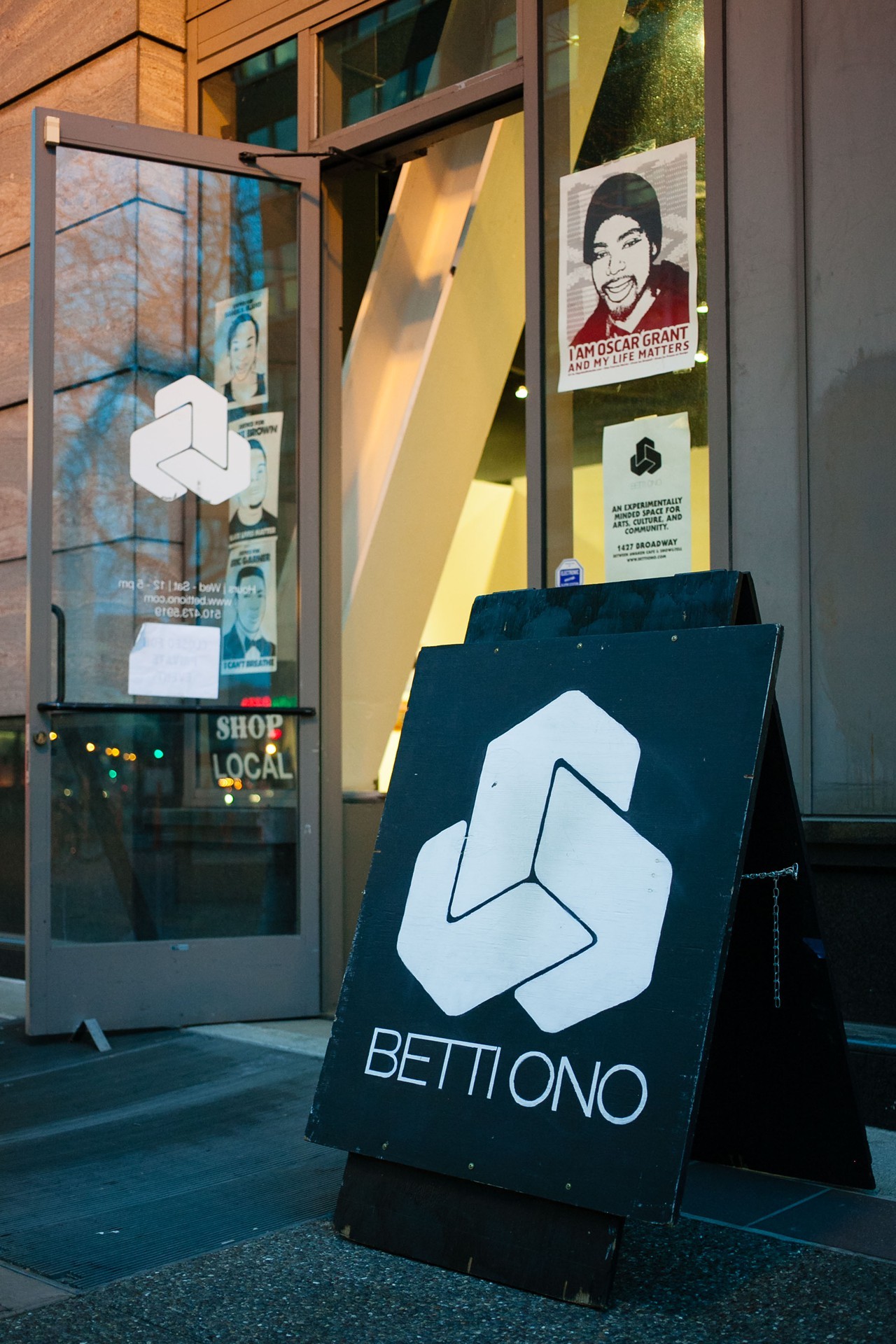
As the Express reported last month in our feature “Will Oakland Lose Its Artistic Soul?,” Betti Ono Gallery (1427 Broadway, Oakland) is facing threat of displacement due to a 60% rent increase (which comes out to an additional $22,000).

Betti Ono Gallery, which aims to elevate marginalized voices and creative work, has been located in a city-owned building adjacent to Frank Ogawa Plaza for the past five years. Despite repeated requests, the gallery has been unable to obtain a long-term lease from the city, according to Betti Ono founder and director Anyka Barber. 

[jump] For nearly a year, Barber has been leading the Oakland Creative Neighborhoods Coalition (OCNC) which is rallying members of Oakland’s creative community — and beyond — to address the rapid displacement of Oakland’s art spaces. The majority of OCNC meetings have taken place at Betti Ono, and the gallery has become a crucial hub for Oakland’s arts and activist communities to convene and discuss the threat that gentrification poses to the city’s culture and communities. 

Barber recently launched a campaign, called “PowerLoveRestistance,” to raise awareness about Betti Ono Gallery’s situation, and to draw attention to the shared plight of Oakland art spaces in a climate of skyrocketing rents. The campaign, which was launched on March 15, includes a series of events as well as a fundraising initiative with a goal of $50,000 to pay rent. 

As of this writing, the fundraising page has been live for seventeen days and 6% of the funding goal has been reached. 

The campaign page reads: 
“Oakland is the epicenter of a national affordability crisis, and Black-owned and people of color-owned spaces are the most hard hit. While we continue to demand the city provide us with the long-term lease we deserve, we need to raise $50,000. Our community partnerships, relationships and livelihood are on the line. … Any and all contributions will provide us with the critical resources needed to advocate and secure a 5-year lease while keeping our doors open and continuing to function as a space for activism, community transformation and cultural resilience. ”
In addition, half of the gate donations for tomorrow’s First Friday Street Fair (which is fiscally sponsored by a nonprofit called the Koreatown Northgate Community Benefit District) will be donated to Betti Ono Gallery’s campaign. Plus, beginning this month, the street fair’s hours will be extended, running from 5:30–9:30 p.m. for the rest of the season. (The extended hours are unrelated to Betti Ono Gallery, but all the more incentive to attend.)

Betti Ono will be holding a free First Friday event tomorrow night from 6–9 p.m. in support of the campaign.  The event description promises a “super-charged evening of POWER.” And tentative programming includes “community power mapping and messages,” and “power ballads karaoke.” 

Watch Betti Ono’s PowerLoveResistance video below:

Betti Ono: Power, Love, Resistance from behold, creators on Vimeo.


The Express Announces Nick Miller as Incoming Editor

Today, the Express announced that Nick Miller will be joining the publication as Editor.

Miller hails from Sacramento, where he has served as the co-editor of the Sacramento News & Review (NewsReview.com) since 2012. Overall, Miller has worked at SN&R for twelve years, serving stints as arts editor, news editor, and managing editor.

[jump] Miller’s recent work as an editor and writer has focused on Sacramento city hall and the mayor’s office, economic inequality, social movements such as Occupy and Black Lives Matter, and homelessness. He has received over one dozen California Newspaper Publisher Association awards, including first-place for writing, investigative reporting, breaking-news coverage, and local-news reporting.

In addition, Sarah Burke, who formerly served as the Express’ Arts & Culture Editor, was recently appointed to the position of Managing Editor. 

Miller will start at the Express on April 25. In the interim, Burke is serving as editor alongside staff reporter Darwin BondGraham.

For more information, please view the official press release here. 

Mid-Week Menu: Francesco’s Is Closing, AlaMar Starts Brunch Service, and The Barrel Room Revamps Its Menu

Welcome to the Mid-Week Menu, our roundup of East Bay food news.

1) Another day passes, and it’s time to say goodbye to another Oakland original: The Italian-American restaurant Francesco’s (8520 Pardee Dr.) will have its last day of business on Thursday, March 31. Inside Scoop reports that the family-run restaurant’s third-generation owners have decided to retire, and there wasn’t anyone in the fourth generation who wanted to take up the mantle. For its last day of business, the lunch special will be roast pork loin.

[jump] 2) Also calling it quits is La Botella Republic (2055 Center St.), the downtown Berkeley wine bar, Berkeleyside Nosh reports. Among other factors, the owners cited the fact that a customer base of well-to-do techies never materialized to the extent that they had hoped.

3) This news I’m kind of bummed to hear: Berkeleyside Nosh reports that the Rockridge location of The Barrel Room (5330 College Ave., Oakland) is closed for renovations until early April — but also that once it reopens, it will replace its full-service food menu with “delicious small plates and bites.” I’m on record saying how much I loved The Barrel Room’s food — an ambitious new menu built from scratch every three months to match the regional theme of the wine list. We’ll have to see how this stripped-down version measures up.

4) After a series of occasional brunch pop-ups, the seafood restaurant AlaMar (100 Grand Ave., #111, Oakland) is launching Sunday brunch in earnest this weekend, starting on Sunday, April 3, 10:30 a.m.–2:30 p.m. According to a press release, possible menu items include French toast made with the cinnamon buns from nearby Gregory’s Desserts, carrot cake flapjacks, and chili prawns served with a baked egg.

5) Ozumo (2251 Broadway), the swanky Japanese restaurant in Uptown Oakland, has jumped on the Bay Area’s recent ramen craze, offering a three different varieties of ramen during dinner service each Wednesday. It appears some of the past offerings have had a fusion-y bent — a curry chicken ramen, for instance, or a “Nasu Marinara” ramen with meatballs, panko-crusted eggplant, and spinach noodles.

6) Inside Scoop reports that the former TJ’s Gingerbread House — the long-shuttered dollhouse-themed Cajun restaurant at 745 5th Street, on the outskirts of West Oakland — is the new home of a cupcake shop called Angel Cakes. It’s now open for business.

7) We finally have some word on Kushido (4828 Telegraph Ave., Oakland), the former yakitori joint in Temescal: Turns out it will still be a yakitori joint — now rebranded as Hina, Inside Scoop reports.

8) Berkeleyside Nosh reports that a Peruvian restaurant and nightclub called Inca’s Palace is now open in the Pacific East Mall in Richmond, in the former site of a hotpot restaurant.

9) Finally, ICYMI, I wrote about an Alameda couple’s plans to turn their 122-year-old Victorian into a French-Creole restaurant.

Got tips or suggestions? Email me at Luke (dot) Tsai (at) EastBayExpress (dot) com. Otherwise, keep in touch by following me on Twitter @theluketsai, or simply by posting a comment. I’ll read ‘em all.

Berkeley Progressives Say Mayor Bates’ Housing Plan is a “Blueprint for Gentrification”

Berkeley Mayor Tom Bates recently released a list of thirteen recommendations to spur housing development to address Berkeley's staggering affordable housing crisis. Some residents, however, see several components of mayor’s plan as an invitation for further displacement in Berkeley, where, according to a recent city staff report, the median rent jumped 12 percent in the last year alone. ...

Town Business: Housing Emergency; Biff’s Demolition; “Love Life”; Pop Tax

In response to rapidly rising rents and roughly 1,000 eviction notices each month, the Oakland City Council will vote this week on an emergency ordinance that would impose a moratorium on certain types of rent increases and no-fault evictions. The council is also expected to approve demolition of the old Biff's Coffee Shop building to make way for...

Cholita Linda Won’t Be Coming to Lakeshore Avenue After All

Cholita Linda's signature fried fish taco. Credits: Chris Duffey/File photo Earlier this year, I reported that diners in the Lake Merritt area would soon be feasting on Baja-style fish tacos, as Cholita Linda, Temescal’s wildly popular taqueria and pan-Latin restaurant, was set to open a second location at 3256 Lakeshore Avenue — the old Burrito Shop spot. It turns out I jumped...

El Cerrito Gets a Himalayan Market

A new shopping option in El Cerrito. Credits: Himalayan Market For many true food adventurers, restaurants are a dime a dozen, and it’s the international markets — tucked away in ethnic enclaves and at remote suburban strip malls — that are often the real treasure trove. Here in the East Bay, the latest addition is Himalayan Grocery (10340...

Ohio Could Have Medical Marijuana by November

Ohio, a pivotal midwestern state for the medical marijuana movement, may again vote on medical pot legalization in November. And strong voter sentiment, coupled with a professional, if last-minute campaign, is increasing the chances that the swing state of twelve million people will vote yes. MPP makes a last-minute 2016 move for...

Antoinette Flames Out; Dominique Crenn Unfazed

It isn’t every day that you publish an unflattering review of a restaurant only to find out, before the dust even settles, that the restaurant in question has decided to shut down. But that’s what happened this week with Antoinette, the ambitious — but deeply flawed — French brasserie at the Claremont Club & Spa, A Fairmont Hotel. On...

This Weekend’s Top Five Events

It's the weekend already! What a treat. And here's how to enjoy it: Oakland Lost Landscapes Historian and media activist Rick Prelinger’s popular Lost Landscapes series will be coming to The New Parkway (474 24th St.) for a free presentation of Oakland-specific material on Friday, April 1 as part of First Friday Shorts. Oakland Lost Landscapes is a montage...

The Fight to Save Betti Ono Continues

As the Express reported last month in our feature "Will Oakland Lose Its Artistic Soul?," Betti Ono Gallery (1427 Broadway, Oakland) is facing threat of displacement due to a 60% rent increase (which comes out to an additional $22,000). Betti Ono Gallery, which aims to elevate marginalized voices and creative work, has been...

The Express Announces Nick Miller as Incoming Editor

Today, the Express announced that Nick Miller will be joining the publication as Editor. Miller hails from Sacramento, where he has served as the co-editor of the Sacramento News & Review (NewsReview.com) since 2012. Overall, Miller has worked at SN&R for twelve years, serving stints as arts editor, news editor, and managing editor. Miller’s recent work as...

Mid-Week Menu: Francesco’s Is Closing, AlaMar Starts Brunch Service, and The Barrel Room Revamps Its Menu

Welcome to the Mid-Week Menu, our roundup of East Bay food news. 1) Another day passes, and it’s time to say goodbye to another Oakland original: The Italian-American restaurant Francesco’s (8520 Pardee Dr.) will have its last day of business on Thursday, March 31. Inside Scoop reports that the family-run restaurant’s third-generation owners have decided to retire,...
19,045FansLike
17,709FollowersFollow
61,790FollowersFollow