When Sarah Treem was 27, her play, A Feminine Ending, was ridiculed by New York Times critic Charles Isherwood. Isherwood began his review by suggesting that the central character’s name, Amanda Blue, was more befitting of a porn star than the aspiring oboist she was supposed to be. He then proceeded to pick apart the play’s relevance and credibility. Treem, now successfully employed by Showtime, was devastated. She thought her career had ended before it really began. Producers counseled her to stop writing about women’s issues and gender politics, telling her that it turned people off. She was going to be ghettoized as a female writer, they warned.
Instead of taking their advice, Treem doubled down. Shortly after that review in 2007, she wrote The How and the Why, a play about menstruation and menopause — two topics that are about as female as you can get. On stage at Berkeley’s Aurora Theatre Company through May 22, the two-person play centers on a pair of evolutionary biologists: Rachel, a young graduate student with a radical new hypothesis about the purpose of menstruation (to rid the body of pathogens carried by males), and Zelda, a lauded scientist with a ground-breaking theory on menopause (that grandmothers were the key to human evolution). Although clearly ambitious, Rachel’s ego is still fragile and her bouts of overconfidence are paired with swift descents into despair. Plus, she is so desperate for love and a sense of family that she’s willing to share credit for her work with her boyfriend. Zelda, who never married, is fiercely and justifiably proud of her career, but haunted by the sacrifices she made for it.
Nancy Carlin as Zelda (L) and Martha Brigham as Rachel in Aurora’s The How and the Why.
Credits: David Allen
The two women’s opposing views on motherhood, love, marriage, and careers are continuously turned over through their conversations, revealing new dimensions and questions with each pass: Can you have a brilliant career and raise a child? Can your relationship to your work be as meaningful as being in love with another person? How much of yourself should you sacrifice for someone you care about?
“I always try to start with a question … that can’t be answered, a huge question, one that’s keeping me up at night,” said Treem. The questions at the heart of The How and the Why are ones that likely keep many women up at night and are likely to keep them up for decades to come. But, just as the play swings between perspectives, Treem’s own understanding of the questions (and potential answers) has evolved in the years since she wrote it.
Originally, Treem strongly identified with Rachel’s character, whom she used as an outlet for her frustrations over misogynistic responses to her own work. She even pulled directly from Isherwood’s remarks. After Rachel presents her hypothesis at a conference, one science blogger writes that he couldn’t pay attention to her talk because the name she had given her primate prototype, Bloody Mary, reminded him of a porn star.
“A lot of sexism comes from shaming women,” said Treem. “It’s centered around making women feel like they’ve done something wrong or they’re not behaving appropriately. I used to get very upset by it when I was young and it would sort of derail me.”
At 35, Treem is no longer so easily thrown. In addition to her work as a show runner on the television show The Affair, which earned her a Golden Globe Award in 2014, she has numerous other writing and producing credits to her name, including HBO’s In Treatment, and Netflix’s House of Cards, for which she won a Writers Guild of America Award in 2014. While Treem still experiences sexism on the job, she said that as she’s gotten older and more accomplished, she’s learned to not take it personally.
“I find sexism [to be] a fascinating social experiment all the time,” she said. Treem thinks that if women can figure out how to identify sexism and not feel cowed by it, then they can shift the dynamic. “If you can say, ‘I don’t give a fuck if you think I’m loud and belligerent. I believe in my ideas and I’m talking just as much as you are and I have just as much of a right to speak as you do’ — if you can get there, then it does finally become interesting,” she said. “Then it’s like, ‘What is it about what I’m saying that you find so threatening?’ … But I’m lucky because I’m in a position of power at this point. I think if you talk to me again when [The Affair] is over, I may have a different take on it.”
A wife and mother of a three-year-old son and a baby girl, Treem also finds herself identifying more with Zelda’s concerns about motherhood and work. “I kind of thought of [motherhood] as an end to creativity,” she said. “I just sort of assumed that somehow it wasn’t possible. And honestly, I wasn’t wrong. It is impossible on a certain level. I think that was the thing that I could sense even though there was this whole wave of, ‘No, no, you can have it all. Just lean in.'” In many ways, Treem’s career is a testament to the “lean in” philosophy, but “it’s really exhausting and you suffer for it,” she said.
When she wrote the play, Treem intended to show that both sides are valid, and that idea still resonates with her today. “As you get older, you realize that the choices are so very complicated and that nobody does them very well. … You can only decide what’s best for you and try to live by it.”
For many true food adventurers, restaurants are a dime a dozen, and it’s the international markets — tucked away in ethnic enclaves and at remote suburban strip malls — that are often the real treasure trove.
Here in the East Bay, the latest addition is Himalayan Grocery (10340 San Pablo Ave.), a Nepalese-owned grocery store in El Cerrito that had its first day of business on Sunday, April 3, according to Taniya Acharya, whose father, Kiran Acharya, is one of four Nepalese friends who are opening the store together.
Grand Lake residents will have to continue going to Temescal to get their fish tacos.
Credits: Courtesy Cholita Linda
The Express recently explored the culinary riches that can be found at East Bay international markets in “Where Chefs Shop,” Sarah Burke’s story in our March 23 Taste issue. At the time, we didn’t know a Himalayan market was in the works. (A post on the Hungry Onion food discussion forum initially tipped me off.)
In a phone interview, Acharya said her father and his friends had talked for years about opening either a restaurant or grocery store together. In the end, they decided that the East Bay already has plenty of Himalayan restaurants. But, it lacked a specialized grocery store catering to the area’s vibrant Himalayan immigrant community — all of the Nepalese, Tibetan, Indian, and Bhutanese folks living in the El Cerrito area.
For now, the market isn’t planning to carry fresh meat or produce, instead focusing on snacks, frozen foods, spices, and dried goods. And there aren’t any immediate plans to sell cooked or prepared foods — so you might find momos (Nepalese/Tibetan dumplings) in the freezer section, but none that are steamed and ready to eat.
You might wonder, as I did, how a Himalayan market would differ from, say, one of the East Bay’s many Indian grocery stores. Acharya acknowledged that the Indian and Nepalese cuisines have a lot in common, so there’s quite a bit of crossover in terms of the ingredients that home cooks would be seeking. In fact, she said one of the main impetuses for opening Himalayan Grocery was to provide a convenient option for Indian families in El Cerrito and El Sobrante who didn’t want to have to drive all the way down to Berkeley to do their shopping.
That said, Acharya said that Nepalese customers, in particular, should be excited to find a wealth of specialty products from their homeland that you’d be hard-pressed to find in other shops. For starters, the store will carry Wai Wai, a popular Nepalese brand of instant noodles. It will also sell orange fruit squash, a kind of powdered drink mix that Acharya likened to “Nepalese Tang.” And, perhaps most intriguingly for those — like me — who have never tried it, the store will carry chhurpi, a kind of hard yak cheese that is a popular snack food in Nepal. According to Acharya, the cheese has a mild flavor and is extremely chewy, so the chhurpi eater chews on it in much the same way you would a piece of chewing gum.
Other Nepalese staples that Himalayan Grocery will carry include a wide variety of Nepalese-brand pickles and imported Nepalese teas.
Fish Tacos Aborted
Earlier this year, I reported that diners in the Lake Merritt area would soon be feasting on Baja-style fish tacos, as Cholita Linda, Temescal’s wildly popular taqueria and pan-Latin restaurant, was set to open a second location at 3256 Lakeshore Avenue — the old Burrito Shop spot. It turns out I jumped the gun: In an interview, Cholita Linda co-owner Murat Sozeri told me that landlords Barry and Elaine Gilbert backed out of their months-long “handshake agreement” last week, and have instead decided to lease the storefront to a falafel shop — despite the fact that the proprietors of Cholita Linda had already invested a significant amount of money into the restaurant.
Sozeri said he and the property owners agreed to terms and signed a letter of intent late last year — at which point the Gilberts and their broker kept putting off sending over an actual lease for him to sign, all the while assuring Sozeri that the space was his. Then, in early March, the Gilberts finally sent over a lease that, according to Sozeri, was riddled with typos. Sozeri said that when his attorney sent an edited version of the lease back to the property owners, the broker told him the Gilberts were unhappy with the changes — and that they had, in fact, received a stronger bid from another potential tenant. Last week, the broker informed him that the Gilberts had decided to accept the other offer — from the aforementioned falafel shop.
I wasn’t able to reach the Gilberts for comment, but in a statement, their broker, Steve Banker of LCB Associates, stressed that the letter of intent was non-binding and said, “During the lease review, Cholita Linda attempted to change the economics of the agreed-to transaction.”
That’s a claim that Sozeri denies vehemently. He said the only things that his attorney corrected on the lease were typos and overly vague language — everything else was kept consistent with the terms laid out in the letter of intent.
The worst thing about the last-minute change of heart? Sozeri said he’s already spent thousands of dollars on an architect, an engineer, a food service designer, and more — all under the assumption that the deal was all but done, and that the Gilberts weren’t still entertaining other offers.
“If there would have been doubt, I wouldn’t have done all that,” Sozeri said. “We got screwed.”
For now, Sozeri isn’t considering any other expansion plans for Cholita Linda. It’s time to move on, he said. As for the Lakeshore residents who were hoping to have fish tacos close to home — they’ll have to move on too.
Mary Hogden was outside a New Mexico convenience store in 2004 when police officers approached her. She was homeless and in the middle of a psychiatric episode. One of the cops asked to search her, saying she was loitering near the store, but she refused his request. “The police officer became very angry and upset,” she recalled in a recent interview. “He ended up throwing me on the ground, putting my hands behind my back with handcuffs. He dragged me across the parking lot. He hurt me. He psychically hurt me.”
Later, Hogden went to an abandoned trailer and attempted to set it ablaze. The officers who arrived on the scene took her to the hospital for a psychiatric evaluation. After she was released, she hitchhiked to the Bay Area. But not long after arriving here, she had another breakdown. Once again, the first person to evaluate her mental health and take her to the emergency room was a cop.
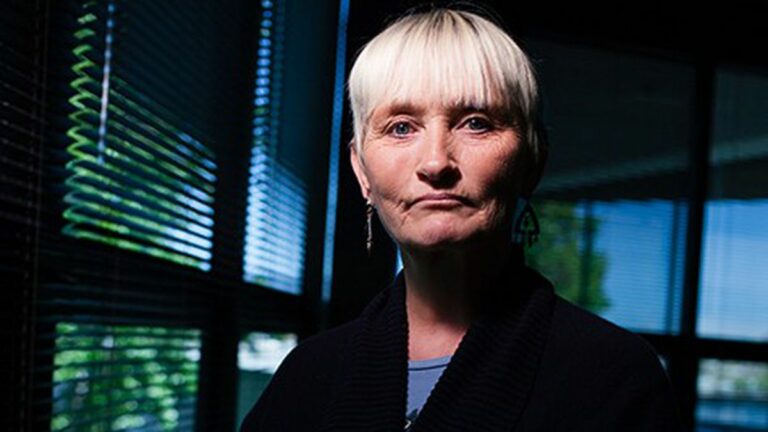
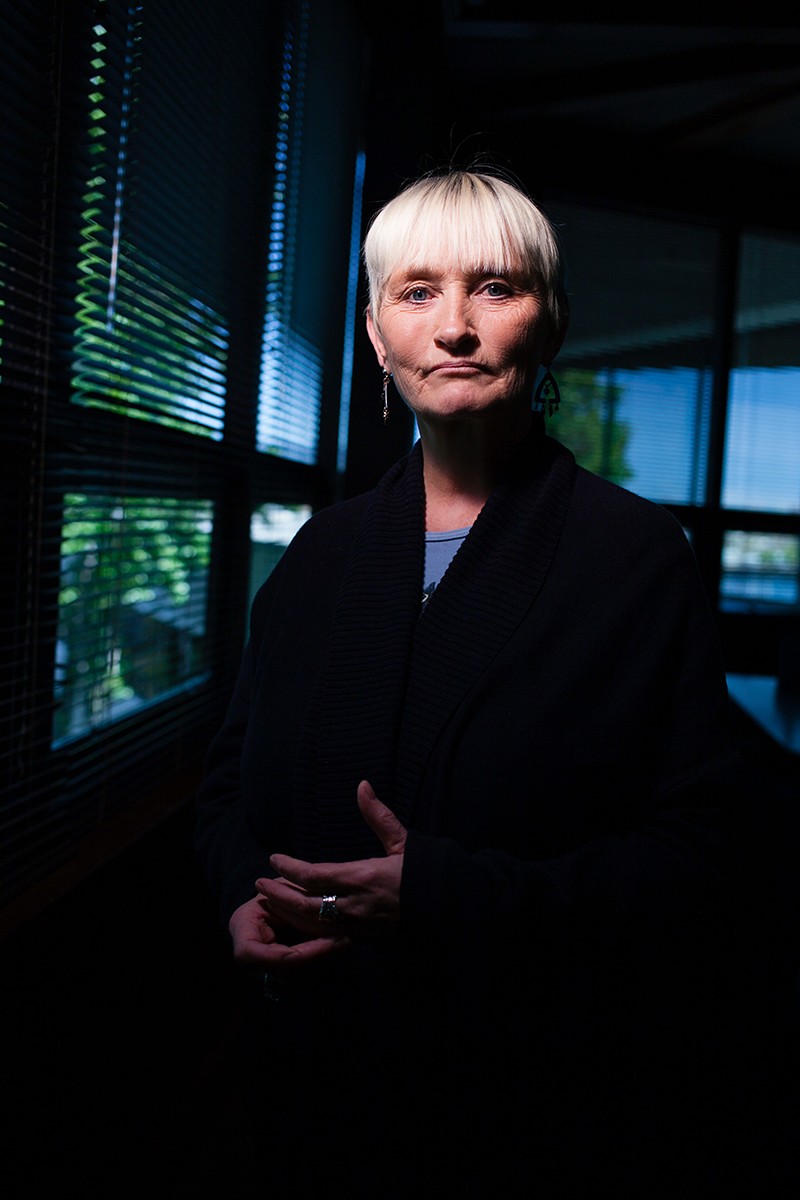
Mary Hogden helps train East Bay police officers on how to interact with people who have mental health problems.
Credits: Bert Johnson
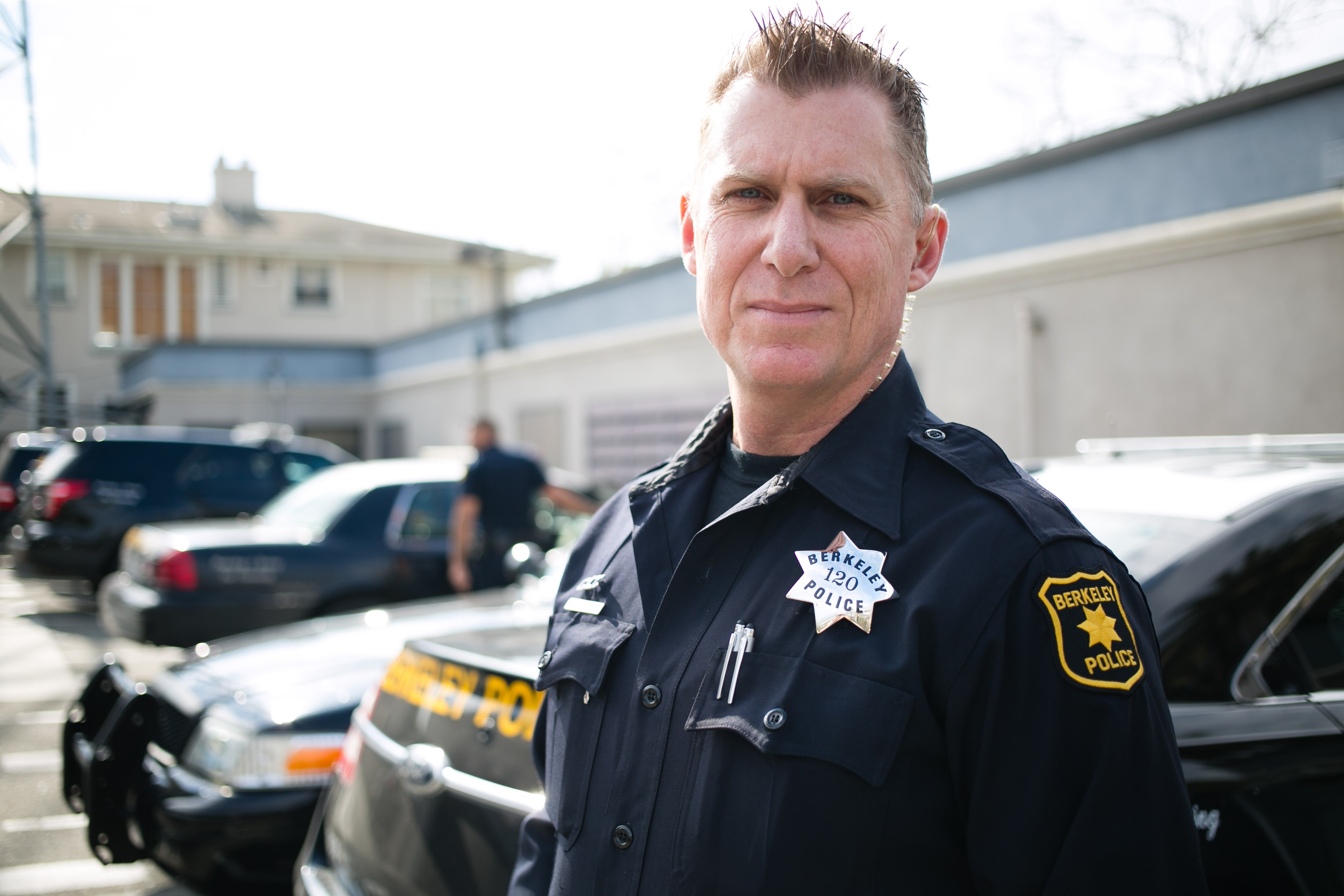
Berkeley Police Officer Jeffrey Shannon said calls resulting in involuntary holds have shot up.
Credits: Bert Johnson
Defense attorney Michael Haddad doesn’t think police response to the mentally ill has gotten much better, despite more training.
Credits: Bert Johnson
Hogden’s story is becoming increasingly common. Over the past few decades, cuts to mental health services and programs have put police on the frontlines of dealing with people with psychiatric problems. Law enforcement data shows that police interactions with mentally ill people have skyrocketed in recent years, particularly in the East Bay. And sometimes those encounters turn deadly.
In 2015, a quarter of the nearly 1,000 people killed by police officers in the United States had a history of mental illness, according to a Washington Post analysis. The large numbers of killings by cops nationwide have also highlighted the lack of police training. Currently, the typical American police officer receives only eight hours of training on how to de-escalate tense situations, and just eight hours learning about dealing with people who have mental health issues. By contrast, police cadets receive an average of sixty hours of training on how to handle and shoot guns.
In recent years, some police departments have been working harder to teach cops how to prevent volatile situations from escalating. And a new state law requires California police academy recruits to receive at least fifteen hours of behavioral health training. Prior to the law’s passage, they were required to have only six.
These days, Hogden helps provide training to East Bay police officers on coping with and helping people with mental health problems. Experts say that more such training is necessary, but they warn that most departments are still not doing nearly enough to prevent violent interactions between police and the mentally ill.
Following the nationwide shutdown of mental health hospitals in the Sixties and early Seventies, police began encountering more severely mentally ill individuals on the street. In 1967, the Lanterman–Petris–Short Act gave police in California the power to take an individual to the hospital against his or her will if a cop believes a person is dangerous.
By the Eighties, many mental health experts viewed deinstitutionalization as a major failure. According to estimates in the late Eighties from the National Institute of Mental Health, between 125,000 to 300,000 severely mentally ill individuals were living on the streets.
One shooting-death in Memphis, Tennessee in 1987 brought the issue into sharp focus. Memphis police responded to a call about a mentally ill man with a large knife cutting himself and threatening his family. Officers arrived and then shot and killed the man. Community members demanded a change in the way police responded to and understood mental illness. One year later, the city introduced Crisis Intervention Training (CIT), a forty-hour crash course on de-escalation techniques and dealing with people with mental illnesses.
“It takes a crisis before people wake up. So things go along, and until something bad happens, people don’t put pressure to change,” said Thomas Kirchberg, a director at Crisis Intervention Training International, a nonprofit devoted to spreading CIT training to other agencies. “We go along until it’s on our front door step, and then we have to do something about it.”
Other police departments have slowly followed, and now more than 2,500 law enforcement agencies nationwide offer the Memphis model of CIT training. But there are still no federal or state laws requiring CIT training, and many states only have one or two counties that provide the training on a voluntary basis. In 2001, the San Francisco Police Department adopted its own version of CIT training. San Mateo County followed in 2005, and by 2011, Alameda County launched its CIT training course.
But it wasn’t until last year, when the Washington Post and the Guardian began reporting the number of people shot by police in the United States each month that state legislatures started to seriously push for mandatory mental health training requirements for police. Last year, the California Legislature enacted Senate Bill 29, which requires field training officers to receive twelve hours of behavioral health training. Separate legislation — SB 11 — increased mental health training hours in police academies from six to fifteen hours.
“It’s just a way of reducing problems like we saw in Ferguson, in Chicago, in Cleveland — all those situations we read about where we wonder why the officers acted the way they did,” said Senator Jim Beall, D-Campbell, referring to officer-involved killings. Beall sponsored the two Senate bills. “In the academy, you weed out bad candidates, so we’re hoping to weed out candidates who are not up to dealing with people with mental health issues.”
Beall said in an interview that he wanted to double the number of mental health training hours required in his legislation but that the Commission on Peace Officer Standards and Training, or POST, which sets the requirements, opposed his plan.
In response to my email, Ralph Brown, legislative analyst and spokesperson for POST, explained the group’s reasoning: “The hours issue equates to finance. Senator Beall did not offer a funding mechanism for the additional hours. To add more hours without a funding source would be similar to asking you to work more hours without paying you overtime.”
And despite the increase in the mandated hours for police training on mental and behavioral health, California still does not require CIT training. Currently, only about one-quarter of local police departments nationwide offer an in-depth CIT training course, according to the US Bureau of Justice Statistics and the California Institute for Behavioral Health Solutions.
But the number of police encounters with the mentally ill continues to soar. From 2009 to 2014, the number of mental health-related calls made to the Oakland Police Department jumped by roughly 50 percent. And Police Officer Jeffrey Shannon, Berkeley’s CIT training coordinator, said the number of calls to the Berkeley Police Department that resulted in an involuntary psychiatric hold shot up by 43 percent from 2009 to 2014.
Mental health experts attribute the rising numbers to a combination of too few hospital beds, not enough funding for mental health services and programs, and a rise in Alameda County’s population. According to US Census estimates, the county added 100,000 residents from 2010 to 2014. But the number of available beds at Alameda County’s psychiatric hospital, John George, has stayed at 69.
“The population has increased, so there are more mentally ill people, but [fewer] treatment beds than there were thirty years ago,” said Millie Swafford, former criminal justice mental health director for Alameda County. “They don’t have enough beds for people, so they have to figure, ‘Who can we justify keeping, and who can we just let go?'”
Alameda County’s John George Psychiatric Hospital has a 15.8-percent admission rate, so the vast majority of individuals who are taken by police to the facility end up getting released without any help waiting for them when they get out.
“From the law enforcement perspective, we’re in the community, trying to get people help, and somehow the system kicks them right back out again,” said Doria Neff, an Oakland police officer and Alameda County CIT coordinator. “It’s our job to get them to the hospital, and if that doesn’t work, we need to take them to the hospital again.”
The increase in mental health calls to the Berkeley Police Department also correlates with a significant rise in the number of homeless people in the city. According to a survey from nonprofit homeless advocacy organization EveryOne Home, Berkeley’s unsheltered homeless population swelled by 53 percent from 2009 to 2013.
And many of these homeless individuals are mentally ill. According to EveryOne Home, the number of homeless people with mental illness in Alameda County increased by 35 percent from 2011 to 2013, rising from 818 to 1,106.
“For folks with serious mental illness, if they do lose their housing, returning to housing is much more challenging, even if we have subsidies targeting that population,” said Elaine deColigny, executive director of EveryOne Home. “There are the personal challenges they struggle with — plus landlord hesitancy to rent to them.”
Berkeley resident Patricia Fontana-Narell knows this well. Her son has been homeless for the past eight years, largely the result of his bipolar disorder. Because he rejects treatment, the only people she knows who can help her son get treatment are the police. “I’ve had doctors tell me, ‘If you really want him to get help, why don’t you get your son arrested? Then you can get him help.’ There’s nothing for him in the mental health system.”
East Bay police departments have responded to the increase in mental health related calls by slowly accepting their dual role as law enforcement agencies and social service providers. Officers in the Oakland Police Academy now get twenty hours of training in mental health issues. They can also take an optional CIT training course available for all officers in Alameda County nearly every month.
In the forty-hour CIT course, officers learn to de-escalate situations with mentally ill people who pose a danger to themselves and others. They also learn about the different mental health services offered throughout the county. In the CIT course, there are classes on cultural responsiveness, excited delirium, and making effective 5150 decisions (5150 refers to the section of the California Welfare and Institutions Code that allows law enforcement officers and healthcare workers to hold a person against his or her will when they deem a person to be dangerous).
Since December, the Berkeley Police Department has been training its officers in an abbreviated, eight-hour version of the CIT course. And the Oakland Police Department recently started a pilot program called the Mobile Evaluation Team, or MET, in which police officers team up with a clinician to respond to mental health emergencies. Right now, the MET team is able to respond to six to eight emergency calls per day. But the team is overwhelmed, because OPD receives roughly thirty mental health-related calls each day. Contra Costa County, meanwhile, has a Mental Health Evaluation Team, called MHET, but it’s a follow-up team that arrives after a crisis is over rather than responding to the emergency.
These pilot programs are extremely limited in terms of how many individuals they can reach each day. That’s why many police agencies want all their officers to take the forty-hour CIT training course. The local training, which is held in Oakland, is in such high demand that each police agency in the county can only send three officers at a time. Oakland, the county’s biggest department, gets to send five. “I need a ballroom with one hundred seats to be able to accommodate everyone,” Neff said. “Right now, we’re heavily, heavily overbooked. We have a lot of people who can’t even get into the training from our own county, let alone outside of the county.”
So far, roughly 130 members of OPD have taken the course. At the current rate of five officers who complete the training each month, it would take about a decade to train the entire 700-plus member department.
Michael Leonesio, a former police officer, Taser safety expert, and use-of-force consultant for various Bay Area police departments, said he doesn’t think agencies are committed to the training, because if they were, there would be more funding for it. “Unfortunately, in a lot of cases, it’s just looked at as liability insurance,” he said. “So they can say, ‘Yeah, we sent a CIT officer [on a mental health-related call], and yeah it went bad, but it wasn’t for a lack of trying.'”
Defense attorney Michael Haddad, who has been involved in a number of deadly police use-of-force cases in the Bay Area, said he doesn’t think police response to the mentally ill has gotten much better, even with more training. “It’s not something exotic, or like we’re asking something too much of police,” Haddad said. “Paramedics, social workers, special ed teachers — they all receive similar training, and it works. There’s the toolkit analogy, but if the only tool you ever use is a gun, it’s not doing much good at the bottom of the toolkit.”
When Mario Woods was shot by police officers late last year while he was armed with a knife in San Francisco’s Bayview District, three of the five officers on the scene had received CIT training. According to San Francisco Police Chief Greg Suhr, more training wouldn’t have changed the officers’ response. “You can’t expect an officer, CIT trained or not … if the person is actively engaging in seriously injuring, or attempting to kill somebody, you’ve got to make sure that stops first,” Suhr said.
Some police watchdog groups also don’t think that more training is the solution. In fact, they believe police should not be the first responders to calls involving people with mental health issues. “I don’t think we should be relying on police to deliver mental health services,” said Andrea Pritchett, an activist with Berkeley Copwatch. “I believe police need training to manage a difficult situation, but I don’t think they’ll ever be a replacement for a professional therapist or a professional mental health expert.”
Another drawback of police training is that there is no concrete evidence that it actually works. Amy Watson, an associate professor at the University of Illinois at Chicago who has been studying Crisis Intervention Training for years, acknowledges that there hasn’t been evidence-based research to prove that it’s effective. Nonetheless, she contends that CIT is a best practice model for law enforcement. She noted that research in some police agencies has associated CIT training with reduction in arrests and police use of force for people with mental illness. “It may reduce use of force, depending on what study you look at,” Watson said. “So, it seems like a reasonable way to go.”
Jim Bueermann, president of the Police Foundation, a nonprofit organization dedicated to improving policing through research, added that he thinks police have no choice but to embrace CIT, because there is no better training program available. “The police don’t have the option of waiting years to study a program,” he said. “People are calling 911, and the police have to respond. You don’t have the luxury to wait years for a scientific evaluation. If CIT is the best model you can find, then you use it.”
Joel Fay, a retired police officer who has taught CIT classes in about fifteen counties in California, said he knows it’s not the perfect solution, but argues that there are many issues beyond police training that are playing a role in making the situation worse. “What about the politicians who refuse to make mental health laws tougher so we can hold people longer? What about the substance abuse programs that don’t have enough beds?” he asked. “All those systems have failed, and we’ll keep responding, but unless the system changes, the number of calls will continue, and there will still be bad outcomes, even with the best of training.”
Mary Hogden, however, is convinced that more police training will help. During training sessions in Oakland she gives police officers tips on how respond to a person in crisis.
“Talk to me in a calm voice, and tell me what you’re going to do to me, step by step,” she explained to officers during a recent training session. “Ask me what’s going on. Sometimes people in crisis can’t understand what the officer is saying. We have so much noise going on in our brain. Don’t take what I say personally.”
Notaflof Collective Community Salon & Artspace is a new venue, community center, and hair salon whose name stands for “no one turned away for lack of funds.” Like the acronym suggests, the new space has an unconventional, somewhat anti-capitalist business model that enables it to provide services on a donation basis. So far, Notaflof has held many events that promote radical inclusivity — such as its recent clothing swap and donation-based manicure day, both of which were specifically for queer and trans people. The venue also offers affordable tailoring and haircuts, and throws shows on a regular basis. Its next event on April 9 features Utah punk band Foster Body, whose punchy guitar riffs and campy, call-and-response vocals evoke Talking Heads and Devo. Little Sister, a garage pop trio from Union City, and San Francisco noise outfit Blank Square join Foster Body on the lineup.
From April 8–14, the New Parkway Theater (474 24th St., Oakland) is holding its first ever Indie Week — seven days dedicated to highlighting movies that are typically difficult to find screenings for in large movie theaters. The line up includes everything from indie cult classics (such as The Blair Witch Project) to recent releases that have only seen narrow distribution (such as Mountains May Depart). The schedule also includes a few locally-made films, such as the buzzed-about 2013 feature Licks, which tells the story of a young Oaklander who returns home after serving two years in prison for a botched robbery. Licks will be showing on the opening night of Indie Week, followed by a Q&A session with the filmmakers. And on Wednesday of Indie Week, The New Parkway’s Karma Cinema program will be in effect, meaning that all screenings will be pay-what-you-want, and 20% of ticket sales will go to its nonprofit partner Planting Justice. If that isn’t enough low-budget cinema for you, the Oakland International Film Festival takes place April 5–9, with screenings at various venues around the city (OIFF.org). — Sarah Burke
Cartoonist Chester Brown caused a small stir with his 2011 graphic memoir Paying for It, which argued for the decriminalization of sex work from the perspective of a longtime john. Now, the seasoned illustrator is furthering his polemic on sex work with a new graphic novel entitled Mary Wept Over the Feet of Jesus, which will be published by Drawn & Quarterly on April 12. The book is a series of biblical adaptations that, essentially, collectively argue that the Bible implicitly promotes prostitution. Through retelling nine biblical stories, Brown creates a sort of treatise advocating for sex worker rights by dismantling the Christian moral code — and all with a gritty, outsider comic book style. Brown will be at Pegasus Books Downtown (2349 Shattuck Ave., Berkeley) on Wednesday, April 13 to celebrate the release of the book, speak, and sign copies.
Even though Kreayshawn never followed up the success of her 2012 hit “Gucci Gucci” and her rap career didn’t quite pan out, the mixes on her Mixcloud page attest to her creativity and skills as a DJ. She curates eclectic selections of house and Jersey club beats, 8-bit, rap, juke, footwork, and more, and her hyperactive sets typically include seizure-inducing BPMs and artfully chopped-up samples. Kreayshawn returns to Oakland to spin at Starline Social Club for Wine & Bowties’ latest party, A Night at the Starline with Kreayshawn & Friends. Brontez Purnell — a dancer, author, and the bandleader of punk trio Younger Lovers — and local DJs Neto, Namaste Shawty, and Julia Lewis will be performing, as well. Expect a sweaty night of dancing to new and obscure rap and club music subgenres with some Top 40 thrown into the mix.
The next production from Shotgun Players (1901 Ashby Ave., Berkeley) sounds like a running joke amid theater types: “Wouldn’t it be hilarious if we all learned every part in Hamlet, then didn’t find out which character we were playing until minutes before show time?” Well, that’s actually what they’re doing. Currently showing as a discounted preview until it officially opens on April 20, Shotgun Players’ rendition of the Shakespeare classic is a wacky game of “Hamlet roulette.” Five minutes before show time, the actors line up and pull their part out of a hat. Within minutes, each person is expected to be in character. What will likely ensue is a partially improvised show that may involve a few missteps. But the excitement of being put on the spot, and the hilarity of attempting such a ridiculous feat, will definitely enliven the production. Whether or not it’s the best rendition of Hamlet you’ll ever see, it will surely be an interesting experiment in theater production, likely illuminating more about the mechanisms of drama as an artistic form than the actual content of the story.
Bay Area DJs Lady Ryan and Emancipacion and rapper, singer, and party host Aima the Dreamer came together in 2011 to throw the first edition of their day party, Soulovely. Over the years, the seasonal event has grown hugely popular, and its 2016 edition kicks off on April 10 and will continue through the summer on every second Sunday. Soulovely takes place in The New Parish’s patio and draws a diverse, intergenerational crowd of party-goers eager to enjoy the warm weather and some drinks and dancing to Lady Ryan and Emancipacion’s soulful selections of hip-hop and R&B throwbacks, house, Afrobeat, and various other genres. While the party isn’t officially advertised as a queer party, the three organizers’ involvement in the local queer scene has attracted a large LGBTQ following, though allies are also welcome.
Massive, the combination barber shop, lifestyle boutique, and art gallery in Old Oakland, is kicking off a monthly sketch night — figure drawing, not comedy — at Era Art Bar (19 Grand Ave., Oakland) on Monday, April 11. At the event, which will take place every second Monday of the month, attendees will be invited to draw a live model — not nude, but with tight-fitting clothing as to optimally showcase the human form. (For the first event, that model will be local performance artist Erin J aka Sugar Cane Jane.) The bar will serve up cocktail specials and there will be monthly musical guests. The first session will feature local DJ and producer Trackademicks. The event is a collaboration between Massive, the art gallery 1 AM Oakland, the art collective Haus of Godspeed, and the lifestyle brands Team Terrible and Dreamers Rule. With all of those creative networks intersecting, this is destined to be a popular recurring event for Oakland’s art community. And for those who aren’t sure that figure drawing is for them — know that it’s fun to watch and easy to pick up.
When Sarah Treem was 27, her play, A Feminine Ending, was ridiculed by New York Times critic Charles Isherwood. Isherwood began his review by suggesting that the central character's name, Amanda Blue, was more befitting of a porn star than the aspiring oboist she was supposed to be. He then proceeded to pick apart the play's relevance and credibility....
For many true food adventurers, restaurants are a dime a dozen, and it's the international markets — tucked away in ethnic enclaves and at remote suburban strip malls — that are often the real treasure trove.
Here in the East Bay, the latest addition is Himalayan Grocery (10340 San Pablo Ave.), a Nepalese-owned grocery store in El Cerrito that had its...
Mary Hogden was outside a New Mexico convenience store in 2004 when police officers approached her. She was homeless and in the middle of a psychiatric episode. One of the cops asked to search her, saying she was loitering near the store, but she refused his request. "The police officer became very angry and upset," she recalled in a...
Notaflof Collective Community Salon & Artspace is a new venue, community center, and hair salon whose name stands for “no one turned away for lack of funds.” Like the acronym suggests, the new space has an unconventional, somewhat anti-capitalist business model that enables it to provide services on a donation basis. So far, Notaflof has held many events that...
From April 8–14, the New Parkway Theater (474 24th St., Oakland) is holding its first ever Indie Week — seven days dedicated to highlighting movies that are typically difficult to find screenings for in large movie theaters. The line up includes everything from indie cult classics (such as The Blair Witch Project) to recent releases that have only seen...
Cartoonist Chester Brown caused a small stir with his 2011 graphic memoir Paying for It, which argued for the decriminalization of sex work from the perspective of a longtime john. Now, the seasoned illustrator is furthering his polemic on sex work with a new graphic novel entitled Mary Wept Over the Feet of Jesus, which will be published by...
Even though Kreayshawn never followed up the success of her 2012 hit “Gucci Gucci” and her rap career didn’t quite pan out, the mixes on her Mixcloud page attest to her creativity and skills as a DJ. She curates eclectic selections of house and Jersey club beats, 8-bit, rap, juke, footwork, and more, and her hyperactive sets typically include...
The next production from Shotgun Players (1901 Ashby Ave., Berkeley) sounds like a running joke amid theater types: “Wouldn’t it be hilarious if we all learned every part in Hamlet, then didn’t find out which character we were playing until minutes before show time?” Well, that’s actually what they’re doing. Currently showing as a discounted preview until it officially...
Bay Area DJs Lady Ryan and Emancipacion and rapper, singer, and party host Aima the Dreamer came together in 2011 to throw the first edition of their day party, Soulovely. Over the years, the seasonal event has grown hugely popular, and its 2016 edition kicks off on April 10 and will continue through the summer on every second Sunday....
Massive, the combination barber shop, lifestyle boutique, and art gallery in Old Oakland, is kicking off a monthly sketch night — figure drawing, not comedy — at Era Art Bar (19 Grand Ave., Oakland) on Monday, April 11. At the event, which will take place every second Monday of the month, attendees will be invited to draw a live...