

This Weekend’s Top Six Events

Surely our San Francisco International Film Fest guide as you all booked for next weekend, but what are you going to do in the meantime? We’ve got you covered: 

Going Outrageously Dumb
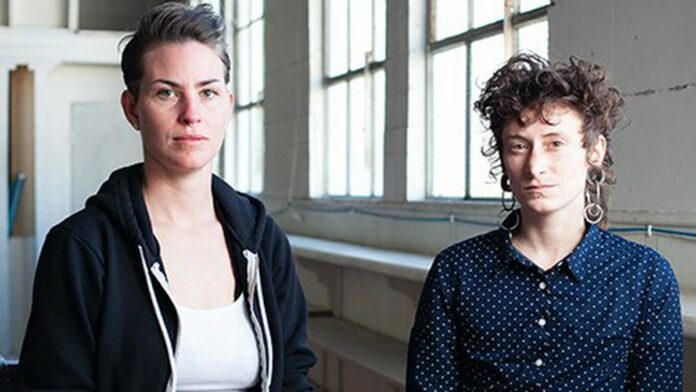
Remember clubs with discriminatory dress codes such as “no baggy clothing?” Well, times are finally changing. For the latest party that blogger-promoter Cami Ramos is throwing at Omiroo, the 15th Street art gallery at the epicenter of the Second Saturdays art walk, guests will be strongly encouraged to don their size XXL white T-shirts (the kind you’d get from the liquor store). That’s because the theme of the party is Going Outrageously Dumb — a time warp into the mid-2000s, celebrating hyphy culture. And the best-dressed person will get free drinks all night, so dust off that case of Hyphy Juice energy drinks and don’t forget your Mac Dre tall tee. DJs Sad Andy, Neto 187, and Solstice will be behind the decks, and to whet your palette, they’ll be dropping hyphy-era mixes on SoundCloud all week.— Nastia Voynovskaya
Fri., April 15, 7-11 p.m. Free.


[jump]
American Mary Release Party
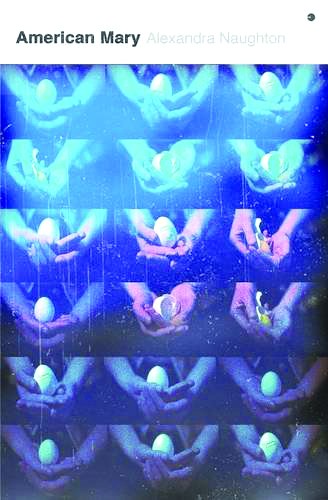
Alexandra Naughton is known for uncomfortably honest, often diaristic poetry about contemporary life that probes into concepts like the performance of self and the complicated boundary between wanting to be loved and wanting to be used. Her new novel is American Mary, a lyrical, melancholic narrative about desire. To celebrate the release of the book, which was published last month by Civil Coping Mechanisms, Naughton is putting together a public living room soiree in the residence of Oakland poet Cassandra Dallett (2465 26th Ave., Oakland) on April 16. The party, which starts at 5 p.m., will feature readings from Naughton, Dallett, and fellow poets Paul Corman-Roberts, Joshua Kent Fowler, Zack Haber, and Kate Robinson, among others. Naughton also promises music, food, dancing, and of course, copies of her new book.— Sarah Burke
Sat., April 16, 5 p.m. Free. TheTsaritsa.Tumblr.com


All Vibes
Cousin duo Mamou Kilambi and Odilcia Balondola started their blog Nook and Kranny (NookAndKranny.com) as a way to cover Bay Area arts and music happenings from a youthful lens. Now, they’re taking their platform from URL to IRL for All Vibes, their latest music showcase. The Sunday evening show takes place on April 17 at Ashkenaz in South Berkeley and features rappers Fabes, J. Lately, Babii Cris, Clyde Shankle, Honey Gold, and Zee Will. These up-and-coming artists share a common emphasis on lyrical hip-hop, and have recently been getting buzz in the local scene. J. Lately recently finished touring to promote his album, the underdog ode Let’s Just Be Friends. Meanwhile, Clyde Shankle is a member of the hip-hop group Down 2 Earth with Dayvid Michael and Azure, and the trio is currently in the studio working on a follow-up for last year’s excellent Wildfire. Babii Cris, a versatile MC and producer, is getting ready to drop her newest project next month, as well.— N. V.
Sun., April 17, 6:30 p.m. $5 before 8 p.m. NookAndKranny.com


Sights and Sounds of East Oakland
“What does East Oakland look and sound like through the eyes and ears of its artists?” That’s the question at the core of Sights and Sounds of East Oakland, an upcoming free event put on by KALW. The afternoon of performances, which will take place at Odell Johnson Performing Arts Center at Laney College (900 Fallon St., Oakland) on Sunday, April 17 at 3 p.m., will feature live storytelling by Oakland Voices’ citizen journalists, plus musical and dance performances by youth performers Young Gifted and Black, the famous turfing crew Turf Feinz, Danza Azteca performer Calpulli Coatlicue, and the eight-piece Afro-Colombian dance music band La Misa Negra. The audience will hear from Brittani Sensabaugh, an East Oakland native who has traveled the country documenting Black communities and listening to stories from residents therein. The event will also feature visual art from Ajuan Muance, who makes comics about Black life in America, and Chamuco Coretez, a Chicano tattoo artist from East Oakland.— S.B. 
Sun., April 17, 3 p.m. free. 
SightsAndSoundsLive.org

Elemental Forces: Water Signs
On Sunday, April 17, Pro Arts Gallery (150 Frank H. Ogawa Plaza) will be christening its newest programming series, Pro Arts Cinema Matinees, with a sort of baptism. The free series will be curated by Oakland filmmaker, archivist, and Black Hole Cinemateque founder Tooth and will feature screenings of experimental and alternative films supported by discussions with the filmmaker, artist, or curator. The first event, entitled Elemental Forces: Water Signs, will showcase two cinematic water rituals by filmmakers Peter Hutton and Will Hindle. Described by the gallery: “As California begins our hopeful emergence from years of historic drought into the embraces of the seasonal deluge, we take time to look at the work of two filmmakers who cast their lens to the realms of the aquatic with different meditations on the elements as both a chaotic and ordering force.” Hutton’s piece, Skagafjörður, pairs landscape shots of northern Iceland with images of the Hudson River. Meanwhile, Hindle’s film Watersmith focuses on the freedom of bodies moving through water, as if flying. Both films will be shown on 16mm prints provided by the Canyon Cinema Foundation.— S. B
Sun., April 17, 2-4 p.m. ProArtsGallery.com


A Capella — Our Bodies Sing
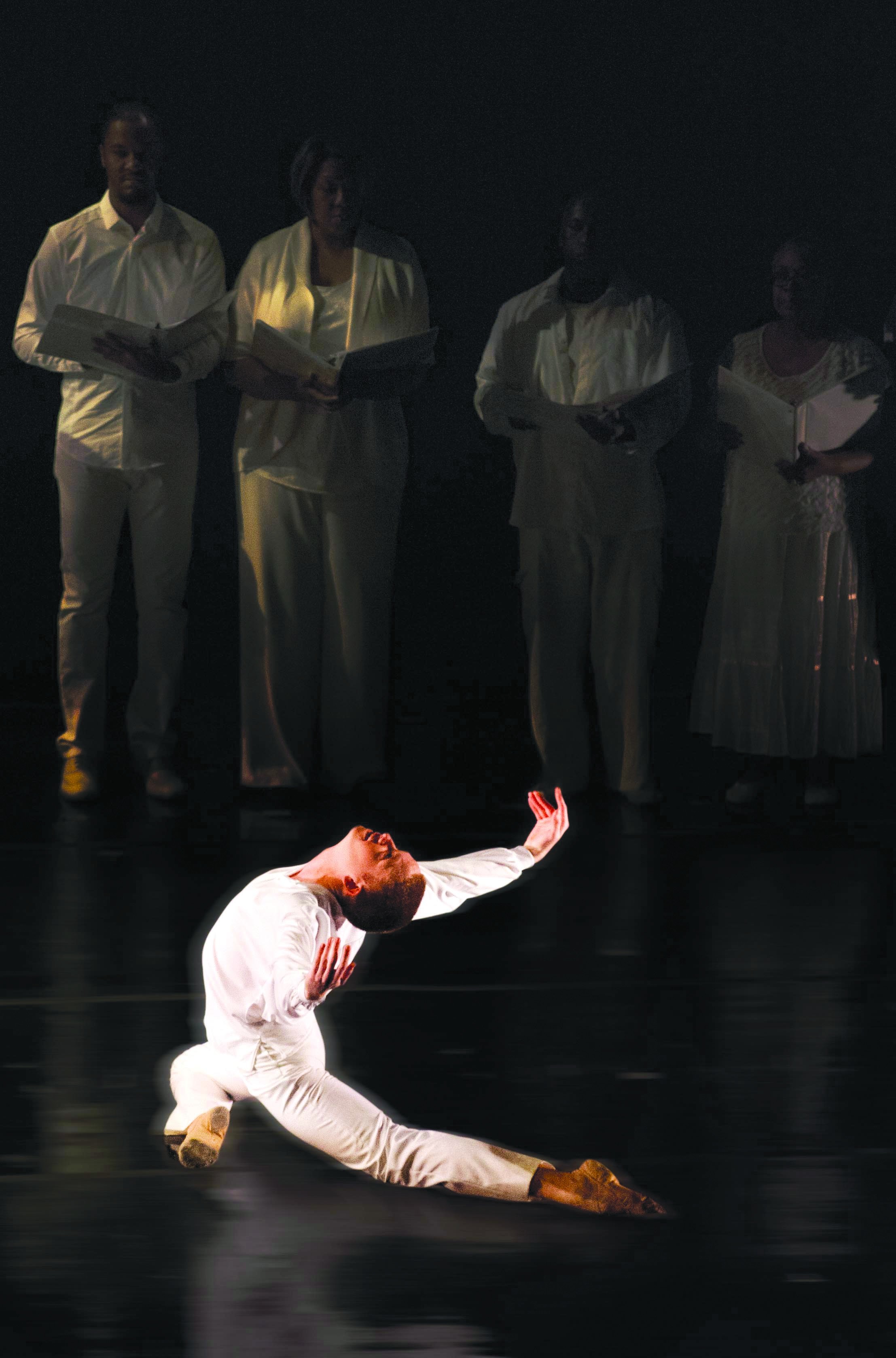
The Oakland Ballet Company’s spring 2016 season, entitled A Capella — Our Bodies Sing, aims to pair the beauty of the human voice with the grace of the body. The program features Bay Area choral groups the Berkeley Chamber Singers, the women’s early music ensemble Vajra Voices, and members of the Oakland gospel choir Nona Brown and the Inspirational Music Collective. Set to the timbre of their voices will be world premieres of newly-commissioned dances by acclaimed choreographers Val Caniparoli, Janice Garrett, and Charles Moulton, as well as the West Coast premiere of a recent work by Oakland Ballet’s artistic director Graham Lustig. Performances will take place April 14 through 16 at the Malonga Casquelord Center for the Arts (1428 Alice St., Oakland), April 21 at San Francisco’s Brava Theater (2781 24th St.), and April 23 at the Reed L. Buffington Performing Arts Center at Chabot College (25555 Hesperian Blvd., Hayward).— Sarah Burke
April 14-23. $20–$50. OaklandBallet.org

If your pockets are feelin’ light and you’re still yearning for more suggestions, we’ve got a ton, and these ones are all FREE! We’re Hungry: Got any East Bay news, events, video, or miscellany we should know about? Feed us at Sa*********@************ss.com.

Medical Marijuana Providers Score Major Victory in Federal Court

The federal war on legal medical marijuana providers is paused for now, thanks to a major legal victory in California.

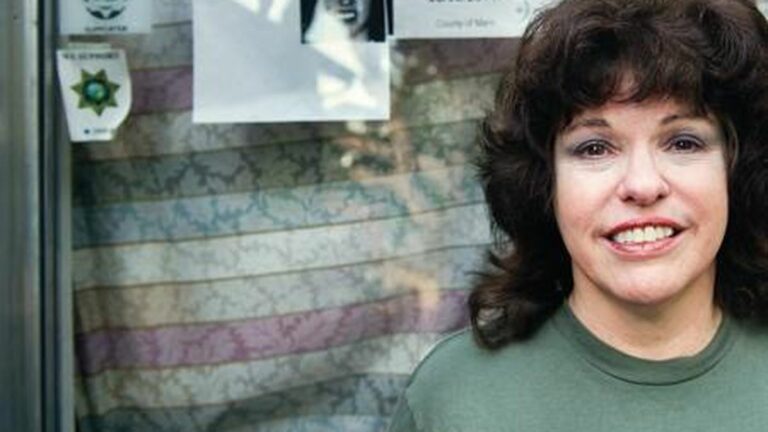
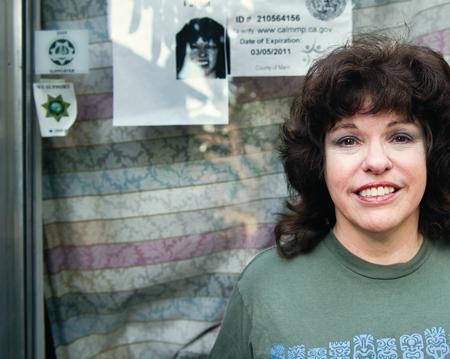
Lynnette Shaw, who is one of California’s oldest dispensary operators prevailed Wednesday in her bid to overturn a nineteen year-old civil injunction barring her from the cannabis trade for life. Shaw won using the argument that Congressional law now forbids the Department of Justice from spending a single cent interfering with state-legal medical cannabis businesses.

In October, a District Judge sided with Shaw and called the government’s argument “tortured.” The Department of Justice moved to appeal the decision in March. But the DOJ could see that they were losing the appeal, so on Wednesday, US Court of Appeals for the Ninth Circuit granted the DOJ’s own motion to dismiss the case. Rather than continuing to pursue Shaw and potentially setting an even bigger legal precedent, the DOJ gave up the case. Shaw is now free to run a dispensary.

Licensed dispensary operators, edibles makers, and growers in the twenty-three states with medical pot laws can breathe easier today, legal experts said.

“This to me, I believe, is the end of the medical marijuana war,” Shaw said. “We are ending that war — starting now.”

“It’s hard to overstate the significance of this ruling,” said Alex Zavell, a California medical marijuana regulatory expert with the Oakland law firm of Robert Raich.
In 2014, the US Congress de-funded the DOJ’s war on medical marijuana through the Rohrabacher-Farr Amendment. The Amendment was renewed with even bigger Congressional support in 2015. The DOJ had hoped the courts would narrowly interpret the Amendment. They have not.

“[The case] means that so long as the Rohrabacher-Farr amendment remains in effect, the Department of Justice will be barred from expending funds to target medical cannabis businesses that operate in compliance with state law,” said Zavell.

“This is a victory for everybody,” said Shaw.

The win is also very symbolic. Shaw’s injunction nineteen years ago was part of the first wave of federal intimidation of state-legal cannabis patients after California legalized medical marijuana in 1996. Since then, twenty-two other states have followed.

Shaw ran arguably the first lawful dispensary in California, with a permit from the city of Fairfax. In 2011, as part of the most recent federal crackdown, the DOJ used the old injunction to close her dispensary, the Marin Alliance of Medical Marijuana. The DOJ threatened to seize the property of Shaw’s landlord.

The Obama Administration has spent hundreds of millions of dollars on similar federal interference operations in states with legal pot regimes. Governor Jerry Brown has criticized the operations of these “federal gendarmes” in California.

Shaw’s legal team was led by attorney Greg Anton. Anton motioned to sue the government for monetary damages related to frivolous lawsuits, if the DOJ used the same failed argument in the Ninth Circuit that it used in District Court. As the April 19th deadline to file such an argument neared, the DOJ kept stalling, and then motioned to dismiss, said Shaw.

“All they had was the same argument, ‘We don’t have to obey Congress. We don’t have to obey the constitution’,” said Shaw.

Congressman Dana Rohrabacher also leaned on the DOJ, she said. Rohrabacher sent the Inspector General evidence that the DOJ was breaking federal law in the Shaw case.

“If they come after me, they can be arrested with a felony, from [Attorney General] Loretta Lynch on down,” Shaw said.

Correction: the original version of this article misattributed the following quote to Lynette Shaw: “[The case] means that so long as the Rohrabacher-Farr amendment remains in effect, the Department of Justice will be barred from expending funds to target medical cannabis businesses that operate in compliance with state law.” The quote is attributed to Alex Zavell. The story also misidentified Zavell as a lawyer. Zavell is not an attorney.

Oakland Bus Stop Battle Continues, Outcome Unclear

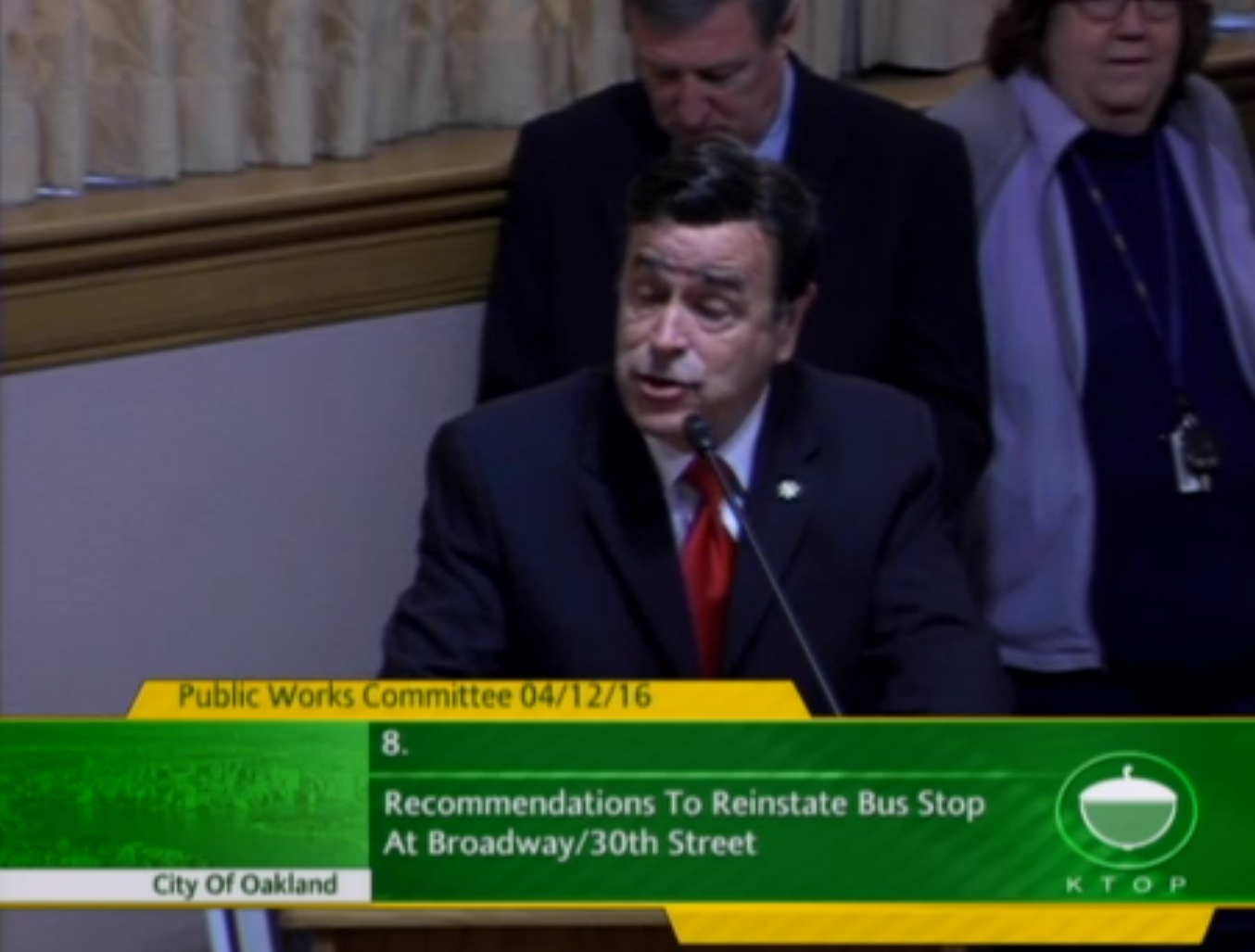
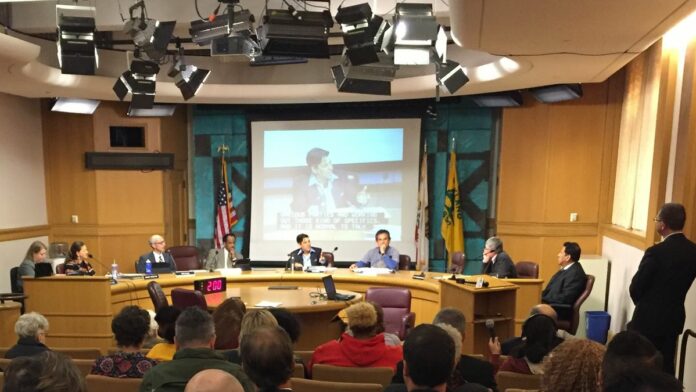
Oakland city officials declared on Tuesday that the widely used bus stop at Broadway and 30th Street will be reintroduced after its controversial removal last October. But no firm date was set for reestablishing the stop, and Summit Bank, which got the stop removed last year, remains adamantly opposed to it being in front of their bank branch, in spite of the fact that AC Transit and Oakland transportation officials say this location is the safest and most efficient.

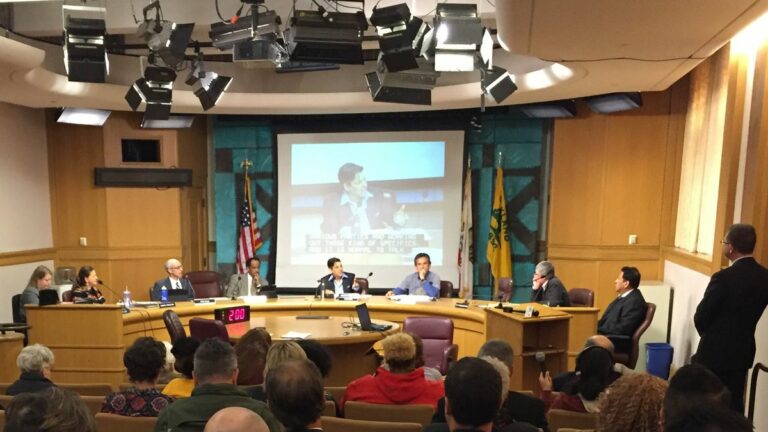
Oakland’s transportation manager Wladimir Wlassowsky said during the public works committee meeting yesterday that his department is in favor of AC Transit’s plan, which recommends relocating the bus stop in front of Summit Bank because it would position the stop on the far-side corner of the intersection which is safer for motorists and pedestrians. Summit Bank executives and public relations specialists and security consultants working for the bank expressed fears that bus riders loitering outside the bank’s entrance would cause or attract crime, however. Bank executives also said they want to preserve street parking for customers in front of the bank.

But the decision to eliminate the bus stop ran counter to Oakland’s stated environmental and transit policies.

“Broadway, and the area around this stop, have been designated as priority areas for transit-oriented development, and the stop removal goes against our policy goals and is hurting people, including seniors and people with disabilities, who are left to schlep extra blocks to another stop, sometimes carrying groceries,” said Councilmember Rebecca Kaplan, who is also the Chair of the Oakland Public Works Committee.

Kaplan’s initiative to reinstate the stop in front of Summit Bank isn’t coming without pushback. Summit Bank recently hired public relations consultant Sam Singer to handle the bus stop controversy. Singer and Summit Bank announced in a press release on Monday that Summit Bank is circulating a petition against locating the stop in front of the bank branch. The petition calls the plan “ill-conceived.”

Steven Nelson, President and COO of Summit Bank, said in the press release that the bus stop would present “serious safety and security concerns for [Summit Bank] employees, customers, the disabled, and the community.”

David Travers, the president of Guardian Security Agency which is working with Summit Bank, told the committee that having people loiter in front of the bank would provide cover for bank robbers or muggers. “It’s very difficult to differentiate between someone with evil intent, and someone who’s just there to wait for a bus,” Travers said.

Singer said that Summit Bank wants the bus stop located in front of the nearby Sprouts market, and Singer portrayed Sprouts as the villain who eliminated the bus stop in the first place. But Sprouts had agreed previously to pay for the bus stop’s relocation in order to avoid having it placed in front of their busy street entrance, and city and AC Transit planners agreed that moving the bust stop across 30th Street to the curb in front of Summit made the most sense from a safety and efficiency standpoint.

Advocates in favor of the stop in front of Summit Bank said that Summit Bank’s vague security concerns don’t justify the removal of the bus stop. “If security is an issue, there shouldn’t be a bus stop in front of City Hall, restaurants, or anything else,” one bus rider told the committee.

“I think it would be pretty easy to do a study of all the banks with a bus stop in front of it and how many had been robbed by bus riders,” said Joyce Roy, an 81 year-old Oakland resident who said she used to frequent the stop for medical appointments.

For residents like Michelle Rousey, who has a disability, deciding which corner the bus stop will be located on is less concerning than the fact that no timeline has been set for it’s reinstatement. “People with disabilities and seniors didn’t have a choice with this,” Rousey said. “I’ve been riding the bus since I was in a manual wheelchair in the early 90s. The buses have changed a lot, but when you take the stop out, we have to roll further and walk further.”

“They say they are working on it, but that could take up to a year,” Rousey continued. “For me, that’s too long for something that shouldn’t have bee removed in the first place.”

Alex Oslance’s Industrial Decay

During his Saturday morning artist talk at Aggregate Space Gallery (801 West Grand Ave., Oakland), Alex Oslance sat, slightly hunched over, and mostly mumbled about his various experiences being misunderstood as an artist. The grad-school era anecdotes didn’t do all that much to elucidate his concept-heavy sculptural practice, but his demeanor did.

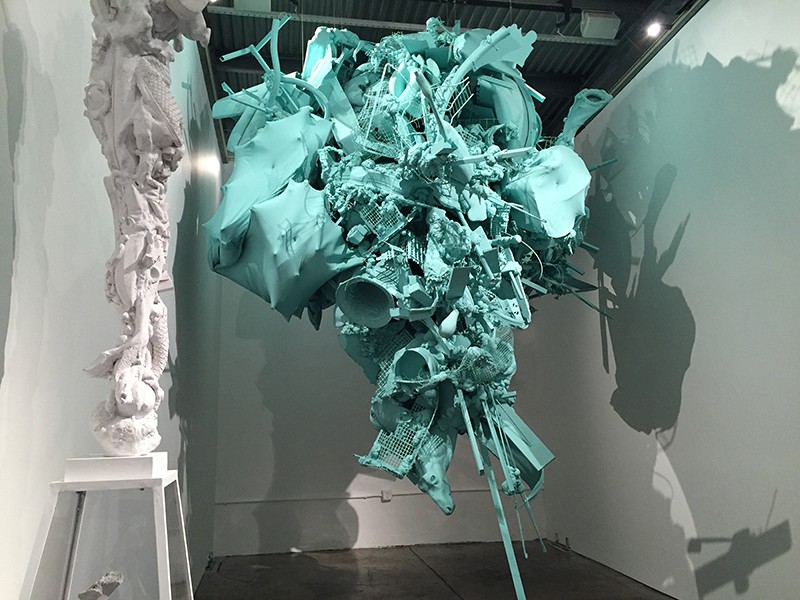
Behind Oslance, a singular, suspended sculpture imposed on half of the gallery, hulking and threatening. It looked like an explosion stopped in midair, a garbled glob of industrial materials twisted together as if swallowed and spit out again. Shards of broken crates, vents, pipes, a plastic deer, chicken wire, handle bars, and mysterious protrusions obscured behind spandex tangled into one another, melded together with drywall insulation foam, a gooey-looking substance that resembles puss. Painted an even tone of light green — a color Oslance said was inspired by bronze patina and the idea of industrial decay — the complex sculpture flattened into a singular form, a cohesive visual metaphor for masculinity.

Superficially, the work could come off as the epitome of ego, grotesquely maximalist and aggressive — like an action movie in sculptural form. But Oslance’s passive appearance and theory-driven descriptions affirmed that the work is actually an intentionally hyperbolic critique of our testosterone-fueled society.

Aggregate Space curator Conrad Meyers’ brief statement about the show, Hypertrophic Distress, supports that sense of intention in describing the dissonance between Oslance’s use of heavy-duty materials and bio-morphic spandex forms: “This dynamic contrast reflects the artist’s anxiety-driven introversion, which stems from a complex reaction to the deep-seeded hyper-masculinity of American culture, something that is simultaneously seductive and repulsive for Oslance.”

Indeed, Oslance’s work balances between being alluring and disgusting. On the other end of the gallery, a magnificently delicate sculpture protrudes from a wall — by far the most stereotypically femme piece in the show. Metal mesh bent into a sensual curve is attached to the vertical surface with a large screw. A light pink, translucent substance oozes through the gaps in the mesh — hardened but still wet-looking as it shines under the gallery lights like some sort of slimy bodily fluid or shimmering mineral deposit.

Although the materials that Oslance employs are deliberately crude, the way he composes them is exquisitely elegant. Technically, the works feel refined, with a harsh sense of grace. Each appears effortless — and weightless — as to give the impression that it magically manifested in the gallery.

During the talk, Oslance spoke briefly about his workspace at American Steel Studios. When asked whether it was very busy in the massive West Oakland warehouse, he said that actually, it’s pretty quiet, pointing out that there are two sides to the complex. The industrial side (where gigantic sculptures are fabricated for Burning Man) is constantly quite busy. In contrast, the “fine art” side is more isolated, with just a few residents who mostly keep to themselves. Based on the media he uses, Oslance could easily fit into the industrial side of the warehouse. But it seems that the spectacles largely created there are one part of the culture that Oslance’s over-the-top style is meant to critique. Ironically, Oslance and his subversive work are more suited for the bookish isolation of the other side.

Tamales, Without Fanfare

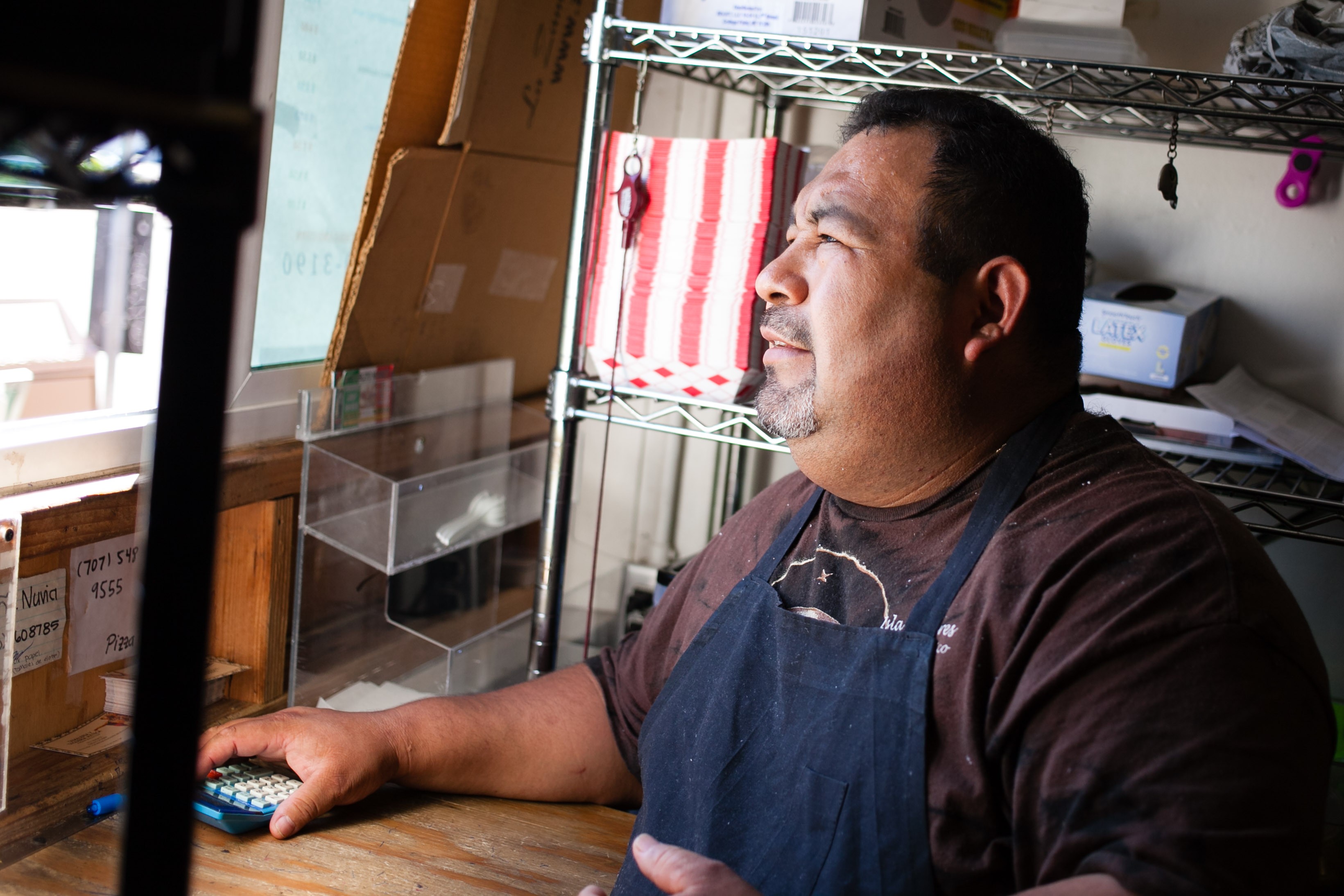
I have a soft spot for restaurants that can nonchalantly slip themselves into my life without fanfare, and Tamaleria Azteca is one of those places. A no-frills take-out window with killer tamales on a residential corner of Market and 60th streets in Oakland, there’s nothing about the place that requires I stand on ceremony. I can shuffle there in my outdoor slippers, ring the little brass temple bell hanging from the sill, quietly pick up my order, and shuffle back home.

When it’s raining, an umbrella over the counter becomes the sole, occasional decor, except for the restaurant’s two signs — one with its current name, and another for its former incarnation, Tamaleria Unicos de Cuernevaca. The name changed when the original owner retired and went back to Mexico, and her son, Sergio Gomez, picked up the tamal mantle. But the old “Unicos” sign is still up, perhaps to maintain the restaurant’s connection to Gomez’s mother, whose tamales had a fiercely enthusiastic following. Or perhaps they never bothered getting rid of the old sign because — to our good fortune — the restaurant’s priorities skew deeply toward the quality of the food and away from cosmetic concerns. 

Gomez told me that his mother would say her tamales were “nothing fancy, just made with love.” In my case, that love has turned, unexpectedly, into an intense affair. I never used to be a tamal person, the way some people aren’t bagel people or don’t like the Beatles. Tamales and I had a cordial but distant relationship, and I’d eat them willingly when they were offered — that is, until Tamaleria Azteca turned my head.

Gomez’s tamales come sodden and steamed in a paper jacket and then wrapped again in a plastic catch-all that is, in this case, fairly necessary. Texture is the thing here. The masa is consistently fluffy, light, and smooth, with the ridges of the corn husks creating indentations in the pale masa that feels silky on the tongue. Not a half-centimeter of these tamales can be accused of dryness or mealiness, and the masa is savory and flavorful, at times pudding-like. It is masa to make one smile.

Inside is a filling that’s been abidingly tender on every occasion I’ve visited. For his meat tamales, Gomez uses lard, skillfully and with abandon. The chicken filling is faintly sweet with tomato but also treacherous. The chilies used in it are unapologetically, staunchly, forthrightly hot — chiles japones, which score an eight or nine on a ten-point scale of heat. After a tiny time lapse of a few seconds, the chili’s needle-thin jabs of heat deliver a tingling pain. It goes similarly with the vegetable tamal (made with carrot and potato) and the pork tamal. The fillings tingle, almost coyly, considering that they’re positioned in such a sweet, cushy bed of masa. The green tomatillo salsa does something to soothe the tongue with its limey tartness, but it only provides some relief.

For diners who eschew heat, or would at least prefer to dole it out themselves, I’d steer clear of the meat options and head toward the lard-free tamales filled with cheese and sweet-roasted chilies. Get the salsa roja, also Satanically hot, to go with these, and doctor up your tamal as you prefer. The sweet tamales are also good — made with sugar, they have a slight caramel flavor.

Azteca has changed its menu since its Unicos days to add some hearty Mexican standards made with careful attention, individuality, and more than a little soul. The street tacos are a particular favorite of mine — meaty, spicy whoppers, heaped to overflowing, with broth and salsa soaking into the tortillas and wetting my hands. The flautas are crisp, topped with fresh lettuce, thin slices of ripe avocado, a drizzle of crema, and snowy, creamy Cotija. You can get these — or the tamales — as part of a platter with refried beans (whipped to silk and heavily imbued with toasty pork flavor) and rice that’s plump, non-greasy, and just salty enough. Chips aren’t on the stated menu, but you can ask for them. They are more than decent — warm, light, and made on the premises.

The restaurant can take on all of my Mexican food needs handily, though I have had a few disappointments. My enchilada orders were cool to the touch under their blanket of crema both times I arrived home with them. The tortilla chips, delicate as they are, sometimes break in the process of scooping up chunks of chicken from a burrito — and that burrito tends to be more abundant in stew than rice and is therefore a touch squishier than I’m used to. And I didn’t particularly care for Azteca’s torta, which has changed since its Unicos days, when it was grilled on both sides and stuffed with beef and a melted slice of American cheese. Nowadays, the roll is cold and ungrilled, and though I found no fault in the filling — pan-fried marinated pork with lovely, chewy, crispy bits; mashed avocado; cream cheese; and a layer of sliced, seeded, and roasted chilies — I do prefer my tortas to be a tad warmer.

Minor glitches and personal preferences aside, nothing’s been lacking in flavor. As squishy as the chicken burrito might be, when I eat it I feel like I’m sinking my face into a gorgeous, complex stew.

Service is friendly and a trifle relaxed, and I find it’s best to come patient and ready to adapt, as the tamales, time-consuming as they are to make, are available willy-nilly. There isn’t a schedule, and sometimes the tamaleria is just plain sold out. Pork and chicken might be on offer today, while vegetarian tamales may be all that’s on for tomorrow. If you’re dead set on a specific tamal, I recommend sending a text message to the restaurant’s phone number (which is just Gomez’s cellphone) to ask what’s available before coming. Lightly staffed as the restaurant tends to be on weekdays, I’ve sometimes found that I have to prod a bit to make sure my enchiladas were made with chicken, not cheese, or that I was indeed coming away with the chips I’d ordered.

Such quirks are easily forgiven: They’re as human as the food, which brims with soul. And the tamales are worth going out of your way for. At once soothing and wickedly hot, they are worth your patience. So minor is any inconvenience, the memory of it disappears the moment the waiting stops and the eating begins.

All the Right Moves in The Dark Horse

0

Genesis Potini creates a stir when he goes down the street. The hulking Maori doesn’t so much walk as lumber, and his jerky, out-of-rhythm body language frightens people who don’t know him, so that when Gen (his nickname) happens into a shop displaying a chess board and hurriedly begins rearranging the pieces while nervously muttering to himself, bystanders give him a wide berth. They’re afraid Genesis is going to fly off the handle and hurt someone.

But fellow Maoris in the town of Gisborne, New Zealand know that Gen is basically harmless. In and out of mental institutions since he was a boy, Gen (played by Cliff Curtis) finds himself homeless at the beginning of The Dark Horse, newly released from the hospital and following his instincts. Those instincts draw him to the home of his brother Ariki (Wayne Hapi), a surly gang chieftain who barely tolerates Gen’s presence. Ariki’s teenage son Mana (James Rolleston) is in the process of being brutally initiated into the gang, but Gen spies something in the kid’s nature — something that tells him Mana will fit right in with his plan to start a youth community chess club.

And now it’s time for us to pause for a moment and reflect. How many times in movies have we seen a strong, caring individual take command of a classroom, a sports team, or in this case, a chess club, in order to provide self-respect, discipline, and the satisfaction of achievement to a group of disadvantaged young people? Answer: More times than we can count. And yet something about actor Curtis, and the pitiful-yet-imposing figure of Genesis, tells us that this story — written and directed by New Zealander James Napier Robertson — may be able to cast a different glow on the overly familiar plotline.

Versatile, all-purpose player of parts Curtis has created an assortment of ethnic roles in his movie career — Colombians, Arabs, Mexicans, Chechens, a caveman named Tic’Tic (in 10,000 BC) — usually as the villainous opposite number to someone like George Clooney or Denzel Washington. In the new religious-themed drama Risen, he portrays Jesus Christ. But some of his best-remembered parts have been as a New Zealand Maori (which he is), in such films as Whale Rider and Once Were Warriors, his best movie until now, as a conflicted man of violence for director Lee Tamahori. In The Dark Horse, Curtis gives us a new look entirely. It’s a serious, even solemn, tale of personal redemption as an alternative to the despair and victim mentality of people who believe they’ve been shuffled to the bottom of society. Are Maoris bright enough to play master-level chess? Of course they are. The game even analogizes into the Maori experience as a test of warrior strategy, which is one reason the club calls itself the Eastern Knights. But first, Gen must prove that he has what it takes to be a leader.

Curtis puts on a remarkable show as Gen — strong yet vulnerable, analytical yet childlike, brave yet unaccountably cowardly when it comes to staring down his violent brother and the gang members on behalf of his young test-case nephew. Maori actor Rolleston, who played the lead role his first time out in Taika Waititi’s youth-friendly Boy (2010), does a convincing job as Mana, bullied by his father and desperately searching for a way out of the life of home invasions and endless beer parties. The rest of the parts are mostly filled out by a typical cast of funny-faced kids who somehow manage to learn how to play championship chess in a few weeks with rock music blaring out of their ramshackle clubhouse. Their goal is to make a respectable showing at the big youth chess tournament in Auckland, against a roomful of freckle-faced white kids in private-school blazers, with parents who obviously disapprove of the boisterous camaraderie of the Eastern Knights.

But it’s Curtis’ Genesis that glues the movie together. In common with many other gentle-giant, powerful-pushover, rough-tough-creampuff persona, we keep expecting Gen to explode and tear somebody’s head off. In nearly every scene, he’s provoked enough to tempt St. Sylvester Stallone. Instead, he makes us wait. Maybe he was rehearsing for the Jesus job and was road-testing his heavenly humility. Or perhaps it’s just that Cliff Curtis is a character actor of exceptional range and skill.

Fireworks Wednesday Fizzles Out

0

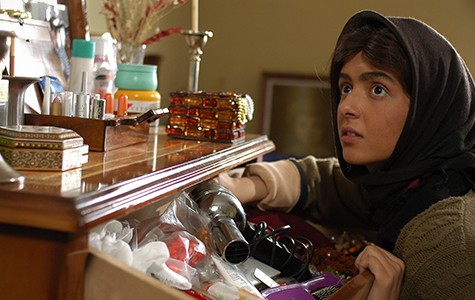
Iranian director Asghar Farhadi caused a sensation among American foreign-film audiences with his 2011 marital drama A Separation, then followed it up with a similarly themed account of dysfunctionality, 2013’s The Past. Both films featured incisive writing and superior acting. But getting the films of hot-shot directors out of Iran is not as easy as importing movies from France. Politics seem to always get in the way. Maybe that’s why one of Farhadi’s earlier works, the 2006 Fireworks Wednesday, is just now finding its way into movie houses.

In it, an inquisitive, dour-faced bride-to-be named Rouhi (Taraneh Alidoosti) takes a job as a housemaid in the home of a jealous Tehran woman named Mojde (Hediyeh Tehrani), who suspects her husband (Hamid Farokhnezhad) of fooling around with a recently divorced neighbor woman (Pantea Bahram). The boss’ house is hopelessly cluttered, but Rouhi doesn’t have to do much actual cleaning. Instead, Mojde convinces her to spy on the neighbor, whereupon a fairly representative brand of deadpan Persian humor asserts itself.

Everyone bumbles around as if they’re in a sitcom, but no one’s smiling. The non-stop domestic tiffs embarrass Rouhi. More troublesome than that are the Iranian New Year firecrackers constantly going off just outside, all through the movie. They sound like gunshots, and they never seem to end — just like Fireworks Wednesday. Not one of Farhadi’s subtler projects.

Oakland Cops Quietly Acquired Social Media Surveillance Tool

Without public hearings or civilian oversight, the Oakland Police Department acquired a powerful social media monitoring tool called Geofeedia in 2014 and has used it to conduct surveillance on large public gatherings, possibly including political protests. OPD’s acquisition and use of the social media monitoring software, out of public view, occurred in spite of the city’s recent establishment of a permanent privacy commission. The privacy commission was created earlier this year in the aftermath of OPD’s controversial attempt to build a city-wide surveillance hub called the Domain Awareness Center (DAC) and is supposed to conduct oversight of OPD’s acquisition of surveillance technologies. But civil libertarians say OPD’s decision to acquire Geofeedia’s software on the sly violates the spirit of the privacy commission.

Furthermore, some worry that police monitoring of social media could have harmful effects on democracy. “If people worry that law enforcement will be monitoring social media, that will exert pressure for them not to post,” said Matt Cagle, an attorney with the American Civil Liberties Union of Northern California.

Academic research supports Cagle’s contention that surveillance of social media has a “chilling effect” on public discourse. A recent paper by Professor Elizabeth Stoycheff of Wayne State University found that when people are aware the police are monitoring their online communications, they are less likely to express dissenting political views.

Geofeedia software allows the police to search Twitter, Facebook, Instagram, Picasa, Flickr and Weibo for key words in real-time, geographically locating people as they communicate with each other on the go, reading their posts, viewing their pictures and videos, and tracking who they interact with. At last fall’s International Chiefs of Police conference in Chicago, Geofeedia employee Andrew Kaye demonstrated his company’s software to me. He showed social media posts of people he identified as “gang members” holding firearms and flashing gang signs which could be used by police and prosecutors in investigations. Kaye also showed how Geofeedia could be used to monitor protesters who took part in Baltimore’s Freddie Gray demonstrations.

According to City of Oakland records, the Oakland Police Department purchased a software license for Geofeedia in October 2014 for $9,243. Because the purchase did not cost more than $25,000, it did not require approval by the Oakland City Council. OPD never publicly announced purchase and use of this software.

Rasheed Shabazz, a journalist and activist, was arrested in downtown Oakland during a Black Lives Matter protest on November 24, 2014. A prolific user of social media who has covered dozens of local demonstrations over the years, Shabazz believes that OPD used Geofeedia to monitor the Black Lives Matters movement.

“A lot of the organizing was on social media,” Shabazz said. “People were being fairly transparent about what they were planning, and to think that law enforcement isn’t monitoring, that is foolish.”

In an email, OPD spokesman Officer Marco Marquez wrote that OPD’s Intelligence and Special Victims Units originally acquired Geofeedia as part of a “free trial.” Then OPD purchased a one-year license for the software, which expired last October. “During the trial and subscription period (fall 2014-fall 2015) the social media product Geofeedia was possibly used during various protest activities, including Black Lives Matter events,” Marquez wrote. “It was lightly used during operations for protests.” Marquez also wrote that OPD has no policy governing the use of social media monitoring technology.

City records show that two other companies, Sysomos and Salesforce, also wanted to sell social media monitoring software to OPD. William Feltham, a former Sysomos employee, said he submitted a bid in response to a request for proposals issued by OPD. “It was a bid to their requirements to look for social intelligence in the area of criminal activity, to filter by keywords, location, and sentiment,” Feltham said in an interview.

Shabazz said the decision to monitor social media surreptitiously is a logical continuation of OPD’s historical behavior. “For people who’ve been observing the Oakland police, it doesn’t come as a surprise that they’d want to monitor and stifle protests, especially protest movements that are critical of law enforcement,” he said.

Brian Hofer, an Oakland attorney who was recently appointed to Oakland’s new permanent Privacy Advisory Commission, was displeased at OPD’s decision to purchase Geofeedia’s software without any public review or notice. Hofer said the Oakland police do not appear to have learned anything as a result of public opposition to the DAC surveillance system. Discontent with the DAC led the city council to scale it back as a Port of Oakland-only surveillance system which would not include features like the ability to monitor social media throughout the city — part of the original design. But Hofer said that OPD’s acquisition of Geofeedia shows that the department has moved forward with the overall vision of the DAC, albeit in a piecemeal fashion.

“Jean Quan, who was mayor at the time, said we’re going to slowly re-introduce the Domain Awareness Center piece by piece, and the department is still going to do what they want to,” said Hofer, referring to comments Mayor Quan made in 2014 during the debate over the DAC.

Hofer believes that online surveillance directly impacts civic participation and should be subject to civilian oversight. “Just because these are public postings doesn’t mean there aren’t civil liberties protections,” Hofer said. “Monitoring does have a chilling effect if you know those keywords are being monitored.”

One of the first actions of the privacy committee, when it convenes next month, will be to draft a city-wide surveillance equipment ordinance to govern how surveillance gear is acquired and used by city departments — including license plate readers, surveillance cameras, and the department’s cell-site simulators. But the privacy commission has to be able to identify surveillance technologies acquired by the city, and if a department quietly acquires a tool, like Geofeedia, it will be difficult to enforce the commission’s mandate.

While details about OPD’s use of Geofeedia are still only emerging, San Jose has been more forthcoming. San Jose bought a Geofeedia software license for $9,999 on September 25, 2015, just before the Super Bowl. According to SJPD budget records, it will cost the department $25,000 annually to maintain an expanded software license for Geofeedia so that its robbery, homicide and gang investigations units can use it. Currently, Geofeedia is used only by the SJPD’s Special Investigations Unit, which is responsible for organized crime, high-tech crime, gangs, terrorism, and dignitary protection.

SJPD Lieutenant Mike Sullivan, who runs the Special Investigations Unit, said his officers began using the software during the run-up to this year’s Super Bowl. “Geofeedia was a great tool to gather information through open source intelligence,” Sullivan said. Subsequently, SJPD has used the software on a “case-by-case” basis, said Sullivan. He declined to elaborate on specific cases though.

Records show that SJPD used Geofeedia during the visit of Indian Prime Minister Narenda Modi last year in an effort to monitor potential threats. For example, the police identified a “die-in” protest near an arena where the prime minister gave a speech. Geofeedia also provided SJPD with information about a student’s social media post in October 2015 threatening to bring a gun to school to kill a classmate. Another Geofeedia notice flagged a YouTube video that was critical about use of force by a SJPD officer. “No on in the Department was aware of this posting, which has a potential for unfavorable media scrutiny,” an internal SJPD budget report states.

“There was a controversy with San Jose police about their decision to acquire drones last year, and they did it in a manner which wasn’t subject to public disclosure,” said Walter Katz, the independent police auditor for San Jose. “I’d be concerned if this [Geofeedia acquisition] once again has come up without public notice,” Katz said.

A search of the San Jose city clerk’s records yielded no council hearings or notifications about the Geofeedia acquisition.

In other California cities, use of Geofeedia by the police has sparked controversy. Last December, the ACLU of Northern California obtained documents from the Fresno Police Department revealing that the agency had tested a number of social media monitoring products, including the same Geofeedia system the Oakland and San Jose police have used. There was no public notice or privacy policy created before Fresno used the technology, and following public criticism, the Fresno City Council voted unanimously on March 31 to deny funding for the police to buy social media monitoring software.

Cagle, the ACLU attorney who uncovered the Fresno Police Department’s surreptitious testing of social media monitoring tools, said the behavior of law enforcement in San Jose and Oakland emphasizes the need for independent oversight of surveillance technology.

“These purchases raise questions about what limits are in place to ensure that this technology isn’t use to conduct surveillance of lawful behavior,” Cagle said.

Correction: the original version of this story misspelled Freddie Gray’s first name as “Freddy.”

The Art of Data-telling

There’s an unconventional piece of cartography currently covering a wall at Betti Ono Gallery in the heart of downtown Oakland. For the “Oakland Community Power Map,” installed by the Anti-Eviction Mapping Project (A(E)MP), a data-visualization and storytelling collective that maps housing displacement in the Bay Area, locals were asked to contribute cultural data by physically marking community assets over a geographic rendering of Oakland. The map speaks to cultural wealth, outlining opportunities to band together over a city stricken with mass displacement — and in a gallery itself facing threat of displacement due to a 60 percent rent hike.

A(E)MP has been mapping housing trends and their effects on communities in the Bay Area since 2013, when self-taught coder Erin McElroy co-founded it. The installation at Betti Ono Gallery marks a new geographic endeavor for the project: mapping out the housing crisis in Oakland and other cities in Alameda County.

The group began working on the project, which will include Oakland, Fremont, Alameda, and Berkeley, shortly after A(E)MP started mapping in San Francisco. At that early stage, about two years ago, the group began establishing a community network in the East Bay. “The nature of how we work is very collaborative,” said Carla Wojczuk, who is managing the narrative side of the project. “We work in reciprocity with a lot of different individuals and groups.”

A(E)MP has been working closely with local housing organizations and East Bay youth through partnerships with Washington High School in Fremont, the Alameda County Office of Education, and the Bay Area Video Coalition youth media program. “Youth are such an important part of the present and future of our cities, and they are heavily impacted by displacement,” said Wojczuk.

After focusing primarily on building relationships in the community, the team felt ready to take on mapping eviction data in the East Bay. However, they quickly ran into a problem they didn’t face in San Francisco — there was no data. “We have a good relationship with the San Francisco Rent Board. We get all of our eviction data from them, then cross-reference it with the Planning Department,” said McElroy. “But the Oakland Rent Board is very different than the San Francisco Rent Board, and much harder to get the data from.”

Things got even trickier when they turned to Fremont and the City of Alameda, where there is no rent board. “Rent boards are established when rent control is established. … Until the city changes something like rent control, there isn’t an official rent board,” McElroy explained.

In order to access the data needed for the project, McElroy, Wojczuk, and A(E)MP volunteers Ariel Appel and Shamsher Virk teamed up with Tenants Together, a statewide nonprofit renters’ organization, to begin collecting the data straight from the source — the Alameda County Superior Court.

With the help of a $40,000 joint grant through the Creative Work Fund, which awards artists who partner with nonprofits, their collaborative efforts have had some success. A(E)MP now has eviction court data for the City of Alameda, Oakland, and Fremont, but they are still working on gaining access to Oakland Rent Board information, which according to McElroy, has more refined data.

In addition to the court digging, the group is using a crowdsourcing method to collect more specific data from displaced residents in Alameda County. “Court data is minimal,” said McElroy. “Crowd-sourced data is more detailed; we can learn how much someone was paying [in rent], or what their community was like. That data is more nuanced.”

Though not part of it’s original project blueprint, A(E)MP is also looking at the City of Berkeley, which has more readily accessible eviction data. “Some of the rent boards seem to take more seriously what’s happening in their community. Berkeley is an example of that,” said Simon-Weisberg, the legal director at Tenants Together.

But as a visual storyteller, McElroy sees a positive side to the data challenge. “Stories of Oakland, Fremont, and the City of Alameda can’t be conflated with stories of San Francisco,” said McElroy, who is a graduate student in feminist studies at UC Santa Cruz. “We look to San Francisco as a model, but there are methods and stories unique to the places we are looking at now that need original analysis.”

While McElroy and other volunteers like Natalia Margolis focus on collecting the map data, Wojczuk and other volunteers including Mary Shi, Terra Graziani, and Salima Hamirani, have been putting together the narrative side of the project by collecting stories for the oral history and video components of the map. “Through collaborations with people, we decided to take an oral history approach, talking to people so that we are really not trying to pinpoint trauma but getting people to talk about their life, place, and displacement,” Wojczuk said. “One of the things we really believe in is that even though it’s important to make these processes visible through quantitative data, we don’t want to reproduce a certain kind of violence and make sure people’s whole lives are visible as well.”

A(E)MP focused on first identifying one main partner organization in each of the cities they are focusing on, which included Alameda Renters Coalition, RISE Fremont, and the Oakland Creative Neighborhoods Coalition (OCNC). It then asked those organizations to recommend “people in the community that they feel are particularly present and affected by displacement, people who they feel are culture bearers, or people who are an important part of the community.”

In addition, A(E)MP has held sign-ups for oral histories at community events and art spaces like Betti Ono Gallery, where A(E)MP will be using the contributed data to create a community asset map in partnership with Betti ono and OCNC.

“We are really excited about this because it focuses on spaces, groups, and individuals that are here, fighting, and who we need to continue to uplift and protect,” Wojczuk said.

For the final project, which is on track for completion this September, the court data, oral histories, and video elements will come together in an interactive online map. Users will be able to see data points associated with displacement, as well as points on the map that will link to a community member’s photo and oral history.

“We are in the middle of a huge crisis. It’s not new, and there are so many different historical antecedents to it,” said Wojczuk. “Through talking to people, you hear there is so much knowledge that people have about a place and the forces and the systems that brought us to where we are today, and the historic disinvestment in communities, and the historic resilience and resistance people have … To me, that is what’s most important.”

Adam Hirsch: Memories Fading

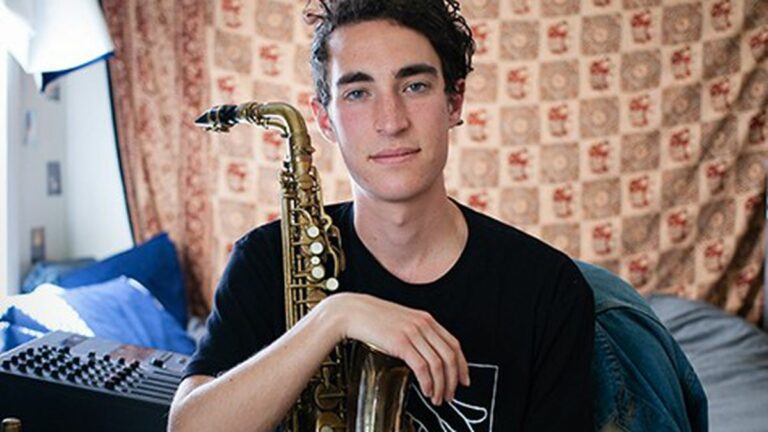
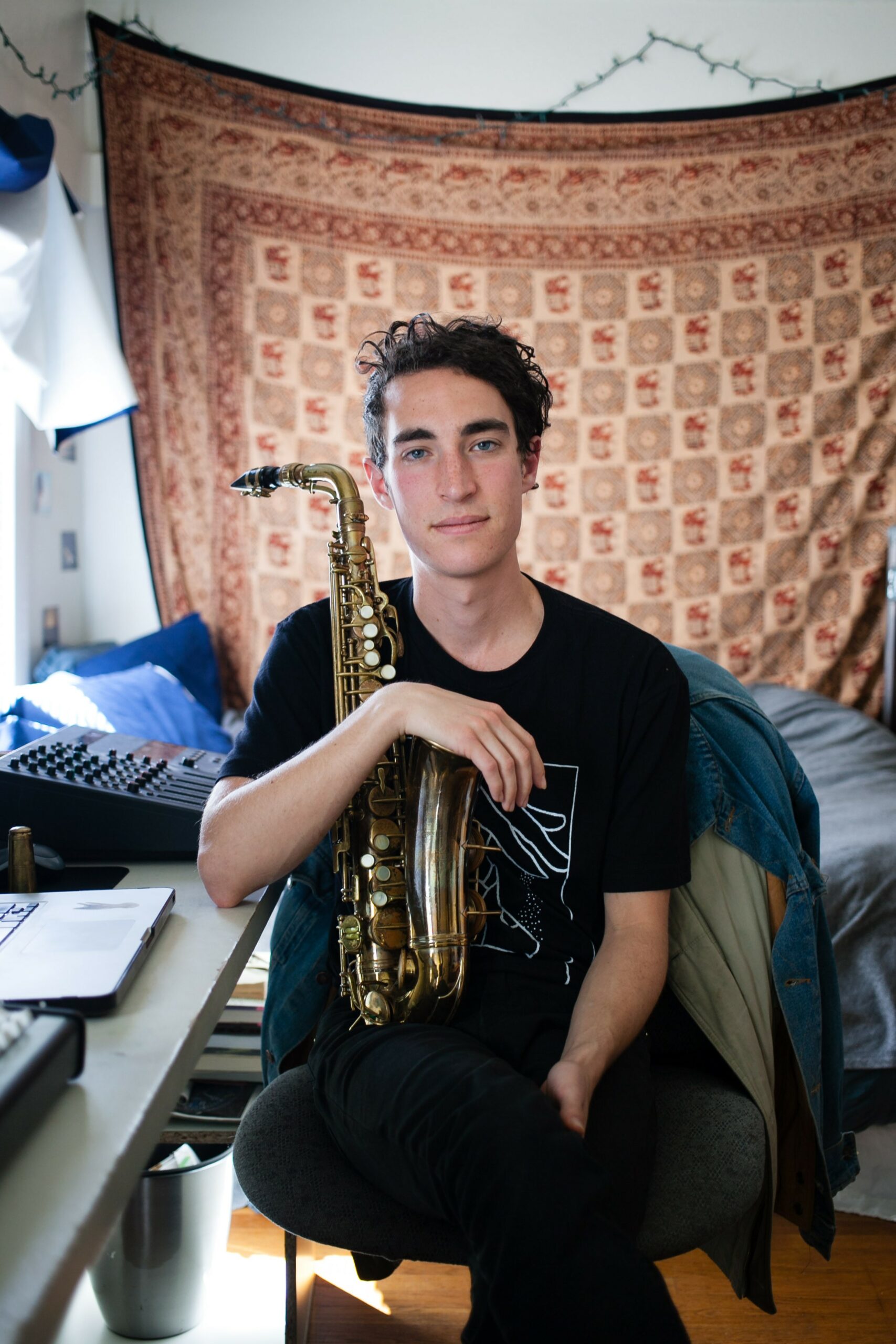
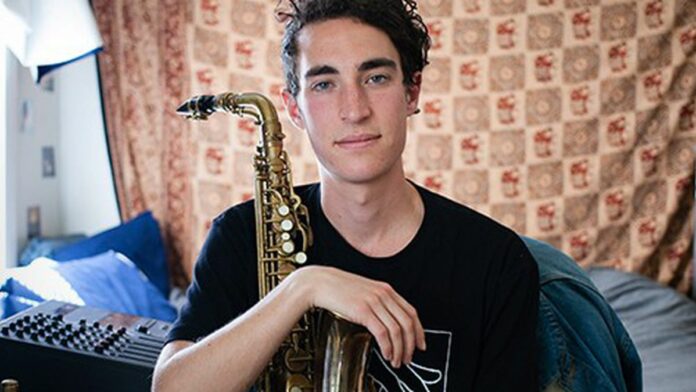
Experimental composer Adam Hirsch has been playing saxophone for almost his entire life, but his relationship with the instrument has been somewhat fraught. Hirsch, who is based in Oakland and will soon graduate from Mills College’s MFA program in electronic music, used to feel frustrated that he couldn’t master the saxophone in the traditional sense. So instead, he decided to create his own approach.

In a recent piece called Until Your Heart Stops, Hirsch sealed shut the valves of his tenor sax with clips and plugged its bell with a toilet plunger — making the mouth piece the only source of airflow in the instrument. He put two microphones inside of the sax and “played” it using circular breaking.

The microphones amplified the sound of the air circulating within the hollow body of the saxophone, creating a metallic reverberation similar to the quivering, percussive sound of a didgeridoo. In a move that would certainly appall some traditionalists, he scraped the outside of his sax with steel wool and paintbrushes, using contact mics to pick up the scratchy noises produced by the friction between the metal surfaces. Feedback rumbled intermittently throughout, punctuating the compositions with subterranean-sounding bass notes.

ellipses (stereo version) by Adam Hirsch

“I could never be super technically fluid,” said Hirsch during a recent interview in his bedroom studio in North Oakland. “For me, more recently, it’s been more about me trying to find my own language.”

Hirsch’s process is visceral — even violent — and turns the focus to his sax’s physical properties. The saxophone is a particularly emotional instrument, typically used to convey feeling through melody and timbre, but Hirsch uses it in a way that’s alien and abstract, discovering new functionalities in the process. “How can I reduce the instrument to its most basic properties, being like a tube, or a pile of metal, or this resonant body?” he said.

Prior to honing in on the kind of atonal, conceptual work he makes today, Hirsch was fairly prolific in Oakland’s indie rock scene as a member of Native Eloquence, which he started as a solo project and developed into a three-piece band. Native Eloquence made sprightly, psychedelic pop with whispery vocals and chime-y electronic effects that evoked the avant-pop of bands like Animal Collective. The group toured the West Coast and frequently played at local venues, but eventually split up when Hirsch’s bandmates moved to New York.

setspeak by marissa deitz & adam hirsch

After putting the project to rest, he turned his full focus to the academic electronic music he is composing and performing today. He composed much of his latest work — including his MFA thesis — while researching the relationship between memory and the physics of sound. He’s particularly interested in the similarities between the ways the brain manipulates early childhood memories over time and the ways that we perceive the characteristics of music.

Hirsch explained that a good way to think about that is to compare the same note played on a saxophone and a synth. Though the pitch might be the same, each instrument imbues the note with a different “color” and “shape,” as Hirsch puts it, that we perceive subjectively based on how our brains synthesize the different frequencies each instrument produces.

Hirsch sees parallels between how our minds subjectively perceive the qualities of sound with the way our brains manipulate memories. “We have all these different basic systems for processing in the brain, like visual perception, auditory perception, motor processing … and they all process information in completely different ways,” he explained. “Basically, what happens when you’re forming a memory and recalling it is you’re forming some unique pattern and connection between all of those systems.”

Tunnelvision (stereo version) by Adam Hirsch

Much like the frequencies that come together to produce a single note, which sounds different when produced by different instruments, “[a memory] doesn’t necessarily cohere into something that’s repeatable every single time.”

Hirsch’s thesis performance, which he composed for two cellos and various electronic instruments, delved into this theme. He composed its tempestuous movements by contrasting his grandfather’s childhood memories of escaping Nazi Germany and his own comparably more placid ones of his childhood in Santa Monica when he was the same age.

But the heady pretexts in Hirsch’s work notwithstanding, when he played me snippets of a recording of the performance, its combinations of brooding, jarring strings building up like a cresting wave told a story all their own — inviting my own thoughts and memories to drift in and out of focus as I listened.

This Weekend’s Top Six Events

Surely our San Francisco International Film Fest guide as you all booked for next weekend, but what are you going to do in the meantime? We've got you covered:  Going Outrageously Dumb Remember clubs with discriminatory dress codes such as “no baggy clothing?” Well, times are finally changing. For the latest party that blogger-promoter Cami Ramos is throwing at...

Medical Marijuana Providers Score Major Victory in Federal Court

The federal war on legal medical marijuana providers is paused for now, thanks to a major legal victory in California. Lynnette Shaw, who is one of California’s oldest dispensary operators prevailed Wednesday in her bid to overturn a nineteen year-old civil injunction barring her from the cannabis trade for life. Shaw won using the argument that Congressional law now forbids...

Oakland Bus Stop Battle Continues, Outcome Unclear

Councilmember Rebecca Kaplan wants to reinstate the bus stop at 30th and Broadway in Oakland. Credits: Sydney Johnson Oakland city officials declared on Tuesday that the widely used bus stop at Broadway and 30th Street will be reintroduced after its controversial removal last October. But no firm date was set for reestablishing the stop, and Summit Bank, which got the stop...

Alex Oslance’s Industrial Decay

During his Saturday morning artist talk at Aggregate Space Gallery (801 West Grand Ave., Oakland), Alex Oslance sat, slightly hunched over, and mostly mumbled about his various experiences being misunderstood as an artist. The grad-school era anecdotes didn't do all that much to elucidate his concept-heavy sculptural practice, but his demeanor did. Behind Oslance, a singular, suspended sculpture imposed on...

Tamales, Without Fanfare

I have a soft spot for restaurants that can nonchalantly slip themselves into my life without fanfare, and Tamaleria Azteca is one of those places. A no-frills take-out window with killer tamales on a residential corner of Market and 60th streets in Oakland, there's nothing about the place that requires I stand on ceremony. I can shuffle there in...

All the Right Moves in The Dark Horse

Genesis Potini creates a stir when he goes down the street. The hulking Maori doesn't so much walk as lumber, and his jerky, out-of-rhythm body language frightens people who don't know him, so that when Gen (his nickname) happens into a shop displaying a chess board and hurriedly begins rearranging the pieces while nervously muttering to himself, bystanders give...

Fireworks Wednesday Fizzles Out

Iranian director Asghar Farhadi caused a sensation among American foreign-film audiences with his 2011 marital drama A Separation, then followed it up with a similarly themed account of dysfunctionality, 2013's The Past. Both films featured incisive writing and superior acting. But getting the films of hot-shot directors out of Iran is not as easy as importing movies from France....

Oakland Cops Quietly Acquired Social Media Surveillance Tool

Without public hearings or civilian oversight, the Oakland Police Department acquired a powerful social media monitoring tool called Geofeedia in 2014 and has used it to conduct surveillance on large public gatherings, possibly including political protests. OPD's acquisition and use of the social media monitoring software, out of public view, occurred in spite of the city's recent establishment of...

The Art of Data-telling

There's an unconventional piece of cartography currently covering a wall at Betti Ono Gallery in the heart of downtown Oakland. For the "Oakland Community Power Map," installed by the Anti-Eviction Mapping Project (A(E)MP), a data-visualization and storytelling collective that maps housing displacement in the Bay Area, locals were asked to contribute cultural data by physically marking community assets over...

Adam Hirsch: Memories Fading

Experimental composer Adam Hirsch has been playing saxophone for almost his entire life, but his relationship with the instrument has been somewhat fraught. Hirsch, who is based in Oakland and will soon graduate from Mills College's MFA program in electronic music, used to feel frustrated that he couldn't master the saxophone in the traditional sense. So instead, he decided...
19,045FansLike
17,709FollowersFollow
61,790FollowersFollow