
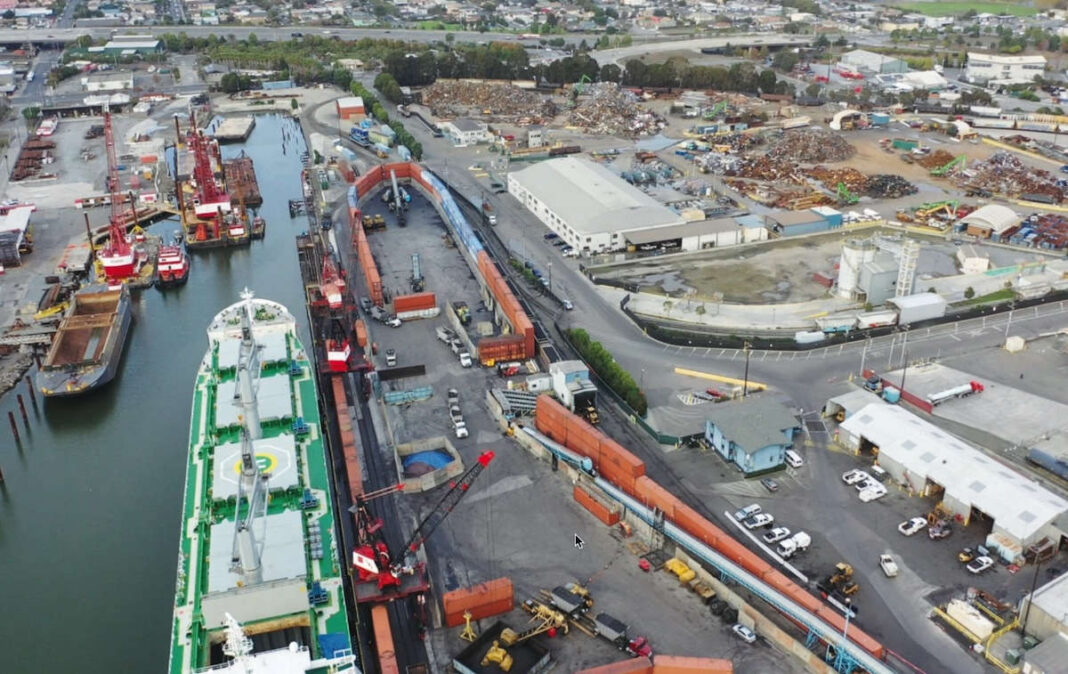
On Sept. 16, the U.S. Environmental Protection Agency (EPA) released its current plan for a major cleanup of Richmond’s highly contaminated United Heckathorn site. But controversy is inevitable, because the plan does not correspond with the cleanup proposal put forward by a coalition of environmental groups—the Richmond Shoreline Alliance, San Francisco Baykeeper and the local branch of the Sierra Club.
The coalition released a group of comments, including: “The Community Cleanup Plan calls for a complete cleanup. The EPA’s proposal doesn’t reflect that standard, and it’s unclear whether they even addressed it …” and, “There may be valid reasons the EPA disregarded our recommendations, but without real dialogue, we have no way of knowing whether their approach is sound—or whether we’re simply being ignored.”
From 1947-1966, United Heckathorn Chemical used its compound alongside the Lauritzen Channel in Richmond’s Inner Harbor to mix and package pesticides. Among these was DDT, which became infamous for its deadly effects on wildlife, as well as for ground and water contamination. Its impacts on humans include nervous system disruption; skin irritation; long-term, increased cancer risk; and high risks of developing Type 2 diabetes and obesity.
The company ceased operations in 1966, then went bankrupt in 1970 and abandoned its site. But the DDT, and other toxins, stayed. Not until 1994, after the five acres of land and 15 acres of sediments in the Lauritzen and Parr channels had been declared a “Superfund site” did the EPA conduct a cleanup. According to EPA materials, a Superfund site is “any land in the United States that has been contaminated by hazardous waste and poses a risk to human health or the environment.”
DDT and other chemicals seeped into land and water for nearly three decades. And the cleanup was a failure. According to Janet Johnson, coordinator for the Richmond Shore Alliance (RSA), it was a failure on multiple fronts. “It was poorly designed and executed,” she said. “Nothing was done about the pilings, which themselves can be contaminated. They capped the [land acreage] with asphalt, leaving the contaminated soil in place. And there was no community engagement.”
Now, another 30 years later, the EPA is planning another cleanup. But this time, the coalition of environmental groups has united to create its own plan, and is analyzing the EPA proposal released Sept. 16. An EPA email stated: “EPA has met with community group representatives at least monthly since early 2025. EPA held six after-hours virtual community meetings this past year to explain the site’s history, the Superfund process and the next stages in the cleanup process.”
The coalition received important support when, on July 7, the Richmond City Council unanimously adopted a resolution backing its cleanup plan, which includes isolating and draining the channel to avoid underwater dredging, completely removing all contaminated materials and cleaning the upland areas. The coalition’s plan has also been endorsed by Contra Costa County Supervisor John Gioia. “When you cap contaminated materials, you are committing to being responsible for that site forever. It’s not good practice,” Johnson said.
The coalition is also demanding that the new EPA plan take into account sea-level rise and the resulting groundwater contamination. The RSA website states, “Future climate change could also make erosion happen faster in the site’s land area, which might stir up polluted sediment, overload storm drains, and compromise infrastructure.”
Johnson noted that this is not just an environmental issue, but a public health one. Richmond is considered an environmental justice community. Almost 20% of its residents live below the poverty line, and 83% identify as people of color. The Heckathorn cleanup thus becomes another part of efforts undertaken over the years to address the many decades of environmental abuse that went unchecked, such as the fight to stop coal being shipped through the Levin Richmond Terminal and ongoing efforts to demand a complete cleanup of the Zeneca site, also highly contaminated from its industrial past.
United Heckathorn Chemical is not the only polluting entity involved. A July 1, 1996, “consent decree” released by the EPA and covering the first cleanup effort contains some familiar names, indicating that these companies acknowledged they were also partly responsible for contamination: Levin Richmond Terminal Corporation, Shell Oil Company, Bayer and, most notably, Stauffer Chemical Company, a major contributor to the Zeneca site’s contamination during its manufacturing decades there, extending from 1897 to the late 1950s.
A public meeting on the EPA proposal will be held from 5-8pm, Oct. 21, at the Richmond Recreation Complex, 3230 Macdonald Ave. Public comments may be submitted Sept. 30-Dec. 29 by email to Ju**********@*pa.gov or by mail to U.S. Environmental Protection Agency, Attn: Karen Jurist, 75 Hawthorne St. (SFD-7-2), San Francisco, CA 94105.
To view the EPA’s proposed plan, visit semspub.epa.gov/work/09/1249770.pdf. To view the plan proposed by the coalition, visit richmondshorelinealliance.org/united-heckathorn-cleanuo-.