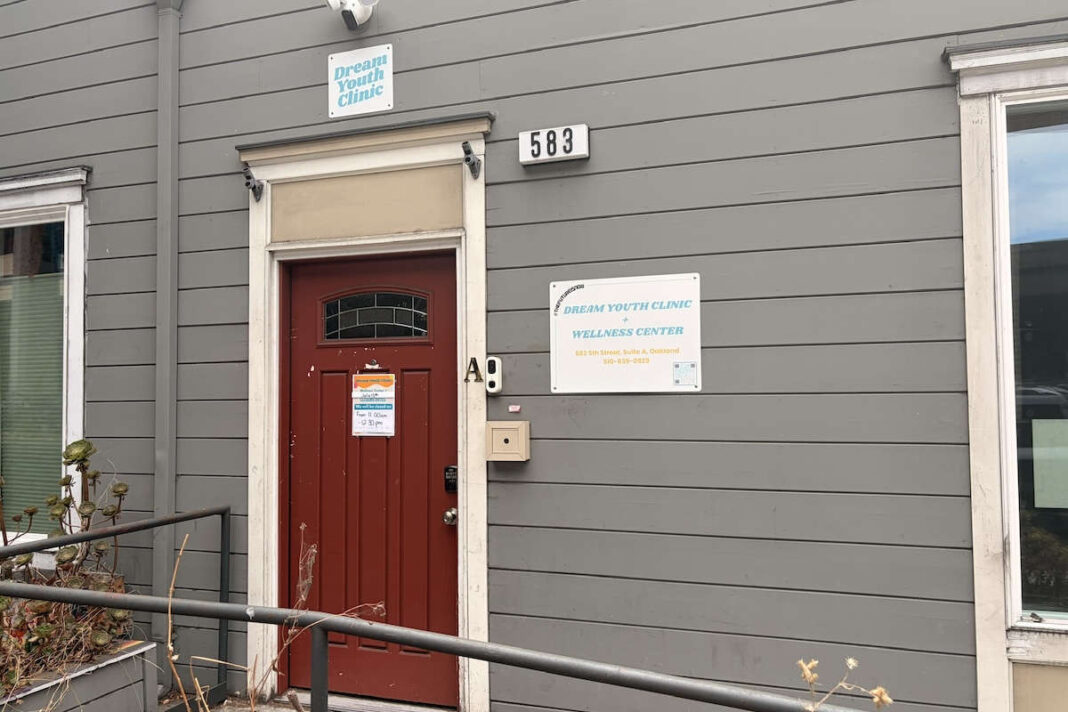
Dream Youth Clinic occupies a small, gray building in Oakland right off I-980. Colorful murals and a spattering of posters cover its interior, creating a space that welcomes youth affected by sex trafficking.
“We try to make young people feel reflected in the posters,” says Amanda Brown, director of operations at the clinic.
She points to the wall of posters full of affirmations and portrayals of diverse youth inside the in-house clinic, where young people—usually between 17 to 24—can get check-ups, STI testing and medication abortions.
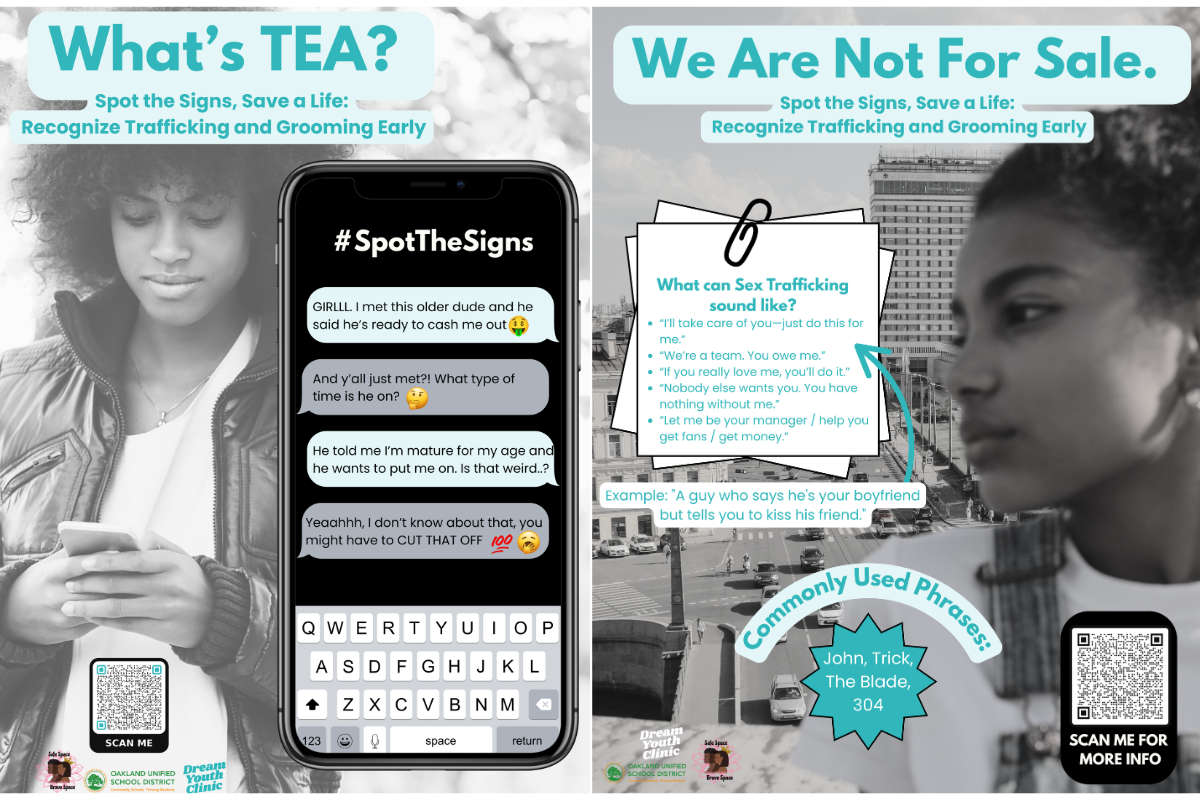
Not only are the posters curated to make young people feel comfortable in the space, the youth made some of the posters themselves. One of the first posters visible when walking into the clinic’s media room asks, “What’s the TEA?” in large, teal lettering. It then depicts a phone conversation between two young people, with one saying that an older dude is ready to “cash me out” and “put me on,” until the other texter replies by saying that they “don’t know about that,” and their friend might have to “CUT THAT OFF.”
This poster, along with others, was developed in partnership with Oakland Unified School District’s (OUSD) Human Trafficking Department and its youth advisory board, which brainstormed the ideas and language used in the posters.
Amba Johnson manages the grant the federal office on Trafficking in Persons awarded OUSD. She’s worked with trafficked youth since 2000, and says that the youth advisory board, which is mostly made up of 10th and 11th graders, worked hard to understand trafficking: what it’s like, how it happens and what the nuances are. The students then spoke to staff at Dream Youth Clinic about what they wanted to see in the posters.
“That’s a louder voice for teens than we are, and speaks in a very different way,” Johnson said. “I wanted something that was youth-to-youth—that was like, ‘Hey, here’s the real deal in this.’” Johnson wanted a poster campaign that went beyond the traditional PSAs that just tell young people to “say no” without using language and situations that are relevant to them.
These posters are hung at schools across OUSD in attempts to educate students on what to do if they, or their friends, find themselves in situations similar to those depicted. Johnson said they’re developing more posters in hopes of helping kids to identify signs of sex trafficking so they can stop it before it starts.
According to the WestCoast Children’s Clinic in Oakland, 15.8% of screened vulnerable youth in Alameda County show signs of sex trafficking, more than doubling the California state average. As of 2011, 46% of all human trafficking cases prosecuted in California originated from the Alameda County District Attorney’s Office. In the City of Oakland’s Violence Reduction Plan for 2026-2030, sex trafficking is described as an “ongoing crisis” in Oakland despite not being reported in the publicly available annual crime data.
“Drive from 14th Avenue to 21st Avenue and you tell me what you see,” said Aisha Mays in reference to International Boulevard, commonly referred to as “The Blade,” where sex trafficking is prevalent in Oakland. Mays is the current CEO and founder of Dream Youth Clinic.
Even in broad daylight, women wearing high heels and mesh outfits that reveal their underwear pace on the edge of the boulevard waiting for the next client. They approach car windows without interference.
Mays is dedicated to bringing young people in as part of the solution to sex trafficking. In January, the clinic hosted a session for youth to address city leaders—in attendance were Mayor Barbara Lee and Councilmember Charlene Wang, among others—with their ideas and concerns regarding trafficking in Oakland. Mays believes it’s important to meet youth where they are, in any stage of sex trafficking that they’ve encountered.
In addition to displaying posters in all Oakland public high schools, Dream Youth Clinic also hands out posters at table events and uses them for its mobile clinic on International Boulevard—the first of its kind in the country.
“It’s just an example of how powerful it can be when we have young people at the forefront of solutions around human trafficking,” Mays said. “Especially because they’re the ones who are mostly being impacted.”
Dream Youth Clinic, 583 Fifth St., Suite A, Oakland. dreamyouthclinic.org