Everything You Need to Know About This Weekend’s Eat Real Festival

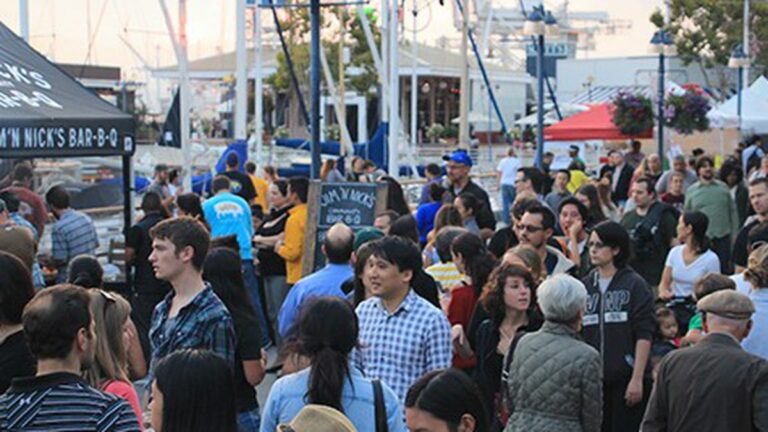
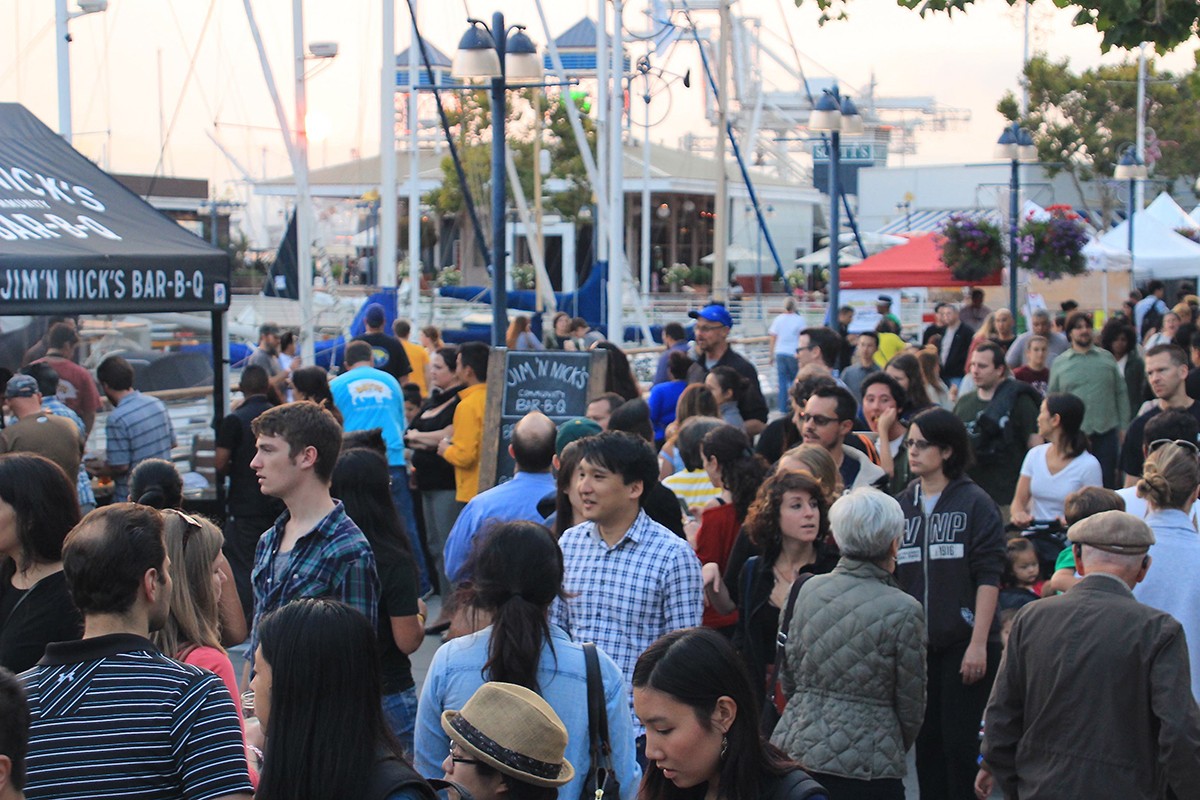
When Oakland’s Eat Real Festival made its debut in 2009, gourmet street food was still somewhat of a novelty in the Bay Area, and the national media was still years away from deigning to recognize Oakland as a world-class food destination. Now in its seventh year, Eat Real simply feels like an inevitability. The street food festival will take over Jack London Square again this weekend, with a lineup of eighty-plus vendors — about a quarter of them making their first Eat Real appearance, according to Ally DeArman, director of the nonprofit Food Craft Institute that organizes the event.  

The festival kicks off on Friday, September 18 and will run from 1 to 9 p.m. on Friday, 10:30 a.m. to 9 p.m. on Saturday, and 10:30 a.m. to 5 p.m. on Sunday. Admission is free, and the price for all food items will be capped at $8.

Here are a few of this year’s highlights:

1. Drought-Friendly Fare

Given that there appears to be no end in sight to California’s extended drought, it makes sense for a food festival to give the topic some attention. This year’s edition of Eat Real will have several “DIY DRY” demos, including tips on water-wise gardening (courtesy of Jack London Square newcomer Sunset Magazine) and cooking demos that will feature drought-tolerant legumes. In addition, the Belcampo Meat Co. booth will sell burgers made with beef from organic dairy cows all week long — a burgeoning trend in the beef industry, because it’s more environmentally friendly, since the same amount of water can go toward producing both beef and milk instead of just beef alone.

2. Sharks and Guppies

Before the festival itself starts, fans of the reality show Shark Tank may want to check out the Food Craft Institute’s FOOD.FUND.FEST kickoff event on Thursday, 6:30–9:30 p.m., during which five relatively new food entrepreneurs will pitch a panel of “Slow Money” local food system investor types. DeArman said the event would be like Shark Tank without the “sink or swim” element. That said, only one competitor will win a $1,500 cash prize. Tickets are $10, plus an optional donation that will go toward sweetening the reward pot.

3. Praise the Lard

For the past few years, Chico-based pork purveyor Rancho Llano Seco has run “Offal Wonderful” as a parallel event on the Saturday and Sunday of Eat Real. This year’s theme is “Skin and Fat,” which provides a dual benefit to festival attendees: First, ambitious home cooks can check out chef demos for dishes such as lard biscuits and pork skin chorizo. More importantly, the promotion is designed to build demand for less popular cuts — in this case, the skin and fat — on the part of both chefs and customers. If that happens, pork-fat enthusiasts will find that Bay Area menus might start to get a little more lard-y.

A Townie Alternative

As much as the Eat Real Festival is intertwined with the continued growth of Oakland’s vibrant food scene, at least two longtime Eat Real participants have decided that they’d like to organize their own mini food festival this year — one that’s more focused on representing Oakland.

Organized by Angela Tsay, owner of the apparel company Oaklandish, and restaurateur Chris Pastena, Town Eats will be a three-day, Oakland-centric celebration of food held at Pastena’s waterfront restaurant, Lungomare (1 Broadway, Oakland). On Saturday, September 19, five Oakland restaurants — Lungomare, Chop Bar, Haven, AlaMar, and Chowhaus — will participate in a pig roast-off, with $4 pig plates (or a $20 all-you-can-eat option) available from 1 p.m. until the last portion of pork has been eaten. On Sunday, five local restaurants — Abura-ya, Lucky Three Seven, Blackwater Station, Revival Bar + Kitchen, and Chop Bar — will set up inside Lungomare to sell $4 bites. To top it all off, Drake’s Brewing Company and Hangar One Vodka will offer $4 drink specials.

Of course, with Town Eats positioning itself as being a festival that’s more about Oakland — and scheduling its events the same weekend as Eat Real, just a few steps further up Jack London Square — the implication seems to be that Eat Real isn’t Oakland-centric. On that subject, Tsay demurred, stressing instead the fact that Town Eats will be more low-key, appealing to locals looking for a place to do their “usual weekend kick-it” and Eat Real attendees who want to take a break from the long lines.

In any case, Eat Real director Ally DeArman said there’s no conflict as far as she’s concerned. On the one hand, Eat Real receives far more vendor applications each year than it is able to accommodate, which has led some to have what she believes is a false perception that the festival doesn’t support Oakland vendors or that it doesn’t care about the “little guy” — despite the fact that half of this year’s vendors are based in Oakland, and almost all of them are small businesses. She acknowledged, however, that the festival poses a real challenge to the restaurants in Jack London Square and said she encourages them to run special promotions instead of just rolling with their regular menu.

For Tsay, the important thing is that Town Eats will highlight everyday Oakland businesses so that all of the out-of-towners who come for Eat Real have a reason to return. “Oakland is just a great place to hang out even when there’s not any special event happening,” she said.

Free Will Astrology

Aries (March 21–April 19): I won’t go so far as to say that you are surrounded by unhinged maniacs whose incoherence is matched only by their self-delusion. That would probably be too extreme. But I do suspect that at least some of the characters in the game you’re playing are not operating at their full potential. For now, it’s best not to confront them and demand that they act with more grace. The wiser strategy might be to avoid being swept up in their agitation as you take good care of yourself. If you are patient and stay centered, I bet you will eventually get a chance to work your magic.

Taurus (April 20–May 20): Many of the heroes in fairy tales survive and thrive because of the magical gifts they are given. Benefactors show up, often unexpectedly, to provide them with marvels — a spinning wheel that can weave a cloak of invisibility, perhaps, or winged shoes that give them the power of flight, or a charmed cauldron that brews a healing potion. But there is an important caveat. The heroes rarely receive their boons out of sheer luck. They have previously performed kind deeds or unselfish acts in order to earn the right to be blessed. According to my analysis, Taurus, the coming weeks will be prime time for you to make yourself worthy of gifts you will need later on.

Gemini (May 21–June 20): We humans need nourishing stories almost as much as we require healthy food, clean air, pure water, and authentic love. And yet many of us get far less than our minimum daily requirement of nourishing stories. Instead, we are barraged with nihilistic narratives that wallow in misery and woe. If we want a break from that onslaught, our main other choices are sentimental fantasies and empty-hearted trivia. That’s the bad news. But here’s the good news: Now is a favorable time for you to seek remedies for this problem. That’s why I’m urging you to hunt down redemptive chronicles that furnish your soul with gritty delight. Find parables and sagas and tales that fire up your creative imagination and embolden your lust for life.

Cancer (June 21–July 22): Now is an excellent time to close the gap between the Real You and the image of yourself that you display to the world. I know of two ways to accomplish this. You can tinker with the Real You so that it’s more like the image you display. Or, you can change the image you display so that it is a more accurate rendition of the Real You. Both strategies may be effective. However you go about it, Cancerian, I suggest you make it your goal to shrink the amount of pretending you do.

Leo (July 23–Aug. 22): Born under the sign of Leo, Marcel Duchamp was an influential artist whose early work prefigured surrealism. In 1917, he submitted an unusual piece to a group exhibition in New York. It was a plain old porcelain urinal, but he titled it Fountain, and insisted it was a genuine work of art. In that spirit, I am putting my seal of approval on the messy melodrama you are in the process of managing. Henceforth, this melodrama shall also be known as a work of art, and its title will be “Purification.” (Or would you prefer “Expurgation” or “Redemption”?) If you finish the job with the panache you have at your disposal, it will forevermore qualify as a soul-jiggling masterpiece.

Virgo (Aug. 23–Sept. 22): Some people express pride in gross ways. When you hear their overbearing brags, you know it’s a sign that they are not really confident in themselves. They overdo the vanity because they’re trying to compensate for their feelings of inadequacy. In the coming weeks, I expect you to express a more lovable kind of self-glorification. It won’t be inflated or arrogant, but will instead be measured and reasonable. If you swagger a bit, you will do it with humor and style, not narcissism and superiority. Thank you in advance for your service to humanity. The world needs more of this benign kind of egotism.

Libra (Sept. 23–Oct. 22): The rooster is your power animal. Be like him. Scrutinize the horizon for the metaphorical dawn that is coming, and be ready to herald its appearance with a triumphant wake-up call. On the other hand, the rooster is also your affliction animal. Don’t be like him. I would hate for you to imitate the way he handles himself in a fight, which is to keep fussing and squabbling far beyond the point when he should let it all go. In conclusion, Libra, act like a rooster but also don’t act like a rooster. Give up the protracted struggle so you can devote yourself to the more pertinent task, which is to celebrate the return of the primal heat and light.

Scorpio (Oct. 23–Nov. 21): Since you seem to enjoy making life so complicated and intense for yourself, you may be glad to learn that the current astrological omens favor that development. My reading of the astrological omens suggests that you’re about to dive deep into rich mysteries that could drive you half-crazy. I suspect that you will be agitated and animated by your encounters with ecstatic torment and difficult bliss. Bon voyage! Have fun! Soon I expect to see miniature violet bonfires gleaming in your bedroom eyes, and unnamable emotions rippling through your unfathomable face, and unprecedented words of wild wisdom spilling from your smart mouth.

Sagittarius (Nov. 22–Dec. 21): The Adamites were devotees of an ancient Christian sect that practiced sacred nudism. One of their central premises: How could anyone possibly know God while wearing clothes? I am not necessarily recommending that you make their practice a permanent part of your spiritual repertoire, but I think you might find value in it during the coming weeks. Your erotic and transcendent yearnings will be rising to a crescendo at the same time. You will have the chance to explore states where horniness and holiness overlap. Lusty prayers? Reverent sex? Ecstatic illumination?

Capricorn (Dec. 22–Jan. 19): One of your key themes in the coming weeks is “grace.” I suggest that you cultivate it, seek it out, expect it, and treasure it. To prepare for this fun work, study all of the meanings of “grace” below. At least two of them, and possibly all, should and can be an active part of your life. 1. Elegance or beauty of form, movement, or proportion; seemingly effortless charm or fluidity. 2. Favor or goodwill; a disposition to be generous or helpful. 3. Mercy, forgiveness, charity. 4. A temporary exemption or immunity; a reprieve. 5. A sense of fitness or propriety. 6. A prayer of blessing or thanks said before a meal. 7. An unmerited divine gift offered out of love.

Aquarius (Jan. 20–Feb. 18): Be good, but not necessarily well-behaved. Be extra exuberant and free, but not irresponsible. Be lavish and ardent and even rowdy, but not decadent. Why? What’s the occasion? Well, you have more-or-less finished paying off one of your karmic debts. You have conquered or at least outwitted a twist from your past that had been sapping your mojo. As a reward for doing your duty with such diligence, you have earned a respite from some of the more boring aspects of reality. And so now you have a mandate to gather up the intelligent pleasure you missed when you were acting like a beast of burden.

Pisces (Feb. 19–March 20): “I am the least difficult of men. All I want is boundless love.” That’s the mantra that Frank O’Hara intoned in his poem “Meditations in an Emergency,” and now I’m inviting you to adopt a modified version of it. Here’s how I would change it for your use in the coming months: “I am the least difficult of passion artists. All I want is to give and receive boundless, healthy, interesting love.” To be frank, I don’t think O’Hara’s simple and innocent declaration will work for you. You really do need to add my recommended nuances in order to ripen your soul’s code and be aligned with cosmic rhythms.

Corrections for the Week of September 16, 2015

Our September 9 music story, “The Came from Down the Street,” misidentified Del’s cousin as Eazy-E. His cousin is Ice Cube.

Letters for the Week of September 16, 2015

“Building Downtown Oakland for Cars,” News, 9/2

The Car Is Still King

The critical question for the city is when do we know when we have reached the tipping point and how is it best measured? Clearly in the short term, many buyers still want the option of owning and operating a car. When you have a car, you need someplace to put it.

Despite the current influx of East Coast dreamers priced out of San Francisco, new housing in Oakland is still being constructed at far lower densities than those seen in Manhattan, Chicago, and many other center cities in America. The city is embarking on a downtown-specific plan, but the reality is that nobody is or has proposed housing at anywhere near the three hundred units/acre already permitted.

We also do not generally have the developed multi-modal transportation networks seen in more urbanized areas across the country. This is California where the car is still king. Even people who want to live in Uptown, take BART, frequent the walkable music and dining experiences, want to drive to Napa wine country and dine in Marin and Sausalito sometimes. There is not yet the critical mass in Oakland to leap to no parking for new housing. The buyers know it, the city knows it, and most importantly, the developers and lenders know it.

Gary Patton, former Oakland city planning staffer, Hayward

What About Motorcycles and Scooters?

I would like to see more motorcycle/scooter parking in downtown Oakland, if not in all Oakland commercial areas. San Francisco has motorcycle parking available at a reduced cost, and Berkeley offers free motorcycle parking downtown and near the Cal campus. With motorcycle parking, the number of car parking spaces can be reduced while still allowing a choice of private transportation because four to five motorcycles and six to seven scooters can park in one car space.

In Oakland, there are currently two city-provided motorcycle parking spaces near my downtown office and both charge the exact same price per hour as cars and have a two-hour limit. It is difficult to park a scooter or motorcycle on streets where the city has opted for the pieces of paper to print in lieu of meters because 1) where do you put them so that they are seen, and 2) people can easily steal them.

I would gladly pay a few dollars per day to park my scooter near my office, and I know there are others who would do the same. I’m all for encouraging alternative transportation, but why can’t we expand those alternates to holistically embrace all two-wheeled options?

We Need Housing,
Not Parking

Here in the Bay Area, there’s a dire need for more housing. In the market for housing are two kinds of people, those who can get along without cars and those who can’t or won’t.

Let’s build first for those who can get along without cars. Eliminating garage space in new housing will leave more room for living units — which we need much more than we do additional traffic on our streets and highways.

Will Leben, Emeryville

Hey, Oakland, Join the 21st Century!

If you build it, they (the cars) will come. Please, this is 2015, not 1955. Fewer cars, more public mass transit, less fossil fuel and parking hassles.

Gordon Hopkins, Concord

“Pot, Politics, and Scandal in San Leandro,” News, 9/2

Nice!

Great article, Steve!

Tony Santos, former mayor of San Leandro, San Leandro

“California’s Missing Climate Hawk,” Seven Days, 9/2

Brown’s Plan Would’ve Done More Harm than Good

The harsh reality is that Earth’s atmosphere has no borders — pollution flows freely across all borders — and therefore massive measures in one state make miniscule differences in the world’s environment and, therefore, the environment in California. The entire United States is responsible for about 16.2 percent of the world’s carbon dioxide emissions. California is responsible for 6.2 percent of all such US emissions. Therefore, if 100 percent of California emissions were abated, the world’s emissions would be reduced by 1 percent. Brown’s plan called for less than half that — fifty percent renewable energy by 2030. Even if the AB350 (the Clean Energy & Pollution Reduction Act of 2015) plan is totally successful [it failed last week], the world pollution would be reduced by less than one-half of 1 percent.

The growth in global carbon emissions stalled in 2014, according to data from the International Energy Agency. World emissions were unchanged from 2013. Meanwhile, the flagging US, European, Russian, and Chinese economies have reduced emissions even more since 2014 — so economic woes have already achieved at least the 0.5 percent of the worldwide objective of SB350.

The argument could be made that act is no longer as urgently needed — an act which penalizes Californians, the California economy, an act that if fully successful has almost no effect on the world’s pollution. The penalties of slashing gasoline use in cars and trucks by 50 percent by 2030 is probably a mandate too far compared to its world effect and the probable economic costs to California citizens, who face higher fuel costs, possible business impacts, and forced investments in complying vehicles.

Californians have traditionally done more than their share in reducing carbon emissions, and there is no reason to believe they will not continue to do so of their own volition, unless so harmed by draconian government mandates that quash that spirit of cooperation. Perhaps Jerry Brown has considered this reality, coupled with the political aspects Robert Gammon also points out about his motivations.

William H. Thompson, Walnut Creek

“Keeping Police Misconduct Secret,” Seven Days, 8/26

OPD’s Actions Are Self-Serving

Robert Gammon is right about OPD’s picking and choosing which information to release on police homicides. I submitted Public Records Act requests for records concerning the police shootings of Demouria Hogg and Nathanial Wilks, the death of Richard Linyard (who is said to have killed himself by squeezing between two buildings during a police chase), and a “wrong-man” chase by armed plainclothes officers that ended with serious injuries and trauma to three people, including a four-year-old. All requests were denied, frustrating the independent citizens’ investigations that I and others were working on, because official investigations were pending.

OPD’s public relations office told me that the point was to protect the integrity of the investigations. Witnesses’ memories and accounts can be contaminated by what they hear others say happened, a real risk if information already gathered is made public.

However, even before the recent private showing to selected journalists of selected portions of some Linyard and Wilks videos “to correct misinformation,” OPD has routinely publicized its own narratives of what occurred, complete with photos of suspects’ alleged weapons and of the place where Linyard was said to be found.

Two days after the Hogg shooting, several media quoted Steve Betz, attorney for the officer who killed him, claiming body-cam video showed the man apparently reaching for a gun. SFGate.com quoted another police-union attorney a day after the Wilks killing, to the effect that videos showed the deceased pointing a gun at police. (Witnesses we interviewed disagreed with this, but the police are not putting out their statements.)

So not only is OPD contaminating its investigation of itself by putting out what exculpates its officers, it is also showing its evidence to the supposed subjects of interest in its investigations and permitting their attorneys to describe it publicly. I don’t think I’d get this treatment if I shot someone, claimed self-defense, and the police had a video that captured it all. In the meantime, the public gets nothing until finally attorneys and the media raise a stink, and then what we get is still what the department decides they want us to see.

Michael Goldstein, Oakland

Police Have Lost My Trust

Police should be monitored at all times. They are in the executive branch of government, but too many act like they are the gods of the legislature, and judiciary, too. They have demonstrated over the years that they can’t even be trusted to stop at a stop sign. Yet, during a certain high quota period, a group of officers wrote me a red light ticket knowing I did not actually run the light. If they can be this petty, why should we trust them to tell the truth about the lives and liberty of ordinary citizens? The police in California have lost my trust (and I’m an old white guy).

Gary Baker, San Leandro

Miscellaneous Letter

Time to Make Black Lives Matter

I’m looking for some evidence that Black Lives Matter above and beyond all the letters, editorials, and expressions of outrage that fill the funny papers every day. Who’s kidding who: Is there anything at all being done at the local or even regional level to make up for the obvious disparity that’s at the very rotten root of all the problems we’ve been experiencing here in the Bay Area over the last century or so?

Yes, there’s been some voting rights legislation and other stuff at the national level, but a lot of that has been rescinded by the Tea Party doofuses, and nothing much locally at all seems to be happening, witness the icky condition of our schools and the correspondingly relentless deconstruction of too many once vibrant neighborhoods. By crisscrossing these once great neighborhoods with monster freeways and other transportation systems aimed at making life better solely for those who can afford to live as far from these pockets of pollution as possible, we’ve created blight magnets.

And where are all the proposals to try and rectify such obvious disparity? So many have become so expert at pointing fingers and absolving themselves of any responsibility for what is, I guess to them, an inherited condition of disparity dating back to before they were born, so there’s simply nothing they can do? Do they have every right to continue on, secure in their particular bailiwick, because it really isn’t their job to tinker with “market forces” or whatever else they might believe is driving the economy?

Maybe the closest we ever came to addressing such rampant inequity was when redevelopment was the law of the land everywhere in California, a system that suffered abuse enough by the construction of golf courses and shopping malls in already relatively affluent areas, that anything and everything other than building inner-city equity was the result. Like any other half-Easter Bunny, half-dogpile process, it simply had to crash and burn, taking with it the hopes and dreams of the community groups and Project Area Committees meant to inform the local agency process.

As a lot of those aforementioned finger-pointers could actually be using their middle digit and aiming straight in your direction when you’re not looking, maybe we ought to identify someone from outside our region who could waltz in here and help solve our problems, sorta like when the citizens of Rome crossed the Tiber and sought out Cincinnatus to help with their particular imbroglios back during the toga times.

Who a similar individual might be here in California is hard to say, as it appears that Cincinnatus didn’t have much of an ego, always resigning his position just as soon as the mess was cleared. But whomever we pick, you just know he or she is going to look at the strengths and weaknesses of the greater Bay Area metropolitan region and then propose something along the lines of a Bay Area-wide Economic Parity Improvement Bond to help realign all our cities and their sub-districts so that the more obvious enclaves of poverty (that only some communities possess) either do not exist anymore or can at least be made more viable as a contributing and energetic partner in the otherwise bustling trade and commerce that our overall Bay Area economy enjoys.

If a city like, say, Oakland has a debt-to-revenue ratio far greater than its sister cities and could benefit budget-wise by receiving, albeit conditionally, some of that bond’s proceeds to help remediate indebtedness, it’d go a long way toward redirecting revenue streams to needed projects like Coliseum City or fixing up the Undermaze. Then the economic promise of Oakland could be released from its stranglehold and allowed to flourish at the same pace as, say, Cupertino or some other community that doesn’t have anywhere near the same barriers to economic development.

It’s time to take the shrill, squeaking hub of the larger Bay Area and true it up so that Black Lives Matter just as much as anyone else’s around here.

Steve Lowe, Oakland

‘The New Girlfriend’: Love Hurts

0

A woman discovers that the husband of her recently deceased best girlfriend is a cross-dresser, and has been for years. Sounds like a reasonable enough comic premise for Hollywood. We could easily envision ad tag lines: “Arguments ensue. Who inherits the girlfriend’s outfits?” There’d be a scenario in which the transvestite widower gets into funny situations in bars, the gym, etc., while the surviving girlfriend covers for him and gradually relates to him and his new look. They might even fall in love. And then there’d be a happy ending.

But François Ozon’s The New Girlfriend doesn’t exactly work like that. For one thing, veteran filmmaker Ozon is French, and the French have a knack for boldly tinkering with the fundamentals of American-style sitcoms, even as they continue their long-running infatuation with them. Further, there’s the likelihood that Ozon and company — he adapted the screenplay from a novel by British author Ruth Rendell — don’t necessarily find the situation of Claire (Anaïs Demoustier) and David (Romain Duris) all that inherently ridiculous in the first place. And we’re all familiar with the Gallic distaste for sweet denouements.

In a lengthy flashback intro, we’re shown that Claire and her childhood chum Laura (Isild Le Besco) were practically inseparable until Laura’s death from illness as an adult. Laura left behind David and an infant daughter, as compared to Claire’s somewhat humdrum existence with her well-meaning husband Gilles (Raphaël Personnaz). Maybe that vague dissatisfaction is what leads Claire — after she first walks in on David, in full drag, feeding the baby — to make up a lie for Gilles about her new girlfriend, “Virginia.” Why does Claire drive this wedge, lying and cheating instead of being candid about herself and David? Is he a substitute for her lost soul mate? What’s the meaning of Claire’s erotic dreams about Laura? Claire is the key figure in this odd little character study, a complexly motivated person. She’s a sphinx of sublimated passion compared to David, who spends most of the film justifying his cross-dressing with flimsy excuses, even though we can see he clearly loves impersonating a woman — and not just any woman, but his late wife Laura.

Filmmaker Ozon specializes in exploring the hidden curlicues of desire. In such dramas as Swimming Pool and In the House, his characters act out their longings no matter what the cost, because they’re compelled to. Last year’s Young & Beautiful cemented his reputation as a modern-day “women’s director,” with its matter-of-fact examination of the career of an unrepentant young middle-class sex worker. Claire likewise fits the “unknowable” mold of Ozon’s women, and, from the moment he reveals his secret life to her, David strives to bond with her. Their rebellious pact is a little less malicious than the ones novelist Rendell contributed to Claude Chabrol’s filmography — in The Bridesmaid and particularly La cérémonie — but just as compulsive and unexplainable by routine formulas.

Gilles does not deserve to suffer, but he must. Claire and David are searching for the perfect union that disappeared when their beloved Laura passed away. David substitutes for Laura and everyone’s happy, even baby Lucie. Think of the money they’ll save on new clothes. Veteran portrayer of bohemians Duris, lately a light leading man of the Hugh-Grant-with-a-kink persuasion (Chinese Puzzle), shows us something entirely new in The New Girlfriend. And previously decorative actress Demoustier (Thérése) walks away with the film as the inwardly seething, demure-on-the-surface Claire. She and David are meant for each other solely because they desperately wish it to be. People’s needs are complicated, n’est-çe pas?

Sister Crayon: Beats for Bedroom Poets

“Whenever I’m here, I’m tempted to buy six, seven, or ten books,” said Terra Lopez, browsing the shelves of E.M. Wolfman Bookstore in downtown Oakland. “But spending money on books is something you can never get mad at yourself about.”

Lopez held up a copy of The Beautifully Worthless by local, queer author Ali Liebegott. It’s a collection of poems and letters about leaving everything behind and hitting the road, she explained — her girlfriend’s recommendation. “I’m going to need this on tour,” she said.

Lopez fronts the downtempo, electronic pop group Sister Crayon. Formerly based in Sacramento, the Oakland two-piece garnered a national audience under the mentorship of Omar Rodriguez-Lopez, guitarist of the influential, now-disbanded rock group the Mars Volta, who runs the label Rodriguez-Lopez Productions. Sister Crayon’s label-mates include the Mexican band Le Butcherettes, which the duo will support on a West Coast tour beginning next week.

Sister Crayon began as Lopez’s acoustic folk solo project in 2007, but she’s cycled through a host of collaborators since. Currently, the core members are Lopez and producer Dani Fernandez, though they consider Florida producer and remote collaborator Wes Jones a “silent member,” as Fernandez put it. Along with Fernandez and Jones, Rodriguez-Lopez co-produced Sister Crayon’s last album, Devoted, which his label released in June.

While Sister Crayon featured full-bodied rock songs before, Lopez’s expansive vocals assume the foreground on Devoted. Her voice tiptoes to precarious highs, rising from breathy spoken verses to long stretches of emotive falsetto. The beats are minimal; The three producers’ combination of understated drum samples and surging, dark synth riffs leave room for Lopez’ operatic voice to flourish.

Lopez equally weighs heavy-hearted lyrics and the technical aspects of singing. Devoted is a mercurial record about loving tenaciously, to the point that it becomes painful. Throughout the album, her enunciation remains clear, even when she experiments or demonstrates the full capacity of her range. Her exposed vulnerabilities make listeners feel like close confidants.

Outside of her lyrical persona, however, Lopez is somewhat of an introvert. Sister Crayon’s style of melancholic, vocal-driven pop evolved from her solitary creative pursuits. An avid reader and writer of poetry and fiction, her interest in creative writing predated her involvement in music. Her ability to sing developed during bored afternoons in high school spent emulating singers such as Björk, Billie Holiday, and Fiona Apple in her bedroom. Lopez still views singing as an extension of her poetry.

The name Sister Crayon emerged from a fictional letter in her notebook. Lopez signed it “Sister Crayon” and the impromptu moniker stuck. She found that having another identity liberated her from her shyness. “I didn’t expect it to be a band ever,” recalled Lopez. “I started Sister Crayon as an alter ego for me personally — whether that was music, or writing, or any other performance — and it organically developed.”

The project began as Lopez singing over classical guitar, but she soon found a creative partner in Fernandez. The two met when Fernandez came over to buy her drum machine. Fernandez was already a percussionist, but hadn’t made electronic music. The fateful meeting was an impetus for her to learn. “Terra had a hand drum at her house and asked me to show her what I could do, so I played for her and she was blown away,” said Fernandez. “I told her I would teach myself the MPC because I already had the rhythm. Immediately, we connected with me making beats and her writing vocals.”

Now longtime collaborators, Lopez and Fernandez are tuned in to one another’s solitary, idiosyncratic ways of working. They created much of Devoted in isolation — both from one another and the outside world. Many of their songs start out with Fernandez emailing Lopez the skeleton of a beat. The singer spends long hours alone weaving her poems into lyrics, singing lines from her notebooks and improvising until ideas stick.

During much of the creation of Devoted, Lopez was in Oakland and Fernandez still lived in Sacramento. The distance wasn’t an issue, however, as they both prefer to come together in the studio with complete or near-complete ideas. “When we wrote Devoted, I took like three months off of work and I just stayed in my room constantly,” said Fernandez. Communicating over email kept the two artists in sync.

In a separate interview, Lopez seemed to concur. “A lot of the time we like to work on music alone because we zone out,” she elaborated. “Dani will take like five hours on a song. If I was there, I’d ruin that mood. And vice versa.”

Sausal Creek: An Oakland Watershed Reborn
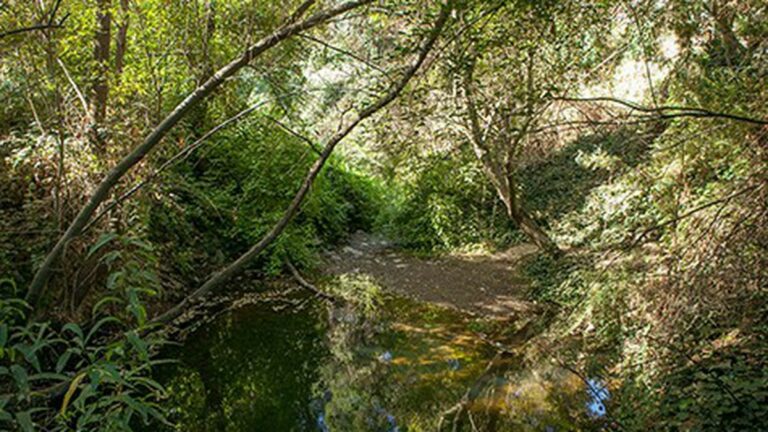
During the past few centuries, the ways in which Oaklanders have interacted with Sausal Creek — which runs through much of the city, starting in the East Bay hills and draining into the San Francisco Bay — have varied as much as the creek itself.

For most of Oakland’s early settlement, the creek was a valued natural landmark. One of the first Europeans to come to the area was Luis Maria Peralta, whose Rancho San Antonio covered much of what is now the East Bay. When Peralta’s sons inherited the land, the creek was among its dividing lines. Sausal Creek also served as a source of food and fertile soil for early settlers. The Fruitvale neighborhood gained its name from the hundreds of acres of cherry trees that nurseryman Henderson Luelling planted on the creek’s banks in 1856. Many of Oakland’s 19th century residents also rode horse-drawn streetcars into the hills for picnics along Sausal Creek.

As Oakland became increasingly urbanized in the 20th century, public opinion about the creek changed. Oaklanders no longer viewed it as picturesque, but instead as a nuisance standing in the way of development. Much of the creek was culverted (rerouted into underground tunnels), especially after the East Bay Municipal Utility District formed in 1923 to provide residents with alternate water sources. Several attempts were made in the 1930s and ’40s to dam the creek and block it off with concrete.

This lack of regard for Sausal Creek continued for decades, until a group of locals came together in 1996 with a vision of restoring the creek. In 2001, the organization, Friends of Sausal Creek (FOSC), incorporated as a nonprofit, working with an annual grant from the Alameda County Flood Control District to promote awareness and encourage conservation and restoration of our local ecology. FOSC accomplishes this with projects to daylight (uncover culverted) creeks, remove invasive plant species, and propagate native plants at its own nursery in Joaquin Miller Park. These projects promote biodiversity in the East Bay hills and expand natural habitats for many species of plants and animals, as well as create beautiful spaces for Oaklanders to enjoy.

Those who work with FOSC have much to say about their love for this organization and the ecosystem it protects, but what most stands out in their comments is their dedication to fostering change within the Oakland community. Helen McKinley, a FOSC board member, said she was drawn to this type of work because she “wants the efforts that I make in the world to be local.” Board member Dee Rosario added, “This is an opportunity to teach kids that [the creek] is a part of their heritage.”

With so many issues in the world, it is often difficult to know how one can actually make a difference. Volunteering with a local nonprofit like FOSC is an excellent way to start. When asked how East Bay residents can help effect change, FOSC restoration manager Michelle Krieg said that the best way is to “get involved in an organization in your neighborhood. Find what you like and go for it.” Not only does FOSC work to protect our environment, but it also promotes a newfound appreciation for a creek that, like Oakland itself, was once thought of by many as dirty and unsafe. Because of this organization, Sausal Creek is once again a treasured local amenity.

Upcoming FOSC events include Creek to Bay Day at Dimond Park on September 19, as well as the organization’s annual native plant sale on October 25. For more information, visit SausalCreek.org.

Correction: The original version of this column misstated the date of the Friends of Sausal Creek’s annual native plant sale. It will be on October 25 — not October 26.

Our Secret To Tell: A Preview of the 2015 Matatu Festival

Throughout East Africa, privately owned minibuses known as “Matatus” trundle along in decorous brilliance, picking up passengers at low fares. Michael Orange first encountered the vehicles in Nairobi, and remembered them when organizing the first Matatu Festival of Stories in 2013, an annual art, film, and music showcase that he now directs. This year, the theme of mobility symbolized by the buses persists in guiding the curation of the festival, which will take place in Oakland from September 23 to September 26. Migration, dispersal, and movement are all matters that resonate historically with the people of the African diaspora, manifested in everything from gentrified cities to the Atlantic Slave abduction. In a recent discussion with the Matatu team, resident Matatu artist Mahader Tesfai pointed out that mobility is not always a choice. “Most Black folks who were in Oakland don’t live in Oakland anymore,” he said. “We have to be mobile by the factors of the systems we live in.”

The opening film of the festival, Necktie Youth, deals with the notion of mobility metaphorically through the lives of privileged middle-class youngsters living in Sandton, Johannesburg, one of the wealthiest suburbs in Africa. Protagonists Jabz and September are unaware that race in the post-apartheid, post-Mandela era of South Africa has any bearing on their relationships with their white peers, one of whom commits suicide at the beginning of the film. “They’re good, they’re so past many of these things,” said Orange of the characters, “yet they’re running into walls because they’re still living with the sediment and the residue and the tradition.”

Despite the nominal shout-out to East African transport, Orange emphasized that Matatu is not an African festival, referencing the fact that Hollywood is not an “Anglo” affair. “Two stories are never included [in Matatu],” said Orange, “the [white] savior complex and brothers running around with guns.” With the tagline “The Spectacular Walk of Ordinary People,” the festival is instead dedicated to portraying the narratives of regular folks. Orange is often dismayed at the manner in which national media sensationalizes the day-to-day lives of people in Oakland. “That’s our secret to tell,” said Orange. “That’s not yours, pay me my royalty.”

Matatu’s carefully sourced tales drift across the Atlantic Ocean to the Netherlands, Israel, Ethiopia, and Senegal, returning to Suriname, California, and early Nineties New York to present a rich palette of footage. In the surrealist movie Crumbs, which will screen on the final day of the festival, a the protagonist travels through a post-apocalyptic Ethiopia while an old spaceship hovers in the sky above him. Tired of scavenging the crumbs of a lost civilization, he traverses stunning landscapes to find out why the looming saucer has turned on for the first time in years.

For Tesfai, ideas of future apocalyptic worlds saliently relate to his day-to-day life in Oakland. “We’re actually living in the future right now,” said Tesfai. “We’re dealing with things like water scarcity or being killed in the streets right now, things that you can take in many ways artistically.” Tesfai also noted the “kind of police state we’re living under in Oakland, with [police] gunshots and sundown curfews for protests,” as our discussion turned toward the Matatu Festival as a site of social and political dialogue.

“I actually feel like I’m doing something with this festival that’s in the spirit of [Bob] Marley,” said Matatu producer Maria Judice. The organizers strategically adopted the accessible backdrop of a festival in order to harness a collective site of conversation, rooted in the art of storytelling. “[Celebrating] Blackness is inherently political,” said Matatu performer Zéna, “being at peace with your identity, seeing the beauty in it … So [Matatu] doesn’t have to be this revolutionary thing.”

In that vein, the film ASNI: Courage, Passion and Glamour in Ethiopia, which screens on the second day of the fest, relays the story of a woman widely considered the “Billie Holiday of Ethiopia.” The movie offers a fierce portrait of songstress Asnaketch Worku, boldly unafraid of her sexuality, living “on the edge of her artistry” against the backdrop of a socially and politically conservative 1960s Ethiopia. By simply being and loving herself, Worku sparked radical community dialogue on the role of women in the performing arts. “I was dangerous,” Worku declares, eyes narrowed, in a trailer clip for ASNI. “Have you heard of Don Juan?”

ASNI, Necktie Youth, and Crumbs are just three of nine films that will be presented at Starline Social Club (645 West Grand Ave., Oakland) and the Flight Deck (1540 Broadway, Oakland) during Matatu 2015. In addition to the film series, several performances and exhibitions of works commissioned by the festival will generate heart-to-hearts across disciplines. The Alonzo King LINES Ballet dancers will perform on the final evening of the festival with an excerpt from their work RASA, set to music by Zakir Hussain. The musical lineup includes Saul Williams, local band Black Spirituals, Soulection producer Eden Hagos, and Zéna, a Kora (West African harp) player trained in the Jaliyaa tradition of musical storytelling. Mark De Clive-Lowe (MdCL), SaRa Creative Partners’ Shafiq Husayn — allegedly the only person that Erykah Badu allows to write lyrics for her — and Dove Society will also perform.

Every night, a local organization will host a happy hour. And to open the festival on September 22, a special dinner featuring a reading by Saul Williams from his newest work US(a), and artist talks with Tesfai and Donte Clark will take place at Miss Ollie’s restaurant. In a conversation with Williams on the relationship between film, music, and art in, he suggested that artistic disciplines generally work in conversation. “There’s always some sort of necessary interplay between creative genres,” said Williams, who works across media himself. “They all kind of illuminate each other.” Through multiple artistic practices, the Matatu Festival promises to speak to the power of narrative in the context of social upheaval. “There’s something about our backbone in this festival that is political,” said Judice. “If we’re not pushing the line, then we’re not doing our jobs. That’s why I’m here.”

‘Sleeping with Other People’: Sudeikis and Brie Are an Ideal Match

0

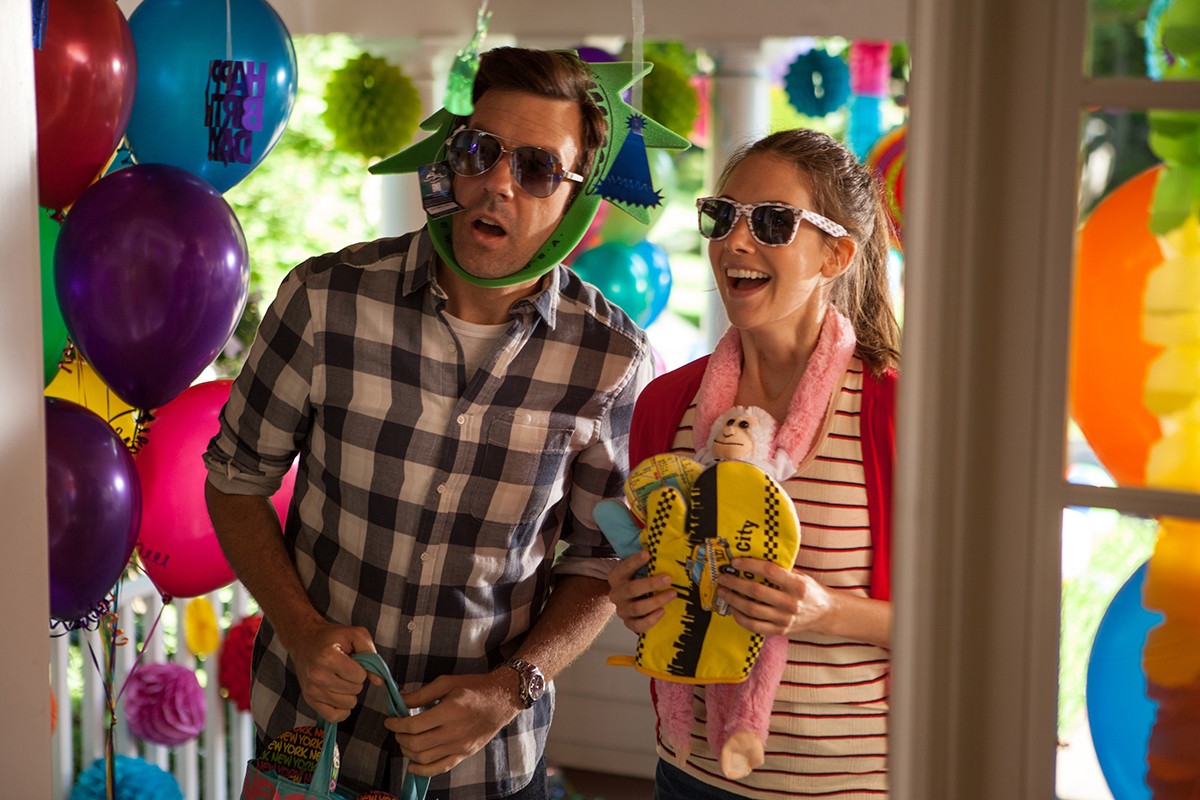
Jason Sudeikis may be the ideal American comic character actor of his generation. In movie after movie — Hall Pass, Horrible Bosses, The Campaign, We’re the Millers — his glib tongue and inherent untrustworthiness have personified an entire demographic of under-achievers. When Sudeikis manufactures a scheme and it flops, millions can relate. And so when, in Leslye Headland’s non-threatening comedy Sleeping with Other People, Sudeikis plays one half of a discombobulated pair of would-be lovers, it’s more than just a couple of late-thirtysomethings imitating college students.

Frustrated virgins Jake (Sudeikis) and Lainey (Alison Brie) meet-cute in a flashbacked Columbia dorm hallway, have sex, then drift apart for years. The fact that they run into each other again should indicate, in a typical rom-com, that they are, uh, destined for each other. Writer-director Headland (About Last Night) certainly gives every indication of believing so, but first they must run through a chatty, utterly 21st-century-urban social obstacle course (extra-salty sex talk) while they make up their minds. The movie accurately captures those moments in which people look down at their phones as they converse in person with someone else. Happily, Headland’s dialogue and situations fit Brie (she was Trudy Campbell in Mad Men) and Sudeikis like favorite socks. Both characters are searching for Mr./Ms. Right anyway, wrestling with the concept of fidelity, delaying the inevitable, so everyone might as well relax and play the game. Sudeikis scores easily.

Even when it’s dumb, Sleeping with Other People is smarter than the competition. Romantic comedy is a genre that reflects the interior tenor of the times, the things people think and talk about every day, person-to-person relations. Clinically diagnosed love addicts Jake and Lainey try everything on the market — group therapy, a silly “safe word,” Lainey’s slimy ob/gyn ex (Adam Scott), a masturbation lesson, sex with the company CEO (Amanda Peet), etc. — culminating in their hosting a kids’ party while tripping on Ecstasy. They learn absolutely nothing from all that. And yet Jake and Lainey understand each other, and we understand them. Ideal match.

Reviewed: Shannon & the Clams, Rat Columns, Astronauts, Etc.

0
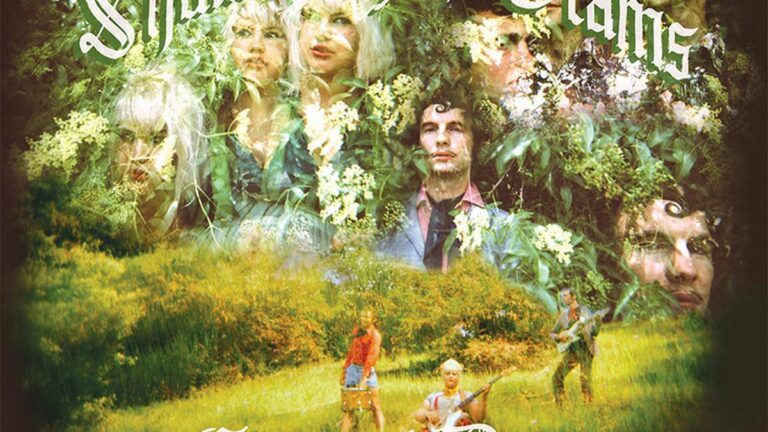
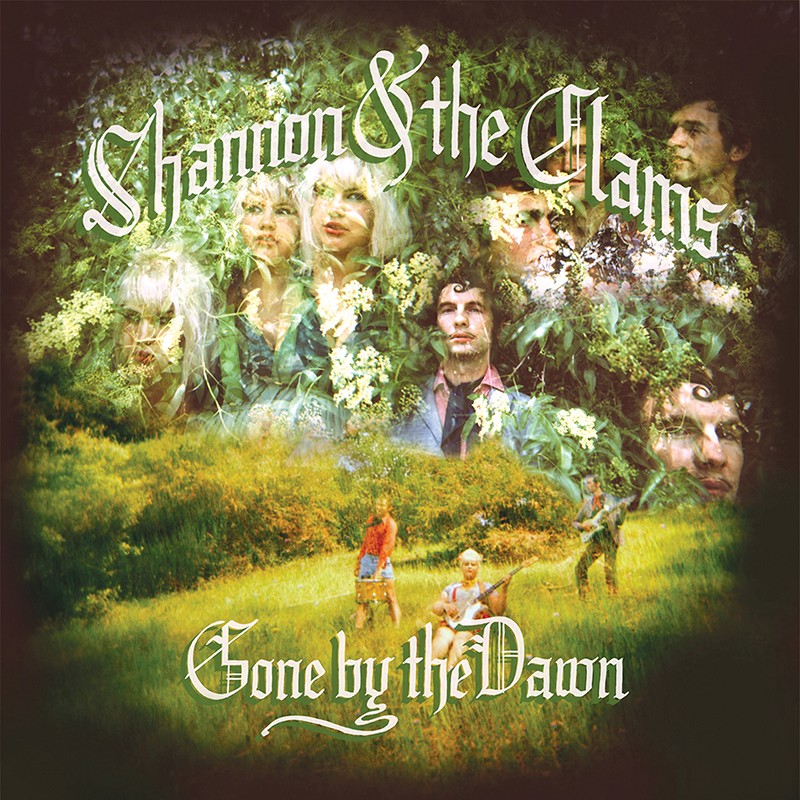
Shannon & the Clams Gone by the Dawn

The charge goes that rock ‘n’ roll is depleted of ideas, its proponents doomed to reclaim old moves instead of confronting the future with something new, like, well, electronic music. There’s little to counter the notion that the genre is very nostalgic, but so long as memories of the past and attempts to mimic it remain imperfect, there’s reason to keep listening. Pastiche is lame, a waste of energy, but often the bands accused of nostalgia actually misrepresent their source material, mangling it in curious and novel ways as they resurrect it. That’s the case with the best songs by Oakland’s Shannon & the Clams, a group that’s clearly infatuated with dated doo-wop, surf, and girl group sounds, but one that’s luckily too eccentric for mere emulation.

Highlights from the trio’s fourth album, Gone by the Dawn, prove it. “Corvette” is a warped glam song, with guitar notes that sound like rusty teardrops, and the vocal interplay between Cody Blanchard and Shannon Shaw, an arresting display of stubborn contrast. “Point of Being Right” features a familiar throwback shuffle and vocal phrasing out of a Sixties soul romp, only it’s a little too fast and the fuzz guitar squelches a little too rudely for a retro exercise. As on much of Gone by the Dawn, Shaw’s husky lows abut Blanchard’s siren highs, harmonizing in spite of the vast space in between.

Even Gone by the Dawn’s more purely vintage-sounding numbers show merit. Shaw’s voice is so traditionally robust and engaging that it tends to smother inhibitions, trivializing worries about how closely the band adheres to distant influences or not. And beyond charges of nostalgia, those who dismiss the Clams as camp are snobs. The song “The Bog” sounds pilfered from a budget horror score, sure, but while the frenetic high-hat beat, snake-charmer lead, and anecdotal lyrics scan as goofy, they’re also rife with creative invention and distinct playing. Indeed, when Shannon & the Clams reaches back toward voices in the past, it finds its own instead. (Hardly Art)

Rat Columns Do You Remember Real Pain / Fooling Around

Since leaving the Bay Area for his native Australia — and disbanding the much-missed local post-punk group Rank/Xerox in the process — David West’s catalogue under the Rat Columns moniker has swelled to include his very finest releases to date. Where earlier albums Sceptre Hole and Leaf found West’s breathy hooks mingling with saturated, shimmery gauze, his two more recent EPs dial back the shoegaze influence. That allows his chief assets — vocals and chord progressions — to assume the foreground. There, they beam.

The seven-minute title track of Fooling Around is an expansive, repetitive classicist rock song. There are few chords, a cooing vocal turnaround, and some bubbly melodic garnish. Eventually, the ginger riff gets doubled and emboldened by keys, then dappled with searching little guitar leads. It’s a great song, propelled by the sort of quiet confidence that makes the title track on Do You Remember Real Pain even better.

Released by the reputable European label Adagio, Do You Remember Real Pain rewards front-to-back listening — but “Do You Remember Real Pain” demands repeat visits. For an artist who often muddles his voice — or not — the opening is bold. It’s just palm-muted guitar and West’s unfettered voice uttering, Do you remember real pain/Do you remember yellow T-shirt stains/And how it felt when you walked empty hallways/If you remembered, if you remembered, you wouldn’t act this way. The song swells from there — with West alternately leaving the impression of an intimate whisper or exasperated, pitchy outburst — but the titular refrain, repeated with more and more perceptible effort, crystallizes and owns the endearing sense of vulnerability that earlier material only suggested as a latent trait. (Adagio / Blackest Ever Black)

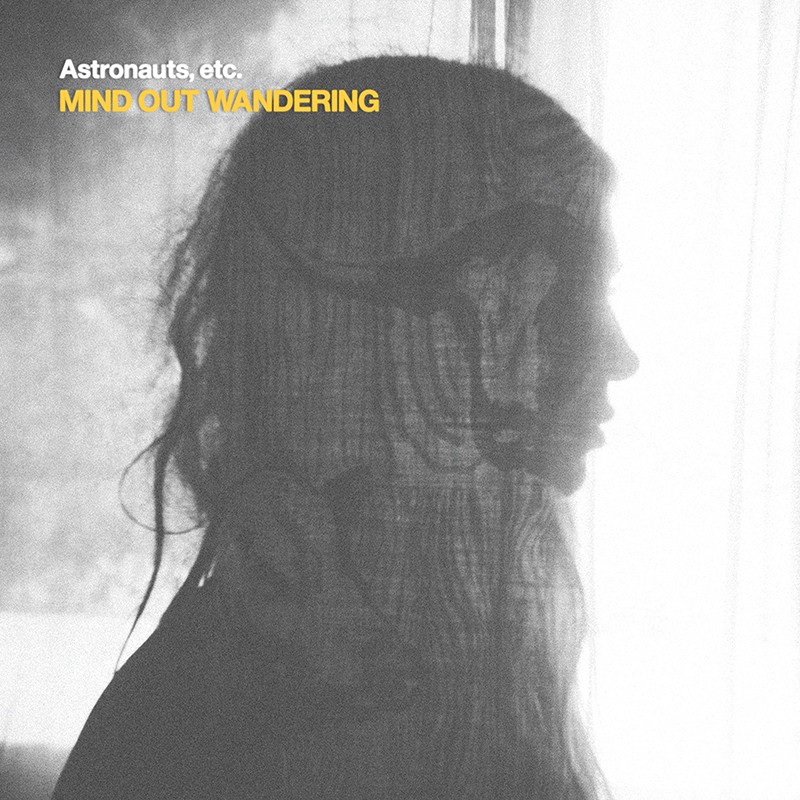
Astronauts, Etc. Mind Out Wandering

Although he’s a formally trained pianist, bandleader, and songwriter, Anthony Ferraro’s arthritis has diverted him from rigorous classical music to bedroom pop, which isn’t to say that Mind Out Wandering, his first album as Astronauts, Etc., doesn’t evidence serious chops. The East Bay artist, who’s busy touring as a member of Chaz Bundick’s Toro Y Moi seemingly all year this year, tapped ace players, such as Bells Atlas’ Derek Barber, for the record — players savvy enough to hold back and let Ferraro’s material speak in soft, understated tones.

Mind Out Wandering by Astronauts, etc.

Opener “If I Run” is so strong that sequencing it first threatens to undermine the album’s balance. There’s a supple crosshatch of melody that intersects piano, voice, and acoustic guitar with such attention to attack and technique that it evokes the old benchmarks of rock production by bands such as Steely Dan. Toro Y Moi bore similar influences earlier this year on What For? Mind Out Wandering confirms how closely aligned the artists’ interests in production detail is. But where Bundick opted for a heavily syncopated ensemble feel, Ferraro and his band prize restraint, privileging twinkling leads and spectral piano as textural elements beneath Ferraro’s precise falsetto.

In the past, some critics eyed Toro Y Moi suspiciously on account of the music’s palatability, the ease with which it accommodated the marketing goals of a hip clothing brand, for instance. That’s more of a value judgment than an aesthetic one, but listeners might similarly find Astronauts, Etc. hewing so close to safety that Mind Out Wandering ends up being easy to ignore. Many of the songs proceed at the same tempo. The drumbeats are largely interchangeable. The gloves stay on. It’s anti-swagger. For an album called Mind Out Wandering by an artist whose handle indicates an interest in adventure, it’s pretty stationary. (Hit City USA)


Everything You Need to Know About This Weekend’s Eat Real Festival

When Oakland's Eat Real Festival made its debut in 2009, gourmet street food was still somewhat of a novelty in the Bay Area, and the national media was still years away from deigning to recognize Oakland as a world-class food destination. Now in its seventh year, Eat Real simply feels like an inevitability. The street food festival will take...

Free Will Astrology

Aries (March 21–April 19): I won't go so far as to say that you are surrounded by unhinged maniacs whose incoherence is matched only by their self-delusion. That would probably be too extreme. But I do suspect that at least some of the characters in the game you're playing are not operating at their full potential. For now, it's...

Corrections for the Week of September 16, 2015

Our September 9 music story, "The Came from Down the Street," misidentified Del's cousin as Eazy-E. His cousin is Ice Cube.

Letters for the Week of September 16, 2015

"Building Downtown Oakland for Cars," News, 9/2 The Car Is Still King The critical question for the city is when do we know when we have reached the tipping point and how is it best measured? Clearly in the short term, many buyers still want the option of owning and operating a car. When you have a car, you need someplace...

‘The New Girlfriend’: Love Hurts

A woman discovers that the husband of her recently deceased best girlfriend is a cross-dresser, and has been for years. Sounds like a reasonable enough comic premise for Hollywood. We could easily envision ad tag lines: "Arguments ensue. Who inherits the girlfriend's outfits?" There'd be a scenario in which the transvestite widower gets into funny situations in bars, the...

Sister Crayon: Beats for Bedroom Poets

"Whenever I'm here, I'm tempted to buy six, seven, or ten books," said Terra Lopez, browsing the shelves of E.M. Wolfman Bookstore in downtown Oakland. "But spending money on books is something you can never get mad at yourself about." Lopez held up a copy of The Beautifully Worthless by local, queer author Ali Liebegott. It's a collection of poems...

Sausal Creek: An Oakland Watershed Reborn

During the past few centuries, the ways in which Oaklanders have interacted with Sausal Creek — which runs through much of the city, starting in the East Bay hills and draining into the San Francisco Bay — have varied as much as the creek itself. For most of Oakland's early settlement, the creek was a valued natural landmark. One of...

Our Secret To Tell: A Preview of the 2015 Matatu Festival

Throughout East Africa, privately owned minibuses known as "Matatus" trundle along in decorous brilliance, picking up passengers at low fares. Michael Orange first encountered the vehicles in Nairobi, and remembered them when organizing the first Matatu Festival of Stories in 2013, an annual art, film, and music showcase that he now directs. This year, the theme of mobility symbolized...

‘Sleeping with Other People’: Sudeikis and Brie Are an Ideal Match

Jason Sudeikis may be the ideal American comic character actor of his generation. In movie after movie — Hall Pass, Horrible Bosses, The Campaign, We're the Millers — his glib tongue and inherent untrustworthiness have personified an entire demographic of under-achievers. When Sudeikis manufactures a scheme and it flops, millions can relate. And so when, in Leslye Headland's non-threatening...

Reviewed: Shannon & the Clams, Rat Columns, Astronauts, Etc.

Shannon & the Clams Gone by the Dawn The charge goes that rock 'n' roll is depleted of ideas, its proponents doomed to reclaim old moves instead of confronting the future with something new, like, well, electronic music. There's little to counter the notion that the genre is very nostalgic, but so long as memories...
19,045FansLike
17,709FollowersFollow
61,790FollowersFollow