Getting Stuffed on Arepas at Miss Arepita and Venezuelan Cafe

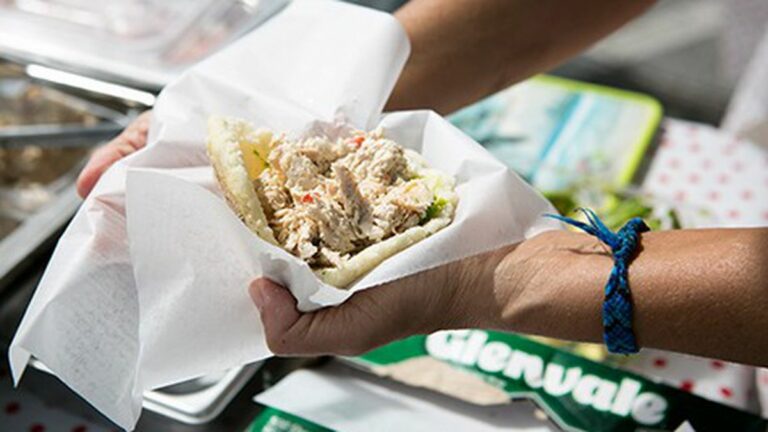
The joy of eating a Venezuelan arepa, a kind of griddled corn cake, is one of great abundance: The skilled arepa maker takes a disc of corn-flour dough and griddles it until it’s fluffy and crisp-edged, then slices it open, like a toasted English muffin, and fills it with such an impressive quantity of meat, beans, or cheese — or some combination of all three — that the whole thing threatens to come apart at the seams. The only problem is that arepas are still a relative rarity in the East Bay.

Because of the growing popularity of gluten-free diets, a handful of restaurants have started serving arepas — perhaps most notably North Oakland’s Victory Burger, which offers an “arepa bun” option for its burgers. But until recently, we haven’t had a true arepa specialist, let alone a stand-alone Venezuelan eatery. Now, thanks to two plucky entrepreneurial efforts — an Oakland-based mobile vendor and a Berkeley popup — that’s finally starting to change.

Miss Arepita is the East Bay’s first dedicated arepa purveyor, a mobile arepa stand whose proprietor, Carolina Abolio, started her business a year ago with the assistance of the kitchen incubator program at Oakland-based Phat Beets, a food justice organization. For now, you can find Miss Arepita on Saturdays, 10 a.m.–2 p.m., at the Phat Beets farmers’ market in North Oakland (at 970 Grace Ave.), and on Sundays, noon–3 p.m., at the Bites at the Lake food truck pod, near Lake Merritt, in the parking lot of the Lakeview branch of the Oakland Public Library (550 El Embarcadero).

The outdoor stand at Bites at the Lake is a two-woman operation: A friend takes orders while Abolio keeps a watchful eye on the arepas cooking on the flat-top griddle, and fills each sandwich to order. It’s a relatively low-tech setup, and the menu is short and to the point: five or six varieties of stuffed arepas, plus papelón con limón, a deliciously smoky-sweet cold beverage that’s made with pressed raw sugar cane and lime juice.

For her arepas, Abolio makes a dough using Harina P.A.N., a popular brand of precooked corn flour, to which she adds salt and water, using traditional techniques that she learned from her older sister and her cousin in Venezuela. “In Venezuela, you learn two things when you’re growing up: playing cuatro and making arepas,” she explained.

Her arepas were puffy and almost snowy-white, with just a hint of color and a thin film of crispiness all around their surface. The downside was that the wetness of the fillings made these prone to sogginess, which meant the arepa sandwiches started to fall apart after a while.

What fillings, though! The most classic, the pabellón, was a hearty combination of slow-braised beef, tomato sauce (a nod to Abolio’s half-Italian heritage), black beans, nutty queso fresco, and thin slices of plantain that added just a hint of sweetness. But my favorite was the reina pepiada, a deceptively simple chicken salad — just shredded roast chicken (both white and dark meat), mayonnaise, and just a hint of finely diced onion and red bell pepper, with two avocado slices on the side. Everything was perfectly balanced — savory, moist, and just rich enough.  

Most of Abolio’s recipes are traditional, but she has incorporated a few original flourishes. Her “veggie calipso” arepa, stuffed with a sauté of seasonal vegetables (sourced from Phat Beets and from the Castlemont High School garden program), is unlike anything you’d find in Venezuela; instead, she credits cooking methods she learned from Asian chefs. And her red picante sauce — which had an appealing, layered heat — borrows from Mexican cuisine’s knack with dried chilies. On the other hand, Abolio said her green guasacaca sauce, a tangy cilantro-based condiment similar to a chimichurri, is the same recipe employed by countless old ladies in the Venezuelan Andes. The latter, in particular, upped the deliciousness quotient of each arepa by a factor of two or three.

For those who want to explore the world of Venezuelan cuisine beyond just arepas, Venezuelan Cafe is a popup hosted by the West Berkeley Vietnamese fusion restaurant Cafe V — “V” for “Vietnam” and “Venezuela,” though that was more a matter of alphabetical serendipity than premeditated wordplay.

As Cafe V owner Hamei Hamedi tells it, the story of the popup’s very existence is a kind of classic American Dream narrative: Juan Polanco, a dishwasher at the restaurant, had been selling his wife Vanesa’s food on the side to make extra money to help support his family in Venezuela. When he asked his boss about additional arepa-selling opportunities, Hamedi pitched him on the idea of doing a popup three days a week. Now, some three months later, the whole enterprise is such a success that Hamedi has decided to turn the entire menu over to the Polancos, making Cafe V the East Bay’s first full-fledged Venezuelan restaurant. The changeover will likely take place sometime next month.

Although Vanesa Polanco uses the same Harina P.A.N. base as Miss Arepita and any number of Venezuelan home cooks, the arepas at Venezuelan Cafe have their own distinctive character. At Miss Arepita, the arepas were thicker and fluffier, and tasted somewhat more intensely of toasted corn. But I found myself favoring Venezuelan Cafe’s versions, because they were crispier and more well blistered, thanks to a long sear on the griddle, which also helped yield a more sog-resistant sandwich vessel.

Venezuelan Cafe also offers — by virtue of the fact that it has a fully equipped restaurant kitchen at its disposal — a lot more variety: twelve options for the arepas alone, with a full range of traditional fillings, including chicken salad and pabellón, and a handful of original creations. An off-menu “pulled pork” special featured big chunks of roasted pork and a mountain of shredded cheese, about half of which had melted and fused to the surface of the meat, cheeseburger-like. The pork itself was a bit overcooked, but a squirt of potent housemade garlic mayonnaise compensated for any dryness, and the whole sandwich was just so gloriously overstuffed, it was hard to complain.  

Because the bulk of the popup’s hours coincide with weekend brunch, I gravitated toward the more breakfast-y options on the menu, settling on something called the AreSandwich — a deep-fried arepa stuffed with a fried egg, ham, tomato, and another avalanche of shredded cheese. Although I wished the egg’s yolk had been runny, this was an otherwise unimpeachable breakfast sandwich. I loved the contrast of the hot, extra-crispy arepa with the coolness of the sliced ham and cheese, and the no-fuss proletarianism of the condiments — ketchup, mayo, and mustard.

You would be wise to save room for some of Venezuelan Cafe’s non-arepa offerings. The tequeños — stretchy cheese sticks that were wrapped in a pastry crust and deep-fried — invite comparison to chain-restaurant mozzarella sticks, but only in the sense that they’re so much better; the addictive saltiness of the melted Cotija cheese cut by a simple ketchup-mayonnaise dip. Kids, in particular, go crazy for these. Even sliced plantains — so often a throwaway side — were fried with an uncommonly skillful hand.

The most pleasant surprise were the empanadas, which were prepared in the Venezuelan style, with a maize-based dough similar to what’s used for the arepas. After a dip in the deep-fryer, they had a fluffiness and a toasted-corn fragrance that you don’t get with a more typical wheat-flour pastry shell. The shredded beef version was particularly juicy and flavorful. Just make sure you eat the empanadas right away, before the fried corn dough gets soggy.

For now, a sign in the window is the only indication that Cafe V serves Venezuelan food on weekend mornings and Monday evenings. It’s a trip to chow down on arepas amid Cafe V’s hip-Asian decor — the decorative red firecrackers, the paw-waving ceramic cat. But in just a few weeks’ time, the restaurant will receive a full Venezuelan makeover, and the Polancos, in their newly expanded roles, are busy plotting new dishes and training the rest of Cafe V’s kitchen staff. Given how tasty everything at the popup version has been, there’s good reason to be excited.

Letters for the Week of September 16

“Turning Housing into Hotels,” Feature, 9/16

Airbnb Encourages Bad Behavior

What is truly creepy is how this is all done in the name of “improving the local economy,” i.e. the ads that tout how much local businesses thrive on all the Airbnb clientele, and how easy it is to not follow even the laws that are in place. For example, in Los Angeles, I stayed in an Airbnb, which was being rented out by not the owner but the renter who lived in another time zone and had been making money like a bandit doing that for many moons. I sincerely doubt the owner was even aware that his or her unit was on Airbnb.

Jeanette Sarmiento, Lafayette

Sharing Economy Means Breaking the Law

Definition and particularly how one defines oneself can influence the direction and context of a conversation. This so-called “sharing economy” seems to always be defined by those who are new service providers and quickly getting rich doing the sharing. The problem is that whether it is Airbnb or Uber, these folks aren’t sharing, they are simply not following any of the rules applicable to those already providing the service.

No matter how cool these hipsters want to spin their phone-linked activities, at the end of the day, they are breaking the law. Airbnb is unregulated transient habitation. Uber is a car service in which the owners use a website to basically set up ride connections and transfer all other responsibilities of a car service to the drivers. Uber wants the drivers to maintain the vehicles, pay for their own insurance, call themselves contractors, and work whenever Uber wants. The company doesn’t even do sufficient background checks to provide the public with a basic comfort that the driver is not a serial killer.

To define that as the new sharing economy, where these hipsters skim the profits off the top and move all of the responsibilities of an employer to the employee, is disingenuous at best.

Whether it is in cyber space or on the ground, the legal system is always behind in regulating these new business models. In a region such as the Bay Area, where permanent housing for people is at a premium, we cannot afford to let these scofflaws further deplete the availability of housing for residents. Cities need to get their acts together to not only regulate but to protect the housing stock and neighborhoods.

Further, let’s stop it with the hipster pinhead word spinning and call it what it is. If it looks like a duck, waddles and quacks, it’s a duck. Just because it has one green and one red tennis shoe and a skateboard does not make it a hamster.

Gary Patton, Hayward

“Opposing Junipero Serra,” News, 9/16

We Apologize

As a person whose De Castro family members were part of the Serra, De Anza, and Portola expeditions, I have great sympathy and empathy for both sides of this issue. There certainly were overzealous soldiers then just as we have bad cops now. I would presume that the indigenous populations also had their good and bad people. Whether Junipero Serra actively participated in mistreatment, beatings, etc. is most likely not known except from writings of the people of that time.

I certainly would humbly offer words of apology to any indigenous family who truly believed that anyone in our family participated in any of the heinous acts. I’m not sure, beyond that, what anyone can reasonably do at this time. I do believe, however, that Serra was trying to do the best he could, considering his most difficult mission and his failing health.

Cris Castro, Auburn

“What About Motorcycles and Scooters,” Letters, 9/16

Oakland Has the Worst Two-Wheel Parking, By Far

I was happy to see a letter about Oakland’s lack of motorcycle/scooter parking. I commute to this fair city every work day on a motorcycle. Compared to other neighboring cities such as Berkeley or San Francisco, Oakland has the worst two-wheel parking, by far. Instead of encouraging these compact and fuel-efficient vehicles, Oakland makes it impossible to park them legally.

Urban motorcycle parking involves a gray area of law and enforcement. Under most circumstances, one does not get a ticket for simply violating a time restriction when parked between cars if the adjacent meters are paid. This could charitably be considered a progressive policy of encouraging infill parking. But with the rampant proliferation of disabled placards, almost no downtown meters are paid for, so tickets go to the only target — motorcycles. And I’ve seen scores of curbs that were too small for car parking, previously full of bikes, now painted red.

It’s time for Oakland to step up and help, not persecute, motorcycles and scooters.

Lincoln Cushing, Berkeley

“A Sea Change in Emeryville,” News, 9/9

Stop Blocking the Views!

First thing Emeryville should do is raze the hideous fifty-plus story condo unit and the view-blocking eyesores opposite that one must see driving toward the Bay Bridge. The utter lack of respect for height limits in harmony with the hills and bay are a testimony to the stupidity of its former leaders and the greed of developers.

Bee Montigue, Richmond

Oakland’s Backward Thinking,” Seven Days, 9/9

What about Rail?

Does anyone in the woebegone Oakland political community ever suggest fixed rail lines to provide alternative transportation to residents and visitors? It’s not just San Francisco and Manhattan where one can find such civic development. Long Beach did the same thing years ago. And every town of any size has one in Germany.

It needn’t be a citywide grid, just a few lines, say one from Jack London Square, up Broadway to the Temescal area, and another from downtown to Lakeshore, circling Lake Merritt on its return.

Such lines are no panacea for the mess we’ve gotten ourselves into — with whole communities built on the necessity for private transportation to supply basic needs — but it might be sufficient to dramatically reduce daily traffic and encourage residents to shop locally, without the added expense and annoyance of paying to park in town versus free parking at box stores and shopping centers.

Stephen Shuttleworth, Oakland

“A ‘People’s Budget,'” News, 9/9

This Is a Bad Idea

The problem here is, with small assemblies, what would stop well-organized groups from taking over the budget process? What about the group that took over city council a few months ago? Or worse, the “protesters” who start fires and vandalize Oakland neighborhoods? They don’t represent what Oakland wants — not even close. But they’re willing to simply out-protest, shout down, and outlast regular citizens. Will the assemblies vote? Who gets to vote? How will they stop hard-core activists from influencing every outcome? The city council is far from perfect, but at least they’re elected. I fear this proposal could put the budget in the hands of some real goons.

Joe Mullin, Oakland

“Central Services,” Culture Spy, 9/9

Law Is Old News

Isn’t next year the twenty-year anniversary of John Law re-living events from the past? 1996 was the last year he was actively involved in something new (HellCo at Burning Man). Since then he has been about re-archiving (Suicide Club, Cacophony Society, BM), re-telling (book, bus trip), and re-painting (Doggie Diner heads). He’s been good at appearing at events where the next generation of artists and pranksters make their mark. Nothing wrong with getting another twenty years out of the past — and getting laid.

Ianna Ashton, Emeryville

“Building Downtown Oakland for Cars,” News, 9/2

Oakland’s Vision Doesn’t Match Reality

Interesting, because the day after this article ran, Oakland hosted outside consultants from Miami who unveiled their Downtown Specific Plan, which specifically called for less vehicle traffic downtown. So there appears to be a major conflict between vision and reality here.

Eric Arnold, Oakland

Miscellaneous Letter

Feeling the Bern

My name is Vanessa Clark, and I am a 29-year-old US Navy veteran. Currently, I am a live-in home healthcare provider on the weekends, and during the week I’m a full time student at Diablo Valley College in Pleasant Hill, working on a degree in philosophy. With all that said, I am also a huge supporter of Bernie Sanders for president in 2016.

Working to inform the public about Bernie Sanders and what he’s about, and what his plans are for our country, is my number one cause. I’ve never been this passionate or excited about a presidential candidate before. I believe he is truly a man of the people, and is the man we need to achieve real progress in our country.

I’ve spent a lot of time not being engaged in politics — not because I didn’t care, but because it felt pointless. Even without knowing much about what was, or has been going on with our politics and government, it seems impossible to not at least know or have a good sense of the fact that our systems are corrupt — corrupt to the point that it seemed hopeless that ordinary people in our country could stand a chance to even try to change things.

I was stationed overseas during the last presidential election, and I know that President Obama got many excited and hopeful, running under the campaign slogan, “Change we need.” It seems many aren’t so convinced that he really delivered on all his promises. I’m not saying he has been a bad president, or that he hasn’t followed through on some of his promises, but has he done enough? We can blame the GOP control of Congress for blocking him at many turns, but is that really all there is to it? He made all these promises, but Congress held him back?

After getting out of the military and moving back to California, I started school at Diablo Valley College and was fortunate to have a couple of amazing social science teachers. They introduced me to critical thinking in politics and helped me open my eyes to the specifics of the corruption in our politics and government, along with the corruption of our economic system, and taught me how all of these things tie in together.

When I first heard Bernie Sanders speak, after having had these classes to look back on, I was stunned. All the things my teachers so passionately addressed, about what was really wrong with our country, Bernie Sanders was addressing.

This is what makes Bernie Sanders different. He’s not only making promises, he’s shining a light on the root of the corruption in our country. He’s using his platform to wake up our country.

What is the root of our corruption? Corporate greed. That may be oversimplifying, but in truth, that is the core problem: corporations, CEOs, Big Banks, being more concerned with profit margins and what’s in their personal reserves, over the good of the public. The One Percent, controlling everything.

It starts with our economy. We had a good idea with the free market. It was an idea designed to give everyone an equal chance to compete. It would be fair because it would be everyone versus everyone. It would be each person having a chance to succeed because of their own strengths and perseverance. If you worked hard, you had a chance.

The problem is, the free market is broken. Instead of a free market, where everyone has an equal chance to compete, we have economic tyranny.

According to an essay my class had to read called “When I Paint My Masterpiece” by William Rivers Pitt, there are two important US Supreme Court cases that got us to where we are today.

The first one was in 1886: Santa Clara County v. Southern Pacific Railroad Company. Thanks to that case, corporations were granted, by our Supreme Court, Fourteenth Amendment rights. In doing so, corporations were given the same status as “natural-born American humans.” Sounds crazy, but it’s true. Corporations gained legal “personhood.”

The second case was in 1976: Buckley v. Valeo, which granted corporations First Amendment rights. As Americans, if we know anything about the Constitution at all, we at least know the First Amendment. It is our right to free speech.

Corporations were granted, by our Supreme Court, legal personhood and free speech.

Getting back to the free market, this is how our free market broke. Instead of each person having an equal, fair chance to compete in the market, the market became a place where people — individuals — are left to fight corporations. Imagine a WWE royal rumble, type of deal. You have all these competitors in the ring. It’s supposed to be a free-for-all fight — everyone versus everyone — but then a group of guys band together and form a team within the ring, and declare they are all “one person.” Suddenly there is this pack. This team. This group of people claiming to count as one person, fighting everyone else. This group obviously ends up being more dominant and more powerful. Now imagine instead, the ring is our free market, and the group of guys who banded together, are the corporations. The bigger the corporations get, the more powerful they become. It became corporations versus individuals. Corporations versus people.

Now imagine that these corporations, began using their economic dominance — wealth — to affect politics and other important, influencing aspects of our culture and society. Think about it. Who are the big corporations in our country? What do they control?

Getting back to presidential election: It used to be that there was a limit to how much a presidential candidate could receive in campaign contributions, but thanks to a case called Citizens United, corporations have been able to pump unlimited amount of funds into a presidential campaign in the form of what is called a Super PAC. Super PACs were made possible thanks to corporations being granted legal personhood, and being given First Amendment rights. Super PACs, thanks to Citizens United, were deemed, by our Supreme Court, corporations exercising their First Amendment rights.

This is part of how corporations influence our politics. Think about it. Are corporations just giving these candidates money out of kindness? Of course not. You give a presidential candidate money to win an election, you expect certain things in return. Of course the things that corporations expect in return are in their corporate interest, not in the interest of the rest of us. The 99 Percent of us are being left in the dark.

Bernie Sanders is not only running for president, he is taking a stand. He has refused to have a Super PAC. He refuses to take campaign money from these corporations, and he has active legislation, as a US Senator for Vermont, to overturn Citizens United. This isn’t just a move to win an election either. YouTube has many videos of Bernie Sanders uploaded, going back to his earliest years in office, with him speaking about Citizens United and the corruption of the One Percent. Go back to the Eighties and early Nineties, and you will see for yourself. He has been trying to get this information out for a long time.

You can say this for Sanders about his stances on any of the issues: His consistency is one of the things he is best celebrated for. We know where he stands, and we believe he means what he says, because he’s been saying the same things for years. These are things he’s been passionately talking about in the Senate, on television, in his book. He is a man who truly cares to do something about this corruption.

People will argue that Donald Trump is a Republican equivalent to Bernie Sanders, but that is a false comparison.

Trump is not telling the truth. He’s speaking his mind. People just don’t seem to get the difference. Being blunt and speaking the truth of what is in your mind is not the same as telling the truth. Do some fact-checking on the claims or statements Trump has been making, and you can quickly find that he is full of it.

Secondly, people like to point out that Trump, like Sanders, also refuses to run his campaign with a Super PAC.

What’s the difference?

Trump is a billionaire and doesn’t need a Super PAC. Trump refuses a Super PAC because he doesn’t need one. He has his own money. Sanders, on the other hand, has a reported net worth of less than $400,000. His refusal is based on his own sense of integrity — something that can’t be bought.

It is well known that Hillary Clinton has a Super PAC. Her top contributors are big banks, which are part of the One Percent.

Clinton claims that, like Sanders, she is against Citizens United. However, how can she truly take a stand against it while having her own Super PAC?

The argument I’ve heard from Hillary supporters is that she’s just playing the game. For now, this is just how the presidential elections work. You can’t win without a Super PAC. She has no choice. She’s just being smart. She’s doing what she needs to do to win, so she can get in the president seat and change this. So, she’s going to take all this money from these greedy, corporate billionaires, and then turn around, once elected, and tell them, “Sorry, but bye?”

Who is she fooling, the One Percent or the rest of us?

Let’s not forget to mention that, Hillary Clinton is a millionaire who is also married to a former president of the United States (in case you forgot), who has a nice lifetime pension from his time as president.

Let’s also mention that the some of the same major corporations backing Clinton are the same who backed Obama, and the same who back members of the Republican Party.

Is this really even about Democrat versus Republican? No. It’s not. Both sides are being funded by the same greedy, billionaire corporations — the One Percent.

Sanders is running as a candidate for the Democratic party, but he is clearly not your typical candidate.

When we vote Democrat, we don’t say we are voting for the right candidate. We say “the better candidate,” or the popular phrase, “the lesser of two evils.” The lesser of two evils is still not a good thing.

Sanders is not the better candidate or the lesser of two evils. He’s a genuine, honest man, fighting for the rest of us — the 99 Percent. He’s the only choice if we really want to change the status quo, if we want any fighting chance of bridging the wealth gap between the One Percent and the rest of us.

It’s not about creating some hippy utopia, either. He’s not saying we should all make the same thing. It’s about putting proper controls to keep the One Percent from continuing to corrupt our systems, it’s about making them pay their fair share in taxes, to redistribute some wealth, and it’s about giving the working people in our country, the poorer people, and the middle class in our country, a real fighting chance.

He has said on multiple occasions that he cannot make these changes alone. He will need our help — the help of the people to stand with him and help fight to make these changes. This is the political revolution he is talking about.

It’s easy to feel hopeless when you’re barely scraping by. Bernie Sanders inspired a new sense of hope inside of me. I know he can’t fix everything, but having him lead our country is a hell of a start.

While the One Percent has the power, we the people are not powerless. We have just been failing to wield our power. We fail to wield our power by not paying attention, and by not participating. The way we participate is by influencing one another, instead of being influenced, and by standing together to vote. Voting is our power, and it does matter. We need to pay attention so we are well informed, and we need to inform one another, and vote.

If we stand together, we have all the power to change things for the better. I am an idealist, and an optimist, and I believe with all my heart that we can do this. I believe progress is coming — slower than I’d like, but it is coming. The only way to get there, though, is together.

Thanks to Sanders inspiring a sense of hope in me again, I’m paying attention like I never have before.

Vanessa J. Clark, Pacheco

Right On!: ‘The Black Panthers: Vanguard of the Revolution’

0

Difficult as it might be to believe in today’s atmosphere of “wars without end” and unprecedented police/security/military intrusion into the social mechanism, there was once a time in which large numbers of ordinary people talked openly of revolution. Stanley Nelson’s bracing new documentary The Black Panthers: Vanguard of the Revolution takes us back to that time.

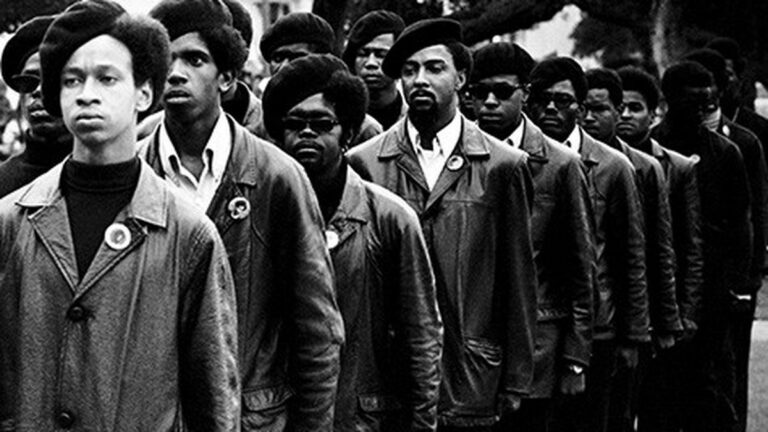
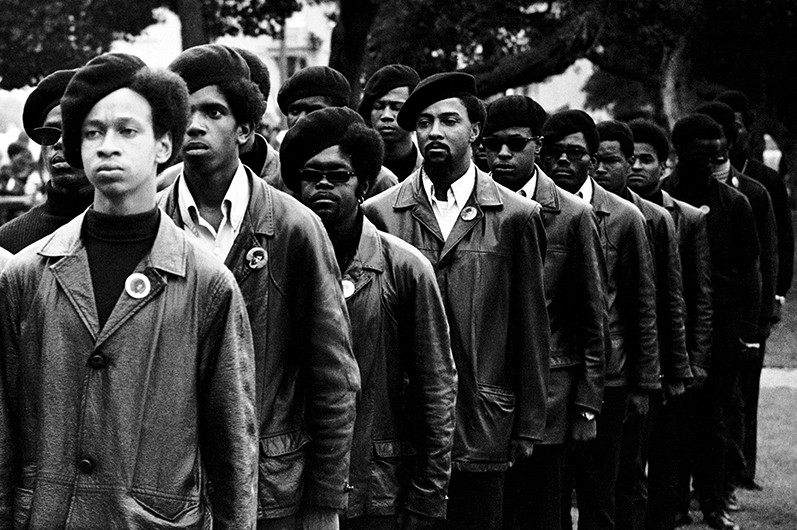
It started in Oakland. Outfitted with a bonanza of thrillingly candid broadcast news footage and still photos, the doc shows how Huey Newton, Bobby Seale, Eldridge Cleaver, and other like-minded young East Bay African Americans banded together, circa 1966, to protect themselves from police brutality. They called themselves the Black Panther Party. In the days before ubiquitous metal detectors and SWAT teams, Newton apparently studied the laws and found that citizens had the right to carry unconcealed firearms. The sight of leather-jacketed, beret-wearing Black men walking the streets with shotguns in their hands shocked America from coast to coast, provoking fear among nervous police and politicians, or in the Black community, awakened resistance to injustice.

A multitude of more than fifty talking heads explains that unlike the Southern civil rights movement and its voting campaigns, the Panthers’ emphasis on such survival issues as housing, education, and nutrition was something Northern Black people could relate to. It caught on all over the United States. Anyone could join right off the street. And the Panthers displayed a remarkably sophisticated leftist political approach, with anti-imperialism at the forefront during the Vietnam War. Combined with the popular free breakfast program, free health clinics, and food giveaways in poor neighborhoods, the BPP demonstrated a powerful sense of community.

They also galvanized a dedicated group of enemies. J. Edgar Hoover’s FBI, rightwing pols from Nixon to Reagan (the latter was California’s governor during the Panthers’ heyday), local police departments across the nation, alarmist DAs, hostile judges, COINTELPRO infiltrators, and snitches — but notably few mainstream news orgs, in those pre-Fox News days — declared war on the Panthers. Tellingly, a former LAPD officer admits that the BPP’s “Off the Pig!” battle cry only really bothered cops when it was suddenly taken up by white college students. While lefty intellectuals hosted “radical chic” cocktail parties (a veteran Panther chuckles at the memory) and anti-war youths formed alliances, law-and-order officials seriously worried about mass civil unrest, especially during the horrendous events of 1968: the MLK and RFK assassinations, the Chicago Democratic Convention riots, etc.

Producer-writer-director Nelson, who made the blistering history-lesson docs Jonestown and Freedom Summer, organizes the issues and personalities of the 1966–1975 era with a free-flowing command (fine film editing by Aljernon Tunsil) that could ideally put the Panthers in perspective for younger viewers as well as the ones who lived through it. Nelson’s film may indeed be the way to tie in our heated recent national discourse on police-African American relations with the struggles of not so long ago. Eventually, most Panther leaders dropped out of sight and out of the public mind: Newton killed in a drug shootout; Cleaver rendered irrelevant; Chicago revolutionary Fred Hampton murdered in his bed by police; with only Bobby Seale surviving as a present-day activist. The “pigs” of that era may have won the big battles, but they eventually lost the war. See Nelson’s rousing, sorely needed documentary and be amazed at how much, and how very little, have actually changed. What goes around comes around.

‘The Martian’: All Is Not Necessarily Lost

0

With The Martian, it’s almost as if Ridley Scott felt personally challenged by the award-winning grandeur of Alfonso Cuarón’s Gravity, and then decided to show the movie-going public that he, the creator of Blade Runner and the Alien franchise, was still king of the spacey sci-fi cinematic world.

He comes amazingly close to proving just that. Filmmaker Scott’s 34th directorial effort, the adventures of an astronaut named Mark Watney (Matt Damon) accidentally left behind for dead on the title planet by his teammates, refits a well-thumbed space-opera plot with superior special effects — always a plus for its intended audience — but also with the ingratiating presence of able-bodied everyman Damon, now more than ever the go-to guy for spy-soldier-spaceman heroics combined with All-American approachability. Even talking to himself inside his mission’s abandoned red planet HQ, he’s easily the most interesting man on Mars.

Mark stays thirsty, my friends. Also hungry. He faces the same general obstacles that Robert Redford did in the solo-yachtsman-adrift yarn All Is Lost. In the midst of inventing ways to keep himself alive, interplanetary botanist Mark carries on a long, drawn-out communication with the NASA support staff back on Earth, including the agency chief played by craggy Jeff Daniels. One of the charms of The Martian is that absolutely no ordinary “outside” citizens are depicted, only scientists and astronauts. All nerds, all the time, with a full cast of awkward, bespectacled weenies featuring Chiwetel Ejiofor, Mackenzie Davis, Sean Bean, Kristen Wiig, pilot Jessica Chastain, and Donald Glover as Rich Purnell, the ultimate techie — he can’t walk across a room without tripping over the furniture, but has the know-how to save the day.

Mars looks a lot like New Mexico. It was reportedly shot in a Jordanian desert known for its reddish hue. While we’re waiting for Mark to be rescued, it occurs to us that the formerly mysterious red planet is rapidly filling up with space junk and assorted military hardware — joining Iraq, Afghanistan, and other choice locales at the end of the line for our tax dollars. And yet such mundane objections fly out the hatch when Mark does his Iron Man imitation in deep space. The Martian takes all the romance out of Mars, but substitutes in its place science, cooperation, and human perseverance. Fair bargain.

Grinding and Brewing: A Guide to At-Home Coffee Brewing

I haven’t had my coffee yet.” You’ve probably heard that cautionary phrase before, or even spoken it yourself. It acts as both an apology for grumpy behavior and a warning to its listener, roughly translating to “my day has not officially begun.”

For many of us, that warning holds true; the day doesn’t truly start until we’ve had our first energizing sip. But if we’re buying a cup from a cafe everyday, our habit can quickly turn costly — one $3 cup per day adds up to more than $1,000 per year. So, where does that leave us frugal coffee connoisseurs? How can we recreate the cafe experience at home? To answer that question, I asked some local java experts how to make quality, cost-conscious coffee in our own humble abodes. As it turns out, making a tasty cup doesn’t have to be time-consuming — and it doesn’t require $450 worth of equipment, either.

Quality of Beans

The experts I spoke with all agreed that the quality of beans determines the quality of coffee. According to them, it’s the one area where corners shouldn’t be cut for cost’s sake. Although most of the experts disagreed when it came time to recommend a specific brand (not surprisingly, most supported their own), they were in agreement on one simple concept: Don’t go for the brand names.

“I stay away from the big brands,” said Alan Barbaran, a barista at World Ground Cafe (308 Jackson St., Oakland). “The household names — they just aren’t as good. They’re cheaper, but not better.” Barbaran attributes the lower quality to factory methods of production. He said it can take weeks for brand-name ground coffee to hit the shelves at your local supermarket, so by the time you take the tub or package home, a lot of the flavor has already been lost. And while buying coffee from a cafe might be a lot pricier than a huge vat of Folgers, the additional money spent supports local businesses, many of which ethically source their ingredients as often as possible, Barbaran noted.

Taste, Fall 2015: At-Home Coffee Brewing from Bert Johnson on Vimeo.

Kaleb Houston, director of Red Bay Coffee (45 Grand Ave., Oakland), echoes Barbaran’s advice. He said a lot of the big brands use a bean called Robusta, which has a poor taste compared to the cafe-preferred Arabica bean. “Robusta coffees are kind of like a super cheap, super-species engineered to be highly disease resilient, yield more beans per harvest at lower altitudes, and contain up to three times the amount of caffeine,” he said. “But there is a downfall: They are rather low quality beans.”

Though Arabica beans are more expensive, Houston said that purchasing them is also an ethically sound choice. “[Buying Arabica] creates higher incomes for the farmers, which allows them to create better processes, build better schools, pave more roads, and live better lives,” he said. “For us, [good coffee] will always be a balance of quality, ethics, and sustainability.”

Purchasing

For coffee drinkers who prefer to buy beans that have already been roasted and ground, options abound in the East Bay. Places such as Artis (1717 4th Street, Berkeley, ArtisCoffee.com) roast, grind, and ship coffee the same day, while also offering delivery and discounts with subscription packages ($9.95–$22.95 per pound without subscription).

And if Artis isn’t your style, other options include buying beans from a favorite cafe and asking a barista to roast or grind the beans at the shop. Or, you can listen to an expert: Houston said he prefers Chromatic (ChromaticCoffee.com), Insight (InsightCoffee.com), Verve (VerveCoffeeRoasters.com), and Red Bay (RedBayCoffee.com) brands for quality and taste.

If you still can’t decide, Sweet Maria’s (SweetMarias.com) is a valuable resource for coffee connoisseurs and novices alike. The online site is a vault of information for people who need help selecting a blend or roasting method right for them. Though Sweet Maria’s specializes in “green” coffee — meaning coffee that has not yet been roasted — it also offers options for roast coffee. But, if you go this route, you’ll still need a decent grinder. For cost-conscious coffee drinkers, Houston recommends the Hario Skerton ceramic hand grinder ($28), which he says is a decent alternative to the Baratza Encoure ($130) that he uses at home.

Whatever coffee beans you ultimately decide to buy, keeping them fresh is also crucial for coffee-drinkers hoping to re-create the cafe experience at home. Mason jars may be trendy and have aesthetic appeal, but the best storage for coffee is in something completely airtight. At home, Houston stores his coffee in rolled plastic bags to prolong freshness.

If you really want cafe-caliber coffee, you’re going to have to put the Keurig back in the cupboard. “[Bad coffee comes from] anything with a plug,” said James Freeman, founder and CEO of Blue Bottle Coffee Company (4270 Broadway, Oakland), with a laugh.

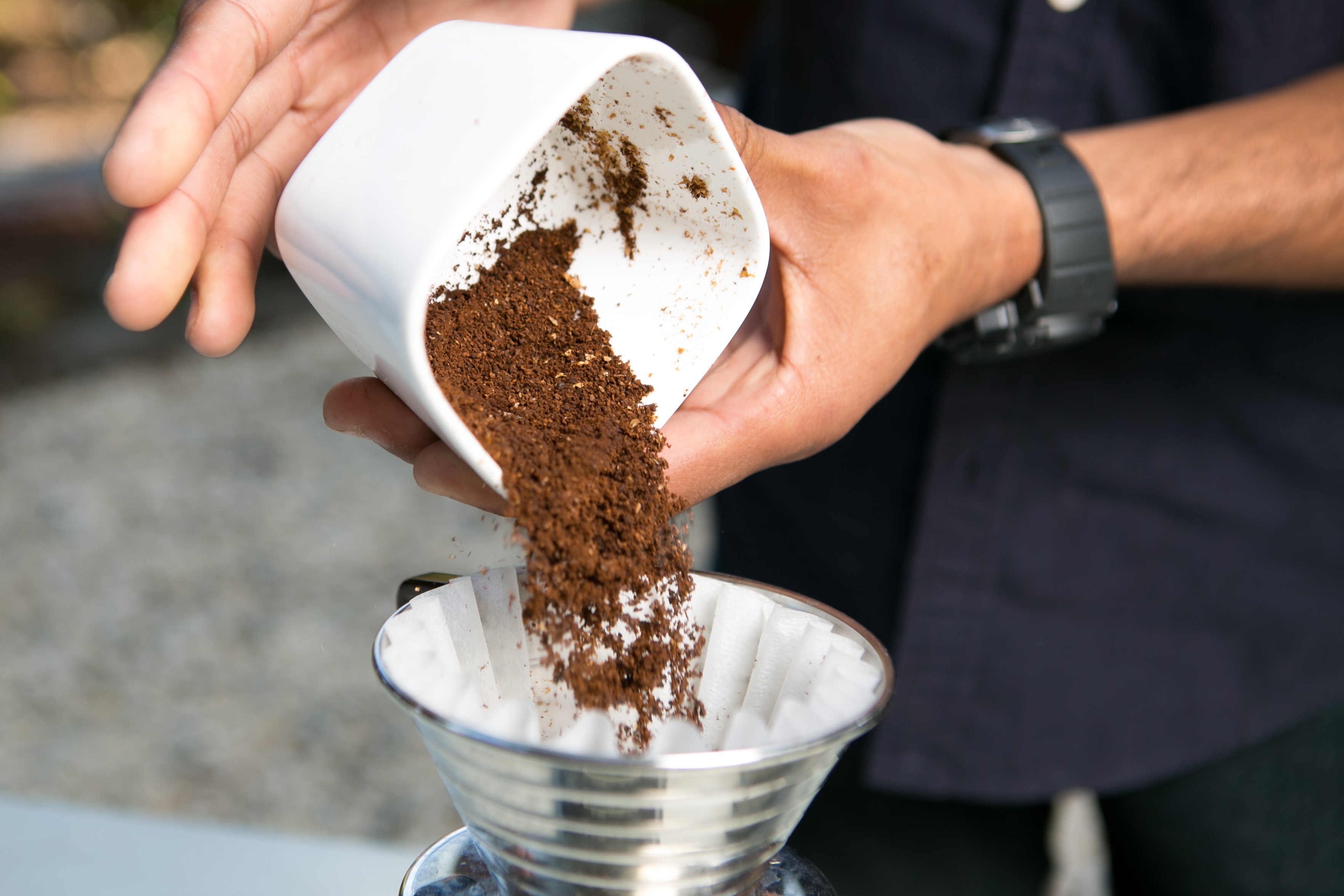
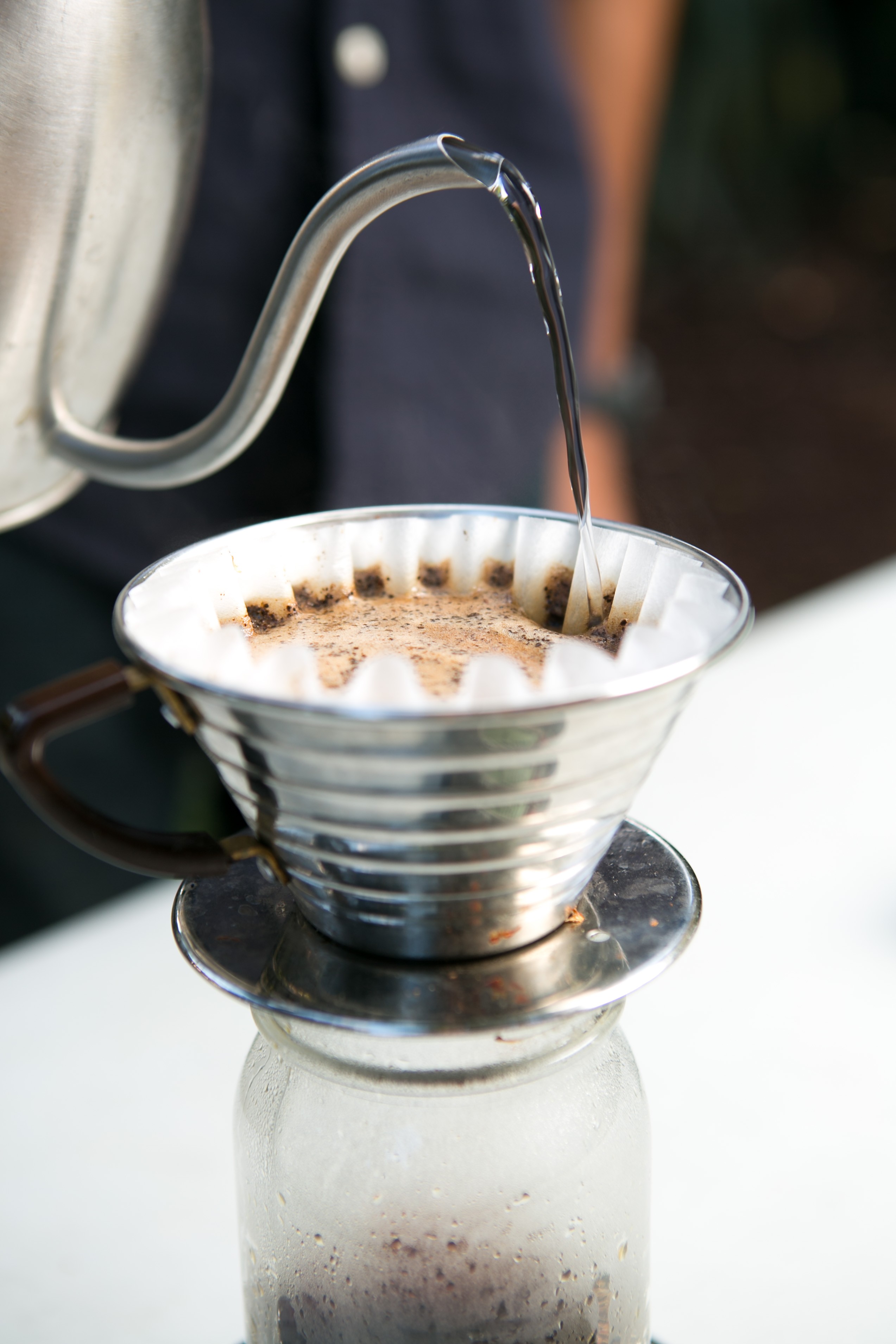
Many baristas recommend using the pourover brewing method, which can easily be used at home. The technique involves using a cone-shaped coffee dripper to pour water through coffee grounds and extract full flavor into the coffee cup. It only takes about three and a half minutes to make, and the equipment is actually cheaper than most run-of-the-mill coffee machines. All you really need is your mug of choice, some coffee filters, and the cone-shaped dripper. Houston uses the Kalita Wave Dripper 185 ($25), which has a sleek design that doesn’t allow the water to disrupt the bed of coffee in the filter. Freeman recommends the Bonmac porcelain dripper ($20), which is an ideal cone for beginners due to a design that automatically meters the water flow. “It’s an incredibly pure and undemanding way of looking at coffee,” Freeman said about the pourover method. For more information on how to use cone drippers, visit Sweet Maria’s online site.

Bottom Line: It’s a grind

If this all seems difficult, fret not. Creating easily repeatable, tasty coffee at home takes practice. “We take people that are nice and interested [to work at the store], and six months later, they can be great, amazing baristas simply because they care,” said Freeman. “It’s a craft, you get better at it every single day. It’s not like learning the cello or anything.”


Political Puppetry to Set Oakland Aflame

Bread and Puppet Theater is known for its elaborate outdoor pageants in which up to hundreds of performers and volunteers work together to manipulate massive, papier mâché puppets as they proceed through the streets or around a field. The puppets and their puppeteers yield political messages, often rallying against injustice. Oversized masks loom, and huge arms extend over protest crowds or other audiences, offering both comfort and a call to action.

Bread and Puppet began in the early Sixties when Peter Schumann, a sculptor, dancer, and baker who had recently emigrated from Germany, began putting on productions with fellow theater experimentalists in a small loft on Delancey Street in New York City’s Lower Eastside. Schumann converted the space into a puppet theater and museum, fusing all his interests by putting on plays that used his sculpted puppets and masks as characters and costumes and serving freshly baked bread during the shows. He and his wife, Elka, officially named the company Bread and Puppet in 1963.

From the beginning, Bread and Puppet was a platform for political digestion and protest, most famously involved in the anti-Vietnam War movement. In 1968, the company presented Fire, a spare and quiet piece — unlike most of its usual productions — at the esteemed Nancy Theatre Festival in France. The speechless play took the audience through seven days in a Vietnamese village that, over the course of the production, is gradually ravaged by war. The poignant, understated show aligned with trends in avant-garde performance at the time, inspired in part by John Cage, Merce Cunningham, the fluxus artists, the Judson Dance Theater, and others. Fire accrued wide critical acclaim and jumpstarted a historic career for Schumann and his ever-evolving DIY theater company for which he still hand-sculpts every fantastic puppet and mask.

Bread and Puppet celebrated its fiftieth anniversary not long ago. Since 1970, it’s been housed on a farm in Glover, Vermont, where the barn doubles as a museum and a space to develop productions between tours. After a fourteen-year hiatus from the West Coast, Schumann and his company will be traveling to California for a tour packed with programming, including a performance of Fire at Omni Commons (4799 Shattuck Ave., Oakland) on October 6, at 7 p.m.

Fire is a slow and contemplative piece dedicated to Americans who set themselves on fire in protest of the Vietnam War in the Sixties. It begins with a cantastoria — a type of storytelling that involves painted scenes and choral singing — to preface the setting. Every actor is identically dressed, fully draped in black cloth with a simple, white mask over his or her face. They crowd onto the stage, where the village they live in and the elements of their everyday lives are represented by a few spare props — a naked light bulb, a soup bowl, a book. There’s no musical soundtrack — only simple, live sound effects that, along with the intricately designed lighting, become characters of their own. Each movement in the nearly hour-long performance is deliberately orchestrated, dismissing realism for gestural allegory, as each movement poetically builds up to the devastating climax, filled with flames.

Through the show’s solemn simplicity, Schumann confronts the ways in which war can gradually dismantle the life of a person, and of an entire village, forming a profound anti-war argument without any speeches or finger-pointing — just sorrow and empathy. In a recent interview, Clare Dolan, a longtime Bread and Puppet performer and member of the West Coast tour troupe, explained that the piece was revived last summer in response to distressing events in Gaza. “I think that when we talk about drone strikes, and we talk about Afghanistan, and we talk about Syria, and we talk about all the ways in which we’re implicated in violence in the world,” said Dolan, “I think it continues to remain or feel very relevant to us.”

Along with Bread and Puppet’s Oakland event, the company will also be doing many appearances in San Francisco. Among them is an event on October 9 that will celebrate the adoption of filmmaker DeeDee Halleck’s 150 hours of footage of Bread and Puppet performances into the Internet Archive to be preserved for public accessibility. The event will include bread and wine receptions, an art sale, a solo performance by Schumann, and a performance of Fire. The next day, company members invite the public to join them in a parade performance called We Are All in the Same Boat at Dolores Park. Participants are asked to wear all white, and show up at 1 p.m. for an hour of rehearsal before the procession begins at 2 p.m. Considering recent cultural clashes in the Mission District that’s home to Dolores Park, Bread and Puppet’s light-hearted romp will be underscored by a serious call for residents to recognize a broader sense of community and accountability.

Oakland Gets Its First Whiskey Distillery Since Prohibition

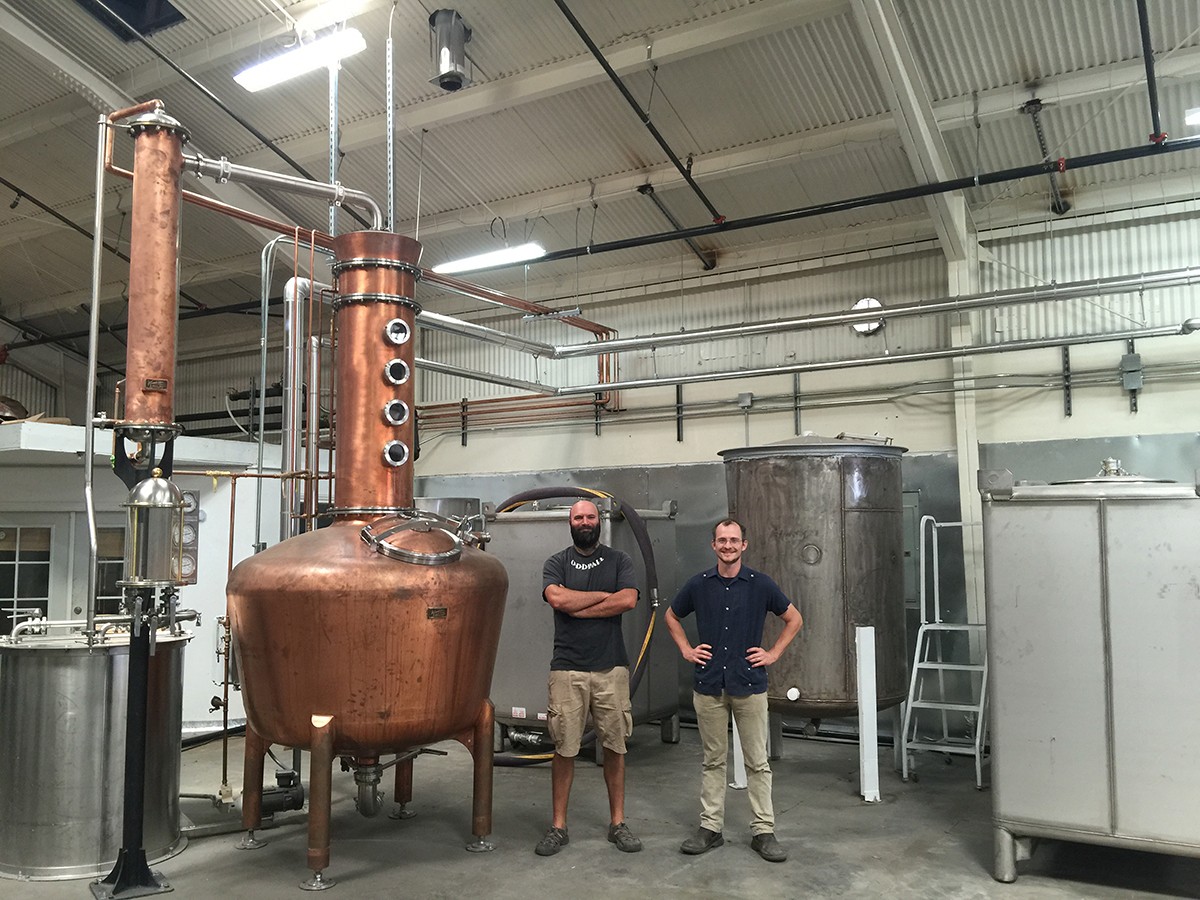
It’s sweltering hot inside this nondescript warehouse building in West Oakland, and for the fifth or sixth time in the past twenty minutes, Daniel Wright hands me a glass tumbler full of freshly distilled brandy and asks me what I think. What I’m thinking about, really, is how to take as tiny a sip as possible so my throat doesn’t burn too badly, and I don’t have another coughing fit and lose face in front of this burly, thickly bearded tugboat-captain-turned-distiller-of-craft-spirits.

Also, as the afternoon wears on: that this brandy doesn’t taste half bad.

Later, I was told the liquor I took progressively tinier sips of had historic significance: It was what Wright and business partner Earl Brown believe to be the very first batch of brandy — or any craft spirit, for that matter — to be legally distilled in Oakland since the onset of Prohibition.

The two entrepreneurs are childhood friends who grew up in the same remote section of Humboldt County, and they’re the proprietors of Wright & Brown Distilling, a new distillery that they say is the first one to open in Oakland in nearly a century. Even though their still was producing brandy — a relatively low-risk product to make while Wright, the head distiller, is getting a feel for his equipment, because all that’s required is a supply of inexpensive wine — during my visit, their plan is to primarily manufacture whiskeys.

The centerpiece of their West Oakland facility is an old-fashioned copper still that was hand-built by Vendome, a one-hundred-plus-year-old company based in Louisville, Kentucky. It’s a gorgeous piece of machinery, all burnished metal, analog dials, and ancient-looking little portals, like some gadget out of a Jules Verne novel. And that’s fitting because Wright and Brown both talk about wanting to produce craft spirits in a decidedly old-school way.

Brown said he remembers a trip, years ago, when he and Wright visited the Jim Beam factory in Kentucky and saw the company’s 65-foot-tall still, with every possible variable monitored via computer screens in an air-conditioned control room. At Wright & Brown, distilling brandy or whiskey appears to be as much art as science. Wright can manipulate the temperature of the brandy he’s distilling, but ultimately, he said, his palate is his most important piece of equipment. Hence, the constant tasting and re-tasting of each batch.

“When you make something good, it is art,” he said.

According to Brown and Wright, the reason that Oakland has yet to develop a vibrant craft-distilling scene, despite a steady proliferation of craft breweries and boutique urban wineries, mostly has to do with the challenging regulatory environment throughout California. Generally speaking, it’s very difficult to even learn how to distill whiskey and other spirits in the United States, because, unlike with winemaking or beer brewing, it isn’t something that amateurs can experiment with, legally, in their garage or basement, unless they obtain the same kind of federal and state permits that a gigantic company like Jim Beam has. That’s a costly and time-consuming process — Brown said they waited about a year and a half — that basically makes it impossible for a hobbyist to dabble.

What’s more, California’s strict restrictions on the sale of spirits set up a three-tier system that makes it difficult for a small-scale operator to profit. A company such as Wright & Brown has to go through a wholesale distributor, who then sells the product to restaurants and liquor stores, who, in turn, finally sell that bottle or shot of whiskey to the customer. A bill that Governor Jerry Brown signed into law in 2013 allows distilleries to sell small samples to customers onsite — a modest concession that Wright and Brown hope to take advantage of once they set up a licensed tasting room. But the ability to do direct sales of entire bottles, which would be the real game-changer, remains off-limits.

Added to this is the fact that distilling spirits is the ultimate in “slow food,” with a barrel of craft whiskey typically needing to age at least three years — if not five or ten — before it becomes a viable product. “I always think of it as literally putting time in a bottle,” Wright said, describing the near-magical process by which a grain, fruit, or nut gets distilled down to its essence. That said, he expects that, by working in tiny batches, Wright & Brown will be able to start selling bottles of whiskey, brandy, and rum in as little as six months.

But Brown believes that while they’ve tentatively laid claim on the title of “first,” there certainly will other distilleries coming to Oakland. Earlier this summer, the Uptown Oakland winery Two Mile Wines announced plans to launch a gin distillery, and Brown said that with the interest in locally produced craft foods and beverages higher than ever, it’s only a matter of time before even more distillers set up shop — regulatory challenges be damned.

Brown, for his part, already talks the talk of a slow food veteran. He said he’s buying barley from a farm in the Mattole Valley, in the same Northern California small town where he grew up, and wants to use it to create a single-malt, “single origin” whiskey — to use the nomenclature of the third-wave coffee movement. He also wants to work with local wineries to make special-label brandies that feature their respective wines.

Walking me out, Brown gestured toward the surrounding neighborhood, with its vacant lots and barbed-wire fences, pointing out that this industrial stretch of West Oakland has increasingly become a kind of secret foodie neighborhood: Hodo Soy and OCHO Chocolate both have their manufacturing facilities nearby, and the folks at FuseBOX, the scrappy Korean restaurant down the street, are busy making dozens of varieties of kimchi at any given time.

Like all of those enterprises, the Wright & Brown Distilling warehouse doesn’t look like much from the outside. But its proprietors are hoping that a year or so from now, Bay Area whiskey connoisseurs will be awfully glad they’re around.

Lost in Space

Why would you drink beer at a bar when you could drink beer while on a mission to Mars? Once a month, the Chabot Space and Science Center (10000 Skyline Blvd., Oakland) gives guests the opportunity to do the latter — kind of — through its “Lost in Space” simulated space mission. While the center regularly hosts daytime mini missions to Mars that are for astronauts ten years old and up, “Lost in Space” missions take place during more adult hours (from 7–9 p.m.) and are partially fueled by beer and wine. Normally, participants land on the red planet and are tasked with constructing a probe to send to one of the moons of Mars. But for Chabot’s special “Spooky Halloween Lost in Space,” which takes place on October 3, things are likely to go wrong. There’s a good chance that Martians will be involved, but there’s no way of knowing whether they’ll be friendly.

Eyes on Oakland

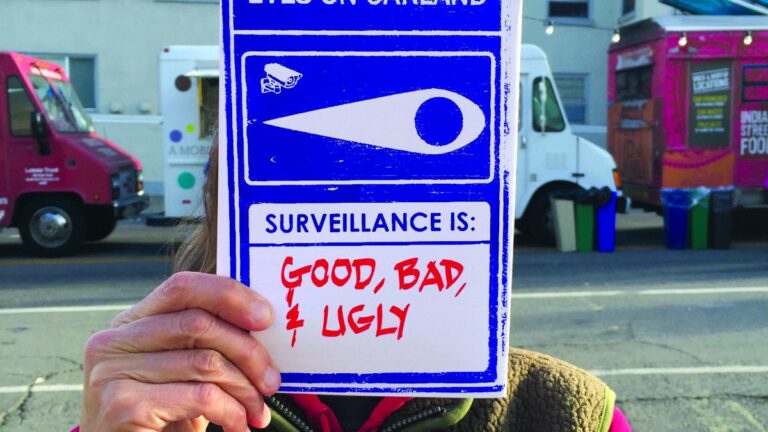
You may have seen the Eyes on Oakland project roving around Oakland in a Ford Falcon van retrofitted as a mobile newsroom. Or, it may have seen you. Eyes on Oakland is a hybrid journalism and interactive art project that aims to inform Oakland residents about the various types of surveillance used by police and give them the opportunity to share thoughts and concerns on camera. The project is an ongoing collaboration between Mobile Arts Platform and the Center for Investigative Reporting that was part of the Oakland Museum of California’s Who is Oakland? exhibit — through which many citizens’ reflections were shared, and more were gathered. So far, the project’s leaders have collected hundreds of opinions by popping up around The Town, and have staged many conversations regarding how to maintain balance between privacy and public safety. On October 2, from 5–8 p.m., Eyes on Oakland will be sharing its footage on The Great Wall of Oakland, a huge wall on West Grand Avenue, between Valley Street and Broadway. The screening is public and free, but bring something to sit on if you plan to stay a while.

Artist Fatally Shot While Working on West Oakland Community Mural Project

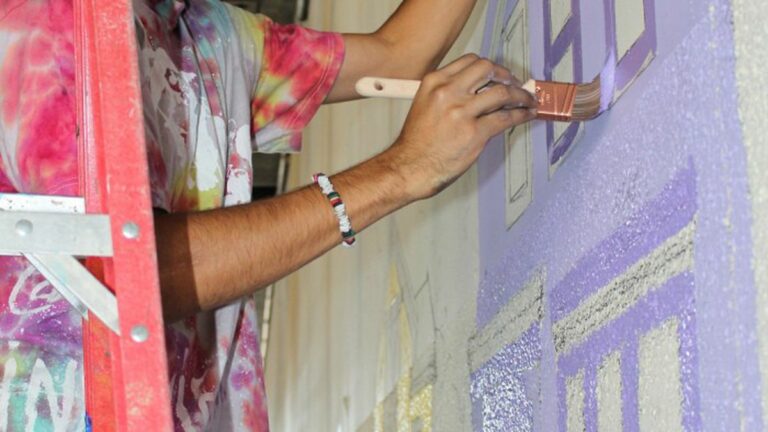
Artist and West Oakland resident Antonio Ramos was shot and killed Tuesday morning while working on a mural in a freeway underpass in West Oakland, according to Bay City News. Ramos was painting as part of the the Oakland Super Heroes Mural Project on West Street between 35th and 36th Street when he was shot around 10:30 a.m., according to reports. Police are still searching for the suspect.

The Super Heroes Mural Project is run by Attitudinal Healing Connection (AHC) of Oakland, an arts nonprofit that aims to empower communities through creativity. The Super Heroes project in particular pairs professional artists with West Oakland youth to collaborate on large-scale murals throughout West Oakland. The mural that Ramos was working is the third of six planned murals and is intended to depict a pleasant row of houses with white birds and a young girl flying above it. AHC has been fundraising through an Indiegogo campaign to gather funds to complete the project. (Learn more in the video below). 

[jump] [embed-1] Since news of Ramos’ death has spread, many of the artists who worked with him on the project or on other murals in the past have posted memorials on social media. One street artist who goes by “Scienceism” on Instagram posted a photo of Ramos painting and wrote, “Antonio’s positive attitude and work ethic was truly unparalleled … This deeply tragic senseless act of violence is exactly what he and AHC worked so hard to counteract in the Oakland community.” 

There is currently no known motive for the shooting. 

A friend of Ramos’ has set up an online fund to raise money for his family and funeral costs. You can donate here. 

Getting Stuffed on Arepas at Miss Arepita and Venezuelan Cafe

The joy of eating a Venezuelan arepa, a kind of griddled corn cake, is one of great abundance: The skilled arepa maker takes a disc of corn-flour dough and griddles it until it's fluffy and crisp-edged, then slices it open, like a toasted English muffin, and fills it with such an impressive quantity of meat, beans, or cheese —...

Letters for the Week of September 16

"Turning Housing into Hotels," Feature, 9/16 Airbnb Encourages Bad Behavior What is truly creepy is how this is all done in the name of "improving the local economy," i.e. the ads that tout how much local businesses thrive on all the Airbnb clientele, and how easy it is to not follow even the laws that are in place. For example, in...

Right On!: ‘The Black Panthers: Vanguard of the Revolution’

Difficult as it might be to believe in today's atmosphere of "wars without end" and unprecedented police/security/military intrusion into the social mechanism, there was once a time in which large numbers of ordinary people talked openly of revolution. Stanley Nelson's bracing new documentary The Black Panthers: Vanguard of the Revolution takes us back to that time. It started in Oakland....

‘The Martian’: All Is Not Necessarily Lost

With The Martian, it's almost as if Ridley Scott felt personally challenged by the award-winning grandeur of Alfonso Cuarón's Gravity, and then decided to show the movie-going public that he, the creator of Blade Runner and the Alien franchise, was still king of the spacey sci-fi cinematic world. He comes amazingly close to proving just that. Filmmaker Scott's 34th directorial...

Grinding and Brewing: A Guide to At-Home Coffee Brewing

I haven't had my coffee yet." You've probably heard that cautionary phrase before, or even spoken it yourself. It acts as both an apology for grumpy behavior and a warning to its listener, roughly translating to "my day has not officially begun." For many of us, that warning holds true; the day doesn't truly start until...

Political Puppetry to Set Oakland Aflame

Bread and Puppet Theater is known for its elaborate outdoor pageants in which up to hundreds of performers and volunteers work together to manipulate massive, papier mâché puppets as they proceed through the streets or around a field. The puppets and their puppeteers yield political messages, often rallying against injustice. Oversized masks loom, and huge arms extend over protest...

Oakland Gets Its First Whiskey Distillery Since Prohibition

It's sweltering hot inside this nondescript warehouse building in West Oakland, and for the fifth or sixth time in the past twenty minutes, Daniel Wright hands me a glass tumbler full of freshly distilled brandy and asks me what I think. What I'm thinking about, really, is how to take as tiny a sip as possible so my throat...

Lost in Space

Why would you drink beer at a bar when you could drink beer while on a mission to Mars? Once a month, the Chabot Space and Science Center (10000 Skyline Blvd., Oakland) gives guests the opportunity to do the latter — kind of — through its “Lost in Space” simulated space mission. While the center regularly hosts daytime mini...

Eyes on Oakland

You may have seen the Eyes on Oakland project roving around Oakland in a Ford Falcon van retrofitted as a mobile newsroom. Or, it may have seen you. Eyes on Oakland is a hybrid journalism and interactive art project that aims to inform Oakland residents about the various types of surveillance used by police and give them the opportunity...

Artist Fatally Shot While Working on West Oakland Community Mural Project

Antonio Ramos working on the West Oakland mural. Credits: AHC-Oakland.org Artist and West Oakland resident Antonio Ramos was shot and killed Tuesday morning while working on a mural in a freeway underpass in West Oakland, according to Bay City News. Ramos was painting as part of the the Oakland Super Heroes Mural Project on West Street between 35th and 36th...
19,045FansLike
17,709FollowersFollow
61,790FollowersFollow