
Oakland’s Perfect Storm

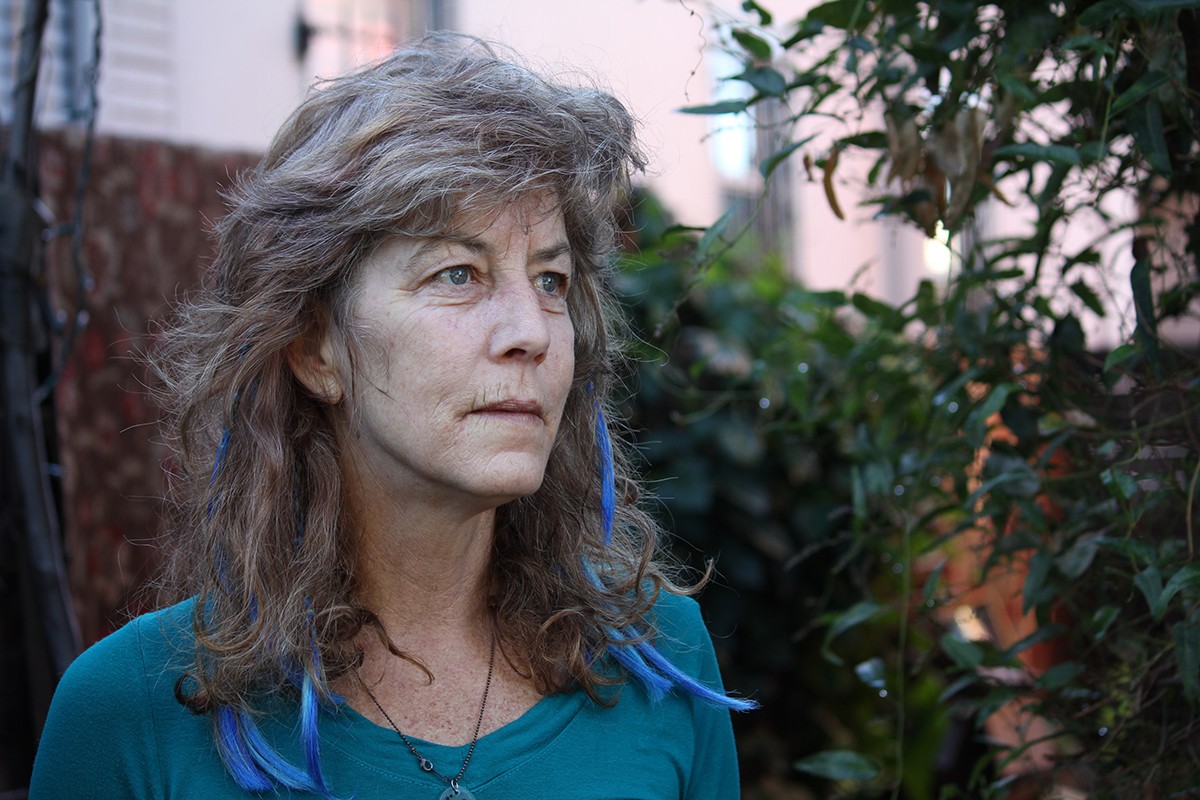
Elizabeth Dougherty doesn’t want to raise Megan Young’s rent. Both women are living paycheck-to-paycheck, and Dougherty would much prefer to have Young as a housemate than rent her place out to a stranger. Young works in artist relations at local music festivals and pays $850 each month to a rent a room in Dougherty’s home in North Oakland. Dougherty runs a nonprofit organization focused on water reuse, but relies on rent from the two tenants in her spare bedrooms to pay her mortgage.

“I’m really struggling to figure out how to make ends meet,” said Dougherty, who purchased her house in 2003 and pays more than $2,000 each month for her mortgage. “I wanted to raise [Young’s] rent by $25, but she said she couldn’t do it.”

Like many landlords in Oakland, Dougherty knows she could charge higher rents if her current tenants move out. But unlike most other landlords, Dougherty desperately wants to keep her tenants’ rent below market rate. She likes Young and she feels a moral obligation to not inflate the price of her rooms just because there is a housing crisis in Oakland.

For Young, a rent increase could push her to look for housing in a different city. “If I needed to move suddenly, I would seriously consider leaving the area,” said Young, who is originally from Sonoma County. Before securing her room in Dougherty’s house, she spent two months looking for housing on Craigslist and Facebook groups, but competition was steep. “I’m concerned I won’t ever be able to rent my own house in Oakland,” Young continued. “At 35 years old and with a decent salary, it makes me very sad that I can’t afford to live in my own apartment.”

If Young leaves Oakland, she will join the growing crowd of renters displaced from the East Bay’s largest city. Median rents across Oakland are at an all-time high, pushing low-income families into motels or family members’ homes, pricing working-class households out of their neighborhoods and creating fierce competition for available housing at all income levels. Last month, Oakland became the fourth most expensive rental market in the nation, according to Zumper, a technology company that tracks rental data in major US cities. The median monthly rent for a one-bedroom unit in Oakland in November reached $2,190, an increase of 19 percent over the same month last year. For two-bedroom units, median rent soared 13.3 percent to $2,550 a month. Oakland now trails only San Francisco, New York City, and Boston among major US cities in terms of rent prices.

In addition, since 2011, Oakland’s affordability crisis has deepened more rapidly than in any other major US city, according to a recent report by the tech analysis firm SmartAsset. As the Express reported online last week, fair market rents in Oakland have nearly doubled since 2011, while the median income earned by city residents increased by only 11.3 percent during that time. That means the average Oakland renter now must pay an astounding 70 percent of his or her income to rent a market-rate apartment in the city.

Fundamentally, Oakland’s housing crisis is a problem of supply and demand — more people at all income levels need more housing than what is available. High-income households compete with middle-income households in Oakland’s more affluent neighborhoods. And then as middle-income households are priced out of those areas, they seek housing in traditionally lower-income areas, pushing those households out of their own neighborhoods.

The Association of Bay Area Governments (ABAG) reported that more than 286,000 people moved to the Bay Area between 2011 and 2013. With Silicon Valley and San Francisco at the center of the economic boom, housing costs started increasing in both regions more rapidly than in Oakland. From 2010 to 2014, the average monthly rent in San Francisco shot up by 38 percent, and median rent for a one-bedroom in San Francisco skyrocketed to $3,105 (it’s now $3,500, according to Zumper). Evictions in San Francisco increased by 59.9 percent from 2010 to 2015, based on annual reports filed by the San Francisco Rent Board. As rents soared in San Francisco, more renters began looking in the East Bay for housing.

The crisis “is primarily caused by the San Francisco and Silicon Valley housing problem,” said Oakland Vice Mayor Rebecca Kaplan, noting that neither region has produced the housing required to keep up with its job growth. “Now, Oakland has an affordable housing crisis that we have to solve, even though we didn’t create it,” Kaplan said.

But Kalima Rose, senior director of the PolicyLink Center for Infrastructure Equity, a research institute, argues that the crisis in Oakland is not simply a result of San Francisco and Silicon Valley’s problems. “Oakland itself could do a lot more with local policies than it has,” she said, adding that city officials have not done enough to find funding sources for affordable housing development.

In May, Oakland’s Department of Housing and Community Development partnered with PolicyLink and published a comprehensive report on the city’s housing crisis, officially called “A Roadmap Toward Equity: Housing Solutions for Oakland, California.” The report described Oakland’s housing problem as “a perfect storm,” noting that while the city’s median rent has skyrocketed, city government has failed to meet any of its goals for building new affordable housing.

A report by ABAG presented to the Oakland Planning Commission in 2014 stated that 14,629 new housing units — for all income levels — needed to be built between 2007 and 2014 to keep up with the city’s demand for housing. According to the roadmap report from PolicyLink, only 25 percent of that housing was built.

“The mismatch between job growth and housing production across the Bay Area is extreme,” said Rose, who emphasized the need for Oakland city officials to prioritize finding funding for housing near major transit centers, like BART stations.

And while the city has been slow to respond to the affordability crisis, Oakland’s perfect housing storm is continuing to displace more and more people, especially African Americans.


Paula Beal has lived in Oakland for 40 years and watched her seven children and 27 grandchildren all leave Oakland over the last several decades, many because of affordability concerns.

Beal rented a two-bedroom house on Linden Street in West Oakland for four years until her landlord died in 2011, and the house went into foreclosure. After the lender, Fannie Mae, repossessed the house, Beal moved out. She said she knew the lender would want to sell the house, which would mean an uphill legal battle for current tenants. According to property records, the property sold in January 2015 for $260,000. The property was then sold again in April for $490,000 — an 88-percent markup.

After leaving West Oakland in 2011, Beal moved into a one-bedroom apartment in Eastlake. In November, she received a 60-day notice from her landlord that her rent would be raised by $230 a month — from $995 to $1,225. The notice cited the increase in cost of utilities, maintenance, taxes, and insurance as the causes of the 23-percent increase.

In an interview, Jane To, the building’s landlord, confirmed that she sent the sixty-day notices to her tenants, but asserted that the increase is within the limits of the current laws.

Beal said she is seeking legal help from Causa Justa Just Cause (CJJC) — a tenants’ rights organization that has helped Beal in the past — for legal advice to determine if the increase is actually lawful.

Though Beal is informed about renters’ resources, she said she’s very concerned about the thousands of Oaklanders who don’t know about the city’s Rent Adjustment Program, which limits many landlords from increasing rents beyond the annual change in the Consumer Price Index (which is 1.7 percent in 2015) — the cap established by Oakland’s Just Cause for Evictions Ordinance, which voters passed in 2002.

In Oakland, the responsibility to enforce tenant protections falls entirely on the tenant. In the case of an illegal rent increase, tenants have sixty days to file a petition challenging the rent hike. If they do not file in that time period, they lose their legal rights to challenge the increase.

Beal said her son, his wife, and their four children moved to Hercules earlier this year after being evicted from a three-bedroom apartment in East Oakland. Beal’s son, who supports his family through working as a security guard, looked for eight months for housing he could afford in Oakland. His family stayed in a shelter for four days and then moved between motel rooms before deciding to move away.

“He was paying his whole paycheck and half of my paycheck” on hotel rooms, Paula Beal recalled. “Even his brother in Florida was sending him money.” Beal said her son applied for housing subsidies through the Oakland Housing Authority, but she said the line for subsidies is so long that she does not expect him to hear back anytime soon.

Though her son’s family has found housing, Beal said she’s worried about other low-income families experiencing homelessness. “It’s getting worse and worse everyday,” she said.

Though displacement affects tenants of all races, the African-American community in Oakland has been disproportionately affected by rising housing costs. According to the equity report, Oakland’s African-American population decreased 24 percent from 2000 to 2010. In the same time frame, median income for African-American households decreased from $42,975 to $35,050 — less than half of the income needed to make Oakland’s median rent affordable, based on 2014 data. Affordability, as defined in the equity report, requires a household to spend no more than 30 percent of its income on housing costs.

At an October city council meeting, Oakland native John Jones III, outreach coordinator for the Ella Baker Center, a nonprofit organization that advocates for racial and economic justice through lobbying lawmakers and organizing community programs, implored councilmembers to act to protect low-income communities and make sure African Americans are not pushed out of their own neighborhoods. Jones said he is currently searching for housing and staying on a friend’s couch.

“If I’ve got to live on the streets to stay here, I will, because this is my home,” said Jessica Hollie, a 32-year-old Oakland native, during a public comment period at the same council meeting. “I refused to be pushed out. I refused to keep feeling like I’m not worth it.”

Hollie, who identified herself as activist with Black Lives Matter, choked back tears as she explained to the council members that she is a single mother from West Oakland working full-time and facing homelessness as council President Lynette Gibson McElhaney, who represents West Oakland, looked on, her brow furrowed and tears welling in her eyes.

“As a college-educated citizen of Oakland, I’m angry as hell because I can’t afford affordable housing,” Hollie continued, telling the council that although 2015 has seen the growth of Black Lives Matter, she doesn’t feel like black lives really do matter in Oakland.


Kat Otto moved to West Oakland in June, in part because of its proximity to her work in San Francisco — just an eight-minute BART ride away. For two years, Otto lived in San Francisco’s Tenderloin district in a two-bedroom apartment with a small kitchen and no communal living space. She worked as a waitress and paid $550 monthly to share one of the bedrooms with a friend. “There’s no way in hell I could have paid more than $550,” Otto said of her financial situation at the time.

In 2014, one of her roommates moved out of state and Otto’s rent spiked 68 percent to $925 a month. She had secured a job as an operations manager at a technology education center in downtown San Francisco, but her salary couldn’t cover the rent.

Otto also was attracted to West Oakland because it’s more affordable than the city. She now has her own room in a four-bedroom apartment for $550, and her household, made up of four twentysomething white women, collectively pays $2,300 in rent — several hundred dollars less than what her old apartment in the Tenderloin is now renting for.

Otto knows she’s associated with gentrification in West Oakland. “Oaklanders see what’s happening in San Francisco, and they are not going to take that shit lying down,” she said of the West Oakland community’s efforts to stop displacement. “Is there a possibility for me to be part of the solution?” she asked. Like many renters, she doesn’t know what the solution is, but she wants to see both newcomers and City Hall take action to prevent more displacement.

In October, Kaplan and City Councilmember Desley Brooks introduced a measure to immediately increase funding to “vital community needs.” Citing the housing affordability and displacement crisis across the city, the measure allocated $200,000 to “rapid rehousing funds,” which are used to pay first and last months’ rent and deposit fees for homeless people trying to return to permanent housing.

The measure also allocated $100,000 to education about and enforcement of tenants’ rights laws, namely Oakland’s Just Cause ordinance. The ordinance explicitly bans landlords from evicting tenants in order to raise the rent or to carry out renovations on the property. Landlords are permitted to evict tenants if the landlord is moving into the unit, housing a family member there or otherwise taking the unit off the market — known as an Ellis Act eviction — but the measure bars the landlord from renting out the unit again for at least 36 months.

The funding measure introduced by Kaplan and Brooks passed on October 20, and council staffers are due to report back on the implementation of the funding in January.

Over the years, the city has tried to aid Oakland’s poorest households by building more government-subsidized affordable housing, but funding for affordable housing has dried up. After Governor Jerry Brown dissolved redevelopment financing for cities in 2011, Oakland’s annual budget for affordable housing production plummeted from $20–$25 million annually to $5–$7 million, according to the equity report.

The Oakland Housing Authority (OHA) manages citywide affordable housing initiatives as well as federally funded Section 8 vouchers, which are part of a program that subsidizes housing costs for renters in market-rate units. In March 2015, the OHA distributed Section 8 vouchers of up to $1,585 per month to 609 Oakland families. According to Michelle Hasan, OHA’s director of leased housing, only 19 percent of the 609 vouchers were used, indicating that even with the subsidy, low-income families can’t afford housing or compete for market-rate units.

In addition to funding shortages, the equity report highlights some of the legislative problems plaguing Oakland’s housing market and offers suggestions for creating better policies. Though the city has individually negotiated with market-rate developers to include funding for or construction of affordable housing in past projects, the city does not require market-rate developers to build affordable housing units or contribute to an affordable housing fund. In San Francisco, market-rate developers are required to pay an affordable housing fee or make 12 percent of their units affordable to low-to-moderate income households. Without such a policy, the equity report notes that Oakland is missing out on considerable funding.

“I really want to make sure we streamline our development process,” said City Councilmember Annie Campbell-Washington (District 4), who supports establishing a housing “impact fee” for all market-rate developments in the city. The fee would be paid by the developers to the city as a prerequisite for approval of projects. “Oakland is a very attractive city to invest in right now and I want to make sure we get that impact fee in place,” Campbell-Washington said.

Like San Francisco, both Berkeley and Emeryville already have impact fees. Both cities charge market-rate developers $28,000 per unit in order to help fund affordable housing. They also have so-called “inclusionary zoning” policies that require market-rate condominium developers to include affordable units in their projects or pay in-lieu fees. The Oakland City Council is expected to take up housing impact fees in early 2016, but it’s not clear whether it will adopt inclusionary zoning as well.

The equity report also proposes creating a uniform policy for relocation assistance for displaced renters. Currently, the city has multiple policies governing when and how much assistance must be distributed to households displaced by eviction, but does not provide any funding for enforcing payment. The equity report recommends that city officials “explore new strategies to fund and recover relocation costs” to help tenants undergoing evictions that are not caused by the tenant breaking the lease or failing to pay rent.

Additionally, the report recommends the city council propose a measure for proactive rental inspections by city agencies to enforce tenant protections and for city agencies to aggressively pursue a $254 million affordable housing bond administered by ABAG and apply for additional state and federal housing funds.

But the money lost when redevelopment ended is still haunting City Hall. In 2014, the city council approved plans to develop vacant and underutilized areas of West Oakland — called the “West Oakland Specific Plan” (WOSP) — through extensive infrastructure projects, business development, and construction of both market-rate and affordable housing near the West Oakland BART Station and other major transit lines. The development projects, as described in the plan’s “Vision and Goals” section, would coincide with projected “economic and demographic changes over the next 20 to 25 years.”

The project was kickstarted with a $2 million federal grant, but other sources of funding for the project have not been identified. In a report released by the Planning and Zoning Department in 2014, officials loosely outlined a plan to identify funding from within the city, from state and federal programs, and from private developers. The plan’s feasibility will depend on the resources city officials can cobble together from grant applications, regional bonds, and other fundraising initiatives in the short-term. “West Oakland is at risk unless real money is put on the policy table in the next two years,” Rose said.
Phase II of the Fruitvale Transit Village, a development project similar to WOSP but smaller in scale, may have a better shot at success, according to Rose. This project centers on the Fruitvale BART station, one of the busiest stations in the multi-city system, according to The Unity Council, the project’s primary developer. Phase I of the transit village was completed in 2003 with the development of 37 market-rate housing units, 10 affordable units, 40,000 square feet of ground floor retail stores, and more than 114,000 square feet of office space, largely leased by social services and nonprofit organizations. The total cost of Phase I was $69 million, according to a study of the project released in 2005 by the Urban Land Institute.

Last month, the Oakland’s Community and Economic Development Committee approved a measure to allow the city administrator to delegate $7.5 million in funding to Phase IIA of the project. It will include the construction of 94 new housing units, 80 of which will be reserved for households earning 60 percent or less than the Area Median Income, according to the committee’s report.

Chris Iglesias, CEO of The Unity Council, said construction of the 94 new units would cost about $44 million. He hopes to secure part of the funding through federal tax credits and said if the fundraising goes well, construction could start in the first quarter of 2017.


For middle-income residents like Tracy Inouye, projects like the Fruitvale Transit Village may be too little too late. Inouye, his wife, and nine-year-old daughter moved to small two-bedroom house in the Laurel district in June after being evicted from their two-bedroom basement apartment in the Glenview neighborhood. For six years, he and his wife raised their daughter in the apartment and paid $1,400 per month.

Last year, the property owners gave the family an Ellis Act eviction notice (which is not illegal) and told Inouye they intended to sell the house. Inouye said he was shocked. Rents in his neighborhood were listed at upwards of $2,500 per month, and, he said, most open houses had lines of interested parties out the door. He remembered that in the Rockridge District, a prospective tenant offered the landlord $2,800 for an apartment listed at $2,500.

Oakland law only requires landlords to provide a relocation allowance to tenants they evict using the Ellis Act if the tenant is a “lower-income household,” defined as making 50 percent or less of the Area Median Income. Inouye made too much to qualify, but too little to out-bid the long lines of anxious renters.

Inouye said he feels lucky that he managed to find the two-bedroom house he lives in now for $2,000 per month. He doesn’t direct his anger at the wealthy people moving into the Bay Area, either. Primarily, he wants to see legislation passed to protect tenants and ban bidding wars between prospective renters. “I just want it to be fair,” he said, acknowledging that people at all income levels — tech workers and high-income households included — need places to live.

But Inouye said his current landlord warned him when he moved in that she intends to sell the property or move into the unit in the next few years. If his family is evicted again, Inouye said he will likely leave Oakland and look for cheaper rents in San Leandro or Hayward.

“I work all over the Bay Area, and I see what’s going on,” Inouye said. “The bottom line is, if you’re middle class, or poor, it’s really hard for you.”


Tuesday Must Reads: Big Oil Guzzles Big Water; Leading Enviro Group Gives State Poor Grades on Water

Stories you shouldn’t miss:

1. East Bay oil refineries are the largest water hogs — by far — in the region, the Chron$ reports. The Shell refinery in Martinez guzzled an average of 11.1 million gallons of water per day last year, while the Martinez Refinery run by Tesoro used an average of 9.3 million gallons daily. Turning oil into gasoline is a hugely water-intensive enterprise. The Chevron refinery in Richmond was the largest water user in East Bay MUD’s jurisdiction.

2. The National Resources Defense Council gave the state poor marks for its handling of water conservation for agriculture — a D grade — and for failing to protect the Sacramento-San Joaquin River Delta — an F, the LA Times$ reports. The NRDC, one of the nation’s leading environmental groups, also gave the state a poor grade — a D — for its handling of stormwater capture and reuse. The state got better grades for urban water conservation and water recycling.

3. The same neurotoxin — domoic acid — that caused the shutdown of the state’s Dungeness Crab fishing season has also been making sea lions extremely sick along the California Coast, the Mercury News$ reports. A massive algae bloom in the ocean is producing the neurotoxin, resulting in sea lions being stranded on beaches, weak, confused, and trembling.


[jump] 4. The Berkeley Zoning Board approved two more apartment complexes in the city that will feature very little parking for tenants, Berkeleyside reports. The projects, one each on Telegraph and Shattuck, represent the latest moves by the city to discourage car use and spur more people to walk, bike, or take mass transit.

5. The Oakland City Council is considering a plan to allocate an $11.6 million loan for a 110-unit mixed-use housing project near the Coliseum in which half of the units would be affordable housing, the Chron reports. But the nonprofit developer, Oakland Economic Development Corp, has spotty track record and no experience in housing projects — although it does have close ties to Councilmember Larry Reid.

6. The US Supreme Court ruled that consumers must go through arbitration — instead of the courts — when they’ve been ripped off by corporations, if consumer contracts stipulate arbitration, the LA Times$ reports. The high court’s ruling overturned a California appellate court decision that allowed consumers to band together in class-action lawsuits to go after corporations that engage in wrongdoing.

7. Seattle became the first city in the nation to allow Uber and Lyft drivers to unionize, the AP reports.

8. The FAA announced that privately operated drones must be registered and marked, the Mercury News$ reports. The ruling follows numerous near-misses between drones and manned aircraft.

9. And a strong majority of Republicans — 59 percent — agree with Donald Trump’s proposal to ban Muslims from entering the country, although super-majorities of Democrats and independents do not agree, the Washington Post$ reports.  

Brewpub Pioneer Bill Owens’ Next Big Idea Is to Go Even Smaller

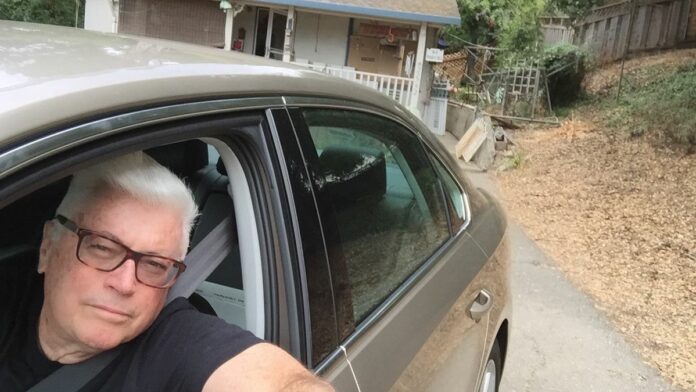
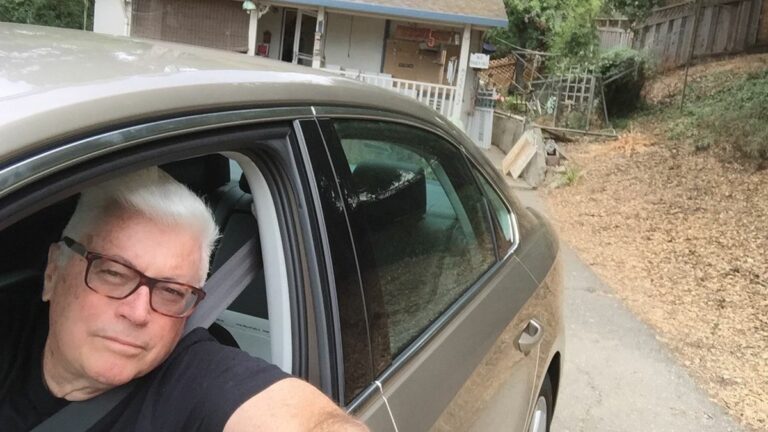
It isn’t exactly normal for a 77-year-old man to spend three months crisscrossing the country by himself in a leased Volkswagen Passat — zipping down freeways at an average speed of 85 miles an hour just so he can check out some agave distillery in Colorado he heard was experimenting with making apple brandy using crowdsourced, “found” apples. Then again, Bill Owens — the eternally curious founder and president of the American Distilling Institute and a legend in the East Bay craft brewing community — isn’t your typical 77-year-old.

[jump] “They only caught me three times exceeding the speed limit,” he said. “My attitude is catch me if you can.”

The point, Owens said, is he isn’t sure how many years he has left in the tank — “and I’ve got stuff to do.” To wit: As president of a craft distillers’ trade organization, Owens plots one of these tours every three or four years. He just got back from this year’s edition, during which he covered 17,000 miles and visited 130 craft distilleries in a three-month span. His goal is mostly just to see what new and noteworthy innovations are happening in the industry he advocates for, and this year, he was struck by the fact that nearly every microdistillery he visited was trying to get bigger — adding a second still or acquiring a few extra fermentation tanks.

It’s interesting, then, that Owens’ own big idea for the future is to go in the opposite direction: He wants to open a new Hayward nanobrewery — that is, a brewery that produces an even smaller volume of beer than a microbrewery — that draws its inspiration from the pop-up restaurants that are so ubiquitous in today’s dining scene.

Owens, who has a whole other career as an accomplished photojournalist, first made waves in the craft beverage world in the early Eighties, when he founded Buffalo Bill’s Brewery in Hayward shortly after California started allowing breweries to sell beer on their premises — a piece of legislation he helped advocate for — making it one of the first brewpubs in the country. One of his claims to fame? He’s widely cited as the brewer of the first commercially produced pumpkin ale in the United States. After he sold Buffalo Bill’s, Owens got so interested in distilling whiskey that he wound up founding the American Distilling Institute in 2003. That’s when he first started taking his periodic road trips.

In short, Owens has been at this for a while. But his latest idea is something that seems completely new. For his pop-up nanobrewery — which might include a “nanodistillery” component — Owens imagines that he would brew just thirty or forty gallons of beer at a time — a quantity small enough that he could sell it all in a day or two. The small volume would limit the brewery’s overhead costs, and, just as important, it would mean he could produce different beers all the time, with a very short turnaround: Start brewing the beer on a Monday, and by the following Friday, he’d be ready to start selling it.

All of this is still just an “idea in formulation,” Owens said — but it’s an idea he believes is going to have its day very soon. And similar to dining pop-ups, he imagines his brewpub pop-ups would be able to set up at all different kinds of venues — restaurants, fairgrounds, art festivals, and more. He’s currently in talks with restaurateur Geoffrey Deetz, who’s plotting his own Vietnamese eatery, about the possibility of some food-oriented collaboration.

Of course, Owens’ talk of opening the tiniest, most nomadic little brewery anyone has ever seen comes at the same time the power players in alcohol industry — the Anheuser-Busches and SABMillers of the world — are only getting bigger. But Owens said he doesn’t care about all that corporate mediocrity. What he wants is to meet people who are growing their own wormwood to make absinthe — people growing their own lemongrass to put in a beer or a whiskey.

As for his own venture, his hopes are high. “I could brew a spice beer today and be selling it by Christmas Day,” he said. 

Ex Nihilo Theater Series

In the first episode of Ex Nihilo Theater’s six-part series, Terra Incognita, performed at the Octopus Literary Salon (2101 Webster St., Oakland), three estranged sisters alternate between squabbling and reminiscing outside of a gas station in Reno, Nevada. The air is hot, and tempers are, too. It’s the beginning of a journey that will take the trio across the country, as they cart their mother’s ashes to fulfill her dying wish: to go over the Niagara Falls in a barrel urn. The morbid premise offers plenty of fodder for dark, witty humor, just as the siblings’ banter provides a handy platform to drive the narrative while also offering insights into the sisters’ individual and collective histories. The idea of roadtripping is also the perfect metaphor for Ex Nihilo Theater’s serial endeavor, set to unfold every two months over the next year. The company, which Bridgette Dutta Portman, Elizabeth Flanagan, and Jennifer Lynne Roberts co-founded in 2014, is an experiment in breaking boundaries, taking risks, and overcoming roadblocks. The playwrights are recording each episode, available on ExNihiloTheater.Weebly.com, so, in case you missed the first part, there is an opportunity to catch up before the second episode, set in Bottle Hollow, Utah, on December 17.

Ghostface Killah

As Method Man put it in an interview clip at the end of Wu-Tang Clan’s “Can It All Be So Simple,” Ghostface Killah is “on some ‘Now you see me, now you don’t.’” Method Man was presumably referring to his collaborator’s dexterous rap flow and ability to seamlessly change between various styles. Since Wu-Tang’s debut album, Enter the Wu-Tang (36 Chambers) came out in 1993, Ghostface has cemented himself in rap history as one of the greatest East Coast MCs. His work has spawned countless imitators, including Action Bronson, a younger rapper whose style is so similar to Ghostface’s flow that Ghostface even once mistook Action Bronson’s voice for his own. After a beef between the two artists raged for several years, Action Bronson took to Twitter in 2015 to acknowledge that he was in the wrong for feuding with his elder. Rap beefs notwithstanding, Ghostface has managed to stay prolific since his Wu-Tang days. To promote his latest album, Sour Soul, he performs at The New Parish on December 18 with Oakland rapper Raw-G among other artists.

Lost Love

To create his paintings, Sanjay Vora first depicts an image from his memory — a scene from a home movie or a recollection of a day on the beach as a child. Then, he covers the entire painting in a milky, white coating. And after that dries, he tediously punctures the foggy veil in tight rows, pulling out pieces across the entire painting until the initial imagery shows through. Texturally, the result resembles knit-work, or a liquid, dripping pixilation. Affectively, it resembles the mental fog that settles on our experiences over time as we gradually forget the details and crisp outlines of our pasts. As Vora engages in the laborious process of unveiling his memories from the haze, he is enacting a metaphor for remembering. Many of Vora’s large-scale paintings are now on view at Vessel Gallery (471 25th St., Oakland) in the show Lost Love, which also features sculpture by William Schwob and Rosella Scapini.

Cloyne Court: The Documentary

Cloyne Court is one of the world’s largest communal living spaces. Located a mere block from the UC Berkeley campus, the student housing cooperative is home to 150 students and has been a hub for counterculture movements since the 1960s. Cloyne Court: The Documentary, a new short film made by recent Cal grads Anya Schultz and Shirin Ghaffary, tells the story of the unconventional communities that thrived there and follows their fight to stay put as a lawsuit threatens to kick them out. The film is a tragic portrait of a group of students grappling with being forced to let go of their idealism as the murals that mark the rich history of the house are threatened with erasure, along with the coop’s community and idiosyncratic culture. Cloyne Court will premier with a free screening at the Omni Commons (4799 Shattuck Ave., Oakland) on Friday, December 18 at 7:30 p.m. The half hour screening will be followed by a Q&A with the directors.

Good News: The New ‘Star Wars’ Doesn’t Suck

0

In theory, a critic isn’t that dissimilar from a Jedi: You have to keep your emotions in check. The Jedi are taught not to give into fear, as that leads to hate, which leads to the Dark Side. Critics should let go of fear when reviewing horror movies, because you don’t want to be known as the critic who wrote that The Happening was the scariest movie of all time. Jedi are banned from romantic love and attachments, as that leads to fear, which leads to hate, which … you see where this is going. No critic wants to be the one that wrote “it brought me to tears” in every review of the latest Nicholas Sparks adaptation. For both Jedi and critics alike, there’s a delicate balance of objectivity and compassion that must be kept in order to do their jobs well. That being said, it’s nearly impossible for any critic to objectively review a new Star Wars film because, well, it’s fucking Star Wars.

Since George Lucas’ original Star Wars Episode IV: A New Hope premiered in 1977, the franchise has grown to be the one of the biggest and most influential of all time. And despite Lucas’ attempted self-sabotage of the original trilogy with atrocious “Special Edition” updates and the much maligned prequel trilogy, the cultural adoration for the Jedi, the Force, the Rebellion, and the Empire, hasn’t waned one bit over the years. Which puts all the more pressure for The Force Awakens — the first new Star Wars film in more than ten years — to not suck.

As Yoda would put it: “Suck, The Force Awakens does not.” In fact, the newest chapter in the saga isn’t just a refreshing palate cleanser for the sour taste of the prequel trilogy, it’s the best Star Wars movie since The Empire Strikes Back. It builds on the legacy of the original trilogy while deftly introducing fresh characters and worlds for a new generation. Still, it’s not without its flaws.

Set thirty years after the events of Return of the Jedi, all is still not well in a galaxy far, far away. Gone are the Empire and the Rebellion, but, as the iconic intro crawl explains, the battle between good and evil still rages between the ominous (and enormous) First Order and the meager Resistance, led by Carrie Fisher’s General Leia Organa. There’s been a lot of speculation as to why Mark Hamill’s Luke Skywalker has been largely absent from the trailers and, as the crawl reveals, he’s exiled himself in hiding somewhere in the galaxy after he lost one of his young protégés, the villainous Darth Vader-worshipping Kylo Ren (Adam Driver, doing his best to shake off any millennial ennui acquired from Girls), to the Dark Side. Kylo Ren and the First Order believe that finding and killing Luke — the last Jedi — will put an end to the Resistance for good. Leia is hellbent on finding him first and the film opens on the desert planet of Jakku, where she’s sent her top pilot, the cunning and quick-witted Poe Dameron (Oscar Isaac), on a secret mission to retrieve what’s believed to be a map to Luke’s whereabouts.

Cue the John Williams score — Star Wars has returned!

It’d be easy enough for Abrams to mine the nostalgia of the original trilogy (“Holy shit, it’s the Millennium Falcon!” “Oh my God! Han and Chewie!”) all the way to the bank, but that’s not his style: He’s immensely respectful of the source material and his craft. Abrams doesn’t just want to make any Star Wars movie, he wants to make his Star Wars movie. And so, he — along with his co-screenwriters Michael Arndt and Lawrence Kasdan (who co-wrote The Empire Strikes Back and Return of the Jedi) — smartly keeps the nostalgia in check. Yes, Han and Chewbacca and Leia are back, but this isn’t about them, it’s about introducing the world to a new crew of promising leads.

It was something of a big deal when casting began, and Abrams said he wanted to cast relative unknowns in the lead roles; a noble callback to the production of the original Star Wars, in which all of the young leads were fresh and untested. It’s also tremendously risky to cast relative unknowns to lead what’s easily the most hyped film in more than a decade. Fortunately, both John Boyega and Daisy Ridley — as Finn, a rogue Stormtrooper with a strong sense of morals, and Rey, a tough and tactile scavenger orphaned on Jakku, respectively — carry the film with both grace and gusto.

Along with young newcomers like Driver and Domhnall Gleeson, the new characters in The Force Awakens speak in the same reverence of the characters in the original trilogy that most fans do. “Luke Skywalker, I thought he was a myth,” Rey says, wide-eyed and in arresting awe, to Harrison Ford’s Han Solo shortly after the two initially meet. Their enthusiasm for being cast in a Star Wars film is apparent and somewhat magical, and watching how much fun they have on screen is downright infectious.

But no one is as enthusiastic as Abrams is behind the camera. Along with cinematographer Dan Mindel, Abrams has given a lush, expansive, and gorgeous new makeover to the Star Wars universe, with sweeping, painterly landscapes of new planets (and lens flares, I’m happy to report, are kept to a bare minimum). Moreover, Abrams — already a proven action director, especially in space — manages to shoot the epic air battles between squadrons of X-Wings and Tie Fighters with masterful agility. God only knows how those scenes would play out with Michael Bay behind the camera.

Where The Force Awakens stumbles is in its rushed third act, which seems to be more focused on setting up the sequels than it is with landing on its feet. The stakes are higher in The Force Awakens than they ever were in the original trilogy, with The First Order in control of a monstrous weapon-planet called the Starkiller Base, which makes the Death Star seem as obsolete as a first-generation iPod. And the Resistance is far more scrappy than the Rebellion ever was, which makes their one-shot-or-we’re-all-fucked plan to take out the Starkiller Base half-assed, predictable, and all too familiar.

There’s a lot I can’t say about The Force Awakens. Disney did a stellar job of keeping the spoiler-y twists out of the trailers (which has only fueled fan speculation to otherworldly levels) and you’d have to be an agent of the Dark Side to spoil those surprises to unsuspecting readers. But Abrams, Arndt, and Kasdan get too preoccupied with delivering twist after twist — setting up what’s to come in Episode VIII and Episode IX — that it’s hard not to feel cheated when the credits roll. Still, the world has a new Star Wars film, and it doesn’t suck. That’s cause for celebration.

DeMareon Gipson and ‘The Plan’

DeMareon Gipson is a young writer, poet, and activist originally from Vallejo. His first collection of poetry, Looking Forward: A Collection of Perceptions, lyrically deals with systemic racism and the variety of ways it can manifest — in everything from institutional discrimination to food injustice. But it’s also emotional and personal at times, such as when navigating the difficulties of expressing self love as a Black man. In collaboration with Gipson, local filmmaker Lala Openi has made The Plan, a short film that visualizes poetry from Looking Forward. On Friday, December 18 at E. M. Wolfman General Interest Small Bookstore (410 13th St., Oakland), there will be a free screening of The Plan followed by a poetry reading by Gipson. The event will be the first in a new series called GODDESSFLOW, produced by local artist Brooke Doaks, which aims to highlight the power of Black femininity.

Tony! Toni! Toné!

Oakland trio Tony! Toni! Toné! emerged in the late Eighties as an R&B sensation and then released several platinum albums during the early Nineties. Composed of brothers Dwayne Wiggins and Raphael Saadiq and their cousin Timothy Christian Riley, the group was known for syrupy harmonies that often harked back to traditional gospel music. In addition to having impressive vocal chops, unlike other groups of the same ilk, the members of Tony! Toni! Toné! also played musical instruments, and their tracks often prominently featured Wiggins’ elaborate guitar playing. Though the group disbanded in 1996 after the release of its critically acclaimed final studio album, House of Music, Wiggins and Riley began performing together again in 2006, this time with another cousin, Amar Khalil, on lead vocals. While fans wait for Tony! Toni! Toné!’s forthcoming reunion album, they can catch these hometown heroes live every night at Yoshi’s from December 18 through December 21.

Oakland’s Perfect Storm

Elizabeth Dougherty doesn't want to raise Megan Young's rent. Both women are living paycheck-to-paycheck, and Dougherty would much prefer to have Young as a housemate than rent her place out to a stranger. Young works in artist relations at local music festivals and pays $850 each month to a rent a room in Dougherty's home in North...

Tuesday Must Reads: Big Oil Guzzles Big Water; Leading Enviro Group Gives State Poor Grades on Water

Stories you shouldn’t miss: 1. East Bay oil refineries are the largest water hogs — by far — in the region, the Chron$ reports. The Shell refinery in Martinez guzzled an average of 11.1 million gallons of water per day last year, while the Martinez Refinery run by Tesoro used an average of 9.3 million gallons daily. Turning oil into gasoline...

Brewpub Pioneer Bill Owens’ Next Big Idea Is to Go Even Smaller

Bill Owens, at the start of a 17,000-mile road trip. Credits: Bill Owens It isn’t exactly normal for a 77-year-old man to spend three months crisscrossing the country by himself in a leased Volkswagen Passat — zipping down freeways at an average speed of 85 miles an hour just so he can check out some agave distillery in Colorado he heard...

Ex Nihilo Theater Series

In the first episode of Ex Nihilo Theater’s six-part series, Terra Incognita, performed at the Octopus Literary Salon (2101 Webster St., Oakland), three estranged sisters alternate between squabbling and reminiscing outside of a gas station in Reno, Nevada. The air is hot, and tempers are, too. It’s the beginning of a journey that will take the trio across the...

Ghostface Killah

As Method Man put it in an interview clip at the end of Wu-Tang Clan’s “Can It All Be So Simple,” Ghostface Killah is “on some ‘Now you see me, now you don’t.’” Method Man was presumably referring to his collaborator’s dexterous rap flow and ability to seamlessly change between various styles. Since Wu-Tang’s debut album, Enter the Wu-Tang...

Lost Love

To create his paintings, Sanjay Vora first depicts an image from his memory — a scene from a home movie or a recollection of a day on the beach as a child. Then, he covers the entire painting in a milky, white coating. And after that dries, he tediously punctures the foggy veil in tight rows, pulling out pieces...

Cloyne Court: The Documentary

Cloyne Court is one of the world’s largest communal living spaces. Located a mere block from the UC Berkeley campus, the student housing cooperative is home to 150 students and has been a hub for counterculture movements since the 1960s. Cloyne Court: The Documentary, a new short film made by recent Cal grads Anya Schultz and Shirin Ghaffary, tells...

Good News: The New ‘Star Wars’ Doesn’t Suck

In theory, a critic isn’t that dissimilar from a Jedi: You have to keep your emotions in check. The Jedi are taught not to give into fear, as that leads to hate, which leads to the Dark Side. Critics should let go of fear when reviewing horror movies, because you don’t want to be known as the critic who...

DeMareon Gipson and ‘The Plan’

DeMareon Gipson is a young writer, poet, and activist originally from Vallejo. His first collection of poetry, Looking Forward: A Collection of Perceptions, lyrically deals with systemic racism and the variety of ways it can manifest — in everything from institutional discrimination to food injustice. But it’s also emotional and personal at times, such as when navigating the difficulties...

Tony! Toni! Toné!

Oakland trio Tony! Toni! Toné! emerged in the late Eighties as an R&B sensation and then released several platinum albums during the early Nineties. Composed of brothers Dwayne Wiggins and Raphael Saadiq and their cousin Timothy Christian Riley, the group was known for syrupy harmonies that often harked back to traditional gospel music. In addition to having impressive vocal...
19,045FansLike
17,709FollowersFollow
61,790FollowersFollow