Signs Reveal Discrimination Practices at Pappy’s Grill & Sports Bar in Berkeley

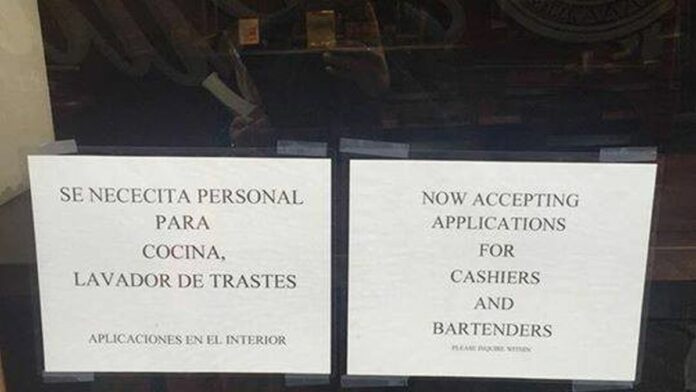
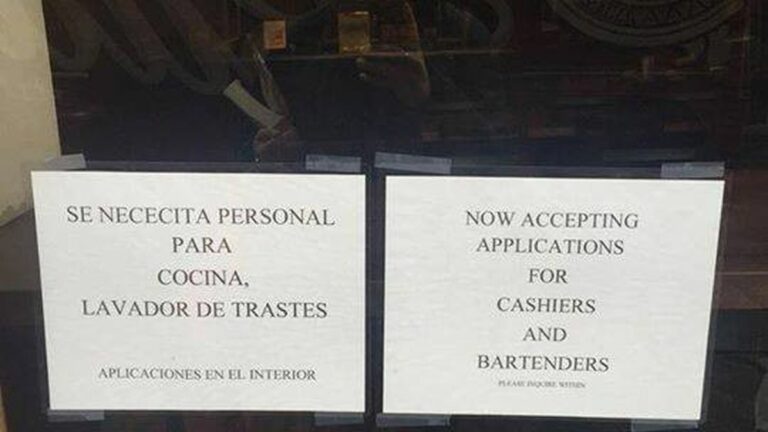
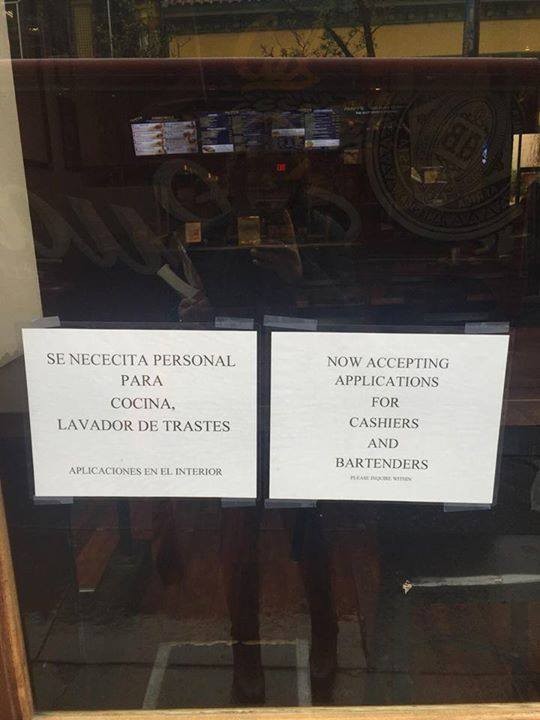
Brownyn Harris was walking down Telegraph Avenue in Berkeley last Friday when she noticed two pieces of paper inside the window at Pappy’s Grill & Sports Bar that forced her to stop and take a photo. They were two hiring signs. One was in English, and it asked for cashiers and bartenders. The other was in Spanish, and it asked for dishwashers.

Harris, who is a non-native Spanish speaker, said she went back to double-check that she had read the signs correctly, and even looked up the words for reassurance. She took a photo of the signs and sent it to her friend Elma Rico Kastning, who grew up speaking Spanish at home, and confirmed what the business was asking for.

“Bronwyn sent me the full picture and what took me by surprise was that the dishwasher was only in Spanish,” Rico Kastning said. “That’s what sparked my disgust.”

Feeling more upset about the signs as she walked, Harris posted the photo to the restaurant’s Facebook page. As it turned out, she wasn’t the only one looking to the business’s social media presence for answers.

The signs, which were taken down later that day, were widely criticized on the restaurant’s Facebook page by Berkeley locals and other passersby who noticed and were offended.

Online, Marissa Martinez wrote, “Do Spanish speakers have to sit in a different section? Que mal.” Another commenter, Gloria Gamberg, simply said, “Awful.”


[jump] Rather than apologizing for the discriminatory nature of the hiring method, the restaurant adamantly defended its signs:

As a small business owner operating in Berkeley for over 20 years, employing over 400 employees during that time, it’s pretty surprising you are insinuating we discriminate in our hiring practices. If you were actually a customer of Pappy’s you might notice we have 3 African American bartenders and an American Indian bartender. We support diversity and equality and we wouldn’t have been able to operate in Berkeley without that approach.

We base our hiring and advancement on performance and ability. In fact, one of our African American bartenders started as a cashier and she wanted to bartend and even though she didn’t have any experience, we gave her a shot. She is now one of our best bartenders and has a great following.

Specific to your question about the signs for certain positions, yes we had a sign, in Spanish only, for a dishwasher. Why? Because our two Chefs (who have been with us for 15 and 8 years respectively) and our prep cooks use Spanish as a primary language and often our dishwasher helps with prep. So to make our prep kitchen more efficient we require our dishwasher to speak Spanish. So, by posting the sign in Spanish only, we save time by not interviewing people who don’t speak Spanish.

Your posting suggests that is racist or incorrect. Why? Are you saying only certain races speak Spanish? Sorry if there was a misunderstanding. The signs have been taken down and will be revised. Just as we need our bartenders and cashiers to speak English, we require our prep & dishwashing staff to speak Spanish. If you speak Spanish, we would be happy to consider your application for dishwashing or prep.
Those upset by the signs were unswayed by the response, which seemed to further elaborate on the business’ discriminatory practices – like pointing to how it hires only Spanish speakers for dishwashing or prep jobs – used by the restaurant.

“It was full of if you this ‘if you were actually a customer you would know,’ and ‘we have a Black bartender how could we be racist’ sort of thing,” Harris said. “Their apology was condescending and didn’t make me feel any better about it.”

Daniel Judysson Olson also replied to the business’s explanation online saying, “Even if your intent is simplicity for yourselves, this type of unequal advertising fosters segregation in the workplace. Regardless of your intent, people reading the signs will feel that their group is unwelcome to apply.”

Though the business claims it had the dishwashing job listed in Spanish to save time by only interviewing people who only know the language, there was no indication of why this would be justifiable on the original fliers. Rico Kastning and others have suggested the business should have posted both signs in both languages, or include information about which positions require English proficiency and why, as well as which positions require Spanish proficiency and why.

Saru Jayaraman, co-founder and co-director of Restaurant Opportunities Center United, a nonprofit that seeks to improve wages and working conditions for low wage restaurant workforce in the United States, also felt the signs were discriminatory, but said the issue isn’t limited to Pappy’s. “You walk into any restaurant and what’s on these signs is normalized to any restaurant. Skin color gets darker the further back in the restaurant you go. It’s incredibly pervasive and very common,” Jayaraman said.

It doesn’t matter if the restaurant owners are trying to hire only dishwashers who speak Spanish because the chefs speak Spanish if the line of segregation between the front and back remains, Jayaraman said. What’s still missing is an avenue to move into livable wage jobs and to move up to front of the house jobs, which her organization has found that whites have double the opportunity of being hired into.

Jayaraman said ROC’s research has shown that 66 percent of restaurant workers nationwide never get any promotions or raises. Hiring only Spanish speakers to perform back-of-the-house jobs enables workplace discrimination in an industry that notoriously averts opportunities to cross lines of segregation. “It’s not about this one restaurant, it’s about the industry,” Jayaraman said. “You’d be letting the industry off the hook if you said it was just this.”

Pappy’s owner Alex Popov did not respond to the Express regarding the hiring signs.
CoCo County Moves Closer to Green-Energy Plan that Would Replace PG&E

Contra Costa County took another step toward taking control of its electricity service away from PG&E this month. All sixteen eligible cities voted to provide information on the amount of electricity they use and participate in a feasibility study for a Contra Costa County “community choice” energy system, in which a county agency would become the electricity provider for county residents. In addition, eight of the cities voted to contribute to the cost of the feasibility study.

Similar community choice energy systems (CCAs) already operate in Marin and Sonoma counties. San Francisco is set to launch one soon, and other Bay Area counties, including Alameda, are on the way toward creating their own. The desire to switch to clean sources of electricity initially motivated the push toward CCAs, but advocates say they can also save ratepayers money and contribute to local economic development.

[jump] On February 29, the Internal Operations Committee of the Contra Costa County Board of Supervisors will hear the results of the survey of cities, which also included their level of interest and willingness to share the cost of a technical feasibility study. After that, the board of supervisors will decide whether to authorize a full feasibility study, which will calculate how much energy the county needs and what possible rates to charge residents.

Several of the cities are simultaneously applying to join Marin Clean Energy, a community-choice agency based in Marin. Richmond, El Cerrito, and San Pablo are already part of Marin Clean Energy, which is planning to build a local solar farm on contaminated Chevron land in Richmond. Many advocates for community choice energy systems in both Alameda and Contra Costa counties want the local electricity systems to focus on generating clean energy within the county. The deadline for cities to decide whether they want to commit to joining Marin Clean Energy is March 31.

Carol Weed, of Contra Costa Clean Energy Alliance, said by fostering local energy generation, a CCA “could mean an economic boon for the county, as developers rush to build more solar and wind farms here, creating an environmentally sustainable income stream to county and city governments as well local businesses.” For that reason, she said, it would be better for Contra Costa cities to create their own CCA. She added, “The EPA has calculated that if all the county’s idle brownfields [contaminated former industrial sites] were converted to energy developments, they could supply three times the energy needed by Contra Costa.” 


Friday Must Reads: State Regulators Protect Rooftop Solar; BART Okays Affordable Housing Policy

Stories you shouldn’t miss:

1. The California Public Utilities Commission rejected a request by PG&E and the state’s other utilities to implement steep rate hikes on homeowners who install rooftop solar. The Chron reports that the CPUC voted 3-2 to keep the current rooftop solar rates in place. Environmentalists and solar industry officials, who had accused PG&E of trying to snuff out the rooftop solar industry in California, praised the CPUC’s decision.

2. The BART Board of Directors approved a new policy that requires 20 percent of new housing units built on agency property to be affordable, the Bay Area News Group$ reports. Affordable housing advocates had pushed hard for the new policy. In an effort to reduce greenhouse gases emissions from cars, the state has earmarked funding for more housing next to BART stations and other mass transit hubs.

3. California’s cap-and-trade fund has about $1.6 billion in unspent money, because Governor Jerry Brown and the Democrat-controlled state legislature can’t agree on how to spend the funds, the LA Times$ reports. The fund receives revenues from the sale of carbon credits — a program that is designed to reduce greenhouse gas emissions — and the money is supposed to be used expand programs that help fight climate change.


[jump] 4. A deadly pest infestation has triggered the quarantine of citrus trees in Southern Alameda County, along with portions of Santa Clara, San Mateo, and San Francisco counties, the Chron reports. The pest, Asian citrus psyllid, is already threatening Southern California’s $2.3 billion citrus industry.

5. And Mokka, a coffee shop on Telegraph Avenue in Berkeley, is closing after ten years in business, Berkeleyside reports. The cafe’s owners are blaming the city’s minimum wage increase for the closure.

Rent Hike May Force Oakland’s Genova Delicatessen to Close

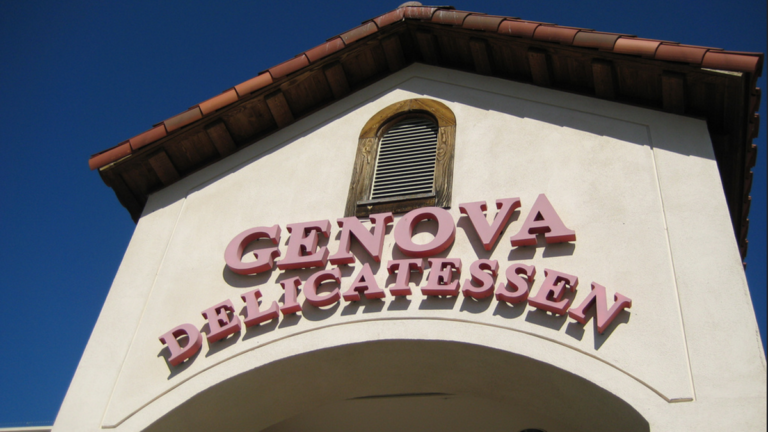
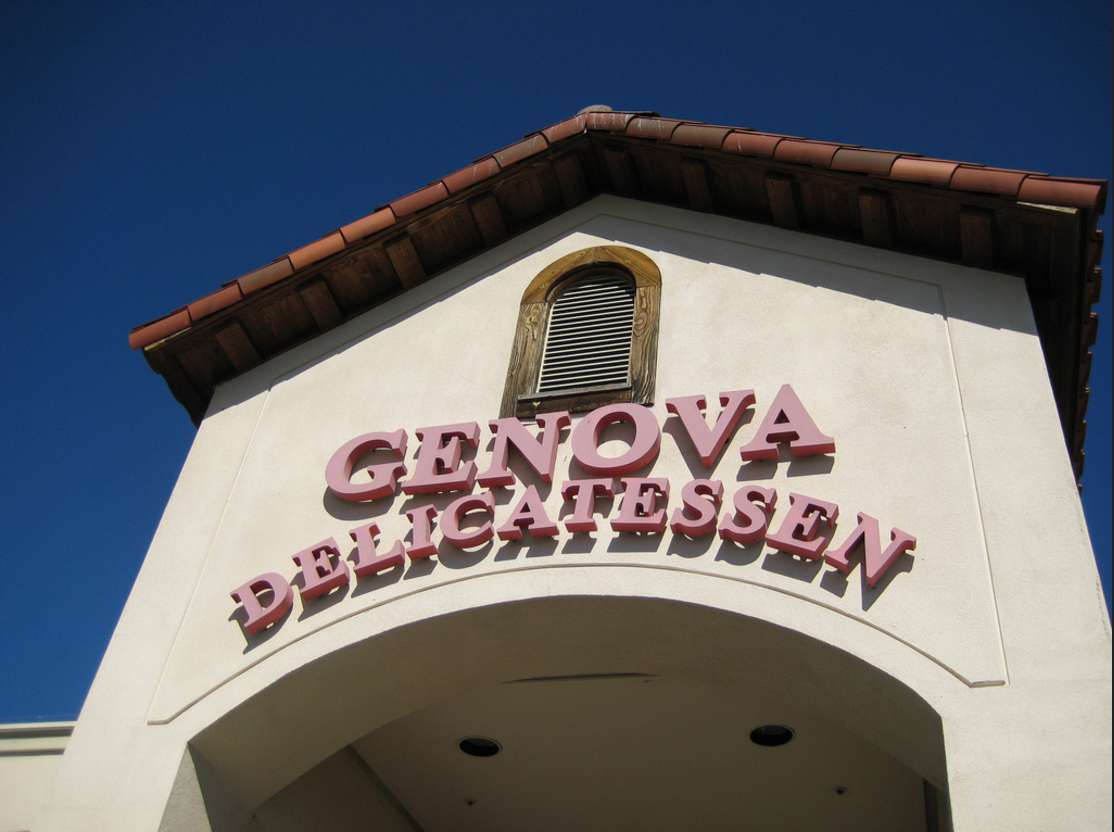
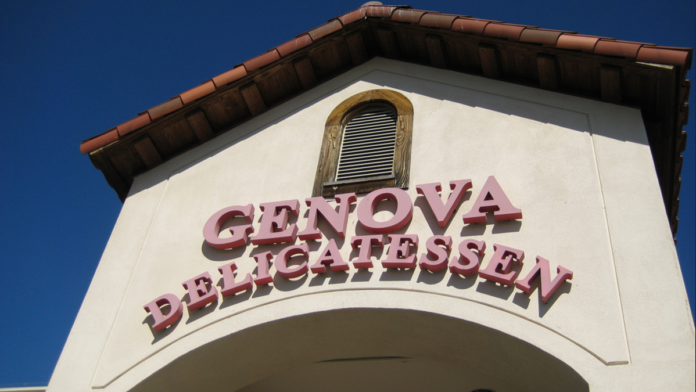
Don’t look now, but another Oakland institution might be in danger of being priced out of The Town. Genova Delicatessen (5095 Telegraph Ave., Oakland), which has been a fixture in the Temescal neighborhood since 1926, may be forced to shut down its retail store in the spring due to a looming rent increase.

[jump] When reached by phone, Julio De La Cruz, a general manager who has been with the business for 26 years, said Genova Delicatessen’s owners are currently negotiating with their landlords. “If they don’t budge, we’ll be left without any other choice but to close,” he said.

According to De La Cruz, the deli’s lease is up at the beginning of June, so the owners will try to make their final decision by April. Genova’s wholesale business, which is run out of a separate manufacturing facility in Oakland, should be unaffected. But De La Cruz said he’s unsure how the company’s second retail shop in Napa, which depends heavily on the Oakland mothership, might be impacted. The Oakland delicatessen alone employs more than twenty people, De La Cruz said.

Genova Delicatessen is best known for its well-stuffed Italian cold-cut sandwiches and take-home pasta dishes — lasagnas and assorted raviolis. The deli’s current location, in the Walgreen’s shopping plaza at the corner of 51st Street and Telegraph Avenue, has been open since 1996. The original shop, which dated back to 1926, was just down the street.

“It’s a landmark. And that’s what the landlords don’t understand,” De La Cruz said. “Genova is the foundation of Temescal Plaza — of Temescal period.” 

This Weekend’s Top Five Events

If you’ve recovered from your fit over the Twitter battle between Kanye West and Wiz Khalifa that eclipsed all other content on the internet this week, you should probably reacquaint yourself with the outside world because it’s the weekend again! Below, find suggestion on how to do just that.

Metro Boomin
If Young Metro don’t trust you/I’m gon’ shoot you, Future croons softly before the beat drops on his now-iconic hit with Drake, “Jumpman,” from their collaborative 2015 mixtape What a Time to be Alive. Metro Boomin, the 22-year-old Atlanta producer who made the majority of the beats on WATTBA, also gets plenty of shout-outs on Future’s brand new tape, Purple Reign. A sample of one of Drake’s lines from “Digital Dash,” Esco and Boomin/They got it on smash, echoes throughout the thirteen-track project, giving due credit to one of the key architects of Future’s sound. These endorsements from Future and other established artists have revolutionized Metro Boomin’s career, making him one of the most sought-after beatmakers in the industry — and for good reason. His hit-making ability, so far, has been bulletproof. Metro Boomin DJs at 1015 Folsom in San Francisco on January 29.
— Nastia Voynovskaya
Fri., Jan. 29, 10 p.m. $25. 1015.com


[jump]
Gene Yang at Escapist 
Oakland native Gene Yang was recently named the National Ambassador for Young People’s Literature by the Library of Congress. The honor is deserved. His most famous graphic novel is American Born Chinese, a profound yet accessible meditation on the experience of being Asian American that ends in a revelatory plot twist. His other books include Avatar Last Airbender, Level Up, Boxers and Saints, The Shadow Hero, and most recently, Secret Coders. He also currently writes Superman for Marvel Comics. You may or may not have heard of that one. Yang will be at Escapist Comics (3090 Claremont Ave., Berkeley) on January 30 at 2 p.m. to sign books, talk about his work, and give a talk on how to break into the comic industry. For anyone interested in a graphic novel career, or is just a fan of Yang, this event will be a treat. — Sarah Burke
Sat., Jan. 30. Free. EscapistComics.com

SFBW: Beer & Soul
As this year’s bigger-and-better-than-ever edition of SF Beer Week winds down, head over to The Good Hop (2421 Telegraph Ave., Oakland), the Uptown Oakland beer bar and bottle shop, for one last hurrah on Saturday. For this evening of “Beer & Soul,” freelance beer guru Sayre Piotrkowski has put together a selection of six beers from the Nevada City-based Ol’ Republic Brewery — which Piotrkowski touts as California’s best brewer of lagers — to pair with soul food dishes provided by the Kenny’s Heart and Soul food truck. (Yes, there will be riblets and barbecue pork mac ’n’ cheese.) To cap off the festivities, Ben Love, the owner and brewmaster at Portland’s Gigantic Brewing, will be on-hand to DJ. Fittingly, some of those Gigantic beers will also be available on tap. — Luke Tsai
Sat., Jan. 30, 3-11 p.m. a la carte. TheGoodHop.com

Soft Serve
Last month, I wrote about the newly established CTRL+SHFT collective, a democratic group of fourteen female artists sharing studio space and curating shows in a warehouse in West Oakland (see “Collective Control,” 12/16). From January 29 through February 19, you’ll be able to visit the space and get to know the artists’ work, which spans a variety of media. Soft Serve, the first show in the CTRL+SHFT gallery (1430 34th St., Oakland), will be a showcase of work from the collective members: Megan Reed, Addy Rabinovitch, Beryl Bevilacque, Channing Morgan, Danielle Genzel, Erica Molesworth, Katy Crocker, Jessica Hubbard, Maria Guzmán Capron, Andrea Fritsch, Eden Redmond, Sofie Ramos, C.A. Greenlee, and Yerin Kim. It’s also meant to reflect the spontaneously collaborative ethos of the space. “Finality is not the goal,” reads the exhibition statement. “Furthermore, performative interventions between the artists, audience, and exhibition are expected during the opening night.” — S. B. 
Opening reception on Fri., Jan. 29, 6 p.m. Show through Feb. 19. Free. CtrlShftCollective.com


The Soft Moon 
Take me far away/To escape myself/I was born to suffer, sings Luis Vasquez on “Far.” The track is from his new album, Deeper, a synth-driven dance pop record with gloomy, industrial overtones that constitutes his third full-length release under the moniker The Soft Moon.
Vasquez’ washed-out voice floats over the jittery synth riffs and pounding beat of “Far” with unexpected clarity, bringing his self-reflective lyrics to the fore. The song’s opening lines reference the period of self-imposed isolation that Vasquez went through to write Deeper, which he described in a recent interview as his most introspective work to date.
Formerly based in Oakland — where he started The Soft Moon and built a large, international following — he temporarily relocated to Venice, Italy in 2012 to work on the album. After its completion, he moved to Berlin, where he’ll stay for the foreseeable future, he said. However, he travels frequently: At the time of our interview earlier this month, he had embarked on a North American tour to promote the new release. On January 29, he’ll play his first hometown show in years at The New Parish. — N. V. (Read the full story here.) 
Fri., Jan. 29, 9 p.m. The New Parish (1741 San Pablo Ave., Oakland). $13, $16. TheSoftMoon.com 


If your pockets are feelin’ light and you’re still yearning for more suggestions, we’ve got a ton, and these ones are all FREE! We’re Hungry: Got any East Bay news, events, video, or miscellany we should know about? Feed us at Sa*********@************ss.com.

Dozens of Renters Lose Homes as City Closes 1919 Market Street Warehouse in Oakland

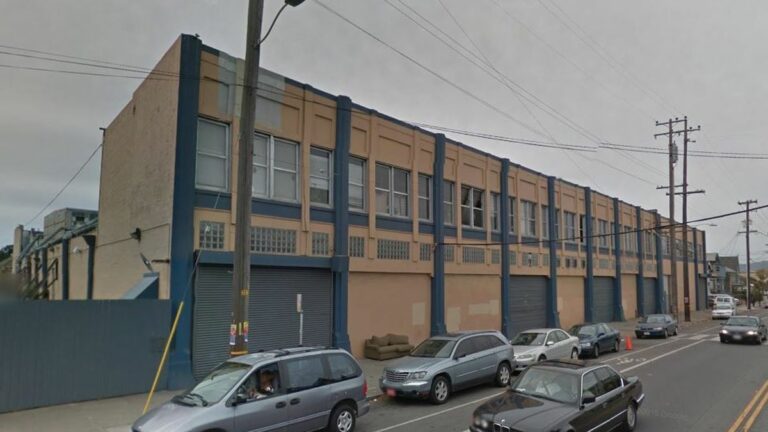
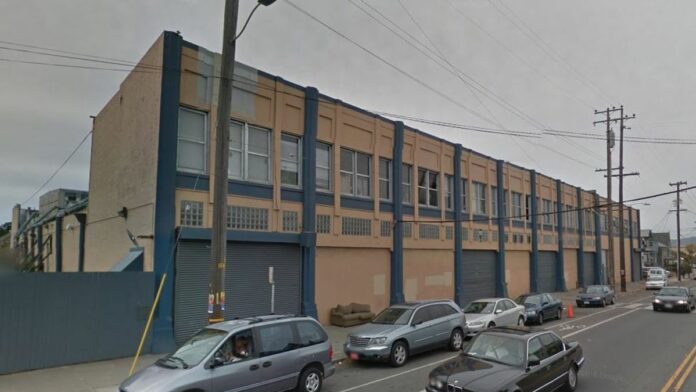
Residents of the sprawling two-story warehouse at 1919 Market Street in West Oakland were given orders to vacate the property today by City of Oakland building inspectors who have determined it is unsafe for habitation. Residents have until 11:59 p.m. on January 31 to vacate the property. The building’s closure is forcing dozens of residents onto the street, including some who say they have nowhere to go.

Joy Newhart, a dancer who moved into the building in 2013, said that her spacious loft was the perfect live-work environment for her creative profession. Newhart currently has two roommates who sublet from her and several cats.

“I don’t have anywhere else to go,” said Newhart. “This building used to house over one-hundred low-income artists. We’re down to thirty or forty now. It’s devastating an artists community.”

[jump] The building’s numerous code violations, some of them serious, became the subject of controversy last year after one of the building’s residents, Will Urbina, began posting Youtube.com videos of water leaking through the roof, tangled electrical wires, and other problems. An article in the April 15, 2015 edition of the Express highlighted these problems, and the city subsequently sent building inspectors to examine the warehouse. According to current residents, all the bad publicity was the beginning of the end.

In November, Timothy Low, an inspections manager for Oakland, sent the owner of the warehouse, Seth Jacobson, a notice declaring 1919 Market Street a public nuisance. The city also revoked the building’s certificate of occupancy. Although 1919 Market Street was an unpermitted residential building, several current residents told me that for years the city looked the other way while residents made additions to their lofts.

The building was previously managed by Madison Park Financial, a real estate company owned by John Protopappas, a close friend of Mayor Libby Schaaf. Madison Park Financial withdrew from managing 1919 Market Street last year and was replaced by a company called 1919 Bayside, which is run by San Francisco real estate entrepreneur Danny Haber. According to several building residents, Haber held meetings last November in the parking lot of 1919 Market to inform them that the city was going to make them all to move out, but that his company would provide them with relocation assistance.

Some of the remaining residents have been skeptical of Haber’s offers, however, because last year another company run by Haber, The Negev, was sued in San Francisco over alleged wrongful evictions to push out rent-controlled tenants and use their apartments for tech bunk houses. Haber did not immediately return a phone call seeking comment on the situation at 1919 Market Street.

“They claimed that they will re-offer our units to us, that we can move back eventually,” said Sam Coad, a current resident of the building. “They have been offering us move out packages, and they’re ostensibly following the laws, but people are certainly of the opinion that they might try to make it so we can’t move back in the end.”

Newhart puts some of the blame on the city. She said that the city failed to communicate directly with the tenants about the impending closure of the building, communicating instead with the landlord. Newhart said she contacted officials in the Fire Department and Department of Planning and Building on multiple occassions seeking a “straight answer” about the status of the building, but that no one from the city ever provided her with a copy of the public nuisance declaration.

“I’ve been trying to get a straight answer for months, and this is it, the day they red tag the building, just days before I have to move out,” said Newhart.

Mid-Week Menu: Belcampo Meat Co. (Probably) En Route to Oakland, Homeskillet Brings Fresh Doughnuts to Alameda

Welcome to the Mid-Week Menu, our roundup of East Bay food news.

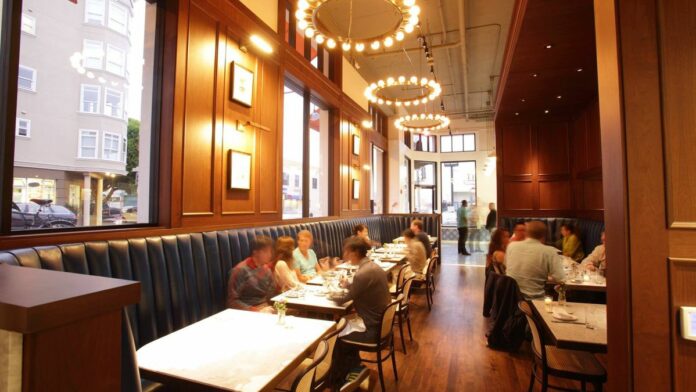
1) Today brought news that Belcampo Meat Co. has shut down its butcher shop in San Francisco’s Mission District, citing, among other reasons, logistical/marketing challenges and a desire to prioritize a new “SF location” that it plans to open (or at least announce) in March. Could that new location actually be across the bridge in Oakland, where Belcampo has its offices, rather than San Francisco? Six months ago, the sustainability-minded meat company hosted an open house at its “soon-to-be new location” at 369 3rd Street, a 5,000-square-foot warehouse in the Jack London district. And the company appears to have applied for a Type 47 (aka full bar) liquor license for that site.

[jump]

All signs seem to point toward a combination restaurant/butcher shop similar to others that Belcampo runs in both Northern and Southern California. When reached by email, however, spokespersons for Becampo wouldn’t confirm plans for any new location in the East Bay. As always, stay tuned for updates.

2) The Punchdown, the Uptown Oakland natural wine bar and bottle shop that has been closed for the past two years, has reopened in a larger, newly built-out space at 1737 Broadway, a few blocks down from its original location, Inside Scoop reports. As before, the focus will be on sustainably produced wines made with no additives. Food offerings will be slightly more extensive, with nightly hot dinner specials such as short ribs and polenta — though perhaps not quite yet during this soft opening phase, as the wine bar works on getting its PG&E setup sorted out.

3) Homeskillet, a new breakfast and lunch spot, is open at 1363 Park Street in Alameda. The specialty of the house: housemade doughnuts. This appears to be a second location of the Homeskillet in San Francisco’s Union Square — with a bigger doughnut emphasis, perhaps.

4) Mooyah, a fast food chain that currently has one East Bay location in Walnut Creek, is planning to expand to a to-be-determined location in Berkeley, Berkeleyside Nosh reports. The Texas-based chain specializes in burgers and milkshakes; hence, “Mooyah.” Get it?

5) Casa Jimenez (4345 International Blvd., Oakland), the Fruitvale district restaurant that for a time was home to my favorite carnitas in the city, may have closed. A Chowhound poster reports finding the door chained shut, and the phone line has been disconnected. We’ll post an update if we get confirmation on way or the other.

6) Grocery Cafe owner William Lue is keeping himself busy. This week I wrote about Grocery Cafe’s latest plans, which include outdoor grilling and eight-course Burmese banquets. Now, Hoodline reports that Lue is opening a new pan-Asian fast food restaurant in San Francisco’s Tenderloin district. (Hat tip to Eater.)

7) As previously reported, Modu (4828 Telegraph Ave., Oakland) will open in Temescal as a Cal-Asian rebranding of the yakitori joint Kushido that previously occupied that spot. A quick update: The restaurant will open for two weeks as a “test kitchen” starting Friday, January 29. During this trial period, the restaurant will be open Wed.–Sat. 5:30–8:30 p.m. on a first-come, first-serve basis. Inside Scoop has a sample menu posted. The restaurant will officially open at some later point in February.

8) Berkeleyside Nosh reports that an underground gas storage tank has been uncovered on the former Oscar’s lot in downtown Berkeley, complicating the construction process for the Sweetgreens salad chain that is opening there.

9) As SF Beer Week wraps up this weekend, here’s one more event to check out on Saturday, January 30 — a “Beer & Soul” party hosted at The Good Hop (2421 Telegraph Ave., Oakland), with Ol’ Republic beer and food courtesy of the Kenny’s Heart and Soul food truck.

10) Finally, ICYMI, a new location of Cholita Linda is coming to Lakeshore Avenue, and Bun Mam Soc Trang was forced to close due to lease difficulties.

Got tips or suggestions? Email me at Luke (dot) Tsai (at) EastBayExpress (dot) com. Otherwise, keep in touch by following me on Twitter @theluketsai, or simply by posting a comment. I’ll read ‘em all.

Bill to Halt Pot Bans in California Goes to Governor’s Desk

California demonstrated its seriousness about regulating medical marijuana by passing to the governor one of the first bills of the year. Assembly Bill 21 passed the full Assembly on a unanimous vote 65-0 today and heads to the governor’s desk for his signature.

AB 21 lifts a March 1 deadline for localities to regulate medical cannabis activity locally, or face state regulatory override. The fear of losing local control this winter prompted more than one hundred cities and counties to preemptively ban medical cannabis activity — sometimes including the cultivation of a single plant.

AB 21’s passage will encourage localities to stop reflexively banning and give more credence to calls for patients’ safe access and sensible local rules on the multi-billion dollar industry. The bill had the support of both industry as well as cities and cops.

California NORML and Americans for Safe Access applauded the Assembly vote.


[jump] Aaron Herzberg, an attorney for a holding company of licensed medical marijuana businesses and properties stated cities can slow down now. “If Governor Brown chooses to sign this bill into law, cities will have the time to take a more reasonable approach to this issue and, ideally, allow licensed marijuana to be cultivated and distributed throughout the state. This is a vitally important piece of legislation that fixes a serious drafting error, and the sooner it can be signed into law, the better.”

Effects will be immediate in Alameda County. The county banned medical cannabis activity, but included a “sunset” provision that lifted the ban when AB 21 becomes law.

At least five other bills seek to fund, clarify, alter, or add to California’s new regulations. Many pit industry against local governments, or industry versus itself, as detailed in this week’s Legalization Nation print column.

Opponents of Crude-by-Rail Project Score a Key Victory

The statewide protest movement against plans to ship tar sands oil by rail (see “Crude-by-Rail Projects Face Key Votes”) scored a key victory this week when the San Luis Obispo County planning department recommended a “no” vote on a proposal by the Phillips 66 refinery there. Phillips 66 wants to build a rail spur to connect its refinery to the major north/south rail line along the California coast so it can import tar sands crude oil from Canada to its San Luis Obispo refinery.

Staffers recommended that the county planning commission turn down the proposal when it meets on February 4. Their report cited the findings of the county’s final environmental impact review, which concluded that the project would increase air pollution and risk de-railings, oil spills, and explosions. The project, the review found, would harm and endanger environmentally sensitive areas, agriculture, human health, the economy, water quality, the climate, and the overall quality of life in the county. Communities for a Better Environment (CBE), one of the organizations that has been fighting the project, also noted, “The final environmental review document admits that our communities were correct: The Phillips 66 Santa Maria Rail Spur Extension Project is a project to deliver tar sands by rail.”

The project is actually worse than the environmental review found, said CBE scientist Greg Karras, because it considers only the harm from shipping the crude oil by rail. In addition, he said, refining this type of oil produces more greenhouse gases and more locally harmful pollution than refining other kinds of crude.


[jump] In addition to the findings in the county’s environmental review, the San Luis Obispo Planning Department report acknowledged the “significant local, regional, and statewide concern expressed through the various stages of the project.

“The general consensus among the comments received is that project benefits do not outweigh the potential hazards it will bring to the public,” the report continued. “These hazards mainly stem from rail accidents, oil spills, health hazards, and explosions/fires within communities along rail lines as a result of an increase of crude transport via rail.” These risks would affect communities all along the rail lines, from the Bay Area south to Los Angeles.

Valerie Love, an Oakland-based organizer for the Center for Biological Diversity, one of the leaders of the statewide campaign against the project, said in a statement: “This recommendation is unprecedented in how clearly it spells out the health, safety, and environmental risks of this project. Now it’s up to the planning commission and the board of supervisors to heed the recommendation and reject this dangerous project once and for all.”

Environmental activists said it’s now especially important to continue their plans for a massive showing of opposition to the project at the planning commission meeting February 4. Buses and van pools from around the state will bring hundreds of protestors to the meeting to demand that the planning commission follow the staff’s recommendation and reject the project.

“What this says to me is that what we’ve been doing is working,” said Karras. “Now we have to keep going and win it.”

Thursday Must Reads: Warriors Sell SF Arena Naming Rights to Chase; Californians Want Stricter Gun Control Laws

Stories you shouldn’t miss:

1. The Golden State Warriors have sold the naming rights to their planned San Francisco arena to JP Morgan Chase bank for an undisclosed sum, the Chron reports. Under the deal, the Warriors’ new home, which is to be built on the San Francisco waterfront, will be called the Chase Center. The naming rights deal is an indication that the Warriors and Chase think the team will prevail in two lawsuits filed against the new arena by UC San Francisco Medical Center donors who contend that the facility will create a traffic nightmare for the hospital. The lawsuits have delayed the planned opening of the arena until at least 2019.

2. A large majority of Californians — 62 percent — say the government does not do enough to regulate guns, the SacBee$ reports, citing a new survey by the Public Policy Institute of California. The poll also found that 82 percent of state residents think undocumented immigrants should be able to stay in the United States legally if certain requirements are met, and “68 percent, a record-high number, say immigrants are a benefit to the state because of their hard work and job skills.”

3. Governor Jerry Brown unveiled a statewide ballot measure for this November that seeks to offer prison inmates more chances to be released from custody if they’ve been rehabilitated, the LA Times$ reports. The measure also would require judges to decide whether juveniles should be tried as adults — rather than prosecutors.


[jump] 4. A state appellate court may greenlight a lawsuit filed by public education advocates who contend that California has failed to provide an adequate education to K-12 students in violation of the state’s constitution, EdSource reports (h/t Rough & Tumble).

5. Oakland Mayor Libby Schaaf plans to announce today a public-private partnership to fund education programs designed to help children from low-income families graduate from high school and go to college, the Chron$ reports. The mayor, however, has yet to fully identify the $38 million in funding for her Oakland Promise initiative.

6. A federal judge ruled that Berkeley can move forward with its new law requiring cellphone retailers in the city to warn customers that carrying phones close to their bodies might violate federal radiation standards, the Chron reports. The smartphone industry had sued to block the new law, arguing that it violates its First Amendment rights.

7. And rideshare company Lyft agreed to a $12.25 million settlement with its drivers in which the drivers will receive added employment protections but will remain independent contractors and not employees of the company, the Mercury News$ reports. Uber is facing a similar lawsuit from its drivers, but there is no indication that it plans to also reach a settlement.

Signs Reveal Discrimination Practices at Pappy’s Grill & Sports Bar in Berkeley

Brownyn Harris was walking down Telegraph Avenue in Berkeley last Friday when she noticed two pieces of paper inside the window at Pappy’s Grill & Sports Bar that forced her to stop and take a photo. They were two hiring signs. One was in English, and it asked for cashiers and bartenders. The other was in Spanish, and it asked...

CoCo County Moves Closer to Green-Energy Plan that Would Replace PG&E

Contra Costa County took another step toward taking control of its electricity service away from PG&E this month. All sixteen eligible cities voted to provide information on the amount of electricity they use and participate in a feasibility study for a Contra Costa County “community choice” energy system, in which a county agency would become the electricity provider for...

Friday Must Reads: State Regulators Protect Rooftop Solar; BART Okays Affordable Housing Policy

Stories you shouldn’t miss: 1. The California Public Utilities Commission rejected a request by PG&E and the state’s other utilities to implement steep rate hikes on homeowners who install rooftop solar. The Chron reports that the CPUC voted 3-2 to keep the current rooftop solar rates in place. Environmentalists and solar industry officials, who had accused PG&E of trying to snuff...

Rent Hike May Force Oakland’s Genova Delicatessen to Close

Genova's current retail store has been open since 1996. Credits: Jose and Roxanne/Flickr (CC) Don’t look now, but another Oakland institution might be in danger of being priced out of The Town. Genova Delicatessen (5095 Telegraph Ave., Oakland), which has been a fixture in the Temescal neighborhood since 1926, may be forced to shut down its retail store in the spring...

This Weekend’s Top Five Events

If you've recovered from your fit over the Twitter battle between Kanye West and Wiz Khalifa that eclipsed all other content on the internet this week, you should probably reacquaint yourself with the outside world because it's the weekend again! Below, find suggestion on how to do just that. Metro Boomin If Young Metro don’t trust...

Dozens of Renters Lose Homes as City Closes 1919 Market Street Warehouse in Oakland

Residents of the sprawling two-story warehouse at 1919 Market Street in West Oakland were given orders to vacate the property today by City of Oakland building inspectors who have determined it is unsafe for habitation. Residents have until 11:59 p.m. on January 31 to vacate the property. The building's closure is forcing dozens of residents onto the street, including some who...

Mid-Week Menu: Belcampo Meat Co. (Probably) En Route to Oakland, Homeskillet Brings Fresh Doughnuts to Alameda

Welcome to the Mid-Week Menu, our roundup of East Bay food news. 1) Today brought news that Belcampo Meat Co. has shut down its butcher shop in San Francisco’s Mission District, citing, among other reasons, logistical/marketing challenges and a desire to prioritize a new “SF location” that it plans to open (or at least announce) in March. Could that...

Bill to Halt Pot Bans in California Goes to Governor’s Desk

California demonstrated its seriousness about regulating medical marijuana by passing to the governor one of the first bills of the year. Assembly Bill 21 passed the full Assembly on a unanimous vote 65-0 today and heads to the governor’s desk for his signature. AB 21 lifts a March 1 deadline for localities to regulate medical cannabis activity locally, or...

Opponents of Crude-by-Rail Project Score a Key Victory

The statewide protest movement against plans to ship tar sands oil by rail (see “Crude-by-Rail Projects Face Key Votes”) scored a key victory this week when the San Luis Obispo County planning department recommended a “no” vote on a proposal by the Phillips 66 refinery there. Phillips 66 wants to build a rail spur to connect its refinery to...

Thursday Must Reads: Warriors Sell SF Arena Naming Rights to Chase; Californians Want Stricter Gun Control Laws

Stories you shouldn’t miss: 1. The Golden State Warriors have sold the naming rights to their planned San Francisco arena to JP Morgan Chase bank for an undisclosed sum, the Chron reports. Under the deal, the Warriors’ new home, which is to be built on the San Francisco waterfront, will be called the Chase Center. The naming rights deal is an...
19,045FansLike
17,709FollowersFollow
61,790FollowersFollow