
Letters for the Week of April 6, 2016

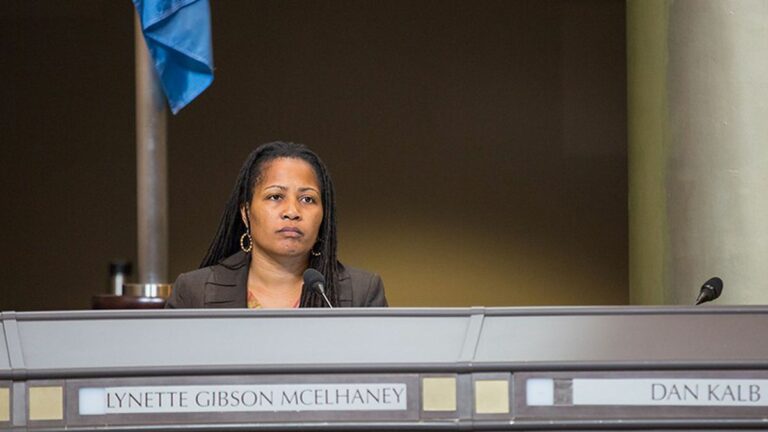
“Oakland Police Commission Battle Heating Up,” News, 3/23

Anti-Police Conspiracy

Unfortunately, this article and similar articles illustrate that there is a war on the police generally promoted by the far left of the Democratic Party, which is now in control of the Democratic Party. This is particularly unfortunate for Oakland, since there is a dire need for strong and effective law enforcement in the flatlands. There is rampant petty crime, drug dealing, gun violence, and danger in the streets. The dangerous gang activity in the streets should be the focus of our city officials. Yet, all they do is to hamstring the police, protecting the criminals that should be put in jail. Those who do not understand this have no idea as to what actually goes on in the streets of Oakland. It is a crying shame.

Jerry Udinksy, Oakland

Right-Wing Loonies

I find it interesting that the topic of police reform brings so many right-wing loonies out of the woodwork. The notion that “there is a war on the police generally promoted by the far left of the Democratic Party” is not even close to being true. In Oakland’s case, the entire department has been under a consent decree since 2003, not because citizens are at war with police, but because of police misconduct. To say that the Oakland Police Department has been resistant to reform is an understatement. Progress under the consent decree has been at a snail’s pace, while the Citizens Police Review Board has been ineffective and under-resourced.

The larger question here is, what’s wrong with police accountability? Wouldn’t that make for a better department and build trust with the community. More crimes would be solved. With any luck, a reformed police commission would also bring about a drop in the tens of millions of dollars Oakland has paid in misconduct lawsuits. These millions of dollars aren’t available for schools or parks. Painting this as an ideological or partisan issue, when it’s really just common sense, is entirely misguided.

Eric Arnold, Oakland

“Wine, Au Naturel,” Taste, 3/23

Shout Outs

Nice article on a wonderful establishment! The author might also have noted that Oakland has a number of forward-thinking wine shops that specialize in natural wines, including Oakland Crush, Ordinaire’s retail section, Paul Marcus, and Bay Grape. Let’s also give a shout-out to Trail Marker among Oakland’s natural winemakers!

Sarah Miller, part owner of Oakland Crush, Oakland

Cutting Edge

Nice article. However, you like many others, neglect to mention another local winemaker from Berkeley who is one of the pioneers in the low-alcohol, no new oak, non-manipulated style of wine. That would be Steve Edmunds of Edmunds St. John. Just because he’s been at it for thirty years doesn’t mean he still isn’t on the cutting edge, using concrete eggs for his Rocks & Gravel blend as one example.

Larry Stein, Belmont

“Goodbye, Express Readers,” 3/23

Blessings

Bob, I hate to see you go. Seven Days is the way I get my day going. It’s much more stimulating than the proverbial cup of coffee. I have to say, without the Express in the last year, we may have never known all the shenanigans around the E. 12th Street parcel fiasco, and today’s piece redefining what affordable housing means in Oaktown is the kind of journalism I hope the Express will continue without you. I am so very grateful for the cover story the Express did on Oakland’s mobile food policy and the lack of permits for food trucks that caused then food writer Jon Birdall to describe me as “calculating or clueless!” I happen to know where you’re headed, but I wish you’d replace Chip Johnson’s column for the Chronicle. But maybe that is truly dreaming. Blessings on you.

Karen Hester, Oakland

The Real Oakland

Moving here from Los Angeles in 2008 (the day of Obama’s election), I quickly became a devoted reader of the Express. You introduced me to the real Oakland and I always read your stuff first. Thank you for reporting facts.

Tom Smith, Oakland

Buses from Hell

Yes, Robert did the best article on AC Transit and the new buses from hell. I was always surprised when Chris Peeples from AC Transit’s board, usually a man with intelligence and reason, didn’t want to admit to the mistakes made by the board. It was terrific journalism, and Chris was apparently caught in the middle of a thorny issue. He took to throwing the reality exposed in the article under the bus!

Roberta Llewellyn, Sebastopol

“Why Is There A Housing Crisis?” Opinion, 3/23

Blame Silicon Valley

The absolute refusal of towns in Silicon Valley to add housing to keep up with the business expansions they permit should be added to this critique. This is another aspect of privilege and inequality — the homeowners of San Mateo and Santa Clara counties cannot bear to have any part of their towns devoted to denser housing. They want to maintain a small-town or suburban environment even as they encourage Silicon Valley companies to expand and bring in new employees from outside the Bay Area. The entire Bay Area is screaming about housing inflation caused by this privileged selfishness. An indolent Mayor Ed Lee in San Francisco has done nothing to bring the ABAG cities together to discuss smart growth; rather, he promotes the same kind of mindless business expansion in San Francisco, letting the housing chips fall where they may.

Adele Framer, San Francisco

Overturn

Costa-Hawkins

Bravo! Thank you for challenging the “let the market fix it” myth and for acknowledging that we need a multi-faceted approach to the housing crisis which includes new construction, mandatory requirements for a percent of all new units built to be affordable to normal humans, and strong rent control policies. It’s time to overturn Costa-Hawkins and vote for common sense rent control policies that allow working class people, artists, teachers, and bartenders to live in the same cities that they work in.

Gigi Szabo, Oakland

Downward Spiral

Rent controls and eviction limitations are well and good, but they provide no relief to the people moving to the region, or when a renter’s housing needs change. It further concentrates demand into the tiny fraction of homes that become available each year, or throws even more people into the maddening melee of buying a home. The frenzy over the few available homes sets the market price, which trickles down to land values and existing rents. Only supply increases can create the breathing space for normal price discovery. In regions with less restrictive zoning and permitting regimes, this process can occur relatively quickly. Instead, in the Bay Area, tight zoning and long, drawn-out processes over notification, community input, environmental clearance, and understaffed city departments mean supply delivery is badly out of phase with demand cycles. It’s a compounding effect where the long process fails to deliver at the top of market. A deficit that is then carried over to the beginning of the next cycle. A downward spiral. All to preserve private privileges of space, views, parking, and traffic. What a mess.

Ian Rees, Oakland

“A Lesson In ‘Sick Woman Theory,'” Event Preview, 3/23

Monumental Task

As a woman with a tick-borne illness which has led to me becoming increasingly invisible to my former colleagues and friends, I would have very much liked to have attended. Until you go down the rabbit hole of chronic illness, you have no idea how marginalized you can become. For people who are chronically ill, it is a monumental task to put something like this on; thanks so much for doing it.

Kathleen McCormick, Petaluma

“‘Til Queendom Come,” Music, 3/23

More Like Sabbath

Majic Moonjynuh rocks. And for better or worse, they sound way more like Black Sabbath than King Crimson. The concept album will be amazing.

Vince Rubino, Incheon, South Korea

“We Gotta Get Out of This Place,” Movie Review, 3/16

Clueless About

Warfare

Thank you for writing one of the only critical reviews of this movie. I have rarely left a film so infuriated by the story. After drone attacks have taken out several weddings, a few hospitals, and who knows how many innocent people around the world, we are meant to believe that one little girl selling bread can cause a global crisis of military morality. It is palpably ridiculous, and the fact that this film is being hailed as a complicated exploration of modern day warfare is further proof of how clueless audiences are about how warfare is exercised every day. I am stunned by the reactions this movie has received.

Kirk Branch, Bozeman, Montana

Too Late is Hipster Central

0

Welcome to Hipster Central. Writer-director Dennis Hauck outfits his first feature, Too Late, with so many gimmicks and narrative tropes that it takes almost half the 107-minute running time for the film to simmer down and get over itself. Split screen. Routine deadpan private-eye framework. Silly porno-style dialogue that makes the actors look bad. Recycled riffs from old movies. Loosey-goosey rhythm — a definite time-waster. Retro-crazy Techniscope visual format shot on 35mm film, complete with 1970s-era badly mixed music track. Run-on scenes that beg for editing. Worst of all, Hauck shuffles the scenes anti-chronologically, so continuity is out the window. It’s a John Cassavetes scenario directed by Doris Wishman.

But then, just as we’re ready to go out in the lobby and study the tile work, John Hawkes asserts himself in the role of a private investigator called Sampson. Sampson busies himself with a pair of cutthroat drug dealers (Rider Strong and Dash Mihok), a screw-loose drifter named Fontaine (Brett Jacobson), and assorted other characters drawn to illustrate the idea that Los Angeles is populated with treacherous nosebleeds.

As we grope in the dark for a through-line, Robert Forster and Jeff Fahey pop up as nasty old farts with cocktails on a rooftop deck, and Sampson engages in meandering badinage with the resident pantsless bimbo, Janet (Vail Bloom). There’s also a bit of business about a long-lost daughter, featuring veteran actress Joanna Cassidy. Sampson tames them all. In a worrisome reprise of Inherent Vice, he’s imperturbable and stoic, a soft-boiled dick who can take a joke — he has to, with this screenplay. What awful lines. But it’s all so random and cheeky that it’s a type of perverse fun.

Things improve in the second half as Sampson runs into strip-club artistes Dorothy (Crystal Reed) and Jill (Dichen Lachman). Lachman’s Jill wakes up the story with genuine sex appeal. If Hawkes’ face is meant for low-rent melodrama, the half-Tibetan, half-Australian Lachman, with her prominent nose, comes across simultaneously statuesque and untrustworthy, i.e., the perfect LA woman. Her scene at the drive-in, running the projector, swabbing out the toilets, and rearranging the loose ends of the plot with Sampson, gives Too Late a life raft to cling onto. This movie inhales the basic nastiness of Los Angeles riff-raff. In exchange for that whiff of distilled menace, we’re willing to put up with Hauck’s horseshit. It’s a pretty fair trade.

Bad Credit Histories Scuttle Homeless Housing

Anthony Dunbar was relaxing at his home in Hayward on a cold day in January 2014 when the smell of smoke drifted under the door. Dunbar went outside and noticed a fire in the carport below his second floor apartment. A homeless man, who had been sleeping there to stay out of the rain, accidentally set the blaze. The flames were spreading slowly, but by the time the fire department arrived, Dunbar’s home was engulfed in flames. “It was burnt to a crisp,” Dunbar said in an interview. The fire forced him onto the streets. He became homeless for the first time in his life and had to begin hunting for a new place to live. But Dunbar ran into the wall that is the Bay Area’s rental housing crisis. Dunbar, who is blind in one eye and partially disabled, found that market-rate rents across the East Bay were more than double the monthly $879 social security check he relies on for most of his income, putting almost every apartment financially beyond his reach.

Last year, Dunbar started applying for apartments in affordable housing developments, where rent is usually a set percentage of the resident’s income. Last year, while still homeless, Dunbar applied for an open unit at the Main Street Village development in Fremont. He sent all of his paperwork on time, paid the $35 background check fee, and waited with anticipation. On December 8, his answer arrived: a one-page letter from MidPen Housing, the affordable housing company that operates Main Street Village, stating that his application was being rejected because of “adverse consumer credit information.”

Dunbar said in an interview that he was flabbergasted. “I was like, ‘for real?,’ I’m not even eligible for low-income housing?”

Dunbar’s problem is not an uncommon one. Chronically homeless and newly homeless people seeking affordable housing are often denied open units because they have bad credit scores that are compiled and maintained by private companies. According to interviews with homeless advocates, affordable housing landlords often turn people away for having unpaid debts, past-due bills, and court judgments against them. Oftentimes, a homeless person will not even know the details of their credit history until they get a rejection letter from a housing provider. But homeless advocates say that the policy of screening homeless people and excluding some of them based on a poor credit report is doing more harm than good.

“You can naturally expect many of the folks that we serve will have multiple housing barriers including poor credit history,” said Lucy Kasdin, the director of services at Bay Area Community Services. “So for affordable housing developers, who are supposed to serve these populations, to deny these people based on their credit history, which is not an uncommon practice, it is really frustrating.”

Dunbar used to be a delivery truck driver, but when he lost his vision in one eye in 2013, he found it difficult to get another job. Dunbar said he has no criminal history, so when MidPen rejected his application, he was confused. The rejection letter came, however, with another form called a “notice of adverse action” which explained that the decision to deny his application was based on a report that MidPen obtained from a Silicon Valley company called On-Site. On-Site compiles public and private consumer information to produce renter scores. Dunbar’s renter score, according to the letter, was a 1 out of 10, with 0 being the lowest score possible. The notice stated that this very low score was due to “utility bills reported late, past due, or in collections.”

According to Dunbar, and records I reviewed for this report, the bills in question were a PG&E utility bill for $150, and a Comcast cable bill for $130. Dunbar said the unpaid bills were from his old apartment that had been ruined in the fire. He had cancelled the services but didn’t pay the outstanding bills because he was spending more of his money on transportation, food, and other expenses caused by his homeless situation.

“You’re starting over, you have nowhere to go,” said Dunbar. “It’s really difficult to manage everything.”

“Someone stuck homeless on the street because of a couple hundred dollars in debt, or debt from 25 years ago, it’s pretty harsh,” Kasdin said. A few months ago, Kasdin was drafting housing applications for an older homeless man in his mid-sixties who had been chronically homeless for the past fifteen years, and struggling with mental health issues. “Earlier when he was in his twenties, he was living in Arizona, and he went to a trade school,” said Kasdin. “He finished the trade school, but wasn’t able to procure work. At the time, he had taken out about $2,000 in student loan debt, and then over all the years he just didn’t think about it, but recently on an application for affordable housing, he was denied, and it was the student loans from thirty years ago, incurring interest for that time, that’s the cause.”

Kasdin said medical debt, credit card debt, and auto loans are among the many causes of bad credit that prevent many homeless people in Alameda County from qualifying for low-income housing.

Kevin Hopkins has been caught in this limbo for over a year now. Hopkins was recently rejected for a Section 8 apartment in the Mayten Manor development in Hayward, which is managed by Eden Realty, due to information contained in a credit report generated by Experian Information Solutions. Experian is a Costa Mesa-based company that claims to collect financial and other information on 890 million people. The letter from Eden Realty stated that the decision to deny Hopkins’ application was based on the fact that Experian was not able to generate a “risk score” for him because of his “lack of credit history.” The Experian report also noted that Hopkins had two unpaid court judgments against him totaling $15,365.

“When I applied for a housing unit with them I was excited,” said Hopkins in an interview. “To get turned down, that was crushing.”

Hopkins, a youthful-looking 55-year-old man, was born and raised in East Oakland on 48th Avenue. “That was back when housing was affordable,” he said, “but now I’m living pillow to post, anywhere I can rest my head.”

Hopkins maintains a $19-per-month membership at Planet Fitness to stay in shape and use the showers. “I don’t like to be smelly, and I want to take care of myself,” he said. Nevertheless, Hopkins said he has been chronically homeless due mainly to his record of incarceration for thefts and robberies committed when he was younger. His criminal history has made it very difficult for him to get a job, so Hopkins relies on his $889 social security check to pay for food, transportation, and sometimes to get a bed at one of the East Bay’s homeless shelters and hotels. He also sometimes stays with his sister in South Hayward.

“When I got denied housing,” said Hopkins, “I thought it would have been for my prison record, but to have it be for a default judgment, that just doesn’t seem right.”

According to Hopkins’ Experian credit report, and Alameda County Superior Court records, Hopkins was in an auto accident in 2007. The driver of the vehicle he collided with sued him, and in 2009, a judge entered a default judgment against him. But Hopkins said he didn’t even know about the judgment until January of this year when he was turned down for housing by Eden Realty. Eden Realty’s decision was final, according to the letter.

“These companies should give us a second chance,” said Hopkins about affordable housing managers. “How many people applying for subsidized housing have good credit? Part of the reason we’re applying is because we’ve experienced financial problems.”

Two phone calls to Eden Realty’s San Lorenzo offices were not returned.

“I know that we make it a priority to work with applicants to help them through the process and appeal process, including evaluating mitigating circumstances,” wrote Beth Fraker, a representative of MidPen Housing in an email. Fraker wrote that formerly homeless people often need this extra consideration because they are more likely to have bad credit reports.

Reflecting this willingness to work with homeless people with bad credit histories, in Dunbar’s case MidPen Housing considered an appeal that Dunbar made with the help of Rachel Cole-Jansen, a program coordinator and case manager with Operation Dignity, a nonprofit that works with homeless people. The deal Dunbar struck with MidPen Housing requires Dunbar to make payments to a collection agency to eventually pay off his old utility bills. In return, MidPen Housing has placed Dunbar on its waiting list for a unit.

Kasdin said this type of flexibility is needed among more affordable housing providers. “My hope would be that we could move towards looking at all these things together in context — criminal justice history, eviction history, or income, and other things that you can expect to see in the profiles of our homeless folks — so that if you have a credit score below a certain amount, or an old debt, that you’re not automatically denied housing.”

Hopkins said he’s unsure what to do next but that he has to try to clear up the judgment against him, find work, and somehow find a stable housing situation.

Dunbar said he’s waiting now on another unit to open up at Main Street Village. “It’s gonna be beautiful, having a roof over my head,” he said.

Oakland Police and Fire Pension Considers Fossil Fuel Divestment

Last week, trustees of Oakland’s Police and Fire Retirement System — a closed pension fund with $549 million in assets that pays retirement benefits to former Oakland cops and firefighters — held hearings on a proposal to divest from fossil fuel companies. If the PFRS board ultimately decides to divest, they would join a growing list of pensions, endowments, and foundations — including CalSTRS, Stanford, and the Rockefeller Foundation — that have dumped some or all of their oil, gas, or coal company stocks and bonds in recent years. Proponents of divestment claim that fossil fuel companies are an increasingly risky investment and that divestment is also a productive way to address climate change and other environmental harms. But some members of the PFRS board, and their outside consultant, are resistant to the idea of divestment, fearing it could reduce the pension’s investment returns and possibly force the city to bail it out in future years with tax dollars meant for city services.

Currently, the PFRS pension fund has about $19.5 million invested in the fossil fuel industry, mostly in the form of oil and gas company stocks and bonds. For example, the PFRS pension fund owns Southern California Gas Company (SoCal Gas) bonds that pay 3.2 percent interest. It was a SoCal Gas well in Aliso Canyon, north of Los Angeles, that created the largest natural gas leak in US history when it ruptured last October and spewed 100,000 tons of methane into the atmosphere. The disaster forced the evacuation of 1,800 nearby homes, and experts compared its environmental impact to the Deepwater Horizon oil spill that flooded the Gulf of Mexico with 4.9 million barrels of oil in 2010. The PFRS pension fund also holds stock in Transocean, the global offshore oil drilling company that owned the Deepwater Horizon drilling rig and dozens of other oil and gas companies operating all over the world.

Brett Fleishman, a senior global analyst with 350.org, an environmental organization that supports divestment, said that investments in companies like SoCal Gas and Transocean actually expose pension funds to future losses due to disasters like well blowouts. “A pension trustee’s job is to minimize risk and maximize returns,” said Fleishman. “Fossil fuels today present a very clear risk, so if you don’t swallow the moral argument at all, there’s a strong financial argument for investors to take a look.”

Fleishman said that the stagnating stock prices of oil and gas companies are a symptom of the fact that the oil and gas industry is now over-producing. The industry is also facing a future in which governments are increasingly likely to implement policies that would prevent them from extracting all of the oil and gas in its reserves. These “stranded assets” could crater oil company stock and bond prices, but preventing these oil and gas deposits from being burned is the only way to avert the most catastrophic climate change scenarios.

At last week’s meeting of the PFRS board of trustees, board members grappled with the question of whether divesting from fossil fuels would increase or decrease risk to the fund. It’s a particularly salient question for the PFRS trustees. The pension was never well funded by the city, and in previous years, it’s been questionable whether the fund would actually be able to pay out retirement benefits to its members because its assets had lost so much value.

In response, the City of Oakland was forced to bail the fund out several times by issuing pension obligations bonds. But that left Oakland taxpayers on the hook for tens of millions in bond payments. In some years, the city even had to pay out of its general fund to make contributions to keep the pension system afloat.

“PFRS is a closed system, so the only way to sustain it is to grow the fund’s assets,” said PFRS trustee John Speakman during the board meeting. “The city is obliged to fund [PFRS], so when the fund is short on money, the city must fund it with tax dollars.”

Speakman, who is a retired Oakland firefighter, said his concern about the divestment proposal is that it could end up producing investment returns below PFRS’ goal of 6.75 percent, and that if in future years the city is required to fund the pension system because it didn’t earn enough money, it would end up coming from taxpayers in the form of laid-off police officers and other cuts to services.

Steven Wilkinson, another PFRS board member, disagreed with Speakman. Wilkinson, who runs a wealth management business in Oakland, said that the fossil fuel industry appears to already be in a structural decline and that oil, gas, and coal stocks do not have long-term growth prospects. Wilkinson said that PFRS can make socially responsible investments by divesting from fossil fuels while also earning high returns to pay out benefits.

“Nobody is going to invest in a loss,” said Wilkinson in an interview. “Socially responsible investing is about investing with a conscience and a belief you can do just as well without holding certain things.”

“I think divestment is something that we’re all for,” continued Wilkinson, “but there’s a process. Everything we do, we have to understand the legal ramifications and carry out our fiduciary duty.”

The PFRS board’s pension consultant, David Sancewich of the Pension Consulting Alliance, counseled against divestment. In a report presented to the PFRS trustees last week, he told trustees that the risk of divesting from fossil fuels is that the fund would earn “suboptimal returns.” Instead of divesting, Sancewich said that the key policy for trustees to adopt would be engagement to ask that companies become more environmentally sustainable.

But Janet Cox, an environmental consultant who has worked with several other pension funds on divestment policy, said that engagement has never worked with respect to fossil fuels. “Engagement does make sense for some kinds of companies, except when you’re talking about fossil fuels,” said Cox. “What’s the ask here? Are we asking Chevron to get out of the oil business?”

Cox said that engagement works when an influential investor requests a company to do something it can reasonably do without shutting itself down, but that the existential threat of climate change requires the global economy to transition off of fossil fuels as fast as possible. “Engagement just gives the oil companies longer to do what they’re doing,” said Cox. “They’re not going to change their basic business models until the government tells them they have to.”

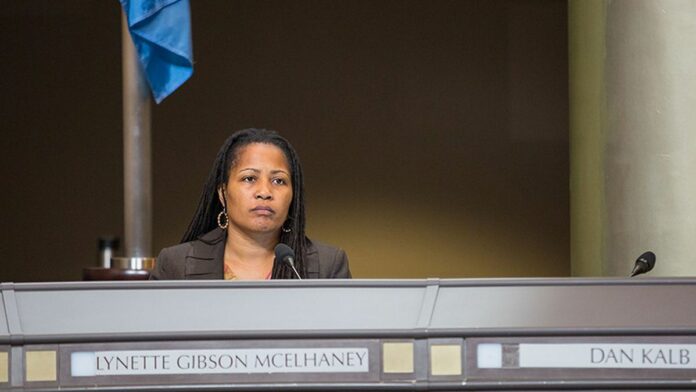
In fact, the request for PFRS to divest from fossil fuels stems from a government decision. In 2014, Oakland Councilmember Dan Kalb sponsored a resolution calling climate change a “severe threat to current and future generations.” The resolution divested the city’s funds from investments in companies engaged in the extraction, production, refining, burning and or distribution of fossil fuels.

“Socially responsible investment has been around for about 30 years now,” Olga Bolotina, Kalb’s chief of staff, told the PFRS trustees last week during their meeting. “It has been proven to be effective.”

The PFRS board, however, is legally independent from the city, and the council cannot force the pension system to divest. The PFRS board is expected to hold another hearing on the divestment proposal later this month.

Germane

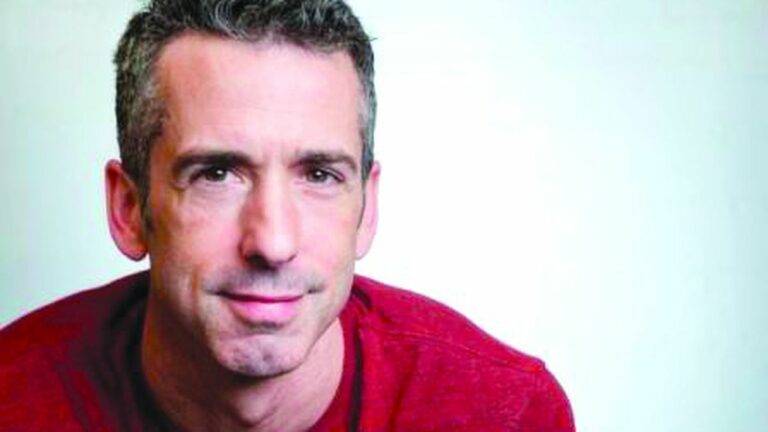
I am a twentysomething, straight, cis-female expat. How long do I have to wait to ask my German lover, who is übersensitive about the Holocaust, to indulge me in my greatest — and, until now, unrealized — fantasy: Nazi role-play? He is very delicate around me because I am a secular Jew and the descendant of Holocaust survivors. (Even though I’ve instructed him to watch The Believer, starring Ryan Gosling as a Jewish neo-Nazi, to get a better grasp on my relationship with Judaism. To be clear, I am not actually a neo-Nazi — just your garden-variety self-hating Jew.) This persists even though we’ve spoken about my anti-Zionist politics. Evidently he was indoctrinated from a young age with a hyperapologetic history curriculum. I appreciate that he thinks it was wrong for the SS to slaughter my family, but it’s not like he did it himself. I know it sounds really fucked up, but I promise this isn’t coming from a place of deep-seated self-loathing. Even if it were, it’s not like we’d be hurting anybody. We’re both in good psychological working condition, and neither of us is an actual bigot. I would try to get to know him better, but we are so different (there’s a big age difference) and I don’t really see our relationship being much more than ze sex.

National Socialist Pretend Party

“Sex writers get all the really good religion questions,” said Mark Oppenheimer. “Can we trade mailboxes sometime soon? I’m tired of dealing with all the questions about why evangelicals support a thrice-married misogynist reality-TV star who never goes to church.”

Oppenheimer writes the Beliefs column for the New York Times and is cohost of Unorthodox, an “irreverent podcast about Jews and other people” (TabletMag.com/Unorthodox). I invited Oppenheimer to weigh in because I am, sadly, not Jewish myself. (Jewishness is conferred through matrilineal descent, your mom — or, if you’re Reform, either parent — has to be Jewish for you to be Jewish, so all those blowjobs I gave to my first Jewish boyfriend were for nothing. No birthright trip for me.)

“First off, I think that Die Fraulein should make her kinky proposal ASAP,” said Oppenheimer. “Given the ‘hyperapologetic’ curriculum that her Teutonic stud has absorbed, he is probably going to freak out no matter when she asks him to incinerate — er, tie her up and fuck her. On the other hand, if he’s open and kink-positive, he’ll probably be down for whatever. But it’s all or nothing in a case like this. She can’t win him over by persuading him that she’s not one of those uptight, unforgiving Jewesses who is still hung up on the destruction of European Jewry.”

While your kink didn’t really faze Oppenheimer (it’s not exactly unheard of), NSPP, your discomfort with your own Judaism did.

“In her letter, she assures us that she is ‘secular,’ ‘anti-Zionist,’ and ‘garden-variety self-hating’ — then jokingly compares herself to the Jewish white supremacist (played by Ryan Gosling in that movie) who in real life killed himself after the New York Times outed him as a Jew,” said Oppenheimer. “Now, all of us (especially homos and Yids) know something about self-loathing, and I think Jews are entitled to any and all views on Israel, and — again — I am not troubled by her kink. That said, I do think she needs to get to a happier place about her own heritage. Just as it’s not good for Black people to be uncomfortable with being Black, or for queer people to wish they weren’t queer, it’s not healthy, or attractive, for Jews or Jewesses (we are taking back the term) to have such obvious discomfort with their Jewish heritage.”

And finally, NSPP, I shared your letter with a German friend of mine, just to see how it might play with someone who benefited from a hyperapologetic history curriculum. Would he do something like this?

“Not in six million years.”

I am fresh out of a gay relationship, which started monogamous, opened up, dabbled with polyamory, but ran out of steam. I’m heartbroken and I need you to weigh in on a disagreement we had about polyamory, which is one of the things that led to our expiration. I believe polyamory to be a small group of people all in love with each other, all sleeping together. He believes polyamory to be different pairings, where a relationship between two people would be lived and enjoyed separately from that couple’s pairings with other people. He thinks my definition would be impossible to find and sustain. I think his definition sounds like child custody in a divorce dispute. Who is right?

Reexamining Relationship Remnants

“They’re both right,” said Allena Gabosch, a poly activist, educator, and podcaster (The Relationship Anarchy Show). “What the letter writer describes — a small group of people who love each other and all sleep together — is sometimes called ‘polyfidelity.’ It’s less common, and yet I’ve seen it work. His ex’s definition is more common: a primary couple with secondary and sometimes even tertiary partners. There is no ‘one true way’ to do poly, no matter what anyone says.”

I’ve been in a fantastic monogamous relationship for almost eight years, but I used to be like a lot of your other readers. I had what I would consider an adventurous sex life, with lots of partners who were GGG, and I enjoyed continually pushing my sexual boundaries as long as everything was consensual and honest. Fast-forward to my current life: I’m now married to a wonderful vanilla woman. The transition to monogamous and vanilla was difficult at first, and I had fears about not being sexually content. As it turns out, it was a great move and I’m a better man for it. My desire to have every kind of sex under the sun has settled down considerably, and the benefit is that I have much more energy and mental focus for other areas of my life. I want your readers to know that the answer to their happiness may not be the pursuit of more outlandish sex — for some, it just might be less.

Monogamous In Montana

Your letter reminded me of Saint Augustine’s prayer as a young man: “Lord, make me pure — but not yet!”

You’re pure now, MIM, but first, like Augustine of Hippo (354–430), you had yourself some impure fun. Perhaps you would be just as satisfied, happy, and smug if you’d been in a monogamous/vanilla relationship all along. But it’s possible you wouldn’t be satisfied and happy now if it weren’t for the adventures and experiences you had then. To paraphrase St. Agnes Gooch of Mame (1966): You lived! You lived! You lived! You see all that living as time wasted, MIM, but it’s possible — it may even rise to the level of probable — that the perspective and self-awareness you gained during the fuck-anything-that-moves stage of your life made you the man you are today, i.e., a guy who was ready to make a monogamous commitment and capable (so far) of honoring it.

Finally, monogamous/vanilla types routinely cross over into the ranks of the sexually adventurous/nonmonogamous and vice versa. (And monogamous/vanilla and sexually adventurous aren’t necessarily mutually exclusive categories.) Instead of disparaging the choices others make — or disparaging the choices we once made — we’re better off encouraging people to make the choices that are right for them. And choices that are right for someone now may not be right for them always — and that goes for you too, MIM, even now.

On the Lovecast, Dan chats with the filmmakers of the documentary Give Me Sex Jesus: savagelovecast.com.

ma**@********ve.net

Free Will Astrology

Aries (March 21-April 19): French artist Henri Matisse (1869-1954) is regarded as one of the greats, in the same league as Picasso and Kandinsky. Even in his eighties, he was still creating marvels that one critic said seemed “to come from the springtime of the world.” As unique as his work was, he was happy to acknowledge the fact that he thrived on the influence of other artists. And yet he also treasured the primal power of his innocence. He trusted his childlike wonder. “You study, you learn, but you guard the original naiveté,” he said. “It has to be within you, as desire for drink is within the drunkard or love is within the lover.” These are good, sweet thoughts for you to keep in mind right now, Aries.

Taurus (April 20-May 20): Taurus-born Kurt Gödel (1906-1978) was among history’s greatest logicians. His mastery of rational thought enabled him to exert a major influence on scientific thinking in the 20th century. Yet he also had an irrational fear of being poisoned, which made him avoid food unless his wife cooked it. One of the morals of his story is that reason and delusion may get all mixed up in the same location. Sound analysis and crazy superstition can get so tangled they’re hard to unravel. The coming week will be an excellent time to meditate on how this phenomenon might be at work in you. You now have an extraordinary power to figure out which is which, and then take steps to banish the crazy, superstitious, fearful stuff.

Gemini (May 21-June 20): For a time, pioneer physicist Albert Einstein served as a professor at the Institute for Advanced Study in Princeton, NJ. On one occasion, a student complained to him, “The questions on this year’s exam are the same as last year’s.” Einstein agreed that they were, then added, “but this year all the answers are different.” I’m seeing a similar situation in your life, Gemini. For you, too, the questions on this year’s final exam are virtually identical to last year’s final exam — and yet every one of the answers has changed. Enjoy the riddle.

Cancer (June 21-July 22): Your personal oracle for the coming weeks is a fable from 2600 years ago. It was originally written by the Greek storyteller Aesop, and later translated by Joseph Jacobs. As the tale begins, a dog has discovered a hunk of raw meat lying on the ground. He’s clenching his treasure in his mouth as he scurries home to enjoy it in peace. On the way, he trots along a wooden plank that crosses a rapidly-flowing stream. Gazing down, he sees his reflection in the water below. What? He imagines it’s another dog with another slab of meat. He tries to snatch away this bonus treat, but in doing so, drops his own meat. It falls into the stream and is whisked away. The moral of the fable: “Beware lest you lose the substance by grasping at the shadow.”

Leo (July 23-Aug. 22): “I never get lost because I don’t know where I am going,” said the Japanese poet known as Ikkyu. I stop short of endorsing this perspective for full-time, long-term use, but I think it suits you fine for right now. According to my astrological projections, you can gather the exact lessons you need simply by wandering around playfully, driven by cheerful curiosity about the sparkly sights — and not too concerned with what they mean. P.S. Don’t worry if the map you’re consulting doesn’t seem to match the territory you’re exploring.

Virgo (Aug. 23-Sept. 22): “If literally every action a human can perform was an Olympic sport,” Reddit.com asked its users, “which events would you win medals in?” A man named Hajimotto said his champion-level skill was daydreaming. “I can zone out and fantasize for hours at a time,” he testified. “This is helpful when I am waiting in line.” You Virgos are not typically Olympic-class daydreamers, but I encourage you to increase your skills in the coming weeks. It’ll be a favorable time for your imagination to run wild and free. How exuberantly can you fantasize? Find out!

Libra (Sept. 23-Oct. 22): In his book Strange Medicine, Nathan Belofsky tells us about unusual healing practices of the past. In ancient Egypt, for example, the solution for a toothache was to have a dead mouse shoved down one’s throat. If someone had cataracts, the physician might dribble hot broken glass into their eyes. I think these strategies qualify as being antidotes that were worse than the conditions they were supposed to treat. I caution you against getting sucked into “cures” like those in the coming days. The near future will be a favorable time for you to seek healing, but you must be very discerning as you evaluate the healing agents.

Scorpio (Oct. 23-Nov. 21): In his poem “The Snowmass Cycle,” Stephen Dunn declares that everyone “should experience the double fire, of what he wants and shouldn’t have.” I foresee a rich opportunity coming up for you to do just that, Scorpio. And yes, I do regard it as rich, even marvelous, despite the fact that it may initially evoke some intense poignancy. Be glad for this crisp revelation about a strong longing whose fulfillment would be no damn good for you!

Sagittarius (Nov. 22-Dec. 21): “When I look at my life I realize that the mistakes I have made, the things I really regret, were not errors of judgment but failures of feeling.” Writer Jeanette Winterson said that, and I’m passing it on to you at the exact moment you need to hear it. Right now, you are brave enough and strong enough to deal with the possibility that maybe you’re not doing all you can to cultivate maximum emotional intelligence. You are primed to take action and make big changes if you discover that you’re not feeling as much as you can about the important things in your life.

Capricorn (Dec. 22-Jan. 19): Psychotherapist Jennifer Welwood says that sadness is often at the root of anger. Feelings of loss and disappointment and heartache are the more primary emotions, and rage is a reflexive response to them. But sadness often makes us feel vulnerable, while rage gives us at least the illusion of being strong, and so most of us prefer the latter. But Welwood suggests that tuning in to the sadness almost always leads to a more expansive understanding of your predicament; and it often provides the opportunity for a more profound self-transformation. I invite you to apply these meditations to your own life, Capricorn. The time is right.

Aquarius (Jan. 20-Feb. 18): “The causes of human actions are usually immeasurably more complex and varied than our subsequent explanations of them.” Fyodor Dostoyevsky said that in his novel The Idiot, and now I’m passing it on to you just in the nick of time. In the coming weeks, it’s especially important for you to not oversimplify your assessments of what motivates people — both those you respect and those you don’t fully trust. For your own sake, you can’t afford to naively assume either the best or the worst about anyone. If you hope to further your own agendas, your nuanced empathy must be turned up all the way.

Pisces (Feb. 19-March 20): “Believing love is work is certainly better than believing it’s effortless, ceaseless bliss,” says author Eric LeMay. That’s advice I hope you’ll keep close at hand in the coming weeks, Pisces. The time will be right for you to exert tremendous effort in behalf of everything you love dearly — to sweat and struggle and strain as you create higher, deeper versions of your most essential relationships. Please remember this, though: The hard labor you engage in should be fueled by your ingenuity and your creative imagination. Play and experiment and enjoy yourself as you sweat and struggle and strain!

Oakland Housing Emergency

At the April 5 meeting of the Oakland City Council, I introduced an ordinance to enact a temporary rent moratorium in Oakland, in response to the ongoing rental housing crisis, and also in response to a request made by members of the public and a coalition of organizations that includes the Oakland Tenants Union, the Oakland Alliance, the Wellstone Democratic Club, and others.

This ninety-day, emergency moratorium on no-cause evictions and rent increases will provide additional protections to tenants by temporarily prohibiting large rent increases and expanding rent control to cover more eligible units.

The intention of this moratorium is to take immediate action to protect members of the public during this housing crisis, while buying city staff and the council additional time to reform and overhaul the existing system of renter protections. This proposed rent moratorium is an acknowledgment of the housing crisis, and I am committed to it being the leading edge of a slate of meaningful renter protections that will stabilize the housing of many Oakland families.

There is no dispute that many Oaklanders are suffering under rapidly escalating rent increases. Oakland’s current rent stabilization program is not adequate to provide protections to tenants, or guidance to landlords seeking to comply with the law. The result is that while Oakland has approximately half as many rental units as San Francisco, our city has twice as many evictions. The true scope of illegal rent increases in Oakland is unknown, but a recent study of Los Angeles’ rent control and just cause for eviction regulations — which are very similar to Oakland’s rules — recently found that 27 percent of tenants were being illegally overcharged on their rent compared to only 5 percent in Berkeley.

On September 21, 2015 the City Council approved and accepted the Housing Equity Roadmap, a report drafted by city staff in conjunction with PolicyLink, Enterprise Foundation and the Urban Strategies Council. The roadmap made several recommendations regarding how to avoid rapid displacement of long-tenured residents with a particular focus on low income families. Based on that report, several members of the city council have begun working with the city administration, community groups and non-profits to draft enabling legislation to address the concerns.

On March 8 the city released a complimentary set of policy recommendations in “Oakland at Home” a report prepared by Enterprise Partners in partnership with over one-hundred volunteers, housing professionals and members of the city council. Like the roadmap, the Oakland At Home report makes specific recommendations to the council designed to strengthen protections for tenants while continuing to spur housing creation in order to relieve pressure from existing units.

Some of the recommendations from the roadmap and Oakland at Home reports have already been enacted by the city council, or are in process. One completed action is the relaxation of planning and zoning restrictions on building secondary units, which we hope will generate hundreds more low-cost units. Impact fees on new development will be coming to a final city council vote within the next month.

Inequality in the labor market, a history of racism in housing policy, and decades of underbuilding created this current crisis. After years of lagging behind neighboring cities in terms of housing construction, Oakland now has the highest escalation of rents in the country. The price escalation has been especially rapid and alarming for existing tenants who are increasingly subject to double-digit increases. Extending and strengthening tenant protections is increasingly needed as Oakland’s existing rental stock transfers into the hands of owners who may not know our laws.

Real challenges persist at the state and federal levels where funding for housing and incentives to build are missing. Oakland will need to add our voice to the growing number of cities demanding reform and resources to address the severe housing shortage that threatens to destroy the very culture that attracts residents and businesses to our Golden State.

The ordinance that I brought to the city council gives policymakers the ability to complete their deliberations over a range of needed reforms identified in the analytical reports issued by the city including: revisions to the condominium conversion and rent stabilization ordinances; protections for boarding houses that act as housing of last resort; and an improved local preference ordinance to ensure Oaklanders get first choice in affordable housing in Oakland.

During this temporary moratorium, I encourage landlords, tenants, advocates and the public to constructively engage with the council to reform our rent stabilization system so that we can provide real protections to tenants in a manner that is also fair and responsible to landlords.

As American as an Apple Fritter

If you grew up on the East Coast, there’s a pretty good chance that the doughnuts of your youth came from Dunkin’ Donuts — boxes of them, glazed and sugar-dusted, that you’d wash down with giant Styrofoam cups of too-sweet coffee. Lately, the mega-chain has been making noise about expanding to the Bay Area, with a location in Walnut Creek already announced, so I figured as an East Coast transplant, I’d let you in on a secret about Dunkin’ Donuts: The doughnuts are not good, and, despite the mega-chain’s attempts to rebrand itself as an all-purpose breakfast spot, neither is the rest of the food.

That’s doubly worth noting because of the rich legacy of independent, mom n’ pop doughnut shops that we have in the Bay Area — most of which, it turns out, are owned by Cambodian Americans. Doughnut shops such as World’s Fare in Hayward and Homeskillet in Alameda offer a kind of geopolitical history lesson, and stand as testament to the knack that so many immigrants hold for finding a way to make a living.

As documented in a recent California Sunday Magazine feature story, “Dunkin’ and the Doughnut King,” many of the Cambodian refugees who settled in Southern California after fleeing Pol Pot’s reign of terror during the Seventies and early Eighties wound up opening doughnut shops. Earlier immigrants helped later ones, and those who were ambitious branched out on their own to other parts of the state. That’s why, to this day, the majority of California’s independent doughnut shops are Cambodian-owned.

Located in a Hayward shopping plaza, World’s Fare was purchased in 1987 by its current owners, Kelly and Andy Yam, who left Cambodia for the United States in the Sixties. Even if the doughnuts were no better than average, this would still be one of my favorite places to people-watch for a couple of hours on a Sunday morning. Everything about the place is slightly over the top — from the size of the doughnuts (which I’ll get to in a minute) to the gaudy kaleidoscope of scratch-off lotto machines that cover nearly every inch of available wall space. At almost any hour of the day, you’ll see at least a couple of true believers camped out at a table, nickel in hand, working their way through a stack of scratchers as thick as a modest paperback.

The clientele is mostly a cross-section of Hayward’s working-class Asian-American and Latino populations, and both the staff and menu reflect that mix. So one of the great pleasures of a meal at World’s Fare, once you go beyond the doughnuts, is the fact that the beverage options include Vietnamese coffee, boba tea, and Mexican milkshakes known as licuados — the strawberry one is better than what you’ll find at most taquerias. The simple but satisfying breakfast sandwiches feature bacon or ham, fluffy scrambled eggs, oozy melted cheese, and — for a Mexican touch — pickled jalapeno, which provides a tangy heat that’s a perfect counterpoint. If you’re feeling frisky, get one of the doughnut sandwiches, in which the aforementioned ingredients are piled inside a split glazed raised doughnut. Who knew that jalapenos, sugary fried dough, and sticky fingers make for a winning combination? (Apologies to my blood vessels for what I did to obtain that knowledge.)

Among other distinctions, World’s Fare makes what are probably the biggest doughnuts I’ve ever seen. The admirably fluffy apple fritter, for which I paid a modest $2.25, was so big that — hand to God — it took my family of three three days to finish eating it. Even the “normal”-sized doughnuts are so big that they look as though they were made for giants — and, despite that fact, they’ll only run you a cool $1.10 a pop. In this day and age of the $3 bourgeois doughnut, that’s something of a miracle.

A pro tip for your next special celebration: With a day’s advance notice, $15 will buy you a doughnut the size of a birthday cake — roughly the circumference of the steering wheel of a car, and as thick as a Double Whopper.

Again, a big part of the charm of World’s Fare is that it doesn’t try to be a “fancy” doughnut shop — that it’s the kind of place where you serve yourself coffee from a thermos and have to dig around a bit to find a dairy option other than a giant tub of powdered creamer. Somehow, the coffee tastes just right.

During my most recent visit, we decided that when in Hayward we should, as my dining companion put it, “do as the Haywardians do.” So we sat down with a modest stack of scratchers and got to work. You don’t need me to tell you how this story ends: We didn’t win a damn thing, but I still went home feeling lucky beyond belief.

Over in Alameda, Homeskillet has only been open since January — but it, too, has as its foundation three decades of doughnut-slinging experience on the part of its Cambodian-American proprietors. Co-owner Lean Ma explained that her father, Dan Lu, was part of that early wave of Cambodian immigrants who opened doughnut shops in the Los Angeles area in the early Eighties.

To an even greater extent than World’s Fare, Homeskillet straddles the line between a restaurant and a conventional doughnut shop. It’s essentially a classic diner that also happens to house a full-service doughnut shop. This is a brilliant combination: Who among us hasn’t had a doughnuts-for-breakfast suggestion shot down by health-conscious dining companions — the kind of spoilsports who demand a full selection of breakfast entrées beyond the doughnut shop’s obligatory bagel sandwich? And, given how much Americans like to mix sweet and savory at the breakfast table, who would say no to the offer of a fluffy glazed raised as prelude — or postscript — to a plate of bacon and eggs?

The original Homeskillet, which Ma’s brother opened two years ago near San Francisco’s Union Square, is a breakfast-and-lunch spot that doesn’t sell any doughnuts — a decision that was made because there were already so many doughnut shops in the city. The Alameda location essentially has the same menu — a standard lineup of pancakes, Eggs Benedict variations, and lunchtime burgers, but with a full complement of fresh doughnuts added to the equation.

If you’re judging it strictly as a restaurant, Homeskillet is a bit of a work-in-progress. This is a casual, order-at-the-counter, pour-your-own-coffee kind of place. You order your breakfast at the doughnut display case, basically, which makes sense in the context of a doughnut shop. Still, it would help to iron out the logistics some. During the weekend brunch rush, customers kept doing an awkward double-take at the door, unsure of whether to snag a table, wait to be seated, or get in line.

As for Homeskillet’s hot breakfast dishes, the handful that I tried fell solidly into the serviceable-if-not-worth-going-out-of-your-way-for category. The hash browns were as well crisped as they were under-salted; the “seasonal berry” hotcakes would have been better if said berries were actually in season. The “California Love” breakfast sandwich (bacon, scrambled eggs, melted cheese, and avocado) needed something to give it extra oomph — a smear of garlicky aioli, maybe. My favorite dish, the Bird’s Nest, was a variation on ground beef hash: a mix of hash browns, melted cheese, Niman ranch ground beef, and runny-yolked fried eggs.

The main thing is this: The doughnuts are really good. Ma uses her father’s old recipes, but has updated the store’s repertoire with several “modern” flavors — a maple-bacon doughnut topped with actual pieces of candied bacon (a la San Francisco’s Dynamo Donut) that was sold out during my visits, and another with a glaze infused with the grassy bitterness of matcha green tea.

In the end, the more conventional doughnuts were the ones that won my heart. Even the chocolate-chocolate doughnut topped with rainbow sprinkles — ordered only to appease the small child in our party — wasn’t the sugar bomb I feared it would be. And while Homeskillet’s apple fritter wasn’t quite as outrageously oversized as the one at World’s Fare, I liked this version even better. It was plumped up with generous chunks of apple and made an audible crunch when I bit in to reveal the soft, fluffy interior. It was a doughnut worth savoring.

Thank Donald Trump if California Legalizes Weed

For those wondering what’s going to happen with the crowded field of proposals to legalize cannabis in California this year, look no further than an independent source of information with boots on the ground: paid signature-gatherers. Thousands of these mercenaries have fanned out across the Golden State this April, earning an estimated $2.50 per signature to help place pot legalization on the ballot.

I ran into a man named Alan, a paid signature-gatherer from Vallejo, in the BART’s Embarcadero Station last week. Alan said voters are ready to legalize it.

He didn’t want to give me his last name because he didn’t have his employer’s permission to speak to the press, but the self-described veteran signature-gatherer of eight years — four California election cycles — had plenty of insight into how voters will lean this November.

Despite twenty-three different legalization proposals on file with the state, paid gatherers in California are now working on one initiative — the Adult Use of Marijuana Act (AUMA). It’s almost certain that the initiatives sponsors will file enough signatures to qualify it for the ballot by the state’s final deadline, April 26.
Alan has been gathering signatures for AUMA for five weeks, focusing on BART stations in Oakland and San Francisco. “It’s uncanny the amount of people that have signed this marijuana one,” he said.

Alan said voters want to hear about the economic benefits and tax revenue legalization will create. “It’s enormous,” he said. AUMA “has the most pull” for voters, alongside proposals to help public schools and raise the minimum wage. He said AUMA will make the ballot “easily.”

It comes down to simple dollars for paid signature gathering. “Every initiative that I’ve run since 2008 has gotten it. There’s no petition that doesn’t get on the ballot,” he said.

The backers of AUMA have reported $3 million in campaign donations, including $500,000 on April 1. They’ve also certified to the state that they’ve collected 25 percent of the 365,880 total signatures they need. No other legalization group has matched this fundraising prowess or signature gathering goal.

Alan buries the AUMA initiative sixth in his stack of ballot propositions that he gets people to sign. He puts on top the initiative with the highest bounty per signature. Signatures fetch different bounties — the more controversial or late the initiative, the higher the signature bounty. AUMA isn’t paying any special premium for signatures because it is not considered controversial, nor is it running late.

Alan’s foot soldier-eye view squares with other data points. The Adult Use of Marijuana Act’s rivals appear to be out of time and money. For example, the Marijuana Control, Legalization and Revenue Act gained the last-minute support of Oakland author and celebrity pot grower Ed Rosenthal on March 25. Rosenthal called AUMA’s flavor of legalization too strict and compared it to legalization in Washington versus Colorado.

“Don’t be like Washington, let’s be like Colorado. Sign and vote for MCLR,” he told Legalization Nation. MCLR is hoping patients download, print, and mail in the needed 365,880 signatures by an April 20 deadline (technically the deadline is April 26). But MCLR is running out of time, said Dave Hodges from the MCLR campaign. And MCLR has no cash to pay for last-minute gatherers.

“It’s the cannabis community,” he said. “It has a really hard time getting everything together.”

Another rival initiative, the California Cannabis Hemp Initiative, is also using volunteer signature-gatherers, but it has not passed the 25 percent signature threshold yet.

Eight of the other 23 pot legalization initiatives approved to circulate for this election have already failed to gather enough signatures by their 180-day deadline.

Assuming AUMA makes the ballot alone, professional pollster Ben Tulchin — whose Tulchin Research clients include Bernie Sanders — said that the odds for California legalization will be up from 50-50 in November, to 55-45. And that’s thanks to unlikely ally: The Donald.

“If Donald Trump becomes the Republican nominee for president, which is the most likely outcome at this point, that will benefit progressive candidates and causes around the country as it would likely lead to the progressive base being very motivated and coming out to vote in large numbers while the conservative base would be dispirited,” Tulchin wrote me in a statement Monday. “This dynamic would definitely benefit a marijuana legalization measure in California.”

Alan is also bullish on AUMA passing. “I want to say that it’s going to pass, which is my professional opinion,” he said. Alan said even tepid supporters who decline to sign the petition are showing signs thy will vote for AUMA this fall. “They’ll end up voting for it then as well because they’re going to look at the revenue Colorado is making, they’re going to look at the revenue Washington State is making, and Oregon.”

‘Void California’: An Expanded, Enlivened Punk Art Show

0

Matt Wobensmith arrived in San Francisco in 1989 to attend San Francisco Art Institute, where professors told him that his interest in punk and fanzines was a joke. So he dropped out.

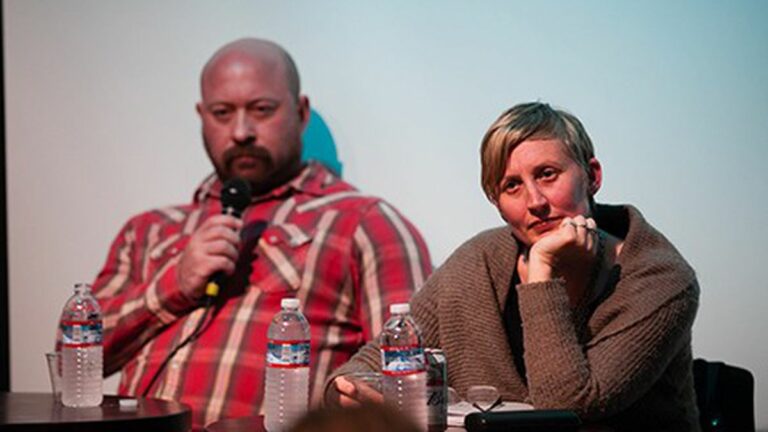
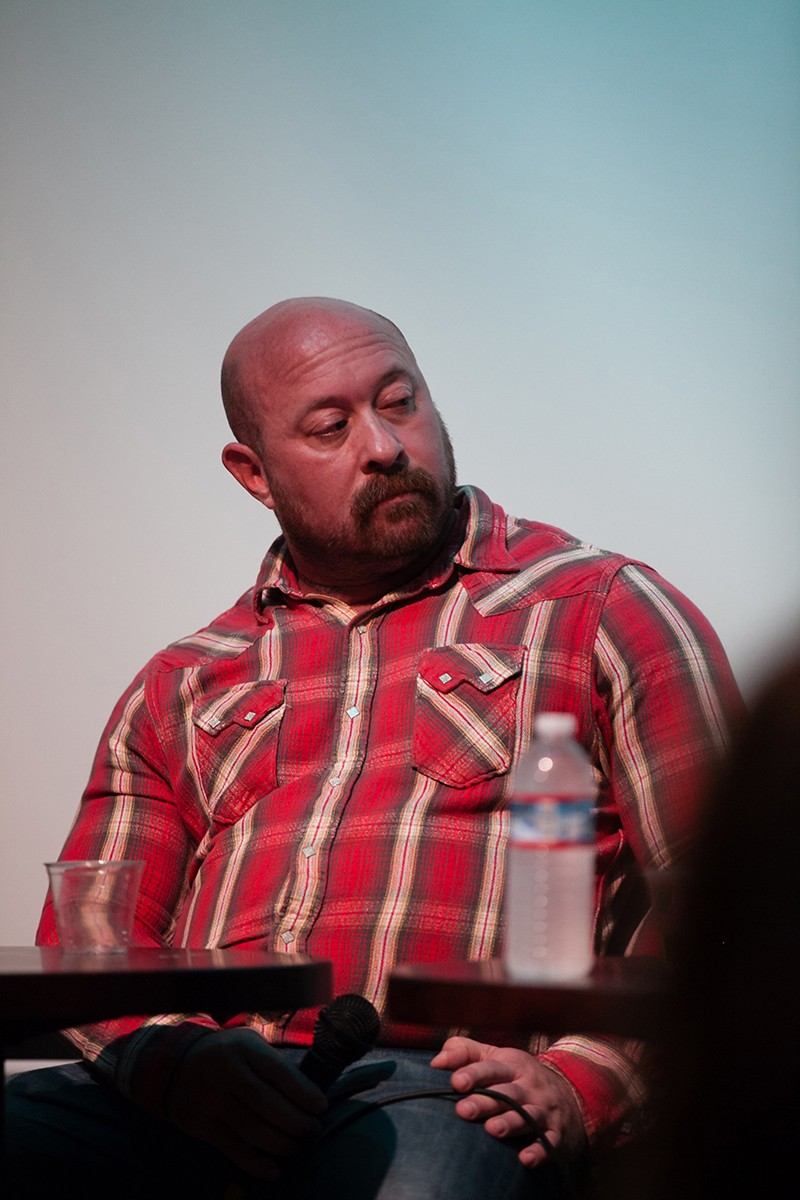
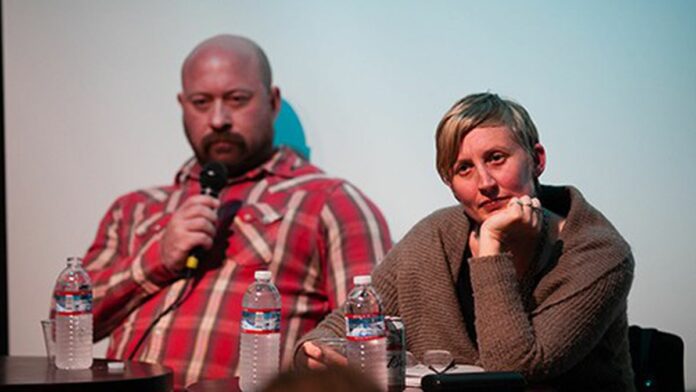
Wobensmith relayed the anecdote last Friday at Wattis Institute of Contemporary Art. It was a panel discussion tied to Void California, a thesis exhibition curated by California College of the Arts graduate students in Curatorial Practice. The show surveys “punk-inflected” media produced in the Bay Area and Los Angeles in the Seventies and Eighties, and at the event, academics Allan deSouza and Fiamma Montezemolo joined Wobensmith, who today deals fanzine collections to major institutions.

In other words, Wobensmith’s youthful fixations are increasingly subject to serious inquiry in the very academic and art circles where they were once trivialized and derided.

Void California, which closes with a book launch on Friday, expands and enlivens an increasingly familiar gallery event: the punk art show. There are lashing illustrations by Raymond Pettibon — whose deadpan subcultural critiques now fetch staggering sums at auction — alongside copies of Search & Destroy, San Francisco writer and publisher V. Vale’s probing countercultural chronicle of the late Seventies. And photographs by Ruby Ray, once a Search & Destroy staffer, are recognized for their formal excellence and, as Void California curators emphasize in the accompanying book-length catalog, their exploration of San Francisco’s “perpetual urban demolition.”

The curators chose chronological bookends 1975 and 1989 — letting in mail art, punk, hardcore, and industrial — to focus not on one subculture but a profound increase in technological accessibility. Miniaturized magnetic tape equipment empowered East Bay outfit Negativland to appropriate and subvert sound sources; the advent of video enabled Joe Rees to stage and capture riotous live performances; and the proliferation of xerography revolutionized independent publishing.

All of these developments in technology allowed artists to document, thereby validating (and even transforming), their peers’ work and environments at a time when mainstream media refused — or wasn’t welcome — to meaningfully take notice. Indeed, Rees’ video piece about Jello Biafra’s theatric but rather prescient 1979 San Francisco mayoral run includes clips of network TV coverage that underscores the ignorance and condescension with which “punksters,” for instance, were often received.

Beyond the breadth of media, Void California excels in its efforts to contextualize the era, when headlines announced a parade of serial slayings, natural disasters, reactionary policy-making, and, in San Francisco, the renewed violence of redevelopment under Dianne Feinstein’s mayoral regime. In this regard, Void California sets its subject against a cultural backdrop much as Michael Stewart Foley did last year in his book on the Dead Kennedys’ debut album, Fresh Fruit for Rotting Vegetables (in which the author in turn relied heavily on David Talbot’s history of the period in San Francisco, Season of the Witch). To this theme, the inclusion of Berkeley art professor Randy Hussong’s little-known “Untitled” series of seemingly therapeutic newspaper edits — where whited-out text suggests that the times were almost too grim to fathom — goes a long way.

Void California‘s willingness to present artifacts of late-Seventies punk in Los Angeles and San Francisco alongside documentation of the relatively younger and suburban activities associated with Eighties hardcore is also rather refreshing. Though the shift was in many ways regressive — the hardcore set is often remembered for its relative violence and homogeneity — the eras are too often cordoned off in hindsight, rather than considered dialectically.

The exhibit includes Hard Core Home Movie, Greta Snider’s churning 1989 montage of young punks’ disconnected voices and portraits shot outside San Francisco venue The Farm (which would’ve paired perfectly with Richard Gaikowski’s similarly vertiginous DEAF/PUNK, shot ten years earlier at the Deaf Club on Valencia Street). And original drawings from We Got Power!, a fanzine focused on Southern California hardcore, represents the homespun tenacity of Eighties suburban teenagers — whose work surged with creative invention despite their lack of formal arts training compared to Seventies forebears.

Void California stumbles where fanzine shows tend to stumble. Importing art world notions — and white-glove treatment — of “the original” to artifacts that were often photocopies to begin with is inevitably awkward, likewise with pieces of mail-art: Objects that accrete power through circulation lose their potency out of context. Though it’s impractical, if not impossible, fanzine-oriented exhibitions that involve photocopiers — or any sort of interactive component — help offset such neutralization.

The show broaches broader debates about institutions’ increasing interest in subcultures of yore. Does lofty, retrospective scholarship selfishly revise or enhance our understanding of subjects it once dismissed? And are people who were there and actively participating blinded to the significance of their scene, or are they our only reliable sources? So discussed the panelists, two out of three academics, in the Wattis on Friday. “The fact that we’re having this show is almost an indictment of the way museums and institutions work,” offered Wobensmith. “It’s almost like we should be looking at the things that professors are telling kids not to study right now.”

Letters for the Week of April 6, 2016

"Oakland Police Commission Battle Heating Up," News, 3/23 Anti-Police Conspiracy Unfortunately, this article and similar articles illustrate that there is a war on the police generally promoted by the far left of the Democratic Party, which is now in control of the Democratic Party. This is particularly unfortunate for Oakland, since there is a dire need for strong and effective law...

Too Late is Hipster Central

Welcome to Hipster Central. Writer-director Dennis Hauck outfits his first feature, Too Late, with so many gimmicks and narrative tropes that it takes almost half the 107-minute running time for the film to simmer down and get over itself. Split screen. Routine deadpan private-eye framework. Silly porno-style dialogue that makes the actors look bad. Recycled riffs from old movies....

Bad Credit Histories Scuttle Homeless Housing

Anthony Dunbar was relaxing at his home in Hayward on a cold day in January 2014 when the smell of smoke drifted under the door. Dunbar went outside and noticed a fire in the carport below his second floor apartment. A homeless man, who had been sleeping there to stay out of the rain, accidentally set the blaze. The...

Oakland Police and Fire Pension Considers Fossil Fuel Divestment

Last week, trustees of Oakland's Police and Fire Retirement System — a closed pension fund with $549 million in assets that pays retirement benefits to former Oakland cops and firefighters — held hearings on a proposal to divest from fossil fuel companies. If the PFRS board ultimately decides to divest, they would join a growing list of pensions, endowments,...

Germane

I am a twentysomething, straight, cis-female expat. How long do I have to wait to ask my German lover, who is übersensitive about the Holocaust, to indulge me in my greatest — and, until now, unrealized — fantasy: Nazi role-play? He is very delicate around me because I am a secular Jew and the descendant of Holocaust survivors. (Even...

Free Will Astrology

Aries (March 21-April 19): French artist Henri Matisse (1869-1954) is regarded as one of the greats, in the same league as Picasso and Kandinsky. Even in his eighties, he was still creating marvels that one critic said seemed "to come from the springtime of the world." As unique as his work was, he was happy to acknowledge the fact...

Oakland Housing Emergency

At the April 5 meeting of the Oakland City Council, I introduced an ordinance to enact a temporary rent moratorium in Oakland, in response to the ongoing rental housing crisis, and also in response to a request made by members of the public and a coalition of organizations that includes the Oakland Tenants Union, the Oakland Alliance, the Wellstone...

As American as an Apple Fritter

If you grew up on the East Coast, there's a pretty good chance that the doughnuts of your youth came from Dunkin' Donuts — boxes of them, glazed and sugar-dusted, that you'd wash down with giant Styrofoam cups of too-sweet coffee. Lately, the mega-chain has been making noise about expanding to the Bay Area, with a location in Walnut...

Thank Donald Trump if California Legalizes Weed

For those wondering what's going to happen with the crowded field of proposals to legalize cannabis in California this year, look no further than an independent source of information with boots on the ground: paid signature-gatherers. Thousands of these mercenaries have fanned out across the Golden State this April, earning an estimated $2.50 per signature to help place pot...

‘Void California’: An Expanded, Enlivened Punk Art Show

Matt Wobensmith arrived in San Francisco in 1989 to attend San Francisco Art Institute, where professors told him that his interest in punk and fanzines was a joke. So he dropped out. Wobensmith relayed the anecdote last Friday at Wattis Institute of Contemporary Art. It was a panel discussion tied to Void California, a thesis exhibition curated by California College...
19,045FansLike
17,709FollowersFollow
61,790FollowersFollow