
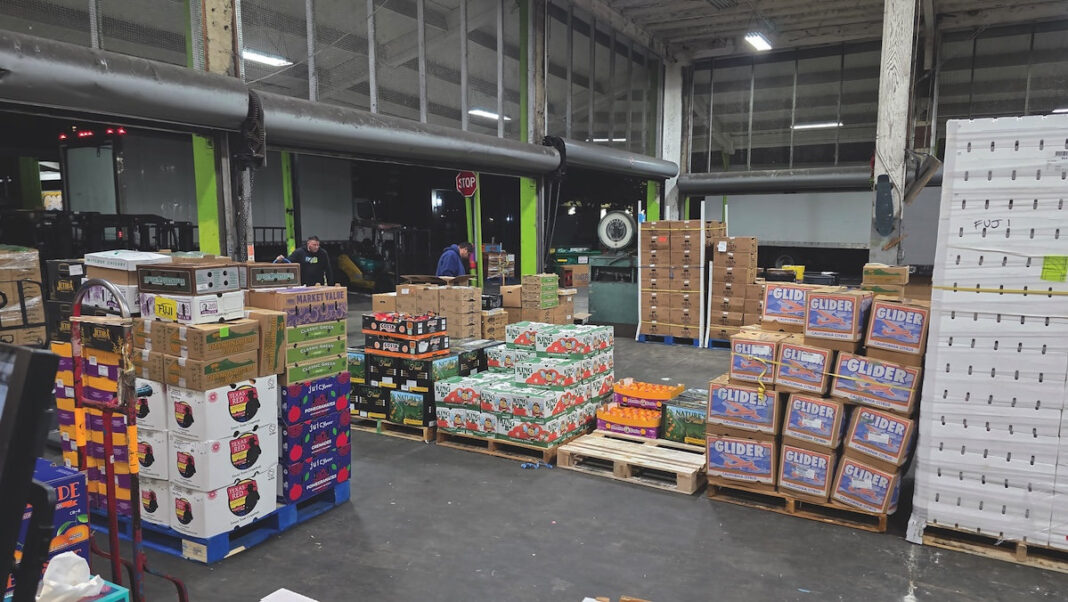
For years, a typical workday for Fujii Melons Manager Mike Chang had him arriving at the Oakland Produce Market in Jack London Square when most folks are still tucked in bed. The six-day-a-week shift from 11:30pm to 8:30am became the norm when Chang joined the company in 2006. Each night, he oversees the “nightwalker” crew of employees who stock the market. He interacts with pre-dawn customers and the “lumpers,” the forklift operators who unload pallets of produce brought in from local farmers and distant distributors and suppliers.
The work is physical, at times chaotic, but never out of control. There is predictability to the expenses sheets; the availability and quality of fresh, in-season produce; and the faces and names of customers who prefer to select goods in-person for their grocery stores, small markets and restaurants.
But in 2026, “typical” flew out the window. High gas and diesel prices, tariffs imposed by the Trump administration, the impact of climate change and the hangover effect of Covid have wreaked havoc on the industry. Nationwide, consumers feel the hurt of higher prices for not only food, but gas, housing, health care and more.
“Fujii Melons does only limited deliveries, but with oil scarce and prices so high, fueling our Bob Taylor-style box trucks costs almost double,” Chang said, in an interview at the end of October. “Our drivers say filling the tank is $500, whereas before it was about $300.”
Fujii Melons has absorbed the costs and hasn’t added first-time fuel charges for delivery—yet. But the brokers and farmers it buys from have raised what they charge Fujii Melons. The add-on shipping fees bump a palette of produce from Salinas from $70 to $120, as just one example.
“Fuel’s definitely gone up since the war in Iran started,” Chang said. “We’re now going into the winter months, and I’m curious about what prices will look like. We’re just trying to hold on as long as we can.”
The company’s location in the 108-year-old Oakland Produce Market places it in close proximity with other food operators facing the same issues. Over the years, what used to be markets that specialized in one or two items and avoided direct competition has ceded to the inevitable.
“Our original owner, Ron Fujii, bought Manny Melons from a guy called Manny and changed the name,” Chang said. “The market continued to sell mostly melons, watermelons and banana squash. But one year, another market that did lettuces couldn’t get what a customer named Joe wanted. Joe came to us. Ron got the lettuce in and the owner said, ‘Hey, what’re you doing?’ After that, it became like a war and everyone started bringing in everything.”
Climate change has redefined what can be considered “everything.” Chang says this year’s hot-day, cold-night cycle damaged multiple crops. Insects increased in the fields, and a Santa Maria grower told him the bugs were destroying beet and radish crops. “We saw leafy greens coming in not as green. There are gaps in what’s available that I haven’t seen in years. When we had bouts of rain this summer, it ruined things like strawberries,” Chang said.
Infiltration of the markets themselves comes from man-made invaders. GrubMarket has made offers to buy Fujii Melons and others. “Ron, our former owner, turned them down because he focuses on taking care of employees,” Chang said. “He’s family oriented. He offers us full benefits and bonuses during the year. He feels if they sell the market, whoever comes in would change that. Our current owner, RJ Napolis, was trained by Ron and he’s the same way.”
Chang says that during super busy times Ron Fujii even jumps back in to help stock the shelves and works harder than anyone else. “We try to keep up and not slack off,” he said, laughing but sincere.
Covid caused a tumble that started when large chain stores like Safeway and community markets such as Andronico’s transitioned to purchasing their produce directly from farmers and other suppliers. The pandemic restrictions instantly struck restaurants. With reduced floor space and no money-making company or holiday parties, some struggled and hung on, and others shuttered permanently. “We haven’t seen most of those come back,” Chang said. “We used to do a ton of them, and now we have only a handful of restaurant customers.”
Buyers who used to shop in-person place orders by text or phone, also a lingering vestige of Covid-caused changes. Chang said, “Our customers stay loyal. They want top-quality, fresh produce, even if it’s more expensive. They trust us to send the best, even if they don’t see it. Other markets might be lower price point, but customers sense those markets just bring in what’s cheap and blow it out.”
Extra customer service extends to stocking hard-to-find produce—papayas from Diamond Head in Hawaii, a comprehensive line of berries and herbs from local farms, and more. Servicing the individual needs of each client, Chang says Fujii Melons “bends over backwards” to supply goods for Diablo Foods, Berkeley Bowl, Monterey Market, small restaurants Benvenuti in Walnut Creek and Little Louie’s in Point Richmond, and others. Chang says clients continue to ask for, expect to receive and will pay for reliably high-quality produce.
According to Chang, tariffs are the final blow boosting prices everywhere food is sold. “Companies and farmers are charging tariff fees,” he said. “If we’re buying tomatoes for $20 and a farmer put on 17.9%, we have to add it. It comes down to who’s going to buy it in the end. The consumer in the grocery store is feeling it.”
Maintaining its reputation and strong service policies has resulted in Fujii Melons receiving among the highest ratings in the industry’s Blue Book and other platforms. Operating in California provides extra advantages, like robust revenue in summer months and strong-enough profits year round to withstand the impact of negative market forces. In the end, Chang said, “We’re also on call all day. Customers call me at two in the afternoon, when I’m home sleeping, and we do it. We procure whatever they’re looking for.”