Oakland’s Top Housing Official: There Is No Affordable Housing Crisis

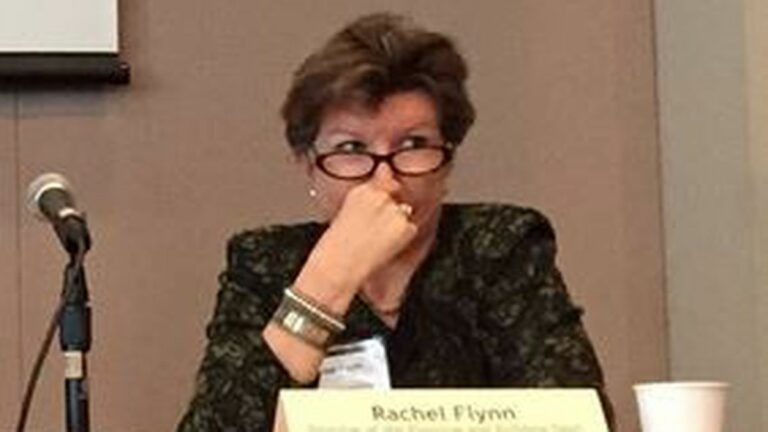
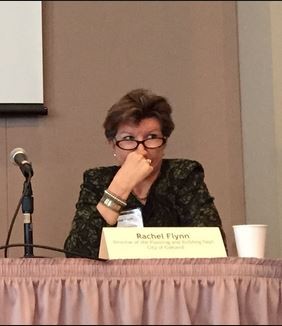
Oakland’s Director of Planning and Building Rachel Flynn reportedly told a conference of real estate developers in San Francisco yesterday that Oakland’s residents are not facing an affordable housing crisis. Her comment was tweeted out by several attendees, including journalists.

Flynn made the comment while speaking on a panel of planning directors from major cities organized by the Urban Land Institute, a developer funded-think tank. Her comments also sparked some strong criticism on social media.

[jump] Brian Hanlon, an attendee at the conference, tweeted several of Flynn’s remarks, which have been widely circulated on social media.

Hanlon followed up with another tweet describing a comment Flynn made, that because of recent housing price spikes, Oakland renters might need to double up with roommates to afford their apartments, “which is no big deal.”

Roland Li, a real estate reporter for the San Francisco Business Times who was also attending the panel discussion, confirmed over Twitter that Flynn said there is no affordable housing crisis in Oakland. Li described Flynn’s comment as downplaying talk of a housing crisis.

Flynn did not return a phone call this morning seeking further clarification about her comments.

Some Oakland residents responded angrily to the notion that the city isn’t experiencing an affordability crisis.

Flynn’s remarks are at odds with the experiences of many Oakland residents. Just last week the city council hosted an hours long special hearing on the topic of affordable housing. Dozens of Oaklanders told the council they were experiencing shockingly high increases in their rents, and some spoke about being recently displaced, or facing the prospect of being pushed out of Oakland because of the increasingly expensive housing market.

Recent reports show that Oakland’s rents and home prices have increased faster than virtually any city in the nation. Oakland’s median rent is now $2,650, according to Zillow. Oakland’s median household income is $52,583, according to the US Census. Thus the median household must spend 60 percent of its total income to rent the median home, which is twice the level that is considered affordable.

A UC Berkeley report issued in July described the neighborhood around Oakland’s MacArthur BART neighborhood as experiencing severe changes that are driving out lower-income homeowners and renters. “The severity of the affordability crisis continues to accelerate, with continuously rising rents and a tremendous jump in rates of housing burden,” the report concluded.

In a statement issued last week, Mayor Libby Schaaf used the word crisis to describe Oakland’s housing situation. Erica Derryck, a spokesperson for Mayor Schaaf, didn’t return a phone call and email this morning seeking comment about Flynn’s remarks.

The panel discussion where Flynn talked about Oakland’s housing issues last night was part of the Urban Land Institute’s Fall Meeting. The Urban Land Institute is a real estate industry-funded think tank. Keynote speakers at the conference include Brian Chesky of Airbnb, and former Secretary of State Condoleeza Rice.

On Monday, conference goers were taken on a tour of Oakland billed as “a legacy of opportunity,” and shown recent and underway development projects like the Fox Theater and Brooklyn Basin. Today, Flynn is scheduled to speak on another conference panel about Oakland’s downtown along with developers Michael Ghielmetti and Richard Weinstein.

Governor Brown Vetoes New Hash Crimes Legislation

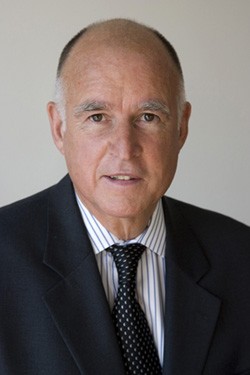
Governor Jerry Brown vetoed a law creating new penalties for hurting others while extracting cannabis with flammable chemicals. Brown said California has enough criminal laws, and has a terrible prison overcrowding problem.The state needs to pause before making the problem worse.

The hash problem: California has seen a rise in explosions and fires caused by chemical extraction of cannabis, usually by butane. But it’s already a crime to make “butane hash oil” — BHO. Arson and criminal negligence are also already crimes in California.

After a BHO fire in Walnut Creek, Assembly Bill 849 from East Bay Assemblymember Susan Bonilla wanted to send a message to hash blasters by creating a new crime carrying prison sentences of up to six years for BHO-makers who hurt others. The bill passed the Assembly unanimously on August 31.

[jump]

Brown vetoed AB 849 and eight others on Saturday, sending his own message about reactionary, “get tough” laws that overcrowd prisons without increasing public safety:

“Each of these bills creates a new crime — usually by finding a novel way to characterize and criminalize conduct that is already proscribed. This multiplication and particularization of criminal behavior creates increasing complexity without commensurate benefit.

Over the last several decades, California’s criminal code has grown to more than 5,000 separate provisions, covering almost every conceivable form of human misbehavior. During the same period, our jail and prison populations have exploded.

Before we keep going down this road, I think we should pause and reflect on how our system of criminal justice could be made more human, more just and more cost-effective.”

AB 849’s mandatory sentencing strips judges of their discretion and is falling out of favor across the United States — which has the highest incarceration rate in human history.

Locking up idiot hash blasters for six years does nothing to address California’s structural incentives to unsafely produce extracts — which are very popular and profitable. Extracts are currently totally unregulated, and lab tests have found high levels of both residual solvents, such as butane, in the state’s supplies, as well as pesticides.

Medical cannabis advocates recommend licensing and regulating cannabis extract production, and three bills that are still pending on Brown’s desk promise to do so.

Wednesday Must Reads: Jerry Brown Opposes Prop 13 Reform; Governor Signs Anti-Drone Law to Protect Celebrities

Stories you shouldn’t miss:

1. Governor Jerry Brown told a group of real estate professionals in San Francisco that he opposes a measure that would reform Proposition 13, the Chron reports. The measure, sponsored by state Senator Loni Hancock of Berkeley and backed by education activists, would close a loophole in Prop 13 that allows corporations to avoid paying their fair share of property taxes. The measure would generate billions a year in tax revenues for California public schools, and a recent poll showed that 55 percent of Californians favor the idea. But Brown said the issue is too complex for him to support.

2. Just days after the governor ignored pleas from firefighters and vetoed legislation that would have banned private aerial drones from flying over wildfires, saying the bill was too “burdensome,” Brown signed a bill that makes it illegal to fly drones over celebrities’ homes, the LA Times$ reports. Firefighters had strongly urged the governor to sign the previous anti-drone bill, saying private drones have interfered with firefighting efforts. Wealthy celebrities have also lobbied the governor, contending that drones operated by paparazzi invade their privacy.

3. UC San Francisco officials say they now support the Golden State Warriors’ plans to move to the city and build an arena across from UCSF Medical Center, the Chron reports. UCSF officials had opposed the arena plan on the grounds that it would create too much traffic near the hospital, but the Warriors agreed to limit the number of home games that coincide with San Francisco Giants’ games and to spend at least $10 million on traffic mitigation measures. However, wealthy donors to UCSF still oppose the arena plan.

[jump]
4. Democratic presidential candidate Bernie Sanders has surged in California, and is now polling at 35 percent — up from single digits just five months ago, the SacBee$ reports, citing a new Field Poll. Hillary Clinton’s lead over Sanders in California has shrunk to twelve percentage points.

5. Governor Brown plans to sign watered-down legislation today that is designed to combat climate change. The bill would require the state’s utilities to increase their use of renewable power to 50 percent by 2030, the Mercury News$ reports. An earlier version of the bill also sought to slash gasoline use in the state by the same amount, but oil companies successfully stripped that provision out of the legislation.

6. Pharmaceutical companies have deposited $10 million into a campaign to oppose a measure that seeks to cap prescription drug prices in California, the SacBee$ reports. The huge contribution was made even before the drug price initiative has qualified for the ballot.

7. Governor Brown signed legislation designed to curb the overprescribing of psychiatric drugs to kids in foster care in California, the Mercury News$ reports.

8. The governor also signed a bill mandating sex ed for public school students in middle and high schools in the state, the Chron reports. The legislation allows parents to opt their kids out of sex education classes, but prohibits schools from doing so.

9. And the State of Nevada has agreed to pay the City of San Francisco $400,000 in a legal settlement related to Nevada’s longtime practice of busing mentally ill patients to San Francisco and dumping them there, the Chron$ reports.
 

Kala Art Institute Founder Receives Prestigious Award

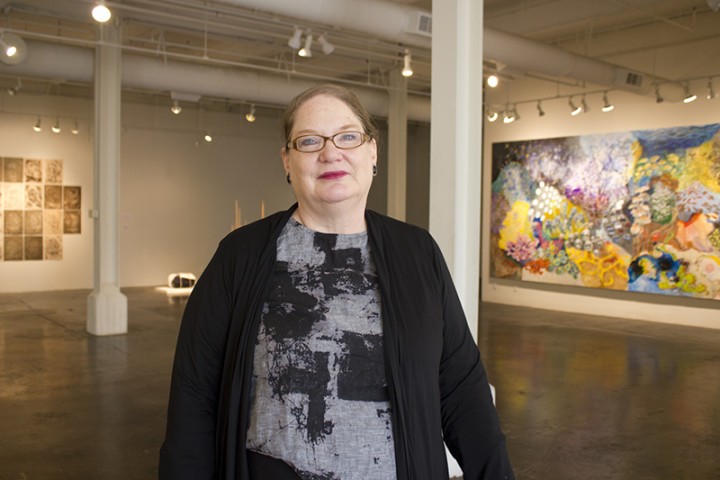
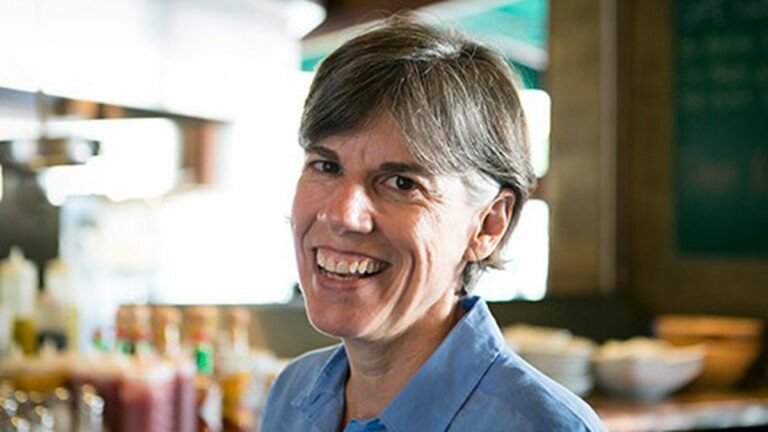
Archana Horsting, the executive director and co-founder of Kala Art Institute in Berkeley, will be honored with the prestigious Benjamin Ide Wheeler Medal, also known as the “Most Useful Citizen award,” this Thursday. The prolific artist has been providing the East Bay with arts education and studio spaces for more than 40 years.


[jump] Horsting and fellow artist Yuzo Nakano founded Kala in 1974 with hopes that it would become a collaborative workspace and a forum for ideas. The institute was small in its early stages, with a space not much bigger than a garage gallery, Horsting recalled in an interview.

But those humble beginnings led to something massive: Kala Art Institute (060 Heinz Ave, Berkeley) as it exists today is a 15,200-square-foot community workspace, education center, and gallery (2990 San Pablo Ave, Berkeley) that welcomes approximately 25,000 people through its doors each year. The Institute offers a full breadth of classes for students and professionals interested in art, with a diverse catalogue of lessons that includes etching, letterpress, screenprinting, book binding and computer classes.

For Horsting, the Wheeler award comes as a bit of a surprise. “When I first got the call over the summer [from the Berkeley Community Fund board members], I thought they wanted nominations or something” she said. “So this is really wonderful.”

People who have worked with Horsting are less surprised – they consider this award to be well deserved. “Archana is a leader who truly cares about people,” said Jamila Dunn, the director of education at Kala. “She makes opportunities happen and supports emerging and established artists.”

Others who have worked with Horsting credit her with keeping Kala open through more difficult seasons. “Archana is fantastic,” said Perrin Meyer, a board member at Kala. “She’s kept it alive through hard times and really hard times. The number of people she’s touched through Kala’s art programs is astounding.”

Horsting has seen Kala through earthquakes, fires, rising rents, recessions and changing times. Still, the institute has remained a place where artists and community members can come to create art themselves or appreciate the work of others. According to Horsting, providing that outlet has been one of her biggest accomplishments. “Art gives everyone a voice, whether they’re children or adults, or whether they’re making the work themselves or just there to see someone else’s work that really speaks to them,” she said. “So I guess my feeling is that Kala is a place where art really happens.”

Horsting is particularly excited for Kala’s next exhibit – aptly titled Voices (opening October 22) – that will carry the same ethos. It will showcase the human as a musical instrument and explores voice as a way to convey complex emotions, from laughter, to tears, to screams. 

Horsting will receive the Benjamin Ide Wheeler Award at the Berkeley Community Fund’s annual dinner on October 8 at HS Lordships Restaurant in Berkeley. For ticket information, call 510-542-2126.

The Advocate’s Kitchen Is on Fire

The knock against California cuisine has always been that it relies so heavily on the state’s great agricultural bounty that chefs can get away with not really learning how to cook — that “rustic,” as one prominent Bay Area chef tweeted recently, can too easily become a synonym for lazy. Having eaten enough proverbial beet-and-goat-cheese salads to last a lifetime, I can affirm that there’s some validity to this critique. But at least a couple times a year, I happen upon a restaurant that reminds me of why California-style cooking — in all of its glorious simplicity — can be so great.

Funny that it would come at the hands of a relative newcomer to the Bay Area. John Griffiths — the chef at The Advocate, a new restaurant in Berkeley’s Elmwood district — is a Michigan native who spent most of his career cooking in St. Louis. His last gig was as the head chef at The Kitchen, a “demonstration-style” fine-dining restaurant in Sacramento, where Griffiths was tasked not only with preparing a high-end five-course tasting menu every night, but also maintaining a steady, mic’ed-up banter with diners over the course of a four-hour meal. It was intense. “I wanted to get back to something more rustic — more of the moment, more relaxed,” he said.

It’s easy, then, to see why a place like The Advocate would appeal to Griffiths. The kitchen team, whose handiwork you can observe from the cozy, four-stool chef’s counter, tends toward quiet contemplation. And while I did see one line cook pull out a pair of tweezers when plating a dish, the plates are stylish yet relatively unfussy — rustic, as Griffiths would say. Cocktails — like a purple concoction called the Microclimate, which my server likened to a health juice — are balanced and carefully crafted, but seem more wholesome than flashy. And while the menu features a smattering of North African and Middle Eastern flashes to keep things interesting, nothing is meant to push the envelope or to be overtly esoteric.

In the absence of a catchier narrative hook, let me just say this: The Advocate serves straightforward California cuisine and does it very, very well — better, in fact, than just about any other restaurant I’ve visited in the East Bay this year.

Similar to Penrose (Charlie Hallowell’s fire-centric, North African-inspired restaurant in Oakland), The Advocate serves a selection of flatbreads, which sets the place apart from the area’s deluge of pizza-heavy Cal-Italian restaurants. Made with a long-fermented dough, these flatbreads developed a surprising crunch and a gorgeous, leopard-spotted char from the wood-fire grill. While there were topping options that skewed toward the Middle East, the one I picked — sweet confit cherry tomatoes, basil, and burrata cheese — pretty much made for the most Californian pizza ever, flatbread designation notwithstanding.

Another appetizer of chickpea “fries” was perhaps the best rendition of this dish that I’ve had — more tender and less starchy than other versions, with a delicate, custardy interior that reminded me of a steamed egg or silken tofu. Each rectangular chickpea-flour cake had been infused with the juices and chopped-up flesh of cooked clams, so that each bite offered a little taste of the ocean.

My favorite bite of all was the relatively pedestrian-sounding chicken liver toast, which my server convinced me to order despite my antipathy for the sadly over-toasted glorified crackers that so many restaurants list on their menu as “crostini.” This was something different: a thick slab of wood-grilled levain, cut on a diagonal, with a smoky, charred-edge crunch and a soft, tender interior. On top was a pink, luxurious smear of whipped chicken-liver terrine, and, on top of that, a kind of salad consisting of almonds, charred herbs, and Bronx grapes — a tiny, intensely sweet varietal. It was wonderful. And if this is the savory, dinner-time analog to “$4 toast” (priced very reasonably at $8, I should say), then I can only hope the trend spreads far and wide.

None of the above dishes would feel the least bit out of place at Chez Panisse or Pizzaiolo or any of the other old-guard Cal-cuisine dining institutions. By design, the North African and Eastern Mediterranean flavors are more of an accent than a focal point — a way for Griffiths and his team to play around with interesting spices without laying any kind of claim on authenticity. A side of crispy potatoes was notable for its green-olive purée accompaniment, which evoked the flavors of a North African tagine — but even more so for the way the potatoes were infused with a smokiness that reminded me of kielbasa sausage. And a bowl of tender, smoky grilled squid was all the more delicious for having been topped with dabs of Griffiths’ version of muhammara, a spicy and tangy Syrian red-pepper dip thickened with chopped walnuts.

As is often the case at restaurants of this ilk, the entrées tended to be slightly less exciting than the smaller plates. The slow-roasted pork shoulder, for instance, featured the very by-the-book marriage of pork and cooked fruit — roasted pluots, in this case — which was enjoyable enough, except that the meat was a touch too lean and dry. The chicken leg “al mattone” was much better: the leg had been deboned, flattened, and cooked — not literally under a brick, as the Italian name suggests, but instead beneath a couple of heavy skillets — until the skin crisped. Really, though, the chicken was more of a blank canvas for all of the other flavors on the plate: a bed of rich, oozy polenta and, arranged in a ring around the edge of the plate, an array of sauces and vegetables that included harissa (the Tunisian chili paste), ginger-grapefruit relish, grilled summer squash, soft-cooked sweet red peppers, and charred spinach. As I dipped and dabbed each forkful of meat, no two bites were the same.

Say what you will about owners John Paluska and Andrew Hoffman (the folks behind Comal in downtown Berkeley), but damn if those guys don’t know how to put together a handsome restaurant. Located in a former auto repair shop, The Advocate feels like a cross between a ski lodge and a church — high ceilings, skylights, and lots of exposed wood. Most of the tables are arranged, pew-like, in one long row that goes up the center of the restaurant toward the open kitchen in back, where flames shoot up several feet in the air through the grates of the wood-fire grill. Like Comal, The Advocate has a state-of-the-art noise-dampening system that makes it possible for diners to carry on a conversation using their “indoor” voices, even when the restaurant is at its buzziest and most-packed. (Another point in common with Comal: an automatic 20 percent service charge in lieu of tipping.)

All of which is to say that The Advocate is an exceedingly pleasant place to spend an evening — all the more so because, just two months after opening, the kitchen appears to be hitting on all cylinders.

One last sweet note: The olive oil cake was one of those modern-looking compositions that tend to dominate dessert menus at upscale American restaurants these days — the cake itself broken into bite-size chunks, served over a bed of sweet poached peaches interspersed with jagged shards of almond meringue that stood upright. It all tasted very good, but the best part of the dish was a quenelle of peach-leaf gelato that was made, Griffiths later told me, by steeping a large number of leaves in cold cream. As it turns out, peach-leaf gelato tastes almost exactly like almond tofu — proof, at the end of a meal that abounded with similarly delightful examples, that when a skilled chef cooks very simply, but thoughtfully and with great ingredients, the results can be nothing short of magical.


‘The Walk’ Will Make You Sigh and Cheer

0

Going into The Walk, we were intensely aware that the story of French high-wire artist Philippe Petit and his daredevil 1974 mid-air walk between the twin towers of New York City’s World Trade Center (1,363 feet above the sidewalk) had already been brought to the screen, in James Marsh’s thrilling 2008 documentary, Man on Wire. So we were frankly prepared to be unimpressed.

We didn’t count on the power of The Walk‘s imagery. Sure, the long-shot CGI inserts of the WTC against the city skyline have those fuzzy, indistinct edges that few special effects crews have been able to solve. But the scene of Petit (played by Joseph Gordon-Levitt with a corny French accent and forced amiability) striding the wire in the morning mist, the wind licking at his wounded foot, definitely produces sweaty palms. And the lively interplay between Petit and his accomplices — played by César Domboy, Benedict Samuel, James Badge Dale, Steve Valentine, a hammy Ben Kingsley, and Charlotte Bon as Annie Allix, Petit’s love interest — gives a better sense of the outrageousness of the stunt.

The other ingredient we discounted was the directorial hand of Robert Zemeckis — working from a screenplay he wrote with Christopher Browne, based on Petit’s book To Reach the Clouds. The veteran Hollywood creator of pseudo-folksy spectacles (Back to the Future, Forrest Gump, Cast Away) still has his tendency toward cuteness at all costs — the entire buildup to Petit’s walk is a slog through froth — but in this case it fits the story. Petit is a daredevil but also the epitome of a street performer. His art is to make the crowd sigh and cheer, and that’s exactly what The Walk does. The fact that the site of his masterpiece is now a vanished setting of patriotic tragedy is regrettably fitting. Petit brought a smile to a place where there is none.

She’s Soulovely

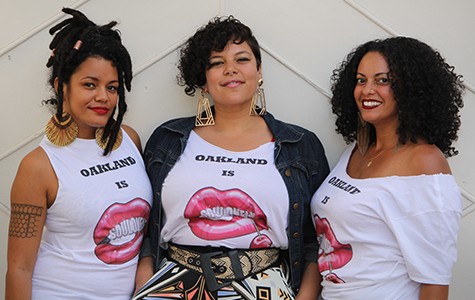
During Oakland Pride last month, a diverse crowd of mostly women packed into the New Parish for Soulovely, a daytime party that takes place on second Sundays during the summer. Though the dance floor in the venue’s courtyard was completely full, people of different ages and ethnicities unselfconsciously got down in the aisles, on top of the benches, and in the bathroom line. As DJs Lady Ryan and Emancipacion mixed house beats with African rhythms and hip-hop classics, enthusiastic partygoers joined Aima the Dreamer, the party’s host, in chanting “Black lives matter” over the music.

Lady Ryan, Aima the Dreamer, and Emancipacion began throwing Soulovely in 2011, though the three of them agreed that the party truly began to flourish this summer after four years of growing their following through word of mouth. Because this year’s series was so well attended, they have extended Soulovely through November and are considering making it year-round.

The three performers are longtime friends who have been active in Oakland’s various nightlife enclaves since the early Aughts. Soulovely doubles as the name of the party and their music collective, which they forged as an alliance of queer women of color amid the city’s largely male-dominated DJ scene. While they don’t explicitly advertise the event as a queer party, their longtime involvement in the LGBTQ community draws a mostly queer crowd — though they emphasized that straight allies are also welcome.

“There’s a large queer people of color community that has stepped up to say, ‘Soulovely is ours,'” said Aima in an interview. “There’s such a beauty in that. … And when we also create space for all of our allies to come in, in all their different forms, then that safe space and mutual respect creates an opportunity for dialogue.”

That cross-pollination of various Oakland communities is something that the three musicians strive for across their collaborative and individual projects, and, in our conversation, they all stressed that they don’t want identity politics to limit where they perform. For instance, Lady Ryan regularly spins at LGBTQ parties, including Ships in the Night, which also takes place at the New Parish, and Swagger Like Us at El Rio in San Francisco. And though she has many supporters in the queer scene, she also frequently throws events outside of it, such as her new party, Tongue, which takes place on second Fridays at the Senegalese restaurant Bissap Baobab in downtown Oakland and features live drummers and music of the African diaspora.

Emancipacion got her start DJing Bay Area queer parties in the early 2000s, as well, but has also found an audience in the local Middle Eastern community, in which she is also involved. House music is Emancipacion’s passion and she seeks out events where she can play club beats with international influences rooted in her Egyptian heritage. She frequently performs at special events — such as the closing party of San Francisco’s Arab Film Festival taking place later this month.

As a rapper and singer, Aima the Dreamer is also involved in a spectrum of music projects. She is a vocalist in the Oakland hip-hop-jazz-funk fusion bands J-Boogie’s Dubtronic Science and Jazz Mafia and recently performed at Oakland Music Festival and Symbiosis Gathering. She also released an album earlier this summer with her hip-hop duo, Femme Deadly Venoms.

“I’m really lucky as a queer woman to play in so many different scenes. It’s super easy to get pigeonholed,” said Aima. “We happen to be three women who really break these boundaries, and that’s something I’m really interested in in general: having these places where [different kinds of people] can meet and be respectful and be safe and really celebrate one another.”

Though they enjoy playing for different kinds of audiences, Ryan, Emancipacion, and Aima agreed that Soulovely is special because it provides a place for them to connect with other queer women of color, many of whom are also activists and creative professionals. Some frequent attendees are longtime pillars of the LGBTQ community — such as Chaney Turner, a promoter who runs Social Life Productions, and Christiana Remington, who throws the long-running queer party Butta. Because it attracts an intergenerational audience, Soulovely has become a place for folks who have been in the scene for ten or twenty years to mingle with newcomers.

Each month’s Soulovely features guest performers, and Aima, Ryan, and Emancipacion have used the event as a platform for booking female DJs, drum troupes, and dancers. Aima boasted that in the party’s four years, they’ve never repeated the same guest artist. “It just goes to show how thick the female DJ scene is,” she said, recalling how promoters in male-dominated spaces have told her that they don’t book female performers because they don’t know any. “I get told all the time, ‘You’re the only female MC I know,'” Aima continued. “I’m like, ‘Have you turned on a computer?'”

Aima, Ryan, and Emancipacion seek to make Soulovely an uplifting experience for partygoers, and the music they play in their sets is thoughtfully curated to create an atmosphere that fosters community building. While Emancipacion enjoys mixing Arabic house music with songs by more mainstream artists such as Kendrick Lamar, Ryan specializes in dancehall, funk, and hip-hop and R&B throwbacks with feminist leanings. “It’s a place where you get a chance to listen to music that really feeds you,” Aima explained. “You’re not gonna be abused by the music at Soulovely. You’re not gonna hear the b-word all the time.”

“The integrity of the music allows us to play across that large generational gap. Some people bring their moms to the party,” Ryan added.

“And you’re not gonna hear any top forty,” Emancipacion emphasized.

“And if you do, Ryan probably did it,” Ryan joked, finishing her sentence.

“And I probably rapped over it and reclaimed it in the name of the goddess,” Aima laughed.

Quaaludes Wants to Spank the Patriarchy

Drummer Susie Leni and singer Aimee Belden of the punk band Quaaludes sat in a cramped practice space above the storied gay bar Aunt Charlie’s in San Francisco’s Tenderloin district. As the sounds of another band’s rehearsal drifted in from down the hall, the bandmates cracked open beer cans and passed around a bag of cherry tomatoes, which Leni had brought from the farmers’ market.

Belden offered me a button that she had made with a photo of a desecrated doll head on it, similar to the ones pinned to her and Leni’s shirts. As I stuck it through the fabric of my jacket, Quaaludes’ guitarist, Morgan Liggera, entered the room carrying a skateboard with the words “Too Many Dudes” scrawled on it in thick, black letters. Belden was wearing a tattered T-shirt that said “Spank Patriarchy.” The bandmates exchanged remarks of approval. “[The band] Other Jesus from Vancouver played here and had this shirt,” Belden said, turning to me. “I cut it in some weird ways. I was looking on YouTube, ‘Interesting styles for punk,'” she added, laughing sarcastically.

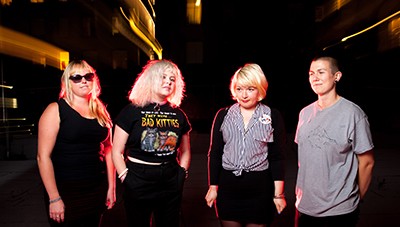
Belden, Liggera, and Leni have been penning punchy, high-energy feminist anthems as Quaaludes for the past three years. They brought on bassist Courtney Dragge to join the band in 2013. The four-piece is a regular fixture of the underground house show circuit in San Francisco and the East Bay. Lately, it has performed in Oakland with increasing frequency as San Francisco’s DIY venues and punk houses shutter amid skyrocketing rents and property values. The members of Quaaludes lamented that they’re among the city’s few young punk bands still hanging on.

Nothing New by Quaaludes

Quaaludes’ last EP, 2014’s Nothing New, features short, intense spurts of relentless guitar riffs and confrontational lyrics that deal with street harassment, consent, and gender violence. While the band’s upbeat rhythm section lends a pop sensibility to the music, Belden’s histrionic singing style — with its guttural adlibs and bursts of high-pitched, maniacal laughter — conveys the vocalist’s unbridled rage.

Describing Quaaludes’ songwriting process, Belden said, “We’ll get to practice and hang out for a few minutes and we’ll be talking about random shit that’s in our day — like, Morgan will be talking about X-Files or random misogyny — and I’ll put that in a song.”

The band members exchanged knowing glances and shared several anecdotes about men assaulting them at punk shows or aggressively staring them down on public transit. Liggera recalled a recent incident in which a man berated her at a concert after he pushed her repeatedly and she asserted her personal space. Belden replied with her own tale of another man hassling her when she went to a bar by herself — a scenario that has become fodder for a track Quaaludes is currently working on.

“Aimee has a really good side-eye,” said Leni, directing her attention to Belden. “You should do that Muni face that you do sometimes.” Belden immediately got into character and pretended to catch the eye of a leering stranger on the bus. She looked down and let out a deep huff filled with supreme disgust and disappointment. “Hopefully they see me doing that and feel embarrassed and never look at me again,” she said.

Quaaludes has released several EPs on vinyl, but its current live set consists of mostly unpublished material. Last winter, the band laid down tracks for a seven-inch record that the Oregon punk label Jonny Cat Records was supposed to put out earlier this year. However, the label delayed its release date and hasn’t confirmed a new one.

The fact that the project is still floating in limbo doesn’t seem to bother the members of Quaaludes, who have been busy writing new tracks to incorporate into their performances. Later this month, they will embark on a West Coast tour. The bandmembers agreed that they prefer that fans experience their music through their live shows than through other formats. The four musicians frequently attend other bands’ concerts themselves, and looking up people’s music online — or uploading their own tracks to Bandcamp — seems to be an afterthought.

Though they often play at bars and clubs, such as Hemlock Tavern in San Francisco and the Night Light in Oakland’s Jack London district, Leni, Liggera, and Belden agreed that they enjoy performing in DIY spaces more than traditional venues because it affords them more control over their environment. Some club-goers, they said, think being punk gives them license to disrespect the people around them, and they explained that they tend to encounter entitled behavior at venues more frequently than at house shows. “House shows feel more personal, like someone intentionally created the space,” Liggera explained. “Instead of just like, ‘We’re at this bar and there’s already a crowd of people here that might be weird.'”

Using its stage presence to set the tone for safe and inclusive environments at its shows is one of the ways Quaaludes pushes back against instances of day-to-day sexism. While the bandmates said that they encourage audience participation, they concurred that those who wish to mosh aggressively shouldn’t take up so much space that they put people, especially women, in the way of harm.

Belden said that her new strategy has been to call out disrespectful behavior on the mic instead of waiting to discuss it after it happens. “It sucks that at punk shows women have to hang out in the back because they don’t wanna be hurt,” she said.

“I like people participating and showing that they’re having a good time,” added Leni. “But there’s a line, and sometimes they’re lacking self-awareness and blame that lack of self-awareness on that people around them are uptight or not punk.”

Albany’s First Poet Laureate Debuts Newest Book

In Tender the Maker, local poet Christina Hutchins weaves together memories of her childhood and moments of her adult life to examine what gets left behind when something, or someone, is lost. The Albany poet was the city’s first poet laureate, a title she held from 2008 to 2012, and the book, which won the 2015 May Swenson Poetry Award, is her second full-length title.

Tender the Maker, released last month, crisscrosses between years spent in pre-Silicon Valley San Jose, when the area was still called Santa Clara Valley and the smell of ripe fruit effused the air. It also meanders along the cobblestoned streets of West Germany, where Hutchins said she first became tactilely aware of her own humanity, to Route 1, Highway 17, and many places in between.

But it is in “Unrepeatable Poem,” through fragmented scenes as Hutchins’ father succumbs to Alzheimer’s disease, that the author’s voice is most poignant. The isolated moments create a tender tableau of increasingly heart wrenching exchanges. His voice again, a desperate sundown, “They’re locked./It’s terrible. They’re all locked in.” Are you/lonely? “Yes.”

Similarly, “Vigil,” in which Hutchins deals directly with her father’s death, is exquisite in its simplicity. Although many of Hutchins’ poems are densely layered in imagery, this seven-stanza verse is stripped down to a solitary scene. The piece fixes its gaze squarely at her father’s unclosing eye, enclosing readers in an intensely intimate moment as his body is prepared for cremation.

The majority of Tender the Maker deals with loss in a less direct way. Hutchins meditates on the accumulation of possessions — the remnants of life left behind. A shoe is stuck in the form of the foot it once held and a salamander’s skin remains where the body has long since vacated.

Memories from her childhood spill out onto the pages like loose photographs from a cardboard box, long stowed and suddenly upended. At times, Hutchins lingers too long on those rose-colored moments of youth. The innocence of a child’s day spent outside amid cantering horses, joyful dogs, and nesting birds in “The Music Inside” feels like a Rockwellian vision, with all of its whitewashed idealism.

That sentimentality is stripped away, however, in the book’s second chapter, which opens with “Eye of the Storm, Pescadero Coast, 1972,” an ode to Cesar Chavez’s 24-day fast in support of the United Farm Workers’ boycotts and the 1939 Federal Agricultural Laborers Association strike, led by Filipino workers. The same shirt pulled over the same head/not once but again and again, a eucalyptus turned/inside out. Brutal, foam-white,/the sea tore at its rocky coast. Route One was/forsaken.

Throughout the book, readers are reminded of past injustices and horrors — at Auschwitz and elsewhere. Hutchins excels in turning even the most mundane of daily activities — walking past roadwork on Solano Avenue in Albany, for example — into metaphors for more central questions; in this case, how to bear the weight of history.

There is no answer presented. Rather, the question itself is a call for moral reckoning, a request to remember that history, and in so doing, to not repeat it.

The Life Is Living Festival Dances into deFremery

The curatorial vision for West Oakland’s annual Life Is Living Festival is one seemingly simple-yet-loaded question: What sustains life in West Oakland? As one might expect, the answer is multifaceted. And according to festival executive producer Hodari Davis, highlighting that diversity is the goal. “We’re trying to use the festival as an opportunity for artists, community activists, young people, and some of the historic institutions that exist in West Oakland, in particular, to actually answer that question,” said Davis in a recent interview. “For some people, it’s skateboarding that sustains life. For some people, it’s visual art, or it’s poetry, or it’s live dancing, or it’s theatrical works, or it’s graffiti, or it’s health and wellness.” So, Life Is Living offers all of that, and more.

The festival will take place for the eighth time this Saturday, October 10 at the historic deFremery Park (1651 Adeline St., Oakland) from 10 a.m.–8 p.m. It’s an annual, free event put on by Youth Speaks, the national, Bay Area-based organization that works with youth to tell their stories through spoken word. Davis co-founded the festival with its former artistic director Marc Bamuthi Joseph in 2008. It began as a way to engage youth and community with art and environmentalism — “Browning the green movement,” as Davis put it.

After the first year of producing Life Is Living, Youth Speaks received a grant from the Doris Duke Foundation to expand the festival, and bring it to cities across the United States. Since then, the organization has presented the event in Chicago, New York City, Houston, Atlanta, and San Francisco, treating each iteration as an opportunity to refine the event. Early on, it became clear that environmentalism wasn’t the most pressing topic in the communities that the event is intended to engage. As Davis recalled, that realization fully set in during Life Is Living in Harlem, New York in 2009 when one youth poet presented a piece with the line: “How can we talk about ‘green’ when our trees are stained with blood?”

That sentiment was echoed by many community members Davis spoke with. “When they saw that word ‘life,’ it less related to trees and more related to their children,” said Davis. “So, their interpretation of Life Is Living was, ‘How can we use this festival to celebrate the lives of our people and also to acknowledge the deaths that have happened?'” Listening to that feedback, Davis and fellow organizers maintained the underlying environmental standards for the festival, but shifted the focus to showcasing community talent and vibrancy and nurturing social change where needed.

Now, Davis sees the established event as a large-scale manifestation of Youth Speaks’ mission to create individual transformation by presenting opportunities for self expression. “Life Is Living essentially was us taking this microcosmic pedagogical idea and turning into a macrocosmic idea,” said Davis. “Replacing our focus on individual transformation with our focus on community transformation.” Oakland’s Life Is Living fosters that transformation through a thoughtful hybrid of artistic and social justice oriented engagement categorized into various zones, each dedicated to celebrating different aspects of life in West Oakland.

On the artistic end, the “Oakland Is Fly” stage at this year’s festival will feature a long lineup of local musicians. Town Futurist will also be hosting a hip-hop dance party featuring Bay Area youth MCs and rappers. Youth Speaks will have an all-day lineup of poetry performances taking place on two different stages, one dedicated to food justice, and another for young poets to speak about racial profiling and police violence.

Like most years, the event will also feature a skate zone at Town Park hosted by Keith Williams — the local artist and skate advocate known as KDUB. That section will host skateboarding contests and exhibitions along with DJ workshops, live music, a bicycle obstacle course, a graffiti battle, and other youth-oriented activities. For youth under the age of twelve, “Emily’s Butterfly Kids Zone” will offer learning stations, arts and crafts, a petting zoo, and performances.

The Marketplace will host more than seventy vendors offering food and other locally made goods. It will also include a “Beauty Zone” with natural beauty products, spa treatments, and other salon services. The Marketplace’s Cowrie Village will feature vendors offering their products in exchange for other goods and services, thereby fostering a barter economy. Meanwhile, the “Wellness Zone” will be dedicated to various healing practices, with practitioners offering both information and onsite services, plus movement workshops and light yoga.

Although Life Is Living has focused on music and visual art in the past, the arts curators this year chose to highlight dance and theater. The theatrical stage will include a production of Black Joy in the Hour of Chaos, a series of short performances employing music, dance, and spoken word poetry along with a massive parachute prop. The participatory piece was composed by Bamuthi Joseph, evoking the legacy of hip-hop, the Great Migration, New Orleans parade culture, and contemporary racial politics. It has only been performed previously in Central Park. The stage will also present works by Dalak Brathwaite, Josh Healey, Campo Santo, and Cal Shakes — totaling six hours of outdoor theater.

With “Dance Is Life: Africa in Oakland,” the dance stage will offer free dance classes throughout the day, highlighting the Malonga Casquelord Center for the Arts’ resident teachers and dance companies. Yak Films will have its own space to present an “Oaktown vs. the World” dance battle and exhibition. The legendary iDummy, Kidd Strobe, and Krow will represent Oakland against dancers from Tennessee, New York, and Brazil. Plus, to ensure that the day is historic, Life Is Living partnered with Friends of deFremery and Oakland Parks and Recreation to bring people out to the park at 8 a.m. to attempt to beat the World Record for longest Soul Train line, which would require more than 425 people dancing nonstop for four to six hours.

Along with the Soul Train line, the festival will begin — as it has for the last five years — with a free breakfast program in tribute to the Black Panthers. While the People’s Kitchen and other participants serve a healthy meal for every attendee, local food justice organizers will be rallying the community around the issue through performances and other informational engagements. Last year, the Life Is Living Free Breakfast Program fed approximately 700 people, and this year, they aim to feed 1,000.

From Davis’ point of view, every aspect of the festival is of equal importance, because each requires the others to exist. “Youth cannot speak unless communities are empowered,” said Davis. “We can’t really empower the young people to live to their fullest potential if the communities they are living in are not — not actualized, not realized, not safe, not healthy, not fun.”

Correction: The original version of this article incorrectly listed Karl Watson as the host for the Life is Living festival’s skate zone. In fact, it is Keith Williams.

Oakland’s Top Housing Official: There Is No Affordable Housing Crisis

Rachel Flynn at a recent meeting of the Bay Area Planning Directors Association. Credits: Association of Bay Area Governments Oakland's Director of Planning and Building Rachel Flynn reportedly told a conference of real estate developers in San Francisco yesterday that Oakland's residents are not facing an affordable housing crisis. Her comment was tweeted out by several attendees, including journalists. Flynn made the...

Governor Brown Vetoes New Hash Crimes Legislation

Governor Jerry Brown vetoed a law creating new penalties for hurting others while extracting cannabis with flammable chemicals. Brown said California has enough criminal laws, and has a terrible prison overcrowding problem.The state needs to pause before making the problem worse. The hash problem: California has seen a rise in explosions and fires caused by chemical extraction of cannabis,...

Wednesday Must Reads: Jerry Brown Opposes Prop 13 Reform; Governor Signs Anti-Drone Law to Protect Celebrities

Stories you shouldn’t miss: 1. Governor Jerry Brown told a group of real estate professionals in San Francisco that he opposes a measure that would reform Proposition 13, the Chron reports. The measure, sponsored by state Senator Loni Hancock of Berkeley and backed by education activists, would close a loophole in Prop 13 that allows corporations to avoid paying their fair...

Kala Art Institute Founder Receives Prestigious Award

Archana Horsting, the executive director and co-founder of Kala Art Institute in Berkeley, will be honored with the prestigious Benjamin Ide Wheeler Medal, also known as the “Most Useful Citizen award,” this Thursday. The prolific artist has been providing the East Bay with arts education and studio spaces for more than 40 years. Archana Horsting. Credits: Courtesy Kala ...

The Advocate’s Kitchen Is on Fire

The knock against California cuisine has always been that it relies so heavily on the state's great agricultural bounty that chefs can get away with not really learning how to cook — that "rustic," as one prominent Bay Area chef tweeted recently, can too easily become a synonym for lazy. Having eaten enough proverbial beet-and-goat-cheese salads to...

‘The Walk’ Will Make You Sigh and Cheer

Going into The Walk, we were intensely aware that the story of French high-wire artist Philippe Petit and his daredevil 1974 mid-air walk between the twin towers of New York City's World Trade Center (1,363 feet above the sidewalk) had already been brought to the screen, in James Marsh's thrilling 2008 documentary, Man on Wire. So we were frankly...

She’s Soulovely

During Oakland Pride last month, a diverse crowd of mostly women packed into the New Parish for Soulovely, a daytime party that takes place on second Sundays during the summer. Though the dance floor in the venue's courtyard was completely full, people of different ages and ethnicities unselfconsciously got down in the aisles, on top of the benches, and...

Quaaludes Wants to Spank the Patriarchy

Drummer Susie Leni and singer Aimee Belden of the punk band Quaaludes sat in a cramped practice space above the storied gay bar Aunt Charlie's in San Francisco's Tenderloin district. As the sounds of another band's rehearsal drifted in from down the hall, the bandmates cracked open beer cans and passed around a bag of cherry tomatoes, which Leni...

Albany’s First Poet Laureate Debuts Newest Book

In Tender the Maker, local poet Christina Hutchins weaves together memories of her childhood and moments of her adult life to examine what gets left behind when something, or someone, is lost. The Albany poet was the city's first poet laureate, a title she held from 2008 to 2012, and the book, which won the 2015 May Swenson Poetry...

The Life Is Living Festival Dances into deFremery

The curatorial vision for West Oakland's annual Life Is Living Festival is one seemingly simple-yet-loaded question: What sustains life in West Oakland? As one might expect, the answer is multifaceted. And according to festival executive producer Hodari Davis, highlighting that diversity is the goal. "We're trying to use the festival as an opportunity for artists, community activists, young people,...
19,045FansLike
17,709FollowersFollow
61,790FollowersFollow