It’s hard to get peeved about so good-naturedly daffy a movie as Barry Levinson’s Rock the Kasbah, a film that proves that Bill Murray — who now looks more like a real-life golf course groundskeeper than he did in Caddyshack, back in 1980 — is as funny now as he ever was. And it reminds us that on Saturday Night Live and in movies like Stripes and Mad Dog and Glory he was one of the snarkiest men in the business.
Director Levinson (The Bay, Wag the Dog, The Natural, Diner) and screenwriter Mitch Glazer (Scrooged), a pair of veterans on the comeback trail, give the full Van Nuys to the story of burned-out, never-has-been rock talent agent/tour manager Richie Lanz (Murray) rising to the occasion in perilous Afghanistan (shot in Morocco). It’s practically a remake of Levinson’s Good Morning, Vietnam, with Murray replacing Robin Williams as the goofball in a war zone. Every time a scary situation pops up, BANG!, Richie shoots it down with a gag, delivered with Murray’s finest putting-green snide. When he comebacks a US Army private with, “Thank you for your sacrifice,” you can actually see the irony dripping off the words. Subject for further research: Richie’s Danielle Steel routine — see the movie before that gets cut out.
Zooey Deschanel and Bill Murray star in Rock the Kasbah.
Stir in crowd-pleasing parts for Kate Hudson as an in-country American prostitute working out of a double-wide trailer; Zooey Deschanel as Richie’s wannabe-Stevie-Nicks office assistant; Bruce Willis coming across shell-shocked as a gnarly mercenary; and the pleasing warbling of Palestinian actress Leem Lubany (from Omar) as the fulcrum of the piece, an Afghan warlord’s daughter devoted to the songs of Cat Stevens, aka Yusuf Islam. The more ridiculous the story gets, the better it works. If you’ve seen Havana Marking’s brave 2009 doc Afghan Star, about the unlikely but true Kabul version of American Idol, all the better. Richie stares death in the face and reduces it to a Deep Purple joke. Again, why are we in Afghanistan?
Tony Daysog.
For more than a year, tenant activists in Alameda have routinely described horror stories of residents, including low-income people and seniors, being displaced by exorbitant rent increases of up to 50 percent. This week, Alameda Councilmember Tony Daysog unveiled a proposal to enact a 45-day moratorium on rent increases of more than 10 percent.
Daysog’s proposal is set to be reviewed early next month at a special meeting dedicated to the rent crisis. It’s the first concrete proposal to ease the burden on renters, which account for just over half of the residents in Alameda.
In Daysog’s detailed six-page proposal, he stressed his initial goal is to stop excessively high rent increases and to “adopt legislation meant to begin to cool the rental market down immediately upon adoption.” Daysog is also recommending an additional ordinance to stop mass evictions at a single building. His plan would require landlords to pay two times the fair market rate to the evictees plus $1,000. A relocation fee, Daysog believes, will serve as a deterrent for landlords to rapidly increase rents.
The moratorium proposal, however, doesn’t go nearly far enough, according to members of the quickly growing renters advocacy group, the Alameda Renters Coalition. “Ten percent a year is apparently okay in his book,” said Catherine Paulding, a five-year renter in Alameda who is also the coalition’s lead organizer. “You can guarantee everybody is going to get a 10 percent increase. They would be getting permission from the city council.”
[jump]
“A 10 percent cap during the moratorium is just DOA,” added John Klein, an Alameda resident and member of the renters coalition steering committee. The group has consistently asked for a tougher moratorium on rents as a precursor to adopting rent control in Alameda. But, the latter idea has been met coolly by some members of the city council who worry that such an ordinance would be overly restrictive and counterproductive.
Tenants have been frustrated by the fact that the council has not taken action at a time when renters are being displaced from their homes. Since September 2014, it has been the council’s position to compile relevant data showing whether a housing crisis truly exists in Alameda before taking legislative action. A long-promised city report on the effects of rising rents on the island was scheduled to be released in December, but will be offered at the special meeting set for November 4, said Councilmember Jim Oddie.
Meanwhile, the Alameda Renters Coalition’s advocacy over the past months is showing signs of swaying the council. On Tuesday night, the council postponed the scheduled reappointment of three members of the Alameda Renter Review Advisory Committee (RRAC) after the renters group had repeatedly pointed out that the committee often recommends 10 percent rent increases during disputes between tenants and landlords.
“Now, any renter facing double-digit — 20, 30, 50 percent [rent increases] — is told 10 percent, of course, what is the option? They may accept it, but in no way is it acceptable,” Paulding told the council. “They don’t understand how vulnerable our population is and how we already have endured over the last two years and what is coming ahead.”
The advocacy group says it compiled voting data showing that the RRAC often unanimously approves 10 percent rent increases and lacks committee members willing to push back against landlords. “There’s no liberal lion slugging it out for the little guy,” said Klein.
Any changes to the composition of the RRAC or even its function going forward will not be decided until after the early November special meeting. Oddie also raised the possibility of making the RRAC an elected board at some point, but whether such a change has support among the council is not yet clear.
Credits: Signature Development Group
The Oakland Planning Commission last night declined to approve plans for a proposed giant wooden deck along the Oakland Estuary after activists raised concerns that the project’s lackluster design could doom it to failure. The wooden deck project at Embarcadero Street near 9th Avenue is part of Brooklyn Basin, the massive mixed-use housing and retail development now underway along the Oakland waterfront, just southeast of Jack London Square. As part of the 64-acre project of Signature Development Group — which is on track to include 3,100 units of housing and 200,000 square feet of commercial and retail space — the developer has proposed to build the giant deck as part of a series of parks along the waterfront, which is currently underutilized and in some places cut off from public access.
The wooden deck, which would roughly be the size of two football fields, is known as Shoreline Park, and it’s the first of five proposed adjacent parks in the Brooklyn Basin plan. Shoreline Park will be located on the site of the historic Ninth Avenue Terminal building, which will be mostly demolished as part of the development. Over the last month, park advocates have criticized Signature’s proposal for failing to include inviting features or significant greenery.
[jump]
The planning commission, which must grant final approvals to the park project before the developer can break ground, voted to delay Shoreline Park at yesterday’s meeting raising similar concerns about the designs. Officials have not yet scheduled a date for the commission to reconsider the proposal, and it remains to be seen whether Signature plans to enhance the project design in response to the concerns of commissioners and activists. When I reported on the project earlier this month — see “New Oakland Park to be a Giant Wooden Deck” — Signature’s vice president Patrick Van Ness told me the company was aiming to break ground on Shoreline Park in spring 2016.
Given the park’s somewhat remote location — cut off from the Lake Merritt area by the Union Pacific Railroad tracks and Interstate 880 freeway — activists said the park needs to include features that would establish it as a destination. Representatives of the Oakland Heritage Alliance, the Coalition of Advocates for Lake Merritt, and the East Bay Regional Park District Board, have been the loudest critics of the plan. They’ve requested that Signature add “shade protection,” benches, picnic tables, “wind-protected areas,” increased greenery, more trees, a fishing pier, a visible canopy-type entryway, and other features.
Credits: signature development group
Signature, which did agree to add portable umbrella structures to the design in response to activists’ requests, has argued that it is limited in what it can do at this site. That’s because it is constructing the park on top of a concrete deck above water (which Van Ness said makes it infeasible to do certain types of greenery), and the park is also located on land that is in the “public trust” (which means the State Lands Commission has jurisdiction and prohibits certain kinds of developments, such as playgrounds or basketball courts).
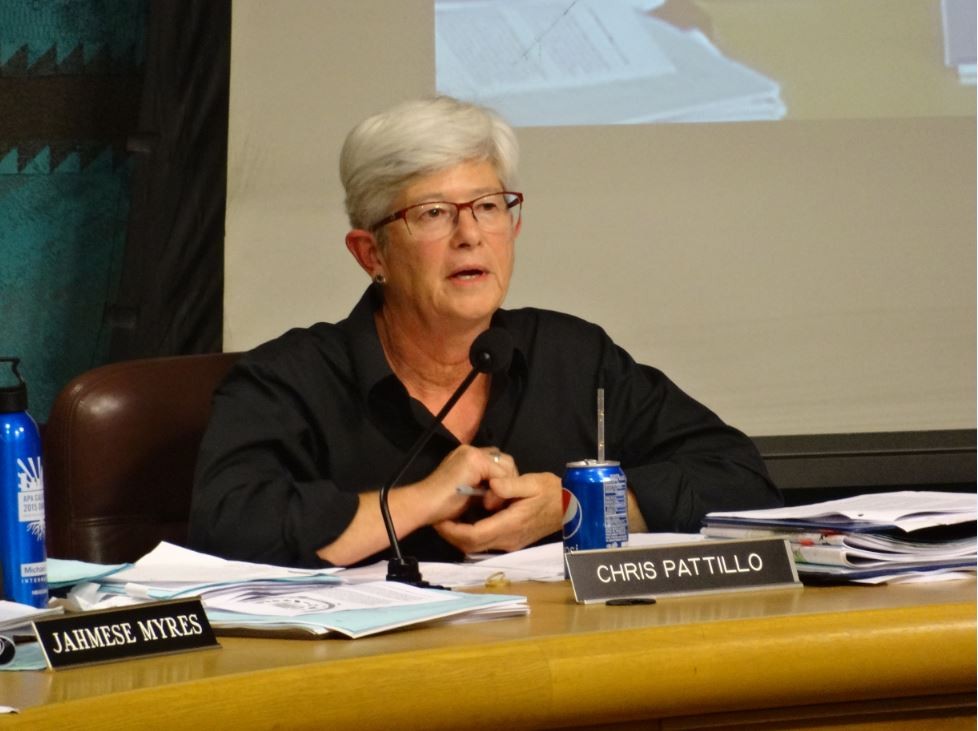
Commissioner Chris Pattillo.
Credits: Darwin BondGraham
But activists have argued that even within those limitations, there’s a lot more that the developer can do — and the planning commissioners seemed to agree. Chris Pattillo, planning commission member and principal with local architecture firm PGAdesign, was critical of the design last night, arguing that if the developer had been more responsive to previous requests for improvements, the project would not need to be delayed.
In recent weeks, members of the city’s Landmarks Preservation Advisory Board and Parks and Recreation Advisory Commission have also publicly raised concerns about the Shoreline Park design. According to a summary from activists who attended recent meetings at those two advisory commissions, landmarks board members raised concerns about the need for shade and other structures and declined to approve the plan in its current form. At the parks advisory commission, members called for more public art and a more imaginative design and raised concerns that the huge platform would be uninviting.
Potential new development under the Lake Merritt Station Area Plan by 2035.
Credits: City of Oakland
Late last night, the Oakland planning commission voted to delay dozens of major changes to the city’s planning code that would have dramatically rewritten zoning rules in the downtown, Lake Merritt, Broadway-Valdez, and Coliseum areas, and streamline approval for giant real estate projects throughout the city while reducing opportunities for the public to provide input.
Other proposals before the commission included easing rules on secondary units, and amending the city’s transitional and supportive housing regulations to comply with state laws. But the packet of proposed changes, numbering 42 different amendments to the planning code, stuffed in a 617 page PDF file released only last week, was simply too big and controversial to approve. The commission instead asked planning staffers to return to a future commission meeting with non-substantive and less controversial changes as separate items so that there can more robust debate on the more substantive proposals.
[jump]
Alvina Wong, an organizer with the Asian Pacific Environmental Network, said the city needed to give the public and opportunity to read and understand the proposed changes before taking action.
“Don’t move on any of these amendments,” Wong told the commissioners. “You can’t send out a six hundred-page document on Friday and expect us to be able to read and understand these amendments.”
Wong said she had concerns about at least eight of the proposed changes. “This reads like streamlining a process for developers, and limiting the public’s ability to shape things,” said Wong, whose group worked with Chinatown and Eastlake neighborhood residents to shape the Lake Merritt Station Area Plan.
Doug Boxer, a former Oakland planning commissioner, who now runs a consulting firm, was one of the few speakers to urge the commissioners to accept the total package of changes.
“When I was on the commission, we had a circumstance in which zoning in our city was forty years old, so six years ago we started on this zoning update, a massive undertaking, to bring it to conformity with general plan,” said Boxer. Pointing at specific proposals that would up-zone blocks along the Broadway corridor, Boxer told the commissioners, “you do not lose your discretion on specific projects because you make a change in height or zoning.”
But most speakers urged caution. Even items that appeared to have majority support were tabled due to concerns that they needed to be further refined.
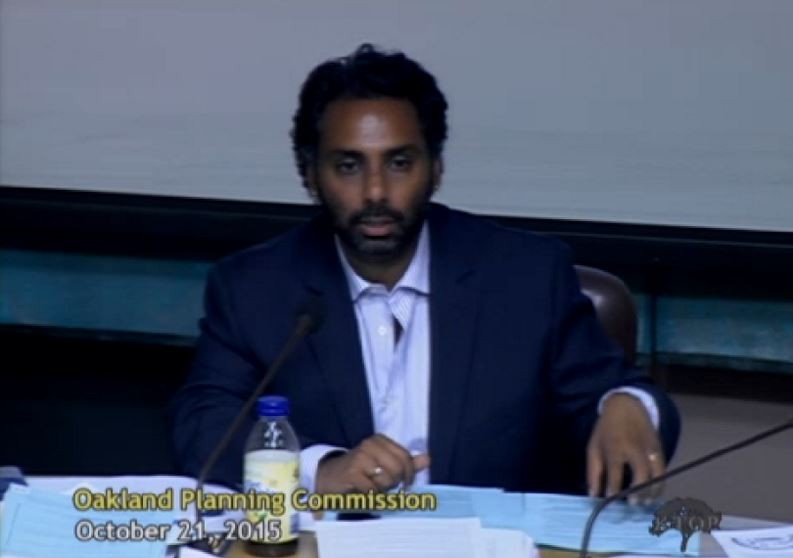
“My recommendation would be the secondary units disallow short-term rentals and some sort of minor conditional use permit is required for a short-term rental and an application would have to come and apply for that,” said Myres.
Planning commission chair Adhi Nagraj said he isn’t concerned as much about short-term rentals of newly built secondary units, but the disagreement on the commission itself showed the need for further discussion and refinement of the proposal.
Two other items in the packet of proposed changes would make it much easier for developers building giant projects like hotels, office, and apartment towers, or even industrial facilities, to gain approval without subjecting projects to heightened public scrutiny. Currently a project deemed a “large scale development” must gain major conditional use permits from the city. The process of obtaining these permits allows the public and city officials to shape a project, and sometimes to require community benefits, labor agreements, or other features to reduce a project’s impacts. Currently in many areas of the city any project larger than 25,000 square feet must gain a major conditional use permit. The proposed changes would increase this to 100,000 ad 200,000 square feet in different parts of the city, allowing developers to gain approval from city staff, rather than having to get a permit from the planning commission.
“It’s just too much info for us to digest,” said commissioner Emily Weinstein about all the changes. “There needs to be a better process of doing outreach before these are even recommended to us.”
In the end, the commission voted to bring the multitude of proposed changes back as separate items, with non-controversial and non-substantive changes grouped together so they could be quickly approved, while more controversial items will be debated.
Once the planning commission approves changes to Oakland’s planning code, they must go to the city council’s Community and Economic Development committee, and then gain the final approval of the full city council.
1. Bay Area regulators have banned all wood-burning heating devices — including wood-burning stoves — in new homes in an attempt to reduce air pollution in the region, the CoCo Times$ reports. The move by the Bay Area Air Quality Management District, which takes effect in November 2016, is the first of its kind in the nation. The district previously banned all fireplaces in new home construction. The district had proposed to also require home sellers to replace fireplaces with cleaner heating devices, but instead agreed to a watered-down plan that requires sellers to issue health warnings about the dangers of wood burning.
Janet Napolitano.
2. UC President Janet Napolitano is vowing to boost enrollment of California students next year at all UC campuses, including its most impacted schools, Cal and UCLA, the LA Times$ reports. Napolitano plans to provide full details of her proposal next month. The UC system has come under increasing criticism for denying access to California residents in favor of out-of-state and international students who pay much higher tuition. The legislature has offered a $25 million funding bonus if the UC system increases its enrollment of in-state students by 5,000 next year.
3. The Oakland City Council adopted a watered-down plan to help tenants fight unlawful evictions in the city, the Chron reports. The original plan called for spending $1 million on beefed up enforcement on landlord scofflaws, but the council rejected that proposal and instead approved paying $340,000 to nonprofits to help educate tenants about the protections they have — but only if the city’s administration can find the money to do it.
[jump]
4. Kaiser mental healthcare workers have voted to authorize a strike, the CoCo Times$ reports. Mental health workers — and patients — have long complained about the lack of resources at Kaiser.
Michelle Norsworthy (l) and Shiloh Quine.
Credits: Transgender Law Center / photo of Quine courtesy of SFINX Publishing, The Women of San Quentin
In a move that advocates said is a major victory for transgender rights, California has implemented a policy enabling transgender prison inmates to access sex reassignment surgeries behind bars. The policy, which went into effect yesterday, is the first of its kind in the nation and comes on the heels of two legal battles led by the Transgender Law Center, an Oakland-based organization. The new rule establishes a process by which trans inmates can request surgery and sets specific criteria for prison officials to use when determining whether to grant the requests.
The California Department of Corrections and Rehabilitation (CDCR) — like jail and prison systems across the country — houses inmates in facilities that correspond to the gender assigned to them at birth. That means that unless they have completed reassignment surgery, trans women are forced to live in men’s prisons and vice versa. Denied access to facilities that match their gender, trans inmates face a wide range of harassment, violence, abuse, and discrimination behind bars, according to prison reform advocates and LGBT rights groups. One report found that in California, 59 percent of trans inmates said they were sexually assaulted compared to 4 percent of the general population.
And according to data CDCR sent me last month, there are currently 363 trans women living in men’s prisons in California and 22 trans men in women’s prisons. Those numbers refer to inmates who are undergoing hormone therapy for “gender dysphoria,” the medical term CDCR uses to describe trans inmates.
[jump]
Advocates hope this week’s policy change will not only help ensure that California trans inmates have access to surgery if they request it, but will also set the stage for other prison systems to follow suit. “By adopting this groundbreaking policy, California has set a model for the rest of the country and ensured transgender people in prison can access life-saving care when they need it,” Kris Hayashi, executive director of Transgender Law Center, said in a statement today.
The law center represented two trans female inmates who sued California, arguing that the state had denied them medically necessary care when the prisons refused to grant them surgeries. In April 2014, the center won a preliminary injunction on behalf of one of the women, Michelle Norsworthy, with a ruling ordering the state to provide her with “adequate medical care,” including surgery. The state, however, appealed the decision and then released Norsworthy on parole before the legal battle about her medical care was resolved.
The state settled the second Transgender Law Center case in August, agreeing to pay for the surgery of Shiloh Quine, another trans female inmate who is serving a life sentence. That settlement, which was the first of its kind in the nation, also stipulated that Quine would transfer to a women’s prison after the surgery. Quine was featured in The Women of San Quentin: Soul Murder of Transgender Women in Male Prisons, a book by Berkeley-based journalist Kristin Schreier Lyseggen, who I recently interviewed.
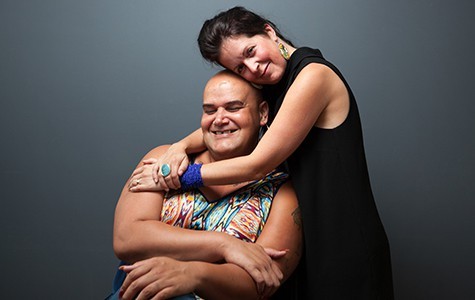
Daniella Tavake (left), a trans woman and former California inmate, with Berkeley journalist Kristin Schreier Lyseggen.
Credits: Bert Johnson/file photo
Joyce Hayhoe, spokesperson for the California Correctional Health Care Services (which is responsible for medical care in prisons), told me today that she believes that no other prison system in the country has completed sex reassignment surgeries for inmates, meaning Quine will be the first. The new policy, Hayhoe said, is effective immediately. You can read the full eight-page policy here.
Under the guidelines, inmates with “gender dysphoria” can request an evaluation for sex reassignment surgery. Ultimately, a “Sex Reassignment Surgery Review Committee” — made up of two medical physicians, two mental health physicians, and two psychologists — will vote on whether to grant the request, according to the policy. The guidelines direct the committee to review the inmate’s current treatments (such as hormones for “gender dysphoria”) and consider “whether other ameliorative treatments besides [surgery] should be considered for addition to the existing regimen of treatment(s).” The guidelines also include a long list of specific eligibility criteria (see page three) including evidence that the “patient is in significant distress due to gender dysphoria,” and that “the patient has continuously manifested a desire to live and to be accepted as a member of the preferred sex, including the desire to make his/her body as congruent as possible with the preferred sex, for at least two (2) years; has lived full-time in his/her desired gender role for at least 12 months…”
The state will also only grant surgeries to inmates who have more than two years remaining before their anticipated parole or release date, according to the guidelines. An inmate who is denied can re-submit a request one year later.
“I suffered for decades as my identity, my medical needs, and my very humanity were denied by the people and system responsible for my care,” Norsworthy said in a statement released today by the Transgender Law Center. “I am beyond proud to have been part of the movement to make this policy happen, and I know it will change and save the lives of so many women still fighting for survival in men’s prisons.”
Trans advocates, who often prefer the term “gender-affirming surgery,” have long argued that trans prisoners should have access to facilities and programs that match their gender regardless of whether they have had a surgery.
The four year-old federal crackdown on state-legal medical cannabis businesses in California may be over. On Monday, widely respected United States District Judge Charles R. Breyer lifted an injunction against the Marin Alliance for Medical Marijuana and its operator Lynette Shaw. In doing so, Judge Breyer set case precedent which will almost certainly be used by Harborside Health Center and Berkeley Patients Group in their fight against federal forfeiture.
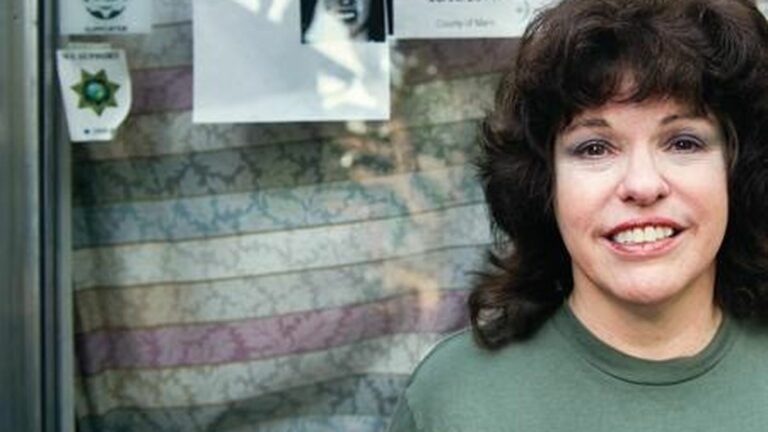
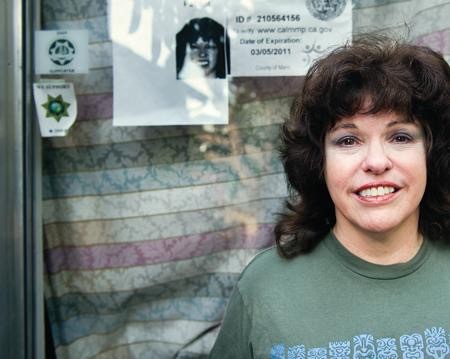
Lynette Shaw (via Instagram)
Breyer ruled that Congress meant what it said it meant when it de-funded the Department of Justice’s war on medical marijuana in December, and again in June: to back off of state-legal medical pot.
The DOJ has been interpreting the historic Rohrabacher-Farr Amendment far more narrowly — continuing to prosecute state-legal operators.
Breyer called Justice’s reading of the Cromnibus spending rider passed in December “tortured.” Breyer agreed with the plain reading of the law — preventing the DOJ from “interfering” with the “implementation” of state medical marijuana laws.
[jump]
Credit goes to Shaw’s attorney team led by Greg Anton. Anton filed what was considered a long-shot request to lift the injunction in June. Anton got a hearing in federal court in August. Anton told NBC Bay Area this week after the ruling came out: “The law is clear there will be no funds expended for interfering with California state medical marijuana laws.”
Shaw told me she feels as if “we won the war and I’m the first POW to be released.” … “It really is a landmark, precedent-setting ruling that secures the safety of all my god-children: every [state-legal] club in the nationl every club owner.”
Dan Riffle, director of federal policies for the Marijuana Policy Project (MPP) stated in a release: “This is a big win for medical marijuana patients and their providers, and a significant victory in our efforts to end the federal government’s war on marijuana. Federal raids of legitimate medical marijuana businesses aren’t just stupid and wasteful, but also illegal.”
The ruling is contingent upon continued approval of Rohrabacher-Farr. The US House of Representatives passed the amendment again in June 2015, with 23 more votes than last year — including 67 Republicans. The Senate Appropriations Committee also approved it. “It is expected to be included in any compromise legislation funding the government for the next fiscal year,” stated MPP.
“While an annual appropriations rider is a way to temporarily work around broken federal marijuana laws, Congress needs to take concrete steps to permanently resolve the tension between state and federal marijuana laws. Virtually every presidential candidate from both parties has said states should be able to determine their own marijuana laws, and multiple bills are pending in Congress that would allow them to do so. It is long past time those bills got the hearings and votes they deserve,” Riffle stated.
The Marin Alliance was the oldest operating dispensary in the state when US Attorney Melinda Haag shut Shaw down in 2011. As part of the crackdown, Haag resurrected a decades-old federal injunction against Shaw. Shaw has been a medical cannabis pioneer since the Nineties.
The ruling promises to spur thousands of motions in other cases involving state-legal medical cannabis industry members who’ve been prosecuted by the federal government — federal prisoners who petition for release; active dispensaries; locally licensed growers, and more.
Shaw, for her part, is making plans to open another dispensary. “I’m looking for some serious investors now. I’m a safe bet and I’m fed-proof.”
1. Federal officials have decided to reduce housing aid to low-income residents in Oakland because they claim that rent prices have declined in the city — even though real estate experts say the opposite is true and that rents have been skyrocketing, the Chron reports. It’s not clear how officials from the US Department of Housing and Urban Development came to the conclusion that rent prices are going down, but affordable housing activists contend that HUD is just seeking to slash aid to poor people. The median rent price in Oakland is now $2,650 a month, according to Zillow, nearly 40 percent higher than it was two years ago, and yet HUD claims that rents have dropped slightly in the city. HUD’s move promises to force the displacement of more low-income people from Oakland.
Chris Magnus.
2. Richmond Police Chief Chris Magnus, widely regarded as the most progressive chief in the Bay Area, is a finalist to become Tucson’s new police chief, the Chron reports. It’s not clear why Magnus is seeking to leave Richmond, which has experienced a dramatic drop in crime since he took over the police department in 2006. Magnus gained notoriety last year when he participated in a Black Lives Matter protest — a move that angered rank-and-file cops in Richmond.
3. The San Francisco County Board of Supervisors voted unanimously to reaffirm the city’s sanctuary status for undocumented immigrants, the Chron reports. The board’s vote effectively affirmed that Sheriff Ross Mirkarimi did nothing wrong earlier this year when he released Juan Francisco Lopez-Sanchez, the Mexican national who later killed Kathryn Steinle of Pleasanton. Mirkarimi correctly released Lopez-Sanchez — and did not inform federal immigration officials about it — under San Francisco’s sanctuary law because Lopez-Sanchez had not been convicted of a violent felony during the past seven years.
5. Vice President Joe Biden also announced this morning that he will not run for president of the United States, thereby ending months of speculation about his possible candidacy, the AP reports. Biden’s decision means that the Democratic presidential nomination contest will be a two-person race: Hillary Clinton versus Bernie Sanders.
6. Thousands of UC Berkeley students are protesting the termination of a wildly popular math instructor, Alexander Coward, the Bay Area News Group$ reports. Coward believes that Cal refused to renew his contract because other math professors were concerned that students wouldn’t take their classes because of his popularity.
According to Mexican legend, as the clock strikes midnight on November 1st every year, the pearly gates of heaven open up and the souls of the dead are reunited with their families once more. The traditional celebration that results is “Dia de los Muertos,” or “Day of the Dead” — a holiday to honor ancestors through culturally rich customs and rituals. Though the day unarguably centers on death, its ethos is deeply embedded with joyous remembrance.
In observance of the Mexican holiday, the Oakland Museum of California (1000 Oak St.) is once again hosting its annual Dia de los Muertos exhibit (through January 3) and festival (October 25). This year’s festival will feature live performances of contemporary pop and Mariachi music, as well as Aztec, ballet, and folkloric dance. In addition, an artisanal mercado, or market, will be set up in the gift shop, while food trucks will be serving festive cuisine. The public event will take place from 1–4 p.m., with commemorative programs scheduled throughout the day.
“Circles of Remembrance” by Nancy Hom.
Credits: Charlene Kelley“Circles of Remembrance” by Nancy Hom.
Credits: Charlene Kelley
After 21 years, this will be the last time the museum hosts the art event on an annual basis. Beginning in 2016, the gallery portion of OMCA’s Dia de los Muertos events will shift to a biennial presentation. But curator Evelyn Orantes ensures that this year’s exhibit will be remembered long enough to fill that gap year.
For Orantes, the goal of this year’s exhibit is twofold: honor the holiday’s culturally specific roots, while guaranteeing that the exhibit is an inclusive community affair. Titled Rituals + Remembrance, the exhibit attempts to straddle the line between cultural specificity and inclusiveness with the theme “memorial across cultures.” Using the holiday as a platform, Orantes asked artists with a range of cultural backgrounds to represent the ways in which death, life, remembrance, and healing are viewed and interpreted by their respective communities.
Installations that draw from the accouterments of traditional Mexican ofrendas, or altars, include candles, colorfully painted skulls, marigold flowers, photographs, and personal items. Though these types of ofrendas are present in the show, most of the installations are unique riffs that draw from each artist’s own history and experience. Highlights include Charles Valoroso’s ofrenda, which is a reflection of his Filipino and Hawaiian heritage and is made with Kapa cloth, tile, wood, shells, mango seeds, and ceramic tiles. Titled “Prayer,” the installation honors the duality of the artist’s cultural experience and what he calls his “hybrid” upbringing.
Meanwhile, Safety First’s installation, titled “Street Offering,” plays on the similarities between traditional ofrendas and memorials that are often seen on sidewalks. These makeshift shrines usually mark the spot where a person died, most often under tragic circumstances. The installation incorporates two portraits of men who were friends of the artist and uses canvas, wood, glass, and bright acrylic paints in colors evocative of graffiti. “R.I.P” is written in repetition along the base and sides of the altar, while rusted spray-paint cans and worn Converse sneakers adorn the top. According to the artist, the piece serves as a reminder that sometimes, “the place of death holds a stronger spiritual connection with the deceased than the final resting place of the body.”
While most of the pieces in Rituals + Remembrance celebrate the long lives of the artist’s ancestors, some are somber dedications to people who passed well before their time. In the piece Nuestros Angelitos (Our Little Angels), about thirty three-dimensional boxes — called “shadow boxes” or nichos — hang on a dark purple wall, holding mementos that represent babies who died either before or shortly after birth. The mothers who made the nichos chose sonograms, small shoes, never-worn onesies, and knitted caps to honor their lost children.
Rituals + Remembrance is rich with generational stories that speak to universal aspects of life. By blending Mexican tradition with those of other cultures, Orantes and the artists have created a cohesive exhibition that reminds viewers that, like in Oakland, different communities can come together in harmonious ways. And though the exhibit may not be returning next year, the annual festival will continue to be a place where people can come together to ensure that these stories are shared and celebrated.
The City of Oakland is moving swiftly to capitalize on California’s historic, state-level medical marijuana regulations with a vast expansion of The Town’s cannabis industry permit system. The number of permitted dispensaries could double from eight to sixteen, or the cap on dispensary permits could be eliminated entirely.
Oakland is also planning to offer a path to citizenship for its underground medical canna-businesses — a path that would include background checks and licensing and taxing commercial growers, hash-makers, edibles kitchens, and testing labs.
Hundreds of permits in a dozen classes — from distributor to processor — could become available to entrepreneurs, generating thousands of legal jobs, and tens of millions of dollars in tax revenue annually for the city. Oakland is aiming to become the regional hub for a transparent, fully licensed medical cannabis industry — and then a recreational one, if California voters legalize pot for adult use next year.
Last Thursday evening at City Hall, before a room packed with cannabis industry figures, Assistant to the City Administrator Greg Minor presented the big bold new pot plan to the Oakland Cannabis Regulatory Commission. The commission has no formal power, but it voted overwhelmingly to forward the city staff’s plan to the full city council with eleven suggested amendments. Chief among them: The commission recommends eliminating the cap on the number of licensed dispensary permits, rather than raising that cap from eight to sixteen, as staff recommended.
But some of Oakland’s existing dispensary operators oppose some of the proposed sweeping changes. Management and employees from the new club Telegraph Health Center asked for more time before the city added more competition. Andrew DeAngelo, operations director at Harborside Health Center, said existing dispensaries were forming the “Oakland Dispensary Council” and would have further comments in the coming weeks. “It is our hope to be able to develop a consensus,” he said.
About a dozen members of the public spoke in favor of lifting the cap. “The laws of supply and demand are a wonderful way to determine how many stores there should be,” said cannabis attorney Robert Raich. “I strongly support lifting arbitrary caps on dispensaries,” added Matthew Witemyre, of pre-roll maker Medi-Cone. Oakland dispensary Magnolia Wellness lobbyist Mickey Martin said, “We welcome competition,” but asked for the $60,000 annual dispensary permit fee to be reduced to $30,000.
No one protested the rest of the pot plan. To a large degree, the plan represents Oakland coming to grips with the industry it already has. Most permittees would have to find locations in light industrial zones, and submit detailed proposals for security, waste and pest management, lab testing, and product and workplace safety. “The overall goal is to guide commercial cannabis activities away from residential areas of the [c]ity,” city documents state.
Indoor cannabis cultivation was associated with about a dozen fires in Oakland in 2014, the commission found. “Manufacturing in a residential area is a bad idea,” said Joe Devries, an assistant to the city administrator and member of the commission. Referring to unregulated butane hash-making, he said, “You have people blowing themselves up. I want them to do that in an industrial area.”
The plan would also encourage growers to lower their carbon footprints. And Oakland’s nonprofit mandate would be deleted to match the profit-taking provisions allowed in the new state regulations. Preference would go to existing unlicensed operators who are paying the city’s business tax. All commercial farms, warehouses, labs, hash-makers, kitchens and transporters without a permit would be illegal after the new rules took effect. Nothing would happen to unlicensed operators in the short-term, but eventually, Devries said: “I guarantee there will be more enforcement.”
Minor said city staffers finished drafting Oakland’s proposed plan “ten minutes after the governor signed the new state laws.” Oakland plans to use the state’s twelve-class licensing structure. Minor called the state rules “extremely significant, in that it should allow Oakland to regulate medical cannabis activities without federal intervention, which crippled prior endeavors by the City of Oakland to license cultivation facilities.”
State medical cannabis regulations are encouraging municipalities — such as San Jose, Long Beach, Berkeley, Desert Hot Springs, and San Francisco — to race to permit the largest pot farms they can. The state will cap mega-farm permits, and by law, priority will go to existing, locally licensed farms. Oakland’s plan also provides a framework for regulating adult-use legalization — if voters pass it in 2016.
Oakland was one of the first cities in the world to hand out permits for medical cannabis dispensaries, starting with four in 2008 and going to eight in 2011. Oakland saw a 28 percent increase in cannabis sales taxes when it went from four to eight dispensaries. 
There are an estimated 21 unlicensed delivery collectives serving Oakland. The commission recommended splitting up dispensary licenses into categories for brick-and-mortar shops and delivery-only services. The full Oakland City Council may take up the issue in November or December, with implementation as early as January.
It’s hard to get peeved about so good-naturedly daffy a movie as Barry Levinson’s Rock the Kasbah, a film that proves that Bill Murray — who now looks more like a real-life golf course groundskeeper than he did in Caddyshack, back in 1980 — is as funny now as he ever was. And it reminds us that on Saturday...
For more than a year, tenant activists in Alameda have routinely described horror stories of residents, including low-income people and seniors, being displaced by exorbitant rent increases of up to 50 percent. This week, Alameda Councilmember Tony Daysog unveiled a proposal to enact a 45-day moratorium on rent increases of more than 10 percent.
Daysog’s proposal is set to...
The Oakland Planning Commission last night declined to approve plans for a proposed giant wooden deck along the Oakland Estuary after activists raised concerns that the project's lackluster design could doom it to failure. The wooden deck project at Embarcadero Street near 9th Avenue is part of Brooklyn Basin, the massive mixed-use housing and retail development now underway along...
Potential new development under the Lake Merritt Station Area Plan by 2035.
Credits: City of Oakland
Late last night, the Oakland planning commission voted to delay dozens of major changes to the city’s planning code that would have dramatically rewritten zoning rules in the downtown, Lake Merritt, Broadway-Valdez, and Coliseum areas, and streamline approval for giant real estate projects throughout the...
Stories you shouldn’t miss:
1. Bay Area regulators have banned all wood-burning heating devices — including wood-burning stoves — in new homes in an attempt to reduce air pollution in the region, the CoCo Times$ reports. The move by the Bay Area Air Quality Management District, which takes effect in November 2016, is the first of its kind in the nation....
Michelle Norsworthy (l) and Shiloh Quine.
Credits: Transgender Law Center / photo of Quine courtesy of SFINX Publishing, The Women of San Quentin
In a move that advocates said is a major victory for transgender rights, California has implemented a policy enabling transgender prison inmates to access sex reassignment surgeries behind bars. The policy, which went into effect yesterday, is the...
The four year-old federal crackdown on state-legal medical cannabis businesses in California may be over. On Monday, widely respected United States District Judge Charles R. Breyer lifted an injunction against the Marin Alliance for Medical Marijuana and its operator Lynette Shaw. In doing so, Judge Breyer set case precedent which will almost certainly be used by Harborside Health Center and Berkeley...
Stories you shouldn’t miss:
1. Federal officials have decided to reduce housing aid to low-income residents in Oakland because they claim that rent prices have declined in the city — even though real estate experts say the opposite is true and that rents have been skyrocketing, the Chron reports. It’s not clear how officials from the US Department of Housing and...
According to Mexican legend, as the clock strikes midnight on November 1st every year, the pearly gates of heaven open up and the souls of the dead are reunited with their families once more. The traditional celebration that results is "Dia de los Muertos," or "Day of the Dead" — a holiday to honor ancestors through culturally rich customs...
The City of Oakland is moving swiftly to capitalize on California's historic, state-level medical marijuana regulations with a vast expansion of The Town's cannabis industry permit system. The number of permitted dispensaries could double from eight to sixteen, or the cap on dispensary permits could be eliminated entirely.
Oakland is also planning to offer a path to citizenship for its...