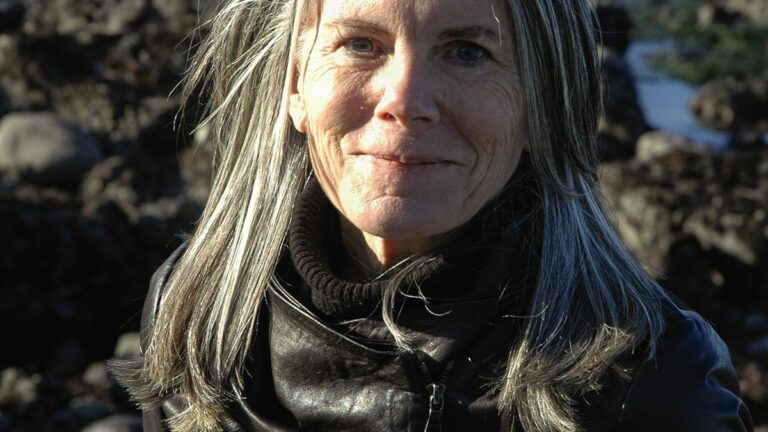
After a twenty-year hiatus, Stanford University professor and author Elizabeth Tallent has unleashed a long-awaited collection of new short stories. Mendocino Fire spans a diverse array of both characters and settings with subjects hailing from varied socio-economic backgrounds, sexual orientations, and genders. There’s the young man from a fishing community struggling with an ailing father, an academic who is invited by her husband’s new partner to the house she once shared with him, and the millworker who gives safe harbor to his son’s pregnant girlfriend only to be unsettled by an ambiguous gesture. In each of the stories, Tallent employs her penetrating, insightful prose, her penchant for long, winding sentences, and her vivid imagery to create complex tableaus that probe the nuances of relationships both whole and broken. Tallent’s work first began appearing in the 1980s in The New Yorker, Harper’s, and Esquire. She’ll be reading from Mendocino Fire, her fourth volume of short stories, at Mrs. Dalloway’s (2904 College Ave., Berkeley) on Thursday, October 29.
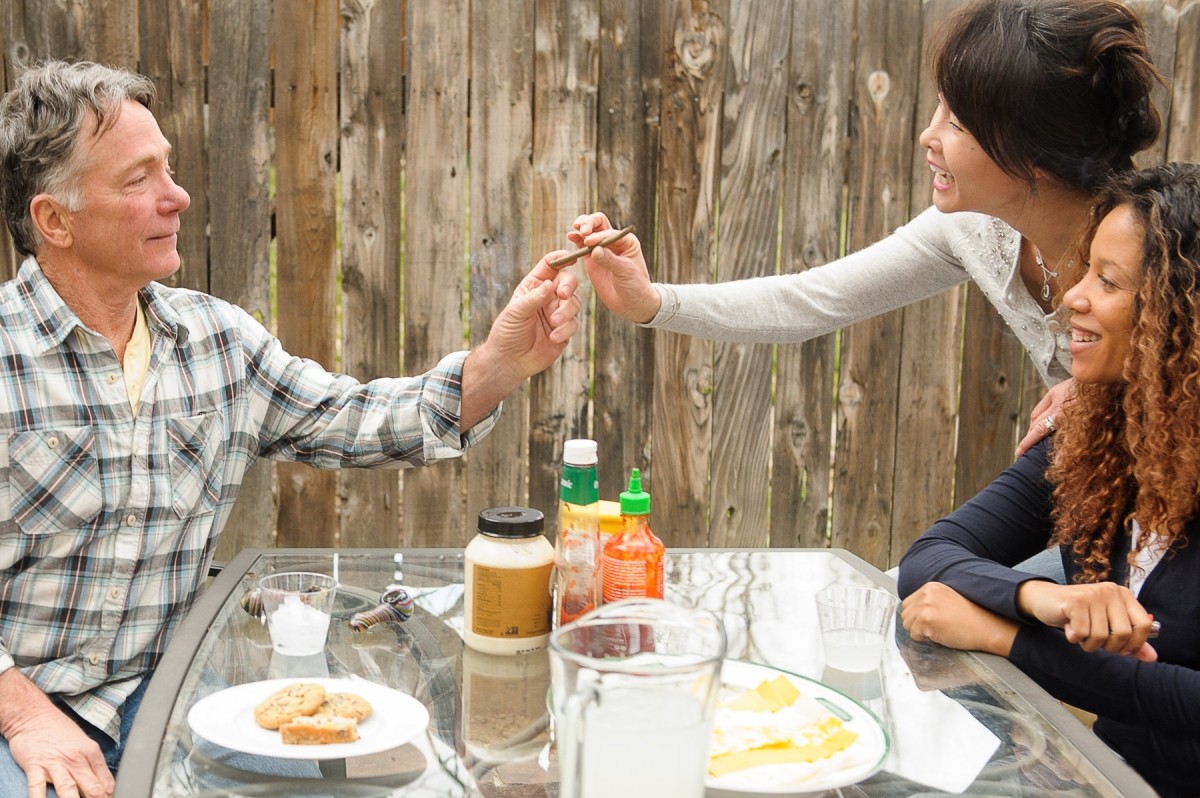
For artists, sometimes collaboration can be infuriating, and sometimes it can be a crucial push outside a limiting comfort zone. In the case of co·lab at Athen B (1525 Webster St., Oakland), its current show involving 38 artists who were each paired with another artist whom he or she had never worked with before, the latter definitely appears to have been true. Following through on its mission to not only nurture creative dialogue in the East Bay, but to also facilitate relationships between local and international artists, Athen B brought together nineteen unexpected pairs with about half of its constituents being from elsewhere. Still, some of the best work came from collaborations between local artists. In the piece contributed by Athen B residents Kate Klingbeil and Katherine Rutter, for instance, Klingbeil’s signature style of creating multi-layered paper tableaus harmoniously accommodates Rutter’s intricate and whimsical watercolor-filled drawings. The artists chose to envision a fantasy picnic, which resulted in a sprawling spread of delectable food among lounging women — like a “Garden of Earthly Delights” for female indulgence. Like many of the works in the show, it’s a remarkably well-fit hybridization of two styles just different enough to intrigue.
Credits: ELISE EVANS / COURTESY OF SAMBAFUNK! / file photo
The high-profile case surrounding a white Oakland resident’s noise complaints against Black and Latino drummers at Lake Merritt has not resulted in any criminal charges, according to the Oakland Police Department. In a lengthy statement sent out late last Friday, OPD spokesperson Johnna Watson said there has been a “great deal of misinformation” circulating about the incident, which has sparked widespread debates about gentrification and racial profiling in the city.
As I reported last month, a small group of drummers with the Oakland-based group SambaFunk! were drumming in the early evening on Sunday, September 27 when multiple OPD officers showed up in response to the complaints of a white man who apparently lived nearby. According to OPD, the caller alleged that three of the drummers had assaulted him. The drummers, led by Theo Williams, artistic director of SambaFunk!, have vehemently denied those accusations — and have alleged that the caller had assaulted Williams when he showed up to the park and grabbed Williams’ wrists.
After hours of taking statements from people on the scene, OPD officers issued citations for battery to two members of the drumming group and to the initial caller, according to OPD’s latest press release. The police statement said officers on the scene did not issue any citations for a noise complaint and did not handcuff anyone. In an interview after the incident, Williams argued that he felt the police response was excessive and biased and that the cops had mistreated the drummers while generally taking the side of the white caller (who police have not named). According to Williams, roughly a dozen OPD officers ultimately responded to the call that night.
[jump]
In the late-night press release, OPD said that the Alameda County District Attorney’s Office decided last Thursday not to file any charges regarding this incident. “Based upon our charging standards … and our thorough review of the evidence, we declined to file charges,” Teresa Drenick, spokesperson for District Attorney Nancy O’Malley, told me by phone this afternoon.
The lack of charges will likely do little to quell the heated debate that the incident has sparked. In its statement, OPD emphasized that the situation only became a priority when a caller alleged that he was the victim of assault. It’s noteworthy that OPD’s statement emphasized that it did not send officers to the lake when it had initially received numerous calls complaining about noise from the drum circle.
Watson’s statement said: “The Oakland Police Department had received multiple calls regarding the drumming noise prior to the altercation but had been unable to respond due to other priorities. The priority of this incident was elevated once an allegation of an assault was made.”
In the days after the controversy exploded on social media, prominent activists and longtime Oakland residents argued that noise complaints and the sometimes aggressive response from police had become one more tool of gentrification — a way for newcomers to target the cultural activities of people of color. (Since then, Black churches in Oakland have also faced noise complaints, further fueling the frustrations and anger). Regarding music in the park, officials have since clarified that unamplified music, such as a drum circle, is allowed during park hours. Though OPD didn’t directly say it in its latest press release, the statement seems to imply that these kinds of noise complaints are not a priority for the department. I asked OPD officials today if the department in the future would send officers to respond to this kind of noise complaint, but a spokesperson has not yet responded.
The Lake Merritt incident sparked the creation of a group calling itself “Soul of Oakland,” which has organized numerous events and says its aim is to “defend the arts and culture of Oakland in the face of rapid gentrification.” The group sent out a press release this afternoon saying it had not received any official information about the district attorney declining to issue charges. As a result, one of the drummers plans to show up to an arraignment tomorrow morning at Wiley Manuel Courthouse in Oakland, according to the group, which also plans to hold a press conference outside the courthouse. Drenick, the district attorney’s spokesperson, told me that she could not comment on why the individual may not have received information about her office declining to issue charges, but she said there will be no arraignments related to the incident.
1. An independent engineer has discovered more micro cracks in pivotal steel rods on the new Bay Bridge, thereby increasing concerns of catastrophic failure of the $6.4 billion span, the Chron reports. The engineer, who was hired by Bay Area transportation officials, reported finding the tiny cracks on steel rods in areas of the bridge outside of the main tower, which had been the main focus of concern. Caltrans now admits that it failed to inspect the large steel rods before they were installed on the bridge.
2. FEMA is urging Californians to buy flood insurance — even if they don’t live in normal flooding zones — before El Niño brings torrential rains this winter, the LA Times$ reports. Four years of drought and a series of wildfires in the state have greatly impaired the ability of land to absorb water, raising fears of devastating mudslides — like the one that swamped part of Southern California earlier this month. “It’s almost like asphalt,” said Roy Wright, of Federal Emergency Management Agency, referring to the parched and fire-scarred earth. “When rain hits, it just conveys straight down very quickly.”
Credits: file image / illustration by roxanne pasibe
The Federal Communications Commission took a major step this week that will make it more affordable for prison and jail inmates across the country to call their loved ones. As we investigated in a February cover story, “Exploiting Inmates,” phone companies and correctional facilities reap big profits by forcing inmates to pay exorbitant fees to speak with their families by phone. Telecommunications companies and detention centers financially benefit from phone charges and effectively have a monopoly over these services behind bars, which has resulted in steadily climbing fees in recent years.
According to the FCC, in some prisons one minute of phone time can cost as much as $14. Yesterday, the FCC, which has regulatory authority over these prices, voted for the first time to cap rates for local and in-state long-distance inmate calls and to slash its existing cap on interstate long-distance calls by up to 50 percent.
As part of the new regulations, the FCC also added a number of restrictions to the add-on fees that inmate calling service providers have often charged — fees that have in some cases increased the cost of calls by as much as 40 percent. According to the FCC, the new rules entirely prohibit most add-on fees by closing certain loopholes while also strictly limiting the few fees that remain. Historically, these fees and surcharges have made it very challenging or altogether impossible for families to stay in touch with loved ones behind bars. The fees can rapidly deplete inmates’ financial accounts, as we described with the story of Rita Figueroa, who served time in the West County Detention Facility in Richmond for an immigration charge.
[jump]
The new caps — outlined in detail on the FCC’s website — will substantially reduce the price for most inmate calls with a maximum of $1.65 for a 15-minute call intrastate and interstate. Previously, the average rate for the majority of 15-minute inmate calls within the same state was $2.96 — and $3.15 for a call to a different state. The rates are generally higher in local jails compared to state and federal prisons, and are often even higher in smaller prisons. The new policies set a cap of 11 cents per minute for debit and prepaid calls in state or federal prisons, and 14 cents per minute in jails with 1,000 or more inmates. For jails with a population of 350 to 999 inmates, the cap is 16 cents per minute, and for jails with fewer than 350 inmates, the cap is 22 cents per minute.
The FCC has also prohibited mandatory minimum payments and has instituted caps on the add-on fees that are still allowed. The commission further banned flat-rate calling fees, meaning companies can no longer charge a single price for fifteen minutes even if the call is shorter. Additionally, the new rules require providers to offer free access to “telephone relay service” calls for inmates with communication disabilities, meaning technology that allows people with hearing, speech, or other disabilities to make phone calls.
Rita Figueroa said the high charge of jail phone calls made it difficult for her to stay in touch with her family while she was incarcerated in Richmond.
Credits: file photo / bert johnson
Phone charges are just one of the many ways in which the prison system can trap inmates and their families in debt. As we highlighted in our recent coverage of a new report called Who Pays? The True Cost of Incarceration on Families, the many fines and fees that incarcerated people face — including phone charges, legal expenses, and court dues — can result in families going into debt on the outside as they try to support their loved ones who are locked up. One in three families surveyed for that report said they went into debt simply due to the cost of paying for phone calls and visits of their incarcerated loved ones. And when family members were unable to talk to or visit their loved ones behind bars on a regular basis, they were more likely to experience negative health impacts, according to the report. And when prisoners are released, the mounting debts can hold them and their families back for many years after their incarceration.
Meanwhile, law enforcement officials across the country have criticized the FCC and have continued to argue that the exorbitant rates are necessary. Yesterday, the National Sheriffs’ Association argued in a statement — which noted that individual sheriffs and state sheriff associations across the country oppose the changes — that phone charges need to remain at high levels in order to cover the costs of monitoring phone calls and preventing inmates from using phone communication for criminal purposes. And sheriffs have long argued that phone revenues also fund important inmate programs.
But FCC officials and prisoners’ rights advocates have countered that it’s morally wrong to raise revenues on the backs of inmates and their families, especially considering that many simply can’t afford the fees. Additionally, studies have shown that regular contact between inmates and their loved ones can lead to reduced recidivism rates.
Next week,the pro-migrant arts nonprofit CultureStrike will be teaming up with Betti Ono Gallery and Mujeres Unidas y Activas to install a wheat paste featuring images from its powerful Visions From The Inside project. The installation event is open to the public at Betti Ono Gallery at 6-9 p.m. on Monday, October 26. Artwork by Favianna Rodriguez for Visions from the Inside. As East Bay Express previously reported, Culture Strike’s Visions From The Inside project facilitated creative collaboration between detained immigrant women and children and artists. Each artist was paired with a detainee, and the two worked together through letters to create an image evocative of the detainee’s experience.
Artistic Manager of CultureStrike Julio Salgado was inspired to create Visions From The Inside after visiting a detention center in Arizona. While there, he noticed how dependent the detainees were on letter-writing, which was one of the only forms of authorized communication. “For folks who are in detention, writing letters is so necessary,” Salgado said in an earlier interview. “It’s the one thing that they can use to communicate with organizations that will help them with their cases.”
Many of the resulting images speak to themes of longing, entrapment, and loss of autonomy. All of the artwork can be viewed online, along with the letters that inspired them, at VisionsFromTheInside.tumblr.com.
Folks who come out to help install the mural will be given a platform to share their experiences with the prison industrial complex or immigration centers, as well. Event organizers are planning on putting the stories of attendees together in a video similar to the one below, which documents the installation of a mural designed by Culture Strike artists Julio Salgado and Susa Cortez in the Mission district of San Francisco.
[embed-1]
And here’s the event flyer to get you pumped. Credits: Courtesy CultureStrike
More Americans support legalizing marijuana than they approve of the sitting president, or support any of the 2016 presidential candidates. On Wednesday, Gallup released the results of its latest poll on pot sentiment, and it showed that majority of Americans — 58 percent — favored legalization for the third consecutive year. Younger folks were more enthusiastic about it than older folks. But older folks are way more supportive than retirees in previous polls.
Support for legalizing cannabis started at 12 percent in 1969 and climbed to 25 percent by the late ’70s. Reformers back then thought the nation was on the cusp of legalizing cannabis, but were wrong. Support climbed into the 30s by the year 2000 and past 40 percent by 2009.
We are now three years into legalization in Colorado and Washington, with Oregon, Washington DC and Alaska now legal, too. Thirty-five states have a medical marijuana or cannabidiol law.
“The topic has been an issue on the 2016 presidential campaign trail, and several candidates have expressed a willingness to let states set their own marijuana laws even though federal law prohibits marijuana use,” Gallup states.
Among the young, 71 percent of 18-34 year-old support legalizing it.
But the swing vote is older folks. Thirty-five percent of senior citizens support legalization today, up from just 4 percent in 1969. We’ve reported how seniors are the new swing vote for legalization. About 10,000 Baby Boomers hit retirement age every day in America.
All-time support for legalization linked to changing mores of senior citizens.
Credits: Drug Policy Alliance
[Related: Listen to “Why Seniors Are Using Medical Marijuana“, from our podcast, The Hash]
[jump]
“Among all age groups, the increase in support has been proportionately greater over the last 15 years than it was between any of the earlier time periods,” Gallup notes. “These patterns by age indicate that one reason Americans are more likely to support legal marijuana today than they were in the past is because newer generations of adults, who are much more inclined to favor use of the drug, are replacing older generations in the population who were much less inclined to want it to be legalized.”
“ Americans who are aged 65 through 79 today — born between 1936 and 1950 — are more supportive of making marijuana legal in 2015 than those born in the same years were 15, 30 and 46 years ago. This birth cohort’s support has increased from 20% in 1969 to 29% in 2000/2001, and is 40% today.”
Gallup surveyed 1,015 adults October 7-11 via phone. Margin of error is plus or minus 4 percent.
1. A sweeping effort to restore wetlands around San Francisco Bay during the past decade has resulted in a dramatic increase in shorebird populations, the Mercury News$ reports, citing a new US Geological Survey study. The number of shorebirds has doubled — from 100,000 to 200,000 — following a landmark 2003 deal to transform 15,000 acres of old salt ponds around the bay into wetlands. The federal and state governments have spent $93 million on the restoration effort, but will need to spend about $1 billion to finish the job, which scientists say should also help protect the Bay Area as sea levels rise due to climate change.
2. The monster El Niño weather pattern forming off the West Coast promises to not only bring torrential rains to the Bay Area this winter, but also the threat of mudslides in the bone dry Oakland and East Bay hills, the Chron$ reports, citing a California Geological Survey report. Areas in the state that have been devastated by wildfires this summer face a special threat from mudslides this winter. This year’s El Niño is expected to rival that of 1997-98, when mudslides and flooding ravaged California.
Hurricane Patricia’s expected path.
Credits: NOAA
3. The most powerful hurricane ever recorded in the Western Hemisphere is bearing down on southwestern Mexico today and threatening the lives of thousands of people, the AP reports (via SF Gate). Hurricane Patricia is a Godzilla-sized Category 5 storm with sustained wind speeds of nearly 200 miles per hour. The UN’s World Meteorological Organization is comparing Patricia’s strength with that of Typhoon Haiyan, which left more than 7,300 dead or missing in the Philippines in 2013.
6. Airbnb apologized for putting up a series of obnoxious posters and billboards this week around San Francisco that mocked city services, the Chron reports. The company was ridiculed mercilessly on social media for the signs before it took them down. The signs are part of Airbnb’s multimillion-dollar campaign to defeat a ballot measure in San Francisco that seeks to ban property owners from turning apartments and homes into full-time hotels.
Yes, please (via Facebook).
Welcome to the Mid-Week Menu, our roundup of East Bay food news.
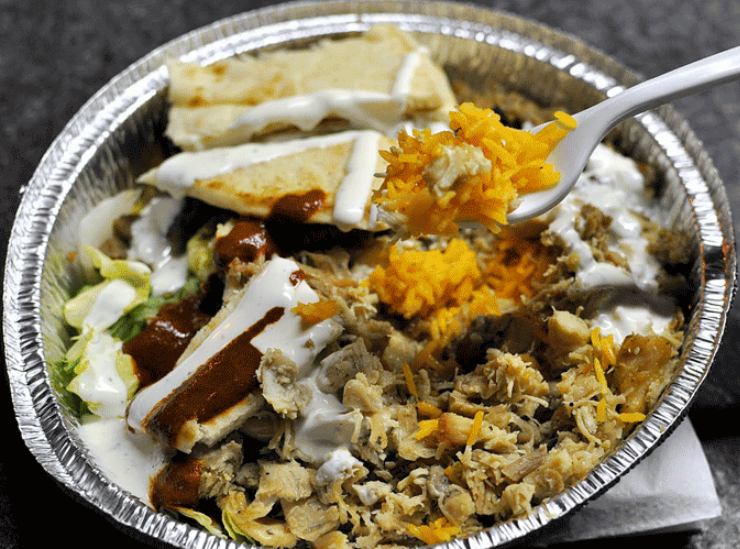
1) In case you haven’t heard, The Halal Guys are coming to downtown Berkeley, bringing with them the street cart style Halal chicken plates (extra “white sauce,” please) that are ubiquitous in New York but virtually nonexistent here in the East Bay. Inside Scoop reports that they’ve nailed down a spot: the old Le Regal spot at 2126 Center Street. Apparently, the restaurant is already hiring, so look for an opening date not too far down the road.
[jump]
2) Commis (3859 Piedmont Ave.), James Syhabout’s powerhouse of a little modern Californian tasting menu restaurant, has been the East Bay’s lone Michelin star recipient for several years running. Now, following the Michelin Guide’s announcement of this year’s Bay Area star winners, Commis is the only two-star restaurant in East Bay. All in all, a good week for Syhabout, who also just signed a deal for an upcoming Hawker Fare cookbook-memoir he’ll be penning with local food writer (and former Express critic) John Birdsall.
3) I got word from a few sources that the iconic Oakland Chinatown restaurant Legendary Palace (708 Franklin St., Oakland), which closed earlier this year, has reopened under new ownership with a new name: Cinnamon Tree. Not many details to report, but based on the photos posted to Yelp so far, it looks like the restaurant offers a fairly standard Cantonese dim sum menu (despite the somewhat unorthodox name).
4) It sounds like this week’s big piece of San Francisco restaurant news will have East Bay ramifications. Eater reports that Daniel Patterson’s restaurant group (Plum Bar, Haven, etc.) has purchased the SF institution Alfred’s Steakhouse — and that Haven chef Charlie Parker will be heading across the bay to take over the kitchen. According to Tablehopper, that means Haven will have a new chef: Matt Brimer, previously of Le Clos. A publicist for the DPG told me, via email, that Parker will stay on at Haven for a period of time to train Brimer before the new chef takes over, and it doesn’t sound like there will be any change to the restaurant’s overall approach.
5) Oliveto (5655 College Ave., Oakland) is switching things up at its less formal downstairs cafe. Now, during dinner hours, the restaurant will turn into an Italian rosticceria specializing in assorted spit-roasted meats. A plate of meat with two sides will run you $19. Read more about it here.
6) The Advocate (2635 Ashby Ave., Berkeley), where I had a couple of the best meals I ate this year, is launching weekend brunch service this Saturday, October 24, from 10:30 a.m. to 2:30 p.m. The menu includes a burger (wood-grilled and topped with a scallion salsa “special sauce”), a version of avocado toast, cazuela-baked eggs, and caramelized French toast — plus a few highlights from the dinner menu.
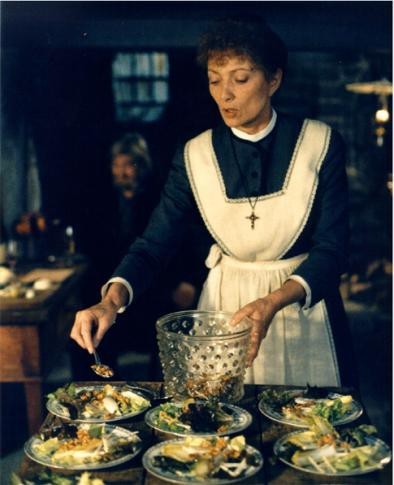
7) Eat Drink Films, an Oakland-based online magazine about food and film, is hosting a food-themed film festival on Saturday, October 24, in honor of Food Day. The festival kicks off with a free screening of several short films at the Exploratorium’s Kanbar Forum, followed by screenings of four feature films — three San Francisco premieres, plus the classic Babette’s Feast — at the Roxie Theater (3117 16th St.) in San Francisco. Each screening will be preceded by some kind of small, thematically appropriate snack: Straus ice cream and Grand Meringue meringues before Babette’s Feast, vegetarian bites from La Mediterranee before In Defense of Food (based on the Michael Pollan book).
Check out the whole lineup here and see if any of the films pique your interest. Tickets are $14 a pop, or you can buy a $40 pass and make a whole day of it — probably not a bad way to spend a Saturday. Eat Drink Films founder/editor Gary Meyer, an Oakland resident, said he expects the four-day film festival he’s planning for next summer will have a number of screenings in Oakland and Berkeley.
8) Finally, ICYMI, I wrote about an ambitious new project in Alameda that aims to eliminate food waste and provide jobs to the formerly homeless.
Got tips or suggestions? Email me at Luke (dot) Tsai (at) EastBayExpress (dot) com. Otherwise, keep in touch by following me on Twitter @theluketsai, or simply by posting a comment. I’ll read ‘em all.
Babette’s Feast is one of the four food-themed films that will screen.
You made it to the weekend! Now you can make like Drake did this week, and let loose like no one is watching.[embed-1] Here’s five great ways how:
Credits: Patchwork Show.The Purge 2
Defined by its intricate footwork, nuanced upper body movements, acrobatic stunts, and liquefied flow, turf dancing is a method of movement that Oakland can claim all its own. Born out of the city’s streets some two decades ago, the dance style has experienced a renaissance in recent years, in large part thanks to TURFInc, an organization devoted to preserving the style’s legacy and continued relevance. While turf dancing, which is an acronym for “Taking Up Room on the dance Floor,” has its own unique style, TURFInc founder and CEO Johnny Lopez included the “Inc” as a reference to incorporating other dance styles, which often include crumping, bonebreaking, cutting, jookin, boogaloo (another Oakland original), tutting, waacking, strutting, and flexing. In collaboration with Oaktown Indie Mayhem, TURFInc is hosting the second annual “Purge” at the Starline Social Club (645 W. Grand Ave., Oakland) on October 24. The Halloween-themed dance battle will pit the best Bay Area crews against each other for a chance to win prizes and, of course, bragging rights. — Erin Baldassari Sat., Oct. 24, 1:30-8:30 p.m. $15, $20. StarlineSocialClub.com.
If You Should Lose Me
In the early 1930s, Geeshie Wiley and Elvie Thomas recorded some of the most legendary masterpieces of prewar American music, and yet there is virtually no available information about them. Recordings of their music are even rarer. But the influence of their lyrics and their sound has managed to linger in Blues ever since. Writer and Yale professor Daphne Brooks has been researching the duo, the ways in which music history managed to overlook them, and what that says about how Black women’s voices are heard — and not heard — in the United States. On October 23, Brooks will talk about that work in a lecture titled “If You Should Lose Me: The Archive, the Critic, the Record Shop, and the Blues Woman” at UC Berkeley as part of a series of talks called “The Black Room: Revisiting ‘Blackness’ in the Global 21st Century” organized by a cohort of Cal professors. Brooks is known mostly for her sharp writing on race, performance, and the intersection of those two things. She’s currently writing a book entitled Subterranean Blues: Black Women Sound Modernity, forthcoming from Harvard University Press. For more “Black Room” events, email zp*********@******ey.edu to join the mailing list. — Sarah Burke
Fri., Oct. 23, 12:30-2 p.m. Free. Events.Berkeley.edu
Patchwork Show: Modern Makers Festival
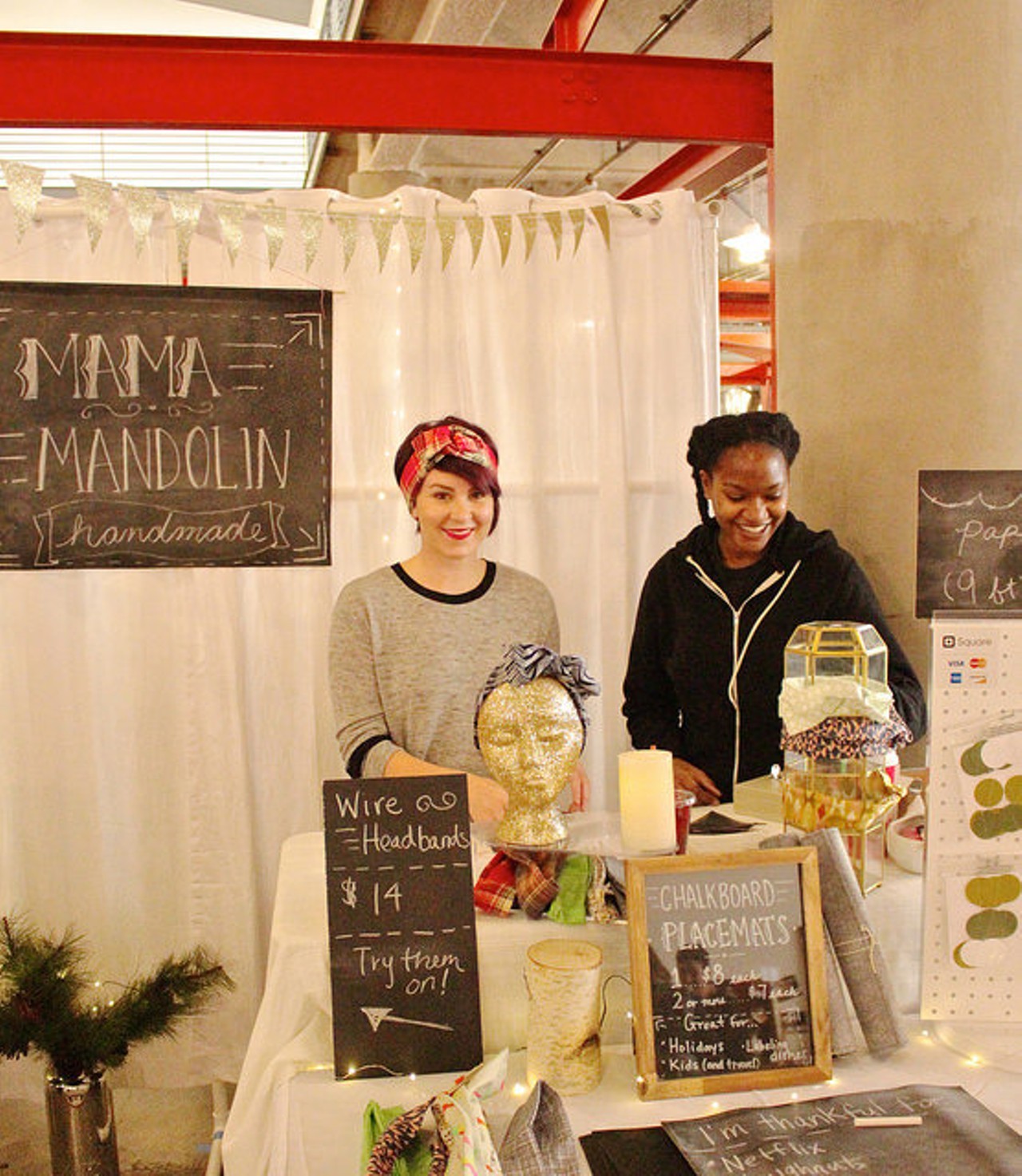
The boutique craft fair season is already upon us. To kick off the next few months of winding through aisles of fashionable vendors to find the perfect handmade goods for your relatives, The Patchwork Show: Modern Makers Festival will be in Oakland on October 25. The event is a free fair curated by Dear Handmade Life, featuring local emerging artists, crafters, and designers, as well as artisanal food vendors, gourmet food trucks, live music, and craft workshops. The Patchwork Show takes place bi-annually in cities across California. This season, it will take place locally in Jack London Square (55 Harrison St., Oakland) from 11 a.m.–5 p.m. Last year’s festival offerings ranged from “Bacon Balsamic Bourbon” jelly to hand-forged brass jewelry. It’s an opportunity to get a head start on the hectic holiday season and escape corporate consumerism while you’re at it. — S.B.
Sat., Oct. 24, 11 a.m.-5 p.m. Free. DearHandmadeLife.com
Credits: Courtesy TURFIncFrom Oakland, with Love
If you’ve been reading about the Syrian refugee crisis and have wondered what you might do to help, here is one small way: On Sunday, Doña Tomas (5004 Telegraph Ave., Oakland) will host a benefit to raise money for the International Rescue Committee and the Migrant Offshore Aid Station. The fundraiser was organized by Sahar Shirazi, a planner at the governor’s office by day, and also an accomplished cook who has done catering gigs and popups for several years, including Domingo Gigante, a now-defunct brunch popup at Doña Tomas. Shirazi is still tweaking Sunday’s menu, but a selection of passed hors d’oeuvres should include pumpkin soup and Persian potato pancakes. Doña Tomas, Pizzaiolo, and other local restaurants will donate additional food, and a slew of other eateries — including Duende, Juhu Beach Club, Comal, and Camino — have donated gift certificates for a silent auction. — Luke Tsai
Sun., Oct. 25, 5:30-9:30 p.m. $15 donation. DonaTomas.com
Yearbook: The 12th Anniversary Exhibit When it opened in 2003, Joyce Gordon Gallery (406 14th St., Oakland) was one of just a few galleries in Oakland, and it has outlived most of its peers from that era. Now, it maintains a strong foothold in the downtown Oakland art scene, and after a dozen years, it’s set apart by its own legacy. To celebrate the gallery’s twelfth anniversary, curator Eric Murphy looks back on highlights from its past in Yearbook: The 12th Anniversary Exhibit. The show features sixteen artists who have showed at the gallery — many of whom have only joined the gallery in the past two years, and were thus not included in its tenth anniversary show. Yearbook includes pieces from Bryan Keith Thomas’ show earlier this year, Heirloom, and work from last year’s Emory Douglas: Artist for the People. Other highlights include Alice Beasley’s exquisite representational quilts and Georgianna Krieger’s dreamlike cast glass sculptures. — S.B.
Through Oct. 31. Free. JoyceGordonGallery.com.
If your pockets are feelin’ light and you’re still yearning for more suggestions, we’ve got a ton, and these ones are all FREE! We’re Hungry: Got any East Bay news, events, video, or miscellany we should know about? Feed us at Sa*********@************ss.com.
After a twenty-year hiatus, Stanford University professor and author Elizabeth Tallent has unleashed a long-awaited collection of new short stories. Mendocino Fire spans a diverse array of both characters and settings with subjects hailing from varied socio-economic backgrounds, sexual orientations, and genders. There’s the young man from a fishing community struggling with an ailing father, an academic who is...
For artists, sometimes collaboration can be infuriating, and sometimes it can be a crucial push outside a limiting comfort zone. In the case of co·lab at Athen B (1525 Webster St., Oakland), its current show involving 38 artists who were each paired with another artist whom he or she had never worked with before, the latter definitely appears to...
The high-profile case surrounding a white Oakland resident's noise complaints against Black and Latino drummers at Lake Merritt has not resulted in any criminal charges, according to the Oakland Police Department. In a lengthy statement sent out late last Friday, OPD spokesperson Johnna Watson said there has been a "great deal of misinformation" circulating about the incident, which has...
Stories you shouldn’t miss:
1. An independent engineer has discovered more micro cracks in pivotal steel rods on the new Bay Bridge, thereby increasing concerns of catastrophic failure of the $6.4 billion span, the Chron reports. The engineer, who was hired by Bay Area transportation officials, reported finding the tiny cracks on steel rods in areas of the bridge outside of...
The Federal Communications Commission took a major step this week that will make it more affordable for prison and jail inmates across the country to call their loved ones. As we investigated in a February cover story, "Exploiting Inmates," phone companies and correctional facilities reap big profits by forcing inmates to pay exorbitant fees to speak with their families...
Next week,the pro-migrant arts nonprofit CultureStrike will be teaming up with Betti Ono Gallery and Mujeres Unidas y Activas to install a wheat paste featuring images from its powerful Visions From The Inside project. The installation event is open to the public at Betti Ono Gallery at 6-9 p.m. on Monday, October 26.
As...
More Americans support legalizing marijuana than they approve of the sitting president, or support any of the 2016 presidential candidates. On Wednesday, Gallup released the results of its latest poll on pot sentiment, and it showed that majority of Americans — 58 percent — favored legalization for the third consecutive year. Younger folks were more enthusiastic about it than older...
Stories you shouldn’t miss:
1. A sweeping effort to restore wetlands around San Francisco Bay during the past decade has resulted in a dramatic increase in shorebird populations, the Mercury News$ reports, citing a new US Geological Survey study. The number of shorebirds has doubled — from 100,000 to 200,000 — following a landmark 2003 deal to transform 15,000 acres of...
Welcome to the Mid-Week Menu, our roundup of East Bay food news.
1) In case you haven’t heard, The Halal Guys are coming to downtown Berkeley, bringing with them the street cart style Halal chicken plates (extra “white sauce,” please) that are ubiquitous in New York but virtually nonexistent here in the East Bay. Inside Scoop reports...
You made it to the weekend! Now you can make like Drake did this week, and let loose like no one is watching. Here's five great ways how:
The Purge 2
Defined by its intricate footwork, nuanced upper body movements, acrobatic stunts, and liquefied flow, turf...