Raiders and NFL Gain No Leverage at Oakland Town Hall

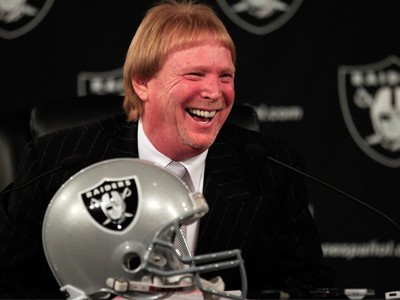
Under the NFL’s bylaws, franchises that want to relocate to another city must first allow fans to have their voices heard. The practice of the NFL, however, when it comes to building costly stadiums, is to leverage fans’ fears about a team leaving to pressure municipalities into funding stadium construction with taxpayers’ money. However, if NFL executives on Thursday night at Oakland’s Paramount Theatre were expecting citizens of Raider Nation to provide that leverage, and help pressure Oakland city officials into such a deal, they must be sorely disappointed.

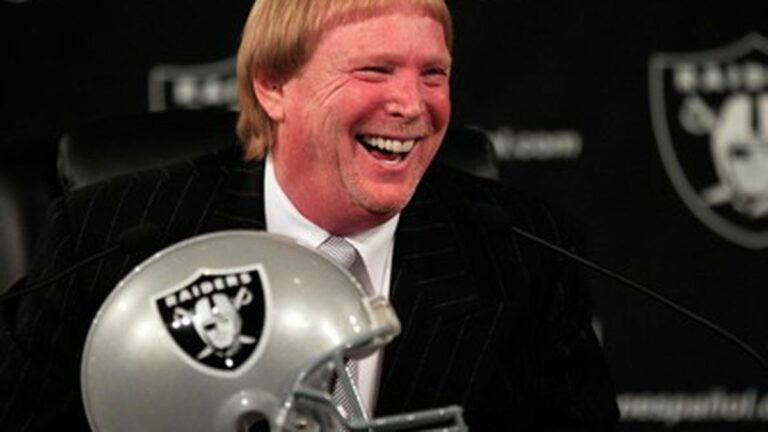
Raiders’ super fan Ray Perez, aka “Dr. Death,” may have best summed up the night when he told team owner Mark Davis: “When I want a house built, I don’t ask the City of Oakland to give me a check.”


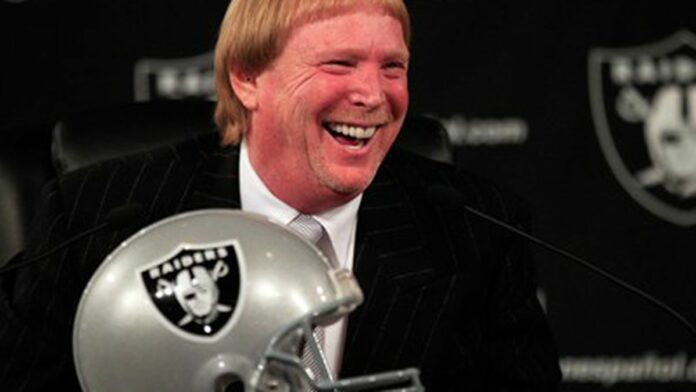
[jump] Although Davis never directly asked for public money at last night’s event, it seemed clear that he wants it — and needs it. The Raiders are proposing to build a $900 million stadium at the Coliseum, but only have identified $500 million in private funds to get the job done. “We need help from the community as well to get something that our fans and the NFL can be proud of,” said Davis. “We don’t have that right now. We’ve been trying for at least the past six years, every day, hundreds of hours, people in this organization trying to get something done.” He later added, “It could be done in Oakland if everybody pulls together.”

But during the three-hour town hall, there was barely any reference made by fans of using public funding to help close the Raiders’ $400 million funding gap. Instead, many of those decked out in silver and black had alternative funding proposals for Eric Grubman, the NFL’s point man in the race by three franchises, including the Raiders, St. Louis Rams, and San Diego Chargers, to move to the long-vacant Los Angeles market.

A few fans proposed to crowdsource funding for a new stadium. Grubman called the idea “awesome,” but kindly dismissed it. “I don’t think it would be fair for us to ask you to do that,” he told a speaker. Another asked whether ownership of the team could be divvied up in public stocks and sold to fans, an ownership structure used by the NFL’s Green Bay Packers.

For their part, public officials in Oakland and Alameda County are showing no signs that they will acquiesce to Davis and the NFL. Oakland Mayor Libby Schaaf has consistently ruled out the use of public funds for a stadium, while offering up to $120 million for public infrastructure in and around the current Coliseum complex. The political situation is vastly different in St. Louis and San Diego where various taxpayer-funded stadium proposals exist, but in Oakland, as exhibited Thursday night, there is no clamor from fans to use public money or any amount of heat being placed on elected officials to open up the city and county’s purse strings.

Chris Fry-Lopez, an Oakland resident and vice president of Save Oakland Sports, said many fans understand the fact that the city has struggling schools and that funding additional police officers is a greater priority than building stadiums. “I definitely think necessary things come first,” said Fry-Lopez, who led Thursday night’s impromptu recitation of the famous NFL Films narration, “The Autumn Wind.” Politicians are also leery of making another bad deal after the awful one in 1995 that brought the Raiders from Los Angeles blew a hole in both the city and county’s budgets. Each entity still pays around $10 million annually to pay down the remaining debt on the Coliseum remodel. Fry-Lopez believes Schaaf is leading the way against public financing of a stadium. “The rhetoric she uses is really adamant against using public money, like it’s morally wrong,” he said, “and we have to be more reasonably about this.”

NFL owners could decide in January whether any of the three franchises can move to Los Angeles. Schaaf met with Grubman and Davis at Oakland City Hall shortly before Thursday’s town hall and a stadium proposal may be forthcoming from the city early next month. Oakland Councilmember Noel Gallo, who spoke at the town hall, said all parties need to come to the negotiating table. “There’s still hope, but also a door open for us to negotiate before we kiss and say goodbye.”



As Ohio Preps for Legalization Vote, the Movement Is Split in Two; It’s a Bad Omen for California

The unlikely state of Ohio is set to vote on legalization next week, and the whole debacle should send a chill down the spine of California reformers this Halloween.

Ohio’s Issue 3 would end cannabis prohibition in the Midwestern state, but limit commercial pot cultivation to ten companies that backed the Initiative.

Ballotpedia.com lists some of the cartel members:
Former 98 Degrees singer Nick Lachey
Former Cincinnati Bengals defensive end Frostee Rucker
Dayton pain specialist Suresh Gupta
WEBN radio host Frank Wood
Barbara Gould, a philanthropist based in Indian Hill
University of Cincinnati basketball star Oscar Robertson
Paul Heldman, former general counsel of The Kroger Co.
Woody Taft, a descendant of President William Howard Taft

The cartel’s idea has split the national reform community, Forbes notes, with one side supporting prohibition’s end, despite the oligopoly, and the other set of legalizers ready to vote with police for continued pot prohibition in Ohio.

[jump]


Columnist activist Russ Belville notes: “Why isn’t every drug law reform group making their get-out-the-vote push and shouting it from the rooftops? … NORML, [Marijuana Policy Project], [Drug Policy Alliance], & [Americans for Safe Access] are lukewarm, neutral, or silent on Ohio marijuana legalization that would be superior to Washington’s I-502 and superior to the most recent medical marijuana laws, because the wrong oligopoly gets rich.”

Indeed, leaders of Marijuana Policy Project are neither supporting nor opposing Issue 3. “We encourage residents to carefully consider the measure and be sure to vote this November!” MPP states.

Drug Policy Alliance is equally ambivalent.

“Ohio’s initiative, however, is unprecedented, and profoundly problematic, in creating a constitutionally mandated oligopoly — modeled after a successful casino legalization initiative in 2009 — for the specific benefit of the 10 major investors.” wrote DPA’s Ethan Nadelmann Thursday in an op-ed for CNN.com. “With that said, I must admit that I’m rooting for Issue 3 to win, mostly because a victory on Election Day 2015 would significantly accelerate the momentum toward ending marijuana prohibition nationwide.”

By contrast: Ohio’s failure will be read as “the only failure in the country,” an MPP spokesperson said in an interview, “and then the media will feed on that: ‘Oh, my God, legalization is backsliding.’…If they lose, which is not guaranteed, it might change the national narrative for one year.”

Most profoundly, Nadelmann notes:

“Ohio’s initiative foreshadows what lies ahead, not in 2016 but years thereafter. … legal profit seekers will play a leading role… and advocates for civil rights and liberties… will need to do all we can to ensure post-prohibition policies reflect [our] values.”

The latest polling shows Ohioans split (46-46) on Issue 3 as well — spookily similar to the final Prop 19 vote in California in 2010. A 46 percent showing does not bode well for the final push of ResponsibleOhio — which stumbled repeatedly on its way to the ballot box.

Ohio Republican Governor John Kasich is also loudly scaremongering over Issue 3, highlighting the bogeyman of less urine screenings for marijuana. (Even though such tests don’t detect on-the-job cannabis use, only byproducts detectable for more than thirty days.)

“You don’t want the nurse at the hospital to not have passed the drug test. You don’t want the guy driving the truck full of chemicals to not have passed a drug test,” said Kasich, who is also running for the GOP presidential nomination in 2016.

Ohio’s recipe for failure bodes very ill for California legalization in 2016. Many of the same ingredients are brewing:
  • Split reform camps; 
  • Plenty of half-baked ideas; 
  • Rookie campaign mistakes; 
  • And some rich, yet polarizing and profit-oriented patrons (Sean Parker, allegedly). 
Californians support legalization by a slim margin of 53 percent, with a +/-2% margin of error.

So really, California reformers really have no margin for error. Happy Halloween.

Oakland Businesses Adapting to New Minimum Wage as Economy Booms

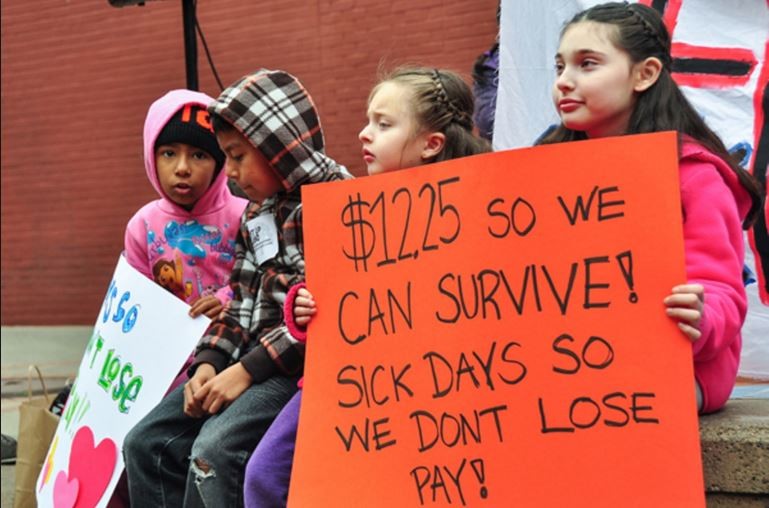
It’s been eight months since Oakland’s $12.25 minimum wage law took effect. So what has been the economic impact of higher wages on the city?

For one thing, Oakland’s economy is booming. Plus, unemployment is falling, and new businesses are clamoring to locate in Oakland. And perhaps surprisingly, most business owners don’t seem to think the higher minimum wage is a major obstacle to growing, prospering, and hiring more employees in Oakland. That’s what Sepi Aghdaee, a grad student in the Lorry Lokey School of Business and Public Policy at Mills College, found after conducting a detailed survey of 103 Oakland businesses over the summer.

The Oakland City Council will consider the effects of the minimum wage increase at their finance committee meeting on November 10, and Aghdaee’s study about how the new minimum wage has affected employment, business location, prices, and the overall business climate of Oakland will provide some of the evidence.

See also: The Tipping Point
See also: The Battle for Profits

[jump] Aghdaee’s survey findings, along with Oakland’s current economic indicators, and new information released by the city, show that so far the minimum wage increase has not harmed Oakland’s economy, despite the sky-is-falling claims of many business owners before, and just after, it was implemented. In fact, business owners overwhelming told Aghdaee that the minimum wage increase is not among the biggest challenges they face in operating a business in Oakland. Instead they ranked the need for a more business-friendly city, crime and safety, marketing and advertising, employee recruitment and retention, the increasing cost of rent, and high taxes as bigger problems.

Aghdaee found that 70 percent of survey respondents reported an increased payroll, mainly as a result of higher wages. About half the businesses raised prices. But only 6 percent of businesses laid off workers to adjust to the new minimum wage.

These survey findings reflect overall job trends in Oakland since the new minimum wage took effect. Oakland’s unemployment rate has fallen from 6.1 percent in February of this year, just before the new minimum wage law took effect in March, to 5.3 percent in September. The number of jobs in Oakland has grown from 196,400 to 199,900, according to a city staff report.

The Oakland City Council also recently set aside more money to enforce the new minimum wage law. According to city staffers, the city has received 22 complaints, mostly alleging violations of the minimum wage requirement, but several also from employees who allege their bosses denied them the right to utilize paid sick days, which the law also requires employers to provide.

Finally, the City of Oakland reported that it was also able to avoid cutting positions in its youth job training programs. The California Department of Corrections and Rehabilitation, which runs Golden State Works, a re-entry employment program for parolees, was also able to maintain its job positions while paying the new minimum wage.

According to city staffers, 569 Oakland youths took part in the 2013–2014 job training programs through the city, but it was anticipated that 20 percent of these positions would be cut when the $12.25 wage took effect this year. However, the city council allocated more funding to the program, and Mayor Libby Schaaf helped raise funds, leading to an expansion of the program with 640 youth being employed at the higher wage level this year.

Similarly, the CDCR upped its grant to Golden State Works by $435,387 to maintain the number of employment opportunities for recently released prisoners.

Ultimately, it’s still too early to tell what the full impact of the higher minimum wage will be. But economic studies of minimum wage increases in other regions have never proven that higher wages harm businesses and employees. What is clear is that right now more Oaklanders are working, and more are taking home bigger paychecks and using benefits like paid sick days.


Oakland Minimum Wage Law 6-Month Report by darwinbondgraham


Wine & Bowties Announces Feels IV Lineup

Though Feels III took place in July, Oakland bloggers-turned-party-throwers Wine & Bowties are back at it with another installment of the mini music and arts festival, Feels IV, which takes place November 28, 6 p.m. to 1 a.m., at American Steel Studios (1960 Mandela Pkwy., Oakland). 

The previous edition featured indoor and outdoor stages and included memorable performances by local rappers Tia Nomore and Ezale, as well as the Odd Future-affiliated neo-soul sextet, The Internet. Iamsu!, who happened to be in the audience, flitted around on a “hoverboard” throughout the night. Young, up-and-coming artists packed the walls of American Steel’s spacious warehouse with artwork in a variety of media.

At Feels IV, you can expect a similar audiovisual rager. This time, performers include Canadian producer Ryan Hemsworth, LA-based rapper Antwon (who got his start in the Oakland music scene), Atlanta R&B songstress ABRA, Oakland punk band Meat Market, and soulful Richmond singer Rayana Jay. Local electro pop musician and visual artist Sofia Cordova, aka Xuxa Santamaria, will perform and show her artwork in the gallery portion of the event. In addition, local DJs Neto 187, MoreVibe$, Namaste Shawty, DJ Dials, and others will keep the party going until late. 

For the complete list of performers and visual artists, check out the Feels IV Facebook event

[embed-1]

Halloween Weekend Event Guide

Whether you’re dressing up as Drake, Bernie Sanders, or Libby Schaaf’s snailmobile this Halloween, you’re going to need something to do in your costume. Here’s our guide to the top Halloween events in the East Bay this weekend. 

14th Annual Murder Ballads Bash
Crimes of passion have been lyrical fodder for musicians across different genres and generations, so what better night to listen to music with a penchant for bloodlust than Halloween? The Starry Plough presents its 14th annual Murder Ballads Bash, a showcase of local bands and singer-songwriters whose work delves into dark and potentially frightful themes of revenge, misery, and despair. In the large lineup, readers may recognize Dennis D (who hosts a banjo night at Stork Club on Sundays), The Happy Clams (whose members have been active in the East Bay punk scene since the Eighties), veteran rockers Roy Loney & Larry, and country quintet Loretta Lynch. We suggest dressing up for this one, too. Costume ideas: Velma Kelly or Roxie Hart from Chicago, Bonnie and Clyde, zombie Elvis, or Rihanna in the “Bitch Better Have My Money” video. — Nastia Voynovskaya
Sat., Oct. 31, 9 p.m. $8-$15. TheStarryPlough.com

[jump]

Heartbreak Halloween

A lot has happened for HBK Gang, the eclectic East Bay hip-hop collective, in the past year. Kehlani’s debut album You Should Be Here landed her a FADER cover and garnered her a national following; Kool John and P-Lo’s collaborative album, Moovie!, solidified their status as a rapper-producer dream team; and Iamsu! is getting ready to drop his next album, Kilt3, and go on his first-ever world tour. Celebrate with the gang on Heartbreak Halloween, a two-night concert at The Warfield in San Francisco, featuring the above-mentioned artists, plus Sage the Gemini (of “Red Nose” and “Gas Pedal” fame), Skizzy Mars, Jay Ant, Skipper, and other artists from the crew. Because the October 30 show sold out quickly, the venue added an encore on Halloween night. The official after-party (and Kool John’s birthday celebration) takes place at Roccapulco (550 Barneveld Ave., San Francisco) at 10 p.m. on October 31 and will feature appearances from HBK members and DJ sets by Daghe, Noodles, and Aux Cord. Suggested costumes: a tsunami (in honor of Kehlani’s girl crew, Tsunami Mob), a red-nosed pit bull, or the Shmoplife happy face. — N.V.
Fri., Oct. 30, 8 p.m. and Sat., Oct. 31, 8 p.m. $35-$50. TheWarfieldTheatre.com


Ghoulish Gala
Come dressed up in your spookiest attire for The Rock Steady’s free Halloween turn up — Ghoulish Gala — courtesy of promoter Mike Melero (aka DJ Bobby Peru). Rising producers D33J and Karman, who are both based in Los Angeles, top the bill and will perform atmospheric, maximalist beat sets with glitchy sound palettes that evoke early videogame soundtracks. The lineup also includes Aquacure, the new, melancholic electro pop project that features James Laurence of well-known East Bay producer duo Friendzone. Swerve, a DJ duo composed of Neto 187 and So What, and Kawasaki Papi of the MoreVibes crew will serve up high-energy DJ sets made up of obscure internet rap gems, hyphy and post-hyphy slaps, and top forty remixes. If you’re looking to dance the night away on Halloween, Ghoulish Gala will be the spot. Costume suggestions: one of Drake’s “Hotline Bling” girls, a ghost-riding ghost, or Gucci Mane’s ice cream tattoo. — N. V.
Sat., Oct. 31, 9 p.m. free. TheRock-Steady.com


Halloween Cover Show Benefit
Adding to the pool of Halloween cover shows — in which bands dress up and perform as other bands — LoBot Gallery (1800 Campbell St., Oakland) will start the night of mischief early with a show of if its own, from 2–6:30 p.m. on October 31. But unlike the others, this one is an all ages benefit for two local nonprofits focused on empowering young women to take down the patriarchy by having fun: Bay Area Girls Rock Camp (an organization that teaches female youth how to start bands together) and Skate Like a Girl SF (the local chapter of an organization that teaches female youth to skate and nurtures inclusive skate park culture). The lineup stars Skitch, an all-female skate punk band from Seattle who are part of the girl-centric Seattle skate crew, The Skate Witches. Aside from music, there will be a free skate lesson (and skating session, for those who are seasoned) from 2–3 p.m., as well as a gang of tablers, including Scream Queens, and food from the Lumpia Lady. And of course, everyone should arrive in costume. — S.B.
Sat., Oct. 31, 2-6:30 p.m. $5-$10.  LoBotGallery.tumblr.com


All Souls’ Eve Celebration
The subtitle to this All Souls’ Eve celebration is “Calming the Sh**storm of 2015,” which tells you about everything you need to know about the event’s sensibility. According to FuseBOX (2311A Magnolia St., Oakland) owners Sunhui and Ellen Sebastian Chang, the community gathering is designed to honor “the ancestors that came before us,” as well as the living artists and cultural workers who have been displaced by the Bay Area’s affordability crisis. The $50 prix-fixe dinner (vegetarian option available) includes one “Smoky Mary” libation. Meanwhile, to help calm your spirit, there will be live music by the Oakland-based banjo player Guy de Chalus and vocalist Tossie Long. And Sebastian Chang, who is also a well-known theater director, will lead diners in an interactive, community-building activity. Call 510-444-3100 to make a reservation (and put down a deposit) to guarantee seating. — Luke Tsai
Sat., Oct. 31, 6 & 8 p.m. $50.  FuseBOXOakland.com

Horrified!
There are a lot of different kinds of scary stories. There are those spooky tales that involve ghosts and murderers and all that traditional Halloween stuff. And then there are the type that can almost be more horrifying — the ones that you could more easily imagine happening to you. At Busting Out Storytelling: Horrified!, which will take place at Geoffrey’s Inner Circle (410 14th St., Oakland) on October 30, the scary stories will mostly be of the latter sort. “That time you discovered a disgruntled old flame was going on the Jerry Springer Show, the time you dyed your hair purple and it changed the color of the Airbnb shower tiles, or when you were locked in the mall basement bathroom,” as the show’s teaser reads. Host Kay DeMartini (who will apparently be dressed as a Marilyn Monroe-and-Batwoman hybrid) invited six storytellers to share their true experiences first, then audience members will be invited to share theirs. Also, everyone is encouraged to come in costume. — Sarah Burke
Fri., Oct. 30, 8 p.m. $10. BustingOutStorytelling.com

BONUS! 

Also, Hi Scores will be performing at Slim’s on Friday, Shalo P will be giving a tour of his otherworldly show at Krowswork in the afternoon on Halloween, and the spooky play Through the Wall will be playing at the Flight Deck in the afternoon on Halloween and through November 3. 


If your pockets are feelin’ light and you’re still yearning for more suggestions, we’ve got a ton, and these ones are all FREE! We’re Hungry: Got any East Bay news, events, video, or miscellany we should know about? Feed us at Sa*********@************ss.com.

‘Our Brand Is Crisis’ Leaves a Bad Taste

0

Our Brand Is Crisis is the story of how a team of professional political consultants from the United States descends on Bolivia during a presidential election campaign to help its client/candidate get elected. It’s adapted from writer-producer Rachel Boynton’s 2005 documentary of the same name — from almost every point of view a damning indictment of spin doctors, dirty tricks, smear campaigns, character assassination, and other greasy political games. The type of film that would make us want to wash our hands, twice, with Dr. Bronner’s Peppermint Soap after viewing it.

So right away we wonder: What would cause any filmmaker to want to continue this discussion? Also: How is this new narrative treatment going to view such composite characters as “Calamity Jane” Bodine (Sandra Bullock) and Pat Candy (Billy Bob Thornton), veteran campaign marketers working for rival Bolivian candidates? And incidentally: How does Bolivia itself fit into the framework?

Answer to Questions number one and two: Sandra Bullock. Someone, somewhere — Boynton, screenwriter Peter Straughan, director David Gordon Green, producer George Clooney, or most likely exec-producer Bullock herself — decided that the durable leading lady of Speed, The Blind Side, and Gravity might be just the right actress to tease the inner lovable-ness out of self-centered Jane, a manipulative, reclusive, clinically depressed marketing pit bull now ashamed of her role in “legendary” campaigns of the past, in which she helped transform terrible individuals into our nation’s leaders. Bolivia is Jane’s latest challenge. The role requires Bullock to sulk, vomit (the altitude makes her sick), proclaim at high volume, and sneer a lot in the direction of Thornton’s Candy, with Jane evidently rigged as a female version of notorious image fixer James Carville. Candy is working for the progressive candidate; Jane’s job is to rebrand a smooth businessman named Castillo (Joaquin de Almeida), who doesn’t mind palling around with the IMF, as Señor Warmth. He might as well be a box of laundry detergent.

Jane and her team are openly contemptuous of Bolivia and everyone in it, a dubious comic ploy ostensibly set up to make Jane’s last-reel conversion into a caring, feeling person more convincing. Only one gringo staffer speaks Spanish, Jane’s crew hates the local food and drinks, and the cruel laughs at Third World ineptitude keep on coming. Jane and her friends are truly the Ugly Americans. From its trailers, Our Brand Is Crisis (awkward title) looks to be one of those sardonic political comedies like Wag the Dog or Charlie Wilson’s War, but the Boynton-Green-Straughan tale sets new standards for bitter irony. Wag the Peasants is more like it. Are you already sick of the run-up to the 2016 US presidential election? If not, you will be after seeing this.

What more can be said about Bullock at this stage of her career? Her attitude here is one of dismal lassitude in hopes of redemption, as Jane gropes her way to a howlingly false epiphany. We feel bullied into pulling for her. Thornton, on the other hand, does better with worse dialogue. Any victory by either of the consultants will be hollow and tragically ironic, and so we’re relieved when the final credits roll. It’s a case of plain old bad taste. The only clean character in the movie is Eddie (Reynaldo Pacheco), Jane’s idealistic Bolivian gofer, a bright kid being jerked around by cynics. When Jane, Candy, and their goons finally depart, Bolivia will belong to him again. So maybe there’s hope after all.

After Contemplating Retirement, Oakland Councilmember Noel Gallo Says He’s Running for Reelection

One of the oddest pieces of political chatter over the past few months in Oakland went like this: Councilmember Noel Gallo was planning to quit after just one term in office. The rumor, no matter how ridiculous it seemed at first glance, began to grow feverishly among City Hall politicos.

Preceding Wednesday night’s state of the city speech by Mayor Libby Schaaf, numerous City Hall insiders expressed certainty that Gallo was out of the race for 2016. And it turns out there was a good reason for why Oakland’s political class was sure that the Fruitvale district councilmember was going to retire.

Gallo said Wednesday that he was seriously thinking about not seeking reelection and broached the subject with some community members. However, he has now decided that he will run again for the District Five seat. “Man, it’s frustrating being on this council,” Gallo said while wearing a Raiders T-shirt over his dress shirt. In the past few weeks, Gallo said he changed his mind about quitting. “I’m running for sure,” he said.

[jump] Voters should expect a grassroots campaign, he added, much like his weekly Friday night walks on International Boulevard highlighting the neighborhood’s crime problems. Gallo has also led a tireless campaign to deal with illegal dumping in Oakland. But he hasn’t made many legislative inroads at City Hall.

His outsider rhetoric was apparent following Mayor Libby Schaaf’s address focusing on Oakland’s rebirth, reduced crime, and housing. “We’re challenged a little differently than what Libby was talking about tonight,” Gallo said of his Fruitvale district. “I’m living there. I see what’s going on every day.”

Gallo’s level of exasperation with the city council might sound familiar to some Oaklanders. District Seven Councilmember Larry Reid is also contemplating retirement after twenty years on the council. Two weeks ago, Reid expressed a similar inability to collaborate with current councilmembers. “This job is getting more stressful every day,” said Reid. “I’m telling you. It’s a different council than councils in the past.”


Legalization Advocates Feel The Bern! Sanders Calls Pot Prohibition ‘Absurd’

Democratic Presidential candidate Bernie Sanders electrified the pot law reform community Wednesday with a speech at George Mason University in Fairfax, Virginia, where he became the first presidential candidate to support fully ending federal pot prohibition.

“A criminal record stays with us for our entire life,” Sanders told the crowd. “A criminal record destroys lives.”


[jump]
Doug McVay from Drug War Facts, had Sanders’ full remarks:

BERNIE SANDERS: 
Now let me begin tonight in a little bit different way than I usually begin. I want to talk to you about a paper we released just earlier today on what I think is a very, very important issue. As many of you know, in the United States, we have over two million people in jail today. That is more than any other country on earth. China has four times our population. It is a communist, authoritarian society. We have more people in jail than China. And on top of that, we are spending eighty billion dollars a year in federal, state, and local tax payer dollars, to lock people up. Eighty billion a year. Our criminal justice system is broken, and we need major changes in that system, including changes in drug laws.

In 2014, the latest statistics that I have seen, there were 620,000 arrests for marijuana possession. That is one arrest every minute. According to a report by the American Civil Liberties Union, there were more than eight million marijuana arrests in the United States from 2001 to 2010, almost nine in ten of those arrests were for possession. Arrest for marijuana possession rose last year nationwide, even as Colorado, Washington, Oregon, Alaska, and the District of Columbia became the first states to legalize personal use of marijuana. And let us be clear, as is the case in many other areas, that there is a racial component to this situation. Although, although about the same proportion of blacks and whites use marijuana, a black person is almost four times more likely to be arrested for marijuana possession than a white person.

Too many Americans have seen their lives destroyed because they have criminal records as a result of marijuana use. That is wrong, that has got to change. Let’s be clear that, I think a lot of people may not fully appreciate this, is that a criminal record record could mean not only time in jail, but a criminal record makes it harder for a person to get a job, harder for a person to get public benefits, harder for a person to even get housing. A criminal record stays with a person for his or her entire life. It is a serious business.

Right now, marijuana is listed by the federal government as a Schedule One drug, meaning that it is considered to be as dangerous as heroin. That is absurd. In my view, the time is long overdue for us to remove the federal prohibition on marijuana. In my view, states should have the right to regulate marijuana the same way that state and local laws now govern the sale of alcohol and tobacco. And among other things, that means that recognized businesses in states that have legalized marijuana should be fully able to use the banking system without fear of federal prosecution.

In addition, in those states that decide to go for it, and I’m not here advocating that states do it, that is the decision of the individual states within our federal system. But those states that choose to go forward, can then tax alcohol like they tax — can tax marijuana like they tax alcohol and cigarettes and in fact earn a substantial amount of money. Colorado is making right now about fifty million dollars a year through the taxation of marijuana. And in Colorado, and I believe other states, some of that revenue is being used to fight the effects of substance abuse, of hard drugs like opiates that are harming so many communities.

In the year 2015, it is time for the federal government to allow states to go forward as they best choose. It is time to tax and regulate marijuana like alcohol, it is time to end the arrests of so many people and the destruction of so many lives for possessing marijuana.

The Washington Post notes: “future marijuana-legalization scholars won’t soon forget the first presidential candidate to publicly support removing marijuana from the government’s list of dangerous drugs. It currently resides on that list; Sanders wants it off entirely, which is a political turning point in our relationship with pot.”

Hillary Clinton has supported states rights on marijuana, and a watch-and-see approach, saying vaguely that “we need … the federal government to begin to address this.”

The Post’s Christopher Ingraham has more on the implications of a full federal truce with weed: no more DEA raids on lawful state providers; better cannabis industry record-keeping and transparency through the use of the banking system; industry tax breaks; and most importantly — a lift to the federal blockade on research into cannabis’ role in treating cancer, epilepsy, and other untreatable conditions.

In related news, Sanders’ team hired San Francisco pollster Ben Tulchin — a leading analyst of public sentiment on pot. Tulchin will talk US legalization on November 20 in downtown San Francisco at the New West Summit. (I’m helping helping program the Summit).

Meanwhile, reform opponents literally don’t know what day it is.

Smart Approaches to Marijuana (SAM), told supporters in an email Thursday that Sanders now comes in last in their anti-legalization scorecard for his “apparent sympathy with creating a new corporate marijuana industry on par with Big Tobacco.”

However, the Smart team listed the wrong date at the top of their press release, claiming that today is in fact, “September 29, 2015”.

Oakland Downtown Plan Draws Skepticism

Downtown Oakland is going to be a very cool place in the future. There will be expansive parks, tree-lined boulevards crowded with store fronts, bustling sidewalks, protected bicycle paths, and nightlife. Lots of nightlife. But many Oaklanders fear they won’t be around to enjoy it, unless the city does more to provide for existing residents, rather than moving them out to cater to wealthy newcomers.

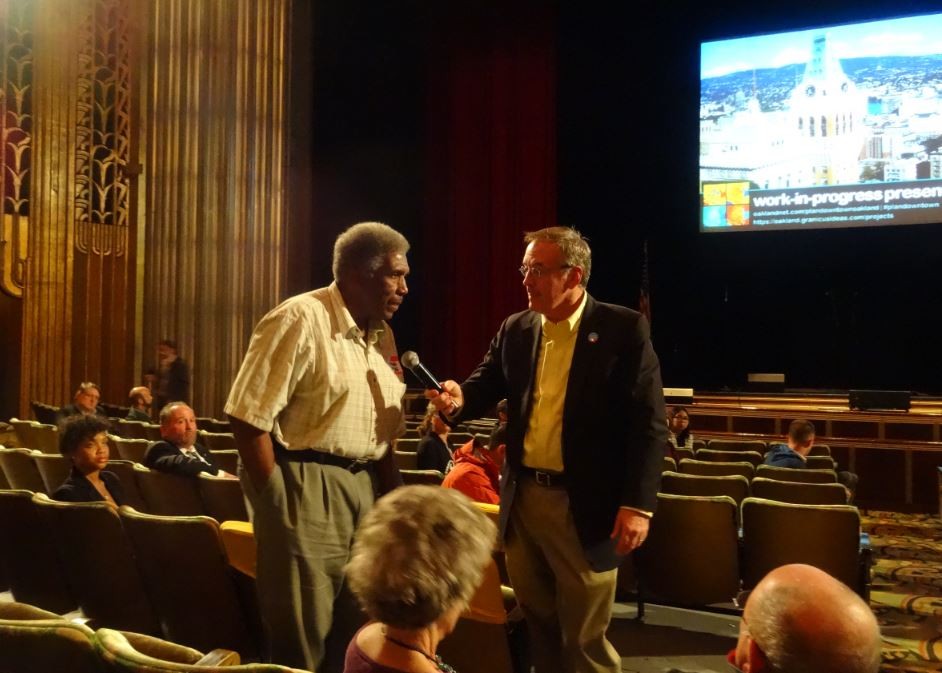
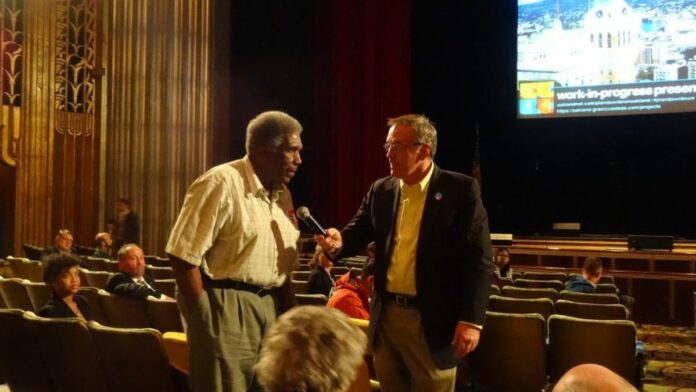
That was the main takeaway from last night’s “work in progress” presentation on the downtown Oakland specific plan at the Paramount Theatre.

See also: Oakland Launches New Planning Process for Downtown

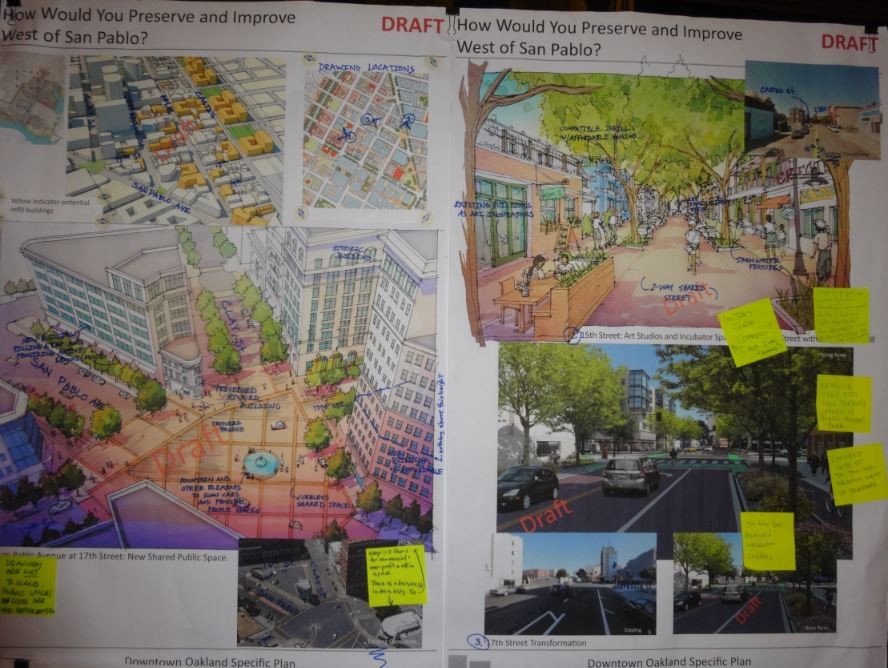
[jump] During the presentation, planners with Dover Kohl, a Florida-based design firm hired by the city to sketch ideas for the future of Oakland’s urban core, clicked through slides depicting how streets and city blocks currently dominated by asphalt and parking lots could be transformed into welcoming public spaces and dense new housing and retail.

Victor Dover, one of the principals of Dover Kohl, emphasized that all the ideas are “just a draft,” and subject to change. Among the draft ideas were depictions of what the downtown could look like with Interstate 980 ripped out and replaced with a forested boulevard lined with low-rise town homes and apartment buildings, all re-connecting downtown to West Oakland. Howard Terminal at the port was pictured with a waterfront baseball park, or, alternatively, a recreation complex. Intersections along San Pablo were morphed into European-style plazas with fountains and cobbled streets. Another rendering showed what Broadway would look like with Portland-style light rail running parallel to cars and bike lanes, all flowing harmoniously past the Cathedral Building.

But many in the audience said the planning process was disconnected from the city’s real needs.

“Forget all the pretty pictures,” said Michael Pyatok, a longtime Oakland resident and architect. “New buildings cost a lot, rents are escalating, and many cannot afford to participate in this new economy, this new world that you are depicting here.”

Pyatok said that what the city needs right now is the implementation of policies to ensure that the wealth being poured into Oakland results in equitable growth without displacement of lower-income communities.

“We want to see real policy changes to shift this wealth into the hands of the people who aren’t being paid their fair share,” said Pyatok.

James Vann of the Oakland Tenants Union echoed Pyatok’s comments. “To do a plan, it’s got to have commentary on social and economic policy to preserve Oakland for the people who are already here.” Vann said last night’s presentation was missing these types of policies that could protect lower-income communities while fostering growth.

Oakland resident Emily Butterfly expressed concern that the Paramount Theatre’s 2,807 seats were not filled. In fact there only appeared to be a few dozen attendees at the presentation. Butterfly questioned the outreach done so far for the planning process and said the city needs to do a better job bringing residents to the table – before any plans are drafted.

In response, City Council President Lynette Gibson McElhaney, whose district includes downtown Oakland, urged those in the room to take more ownership of the process. “It’s not their plan,” said McElhaney about the Dover Kohl team. “It’s our plan. They need to reflect what we say.”

The downtown area plan is being undertaken as part of a broader city-wide planning process begun years ago. Already the city has completed plans for the Lake Merritt BART station area, which includes Chinatown; West Oakland; the Broadway-Valdez District; and the Coliseum area in East Oakland. The main purpose of these area plans is to encourage real estate developers to invest in Oakland. The area plans include environmental studies that streamline approval for development projects.

Even without a completed area plan, downtown Oakland is already experiencing a surge of investment, including the recent purchase of the Sears building by Uber. In September the Oakland City Council voted to sell 1.25 acres of public land downtown to the Strada Development Group for construction of 262 market-rate apartments and a hotel. And earlier this month, a 38-unit SRO that is currently home to low-income Chinese residents was bought by an investor who plans to refurbish the building and rent it to more affluent residents, including tech workers.

Oakland Mayor Libby Schaaf hurried from her state of the city address at City Hall earlier in the evening to address the gathering at the Paramount Theatre. “This is an incredible moment of growth for our city,” said Schaaf in her brief speech. But Schaaf, echoing comments she made in her state of the city speech, said the city must work to ensure that residents and existing businesses are not pushed out by increasing rents and other pressures.

Hiroko Kurihara, an artist who is part of the 25th Street Collective located in a warehouse that straddles the Uptown and Broadway-Valdez areas, told the audience that her rent shot up 40 percent this year. “What many of us feel to be the realness of Oakland, it is now undergoing this typical gentrification model,” said Kurihara.

Thursday Must Reads: California Salmon Run Decimated by Mass Die-Off; Berkeley Council Okays Green Affordable Housing Plan

Stories you shouldn’t miss:

1. A mass die-off of Chinook salmon eggs and hatchlings last winter in the Sacramento River pushed the already endangered salmon run to the brink of extinction, the Chron reports. About 95 percent of winter run Chinook salmon eggs and babies died because of warm temperatures in the river. Water managers had released water from Shasta dam to keep the river temperatures cool — as required by environmental law — but the water was too warm because of the four-year drought.

2. The Berkeley City Council unanimously approved a green affordable housing plan proposed by Councilmember Lori Droste that would slash parking requirements in order to make new multi-unit housing projects cheaper and would streamline the process for approving affordable housing developments, Berkeleyside reports. Droste’s proposal will come back later to the council for final approval.

3. Oakland Mayor Libby Schaaf called for more “new housing at every income level so the people moving into Oakland don’t push out the people already here,” the Trib$ reports. Schaaf’s comments came in her first state of the city speech.


[jump] 4. Two regional agencies — the Metropolitan Transportation Commission (MTC) and the Association of Bay Area Governments (ABAG) — have agreed to study the possibility of merging in order to combine and streamline transportation and planning for housing needs in the Bay Area, the Bay Area News Group$ reports.

5. The average home in the upscale town of Diablo in Contra Costa County used more than 1,000 gallons of water a day last year — by far the highest of any community in East Bay MUD’s service area, the Bay Area News Group$ reports. The next highest usage was the town of Alamo, which averaged 687 gallons of water per household per day last year.

6. Uber’s “surge” pricing strategy — which raises prices for ride fares during peak demand — doesn’t work very well, because both Uber drivers and customers avoid the surge periods, the Chron reports, citing a new study. Both drivers and customers avoid the busy surge periods because they’re not worth the hassle.

7. And Democrat Bernie Sanders became the first major presidential candidate to call for the removal of marijuana from the nation’s list of dangerous drugs — a move that would allow states to legalize pot without fear of interference from the federal government, the Washington Post$ reports. 

Raiders and NFL Gain No Leverage at Oakland Town Hall

Under the NFL’s bylaws, franchises that want to relocate to another city must first allow fans to have their voices heard. The practice of the NFL, however, when it comes to building costly stadiums, is to leverage fans’ fears about a team leaving to pressure municipalities into funding stadium construction with taxpayers’ money. However, if NFL executives on Thursday...

As Ohio Preps for Legalization Vote, the Movement Is Split in Two; It’s a Bad Omen for California

The unlikely state of Ohio is set to vote on legalization next week, and the whole debacle should send a chill down the spine of California reformers this Halloween. Ohio's Issue 3 would end cannabis prohibition in the Midwestern state, but limit commercial pot cultivation to ten companies that backed the Initiative. Ballotpedia.com lists...

Oakland Businesses Adapting to New Minimum Wage as Economy Booms

It’s been eight months since Oakland’s $12.25 minimum wage law took effect. So what has been the economic impact of higher wages on the city? For one thing, Oakland’s economy is booming. Plus, unemployment is falling, and new businesses are clamoring to locate in Oakland. And perhaps surprisingly, most business owners don’t seem to...

Wine & Bowties Announces Feels IV Lineup

Though Feels III took place in July, Oakland bloggers-turned-party-throwers Wine & Bowties are back at it with another installment of the mini music and arts festival, Feels IV, which takes place November 28, 6 p.m. to 1 a.m., at American Steel Studios (1960 Mandela Pkwy., Oakland).  The previous edition featured indoor and outdoor stages and included memorable performances by local...

Halloween Weekend Event Guide

Whether you're dressing up as Drake, Bernie Sanders, or Libby Schaaf's snailmobile this Halloween, you're going to need something to do in your costume. Here's our guide to the top Halloween events in the East Bay this weekend.  14th Annual Murder Ballads Bash Crimes of passion have been lyrical fodder for musicians across different genres and generations, so what...

‘Our Brand Is Crisis’ Leaves a Bad Taste

Our Brand Is Crisis is the story of how a team of professional political consultants from the United States descends on Bolivia during a presidential election campaign to help its client/candidate get elected. It’s adapted from writer-producer Rachel Boynton’s 2005 documentary of the same name — from almost every point of view a damning indictment of spin doctors, dirty...

After Contemplating Retirement, Oakland Councilmember Noel Gallo Says He’s Running for Reelection

One of the oddest pieces of political chatter over the past few months in Oakland went like this: Councilmember Noel Gallo was planning to quit after just one term in office. The rumor, no matter how ridiculous it seemed at first glance, began to grow feverishly among City Hall politicos. Preceding Wednesday night’s state of the city speech by...

Legalization Advocates Feel The Bern! Sanders Calls Pot Prohibition ‘Absurd’

Democratic Presidential candidate Bernie Sanders electrified the pot law reform community Wednesday with a speech at George Mason University in Fairfax, Virginia, where he became the first presidential candidate to support fully ending federal pot prohibition. “A criminal record stays with us for our entire life,” Sanders told the crowd. “A criminal record destroys lives.” ...

Oakland Downtown Plan Draws Skepticism

James Vann of the Oakland Tenants Union (left) and Victor Dover of Dover Kohl. Credits: Darwin BondGraham Downtown Oakland is going to be a very cool place in the future. There will be expansive parks, tree-lined boulevards crowded with store fronts, bustling sidewalks, protected bicycle paths, and nightlife. Lots of nightlife. But many Oaklanders fear they won’t be around to enjoy...

Thursday Must Reads: California Salmon Run Decimated by Mass Die-Off; Berkeley Council Okays Green Affordable Housing Plan

Stories you shouldn’t miss: 1. A mass die-off of Chinook salmon eggs and hatchlings last winter in the Sacramento River pushed the already endangered salmon run to the brink of extinction, the Chron reports. About 95 percent of winter run Chinook salmon eggs and babies died because of warm temperatures in the river. Water managers had released water from Shasta dam...
19,045FansLike
17,709FollowersFollow
61,790FollowersFollow