Nextdoor.com Executives Meet With Oakland Activists, Discuss Efforts to Combat Racial Profiling

Nirav Tolia, co-founder and CEO of the neighborhood social networking site Nextdoor.com, met with a group of Oakland activists today to discuss concerns about racial profiling on the website. As I investigated in a recent cover story, “Racial Profiling Via Nextdoor.com,” Nextdoor has evolved into a virtual neighborhood watch in Oakland with members frequently using the Crime and Safety section of the site to post unsubstantiated “suspicious activity” warnings about Black residents who aren’t doing anything wrong. Throughout the city, Nextdoor posts have labeled Black people as suspects simply for walking down the street or driving a car. In an effort to combat these kinds of offensive posts, a group of activists called Neighbors for Racial Justice — made up of white residents and people of color (some who have been profiled in their own neighborhoods) — is now pushing the San Francisco-based tech company to make concrete changes to the site. 

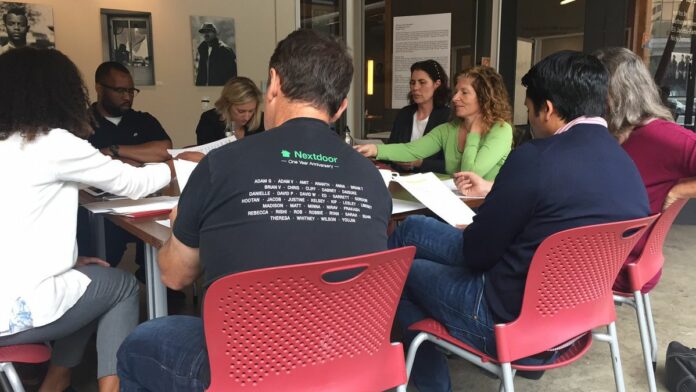
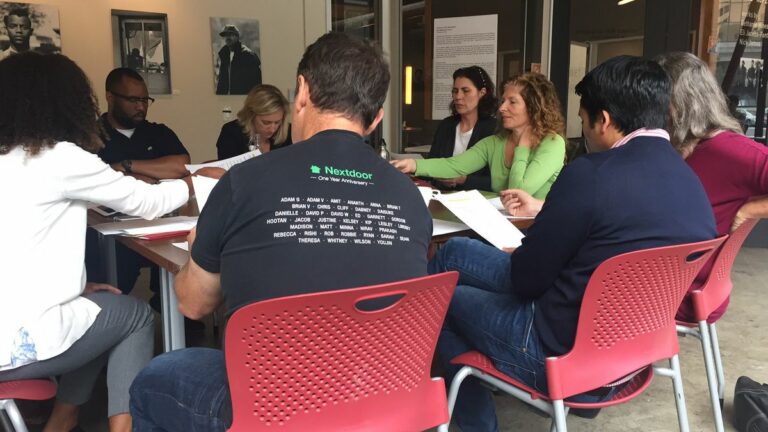
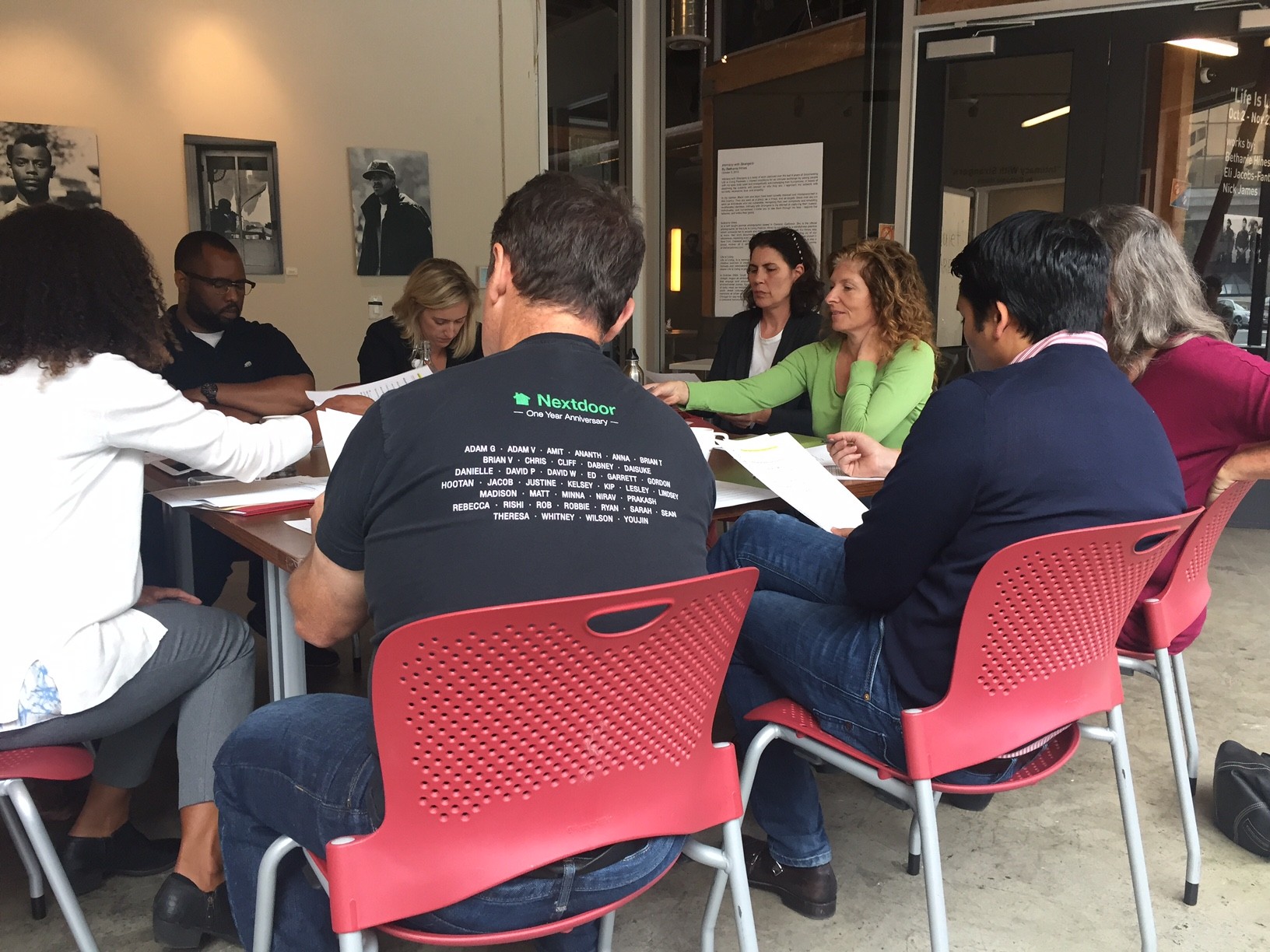
Earlier this month, Tolia responded to the Express article with a blogpost on Nextdoor.com outlining the company’s plans to curb racial profiling — including potential new training initiatives and changes to the site’s guidelines. Today at the co-working space Impact Hub Oakland, Tolia and three other Nextdoor representatives met with five members of Neighbors for Racial Justice, which invited me to sit in on the meeting. The activists — including Upper Dimond resident Shikira Porter, who I featured prominently in my piece — presented Nextdoor with a number of proposals aimed at eliminating racial profiling on the site. In addition to Tolia, the meeting included Kelsey Grady, Nextdoor’s head of communications; Gordon Strause, director of neighborhood operations; and Maryam Mohit, director of product. 

[jump] Tolia told the group that Nextdoor plans to add a “racial profiling button” to the site, which means users will be able to flag posts for racial profiling. Currently, users can flag comments that they believe are inappropriate or abusive, but there’s no way to specify racial profiling. “We want to create that very specific signal for us,” Tolia said. In the current system, when users flag a post for any reason, neighborhood “leads” — who are volunteer citizen moderators — can review the post and decide whether it violates Nextdoor’s guidelines, which prohibit discriminatory posts and profiling. The problem, according to Neighbors for Racial Justice, is that the leads sometimes do not take those concerns sincerely, and, on the contrary, have even gone so far as to censor posts calling out racial profiling in some Oakland neighborhoods. Users can reach out to the company directly if they are not satisfied with the lead’s response, but some have said that this process is difficult.

In addition to the new racial profiling button, Grady said after the meeting that the company is committed to revising the guidelines to better address concerns about racial profiling, but has not yet decided on the specifics of those rewrites. The guidelines currently say: “Racial profiling is the act of making assumptions about a person’s character or intentions based on their appearance or identity rather than their actions.”

Today, Neighbors for Racial Justice proposed a number of more substantive initiatives — changes that Tolia and the others agreed to consider. The group suggested that Nextdoor adopt clear restrictions on how people post about crime, including prohibiting the use of racially offensive “code words,” such as the “AA” label — which, I have seen, people frequently use to describe “suspicious” African-American people on Nextdoor’s Oakland pages. More broadly, the group requested that Nextdoor consider banning posts that describe “suspicions,” since those are subject to people’s implicit racial biases, and instead direct users to only post crime and safety warnings when they witness actual illegal behavior. 

Within those crime posts, Nextdoor should ban descriptions of suspects that are vague, such as “young Black man,” the group said. As one of the activists, Bedford Palmer, wrote in a handout he gave the Nextdoor reps today: “These descriptions are directly responsible for the harassment of neighbors that ‘fit the description,’ and places them in danger of negative police interactions.” 

And if users do want to post about a crime, they should have to fill out a specific form, according to Neighbors for Racial Justice. Porter brought this document to the meeting as an example: 
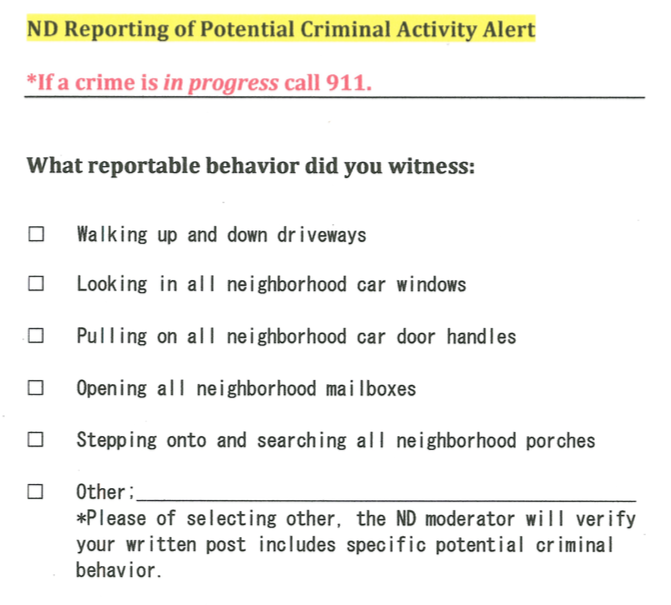


In other words, members would have to specify the criminal behavior they witnessed and describe a wide range of physical characteristics — which can include “perceived race.” If users can’t specify those other descriptors — meaning if they are only going to post “tall, Black man” — then they should not be allowed to post at all, Porter explained. The group also suggested that Nextdoor more actively track and monitor crime posts — and zero in on specific users or messages that attract multiple flags for racial profiling. 

Neighbors for Racial Justice also proposed “multicultural competence” training for neighborhood leads, so that the moderators would be better equipped to understand and recognize posts that are racist, offensive, or oppressive in some way. The group further suggested that Nextdoor contract with social justice experts to help address the problem. 

The Nextdoor representatives seemed receptive to many of the ideas, and Tolia asked the group to follow up with suggestions of specific local racial profiling and training experts that the company could consider for possible partnerships. Tolia told me after the meeting that he would seriously consider adding some kind of form like the one Porter presented.

During the meeting, Tolia noted that in exploring these kinds of changes, the company would, however, have to also consider its mission to protect the privacy of users. Currently, Nextdoor only reads posts when the company is responding to some kind of complaint or conflict — and doesn’t have any proactive monitoring in place. “We don’t sign into these neighborhoods and read what the discussions are,” Tolia said. “If we are choosing to look at a post … we need to have a really good reason why.” He added: “Because we don’t give a lot of explicit guidance when people post things, the thing we’re trying to think about is, how do we start to provide that education?” 

Tolia also pointed out that there are challenges in getting people to shift their approach to crime reporting: “With the suspicious behavior thing, there is going to have to be some unlearning of behaviors that people have in their mind and then a relearning of what is appropriate. And that’s what we’ve got to try to influence. But it’s not easy, because people have different senses of what is suspicious behavior and what is appropriate.” 

The Neighbors for Racial Justice members emphasized the ways in which racial profiling on Nextdoor makes people of color feel less safe and welcome in their own neighborhoods. And Tolia repeatedly said he took those concerns seriously — and that profiling and the resulting harm runs counter to the company’s broader objectives. “One of our missions is to actually create very constructive dialogue that leads to safer neighborhoods where people feel like they belong,” he said. 
Mid-Week Menu: Bay Wolf Space to Be Revived by Wood Tavern Owners, Claremont Diner to Close, and The Dock Adds Prix-Fixe Option

Welcome to the Mid-Week Menu, our roundup of East Bay food news.

1) Big news for those who have been wondering about the future of the former Bay Wolf (3853 Piedmont Ave., Oakland), which closed at the end of August after 40 years of business: Bay Area News Group reports that the owners of Wood Tavern have leased the building and plan to reopen it in summer 2016 as a yet-unnamed “intimate American brasserie.” Yang Peng, the executive chef at Wood Tavern and Southie, will head up the kitchen.

[jump]

2) What the Fork previously noted that the old-school burger joint Oscar’s (1890 Shattuck Ave., Berkeley) would be closing soon, and that plans were already in place for it to be replaced by a Washington, DC-based salad chain. Well, now Berkeleyside Nosh reports that the closure is official. RIP.

3) Gene, of the Our Oakland blog, gave me the heads up that the owners of Claremont Diner (6200 Claremont Ave., Oakland), the Rockridge breakfast standby, are retiring. According to both a sign in the window and a note on the restaurant’s Facebook page, this Saturday, October 31, will be Claremont Diner’s last day of business. That said, it looks like the diner will live on in some new form. “Stay tuned for the new ownership of the Claremont Diner,” the note concludes. We’ll keep you posted.

4) Fresh off landing a book deal and a couple of Michelin stars, James Syhabout (Commis, Hawker Fare) turns his attention to his West Oakland restaurant The Dock (95 Linden St.), which just announced a few new offerings. The most interesting: In addition to its regular menu, the restaurant is now serving a four-course prix-fixe option for $35 per person. The sample menu Syhabout sent me includes: 1) a choice of salads (butter lettuce or cucumber sunomono), 2) foie gras mousse, 3) a choice of Monterey black cod or lamb shoulder stew, and 4) spiced date cake.

Also, during happy hour at The Dock (Tue.–Fri., 4–6 p.m.), all draft beers are now half-price, and cocktails are $6.

5) Mr. Dewie’s, a maker of cashew-based vegan ice cream, will open its first brick-and-mortar shop — called Cashew Corner — at 1116 Solano Avenue in Albany, Berkeleyside Nosh reports. The plan is for the scoop shop to open in the former Burger Depot location sometime around January 2016.

6) A poster on Food Talk Central notes that the new Albany location of Pho Ao Sen (665 San Pablo Ave.) — whose Oakland location is one of the best pho joints in the East Bay — is now open for business.

7) An update on Build Pizzeria (2286 Shattuck Ave., Berkeley), the build-your-own-pizza restaurant that closed suddenly in April, along with the downstairs nightclub Berkeley Underground: Berkeleyside Nosh reports that the original owners of the two businesses sold their stake and have now filed for bankruptcy. The future of the building is uncertain at this point.

8) The Washington Post reports that the daughter of the Buich family, which owns the beloved San Francisco institution Tadich Grill, alleges that her family cut off all ties with her because of her decision to marry an African-American man — former Oakland Raiders star Gene Upshaw. As of this posting, the Buich family has yet to respond to the allegations, but Inside Scoop notes that many who were upset by the story have take to Yelp to post angry one-star reviews of the restaurant.  

9) Dia de Los Muertos is coming up, and he’s one socially conscious way you can celebrate: The Oakland Food Policy Council is hosting a “Decolonize Your Diet” event on Sunday, November 1, 4–7 p.m. The focus of the gathering? How diners can “learn about and eat the food of our ancestors as an act of love.” Guest speakers include Luz Calvo and Catriona Esquibel (authors of the Decolonize book), noted Mexican food expert Gustavo Arellano, and Oakland-based food activist Bryant Terry. Food will be provided by People’s Kitchen.

10) ICYMI, my review of an El Cerrito restaurant conceived as a “greatest hits” of regional Chinese noodle dishes prompted me to shout out a few of my favorite East Bay noodle spots.

Got tips or suggestions? Email me at Luke (dot) Tsai (at) EastBayExpress (dot) com. Otherwise, keep in touch by following me on Twitter @theluketsai, or simply by posting a comment. I’ll read ‘em all.

Wednesday Must Reads: Oakland Raiders’ Owner Continues to Demand Free Land; Uber to Pay Oakland’s $1 Million Affordable Housing Fee

Stories you shouldn’t miss:

1. The Oakland Raiders remain at an impasse with officials from the City of Oakland and Alameda County over a new stadium because team owner Mark Davis continues to demand that he receive free land in the deal, the Chron$ reports. Oakland Councilmember Larry Reid, who is on the Coliseum Authority board, said “there is no way that the city and county are going to agree” to give the Raiders taxpayer-owned property for free. The city, however, is offering to spend up to $120 million on infrastructure upgrades around the Coliseum site. The revelation about the Davis’ demand comes just before the NFL will hold a town hall at the Paramount Theatre concerning the Raiders desire to move to Southern California if they don’t get what they want in Oakland.

2. Uber will pay the City of Oakland’s $1 million affordable housing fee as part of the company’s deal to purchase the old Sears building in Uptown and expand its headquarters to the city, the SF Business Times$ reports. Oakland charges the impact fee for warehouse and office development in the city — and it’s dependent on the size of the development. The city does not have an impact fee for market-rate housing development, although it has been studying the issue. The $1 million will only pay for three to four affordable housing units.

[jump]
3. California students continue to perform miserably on standardized tests, the Mercury News$ reports. The latest results from the nation’s report card showed that just 27 to 29 percent of California fourth- and eighth-graders were rated as being proficient in math and reading. California tied for 39th among states nationwide in fourth-grade reading, and was 44th in eighth-grade reading, 46th in eighth-grade math, and 50th in fourth-grade math.

4. The state also continues to do a horrible job in closing the racial divide in K-12 education, particularly when it comes to Black students, the Bay Area News Group$ reports, citing a new analysis from the Oakland-based nonprofit, Education Trust-West. A few school districts, however, have made some progress, including Oakland Unified, according to the report.

5. And Anthem Blue Cross has agreed to refund $8.3 million to about 50,000 customers as part of a class-action lawsuit settlement, stemming from illegal fee hikes by the giant insurer, the LA Times$ reports. Anthem also agreed to stop its unlawful practice of “raising deductibles and other yearly out-of-pocket costs on individual policies in the middle of the year.”

Enter the Valley with Shalo P

At first, curator Jasmine Moorhead seemed almost hesitant to leave me with San Francisco artist Shalo P in the small, dark room at the center of her downtown Oakland gallery, Krowswork (480 23rd St., Oakland). The artist and I were cross-legged on the floor, sandwiched by a boombox and a small amp, each of which contributed ambient noise to a gloomy, droning atmosphere that enveloped us. Pulling aside the black curtain of the screening room slightly and peeking in like a mom interrupting a session of make-believe, Moorhead decided that she should definitely leave, but not without a warning. “I’ll just preface this: It’s just that there’s a different type of spatial non-narrative that Shalo is more adept at bringing into the visual sphere than any person I’ve ever encountered,” she said. “That’s why I don’t want to be involved, because I’m gonna bring too much linearity to it — and that’s not where the magic is.”

Shalo P’s solo show currently at Krowswork is a three-part conceptual installation called Valley, made up of two video pieces and one room filled with illustrated pages from Shalo’s forthcoming graphic novel-like book of the same title. The concept behind the show is only barely there, although the gallery is filled with imagery — and that’s kind of the point. It’s loosely about voids and other empty, unbridled spaces — both physical and psychological — and the lush sensory worlds that mask those vacancies.

The central room of Valley, where Shalo and I sat, houses an approximately hour-long video piece called “Wilderness.” In it, a grainy, yellow background presents decontextualized snippets of text that point to a feeling, yet aren’t quite comprehensible. Like the totality of Valley, it makes the viewer feel as if there’s something more meaningful behind it that’s just out of reach, hiding just beyond the margins of the piece. And Shalo’s bewildering explanations are similar — poetically dancing around the concept of the show, pointing to philosophical substance too slippery to fully articulate. “A room can be a valley of sorts — an emptiness, a corner,” he said, explaining that we were sitting in one kind of valley. “I always liked the idea of the poetics of space. And pretty much, for me, the valley is imposing, it’s inviting, it’s lush, it’s a vast emptiness, it’s foreboding, it’s forbidding, it’s a conflux of viewpoints.”

The rest of the show is more narrative, yet not necessarily easier to grasp. A seventeen-minute film called The Spy plays in the gallery’s largest room, which offers church pews for seating. It’s an odd, tragic love story told through the narration of a British man and paired with found footage, mostly of sublime natural landscapes. The story makes references to a secret society and ominous characters like “The Red Ghost.” These are culled from Shalo’s ongoing video series called “Television for Ghosts” (hosted on Vimeo) which he has been making for ten years. Again, these present enough context to draw you in, yet not enough to allow you to fully comprehend what’s going on. “It’s a coalescence of patterns of information that I visualize as weather, that I visualize as river, as a sort of terrarium but very liquid — liquid cinema,” as Shalo described it.

After talking to Shalo, it’s clear that every piece in Valley is one of his attempts to welcome others into a dense conceptual world that he has been inhabiting for years — a kind of alternate reality that, for him, is not “fictional,” but rather a creative expression of philosophical concepts regarding the human experience that are rooted in something very real. The mysterious messages he offers from the other side elicit both curiosity and apprehensiveness, as if Shalo is waiting in a dark void, beckoning you to join him. And the only way to begin to appreciate his sentiments is to embrace bewilderment and enter with full emotional openness.

Shalo will be giving a tour of Valley on October 31 at 4:30 p.m. Specifically, he’ll be sharing narrative components of the work that aren’t in the show, and giving a tour of “Medusa Lake,” a mysterious landmark within its underlying narrative landscape. If you want it to be, it could be the most otherworldly experience offered this Halloween.

Oakland Struggles to Hold Banks Accountable

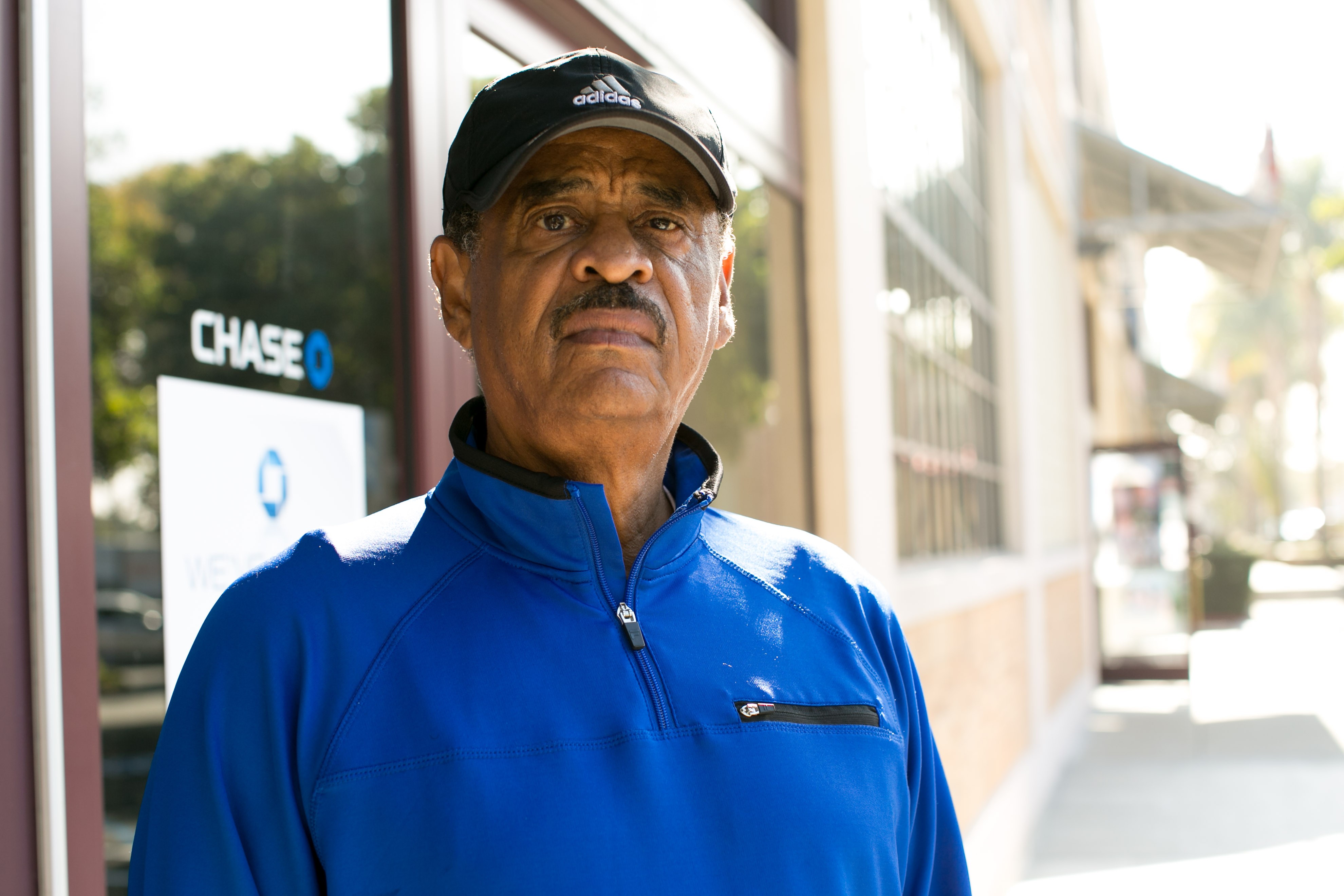
In the wake of the financial crisis, cities throughout California attempted to hold banks accountable for their predatory practices. Oakland, for example, tried to leverage its lucrative municipal banking contract to force banks to be more transparent about their impact on the city’s communities, especially low-income neighborhoods where toxic subprime mortgages have caused thousands of foreclosures and a sluggish recovery. Oakland also asked banks interested in doing business with the city to make bigger commitments toward community investments, such as new housing and small business loans. But it’s unclear if the city’s efforts to force banks to treat the city’s low-income communities fairly, and to reinvest in Oakland, have paid off.

Foreclosures continue to blight the city’s flatlands. Usurious payday lending storefronts are more abundant in many neighborhoods than bank branches. And it appears that city staffers disobeyed the council last year by omitting key transparency requirements from the city’s most recent banking contract with JP Morgan Chase, meaning that Oakland may have a difficult time obtaining detailed lending and investment data that city leaders demanded. All of this has city councilmembers and community advocates asking whether it’s actually possible to hold banks accountable.

“It’s frustrating,” said Councilmember Larry Reid, whose district encompasses deep East Oakland, which was devastated by predatory mortgage loans. Between 2007 and 2011 — the nadir of the foreclosure crisis — there were more than 10,000 foreclosures in Oakland. Predatory mortgage loans were all too easy to obtain in the early and mid-2000s in Reid’s district. And deep East Oakland is also under-banked when it comes to higher-quality financial products and services. There are few actual bank branches accessible to residents who want access to quality loans, savings accounts, and other financial services. Reid complained when JP Morgan Chase closed its only branch in his district earlier this month.

“There aren’t a lot of banks out there,” he said about the long stretch of International Boulevard from roughly 69th Avenue to the San Leandro border. “Now, my residents have to go all the way to San Leandro to do their banking.” Reid said he recently contacted Chase and asked about the closure of the branch at 10800 International Boulevard in the Durant Square shopping plaza, but he couldn’t get a straight answer. “The branch always seemed to be busy, more than the Chase in San Leandro.”

There are, in fact, no bank branches on International Boulevard along the entire stretch that runs through Reid’s district. There are a few ATMs operated by major banks, but they’re hidden in liquor stores, and charge fees to anyone who is not a customer of the particular bank that owns the ATM. By contrast, there are numerous check cashing stores in the area — two are within walking distance of the now shuttered Chase branch. There are at least five more check cashing outlets along International Boulevard in Reid’s district, as well as gold buyers and pawn shops.

Chase’s closure of the Durant Square branch has Reid questioning why the city gave Chase the contract to handle the city’s hundreds of millions in deposits and payments. Late in 2013, Oakland put its depository banking services contract out to bid. Five banks — Wells Fargo, Unionbank, US Bank, Citibank, and JP Morgan Chase — submitted bids for the $275,000-a-year, three-year contract. But the Oakland City Council wanted more than the lowest bidder: It wanted to select a bank that could demonstrate that it was doing the most to invest in Oakland and reduce foreclosures. Councilmembers were urged on by community activists like Richard Speigelman, a former-board member of Oakland Community Organizations. “We’re of the opinion that Oakland needs a bank that’s invested in the community, and we need the data to represent what that investment is,” Speigelman told the council’s finance committee in December 2013.

Liana Molina, a staff member with the California Reinvestment Coalition, said virtually all the major banks have done damage to cities like Oakland, but that Oakland could use its bank contracts to hold financial institutions more accountable, and to obtain useful data on how banks impact specific neighborhoods or demographic groups. “We have a vision to move a responsible-banking agenda forward,” said Molina in an interview. “It’s just very slow and the banks are very influential. They oppose these types of local ordinances, and stronger state regulations. They’re very well-organized and powerful as a lobby.”

Reid and Councilmember Desley Books wanted to pick Wells Fargo for Oakland’s banking contract because its representatives had recently agreed to work with local housing officials to try to lower the number of mortgage defaults that the bank was foreclosing on. Wells Fargo also reported to the city that it had made $76.7 million in small business loans to Oakland-based companies in 2012. By contrast, JP Morgan Chase extended a mere $800,000 in small business loans that year.

“We ought to look at how these banks reinvest back in the city of Oakland,” said Brooks at the 2013 finance meeting. “Chase had a significant number of foreclosures in the city of Oakland, but in that time, what is it they’ve done, more than just be here and take deposits from our people?”

City staffers recommended picking JP Morgan Chase, partly because Wells Fargo’s municipal banking services had declined in recent years, they said. At the city council’s final meeting in 2013, Councilmember Dan Kalb, who also preferred to give the contract to Wells Fargo, offered amendments to the resolution selecting JP Morgan Chase as the city’s new banker. Kalb’s written amendments directed staffers to negotiate a contract with the bank that would require Chase to “provide information on their lending, services and investment activities, specific to Oakland, especially in low and moderate income communities including business loans, home loans, media outreach and branch locations for historically undeserved communities.”

“The city has a right to ask for something in return from its bank, besides just paying some money for the services,” Kalb said in a recent interview. “There’s a longstanding history that banks and financial institutions were absent when it comes to providing services and opportunities to lower- and moderate-income residents, and in Oakland, that’s particularly true for people of color.”

Kalb’s amendments, which were approved by the full council, also required that lending, investments, and other data be provided down to the zip-code or census-tract level in order to allow the city to see how the bank had been treating lower-income households in the flatlands. Peter Villegas, then the vice president of corporate responsibility for Chase, promised the council just before the vote that Chase would hand over this data.

But it appears that city staffers never included terms in the contract to require Chase to provide this information. A copy of the contract obtained by the Express includes no clauses requiring Chase to provide the type of data specified in the council resolution. “If the council mandated it, where is that reflected in a signed document between the city and the bank?” said Kalb.

Oakland’s treasurer Katano Kasaine said that despite the absence of these requirements in the contract, Chase will still provide Oakland with data on its local activities so that information can be presented to the council. The city attorney’s office, which assists in drafting city contracts, did not respond to questions about the absence of these requirements in the Chase contract.

Suzanne Alexander, a representative for Chase bank, wrote in an email that Chase is “working with the city staff to provide the information so they can prepare a report for the council for early next year.” But neither Chase nor treasurer Kasaine elaborated on what exactly Chase will provide to the city.

Paul Cobb, publisher of the Oakland Post, doubts the bank will provide the specific data requested by the council. Cobb pointed to the council’s requirement that the bank reach out through local media to historically underserved communities as one reason for his skepticism. “They never did take out a single ad,” said Cobb about his newspaper, which is the largest Black news publication in Oakland and the East Bay. “I didn’t want to make it seem like it was just a play for ads,” said Cobb, “but they have been absolutely rude. They said Oakland is too small to focus on.”

“It’s like pulling teeth — trying to get the banks to disclose this info,” said Molina about the Oakland’s contract with Chase. “We believe the banks have this information and it would be as simple as developing a software platform to report it to cities,” said Molina. “But so far, it seems like they’d rather keep things hidden.”

Kalb said he hopes that Chase will make good on its promise to hand over the data, despite the absence of such a requirement in the city’s contract. “It’s no shocker here we’d want this info,” he said.
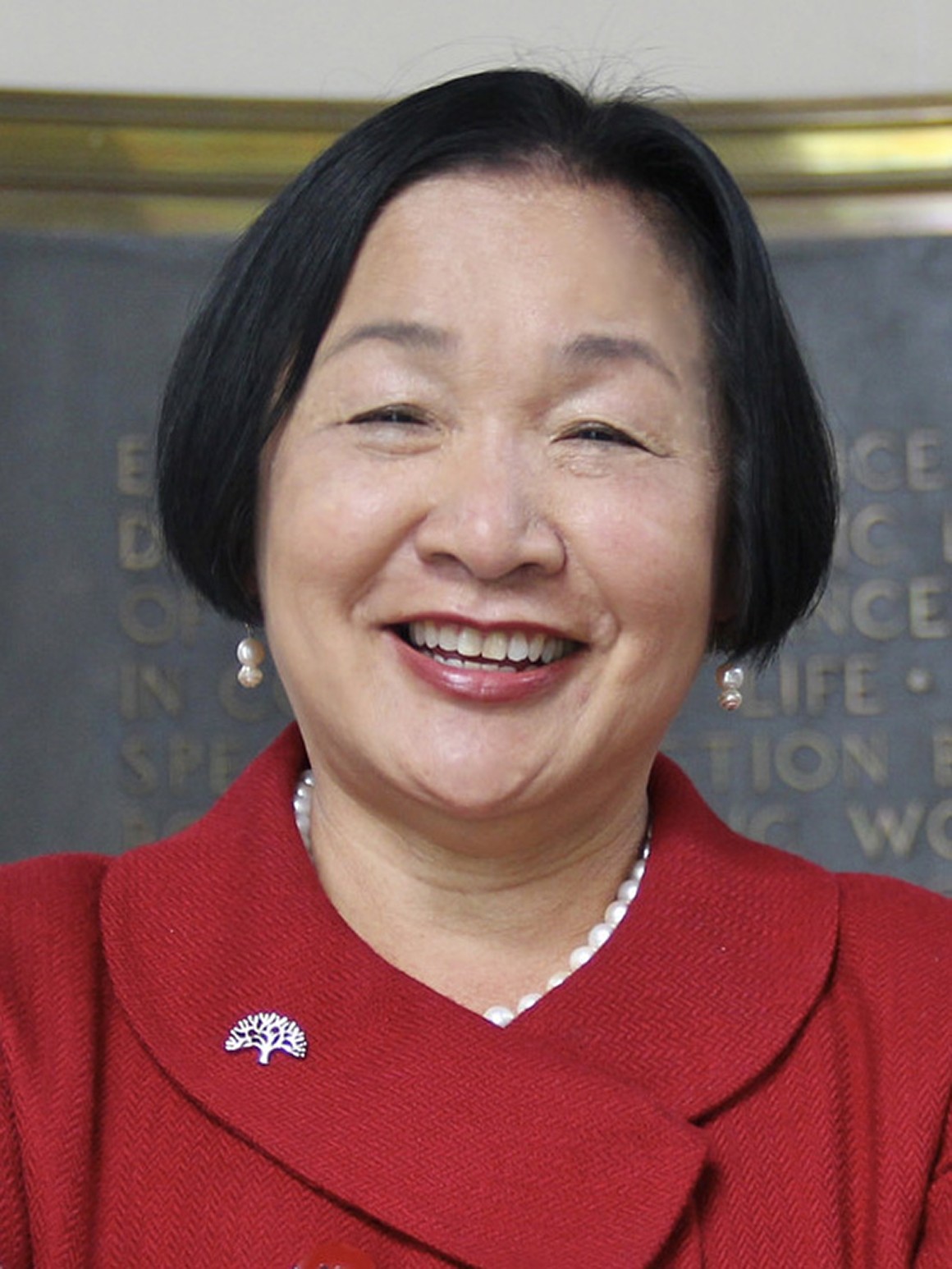
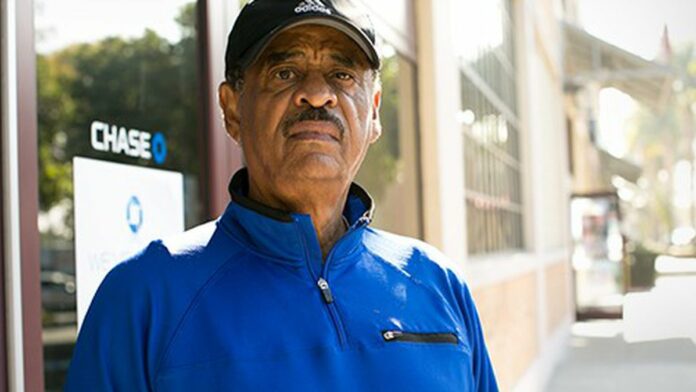
As to why Chase closed its deep East Oakland branch, Alexander wrote that the location was redundant. “Over the years, we have increased our branch network through acquisitions,” wrote Alexander. “Sometimes that has led to branches with overlapping market areas. In this instance, there are two additional Chase branches less than one mile away.”

Best Served Cold

I am a straight, married, 38-year-old woman. My husband and I have two children. I have been with my husband for twelve years, married for six. Three years after we were married, we found out that he was HIV positive. We had both had multiple tests throughout our relationship because of physicals and the process we went through to get pregnant. Both of us were negative then, but only I am now. Needless to say, he was infected as a result of him cheating. We worked through that and remained married. Recently, I saw a message from a woman saying, “Call me or I am calling your wife.” I identified myself, and she and I spoke briefly. I asked her how long they were having a relationship, and she told me since January. I did not mention his status. I confronted him, and he claims she is a crazy stalker. He says there was a brief flirtation but then she became clingy and “crazy,” and he did not know how to tell me without compromising our relationship. He blocked her calls and e-mails. He is undetectable, and we use condoms. He has never tried to not use a condom when we have had sex. In the state where we live, a positive person who does not inform a person of their status before having sex faces up to five years in prison. I have brought this to his attention. He is sticking to his story that he did not have sex with her. I do not believe him. We met with a therapist last week, only for a placement consultation. We did not mention his status. This is my biggest issue: I don’t think we can work through our problems without honesty. I need him to come clean and admit to me — and our therapist — that he had sex with this woman. If he does, I believe the therapist will be legally obligated to report his behavior to the police. I am preparing myself for divorce, something he doesn’t know, and while I don’t want to have him arrested, I feel we need the therapy in order to respectfully co-parent — and lying to a therapist or omitting the full truth seems crazy.

Seeking Truth About This Unpleasant Situation

“Where to start?” asked Peter Staley, the legendary AIDS activist, founding director of the Treatment Action Group, and longtime board member of the American Foundation for AIDS Research. “I’ll leave the relationship issues to you, Dan, but isn’t the level of distrust here the most toxic part of the story?”

The level of distrust does strike me as toxic — but seeing as your husband cheated, STATUS, and not for the first time, your distrust is understandable. What I don’t understand is your desire to see your husband sent to prison. You don’t want honesty (he doesn’t seem capable of that), you don’t want to “work through your problems” (your marriage is over), you just want your soon-to-be ex-husband to rot in jail.

But since you don’t want to call the police yourself — you don’t want your fingerprints on this — you want to con your husband (with my help!) into telling “the full truth” to a therapist who will have to call the police.

“STATUS really does appear to be plotting her revenge here,” said Staley. “Divorce, checking her state’s HIV criminalization laws, drawing her husband into making a confession that could land him in prison.”

And the instrument of your revenge — laws that require HIV-positive people to disclose to their sex partners — are unjust and unworkable.

“I stand with every public-health organization, including UNAIDS and the World Health Organization, in abhorring HIV criminalization laws like the one STATUS cites,” said Staley. “We already have laws on the books that can adequately deal with someone who knowingly and intentionally transmits HIV to someone else. Adding additional laws around HIV disclosure, especially when no transmission occurs, ends up causing more harm than good. Stigma rises. Fewer people disclose. Jilted partners use the laws to lash out.”

That’s exactly what you sound like, STATUS: a jilted partner who hopes to use an unjust law to lash out at her soon-to-be ex-husband. And while you have cause to be angry (serial adulterers suck), you don’t have grounds to destroy your husband’s life. And you can’t rationalize your plot based on the “danger” your husband presented to the other woman. Your husband is taking his meds and has an undetectable viral load. That means he’s effectively noninfectious. So even if he didn’t use condoms with this woman — and you don’t even know for sure if he was fucking her (and he’d be a fool to admit to you that he was) — he didn’t put her at risk of acquiring HIV.

“There’s a great organization called SERO (SeroProject.com) fighting these laws,” said Staley. “Their website is filled with frightening cases of people with HIV rotting in jail for supposed nondisclosure, even when no transmission occurred. There are no similar convictions for nondisclosure of hepatitis C, HPV, syphilis, herpes, etc., some of which can kill. People with HIV are being singled out by legislatures trying to ‘protect’ the public from ‘AIDS monsters’ created by local TV stations looking for ratings.”

My boyfriend of two years and I broke up because I found out that he was having sexual relations with anonymous men he contacted through Craigslist. My ex will not admit to being bisexual. He claims that he has these urges only when he smokes marijuana. But through our computer history, I caught him watching gay porn at times when I knew he had not smoked marijuana. I check CL periodically, and he is still posting ads regularly, even though he denies this and insists that he has the situation under control. Disturbingly, he is also dating women. I think this is dangerous because there is such a strong chance that he will give these women an STD, such as AIDS, and destroy both of their lives. Since I am the only person in his life who knows his secret, I feel some sort of responsibility. I am very emotionally troubled by this knowledge and I don’t feel right about ignoring this.

Anxiety Infuses Distressing Situation

Your ex is obviously bisexual — or if not, AIDS, then his heteroflexibility is downright acrobatic. But policing your ex’s sexual identity, his love life, and his Craigslist presence is Not Your Job. Knocking dicks out of his mouth is not your responsibility, and you are not responsible for alerting other women to the porn, the personal ads, the dicks, and the laughable excuses. (Contrary to an infamous Reddit thread, marijuana does not make men “temporarily gay.”)

You could, however, speak to your ex as a friend — a creepy friend who cyberstalks him, but still a friend. You could urge him to accept that, even if he isn’t bi, he needs to own up to not being entirely straight, either. If he’s going to engage in risky sex practices with men — and you don’t know that he’s doing that (he could be using condoms correctly and consistently) — he should talk to his doctor about getting on PrEP, aka pre-exposure prophylaxis, aka Truvada. Then, having said your piece, you can butt the fuck out his life with a clear conscience.

Secret Staircases to the Past

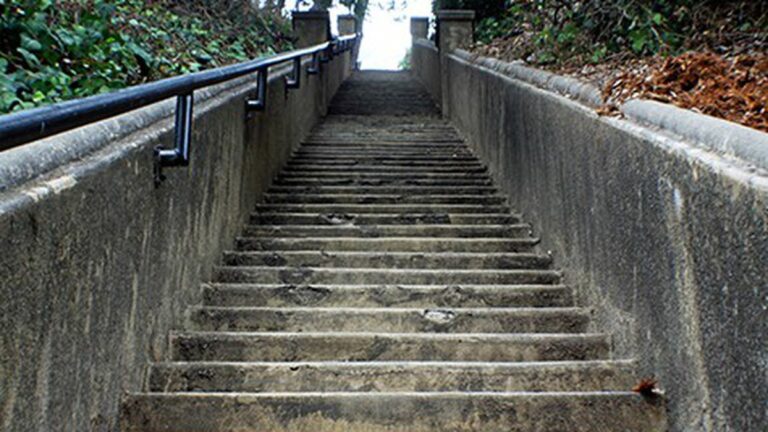
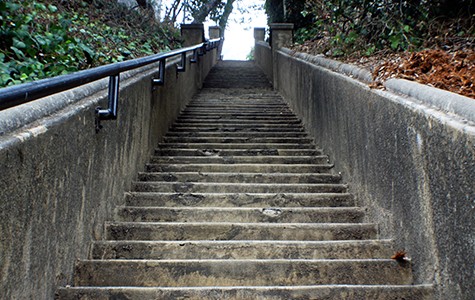
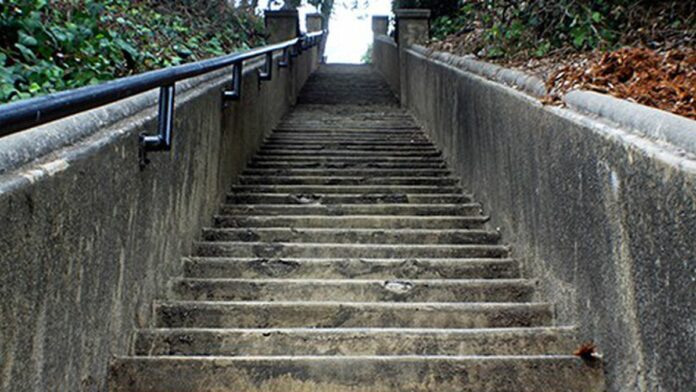
In your travels through the East Bay, you may have noticed age-worn cement staircases peeking out from between homes and carving shortcuts through our region’s many hilly neighborhoods. Some of these staircases date back more than a century.

In the aftermath of the 1906 San Francisco earthquake and the catastrophic fires that followed, many residents fled the ravaged city, settling across the bay in Oakland and Berkeley. Before the quake, these East Bay burgs boasted populations of just 67,000 and 26,000, respectively —numbers that quickly swelled by tens of thousands following the exodus from San Francisco.

With the influx of new inhabitants in need of housing, as well as the emerging trend of “streetcar suburbs” on the outskirts of cities, Oakland and Berkeley started expanding from the flatlands into the hills, further away from the city centers. While most of these then-new neighborhoods had stops on the Key System — the precursor to AC Transit — many homes perched in the hills’ higher elevations lacked easy access to the streetcars. So that commuters could avoid trekking up and down the narrow winding streets, real estate developers built hundreds of staircases as shortcuts through early hills neighborhoods, such as Berkeley’s Northbrae and Oakland’s Crocker Highlands and Upper Rockridge. “Urban planners knew they were making neighborhoods for middle class families that … would need access to public buses and trolleys,” explained Charles Fleming, author of the book, Secret Stairs: East Bay (Santa Monica Press), in an interview.

In the decades that followed, cars became the preferred mode of travel, and, as a result, housing extended even higher into the hills and further from mass transit stops. The Key System, and the stairs that led to it, were used less and less. Some staircases fell into dangerous disrepair and were cordoned off due to public safety concerns.

Ranging from a few overgrown steps of rotting wood to long flights of elegantly aged cement, these “secret” stairs remained largely forgotten until the devastating 1991 Oakland hills fire, when many hills dwellers used the staircases to escape their burning homes. “People who would never have made it out on the roadway, which was crowded with cars trying to get out of the burn area and emergency vehicles trying to get in, may have had their lives saved because they escaped down the stairs,” Fleming noted.

Lately, the hundreds of remaining staircases in the East Bay have experienced renewed popularity as more and more locals are discovering that these stairs are a fantastic way to explore their neighborhoods, or simply to get some exercise. In addition to the publication of Secret Stairs: East Bay in 2011, organizations such as the Berkeley Path Wanderers Association (BerkeleyPaths.org) and Oakland Urban Paths (OaklandUrbanPaths.org) regularly lead walks that showcase historic staircases. What makes these once-forgotten escaliers worth checking out? “The stairs are a sort of secret network of back-street, back-alley pathways through some of the area’s most interesting neighborhoods,” Fleming said. “They make for an excellent set of hiking trails, right close to home.” The payoff, Fleming added, is spectacular views of the urban skyline and the bay once you reach the stairs’ apex.

In the last decade, the City of Oakland and volunteer members of the Berkeley Path Wanderers Association have worked to restore several staircases in their respective cities, particularly those that had been neglected to the point of being dangerous. This kind of restoration is important, according to Fleming, because “the stairs are part of the city’s heritage, and are a historical peculiarity worth preserving. They may also be essential in getting people out of their cars and back onto public transport, which is good for the health of the citizens and the health of the community.” By providing residents with easier access to shops and restaurants, staircases make many neighborhoods more pedestrian-friendly and further engage residents in their community — something that Oakland and Berkeley governments should continue to keep in mind when considering future projects.

Detailed descriptions of and directions to the staircases can be found in Secret Stairs: East Bay; maps of the stairs can also be found at OaklandUrbanPaths.org and BerkeleyPaths.org.

María José Montijo’s Healing Songs

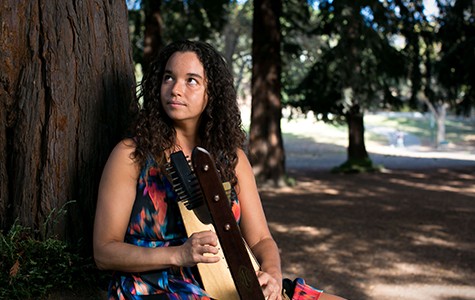
María José Montijo strummed her harp in Dimond Park as tree branches swayed in the breeze. Only a block away from her apartment, the park connects the East Oakland flatlands to vast expanses of redwoods.

This pocket of nature amid the urban sprawl is a refuge and source of inspiration for the singer-songwriter, whose work deals with themes of human connection to the land. On her 2014 EP, Estrellas, as well as the singles on her SoundCloud, Montijo sings in her native Spanish about the healing powers of water, herbal medicine, and love as a universal force.

Throughout Estrellas, her voice shifts between twangy crooning and the throaty timbre of a jazz soloist as she gently plucks her harp. The instrument’s effervescence contrasts with her band’s tense violin chords, minor-key electric guitar licks, and pitter-pattering hand drums. Together, these elements create a novel alchemy of sounds that evoke traditional Caribbean rhythms and experimental folk music alike.

Estrellas EP by María José Montijo

Montijo said her interest in writing lyrics about nature dates back to her childhood in Puerto Rico, where she developed an appreciation for the outdoors at a young age. Though she hasn’t lived there for nearly ten years, she still has strong ties to the island and recently returned from a two-month stay there. She enthusiastically described swimming in the ocean and exploring the rainforest. These outings sparked ideas for a music video she shot there, as well as new tracks that she’s currently working on.

Montijo is a classically trained vocalist who got her start singing in the San Juan Children’s Choir when she was five years old. After high school, she enrolled in the Conservatory of Music of Puerto Rico, but dropped out after two years when she realized that she was more interested in the political singer-songwriters of the nueva canción movement (which emerged from social uprisings across Latin America in the Seventies and Eighties) than in opera.

After the conservatory, Montijo put her music career on pause and became a massage therapist. In the mid-Aughts, she left Puerto Rico to train in Thailand and eventually got a job at a Zen center in upstate New York. She ended up in the East Bay almost by happenstance: In 2007, she joined a co-worker on a trip to Berkeley and decided to stay here permanently.

Montijo’s introduction to the harp was equally serendipitous. When she visited Puerto Rico in 2009, she ran into a friend from the music conservatory who was a lifeguard at the beach. “She was a violinist and she would bring her stuff to play in the lifeguard tower,” Montijo laughed.

Montijo confessed that she was uncertain about the direction she wanted to take with her music. The next day, when she returned to swim, her friend handed her a harp and gave Montijo her first and only lesson.

Upon returning to California, Montijo began writing songs on the harp and collaborating with Dmitri Seals, her current band’s violinist. She also enrolled in the American College of Traditional Chinese Medicine in San Francisco (she graduated earlier this year). While many musicians pursue other occupations as a means of survival, Montijo sees her healing work as interconnected with her music. “I think music heals; music is medicine,” she said. “So I always regarded music in that aspect of how it can be ritualized and help [people] transform.”

For instance, the title track of Estrellas came from a profound experience Montijo had in a biodynamic craniosacral therapy class, which is a practice that purports to relieve tension by manipulating the spinal fluid. “Basically you’re working on being more present in your body so you can hold space for the intelligence of the [other] person’s body to heal,” she explained. “In doing that, you feel this very basic, natural love that is the basis of everything. And that song is about that. It’s not romantic love.”

For her upcoming live shows and releases, Montijo has been exploring the connections between healing practices and the Afro-Puerto Rican musical tradition bomba, a style that incorporates drum circles, chanting, and dance, and has long been a vehicle of Black resistance on the island. Montijo explained that bomba rhythm patterns are at the core of Puerto Rican music and work seamlessly with her own songwriting. But what she finds most compelling is that the bomba tradition provides a space for marginalized people to heal through community building and catharsis — which reflects Montijo’s mission as a musician and healer.

Back to the Future?

Granted, it’s early. But Oakland’s 2016 election season is quietly taking shape and surprisingly loaded with intrigue, including the possible return of ex-Oakland Mayor Jean Quan to vie for Vice Mayor Rebecca Kaplan’s At-Large council seat and a potential challenge to Council President Lynette Gibson McElhaney by former longtime West Oakland Councilmember Nancy Nadel.

In addition, veteran Councilmember Larry Reid may retire next year and there could be a rush to fill his East Oakland’s District Seven seat. Also, former Oakland mayoral candidate Bryan Parker is set to give Alameda County Supervisor Nate Miley his strongest challenger yet, making him the most credible threat to a sitting county supervisor in more than two decades.

Speculation about whether Quan might take on Kaplan in 2016 began almost immediately after the pair finished third and second last year, respectively, in the Oakland mayoral campaign behind Libby Schaaf. A stat often offered by Quan supporters is the 1,100-first-place-vote advantage that Quan had over Kaplan in that race. However, Kaplan ended up in second place after the ranked-choice tabulations, thereby indicating that she has stronger overall support among city voters.

Other 2014 mayoral candidates may also be eyeing a chance to challenge Kaplan. Parker said some community groups urged him to run for the At-Large council seat. And Joe Tuman, who finished fifth in the 2014 mayoral race, may consider a run as well. But Kaplan appears to be taking Quan’s potential challenge the most seriously, sources said. In an interview, Kaplan said she’s focusing on the many challenges facing the city. “It’s not just about her,” Kaplan said of Quan. “It’s about all the work to be done in Oakland.”

For Kaplan, facing a reelection battle against a former colleague with extensive experience is nothing new. In 2012, Kaplan soundly defeated former Councilmember Ignacio De La Fuente for the At-Large seat. “This situation is not particularly shocking given what happened last time and voters are going to have to make a decision on where we are as a city,” said Kaplan. “We have a major housing crisis and someone has to do something about it.”

A close supporter of Quan’s previous campaigns said the former mayor’s interest in the At-Large seat is due in part to a perception that Kaplan is not hardworking. “I think Jean would be happy if this made Rebecca be more productive,” the supporter said, adding that “Jean still thinks she has something to offer city government.” Quan, herself, declined to comment for this report.

Reid, meanwhile, is wondering how much he has left in the tank after five terms on the council. But even Reid acknowledged that speculation about whether he will seek reelection is a time-honored tradition in Oakland politics. “For the last five times I’ve ran, I have always said I wasn’t going to run,” Reid admitted. During his last run in 2012, Reid said he seriously contemplated retirement after two heart surgeries and major back surgery. Although he’s in good health today, he added, “I’m not getting any younger. I’ve worked for this institution for 32 years and I think I deserve to enjoy whatever life I’ve got left on this earth. So, yeah. I’m thinking.”

A major difference this time around is the potential candidacy of Reid’s daughter, Treva Reid, an aide for former Assemblymember Nancy Skinner, who is running for state Senate next year. In February, Treva Reid filed an intention to run for her father’s council seat with the Alameda County Registrar of Voters. “My daughter is ready and she’s smart and she wants to run for the right reasons,” said Reid, “not like others who want to run just to have a title.” Most observers believe Reid’s retirement would trigger several candidates to jump into the race, some who have waited nearly two decades for the seat to open up.

The absence of an incumbent three years ago in Oakland’s District Three is a reason why Gibson McElhaney ran for the council seat left vacant by former office-holder Nadel. In short order, Gibson McElhaney assumed the council presidency and many observers doubted that she would face serious challenge for her seat in 2016. But Nadel is open to the idea of returning to the council, and said her decision depends on whether Gibson McElhaney deals with important issues facing the city.

“I won’t be tempted to run if the issues I hold dear for District Three are a high priority of my representative: sustainable development (economic prosperity, social equity, and environmental enhancement), restorative justice, affordable housing policy requirements, and budgeting, especially for the homeless, and the conditions raised by Black Lives Matter,” Nadel wrote in an email to me. “I am watching carefully how the Army Base coal issue is handled, as well as some real action on affordable housing.”

As Gibson McElhaney was rushing to get into her car, following an Oakland City Council committee meeting last week, she said, “I’ve been so busy working that I don’t even know who else is running.”

The one Oakland-based race that is officially set is a June primary campaign between Alameda County Supervisor Miley and Parker, who finished sixth in last year’s fifteen-person Oakland mayoral election. During the past two decades, many candidates have shied away from the idea of running to unseat a county supervisor, but few have the fundraising ability of Parker, who raised more than $220,000 for last year’s mayoral contest, in addition to $130,000 of his own money. Miley, whose district extends from East Oakland to Pleasanton and includes unincorporated areas, including Castro Valley, said Parker’s fundraising ability makes him credible, but that he also expects to amass his own warchest. “I always expect a challenger, but maybe not Bryan Parker,” he said. “I’m perplexed why he’s running. It’s baffling to me.” Miley, later added, “If he thinks he has the gravitas to beat me, then, by all means, he should try.” Miley said his strategy is to run on his record, which includes balancing huge budget deficits without laying off county employees and his prescription drug disposal ordinance, which passed in 2014. “That was big,” said Miley. “That was national.”
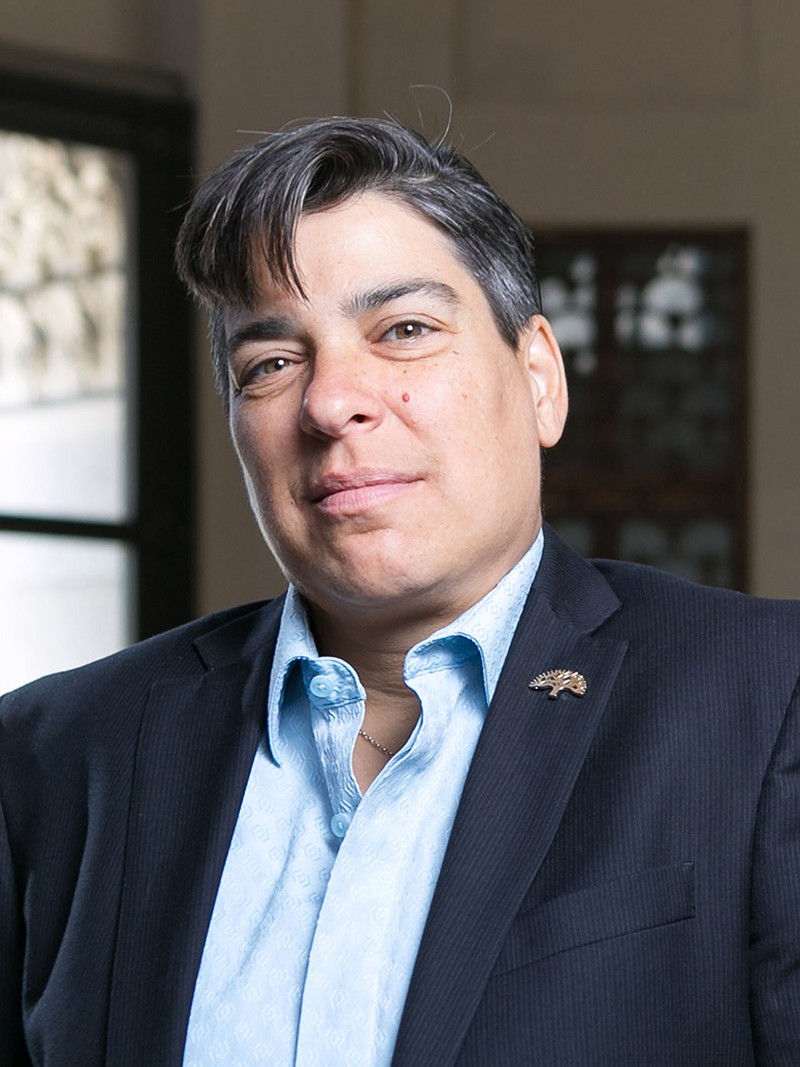
For his part, Parker said voters over the next few months are going to see clear differences between the candidates. “With Supervisor Miley, maybe there’s not as much energy as there once was, and with this campaign, you’re going to get something that is more responsive,” said Parker. “Let’s face it, it’s time for change. He’s been in office 25 years and [the district] still looks the same.”

There are clear signs that Parker is already putting his money to good use. He recently hired political consultant Lisa Tucker, who engineered Congressman Eric Swalwell’s upset of Pete Stark in 2012, and ran the state Senate primary campaign of Bob Wieckowski when he defeated Mary Hayashi last year. When I asked Miley whether the endorsements of Swalwell and Wieckowski could be in play, he expressed confidence in attracting the backing of every major Tri-Valley official. “I would be flabbergasted if he got their endorsement.”

A Tenant’s Horror Story Fit for Halloween

What did you inherit from your ancestors, and what do you wish you hadn’t? Familial questions such as those are at the forefront of Ragged Wing Ensemble’s ghoulish theater production and art exhibit, Through the Wall, now showing through November 7 at The Flight Deck (1540 Broadway, Oakland). The play marks the small theater company’s first foray into its current season’s theme of kinship, while also serving as a haunting Halloween treat. If you’re squeamish, however, you might want to sit this one out: genuine frights abound in this story about a landlord from hell.

The Flight Deck, where Ragged Wing is a resident company, has been turned into a veritable haunted house for the show. Instead of sufficing with a few cotton cobwebs and plastic spiders, the creative directors behind the production commissioned local artists to create gruesome installation artwork that relates to the play’s overarching themes and most intense moments. A bloody bathroom murder scene — complete with faux-blood pouring out of the sink’s working faucets — is installed just inside the quaint building’s double doors. Meanwhile, a narrow hallway leading to the stage is lined with chilling photographs of solemn, unwelcoming faces. The daguerreotype stills are placed on a mirrored backing, so you can see your own reflection through the grainy faces of unhappy men, women, and children. If creepiness is what you crave, you will have gotten you money’s worth before you’ve even had a chance to lay eyes on the sparsely decorated set or find your seat in the theater.

Ragged Wing Ensemble Presents: Through the Wall from Bert Johnson on Vimeo.

The play begins with the demise of a stiletto-wearing clean freak, whose supernatural death leads to the introduction of our heroine, Pearl (played by Puja Dolton). She’s interested in renting the bedroom that the red-shoed woman mysteriously left behind. Somehow, innocent Pearl isn’t bothered by the fact that three other women share the tiny apartment, or that the landlady is a dead ringer for a corpse. Pearl is pregnant, single, and desperate to get away from her unloving family and start life anew. So she rents the room, undeterred by the pounding in the walls (“they’re mice!” the tenants say, unconvincingly), and quickly becomes acquainted with her new roommates. Fittingly, all of them have odd character ticks they’ve inherited from their own dysfunctional families.

Evelyn (Michele Owen) can’t stop brushing her luscious golden locks, Tina (Emmy Pierce) has a ferocious appetite that extends to everyone else’s food, and Agnes (Allison Fenner) is a high-strung workaholic whose obsession with punctuality and job stability routinely backfires. It isn’t immediately clear what Pearl’s problem is, though she tellingly feels no connection to the unborn baby who seems to have stopped growing inside her belly. Could she be as detached as her own parents, or is there more to her freakish nightmares about a red-shoed woman stealing her child?

Before Pearl can investigate, the apartment’s influence causes each of her roommates’ odd habits to morph into soul-sucking compulsions that begin claiming lives. In a series of truly spooky scenes, it becomes clear that the roommates’ personal demons are tied to those of the paranormal variety. Unfortunately, the only way to put a stop to the supernatural shenanigans is to confront the past — but as the women learn, that’s easier said than done when you’ve spent most of your life trying to escape it.

If there’s a lesson to be learned from Through the Wall, it’s probably not an uplifting one: It seems that none of the roommates, despite leading rather innocuous lives, are able to free themselves from the sins of their ancestors.

Though at times the plot feels yanked from traditional, clichéd horror lore, there’s something philosophical within Ragged Wing’s otherwise by-the-book thriller. When the deranged landlady (Lisa Drostova) tells one of her tenants that “one man’s trash is another man’s heritage,” there’s a sense that the play is more intelligent and thoughtful than its forbearers within the same genre. These elevated moments of dialogue — which are occasionally peppered with humor — partly make up for the disposable personalities of the characters, most of whom are defined solely by their nervous ticks well before they’ve descended into full-blown madness.

Still, solid performances from the cast members manage to wrangle the audience into their corner. Plus, in a region saturated with rising rents and eviction woes, it’s cathartic to see one apartment horror story that isn’t rooted in reality.

Nextdoor.com Executives Meet With Oakland Activists, Discuss Efforts to Combat Racial Profiling

Nirav Tolia, co-founder and CEO of the neighborhood social networking site Nextdoor.com, met with a group of Oakland activists today to discuss concerns about racial profiling on the website. As I investigated in a recent cover story, "Racial Profiling Via Nextdoor.com," Nextdoor has evolved into a virtual neighborhood watch in Oakland with members frequently using the Crime and Safety...

Mid-Week Menu: Bay Wolf Space to Be Revived by Wood Tavern Owners, Claremont Diner to Close, and The Dock Adds Prix-Fixe Option

Welcome to the Mid-Week Menu, our roundup of East Bay food news. 1) Big news for those who have been wondering about the future of the former Bay Wolf (3853 Piedmont Ave., Oakland), which closed at the end of August after 40 years of business: Bay Area News Group reports that the owners of Wood Tavern have leased the building...

Wednesday Must Reads: Oakland Raiders’ Owner Continues to Demand Free Land; Uber to Pay Oakland’s $1 Million Affordable Housing Fee

Stories you shouldn’t miss: 1. The Oakland Raiders remain at an impasse with officials from the City of Oakland and Alameda County over a new stadium because team owner Mark Davis continues to demand that he receive free land in the deal, the Chron$ reports. Oakland Councilmember Larry Reid, who is on the Coliseum Authority board, said “there is no way...

Enter the Valley with Shalo P

At first, curator Jasmine Moorhead seemed almost hesitant to leave me with San Francisco artist Shalo P in the small, dark room at the center of her downtown Oakland gallery, Krowswork (480 23rd St., Oakland). The artist and I were cross-legged on the floor, sandwiched by a boombox and a small amp, each of which contributed ambient noise to...

Oakland Struggles to Hold Banks Accountable

In the wake of the financial crisis, cities throughout California attempted to hold banks accountable for their predatory practices. Oakland, for example, tried to leverage its lucrative municipal banking contract to force banks to be more transparent about their impact on the city's communities, especially low-income neighborhoods where toxic subprime mortgages have caused thousands of foreclosures and a sluggish...

Best Served Cold

I am a straight, married, 38-year-old woman. My husband and I have two children. I have been with my husband for twelve years, married for six. Three years after we were married, we found out that he was HIV positive. We had both had multiple tests throughout our relationship because of physicals and the process we went through to...

Secret Staircases to the Past

In your travels through the East Bay, you may have noticed age-worn cement staircases peeking out from between homes and carving shortcuts through our region's many hilly neighborhoods. Some of these staircases date back more than a century. In the aftermath of the 1906 San Francisco earthquake and the catastrophic fires that followed, many residents fled the ravaged city, settling...

María José Montijo’s Healing Songs

María José Montijo strummed her harp in Dimond Park as tree branches swayed in the breeze. Only a block away from her apartment, the park connects the East Oakland flatlands to vast expanses of redwoods. This pocket of nature amid the urban sprawl is a refuge and source of inspiration for the singer-songwriter, whose work deals...

Back to the Future?

Granted, it's early. But Oakland's 2016 election season is quietly taking shape and surprisingly loaded with intrigue, including the possible return of ex-Oakland Mayor Jean Quan to vie for Vice Mayor Rebecca Kaplan's At-Large council seat and a potential challenge to Council President Lynette Gibson McElhaney by former longtime West Oakland Councilmember Nancy Nadel. In addition,...

A Tenant’s Horror Story Fit for Halloween

What did you inherit from your ancestors, and what do you wish you hadn't? Familial questions such as those are at the forefront of Ragged Wing Ensemble's ghoulish theater production and art exhibit, Through the Wall, now showing through November 7 at The Flight Deck (1540 Broadway, Oakland). The play marks the small theater company's first foray into its...
19,045FansLike
17,709FollowersFollow
61,790FollowersFollow