The weekend is officially back by popular demand! Here’s how to celebrate.
A still from First Friday.First Friday’ Documentary Screening
The trailer for the documentary First Friday sets the premise for the film with one succinct yet deeply complex point: “In the same year, Oakland was rated one of the top five destinations in the world and one of the top five most dangerous cities in the country.” That “destination” label famously came from a 2012 New York Times listicle, which was written at a time when Oakland was first drawing national attention for its booming First Friday block party and gallery walk. Now, co-directors N’Jeri Eaton and Mario Furloni are using the monthly festival as a microcosm of Oakland’s long-emerging culture clash and issues of gentrification in their new film. In part, it centers on the fatal shooting of a teenager at the February First Friday in 2013. Although that was over two years ago, the discussions boiling out of this film have only become increasingly relevant with time. First Friday will screen at the New Parkway (474 24th St., Oakland) on November 6, at 8:20 p.m. Afterwards, Eaton and Furloni will discuss the film in a Q&A session. —Sarah Burke
Fri., Nov. 6, 8:20 p.m. and Tue., Nov. 10, 7 p.m. 510-658-7900. $10. TheNewParkway.com.
[jump]
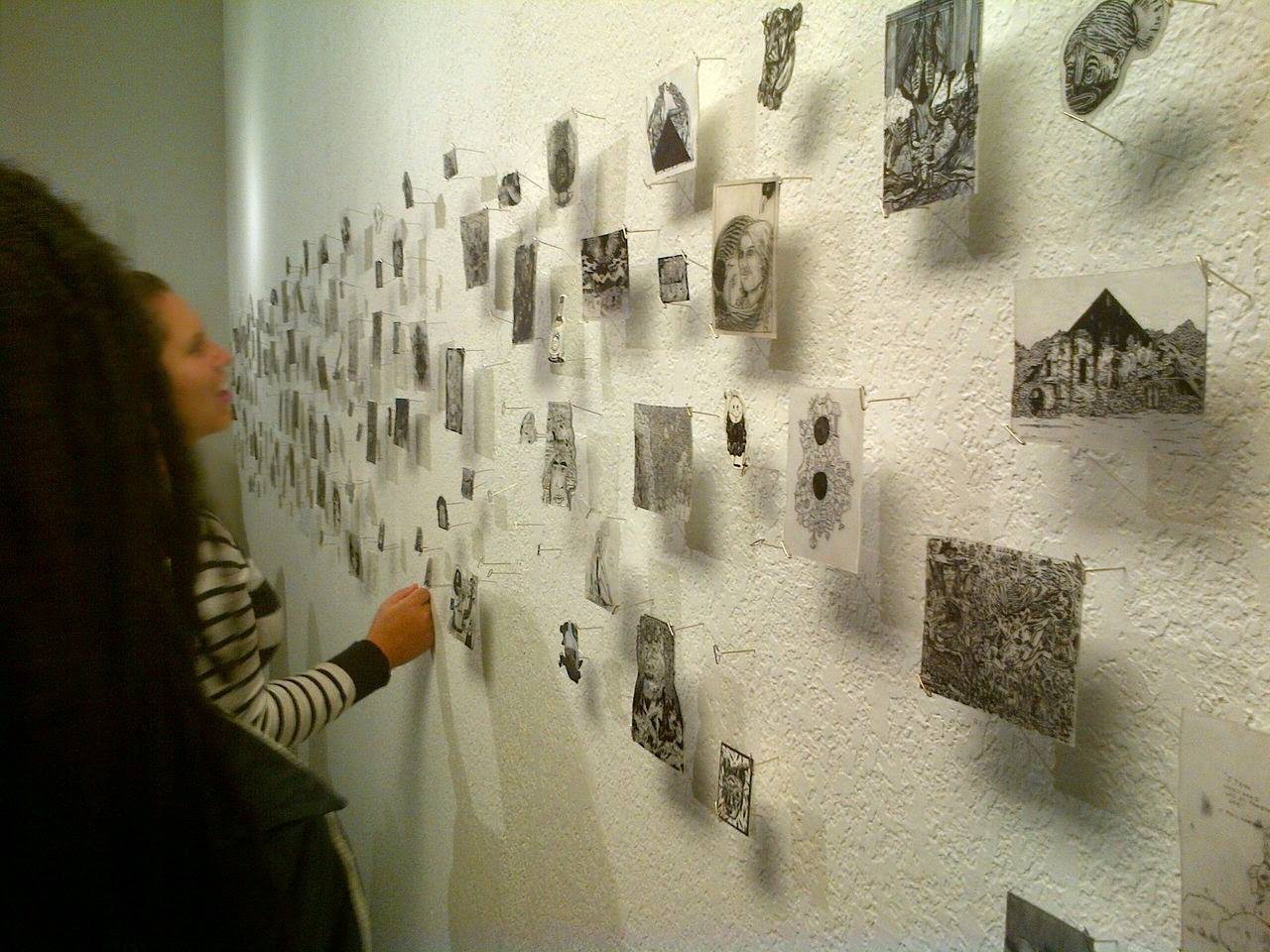
Get Small 2.
Credits: Courtesy Session Space.Get Small: The Third Annual Shrinky Dink Show
In terms of the number of artists on the bill, the annual Get Small show put on by Session Space has consistently been huge. But it terms of artwork, it’s definitely tiny. The premise is simple: Local artists paint masterpieces onto Shrinky Dink paper, then zap them down to miniature size in the oven and cut them out for collecting pleasure. At last year’s show, prices ranged from $3 to $30 and the walls were nearly bare by the end of the evening, as people plucked their favorites off the wall for purchasing. It’s the most fun and affordable way to be an art collector for a night, and the little pieces are unlike others you’ll find elsewhere even from the same artists. Get Small 3 will be held at Turpentine Gallery (557 Forest St., Oakland) on November 7, at 7 p.m. If you’re serious about small art, you’ll get there early. — S. B.
Sat., Nov. 7, 7-11 p.m. 262-302-9035. Free. Facebook.com/TurpentineGallery.
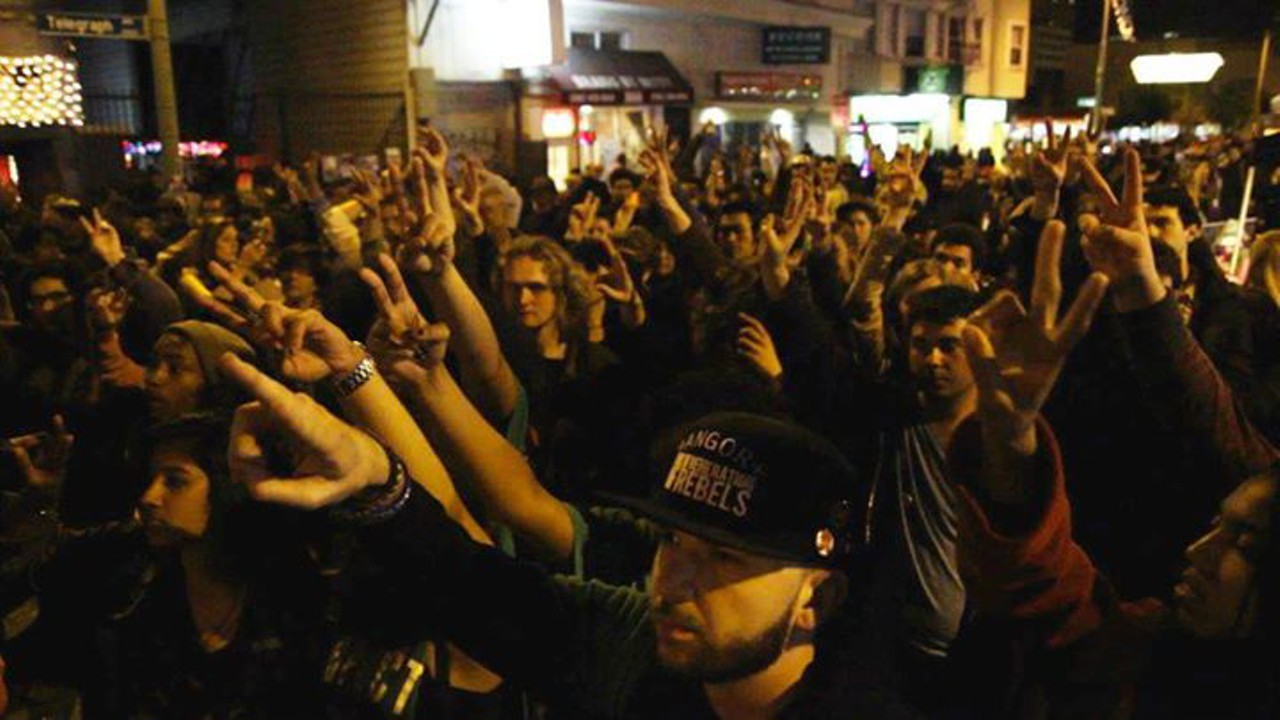
Artists In Response to State Violence and Gentrification The Anastasio ProjectThe creators of The Anastasio Project, which tackled the issue of police and border patrol violence, have brought together a new multidisciplinary showcase of local dance and theater companies to take a broader look at state violence, this time in the context of gentrification. In The Anastasio Project, NAKA Dance Theater combined movement, dance, spoken work, poetry, art installations, video, and original music for a performance that moved seamlessly from indoors to outdoors. The story focused on the experience of Anastasio Hernandez Rojas, an undocumented immigrant who died several days after border patrol agents beat and tasered him; stories from Bay Area residents of police violence; and interviews with members of the Eastside Arts Alliance. For “Artists in Response,” which is showing at the Eastside Culture Center (2277 International Blvd., Oakland) on November 7 and 8, NAKA will bring together dance theater companies from across the Bay, along with poet Marvin K. White and Black Lives Matter organizer Cat Brooks. — Erin Baldassari
Sat., Nov. 7, 8 p.m. and Sun., Nov. 8, 8 p.m. $15. EastSideArtsAlliance.com.
Credits: Femme Deadly VenomsVenus Rising Collective: VRC3
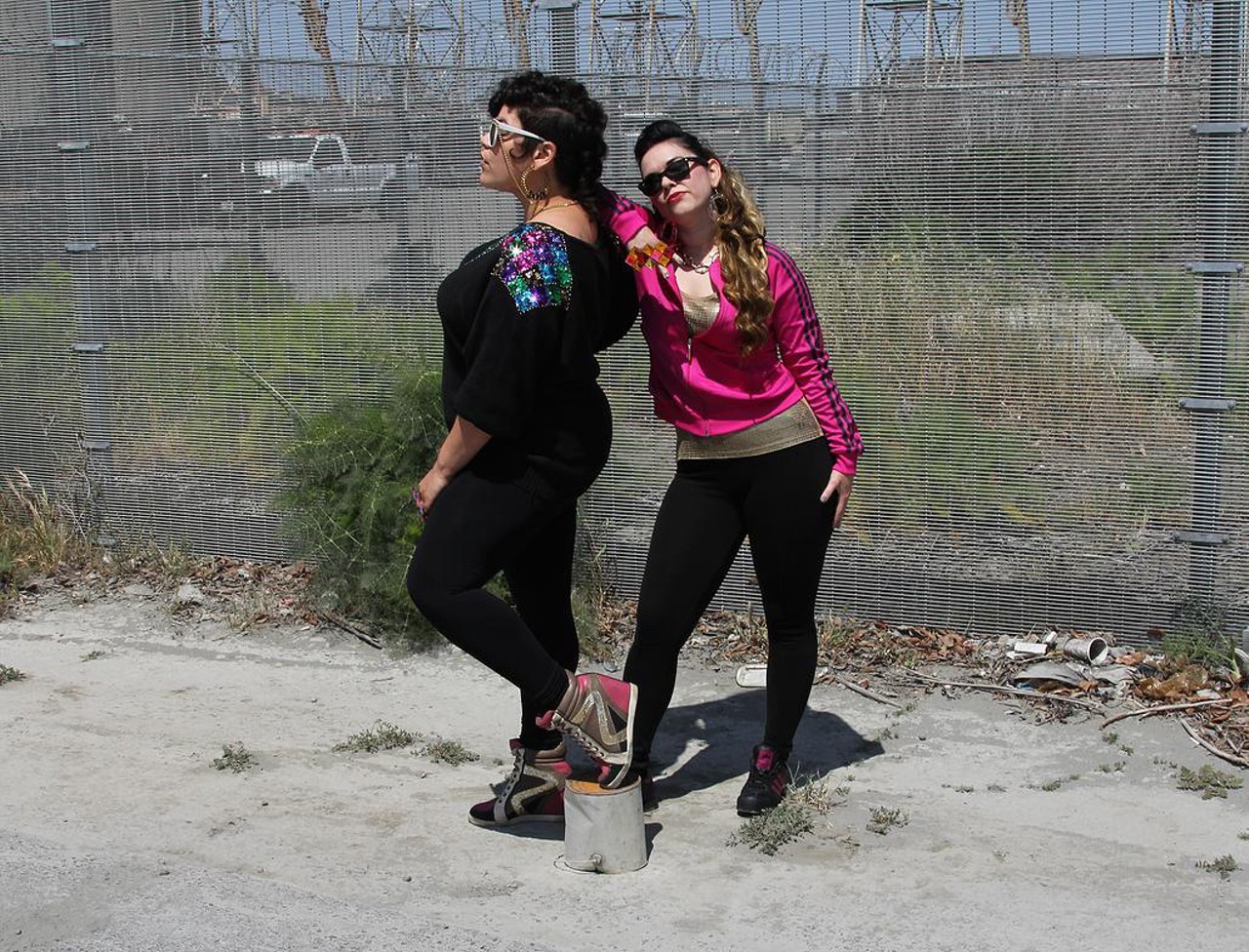
Received messages that this planet is in a soul slumber/Awakening is happening but at too slow a number, rhymes Aima the Dreamer in the eponymous title track of Planet Femme, Femme Deadly Venoms’ latest EP. On Planet Femme, she and producer/singer Lady Fingaz adopt a sci-fi aesthetic to tell stories from the point of view of feminine aliens invading Earth in order to restore a balance of masculine and feminine energies. The project isn’t heavy-handed with this theme, however, and avoids the preachy qualities that some people find off-putting about conscious rap. Instead, it’s rife with cheeky rhymes about partying and seduction — with an emphasis on self-confidence and sexual consent. San Francisco rapper MicahTron, who has long been a fixture of The City’s queer scene, delivers an especially memorable, fired-up verse on the track “Hella Saucy.” While Lady Fingaz’ beats are rooted in old-school hip-hop song structures, she uses glitchy, electronic textures that reference house and drum and bass. Femme Deadly Venoms performs on Saturday, November 7 at VCR3, a showcase of female musical talent that Venus Rising Collective puts on at Legionnaire Saloon. — Nastia Voynovskaya Sat., Nov. 7, 9 p.m. $5, $7. LegionnaireSaloon.com
Afrikatown’s Anti-Gentrification Block Party
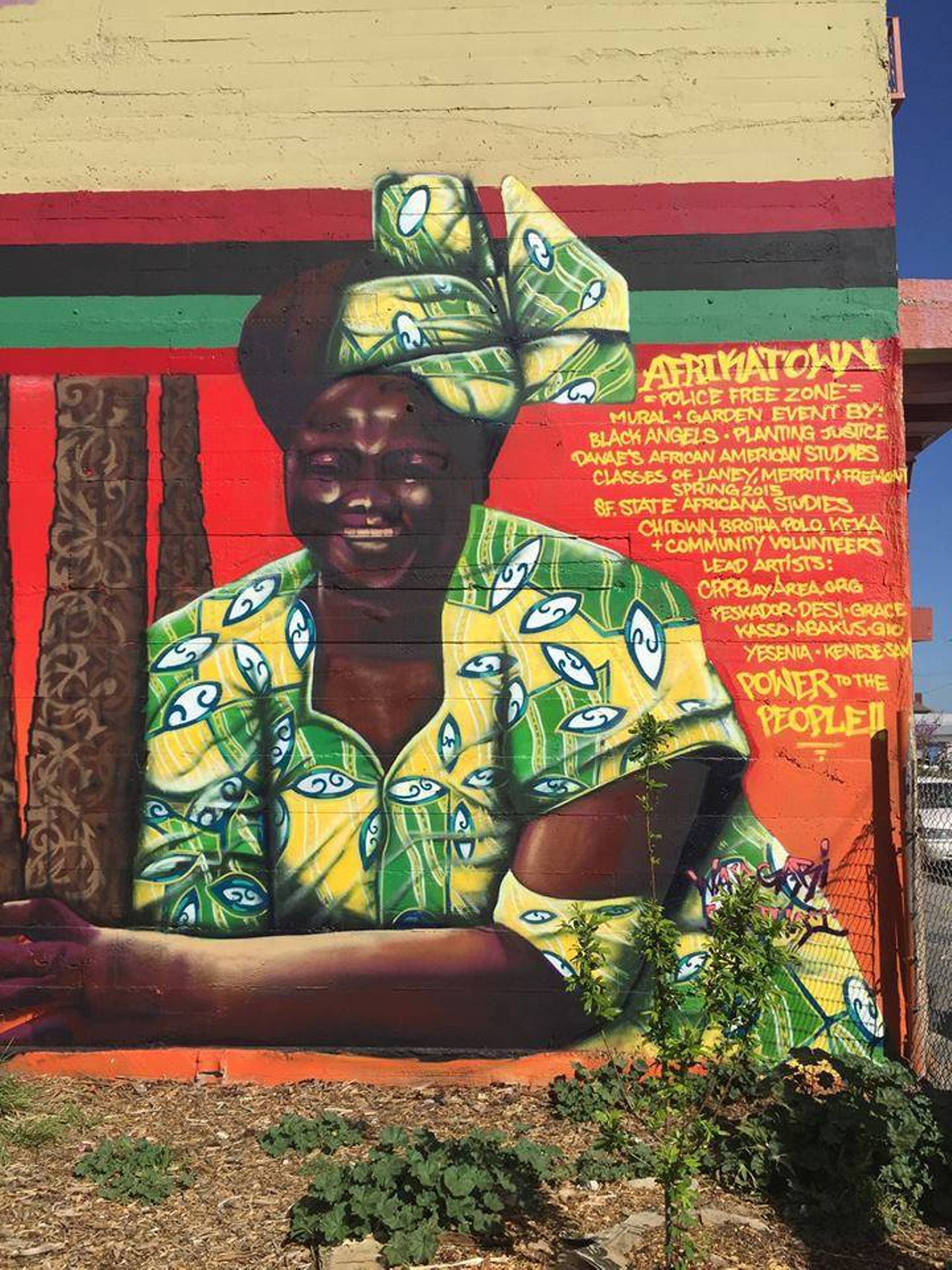
Afrikatown is an urban garden that local organizers set up in a vacant lot earlier this year in an effort to create a community-focused space that prioritizes people of color in rapidly gentrifying West Oakland. In addition to offering free vegetables and community breakfasts, the garden has become a welcoming space for all kinds of folks — including drug addicts and sex workers, who are often marginalized even from organizations that purport to be progressive. When Afrikatown was first established, the lot’s owner declared that he wanted to sell the parcel to developers. However, after a widely attended day of protest, organizers declared victory and said that they had no intention of leaving, although the garden’s legal status still hangs in limbo. To rally support for the garden, on Sunday, November 8, Afrikatown is throwing an Anti-Gentrification Block Party that will include food, speakers, a new mural, and a lineup of musical guests that include R&B singer Ka’Ra, rapper Nancy, DJs Destiny and Jose Arias, and more. — N. V. Sun., Nov. 8, 1-7 p.m. free. Qilombo.org.
If your pockets are feelin’ light and you’re still yearning for more suggestions, we’ve got a ton, and these ones are all FREE!We’re Hungry: Got any East Bay news, events, video, or miscellany we should know about? Feed us at Sa*********@************ss.com.
Blood from the man thrown to the ground by Alameda police in City Hall.
Credits: Steven Tavares
About thirty minutes before the start of the scheduled 6 p.m. special meeting on rent increases in Alameda on Wednesday, John Klein, a prominent member of the Alameda Renters Coalition, stood just outside the city council chambers looking a bit concerned. Inside, most of the 150 or more seats in the chamber had been taken by people he assumed were landlords instructed to arrive early in order to relegate renters to viewing areas downstairs and across the street at the public library. In fact, the early showing of visitors was notable, especially for an earlier than normal, mid-week meeting. Later, when the first few batches of public speakers all described themselves as landlords, it became increasingly clear that Klein’s assumption that it was the landlord’s strategy to pack the council chambers was correct. The pre-meeting move by landlords to squeeze out renters set the tone for a night that eventually featured the highly unusual sight in Alameda of demonstrating activists demanding entrance to City Hall and the arrest of Klein and another renters’ advocate, who was violently thrown to the ground by an Alameda police officer.
A photo I took of the blood-smeared floor instantly enraged people on social media. Police claim that the man they slammed to floor had assaulted an officer, but it was unclear whether that true. I witnessed the incident first-hand, standing just feet away from where the man — who looked like he was in his sixties — was roughly subdued by the officer and then handcuffed. The man was also later charged with resisting arrest.
[jump]
What led to the conflict was a desire by the Alameda Renters Coalition, a relatively new, but increasingly effective grassroots organization on the island, to enter the council chambers. The coalition was initially formed as a way for Alameda renters to vent and be consoled by others about exorbitant rent increases on the island. In recent months, the group has taken a far more aggressive political advocacy position, and in many ways, has succeeded in grabbing the attention of the city council, which has spent most of the past year doing relatively little to help renters despite a litany of horror stories of 50 percent rent increases and abrupt 60-day eviction notices. Most observers credit the coalition with applying the political pressure that led to the 65-day moratorium on rent increases and evictions approved by the council early Thursday.
But after more than ninety minutes of testimony Wednesday evening dominated by landlords, the coalition’s leaders decided to change course. Many who held signs that read, “I’m a renter and I vote” and “Rent Control Now” began to gather in the narrow hallway leading to the council chambers. They began rhythmically chanting, “Moratorium now!” and “Let us speak!” Some then began pounding their fists on a table and pillars.
Alameda Public Works Director Bob Haun had spent most of the evening regulating how many people were allowed in the chambers, according to the fire code. As the growing throng began to show an intention to enter the chambers, Haun could be seen on video blocking the entrance. Witnesses from inside told me they were unclear how Haun later fell to the ground. The incident caused the mayor to briefly halt the council meeting. Other video shows Haun possibly pushing the renter — who would later be injured by police — to the floor. However, it’s unclear whether the prone renter took Haun’s legs from under him or whether the city employee merely slipped. A photo later showed Haun slumped against the door, his thumb bloodied. A city councilmember later told me Haun had broken his hip in the fall.
The Alameda renter who was pinned to the floor by police appeared to be in his sixties.
Credits: Steven Tavares
From my vantage point, it became evident that the lone officer at the chamber’s door had called for additional police following Haun’s fall. Moments later, two officers calmly climbed the stairs behind me and made their way through the crowd. The renter who had previously fallen to the ground had melted back into the crowd, but as the two additional cops passed him, he began to loudly scream at one officer, “Why! Why! Why!” After a pause, one of the officers grabbed the renter and pushed him through the crowd, but the renter did not immediately submit. In the scuffle, police pushed the renter against a row of older women before throwing him to the ground. It appeared that the renter’s nose was bleeding, because blood had smeared across the entire left side of his face. Some witnesses told me they believed the renter had a gash above one of his eyes. At least two young children witnessed the incident, including a young boy who stood next to me with his mother. He stared confusingly at the man whimpering on the floor with police on top of him. His mother, equally distraught, momentarily forgot to shield the boy from the violence before walking him away.
Once handcuffed and brought to his feet, the renter was escorted by police down two flights of stairs to the police station next door. The smeared blood was mopped up, but drops of blood remained on the stairs for much of the night.
Legalization activists voted for continued cannabis prohibition in Ohio Tuesday, and many will likely do so in California in 2016.
California is having a roaring debate about what it means to legalize cannabis, and the disagreements threaten any potential campaign in 2016. On Monday, a noted doctor and environmentalist filed a new initiative to legalize cannabis in California. Many reports indicate it has the backing of tech billionaire Sean Parker, plus the support of the Marijuana Policy Project and Drug Policy Alliance, the California Cannabis Industry Association, and other groups. We haven’t heard a peep from anti-legalization conservatives about it. But from Oakland to Lake Tahoe to Santa Cruz, pro-legalization activists are divided while calling for unity.
Harborside Health Center founder Stephen DeAngelo immediately voiced his non-vote for the Parker-backed “Control, Regulate, and Tax Adult Use of Marijuana Act.” DeAngelo called for unity while saying he supported a different initiative filed Tuesday by Sacramento attorney George Mull, the Cannabis Control and Taxation Act.
[jump]
“If the initiative filed today by proponents associated with Sean Parker were the only cannabis reform initiative on the ballot, I would vote for it. However, I think California can do better — and the language also filed today by longtime activist and cannabis attorney George Mull is closer to the mark. It is much shorter and easily understood, firmly closes the door to Big Tobacco and Big Alcohol, and mandates more appropriate penalties for cannabis infractions,” DeAngelo said. “I continue to believe our best strategy for victory in November is bringing the entire cannabis community together behind one initiative, and call on all initiative proponents to work towards that goal.”
However, it’s not clear whether Mull has the financial resources needed to run a successful campaign. The initiative didn’t even include a press release.
Also, the legalization coalition building since California’s failed Prop 19 — ReformCA — sent an email to its reported 80,000-person-strong list touting its own initiative, filed on October 2, but subject to revision.
“Our proposition has been vetted, and received most favorable comments by key elected officials, policy experts, journalists, and campaign strategists nationwide,” ReformCA stated. “We are continuing to work diligently towards unity in this movement, while ensuring that the final measure promotes social justice, compassionate patient care, education, environmental protection, and community restoration.”
The International Business Times now counts ten legalization proposals filed with the State of California.
And Sean Parker has finally spoken up, saying in a statement posted by SF Weekly earlier this week:
“I’ve been following this issue with great interest for some time,’ the Parker statement reads. “It’s very encouraging to see a vibrant community of activists, many of whom have dedicated their lives to this issue, coming together around a sensible reform based measure that protects children, gives law enforcement additional resources, and establishes a strong regulatory framework for responsible adult use of marijuana—one that will yield economic benefits for all Californians. I’m cautiously optimistic that a coalition is forming around these shared goals.”
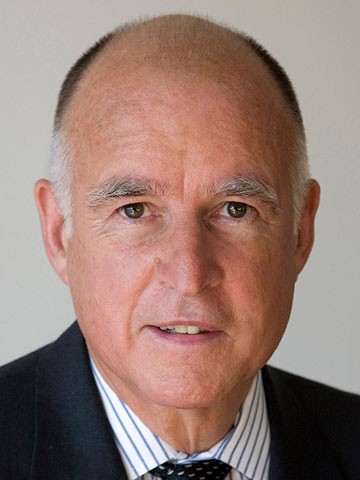
Jerry Brown.
1. Jerry Brown instructed state regulators in his administration to explore whether it was possible to drill for oil on his family’s ranch in Northern California, the Associated Press reports. The governor’s actions, which took place last year, raise questions as to whether he violated California laws that prohibit public officials from directing staffers to do personal work for them. The governor’s interest in drilling oil on his own property also runs counter to his well-crafted image as a leader in the fight against climate change. State regulators claimed that the extensive oil and mineral reserves analysis that they conducted on Brown’s property in West Colusa County was not unusual and that they also have done it for private citizens. But oil and gas experts said they’ve never heard of such work being completed for private property owners in the state.
2. An Alameda renter was bloodied after he was tackled by police and pinned to the floor at City Hall last night, and was one of two tenant activists arrested by cops, East Bay Citizen reports. The tenants were on hand to advocate for rent control and a moratorium on rent hikes in the city — which the city council approved later in the evening. Landlords had packed City Hall early to keep renters out. The rent moratorium bans rent increases of more than 8 percent for 65 days, the Bay Area News Group$ reports.
3. State officials postponed this year’s Dungeness crab season for 180 days — or until tests show that the shellfish are no longer tainted with a potentially deadly neurotoxin, the Bay Area News Group$ reports. The toxin, domoic acid, is being produced by a massive algae bloom along the West Coast, which is likely caused by extraordinarily warm ocean waters. The year’s rock crab season was canceled because of the domoic acid outbreak.
[jump]
4. CSU faculty members — including those at CSU East Bay — voted overwhelmingly to go on strike next spring if they’re still in a contract impasse over wages with the administration, the Bay Area News Group$ reports. A strike would be the first of its kind in the 23-campus system.
Via Facebook.
Welcome to the Mid-Week Menu, our roundup of East Bay food news.
1) A year ago, What the Fork reported on a new venture that promised to empower young women in East Oakland and West Oakland by teaching them entrepreneurial and leadership skills — all through the medium of a pop-up business selling doughnuts and coffee. Now, Mamacitas Cafe has taken a big step forward: It now has a brick-and-mortar cafe that’s open for business in downtown Oakland at 1714 Franklin Street, Berkeleyside Nosh reports. Go snag one of the cafe’s signature doughnut “kebabs,” a cup of Red Bay coffee, or one of a handful of new savory items, including a few different polenta dishes.
[jump]
2) Bad news for crab lovers: The Chronicle reports that the California Department of Public Health is warning people to not eat crabs caught off the California coast until further notice, and it looks likely that the commercial Dungeness crab season will be postponed — and possibly even canceled altogether. The recreational season has already been postponed 180 days (or until the crabs are deemed non-toxic) after a California Fish and Game Commission vote this morning, the Bay Area News Group reports. The health warning is a response unsafe levels of domoic acid found in crabs due to a toxic algae bloom.
3) Last month I reported that Merritt Bakery’s Kwik-Way location likely wouldn’t be long for this world. Now, according to the Splash Pad monthly newsletter, it appears that the owners of the building are negotiating with Dunkin Donuts and Baskin Robbins about a joint venture in that location — an outcome that would surely disappoint neighborhood activists who campaigned to keep McDonald’s out a few years back. For now, it looks like nothing is settled, and co-owner Charles Hahn has said that the original plan — to build a mixed-use housing project at that spot — is still on the table. Hat tip to Twitter user @tim_mulshine.
4) Inside Scoop reports that Farm League — the restaurant design and management group behind such projects as Tigerlily, Westbrae Biergarten, and Drake’s Dealership — is planning a new restaurant and beer garden near the MacArthur BART Station, at the intersection of 40th Street and MLK Jr. Way. The restaurant, Arthur Mac’s Tap & Snack, will be part of a larger Hive/Impact HUB-like complex.
One of Mudita Ramen’s vegetarian ramen bowls (via Facebook).
5) Mudita Ramen, a new ramen pop-up, will be coming to Laurel district restaurant Communite Table every second Sunday of the month, starting this Sunday, November 8, 5–9 p.m., East Bay Dish reports. Each of the three ramen dishes on offer will be vegetarian — and can be made vegan by request.
6) La Marcha (2026 San Pablo Ave., Berkeley), the Spanish tapas restaurant from the owners of the Ñora Spanish Cuisine mobile catering business, is now open for business, Inside Scoop reports.
7) Former New York Times food writer and recent Berkeley transplant Mark Bittman has finally announced the new gig(s) he hinted at in his farewell column earlier this fall. Berkeleyside Nosh reports that Bittman is now the “chief innovation officer” and recipe developer for The Purple Carrot, a Boston-based vegan meal kit delivery company that has just started West Coast deliveries. And he has also joined the board of Josephine, an Oakland-based startup that allows home cooks to sell meals out of their own kitchens.
8) Inside Scoop reports that Parlour, the Uptown Oakland woodfire pizza/whole-animal restaurant, has a new chef: Anthony Robert Roark. (I reviewed Parlour back in May and enjoyed several of the whole-animal dishes, if not the high prices — though it appears the prices have been lowered a bit since then.)
9) Berkeleyside Nosh reports on a juicy lawsuit involving a high-end Berkeley wine store and several million dollars’ worth of undelivered wine futures.
10) ICYMI, I wrote about a new “decolonial” Mexican cookbook by two Bay Area professors who advocate a return to the traditional (and vegetarian) foods of their ancestors.
Got tips or suggestions? Email me at Luke (dot) Tsai (at) EastBayExpress (dot) com. Otherwise, keep in touch by following me on Twitter @theluketsai, or simply by posting a comment. I’ll read ‘em all.
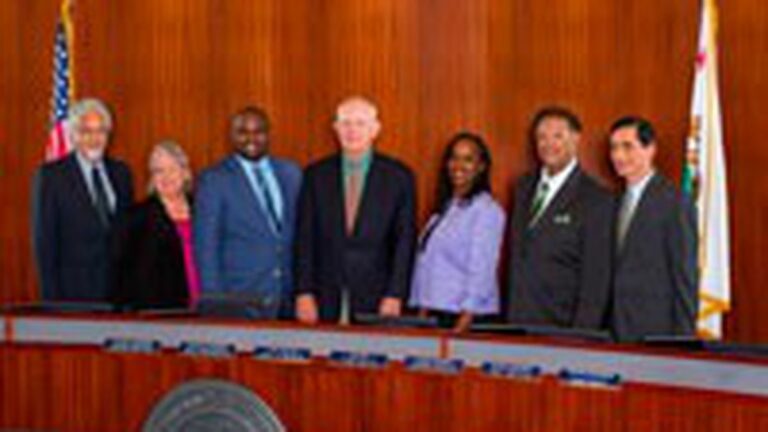
Richmond City Council.
Credits: City of Richmond.
The Richmond City Council voted unanimously to repeal rent control Tuesday evening after landlord groups mounted a successful referendum petition to block the policy. In August, the Richmond council had become the first in the state in roughly three decades to approve a rent control program.
Advocates of rent control — despite months of debate, rallies, and door-to-door campaigning earlier this year — decided that it was better to repeal the measure, than let the referendum go to the ballot. That way, they can propose a stronger rent control ballot measure on their own terms, said Councilmember Eduardo Martinez. Martinez is a member of the Richmond Progressive Alliance (RPA), which fought hard, along with a number of other organizations, to pass the initiative.
[jump]
“Number one, the ordinance was flawed, but we felt it was important to pass it immediately [in August] so that the protections would go into effect immediately,” Martinez said of the initial ordinance. “When the real estate people forced it on the ballot, that means that it wouldn’t be voted on until November, and it would have been a year in which the people who own rental property would have been frightened into being reactionary in terms of their policies towards renters.”
Martinez said advocates of rent control want to take time to draft a stronger policy and launch a new door-to-door campaign to put a measure on the November 2016 ballot.
In September, the city’s new rent control program was effectively suspended a day before it was due to go into effect after the California Apartment Association (CAA) submitted some 7,000 signatures to repeal the policy. The council’s rush to pass rent control ultimately led to the policy’s demise, the association’s CEO Tom Bannon said in a statement. “CAA quickly launched the referendum push so that the city and community would have more time to examine the long-term impacts and unintended consequences that rent control brings,” Bannon said.
The referendum left the council three options: repeal the ordinance, allow it to go to a special election, or put it on the ballot during the next municipal election in November. But because the referendum was successful, any new effort to institute rent control must also go through the ballot, Martinez said.
“Because we’ve already done an ordinance, and we’ve repealed it, we can’t do another ordinance,” Martinez explained. “It gives us more time to create a better ordinance that we can put on the ballot.”
Mayor Tom Butt said in his email newsletter that the mood of the council’s meeting Tuesday night was uncannily quiet, considering the fact that the issue had been hotly debated for months earlier this year. “It was eerie to see the year’s hottest and most divisive local political issue die virtually alone with only two public speakers, no speeches from City Council members, no rallies, no T-shirts, no demonstrations, and no fanfare,” Butt wrote.
Advocates of rent control will have until spring to draft a new ordinance and gather the requisite signatures to place the measure on the November ballot. David Sharples, an organizer with the Alliance of Californians for Community Empowerment, said pro-rent control groups were now assessing their options.
“We’re confident that rent control will pass on the ballot,” Sharples said, citing evidence from voting patterns for Prop 98, a 2008 initiative to repeal rent control statewide. “Tenant protections are popular in Richmond and will ultimately prevail. We understand we will be up against landlords’ big money but folks will mobilize the grassroots to get this [initiative] passed.”
A rally to raise Oakland’s minimum wage in 2014.
Credits: Darwin BondGraham
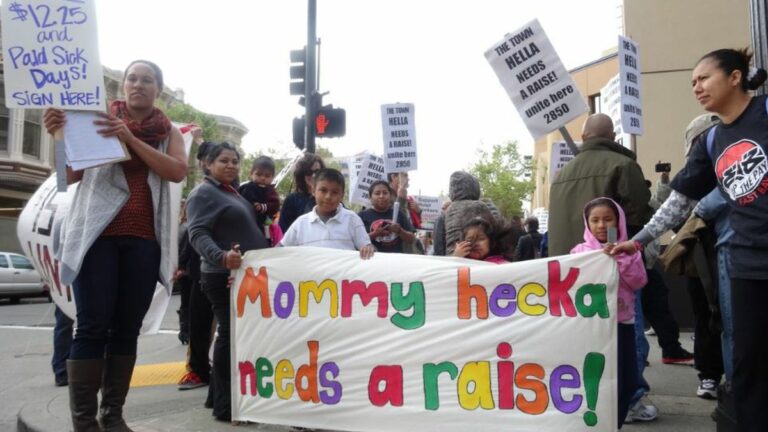
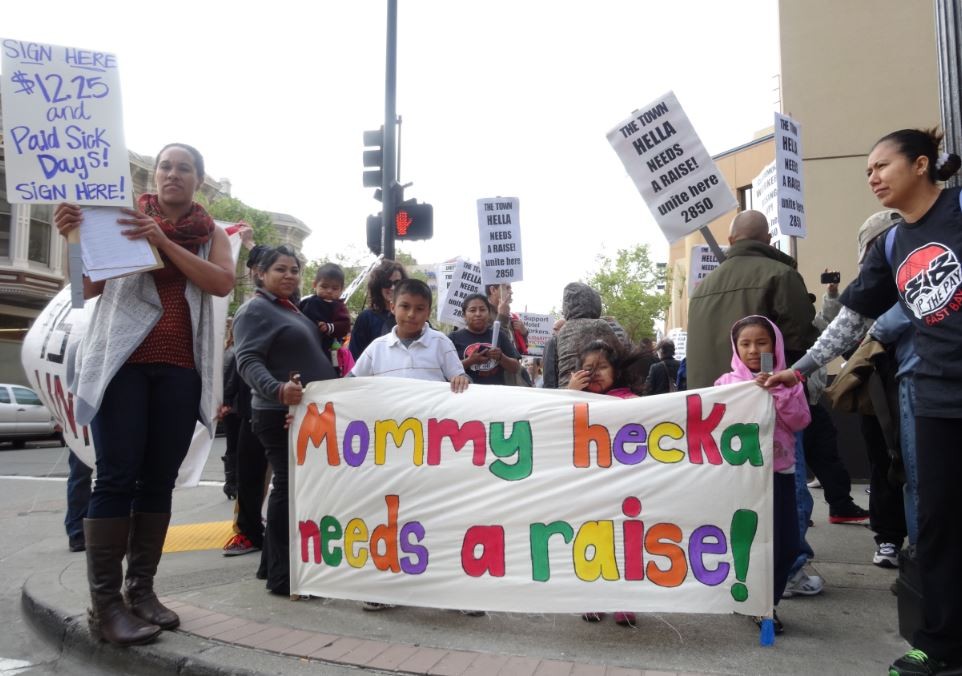
A coalition of low-wage workers and the Service Employees International Union of California filed a ballot proposition yesterday with the California Attorney General that would raise the statewide minimum wage to $15 by 2020, and adjust it upward each year thereafter at the rate of inflation. It would also mandate that employers provide workers with a minimum of six paid sick days per year.
Backers of the initiative said they will begin gathering signatures to put it on the ballot starting in January 2016. If they succeed in gathering the 365,880 necessary signatures, voters could decide on the proposal in the November 2016 presidential election.
[jump]
The initiative grew out of the Fight for $15 movement which began three years ago in New York City when low wage workers, especially fast food employees, began agitating for better pay and working conditions.
One signatory of the ballot initiative is Shonda Roberts, an employee at the KFC/Pizza Hut located at 2800 Telegraph Avenue in Oakland. Roberts has been a leader among fast food and low-wage workers in the East Bay, helping to organize several local minimum wage campaigns, including Measure FF, which raised the City of Oakland’s minimum wage to $12.25 an hour in March of this year.
“We believe that we will win,” said Roxanne Sanchez, President of SEIU Local 1021 in a press release. SEIU 1021 represents many public and non-profit employees in the Bay Area, and the union local has provided support to fast food workers organizing in the East Bay. “The people understand that it’s time for a $15 wage in California,” said Sanchez.
The existing state minimum wage is $9 an hour. It will increase to $10 on January 1, 2016, but the state legislature currently has no plans to increase the minimum wage beyond this level. Nor is the state minimum wage tied to inflation.
One possible problem that could confuse voters is a competing ballot measure, the Fair Wage Act of 2016, which is being supported by the union local SEIU-UHW. This initiative would also raise the minimum wage to $15, but only by the year 2021. The UHW ballot initiative does not include sick days.
Dungeness crab.
Credits: Bert Johnson/File photo
1. California health officials said people should not eat Dungeness crab and rock crab because the shellfish are tainted with a potentially fatal toxin, the Chron reports. The toxin — domoic acid — is being produced by a massive algae bloom along the West Coast, likely caused by extremely warm ocean waters. The toxic outbreak threatens this year’s Dungeness crab season and almost certainly will delay it. It’s supposed to start on Saturday. Domoic acid, in small amounts, causes vomiting, diarrhea, abdominal cramps and headaches. Severe poisoning can lead to permanent short-term memory loss, coma, seizures, and even death. The rock crab season has been closed for the year.
2. Airbnb cruised to victory yesterday in San Francisco’s elections, after the company spent more than $8 million to defeat a measure that sought to tighten the city’s restrictions on short-term housing rentals. The Chron reports that Measure F, which would have reduced the maximum length of stay in rentals per year from 90 days to 75 days and allowed neighbors to sue each other, lost 55 percent to 45 percent.
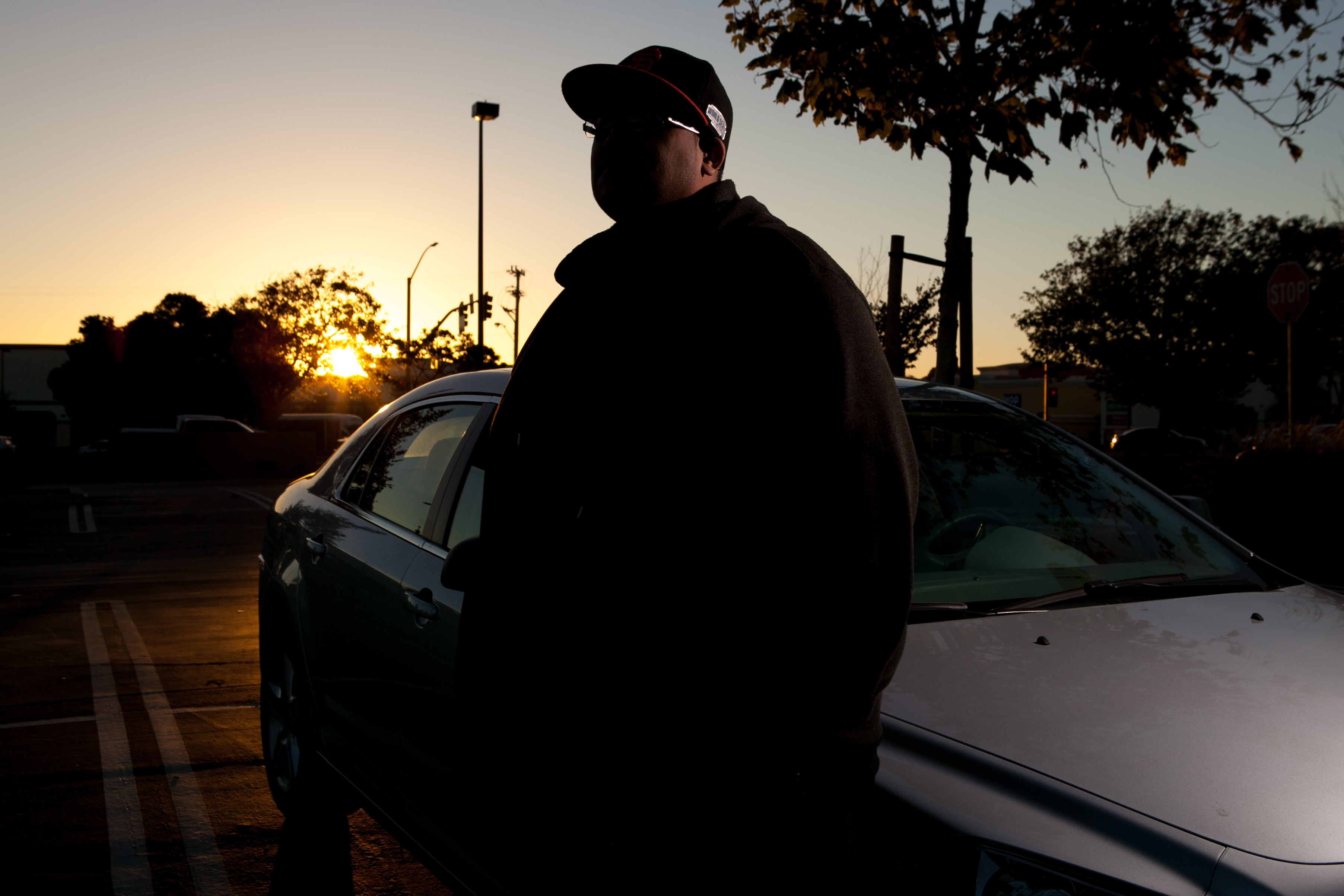
Mario lives in Pinole but usually starts his workday in Emeryville, where he hopes to pick up a commuter headed across the Bay Bridge into San Francisco. Once he gets to the Peninsula, with or without a passenger, he often drives to San Francisco International Airport, where he knows he can eventually find some business. The rest of the day is a toss-up: He might drive someone to San Jose, shuttle between the airport and Millbrae, or end up back in the East Bay, where he often gravitates toward Oakland International in search of passengers. An affable 27-year-old son of Nicaraguan immigrants, Mario started driving for Uber about a year ago after he moved back home to take care of his father, who was diagnosed with colon cancer. “I didn’t second-guess it,” he said of his decision to return home. “I knew everyone needed to be with each other.”
At first, being an Uber driver served Mario well: It provided him with the flexibility to take his dad to chemotherapy and radiation treatments five days a week while his mom was working as a house cleaner and a nanny. Mario also said that after paying for his driving expenses, he uses some of his leftover income from Uber to help pay for groceries for the family and dinners out for his mom.
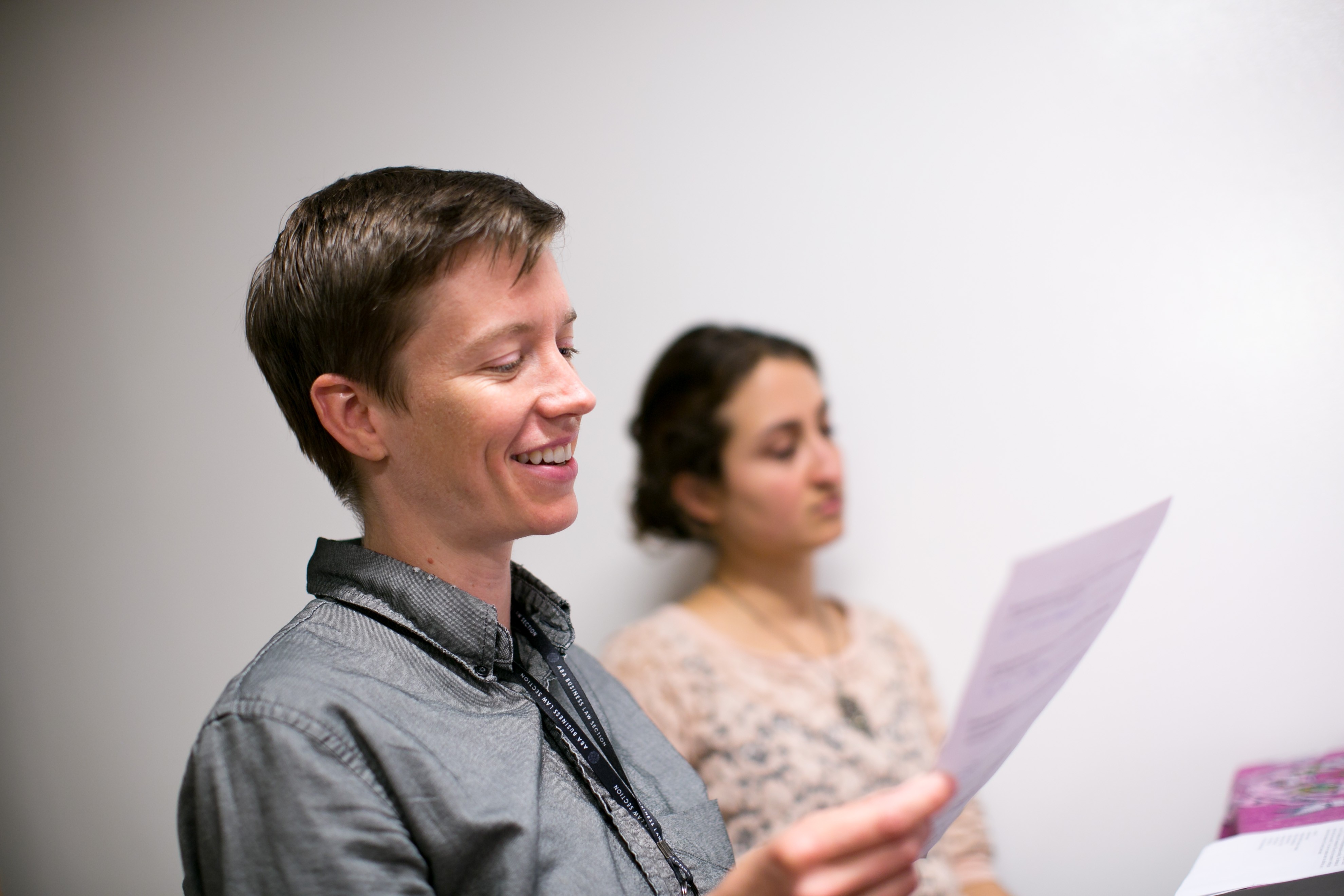
Joshua Danielson is launching Loconomics, a business that’s part sharing economy and part cooperative.
Credits: Bert Johnson
Mario said he likes driving for a living but wished the company he worked for didn’t act like a “bully.”
Credits: Bert Johnson
Mario is one of about 20,000 Bay Area residents who now drive for Uber, and his job is an example of what has been hailed as an innovation of employment. In the so-called “sharing economy,” work is flexible and mostly autonomous and allows anyone to use his or her assets for a little extra cash with low barriers to entry. Sharing economy companies advertise their platforms, like the Uber app, as not only being convenient for consumers but also ideal for “users,” meaning the people who earn money through them.
Uber promotes its service as a liberating alternative to taxi driving, its traditional economy counterpart. The company claims that 73 percent of its drivers would rather have a job in which you “choose your own schedule and are your own boss” than a 9-to-5, salaried job with benefits. In 2014, the Uber news blog quoted an Uber driver and former taxi driver from Denver who proclaimed, “I feel emancipated.”
But over the past year, Mario’s job satisfaction has declined, along with his income and the number of customers he has each day. He thinks the Bay Area market has become saturated with Uber drivers. As it gets harder to find passengers at any given time, he spends more time driving or sitting outside an airport with his app turned on, waiting for a “ping.”
Mario is also acutely aware that his pay could erode further or disappear completely without notice. Every so often, he receives a curt notice from Uber about the company lowering rates in his area, which directly lowers his income. Mario also has driver friends whose accounts have been abruptly deactivated because of a low customer rating — even if that customer happened to be drunk or having a bad day when grading the driver. Although driving for Uber provides some helpful income right now, Mario said he hopes he can find a new job soon. “There’s no security,” he explained, “because it’s not something you get paid hourly for.” (The precarious nature of working for Uber is also why the Express has agreed to requests by Uber drivers that we only use their first names in this report.)
In many ways, Arizmendi bakery and other cooperatives are the polar opposite of Uber.
Credits: Photo by Bert Johnson
The recent announcement by Uber that it will expand its global headquarters to the old Sears building in Uptown Oakland has been accompanied by a heightened interest in the company and its business practices, as well as those of other companies in the sharing economy. Many local political and business leaders have hailed the arrival of Uber as a sign of the city’s long-sought revitalization. But from the perspective of critics and labor activists, the term “sharing economy” is grossly misleading, because companies like Uber are just offering a new form of unstable, unregulated employment — and there isn’t much actual sharing going on.
The word “sharing,” of course, connotes generosity and fairness — of equal access to something. It appeals to more than just convenience and immediate gratification — to a type of transaction that ideally might be more sociable and less wasteful than the regular economy. The idea of sharing is also attractive because it seems to address real problems in the current economy: unemployment and underemployment, the insufficiency of the minimum wage, consumer waste and environmental impact, and even social alienation.
But critics say that, in reality, Uber does little to address these issues. Moreover, as politicians and business leaders have celebrated the arrival of Uber, they’ve overlooked the local organizations and cooperatives that have been engaged in actual sharing for years. In fact, Oakland and the East Bay have long been home to innovative businesses that have established equitable structures and share risk, decision-making, ownership, and profit.
These small cooperatives and socially minded businesses, including Arizmendi Bakery and the Missing Link Bicycle Cooperative, have not generally been recognized as part of the new “sharing economy.” In fact, in many ways, they’re the polar opposite of Uber.
They make up what some advocates call “the true sharing economy.”
The term “sharing economy” came into common usage among journalists and publicists in the mid 2000s to describe a class of technological platforms that allowed people to consume collaboratively. The idea was popularized among a young, budget-traveling set with CouchSurfing, a website that facilitated a free exchange of hospitality. “Sharing” referred to the use of personal assets in this exchange: a user allowed a stranger to sleep on his or her couch simply because of a shared belonging to CouchSurfing, which is often referred to as a community. This free, communal exchange continues to thrive through platforms like FreeCycle, or even Craigslist, among others.
This type of exchange was then monetized by companies like Zipcar, which rents out a fleet of cars through its website. Zipcar customers share the same cars, so fewer cars need to be owned and their usage is maximized throughout the day. But this monetization also meant that sharing became essentially indistinguishable from renting. In its most prominent current forms, such as Uber, Airbnb, and Task Rabbit, anyone can buy and sell unused resources, like a seat in a car, a room in an apartment, or time in a day. In 2013, The Economist neatly summarized this phenomenon as “people renting things from each other.”
Uber stands out as both the most successful and the most controversial player in the sharing economy. Though many sharing economy companies have attempted to “disrupt” major traditional industries (Uber and others in transportation, Airbnb in hotels, and Kickstarter in funding and loans), Uber has become the generic shorthand for any technological platform that facilitates instant and easy buying, selling, or renting of services between people. The past few years have seen the arrival of an “Uber for groceries” (InstaCart), an “Uber for medical marijuana” (Eaze), and an “Uber for women’s haircuts” (Glamsquad), among many others. At $51 billion, Uber has by far the highest valuation of any venture capital-backed startup company. (The second highest is Xiaomi, a Chinese tech company, and the third is Airbnb, another sharing economy company, at $25.5 billion.)
Uber and other sharing economy companies have grown rapidly because of real, obvious shortcomings in traditional forms of work. Currently, a full-time worker making the California minimum wage of $9 an hour will make roughly $18,700 annually. That’s significantly below the estimated living wage in Alameda and Contra Costa counties: $13.35 an hour, or about $27,800 a year.
Many people, whether fully employed or not, need to supplement their incomes, and sharing economy gigs like driving for Uber can be an attractive option. But a substantial number of workers — including Mario — also use Uber as a sole source of income. It’s difficult to gather hard facts on Uber drivers: the largest swath of recent data comes from a report commissioned by Uber in January of this year. And the report drew from surveys of only 601 drivers — out of the 150,000 or so drivers in the country — and provided no assurance of an unbiased, statistically rigorous methodology. Nevertheless, according to the report, at least 19 percent of Uber drivers reported working 35 hours a week or more. The same report found that driving for Uber has rapidly gained popularity: The number of new drivers has “more than doubled every six months for the past two years.” This could explain why Mario thinks there are now more drivers than there is work.
Uber has claimed that its drivers receive much higher compensation than taxi drivers: The same survey asserted that Uber drivers make an average hourly income of $19 an hour. But when I told Mario of this average, he shook his head, saying “there’s no way” he makes that much. Although he said he grossed $42,000 during the past ten months of driving, which would not be far from $19 an hour with 40-hour weeks, he said he actually makes much less than that. That’s because Uber drivers must pay for their own gas, insurance, and vehicle maintenance needs, which can all add up quickly; Mario drove 50,000 miles for Uber in the last ten months. Uber drivers can write off these expenses on their taxes, which slightly eases their financial burden, but their net income still hovers far below $19 an hour.
Dawood, a 67-year-old retired cab driver from Richmond who now drives for Uber, calculated that he earns about $10 an hour after accounting for his costs. And a reporter for Philadelphia City Paper recently drove for Uber and meticulously tracked her net earnings: they came out to $9.34 an hour. She also analyzed the data of two other drivers who were more aggressive about driving during surge hours, or when the fees go up during periods of high demand: Their average was $10.56 an hour.
As rancor over compensation has grown, various drivers have filed lawsuits against Uber. Most of these cases center on complaints that the company has withheld tips from drivers or that it has treated drivers unfairly by classifying them as independent contractors, not employees. In September, US District Judge Edward Chen of San Francisco granted a group of Uber drivers class-action status for future litigation on the question of whether they’re employees. If the drivers win, Uber may have to pay unemployment, workers’ compensation, minimum wage, and overtime. The drivers would also have the right to unionize.
In short, sharing economy companies like Uber present themselves as distinct alternatives to traditional low-paying work, when, in truth, their wages appear to be pretty similar — and they may yet have to provide benefits and job security just like any other business.
Eight years ago, before the dawn of the Uber age, Janelle Orsi started a law practice in Oakland and began calling herself a “sharing lawyer.” She said that when she told friends about it, “People thought it was a joke, or they raised a lot of eyebrows and thought, ‘People aren’t going to want to share.'” But Orsi forged ahead and later co-founded the Oakland-based Sustainable Economies Law Center, or SELC, and published two books on sharing law, dedicating her career to advocating for and advising businesses and organizations that share. Today, Orsi observes of economic sharing: “Now, it is a big thing. And it’s a big thing in part because people are using the ‘sharing economy’ phrase to refer to other activities that are more commercial in nature, but also because, truly, there are many more worker coops started, or at least in formation, than there were eight years ago.”
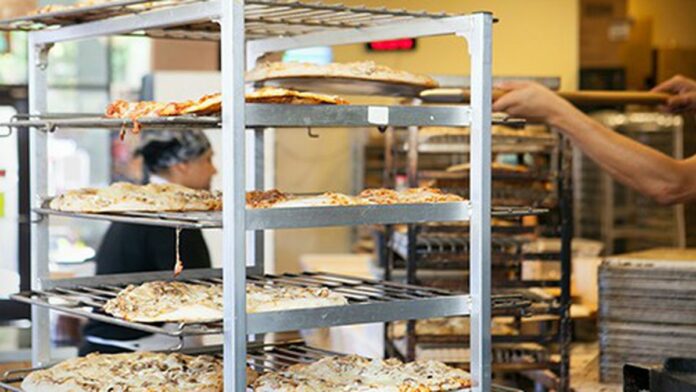
In many ways, Arizmendi bakery and other cooperatives are the polar opposite of Uber.
Credits: Photo by Bert Johnson
Orsi defines a “true” sharing economy in terms of “the commons,” a concept that originally referred to a shared piece of land in a community from which any member could benefit by grazing cows, hunting, or harvesting. Now, Orsi notes that “a commons can be created anytime we take a resource — and that resource could be a workplace, it could be water, land, cultural information, anything — and manage it collectively with the goal of stewarding it in the long-term and with the goal of creating equitable access.” She has supported projects in co-housing, community agriculture, car-sharing, and other shared resource management.
This philosophy of the commons is present in some aspects of the popular sharing economy — CouchSurfing, for example, treated the resource of space in a house as a commons within the CouchSurfing community, allowing anyone access to it without having to pay. But it’s harder to make the connection between Uber and the commons, because the property of a car and the labor of a driver are rented temporarily for a fee. While Orsi acknowledged that some of the dominant sharing economy companies are “helping people use their resources in new and efficient ways,” she focuses on much more equitable arrangements. The sharing economy structures that SELC supports are usually cooperatives, or coops. They’ve been around for centuries in various forms, but they have gained particular popularity in recent years, especially in the Bay Area.
“People turn to coops when they need them,” said John Curl, a longtime Berkeley resident and historian, woodworker, poet, and cooperator. “And now, they might need them for good.”
Curl co-founded the Heartwood Cooperative Workshop in 1974, a shared work space for skilled woodworkers, and he also serves on the board of NoBAWC (pronounced, importantly, “no boss”), or the Network of Bay Area Worker Cooperatives. Curl has researched and chronicled cooperatives over the decades, and he argues that the popularity of coops correlates inversely to the boom and bust periods of the traditional labor market. He said he thinks we have reached a turning point, in which “the larger economic structures are no longer providing for people, and people are inventing their own structures.” This has been the context both for a resurgence in cooperatives and the new platforms of the sharing economy; people have turned to both when the traditional economy fails to meet their needs.
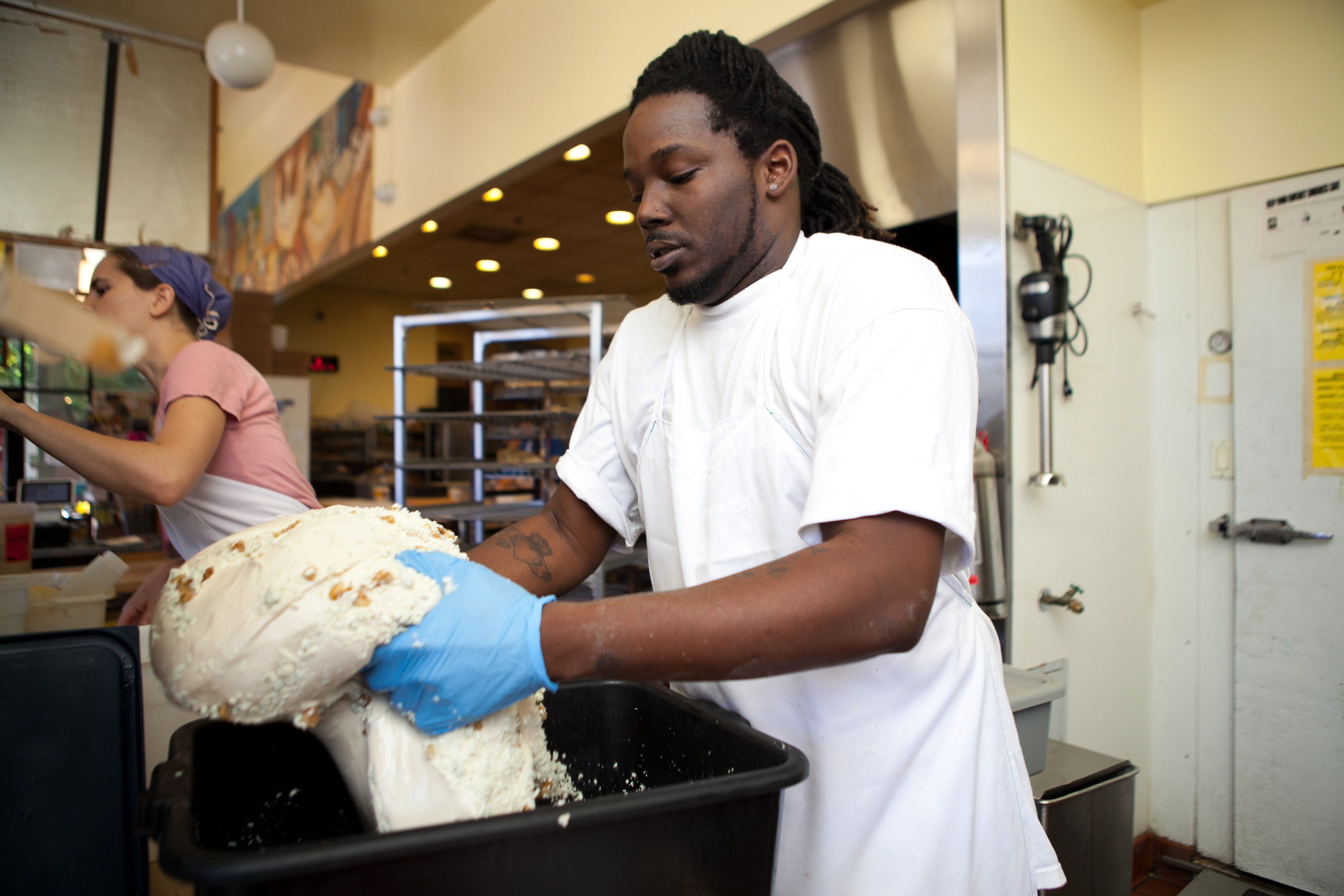
De’Quan Guion works at one such worker-owned cooperative, and he loves his job. The 27-year-old has no boss, his hours are flexible, and he makes a comfortable living in the service sector. But his favorite part of his job is spending most of his time with people and building real, lasting relationships — even a sense of family, he said — through his work. He mused, with a grin, “It doesn’t even feel like I’m at work, honestly.”
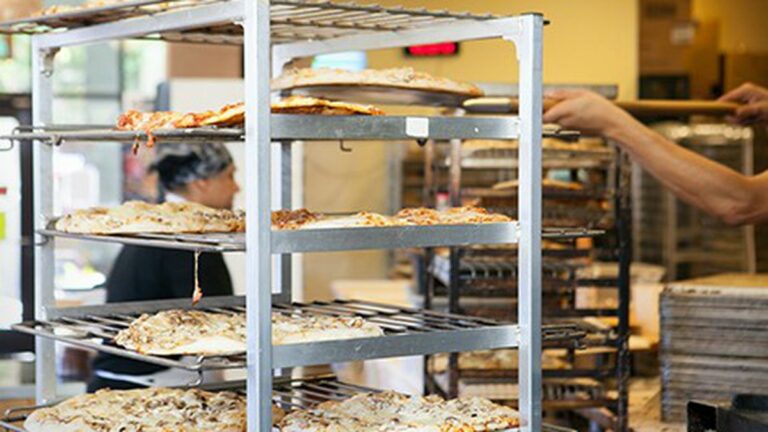
Guion earns a living wage with benefits as a baker and co-owner at Arizmendi, an Oakland-based, worker-owned cooperative. While reporters and critics have been tussling over the labels for “the sharing economy,” and while municipalities have been fumbling to regulate these new business structures, workers at Arizmendi have been quietly sharing for more than a decade. With no hierarchy whatsoever, their business is thriving.
Guion stumbled into this job by accident. A few years ago, he was working as a morning production baker at Specialty’s Cafe and Bakery in downtown Oakland. He didn’t mind the early hours; he has always enjoyed baking. But when a coworker at Specialty’s showed up for a baking shift and found her belongings in boxes, Guion figured that he was about to lose his job, too. The company was eliminating all in-house baking, although it hadn’t informed the bakers ahead of time. When Guion started to look around for other opportunities, the name Arizmendi kept coming up — at a party, from a friend, on Google Maps — so he decided to give them a call. Arizmendi Emeryville happened to be hiring, and he has been there ever since. Guion now has four flexible shifts a week, and during a shift, he might find himself prepping cookie dough, attending to customers at the cash register, or responding to job applicants as part of his position on the hiring committee.
The Arizmendi Cooperative Association is an umbrella structure that comprises six bakeries throughout the Bay Area. Each bakery operates as an independent cooperative, so each worker owns an equal share in that bakery and in its decision-making. The association also includes the Development and Support Co-op, or DSC, which provides bookkeeping and legal advice to the bakeries from a small office in downtown Oakland. Decisions that would affect the entire association are made by a policy council, which is made up of representatives from the DSC and the bakeries. When a bakery needs to fill a position, its hiring committee selects candidates for a six-month probationary period. During the probationary period, new employees earn the same wage as worker-owners, participate in meetings, and train in as many skills as possible. Afterward, the entire cooperative votes on whether the new employee should become a worker-owner. Every level of the organization is flat, which means that a person who just became a worker-owner has the same compensation and voting power as someone who has been there for ten years. The cooperative shorthand for this arrangement is, “One worker, one vote.”
At Arizmendi, workers own and share their means of production, from their own labor to the Hobart stand mixer that allows them to knead 25 pounds of sourdough for each batch of their popular Suburban bread. By converting raw products into more complex baked goods, they create value through their labor and skill.
Mario asked that we only identify him by his first name because of fears about retribution from Uber.
Credits: Bert Johnson
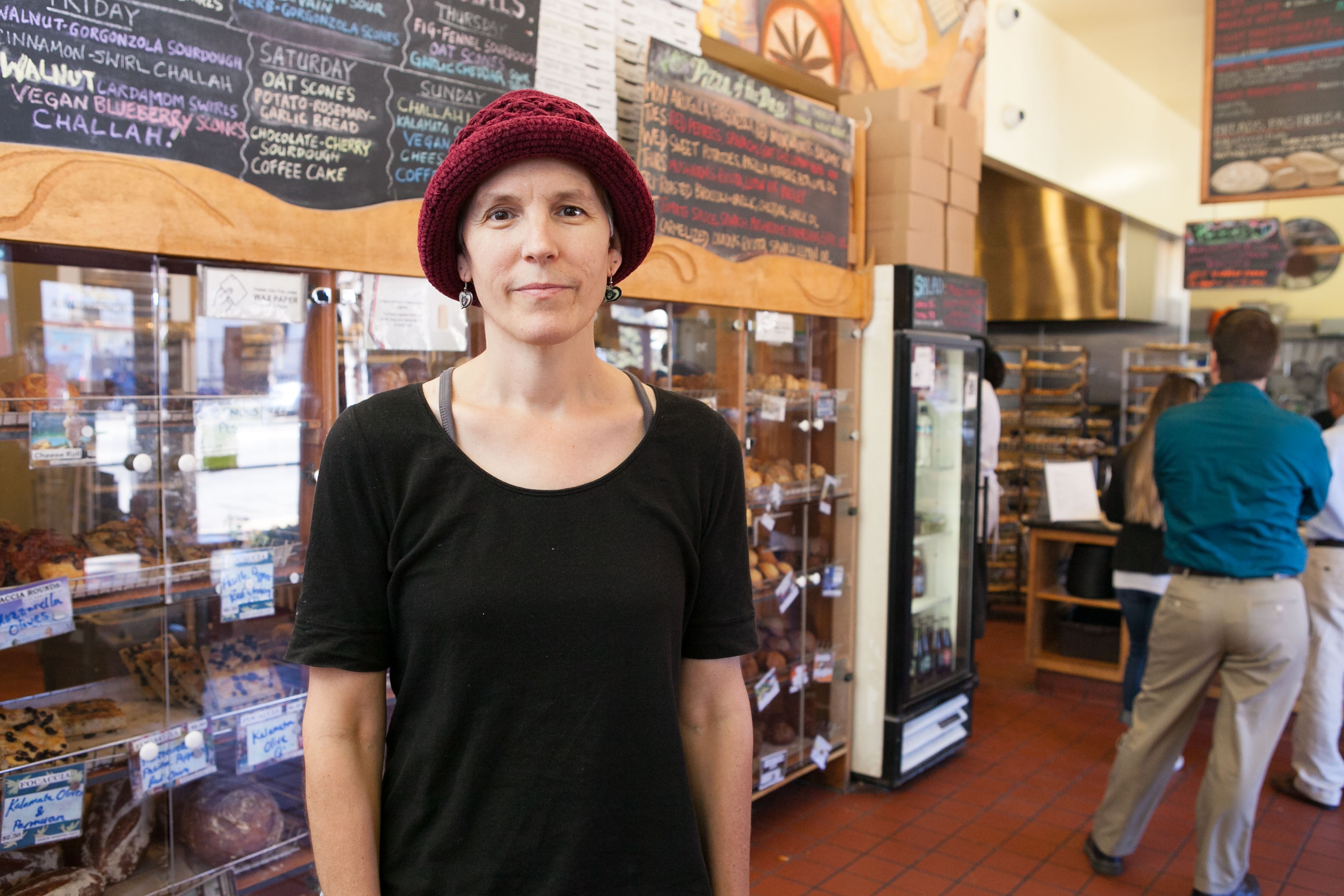
While shaping dough into small seed-blanketed footballs for baguette rolls, worker-owner Dee Ouellette rattled off details about the organization’s finances: The bakers all make $17 an hour, and all employees have medical and dental insurance. The money left over after the organization pays its business expenses is considered “surplus.” The worker-owners reinvest some of the surplus into the bakery — to buy a new oven or espresso machine, for instance — and then distribute the remainder among themselves in proportion with how many hours each person worked during the year. So with tips and profit sharing, bakers usually end up earning between $20 and $25 an hour.
Of course, this profit model contrasts starkly with that of most traditional businesses, including sharing economy ones like Uber. Although Uber drivers own their assets (their cars) and create value through their labor, they only take in 70 to 80 percent of the value of their labor — and that’s before they shell out for gas, insurance, and maintenance. Uber pockets the other 20 to 30 percent of proceeds from each ride sold through the company. Since Uber is not responsible for providing benefits, overtime, or workers’ compensation, the workers never see this wealth again.
Once a month, the Emeryville Arizmendi holds general meetings that are essential to how the cooperative functions. All worker-owners are expected to attend the meetings and vote on important decisions. At the October meeting, the bakers arranged chairs and benches in a circle next to a Dia de los Muertos altar that held pictures of their dead loved ones. The meeting started with check-ins, during which bakers gave brief personal updates. Aja Green, the facilitator of the meeting, announced that she had put Echinacea in the first aid kit in case people wanted to boost their immune systems during the cold season.
Janelle Orsi, who co-founded the Oakland-based Sustainable Economies Law Center, calls herself a “sharing lawyer.”
Credits: Bert Johnson
The meeting moved through an agenda that the bakers prepared beforehand, and items ranged from light-hearted announcements to consequential deliberations. Topics are allotted a time limit for discussion, and members talk in the order of a stack, or a list that the facilitator manages. Green updated the bakers on plans for Halloween (“De’Quan is making pumpkin whoopee pies with cream cheese filling”) and another baker announced the status of the new library-on-wheels project in the customer space. A new candidate for worker-owner, who was also head of the Pizza Task Force, handed out a survey entitled “The Ideal Arizmendi Pizza,” which was just one stage of his elaborate analysis of pizza types and sales.
The serious topic of this meeting was the question of medical benefits renewal, which Ouellette brought up on behalf of the benefits committee. The bakers’ health insurance is scheduled to expire at the end of November, and Ouellette had prepared a spreadsheet comparing the options for new plans so that everyone could vote on them. “Historically,” she explained to her fellow bakers, “we have focused on options with the lowest out-of-pocket maximum, or how much you have to pay before the health insurance kicks in and covers the rest.” Though the insurance company had offered the bakery a plan with a low premium and a high out-of-pocket maximum, Ouellette instead proposed a plan with a steep premium and a much smaller out-of-pocket maximum. “While we can afford it,” she said, “we should afford it, to protect the bakers.” Indeed, after a short discussion of the options, the worker-owners unanimously voted to collectively pay a higher premium to protect themselves in the long-run.
Arizmendi serves as one functioning and profitable manifestation of the sharing economy that the Sustainable Economies Law Center works to support. SELC offers advocacy and free legal advice to coops, new and old. Along with the nonprofit organizations Project Equity and the East Bay Community Law Center, SELC helped design and run a training program — the Workers’ Cooperative Academy — that is now in its second year. Arizmendi is one of the more visible and stable examples of what SELC would deem the “true sharing economy” in the Bay Area, but a number of other worker coops have also sprung up during the last few decades.
In Berkeley, DIG Co-operative offers greywater installation to homeowners, BioFuel Oasis sells urban gardening supplies, and the Missing Link Bicycle Cooperative sells and repairs bikes. The Berkeley Free Clinic offers free basic medical care, Maybeck High School, also in Berkeley, is a cooperatively governed educational institution, and Mandela Foods sells whole foods and produce in West Oakland. Some cooperatives have been around for many decades, but Curl noted that “there is a coop boom going on.” Orsi echoed this observation, estimating that every year, “the Sustainable Economies Law Center advises more than forty new worker coops.” Although not all of the coops get off the ground, Orsi said the number of them is “growing quickly.”
Still, we rarely think of coops when debating the term “sharing economy.” Maddy Van Engel and Steve Rice, bookkeepers at the Arizmendi DSC, acknowledged that they had never used those words to describe their work. “We usually use ‘solidarity economy,'” Rice explained. “When I think of ‘sharing economy,’ my reactionary response is thinking of Uber and companies that have used that term in a way that seems disingenuous.” Rice said he believes in cooperatives because he believes “wealth should be gained by the people who create that wealth.” He said that traditional hierarchical businesses, including most sharing economy businesses like Uber, fundamentally extract wealth from their workers.
Orsi and the Sustainable Economies Law Center see the momentum of the sharing economy as a huge opportunity for more equitable work structures to gain popularity. But while cooperatives like Arizmendi embody an equitable and successful version of the sharing economy, they are probably not the solution for all employment, mostly because they require a substantial commitment from their worker-owners. In recent years, Orsi and SELC have begun to realize that what’s needed is a system that marries the values of cooperatives with the tech functionality of the sharing economy. It was with just this idea that prompted Josh Danielson, a San Francisco entrepreneur, to contact SELC. “Janelle was literally waiting for someone to walk through her door to do it,” Danielson recalled.
Danielson has a small office in the Mission district where he is gearing up to launch his prototype for a new sharing economy business: Loconomics. It will be a tech platform, a little like Uber, that functions as a cooperative, a little like Arizmendi. Loconomics will be a marketing platform for local service professionals to sell their services and manage clients. Housecleaners, masseuses, babysitters, or other professionals will find clients through the website, and consumers can shop for the services they need. That part sounds somewhat familiar — it has similarities to hands-for-hire company Task Rabbit — but a few aspects of Loconomics make it very different. First, the company was not initially funded with venture capital, so it will not be under pressure to make big profits that match inflated valuations (like Uber’s $50 billion valuation). Loconomics will also, crucially, be owned by the people who use it — the housecleaners, masseuses, and babysitters.
De’Quan Guion said that being a worker-owner at Arizmendi doesn’t feel like “work.”
Credits: Bert Johnson
Danielson tends to downplay any political motivations for these choices, emphasizing that the idea is pragmatic and should be profitable: “I’m not a total Communist — I wanted to start a business,” he said.
He began to hatch his business plan while using the platform-based sharing economy himself. While earning his MBA in Barcelona (“If you’re going to go into debt, do it in style!”), he started renting out the extra bedroom in his apartment through Airbnb. It occurred to him that technology should do this for other things. He started to conceive of the idea that would eventually become Loconomics. At that point, collective ownership was not a part of the plan. The main distinction between his platform and other platforms was that Loconomics would not collect a commission on each service, so there would be no mark-up. This is vastly different from the dominant platform companies: Uber collects 20 to 30 percent of each fare, depending on how many rides a driver gives and in which city he or she operates, while Task Rabbit pockets 30 percent of the fee for service. Bring that down to zero, Danielson thought, and services could be sold and rented at competitive rates while the providers could profit from the full value of their work. For clients, Loconomics is intended to be just as convenient as any sharing economy platform, but without the “middle man” of a company that demands high profits and the added cost that requires.
Two years after he started working on the project, Danielson spotted an article about cooperative models in a newsletter promoting SELC, and suddenly the structure of his company became clear to him. He met with Orsi, and she agreed to write his company’s bylaws, incorporating her cooperative knowledge about how to distribute dividends and make democratic decisions. Danielson also gathered a founding board made up of local service providers as well as cooperative veterans like Orsi. One board member, YaVette Holts, has her own massage therapy practice, One Presence Massage, in Berkeley. She is also the founder of Cowrie Village, an organization that experiments with alternative economies, and BAOBOB (Bay Area Organization of Black Owned Businesses). Loconomics will allow entrepreneurs like Holts to manage clients and participate in a larger community of users to grow their businesses. Like Arizmendi, any surplus dividends will be doled out based on the number of hours a worker has worked through the Loconomics platform (because the platform is at an early stage of growth, Danielson anticipates that it will be five years or so until such surplus can accumulate). And like Arizmendi, every worker’s time will be valued equally. Loconomics plans to pay for a small support team by charging a user fee for service providers and a first-time booking fee for clients. “No one’s becoming rich here,” Danielson promised.
Service providers on Loconomics will be independent contractors, as Uber drivers are now, and Danielson believes that this is essential for its success. “People don’t want to be employees. But at the same time,” he said, “they don’t want to be taken advantage of just because they’re not.” In order to ensure this, the company will be governed by a board of directors — either service providers themselves or other professionals — who will be elected by the users. The board will make decisions after receiving feedback from both service providers and customers.
The kind of business that Loconomics is pioneering in the Bay Area actually has a small band of proponents across the country who have named it “platform cooperativism.” Earlier this year, Orsi wrote in an article for The Nation, “We have a choice: Keep using platforms that widen the wealth gap, or build tech platforms as commons.” Loconomics will attempt to do the latter, and perhaps there will be others — the first national conference for platform cooperativism is scheduled for November 13 and 14 at the New School in New York City. That conference, billed as “a coming out party for the cooperative Internet,” will entertain ideas and theories for more companies like Loconomics. Despite its mouthful of a name, platform cooperativism could be as simple as an Uber owned by Uber drivers, or a Task Rabbit owned by “Rabbits.”
Although sharing economy companies raise possibilities of equitable, democratic ways of operating, their business models have effectively reconstructed the same hierarchies that capitalists have profited from for years, but without any of the protections that legal employment has traditionally offered workers. Mario and Dawood do have flexible schedules and some autonomy, but they also constantly worry that their source of income will abruptly disappear.
So perhaps the hybrid of “platform cooperativism” will hold one solution for the future of work: flexible, autonomous, and social, but without the precariousness of the current sharing economy. Loconomics might be just the beginning.
The last time I saw Mario, in early October, we met in his workplace — his white Chevy Malibu. He showed me an amateurish-looking flier that he had been handed in the SFO parking lot. It called for a nationwide Uber driver strike in mid October with four “non negotiable demands”: “Raise Uber X fares by 60% across the board, add a tip option onto the app, raise the minimum fare to $7 [from $5], raise the cancellation fee to $7 [from $5].” It exhorted the drivers, “Do not turn your app on for this whole weekend! Stand together as one voice!” It then explicitly indicted the alternative: “If you choose to drive during the strike, you are saying that you prefer to drive for less money and no tip.”
Dee Ouellette pushed for an insurance plan that would protect Arizmendi bakers in the long-run.
Credits: Bert Johnson
Mario looked at it thoughtfully, telling me, “I probably wouldn’t drive on the weekend anyway.” But it seemed like just holding the flier made him more forthcoming with his frustrations. “We have no say-so!” He exclaimed. “It’s scary not knowing what they can do. It’s scary knowing today we might make a dollar-thirty a mile, tomorrow we might make ninety cents a mile. It’s scary.” At worst, he said, “I’m driving around wasting my own gas looking for rides.” Mario said that he has to put in 40 to 45 hours a week to get 25 to 30 hours of paid driving time.
Early this summer, Uber cut fares by 15 percent in the East Bay, which the company told drivers was an incentive to boost ridership while students were away for the summer. When fall came around, Mario and other drivers noted, Uber did not raise rates back to pre-summer levels.
On the weekend of the strike, the protest was reportedly small — the San Francisco Examiner reported that “over 20” Uber drivers had gathered outside of Uber headquarters, and Mario told me he had similarly heard that not many drivers had turned out for the protest.
But that doesn’t mean Uber drivers are content. A new survey released last week by SherpaShare indicated that Uber and Lyft suffer from high turnover rates, according to a report in the San Francisco Chronicle.
Still, Mario and other workers like him in the sharing economy probably wouldn’t want a job at a cooperative like Arizmendi. While some workers with unstable jobs might choose to be part of a cooperative, others want and need flexibility, like Mario did when he was taking care of his dad. Mario enjoys what he does, and he said that he’d “like to keep driving for a living.” But he said he would be happier if he could be properly compensated for doing it, and if the company he drove for didn’t act like a “bully.”
The weekend is officially back by popular demand! Here's how to celebrate.
First Friday' Documentary Screening
The trailer for the documentary First Friday sets the premise for the film with one succinct yet deeply complex point: “In the same year, Oakland was rated one of the top five destinations in the...
Blood from the man thrown to the ground by Alameda police in City Hall.
Credits: Steven Tavares
About thirty minutes before the start of the scheduled 6 p.m. special meeting on rent increases in Alameda on Wednesday, John Klein, a prominent member of the Alameda Renters Coalition, stood just outside the city council chambers looking a bit concerned. Inside, most of...
California is having a roaring debate about what it means to legalize cannabis, and the disagreements threaten any potential campaign in 2016. On Monday, a noted doctor and environmentalist filed a new initiative to legalize cannabis in California. Many reports indicate it has the backing of tech billionaire Sean Parker, plus the support of the Marijuana Policy Project and...
Stories you shouldn’t miss:
1. Jerry Brown instructed state regulators in his administration to explore whether it was possible to drill for oil on his family’s ranch in Northern California, the Associated Press reports. The governor’s actions, which took place last year, raise questions as to whether he violated California laws that prohibit public officials from directing staffers to do personal...
Welcome to the Mid-Week Menu, our roundup of East Bay food news.
1) A year ago, What the Fork reported on a new venture that promised to empower young women in East Oakland and West Oakland by teaching them entrepreneurial and leadership skills — all through the medium of a pop-up business selling doughnuts and coffee. Now, Mamacitas Cafe has...
Richmond City Council.
Credits: City of Richmond.
The Richmond City Council voted unanimously to repeal rent control Tuesday evening after landlord groups mounted a successful referendum petition to block the policy. In August, the Richmond council had become the first in the state in roughly three decades to approve a rent control program.
Advocates of rent control — despite...
A rally to raise Oakland's minimum wage in 2014.
Credits: Darwin BondGraham
A coalition of low-wage workers and the Service Employees International Union of California filed a ballot proposition yesterday with the California Attorney General that would raise the statewide minimum wage to $15 by 2020, and adjust it upward each year thereafter at the rate of inflation. It would...
Stories you shouldn’t miss:
Dungeness crab.
Credits: Bert Johnson/File photo
1. California health officials said people should not eat Dungeness crab and rock crab because the shellfish are tainted with a potentially fatal toxin, the Chron reports. The toxin — domoic acid — is being produced by a massive algae bloom along the West Coast, likely caused by extremely warm ocean waters. The...
Mario lives in Pinole but usually starts his workday in Emeryville, where he hopes to pick up a commuter headed across the Bay Bridge into San Francisco. Once he gets to the Peninsula, with or without a passenger, he often drives to San Francisco International Airport, where he knows he can eventually find some business. The rest...