Meat Market Leaves the Garage

Silk-screened posters, T-shirts, and drawings littered Jeffrey Cheung’s narrow studio at LoBot Gallery, a DIY art space and venue named after its Lower Bottoms neighborhood in West Oakland. On a recent evening, the other members of his band, Meat Market, squeezed into the cramped workspace to help Cheung sort through the tangles of artwork strewn about his furniture.

Cheung is well known in the East Bay’s art scene for his drawings and paintings of goofy, portly naked men writhing about in orgiastic positions. His work adorns Meat Market’s T-shirts and fliers, many of which hung on his studio’s plywood walls.
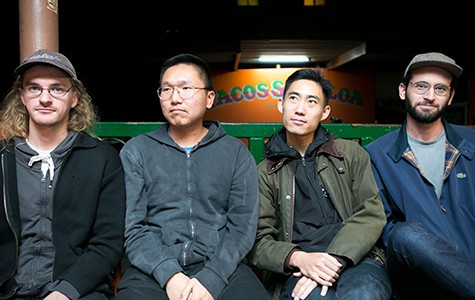
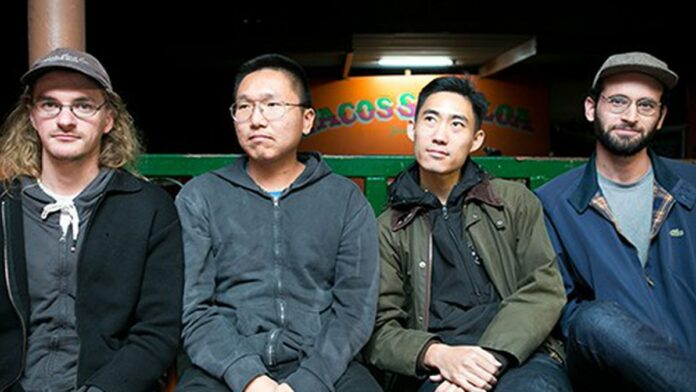
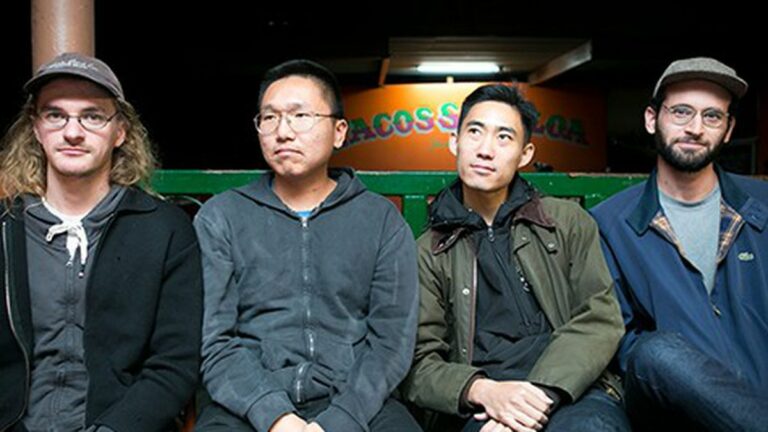
When not screenprinting band merchandise, painting, or making zines, Cheung plays guitar on Meat Market’s sprightly yet gritty pop-punk tracks alongside fellow guitarist Ian Tatum, bassist Jake Freitas, and drummer and lead vocalist Alex Shen. The four close friends began collaborating about five years ago, when they were students at UC Santa Cruz, and have been a mainstay of Oakland’s underground music scene since the release of their self-titled LP in 2012.

While Meat Market regularly plays at house shows and unofficial venues, it has also performed in large concert halls, including Slim’s and The Independent in San Francisco. The band has toured with national acts, as well, and often opens for the popular surf-punk four-piece FIDLAR, which is based in Los Angeles.

While Meat Market came up in the Bay Area’s garage rock scene, the bandmembers contended in an interview that this label no longer suits their new creative direction. On their forthcoming record, Dig Deep (which is due out on vinyl in early 2016), they’ve abandoned their previous work’s distortion-heavy, washed-out aesthetic and tongue-in-cheek lyrics in favor of clean-cut song structures and pensive subject matter.

“A lot of the songs we played in the beginning fit into [garage rock], but none of us felt strongly about it,” said Freitas. The members of Meat Market, he continued, felt “lumped into” the subgenre — which became ubiquitous in West Coast rock by the early 2010s.

“[Writing the new album] was partly us trying to distance ourselves,” said Tatum. “But maybe we didn’t really get too far,” he added. The members of Meat Market’s self-effacing humor — both in person and in their lyrics — has earned them a reputation as a relatable band-next-door, which is part of their appeal.

While Dig Deep isn’t a radical departure from Meat Market, the new LP is rife with incisive songwriting that feels more calculated than the unbridled hyperactivity that courses through the band’s first project. Cheung and Tatum’s dueling guitar riffs drive the upbeat melodies, and Freitas and Shen’s tightly orchestrated rhythm section fuels booming buildups and frenetic releases. But while the instrumentation on Dig Deep sounds polished, Shen’s raw, strained vocals still evoke the scuzzy warehouses where the band developed its sound.

HOLE by MEAT MARKET

Despite Dig Deep’s jubilant sonic palette, much of its lyrics are about withdrawing from social interactions and into one’s thoughts. In the chorus of “Hole,” the only single Meat Market has released from the project so far, Shen sings, Into this hole I will go/Find comfort in what you know.

“It’s reflective and introspective, which is just what happens when you get older,” he said. “You think about your art more, or whatever.”

“[It’s about] going into holes, taking time to think,” added Cheung.

“Mental holes, emotional holes, physical holes. Sometimes you need to go deep to …” began Shen. Realizing where this double entendre was going, the other band members yelled for him to stop. “Sorry. I mean like, yeah, I don’t know,” he trailed off, staring at his sneakers.

In the period between the creation of their first and second records, the members of Meat Market focused their energy on ephemeral media and DIY projects so that they could experiment with their sound. They recorded tracks onto found cassette tapes from thrift stores and passed them out at shows and tested out new songs live before committing to them in the studio. In between larger gigs, they played plenty of house shows and unusual venues such as an optometrist’s office (“We tried to play a lounge-y set and it sucked,” said Shen), and even performed between the shelves at Adobe Books in San Francisco.

Though Dig Deep has taken a long time to complete, the round-about route the bandmembers took to write it ultimately helped them develop a more sophisticated body of work, and their confidence is palpable in their new music. As Cheung put it, “At first we just kind of played, but now we’re thinking about it more, which is both good and bad.”

A Bumper Year for Pot

The storm on November 2 signaled the official end to the 2015 cannabis growing season. And judging by industry and farmers’ reports, California likely harvested a bumper crop of great bud this year — despite the fourth year of drought. “It’s been stellar,” said Casey O’Neill with Happy Day Farms in Garberville.

“So far, it’s looking pretty kick-ass,” said Kevin Jodrey organizer of the cannabis competition called The Golden Tarp awards.

Farmers report that this year’s long, hot, and sunny summer was unblemished by the mold-inducing moisture of 2014. The heat also made plants flower and finish as much as thirty days early this year, said O’Neil. “That’s significantly earlier than we’ve ever been out of the ground.”
Americans consume an estimated 2,500-5,000 metric tons of pot per year, surveys show. About two-thirds of America’s stash is bulk marijuana grown in Mexico. California is the leading domestic producer of both outdoor and indoor-grown bud. Farmers plant cannabis in the spring and the weeds can grow up to fifteen feet in height during the months leading up to fall harvest, when they yield several pounds of dried bud. Indoor gardens, of course, run year-round.

Farmers in the nation’s cultivation epicenters of Humboldt and Mendocino counties reported huge, healthy grows this year, combined with increased wholesale demand and prices. Prices for high-quality outdoor are at or above last year’s — roughly $1,500 to $1,8000 per pound.

For the first time in recent memory, farmers are also reporting pre-sales of their crops — meaning, the product was sold before drying and trimming were complete. “I haven’t seen that in years,” said one veteran cultivator.

Farmers suspect that wholesalers read the headlines about drought and fires this year and were determined to buy up supplies. Fires reportedly torched thousands of gardens from Washington state to Lake County, California this year. Washington’s biggest provider, CannaSol, lost an entire outdoor crop of legal weed to fire this season. The massive Lake County inferno of 2015 likely claimed the state’s oldest medical marijuana garden, according to longtime cannabis activist Dennis Peron of San Francisco.

Also, demand for marijuana across the United States appears to be rising, as cannabis continues to shed its social stigma. Pot is now legal in four states, plus the nation’s capital, and it’s legal medically in 23 states. Survey data released on October 22 showed that cannabis use among American adults more than doubled in the past decade, rising from 4.1 percent in 2002 to 9.5 percent in 2013.

And the big new surge in cannabis extracts, commonly called “hash,” is also propping up prices. Trimmings once destined for mulch now command hundreds of dollars per pound. “[Hash-makers are] saying, ‘If it’s got sugar on it, we want it’,” said cultivator Swami Chaitanya from Swami Select Farms, referring to the plant’s white, psychoactive resin.

The year 2015 was also a banner one for greenwashing the war on drugs. Pot farmers were pilloried in the press for water use, even though cannabis comprises a negligible fraction of water used by California agriculture.

However, cultivators’ outsized impacts on remote, stressed watersheds is one reason why 2015 will go down as likely the last unregulated medical cannabis harvest in the state’s history. Many farmers report saving every penny in profit this year to bring their old logging roads, creek bridges, and water storage tanks and ponds up to code, as well as to obtain new state licenses available in the next two years.

The drought, meanwhile, brought more pests and wildlife to farms this year, but crops stayed hydrated through a combination of winter rain captured in tanks and ponds, drip irrigation, screens, and pruning. Like wine, cannabis’ drought-year yields can be lower but of higher-quality. And the dryness kept away pot’s arch nemesis — mold — which can claim 30 percent of a harvest. Up near Eureka this October, hands at True Humboldt farms were grinning in the sun. Seasonal mist, fog, and rain usually results in mold on the prized tops of their pot crops, but not in 2015.

Down in the cities, consumers can expect epic deals on fabulous sungrown cuts of Gorilla Glue #4, as well as Kushes, Diesels, and a hybrid called Ogre — which took the Emerald Cup in 2014.

“You have some really neat twists on the fuel OGs, the Fires, the Ghosts — all crossed with people’s secret sauces,” said Jodrey. “Also, the Black Lime strain from Aficionado with that loud lime [aroma].”

Oakland’s Harborside Health Center and other East Bay dispensaries have begun running ‘sungrown’ deals, such as $35 eighth-ounces of Jack Herer and Sour Diesel.

And The Emerald Cup is gearing up for its return to Santa Rosa on December 12 and 13. The nation’s oldest, biggest outdoor organic medical cannabis competition draws about 10,000 attendees, and has added Beats Antique to its entertainment lineup this year. The contest — which will include several hundred entries — opened to gardeners on November 2.

The Golden Ones

The Golden State Warriors’ motto last year — “strength in numbers” — was designed to celebrate the size and loyalty of the team’s fanbase. The motto appeared on TV promos, billboards, and canary-yellow T-shirts draped over every seat at Oracle Arena for certain home games.

Numbers also offer one of the best ways to demonstrate how historically dominant the Warriors have been of late — and how extremely popular they’ve become.

By the time last year’s playoffs rolled around, the jersey of reigning National Basketball Association MVP Stephen Curry was already outselling everyone else’s in the league, including that of LeBron James. Warriors’ shooting guard Klay Thompson ranked fifth, and forward Draymond Green, 15th, while the Warriors had taken over the top spot for total team merchandise sold.

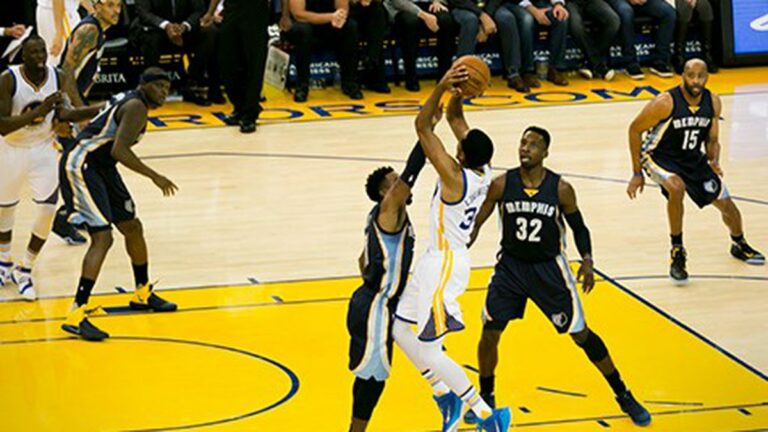
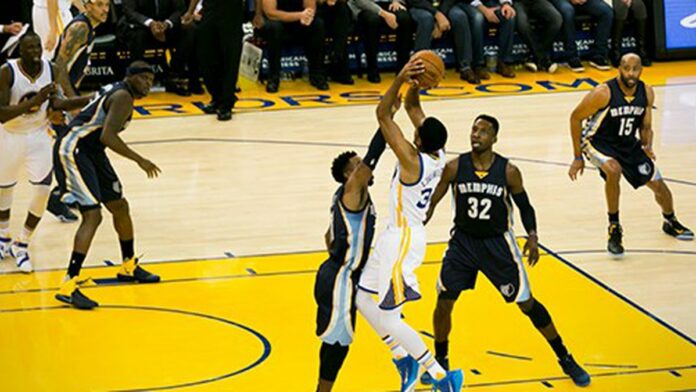
And as the Dubs amassed 83 wins last year (regular season and playoffs), third-most in NBA history, merchandise dividends exploded like a dunking Harrison Barnes over Dwight Howard last week in Houston. The Warriors’ online commerce leapt to more than five times the amount it enjoyed a year earlier, when they were already doing brisk business. In-arena product revenue more than doubled during the same time.

In short, the Warriors’ accomplishments, both on and off the court, have been nothing short of astounding. And the team has done it without the benefit of what is widely viewed these days the basic necessity for success in sports: a new stadium. Indeed, the Warriors’ achievements at Oracle Arena, a facility that by modern sports standards, is considered old and out of date, provides perhaps the strongest evidence yet that a professional sports franchise can thrive in the current era without a new facility — and can do so in a city and region that some pundits have dubbed (erroneously) a “small market.” The key, rather than fancy new digs (although the Warriors’ owners covet that, too), is having the best players, a great coach, and a brilliant general manager.

The numbers speak for themselves. The NBA’s commercial website, for example, currently features 1,200 different Warriors’ items, including a Golden State “Camo Crossover” lightweight full zip jacket ($89.99), Warriors’ plastic-face elves ($14.99), and Warriors’ women’s light blue suede pumps ($79.99).

And the team’s bandwagon promises to only get bigger. This year, counting preseason games — but not playoff games — Golden State is slotted to make a franchise-record 28 appearances on national television, or about 28 more than as recently as a half-decade ago.

At the Oracle, the Warriors have packed them in for years — even when they weren’t very good. And in their current streak, they’ve sold out every game since December 18, 2012 — good enough for the top seven in the league. That’s a major reason for why the team realized the NBA’s second best regular season home record last year (39-2) in 69 years — and a major reason for why 98 percent of season ticket holders renewed this year. In fact, 17,000 fans are now on the Warriors’ season-ticket waiting list. A club record 9,000 fans swarmed an open practice at Oracle on October 14.

And when the Warriors go on the road, their brand of basketball is almost as popular as it is in Oakland. Only the Cleveland Cavaliers trumped the Warriors average road attendance of 19,596 — or the 96.2 percent rate for complete sell-out crowds — last year. And as they’ve opened the 2015-16 season 4-0, on yet another hot streak, the Warriors are not just the best, they’re beloved.

The Dubs also rank among the top NBA teams in engagement metrics across Facebook, Twitter, and Instagram — with a total of 9.1 million combined followers. The team is also a master of old-fashioned hand-in-hand community engagement. Last season, Warriors’ personnel logged more than 150 health, fitness, education, and literacy events around the Bay Area, arranging hospital visits, basketball camps, fan festivals, and food and toy drives, among other activities.

Warriors co-owner Peter Lacob, whose tenure with co-owner Peter Gruber celebrates five years this month (and a 224-170), recently talked about one of the secrets of Golden State’s success — it’s people — with former Warrior and current announcer Tom Tolbert. “We’ve got a team full of really good, high-quality people,” Lacob said. “I have people come up to me and say, ‘I just love your team.’ But you know the other thing they say? It’s, ‘I just love your guys, who they are,’ and I think it matters to people — [that] you have high-character people they can identify with and really root for.”

And rooting for the Warriors in 2015–16 is easier than ever. It started with more history for Curry. In game one against New Orleans last week, the Warriors’ unstoppable point guard became the first MVP to drop 40 points to start a season — beginning with a molten-lava 25 in the first quarter that led TNT commentator Chris Webber (and former Warrior) to call Curry “a human video game.”

Then came a resounding 20-point win against another Western Conference playoff rival, Houston, as the Warriors held Rockets superstar James Harden, who continues to whine that he should have been the NBA’s 2014­15 MVP, to 4-of-18 shooting.

Then in game three in New Orleans, the second consecutive road game against a playoff team in as many nights, Curry rained down 28 points in the third quarter alone, on the way to 53 overall, and shot 8 of 14 from 3-point range.

The power of his popularity even transcended the Big Easy: New Orleans’ staff brought Curry, the star of the team that de-clipped the Pelicans in last year’s playoffs, a bag of gourmet popcorn the size of a small silo.

After the Houston blowout, Curry talked about his and the team’s winning philosophy. “Every year, you get smarter, you get more experience, you see things better, so it slows down a little bit,” he said. “It’s staying within yourself, trusting teammates to make plays and being confident and aggressive. The best players in this league learn every year to get a little bit better, to be a little more efficient.”

The best franchises do, too. And the numbers tend to reflect it.

One-Night Stands

Thursday, November 5

METEn: Tannhauser Encore (310 min., 2015). (AMC Bay Street 16, Emeryville, 12:55)

Vanishing of the Bees (87 min., 2009). Followed by a discussion with Friends of the Earth (Berkeley Fellowship of Unitarian Universalists’ Hall, Berkeley, 6:30)

Catch Me If You Can (l40 min., 2002). (UA Berkeley 7, Berkeley, 9:00)

The Cat Returns (75 min, 2002). (The New Parkway, Oakland, 9:30)

Friday, November 6

My Darling Clementine (97 min., 1946). (Berkeley Public Library, Central Branch, Berkeley, 3:00)

First Friday Shorts (varies). A showcase from the Queer Women of Color Media Arts Project (Parkway, 6:00)

24th Annual Berkeley Film Festival. Featuring 75 independent films every day through November 15 (East Bay Media Center, Berkeley, 6:00-11:00)

First Friday (66 min., 2015). Followed by a Q&A with filmmakers N’Jeri Eaton and Mario Furloni (Parkway, 8:20)

La Bamba (108 min., 1987). (Parkway, 10:30)

Saturday, November 7

Oklahoma! (145 min., 1955). (Rialto Cinemas Cerrito, El Cerrito, 10:00 a.m.)

The Royal Ballet: Romeo and Juliet (180 min., 2015). (Rialto Cinemas Elmwood, Berkeley, 10:00 a.m.)

The Hunting Ground (103 min., 2015). Appreciating Diversity Film Series (Parkway, 3:00)

24th Annual Berkeley Film Festival. Featuring 75 independent films every day through November 15 (East Bay Media Center, Berkeley, 6:00-11:00)

Sunday, November 8

Fantasia (145 min., 1940). (Cerrito, 10:00 a.m.)

Perks of Being a Wallflower (102 min., 2012). A benefit for the Grateful Heart Holistic Therapy Center (Parkway, 12:30)

Resistencia: The Fight for the Aguan Valley (92 min., 2014). (La Peña Cultural Center, Berkeley, 6:30)

Fantasia (145 min., 1940). (Elmwood, 1:00, 7:00)

The Illusionists (91 min., 2015). Followed by a discussion with Director Elena Rossini (Hearst Field Annex, Room A1, UC Berkeley, Berkeley, 7:00)

Foxy Brown (92 min., 1974). Followed by a discussion with filmmaker Cheryl Dunye as part of the Bechdel Test Movie Night (Parkway, 5:00)

24th Annual Berkeley Film Festival. Featuring 75 independent films every day through November 15 (East Bay Media Center, Berkeley, 6:00-11:00)

Trailhead: Discovering Oakland’s Gateway to the Redwoods (20 min., 2015). Followed by a Q&A with the producer (Parkway, 7:30)

Shapeshifters Cinema Presents Greta Snider. With films and slide projects that explore the relationship between words, images, and bodies (Temescal Art Center, Oakland, 7:30)

Monday, November 9

24th Annual Berkeley Film Festival. Featuring 75 independent films every day through November 15 (East Bay Media Center, Berkeley, 6:00-11:00)

Fantasia (145 min., 1940). (Elmwood, 7:00)

Tuesday, November 10

24th Annual Berkeley Film Festival. Featuring 75 independent films every day through November 15 (East Bay Media Center, Berkeley, 6:00-11:00)

Ghost in the Shell: The New Movie (57 min., 2015). (Elmwood, 7:30)

First Friday (66 min., 2015). Followed by a Q&A with filmmakers N’Jeri Eaton and Mario Furloni (Parkway, 8:20)

Wednesday, November 11

24th Annual Berkeley Film Festival. Featuring 75 independent films every day through November 15 (East Bay Media Center, Berkeley, 6:00-11:00)

Mimi and Dona (65 min., 2014). (Elmwood, 7:00)

The Internet’s Own Boy: The Story of Aaron Swartz (105 min., 2014). (Humanist Hall, Oakland, 7:30)

Ghost in the Shell: The New Movie (57 min., 2015). (Elmwood, 9:30)

Sexless Marriages: The Last Word

DEAR READERS: Two weeks ago, I announced I would be taking a nice, long break from questions about miserable sexless marriages. (I don’t get questions about happily sexless marriages.) I tossed out my standard line of advice to those who’ve exhausted medical, psychological, and situational fixes (“Do what you need to do to stay married and stay sane”), and I moved on to other relationship problems. Readers impacted by sexless marriages — men and women on “both sides of the bed” — wrote in to share their experiences and insights. I’ve decided to let them have the last word on the subject.

Since you don’t want to give any more advice to readers stuck in sexually unfulfilling marriages they can’t or don’t want to end, will you allow me to give a little advice from the perspective of the other woman, i.e., the person who makes it possible for them to “stay married and stay sane?” I contacted an old flame when my marriage ended. He was married. His wife refused to have sex with him but also expected him to stay faithful to her. Their kids were still in school. He honestly believed that staying together was the best thing for the kids. I went into it thinking it was going to be a fling, a temporary thing to get me over my husband and back in the game. But the sex was mind-blowingly good. And here’s the thing about amazing sex: It bonds people. We fell in love all over again. He told me our affair made his sexless marriage bearable. He was happier and a more patient father, he bickered less with his wife. He made me feel beautiful, desirable, known, and accepted — all feelings that had been lacking in my marriage. But I was in the shadows. Every assignation was a risk. I couldn’t introduce him to my friends, my son, or my family. After four years, I couldn’t take it anymore. My ego was shredded. So I ended it. I was tired of the fear, lying and hiding, and being secondary. My advice to readers stuck in sexless marriages who cheat to “stay sane:” Beware of unintended consequences. You can have an affair with the most discreet, careful partner who accepts your circumstances, who makes no demands, who provides you with both a warm body to fuck and the passion that has drained out of your marriage. You can be careful not to get caught. It might be incredible for a while. But the chances of nothing going wrong and of everyone remaining happy over the long term are vanishingly small. It’s a matter of time before someone gets hurt.

Ruby Tuesday

Your advice to people whose partners have checked out of their sex lives is on target. But would you be willing to share a voice from the other side of the bed? Until a year ago, I was always appalled when I would read letters like these. Who would stop having sex?! Who would stay with someone who didn’t want to have sex?! Then I got sick. My illness came on slowly, but the first noticeable symptom was my sex drive vanishing. My lady parts were drier than a desert. No amount of lube helped. Sex hurt, and I didn’t want it. My journey through the medical system was a battle. Trained medical professionals poo-poo’d me. They told me this is what all perimenopausal women experience and I should just deal with it. I was told to “get started” and then maybe I would enjoy it. I was given lists of supplements to try. Finally, in response to other health problems, my doctor diagnosed me with diabetes. Within weeks of taking medication and changing my diet, my engine started running again. It’s not what it was, but I don’t feel dead below the belly button anymore. During this time, my husband was supportive. I did my best to make him happy. I’d like to think that if I had continued to suffer a loss of libido for years, I would be brave enough to give him permission to find satisfaction elsewhere, but it would break my heart. My points, briefly: Legitimate things happen to people that make them lose their sex drive. Medical support for people brave enough to say “I’ve lost my mojo and need help to get it back” is not always there, and the solutions aren’t always easy or fast. Too often, people (especially women) are told that losing their sex drive is normal and they should just get used to it. No one should be forced to accept a sexless relationship if that’s not what they want. And if you’ve lost interest in sex and don’t really care to get it back, you don’t have the right to impose celibacy on another person. But in a long relationship, each partner is going to face challenges — and one of those challenges might be helping your partner fight to regain their libido.

Bed Death Survivor

I’m the “other man” to a woman whose husband won’t fuck her. The guy must be gay or asexual, because his wife is beautiful, smart, and great in bed. I’ve never wanted marriage or kids, so this arrangement works well for me. The only time it got awkward was when my girlfriend — this other guy’s wife — broached the subject of monogamy. Asking for a monogamous commitment when you’re married to someone else? Seemed nuts. But I hadn’t slept with anyone else for three years, or even wanted to, so I was already monogamous in practice.

Monogamous In Theory Now Too

If my ex-husband wrote to you, he’d say I didn’t want to have sex with him anymore and he was going crazy. The truth is, I wanted to have sex — but I didn’t want it to be in one of the same three positions we’d been doing it for seven years. I was bored and asked for some variety, and he refused to do it. My boredom turned into frustration, and frustration turned into anger. At a certain point, the idea of having sex with him made me want to beat the living shit out of something. Was I supposed to continue satisfying him when my needs weren’t being met? Our mistake was waiting until I hit the angry point to get into therapy. We should have gone when I was bored. He wound up having an affair and blamed me because I didn’t want to have sex with him. But there was a good reason why I didn’t want to have sex with him. Maybe before you advise people in “sexless” marriages to have affairs, you could tell them to do some self-examination first?

Husband’s Always Right

You wrote that you’re sick of telling people trapped in sexless marriages to do what they need to do “to stay married and stay sane.” I want to thank you for all that repetition. I needed it. But leaving my sexless marriage was what I needed to do to stay sane. My husband of 10 years berated me publicly, telling anyone who would listen that I was a whore. Had I not had your corpus of work on the matter of marital partners who have zero interest in sex but still demand enthusiastic monogamy, the journey through this would have been longer. Four years later, I still get excited that I actually get to have sex — awesome, giving, experimental, fun sex.

Gleeful Escapee

The Physicality of Sound

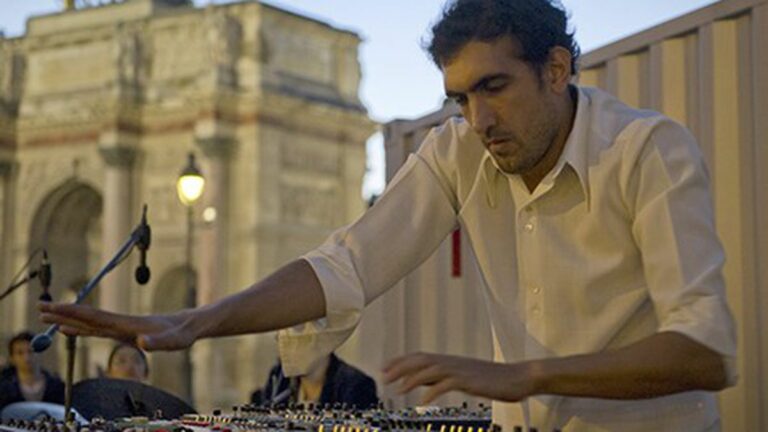
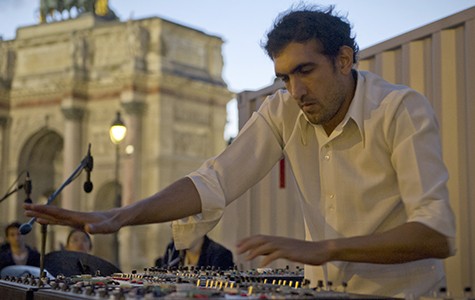
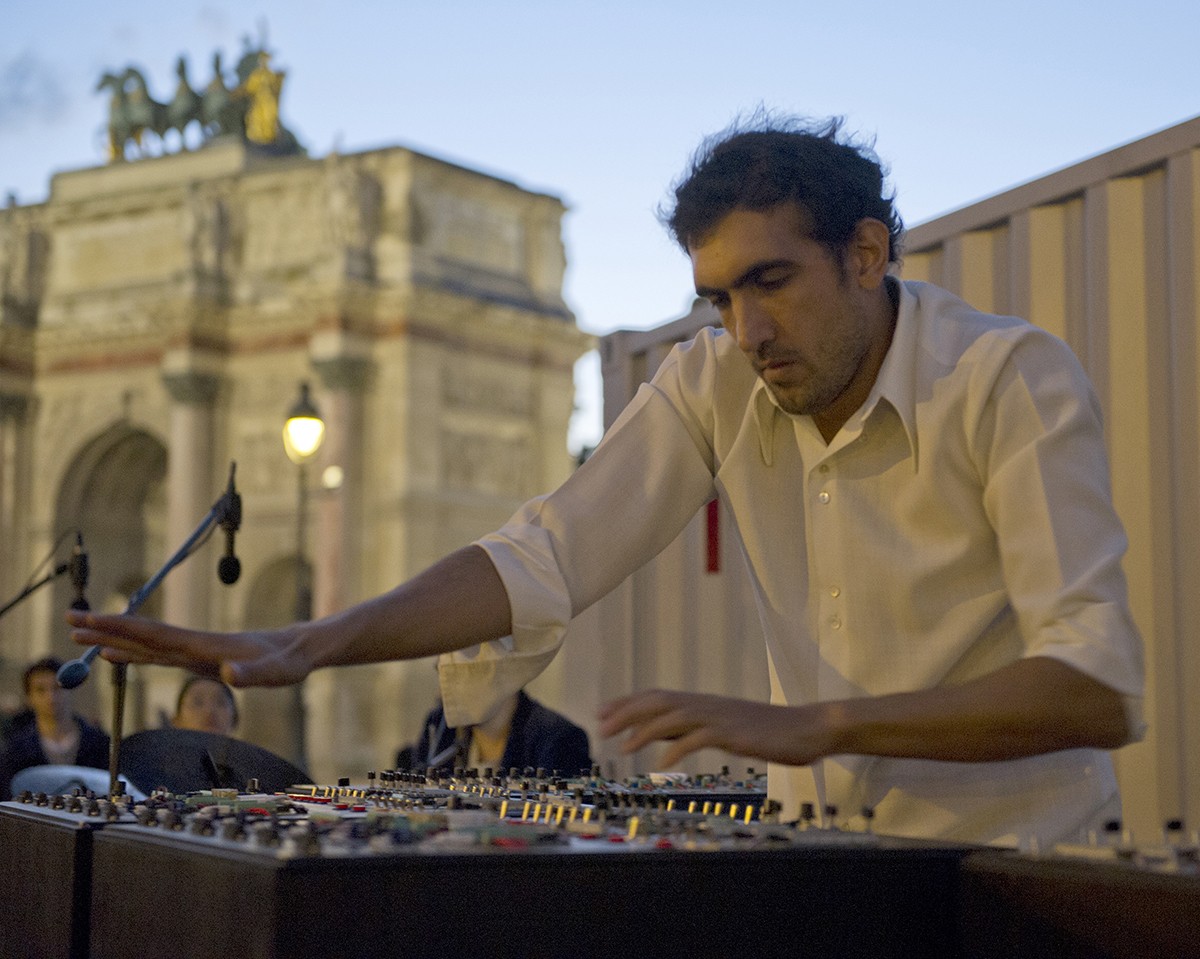
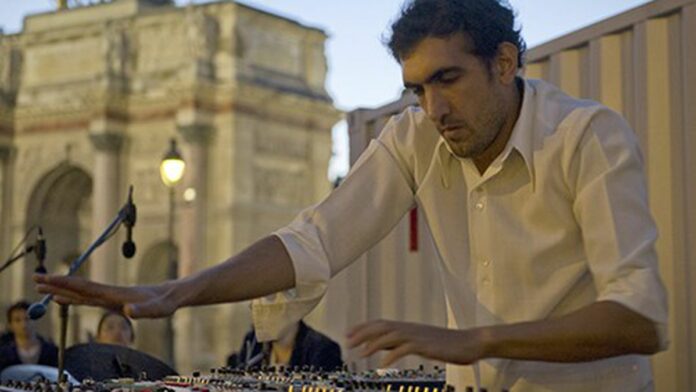
Last March, Tarek Atoui, the internationally acclaimed Paris-based sound artist, stood before a platter of electronic dials, sliders, and sensors embedded into an unlabeled control deck in the front of Meyer Sound’s private performance space in Berkeley. As if communicating with the self-made instrument through gesture, Atoui’s hands flitted from one electronic appendage to the next, theatrically activating a random selection of field recordings that flooded through the venue’s impeccable sound system. It was difficult to distinguish how much of the piece was spontaneous and how much was calculated. Like most of his work, Atoui’s performance style is experimental in two senses — driven both by artistic intuition and scientific investigation.

That performance came at the beginning of an eight-month residency at the Berkeley Art Museum and Pacific Film Archive (BAMPFA) that Atoui will soon culminate with a series of three more performances. While the museum’s new building has been under construction, Atoui has been working offsite on an unusual installment of its MATRIX series, which often features artists at the conceptual forefront of their fields. For the residency, Atoui worked with Greg Niemeyer, the director of the Berkeley Center for New Media, and a seminar of his Cal students to develop instruments specifically designed for deaf and hearing impaired players and audiences.

During the past two years, Atoui — whose interdisciplinary practice lies at the intersection of musical composition, sound art, educational public practice, curating, and instrument design — has devoted himself to developing an understanding of sound that transcends the auditory experience. In 2012 and 2013, Atoui worked with a school for deaf children in the Emirate of Sharjah to test the students’ experience of sound. He and supporting researchers found that the children much preferred the drum over any other instrument because it can be felt throughout the body. They learned that the students identified “noisy” spaces as banks and post offices — echo-y places where it’s difficult to isolate where sound waves come from. And they found that sight was integral to the students’ understanding of sound. When given recorders and asked to record “noise,” the children were drawn to things that are considered noisy even when they weren’t making any sound — such as a silent police siren. Still, when these recordings were amplified into a weather balloon, many of the students could identify their own recordings based on the vibrations they felt.

With these realizations in mind, Atoui entered into collaboration with UC Berkeley students to develop instruments using a reconfigured understanding of both performing and listening that focused on tactility and gesture. The instrument “Zero Point Nine” is made of up three platforms, each housing three subwoofers, on which the performer stands, activating motion sensors to manipulate complex digital synthesizers that generate sub-bass and infrasounds — extremely low frequencies that vibrate through the body. The “SuperPac” is made up of three percussion tables that primarily generate bass connected to a large subwoofer and a set of vibrating chairs so that audiences can more directly feel the sound. “Sometimes you say, ‘This instrument needs to be experienced with an amplifier,’ or ‘This instrument is to be plugged in on a stereo system,” said Atoui. “So this one is to be plugged into a chair that has a subpac, in other words, a subwoofer you sit on.” The instruments will be played publicly for the first time in a performance called WITHIN 2 on November 5 at the Mills College Student Union, with two more performances on November 7 in the Hearst Mining Building at UC Berkeley.

While those performances will culminate Atoui’s BAMPFA residency, they are just one set of experiments in his ongoing attempt to understand the experience of sound from a deaf person’s perspective. Next, he plans to work with deaf people to get feedback on how the instruments feel. Eventually, he hopes to incorporate these instruments into an orchestra made up of hearing, deaf, and hearing-impaired players. But that offers another set of obstacles in itself. “Deaf people often feel that they are not concerned with music and instruments … [so] you have to overcome several psychological barriers in a way,” Atoui explained. He’s also interested in exploring how the gestural aspect of performing can operate as a visual vocabulary similar to sign language. “I’m barely scratching the surface yet, I think,” said Atoui. “That’s my intention … unlearning the way I do things by learning from deaf people.”

An Identity Crisis at Mills College

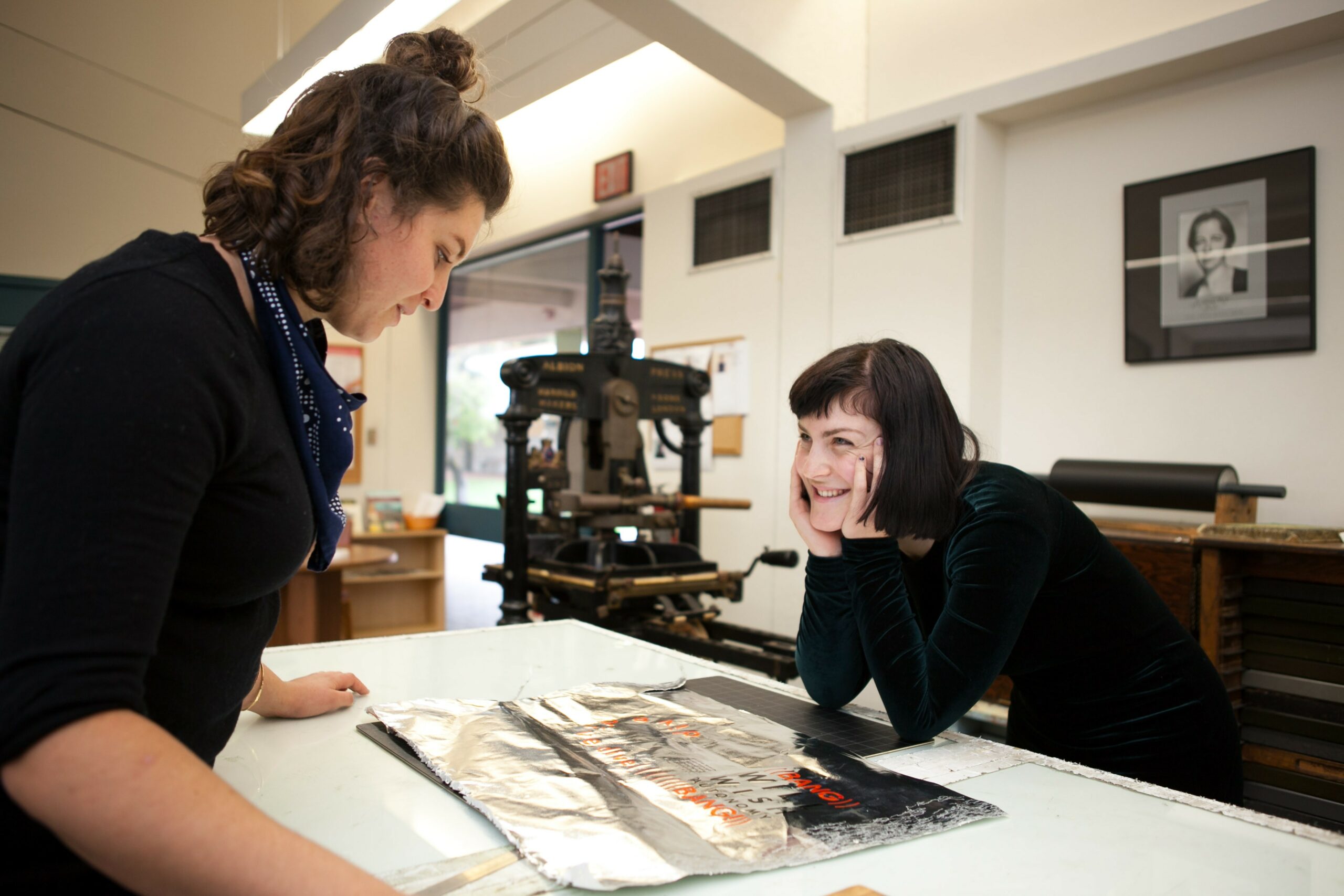
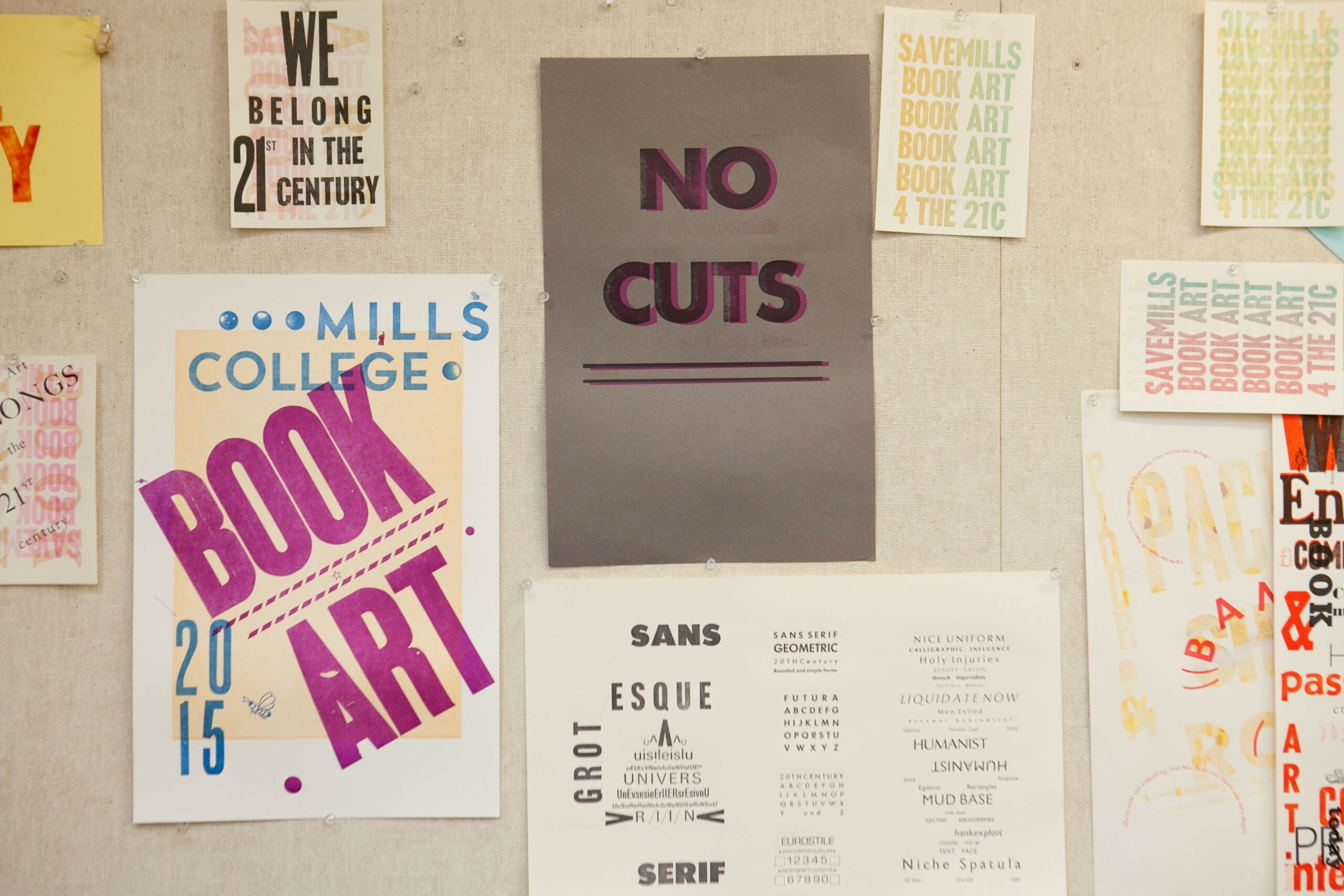
Last Wednesday, just before noon at Mills College in Oakland, the school’s dance students staged an outdoor cypher on the campus’ central lawn. As the dancers took turns leaping into the center of the circle, others chanted “Mills needs dance!” Meanwhile, a large group of students gathered in front of the adjacent auditorium with painted signs carrying messages such as “Take back Mills,” and “Not a neoliberal business school.” Students from Mills’ acclaimed book art program passed out little, hand-printed books and posters with words like “Materiality matters.” Soon after, the school’s interim provost, Sharon Washington, and associate provost, Julia Chinyere Oparah, engaged the students in a heated forum regarding concerns about the shifting character of the small liberal arts school.

Mills students and faculty have been reeling since October 19, when college president, Alecia A. DeCoudreaux, sent out a memo announcing proposed changes to the school’s curriculum in response to Mills’ financial challenges. The administration’s plan calls for narrowing a number of majors, including international relations; eliminating the American studies and dance majors; and closing the entire book art program. It also proposes a number of additions and expansions, including a new data science program and a masters in economics. The administration set up eight meetings to hear responses from students and faculty leading up to December 1, when changes will be finalized.

Mills is a tiny, women’s college known primarily for its acclaimed education programs; its influential — and still thriving — music department; and its remarkably low 10–1 student-to-faculty ratio. But in recent years, the school has faced declining enrollment and has struggled with a large budget deficit. In 2013, Moody’s credit-rating service reduced the school’s financial rating to one level above junk bond, giving it a negative outlook. To cut costs, the college laid off eleven employees last year and slashed salaries across the board.

The October 19 memo stressed creating a more sustainable and competitive curriculum for future Mills students. “Like most liberal arts colleges in the US, we’re looking at how do we balance our revenue with our expenses, because, like most schools that are private, we rely on tuition,” Washington said in an interview last week. “We are trying to come up with a really vibrant, dynamic 21st-century curriculum.” She also stressed that the changes have not been finalized.

But at last Wednesday’s meeting, students and faculty strongly questioned the administration’s dedication to upholding the arts-centric legacy of the institution. Sheldon Smith, head of the Mills dance department, said in an interview that he was aware his department was under some scrutiny because he estimates that only three to five dance majors graduate each year (although there is an average of twelve students in every class), but he had no idea the major would be put on the chopping block. In his eyes, the dance department (which includes a graduate program) is the best it’s been in years, and eliminating the undergraduate major would cause it to collapse. At this crucial moment, he’s hoping administration will recognize the value of the program — which is one of the oldest in the country. “When things get tough, the accountants start to look at the things that they think are expendable,” said Smith. “Dance is one of these things that has always struggled for recognition in terms of being seen on an equal playing field with everything else in a liberal arts education.”

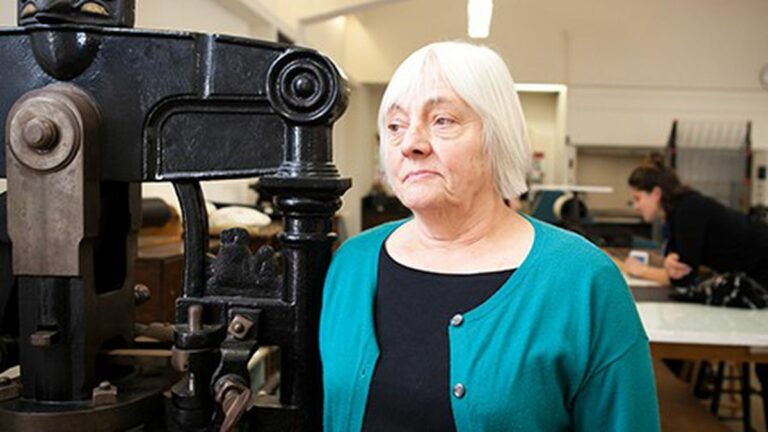
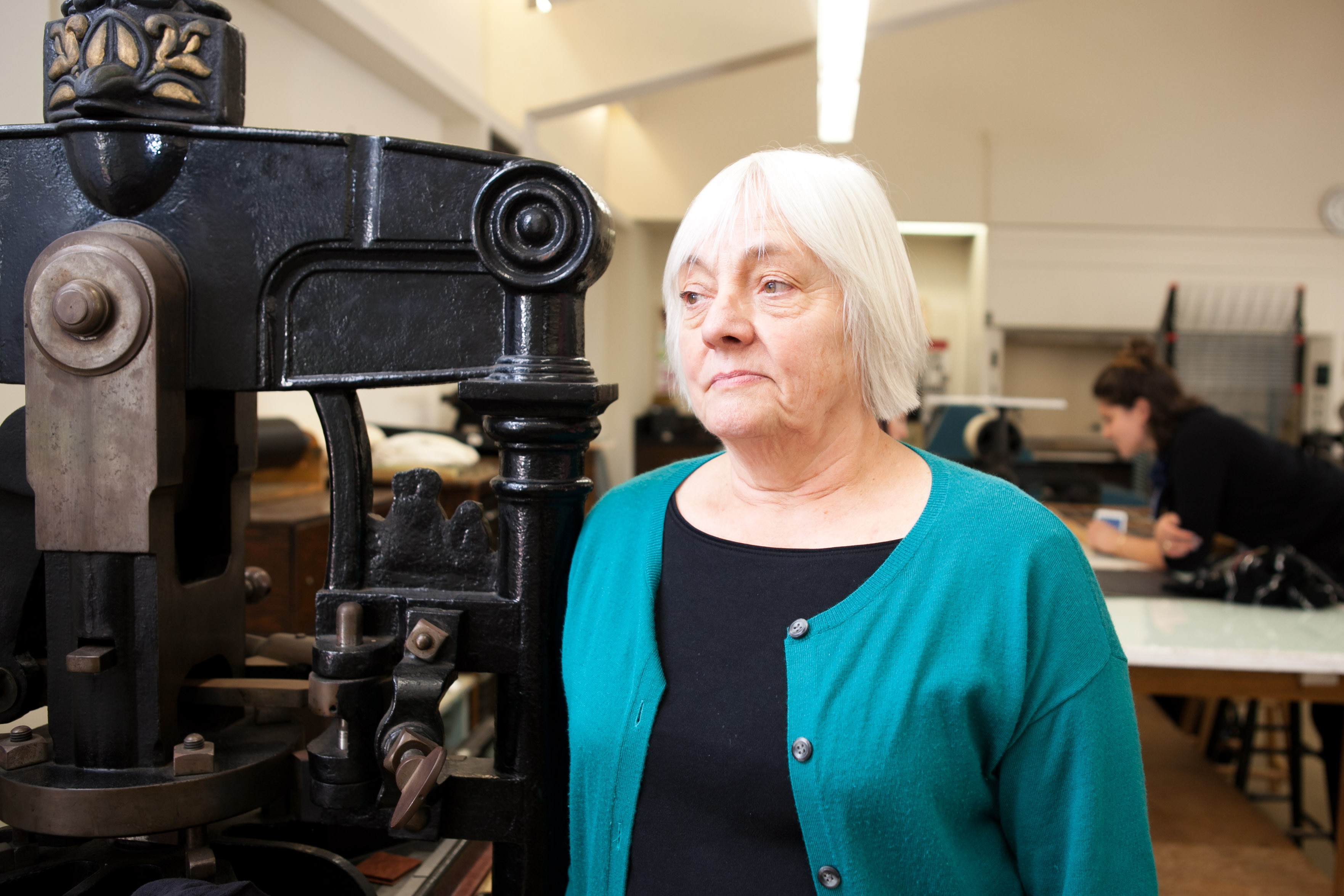
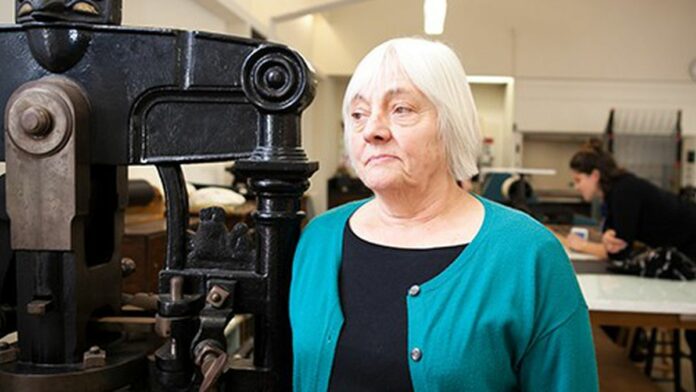
The same could be said for book art. The program offers a highly selective dual master’s degree in book art and creative writing — the only of its kind in the country — as well as a book art minor for undergraduates. In the classes, the students learn about the history of books while creating intricate “art books” in the studio. Although it’s easy to classify the field as outdated in the context of a 21st century curriculum, within the book art community, the Mills program is often regarded as the best in the country — and was also the first. Since the announcement, letters have been pouring in from concerned alumni and artists throughout the world, said program head Kathleen Walkup.

Book art classes have been taught at the college since 1930, and the dual MFA has existed since 2006. Walkup, who has been teaching in the department for more than thirty years, is the only full-time faculty member in book art; she’s assisted by an associate professor named Julie Chen. Because Walkup and Chen are both on three-year renewable contracts, which give them professor-level salaries but don’t grant them tenure, the book art department is uniquely positioned for the possibility of total closure.

But both book art students and faculty find the proposal to end the program a troubling indication of a gaping disconnect between the school’s administration and the reality of campus culture. “I honestly just don’t think that they realize how much this program is valued by not just the local community, but the national and even the international community,” said Walkup. “It is ironic that there’s just a huge push over and over for the past year to come up with innovative, interdisciplinary programs to give the school a national reputation and then they kill the one program that hits all those benchmarks.”

Grace Forrest, an undergraduate book art minor, said she was ready to leave Mills until the quality of the curriculum and the tightknit community of students she found in book art classes convinced her to stay. Before she spent time in the studio, she didn’t have a grasp of what book art was, and she’s convinced that the administration and board of trustees are similarly in the dark.

Since the proposal was announced, both dance and book art students have been trying to raise awareness about the value of their respective fields by gathering testimonials on Tumblr and petition signatures on Change.org. As of Monday morning, the petitions had each gathered over 4,000 signatures.

“It’s fairly clear from the hundreds of letters that we’re getting that this program has had an important impact on people’s lives,” said Walkup. “And that’s what I care about — that the college recognizes that for what it is and recognizes the community that had developed around the program.”

Tab in Wonderland

0

America in the 1950s was a different planet than the one we now inhabit. Case in point: Tab Hunter, movie and singing star, gossip column sensation, fantasy sex object, and subject of the lightly agreeable documentary Tab Hunter Confidential.

Hunter (civilian name: Art Gelien) was one of the last inmates of the now-vanished Hollywood studio system of grooming talent under long-term contract. That system would fall apart a few years after New York City native Hunter — the blond, ridiculously handsome son of a German-immigrant mother and a mostly-absent father — first signed with Warner Bros. in the early Fifties. His boss, Jack L. Warner, “tabbed” him a future star, largely on the basis of his “California surfer” looks, and assumed control of his every waking hour, shepherding Tab through a series of grade-B starter pics and ascending publicity blitzes while building him into a ubiquitous matinee idol. Teenage girls, especially, couldn’t get enough of him.

Tab had a secret, however. He was gay, which made his romantic roles (opposite everyone from Linda Darnell to Sophia Loren to his beard “girlfriend,” Natalie Wood) and movie-magazine puff pieces about how he “hadn’t found the right girl yet” look a trifle disingenuous. In the days when homosexuality was a crime in most states, the film industry’s gay community was cosseted in a job-security blanket maintained by studio publicity departments, which hushed up all but the occasional reference to “limp-wristed pajama parties.” Added to which, Hunter absolutely refused to talk about his personal life, to anyone, for years.

He speaks out at last in director Jeffrey Schwarz’s sympathetic biodoc. Hunter, now a well preserved 84-year-old horse enthusiast, comes across as a genuinely sincere, unassuming man cursed by magnetic beauty, grateful for his showbiz career yet relieved to be out of the glare. It was his fate to be overshadowed, in critics’ eyes, by such angry young actors as Montgomery Clift, James Dean, and Marlon Brando. Compared to them, Hunter was too normal. It’s doubtful the doc will cause anyone to run out and look for his movies, except maybe the spoofs Polyester or Lust in the Dust. Hunter won’t mind in the least. As he explains, he’s “happy to be forgotten.”

Special Deal Would Benefit Influential Oakland Developer

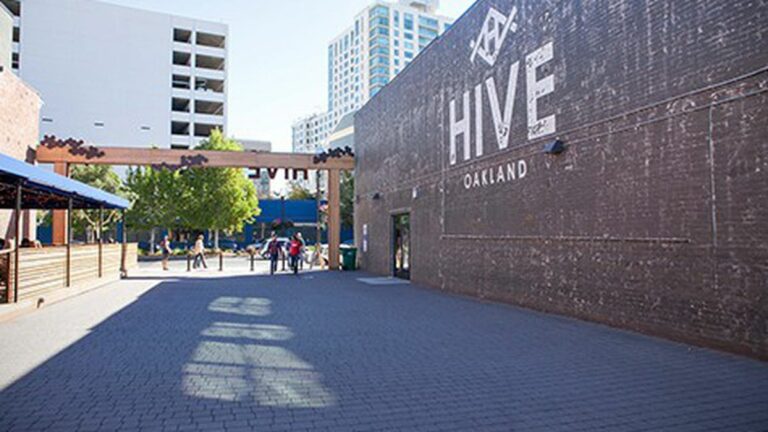
The Oakland Planning and Building Department recently attempted to quietly push through changes to the city’s zoning code that would greatly benefit a politically connected developer who has acquired a big chunk of real estate in Uptown Oakland, right in the heart of First Friday, the Express has learned. Planning staffers buried the proposed zoning amendment in a six hundred-plus page document amid other proposed changes that they described as routine and neutral efforts meant only to “clean up” Oakland’s planning code. But the zoning change, which underwent no public scrutiny before the planning department recently proposed it, would greatly increase the value of property recently purchased by Signature Development Group, a major Oakland real estate company run by Michael Ghielmetti, and would make it easier to build a large development project between 24th and 25th streets near Broadway.

“There seems to be a blatant disregard for the community,” said Hiroko Kurihara, founder and director of the nonprofit 25th Street Collective, in an interview. “The zoning changes that were proposed at the last minute … left even members of the planning commission scratching their heads.”

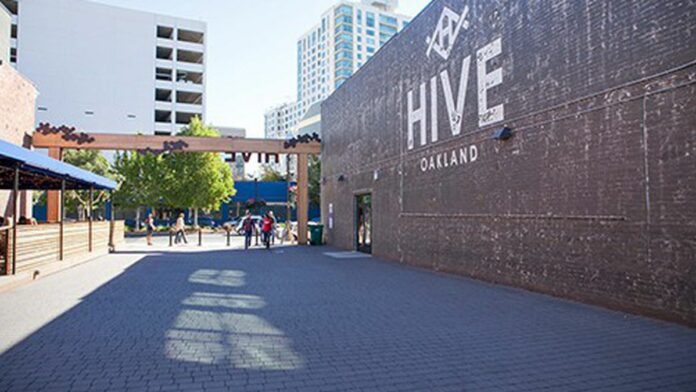
Planning department staffers proposed the changes publicly on October 16, just five days before asking the Planning Commission to approve them. The proposed zoning amendments would allow Signature to erect buildings of up to 85 feet in height in an area now populated by one- and two-story structures. The proposed changes would also allow Signature to build a large mixed-use development, including housing, just across 24th Street from the company’s existing mixed-use development called the Hive.

“Why is the City of Oakland changing zoning and height variances only for these properties that have only recently been purchased, or are soon to be, by Mike Ghielmetti?” said Cory Gunter Brown, an artist who lives in the neighborhood, in an interview. “If the city is asking for these things, then they’re acting as a representative for his companies.”

In an interview, Ghielmetti insisted that he has no specific plans for new projects in the neighborhood. He also said he wants to talk with members of the community before making any moves. And he said he did not ask the city to make the zoning changes on his behalf.

Ed Manasse, the strategic planning director for the City of Oakland who presented the zoning changes at the planning commission meeting, also said in an interview that Signature and the city did not coordinate on the proposed zoning changes. “The city is not working with Signature,” Manasse said.

However, according to maps drafted by planning staffers, the proposed zoning changes overlap exactly with real estate that Signature Development has already purchased and is in the process of acquiring on 24th and 25th streets between Broadway and Telegraph Avenue. The proposed zoning change was item 38 in a package of 42 complex proposed amendments to the planning code, all crowded into in a 617-page document. Planning staffers withdrew the proposed changes following a public outcry at the October 21 meeting, but the department is expected to bring back a similar proposal in the near future.

In the tight-knit Uptown neighborhood where Signature is acquiring property, artists and residents are worried about the future of the area and of First Friday, Oakland’s popular monthly art festival, and they said they want to work with the city and Signature to shape the area’s development. But many residents feel that the planning department is instead working hand-in-glove with developers in a less-than transparent process to reshape their community.

“I’m not anti-development,” said Lonnie Lee, founder and director of Vessel Gallery located at 471 25th Street. “I understand and value development in cities, but I believe in responsible development that engages the citizens who are being affected.”

At the October 21 planning commission meeting, a lobbyist with business and financial ties to Signature Development pushed hard for the proposed zoning changes. Gregory McConnell, speaking on behalf of the Jobs and Housing Coalition, told planning commissioners that “activating Broadway is something that should go forward immediately.”

“If there’s controversy about some issues with regard to the art community, that is something you should address and talk about at another date when there can be more dialogue between the city and the potential people who might develop given those changes,” McConnell continued. “But right now, we strongly urge you to move forward.”

McConnell’s Jobs and Housing Coalition is a developer-funded business lobbying group, and Ghielmetti sits on the organization’s board. In April, Signature contributed $25,000 to the Oakland Jobs PAC, a political action committee that is also run by McConnell and is affiliated with the Jobs and Housing Coalition. The Oakland Jobs PAC pays the McConnell Group, a private company owned and operated by McConnell, for political consulting services. The Jobs and Housing Coalition also pays the McConnell Group $250,000 a year as an independent contractor to handle “administrative and government affairs” work, according to the group’s tax returns.

In addition, public records show that in August, Signature Development and Jordan Real Estate Investment, which partnered with Signature to finance the Hive, bought the ER Transmission building at 450 24th Street for $1.7 million. The property lies just across 24th Street from the Hive’s Mason apartments. In an interview, Ghielmetti confirmed that his company bought the property. He also told the planning commission two weeks ago that he has options on other real estate in the area.

Gunter Brown, who lives and works in a two-story warehouse located at 447 25th Street, right behind the parcel recently bought by Signature, said she only recently found out about Signature’s plans to buy out half her block when a neighbor handed her a letter they received in July from a company called Bella Vista Land Advisors. According to the letter, a copy of which Gunter Brown provided me to review, Bella Vista Land Advisors is helping Signature acquire property, and has already secured agreements with four property owners to sell potentially seven parcels comprising the entire eastern half of the block between 24th Street and 25th Street. These include the Mitsubishi dealership on Broadway, and a large warehouse and parking lot in the middle of the block owned by Don Pigozzi which for years has served as a machine shop. The letter states “[Signature] would like to add your property to the project, if you are willing to sell.”

Signature Development built the Hive in 2013 on the block between 24th and 23rd streets along Broadway. Ghielmetti leased space in the Hive to a diverse group of tenants, including the Impact Hub and Omi Gallery, and many have praised his company for investing in the area. Signature also built 104 luxury apartments in the recently completed Mason at the Hive. Rents for a one-bedroom start at $2,835 — prices that many current residents in the neighborhood said they could not afford. There are no affordable units at the Mason.

Commercial rents in the area are also rising rapidly. Kurihara said the 25th Street Collective will have to move out of its space at 477 25th Street in August 2016 when its lease is up. The landlord recently increased rent by 35 percent. The 25th Street Collective houses textile artists and helps them incubate small businesses.

“What’s happening wholesale in the city is we’re losing our manufacturing,” said Kurihara. “And it could hurt us all because it’s a viable sector right now to bring communities out of poverty wages.” Kurihara said she hopes Ghielmetti will work with the existing community of artisans in Uptown to possibly develop affordable housing and commercial spaces alongside what is expected to be more market-rate housing and restaurants like what already exist in the Hive.

A similar proposal to rezone two parcels on Alice and Harrison streets, just behind a row of buildings along 14th Street went unchallenged at the planning commission two weeks ago, but the commission did not vote on the item. It’s unclear what the advantages would be for a developer to have the new zoning, but several businesses that rent storefront space on 14th Street, right next to the parcels that would be rezoned, said that a developer recently contacted them and told them that nearby property would soon be turned into lofts.

“Right now we don’t feel like our city is working on our behalf to build a place for us in the future,” said Gunter Brown. “My take away is: I need to keep talking with my neighbors and to get more involved in how policy is crafted in the City of Oakland and how we can have a voice in that.”

Free Will Astrology

Aries (March 21–April 19): In 1978, Ben Cohen and Jerry Greenfield began selling their new ice cream out of a refurbished gas station in Burlington, Vermont. Thirty-seven years later, Ben & Jerry’s is among the world’s best-selling ice cream brands. Its success stems in part from its willingness to keep transforming the way it does business. “My mantra is ‘Change is a wonderful thing,'” says the current CEO. As evidence of the company’s intention to keep re-evaluating its approach, there’s a “Flavor Graveyard” on its website, where it lists flavors it has tried to sell but ultimately abandoned. “Wavy Gravy,” “Tennessee Mud,” and “Turtle Soup” are among the departed. Now is a favorable time for you to engage in a purge of your own, Aries. What parts of your life don’t work anymore? What personal changes would be wonderful things?

Taurus (April 20–May 20): Before he helped launch Apple Computer in the 1970s, tech pioneer Steve Wozniak ran a dial-a-joke service. Most of the time, people who called got an automated recording, but now and then Wozniak answered himself. That’s how he met Alice Robertson, the woman who later became his wife. I’m guessing you will have comparable experiences in the coming weeks, Taurus. Future allies may come into your life in unexpected ways. It’s as if mysterious forces will be conspiring to connect you with people you need to know.

Gemini (May 21­–June 20): Small, nondestructive earthquakes are common. Our planet has an average of 1,400 of them every day. This subtle underground mayhem has been going on steadily for millions of years. According to recent research, it has been responsible for creating 80 percent of the world’s gold. I suspect that the next six or seven months will feature a metaphorically analogous process in your life. You will experience deep-seated quivering and grinding that won’t bring major disruptions even as it generates the equivalent of gold deposits. Make it your goal to welcome and even thrive on the subterranean friction!

Cancer (June 21–July 22): Here’s the process I went through to create your horoscope. First I drew up a chart of your astrological aspects. Using my analytical skills, I pondered their meaning. Next, I called on my intuitive powers, asking my unconscious mind to provide symbols that would be useful to you. The response I got from my deeper mind was surprising: It informed me that I should go to a new cafe that had just opened downtown. Ten minutes later, I was there, gazing at a menu packed with exotic treats: Banana Flirty Milk, Champagne Coconut Mango Slushy, Honey Dew Jelly Juice, Creamy Wild Berry Blitz, Sweet Dreamy Ginger Snow. I suspect these are metaphors for experiences that are coming your way.

Leo (July 23­–Aug. 22): The Beatles’ song “You Never Give Me Your Money” has this poignant lyric: Oh, that magic feeling, nowhere to go. I suggest you make it your motto for now. And if you have not yet begun to feel the allure of that sentiment, initiate the necessary shifts to get yourself in the mood. Why? Because it’s time to recharge your spiritual battery, and the best way to do that is to immerse yourself in the mystery of having nothing to do and nowhere to go. Put your faith in the pregnant silence, Leo. Let emptiness teach you what you need to know next.

Virgo (Aug. 23–Sept. 22): Should a professional singer be criticized for her lack of skill in laying bricks? Is it reasonable to chide a kindergarten teacher for his ineptitude as an airplane pilot? Does it make sense to complain about a cat’s inability to bark? Of course not. There are many other unwarranted comparisons that are almost as irrational but not as obviously unfair. Is it right for you to wish your current lover or best friend could have the same je ne sais quoi as a previous lover or best friend? Should you try to manipulate the future so that it’s more like the past? Are you justified in demanding that your head and your heart come to identical conclusions? No, no, and no. Allow the differences to be differences. And more than that: Celebrate them!

Libra (Sept. 23–Oct. 22): In the mid 19th century, an American named Cyrus McCormick patented a breakthrough that had the potential to revolutionize agriculture. It was a mechanical reaper that harvested crops with far more ease and efficiency than hand-held sickles and scythes. But his innovation didn’t enter into mainstream use for twenty years. In part that was because many farmers were skeptical of trying a new technology and feared it would eliminate jobs. I don’t foresee you having to wait nearly as long for acceptance of your new wrinkles, Libra. But you may have to be patient.

Scorpio (Oct. 23–Nov. 21): Is it possible to express a benevolent form of vanity? I say yes. In the coming weeks, your boasts may be quite lyrical and therapeutic. They may even uplift and motivate those who hear them. Acts of self-aggrandizement that would normally cast long shadows might instead produce generous results. That’s why I’m giving you a go-ahead to embody the following attitude from Nikki Giovanni’s poem “Ego Tripping (there may be a reason why):” I am so perfect so divine so ethereal so surreal I cannot be comprehended except by my permission.

Sagittarius (Nov. 22­–Dec. 21): Regard the current tensions and detours as camouflaged gifts from the gods of growth. You’re being offered a potent opportunity to counteract the effects of a self-sabotage you committed once upon a time. You’re getting an excellent chance to develop the strength of character that can blossom from dealing with soul-bending riddles. In fact, I think you’d be wise to feel a surge of gratitude right now. To do so will empower you to take maximum advantage of the disguised blessings.

Capricorn (Dec. 22–Jan. 19): You are slipping into a phase when new teachers are likely to appear. That’s excellent news, because the coming weeks will also be a time when you especially need new teachings. Your good fortune doesn’t end there. I suspect that you will have an enhanced capacity to learn quickly and deeply. With all these factors conspiring in your favor, Capricorn, I predict that by January 1, you will be smarter, humbler, more flexible, and better prepared to get what you want in 2016.

Aquarius (Jan. 20–Feb. 18): American author Mark Twain seemed to enjoy his disgust with the novels of Jane Austen, who died eighteen years before he was born. “Her books madden me so that I can’t conceal my frenzy,” he said, even as he confessed that he had perused some of her work multiple times. “Every time I read Pride and Prejudice,” he wrote to a friend about Austen’s most famous story, “I want to dig her up and beat her over the skull with her own shin-bone.” We might ask why he repetitively sought an experience that bothered him. I am posing a similar question to you, Aquarius. According to my analysis, the coming weeks will be an excellent time to renounce, once and for all, your association with anything or anyone you are addicted to disliking.

Pisces (Feb. 19–March 20): The Sahara in Northern Africa is the largest hot desert on the planet. It’s almost the size of the United States. Cloud cover is rare, the humidity is low, and the temperature of the sand can easily exceed 170º F. (80º C.). That’s why it was so surprising when snow fell there in February of 1979 for the first time in memory. This once-in-a-lifetime visitation happened again 33 years later. I’m expecting a similar anomaly in your world, Pisces. Like the desert snow, your version should be mostly interesting and only slightly inconvenient. It may even have an upside. Saharan locals testified that the storm helped the palm trees because it killed off the parasites feeding on them.

Meat Market Leaves the Garage

Silk-screened posters, T-shirts, and drawings littered Jeffrey Cheung's narrow studio at LoBot Gallery, a DIY art space and venue named after its Lower Bottoms neighborhood in West Oakland. On a recent evening, the other members of his band, Meat Market, squeezed into the cramped workspace to help Cheung sort through the tangles of artwork strewn about his furniture. Cheung is...

A Bumper Year for Pot

The storm on November 2 signaled the official end to the 2015 cannabis growing season. And judging by industry and farmers' reports, California likely harvested a bumper crop of great bud this year — despite the fourth year of drought. "It's been stellar," said Casey O'Neill with Happy Day Farms in Garberville. "So far, it's looking pretty kick-ass," said Kevin...

The Golden Ones

The Golden State Warriors' motto last year — "strength in numbers" — was designed to celebrate the size and loyalty of the team's fanbase. The motto appeared on TV promos, billboards, and canary-yellow T-shirts draped over every seat at Oracle Arena for certain home games. Numbers also offer one of the best ways to demonstrate how...

One-Night Stands

Thursday, November 5 METEn: Tannhauser Encore (310 min., 2015). (AMC Bay Street 16, Emeryville, 12:55) Vanishing of the Bees (87 min., 2009). Followed by a discussion with Friends of the Earth (Berkeley Fellowship of Unitarian Universalists' Hall, Berkeley, 6:30) Catch Me If You Can (l40 min., 2002). (UA Berkeley 7, Berkeley, 9:00) The Cat Returns (75 min, 2002). (The New Parkway, Oakland, 9:30) Friday,...

Sexless Marriages: The Last Word

DEAR READERS: Two weeks ago, I announced I would be taking a nice, long break from questions about miserable sexless marriages. (I don't get questions about happily sexless marriages.) I tossed out my standard line of advice to those who've exhausted medical, psychological, and situational fixes ("Do what you need to do to stay married and stay sane"), and...

The Physicality of Sound

Last March, Tarek Atoui, the internationally acclaimed Paris-based sound artist, stood before a platter of electronic dials, sliders, and sensors embedded into an unlabeled control deck in the front of Meyer Sound's private performance space in Berkeley. As if communicating with the self-made instrument through gesture, Atoui's hands flitted from one electronic appendage to the next, theatrically activating a...

An Identity Crisis at Mills College

Last Wednesday, just before noon at Mills College in Oakland, the school's dance students staged an outdoor cypher on the campus' central lawn. As the dancers took turns leaping into the center of the circle, others chanted "Mills needs dance!" Meanwhile, a large group of students gathered in front of the adjacent auditorium with painted signs carrying...

Tab in Wonderland

America in the 1950s was a different planet than the one we now inhabit. Case in point: Tab Hunter, movie and singing star, gossip column sensation, fantasy sex object, and subject of the lightly agreeable documentary Tab Hunter Confidential. Hunter (civilian name: Art Gelien) was one of the last inmates of the now-vanished Hollywood studio system of grooming talent under...

Special Deal Would Benefit Influential Oakland Developer

The Oakland Planning and Building Department recently attempted to quietly push through changes to the city's zoning code that would greatly benefit a politically connected developer who has acquired a big chunk of real estate in Uptown Oakland, right in the heart of First Friday, the Express has learned. Planning staffers buried the proposed zoning amendment in a six...

Free Will Astrology

Aries (March 21–April 19): In 1978, Ben Cohen and Jerry Greenfield began selling their new ice cream out of a refurbished gas station in Burlington, Vermont. Thirty-seven years later, Ben & Jerry's is among the world's best-selling ice cream brands. Its success stems in part from its willingness to keep transforming the way it does business. "My mantra is...
19,045FansLike
17,709FollowersFollow
61,790FollowersFollow