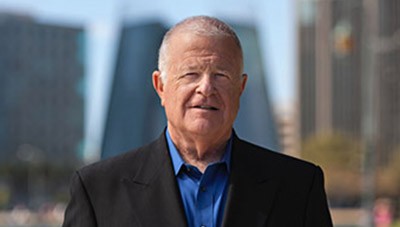
As a queer man of color — I’m Asian — I feel wounded whenever I am exposed to gay men in New York City, Toronto, or any city where white gay men dominate. Gay men, mostly whites and Asians, reject me because of my race and no one admits to their sexual racism. I understand that sexual attraction is subconscious for many people. But it is unfair for a gay Asian like myself to be constantly marginalized and rejected. I fight for gay rights, too. I believe in equality, too. I had the same pain of being gay in high school and the same fears when coming out. Why is there no acceptance, no space, no welcome for me in this white-painted gay community? I’m six-foot-one, 160 pounds, fit, and very good-looking. What can I do? I might as well be a sexless monk.
Enraged Dude Details Infuriating Experience
“I relate to a lot of what EDDIE is feeling here,” said Joel Kim Booster, a Brooklyn writer and comedian. “The double-edged sword of living in a city with a large gay community is that the community gets so large that we finally have the opportunity to marginalize people within it.”
Jeff Chu, a writer who also lives in Brooklyn, can relate: “Racism still thrives in the gay community, just as in broader society,” said Chu. “Many of us who are Asian American come out of the closet and walk into this weird bamboo cage, where we’re either fetishized or ignored. Many times I’d go into a gay bar and see guys playing out some gross interracial porno in their heads — with me playing the part of their Chinese pocket gay. Others (the ones I was interested in, to be candid) would act as if I were wearing an invisibility cheongsam.”
Chu feels there’s plenty of blame to go around for this sad state of affairs. “It’s the gay media,” said Chu. “It’s Hollywood. (Even with all the LGBT characters we have on TV now, what images do we have of Asian American ones?) It’s that LGBT-rights organizations still haven’t diversified enough, especially in their leadership. And it’s all of us, when we’re lazy and don’t confront our own prejudices.”
Booster and Chu are right: Racism is a problem in the gay community, some people within are unfairly and cruelly marginalized, and we all need to confront our own prejudices.
Even you, EDDIE. You cite your height (tall!), weight (slim!), and looks (VGL!) as proof you’ve faced sexual rejection based solely on your race. But short, heavy, average-looking/unconventionally-attractive guys face rejection for not being tall, lean, or conventionally hot, just as you’ve faced rejection for not being white. (The cultural baggage and biases that inform a preference for, say, tall guys is a lot less toxic than the cultural baggage and biases that inform a preference for white guys — duh, obviously.)
“As a stereotypically short Chinese guy, my first reaction to reading EDDIE’s letter? Damn, he’s six-foot-one! I’m jealous,” said Chu. “And that’s also part of the problem. I, like many others, have internalized an ideal: tall, gym-perfected, blah blah blah — and, above all, white.”
Booster was also struck by your stats. “It’s hard for me to wrap my head around any six-foot-one, fit, VGL guy having trouble getting laid,” said Booster. “On paper, this is the gay ideal! I don’t really consider myself any of those things — and I have a perfectly respectable amount of sex.”
Booster, who somehow manages to have plenty of sex in New York’s “white-painted gay community,” had some practical tips for you. “EDDIE should stay away from the apps if the experience becomes too negative,” Booster said. “If logging on to a hookup app bums him out, take a break. Being a double minority can be isolating, but living in a big city can be great. There are meet-ups and clubs and activities for all stripes. Join a gay volleyball league — truly where gay Asian men thrive — or find one of the many gay Asian nights at one of the gay bars around the city. They’re out there.”
Chu has also managed to find romantic success in New York. “I’ve been where EDDIE is, except shorter, less fit, and less good-looking, and somehow I found a husband,” said Chu. “The monastery wasn’t my calling, and I suspect it’s not EDDIE’s either.”
A quick word to gay white men: It’s fine to have “preferences.” But we need to examine our preferences and give some thought to the cultural forces that may have shaped them. It’s a good idea to make sure your preferences are actually yours and not some limited and limiting racist crap pounded into your head by TV, movies, and porn. But while preferences are allowed (and gay men of color have them, too), there’s no excuse for littering Grindr or Tinder or Recon — or your conversations in bars — with dehumanizing garbage like “no Asians,” “no Blacks,” “no femmes,” “no fatties,” etc.
And while racism is a problem in the gay community (sometimes thoughtless, sometimes malicious, always unacceptable), according to 2010 US Census data, as crunched by the Williams Institute at UCLA, same-sex couples are far likelier to be interracial (20.6 percent) than opposite-sex couples (13.9 percent). So there’s hope — and I don’t mean “hope that EDDIE will one day land a magic white boyfriend,” but hope for less racism in the gay community generally and fewer racist Grindr profiles specifically.
The last word goes to Booster: “A note to the rice queens who will undoubtedly write in about this man: We like that you like us. But liking us solely because our race can be uncomfortable at best, and creepy as hell at worst. In my experience, it’s perfectly okay to keep some of those preferences behind the curtain while you get to know us a bit as humans first.”
Jeff Chu is the author of Does Jesus Really Love Me?: A Gay Christian’s Pilgrimage in Search of God in America. Follow him on Twitter @jeffchu. Follow Joel Kim Booster on Twitter @ihatejoelkim.
I am an Italian bisexual 25-year-old guy. I’m in love with a great guy, but he lives far away, andwe see each other only one time per month and sometimes less. A few weeks ago, I had sex with a female university colleague. It wasn’t anything special: She was somewhat drunk and hurt me with her teeth during petting, so I didn’t have a good erection and I didn’t come. But I liked having sex with a woman. I want to do it again, but I love my boyfriend and I don’t want to hurt him. Am I destined to be unfaithful?
More Or Less
Italians pet with their teeth? Good to know. Also good to know: yourself. Now, I would never suggest that bi guys can’t honor monogamous commitments — even though I routinely say just that about straight guys, gay guys, straight women, and lesbians — but it would be foolish for you to make a monogamous commitment. Not because you’re “destined to be unfaithful,” MOL, but because you’ve already been unfaithful.
Here’s what you know about yourself: You’re bisexual, you want to have sex with women and men, and you don’t want to cheat. Which means you’ll have to either renegotiate the terms of the relationship you’re in now — get your boyfriend’s okay to have sex with a woman once in a while — or end the relationship and find a boyfriend (or girlfriend) who will give you their okay.
Michael Flemming fears he will be forgotten. During a phone interview last month from San Quentin State Prison, he said one of the hardest parts of serving an indefinite prison sentence is coming to terms with the reality that he might not live to experience freedom again. “When you are in prison as long as I am, being remembered for something good in my life becomes very important,” said the soft-spoken, 53-year-old inmate, his voice shaking. “I have an intense fear of dying while still in prison.”
Not long after of our conversation began, Flemming admitted he had anxiety about talking to me. “Right now, I’m incredibly nervous,” he said. He told me he was learning how to speak up for himself more and had recently become a lot better at talking about dark memories or sharing his feelings in various prison support groups. “I speak in front of large crowds,” he said. “I’m practicing and getting more confident.”
Troy Williams said he only found peace in prison during the few hours he slept each night.
Credits: Bert Johnson
Michael Tyler said it was clear that his presentation and word choice at the parole board were critical to him being released.
Credits: Bert Johnson
Flemming knows that if he can’t talk openly about himself and articulate what happened to him when he was young, he could end up dying behind bars. That’s because in order to make it out of prison, he will have to survive an hours-long interrogation that seems designed to break him down.
Flemming has spent 32 years behind bars for killing a police officer in a drunken-driving crash on October 19, 1983 in Mojave, a small town in Kern County, two hours north of Los Angeles. According to his records, Flemming, then 21 years old and a severe alcoholic, robbed a supermarket while armed and extremely intoxicated. As he fled the scene in a stolen truck, he crashed head-on into an officer responding to the robbery. Kern County Sheriff’s Office Deputy Michael Bentley, 33, did not survive.
Prosecutors subsequently charged Flemming with first-degree murder and a judge sentenced him to 25 years to life — meaning a life sentence with the possibility of parole. He officially became eligible for parole in 1999 (prisoners with good behavior generally become eligible for early release), but he has not been able to convince the California Board of Parole Hearings that he is ready to come home. The parole board is made up of commissioners who are appointed by the governor; most have extensive backgrounds in law enforcement. In order to receive a parole grant, Flemming has to demonstrate that he is no longer a danger to society, is genuinely remorseful, and has a deep understanding of why he committed the offense.
But every time he tries to explain how he ended up crashing his car so many years ago, his answers never come close to satisfying the commissioners or the Kern County District Attorney’s Office, which has vigorously argued for his continued incarceration. He told me that he became particularly incapable of addressing the parole board when, early into his hearing on September 3, 2014, Commissioner Marisela Montes confronted him about one of the worst traumas of his life.
Flemming, Montes noted, had reported during a prison psychological evaluation that two men had raped him when he was fifteen years old. According to the board’s official transcript of the hearing, Montes’ first question about the abuse was: “Why’d you wait twenty years to tell anybody about that?”
Flemming stumbled, trying to explain why he finally decided to tell his wife. “I just happened to blurt it out over the phone,” he said. “I had not even told my mother and father.”
“So what were the names of the people who molested you?” Montes continued.
“I would rather not say,” he replied. “One — one’s dead and the other one has a significant family back home.”
“Are these people real?” Montes further questioned.
“Yes, ma’am,” Flemming replied.
After Flemming explained that the men, who were friends of his family, had become physically violent and sexually assaulted him, Montes asked him once again why he didn’t report it.
“I, I never told anybody until it just became so, an unbearing [sic] mass of, of, of pain. I guess the best way I could describe it is just a mass of blackness inside me,” he said.
A third time, she asked him how he managed to keep the rape a secret from his parents considering the anxiety, depression, and nightmares it caused him.
“I mean, I was a kid. I had, I assumed that it was my, in some way, my fault,” he replied.
Attorney Kate Brosgart said she has witnessed parole commissioners chastise prisoners who have been victims behind bars.
Credits: Bert Johnson
Flemming then repeatedly emphasized that he takes full responsibility for the fatal crash, saying, “I committed a reckless and horrible act. … There is no legitimate excuse for the taking of a human life. … I was a despicable, reckless human being.” But he also tried to explain that the childhood sexual assault contributed to his alcohol abuse as a teenager, which was clearly a central factor in the crash that day.
Montes didn’t buy it. At the end of the hearing, she announced that the board would once again deny Flemming parole — for the sixth time — because he is still unable to articulate the underlying reasons why he killed Deputy Bentley. Referencing his testimony about the rape, she added: “A lot of these factors that you point to don’t really get to the heart of the issue. They’re external factors. They’re things that other people did to you — almost describing yourself as a victim.”
Flemming, speaking to me by phone more than a year later, said he did his best during the hearing to maintain his composure, but fell apart when Montes continued to badger him about being molested. “For her to even imply I’m not telling the truth sent me spiraling out of control into a downward depression right there in [front of] the board,” he said.
Criminal defense attorneys say that Flemming’s experience is far from unique. “Lifers” — the roughly 34,000 California prisoners convicted of serious crimes, typically murder, serving indefinite sentences with the possibility of parole — are routinely denied opportunities at second chances because they fail to impress the commissioners who grill them in their hearings. As I wrote in Part One of “Trapped” (see last week’s feature, “Cruel and Indefinite Punishment”), inmates who have spent decades behind bars — and have proven records of rehabilitation — often don’t get parole due to subjective and arbitrary reasons, such as minor rule violations. That’s despite the fact that the law requires the parole board to release lifers who no longer pose a threat to public safety.
The fight for parole can be especially challenging for more vulnerable prisoners. Inmates struggling with mental illness, psychological trauma, past abuse, and other significant disadvantages fail to get adequate treatment and care behind bars, according to activists and experts who have studied prison conditions in California. The parole board and district attorneys subsequently reprimand inmates for not doing enough “self-help” work — sometimes directly scolding them for failing to complete programming that is simply not available in the overcrowded prisons. At the same time, many of the most marginalized prisoners — such as those with developmental disabilities, histories of violence to overcome, or memory problems in their old age — are often incapable of verbalizing their remorse and personal growth.
Even if an abundance of evidence in their case files strongly suggests they would not be a danger if released, inmates who don’t perform well during high-stakes hearings and psychological evaluations often have little hope of freedom. That means for some, life with the possibility of parole is, in effect, a sentence to death behind bars.
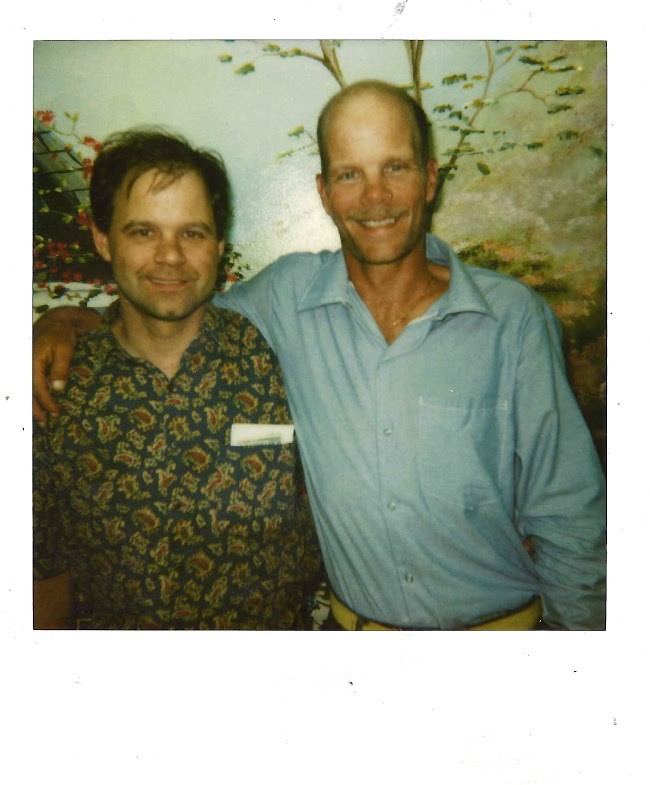
Brett (left) and Michael Flemming.
Credits: Courtesy of Brett Flemming
Not long ago, California’s prisons were so overcrowded that inmates lacked access to basic, adequate medical and mental health care — in violation of the Eighth Amendment of the US Constitution, which prohibits cruel and unusual punishment. That was the conclusion of the US Supreme Court in 2011’s landmark Brown v. Plata decision, which affirmed a previous federal court order requiring the California Department of Corrections and Rehabilitation (CDCR) to reduce its prison population to 137.5 percent of design capacity — at the time equating to a reduction of roughly 33,000 inmates.
Due to severe overcrowding and scarce “mental health treatment beds,” mentally ill prisoners faced lengthy delays in receiving treatment, and there were backlogs of hundreds of prisoners waiting to see doctors for physical care, the court stated. These “unsafe and unsanitary living conditions” promoted unrest and violence while also exacerbating prisoners’ latent mental illnesses. In 2006, the suicide rate in California prisons was nearly 80 percent higher than that of the national average for prisons. That year, the state averaged nearly one prisoner suicide per week. The Supreme Court case revealed that some suicidal inmates were held for long periods in phone booth-size, toiletless cages.
California has since reached the court-mandated reduction in its inmate population, and as of December 2015, the state’s prisons were at 136 percent capacity. (The facilities have about 30,000 more inmates than they were built to hold.) The state has accomplished this by, in large part, moving certain classes of lower-level offenders from state prisons to county jails and by reforming outdated, tough-on-crime practices that resulted in many prisoners serving lengthy sentences for nonviolent, victimless offenses, often drug-related.
Criminal justice advocates have welcomed reforms that reduce the incarceration time for those with “determinate sentences,” meaning people serving a finite amount of time before release. “But the lifers are being left behind in these policies,” said Keith Wattley, founder and director of UnCommon Law, an Oakland-based nonprofit that represents lifers in parole hearings. Experts say that if California wants to get serious about decreasing mass incarceration, prioritizing rehabilitation, and making its facilities more humane, it must closely examine its treatment of the lifers who committed violent offenses and now represent roughly 25 percent of the prison population.
Fewer than 1 percent of lifers are granted parole in their first hearing after they become eligible for release, according to UnCommon Law. In total, only about 20 percent of lifer hearings result in grants of release, and from 2011 to 2014, Governor Jerry Brown has reversed nearly 20 percent of grants, using his authority to veto the release of people serving life sentences for murder. In short, many lifers simply aren’t coming home. Between 2000 and 2010, 775 lifers convicted of murder died in custody, unable to get release dates, according to UnCommon Law.
Although conditions have improved as the state has continued to reduce its prison population, activists argue that lifers currently eligible for release have suffered through years of severe overcrowding — and still lack access to quality healthcare and rehabilitative services. That’s partly because the needs are so great. The population of mentally inmates in California prisons has nearly doubled since 2000, according to a recent analysis by Stanford Law School. In 2014, more than 37,000 inmates relied on mental health services, according to CDCR data. In this way, prisons have become de facto mental healthcare facilities despite the fundamentally anti-therapeutic nature of their design.
“There are thousands [of inmates] who need more than what they are getting now in terms of … therapy,” said Steve Fama, staff attorney with the Berkeley-based Prison Law Office, which has represented mentally ill prisoners in numerous legal cases. Fama said many inmates struggle with a range of mental health problems that may not be considered serious enough to get them consistent counseling. “They aren’t substantially impaired … but they still need help,” he said.
In many ways, the prisons don’t prioritize helping inmates overcome their struggles — whether it’s mental illness or trauma, abuse, or violence they experienced prior to their incarceration. On the contrary, lifers face a system that, advocates say, seems largely dedicated to their continued incarceration, despite numerous laws and policies that have the opposite intent. It’s a model of punishment that sets some lifers on a path of never-ending imprisonment that begins on Day One of their sentence.
Stephen Whitfield.
Credits: Bert Johnson
For years, Troy Williams only found peace in prison during the few hours he slept each night. Growing up immersed in gang violence in Los Angeles County, Williams, who is Black, encountered the same kinds of threats, violent conflicts, and racial politics behind bars that he had experienced on the outside during his youth and early twenties. In 1994, at age 27, Williams was the driver in a computer store robbery that turned violent, landing him a sentence of seven years to life for a “kidnap for robbery” conviction, according to his records. He said that from the start of his incarceration, it felt nearly impossible to avoid disputes and gang-related activities within the close confines of prison.
For people who have little firsthand knowledge of prison life, it can be difficult to understand how uniquely challenging it is to simply stay safe and out of trouble behind bars. “Imagine a bunch of peer pressure on steroids,” said Williams, who is now 49, in a recent interview. “You’re in a place where, when something happens on the yard, you don’t get to say, ‘I’m not involved.'”
Williams said that at some points during his imprisonment, the violence was so bad that he dreaded leaving his cell every morning and only found solace when prisoners slept at night. “You’re in the middle of hell trying to be an angel.”
For many lifers like Williams — who was released in October 2014, eleven years after he became eligible for parole and twenty years after he was first incarcerated — the idea of any sort of “rehabilitation” seems entirely out of reach at the start of a life sentence.
Wattley, director of UnCommon Law, explained how lifers in their late teens or twenties often enter prison with the assumption that they’ll never go home again. Behind bars, they quickly encounter gang-related violence and extreme pressure to be involved in more criminal activity. Some are forced to act tough to avoid being victimized. “They are expected to engage in violence, drug sales, manufacturing alcohol, making and holding weapons, participating in riots,” Wattley said. “They’re caught up in that lifestyle. And there’s not much time or opportunity or incentive to participate in positive programs.” Some inmates, he said, are shunned and ostracized by fellow prisoners if they spend too much time in the library or seek mental health counseling, for example.
Judy Bell, a former lifer and client of UnCommon Law, who spent 26 years in prison, said in an interview that when she was first incarcerated at 22, she “didn’t know how to cope and deal with things.” She explained how she was surrounded by chaos — drugs, violence, correctional officers having sex with inmates. “There was just so much corruptness,” she said, adding, “if someone tried to hurt me … I would get in a fight.”
In the early years of their sentences, many young lifers caught up in prison violence get disciplinary marks, are victimized, or both — and some may end up in solitary confinement as a result. Those situations are worse for mentally ill inmates, who are significantly more likely to be injured in prison fights and rack up rule violations, according to a Stanford Law School analysis of national data.
At the same time, prisoners convicted of serious crimes, especially those who are disciplined further behind bars, often wind up confined to the highest levels of security — in prisons and housing units that have the most restrictive environments and stringent rules — and thus tend to have the fewest opportunities to access programming, services, and employment. This makes it even harder for these inmates to get the help they need to change and to complete various programs that would eventually make them promising candidates for parole.
Paradoxically, prisoners who need the most help sometimes receive the least support. The disparity in programs can leave particularly vulnerable inmates at a serious disadvantage in preparing for parole, said Kate Brosgart, a state-appointed attorney who represents lifers at their parole hearings. “If the state is really interested in rehabilitation, the state should be making programs available,” she said.
Bill Sessa, CDCR spokesperson, noted that California shifted the criteria for security classification in 2008 in an effort to reward inmates who have demonstrated good behavior and move them to lower-security facilities with more programs. That change enabled the corrections department to begin transitioning roughly 17,000 inmates to less restrictive housing, where there are more rehab programs, according to a report provided by Sessa.
But there are ongoing challenges with access. For example, a 2014 report from a special master assigned to review the adequacy of CDCR’s mental health care found that in one institution, patients on “maximum custody status” received minimal programming — even when there was no individual clinical reason to justify this treatment.
The lack of programs can hurt lifers in direct and indirect ways. In the 2014 parole hearing involving Flemming, the inmate convicted in the drunken-driving crash, Commissioner Montes criticized him for failing to consistently participate in Alcoholics Anonymous. But as he explained during the hearing and later to me in an interview, when Flemming was incarcerated at Chuckawalla Valley State Prison in Southern California, he was stuck for years on a waiting list for AA, because there were no open spots for the classes.
Even if inmates eventually get access to high-quality programs, the reality for some lifers is that there’s just not enough individualized support to undo the psychological damage from spending years isolated in restrictive environments with total uncertainty about the future. Bell, the former UnCommon Law client, told me that the parole process itself took a major toll on her mental health. She endured both repeated denials and governor reversals before she was finally released in 2013 — and is still dealing with the emotional impacts of those rejections today. “Talk about PTSD,” said Bell, who is now 51. “The mental anguish of it was a lot for me. … I thought I was going to lose my mind.”
In an interview at an Oakland coffee shop, Williams began to cry when recalling the extreme isolation he faced during periods of his imprisonment. It was particularly bad when he cut off contact with the people behind bars who might get him into trouble. “You break away from everybody and you walk alone,” he said. “It is a lonely road, because you don’t have friends. … I remember in a ten-year period, there was maybe five people I could have a real conversation with.”
Having few meaningful connections with people made Williams feel less human as the years went by, he said. And as his incarceration continued, it became clear to him that prison was not helping prepare him for life on the outside — and that if he wanted to get a parole grant, he would have to do the work on his own.
Despite the many factors that make prisons fundamentally poor settings for rehabilitation, lifers find ways to turn themselves around. As they get older, they may find religion, spirituality, art, work trades, leadership positions, hobbies, productive relationships, and other positive forces that help them become solid candidates for release. Convincing parole commissioners that they’re ready, however, is a different battle — one that can seem divorced from their actual rehabilitation. This is especially true when it comes to an inmate’s ability to articulate his or her progress and stay strong in the face of painful questions.
Keith Wattley, founder of UnCommon Law.
Credits: Bert Johnson
Michael Tyler, a recently released lifer and former client of UnCommon Law, said it seemed clear that his presentation and word choice at the board were critical. “It’s a friggin’ stressful event,” he said of the hearings. “You’ve got all this time you just did, and you’ve got this opportunity to face so much more time. … I don’t think anywhere in life do you feel that type of stress. It was really difficult to be calm and say the things that you need to say.”
Tyler, now 36, is articulate and thoughtful — a fact that became obvious to me when I first saw him give a speech about parole at an UnCommon Law event at UC Berkeley. Other lifers, however, simply don’t have the cognitive abilities, public-speaking skills, or vocabulary necessary to properly advocate for themselves. “The guys could be ready as anybody, but they might have a bad delivery, and then they don’t get found suitable,” Tyler explained.
Attorneys and advocates who have supported lifers in hearings shared with me a range of stories in which they felt commissioners were cruel in their questioning of vulnerable prisoners and then unfairly harsh in their subsequent denials. I also reviewed case transcripts for this story that included offensive interrogations by parole board commissioners about sexual trauma, insensitive remarks about the deaths of an inmate’s loved ones, baseless determinations about a prisoner’s psychological state, and unjust criticisms of a lifer’s inability to describe remorse.
One female lifer in California — who was convicted of murder in the death of her husband — faced difficult questions about the prolonged abuse she said she experienced in her marriage. In a 2012 hearing, parole commissioner Cynthia Fritz asked the woman, then seventy years old, why she was assaulted by her husband. “Why did your husband rape and sodomize you?” Fritz asked at one point. The inmate responded: “Because that’s what he wanted.”
The commissioner also questioned the honesty of the inmate’s statements about her feelings for her husband after the inmate explained that she resented him for the abuse, but also loved him at the time. In announcing the denial of parole, Fritz expressed doubt about the woman’s recollections: “With so many horrific things going on in your life, throughout your life, it’s hard to believe that you would get angry and then forget about it.” (The Express has chosen not to name the female lifer in this case because we have been unable to reach her or her attorney.)
In another murder case involving a transgender lifer incarcerated at a California women’s prison, a prosecutor used the individual’s gender identity to advocate for a parole denial. According to an official transcript of the 2015 hearing, Los Angeles County Deputy District Attorney Joseph Shidler conceded that the inmate, Victoria Smith, posed a “low risk of violence,” based on an in-prison psychiatric evaluation. But Shidler argued that Smith, who was receiving hormone treatments at the time, was still a danger because of the “stressor” of being transgender. “Going through this transgender process leaves me with some questions as just how the inmate is going to be affording the remainder of [the hormone] treatment if released,” Shidler said. “And I want to emphasize, which the psychologist also mentioned, that … one of the stressors of [the inmate’s] life on the outside will be a transgender [sic]. The inmate is not ready for parole at this time.”
Brosgart, the state-appointed attorney, told me she has witnessed commissioners chastise prisoners who have been victims of violence behind bars, questioning them about whether they are prepared to deal with similar conflicts in society. Paraphrasing comments that she said she has heard from the parole board, Brosgart said: “‘What are you going to do if you get targeted on the outside? You don’t have the tools to deal with it in a safe way.'”
Brosgart added that when commissioners ask those kinds of questions, they are “essentially blaming the victim.”
Brosgart said that in one case, her client had been sexually assaulted by fellow inmates and then refused to return to a specific prison work assignment for fear of being isolated with the same perpetrators. Brosgart said that inmate was issued a rule violation for the work refusal — a disciplinary mark that contributed to a subsequent denial of parole.
Michael Flemming said that when he was a youth, he was sexually assaulted — an incident that contributed to his alcoholism and the drunken-driving crash that killed a police officer.
Credits: Courtesy of Brett Flemming
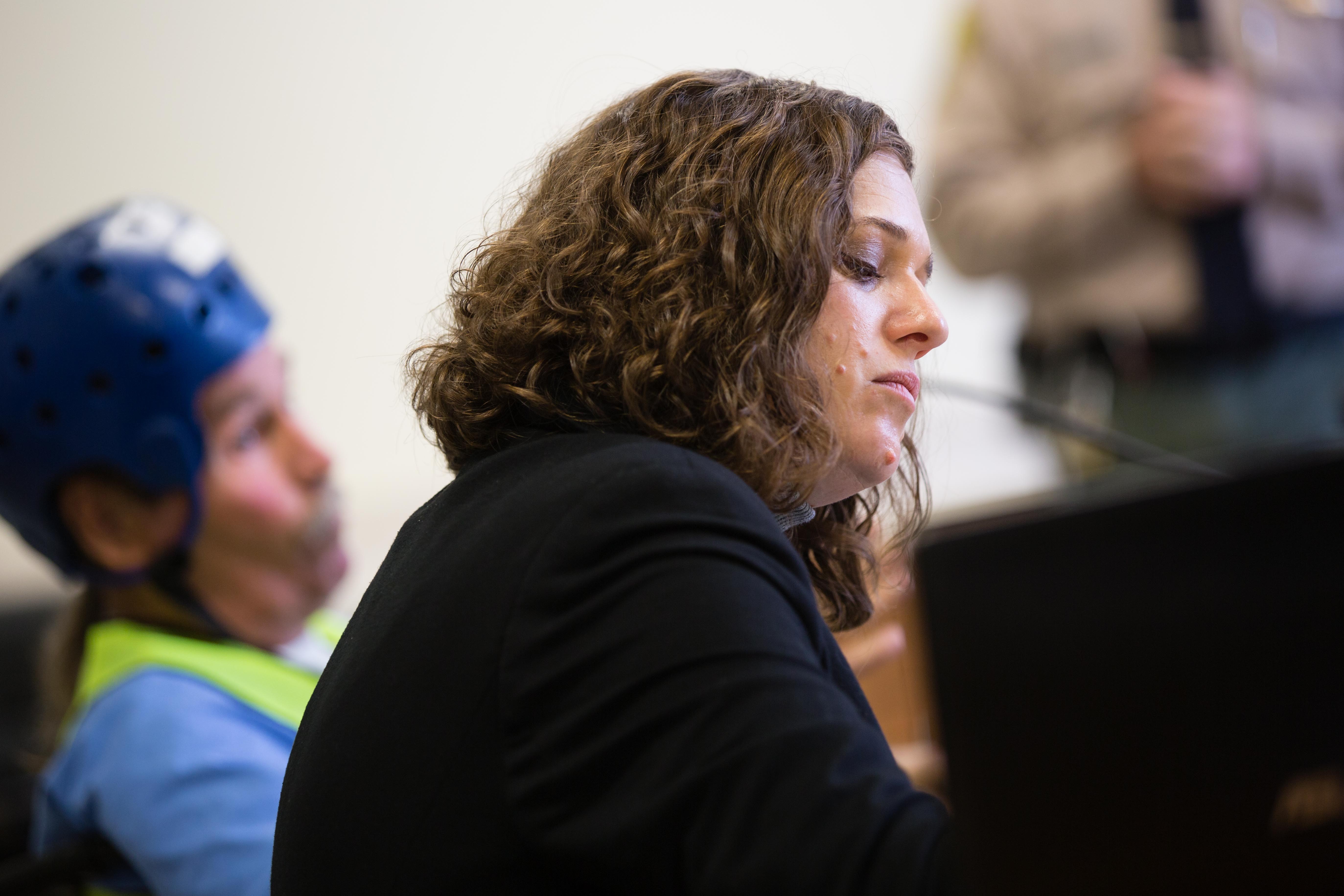
I also observed one of Brosgart’s recent parole hearings in which she represented a lifer convicted of second-degree murder in a drunken-driving crash. The 58-year-old prisoner, Stephen Whitfield, showed up to his hearing in a wheelchair and was wearing a helmet, because, as he told the commissioners, “I keep falling down.” The inmate has numerous serious physical ailments, and doctors believe he also suffers from some kind of brain damage, according to testimony from Brosgart and the commissioners during the hearing. Whitfield appeared to have a lot of difficulty understanding and responding to fairly basic questions — stumbling often with rambling answers. He talked about hearing voices, coping with depression, and at times feeling suicidal. He had few cogent expressions of remorse, but he and Brosgart tried to argue that he is no longer a risk to society because he is not physically capable of driving a car or engaging in physical violence.
The commissioners ultimately denied Whitfield parole, stating that it was clear he lacked remorse and was mentally unprepared for reentry. “He still is not as stable as he should be,” said Commissioner Michele Minor, when announcing the decision. She later added, “Certainly, his mental health does lend itself to dangerousness.”
In his hearings, Flemming, the prisoner convicted in the Kern County drunken-driving case, has faced additional obstacles due to his mental struggles. According to his testimony, he has been unable to remember the basic details of the crash. But when he has offered insight into what little memory he has, or explained what he knows based on the facts in his record, commissioners and prosecutors have aggressively accused him of offering contradictory or false statements. “It has been a curse for me,” he said in one of our phone interviews. “Imagine being in prison 32 years and you do not remember what it was you did? You know you did it. You know you’re guilty of killing a man. That is a stone-cold fact.”
At various times during his incarceration, Flemming has referred to the crash as “an accident” and has also speculated that it was possibly a suicide attempt — given his self-destructiveness at the time and the fact that he had tried to kill himself before. But the parole board and prosecutors have argued that these differing statements prove that he is lying and that he refuses to accept full responsibility, even though prison clinicians have reported that he likely suffered from memory loss. Records also show that he has repeatedly said he has little memory of the events, was clearly at fault, and is deeply remorseful.
In an interview, Sara Danville, supervising deputy district attorney with the Kern County District Attorney’s Office, who argued against Flemming’s parole in his last hearing, said: “He has no memory whatsoever, because he keeps changing his story to fit his audience. … I absolutely believe he is lying.”
She argued that Flemming still has to uncover the true root causes of his crime, and until he is fully honest with himself and the board, he remains a threat to the public. “It’s hard work to dig into the depths of your soul,” she said. She later added, “There’s no magic formula. It’s when you’re in that room … you can tell if somebody actually internalizes it, understands it. But he’s not that person. He’s still a danger.”
When I asked Danville if she thinks Flemming will ever be “that” person, she replied: “Only God knows the answer.”
In an extensive phone interview for this two-part series, Jennifer Shaffer, executive officer for the California Board of Parole Hearings, explained that the hearings are meant to be challenging, and that the board purposefully delves into difficult topics relevant to the deliberations. “These hearings are not easy,” she said. “We cover a lot of very sensitive issues.”
In some cases, Shaffer said, it is useful to ask tough questions, because they allow commissioners to gauge how well inmates handle stressors — of which there will be many when they reenter society. She further argued that if prisoners’ past abuse or trauma played a part in the crime they committed, then it’s critical that the inmates demonstrate that they would not become violent or revert to bad habits in the face of similar pressures upon release. “I wouldn’t want to place ill intent on the [commissioners] for asking really difficult questions,” she said, adding, “sometimes, the [commissioners] are actually testing the inmate. You can see in front of you how they are controlling impulses.”
Shaffer also said the commissioners understand that, by law, they can only deny parole when evidence points to a prisoner’s ongoing dangerousness: “We have to find the inmate poses a current, unreasonable risk.” She further argued that the board does not deny parole solely due to mental illness or an inmate’s inability to discuss the crime — but instead examines how those issues, in the context of a prisoner’s entire record, tie to the potential threat the individual poses. “We want to get to who you were then, who you are today, and what’s the difference,” she said. “It really is a one-on-one discussion.”
Shaffer and other CDCR representatives said the board and the department do not comment on individual parole decisions and declined to make specific commissioners available to discuss the cases featured in my series. However, when I asked Sessa, the CDCR spokesperson, about Commissioner Montes’ comments on Flemming’s childhood sexual abuse, he wrote in an email to me: “I’m a bit mystified why you would focus on one comment about his molestation when ultimately it is not a relevant factor in the decision.” He added: “To suggest that the [commissioners] simply didn’t have enough information because Mr. Flemming ‘broke down’ during the hearing because of the [commissioner’s] alleged insensitivity so that he couldn’t express himself seems disingenuous at best.”
Keith Wattley (right), founder of UnCommon Law, said young lifers often enter prison with the assumption that they’ll never go home again.
Credits: Bert Johnson
Advocates, however, said a number of reforms could help vulnerable inmates like Flemming get a fairer shot at release — without compromising public safety. Jeremy Valverde, Flemming’s state-appointed attorney, said if commissioners were better trained on how to sensitively discuss past sexual trauma with inmates, there might be fewer cases of counterproductive grilling like the kind Flemming faced. “The board will sort of interrogate these guys about their molestation experience. … That’s a really harmful approach,” said Valverde, who is based in Berkeley. He said it was clear to him that Flemming “imploded” during his hearing and was unable to effectively communicate after the confrontation about his rape. “That’s not going to get someone to open up. That’s going to make them shut down even more.”
Advocates have also argued that in order to further eliminate biases against lifers who struggle to articulate themselves and suffer from severe anxiety during the parole process, the board should stop placing so much value on questionable determinations of whether inmates have “remorse” and “insight” into their crime. For starters, there is little statistical data showing that the absence of remorse or insight correlates to an actual risk of reoffending, according to lifer attorneys. Further, critics say, the process by which the board evaluates these factors is deeply flawed.
In 2012, UnCommon Law filed a class-action lawsuit against the board challenging its Forensic Assessment Division’s psychological evaluations of lifers before their hearings. Those assessments frequently include findings of lack of insight or remorse even when there is significant contradictory evidence, according to the suit. Part of the problem is that the psychiatrists are hired by the board to do these assessments and thus have no relationship with the inmates and lack in-depth knowledge of their progress or ongoing mental health treatment. Additionally, psychiatrists may determine an inmate has “antisocial personality disorder” or “psychopathic” tendencies in part based on the nature of the original offense and prior criminal record — factors that lifers can never change. Opponents of these reports have further argued that there is little oversight of this process and that when the assessments contain factual inaccuracies, inmates have no meaningful opportunity to contest the findings before their hearings.
UnCommon Law and the parole board have recently agreed to a proposed settlement in the class-action suit that Wattley hopes will protect inmates from parole denials based on shoddy assessments. For starters, the state will implement an appeals process so that inmates can formally object to the evaluations prior to hearings. The settlement also requires that the board provide commissioners with new training that would address the limitations of the risk assessments and remind them of the low recidivism rate of lifers (data shows that a very small percentage of released lifers return to prison).
Other reforms are also helping lifers convicted of crimes they committed when they were teens or young adults receive special consideration for parole. Senate Bill 260, passed in 2013, requires the state to conduct “youth offender parole hearings” for lifers whose offenses occurred when they were under eighteen years of age. These hearings essentially have stricter standards for denials with the recognition that juvenile offenders have “diminished culpability” and can grow out of the irresponsible or immature behavior that contributed to the crime. SB 261, approved last fall, extended the age of youth offender hearings to those who had committed crimes when they were under 23 years old.
These legislative reforms are giving many lifers a fresh chance at freedom. But Wattley and other advocates said the prisons now need to provide meaningful programming and services for this population, so that when they get the opportunity to participate in specialized hearings, they are truly prepared for reentry.
More broadly, if prisons increasingly prioritize rehabilitation and release more inmates earlier in their sentences, lifers would be able to continue their recovery on the outside — with community-based programs and with the support of loved ones. The positive impacts of this shift would be widespread, advocates said. That’s because a continued reduction in the prison population could enable the state to better invest in mental health treatment and other services for incarcerated people. That kind of reinvestment could create more humane prisons for the people who committed violent crimes and, regardless of ongoing criminal justice reforms, will be spending many years of their lives behind bars.
Keith Wattley (right), founder of UnCommon Law, said young lifers often enter prison with the assumption that they’ll never go home again.
Credits: Bert Johnson
On some level, Michael Flemming believes he will never go home. For starters, his victim was a police officer. Larry Bentley, the brother of Deputy Michael Bentley, who Flemming killed in the crash, has repeatedly spoken at the inmate’s hearings, arguing passionately against parole and offering a personal reflection on the person his family and community lost when Flemming drove drunk three decades ago. In an email sent to me through prosecutor Danville, Larry Bentley said that every time he learns that Flemming will have another hearing, it causes him the worst stress of his life. He plans to attend all future hearings.
Beyond the tragic nature of the crime and the hurt he caused Bentley’s family — factors Flemming can never change — Flemming said he fears that he won’t get a parole date due to the fact that he remains petrified of screwing up at his hearing. He told me that the pain and anxiety associated with hearings has been the hardest part of his incarceration — worse than witnessing violence and death behind bars. “Not once have I ever felt the fear that I felt or that I feel when I sit before the board,” he said. But he tries to stay positive by thinking about the loved ones he will be able to hug on the other side, he said. “I never stop fighting. I always have hope.”
Advocates and prison officials acknowledge that hope is not an insignificant force for lifers. As the parole process has become somewhat fairer over time, and as lifers have started to learn that they may actually go home one day, they’ve become more engaged in programming and self improvement, Wattley said. He argued that violence and other criminal activity in prisons decreases when lifers view their parole hearings as legitimate opportunities to get a second chance.
Shaffer, the board’s executive officer, said that a number of reforms in recent years have clearly incentivized lifers to make positive changes and meaningfully prep for life on the outside. “We’ve been able to see how powerful hope can be,” she said.
Even if Flemming has little faith in the process, his family motivates him to keep trying. His brother, Brett Flemming, 54, has arranged uniquely secure post-release plans for Michael. Brett runs a bicycle tool manufacturing business and told me he would train and hire his brother to work for him full-time. “I’m a businessman. I would invest in him immediately. He could be gainfully employed in California the day he is released,” said Brett, who began to weep when describing how eager he is to see his brother get a second chance. “As far as I’m concerned, he’s a financial stakeholder in this company. … He won’t have time to get into trouble.”
Instead of costing California nearly $64,000 a year for his incarceration, Michael would be a wage earner and taxpayer, Brett said, noting that he would help his brother get started with rent and buy him a car, if needed.
Everything is in place. Michael Flemming just needs to convince the parole board he’s ready.
Alameda County medical cannabis patients, they’re coming for you. California’s rash of medical pot bans continues to spread in 2016 and has now reached into the historic heartland of medical cannabis law reform.
Patients in places like the East Bay’s Castro Valley could face new threats for growing even one medical pot plant indoors if a new, fast-moving county effort succeeds. Alameda County’s lawyers recommended on January 6 that the board of supervisors ban any medical cannabis cultivation or deliveries in unincorporated areas by January 24.
Alameda County’s lawyers recommended on January 6 that the board of supervisors ban any medical cannabis cultivation or deliveries in unincorporated areas by January 24
Credits: WikiCommonsAlameda County’s lawyers recommended on January 6 that the board of supervisors ban any medical cannabis cultivation or deliveries in unincorporated areas by January 24
Credits: WikiCommons
In a letter to the board, county counsel Donna Ziegler wrote that patients growing a single plant and collectives delivering to the neediest should be banned and fined “in order to protect the environment and preserve the public peace, health, [and] safety.”
Observers note that Alameda County’s lawyers appear to have copied and pasted their arguments directly documents created by the pro-ban group, the League of California Cities. The league is openly telling cities that bans are “quickest, cleanest” form of regulation.
The league continues to point to a March 1 state deadline as a reason for cities and counties to ban medical cannabis activity, or run the risk of ceding local control to California regulators. Lawmakers have said that they will lift the deadline, but about sixty localities have enacted bans nonetheless.
Meanwhile, many cities and counties are now quickly moving to regulate cultivation, distribution, and sales, rather than enacting prohibitions. In fact, conservative battleground areas like Placer County and the cities of Riverside and Sacramento are proving to be more progressive than Alameda County right now, choosing regulations over bans. Petaluma has also protected personal cultivation. And according to reports, a cultivation ban failed in the Monterey County city of Marina.
In an effort to counteract the league, patient group Americans for Safe Access has announced a “Local Access Project” that patients can use to protect themselves. ASA has an online kit that includes a memo for local lawmakers, a model ordinance for local cultivation, information on the new regulations, campaign plan and fundraising tips, training materials for citizen lobbyists, and research and reports.
California NORML is also distributing an open letter to county boards of supervisors informing them that the March 1 deadline is not really a deadline. Last week, East Bay Assemblymember Rob Bonta introduced clean-up legislation to delete the March 1 deadline, and calm cities down.
And Governor Jerry Brown’s office said he’ll sign Bonta’s bill. The governor released a new budget that calls for $24.6 million to fund the new Bureau of Medical Marijuana Regulations in 2016–2017. Several agencies or committees have begun scheduling public meetings about regulations. On Tuesday, January 19, a Joint Hearing of the Assembly’s Business and Professions, Agriculture, and Health Committees will discuss implementing regulations.
Legalization Update
California’s leading marijuana legalization initiative received its official title and summary from the State of California and has reported $1.25 million in campaign financing. The Adult Use of Marijuana Act (AUMA) — from Dr. Donald O. Lyman, former chief of the Division of Chronic Disease and Injury Control at the California Department of Public Health, and Michael Sutton, former president of the California Fish and Wildlife Commission and former vice president of National Audubon Society — was cleared for signature gathering on January 6. The AUMA’s title and summary calls it “Marijuana Legalization” and estimates it could generate up to $1 billion per year in state tax revenue, plus $100 million in court-cost savings.
The effort to pass AUMA will be funded by “Californians to Control, Regulate and Tax Adult Use of Marijuana while Protecting Children,” which reported $1.25 million in donations — vastly out-funding any other legalization group in California. The $1.25 million includes $500,000 from Silicon Valley tech billionaire Sean Parker, plus funds from dispensary directory company WeedMaps and leading drug law reform groups Drug Policy Alliance and Marijuana Policy Project.
The California NAACP endorsed AUMA earlier this month, while the California Growers Association has decided to remain neutral. Oaksterdam chancellor Dale Sky Jones has begun to openly oppose AUMA. Jones chairs the Oakland-based group ReformCA. But the ReformCA board is split, with most members defecting to support AUMA, including Oaksterdam founder and Proposition 19 architect Rich Lee.
During the past month, local and national media have focused intensely on the question of whether the NFL will greenlight the Oakland Raiders’ move to Los Angeles and on Oakland Mayor Libby Schaaf’s steadfast refusal to offer public subsidies to keep the Raiders from leaving. But behind the scenes, the public agency that actually runs the Coliseum complex has been making some questionable moves that deserve attention. Namely, the Oakland-Alameda County Coliseum Authority, a joint panel of the City of Oakland and Alameda County, quietly voted last month to spend big bucks on an outside law firm whose chief lobbyist in California is former state Senate President Pro Tem Don Perata.
I say “quietly” because the Coliseum authority failed to notify the public that it was planning to hire Perata’s firm at its December 18 meeting. In fact, the authority didn’t even post an agenda of the meeting on its website until last week — after I heard about the hiring decision and called the authority office. Under state transparency laws, public agencies must post an agenda of their meetings and the issues they plan to vote on at least 72 hours in advance.
Don Perata.
Don Perata.
So why all the secrecy? Perhaps it has to do with the fact that Perata is the last person on Earth you’d want to be caught hiring when dealing with professional sports teams and public money. Not only was he the target of a wide-ranging FBI corruption probe that lasted for a half-decade, but he was also the chief architect of the one of the worst financial debacles in Bay Area history: the 1995 deal that brought the Raiders back from Los Angeles. That deal has cost East Bay taxpayers hundreds of millions of dollars, and twenty years after it was signed, the city and county are still shelling out about $20 million annually to pay it off.
In interviews, Oakland City Councilmembers Rebecca Kaplan and Larry Reid adamantly maintained that they voted to hire Perata’s firm, Brownstein Hyatt Farber Schreck, LLP, because of its legal expertise — and not because of the ex-state senator. They both stated emphatically that Perata (who charges $715 an hour for his services) will not be involved in dealing with the three teams that play at the Coliseum complex: the Raiders, A’s, and Golden State Warriors. “We did not hire the law firm because of Don Perata,” Reid said. “He will have no role. He just works for the firm.”
But Perata having “no role” may be news to Brownstein Hyatt Farber Schreck. On the firm’s official application to be the Coliseum authority’s outside legal counsel, it listed Perata as the top member of the “team we have designated.” In addition, in the firm’s official application letter to the authority, attorney Carolynne White stated that “Senator Perata will play a consistent strategic and advisory role in every phase of our work.” White did not return a phone call seeking comment as to whether the firm had changed its mind about Perata’s role with the authority.
In an interview, Scott McKibben, who is the Coliseum authority’s executive director (and former publisher of the Oakland Tribune), also maintained that Perata, who is not a lawyer, will have no involvement with the Coliseum complex or its sports teams and said he recommended that the authority members hire Brownstein Hyatt Farber Schreck because of the firm’s legal acumen. “They bring a great deal of expertise,” McKibben said.
But there are questions as to whether the authority will be able to use that expertise in court should the need arise. The reason is that the two lawyers whom McKibben said would work most closely with the authority — White and C.J. Chapman — are not authorized to practice law in California, according to the California State Bar. That’s because Perata’s firm is based in Denver, not California. In fact, California State Bar records show that nine of the eleven attorneys whom Brownstein Hyatt Farber Schreck identified as members of its Coliseum “team” are not licensed to practice law in California. And the only two who are — Peter Brown and Beth Collins-Burgard — are both based in Santa Barbara.
McKibben contended that the lack of licensed California attorneys will not be a problem and noted that the firm has a Sacramento office (where Perata is based). However, according to the firm’s official application to the authority, no attorneys in its Sacramento office are members of its Coliseum team.
So why hire an out-of-state law firm with lawyers not licensed to practice law in California? And why do it when it looks as if the NFL is going to turn down the Raiders’ move to Los Angeles, and so the team will need a new lease at the Coliseum — and when the Warriors are planning to move to San Francisco and leave East Bay taxpayers with millions in unpaid debt on the Arena?
Well, it’s no secret that Perata still has political juice and is still a prodigious fundraiser. According to two knowledgeable sources, he is already raising money for Coliseum authority chair Nate Miley, a county supervisor who is facing a tough reelection fight this year against Oakland Port Commissioner Bryan Parker (Miley did not return a phone call seeking comment for this report).
It’ll also be interesting to see if Perata does the same for any of the other authority members who voted to hire his firm.
Cannabis legalization is progressing on both coasts this month, with California, Nevada, and Arizona’s initiative efforts gaining steam, just as Vermont and Massachusetts statehouses make waves.
In Vermont this morning, former Vermont Attorney General Kimberly Cheney — a Republican — began appearing in political ads supporting regulating marijuana.
The Vermont Coalition to Regulate Marijuana held a news conference with Cheney at the statehouse to support Vermont Governor Peter Shumlin, who last week called for “thoughtfully and carefully eliminat[ing] the era of prohibition that is currently failing us so miserably.”
Cheney was attorney general in the Seventies and is now a member of Law Enforcement Against Prohibition.
“I am committed to bringing awareness to the failures of marijuana prohibition and working toward a safer Vermont,” Cheney said. “We can’t expect a different result by doing the same failed action over again. The only hope lies in a fundamentally different approach; without further delay, the Vermont Legislature should move forward with plans to regulate marijuana in 2016.”
Last week, Shumlin said Vermont “[has] the capacity to take this next step and get marijuana legalization done right” in 2016.
[jump]
Over in Massachusetts this week:
The Campaign to Regulate Marijuana Like Alcohol Chairperson Dick Evans will join state Representative David Rogers on Wednesday to testify in support of Rogers’ new bill to end prohibition in Massachusetts.
Rogers and Evans held a press conference just prior to the Massachusetts Joint Committee on the Judiciary’s hearing on H.1561. Activists are working on both an initiative and a bill in 2016.
“Whether it happens in the legislature or at the ballot box, the result will be the same. Our communities will be safer because marijuana will be produced and sold by licensed businesses instead of criminals in the underground market. Our citizens will be safer because law enforcement will be able to spend more time addressing serious crimes instead of enforcing failed prohibition laws. And adults will no longer be punished simply for using a substance that is significantly less harmful than alcohol,” Evans stated.
LePage was asked at a town hall Wednesday how he planned to combat drug abuse, and said he was increasing penalties for out-of-state traffickers like —
Maine Gov. Paul LePage
“… guys with the name D-Money, Smoothie, Shifty – these types of guys – they come from Connecticut and New York, they come up here, they sell their heroin, they go back home.
Incidentally, half the time they impregnate a young white girl before they leave, which is a real sad thing because then we have another issue we have to deal with down the road.”
LePage’s comments drew rebukes from Republicans and Democrats alike:
“LePage’s racist rants sadly distract from efforts to address one of our nation’s most pressing problems,” stated Hillary for America’s Marlon Marshall.
The CDC reports that Maine is a national leader in overprescribing opioids, and overprescription is the main driver of America’s opioid addiction and overdose epidemic — which is the nation’s leading drug issue, according to the DEA.
“Eight out of ten new heroin users started by abusing prescription opioids,” stated Philadelphia Field Division Special Agent in Charge Gary Tuggle in opening remarks at a Pharmacy Diversion Awareness Conference in Pittsburgh on. December 10.
The executive director of the American Civil Liberties Union of Maine, Alison Beyea, reportedly responded that LePage’s remarks were “race-based fear mongering, reminiscent of shameful times in our nation’s past.”
“The governor is not making comments about race. Race is irrelevant,” LePage’s aides reportedly said.
Sharda Sekaran, the managing director of communications for the Drug Policy Alliance, highlighted the history of scapegoating minorities to enact selective drug prohibition.
“The drug war has traditionally been the best buddy of racism, which LePage’s offensive comments vividly reflect,” Sekaran writes.
“LePage is actually taking a page directly out of the drug war history book. He barely edited it:
— The first anti-drug law in our country was passed in 1875 in San Francisco. It was directed at Chinese railroad workers and was prompted by the belief that Chinese men were luring white women to have sex in opium dens.”
— Cocaine regulations were a reaction to racist fears about use among African Americans in the early 1900s. A 1914 New York Times article proclaimed: “Negro Cocaine ‘Fiends’ Are a New Southern Menace: Murder and Insanity Increasing Among Lower Class Blacks Because They Have Taken to ‘Sniffing.'”
— Marijuana is known by a Spanish name in the U.S. instead of cannabis because it was stereotypically connected to Mexicans on the southwest border towns. An advocate for marijuana prohibition wrote in the New York Times in 1935: “Marijuana, perhaps now the most insidious of our narcotics, is a direct by-product of unrestricted Mexican immigration. … Mexican peddlers have been caught distributing sample marijuana cigarets to school children.”
Steak & eggs taco, fries, and iced tea at Belly.
Credits: Bert Johnson
Prix-fixe bargain hunters, take note: The sixth annual Oakland Restaurant Week kicks off on Thursday, January 14 and will run through Sunday, January 24, with approximately 100 restaurants running special deals during the promotional period — $20, $30, $40, and $50 prix-fixe menus that will be offered during lunch or dinner.
The record-setting number of participating restaurants — up from last year’s total of eighty — means that there can be an intimidating amount to information to sort through when trying to figure out where to book a reservation. Luckily for you, I did the grunt work of crunching the numbers to figure out the best bargains among restaurants that had posted their Restaurant Week menus as of Monday afternoon. Here are my six favorite deals, in no particular order:
[jump]
1. One of the best bargains comes courtesy of the Korean-fusion taco joint Belly (1901 San Pablo Ave.), where the $20 dinner prix-fixe is meant to serve two people. The deal comes with four tacos (roughly a $16 value all by themselves), plus an order of fries (the garlicky mojito fries would run you another $6), and two house-made nectars to drink.
2. Juhu Beach Club (5179 Telegraph Ave.) is offering a doozy of a $20 dinner prix-fixe, which comes with a bhel (puffed rice) salad, a choice of two curry entrées, and a Linden Street Brewery draft beer. The curryleaf coriander shrimp curry alone normally costs $23 — so, when all is said and done, diners who choose that option will wind up getting their meal for half-price.
The margherita pizza at Forge.
Credits: Chris Duffey/File photo
3. Forge (66 Franklin St.), the Jack London Square pizza restaurant, is offering a $20 lunch or dinner deal that includes a margherita pizza, arugula salad, and house cocktail — all told, a $34 value.
4. In a similar pizza-centric vein, The Star on Grand (3425 Grand Ave.) is offering a $20 lunch prix-fixe that’s meant to serve two: a small pizza and a salad of your choice, plus a slice of cheesecake. A small deep-dish pizza — definitely hefty enough to feed two hungry lunch eaters — will normally cost you $20 by itself, so everything else is gravy.
5. Restaurant Week is a great time to check out Salsipuedes (4201 Market St.), one of Oakland’s most interesting — albeit somewhat pricey normally — new restaurants. What I love about the $30 three-course prix-fixe dinner menu is that diners are allowed to choose from a wide swath of the restaurant’s regular offerings — six different options for the first course, and four for the second course, plus dessert and an agua fresca (a $5 value) to drink. If you choose the most expensive option in each category (and why, dear bargain hunter, would you not?) and order the black cod tiradito ($18) and the pork steak ($21), you wind up with a $44 value, plus however much the Oaxacan chocolate pot de crème (not listed on the restaurant website) would normally cost. That, my friends, is a deal.
6. Finally, the waterfront Italian restaurant Lungomare (1 Broadway) is the ideal Restaurant Week option for the cheap but elegant drunk. The $30 three-course dinner — which, if I were to order, might include Mulefoot pork belly topped with a runny-yolked quail egg, smoked beef brisket over polenta, and Meyer lemon cheesecake — is already a pretty good deal on its own. But the kicker is that the prix-fixe also comes with an endlessly refillable glass of red or white wine, all but guaranteeing that you’ll get your money’s worth, and perhaps more than you bargained for.
Oakland Restaurant Week festivities get underway with a kickoff party at Swan’s Market (510 9th St., Oakland) on Wednesday, January 13, 5–7 p.m. The $25 ticket comes with a bite from each of the eight participating restaurants located inside the market, plus a drink.
Meanwhile, Berkeley will kick off its own Restaurant Week one week later, Jan. 21–31, with 23 participating restaurants offering $20 prix-fixe lunch menus and/or $25 or $35 prix-fixe dinner menus. Specific menu details are available here.
1. The University of California received a record number of applications for next year, topping 200,000 for the first time, the SacBee$ reports. In all, 206,339 students applied for admission to one of the UC’s nine undergraduate campuses with UCLA being the most popular school. It received 119,326 applications, followed by UC San Diego with 102,692 and UC Berkeley with 101,655. Many students applied to more than one UC campus.
3. Premier Cru, the Berkeley wine dealer accused of running a pyramid scheme, has filed for bankruptcy, listing $70 million in debts and up to 10,000 creditors, the Bay Area News Group$ reports. The wine store, which closed its doors before Christmas, is facing numerous lawsuits from customers who say the company took their money but never delivered their wine.
Test version of LocoL’s chicken burger (via Instagram).
In 2014, we brought news of LocoL, an ambitious new fast food chain helmed by two of the most prominent chefs in California — the Bay Area’s Daniel Patterson (Coi, Plum Bar, Haven) and the Los Angeles-based Korean taco pioneer Roy Choi. In announcing their project at the 2014 MAD Symposium, Patterson and Choi spoke of nothing less than revolution — of bringing healthy, affordable, and delicious fast food that would appeal to any Mickey D’s customer to the low-income food deserts of the world.
[jump]
Given that mission, the announcement last week of LocoL’s newest location might come as somewhat of a surprise: It’s the old Plum spot at 2214 Broadway in Uptown Oakland, which for the past year had been folded into the more casual Plum Bar next door. It’s a surprise in the sense that that particular stretch of Broadway is home to one of highest densities of popular mid-range and upscale restaurants in The Town, not to mention studio apartments that rent for $2,000-plus a month. In short, it’s no one’s idea of a food desert.
Perhaps anticipating that very criticism, Choi took to Instagram to clarify that LocoL will still debut — on January 18 — in the Watts neighborhood in Los Angeles, and that he and Patterson already have a location planned for East Oakland, in addition to a previously announced spot in San Francisco’s Tenderloin district. As Choi put it, “I’m sure it’ll be great fodder if the headline read, ‘Daniel Patterson and Roy Choi jump ship to take care of hipsters and techies in Uptown Oakland.’”
But Choi said the other Bay Area openings have been postponed due to issues around lease agreements, construction delays, and permitting. Rather than lose momentum while those issues are sorted out, he and Patterson decided to move forward with the old Plum location, which has the advantage of being ready to open as soon as next month.
In an email, Choi said, “LocoL has many purposes. Don’t pigeonhole it.” In his Instagram post, the chef elaborated on the point: “The core mission of LocoL has never changed: upend the fast food industry and feed our brothers and sisters delicious, healthy food at affordable prices. And those brothers and sisters include you who work in the office buildings too.”
At the end of the Aughts and beginning of the Teens, Ty Segall was a cornerstone of San Francisco’s garage rock scene, pioneering a washed-out surf-and-psych rock sound that has come to define the region. The singer and multi-instrumentalist has since relocated to Los Angeles, where he remains as prolific as ever. In 2015, he dropped his solo album, Ty Rex, a collection of gritty, distorted tracks with Americana-influenced riffs. He also put out a two-disc album, II, with his group, Fuzz, and started a new band called GØGGS. But one of Segall’s most unexpected and interesting moves was announcing his next solo album, Emotional Mugger, via a VHS tape that he mailed to Pitchfork’s offices. The technophobic album, due out this year, has an accompanying, old-school HTML website (EmotionalMugger.com), on which Segall offers pseudo-scientific observations about our app-enabled dating culture. Segall returns to the Bay Area for two back-to-back shows at The Fillmore on January 18 and 19, the latter of which features the excellent local punk outfit CCR Headcleaner as an opening act.
To the disappointment of many, DJs 8ulentina and Foozool recently discontinued their genre-bending, multi-cultural monthly dance party, Night Forms, at The Rock Steady. But not to worry: The duo is back with another event, Club Chai, which makes its debut at Alena Studios in West Oakland on January 15. Foozool and 8ulentina will spin multifaceted mixes that combine international club genres, hip-hop, and strains of various types of traditional Middle Eastern music that allude to their respective Armenian and Turkish heritages. Turbo Sonidero Futuristico, a producer from San Jose (by way of Mexico) who specializes in distorted and surreal Cumbia, will perform at the event. Philadelphia’s DJ Haram and Oakland’s Jasmine Infiniti and Neto 187 also share the bill. The party will go until late, and chai will be served. Listen to 8ulentina’s new mix, “Rosewater,” on SoundCloud to get a sense of the party’s eclectic vibes ahead of time.
As a queer man of color — I'm Asian — I feel wounded whenever I am exposed to gay men in New York City, Toronto, or any city where white gay men dominate. Gay men, mostly whites and Asians, reject me because of my race and no one admits to their sexual racism. I understand that sexual attraction is...
Michael Flemming fears he will be forgotten. During a phone interview last month from San Quentin State Prison, he said one of the hardest parts of serving an indefinite prison sentence is coming to terms with the reality that he might not live to experience freedom again. "When...
Alameda County medical cannabis patients, they're coming for you. California's rash of medical pot bans continues to spread in 2016 and has now reached into the historic heartland of medical cannabis law reform.
Patients in places like the East Bay's Castro Valley could face new threats for growing even one medical pot plant indoors if a new, fast-moving county effort...
During the past month, local and national media have focused intensely on the question of whether the NFL will greenlight the Oakland Raiders' move to Los Angeles and on Oakland Mayor Libby Schaaf's steadfast refusal to offer public subsidies to keep the Raiders from leaving. But behind the scenes, the public agency that actually runs the Coliseum complex has...
Cannabis legalization is progressing on both coasts this month, with California, Nevada, and Arizona’s initiative efforts gaining steam, just as Vermont and Massachusetts statehouses make waves.
In Vermont this morning, former Vermont Attorney General Kimberly Cheney — a Republican — began appearing in political ads supporting regulating marijuana.
The Vermont Coalition to Regulate Marijuana held a news conference with...
Steak & eggs taco, fries, and iced tea at Belly.
Credits: Bert Johnson
Prix-fixe bargain hunters, take note: The sixth annual Oakland Restaurant Week kicks off on Thursday, January 14 and will run through Sunday, January 24, with approximately 100 restaurants running special deals during the promotional period — $20, $30, $40, and $50 prix-fixe menus that will be offered during...
Stories you shouldn’t miss:
1. The University of California received a record number of applications for next year, topping 200,000 for the first time, the SacBee$ reports. In all, 206,339 students applied for admission to one of the UC’s nine undergraduate campuses with UCLA being the most popular school. It received 119,326 applications, followed by UC San Diego with 102,692 and...
In 2014, we brought news of LocoL, an ambitious new fast food chain helmed by two of the most prominent chefs in California — the Bay Area’s Daniel Patterson (Coi, Plum Bar, Haven) and the Los Angeles-based Korean taco pioneer Roy Choi. In announcing their project at the 2014 MAD Symposium, Patterson and Choi spoke of nothing less than...
At the end of the Aughts and beginning of the Teens, Ty Segall was a cornerstone of San Francisco’s garage rock scene, pioneering a washed-out surf-and-psych rock sound that has come to define the region. The singer and multi-instrumentalist has since relocated to Los Angeles, where he remains as prolific as ever. In 2015, he dropped his solo album,...
To the disappointment of many, DJs 8ulentina and Foozool recently discontinued their genre-bending, multi-cultural monthly dance party, Night Forms, at The Rock Steady. But not to worry: The duo is back with another event, Club Chai, which makes its debut at Alena Studios in West Oakland on January 15. Foozool and 8ulentina will spin multifaceted mixes that combine international...