
‘Bodily Engagements’ is a Dialectic Between Dancers and Sculptors

Los Angeles-based designer Matt Gagnon is accustomed to projecting the ways in which people will interact with his work. His fanciful yet utilitarian furniture designs structurally direct their own use: Cubbies are for storing things, etc. His imaginative public sculptures, which in the past have looked like amorphous wooden igloos, call for more playful interaction: Openings are for crawling into, etc. But now he has the opportunity to design work for a dancer, and the process is a bit less straightforward. He’s not designing a set, or a series of props. Rather, he’s making an environment that acts as a dance partner, functioning dialectically with a piece of choreography — taking his consciousness of interactive clues to a new creative level.

Oakland choreographer Abby Crain asked Gagnon to co-create an installation for “Bodily Engagements,” a series of four collaborations between movement and visual artists that will occupy Interface Gallery (486 49th St., Oakland) from January 17 through March 13. For each segment of the series, the gallery will present a different sculptural installation, which will be visited by dancers at scheduled times throughout its tenure in the space. Some of these visits will feel like straight-forward performances, while others will be more like open rehearsals or participatory movements sessions.

Crain and Gagnon’s contribution is called The darkest place is always under the lamp — a quote from Roland Barthes’ The Lover’s Discourse. The piece unpacks the meaning of “dazzled,” which is the feeling of being so overwhelmed by brightness that it becomes difficult to see anything else. Applied to romance, the implication is that the most dazzling lovers still have shadowy characteristics, they’re just more difficult to see. Along those lines, Gagnon is creating a lighting sculpture for the space, likely out of transparent and highly reflective materials, that will impose dramatic contrasts by using narrow directional lights in a darkened room. Crain will be dancing through the installation with collaborator Jose Navarette, casting shadows as they weave in and out of the lights.

The movement aspect of The darkest place is always under the lamp, which runs from February 1–14, will be based on loose choreography, accommodating in-the-moment innovations. “It’s going to be scores that are porous and amoeba-like and shiftable — mutable depending on what’s there,” said Crain in a recent interview. “Some of the collaboration is happening now and a lot of the collaboration will be live in the space.” The piece will also feature sessions with Mara Poliak and Maryanna Lachmann, who will be doing their own dance collaboration within the premise of Crain and Gagnon’s.

Not every piece will be so open-ended. Brontez Purnell and Sophia Wang’s Fake Autobiographies: The Love Story of …, which begins the series from January 17–31, is the most theatrical of the four. The artists, who each maintain both dance and visual art practices, will be filling the gallery with props that set the scene for a Sixties love story about a multiracial couple made up of two idealistic activists. They were inspired by an excerpt from Mark Kitchell’s documentary Berkeley in the Sixties that showed student protestors being dragged down university steps by police. “We were really taken with the actual physical movements that we saw there — the forms of active and passive resistance that the students’ bodies were taking,” said Wang. That functioned as a basis from which the duo contemplated nostalgia, idealization, and repetition in relationship to political organizing. “We’re not trying to do a piece that is just examining the Sixties and what failed in the Sixties,” said Wang. “It’s more about thinking about inheritances and alternate histories.”

The duo will perform the piece on Saturday, January 30 at 5 p.m., but will also have an open rehearsal on January 28 from 3–5 p.m., and a public “be-in” on January 24 from 2–4 p.m., which will be an open discussion of the piece’s themes.

Wang is also involved with the third piece in the series (Feb. 15–28), as half of “Manners,” her partnership with visual artist Lisa Rybovich Crallé. With her work, Crallé often attempts to flatten physical space by de-emphasizing the depiction of volume. She’s interested in disrupting perceptions of the gallery space by blurring linear boundaries and playing with scale in a way that prompts visitors to reflect on their own bodies — all of a sudden unfamiliar. Wang, along with a few other dancers, will be emphasizing that effect by reacting directly to members of the audience and distorting their own bodies. For the piece, Crallé and Wang have been considering the traditions of momento mori and vanitas paintings, which depict symbols of death to push the viewer to confront their own mortality. They are hoping to evoke a similar sense of ephemerality.

The last in the series will be a collaboration between sculptor Lauren McKeon and movement artist Renée Rhodes, which will run from March 1 through March 13. McKeon will fill the space with a series of small, minimalist sculptures based on the notion of misunderstanding and Rhodes will present Endless, a “performance installation” that sets movement to storytelling.

For the most part, the pieces in “Bodily Engagements” are better thought of as live sculptures than performances, primarily because the dancers, like the sculptures, will be occupying the space over a drawn-out period of time rather than putting on a show with set parameters. “Because this isn’t a one-night or two-night performance where we’re thinking of the visual elements as props and stage setting … the visual installation is as foregrounded as the movement components, so one isn’t in the service of the other,” said Wang.
Saigon Deli Sandwich & Taco Valparaiso Offers a Lesson in Cross-Cultural Communication Via Banh Mi

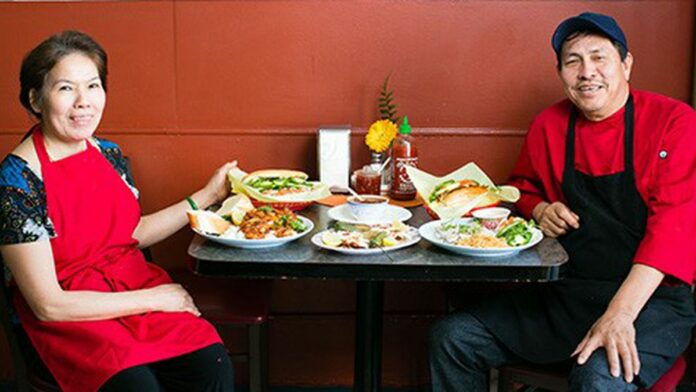
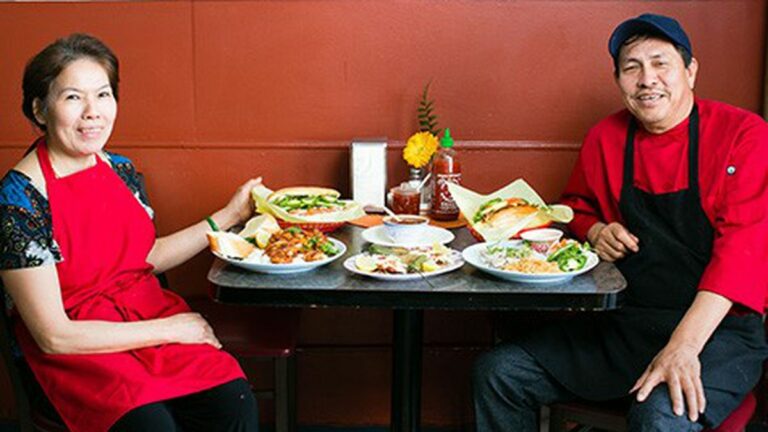
In Oakland, a lesson in cross-cultural communication might come in the form of a political protest, a mural graffitied on the side of a shipping container, or a poetry lesson at a local high school. Or it might come in the form of a sandwich — say, the amazing al pastor banh mi at East Oakland’s Saigon Deli Sandwich & Taco Valparaiso, which is probably the only combination banh mi shop and taqueria in the Bay Area.

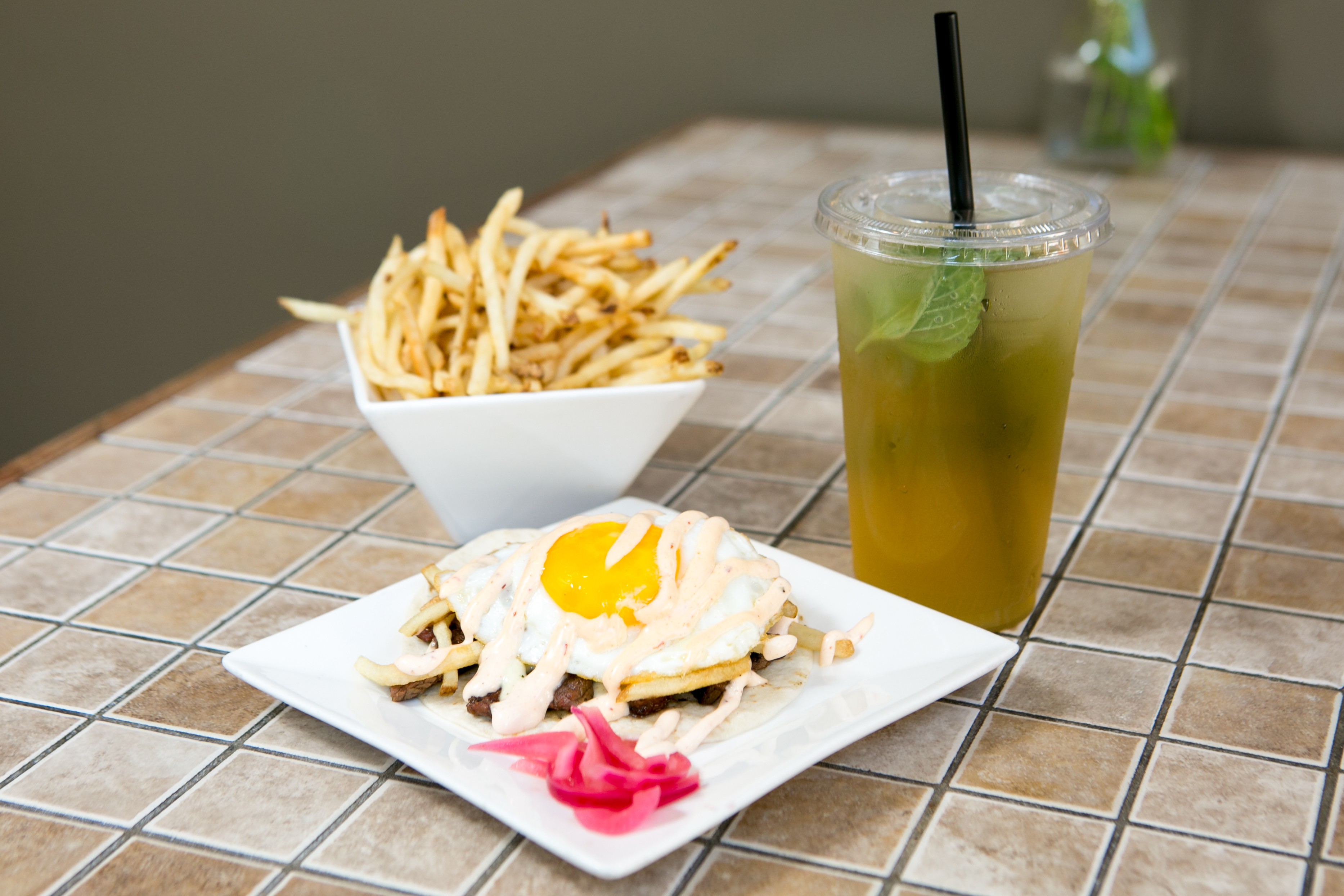
Certainly, it’s the only restaurant I know of where you can eat al pastor-style pork not just on a taco, but also inside a crunchy banh mi roll loaded with all of the usual Vietnamese sandwich condiments: fresh cilantro, sliced jalapeno, and matchsticks of sweet pickled carrot and daikon radish. Ladled overtop: a splash of potent, if deceptively slow-burning, red salsa.

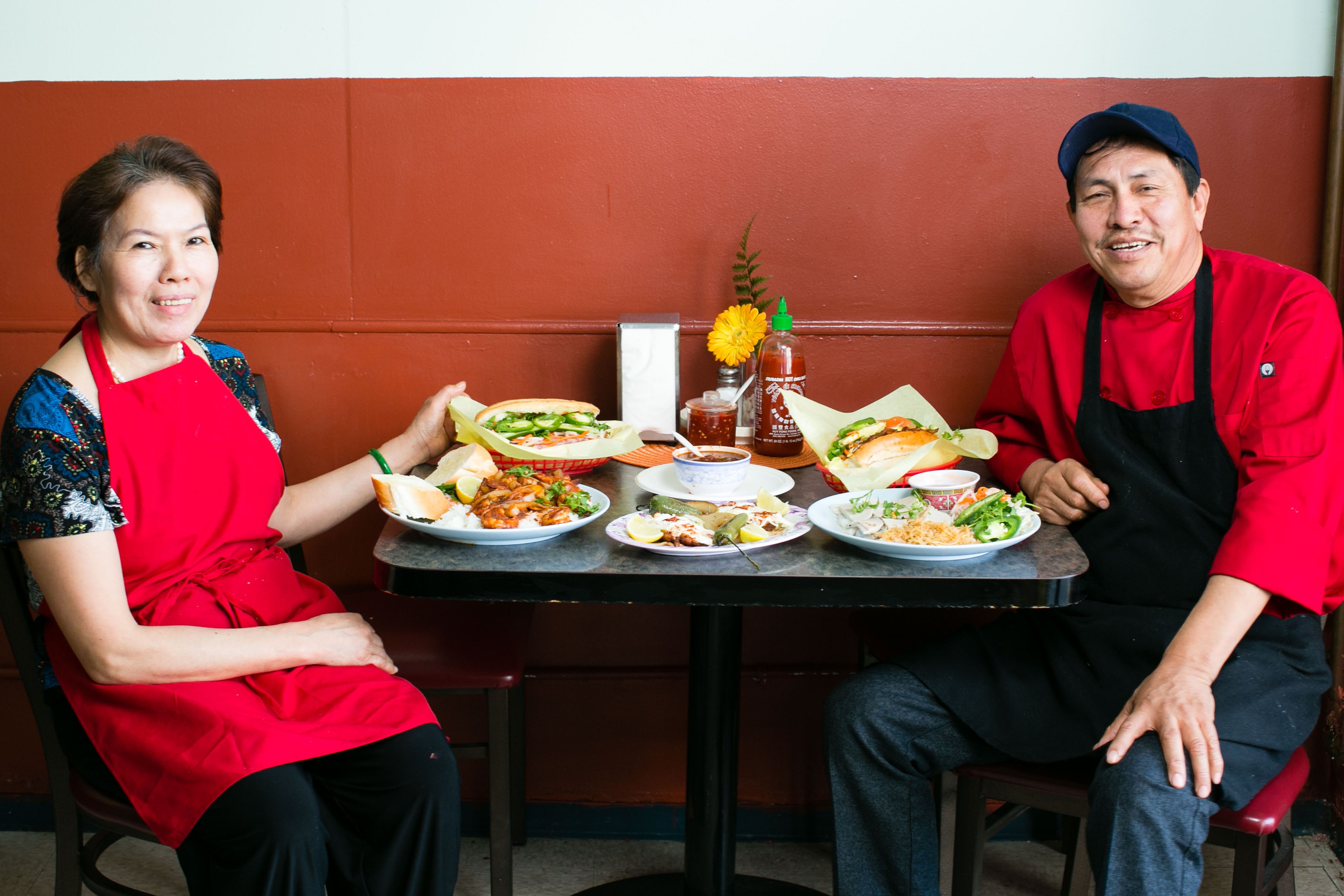
But Saigon Deli’s origin story may be even more unlikely than the mixing of Vietnamese and Mexican cuisines. In 2011, co-owner Dieu Ngo, a Saigon native, opened the little banh mi shop in an East Oakland strip mall anchored by a busy laundromat after having spent more than a decade making sandwiches at nearby Banh Mi Ba Le. For the first few months, Saigon Deli was strictly a Vietnamese restaurant, but then Tony Torres, a longtime customer from Ngo’s Ba Le days, approached her with an intriguing proposition: What if the two of them joined forces? At the time, Torres was managing a Sizzler part-time while also running a taqueria he’d opened in Monterey County in 1996 — the original Taco Valparaiso.

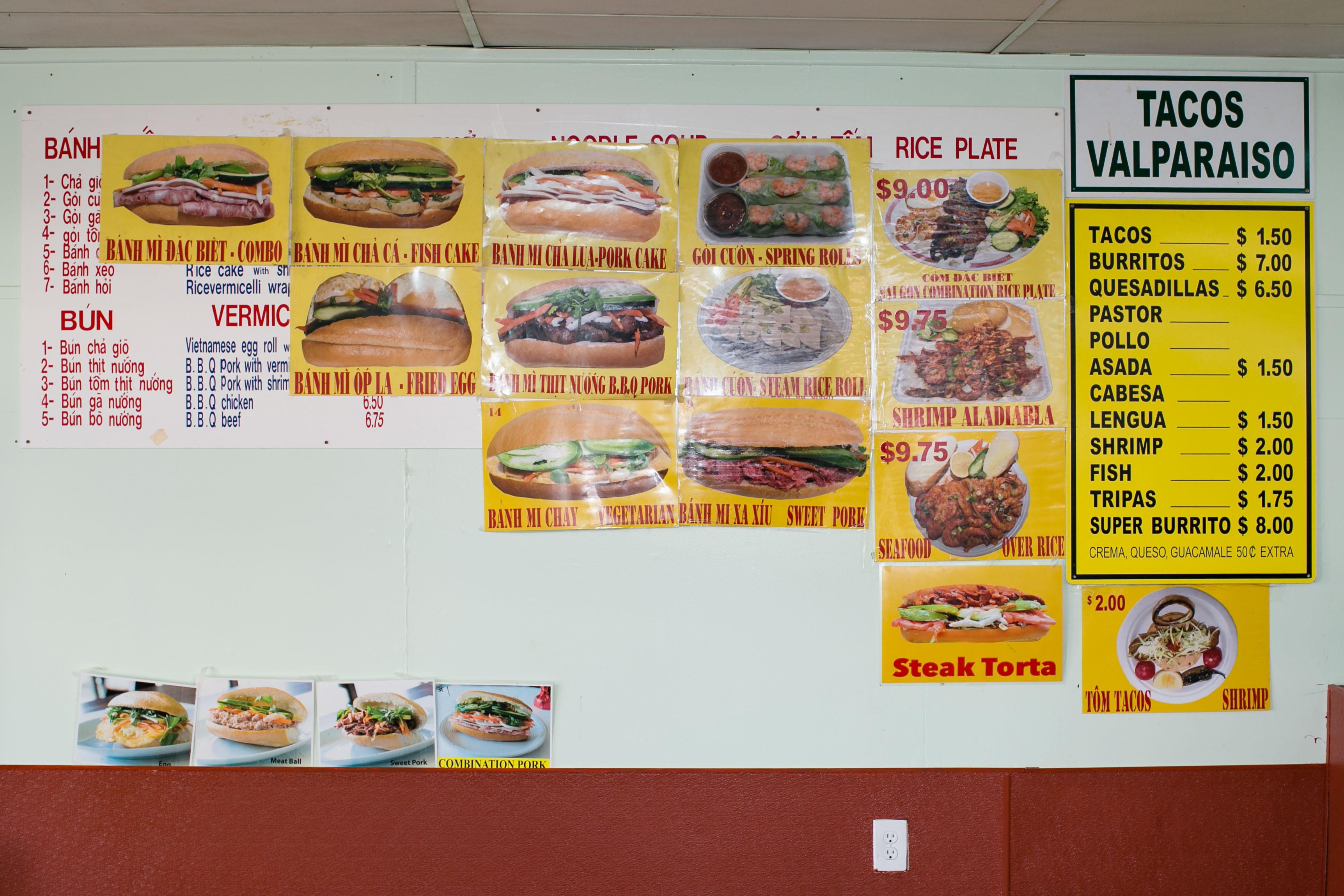
On its face, the idea seemed crazy to Ngo, who said she didn’t even know how to eat a taco, let alone make one. But Torres, who grew up in the Mexican state of Zacatecas, was convinced that the shop’s location in the San Antonio neighborhood, halfway between Chinatown and the Fruitvale district, was the perfect place. Now, a banh mi menu occupies the left side of one of the restaurant’s walls, while a fairly traditional taqueria menu occupies the right. A small placard on the table reads, “Where Your Country and My Country Eat Together.”

Taken on their own, the tacos and banh mi are good enough to recommend — though perhaps not more so than the ones at any number of other similarly down-home Mexican and Vietnamese joints that you can find up and down International Boulevard.

Banh mi dac biet — the classic combo sandwich, with its layers of head cheese, cold cuts, and pâté — is the measuring stick that most expert banh mi eaters use to judge a Vietnamese sandwich shop. Ngo’s is solidly above average. Its only noticeable flaw, really, was that the bread was a tad bit too crunchy and dry.

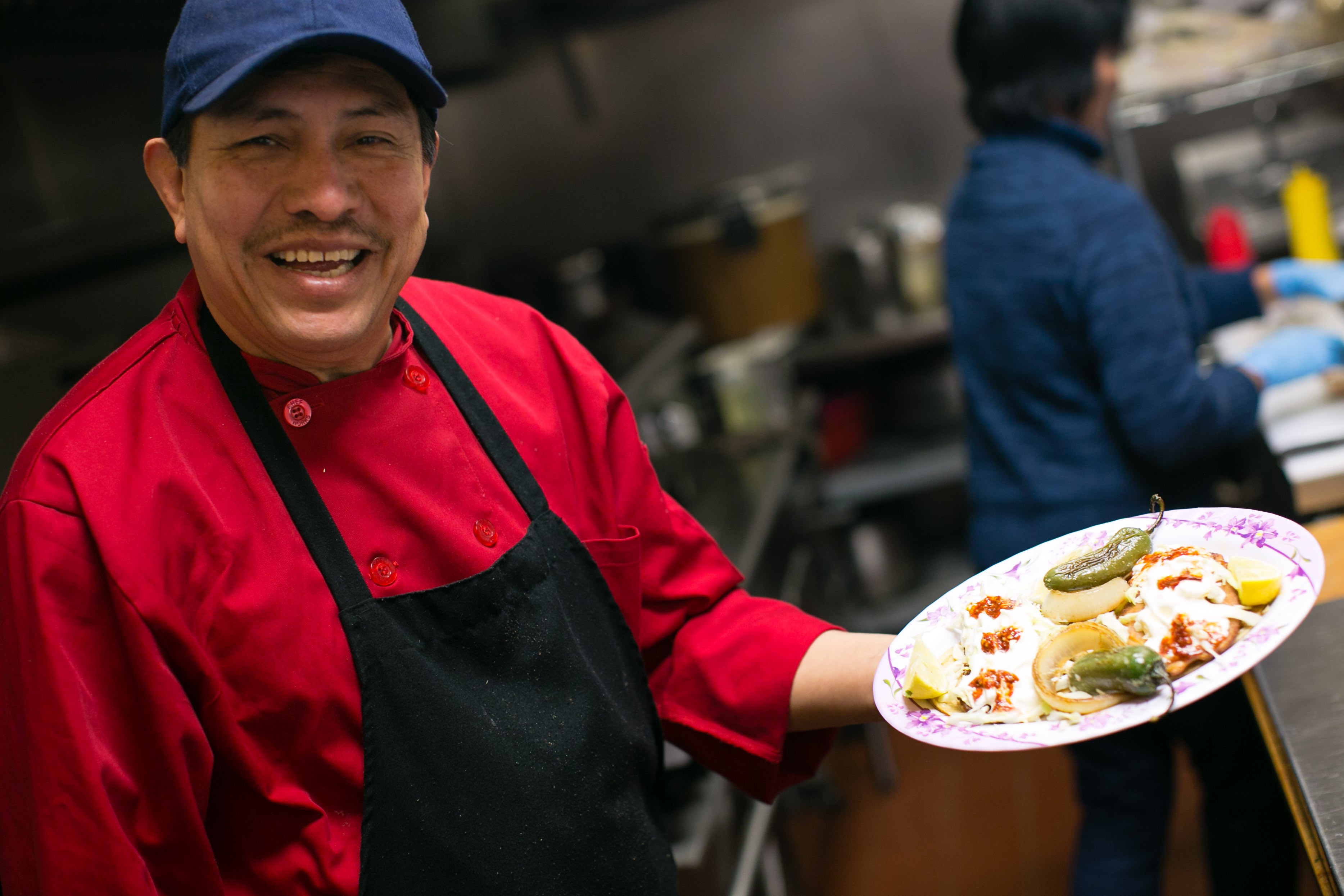
Meanwhile, Torres’ array of standard tacos all featured juicy strips of well-caramelized grilled onion, and a generous scoop of his bright-red “special salsa” — the smoky, pleasantly bitter hot sauce that Torres makes with dried chile de árbol. But the meats were hit or miss — the beef lengua (tongue) was wonderful; the al pastor was rich and intensely savory, if a bit too salty; and the tripas (crispy pork intestines) were too hard and over-fried.

Where the magic happens is in the more fusion-y dishes, most of which Torres invented in the years since he began his collaboration with Ngo. In banh mi form, the al pastor has its saltiness balanced by the sweetness of the Vietnamese pickles, and by the fact that all of the extra sauce gets soaked up, deliciously, by the sturdy bun. Ask for an extra tub of the salsa: The extra hit of complex heat put the sandwich over the top.

My favorite dish was the shrimp a la diabla rice plate, which takes the traditional Mexican shrimp preparation — whole shrimp sautéed in a fiery-red sauce adjusted to your preferred level of spiciness — and serves it, counterintuitively, over a plate of Asian-style white rice, so that the dish recalls the kind of saucy tomato-and-shrimp stir-fry you might get at any number of Chinese or Vietnamese restaurants. The sauce had an earthy funk that I swore must have come from the inclusion of the shrimp-head juices (a staple of the Asian versions of this dish), but Torres said no heads were used — just lots of aromatics and dried chilies. The shrimp came with more of those pickles, plus a couple wedges of toasted French bread, so if you wanted to, you could make your own little makeshift banh mi. Later, Torres told me that while they aren’t listed on the menu, you can, in fact, order a shrimp a la diabla banh mi, a fried-fish banh mi, or a carne asada banh mi.

If Mexican-Vietnamese fusion isn’t your thing, the traditional side of the menu offers a number of pleasant surprises as well. Of the traditional tacos, the surprise winners were the ones featuring fried seafood. Topped with shredded cabbage, Torres’s fried fish tacos were a variant on the Baja style, though Torres said the mayonnaise-based “creamy cheese sauce” he uses is a little bit different, as is the salsa, which has a tangy note that comes from the addition of a small number of tomatillos. The fish inside the tacos I tried was fried to perfection, with just the right blend of crunch and tenderness, of tongue-searing heat (both spice-wise and temperature-wise) and cooling cream. And if anything, the shrimp taco, served in a similar style — with several whole shrimp fried together to form one big, batter-fried “fritter” of sorts — was even better. Both fish and shrimp are so generously portioned that the seafood barely fits inside the corn tortillas. You wind up having to hold the whole thing flat and eat it like an open-face sandwich.

On the Vietnamese side of the menu, you won’t find many banh mi shops that serve banh cuon, a kind of Vietnamese steamed rice roll that’s filled with mushroom-studded pork — certainly not one that’s as delicate and satisfying as Saigon Deli’s.

Of course, part of the charm of the restaurant is that you can order all of this food in the same meal: fish tacos and banh cuon, a burrito washed down with Thai iced tea.

Even without the hybridized element, Oakland’s taquerias and banh mi shops are some of the city’s truest hubs of diversity — where Blacks and whites, Asians and Latinos, hipsters and techies, high school kids and elder immigrants all come together in the universal pursuit of an inexpensive lunch. At Saigon Deli & Taco Valparaiso, that melting pot of class and culture is even more pronounced: One afternoon, I watched an older Latino man chatting away on his cellphone in Spanish while feasting on a hefty com dac biet (Vietnamese combo rice plate) topped with grilled pork, a fried egg, and what Torres later told me was a non-spicy version of his a la diablo-style shrimp.

If all this wasn’t reason enough to be charmed, the story of Saigon Deli Sandwich is also, at its heart, a love story. You see, Torres and Ngo were just friendly acquaintances when they first contemplated the possibility of opening a business together. Now, four years later, they’re a couple, too — or, as Torres quipped, they’re at least “getting there.” I wondered if there had been some specific moment when they’d fallen for each other — perhaps in the kitchen while Torres was teaching Ngo his salsa recipe, or while Ngo was demonstrating the proper way to assemble a banh mi. But, according to Torres, there had been some inkling of romantic interest even prior to opening the restaurant. As he put it, “I closed one eye, she closed one eye.” After that, they both just knew.

Little by little, Torres said, the two have gotten to know each other, though they can only communicate in English, which is neither’s first language. And, little by little, they’ve learned to love each other’s food as well. “So far it’s been beautiful,” Torres said.


Green Ice

0

A reviewer’s confession: I don’t review as many animated children’s movies as I probably should. The few cartoon features that rate a close look tend to be either foreign films aimed at grownups (When Marnie Was There; Kahlil Gibran’s The Prophet) or “prestige” stateside hits like Inside Out. The animated family pics that regularly sell carloads of tickets in the plexes — Inside Out, Minions, Big Hero 6, Teenage Mutant Ninja Turtles, and Hotel Transylvania 2 together account for some $1.3 billion of theatrical box office to date — generally are just too “juvie” to merit a serious review.

But in the interest of due diligence, I snuck into the Saturday matinee preview screening of Lionsgate and Splash Entertainment’s Norm of the North, just to see which way the wind blows. The kids and their parents intently followed the efforts of a talking Arctic polar bear named Norm (voice of Rob Schneider) and his friends to stop greedy New York real estate developer Mr. Greene (Ken Jeong) from building luxury condos at the melting North Pole. Everyone laughed at the antics of Norm’s furry little pals, the lemmings — despite (or maybe because of) their predictable bodily function jokes. Animals, ecological responsibility, and the pillorying of grotesque, rich bullies continue to be reliable PG-rated themes. Also snow, à la Frozen and innumerable penguin flicks.

Director Trevor Wall’s apparent agenda (the screenplay is by Daniel and Steven Altiere and Malcolm T. Goldman) shows deep skepticism about the intended “One-Percent” customer base for the snow-job Greene Homes. Only the determined solidarity of the endangered critters — with help from conflicted marketing rep Vera (Heather Graham) — can thwart the misguided project. Will the toddlers in the audience remember Norm’s environmental campaign as they grow up? Perhaps. But they definitely get the word in Norm of the North.

The Best Bargains of Oakland Restaurant Week

Prix-fixe bargain hunters, take note: The sixth annual Oakland Restaurant Week kicks off on Thursday, January 14 and will run through Sunday, January 24, with approximately 100 restaurants running special deals during the promotional period — $20, $30, $40, and $50 prix-fixe menus that will be offered during lunch or dinner.

The record-setting number of participating restaurants — up from last year’s total of eighty — means that there can be an intimidating amount to information to sort through when trying to figure out where to book a reservation. Luckily for you, I did the grunt work of crunching the numbers to figure out the best bargains among restaurants that had posted their Restaurant Week menus as of Monday afternoon. Here are my six favorite deals, in no particular order:

1. One of the best bargains comes courtesy of the Korean-fusion taco joint Belly (1901 San Pablo Ave.), where the $20 dinner prix-fixe is meant to serve two people. The deal comes with four tacos (roughly a $16 value all by themselves), plus an order of fries (the garlicky mojito fries would run you another $6), and two house-made nectars to drink.

2. Juhu Beach Club (5179 Telegraph Ave.) is offering a doozy of a $20 dinner prix-fixe, which comes with a bhel (puffed rice) salad, a choice of two curry entrées, and a Linden Street Brewery draft beer. The curryleaf coriander shrimp curry alone normally costs $23 — so, when all is said and done, diners who choose that option will wind up getting their meal for half-price.

3. Forge (66 Franklin St.), the Jack London Square pizza restaurant, is offering a $20 lunch or dinner deal that includes a margherita pizza, arugula salad, and house cocktail — all told, a $34 value.

4. In a similar pizza-centric vein, The Star on Grand (3425 Grand Ave.) is offering a $20 lunch prix-fixe that’s meant to serve two: a small pizza and a salad of your choice, plus a slice of cheesecake. A small deep-dish pizza — definitely hefty enough to feed two hungry lunch eaters — will normally cost you $20 by itself, so everything else is gravy.

5. Restaurant Week is a great time to check out Salsipuedes (4201 Market St.), one of Oakland’s most interesting — albeit somewhat pricey normally — new restaurants. What I love about the $30 three-course prix-fixe dinner menu is that diners are allowed to choose from a wide swath of the restaurant’s regular offerings — six different options for the first course, and four for the second course, plus dessert and an agua fresca (a $5 value) to drink. If you choose the most expensive option in each category (and why, dear bargain hunter, would you not?) and order the black cod tiradito ($18) and the pork steak ($21), you wind up with a $44 value, plus however much the Oaxacan chocolate pot de crème (not listed on the restaurant website) would normally cost. That, my friends, is a deal.

6. Finally, the waterfront Italian restaurant Lungomare (1 Broadway) is the ideal Restaurant Week option for the cheap but elegant drunk. The $30 three-course dinner — which, if I were to order, might include Mulefoot pork belly topped with a runny-yolked quail egg, smoked beef brisket over polenta, and Meyer lemon cheesecake — is already a pretty good deal on its own. But the kicker is that the prix-fixe also comes with an endlessly refillable glass of red or white wine, all but guaranteeing that you’ll get your money’s worth, and perhaps more than you bargained for.

Oakland Restaurant Week festivities get underway with a kickoff party at Swan’s Market (510 9th St., Oakland) on Wednesday, January 13, 5–7 p.m. The $25 ticket — available via Eventbrite.com — comes with a bite from each of the eight participating restaurants inside the market, plus a drink.

Meanwhile, Berkeley will kick off its own Restaurant Week one week later, January 21–31, with 23 participating restaurants offering $20 prix-fixe lunch menus and/or $25 or $35 prix-fixe dinner menus. Specific menu details are available at BerkeleyRestaurantWeek.com.


One-Night Stands

Bilderberg Group: The Secret Rulers of the World (25 min., 2013) and The Carlyle Group, The Bush Family, and 9/11 (25 min., 2013). Wed., Jan. 20, 7:30 p.m. Humanist Hall, 390 27th St., Oakland, 510-451-5818, HumanistHall.org.

The Black Panthers: Vanguard of the Revolution (115 min., 2015) Mon., Jan. 18, 5 p.m., Free. Rialto Cinemas Cerrito, 10070 San Pablo Ave., El Cerrito, 510-273-9102, RialtoCinemas.com.

Butch Cassidy and the Sundance Kid (125 min., 1969). Presented by TCM. Sun., Jan. 17, 2 & 7 p.m. AMC Bay Street 16, 5614 Shellmound St., Emeryville, 510-457-4AMC, www.moviewatcher.com/theatres/theatre_information.jsp?unit=215.

Dumbo (64 min., 1941). Paramount Classic Movie Night. Fri., Jan. 15, 7 p.m., $5. Paramount Theatre, 2025 Broadway, Oakland, ParamountTheatre.com.

Finding Nemo (100 min., 2013). Zoovie Night. Fri., Jan. 15, 6:30-9:30 p.m., $7, OaklandZoo.org. Oakland Zoo, 9777 Golf Links Rd., Oakland, 510-632-9525, OaklandZoo.org.

Jane Eyre (TBA, 2016). National Theatre Live. Thu., Jan. 14, 7 p.m. Rialto Cinemas Elmwood, 2966 College Ave., Berkeley, 510-433-9730.

Labyrinth (101 min., 1986). Fri., Jan. 15, 9:30 & 10:15 p.m.; Sat., Jan. 16, 9:55 p.m.; Sun., Jan. 17, 9:30 p.m. The New Parkway Theater, 474 24th St., Oakland, 510-658-7900.

Les Pecheurs de Perles (175 min., 2016). Metropolitan Opera Live. Sat., Jan. 16, 9:55 a.m.; Wed., Jan. 20, 6:30 p.m. AMC Bay Street 16, 5614 Shellmound St., Emeryville, 510-457-4AMC, www.moviewatcher.com/theatres/theatre_information.jsp?unit=215.

Me and Earl and the Dying Girl (105 min., 2015). Fri., Jan. 15, 3-5 p.m., Free. Berkeley Public Library, Central Branch, 2090 Kittredge St., Berkeley, 510-981-6100, BerkeleyPublicLibrary.org.

Pray the Devil Back to Hell (72 min., 2008). BFUU Social Justice Committee’s Conscientious Projector series. Thu., Jan. 14, 7 p.m. Berkeley Fellowship of Unitarian Universalists, 1924 Cedar St., Berkeley, 510-841-4824, BFUU.org.

SHIFT CHANGE: Putting Democracy Back to Work (68 min., 2016) Wed., Jan. 20, 6-8:30 p.m. La Peña Cultural Center, 3105 Shattuck Ave., Berkeley, 510-849-2568, LaPena.org.

Starship Troopers (120 min., 1997). Best of RiffTrax. Thu., Jan. 14, 7:30 p.m. AMC Bay Street 16, 5614 Shellmound St., Emeryville, 510-457-4AMC, www.moviewatcher.com/theatres/theatre_information.jsp?unit=215.

The Winter’s Tale (TBA, 2016). Kenneth Branagh Theatre Company Live. Tue., Jan. 19, 1 & 7 p.m.; Tue., Jan. 26, 1 & 7 p.m.; Thu., Feb. 11, 1 & 7 p.m.; Tue., Feb. 23, 7 p.m. Rialto Cinemas Elmwood, 2966 College Ave., Berkeley, 510-433-9730.

The Winter’s Tale (TBA, 2016). Kenneth Branagh Theatre Company Live. Wed., Jan. 20, 1 & 7 p.m.; Wed., Jan. 27, 7 p.m.; Mon., Feb. 1, 7 p.m.; Sat., Feb. 20, 10 a.m.; Mon., Feb. 29, 7 p.m. Rialto Cinemas Cerrito, 10070 San Pablo Ave., El Cerrito, 510-273-9102, RialtoCinemas.com.

Zakiya Harris, Professional Shape-Shifter

Five years ago, when everything in Zakiya Harris’ life seemed to have turned upside down, “shape-shift” became her mantra. Amid the Great Recession, the Oakland singer-songwriter and entrepreneur’s eco-justice nonprofit, Grind for the Green, lost its funding. She went through a divorce that led to the dissolution of her hip-hop duo, FIYAWATA, which she had started with her ex-husband. Then, the bank foreclosed on her home. Finally, to make matters worse, a bike accident left her badly injured, and resulted in a scar on her upper lip that still reminds her of that difficult period.
“This isn’t to be dramatic, but [my solo music project] was born out of the darkest night of my soul,” Harris said in a recent interview at the Impact Hub, which she co-founded. “Music to me is something that comes from really big life challenges.”

Today, Harris’ life looks quite different: In addition to running the hub with her six business partners, she is a co-founder and chief education officer of Hack the Hood, a nonprofit that teaches computer skills to underserved youth. She also founded Earthseed Consulting, a company that works with diverse communities on environmental issues, and is a locally prominent solo musician, dancer, and bandleader of her new group, Elephantine, which recently completed a residency at the West Oakland talent incubator Zoo Labs.

Getting back on her feet when virtually all the major facets of her life had been uprooted took some serious self-reflection, Harris said. To cope, she poured herself into her spiritual practice, which also set the foundation for her music project. In 2014, she emerged with her first solo release, Adventures of a Shapeshifter, an eclectic, seven-track EP that speaks to themes of adaptation and resilience through celebratory, percussive rhythms, soulful vocals, and moody electronic production with plenty of experimental flourishes that at times evoke the improvisatory qualities of jazz.

“I’m from East Oakland, so it’s gotta have that 808 trap knock,” she said of the project’s production. “But I’m also inspired by Afro-Futurism, so I like juxtaposing electronic sounds with very ancient, traditional rhythms.”

In her breathy rap-singing on “Preevees,” the project’s stand-out track, Harris rhymes, Zakiya, daughter of Oya/Medium of change/About to rearrange. A tense, surging synth riff moves slowly over rapid hand-claps and a pulsating drumbeat that evokes the hip-shaking grooves of West African and Afro-Caribbean rhythms. As vocal samples build on top of each other, creating a web of off-kilter harmonies, Harris’ repetitive verses become ritualistic and chant-like. Searching/Reaching/Asking/Yearning/What to do, she sings during the hook, her voice ascending.

The track’s lyrics allude to the spiritual beliefs that helped Harris maintain her peace of mind during that uncertain time in her life five years ago. She’s a follower of the neo-pagan revival of Ancient Egyptian theology, which is often referred to as Kemetism — though she clarified that she doesn’t have a formal name for her own spiritual practice, which also incorporates elements of the Yoruba faith, a polytheistic Nigerian religion with a rich folklore that emphasizes reverence of the natural world. Harris describes her own beliefs as the “worship, honoring, and elevation of life.” Her spirituality, she said, gave her faith that things would eventually fall into place once again.

“I’m really into the 42 principles of Ma’At,” she said, referring to the Ancient Egyptian goddess of truth, justice, and order. “A lot of those teachings are metaphysical and they talk about energy and how nothing is by coincidence, everything is connected. … I knew because I was connected to something greater and that everything happens for a reason, that was going to carry me through.”

She continued, “During that time, I should say, before all that stuff happened, I wasn’t really a happy person. I had achieved the American dream, went to college, got a job, got married, had a kid, bought a house — and I was miserable. I did ritual and asked the universe, ‘I want to be happy.'”

Embracing change is the only constant in life, Harris said. It helps her maintain a positive outlook in the face of adversity — a major theme through out the Shapeshifter EP. On “Shay Shay,” she sings, The mystic/And the gifted/We’re shifting/Can you feel it? Fittingly, the song’s undulating keyboard melody and zooming guitar riffs convey a sense of perpetual forward motion.

In contrast to the rest of the EP’s minimal, electronic production, the track “Shape Shifter” is big and soulful. Its bombastic harmonies show off Harris’s vocal chops and those of her backup singers, and its ecstatic organ riffs add a retro, gospel feel to the project’s otherwise synth-driven sonic palette. The song is the most akin to her work with Elephantine, which began as an outgrowth of her solo project in 2012. That year, she hosted a solar-powered concert series called the Grow Sessions outside of Betti Ono Gallery in downtown Oakland during the First Friday art walk. She performed the first tracks off Shapeshifter there, and enlisted vocalist Tossie Long and producer Kevin McCann to perform live with her. Before long, vocalist Solas B. Lalgee, guitarist and keyboard player Geoff McCann, and percussionist Hassan Hurd joined the lineup. The members of Elephantine serve as Harris’ backup band when she performs her solo material, and they’re also currently recording their first EP as an ensemble.

Both in Elephantine and in her solo work, Harris writes lyrics that not only deal with her personal evolution, but larger changes that she believes are underway as people become more aware of social inequality and environmental issues. As she put it, “masculine” ways of thinking currently dominate our society, prioritizing profit no matter the cost. She believes that soon, however, a paradigm shift is imminent, and that her music, social justice work, and green approach to entrepreneurship are all a part of building a more equitable world.

“Now, we have to reinvigorate our magic, bring our magic forward like never before,” she said, referring to herself and other social justice-minded individuals. “And we have to do it in 2016 in a world that we have to still navigate.”

JP Morgan Chase’s Home Loans in Oakland Mostly Went to White and Wealthy Residents

In 2013, when the Oakland City Council selected JP Morgan Chase to handle its municipal deposits — a three-year contract worth $825,000 — the council made the bank’s representatives promise to provide detailed information about Chase’s lending activities in Oakland. The council also urged the bank to step up its investments in low-income neighborhoods, especially in Oakland’s under-served Black and Latino communities. Yet despite the fact that JP Morgan Chase agreed to these conditions, data recently provided by the bank reveals that in 2013 and 2014, most of its residential mortgage loans were invested in houses in the city’s whitest and highest-income neighborhoods. The bank made very few loans to homebuyers in Oakland’s predominantly non-white, lower-income flatlands.

Data collected by the federal government and analyzed by the Express confirms that most of Chase’s residential mortgage loans for 2014 were made to white and upper-income customers. Blacks and Latinos, by contrast, not only received fewer loans, but the total value of the loans they received was far lower than the total obtained by whites. The data has some city officials and fair lending advocates worried that the financial services that Chase offers aren’t benefitting the city’s neediest communities. They are also concerned that Chase hasn’t provided all of the data that was requested as part of the city’s 2013 contract.

“I think it’s inadequate,” said Councilmember Rebecca Kaplan about the data Chase provided. “It’s missing a lot of stuff we requested, and in terms of what the bank did provide, it raises more concerns than it resolves.”

The data that Chase handed over to the city was made public in a staff report for this week’s city council finance committee meeting. Chase asserted that it made 818 mortgage loans to Oakland customers in 2014 totaling $493 million, according to the report. These included home purchase loans, mortgage refinance loans, and home renovation loans. The data includes the number of loans and the total value of loans made to customers in 107 census tracts in Oakland. Census tracts are geographic areas roughly equivalent to neighborhoods with populations of about 5,000. Chase didn’t supply data to the city revealing how many home loans and of what value it made to customers of specific racial groups, income levels, and by gender.

Nevertheless, the data showed that whites were the single largest racial group in eighteen of the top twenty Oakland census tracts in which Chase reported making mortgage loans in 2014, when ranked by the total number of loans made. The 35 census tracts in which Chase reported making the fewest number of loans were all majority non-white.

The top census tract in which Chase reported lending the most money in 2014 encompasses the Glen Highlands and Merriwood neighborhoods of the Oakland hills, where the median household income is $135,000 and whites account for 64 percent of the population. Blacks and Latinos are only 3 and 8 percent of residents, respectively, in that neighborhood. According to the data Chase provided to Oakland, the bank made 31 mortgage loans to customers in this neighborhood for a total value of $21 million.

By contrast, one of the census tracts in which Chase made the fewest loans is the deep East Oakland neighborhood of Durant Manor, near Oakland Councilmember Larry Reid’s home. Chase reported only making three loans in the neighborhood, worth a total of $264,000. The median household income in Durant Manor is $64,000. The neighborhood’s population is 52 percent Latino, 36 percent Black, 7 percent Asian, and only 2 percent white. Late last year, Chase closed its bank branch in the Durant Square shopping center, removing its only branch in Oakland east of the city’s Fruitvale district (see “Oakland Struggles to Hold Banks Accountable,” 10/28).

Kaplan said the city requested information about how Chase is reaching out to historically redlined communities, including through advertising. She also said the council expected Chase to maintain its deep East Oakland branch and possibly open other branches in mostly Black and Latino neighborhoods. “There’s no evidence they’ve done any of this,” Kaplan said. “In fact, there is evidence that they’ve done the opposite.”

Fair lending advocates have been concerned for years that Chase, and other major banks like Wells Fargo and Bank of America, are perpetuating a history of redlining by not extending high-quality financial services and products to low-income communities, especially Blacks and Latinos. Instead, during the 2000s housing bubble, banks targeted low-income customers, especially Blacks and Latinos, with subprime and predatory loans. When the economy crashed, the banks then foreclosed on those toxic loans.

The Greenlining Institute and the Urban Strategies Council, two Oakland-based policy organizations, have been studying lending data for major banks in California over the past several years. They said that the financial industry as a whole hasn’t made much progress in helping low-income communities grow their wealth. They also said that Chase and other banks have not provided detailed data that would allow for a more accurate picture of the problem.

Robert Stahl, a researcher with the Urban Strategies Council, said one anomaly in the data Chase provided to Oakland is that the bank lumped both loans it originated and loans it purchased from other banks together to report its total lending activities for 2013 and 2014. The result, said Stahl, is that it looks like the bank originated many more home loans in Oakland than it actually did.

For example, Chase reported making 1,317 loans in Oakland in 2013. Stahl analyzed federal Home Mortgage Disclosure Act data made public by the federal Consumer Financial Protection Bureau for 2013 and found that Chase, in fact, only made 111 mortgage loans in Oakland in 2013. Chase purchased the other 1,206 loans after other banks had made them in previous years.

In an email to the Express, Kevin Stein, associate director of the California Reinvestment Coalition, a fair lending advocacy organization, wrote, “It’s almost like musical chairs with loans, or double counting. Banks in the past have used loan purchases as a way to demonstrate they are serving low- and moderate-income borrowers, and borrowers of color, when they have not made loans to them.”

Suzanne Alexander, executive director of media relations for JP Morgan Chase, wrote in an email to the Express that the bank has been following the law and industry practice. “The data we submitted to the city is the data that is required of all banks for [Community Reinvestment Act] examinations. This includes a combined number of purchases and originations. That is the approved CRA- exam reporting method.”

Zachary Murray, an economic equity manager with the Greenlining Institute, said his group has met for years with the major banks to review lending data, and to discuss ways in which the banks can improve their impact on communities of color. “We used to be able to meet with bank CEOs,” said Murray. “Now, we just meet with regional vice presidents.”

Murray said Chase was the last bank his organization met with in 2015. “They failed to provide us with any HMDA data whatsoever,” he said, referring to the Home Mortgage Disclosure Act. “They entirely excluded it from their presentation. It’s easier for the bigger banks to get away from being accountable to the communities.”

Nevertheless, one bright spot for Chase, said Murray, is that the bank had a higher loan approval rate for Blacks and Latinos than most other banks. “Their [loan] rate is actually higher for Blacks and Latinos than for whites” in Oakland, said Murray, referring to loans that Chase actually made and did not purchase from another bank. “But they had very low numbers of applications from these communities. So they were able to approve a higher percent because a lower number applied.”

Murray said Chase only made a total of nine mortgage loans to Black borrowers in Oakland in 2013. “We want to see them do more outreach to boost applications,” said Murray. “In 2014, the numbers have totally declined. The banks are not extending as much credit.”

The Greenlining Institute and Urban Strategies Council plan to release a detailed report at the end of this month about the lending activities of major banks in Oakland, Fresno and Long Beach. It could shed more light on racial inequities in lending.

Alexander declined to comment on specific numbers, but provided the following statement on behalf of JP Morgan Chase: “We lend to all individuals and families regardless of gender, race, or ethnicity and have a variety of loan options available to all qualified home buyers.”

On Tuesday, members of the Oakland City Council Finance Committee questioned three executives from Chase. “The report, as it sits, is unacceptable,” said Councilmember Lynette Gibson McElhaney. Councilmember Anne Campbell Washington pointed to one metric showing that 41 percent of Chase’s loans went to borrowers in low- and moderate-income census tracts, but that only 19 percent of its total loans were provided to low- and moderate-income borrowers. Campbell Washington said it appears that Chase is lending money to upper-income borrowers to buy homes in lower-income areas of Oakland, potentially fueling gentrification and displacement. The committee asked Chase and city staffers to redo the report with more information.

Kaplan said in an interview that she plans to dig deeper into the data. “If they can’t adhere to the promises they made, and if they’re reducing services, that would be a factor in determining whether to keep working with them, or put stricter terms in a future contract.”

Life on Video

Today, the question of what constitutes “fine art” is perhaps harder to answer for video — which has seen a proliferation of platforms that allow anyone to easily post content — than it is for any other artistic medium. This lack of clarity is, in part, what makes Aggregate Space’s annual open call video show so crucial. It prompts us to consider what about a video intrigues us, what makes us feel, and to what extent videos have the capacity to both document and shape our life experiences.

This year, that final question is especially relevant, considering the theme and title of the show: Flesh and Blood. The works collectively amount to a journey through life — they meditate on infancy and death, memory and identity, family and heritage.

Megan Wynne’s My Puppet could be considered the start. The video, which runs less than two minutes, features Wynne’s newly born child’s soft, sleeping face gently lit in front of a black background, with the tiniest lips and largest eyes. By placing her thumb on the baby’s chin and pulling open his or her mouth very slightly, Wynne ventriloquizes a few honest sentiments: “I love you mommy, thank you for letting me suck your nipples raw all hours of the day and night.” The piece feels slightly taboo, as if subverting something that’s supposed to be cherished, but that’s what makes it engrossing.

My Puppet’s chronological counterpart is Walter’s Wandering Set (Self-Surveillance) by Toby Kaufmann-Buhler, a five-minute film that recalls the last moments before a patriarch’s death, told simultaneously through various family members’ perspectives. Meanwhile, footage of a steaming teapot abstracted by kaleidoscopic editing signals a life that’s ready to be taken off the fire, a vessel being vacated by its ghostly innards.

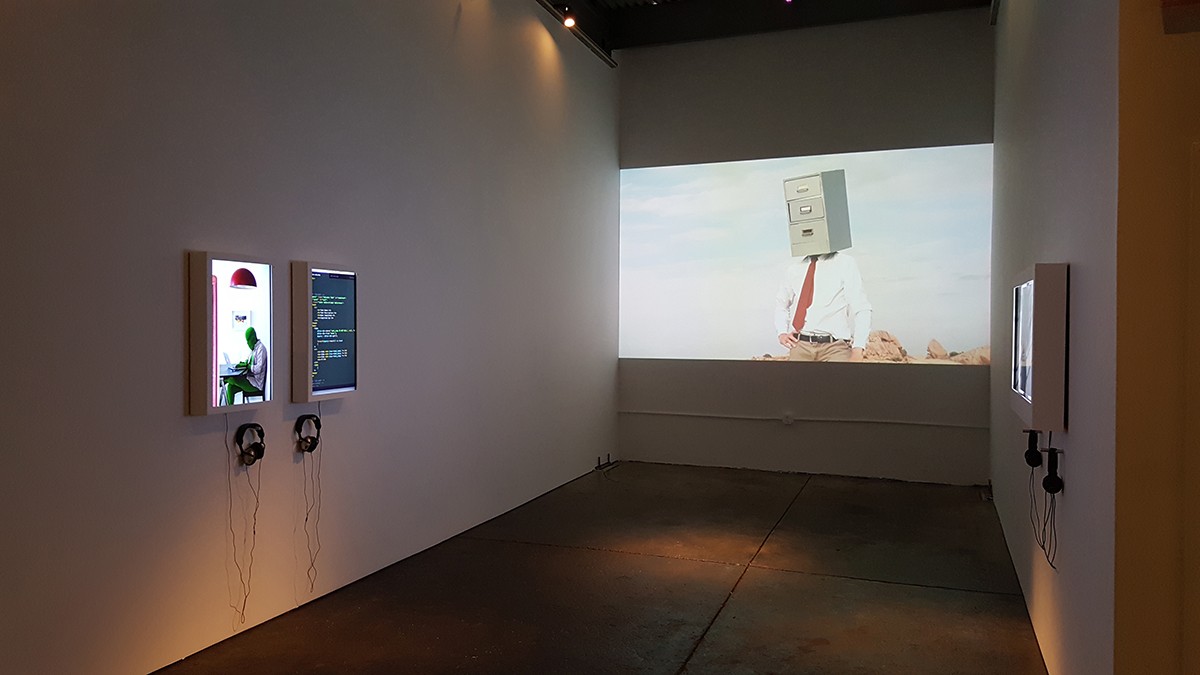
The piece that felt the most contemporary was Simón García-Miñaúr’s An Unexpected Visit, a comically melodramatic story about a chance encounter with a past lover, brilliantly told through two channels installed as a diptych — one showing the protagonist, and the other showing his point of view. The nameless protagonist wears a full-body, green-screen suit throughout the film’s five-minute running time, the past lover is a haphazardly computer-generated avatar with no emotion, and the voice-over narration is a melancholic robot voice with a stiffness that satirizes the histrionic text. Post-internet art rarely offers narrative intrigue, but An Unexpected Visit is instantly enthralling, with a subtle absurdity that reflects on the contrived nature of digital depictions and the odd ways in which computers allow us to manufacture a self outside of our physical being.

Unlike in a typical juried show, Flesh and Blood’s works — which were chosen from a large pool of submission — do not simply represent the best works entered. Rather, they’re the ones that coalesced into a theme organically, that floated to the pool’s surface. The result is a show that’s less about attempting to delineate a hierarchy of aesthetic values for video work and more about making sense of the medium’s capacity to encapsulate moments, feelings, and poetry, and deliver them back to us with unmatched sensory richness — the closest thing to real life.

Saul’s Choice

0

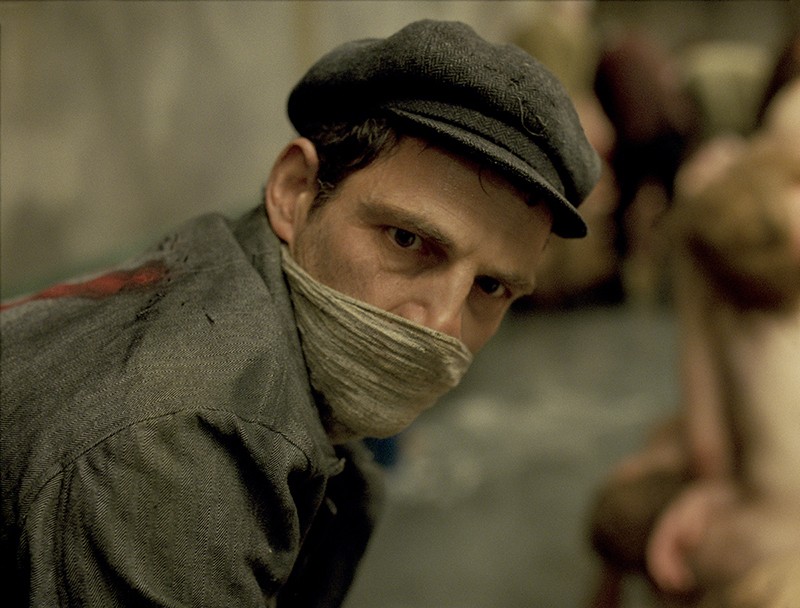
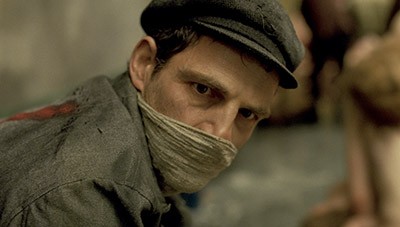
Son of Saul drops us into one of the pits of hell. Saul (played by Geza Röhrig) is a Sonderkommando in the German Nazi death camp of Auschwitz in 1944. As a Jew, Saul’s life and those of his fellow inmates on the work detail are worth nothing. They have been temporarily spared only in order to provide labor, doing the very worst jobs in the camp — such as prying apart the corpses in the Gaskammer after the doors are opened, putting the bodies in carts, and loading them onto elevators for the crematorium — until they themselves drop dead. The proposition is: What would you do to survive for another few days?

Director László Nemes films the action in long takes, with a jittery handheld camera in short focus, to emphasize the chaos. The audio racket is intense. All the tasks are performed at top speed, amid screams and curses, with the omnipresent threat of instant death from an SS guard’s pistol for the slightest reason, or no reason at all. To hesitate for a second is to invite a beating, or worse. And yet in the disassembly lines of the death factory there exists the same hierarchy of brutality and small extorted favors as in any prison. That is how Saul is able to act on his inspiration when he comes across the body of young teenage boy, sidetracked to the autopsy room.

The boy reminds Saul of his own son so much that he risks everything in order to give the unknown youth a full religious burial, complete with rabbi, in the midst of the helter-skelter. The mission becomes Saul’s obsession, to his considerable peril, and involves a shifting cast of characters, from opportunistic Kapos to various doomed innocents to Saul’s Hungarian comrades, quietly plotting some form of resistance. Chance, happenstance, the razor-thin difference between life and destruction. Everything focuses on Saul. Even though he interacts with the others, it’s as if he stands alone in a whirlwind of death.

Director Nemes (who was educated in France and New York, where he reportedly dropped out of NYU film school), co-screenwriter Clara Royer, cinematographer Mátyás Erdély, film editor Matthieu Taponier, sound designer Tamás Zányi, and the Hungarian production’s sound crew all deserve maximum praise for making one of the strongest and most penetrating entries in the vast literature of the Holocaust film. Son of Saul takes a different tack than most. No tantalizing hints of hope, very little in-depth characterization, stripped-down dialogue (to fit in with the atmosphere of the camps), a matter-of-fact approach to horror. And yet in Saul’s feverish determination to bury the boy in a place in which the only exit is up a chimney, the spirit is one of defiance.

Hungarian-born actor Röhrig, a former rock musician who now lives in the New York City area, published two volumes of poetry on the Shoah before he was cast in the film. In interviews, he indicates that he sees the story of Saul not as an isolated crime against a certain slice of humanity, but as a continuing shame that cuts across time and extends to contemporary moral outrages wherever they occur. Röhrig’s performance is one of the finest of 2015. Cataracts of sadness wash over Saul’s face for a second or two, before he gets back to the business of staying alive. Through it all, he holds everything tightly inside, only once letting go.

The audience itself is never allowed to relax for a moment. Son of Saul doesn’t pause to teach us a lesson or to drive home the pathos with sweeping orchestral music. Instead, its rock-hard essence lingers after the film ends, in our minds. Struggle. Never give up. Salvage the tiniest shred of meaning from the most crushing hardship. Even if you’re sick and tired of Holocaust movies, make room for this one.

Atmospheric Shifts with Maggi Payne

A rumbling emanated from the Gray Area Grand Theater’s immersive speaker system last Friday at the San Francisco Tape Music Festival. The low frequency seemed to change the air pressure in the room as the audience listened, transfixed, in near total darkness.

This was the intro to Maggi Payne’s Black Ice, a new work that the veteran electronic musician created solely using a Moog synthesizer — though the abstract, atmospheric composition’s sound more closely resembles a rainstorm at sea than a familiar musical instrument.

The piece wells up like a cyclone enveloping the audience, positioning it at the eye of the storm before blowing past. After coming to a lull, its silence gives way to ticking — somewhere between crickets and pouring rain — that orbits the audience in circles. Eventually, another bout of storm cloud-like rumbling wells up; Payne juxtaposes it with hissing sounds that recall sputtering electric wires.

Effervescence edited excerpt ©2008 Maggi Payne from Maggi Payne on Vimeo.

“Cinema for the ears” is a phrase the Tape Music Festival organizers like to throw around a lot, and it’s an especially apt way to describe Black Ice. To qualify as tape music, or fixed media, a piece must be played through a stereo system rather than performed live. What excites Payne about this format, she explained in a recent interview, is the opportunity to activate listeners’ imagination using the timbre of each sound rather than melody, rhythm, or the visual reference of a stage show.

“When you’re listening to sound abstractly, you’ve got all this room to move and create your own total world in response to those sounds,” said Payne, likening the experience to reading a novel.

The composer, who is in her seventies, is part of the San Francisco Tape Music Collective, which puts on the event. She’s also the co-director of the Mills College Center for Contemporary Music and the former head of its music department. An early adopter of the Moog and Buchla synthesizers as well as audio editing software, she has long been a central figure in the East Bay’s experimental electronic music community, having entered the scene in the early 1970s, just as synthesizers began to proliferate in popular music production.

However, Payne is only peripherally interested in pop as far as it concerns her other occupation as a freelance sound engineer and advanced recording professor at Mills. In fact, she has a background as a classically trained flutist and has been playing the instrument since she was a child.

Payne first became interested in experimenting with recording technologies when her father gave her a tape recorder at the age of ten to help her with her flute playing. She recalled becoming fascinated with the accidental clicks and “breathy sounds” that emerged in her recordings, which sparked her lifelong interest in abstract compositions. In 1972, she enrolled in the newly established electronic music and recording media MFA program at Mills and has remained at the institution ever since.

Throughout Payne’s body of work, she juxtaposes organic and mechanical sounds, creating a clever interplay between the two in order to comment on humankind’s relationship to nature. While Black Ice is a purely synthesizer-based piece, field recordings are a hallmark of Payne’s style. She is an avid environmentalist and much of her source material comes from her weekly canoe trips around Northern California. She often records sounds that would ordinarily be considered intrusive in the context of the outdoors, such as motors revving or planes flying overhead, and processes the audio until it begins to evoke natural phenomena like billowing gusts of wind.

Through the Looking Glass excerpt ©2015 Maggi Payne from Maggi Payne on Vimeo.

“They get transformed and transfixed,” she said. “It’s a commentary about the human intrusion into nature and our not understanding that we’re part of nature and we need to take care of it.”

Similarly, Black Ice uses synthetic sounds to mimic naturally occurring ones, transporting listeners into a collage of undulating tones that evoke a sublime meteorological phenomenon. Each tone that Payne incorporates into the piece calls to mind a distinct texture or temperature; the music feels almost three-dimensional.

“I think about physicality of sound itself: Where it’s coming from, where it’s going, how it’s getting there, and how it changes along the way,” Payne explained. “It comes [from the speakers] at you, to you, through you, beyond you, up, down, and around. It’s got a physicality, it’s got a trajectory as if it were a living, breathing, live entity — that’s the ideal.”

‘Bodily Engagements’ is a Dialectic Between Dancers and Sculptors

Los Angeles-based designer Matt Gagnon is accustomed to projecting the ways in which people will interact with his work. His fanciful yet utilitarian furniture designs structurally direct their own use: Cubbies are for storing things, etc. His imaginative public sculptures, which in the past have looked like amorphous wooden igloos, call for more playful interaction: Openings are...

Saigon Deli Sandwich & Taco Valparaiso Offers a Lesson in Cross-Cultural Communication Via Banh Mi

In Oakland, a lesson in cross-cultural communication might come in the form of a political protest, a mural graffitied on the side of a shipping container, or a poetry lesson at a local high school. Or it might come in the form of a sandwich — say, the amazing al pastor banh mi at...

Green Ice

A reviewer's confession: I don't review as many animated children's movies as I probably should. The few cartoon features that rate a close look tend to be either foreign films aimed at grownups (When Marnie Was There; Kahlil Gibran's The Prophet) or "prestige" stateside hits like Inside Out. The animated family pics that regularly sell carloads of tickets in...

The Best Bargains of Oakland Restaurant Week

Prix-fixe bargain hunters, take note: The sixth annual Oakland Restaurant Week kicks off on Thursday, January 14 and will run through Sunday, January 24, with approximately 100 restaurants running special deals during the promotional period — $20, $30, $40, and $50 prix-fixe menus that will be offered during lunch or dinner. ...

One-Night Stands

Bilderberg Group: The Secret Rulers of the World (25 min., 2013) and The Carlyle Group, The Bush Family, and 9/11 (25 min., 2013). Wed., Jan. 20, 7:30 p.m. Humanist Hall, 390 27th St., Oakland, 510-451-5818, HumanistHall.org. The Black Panthers: Vanguard of the Revolution (115 min., 2015) Mon., Jan. 18, 5 p.m., Free. Rialto Cinemas Cerrito, 10070 San Pablo Ave., El...

Zakiya Harris, Professional Shape-Shifter

Five years ago, when everything in Zakiya Harris' life seemed to have turned upside down, "shape-shift" became her mantra. Amid the Great Recession, the Oakland singer-songwriter and entrepreneur's eco-justice nonprofit, Grind for the Green, lost its funding. She went through a divorce that led to the dissolution of her hip-hop duo, FIYAWATA, which she had started with her ex-husband....

JP Morgan Chase’s Home Loans in Oakland Mostly Went to White and Wealthy Residents

In 2013, when the Oakland City Council selected JP Morgan Chase to handle its municipal deposits — a three-year contract worth $825,000 — the council made the bank's representatives promise to provide detailed information about Chase's lending activities in Oakland. The council also urged the bank to step up its investments in low-income neighborhoods, especially in Oakland's under-served Black...

Life on Video

Today, the question of what constitutes "fine art" is perhaps harder to answer for video — which has seen a proliferation of platforms that allow anyone to easily post content — than it is for any other artistic medium. This lack of clarity is, in part, what makes Aggregate Space's annual open call video show so crucial....

Saul’s Choice

Son of Saul drops us into one of the pits of hell. Saul (played by Geza Röhrig) is a Sonderkommando in the German Nazi death camp of Auschwitz in 1944. As a Jew, Saul's life and those of his fellow inmates on the work detail are worth nothing. They have been temporarily spared only in order to provide labor,...

Atmospheric Shifts with Maggi Payne

A rumbling emanated from the Gray Area Grand Theater's immersive speaker system last Friday at the San Francisco Tape Music Festival. The low frequency seemed to change the air pressure in the room as the audience listened, transfixed, in near total darkness. This was the intro to Maggi Payne's Black Ice, a new work that the...
19,045FansLike
17,709FollowersFollow
61,790FollowersFollow