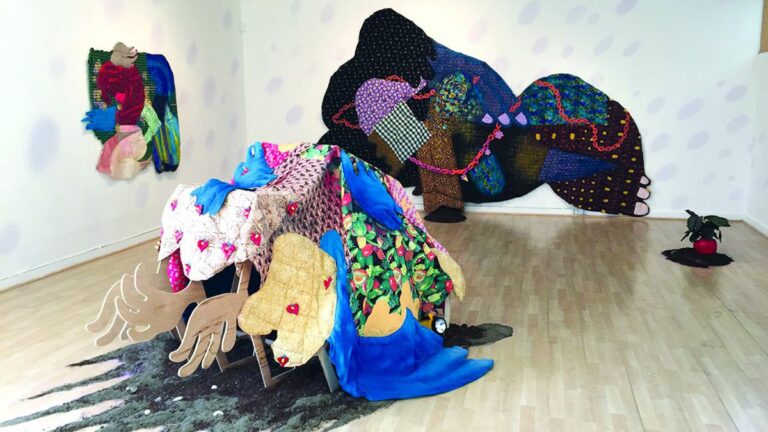
Last month, I wrote about the newly established CTRL+SHFT collective, a democratic group of fourteen female artists sharing studio space and curating shows in a warehouse in West Oakland (see “Collective Control,” 12/16). From January 29 through February 19, you’ll be able to visit the space and get to know the artists’ work, which spans a variety of media. Soft Serve, the first show in the CTRL+SHFT gallery (1430 34th St., Oakland), will be a showcase of work from the collective members: Megan Reed, Addy Rabinovitch, Beryl Bevilacque, Channing Morgan, Danielle Genzel, Erica Molesworth, Katy Crocker, Jessica Hubbard, Maria Guzmán Capron, Andrea Fritsch, Eden Redmond, Sofie Ramos, C.A. Greenlee, and Yerin Kim. It’s also meant to reflect the spontaneously collaborative ethos of the space. “Finality is not the goal,” reads the exhibition statement. “Furthermore, performative interventions between the artists, audience, and exhibition are expected during the opening night.”
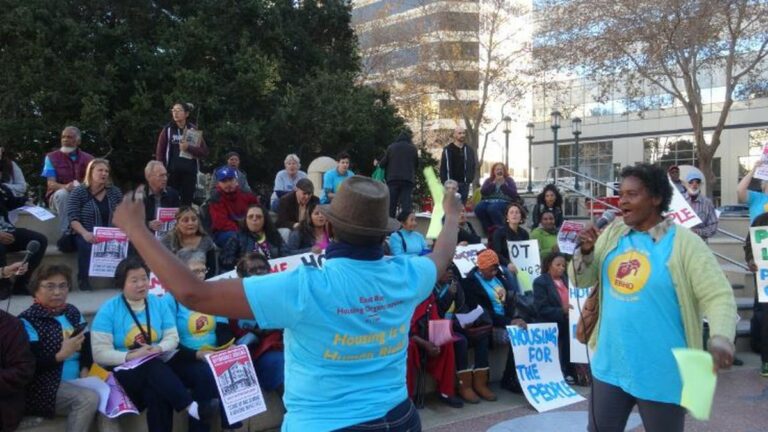
Activists rally for affordable housing impact fees at Oakland City Hall last year.
Credits: Darwin BondGraham
The full Oakland City Council isn’t meeting this week, but the council’s six committees are scheduled to meet, and there is important business to discuss.
Impact fees: The proposed impact fees that developers would pay to fund affordable housing, transportation and capital projects are coming before the council’s community and economic development committee on Tuesday afternoon. We’ve written a ton about the proposed affordable housing impact fee, which has been several years in the making. Tuesday’s hearing on the proposed impact fees will be the first opportunity for public input since the city released the nexus study and feasibility analysis, two reports that estimate how much the city can justifiably charge developers without negatively impacting their ability to finance new market rate housing projects.
Taxing the “sharing economy”: The finance committee is schedule to consider ways of better regulating and taxing so-called sharing economy comapnies like Airbnb, and on-demand services like Uber. According to a staff report, there are at least eight different companies that currently operate short-term rental platforms that Oakland landlords use to rent out their houses, apartments, or other real estate properties as virtual hotels. Uber and Lyft dominate the app ride hailing industry, and both platforms have an unknown, but large number of drivers now providing rides in Oakland, especially around downtown and the West Oakland and MacArthur BART stations.
[jump]
Airbnb taxes for affordable housing?: Oakland is already collecting hotel taxes from Airbnb landlords, but on Tuesday morning the finance committee is going to discuss whether or not the city should start putting some of these increased hotel tax revenues into the affordable housing trust fund. The proposal at this point is to put $350,000 above what the city normally collects in hotel taxes into the fund. A report released by Community Economics, Inc. and East Bay Housing Organizations earlier this month recommended that Oakland allocate all of the new Airbnb tax money to the affordable housing trust fund to help pay for below-market rate development. This could provided upwards of $500,000 a year in new money for affordable housing programs.
New Department of Transportation: There’s a proposal to split in half Oakland’s Department of Public Works in order to create a new Department of Transportation. Public works would continue to run the city’s 304 buildings and facilities, clean up trash from the streets, clear fallen trees from roads, and keep the city’s 1,400 vehicles running, among other jobs. The new transportation department would take over all transportation related work, including the maintenance of 2,227 miles of paved roads, 66 miles of concrete streets, 671 traffic signals and 37,000 streetlights. The new transportation department would also be responsible for re-engineering the city’s streets, bike paths, sidewalks and bridges. Finally, the department would take the lead in coordinating changes to Oakland’s complicated transportation infrastructure with other government agencies, and tasked with obtaining more money from the feds, state, and county. The new transportation department’s director will be paid a salary between $130,000 and $190,000. Bloomberg Associates, a nonprofit founded by former New York City mayor (and possible 2016 presidential candidate) Michael Bloomberg, advised Oakland on creating the proposed transportation department.
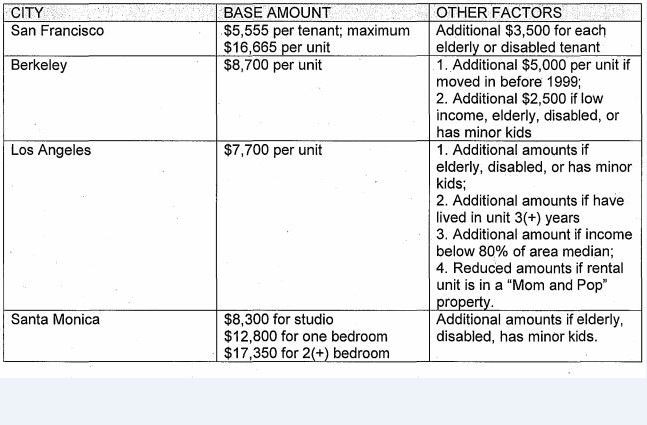
Other rent controlled cities provide more financial assistance to tenants displaced through no-fault, Ellis Act evictions than Oakland.
Credits: City of OaklandEllis Act eviction compensation: Currently, if you get evicted from of your apartment in Oakland under provisions of the Ellis Act, you can’t get any financial assistance from your landlord, unless you’re defined as a very-low income renter. If you meet the city’s income requirements, you get two months worth of rent at the time your notice of eviction is given. Among California cities with rent control, Oakland’s Ellis Act compensation is the lowest. Several proposals to increase this compensation are coming before the community and economic development committee on Tuesday afternoon. One proposal is to set base compensation at $8,000 per unit, and then provide extra financial assistance of $2,500 if any of the tenants are seniors, disabled, low-income, or families with children. A second option would be to compensate tenants based on the size of their unit. Landlords who proceed with Ellis Act evictions on studios and one bedrooms would be required to pay tenants $6,500. Evictions on two-bedroom and three bedroom apartments would increase compensation to $8,000 and $9,875, respectively. Unlike San Francisco, Ellis Act evictions haven’t had much of an impact on Oakland tenants. Since 2003, only 98 tenant households have been evicted with an Ellis Act filing. City staff, however, fear this number will increase as Oakland’s real estate becomes more desirable to higher-income people looking to buy condos instead of rent apartments.
Racial profiling on Nextdoor.com: Neighbors for Racial Justice formed last year to raise awareness about the problem of racial profiling on the many Nextdoor.com networks that have become popular online forums across Oakland. Sam Levin wrote an excellent Express feature story last year revealing how Black residents of the Dimond, Glenview, and other neighborhoods have been unjustly profiled on Nextdoor.com as “criminals,” “thugs,” and “thieves.” Neighbors for Racial Justice will be making a presentation to the city’s life enrichment committee on Tuesday afternoon.
Crime scene laser scans: OPD wants to spend $317,502 on two laser scanning machines that can map out crime scenes in three dimensions. Funding for the laser scanners will come from a federal Department of Justice grant, and previously budgeted money to help OPD improve its ability to investigate shootings. According to a report produced by OPD, there are about 600 shootings each year in which crime scene technicians do not gather all of the evidence they should in order for investigators and prosecutors to successfully resolve the case. The laser scanners will reduce the amount of time necessary to gather evidence.
1. Plummeting oil and gas prices will force state officials to slash transportation funding by about $754 million over the next five years, the LA Times$ reports. California’s transportation funding is tied to the state’s gas tax, and revenues have nosedived because of falling gas prices due to the oversupply of oil worldwide. The planned $754 million cut in funding is the largest in two decades, and more cuts are expected unless gas prices rebound.
2. State officials may switch the first operating segment of California’s new high-speed rail system from Southern California to the Bay Area, the LA Times$ reports. Officials are considering making the first operating segment from Bakersfield to San Jose, because the planned route to Los Angeles will be costly and time-consuming, due to the fact that it must traverse “the geologically complex Tehachapi and San Gabriel mountains with a large system of tunnels and aerial structures.”
3. Bay Area transportation officials finally got some good news about the Bay Bridge: The problem of water leaks on the new eastern span’s cable system appears to be fixed, the Chron reports. The leaks were threatening to cause widespread corrosion on the $6.4 billion bridge, but Caltrans crews seem to have plugged the leaks with large amounts of caulk.
[jump]
4. The big gas-line leak near Porter Ranch in Southern California, which has emitted massive amounts of methane, a potent greenhouse gas, in the past few months, has “put out the equivalent of 2.1 million metric tons of carbon dioxide — more greenhouse gas than 440,000 cars emit in a year,” the LA Times$ reports.
5. Far more Californians die from drug overdoses and poisonings than in car accidents each year, the SacBee$ reports, citing new estimates from the US Centers for Disease Control and Prevention. And more than twice as many people die of drug overdoses than are murdered. Most drug overdoses are associated with prescription painkillers and heroin.
East Bay fans of Baja-style fried fish tacos won’t find a much better version than the one served at Cholita Linda’s farmers’ market stands and its popular Telegraph Avenue restaurant. Now, you can add another brick-and-mortar location to the list: The owners of Cholita Linda plan to open their second branch in the old Burrito Shop location at 3256 Lakeshore Avenue, as first noted on the Splash Pad Park neighborhood group’s Facebook page.
[jump]
That location was the subject of some controversy last fall when The Burrito Shop’s owners, who occupied the spot for nearly thirty years, were unable to persuade the landlord to renew their lease. At the time, the prevailing rumor was that the Peet’s next door was planning to expand into the space. That never came to fruition, and, as it turns out, Lakeshore will be home to a Mexican restaurant after all — though it will be fish tacos, not burritos, that will be the specialty of the house.
Co-owner Murat Sozeri said the basic setup of the restaurant would be the same, but with at least one notable menu addition. Vanessa Chavez, the chef (and Sozeri’s wife), had been wanting to add Peruvian-style rotisserie chicken — aka pollo a la brasa — to the menu for quite some time, but decided that operating a rotisserie wasn’t feasible with their kitchen setup. Instead, both of the Cholita Linda locations will add a grilled chicken plate and grilled chicken sandwich to the menu, prepared using those same flavors as a traditional pollo a la brasa, but without the rotisserie.
Cholita Linda also serves a variety of other pan-Latin dishes that draw on Chavez’s Cuban, Peruvian, and Mexican ethnic background. (The simple rice and beans is one of the best versions in town.)
Sozeri said he plans to add more seating to the new location, noting that the Burrito Shop’s old layout was less than ideal. And if the city approves the plans, he’d also like to add some outdoor seating along the side of the building that faces the adjacent Trader Joe’s parking lot. That said, Sozeri expects that the Lakeshore location may be more of a takeout-oriented spot than the original Telegraph Avenue shop.
If all goes according to plan, the new Cholita Linda will open in the late summer or early fall.
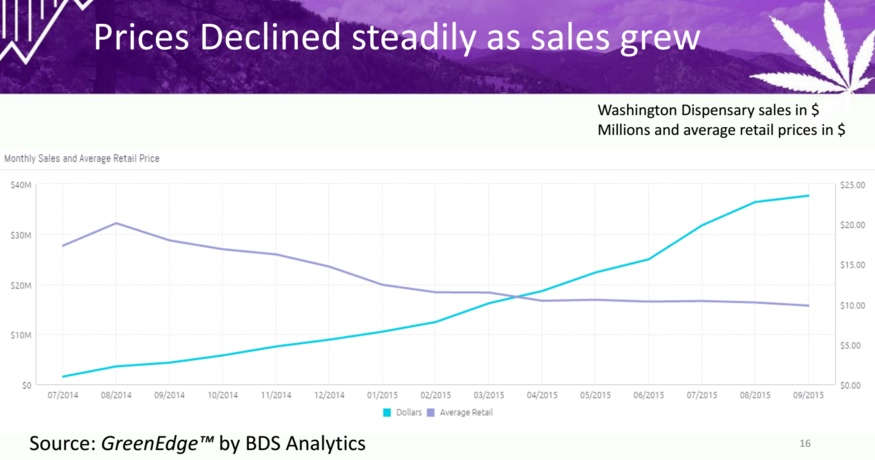
Cannabis legalization is causing prices to plummet in Washington, with major implications for California patients.
Cannabis’ retail cost per gram has dropped almost 50 percent in Washington, from a high of $17 gram (common in California) to $9 per gram and falling.
Credits: BDS Analytics
The price drops illustrate how recreational legalization is the fastest route to lower prices for medical cannabis patients, many of whom bemoan the high cost of pot in California, and yet criticize legalization efforts as putting profits first and patients second.
[jump]
In Washington’s experiment with legalization, prices are plummeting as the supply of legal pot rapidly increases.
The cost of illegal pot is roughly 90 percent risk, researchers have noted, and with risk out of the equation, the true cost of marijuana is beginning to emerge.
Cannabis’ retail price in Washington is being tracked by BDS Analytics — a cannabis business intelligence and market share tracking service that shared its data with Legalization Nation on Thursday.
As California turns toward full legalization, some medical marijuana advocates have begun criticizing profit-seeking.
The reality is the opposite: Recreational legalization will be the single biggest boon to medical patients, resulting in radically lower prices, as well as increased patient access and legal protections.
Legal pot sales in Washington are up 360 percent from December 2014 to December 2015 — starting at $9 million and ending at $40 million. Sales growth quintupled in the last quarter of 2015 alone, even though Washington is criticized as having high taxes and the weakest form of legalization.
Legalization is rapidly diversifying the amount of product available to patients, as well as mandating lab-testing and pesticide regulations.
While flower sales dominate the market at 69 percent of sales, most of the market growth is in more advanced formulations and modalities like pre-rolls (68 percent quarterly growth), extracts (80 percent quarterly growth) and “other” like topicals.
The data counters criticism that patients are being left behind by legalization, as well critics of Washington legalization in general.
This week, legalization writer Russ Bellville called out the “True Legalizers” who worked to subvert legalization efforts in California, Oregon, Washington, and Colorado and are at it again this year in California, Missouri, and elsewhere.
“I think part of what motivates you is a paranoid fear of anything professional. If there’s money involved, you reason, there’s corruption and hidden agendas involved. You’ve been so abused by the institutions of government and capital that you can’t see mainstream, professional legalization as anything but a trick to somehow benefit someone other than you while keeping you under some measure of oppression.”
“The problem is that every person you manage to bamboozle with your fantasy of volunteer-led True Legalization™ succeeding is someone not putting time, money, and effort into working on limited legalization that actually has the polling, money, and signatures necessary to win. Every person you manage to enrage into hating the professional legalization campaign is someone who is now doing the campaign work for the cops, prison guards, rehabs, drug testers, and pharmaceutical companies that want to keep marijuana illegal.”
In other News: theBay Area Reporter, as well as Bay Area activist Chris Conrad, along with Jeremy Daw, are the latest to endorse the leading California legalization initiative: the Adult Use of Marijuana Act.
Credits: BlueLight
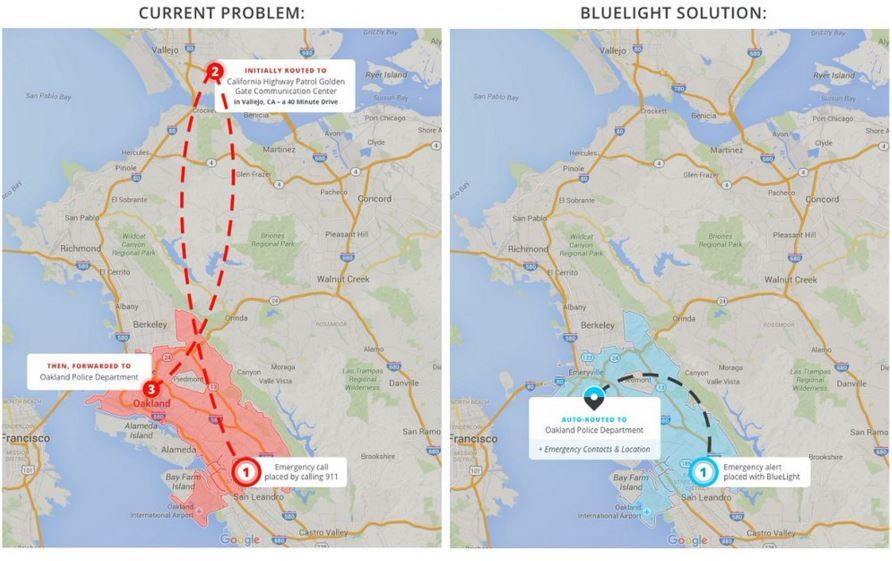
A company called BlueLight plans to roll out a smartphone app that works as a subscription-based 911 service in Oakland next month. The service cost $20 a year and promises users that when they dial 911 from anywhere in Oakland, the Oakland Police Department will have access to their exact geographic location, making for a faster response. But the app appears to be widening the tech-fueled inequality gap. Will those able to afford smartphones and a BlueLight subscription receive superior emergency services over those who cannot?
[jump]
The problem BlueLight wants to solve is very real. Currently, when cellphone users dial 911 in Oakland, their calls are routed to the California Highway Patrol in Vallejo, and then to the Oakland police and fire dispatch centers. Geographic information isn’t included, so cellular callers have to tell the dispatcher where they are.
“A lot of us are walking around with a smartphone, but when it comes to personal safety and emergency services, it’s still not optimized for that,” said Preet Anand, the CEO and founder of BlueLight.
“In Oakland, dialing 911 doesn’t take you to OPD,” Anand added. “That’s why the police department tells you to pre-program in a 10 digit number if you want to call them from a cell phone. But if you dial that, [the Oakland police] get no other info about you and where you are, and where you are is the most important piece of info.”
According to a blogpost published two days ago, BlueLight’s service will begin covering Oakland in February. According to the post, BlueLight employees have met with Oakland city officials to prepare for the new service.
Oakland police spokesperson Marco Marquez confirmed that OPD has been contacted by BlueLight, but said that OPD isn’t involved in the company’s product. Oakland Mayor Libby Schaaf’s office did not return a phone call seeking information about whether the city is working in some way with BlueLight.
But Anand said in an interview with the Express that his company has reached out OPD and Schaaf’s office to inform them that his company’s service will soon be available to city residents. Anand clarified that BlueLight’s service doesn’t require any technical integration into Oakland’s existing 911 system.
“It comes in as regular phone call on their side, but it just has much more information,” said Anand. “The city doesn’t need to install anything.”
On Twitter yesterday BlueLight responded to criticisms that it’s subscription-based 911 service would create an unequal 911 system.
Anand said he hopes that Oakland eventually hires his company to provide the BlueLight service for anyone who calls 911 in the city of Oakland, at a cheaper cost to residents than the current $20 subscription rate.
“That is where we’d love to get to,” said Anand. “But the real question is, if we can start making a diff now and help people now, should we wait?”
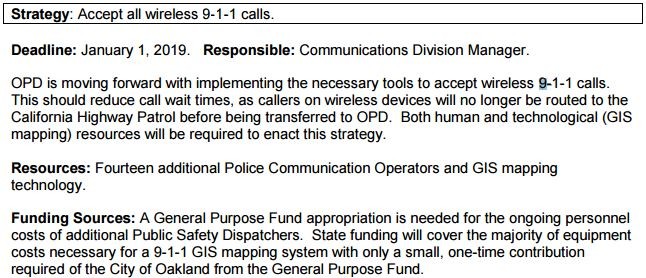
OPD’s current efforts to upgrade the 911 system to accommodate cellphones isn’t scheduled to come on line until 2019, according to the department’s recently released Strategic Report.
Definitely don’t go out and have fun this weekend. Definitely don’t attend any of the super fun events listed below!
Diesel Dudes, Toner, OVVN, and Casual Hex
If you go to a Diesel Dudes show, you can expect to see lots of tighty-whities, leather, and sweat. The Oakland electro-punk group’s live performances have a reputation for their absurdist displays of masculinity. But while it’s tempting to call Diesel Dudes’ hyperbolic aesthetic parody, it ultimately comes off as sincere — albeit completely bizarre. The band members are disciples of EBM (or electronic body music), a style of dark, synth-driven punk that became popular in Europe in the Eighties. Rife with pulsating, danceable beats, EBM emphasizes that listening to music is a physical experience. Diesel Dudes tap into this theme with allusions to muscles and pumping iron, with tracks such as “Body Clench” and “Thrusts Per Minute.” On January 23 the band performs at Sgraffito Gallery with Oakland bands OVVN and Toner, as well as Casual Hex, which is on tour from Seattle. — Nastia Voynovskaya
Sat., Jan. 23, 7 p.m. $TBA.
[jump]
S.B.S.M., The Noriegas, The Fathers, and O)x_3y3
As a fundraiser for Berkeley Liberation Radio on 104.1 FM, which purports to be “the East Bay’s premiere anti-FCC airwave savior,” One Fam in West Oakland is hosting a show with several excellent dark, noisy local bands that are also involved in DIY radio production. S.B.S.M., an Oakland trio that juxtaposes thunderous beats with abrasive vocals, eerie synths, and digital glitches, will perform at the event. The group hosts the weekly radio show Scream Queens on the station. It takes place every Wednesday from 10 p.m. to midnight and features other local bands with a penchant for stark, austere sonic palettes. The Noriegas, The Fathers, and O)x_3y3 will be joining S.B.S.M. on the bill, and proceeds from the show will go to covering Berkeley Liberation Radio’s rent and other operational costs. — N. V.
Sat., Jan. 23, 8 p.m. $5. OneFam.org
A Poetry Reading with Nellie Wong
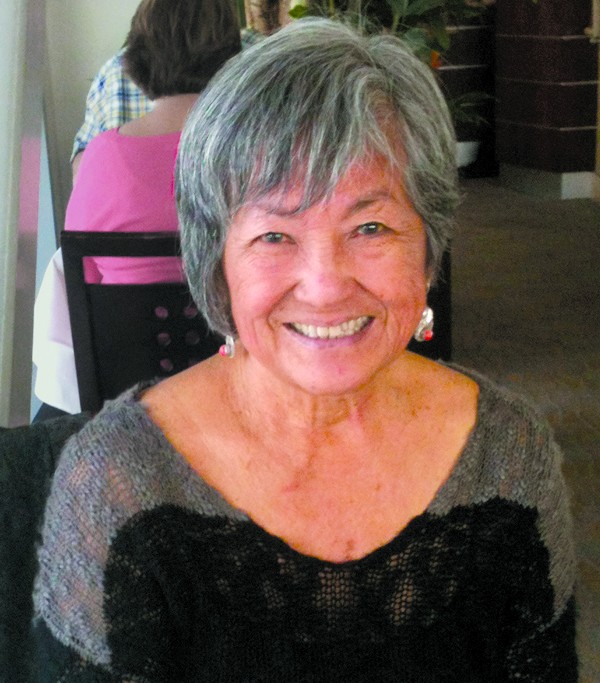
Nellie Wong was born in Oakland Chinatown to Chinese immigrants. She worked at her family’s restaurant and graduated from Oakland High School. In the 1970’s, as a student at San Francisco State University, she began publishing her poetry, which speaks to race, sex, and class discrimination. Now, she is a well-recognized feminist poet, and recently released her fourth book of poetry, entitled Breakfast Lunch Dinner. Wong will be at Liminal, a feminist writing space in Oakland (3037 38th Ave.), on January 23 at 3 p.m. to read from her latest release and discuss the intersection of art, politics, and feminism. She will be joined by performance artist and writer Jezebel Delilah X, who is also co-managing editor of Everyday Feminism, co-host of the queer feminist open mic Culture Fuck, and on the board of popular blog Black Girl Dangerous. — S. B.
Sat., Jan. 23, 3 p.m. $11.24–$21.49. TheLiminalCenter.com
Pop-Up Ping-Pong Party
Linda Jacobson and Lauren Hewitt believe in the restorative healing power and brain-healthy benefits of Ping-Pong. They’re hoping to spread those benefits in a series of free pop-up Ping-Pong parties throughout the East Bay, the first of which will be held at Rhythmix Cultural Works (2513 Blanding Ave., in Alameda) on Sunday. The duo is also scouting locations in Oakland to open up the very first PaddleSnap Urban Resort. Based on renderings and the information provided on the group’s website, the resort will be a lounge of sorts, equipped with ping-pong tables and couches, with “nutritious nibbles, brews, and beverages.” Jacobson said she’s hoping to move into a space by the end of 2016 but said they’re still looking for investors to finance the endeavor. Jacobson said that right now, she and Hewitt are personally funding the future resort’s development, including buying the ping-pong tables for the pop-up parties. So far, however, the public response to the pop-ups has been overwhelming, Jacobson said. The event is free, but an RSVP is required. Visit Rhythmix.org for a link to the event page. — Erin Baldassari
Sun., Jan. 24, 1-3 p.m. Free; RSVP required. Rhythmix.org
Collaborations between John Casey and Marcos LaFarga.
Credits: Courtesy of the artist.Hands and Pants 6
John Casey has a signature style of illustration. His wiry black lines twist into contour drawings that form disproportionate figures. And within his body of work, there are a few characteristics that are particularly recognizable — namely, hands and pants. But Casey has decided to share those elements. For his ongoing project, “Hands and Pants,” he draws versions of hands and pants on otherwise blank paper, then distributes them to his artistic peers. And every once in a while, he puts the newest ones into an exhibition. Hands and Pants 6, currently on view at Faultline Art Space (815 High St., Oakland) through February 27, includes more than one hundred of those collaborations. Participating artists include Deth P. Sun, David Polka, Lucien Shapiro, Lexa Walsh, Marcos LaFarga, Ryan De La Hoz, and Max Kauffman. The result is a wild range of riffs on Casey’s work that collectively symbolize his artistic community. It’s also a really fun show, and each piece is only $150. — S. B.
Through Feb. 27, 12-5 p.m. 510-536-6133. HandsAndPants.com
If your pockets are feelin’ light and you’re still yearning for more suggestions, we’ve got a ton, and these ones are all FREE!We’re Hungry: Got any East Bay news, events, video, or miscellany we should know about? Feed us at Sa*********@************ss.com.
1. The year 2015 smashed the global heat record, and this year is expected to be even hotter, the AP reports (via KQED), citing a new analysis by the National Oceanic Atmospheric Administration and NASA. The average temperature worldwide last year was 0.29 degrees Fahrenheit higher than the previous record set in 2014 — the second biggest single-year heat spike on record. The global average temperature was 58.62 degrees last year, which was 1.62 degrees higher than in the 20th century. Scientists blamed greenhouse gas emissions caused by the burning of fossil fuels, along with El Nino, for the 2015 heat record.
2. PG&E and the state’s two other major utilities are pushing hard to penalize Californians who install and use rooftop solar, the LA Times$ reports. The utilities strongly oppose a plan put forward by staffers of the California Public Utilities Commission, which would keep solar prices low in order to continue to lessen the state’s dependence on fossil fuels. PG&E and the other utilities want to slap solar users with hefty surcharges, because they say the CPUC plan will result in higher rates for residents who don’t have solar. The CPUC plans to vote on the issue next week.
[jump]
3. The Berkeley City Council voted to spend $1.5 million on public health programs, using proceeds from the city’s new soda tax, Berkeleyside reports. The council plans to increase health staffing, help finance school nutrition programs, and fund grants that are designed to “limit the impacts of, and access to, sugar-sweetened beverages.”
4. BART has decided to install real video cameras on its trains following the revelation last week that the transit agency was using fake ones, the Chron$ reports.
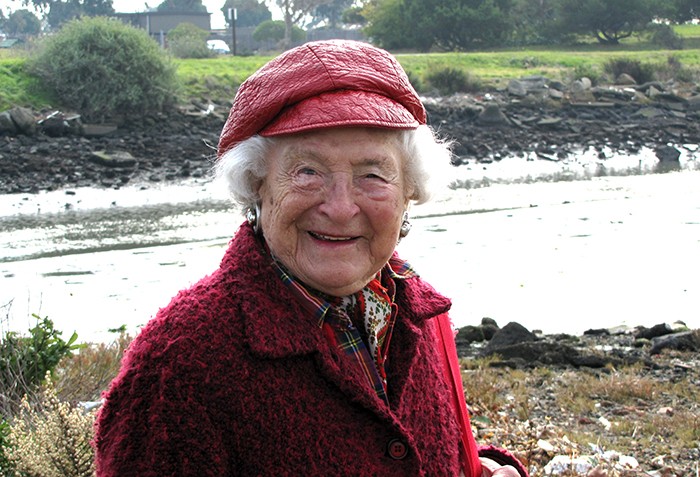
Sylvia McLaughlin.
Credits: Laura Wainer
Sylvia McLaughlin, an environmental trailblazer and longtime leader of the Bay Area’s environmental community who co-founded Save the Bay and served on the boards of the National Audubon Society, East Bay Conservation Corps, Save the Redwoods League, Citizens for East Shore Parks, Trust for Public Land, and Greenbelt Alliance, died Tuesday at her Berkeley home. She was 99.
“Words are hardly adequate to convey [McLaughlin’s] profound influence on protecting the environment, restraining runaway development around the bay, and providing a powerful role model for those whose power is based not on wealth or inside political connections but on determination and a just cause,” said Berkeley Mayor Tom Bates in a statement. “If there were a Mount Rushmore of Bay Area environmentalists, Sylvia should be there.”
[jump]
In 1961, McLaughlin, along with her two friends, Kay Kerr and Esther Gulick, founded Save the Bay, an influential environmental organization that helped ensure San Francisco Bay would not be filled in by development. Save the Bay also pushed for the creation of the Bay Conservation and Development Commission, a public agency that manages the bay and coastal zones.
McLaughlin’s tireless environmental advocacy also was pivotal in the creation of shoreline parks around the bay, including McLaughlin Eastshore State Park, named in her honor.
A memorial service is planned for Tuesday, February 2 at 4 p.m. at St. Mark’s Episcopal Church in Berkeley.
Save The Bay is inviting people to share memories and condolences on its website: SaveSFbay.org/rememberingSylvia.
The family has requested that in lieu of flowers, gifts in honor of Sylvia McLaughlin be made to Save The Bay (SaveSFbay.org/sylvia) or Citizens for Eastshore Parks (EastshorePark.org).
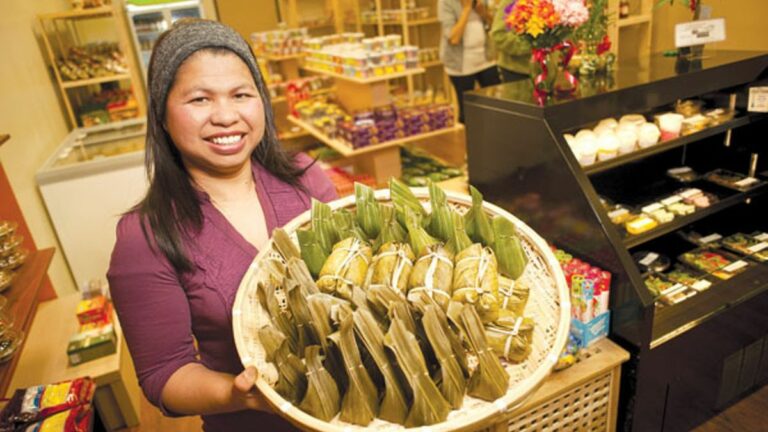
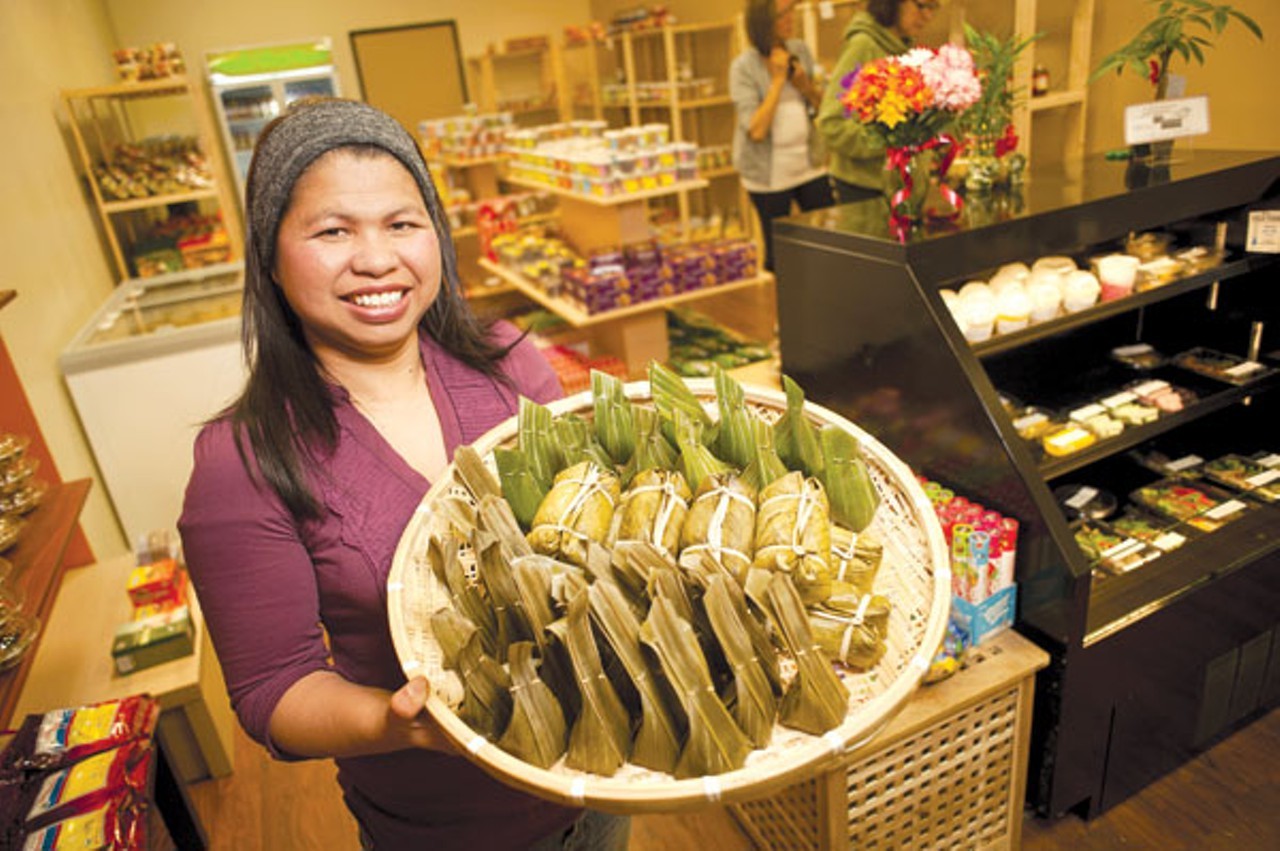
The status of Ran Kanom, a Thai restaurant inside the Pacific East Mall, is uncertain.
Credits: Chris Duffey/File photo
Welcome to the Mid-Week Menu, our roundup of East Bay food news.
1) A New York investor group has purchased Richmond’s Pacific East Mall (3288 Pierce St.) for $31 million, the Contra Costa Times reports. Anchored by a 99 Ranch Market supermarket, the mall is home to an eclectic mix of Asian-centric shops and restaurants. According to some observers, its popularity as a one-stop shop for many East Bay Chinese Americans, is partly to blame for the recent struggles of Oakland Chinatown.
[jump]
Reportedly, the new owners don’t have any major changes planned, but posters on the food discussion forum Hungry Onion already noticed one unfortunate — though perhaps unrelated — change: Ran Kanom, a beloved Thai restaurant and market in the mall, appears to have closed. For now, it’s unclear if the shuttering is permanent or temporary: Ran Kanom’s phone line has been disconnected, but at lease one poster in the aforementioned discussion thread reports speaking to someone who said the restaurant might reopen (possibly under new ownership?) as early as this week. I’ll report back if I’m able to get confirmation one way or the other.
2) Beer geeks will be happy to note that SF Beer Week kicks off this weekend. ICYMI, I wrote a roundup of a few of the more intriguing East Bay events. And here’s one more, for those who are gluten-intolerant: Grease Box (942 Stanford Ave.), North Oakland’s gluten-free cafe and bakery, is hosting a meet-the-brewer event on Saturday, January 23, 11 a.m.–4 p.m., with Portland-based Ground Breaker Brewing, which touts itself as the nation’s first dedicated gluten-free brewery. The event will double as a release party for Ground Breaker’s new “triple squashed” Squash Ale, which has squash elements added in three different stages of the brewing process.
3) In other beer-related news, the East Bay Beer blog reports that a promising new beer bar called The Cooler is coming soon to San Leandro. Among its notable features: 40 available taps (about 25 of which will be active at a time) and a prominent place given to Southern California breweries that don’t typically distribute their beers up to the Bay Area.
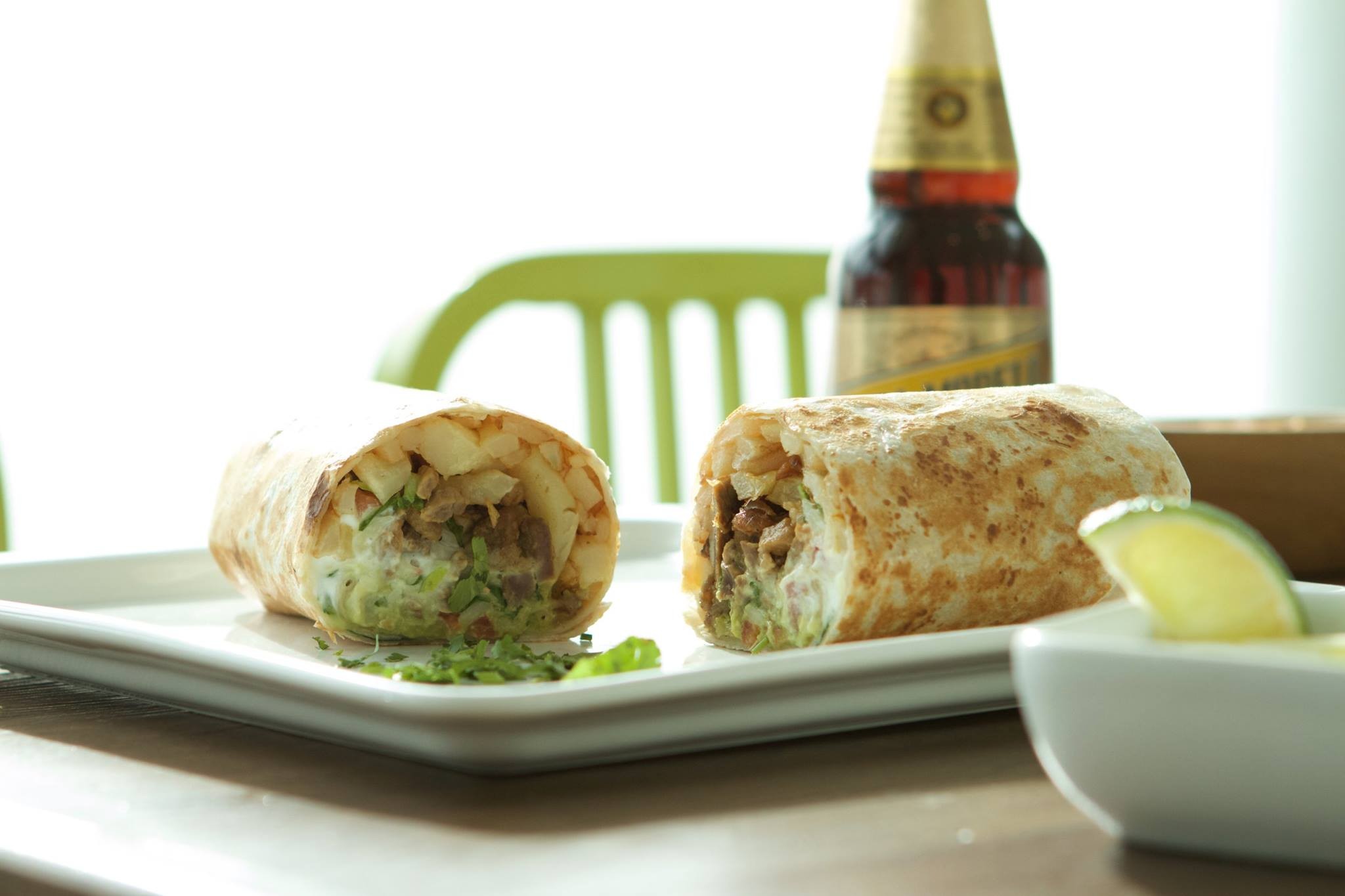
California burrito at Best Coast Burritos (via Facebook).
4) The former Viva Mexican Grill in the Emeryville Public Market has moved into a new stand-alone brick-and-mortar location at 1400 Powell Street in Emeryville and rebranded itself as Best Coast Burritos, the E’ville Eye reports. You may recall that I have a bit of fixation with California burritos — which are filled with French fries instead of rice. And what do you know? Best Coast Burritos has a version on the menu.
5) And another one bites the dust: Following last week’s news that BBQ Hut had closed, a reader informs us that another relatively new barbecue restaurant, the Alameda outpost of Best Lil Porkhouse located at the South Shore shopping plaza, has also closed.
6) It appears that Tacos Oscar now has a regular pop-up at the Starline Social Club on the second and fourth Monday of each month, 5 p.m.–midnight, with happy hour drink specials available until 7. The next edition is coming up on Monday, January 25.
7) The Good Food Awards announced its 2016 winners last week, and, as Berkeleyside Nosh notes, two of the honorees are based in the East Bay: Wooden Spoons, which won for its pork rillettes, and La Tourangelle, for its roasted hazelnut oil. Got tips or suggestions? Email me at Luke (dot) Tsai (at) EastBayExpress (dot) com. Otherwise, keep in touch by following me on Twitter @theluketsai, or simply by posting a comment. I’ll read ‘em all.
Last month, I wrote about the newly established CTRL+SHFT collective, a democratic group of fourteen female artists sharing studio space and curating shows in a warehouse in West Oakland (see “Collective Control,” 12/16). From January 29 through February 19, you’ll be able to visit the space and get to know the artists’ work, which spans a variety of media....
Activists rally for affordable housing impact fees at Oakland City Hall last year.
Credits: Darwin BondGraham
The full Oakland City Council isn't meeting this week, but the council's six committees are scheduled to meet, and there is important business to discuss.
Impact fees: The proposed impact fees that developers would pay to fund affordable housing, transportation and capital projects are...
Stories you shouldn’t miss:
1. Plummeting oil and gas prices will force state officials to slash transportation funding by about $754 million over the next five years, the LA Times$ reports. California’s transportation funding is tied to the state’s gas tax, and revenues have nosedived because of falling gas prices due to the oversupply of oil worldwide. The planned $754 million...
East Bay fans of Baja-style fried fish tacos won’t find a much better version than the one served at Cholita Linda’s farmers’ market stands and its popular Telegraph Avenue restaurant. Now, you can add another brick-and-mortar location to the list: The owners of Cholita Linda plan to open their second branch in the old Burrito Shop location at 3256...
Cannabis legalization is causing prices to plummet in Washington, with major implications for California patients.
Cannabis’ retail cost per gram has dropped almost 50 percent in Washington, from a high of $17 gram (common in California) to $9 per gram and falling.
The price drops illustrate how recreational legalization is the fastest route to lower...
A company called BlueLight plans to roll out a smartphone app that works as a subscription-based 911 service in Oakland next month. The service cost $20 a year and promises users that when they dial 911 from anywhere in Oakland, the Oakland Police Department will have access to their exact geographic location, making for a faster response. But...
Definitely don't go out and have fun this weekend. Definitely don't attend any of the super fun events listed below!
Diesel Dudes, Toner, OVVN, and Casual Hex
If you go to a Diesel Dudes show, you can expect to see lots of tighty-whities, leather, and sweat. The...
Stories you shouldn’t miss:
1. The year 2015 smashed the global heat record, and this year is expected to be even hotter, the AP reports (via KQED), citing a new analysis by the National Oceanic Atmospheric Administration and NASA. The average temperature worldwide last year was 0.29 degrees Fahrenheit higher than the previous record set in 2014 — the second biggest...
Sylvia McLaughlin.
Credits: Laura Wainer
Sylvia McLaughlin, an environmental trailblazer and longtime leader of the Bay Area’s environmental community who co-founded Save the Bay and served on the boards of the National Audubon Society, East Bay Conservation Corps, Save the Redwoods League, Citizens for East Shore Parks, Trust for Public Land, and Greenbelt Alliance, died Tuesday at her Berkeley home. She...
The status of Ran Kanom, a Thai restaurant inside the Pacific East Mall, is uncertain.
Credits: Chris Duffey/File photo
Welcome to the Mid-Week Menu, our roundup of East Bay food news.
1) A New York investor group has purchased Richmond's Pacific East Mall (3288 Pierce St.) for $31 million, the Contra Costa Times reports. Anchored by a 99 Ranch Market supermarket, the...