Tenant Advocates Decry Court Move

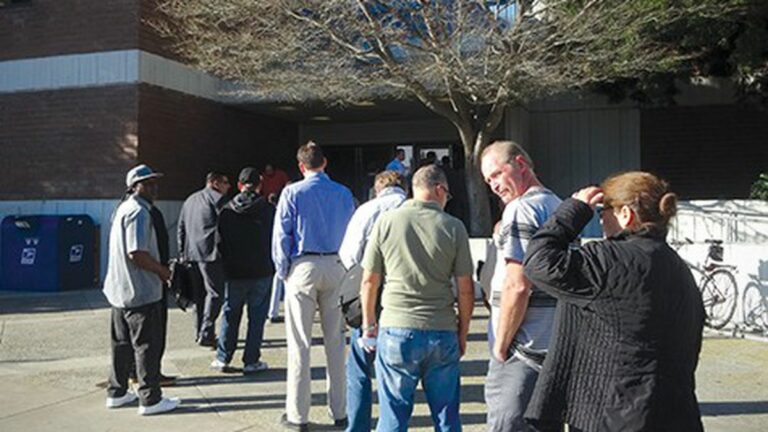
At a time when skyrocketing rents are displacing low-income renters in Oakland, Alameda, and Berkeley, the Alameda County Superior Court is proposing to move all eviction cases to the Hayward Hall of Justice, even though the courthouse is not easily accessible by public transportation. Tenants advocates say the plan will create additional hardships for renters who live in the northern part of the county, don’t drive, can’t afford to hire their own attorney, and are facing eviction proceedings, also known as “unlawful detainer” cases.

“A lot of people will suffer as a result of moving unlawful detainer cases to Hayward,” said Chanee Franklin, an attorney who works for the Berkeley Rent Board.
“This is a bad idea — straight up,” said Leah Simon-Weisberg, legal director of Tenants Together, a statewide tenant advocacy group.

The plan to move all eviction cases in Alameda County to one courthouse in Hayward is part of a dramatic consolidation proposal by Alameda County Superior Court Judge Morris Jacobson. The plan would also centralize court assistance in Hayward for people who can’t afford to hire their own attorney. Many public officials and legal advocates say the planned court reorganization will harm low-income people and reduce equal access to justice.

Currently, two self-help centers, one in Oakland, and the other in Hayward, assist members of the public who represent themselves in non-criminal cases. The centers’ staff members hold workshops and explain the court’s often byzantine requirements for filing paperwork and pleading cases. Judge Jacobson’s plan is to close a self-help center in Oakland’s Rene C. Davidson Courthouse and to consolidate staff and budget resources to the Hayward Hall of Justice at an expanded self-help center.

In an interview, Jacobson blamed state budget cuts for the need to consolidate services. He said state support for the Alameda County courts has dropped from $107 million in 2008–2009 to just $82 million this year, and that the reorganization is the best way to enact cuts that don’t deny equal access to justice. “Our allocation in the state general fund is going to drop next year and the year after that,” said Jacobson. “It’s like we’re downsizing from a size ten shoe to a size seven, or size six. We’re not going back to a size ten.”

The court is also planning to discontinue hearing certain types of cases in Oakland’s Wiley Manuel and Rene C. Davidson courthouses, and the George E. McDonald Hall of Justice in the City of Alameda. The types of cases moved out of these locations would include family law, probate, small claims, and restraining orders. Instead, these types of cases will also only be heard in Hayward.

Simon-Weisberg said Los Angeles courts carried out a similar reorganization in 2013, resulting in the closure of courthouses and consolidation into “hubs.” Los Angeles Court consolidation has been opposed by numerous attorneys, legal aid groups, and unions. “It had detrimental effects in Los Angeles, and it will here, too,” said Simon-Weisberg.

On December 14, Jay Kelekian, executive director of the Berkeley Rent Board, sent a letter to Judge Jacobson, urging a postponement of the reorganization plan “until a more open and transparent exploration of options is conducted with all relevant stakeholders.” Kelekian and Franklin said in an interview last week that Judge Jacobson’s plan was presented only to attorneys through the Alameda County Bar Association and that the broader public has not been given the opportunity to weigh in on its merits. They said the public should be able to see the full plan and comment on it because the types of cases being moved are those in which litigants often don’t hire an attorney.

Oakland City Attorney Barbara Parker has also objected to Jacobson’s consolidation plan because of the impact it might have on tenants and low-income people. In a December 30 letter to Judge Jacobson, Parker wrote that “the relocation of these critical court functions to Hayward will severely and disproportionately impact the more vulnerable populations of our county.” Parker asked that unlawful detainer (eviction) cases continue to be heard in Oakland, and that Oakland’s self-help center remain open. “Having only one self-help center in a location that is not easily accessible by public transportation will limit its use by the very people who need these services,” wrote Parker.

Jacobson said he believes consolidation will actually improve access to the courts. Because of an existing shortage of staffers and funds, the self-help centers in Oakland and Hayward are currently only open from 8:30 a.m. to 12:00 p.m. But after the consolidation, the single Hayward self-help center will be open until 5 p.m., said Jacobson. The Hayward center will also be expanded by converting an existing courtroom into semi-private cubicles where the public can meet one-on-one with staffers to learn about court procedures, thereby providing more privacy. Currently, the Hayward self-help center, like the Oakland center, consists of a small office in the court’s hallway with windows where members of the public are assisted. Long lines and lengthy waits are common, and privacy is virtually nil. Jacobson admitted that the Hayward Hall of Justice is far from public transportation, but he said the court is looking into setting up a free or low-cost shuttle from the Hayward BART station.

On Tuesday morning of this week, I traveled by public transportation from my apartment in East Oakland to the Hayward Hall of Justice. The bus ride to the Fruitvale BART station took twenty minutes, and then my BART train ride to Hayward took another twenty minutes. In Hayward, I was confused by the bus system, so I rode my bike instead to the courthouse. In total, the trip took one hour. By contrast, I can reach the Oakland courthouses in just twenty minutes on a single bus ride.

Court officials say their plan makes sense in geographic terms. In a letter responding to Parker’s concerns, Chad Finke, the court executive officer, wrote that “Alameda County is roughly shaped like the letter ‘L,’ with Hayward at the ‘corner’ where the two ‘prongs’ of the county meet.” Finke wrote that this makes Hayward the most logical spot for consolidating court resources and case hearings for unlawful detainers and other matters.

But Oakland and Berkeley officials and legal advocates said any cost savings the courts will gain from moving unlawful detainer cases to Hayward will be more than offset by the harm done to renters, especially those from low-income households. They said the logic used by the court to justify locating unlawful detainer hearings in Hayward ignores the county’s demographics. Most low-income renters live in the cities clustered in the northwest corner of the county, and this same region is seeing dramatic rent increases.

“My concern is that at a time when we’re in a housing crisis, and there’s lots of pressure on tenants — that this will make it a lot more difficult for people to keep their housing,” said Berkeley City Councilmember Jesse Arreguin. He said there has been an increasing number of tenants evicted from rent-controlled Berkeley apartments on technical grounds by landlords who want to dramatically raise rents. “This consolidation plan will make it hard for people to defend themselves against … evictions like these, so the timing is just terrible.”

Franklin said that unlawful detainers are unique among legal proceedings because they are expedited for speedy hearings, and if a tenant loses in court, then the tenant loses his or her housing. For this reason, Franklin said it makes sense to hold unlawful detainer hearings as close to the tenant and landlord as possible, and not to consolidate these types of cases in distant courthouses.

“Three days after a tenant loses an eviction lawsuit, the sheriff shows up and changes their locks, so the consequences are dire,” said Franklin.

Oakland has by far the largest population of renters among Alameda County cities. According to City of Oakland records, about 59 percent of Oakland’s residents are renters. And according to the most recent US Census estimates, there are approximately 93,000 rental housing units in Oakland, and 40 percent of all renters in Alameda County live in Oakland. Berkeley and Fremont are virtually tied for the second highest number of rental housing units. Adding Berkeley, Alameda, Emeryville, and Albany to Oakland, the northern end of Alameda County holds 60 percent of all rental housing units.

Furthermore, census figures show also that the average renter in Oakland is much more likely to have a lower income than renters in cities in southern Alameda County cities like Fremont, Livermore, and Pleasanton. For example, in 2014, the median household income for renters in Oakland was $52,000 whereas the average renter household in Pleasanton had an income of $74,000.

“If they have to do this, do everything, but keep the eviction cases in Oakland,” said Franklin.

Correction: the original version of this story erroneously stated that the median household income for renters in Oakland in 2014 was $52,000, whereas the average renter household in Pleasanton had an income of $74,000. The true median household income for Oakland renters in 2014 was $40,250, whereas renter households in Pleasanton had a median income of $77,645.
People Over Profits

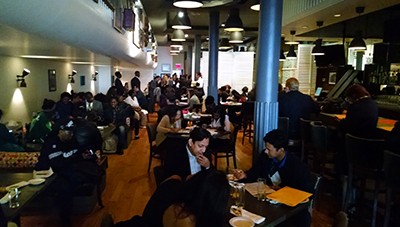
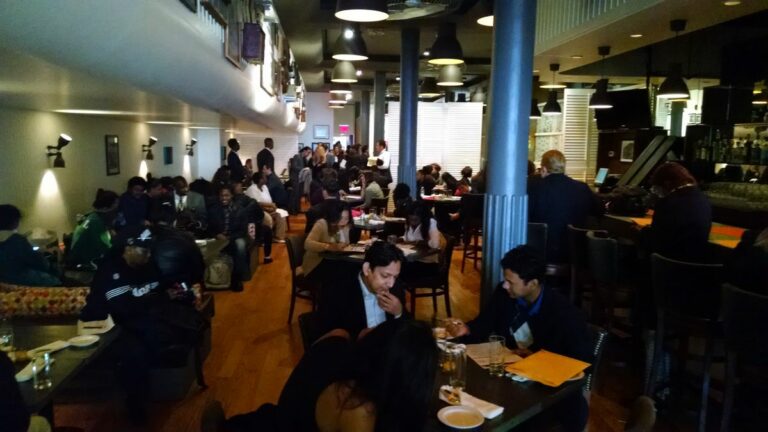
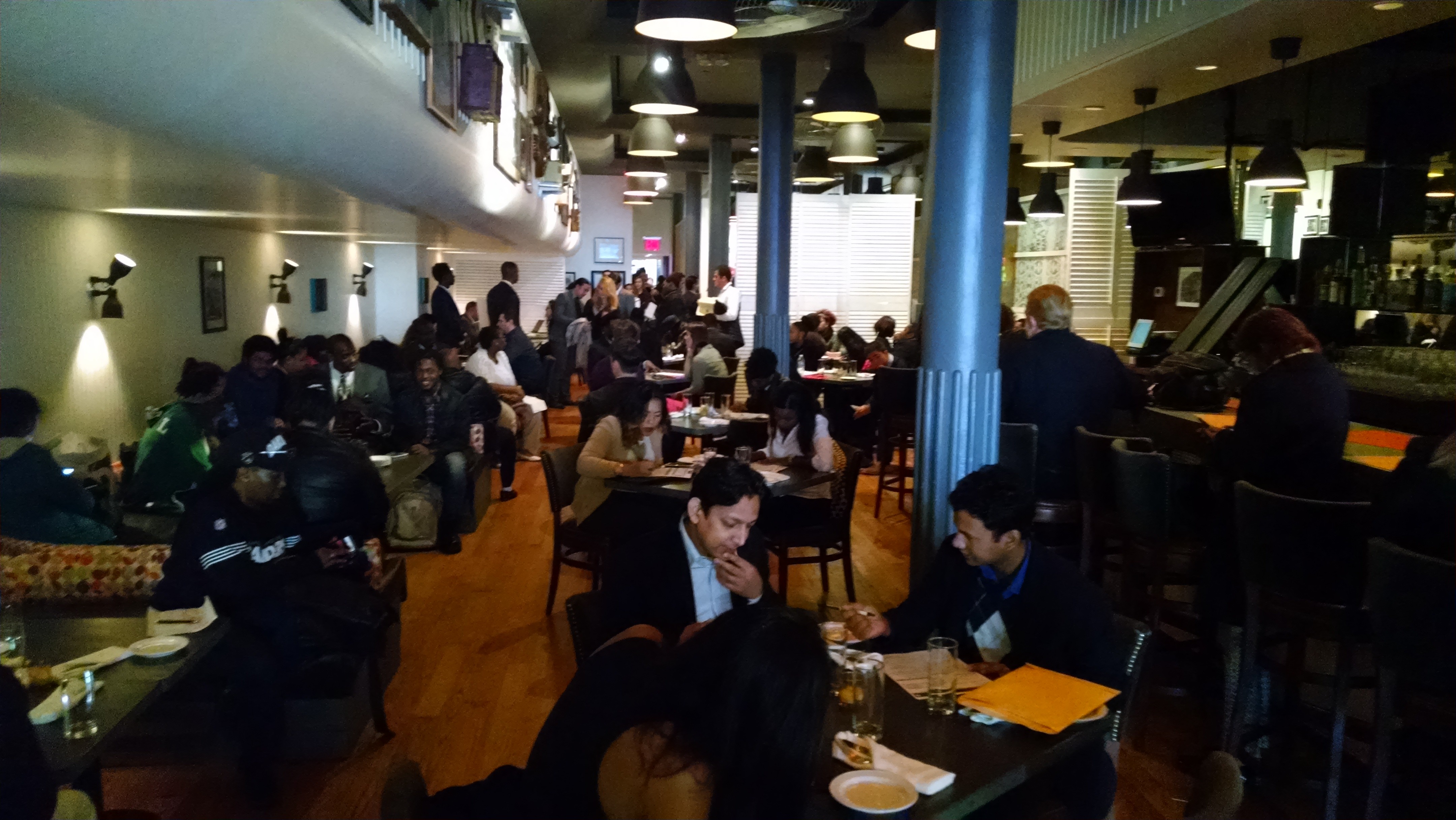
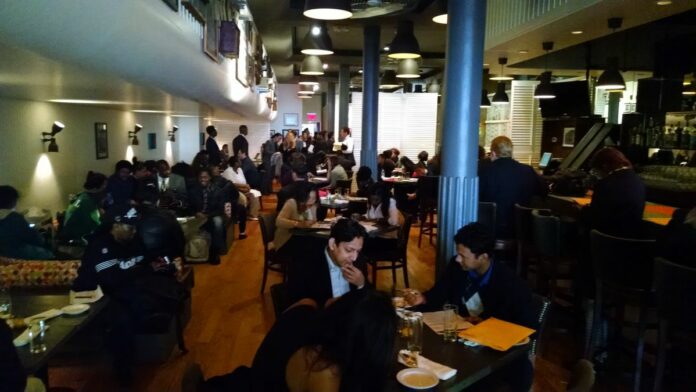
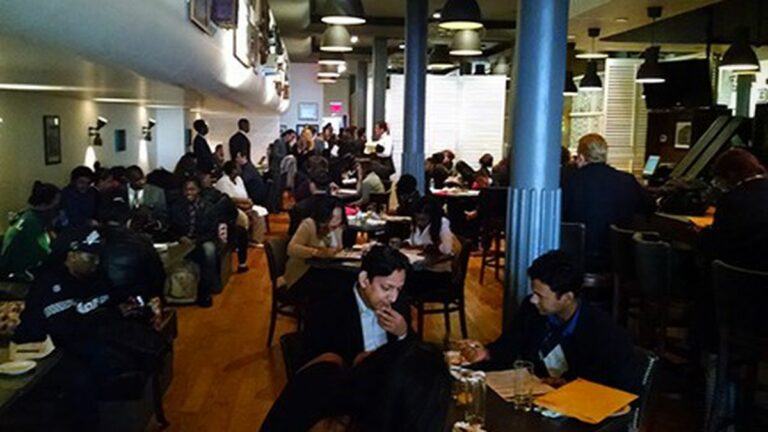
Diners who walk into Colors, a gluten-free restaurant in New York City’s East Village, might not notice anything special about the place — maybe the social justice-themed artwork or the choice quotations from Eleanor Roosevelt and Cesar Chavez. But Colors differs from a traditional restaurant in several key respects: It’s run as a nonprofit, and in many ways the whole point of its existence is to provide a more equitable and humane labor model for the rest of the industry.

If that sounds like a good fit for Oakland, then here’s good news: The worker advocacy group Restaurant Opportunities Center United and the Ella Baker Center — the Oakland-based human rights organization — are partnering to open a new Colors restaurant in East Oakland. The restaurant won’t be gluten-free, given that each Colors location has its own chef and menu concept, explained Rosanne Martino, Colors’ national coordinator. The Oakland restaurant will probably have a soul food theme.

And if all goes according to plan, the Oakland eatery will be even more ambitious than the two existing Colors locations in New York and Detroit. Most notably, the restaurant will just be one component of an entire restorative justice hub — dubbed the Restore Oakland Center — which will include a training facility for the formerly incarcerated and will provide various “wrap-around” services, such as childcare for employees.

Some background: The Restaurant Opportunities Center (ROC) is a worker advocacy group that was founded in New York City to support restaurant workers who were displaced by the 9/11 World Trade Center attack — in part through the first Colors restaurant, which started off as a co-op that ROC helped bankroll. In the intervening years, ROC United, the national organization that sprang out of those initial efforts, has been best known for spearheading protests and workers’ rights campaigns. Most recently, ROC has been at the forefront of the movement to eliminate the tipped minimum wage — the practice, still legal in 43 states, of paying tipped employees a much lower rate than the regular state and federal minimum wage. (California is one of the handful of states that doesn’t allow a tipped minimum wage.)

Recently, though, ROC has placed a renewed emphasis on Colors, with an aggressive expansion plan that will add new locations in Oakland, New Orleans, and Washington, DC — all in the next year or so. And that makes sense: What better way is there to promote reform in the restaurant industry than to be the change you want to see — or, at the very least, to show what a restaurant with more progressive employment practices might look like.

For starters, Martino said, workers at Colors will be paid a fair, competitive wage, and employees who work at least twenty hours a week will be eligible for health benefits. And people won’t be pigeon-holed into one job path the way they tend to be at other restaurants.

“We have a hard time keeping a dishwasher because the chef will always say, ‘Hey, do you want to learn how to cook?'” Martino said.

But perhaps the most significant difference will be who you’ll find working at the restaurant, thanks to the Colors Hospitality & Opportunities for Workers (CHOW) program that will be housed there. That program offers on-the-job training to formerly incarcerated individuals, as well as to workers who are already working in the restaurant industry but are perhaps stuck in a low-wage job. One of the goals of the program is to try to equalize certain disparities that are rampant in the industry — for instance, a recent ROC-authored study found that people of color, particularly women, tend to be paid a significantly lower wage than white men, who are much more likely to hold high-paying, highly tipped, front-of-the-house positions.

If the Oakland restaurant is successful, it will put the trainees who start out working there on a path toward six-figure, front-of-the-house, waitering jobs in downtown Oakland, said Nwamaka Agbo, the program manager for the Restore Oakland Center.

The extent to which Colors and Restore Oakland can provide a sustainable model for other restaurants remains an open question, given the industry’s notoriously tight margins. Before it was reborn as a gluten-free restaurant in 2014, the Colors restaurant in New York had struggled financially — barely eking out “ten covers, twenty covers, thirty covers a night,” the opening chef told The New York Times in a 2007 profile of the restaurant. Agbo said the goal is that the restaurant itself would eventually become self-sustaining, though ROC United and the Ella Baker Center are currently trying to raise enough money to pay for its first year of operating costs. Already, the Restore Oakland Center is the beneficiary of a $500,000 investment from the Google Foundation and a $1 million investment from a private donor.

That cash will come in handy, given how ambitious the plans are for this Oakland hub, which in addition to providing childcare and other “wrap-around” services, will also include space for local restorative justice organizations and other nonprofits.

For now, Agbo and her colleagues are focused on finding a physical location for the Restore Oakland Center. They’re currently negotiating on a multi-story building in the Fruitvale district. The goal is to open the restaurant and the rest of the center in the spring of 2017.

Angela Davis and Johanna Fernandez

Angela Davis needs no introduction. The former Communist Party USA leader is one of her generation’s most influential activists and scholars, and her work remains crucially relevant today. On Thursday, February 18, the historic Marcus Books will host Davis at the First Congregational Church of Oakland (2501 Harrison St.) for a conversation about Freedom Is a Constant Struggle, a recently released collection of Davis’ essays, interviews, and speeches that reflect on the importance of Black feminism, intersectionality, and prison abolition. Davis will be joined in conversation with Johanna Fernandez, a scholar in Black and Latino studies who edited Writing on the Wall, a collection of essays by Mumia Abu-Jamal, the famous former Black Panther and Philadelphia journalist who has been serving life in prison since 1981, but continues to publish sharp, revolutionary social critiques from behind bars.

Nowhere Now

Alt Citizen is a New York City-based culture, fashion, and music publication that also ran a Brooklyn gallery called Alt Space — until recently, when the founders decided to shut its doors, buy a blue school bus, and tour across the country hosting pop-up art shows. The tour, called Nowhere Now, will be making a stop at B4bel4b Gallery (184 10th St., Oakland) on the evening of Thursday, February 18, for a one-night, bi-coastal artistic explosion of cotton candy colors and internet aesthetics. Alt Space curators are partnering with local fashion label Eros Mortis to host a pop-up shop of futuristic fashion. They’re also working with Oakland artists to integrate local talent into the touring show, including Mary Rosenberger, Christopher Danko, and the women behind Shade Magazine.

Trash Talk

Originally from Sacramento, the hardcore band Trash Talk gained clout in the Bay Area in the late Aughts before signing to LA rap collective Odd Future’s eponymous record label. They were the first act on the label that wasn’t part of its originator, Tyler, the Creator’s, crew. Though it makes fast, violent rock, Trash Talk’s association with Odd Future gave it unlikely crossover appeal in the rap world, and the group has been known to play alongside hip-hop acts, such as Antwon, an LA rapper who got his start in Oakland’s warehouse party scene. After releasing its debut studio album in 2014, No Peace, Trash Talk collaborated with Brooklyn MCs Flatbush Zombies on several stoner rap tracks, including the excellent “97.92.” The band performs at Oakland Metro Operahouse on February 20 alongside Minus, Hell in the Cell, Culture Abuse, and Strangeways.

Ancestral Portals: Malik Seneferu

At Joyce Gordon Gallery (406 14th St., Oakland), Oakland’s prolific Malik Seneferu is celebrating Black History Month with a show about his family history. Ancestral Portals marks the culmination of the artist’s life-long dream to make contact with his long-deceased father’s relatives and learn more about his genealogical history. Last year, through a DNA ancestry mapping service, Seneferu was finally able to do that. Now, he celebrates that discovery through pen-and-ink tree drawings and a series of striking portraits featuring his parents and grandparents. On February 20, from 1–3 p.m., the gallery will host a panel discussion featuring Seneferu, members of his family, and representatives of 23andMe, the biotechnology company that helped Seneferu connect with his relatives.

Sugar Coma, DSTVV, and Morning Hands

Valentine’s Day can bring out all sorts of neuroses in people who aren’t secure in their relationship statuses — which is why Sgraffito Gallery in Emeryville is hosting a show billed as a “Post V-Day Cry Fest” for those that have reason to gripe about last week’s couples-centric holiday. The lineup includes the new Hole cover band Sugar Coma, featuring Candace Lazarou (the frontwoman of the abrasive, avant-garde rock band Mansion) and members of well-regarded, local punk bands Violence Creeps and The World. DSTVV, an Oakland band whose static-laden compositions contain strains of grunge, shoegaze, and noise, joins Sugar Coma on the bill. Morning Hands, a synth-pop off-shoot of Oakland EBM group Diesel Dudes, will provide a washed-out, mellow counterpoint to the other bands’ more aggressive sound. The show will include a Courtney Love costume contest, so don’t forget your smudged eyeliner, vintage negligees, fishnets, and combat boots.

ILoveMakonnen

While Thursday has always been a fairly popular night to go out, ILoveMakonnen made midweek turn-ups even more commonplace with his 2014 hit, “Tuesday.” The rapper, who grew up in LA and Atlanta, started out as a DIY artist but attracted the attention of prominent music industry heads through his connections with Atlanta’s superstar producer Metro Boomin. “Tuesday,” which features a guest verse from Drake, became a ubiquitous party anthem and landed Makonnen a deal with Drake’s label, OVO Sound. However, Makonnen alleged that industry politics delayed his second album, 2015’s ILoveMakonnen 2, and he expressed frustration in previous interviews that the release’s poor timing prevented him from rising beyond one-hit-wonder status. Though he hasn’t replicated “Tuesday’s” success, Makonnen has continued to make catchy pop-rap with an experimental edge, and publications such as The FADER have continually lauded him as an artist to watch. He performs, fittingly, on Tuesday, February 23, at 1015 Folsom with support from eccentric Oakland rapper-turned-astrologist Kool A.D. The show is part of the annual Noise Pop festival.

A Nonprofit Restaurant in East Oakland Will Aim to Prioritize People Over Profits

Diners who walk into Colors, a gluten-free restaurant in New York City’s East Village, might not notice anything special about the place — maybe the social justice-themed artwork or the choice quotations from Eleanor Roosevelt and Cesar Chavez. But Colors differs from a traditional restaurant in several key respects: It’s run as a nonprofit, and in many ways the whole point of its existence is to provide a more equitable and humane labor model for the rest of the industry.

If that sounds like a good fit for Oakland, then here’s good news: The worker advocacy group Restaurant Opportunities Center United and the Ella Baker Center — the Oakland-based human rights organization — are partnering to open a new Colors restaurant in East Oakland. The restaurant won’t be gluten-free, given that each Colors location has its own chef and menu concept, explained Rosanne Martino, Colors’ national coordinator. The Oakland restaurant will probably have a soul food theme.

[jump] And if all goes according to plan, the Oakland eatery will be even more ambitious than the two existing Colors locations in New York and Detroit. Most notably, the restaurant will just be one component of an entire restorative justice hub — dubbed the Restore Oakland Center — which will include a training facility for the formerly incarcerated and will provide various “wrap-around” services, such as childcare for employees.

Some background: The Restaurant Opportunities Center (ROC) is a worker advocacy group that was founded in New York City to support restaurant workers who were displaced by the 9/11 World Trade Center attack — in part through the first Colors restaurant, which started off as a co-op that ROC helped bankroll. In the intervening years, ROC United, the national organization that sprang out of those initial efforts, has been best known for spearheading protests and workers’ rights campaigns. Most recently, ROC has been at the forefront of the movement to eliminate the tipped minimum wage — the practice, still legal in 43 states, of paying tipped employees a much lower rate than the regular state and federal minimum wage. (California is one of the handful of states that doesn’t allow a tipped minimum wage.)

Recently, though, ROC has placed a renewed emphasis on Colors, with an aggressive expansion plan that will add new locations in Oakland, New Orleans, and Washington, DC — all in the next year or so. And that makes sense: What better way is there to promote reform in the restaurant industry than to be the change you want to see — or, at the very least, to show what a restaurant with more progressive employment practices might look like.

For starters, Martino said, workers at Colors will be paid a fair, competitive wage, and employees who work at least twenty hours a week will be eligible for health benefits. And people won’t be pigeon-holed into one job path the way they tend to be at other restaurants.

“We have a hard time keeping a dishwasher because the chef will always say, ‘Hey, do you want to learn how to cook?’” Martino said.

But perhaps the most significant difference will be who you’ll find working at the restaurant, thanks to the Colors Hospitality & Opportunities for Workers (CHOW) program that will be housed there. That program offers on-the-job training to formerly incarcerated individuals, as well as to workers who are already working in the restaurant industry but are perhaps stuck in a low-wage job. One of the goals of the program is to try to equalize certain disparities that are rampant in the industry — for instance, a recent ROC-authored study found that people of color, particularly women, tend to be paid a significantly lower wage than white men, who are much more likely to hold high-paying, highly tipped, front-of-the-house positions.

If the Oakland restaurant is successful, it will put the trainees who start out working there on a path toward six-figure, front-of-the-house, waitering jobs in downtown Oakland, said Nwamaka Agbo, the program manager for the Restore Oakland Center.

The extent to which Colors and Restore Oakland can provide a sustainable model for other restaurants remains an open question, given the industry’s notoriously tight margins. Before it was reborn as a gluten-free restaurant in 2014, the Colors restaurant in New York had struggled financially — barely eking out “ten covers, twenty covers, thirty covers a night,” the opening chef told The New York Times in a 2007 profile of the restaurant. Agbo said the goal is that the restaurant itself would eventually become self-sustaining, though ROC United and the Ella Baker Center are currently trying to raise enough money to pay for its first year of operating costs. Already, the Restore Oakland Center is the beneficiary of a $500,000 investment from the Google Foundation and a $1 million investment from a private donor.

That cash will come in handy, given how ambitious the plans are for this Oakland hub, which in addition to providing childcare and other “wrap-around” services, will also include space for local restorative justice organizations and other nonprofits.

For now, Agbo and her colleagues are focused on finding a physical location for the Restore Oakland Center. They’re currently negotiating on a multi-story building in the Fruitvale district. The goal is to open the restaurant and the rest of the center in the spring of 2017.

FDA Threatens More Hemp Oil Hustlers Like ‘Morgue Juice’ with Seizure, Injunctions

Online peddlers of hemp-based cure-alls got another round of warning letters from the Food and Drug Administration earlier this month, the latest in federal efforts to push back on post-modern snake oil salesmen. In letters dated February 4, the FDA warned eight online hemp oil sellers — ABC Productions; Dose of Nature; Green Garden Gold; HealthyHempOil.com; Michigan Herbal Remedies; Morguetorium, LLC; PainBomb; and Sana Te — that they face product seizures and injunctions for selling what amounts to drugs, and not dietary supplements, as the peddlers claim.

These companies bait parents of terminally sick kids and cancer patients with promises of “100% percent legal oils” rich in cannabidiol (CBD) — the second most common active ingredient in cannabis. The FDA states that CBD is considered a federally illegal drug that is not approved for any human use — except in the rare case of a drug trial, such as that of Epidiolex at UC San Francisco.

For example Morguetorium, LLC marketed their product “Morgue Juice” by saying: “CBD kills breast cancer. … [and] could treat aggressive forms of cancer without any of the painful side effects of chemotherapy”.

There’s no evidence to support such a conclusion, according to leading oncologists who sometimes recommend medical cannabis. (Cell and animal studies as well as human reports show CBD-rich medications could help calm intractable seizures, among other uses.)


[jump] The consequent demand for CBD has created a new industry whereby folks import bulk hemp oil from overseas and process it to extract CBD. Hemp is a fiber crop and cousin of medical cannabis, and overseas hemp crops are popular for use in clothing and rope and for remediating contaminated soil. Industrial hemp oil can be contaminated and is generally unfit for human ingestion, some researchers say.

The internet is now rife with companies and ponzi marketing schemes based around selling such oils.

The FDA warned Morguetorium, LLC that:
“Your product ‘Morgue Juice’ is not generally recognized as safe and effective for the above referenced uses and, therefore, the product is a “new drug” … New drugs may not be legally introduced or delivered for introduction into interstate commerce without prior approval from the FDA…. FDA approves a new drug on the basis of scientific data and information demonstrating that the drug is safe and effective.”
Furthermore, the FDA has begun two promising trials of CBD formulations: GW Pharmaceuticals’ Sativex and Epidiolex. Both pharmaceutical tinctures contain CBD isolated from medical cannabis plants cultivated for human consumption, not fiber hemp crops grown in unknown conditions. 

The eight peddlers have until this Friday to stop selling products like Nano CBD Shooters, Tasty Vape Just Peachy, and Morgue Juice.

Tenant Advocates Decry Court Move

At a time when skyrocketing rents are displacing low-income renters in Oakland, Alameda, and Berkeley, the Alameda County Superior Court is proposing to move all eviction cases to the Hayward Hall of Justice, even though the courthouse is not easily accessible by public transportation. Tenants advocates say the plan will create additional hardships for renters who live in the...

People Over Profits

Diners who walk into Colors, a gluten-free restaurant in New York City's East Village, might not notice anything special about the place — maybe the social justice-themed artwork or the choice quotations from Eleanor Roosevelt and Cesar Chavez. But Colors differs from a traditional restaurant in several key respects: It's run as a nonprofit, and in many ways the...

Angela Davis and Johanna Fernandez

Angela Davis needs no introduction. The former Communist Party USA leader is one of her generation’s most influential activists and scholars, and her work remains crucially relevant today. On Thursday, February 18, the historic Marcus Books will host Davis at the First Congregational Church of Oakland (2501 Harrison St.) for a conversation about Freedom Is a Constant Struggle, a...

Nowhere Now

Alt Citizen is a New York City-based culture, fashion, and music publication that also ran a Brooklyn gallery called Alt Space — until recently, when the founders decided to shut its doors, buy a blue school bus, and tour across the country hosting pop-up art shows. The tour, called Nowhere Now, will be making a stop at B4bel4b Gallery...

Trash Talk

Originally from Sacramento, the hardcore band Trash Talk gained clout in the Bay Area in the late Aughts before signing to LA rap collective Odd Future’s eponymous record label. They were the first act on the label that wasn’t part of its originator, Tyler, the Creator’s, crew. Though it makes fast, violent rock, Trash Talk’s association with Odd Future...

Ancestral Portals: Malik Seneferu

At Joyce Gordon Gallery (406 14th St., Oakland), Oakland’s prolific Malik Seneferu is celebrating Black History Month with a show about his family history. Ancestral Portals marks the culmination of the artist’s life-long dream to make contact with his long-deceased father’s relatives and learn more about his genealogical history. Last year, through a DNA ancestry mapping service, Seneferu was...

Sugar Coma, DSTVV, and Morning Hands

Valentine’s Day can bring out all sorts of neuroses in people who aren’t secure in their relationship statuses — which is why Sgraffito Gallery in Emeryville is hosting a show billed as a “Post V-Day Cry Fest” for those that have reason to gripe about last week’s couples-centric holiday. The lineup includes the new Hole cover band Sugar Coma,...

ILoveMakonnen

While Thursday has always been a fairly popular night to go out, ILoveMakonnen made midweek turn-ups even more commonplace with his 2014 hit, “Tuesday.” The rapper, who grew up in LA and Atlanta, started out as a DIY artist but attracted the attention of prominent music industry heads through his connections with Atlanta’s superstar producer Metro Boomin. “Tuesday,” which...

A Nonprofit Restaurant in East Oakland Will Aim to Prioritize People Over Profits

A training session at the Colors restaurant in New York. Credits: ROC United Diners who walk into Colors, a gluten-free restaurant in New York City’s East Village, might not notice anything special about the place — maybe the social justice-themed artwork or the choice quotations from Eleanor Roosevelt and Cesar Chavez. But Colors differs from a traditional restaurant in several key...

FDA Threatens More Hemp Oil Hustlers Like ‘Morgue Juice’ with Seizure, Injunctions

Online peddlers of hemp-based cure-alls got another round of warning letters from the Food and Drug Administration earlier this month, the latest in federal efforts to push back on post-modern snake oil salesmen. In letters dated February 4, the FDA warned eight online hemp oil sellers — ABC Productions; Dose of Nature; Green Garden Gold; HealthyHempOil.com; Michigan Herbal Remedies; Morguetorium, LLC; PainBomb;...
19,045FansLike
17,709FollowersFollow
61,790FollowersFollow