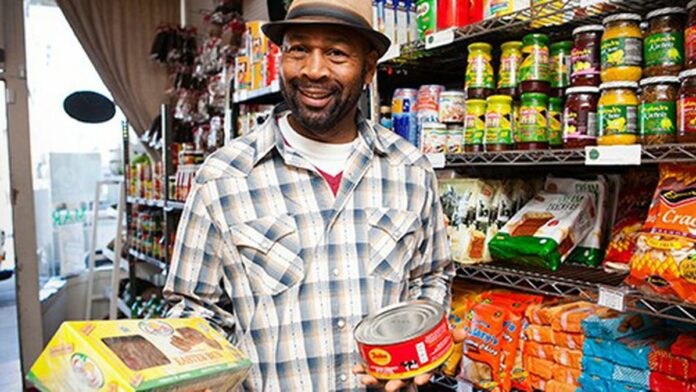
Where Chefs Shop

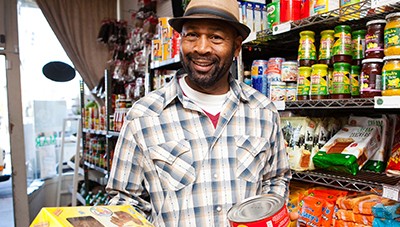
For anyone interested in cooking authentic ethnic cuisine, the single “ethnic” aisle at any chain grocery store can be saddening. Luckily, the East Bay, one of the most diverse areas in the country, is abundant with specialty grocery stores. To tap into that resource, we asked four prominent East Bay chefs who specialize in ethnic cuisine where they buy their imported ingredients and what they make with them.

Vik’s Market

2390 Fourth St., Berkeley, 510-644-4432, ViksChaat.com

Temescal’s Juhu Beach Club (5179 Telegraph Ave., Oakland) specializes in Indian street food served in a beachy sit-down setting. The center point of its menu is its selection of pavs — slider-sized sandwiches on fluffy, freshly baked buns from Starter Bakery. The fillings reflect a bit of fusion: Pulled pork with barbecue vindaloo sauce and cilantro yogurt slaw comes in the Pork Vindilated, while the innards of the Sloppy Lil’P are described as a “buttery and spicy veggie sloppy joe.” But even though some of the flavors stray from the traditional Indian palette, Juhu’s chef and owner, Preeti Mistry, still requires high quality, specific ingredients that can be difficult to find if you don’t know where to look. Mistry’s go-to is Vik’s Market in West Berkeley. Sometimes she buys produce there that is difficult to find elsewhere, such as bitter gourds or tiny Indian eggplant. But mostly, she buys dried goods — which can be purchased in bulk as well as in smaller quantities — including whole spices, dhal, flour, and rice. For “doswaffles,” a popular Juhu brunch item that combines the Indian dosa and the Belgian waffle, Mistry uses Vik’s white, washed dhal, which she grinds and ferments before turning it into batter. For those who’d rather skip the prep process, Vik’s also sells pre-made dosa batter that Mistry says would work great for attempting a “doswaffle” at home.

Minto Jamaican Market

4042 Broadway, Oakland, 510-652-2168

Kingston 11 is like a slice of Jamaica in the middle of Uptown Oakland (2270 Telegraph Ave). The restaurant specializes in slow-cooked meats with its signature dish being jerk chicken. Chef Nigel Jones is originally from Kingston, Jamaica, and when it comes to cooking the food of his country’s diaspora, he puts in a lot of care. That includes shopping in the right place. Jones frequents Minto Jamaican Market for everything from cooking ingredients to prepared snacks — such as a “patty,” a flaky pastry stuffed with meat filling and spices, which Jones referred to as the Jamaican version of a slice of pizza. That’s also where Jones gets his produce staples like Jamaican yams, which are more hardy and potato-like than the yams typically eaten in America; callaloo, a leafy, green vegetable similar to spinach that is simmered down to a stew-like consistency to make a dish of the same name (a Jamaican staple); and ackee, the national fruit of Jamaica. Jones uses that to make Jamaica’s national dish, ackee and saltfish (cod), which is saltfish sauteed with boiled ackee, onions, Scotch Bonnet peppers, tomatoes, and spices. Every weekend at Kingston 11, Jones serves the dish for brunch with fried dumplings, sweet plantains, and Jamaican cassava bread.

OakTown Spice Shop

546 Grand Ave., Oakland, 510-201-5400, OaktownSpiceShop.com

Aburaya began as a pop-up, but quickly became a downtown Oakland dining staple. The Japanese fried chicken operation is open for dinner at Garden House (380 15th St.) from Wednesday through Saturday, and serves up lunch at The Hatch (402 15th St.) from Tuesday through Friday. Aside from its ever-changing menu of innovative sides — often including wasabi slaw, kurobuta tonkatsu, and kobe beef tartar — Aburaya dishes out fried chicken with a choice of nine different Japanese seasonings, ranging from umami salt to agave ginger teriyaki. But for those interested in making their own Japanese food, there are very few places to shop. Aburaya head chef Adachi Hiroyuki said that he usually goes to farmers’ markets in Berkeley and Oakland’s Grand Lake District for his fresh ingredients. For spices, he frequents OakTown Spice Shop, a purveyor of high quality spices from all over the world. That’s where he buys the Japanese curry powder and shichimi (a Japanese chili mixture made of seven different spices) that he uses for his chicken rubs. Many other basic Japanese ingredients can be found at Koreana Plaza (2370 Telegraph Ave., Oakland), he said. And for products like sake or Japanese knives, he recommends Nijiya Market in San Francisco’s Japantown (1737 Post St.).

Tokyo Fish Market

1220 San Pablo Ave., Albany, 510-524-7243, TokyoFish.net

FuseBox is tucked away in a warehouse district in West Oakland (2311 Magnolia St.). But behind its gated entryway sit welcoming picnic tables, a cozy indoor dining room, and an ever-shifting menu of Korean cuisine, often with a fusion twist. But despite the restaurant’s Korean roots, FuseBox head chef Sunhui Chang prefers to shop where he can find the freshest produce and proteins rather than at Korean-specific markets. He calls his favorite local grocery shopping routine his “Hopkin’s Street Route.” First, he enters Berkeley through the Gilman Street corridor and makes his first stop at Tokyo Fish Market where he often finds difficult-to-get seafood — such as coonstripe shrimp — that determine his daily specials. That’s also where he buys unique items like yuzu (an East Asian citrus fruit) or ume (Japanese pickled plum). Then, he heads to the nearby Monterey Fish (1582 Hopkins St.), a reliable hole-in-the-wall shop with similar seafood finds. And lastly, he moseys around the adjacent Monterey Market (1550 Hopkins St.) to pick up top quality produce for both his professional and personal kitchens.

Belotti Ristorante Serves the Best Pasta in Oakland

I love eating pasta more than almost any other food. In the course of my tenure as the Express food critic, I’ve reviewed some pretty good Italian restaurants, but for whatever reason, the pasta dishes were often the ones that left me feeling a little cold. Fresh pasta, in particular, would always either be not delicate enough or not toothsome enough, over- or undercooked, or buried under too much sauce.

So, I’m happy to report that I may have found the best pasta restaurant in Oakland: Belotti Ristorante e Bottega, which opened last month in Rockridge in the old I Squared/Homespun Fare spot.

Apparently, chef-owner Michele Belotti was something of a wunderkind back in northern Italy, having worked in professional kitchens since he was fifteen years old. By the time he was old enough to vote, he was cooking at Michelin-starred restaurants — first near his hometown of Bergamo (in the Lombardy region), and later in Piedmont wine country. In 2011, Belotti — still just 24 years old — moved to the United States to become the executive chef at Ristobar in San Francisco.

As Belotti tells it, the restaurants at which he honed his cooking chops in Italy were forward-thinking places — steeped in the traditional flavors of the immediate region, but not averse to busting out a modern cooking technique. For his own restaurant, Belotti aims to fuse the traditional and the modern in a similar way — though, for the most part, that doesn’t mean he’s particularly interested in the various gadgets and culinary trickery that tend to be associated with so-called “modern” gastronomy.

When Belotti talks about modernizing the traditional dishes of Lombardy and Piedmont, which comprise most of the restaurant’s menu, he’s usually talking about refinements to the cuisine that have more to do with upping the luxuriousness of old-time recipes than anything that’s strictly technology-based. This is perhaps best exemplified in the restaurant’s signature item: the fresh pasta dough that Belotti makes in huge quantities each morning. According to Belotti, the most basic, traditional pasta dough recipe consists of just flour and eggs — maybe seven of them to make a pound of pasta. But as is the case at many of the better restaurants in Italy, Belotti uses more than double the number of eggs for his pasta dough, and uses the yolks exclusively. The pasta costs much more to make, of course, but the payoff is a richer, more full-flavored dough that Belotti is able to roll out much more thinly. The results speak for themselves: The various stuffed pastas, in particular, were tender, ethereally light, and retained just the right amount of toothsome bite.

In terms of flavor, though, Belotti stays true to the traditional flavors of the regions in Italy where he spent the first part of his career. If you only plan to order one dish, let it be the casoncelli, a stuffed pasta that’s based on Belotti’s mother’s recipe. Each little meat-stuffed bundle was like a cross between a dumpling and a raviolo, the filling a smoky-savory mix of finely chopped prosciutto, pork shoulder, and beef. To finish the dish, the chef tossed the pasta with cubes of smoked pancetta and a velvety sage-infused brown butter sauce that glistened as it clung to each casoncelli.

The Agnolotti di Lidia — another meat-stuffed pasta, but shaped like plumped-up postage stamps — was similarly satisfying. The agnolotti were filled with a rich mixture of slow-braised and roasted meats, but what got me salivating was its intoxicatingly heady aroma, which came from the sauce: a beef reduction made over the course of three days from bones roasted in the fat taken from the ribeyes that Belotti uses to make steak tartare.

In case it isn’t apparent yet, it should be noted that the food at Belotti Ristorant is decidedly Italian-Italian rather than Cal-Italian, especially in terms of the provenance of the ingredients, which are largely imported from Italy. But the focus on the quality of a handful of simple ingredients for each dish — and the specificity of the ingredients that Belotti goes out of his way to import — feels very much in the same spirit as the Bay Area’s more California-centric Italian restaurants. For instance, he swears that the Trapani sea salt that he imports from Sicily to use in his pasta cooking water is essential to give the pasta the proper taste.

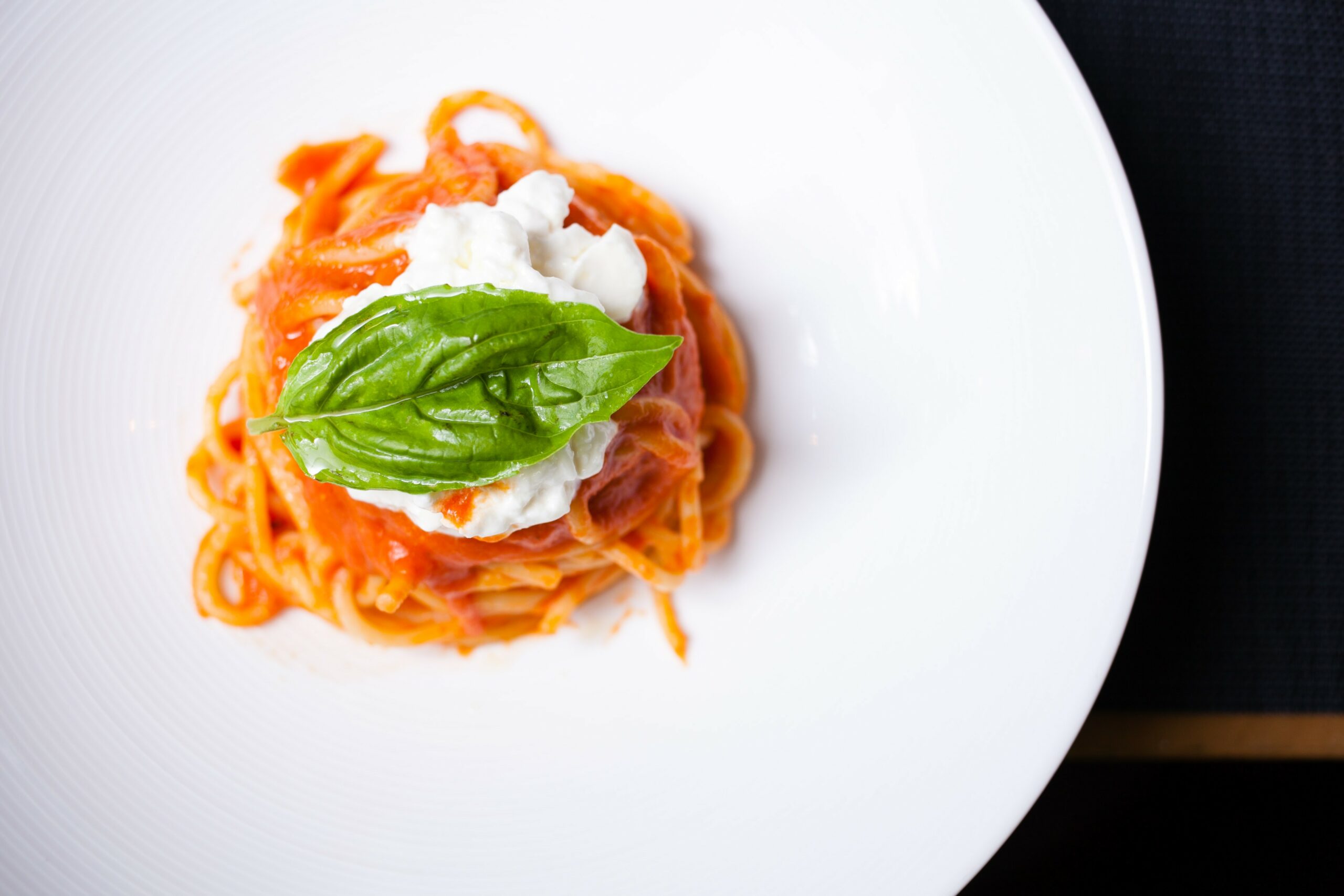
A dish of spaghetti and burrata stands as testament to the power of a few simple, high-quality ingredients: The thick strands of spaghetti are, of course, freshly handmade each day. The burrata is imported from Puglia, which is said to be where this type of cheese first originated. And the tomato sauce is made from tiny, extremely ripe tomatoes imported from the town of Corbara in southwestern Italy, near Mount Vesuvius. The cool, soft burrata oozed into the tomato sauce, adding a creaminess that was both rich and refreshing. It’s a killer combination — like a caprese salad in pasta form, as Belotti put it.

The closest Belotti comes to the “molecular” strand of fine dining is in his version of Italian steak tartare, or battuta — literally, “beaten,” because, as the chef explained, Italians cut the raw steak by hand; hence, the dish’s defining sound is the thwack-thwack-thwack of a knife knocking against a cutting board. Belotti’s take on the dish might be mistaken for one of Andy Goldsworthy’s environmental sculptures, or perhaps a high-end dessert: The meat was shaped into a wide circle so that it resembled a blood-red raspberry tart. On top, there was a scattering of microgreens, a quail egg yolk, and a careful arrangement of black dots and creamy white peaks — chocolate chips and whipped cream? No. The dots turned out to be boba-like truffle “caviar” (i.e. spherified black truffle juice); the peaks were a fondue of melted Parmigiano Reggiano cheese, thickened with xanthan gum and piped out of a pastry bag.

Bells and whistles aside, this dish was all about flavor — specifically, the intensely beefy flavor of the dry-aged ribeye that Belotti hand-cuts; the cheese and truffle only added a subtle undercurrent of umami. You’ll want to make sure to get some of the streak of aged balsamic vinegar on the side of the plate to add a nice hit of acidity to each bite.

My only real quibble was that there was a bit of a disconnect between the homey, comforting quality of the food and the restaurant’s cool, modern vibe — the dim lighting, the square plates, and so forth. Meanwhile, the tables were so cramped together that every time I got out of my seat I was afraid I’d knock over a wine glass on a neighboring table.

All the restaurant needs is a little bit more warmth. Apart from one friendly Italian barman, the service tended to be dour and disinterested. During my first visit, our server seemed to feel put upon every time we asked a question about the menu — perhaps in part because, even on a weeknight, the restaurant was slammed. We couldn’t wrangle any useful information out of him when we were trying to choose between two pasta dishes, and when we asked what the zucchini side dish consisted of, his response was a withering, “It’s a vegetable.”

Ultimately, the food spoke for itself. Aside from the pastas, which were the unquestionable star, I also enjoyed the brasato, a big hunk of braised flat-iron steak served with hen of the woods mushrooms over polenta — a typical preparation in Bergamo, whose residents Belotti says are known as polentoni because of the massive amounts of polenta they eat. If you feel like splurging, go for the sustainably fished Chilean sea bass — now okay to eat, apparently, after a decade or so of being taboo among eco-conscious eaters. Belotti’s preparation is relatively simple: The fattiness of the fish was allowed to stand on its own, accented by some roasted fennel, which added a lovely complementary sweetness.

Eventually, Belotti plans to open a small market in the back of the restaurant, where he’ll sell fresh pasta and prepared sauces. What I’m really excited for, though, is this: In a couple of months, the chef hopes to offer a pasta tasting menu. Six or seven of Belotti’s pasta dishes in a single sitting? I’ll be the first in line.

Letters for the Week of March 23, 2016

“Overwhelmed,” Feature, 3/9

Marginalized and Devalued

The mentally ill, as with other disenfranchised groups, are marginalized and devalued. Therefore, it is not surprising to read about the indifference reflected in the systemic dysfunction of an administration that relies on draconian tactics to censor its first responders, the healthcare workers. The tip-off of a corrupt management culture is its reliance on punitive retribution against those who seek change through challenge and confrontation of the status quo. Is it any wonder the mentally ill are treated with servile contempt, corralled into what amounts to an encampment of human degradation when principle is usurped by bias and prejudice?

Mary Ann Vigilanti, Oakland

Pushed Through a Revolving Door

Whatever happened to the tax on the millionaires that was supposed to help provide community-based mental health services? While the entire state is dismissive of mental health issues, I see them daily in working with the homeless in San Leandro, and I am appalled at the revolving door that the county and state seem to think passes as mental health facilities. If the folks on the board of supervisors, the Alameda County Behavioral Health Care Services Agency, or any of our elected representatives had family members being “uncared” for in this type of situation, they might have something constructive to offer! We have people who ask for help being pushed through a revolving door and those whose mental capacity does not allow them to function who need help also. But eighteen hours waiting to be handed some pills and shown the door does not qualify in my mind as “mental health care.”

If people with physical injuries were treated in this manner there would be headlines everywhere, not just in the Express. Thank you for the article.

Moira Fry, San Leandro

“Saint Andrews Plaza: More Than a Triangle,” News, 3/9

Skank Park

I never knew the official name of the place. I call it Skank Park. I have to take the bus on San Pablo Avenue past there, mostly after midnight. The park is still active at that time with cars constantly pulling up to buy and sell drugs. As a white female, I’ve never been hassled too much besides the occasional aggressive panhandling. It is a very intimidating place, though. Everyone hanging out there is pretty strung out.

I occasionally see police cars, but they don’t seem to do anything besides cruise by. Sometimes I catch a cab, or a friend will drive me home. It’s embarrassing when we pass the park. I always hear comments about what a bad neighborhood I live in. I don’t know what this park renovation will look like, or how long it will take, or where those folks will go in the meantime. I’m scared that I will see drug deals go down in front of my building, but I’m more scared that even my “bad neighborhood” is beginning the process of gentrification. My rent is cheap right now, which is necessary since I only work a part-time job. If I lose my place due to a rent increase or property sale, it’s all over for me. I wonder if I will be able to live in Skank Park after the renovation?

Michelle Castro, Oakland

“Your Friendly Neighborhood Taqueria,” Dining Review, 3/9

The Secret Is Out

Glad you enjoyed Aztecali as much as I did. Now the secret is out, and that can only be a good thing as I’d like to see Aztecali enjoy much success!

Karen Hester, Oakland

“Mixed-Income Neighborhoods Work Best,” Opinion, 3/9

Tax Windfall Profits

Affordable housing is based on taking the free lunch of increased land value away from landowners and giving that land value back to the community that created it. When there is a scarcity of both housing and places to build housing, as there is in the Bay Area, the developer pays a high price for the land on which to build.

In this case, the land was owned by the City of Oakland, which sells it to the developer for less than the going rate, and this subsidizes the affordable, below market-rate apartments. Similarly, when the land is privately owned but the city requires inclusion of below market rate units, the developer reduces the price he or she is willing to pay for the land in order to keep the development profitable. This analysis is based on the work of Henry George, and before him Adam Smith, who both pointed out that the value of the land is created by the larger society, not the land owner. They went on to say that since rising land values simply generate windfall profits for people who own real estate, such land values can be subjected to taxation as windfall profits, and the tax will not be passed on to the consumer.

Stephen Barton, El Cerrito

“When Stories Hurt,” Feature, 3/2

Secondary Trauma

In the veteran community, it’s called “secondary PTSD,” and it’s gradually becoming better known. It can be passed down generationally to varying degrees depending on how the parents interact with their children and grandchildren. Of course, it can also be passed to others who may interact with a traumatized person.

One thing not discussed as much is how the opposite can also occur, that healing can also be passed around in a similar manner. I wrote a story related to this on the blog that I share with four other members of the organization Veterans for Peace. InTheMindfield.com.

Michael Wong, San Francisco

“The Oakland Fence Saga,” News, 3/2

The City Is Liable

If the city owns the land, how does the city escape liability in the event that Mr. Josh Harkinson removes the fence, and someone suffers an injury later?

Charles Pine, Oakland

Not His Land

It’s not his land. I don’t see the issue. If I could move my fence in Montclair by two feet that would be huge.

Fernando Zamora, Oakland

“Teens Do Takeout,” What The Fork, 3/2

Delicious

The food is excellent! Hearty servings, beautifully prepared. And the price can’t be beat for such high quality, delicious food. The kids are friendly and quite professional. It’s a great program all around!

Erika Liskamm, Oakland

“Too Much Police Oversight in Richmond?” News, 3/2

Who Will Police the Police?

Richmond Mayor Tom Butt continues to try and raise suspicion towards the Perez family for wanting a true and impartial investigation, which never was performed, after the shooting death of their only son, Richard Pedro “Pedie” Perez III. Pedie was shot by Richmond police officer Wallace Jensen on September 14, 2014. We applaud the fine job that the majority of the Richmond Police Department (RPD) officers are doing in this community, but a 24-year-old man lost his life at the hands of one of their officers whose reputation isn’t the most pristine.

Clearly, Mayor Butt doesn’t understand the situation. It is not a matter of antipathy toward the RPD; rather, it’s an effort to hold them accountable by conducting independent investigations of any incidents involving police use of force. Power corrupts, and the only way to root out the corruption is to shed sunlight on it. Richmond is leading the nation in facing up to an evil that has been going on for too long. Trust should not be granted a priori to any individual or institution merely because it serves a community need; rather, it should be earned and verified by independent review.

The poet Juvenal asked the question almost two millennia ago, “Quis custodiet ipsos custodes?” (Who will guard the guards themselves?) In a constitutional republic, no institution should be above scrutiny and the impartial application of the laws.

While many of the reforms adopted and implemented by former Police Chief Chris Magnus have been helpful, undoubtedly contributing to better police-community relationships, this does not mean that there have been no abuses of police authority over the last twelve years. The known evidence in Pedie’s case is so overwhelming that any responsible citizen must demand all the facts.

We applaud the great progress that Richmond has made. It is a model in important ways. But training is one thing; what cops actually do is another. Wallace Jensen’s shooting of Pedie Perez, and the city and county cover-up, make it clear that we still have work to do. If the police want our confidence, they have to be honest with us.

Patricia L. Perez, El Cerrito

“A Beautiful Combination,” Saigon Deli Sandwich & Taco Valparaiso, Dining Review, 1/13

Great Place

I had the veggie sandwich and I was surprised that grilled tofu was included. The bread was perfect, and I liked how they carved out the middle to stuff the pickled carrots, sliced cucumber, and cilantro inside. Tony Torres insisted that I try the taco with a caramelized onion, a drop of avocado, a whole grilled jalapeno pepper, and pork — which I don’t usually eat. But I couldn’t say no to Torres; he is so nice and friendly. Great place and prices are so reasonable.

Addie Brown-Mason, Oakland

Correction

Our March 16 Culture Spy, “The Inevitable Intersection of Art and Politics,” erroneously referred to Cat Brooks as a co-founder of Black Lives Matter. In fact, Brooks has been a member of the Black Lives Matter Bay Area chapter since its inception.

LA Eats Itself

0

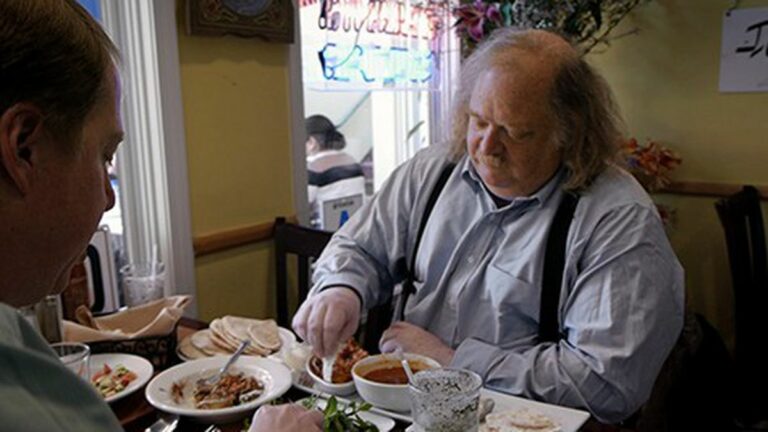
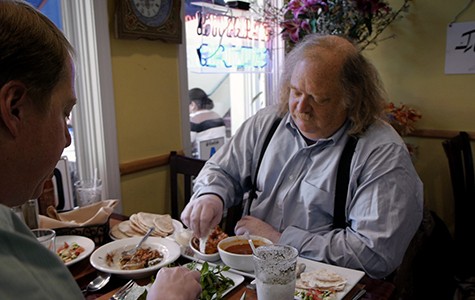
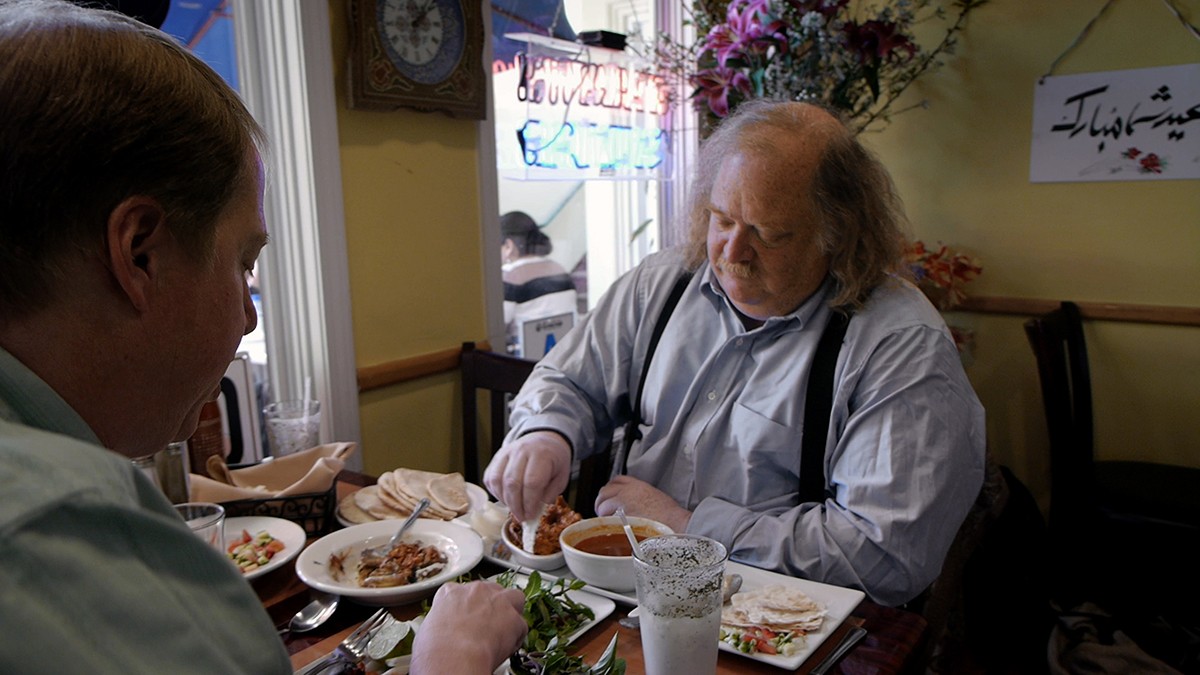
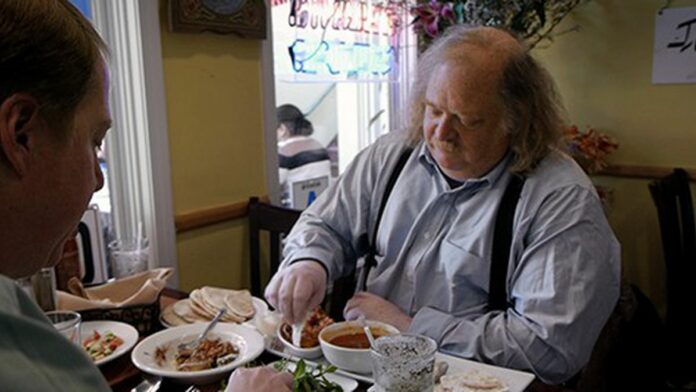
Never underestimate the gastro factor. Long derided as a suspiciously facile feel-good option in narrative movies, food reigns supreme as a surefire crowd-pleaser in the documentary category. Whether it’s an outraged exposé of corporate farming or a paean to the glories of a certain menu item, anyone can relate to the alimentary impulse because everyone eats, and has an opinion about it. In the case of Jonathan Gold, the Pulitzer-Prize-winning culinary critic of the Los Angeles Times, just about everyone who has ever read him agrees he’s at the top of the urban restaurant reviewer food chain. LA is his City of Gold, and documentarian Laura Gabbert’s profile of him is easily the most entertaining movie in theaters this week.

It’s obviously fun being Gold. The 55-year-old Los Angeles native is a chubby, mustachioed former punk-rock cellist (!) who wears his thinning, reddish-gray hair long and favors khaki slacks held up by suspenders — in other words, the popular image of an old-school newspaperman. When he cruises the boulevards in his pickup truck on the trail of a rare dish in a strip mall, it’s easy to see that Gold loves his hometown with a civic booster’s joy, from Koreatown to Tehrangeles to East LA taco trucks to overlooked burbs, such as Alhambra, where he revels in the goose intestine at a Chinese resto called Chengdu Taste. He takes a newsroom anthropologist’s delight in revealing hidden treasures and investigating the multi-culti “fault lines” where hard-to-find eateries serve their own tiny communities.

Filmmaker Gabbert’s last release was No Impact Man: The Documentary, the wonderfully quirky story of a Manhattan family who lived a year while making absolutely no environmental impact. City of Gold operates in a similar down-to-earth sphere, shadowing Gold as he visits some of his best-loved spots and the people in the kitchen — the two are inseparable — and hearing their narratives, most often in modest surroundings. A few of his favorites: Grand Central Market on Broadway downtown; Mariscos Jalisco in Boyle Heights; Thai superstar Jitlada in East Hollywood; Kogi, a nouveau-Korean food truck; Trois Mec in Hollywood; Meals by Genet, an Ethiopian comfort food standout on Fairfax; Moles la Tia in East LA, for Oaxacan treats; and Guelagetza in Koreatown, where Gold craves the chapulines, fried grasshoppers. Los Angeles is a wildly diverse metropolis, and neither Gold nor his dinner guests ever let us forget about that.

The film’s talking-head urban theorists — including Gold’s personal inspiration, Calvin Trillin — propound knowledgably. They admire Gold’s culinary mapping and the way it becomes a guide to the sprawling metro region. But foodie pundits can’t come close to the storytelling verve of the folks behind the counter — as when a restaurateur describes how one old-style place serving Chinese-American food got taken over by a new owner who did good business dishing out the passé Chin-Am cuisine as an exotic experience to its China-born customers. If there’s a shortcoming in the doc’s wide-ranging survey, it’s in the apparent lack of African-American specialties. Earlez Grille, a Black-owned gourmet hot dog stand on Crenshaw, evidently closed after Gold visited the place on camera.

Jonathan Gold won his Pulitzer — the first ever awarded to a restaurant critic — in 2007, while writing his “Counter Intelligence” column for the LA Weekly, at that time an alt-weekly stable mate of the Express when this paper was part of the same publishing combine. If there’s a lesson in that, it’s that we should never take our local reviewers for granted. They just might be onto something special that the mainstream media hasn’t discovered yet.

Why Is There a Housing Crisis?

The Bay Area’s outrageous housing prices have led to howls of protest. Average rents have shot up by half during the last five years. Rents and house prices are the highest of any metropolitan area in the country and among the most unaffordable in the world. This is not just true of San Francisco but applies to the entire Bay region — now twelve counties and 8.5 million people, according to the US Census.

According to mainstream policy shops and planners, such as Gabriel Metcalf, president and CEO of the pro-urban growth organization SPUR, the housing crisis is caused by activists and neighborhood residents who oppose more market-rate housing development. Their solution is to allow developers to build more freely.

But while it’s true that we need to expand the region’s housing supply, building more housing cannot solve the problem as long as demand is out of control, as it is today. There is simply no way housing could have been built quickly enough to avoid the price spike of the current boom.

Three basic forces are driving the Bay Area’s housing prices upward: growth, affluence, and inequality. Three other things make matters worse: finance, business cycles, and geography. All of these operate on the demand side of the equation, and demand is the key to the runaway housing market.

The prime mover of housing prices is economic growth. The Bay Area has been booming for the last five years, creating more than 500,000 new jobs on a base of 3 million. This is the global capital of tech, the world’s most dynamic industry, and all those jobs have drawn in thousands of newcomers looking for housing. Moreover, tech delivers huge profits and pays high salaries and wages, as do other key sectors, like biomedical and finance. The Bay Area’s per capita income has long been one of the highest in the country, and high incomes give people the wherewithal to pay top dollar for housing.

On top of this, income distribution is highly unequal, and wealth inequality is even worse, allowing the upper classes to put additional pressure on the market for good housing in favored locations. The Bay Area has one of the highest indexes of income inequality of any region, caused principally by the high salaries of the top 20 percent of earners. As for wealth, the Bay Area has more millionaires per capita than any other US metro and can claim 45 of the 400 richest people in the United States, second only to New York City.

Most people understand these essential drivers of the housing market, if not how extreme they are in the Bay region. But much more lies behind the runaway rents and sale prices of late. We need to think outside the box of simple supply and demand and look further at a trio of conditions shaping demand: credit and capital, boom and bust cycles, and the spatial preferences of the elite.

First, housing is a big-ticket item that normally requires a mortgage, and an excess of credit will exaggerate people’s ability to purchase houses. California had the most overheated mortgage markets during the housing bubble of the 2000s, and our financial institutions have not been substantially reformed. Finance is subject to dramatic swings, and the pressure becomes unbearable at the peak of the cycle. Furthermore, footloose capital from around the world has once again been flooding into the Bay Area in search of high returns, whether as venture investments in hot start-ups, stock holdings in tech giants, or purchases of mortgage bonds. All the wealth in tech is not generated locally, nor is all housing demand.

Second, the housing market does not behave like eBay because supply is slow to adjust to demand. It takes a long time to build new units and most people stay in the same residence for years. Hence, only a small percentage of total housing stock comes on the market in any year — normally less than 5 percent — and markets suffer from intense bottlenecks. As expansive demand chases limited supply over the course of a business cycle, prices accelerate ahead of new building. Speculators and landlords intensify the pressure as they buy properties, evict tenants, and displace people in anticipation of even higher rents. The good news is that booms go bust, sooner or later. Construction will overshoot the market, as it always does, and then prices will fall by 10 to 20 percent, as usual.

Third, housing markets are badly distorted by the geography of privilege and power. If the nouveaux riches of the tech world want to live in San Francisco (even if they commute to Silicon Valley), they have the means to outbid working stiffs, families, artists, and the poor; the result, as we’ve seen, is a city that has become richer and whiter with remarkable speed. And that’s just the tip of the iceberg: The greatest distortion to housing markets is the demand by the wealthy for exclusive, leafy, space-eating suburbs from Palo Alto to Orinda. These favored enclaves reduce overall housing supply by using low-density zoning to block the high-rises and apartments that provide moderate priced homes (not to mention low-income public housing).

So is there no recourse? Since the biggest sources of the housing crisis lie in the general conditions of contemporary capitalism — the tech boom, gross inequality, frothy finance, boom and bust cycles, and the power of the elites — local reforms can only do so much. Without a major political upheaval for financial control, higher taxes, equality, and more public spending, we are in for perennial housing crises. The housing market can never heal itself under existing conditions.

But some things can be done locally. Rent control with reasonable annual increases works quite well to dampen overheated markets. Eviction controls are critical, along with other restrictions on speculation. Demands for set-asides for low-income units are another proven strategy, along with development fees. Land trusts have worked well for open space protection in the Bay Area, and could work for housing, but will require major funding. And a real commitment of earmarking money for low-income housing by the federal government — on a scale to match the money going to highways — is a must.

New housing will have to be built, as well. But developers are profit-seekers, so don’t expect them to be innocent bearers of what people need. It is absolutely necessary to question developers and city planners over what is to be built, how high, how big, and where. A livable city demands good design, historic preservation, neighborhood protections, mixed use, and social diversity, among other things, and figuring out what those things are should be a collective, democratic and, yes, conflictual process of politics and public debate. Nonetheless, opposing all new building, greater density, and neighborhood change is not a viable policy, and we cannot cling to the idea that our town or neighborhood will remain the same in a dynamic urban system.

Conservative critics, of course, denounce all popular efforts to control runaway housing costs, displacement, speculation, and bad planning as unnatural violations of some “natural law” of perfect markets. No one should be fooled by such fantasies. The real “market distortions” propelling the housing crisis are inequality, speculation, financial bloat, tax havens, and more. The day when the runaway privileges of bankers, builders, speculators, wealthy suburbanites, and the rest are reined in — that’s the day the housing crisis will be over.

Richard Walker.

Dismantling Food Deserts in an Age of Speculation: People’s Community Market Purchases Site for West Oakland Grocery Store

Back in the fall of 2012, food activist Brahm Ahmadi stood in front of a packed room in East Oakland’s warehouse district and made a simple pitch: Would the assorted local business owners and community organizer types who had gathered consider investing in People’s Community Market, the ambitious full-service grocery store that Ahmadi wanted to open in West Oakland? Would they do their part to bring healthy food to one of the city’s most notorious food deserts, where the primary shopping option is the corner liquor store?

See also:
A Grocery Store for West Oakland


[jump] Fast forward three years, and the People’s Community Market project seemed to be all but dead, despite a successful fundraising campaign that had netted $1.2 million by the end of 2013. The grocery store had been stymied, Ahmadi explained, by a soaring West Oakland real estate market that led landowners to demand upwards of $2 million for dilapidated properties. In short, Ahmadi was ready to build a grocery store, but he didn’t have any place to build it.

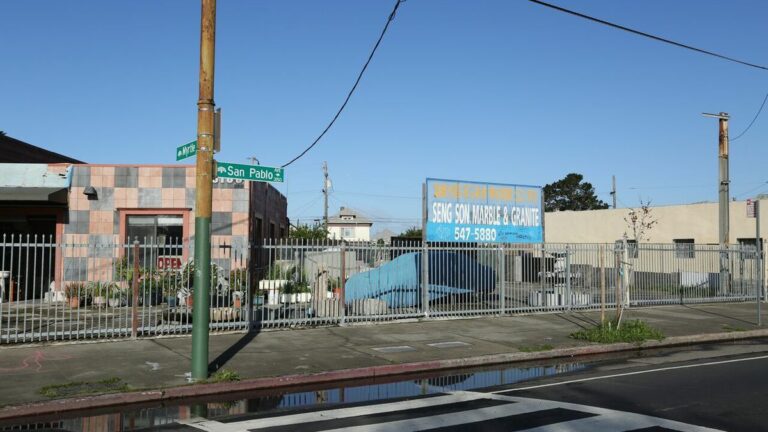
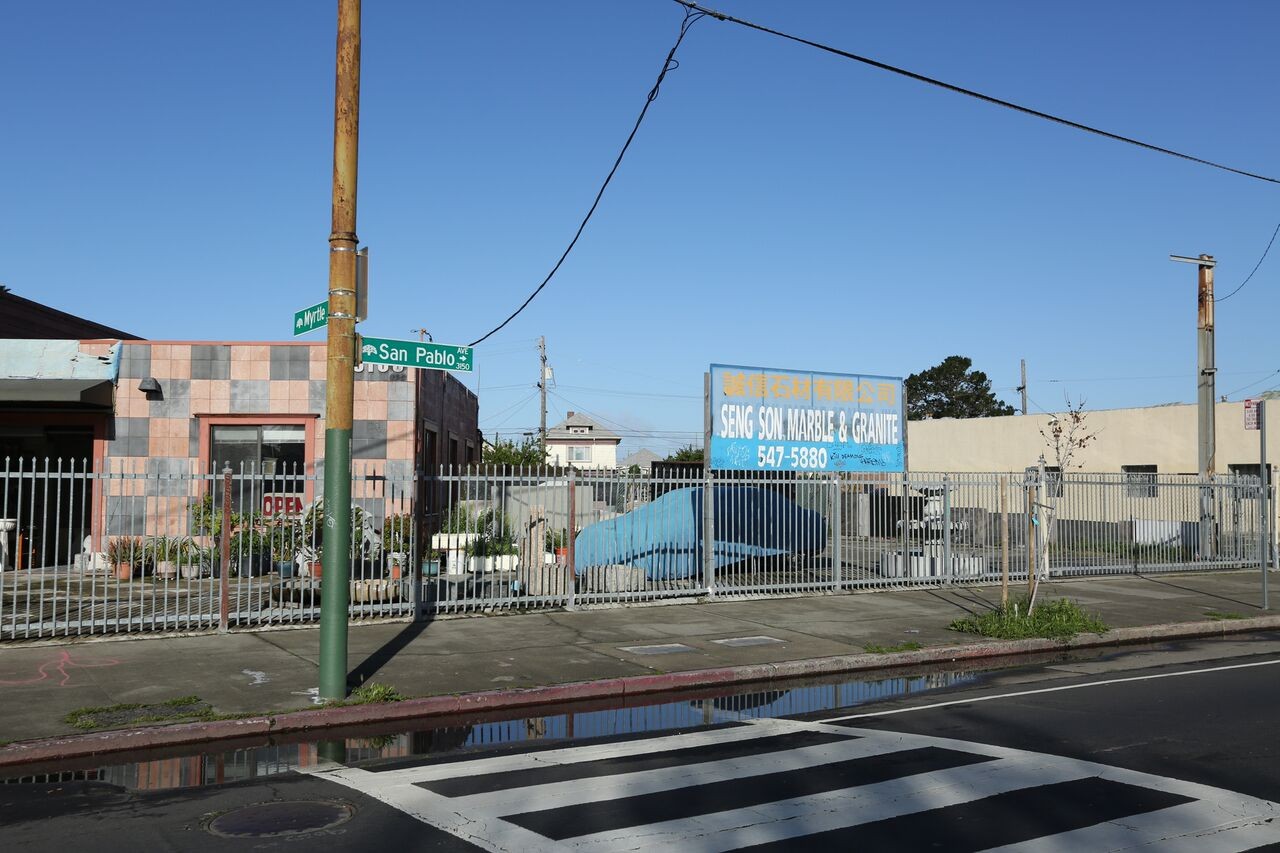
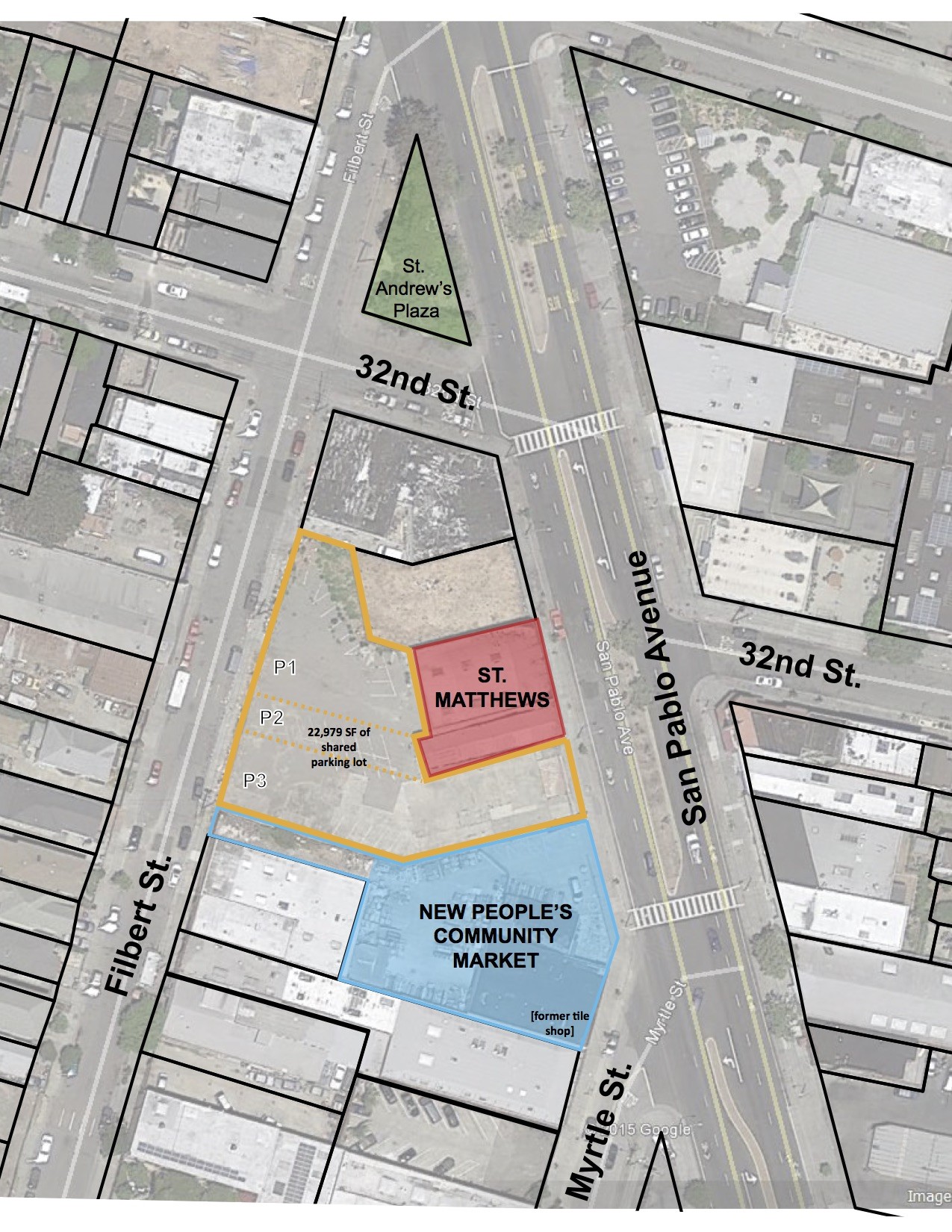
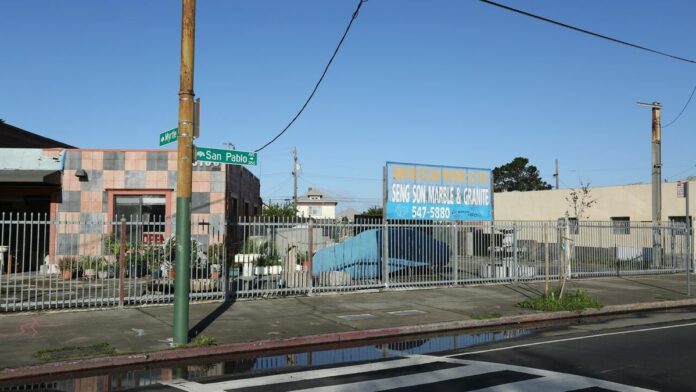
All that changed this past Monday when, after months of silence, People’s Community Market announced that it had closed escrow on a 15,000-square-foot property at 3103 Myrtle Street in the San Pablo Avenue corridor. And, just like that, West Oakland’s long-awaited grocery store appears to be back on track.

In an interview, Ahmadi explained that, all told, People’s Community Market had bid unsuccessfully on seven different properties in West Oakland, all along West Grand Avenue, over the course of the past two years. In no instance was the market actually outbid on a property. Instead, the project was kept in limbo because of what Ahmadi described as “outrageous speculative behavior” on the part of the landowners, most of whom had bought their properties cheaply in the Eighties and were now just sitting on them in hopes of a big payday — basically, in hopes that someone would pay them two or three times their market value. People’s Community Market ultimately paid $970,000 for their current proposed site — an expensive, but comparatively reasonable, $60 per square foot. Other property owners had demanded $90, or even $180, a square foot, Ahmadi said.

Even with all the fears about the looming gentrification of West Oakland, Ahmadi said the market has yet to bear out that kind of commercial real estate bubble: “All of those properties are still owned by the same people right now. They all look exactly the same — they’re all dilapidated, underutilized properties.”

It was only through a couple of key partnerships that People’s Community Market was finally able to seal the deal on its Myrtle Street site. Perhaps most importantly, an angel investor stepped in and agreed to put up cash to pay for the property. That investor has chosen to keep his identity secret, but Ahmadi described him as a former hedge fund guy who made his fortune on Wall Street and had returned to Oakland, his hometown, hoping to, in Ahmadi’s words, “reform himself” by doing something good for the community.

The second important piece was that Ahmadi brought on the East Bay Asian Local Development Corporation (EBALDC), an Oakland-based affordable housing developer, to handle the nuances of a somewhat complicated real estate transaction. Essentially, the angel investor loaned the $970,000 to EBALDC, virtually interest-free, and EBALDC will act as the grocery store’s landlord. What People’s Community Market will get out of it is a pretty good deal: three years rent-free while the business establishes itself, after which the store will negotiate a market-rate lease with EBALDC.

Joshua Simon, director of EBALDC, explained that the organization’s involvement in the grocery store is part of its Healthy Neighborhoods initiative that takes a more holistic approach to defining what makes a neighborhood healthy, beyond just affordable housing. Of course, part of that includes job opportunities and access to healthy food — hence the partnership with People’s Community Market.

A number of pressing questions about the store’s long-term viability remain, not the least of which is: Will enough people shop at a grocery store located in an area that everyone connected to the project acknowledges has had significant issues with violence and public safety? And then the other edge of that sword: If the store proves to be popular, who’s to say it won’t become a source of the very gentrifying forces that Ahmadi says he hopes to contain?

“Some businesses come in, and all they’re doing is banking on the neighborhood changing in order for it to be successful,” said Ener Chiu, a commercial planning manager with EBALDC. “Brahm is the opposite. He’s been there for ten years and wants to serve the neighborhood that’s there now.”

Ahmadi, for his part, is sanguine about the inherent tension: “The reality is that anything you do to improve the neighborhood will make it more attractive to other people as well.” That said, he cited various efforts on the part of People’s Community Market to collaborate with current West Oakland residents. One fortuitous partnership has already emerged: The grocery store will lease the parking lot of St. Matthew’s Missionary Baptist Church, a historic Black church located next door. The deal will provide revenue for the church, but according to Altheria Jinks, the church’s president and CFO, the St. Matthew’s congregation believes in the project’s mission and wants to work with the grocery store to do something positive for that stretch of West Oakland. “We need places where we can go shopping instead of taking our tax money and going to Emeryville,” Jinks said.

Beyond that, Ahmadi said that People’s Community Market will have fifty employees when it opens, mostly hired from the surrounding community. Eventually, the plan is to move toward an employee ownership model — so those fifty employees will stand to benefit even more directly from the store’s success. In addition, Ahmadi pointed to the market’s somewhat unorthodox fundraising method of using a Direct Public Offering (DPO), in which members of the community can become shareholders for a minimum $1,000 investment. The market will soon do another DPO round, and Ahmadi said he’s in talks with a foundation that wants to subsidize the bulk of that $1,000 minimum for West Oakland residents who are willing to put up, say, $100. (The exact amount of the subsidy has not yet been set.) Again, the idea would be to increase the number of people in the neighborhood who have a direct personal stake in the success of the store.

As for next steps, Ahmadi said he has to obtain permits from the city and raise another $7.5 million, mostly through loans. If all goes perfectly, People’s Community Market will be ready to open by late next summer.

Of course, Ahmadi acknowledged that there will be risks and challenges for years to come. That, he said, is the essence of why there are no grocery stores in neighborhoods like West Oakland: “It’s hard to do.” 

Clarification: This story has been edited to clarify that the exact amount of the potential DPO subsidy has yet to be determined. 

Historic Federal Summit on Medicine Marijuana Is Slanted By Drug War Agenda

A seemingly historic medical marijuana summit by several US government health agencies will largely exclude evidence coming from the states that have legalized medical cannabis — another example of entrenched Washington, DC bureaucrats placing politics over science in the marijuana debate.

The National Center for Complementary and Integrative Health (NCCIH) and four other NIH institutes and centers is holding the “Marijuana and Cannabinoids: A Neuroscience Research Summit” today and tomorrow in Bethesda, Maryland.

“The overarching goal is to present current basic research and evidence-based information to identify research gaps to ultimately inform science, practice, and policy,” an NCCIH release states.

But the presence of at least one co-sponsor, the National Institute on Drug Abuse, ensures that the summit will be less about healing and more about Reefer Madness. NIDA’s official mission is to fund studies to find harms in cannabis — not any benefit. The summit will not include leading doctors who treat patients with medical marijuana, or patients themselves.

[jump] Instead, NIDA’s director, Dr. Nora Volkow is opening and closing the summit, which will showcase NIDA’s most recent research efforts to show marijuana harms the brain, brain development, and function. The White House Drug Czar will weigh in after lunch, followed by talks on pot and psychosis, pot addiction, and combining pot with alcohol.

[You can watch the NIH Marijuana Summit online here.]

Only at the end of the day will speakers address the ability of cannabis to treat epilepsy and multiple sclerosis. A marijuana-derived drug reduced seizures by 40 percent in kids with untreatable epilepsy, clinical trials revealed last week.

Tomorrow, NIDA will relay its latest on pot and driving in the morning. Talks on cannabis’ potential for use on pain and anxiety precede discussions about potential negative health effects of legalization.

States with medical marijuana laws have 25 percent less opioid overdoses than states without cannabis access, a study published in JAMA showed.

In February, US Senator Elizabeth Warren, D-Massachussetts, asked the CDC to consider legalizing pot to stem the opioid overdose epidemic.

The summit is a missed opportunity, said Dr. Sunil Aggarwal, affiliated faculty of the MultiCare Institute of Research and Innovation. Aggarwal just spent a year as a clinical fellow at the NIH intramural campus, and wrote us that “there is a strong bureaucratic taboo in discussing any of the reemerging science or art of cannabis medicine.” 

“This conference does break down some of that taboo, but performs a great disservice to the American people by excluding in the core agenda medical and scientific speakers who can describe health lessons learned from the two dozen medical cannabis state level programs in the United States,” he wrote.

Millions of patients have been treated by botanical cannabis, Aggarwal notes. One in twenty California adults have reported using medical cannabis for a serious condition and 92 percent of them believe pot worked, researchers report.

“This belies the strong phamaceuticalized cannabis slant of this conference, despite its co-sponsorship by the National Center on Complementary and Integrative Health, which ought to be studying cannabis and cannabinoid integrative health and medicine, not ignoring it,” Aggarwal wrote.

The doctor who wrote the textbook on cannabis in Integrative Oncology, Donald Abrams of San Francisco, is also not part of the summit. Neither is leading researcher on using marijuana to treat PTSD — Dr. Sue Sisley.

According to the National Cancer Institute, cannabis users have a 45 percent decrease in the likelihood of bladder cancer compared to non-users.

The journal Epidemiology reported cannabis users had 30 percent less likelihood of diabetes compared to non-users in studies.

The American Epilepsy Society reported a 47 percent drop in pediatric epileptic seizures during clinical trials of cannabis extract Epidiolex, and 9 percent of kids in the study became seizure-free.

Cannabis is ranked number one on the US government list of the most dangerous drugs. Researchers report facing more hurdles to studying botanical cannabis than any other drug.

Prescription opioids are far less controlled. The number of overdose deaths from cannabis in recorded history is zero, while the number of overdose deaths from opioids in 2014 in the United States totaled 28,647. Doctors wrote 259 million opioid pain medication prescriptions in 2012. About 100 Americans die every day from opioid overdoses.

Tuesday Must Reads: At Least 31 Dead in Brussels Bombings; Supreme Court Says Oakland Can’t Help Harborside Pot Club

Stories you shouldn’t miss:

1. Three bombings in Brussels, Belgium have left at least 31 people dead and dozens injured, the AP reports (via SFGate). Two of the bombs detonated at the Brussels airport and the third exploded on rush-hour subway train in the city. Government officials suspect that the terrorist group Islamic State is responsible for the attacks.

2. The US Supreme Court turned down an appeal by the City of Oakland and let stand a lower court decision that said the city cannot help defend Harborside Health Center in court, the Chron$ reports. The US Department of Justice is attempting to shut down the popular medical cannabis dispensary, and so the city tried to intervene in the case, contending that the DOJ’s actions, if successful, will rob Oakland of millions in tax revenues. But the high court’s ruling does not mean that Harborside is doomed, because in a separate case, a federal judge has ruled that the DOJ has illegally violated a Congressional directive that bans the feds from using taxpayer dollars to target medical cannabis dispensaries in states that have legalized medical pot — like California has.

[jump] 3. BART resumed partial rush-hour service to the line between the Pittsburg/Baypoint and North Concord stations, the Chron reports. However, the transit agency still has no idea why power surges in the area knocked fifty trains out of service.

4. In a surprise move, the US Department of Justice indicated that the FBI might have a way to hack into the iPhone of San Bernardino terrorist Syed Rizwan Farook, the AP reports. The DOJ has been attempting to force Apple to unlock the phone, but the new revelation could make that legal effort moot.

5. And the Berkeley High School boys’ basketball team won its first NorCal championship since 1921, Berkeleyside reports. The Yellowjackets will play for the state championship on Thursday.  
 

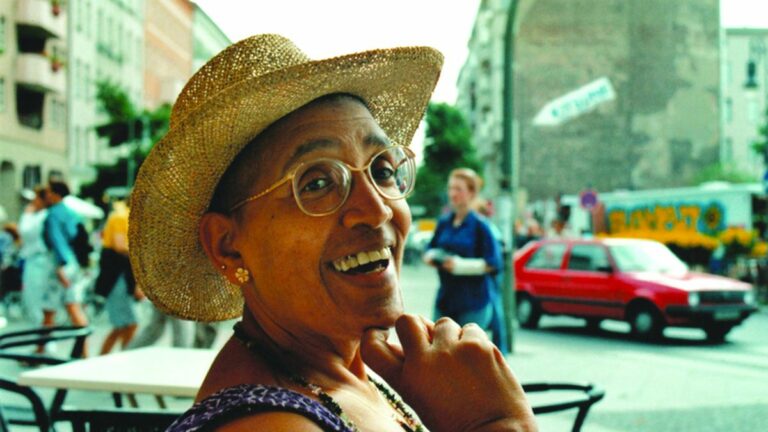
“Audre Lorde: The Berlin Years 1984-1992”

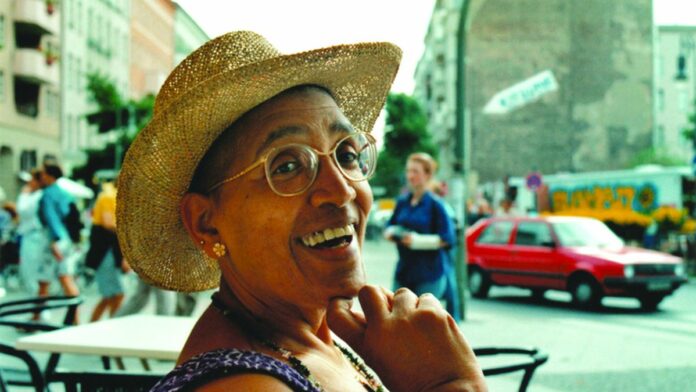
The seminal poet and professor Audre Lorde is known mostly for her work as a queer, radical feminist and US civil rights activist. But Dagmar Schultz’ 2012 documentary, Audre Lorde: The Berlin Years 1984-1992, focuses on a lesser-known chapter in Lorde’s life, during which she helped to ignite the Afro-German Movement by mentoring Black German women to write and publish essays about their identities and worked with white German women to check their privilege and use it constructively. The intimate feature will be shown at Kehilla Community Synagogue (1300 Grand Ave., Oakland) on Saturday, March 26, from 7–9 p.m. Following the screening, Schultz will be joined by Lorde’s close friend and colleague Ika Hügel-Marshall, who co-authored the film’s script, for a discussion about the film and Lorde’s influential work.

Shlohmo

LA producer Shlohmo is a native Angeleno, but most fans don’t realize that he got his start in the Bay Area as a student at California College of the Arts. While he initially moved up north to study fine art after high school, Shlohmo eventually returned his focus to the music collective he founded as a teenager in LA, WeDidIt, which also features DJ-producers RL Grime and D33J. Shlohmo has proven himself to be a dynamic beat maker, deconstructing traditional hip-hop rhythms with psychedelic effects. On his latest album, Dark Red, he creates slow, pared-down, oceanic beats that incorporate static and glitchy effects amid lush layers of synths. Catch him live at the Mezzanine on Saturday.

Where Chefs Shop

For anyone interested in cooking authentic ethnic cuisine, the single "ethnic" aisle at any chain grocery store can be saddening. Luckily, the East Bay, one of the most diverse areas in the country, is abundant with specialty grocery stores. To tap into that resource, we asked four prominent East Bay chefs who specialize in ethnic cuisine where they buy...

Belotti Ristorante Serves the Best Pasta in Oakland

I love eating pasta more than almost any other food. In the course of my tenure as the Express food critic, I've reviewed some pretty good Italian restaurants, but for whatever reason, the pasta dishes were often the ones that left me feeling a little cold. Fresh pasta, in particular, would always either be not delicate enough...

Letters for the Week of March 23, 2016

"Overwhelmed," Feature, 3/9 Marginalized and Devalued The mentally ill, as with other disenfranchised groups, are marginalized and devalued. Therefore, it is not surprising to read about the indifference reflected in the systemic dysfunction of an administration that relies on draconian tactics to censor its first responders, the healthcare workers. The tip-off of a corrupt management culture is its reliance on punitive...

LA Eats Itself

Never underestimate the gastro factor. Long derided as a suspiciously facile feel-good option in narrative movies, food reigns supreme as a surefire crowd-pleaser in the documentary category. Whether it's an outraged exposé of corporate farming or a paean to the glories of a certain menu item, anyone can relate to the alimentary impulse because everyone eats, and has an...

Why Is There a Housing Crisis?

The Bay Area's outrageous housing prices have led to howls of protest. Average rents have shot up by half during the last five years. Rents and house prices are the highest of any metropolitan area in the country and among the most unaffordable in the world. This is not just true of San Francisco but applies to the entire...

Dismantling Food Deserts in an Age of Speculation: People’s Community Market Purchases Site for West Oakland Grocery Store

The future site of People's Community Market Credits: Liz Probst Back in the fall of 2012, food activist Brahm Ahmadi stood in front of a packed room in East Oakland’s warehouse district and made a simple pitch: Would the assorted local business owners and community organizer types who had gathered consider investing in People’s Community Market, the ambitious full-service grocery store...

Historic Federal Summit on Medicine Marijuana Is Slanted By Drug War Agenda

A seemingly historic medical marijuana summit by several US government health agencies will largely exclude evidence coming from the states that have legalized medical cannabis — another example of entrenched Washington, DC bureaucrats placing politics over science in the marijuana debate. The National Center for Complementary and Integrative Health (NCCIH) and four other NIH institutes and centers is holding the...

Tuesday Must Reads: At Least 31 Dead in Brussels Bombings; Supreme Court Says Oakland Can’t Help Harborside Pot Club

Stories you shouldn’t miss: 1. Three bombings in Brussels, Belgium have left at least 31 people dead and dozens injured, the AP reports (via SFGate). Two of the bombs detonated at the Brussels airport and the third exploded on rush-hour subway train in the city. Government officials suspect that the terrorist group Islamic State is responsible for the attacks. 2. The US Supreme...

“Audre Lorde: The Berlin Years 1984-1992”

The seminal poet and professor Audre Lorde is known mostly for her work as a queer, radical feminist and US civil rights activist. But Dagmar Schultz’ 2012 documentary, Audre Lorde: The Berlin Years 1984-1992, focuses on a lesser-known chapter in Lorde’s life, during which she helped to ignite the Afro-German Movement by mentoring Black German women to write and...

Shlohmo

LA producer Shlohmo is a native Angeleno, but most fans don’t realize that he got his start in the Bay Area as a student at California College of the Arts. While he initially moved up north to study fine art after high school, Shlohmo eventually returned his focus to the music collective he founded as a teenager in LA,...
19,045FansLike
17,709FollowersFollow
61,790FollowersFollow