Bay Area Rapper T. Carriér Reinvents Himself

T. Carriér has a new sound. His raps on There’s Been a Change of Plans, the surprise album the Bay Area artist dropped earlier this month, are pensive, tense. His flows assume the foreground over downtempo, understated beats, and he delivers introspective verses flush with offhand insights that analyze his personal struggles. And there’s an emotional quality that sets it apart from his previous work as Smoovie Baby, the moniker that the 29-year-old artist retired last year after using it for over a decade.

Changes of Plans reveals the cracks in the cool-guy façade of Carriér’s previous output — and this newfound vulnerability is one of the album’s strengths.

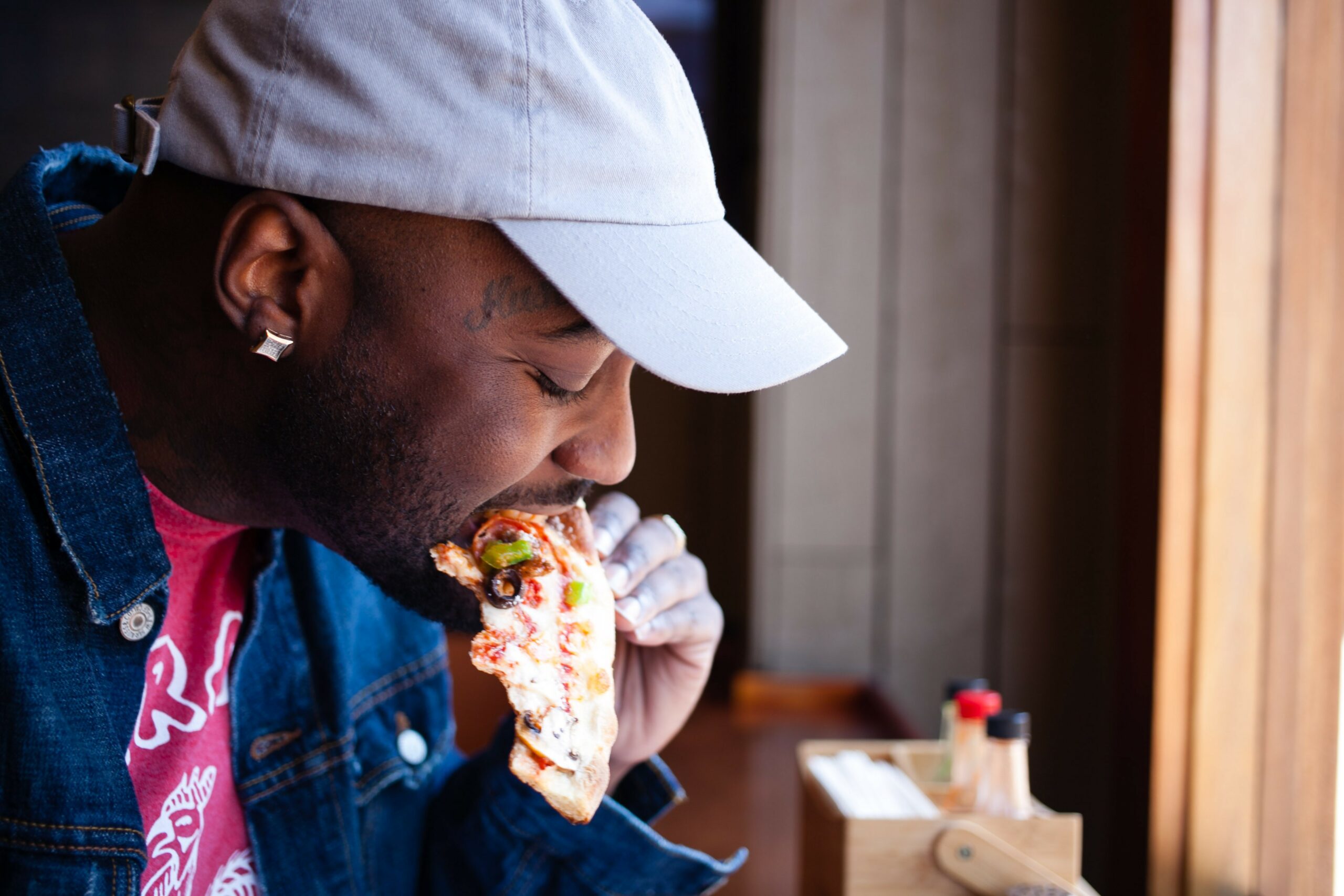
“My [old] music was extremely misogynistic, one hundred percent,” he said, explaining the thought process behind his recent reinvention. He added that as he got older, he began to draw more from his personal life for his lyrics as opposed to relying on shock value.

“I was putting out raunchy material just to see what people would say, whereas now I want to share my experiences in life,” he explained.

Self-reflective yet confident and sometimes cocky, Carriér’s confessional, stream-of-consciousness raps touch upon a variety of autobiographical subjects. On “Focused,” a hustling anthem, he shares candid reflections on raising a daughter with autism. “Decisions,” a duet with R&B singer Khyenci Tienne, is rife with poignant observations about how trust issues can break a relationship: They say when you love someone / You ‘posed to take all their flaws and embrace ’em / So many memories, I’m talkin’ terabytes / Why you so quick to erase ’em?

This lyrical depth is a marked departure from Carriér’s work in earlier stages of his career. He was born in San Francisco and raised in Fairfield, a Solano County suburb north of Vallejo. Bay Area rap star Sage the Gemini is from the same town, and the two of them started collaborating early on. Sage eventually joined IAMSU’s music collective, HBK Gang, and the group’s influence was palpable in Carriér’s music as Smoovie Baby.

With IAMSU, Sage, and P-Lo — another prominent HBK Gang rapper and producer — handling much of his production, Smoovie Baby’s early work consisted mostly of hyphy-influenced club bangers. These made for fun party music, but they weren’t quite distinct enough to set him apart from the other members of the collective. Still, he rose to considerable regional acclaim, and even nabbed a coveted spot on the rap blog Thizzler.com‘s then-annual Bay Area Freshman list in 2012 (Thizzler discontinued its Freshman list in 2014).

But Carriér said that, eventually, he felt like he wasn’t quite being true to himself, so he made the tough decision to start anew. A revelation at South by Southwest last year prompted him to make the switch.

“When I was there, I just had a weird energy when I was introducing myself to people,” he explained, adding that Smoovie Baby no longer felt representative of who he was, especially when meeting prominent industry figures at the fest. “I was like, ‘You know what, I need to go in a direction where I can be taken more seriously, and then I can also change the conversation with the stuff that I’m saying.'”

After changing his stage name, Carriér dropped Let That Marinate at the end of 2015, a more bass-heavy, danceable mixtape than There’s Been a Change of Plans. He said he wanted to put something out quickly, to introduce the world to his new artistic identity, but that There’s Been a Change of Plans is a more thought-out project — and is more representative of his new, R&B-influenced direction.

With artists like Drake and Bryson Tiller paving the way for male rappers and R&B singers to move away from the alpha-male personae of years past, the project feels aligned with the current moment in hip-hop.

An important part of carving out a new niche for himself was finding new producers to work with, Carriér explained. Sofasound, a relatively unknown and young producer from Florida, architected the majority of the beats on There’s Been a Change of Plans. He and Carriér found each other through SoundCloud and have been collaborating remotely, though Carriér said that working together has been going so well that Sofasound is considering moving out to the Bay Area so that they can collaborate further.

Sofasound’s pared-down production features subtle details and unexpected twists, which add to the album’s complexity. For instance, the beat for “All I Know” contains a sample from Beyoncé’s “End of Time,” from her album 4. The producer extracted a processed, chant-like vocal sample from the uptempo club beat of the original song and slowed it down to create a dark, brooding track with suspenseful, shadowy synth lines that underscore the emotional turmoil of a failing relationship, which Carriér details in his lyrics.

“We were basically curating a new sound for my album,” Carriér said. He and Sofasound are continuing their collaboration for Carriér’s forthcoming album, Gumbo & Prerolls — a nod to his Creole heritage, by way of his grandparents, who are from Louisiana.

“I want people to listen to it with an open ear, because it’s a lot of new sounds coming from me. A lot of people are still connecting me to Smoovie Baby. … That’s because they’ve been fuckin’ with me, which is not a bad thing.

“But at the same time, this is a new evolution.”

Exorcising ‘El Maligno’: How Bay Area Protesters Co-Opted Trump’s Speech

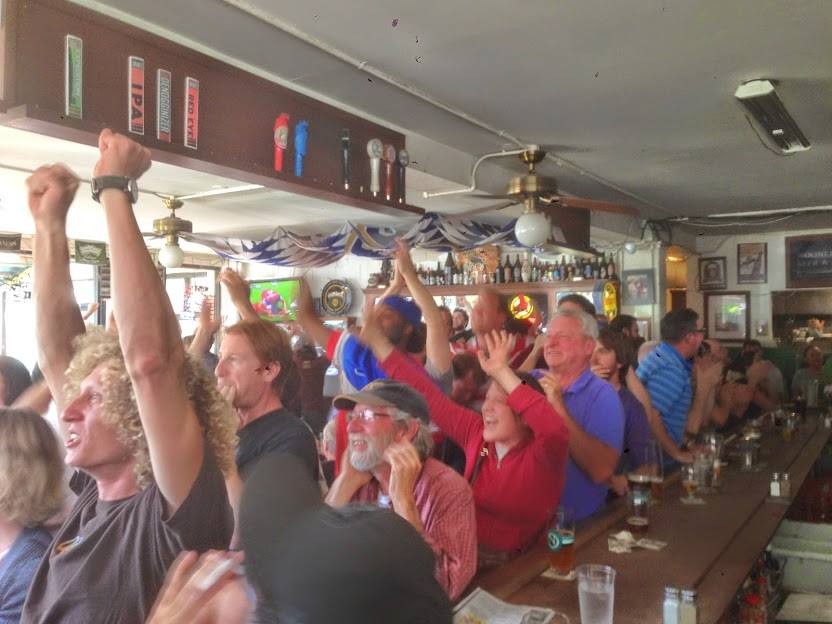
Old Bayshore Highway is a wide suburban thoroughfare flanked by parking lots and the drab Hyatt Regency, where all last weekend Republican presidential candidates mounted the stump to serenade state party delegates at the California GOP Convention. But by 9 a.m. on Friday, cops from every agency in the county had barricaded and surrounded the hotel, and it was clear that the normally sleepy, private political gathering would soon be co-opted.

A diverse coalition of protesters had gathered ahead of a keynote speech by celebrity real estate mogul and Presidential hopeful Donald Trump. As the crowd swelled, a Burlingame police officer struck a conciliatory tone and pleaded for protesters to stay out of the street: “We gave you the whole sidewalk.”

But before long, protesters had established human barricades at both ends of the block. By noon, they’d surged through police lines toward the hotel’s entrance. Law-enforcement in riot gear battered them back, leading activists to rally at other Hyatt entrances. Police and security scrambled to padlock doors from within. At times, the scene resembled a hotel besieged.

Trump was scheduled to begin his chat at noon, but — to the protesters’ delight — his caravan couldn’t even exit Highway 101. One indelible image garnered news coverage worldwide: Trump and his entourage stopped on the freeway’s shoulder, clambering awkwardly over a concrete median, ties flopping and flaccid in the wind.

Mainstream news organizations reported “eruptions of violence” and “chaos” at the protests, describing the activists as a “rowdy mob” — even though the five arrests and as many scuffles, and next to no property damage, was rather mild, at least by the metrics of Bay Area protests.

At the same time, the action was fierce and familiar, a continuation of activists’ campaigns against police killings in particular. In terms of diverting and seizing the attention lavished on Trump, it was also effective.

The Anti Police-Terror Project protested alongside activists from Black Lives Matter Bay Area, BlackOUT Collective, and Black Youth Project 100, among other organizations. “Donald Trump has used the most powerful media platform in the world to spew hate,” Oakland activist Cat Brooks explained at the event. “We’re here to talk about how Black lives are never at the center of the democratic process.”

BlackOUT Collective member Deirdre Smith, a firebrand on the bullhorn all morning, echoed Brooks. “Donald Trump has misused his media platform,” she said. “We’re taking it back.”

There were theatrics: Berkeley teenagers, who went by the names Dropz and Mobby, brought a Trump cutout—and eggs to throw at it. (Later, eggs found different targets, in the form of cops.) Activists torched a Trump piñata. And many protesters clutched signs featuring caricatures of the candidate.

One particularly infernal rendering was captioned El Maligno: The evil.

There were masked protesters and topless protesters. A mortgage broker who works nearby walked his impeccably kept papillon along the periphery. Union members decried lousy wages for contractors currently remodeling the Hyatt. Sergio Alfaro, a 23 year-old caretaker from San Francisco, captured the motions of the crowd in his sketchbook, inspired by the drawings of Ralph Steadman.

Other activists emphasized solidarity with people of color. Protesters clutching a “We’re Here We’re Queer” banner, for instance, consciously styled themselves as auxiliary, allied with groups such as Black Lives Matter but keen to cede the spotlight.

Likewise, a group of protesters infiltrated the Hyatt and unfurled a massive “Stop Hate” banner in the window — a maneuver that necessitated repelling gear. After security ejected them, Linda Capato Jr. described their motivations succinctly: “We’re a group of queers fighting in solidarity with Black and brown people.”

Hotel guests attempted in vain to wheel a towering luggage cart through one of the human barricades. In hopes of passing through, they told protesters that they employed five Mexicans. It was unconvincing. And when they turned back, they came face-to-face with a crowd barreling after a Trump supporter who, after being pinned against a hedge by the media scrum, was hoisted away by cops.

In another confrontation, a masked protester snatched an American flag from a handful of young Trump supporters and lit it on fire. This move spurred debate among activists about the wisdom of certain tactics.

When details first broke of Trump’s visit to the Bay Area, comfortable progressives scoffed. They thought the candidate of consummate puerility touching down in the region seemed like a punch line.

But for the several hundred protesters who dogged and stymied his keynote speech, it was very serious. To them, Trump’s wrathful rhetoric, especially toward people of color, actually evoked discrimination and violence by law enforcement, which they’d been decrying in Oakland and San Francisco for years.

Days before the Trump action, Edwin Lindo — one of the so-called “Frisco Five” hunger strikers protesting what they consider a police department steeped in racism — told a video crew: “People say San Francisco isn’t Ferguson. They say it’s not Baltimore. And it’s not. It’s worse.”

Lindo echoed James Baldwin’s 1963 assertion that “there is no moral distance … between the facts of life in San Francisco and the facts of life in Birmingham.” So did Brooks, who said that the Bay Area isn’t liberal. “It can be seen in the fact that Oakland was third in police killings per capita last year … [and] in the fact that SFPD just executed another person,” she argued.

It was in this spirit on Friday that the protesters, having hijacked the proverbial megaphone, used it to promote yet another action: the next day, a rally at the Mission District police station, in support of the Frisco Five.

In other words, law enforcement’s dispersal order that afternoon wasn’t the end. It only spurred further demonstrations.

Film Noir? From Mexico?

0

Stateside aficionados long ago discovered the splendors of the Mexican angle on the classic post-WWII crime pics called film noir, but the movies have always been hard to find. Lately, such Bay Area noirista programmers as Eddie Muller and Elliot Lavine have been delving into South of the Border vaults in search of rare period pieces by Emilio “El Indio” Fernández and other major stylists.

Turns out the Berkeley Art Museum and Pacific Film Archive got there first. Going back more than twenty years, BAMPFA has rolled out a string of important traveling series of vintage Mexican films, including noirs, from various sources in Mexico and the US. The latest of these is “Mexican Film Noir,” a concise, eight-film package of melodramas, circa 1943-1953, from directors Julio Bracho, Roberto Gavaldón, Tito Davison, and Alejandro Galindo — guest curated by José Manuel García of Filmoteca UNAM in Mexico City with help from Kathy Geritz at BAMPFA. Studded with screen personalities and drenched in the Mexican point of view (so different from that of the gringos), it’s a must-see for noir lovers.

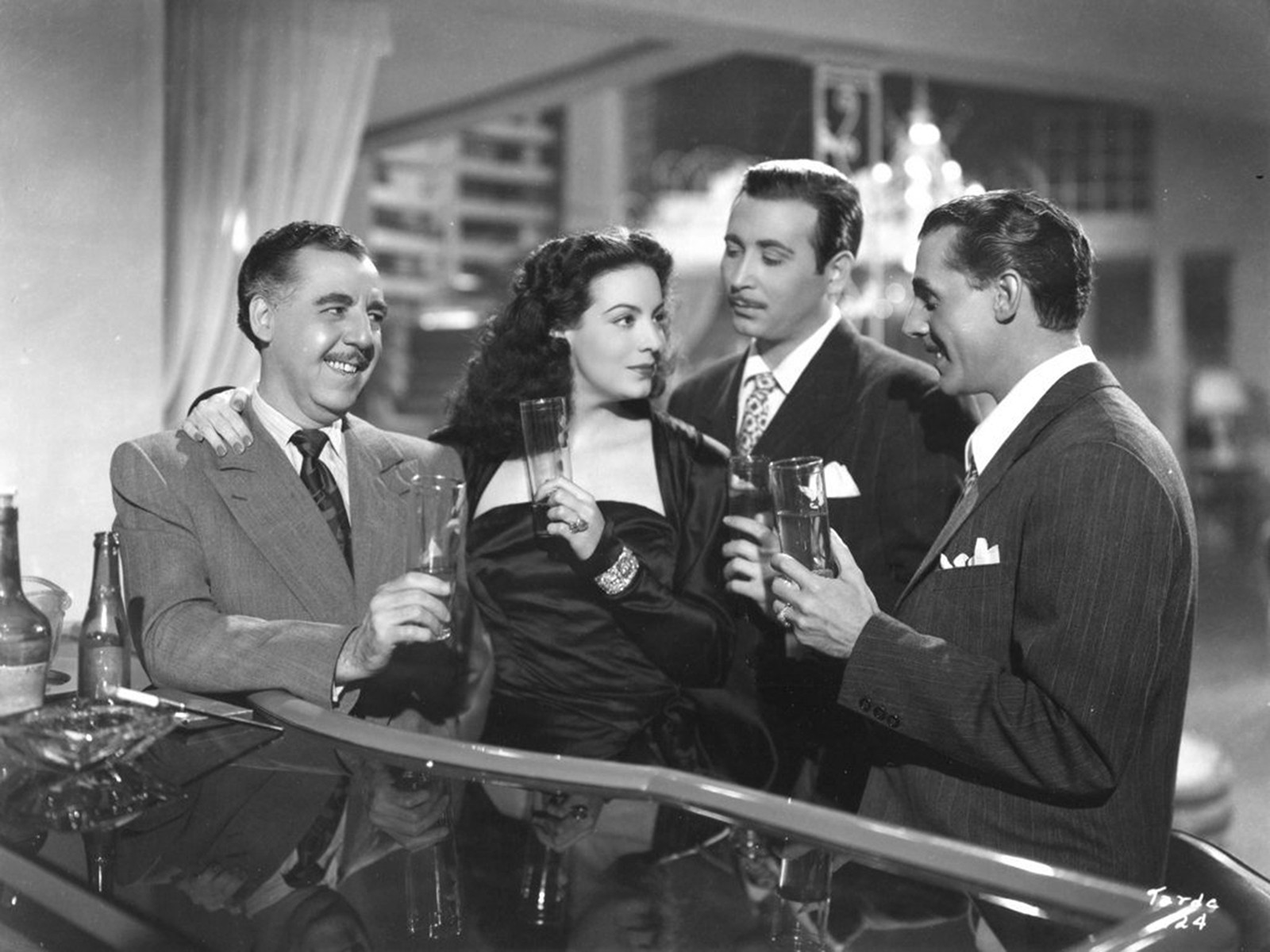
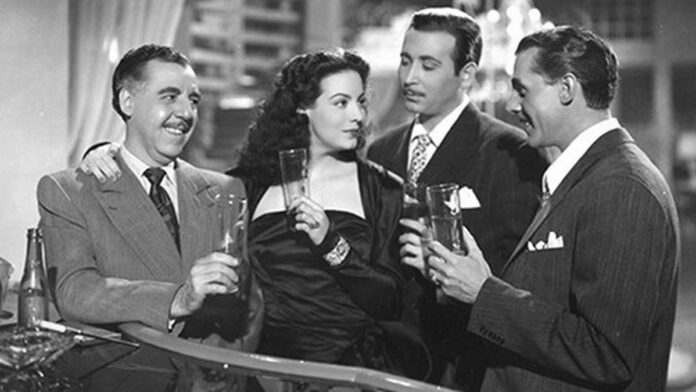
The top pick might be May God Forgive Me (Que Dios me perdone), director Davison’s luxuriously dismal 1948 vehicle for movie goddess María Félix. In it, she portrays an international woman of mystery who at first appears to be gold-digging amongst the newly modernized citizens of President Miguel Alemán’s country. Lena Kovach (or Sofía), from Poland (or was it Constantinople?), is hiding a terrible secret, of course. It involves a rich and unwitting businessman, one or two shady shakedown artists, an awe-inspiring diamond bracelet, and numerous get-dead-quick schemes. The overriding theme, in common with most of the other films in the series, is that with newfound prosperity comes fresh opportunity for perilous hanky-panky. Alex Phillips’ camera loves Ms. Félix, and so will you.

“Mexican Film Noir” begins Saturday, May 7, with Bracho’s Another Dawn (Distinto amanecer), a politically minded 1943 cabaretera starring Andrea Palma and Pedro Armendáriz; and the same director’s Twilight (Crepúsculo) from 1945, the story of a doctor (Arturo de Córdova) who falls for his best friend’s wife, the statuesque Gloria Marín. She breaks his will, but what a thrill. For the complete schedule and show times, visit: BAMPFA.org

Oakland Official Working on Coal Export Plan has Significant Investments in Fossil Fuels

A high level Oakland official guiding the city’s analysis of health and safety impacts of a controversial coal export plan also has personal investments in fossil fuel companies, according to city records. Anti-coal activists argue this is a conflict of interest, and also worry that the official is steering a consulting contract to a company that will neglect to fully explore the health and safety impacts of coal.

These critics worry that the consultant will find no significant health and safety impacts, leading the council to approve the plan proposed by developer Phil Tagami’s company, CCIG, and former Port of Oakland Executive Director Jerry Bridges’ company, TLS, to ship millions of tons of coal through West Oakland.

Environmental Science Associates, the consultant group in question, routinely works for fossil fuel companies, according to the activists. But they’ve been unable to convince the city to hire a different expert, one with a stronger background in public health and safety.

Part of the reason is Assistant City Administrator Claudia Cappio, who selected ESA and wrote in a report to council that ESA is the only company with the necessary expertise. City officials have also expanded the ESA contract to include analysis of other fossil fuels, in addition to coal, despite protests from environmental groups that this could open a backdoor for oil and other exports.

“We find it very troubling to learn that Claudia Cappio, who has been running the show for the city since last September, has investments that can benefit from shipping coal in Oakland,” said Michael Kaufman of the No Coal in Oakland coalition.

According to city records, Cappio owns at least $100,000 of stock in Berkshire Hathaway, the holding company run by Warren Buffet. Pacificorp, one of Berkshire’s largest subsidiaries, operates ten coal-fired power plants in the western United States, including a power station in Utah that purchases 2.8 million tons of coal from Bowie Resource Partners each year.

Last June, Pacificorp struck a deal with Bowie to have the company supply the power station with coal until year 2029. Pacificorp made $1.02 billion in profit last year for Berkshire.

Berkshire also owns the BNSF Railroad, which had $4.6 billion in revenues last year from shipping coal. At least one coal mine owned by Bowie is served by BNSF, and BNSF could end up delivering coal to the Oakland’s OBOT terminal, if approved.

Cappio also owns stock worth at least $10,000 in Kinder Morgan, an oil-and-gas pipeline company, and shares worth at least $10,000 in the Vanguard Energy Fund, which has stakes in dozens of oil companies.

Kinder Morgan has also sought to build fossil-fuel export facilities on Oakland’s waterfront. In 2014, it teamed up with Tagami’s CCIG in an effort to convince the Port of Oakland to turn the Howard Terminal into a fossil-fuel hub. The Port rejected the plan because of environmental concerns.

Altogether, Cappio’s investments in companies with links to the coal, oil and gas industries total at least $120,000, part of her personal investment portfolio worth a total value ranging somewhere between $818,000 and $8.9 million. (State transparency laws don’t require reporting exact dollar values.)

Cappio is confident her personal investments don’t run afoul of any rules, or influence her work for the city council regarding the coal controversy. “I have reviewed my investments and at this time I do not have any financial interest that would require me to declare a potential conflict of interest under the [Fair Political Practices Commission] Conflict of Interest regulations,” she wrote in an email to the Express.

Meanwhile, a clause in the city’s contract with CCIG permits it to block activities that could have negative health and safety impacts. Anti-coal activists say this empowers Oakland to stop the coal plan. But Cappio and other city officials have said that it is necessary to hire an expert consultant to help the council make this decision.

But, despite learning about the coal export plan a year ago and holding public hearings last September, city council has not yet hired a consultant. Many anti-coal activists have become suspicious of the slow pace of the city, fearing that the longer Oakland waits, the harder it will be to stop coal.

The No Coal in Oakland coalition said Cappio’s investments in fossil-fuel companies show that she doesn’t take the health and safety threats of coal, oil and gas seriously. The group is worried that the contract with ESA won’t provide the city with the findings it needs to block the coal plan.

Activists have pointed to ESA’s role in studying a controversial oil-by-rail project proposed by Valero in Benicia as an example of how ESA “helps” fossil-fuel companies. Although the study noted that up to 100 train cars of crude oil would pass through Sacramento on their way to Benicia each day on a busy commuter corridor, and within a quarter-mile of 27 schools, ESA found no significant risks. The Sacramento Bee also reported that the ESA study “minimizes risk from oil trains.”

“Cappio has presented ESA as the only organization capable of reviewing the evidence, but she didn’t even talk to local public health experts with national reputations who want to do this work,” said Kaufman. “We can’t trust the City’s evaluation process with Cappio and her handpicked consultant in charge.”

Oakland Mayor Libby Schaaf said these worries are misplaced, and that the contract with ESA is absolutely necessary. “I am fully committed to adopting the strongest regulations permitted by law to protect West Oakland residents and workers from any health and safety impacts from coal,” the mayor said.

Back in February, Schaaf asked city council to delay voting on the contract with ESA after anti-coal groups said its scope of work appeared to be setting up approval for the coal project. This time is different, Schaaf explained.

“The revised contract with ESA is more financially responsible and appropriately limits their role to validating evidence and assisting the city in its job to determine whether there is ‘substantial evidence’ to find ‘substantial endangerment’ of health and safety,” Schaaf said.

The local chapter of the Sierra Club said they aren’t opposed to ESA being hired, because time is running out for Oakland to take action, and any delay could do more harm than good.

“The current timeline makes it possible for the council to meet all their deadlines and vote on an ordinance to ban coal before the summer recess,” said Brittany King of the Sierra Club’s San Francisco Bay Chapter. “If we delay even further, this process could get pushed past the election, denying voters the opportunity to know where their councilmembers stand on this crucial issue.”

Barclay’s Pub Forced to Leave Rockridge after 25 Years

In today’s Oakland, it’s a tale that is unfortunately becoming all too common: After nearly 25 years in Rockridge, Barclay’s Pub (5940 College Ave.) will be forced to find a new home.

[jump] According to Derek Bromstead, the general manager, the building’s owners were unwilling to negotiate a new long-term lease. Bromstead said his understanding is that the incoming operators are relatives of the landlord and that they’ll continue to run the business as a bar of some sort.

For Barclay’s, the last day of business in the current location will be July 15.

“I personally think the situation is crazy, and I don’t understand it,” Bromstead said. For now, he’s working on trying to find a new spot not too far away — hopefully in time for Barclay’s to celebrate its 25th anniversary in October.

An Oakland Chef Wants to Decolonize Cinco de Mayo

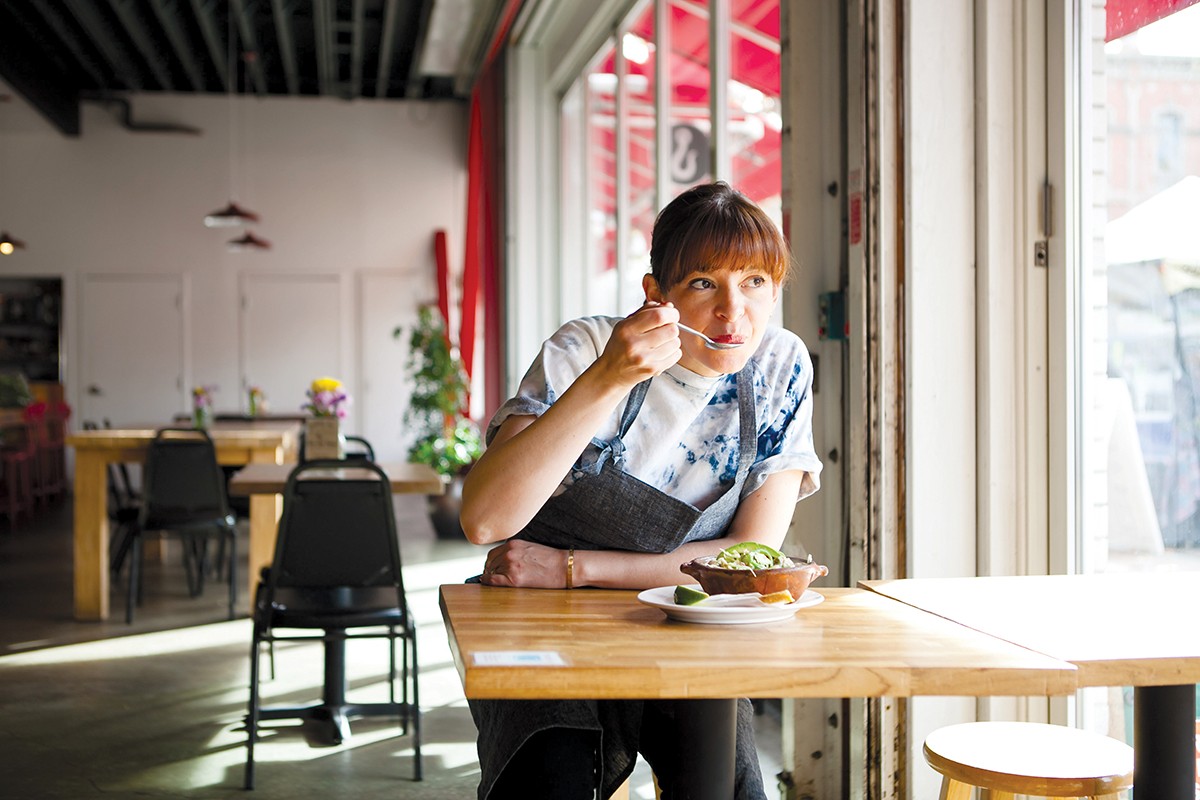
The thing Dominica Rice-Cisneros remembers the most about Cinco de Mayo was how excited she was to learn the Mexican Hat Dance in elementary school. What does the chef-owner of the Mexican restaurant Cosecha (907 Washington St., Oakland) say she doesn’t remember? Anyone in her family, or from the broader Mexican-American community in Los Angeles, taking the holiday as an opportunity to go to a restaurant and get blindingly drunk on tequila shots or oversized margaritas.

[jump] But for a large chunk of America — and here I should be clear that I’m mostly referring to White America — the fifth day of May is largely synonymous with that kind of drunken, culturally appropriative merrymaking.

That’s why, this year, Rice-Cisneros has taken it upon herself to host her first-ever “Decolonizing Cinco de Mayo” dinner at Cosecha (on Thursday, May 5, 5–9:30 p.m.) — a night she says is an effort to reclaim the holiday on her own terms.

For restaurateurs, Cinco de Mayo is particularly fraught — and not just because “Drinko de Mayo,” a truly awful expression, exists as part of the Millennial American lexicon. I lost track of how many PR pitches I received these past few weeks from non-Mexican (again, mostly white-owned) businesses wanting to cash in by serving vaguely Mexican-sounding specials — the deli that decided to sling tortas for the day, the seafood restaurant with the margarita special, and the snack food purveyor that wanted me to know that its jalapeño-flavored popcorn would be an essential addition to my Cinco de Mayo spread.

According to Rice-Cisneros, even these types of cultural appropriations are mild compared to the worst offenders: the kind of Mexican restaurant whose entire reason for being is to be a place where white people can feel comfortable wearing their sombreros and, essentially, celebrating Cinco de Mayo all year round. As Rice-Cisneros put it, where “you can get shit-faced with your frat bros every day, and it’s acceptable.”

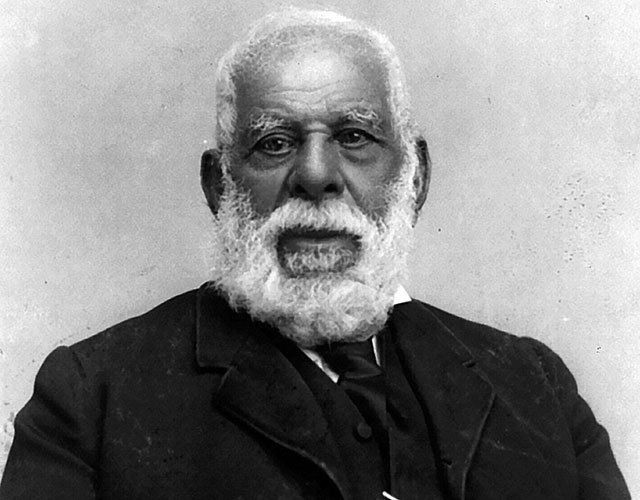
Hence the chef’s inaugural effort to “decolonize” the holiday — though she stressed that this doesn’t mean she’s celebrating it the way people in Mexico proper do. Ironically, in Mexico, the holiday isn’t typically feted with much pomp and circumstance, at least outside of Puebla, where the Mexican army defeated a much larger force of French occupiers on May 5, 1862. Instead, the celebration at Cosecha will pay tribute to a lesser-known event in Mexican-American history: the birth of Pio Pico — the last Mexican governor of what is now California — on May 5, 1801.

According to Rice-Cisneros, Pico was a fascinating character. A native Californian whose ancestry was part indigenous and part African, Pico was a gambler, politician, landowner, and food enthusiast — he opened one of the first French restaurants in Los Angeles. (The chef’s husband, Carlos Salomon, an ethnic studies professor at Cal State East Bay, wrote a book about Pico and helped come up with the idea for the event.)

To celebrate, Rice-Cisneros plans to supplement Cosecha’s regular menu with a few specials. In honor of Pico’s heritage, she’ll serve grilled artichokes with chile de Misantla, which she described as a kind of indigenous romesco sauce made with pumpkin seeds and dried chilis. As a nod to his love of French food, she’ll also serve her duck carnitas — normally a weekend special — which are braised using the same technique as French duck confit.

Rice-Cisneros said the event will be relatively low-key — no lecture or anything like that, though she’ll probably raise a toast to Pio Pico at some point in the night. Mostly, she said she just wants to provide a venue for folks — Mexican or non-Mexican — who would like not to co-opt Cinco de Mayo, but rather celebrate it in a respectful way.

Major Victory: Feds Drop Case Against Harborside Health Center

Score one for medical cannabis: In a major victory for medical marijuana patients and their allies, the United States government is dropping its forfeiture case against the world’s largest pot dispensary, Harborside Health Center in Oakland.
[jump]
According to a Tuesday release from Harborside, federal prosecutors are dropping their years-long effort to seize the property leased by Harborside in Oakland. The forfeiture attempt was part of the broad federal crackdown on California medical marijuana businesses starting in 2011. Since, the crackdown has come under fire from local, state, and national lawmakers as an example of federal overreach on the issue of state-legal medical marijuana.

Harborside founder Steve DeAngelo stated that the new federal agreement to dismiss the forfeiture action is part of the end cannabis prohibition in America.

“When US Attorney Melinda Haag first filed suit to seize the property Harborside is located in, I vowed we would never abandon our patients who— and predicted Harborside would outlast the efforts to close us down. Today, thanks to the deep support of our community and our elected officials, and the skill and determination of our legal counsel, that prediction has come true. We believe this dismissal signals the beginning of the end of federal Prohibition; and thank our patients, staff, and supporters everywhere for help achieving this historic victory,” DeAngelo stated.


Haag and three prosecutors in California threatened hundreds of property owners with seizure during the crackdown, including the landlord of Berkeley Patients Group in Berkeley. That practice should be ending, said Harborside attorney Henry Wykowski, in a statement.

“We are gratified that the Government has finally seen fit to lay down its arms against Harborside in this case. The will of the people is for medical cannabis dispensaries to operate free from federal threats of closure. We hope we are on the cusp of a policy change and that the Department of Justice will no longer target state-legal dispensaries for forfeiture,” Wykowski said.

Oakland led the world in permitting, taxing and regulating medical cannabis dispensaries, enduring federal intimidation long-before other cities, states and nations followed its lead, noted Councilmember Rebecca Kaplan.

“As someone who advocated for Oakland’s nation-leading system to permit, tax and regulate cannabis facilities from the beginning, I have been very pleased at their success in providing clean and safe facilities that contribute positively to the surrounding community. Harborside Health Center has been a strong positive presence in Oakland, both for the patients they serve, the workers they employ, and for the vital public services that are supported by their tax revenues. I am glad that Oakland’s work on the Federal case helped keep Harborside open during this dispute, and heartened to know that the threat against them is now removed.”

Representatives of Harborside and the city of Oakland hold a press conference Tuesday morning to discuss the dismissal of the forfeiture action. 

The federal dismissal comes just weeks after the U.S. dropped its case against Lynnette Shaw — one of the first medical pot shop operators in California. 

Shaw’s attorneys used as a defense a new Congressional law championed by Huntington Beach Rep. Dana Rohrabacher and Re. Sam Farr — which made it illegal for the Department of Justice to spend any money interfering with state-legal medical cannabis — effectively creating a cease-fire in the federal war on medical marijuana. That cease-fire appears to be taking hold. 

Free Will Astrology

Aries (March 21–April 19): “Silence is not silence, but a limit of hearing,” writes Jane Hirshfield in her poem “Everything Has Two Endings.” This observation is apropos for you right now. There are potentially important messages you’re not registering and catalytic influences you can’t detect. But their apparent absence is due to a blank spot in your awareness, or maybe a willful ignorance left over from the old days. Now here’s the good news: You are primed to expand your listening field. You have an enhanced ability to open certain doors of perception that have been closed. If you capitalize on this opportunity, silence will give way to revelation.

Taurus (April 20–May 20): Your ability to accomplish magic is at a peak, and will continue to soar for at least two more weeks. And when I use that word “magic,” I’m not referring to the hocus-pocus performed by illusionists like Criss Angel or Harry Houdini. I’m talking about real feats of transformation that will generate practical benefits in your day-to-day life. Now study the following definitions by writer Somerset Maugham, and have faith in your ability to embody them: “Magic is no more than the art of employing consciously invisible means to produce visible effects. Will, love, and imagination are magic powers that everyone possesses; and whoever knows how to develop them to their fullest extent is a magician.”

Gemini (May 21–June 20): According to author Vladimir Nabokov, the Russian word toska means “a dull ache of the soul, a longing with nothing to long for, a sick pining, a vague restlessness.” Linguist Anna Wierzbicka says it conveys an emotion that blends melancholy, boredom, and yearning. Journalist Nick Ashdown suggests that for someone experiencing toska, the thing that’s yearned for may be “intangible and impossible to actually obtain.” How are doing with your own toska, Gemini? Is it conceivable that you could escape it — maybe even heal it? I think you can. I think you will. Before you do, though, I hope you’ll take time to explore it further. Toska has more to teach you about the previously hidden meaning of your life.


Cancer (June 21–July 22): “Gandhi’s autobiography is on my pillow,” writes Cancerian poet Buddy Wakefield. “I put it there every morning after making my bed so I’ll remember to read it before falling asleep. I’ve been reading it for 6 years. I’m on Chapter 2.” What’s the equivalent phenomenon in your world, my fellow Crab? What good deed or righteous activity have you been pursuing with glacial diligence? Is there a healthy change you’ve been thinking about forever, but not making much progress on? The mood and the sway of the coming days will bring you a good chance to expedite the process. In Wakefield’s case, he could get up to Chapter 17.

Leo (July 23–Aug. 22): In the 16th century, European explorers searched South America in quest of a mythical city of gold known as El Dorado. Tibetan Buddhist tradition speaks of Shambhala, a magical holy kingdom where only enlightened beings live. In the legends of ancient Greece, Hyperborea was a sunny paradise where the average human life span was a thousand years and happiness was normal. Now is an excellent time for you to fantasize about your own version of utopia, Leo. Why? First, your imagination is primed to expand. Second, dreaming big will be good for your mental and physical health. There’s another reason, too: By envisioning the most beautiful world possible, you will mobilize your idealism and boost your ability to create the best life for yourself in the coming months.

Virgo (Aug. 23–Sept. 22): “Anytime you’re going to grow, you’re going to lose something,” said psychologist James Hillman. “You’re losing what you’re hanging onto to keep safe. You’re losing habits that you’re comfortable with, you’re losing familiarity.” I nominate these thoughts to serve as your words of wisdom in the coming weeks, Virgo. From an astrological perspective, you are in a phase when luxuriant growth is possible. To harvest the fullness of the lush opportunities, you should be willing to shed outworn stuff that might interfere.

Libra (Sept. 23-Oct. 22): On Cracked.com, Auntie Meme tells us that many commonly-held ideas about history are wrong. There were no such things as chastity belts in the Middle Ages, for example. Napoleon’s soldiers didn’t shoot off the nose of the Sphinx when they were stationed in Egypt. In regards to starving peasants, Marie Antoinette never derisively said, “Let them eat cake.” And no Christians ever became meals for lions in ancient Rome’s Colosseum. (More: tinyurl.com/historicaljive.) In the spirit of Auntie Meme’s exposé, and in alignment with the astrological omens, I invite you to uncover and correct at least three fabrications, fables, and lies about your own past.

Scorpio (Oct. 23–Nov. 21): Poet Charles Wright marvels at the hummingbird, “who has to eat sixty times his own weight a day just to stay alive. Now that’s a life on the edge.” In the coming weeks, Scorpio, your modus operandi may have resemblances to the hummingbird’s approach. I don’t mean to suggest that you will be in a manic survival mode. Rather, I expect you’ll feel called to nourish your soul with more intensity than usual. You’ll need to continuously fill yourself up with experiences that inspire, teach, and transform you.

Sagittarius (Nov. 22–Dec. 21): “Anybody can become angry,” said Greek philosopher Aristotle. “That is easy; but to be angry with the right person, and to the right degree, and at the right time, for the right purpose, and in the right way, that is not within everybody’s power and is not easy.” I’m pleased to inform you, Sagittarius, that now is a time when you have an exceptional capacity for meeting Aristotle’s high standards. In fact, I encourage you to honor and learn all you can from your finely-honed and well-expressed anger. Make it work wonders for you. Use it so constructively that no one can complain.

Capricorn (Dec. 22–Jan. 19): To celebrate your arrival at the height of your sex appeal, I’m resurrecting the old-fashioned word “vavoom.” Feel free to use it as your nickname. Pepper it into your conversations in place of terms like “awesome,” “wow,” or “yikes.” Use a felt-tip marker to make a temporary VAVOOM tattoo on your beautiful body. Here are other enchanted words you should take charge of and make an intimate part of your daily presentation: verve, vim, vivid, vitality, vigor, voracious, vivacious, visceral, valor, victory, and VIVA!

Aquarius (Jan. 20–Feb. 18): When he was a boy, Mayan poet Humberto Ak’ab’al asked his mother, “What are those things that shine in the sky?” “Bees,” she answered mischievously. “Every night since then,” Humberto writes, “my eyes eat honey.” In response to this lyrical play, the logical part of our brains might rise up and say, “What a load of nonsense!” But I will ask you to set aside the logical part of your brain for now, Aquarius. According to my understanding of the astrological omens, the coming days will be a time when you need a big dose of sweet fantasies, dreamy stories, and maybe even beautiful nonsense. What are your equivalents of seeing bees making honey in the night sky’s pinpoints of light?

Pisces (Feb. 19–March 20): “Sometimes, a seemingly insignificant detail reveals a whole world,” says artist Pierre Cordier. “Like the messages hidden by spies in the dot of an i.” These are precisely the minutiae that you should be extra alert for in the coming days, Pisces. Major revelations may emerge from what at first seems trivial. Generous insights could ignite in response to small acts of beauty and subtle shifts of tone. Do you want glimpses of the big picture and the long-range future? Then be reverent toward the fine points and modest specifics.

Body.shift: Transgress Finale

B4bel4b Gallery continues to do the crucial curatorial job of showcasing innovative ways that technology can be used to queer contemporary art practice. Next, the gallery will be hosting the next edition of TRANSGRESS, a traveling series of installations from visual artist Zoey Vero, sound artist Zen Cohen, and performer Colton Long. On Saturday, May 7, the artists will present their final installation in the series, which will use live sound, cameras, and projections to create “a journey through the notions of perceived gender glitches and an evolution of identity in past, present, and future.” There will also be complementary performances between the first and second acts of TRANSGRESS: spoken word from Denise Benavides and Juliana Delgado Lopera to start off the night, pole and floor acrobatics from Bob and Eve Exothermal as an intermission, and dance work by Sebastian Hernandez to cap off the art. For the first time this year, B4bel4b will be opening up both floors of the gallery in order to host the multi-layered show, which will end with dancing and DJ sets by DJ Loryn, Demongay, and Jasmine Infiniti.

Expanding the Frame: Multiple Perspectives on Gentrification in Oakland

In case you aren’t aware, gentrification is a complicated issue that effects different communities in different ways and so requires varied community response. On May 7, at 12:30 p.m., a panel at Oakland’s Main Library (125 14th St., Oakland) will discuss some of those nuances. Titled “Expanding the Frame: Multiple Perspectives on Gentrification in Oakland,” the event will feature organizers from Critical Resistance, Indian People Organizing for Change, People of Color Sustainable Housing Network, and Street Level Health Project confronting gentrification from a variety of angles: policing and imprisonment, colonialism and indigeneity, visionary housing alternatives, immigration, and public health. In light of those differing perspectives, the roundtable will discuss how best to develop political projects that bring together various activist groups to take on gentrification from an intersectional standpoint.

Bay Area Rapper T. Carriér Reinvents Himself

T. Carriér has a new sound. His raps on There's Been a Change of Plans, the surprise album the Bay Area artist dropped earlier this month, are pensive, tense. His flows assume the foreground over downtempo, understated beats, and he delivers introspective verses flush with offhand insights that analyze his personal struggles. And there's an emotional quality that sets...

Exorcising ‘El Maligno’: How Bay Area Protesters Co-Opted Trump’s Speech

Old Bayshore Highway is a wide suburban thoroughfare flanked by parking lots and the drab Hyatt Regency, where all last weekend Republican presidential candidates mounted the stump to serenade state party delegates at the California GOP Convention. But by 9 a.m. on Friday, cops from every agency in the county had barricaded and surrounded the hotel, and it was...

Film Noir? From Mexico?

Stateside aficionados long ago discovered the splendors of the Mexican angle on the classic post-WWII crime pics called film noir, but the movies have always been hard to find. Lately, such Bay Area noirista programmers as Eddie Muller and Elliot Lavine have been delving into South of the Border vaults in search of rare period pieces by Emilio "El...

Oakland Official Working on Coal Export Plan has Significant Investments in Fossil Fuels

A high level Oakland official guiding the city's analysis of health and safety impacts of a controversial coal export plan also has personal investments in fossil fuel companies, according to city records. Anti-coal activists argue this is a conflict of interest, and also worry that the official is steering a consulting contract to a company that will neglect to...

Barclay’s Pub Forced to Leave Rockridge after 25 Years

In today’s Oakland, it’s a tale that is unfortunately becoming all too common: After nearly 25 years in Rockridge, Barclay’s Pub (5940 College Ave.) will be forced to find a new home. According to Derek Bromstead, the general manager, the building’s owners were unwilling to negotiate a new long-term lease. Bromstead said his understanding is that the incoming operators...

An Oakland Chef Wants to Decolonize Cinco de Mayo

Dominica Rice-Cisneros at Cosecha, her restaurant at Swan's Market. Credits: Bert Johnson/File photo The thing Dominica Rice-Cisneros remembers the most about Cinco de Mayo was how excited she was to learn the Mexican Hat Dance in elementary school. What does the chef-owner of the Mexican restaurant Cosecha (907 Washington St., Oakland) say she doesn’t remember? Anyone in her family, or from...

Major Victory: Feds Drop Case Against Harborside Health Center

Score one for medical cannabis: In a major victory for medical marijuana patients and their allies, the United States government is dropping its forfeiture case against the world’s largest pot dispensary, Harborside Health Center in Oakland. HHC operator Stephen DeAngelo and supporters speak at a protest against the forfeiture of Harborside's leased properties (July,...

Free Will Astrology

Aries (March 21–April 19): "Silence is not silence, but a limit of hearing," writes Jane Hirshfield in her poem "Everything Has Two Endings." This observation is apropos for you right now. There are potentially important messages you're not registering and catalytic influences you can't detect. But their apparent absence is due to a blank spot in your awareness, or...

Body.shift: Transgress Finale

B4bel4b Gallery continues to do the crucial curatorial job of showcasing innovative ways that technology can be used to queer contemporary art practice. Next, the gallery will be hosting the next edition of TRANSGRESS, a traveling series of installations from visual artist Zoey Vero, sound artist Zen Cohen, and performer Colton Long. On Saturday, May 7, the artists will...

Expanding the Frame: Multiple Perspectives on Gentrification in Oakland

In case you aren’t aware, gentrification is a complicated issue that effects different communities in different ways and so requires varied community response. On May 7, at 12:30 p.m., a panel at Oakland’s Main Library (125 14th St., Oakland) will discuss some of those nuances. Titled “Expanding the Frame: Multiple Perspectives on Gentrification in Oakland,” the event will feature...
19,045FansLike
17,709FollowersFollow
61,790FollowersFollow