
Is a “voluntary agreement” worth the paper it’s printed on?
This is one of the controversies facing California’s newly adopted Bay-Delta Water Quality Control Plan. The new version, adopted Oct. 29 by the California State Water Resources Control Board (CSWRCB), is being criticized by environmental and Indigenous people’s groups for multiple reasons, including its use of “voluntary” agreements. Under the new plan, urban and agricultural water agencies can avoid the strictest of water regulations by agreeing to help restore overburdened rivers.
But according to San Francisco Baykeeper Managing Attorney Eric Buescher, these types of agreements are not particularly effective. In this case the big water users are given a choice of using less water, or a menu of “other things,” such as complying by adhering to previously enacted limits on river diversions or choosing to re-engineer flood plains or create wildlife habitats. The kicker? There’s no specific oversight of what is being accomplished in the plan’s eight-year span.
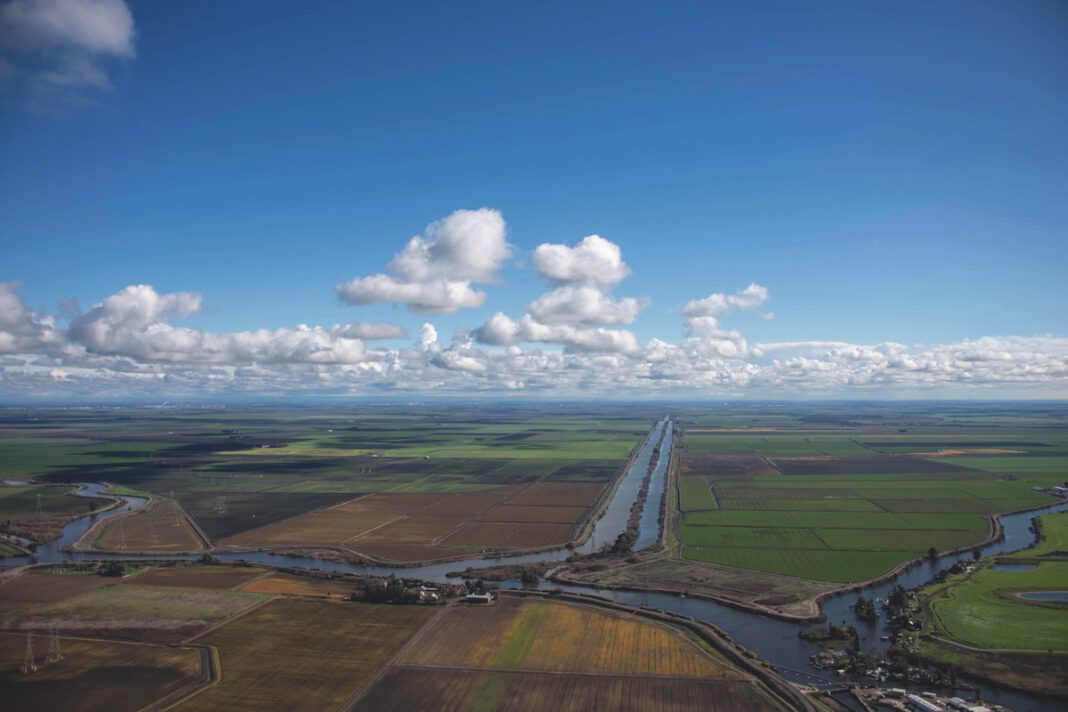
The Bay-Delta plan covers a vast amount of territory, from the Central Valley to the Oregon border. Its provisions include restoring more than 27,000 acres of aquatic habitat, with up to 47,000 acres of physical habitat restoration over 15 years.
This plan, as Baykeeper materials point out, “is one of the single most important pieces of state water policy, regulating water quality and volume in the Sacramento River, Mokelumne River, and other tributaries as they flow into and through the Delta, to Suisun Marsh, and San Francisco Bay.” Because overuse and species protection has been neglected for so long—more than 30 years, says the nonprofit—“water quality and native fish populations have suffered major declines throughout the watershed, leaving the Bay’s ecosystem and communities that depend on healthy waterways in crisis.”
Baykeeper’s science director, Jon Rosenfield, went so far as to refer to the then-proposed plan, also known as the “Healthy Rivers and Landscapes Program,” as “an extinction event.” Its implementation will cost at least $2.9 billion.
“Over the past 15-20 years, the state water board and other agencies have come to the same conclusion: the [water-based] ecosystem is at risk of collapsing,” Buescher said. But instead of the CSWRCB issuing regulations to prevent this, which it has the authority to do, he said, under Gov. Newsom it has chosen instead to “negotiate compromises” with the major water users.
Fox guarding the henhouse?
That these negotiations have been conducted behind closed doors, without the participation of community groups, tribes or environmental organizations is another major source of concern, Buescher said. “The other side was not in the room,” he said. “The state is giving away its leverage and deferring to water users.”
The state is also refusing to provide access to materials considered in making decisions about the voluntary agreements. During the first day of hearings there was discussion of the confidentiality agreement. Eventually the board responded to those criticisms—which included comments from a Tribal Panel, as well as a Delta Tribal Environmental Coalition Panel, according to Baykeeper video recordings—but did not agree to provide the materials.
Baykeeper provided access to email exchanges between Buescher and CSWRCB Chief Counsel Michael Lauffer, in which Lauffer states: “The State Water Board entered into an appropriate, lawful agreement to treat as confidential certain records that were already otherwise exempt from disclosure under the California Public Records… The agreement only concerned the preparation of a joint agency addendum to the scientific basis report. The final addendum was released to the public, subject to independent scientific peer review, and has itself been the subject of extensive public comments and a standalone State Water Board workshop.
“At this point, the Board has no plans to either release the records withheld pursuant to the agreement or to incorporate them in the record—just as draft internal, deliberative drafts are not part of the record and are generally not subject to disclosure if they satisfy the withholding requirements of the California Public Records Act.”
Baykeeper’s concerns, Buescher noted, are that these decisions are supposed to be part of a public process. “‘In secret’ is anathema to science,” he said. “The state board is supposed to regulate the Department of Water Resources, and they have given up their obligations.”
Litigation about the plan is almost inevitable, both from environmental and tribal groups, and from Big Ag and municipalities which will demand more water. In addition, said Buescher, Baykeeper, along with other organizations, will monitor the process to see if water users are, in fact, doing what has been promised under the voluntary agreements—and if so, what the result is.
For more in-depth discussion of these issues, Baykeeper provided links to panels they, along with partner Friends of the River, conducted:
Part 1 – Inadequate Resources: mavensnotebook.com/2026/10/15/guest-commentary-why-newsoms-voluntary-agreements-wont-work-part-1-inadequate-resources/
Part 2 – No Money, No Requirements, No Results: mavensnotebook.com/2026/10/20/guest-commentary-why-newsoms-voluntary-agreements-wont-work-part-2-no-money-no-requirements-no-results/
Part 3 – A Flawed Process: mavensnotebook.com/2026/10/22/guest-commentary-why-newsoms-voluntary-agreements-wont-work-part-3-a-fundamentally-flawed-process/
Part 4 – The Road Not Taken: mavensnotebook.com/2026/10/27/guest-commentary-why-newsoms-voluntary-agreements-wont-work-part-4-the-road-not-taken-yet/