
Mike Ly, a Hayward resident, relied on the South Hayward Parish food pantry before it closed in August.
The First Presbyterian Church had acquired the South Hayward Parish in 2019 to continue providing essential services to the South Hayward community, according to the FirstPres Hayward website. The food pantry had aided the Hayward community for more than 50 years.
On Aug. 14, when the South Hayward Parish closed, the First Presbyterian Church announced it was unsustainable while growing other services in aiding people without housing, according to an Aug. 10 Hayward government article.
Without the food pantry, Ly gets his groceries from Lucky and Safeway, spending an average of $120 per week. “After the pantry closed, I can still get the same items at the grocery store,” Ly said. “The only difference is that I have to purchase it, and it’s getting expensive. The pantry was so important to me because by getting food at the pantry, I can focus my expenses in other areas.”
Ly is not on any food assistance programs because he makes over the income bracket to qualify for benefits. But he’s affected by the high cost of food. “It’s hitting me financially, and with the high cost of living it’s hard to save,” he said. “I live check by check, and it can get stressful at times.”
Consumer food prices increased over 3% this year by June, according to the U.S. Bureau of Labor Statistics. The price of groceries rose with the price of oil, as farmers use diesel for farming equipment and for transporting products, according to a July 24 PBS article.
Hailey Wiley, a fourth-year nutrition student at San Jose State University, is a CalFresh recipient. Eligible students are awarded up to $298 per month from CalFresh, per the university’s website.
Despite receiving food assistance, Wiley struggles to afford groceries because of inflated prices. “It’s especially difficult because I have food allergies and have to buy higher-cost alternatives,” he said.
Students like Wiley can struggle with academic performance because of food insecurity, which can lead to difficulty concentrating in class, lower motivation and low grade point average, according to a Feb. 26 study reported by Current Nutrition Reports.
CalFresh recipient Jamila Johnson, a resident of Sacramento, became a vegetarian because of high food costs and for health reasons. “I can’t afford to get the stuff that I used to like, and the stuff I used to like is no good,” he said. “I kind of turned into a vegetarian. I don’t eat chips no more because now it’s a waste. I can’t afford to waste [my] money on that type of stuff, you know?”
Johnson thinks of it as a good thing because he’s not buying junk food, but he still yearns to afford the food he enjoys. “I wish I had more money now so I can get more of the stuff that I do like to eat because stuff is expensive to eat organic,” he said.
The high cost of essentials like food, housing and healthcare are one of the top reasons it’s increasingly difficult to afford and access food, according to Feeding America.
Elizabeth Gomez, the vice president of impact at the Alameda County Community Food Bank, said food insecurity exists in just about every corner of Alameda County.
“There is food insecurity in every city of the county, including Albany to Fremont, even to the Tri-Valley areas such as Livermore, Pleasanton and Dublin,” Gomez said. “Food insecurity remains, and it impacts not only individuals but also particularly families with children.”
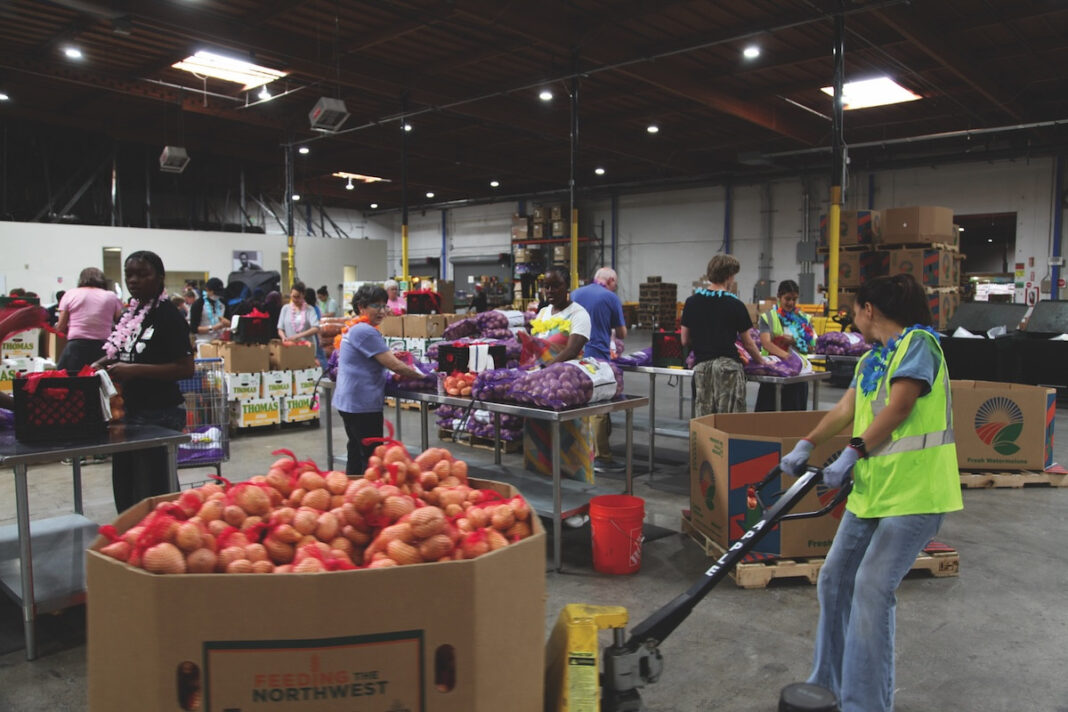
Alameda County Community Food Bank is a nonprofit food bank serving East Bay communities partnering with over 350 agencies in the county to provide food accessibility.
The food bank has seen a higher demand in food assistance from its network partners, especially with people who recently lost their CalFresh benefits.
“We’re already seeing thousands of people losing their benefits due to the changes with H.R. 1,” Gomez said.
Known in California as CalFresh, the Supplemental Nutrition Assistance Program (SNAP) underwent major changes from H.R. 1, “The One Big Beautiful Bill.” On June 1, eligibility rules changed for working adults without dependents, enforcing 20 hours of work or community engagement a week to qualify for SNAP, according to the Alameda County Social Services Agency.
Gomez said while some of the changes have already taken place, the food bank will continue to see an increase over the coming months. “We are preparing for an especially busy holiday season this year, but also because of the changes to the CalFresh program as it relates to the H.R. 1 cuts,” she said.
In spite of the high prices of groceries and food assistance programs changing, Gomez reassured the public that the Alameda County Community Food Bank is doing its best to be able to meet the needs of the community.
“People who need help with food can call our food helpline to connect them to their local food pantry,” Gomez said. “We also have FoodNow.net which includes a food locator where people can enter their zip code and find the nearest food pantry.”