For stateside fans of foreign films, the so-called Hong Kong New Wave began approximately when director Ann Hui’s Boat People opened in U.S. movie houses in the early 1980s. The rising tide of new names, fresh faces and Hollywood-style production values created by the British Crown Colony’s filmmakers swept into American urban theater screens where once the Shaw Brothers and cheap “chop-socky” grindhouse fare ruled. Before the eager eyes of cinéaste hipsters and film bookers, Hong Kong was growing up.
A new roster of up-and-coming names to keep track of suddenly appeared. Movie mavens already following the martial-arts antics of King Hu, Jackie Chan and Yuen Woo Ping saw another layer of younger filmmakers on the horizon: Hui, Tsui Hark, John Woo, Ringo Lam, Patrick Tam, Wong Kar-Wai, Stanley Kwan and Allen Fong, among others. Hong Kong’s cinematic talent was seemingly as abundant as grains of rice.
Film historian and critic Paul Fonoroff, a U.S. native who studied Chinese-language cinema at the University of Southern California and Peking University and reviewed movies for the South China Morning Post, has devoted his career to the study of films from Hong Kong and other East Asian territories.
UC Berkeley acquired the Paul Kendel Fonoroff Collection of film criticism and memorabilia in 2015, for the C.V. Starr East Asian Library at the university. Since then, Fonoroff has visited the UCB campus annually to present hard-to-find films at the Berkeley Art Museum and Pacific Film Archive (BAMPFA). This year’s selection of nine titles, “Hong Kong Cinema: Rarities and Restorations,” opens Oct. 23 at BAMPFA with a screening of director T’ang Shushuen’s 1968 production, The Arch.
The Arch, set in Southwest China in the 17th century Ming Dynasty, shows what happens when an army captain (actor Roy Chiao) is billeted in the school/home of a young widow named Mme. Tung (Lisa Lu) and her daughter Wei-Ling (Hilda Chow Hsuan). Amid decorous settings, demurely restrained performances and a meditative pace that sets a “classical” tone, both mother and daughter become interested in the house guest.
This studious romantic drama has all the middle-class matchmaking flavor of a Chinese Jane Austen adaptation—from a slightly less mercantile point of view. In fact, director T’ang’s drawing-room dating game seems tailored for Western film festivals. Satyajit Ray’s favorite cinematographer, Subrata Mitra, shot it, and Les Blank, a charter member of Hollywood’s own New Wave, co-edited it.
After its premiere at the 1968 San Francisco International Film Festival, T’ang’s cultured costumer garnered rave reviews from literary lights Henry Miller and Anaïs Nin. But it’s the performances of the regal Lu and sultry Chow Hsuan that linger in the mind. The Arch screens at BAMPFA on Oct. 23, in a 4K digital restoration.
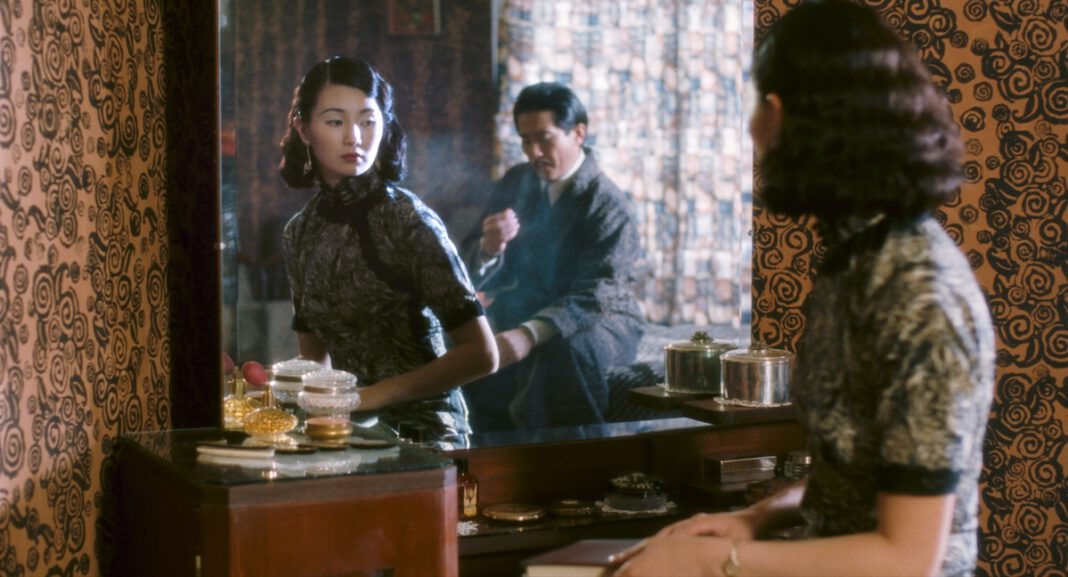
Actor Maggie Cheung, perhaps Hong Kong’s ideal image of a modern woman, is undeniably radiant in Center Stage (1991), in the role of legendary movie star Ruan Lingyu, who committed suicide in 1935 at the age of 24. Director Stanley Kwan and Cheung’s magnum opus is an inviting combination of staged scenes from the actor’s life, original vintage footage and candid-style commentary by Cheung and the other actors.
If Ruan’s career had been fully celebrated in her day, her name could have been as highly regarded in film history as those of Greta Garbo, Bette Davis and Meryl Streep. But alas, she was Chinese. There was prejudice in the West. Ruan never got the exposure.
The actor’s unhappy on- and off-screen love affairs put the necessary tragic flavor of salt into her performances. Meanwhile, pantomime clips from Ruan’s later films reveal her naturalistic approach to the melodramatic material.
There’s not a trace of bitterness or recrimination in Chiu Kang-Chien and Peggy Chiao’s screenplay, nor in Kwan’s direction of it. Ruan Lingyu’s ever-evolving portfolio of “typical” roles becomes a blizzard of emotion in Cheung’s interpretation. Center Stage plays Nov. 28 at BAMPFA.
For her stylish directorial debut, The Secret (1979), Ann Hui dispenses with ancient legends and martial arts to tell a modern-day murder-mystery story, complete with guilty relationships, a visit to a discotheque and grave robbers. Actor Sylvia Chang stars as a nurse/amateur sleuth whose snooping takes her to Macau, a Catholic convent and the park where a male-female couple are found strung up in a tree. Special kudos to Violet Lam Man-Yee’s unnerving electric piano score. The Secret shows Nov. 5.
More treats in the series: The lusty magic of King Hu’s wide-screen adventure, The Valiant Ones (Nov. 1); Patrick Tam’s gothic “action ballet,” The Sword (Nov. 7); and Stanley Kwan’s Rouge, a ghostly showcase for Anita Mui and Leslie Cheung (Nov. 22).
* * *
Runs Oct. 23-Nov. 28 at BAMPFA. bampfa.org