
Letters for the Week of September 23

“Tumbling the Ivory Tower,” News, 9/23

It’s About the Dough

The operant sentence in this exhaustive article about the ACES program at UC Berkeley is as follows: “But last spring, at the end of the 2014–15, the money ran out.” They spent the money, and there is no money to replace it, unless that money comes from other programs and courses targeted on the core education students need to graduate and function in society. In itself, this is a valuable lesson in economics. This article is less about “Tumbling the Ivory Tower” than living within a budget, and how screaming for more allowance might not be the solution.

William H. Thompson, Walnut Creek

“Buying Support for Coal,” News, 9/23

This Stinks

As the list of Oakland insiders trying to profit from this coal-related use grows, the smell gets worse as each new name and their roles become public. Phil Tagami and Mark McClure (former Port of Oakland board members), and Jerry Bridges and Omar Benjamin (former directors of the port Commercial Real Estate and Port Operations) are the brain trust of the group. Darryl Carey, who historically has opposed almost everything the city has ever proposed in West Oakland, is all of a sudden supportive of something.

Yes, we need good jobs in Oakland and yes, that is exactly what the Oakland Army Base development was supposed to bring. However, we should not forget the one-hundred-year-long history of environmental damaging land uses and health hazards affecting the West Oakland African-American community. If this proposed coal operation is truly safe with cutting-edge technology, why have the details not been made public and the community apprised of specific details? Why is Darryl Carey lobbying through his own brother’s church and soliciting support from members of Acts First Gospel Church on the other side of town? Be sure that there is something in the plan for Mr. Carey at the end of the day.

My sense is that the brain trust mentioned above want to divulge as little as possible to the community and will continue in their efforts to try to buy their way out of the problem by promising community benefits. Like the proposed housing on East 12th Street, developers with a hidden agenda only seem to remember community benefits after their tricks are made public and the community says “no.”

Gary Patton, former deputy director of Planning and Zoning for the City of Oakland, Hayward

Anyone Paying Attention?

One must wonder exactly how did the coal shipping proposal get so far along? Was anyone in City Hall paying attention to developments at the former Army Base?

And now former permanent City Hall residents, Jean Quan and Nancy Nadel, are working to crawl back onto their familiar perches. Does this suggest something about the newness of the new “hella” administration? Or is it that the more things change in Oakland, the more they stay exactly the same?

Hobart Johnson, Oakland

“The Push to Imprison Low-Level Offenders,” News, 9/23

It’s the Unions’ Fault

The notion that our public employees should be dictating public policy is not only wrong, but deeply offensive. That’s akin to allowing warehouse workers at Amazon or Safeway to dictate what the company should or should not sell. Ridiculous. Law enforcement “officials” are paid by the taxpayers to do a job — they are simply hired help paid to do a specific task. It is unacceptable that we’re allowing them to unionize and to have those unions then writing and otherwise affecting public policy as an incredibly powerful “special interest” group.

The taxpayers collectively, and not their public servants, should be writing policy, rather than people who handsomely profit from those policies going in a specific direction. Make no mistake about it — tough on crime policies only benefit the prison guard unions and other “law enforcement officials” who directly profit by essentially ripping off the taxpayers. We need to put those “officials” on a much shorter leash, forbid them from unionizing, and take back our government.

Wisconsin has clearly shown that curtailing public employee unions saved the taxpayers $3 billion so far. The solution to crime is to provide proper social services, and to save taxpayer dollars by providing those services (data clearly shows that housing homeless people is exponentially less expensive than providing services for them on the street, for example). Shifting — as much as possible — from reactive/reactionary actions such as policing to proactive solutions is the way to not only create a sane society and to save lives but to save ridiculous amounts of taxpayer dollars.

Proposition 47 was a great start in that direction. It’s time to send our public unions packing out of town. They’ve corrupted our democratic process long enough. Enough is enough.

Vladislav Davidzon, Berkeley

“The Winners and Losers,” Legalization Nation, 9/23

Follow the Money

“The state’s medical cannabis industry will be for-profit for the first time” — a very funny statement! It has all been about profit, big profit, at all links in the chain, all along. Look a little deeper. …

Steve Heilig, San Francisco

“Chowhound in Crisis,” Food, 9/23

Good Luck, Chowhound

As much as there are problems with the recent redesign, the bigger issue is the heavy-handed tactics that turn many longtime supporters off. And once these folks are driven away, they probably have a hard time bringing themselves back. There is a lot of chatter about users getting suspended for merely making their voices heard, and not in a disrespecting manner either. The management likely realized the scope of the backlash they have on their hands, and they feel the need to start muting the voices of the community. This reminds me of the government of a totalitarian regime that doesn’t like dissenting opinions and resorts to heavy-handed tactics to silence the crowds. Ironically, Chowhound is owned by CBS, a respectable news organization.

Sure, the redesign is problematic, and they can probably improve it if they want to. But they are not likely to get the longtime users back. The difference between Chowhound and other food sites is that much of the content is user-created. That is the essence of the community, not the platform itself. And there aren’t too many of these food experts around in any particular area that one can substitute in either.

Since Chowhound General Manager Georges Haddad was behind the Flickr makeover, I guess redesigning websites and adding features that are appealing to the masses will supposedly broaden the user base and bring in more ad revenue for the owners. The only challenge is we already have Yelp for the masses, with opinions from everyone, including those who have very limited knowledge of a particular cuisine, along with some somewhat knowledgeable ones. To become Yelp, the Chowhound quality will have to be diluted. And arguably Yelp has a better interface to facilitate that type of review sharing.

Good for Haddad that he’s able to sell his management this vision, and good luck with the execution.

Victor Medina, Oakland

Miscellaneous Letter

Do Your Job!

What the “H…” are our city council and city attorney doing? Why the special hearing on coal that caused hundreds of Oaklanders to spend needless hours away from jobs and family to tell the council what it already knows? Why the long delay in dealing with this illegal issue of coal that so clearly has a straightforward and mandated remedy?

The consultant’s agreement specifically forbids materials at the break-bulk facility that have health or environmental impacts. States and nations all over the world are discontinuing mining, storage, and use of coal, primarily due to negative health and environmental consequences. Even China, the world’s greatest user of coal, diminished coal imports last year by 22 percent. Coal contains highly toxic mercury and arsenic, and West Oakland, which already suffers among the highest asthma rates in the state, would be doubly impacted. Owing to its undeniable health and environmental impacts — which cannot be completely mitigated — coal is automatically excluded under the Army Base contract.

Should the contractor have chosen to protest the prohibition, it was contractor’s responsibility to have produced scientifically documented studies conclusively proving that no health or environmental impacts are possible from shipping, handling, storage, long-term holding, or re-handling of coal for export. The lack of such study and scrutiny, and the consensus of the scientific and environmental communities, automatically vetoes any consideration of “coal.”

Secondarily, the specter of possible litigation appears to frighten councilmembers. This is ludicrous. As revealed by Gene Hazzard’s blog, Clean Oakland, the contract clearly states: “contractor shall not assign any part of its contract without approval of the city.” How is it possible that the city is afraid to enforce its own contract? If this is so, why have a contract at all? The city should simply anoint its favorite vendor with the simple instruction to “proceed however you choose” — ludicrous!

While the September 21 special hearing was totally unwarranted, the community nevertheless responded enthusiastically and loudly proclaimed, “No Coal in Oakland.” One of the broadest coalitions in recent memory — consisting of labor unions, businesses, faith organizations, public interest and community groups, and residents from all walks of life — filled City Hall and its chambers with a boisterous protest against the disastrous possibility of storing and exporting coal from Oakland.

City attorney — do your job! Instruct the city council that the contractor has violated Sections X and Y of the contract and that actions to terminate are already proceeding!

City council — get on the ball! Immediately cease your “hemmin’ and hawin’,” and give full instructions and backing to the city attorney.

Then, publicly announce to the residents of Oakland that you have acted decisively in the interest of the city to halt this illegal threat, and that as the city council, you pledge to be vigilant in protecting the health and safety of the residents and the city, as well as that of the planet.

James E Vann, Oakland
Coal Attorneys Investigate Oakland City Council

Over the last few months, a law firm with close ties to the coal industry has been investigating three members of the Oakland City Council — Lynette Gibson McElhaney, Dan Kalb, and Rebecca Kaplan — who have expressed opposition to a proposal to ship millions of tons of coal through a new maritime facility at the former Oakland Army Base. Records and interviews show that the law firm has pursued its investigation quietly through a series of public records requests submitted to the City of Oakland. The requests were made by Kristin Nichols of Holland & Hart, a Denver-based law firm that counts among its clients some of the largest coal mining companies in the world, and financial corporations that fund the expansion of coal mining.

In at least five different records requests — three submitted on June 15, one on September 9, and another on September 18 — Nichols asked the three city councilmembers and their staffers to hand over an extensive list of records, including “voice mails, emails, text messages, and any other writings,” between themselves and various groups and labor unions that are leading the opposition to coal shipments through Oakland. Among the groups identified in the law firm’s investigation into the councilmembers’ communications are the Sierra Club, West Oakland Environmental Indicators Project, the International Longshore and Warehouse Union, and the Asian Pacific Environmental Network. Nichols is also seeking the councilmembers’ appointment calendars and other documents regarding the old Oakland Army Base redevelopment project that relate to the controversy over whether or not to ban coal shipments in the city.

Gibson McElhaney, Kalb and Kaplan have been critical of a plan by Oakland developer Phil Tagami and businessman Jerry Bridges, a former Port of Oakland executive director-turned maritime shipping executive, to accept a $53 million investment from four Utah counties in the Oakland Bulk Oversized Terminal. Tagami is building the terminal near the Bay Bridge on the old Army Base site, and Bridges’ firm, Terminal Logistics Solutions (TLS), will operate it. The money from Utah would secure capacity for coal exports far into the future, with the Kentucky-headquartered Bowie Resource Partners coal company, which owns three massive coal mines in central Utah, earning potentially billions of dollars on the deal (see “Banking on Coal in Oakland,” 8/19).

So who are Holland & Hart’s attorneys working for? Who is paying for the investigation into the Oakland city councilmembers? And why? I reviewed numerous public records and asked the major players behind the coal export scheme, but no one is willing to say who hired Holland & Hart.

In August, I called officials with Bowie Resource Partners to ask them if they had hired Holland & Hart to look into Oakland councilmembers. James Wolf, Bowie’s chief financial officer, declined to answer any questions about his company’s efforts to bring Utah coal to Oakland. “Let me tell you, I don’t want to be rude. … You need to talk to TLS,” said Wolf, in a hostile tone of voice, before hanging up the phone. Since them, Bowie representatives have not returned my emails and phone calls.

Bridges and other TLS representatives have also not responded to multiple phone calls and emails. But it’s unclear why TLS would hire the Colorado law firm, because TLS does not appear to have a connection to it. Tagami, who is the master developer of the Oakland Army Base, also did not respond to emails and a telephone message left with his secretary concerning Holland & Hart. At the September 21 Oakland City Council hearing on the controversial coal issue, Bridges and TLS and Tagami and his company, California Capital Investment Group, were represented by lawyers from the firms Stice Block and Venable — not Holland & Hart.

In August, I called Nichols of Holland & Hart at her office in Greenwood Village, a suburb south of Denver, and I asked her who she was working for. She declined to say. But in a subsequent email, Nichols wrote that “Bowie Resources has not hired Holland & Hart to submit record requests to the City of Oakland nor to prepare a lawsuit against the City of Oakland.”

In my last email to Nichols, I also referenced whether she was working for Morgan Stanley bank. The reason is that information on the law firm’s website, and in public records maintained by the US Securities and Exchange Commission, raised questions as to whether Morgan Stanley was behind the investigation. According to Holland & Hart’s website, Nichols is a junior associate in the firm’s mining practices group. The head of the firm’s mining group is attorney Robert Bassett, a partner in Holland & Hart. Bassett is essentially Nichols’ boss, and Basset’s webpage lists some of his clients, and the work he has accomplished for them. This includes recent assistance he provided to Morgan Stanley bank “in a $470 million financing for the purchase of three operating coal mines in Utah.”

The law firm’s website doesn’t list the names of the mines, nor the name of the company that bought them with borrowed money from Morgan Stanley. But other documents link Morgan Stanley to Bowie Resources and to three of its Utah coal mines — Sufco, Skyline and Dugout Canyon — which are located in the same counties that have proposed to invest $53 million in the Oakland terminal. In 2013, the Arch Coal company sold these three mines to Bowie Resource Partners for $435 million in cash. A press release issued by Bowie Resource Partners at the time of the deal stated that Morgan Stanley bank made part of the loan to Bowie to purchase the mines, and that “Morgan Stanley & Co. LLC is acting as the financial advisor to Bowie.” Bassett of Holland & Hart was part of that deal.

I called and emailed Bassett last week to ask him who he’s working for, and why his colleague Nichols has been seeking so many records from the Oakland city council. “I don’t believe anyone at our firm is in a position to comment on the Oakland port issue,” he replied on Monday. I sent a follow up email the same day asking him to confirm or deny that he’s working for Morgan Stanley. “We cannot comment on this matter,” he wrote in a one-line response.

Then I asked Morgan Stanley representatives if the bank had hired Holland & Hart to investigate Oakland councilmembers, and if the bank was actively involved in plans led by Bowie Resource Partners to ship coal through Oakland. Mary Claire, a spokesperson for Morgan Stanley, wrote back in an email, “[W]e will decline to comment.” In several follow-up emails, I pressed the bank for an answer, but Morgan Stanley representatives repeatedly declined to comment.

Records show that Deustche Bank also partnered with Morgan Stanley in loaning Bowie money in 2013 to buy the Utah mines in question. And Bassett of Holland & Hart has worked for Deutsche Bank in previous years, according to the law firm’s website. Deutsche Bank representatives declined to comment.

The three councilmembers who are the subject of Holland & Hart’s investigation said they don’t know who the law firm is working for. “I’m not sure what they expect to get, but when we get public records requests, we comply with them,” said Kalb. “I would just hope anyone who wants to take a position on this would have the honesty to say who they are,” added Kaplan.

But all this secrecy about who’s pushing the coal export plan in Oakland, and who is hiring attorneys to investigate city officials who have spoken out against it, has frustrated opponents who say coal will cause harm to people’s health and the environment. “There is a global landscape of powerful economic interests, including desperate western coal companies, international financiers, and big national banks, who are trying to make toxic economic decisions for Oakland,” said Margaret Rossoff, a member of the No Coal in Oakland Coalition.

Ben Collins, a senior research and policy campaigner at the Rainforest Action Network, has been tracing the connections between banks and coal companies since 2011. He said the coal industry relies on loans from banks such as Morgan Stanley and Deutsche Bank to finance the acquisition of new mines, expand mining operations, and find markets for their fuel, and that these banks have earned billions on deals involving coal.

If Holland & Hart’s attorneys are working on behalf of Morgan Stanley, or another bank, it wouldn’t be surprising. Morgan Stanley and Deutsche Bank are gambling hundreds of millions on whether or not Bowie Resource Partners can gain access to Oakland’s waterfront. The 2013 loans that both banks extended to Bowie is just the beginning. In June, Bowie filed paperwork with the SEC to prepare the way for a potential public offering of its shares. Morgan Stanley is one of the investment banks that hopes to help take Bowie public. Others include Citibank, UBS, Credit Suisse, and Stifel. A Bowie IPO would be worth much more to these banks if the company can demonstrate to investors it has secured access to Asian markets via Oakland.

As to why these financial giants would have bet so much money on bringing coal through Oakland, at a time when communities across the West Coast are rebelling against the industry, Collins said, “I would speculate they see it as high risk, high reward.”

Exploring Identity Through Armenian Tales

Few people know the story of Armen Ohanian. The provocative Armenian performer and writer survived the Baku pogrom — an organized massacre of Armenian people — in the early 18th century as a child, and grew up to become a subversive, creative chameleon. Ohanian reinvented herself numerous times throughout her long life, leaving some aspects of her otherwise engaging story to remain a mystery — until now.

In order to bring some clarity to the life of a woman who was outspoken and sensual long before it was considered suitable, Canadian-Armenian performers Lee Williams Boudakian and Kamee Abrahamian have spent the last few years touring Dear Armen, a dramatic interactive theater performance that illuminates Ohanian’s legacy while also exploring what it means to be genderqueer (someone who does not identify with conventional gender distinctions). The show will play next on October 7 in San Francisco at the Theatre of Yugen (2840 Mariposa St., San Francisco) with an encore performance at La Peña Cultural Center in Berkeley (3105 Shattuck Ave.) on October 8.

Dear Armen Trailer from Saboteur Productions on Vimeo.

The story created by Boudakian and Abrahamian focuses on Garo (played by Boudakian), a genderqueer student who becomes fascinated by the mysterious past of Ohanian (played by Abrahamian) after studying the enigmatic woman for a class. As Garo’s research progresses, the young student begins to slowly view the performer — whose sexuality is historically debated — as a literary mentor and source of cultural connection. What follows is an insightful coming-of-age story that weaves together complex narratives about ethnicity, gender, family, and survival with erotic Armenian dance and original music played by Haig Ashod Beylerian. In honoring Ohanian through the eyes of a young Armenian, the makers weave a compelling story while also passing down cultural memories that are often lost as a result of genocide and displacement.

Dear Armen also uses audience engagement to highlight the similarities between Ohanian’s life and contemporary experiences. At each show, attendees are invited to participate and present their own material that relates to themes of heritage and self-exploration. Plus, each rendition includes a curated segment of performances by local actors and artists. With that, the show’s producers ensure that each iteration is unique and representative of its host city.

“We hope that this show has something for everyone,” said director and co-producer Anoushka Ratnarajah. “Even though it’s engaging with an Armenian story and Armenian folk, there are lots of people who can relate to the themes, whether it’s about family or intergenerational dialogue, love, or trauma.”

Bests in Show

At the 92nd Oktoberfest celebration last Sunday, the all-German food and beer menu and the verdant hillside scenery of the Oakland hills transported attendees to a bygone time and place, while the parade of dirndls and lederhosen left those in street clothes (like me), feeling like the odd one out.

The event, put on by Oakland Nature Friends, featured numerous competitions and loads of beer drinking, thanks, in part, to the band playing “Ein Prosit,” Oktoberfest’s most recognizable drinking song, between nearly every polka. In short, Oakland Nature Friends demonstrated that it’s still the best authentic Bavarian experience in the East Bay.

With so much to do and so much to drink, it was easy for revelers to miss out on or forget the day’s highlights. So in the spirit of due recognition, here are some awards for the Oakland Nature Friend’s Best in Fest.

Greatest Feat of Strength: Dana Kipp, winner of the Stein-holding Competition

The day’s first event was a test of endurance. Contestants were tasked with holding a stein full of sand upright and were disqualified upon spilling. According to a Nature Friends member, sand was used in place of beer because Oktoberfest is a “family-friendly event.” (One wonders why holding a stein of beer draws a PG-13 rating, while “Ein Prosit,” which amounts to peer-pressured drinking with accordion accompaniment, is considered family-friendly.)

After 4 minutes and 46 seconds, weary-armed Dana Kipp was the last man standing. Kipp didn’t credit his victory to any special training, although later, after several more verses of “Ein Prosit,” he sought me out to persuade me that he’d built his strength through years of bear wrestling.

Best Dish: Schweinebraten with red cabbage … presumably

By early afternoon the schweinebraten (German-style pork loin) with red cabbage had sold out, leaving one to conclude that it was at the most in-demand dish, if not the most delicious. After a thirty-minute wait in line, I settled for a bratwurst with tangy sauerkraut and a side of spätzle (a type of German noodles with a savory beef gravy).

Best Drink: Colaweizen

The half-hefeweizen, half-cola concoction was made by a Munich native. It was surprisingly refreshing; the citrus zest of the hef and sweet cola flavored well together. The friendly Münchner drank it straight from a pitcher and claimed, “You can drink colaweizen all day!” He implied that the diluted drink keeps imbibers from reaching critical intoxication. I came to doubt the veracity of his claim, though, as he interrupted me more than once to tell me something in German, despite the fact that I informed him repeatedly that I do not speak the language.

Best Yodelers: Mark Fogarty and Marilyn Pomeroy, winners of the Yodeling Competition

The midday yodeling contest featured the largest field of contestants, due to the participation of a number of rugged-looking young men who had signed up after being told they were entering a wood-chopping competition.

From among these men, the cavalier Mark Fogarty, a self-styled “shower singer,” advanced to the finals. His untamed yodeling won favor with host Frau Riesner, as well with much of the audience.

Fogarty’s rival was Marilyn the “Human Jukebox” Pomeroy, who nailed every “yo-duh-la-da-dee” with pitch-perfect warbling. Though stylistically different, the competitors were too close declare a winner.

Best Toasters: Tischrunde Dahoam (Bavarian culture meetup group)

The fine volk of Tischrunde Dahoam never left their shaded table and didn’t seem to care for dance or frivolity. Rather, in true Munich beer hall fashion, they only did three things: sit, stand, and drink. Every time the band played “Ein Prosit,” the group’s members were the first on their feet and the last to put down their steins. Special recognition goes to the group’s founder and Bavarian native, Hans Diehl, who compelled those around him to sing along, as if he could draw the German language out of others with passion and volume.

Most Surprising Outcome: The Hammering Competition

No one was injured.

Most Coordinated at Day’s End: Oakland Nature Friends’ Schuplattler (dance group)

The Nature Friends’ own dance group closed out the day with several stunning routines. Its rendition of the ländler, the dance made famous by Maria and Papa Von Trapp in The Sound of Music, was beautified by a backdrop of the sun cascading over the bay. The group also performed the flirtatious rommelhuber, a dance that portrays chaste women scolding and slapping their debaucherous male partners.

Despite the many hours of drinking, neither the Nature Friends’ Schuplattler nor the event itself for that matter, ever seemed to miss a step.

Victim Reaches Out to Troubled Man Who Shot Her at Local Park

The victim of a BB gun sniper attack last weekend is now working to get help for the man who shot her above the eye while she was hiking with her husband in Wildcat Canyon Regional Park in the East Bay hills. The victim, Cori Pansarasa, a clinical psychologist, said the man who shot her is mentally disabled and she wants to work with his family to get him help.

“His family has been trying for many years to get help for him and since I work as a psychologist, I want to see if there’s something I can do,” Pansarasa said two days after the man shot her with a BB gun.

[jump] East Bay Regional Park police arrested 21-year-old Filberto Alvidrez Sunday evening shortly after Pansarasa was shot. Police suspect Alvidrez of at least two previous BB gun attacks that occurred in the same area. The first was in early May when a man was shot in the face and another was shot on September 27 — although Jones said there were no immediate details about the second incident.

Park police arrested Alvidrez after a two-hour search when they found him hiding behind a tree around 8 p.m. At the time of his arrest, Alvidrez was in possession of a CO2 powered BB pistol, according to park spokesperson Carolyn Jones. Alvidrez had no criminal record as an adult, though he does have a juvenile record. Jones said police retrieved evidence from the Alvidrez’s bedroom after they served a search warrant on the Richmond residence where he lives with his mother.

On Sunday evening, Pansarasa was walking with her husband along Wildcat Creek Trail when someone hiding in the bushes above the trail shot her with a BB gun. The BB struck Pansarasa just above the eye causing a small cut, although the injury was not serious and she did not seek medical attention. “I was really stunned,” Pansarasa said. “I reached up to my forehead and there was blood on my hand. I started yelling to my husband, ‘I’ve been shot!’ and then I became angry and started yelling toward the bushes where the BB had come from.”

Park Police Lieutenant Alan Love said Alvidrez’s arrest was in due in part to quick-thinking park users who may have seen Alvidrez walking on nearby Park Avenue shortly after the attack. “We’re very grateful to our park users for helping to keep the parks safe for everybody,” Love said.

Pansarasa reached out to Alvidrez’s mother, Amy Alvidrez Samuels, on Tuesday and the two have agreed to meet. According to Pansarasa, the Filberto Alvidrez suffers from mental disabilities and his mother has been repeatedly denied help from Contra Costa County. Alvidrez filed a lawsuit against the West Contra Costa County school district in 2011 after an incident in which her son was caught at school with an explosive device, according to a 2011 Contra Costa Times story. Alvidrez Samuels’ suit sought to get the school district to approve placement for her son in a private school where his condition could be treated and accommodated. “I know that the new thing is to mainstream these kids,” Alvidrez Samuels is quoted as saying about her son in the 2011 article, “but he already feels different enough.”

Pansarasa said she is a supporter of restorative justice, which focuses on the combined needs of the victim, offender, and the community. Offenders do not necessarily avoid punishment, but they are given a chance to take responsibility for their actions and help is often offered in order to prevent future crimes from occurring.

“I’m going to meet with his mother because I want to help her and her family,” Pansarasa said. “I want to see if we can get a different result than just having this kid fall through the cracks of a system that will likely be indifferent to his condition.”

Oakland Housing Authority Police Getting Body Cameras

Following other police departments across the nation, the Oakland Housing Authority Police Department is proposing to outfit its officers with body cameras. The Housing Authority, which runs its own police department independently from the City of Oakland, has 34 sworn officers who patrol in and around the city’s public housing and Section 8 homes. Last Monday, the Housing Authority posted a request for proposals seeking vendors who can outfit its cops with cameras.

[jump] Greer McVay, a spokeswoman for the Housing Authority, said the cameras will “enhance service to the community by accurately documenting events, actions, conditions, and statements made during citizen encounters, traffic stops, arrests, and other incidents, and to help ensure officer and public safety.”

McVay said the Housing Authority intends to have every officer outfitted with a body camera by mid-2016, and that the agency is currently drafting a policy with respect to whether, and under what circumstances, video captured by the cameras will be made available to the public.


Tuesday Must Reads: Californians Overwhelmingly Support New Aid-in-Dying Law; Fort Bragg Facing Extreme Water Shortage

Stories you shouldn’t miss:

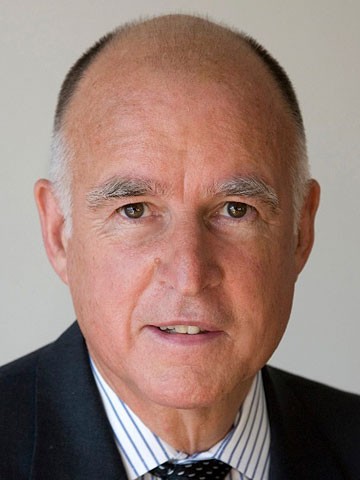
1. A near super-majority of Californians — 65 percent — support the new aid-in-dying law that Jerry Brown signed yesterday, the SacBee$ reports, citing a new Field Poll that was conducted prior to the governor’s decision. In his signing statement of the legislation, Brown, a lifelong Catholic, wrote, “In the end, I was left to reflect on what I would want in the face of my own death.” The new law, which allows physicians in California to prescribe life-ending drugs for terminally ill patients, was strongly opposed by the Catholic Church, some Latino political leaders, and many conservatives.

2. The Northern California coastal city of Fort Bragg is facing a severe water shortage because of the drought and has ordered restaurants to use paper plates and disposable utensils in order to save water, the Chron reports. The city’s primary water source — the Noyo River — is at extremely low levels, to the point that salty seawater has been pushing into Fort Bragg’s freshwater supply.

[jump]
3. Governor Brown plans to sign equal pay legislation today in Richmond at the Rosie the Riveter World War II Home Front National Historic Park, the CoCo Times$ reports. The new law will require employers to pay women the same as men for “substantially similar work.”

4. UC Berkeley will require student applicants to submit letters of recommendation from teachers and mentors this fall — in a move that critics say could benefit wealthy students who attend small private high schools that have resources and staff available to write such letters, the LA Times$ reports.

5. And Berkeley Councilmember Laurie Capitelli said he is donating money that he received in a questionable real estate deal to charity, the Bay Area News Group$ reports. Capitelli, a realtor, came under fire for personally profiting from a taxpayer-funded home loan provided to Police Chief Michael Meehan.

Mortified Live

For most people, the idea of reading the contents of their childhood journals is about as appealing as jumping off a cliff without a parachute. But for the intrepid storytellers at Mortified, it’s the main event. At the personal storytelling event, people read actual diaries, letters, song lyrics, and poems from their youth to complete strangers. It’s hilarious. Mortified got its start in the Bay Area in 2005, after founder Scott Lifton borrowed the idea from an event in Los Angeles, which began in the late Nineties. The show now has chapters across the country, and has spawned a documentary film, an offbeat interview series called The Mortified Sessions, two books, and an on-again, off-again web series. October 10, the traveling live show will come to The New Parish (1743 San Pablo Ave., Oakland). Lifton has called the performance “half comedy show, half group therapy,” because some of the tell-all tales offer poetic lessons, while others will just make you cringe. Personal storytelling events have proliferated in the past few years, but Mortified’s tried-and-true formula proves that the fount of material flowing from our collective early years is a wellspring that never runs dry.

Cumulous

During her residency at Krowswork Gallery (480 23rd St., Oakland), Mary Hull Webster created a cloud of stuff. Her immersive installation, Cumulous, fills an entire room and consists primarily of plastic boxes stacked atop one another. Some of the boxes light up, and many have other objects — orbs, photographs, upholstery, panes of glass — placed on top of them. In one corner, broken electronics lay forgotten on the floor, emitting a tangle of wires. In another, a square piece of mustard yellow carpet hangs near an ink-jet print of a digital texture that resembles a mustard yellow carpet. Cumulous successfully evokes a mental landscape that discards expected tropes of Freudian whimsicality, instead opting for absurdities of the post-internet age. In doing so, it offers an image of what our personal memories might look like when they are digitally stored in the “cloud.” Webster will speak about her work in conversation with Krowswork director Jasmine Moorhead at the closing reception of the show on October 10, at 3 p.m.

Litquake 2015

This weekend, the Bay Area’s poets and novelists will emerge from their resident nooks and cafes once again for the sixteenth annual Litquake, San Francisco’s extended lit crawl. This year, the multi-venue festival will take place from October 9­–17, and will include events not only in San Francisco, but in the South, North, and East Bay as well. The program will showcase eight hundred authors from all over the world — with a Bay Area focus. That includes the Bay Area launch of the new book by provocative Oakland activist and emcee Boots Riley, Tell Homeland Security — We Are The Bomb, a collection of his lyrics, commentary, and backstories. On October 15, at Z Space in San Francisco (450 Florida St.), Riley will be joined by comedian W. Kamau Bell and writer Adam Mansbach in conversation about the intersection of art and politics. This year will also include the premier of a multidisciplinary performance by Hawaii’s Poet Laureate Kealoha; a full day of chef-related literary events; and a night of drag queens reading celebrity Tweets. Among the East Bay’s offerings is “Thrillers at the Octopus” on October 14, in which three Bay Area thriller authors will discuss their new releases at Octopus Literary Salon (2102 Webster St., Oakland), 6 p.m.

Letters for the Week of September 23

"Tumbling the Ivory Tower," News, 9/23 It's About the Dough The operant sentence in this exhaustive article about the ACES program at UC Berkeley is as follows: "But last spring, at the end of the 2014–15, the money ran out." They spent the money, and there is no money to replace it, unless that money comes from other programs and courses...

Coal Attorneys Investigate Oakland City Council

Over the last few months, a law firm with close ties to the coal industry has been investigating three members of the Oakland City Council — Lynette Gibson McElhaney, Dan Kalb, and Rebecca Kaplan — who have expressed opposition to a proposal to ship millions of tons of coal through a new maritime facility at the former Oakland Army...

Exploring Identity Through Armenian Tales

Few people know the story of Armen Ohanian. The provocative Armenian performer and writer survived the Baku pogrom — an organized massacre of Armenian people — in the early 18th century as a child, and grew up to become a subversive, creative chameleon. Ohanian reinvented herself numerous times throughout her long life, leaving some aspects of her otherwise engaging...

Bests in Show

At the 92nd Oktoberfest celebration last Sunday, the all-German food and beer menu and the verdant hillside scenery of the Oakland hills transported attendees to a bygone time and place, while the parade of dirndls and lederhosen left those in street clothes (like me), feeling like the odd one out. The event, put on by Oakland Nature Friends, featured numerous...

Victim Reaches Out to Troubled Man Who Shot Her at Local Park

The victim of a BB gun sniper attack last weekend is now working to get help for the man who shot her above the eye while she was hiking with her husband in Wildcat Canyon Regional Park in the East Bay hills. The victim, Cori Pansarasa, a clinical psychologist, said the man who shot her is mentally disabled and...

Oakland Housing Authority Police Getting Body Cameras

A still image from an Oakland Housing Authority police recruitment video. Credits: Oakland Housing Authority Following other police departments across the nation, the Oakland Housing Authority Police Department is proposing to outfit its officers with body cameras. The Housing Authority, which runs its own police department independently from the City of Oakland, has 34 sworn officers who patrol in and around...

Tuesday Must Reads: Californians Overwhelmingly Support New Aid-in-Dying Law; Fort Bragg Facing Extreme Water Shortage

Stories you shouldn’t miss: 1. A near super-majority of Californians — 65 percent — support the new aid-in-dying law that Jerry Brown signed yesterday, the SacBee$ reports, citing a new Field Poll that was conducted prior to the governor’s decision. In his signing statement of the legislation, Brown, a lifelong Catholic, wrote, “In the end, I was left to reflect on...

Mortified Live

For most people, the idea of reading the contents of their childhood journals is about as appealing as jumping off a cliff without a parachute. But for the intrepid storytellers at Mortified, it’s the main event. At the personal storytelling event, people read actual diaries, letters, song lyrics, and poems from their youth to complete strangers. It’s hilarious. Mortified...

Cumulous

During her residency at Krowswork Gallery (480 23rd St., Oakland), Mary Hull Webster created a cloud of stuff. Her immersive installation, Cumulous, fills an entire room and consists primarily of plastic boxes stacked atop one another. Some of the boxes light up, and many have other objects — orbs, photographs, upholstery, panes of glass — placed on top of...

Litquake 2015

This weekend, the Bay Area’s poets and novelists will emerge from their resident nooks and cafes once again for the sixteenth annual Litquake, San Francisco’s extended lit crawl. This year, the multi-venue festival will take place from October 9­–17, and will include events not only in San Francisco, but in the South, North, and East Bay as well. The...
19,045FansLike
17,709FollowersFollow
61,790FollowersFollow