Credits: STEVE RHODES/FLICKR (CC) – The Gill Tract in Albany
Environmentalists, students, and indigenous activists continue to spar with the University of California over the future of a swath of land in Albany known as the Gill Tract. The most recent scuffle involves a group claiming indigenous rights to the land, and objecting to UC’s plans to allow a developer to build housing and a commercial shopping strip on five acres.
Early yesterday morning, UC police officers removed Hank Herrera and several other activists from the Gill Tract while Herrera was conducting a ceremony. Herrera is of Ohlone descent. The Ohlone people have lived in California for thousands of years. A video of the incident was made available by the Indigenous Land Action Committee, a group which described itself in a previous press release as “Ohlone and other native people who envision reclaiming land stolen from them, honoring the land, honoring the ancestors who stewarded this land for millennia[.]”
[jump]
According to a press release distributed by Occupy the Farm activists, Herrera had attended an Occupy the Farm action in 2013 at the Gill Tract and was told by a UC police officer that he was “trespassing” and needed to leave the area.
“I kept turning over this thought in my head, ‘How can I be trespassing on land that my ancestors lived on thousands of years?'” Herrera said.
This led Herrera and Occupy the Farm activists to carry out their most recent protest on the Gill Tract. They entered the site on Sunday and remained there until being removed yesterday by the UC police.
“The land is slated for development by UC Berkeley into unaffordable housing and a corporate grocery store,” said Luna Fassett, a UC Berkeley student and member of Occupy the Farm who was part of the recent protest.
UC Spokesman Dan Mogulof said he was unaware of any request by any indigenous group since 1945 to access UC-owned land around the Gill Tract to conduct a ceremony. Mogulof said the land is owned by the Regents of the University of California, that it is not public land, and that UC undertook a lengthy and open planning process that resulted in the current development proposal.
“They were indeed removed from two lots adjacent to the Gill Tract,” said Mogulof about the UC police action early yesterday morning. “I believe their occupation had started a couple nights ago and they were immediately warned they were trespassing and told if they didn’t leave we’d need to enforce the law.”
“We always prefer to have these end on a voluntary basis,” Mogulof said about the protest.
The City of Oakland’s Planning Department has released a proposal to overhaul parking requirements for new developments — an effort that would eliminate some of the outdated policies that transportation and affordable housing advocates have increasingly criticized in recent years. As I outlined in an August 5 Express cover story, “A Green Solution to Oakland’s Affordable Housing Crisis,” Oakland’s archaic zoning laws require developers to build unnecessarily huge parking garages in new buildings — typically one on-site parking space for every single unit. This requirement can significantly drive up the cost of construction and thus lead to higher rents and less affordable housing. The car-oriented rules are also environmentally backwards since the construction of large parking lots — which, data shows, often end up having high vacancy rates — encourages residents to own cars and drive more, even in neighborhoods with good access to public transportation.
Under Oakland’s proposed policy changes released today, developers in certain areas would be able to build significantly smaller parking garages in new buildings, which could help discourage car ownership and could make it more financially viable for projects to include affordable housing.
The most notable part of the proposal is the elimination of parking requirements for all new residential buildings in downtown Oakland (see page one of the report). Under current rules, which have remained largely intact for decades, developers in downtown are required to build one space per unit. As a result, developers continue to propose new apartment buildings with a huge excess of parking — even in projects right next to BART stations that could easily attract tenants who don’t own cars and don’t want to pay for parking.
[jump]
Current zoning laws allow downtown developers to apply for a special “conditional use permit” to build as few as 0.5 parking spaces per unit, but projects rarely take advantage of this option. In the proposed rewrite, developers in downtown would no longer need to apply for a special exemption to construct greener buildings and could instead build as few spaces as they want.
See Also: Lori Droste Proposes Reforms to Prioritize Housing Over Parking Oakland Council Discusses Housing Crisis, But Action Still Awaits
As I noted in my feature story, when Seattle eliminated parking requirements in some of its denser urban areas, many developers proposed and built projects that included zero on-site parking or significantly fewer parking spaces than one per unit. Those projects, advocates said, demonstrated that developers want to build less parking than what cities have traditionally required. And the resulting buildings can be much more affordable and can result in a significant reduction in greenhouse gas emissions due to reductions in driving. Some cities with progressive parking policies have even imposed parking maximums in certain transit-accessible neighborhoods — restricting projects from building large garages where they aren’t necessary. Oakland’s new proposal does not include maximums, which means developers could still build one parking space per unit (or more) if they wanted.
Oakland’s proposal would also require downtown projects to have so-called “unbundled parking,” which means that the building sells or rents parking separately from the units. In other words, instead of including the cost of parking in each tenant’s monthly rent, residents with cars who want a parking spot have to pay extra. That can save car-free households thousands of dollars per year, making housing significantly more affordable for residents who use public transportation.
Neil Gray, city planner, told me today that the proposal also calls for the elimination of parking requirements for most of the so-called Lake Merritt Station Specific Plan Area (neighborhoods surrounding the Lake Merritt BART station). Currently, developers around Lake Merritt BART must construct 0.75 spaces per residential unit and can only build fewer parking spaces if they pay a so-called “in-lieu fee” to the city.
Outside of downtown and the Lake Merritt area, the city’s proposal calls for lower parking requirements for new residential buildings along commercial corridors and in certain high-density residential zones. Currently, these areas generally require one space per unit. Under the proposal, developers could go as low as 0.5 spaces per unit if they meet specific criteria. Projects located within one-half mile of a BART station or a Bus Rapid Transit stop could build parking spaces 20 percent below the standard requirement. For example, a 100-unit building proposed near MacArthur BART station in North Oakland currently would have to build 100 parking spots, but under the new proposal could build 80 spots. And under the proposal, an affordable housing project within one-half mile of a BART or BRT station could automatically get a 50 percent reduction in parking.
This part of the proposal (outlined on page three) includes a number of other options for developers outside of downtown who want to build less parking. If projects include car-sharing memberships on-site or nearby, they can receive 10 percent reductions in parking requirements. If they provide tenants with free transit passes, buildings can also construct parking that is 10 percent below the standard. And if they offer “unbundled parking,” the projects can go 15 percent below the standard. A project could also combine these different features for a larger reduction — meaning a building that offers car-share memberships, transit passes, and unbundled parking could build 35 percent fewer parking spaces.
Developers can often afford to provide these types of amenities once they are able to build less parking. That’s because it costs roughly $50,000 to construct a single space in a structured garage, meaning a 35 percent reduction in parking spaces in a large building amounts to huge savings — finances that can then be invested into features such as transit passes.
Certain “medium-density residential zones” — in parts of North Oakland, West Oakland, and East Oakland that are not commercial corridors or high-density residential areas — currently require new developments to include 1.5 spaces per unit. The city’s proposal (page eleven) says that this requirement discourages development in these neighborhoods, which are typically a mix of single-family homes, duplexes, and smaller apartment buildings. The city is proposing to reduce this requirement to one space per unit.
The planning department is hosting two public meetings this month to introduce the proposal and solicit feedback. The first is 6 p.m. on Thursday, October 22 at the West Oakland Senior Center (1724 Adeline Street). The second is Thursday, October 29 at 6 p.m. at the San Antonio Senior Center in Fruitvale (3301 East 12th Street, Suite 201).
King trumpet mushrooms at Millennium, one of the East Bay Bib Gourmand picks.
Credits: Bert Johnson / file photo
Welcome to the Mid-Week Menu, our roundup of East Bay food news.
1) Today, the Michelin food inspectors dropped their 2016 Bay Area “Bib Gourmand” list — for restaurants where you can get two courses and a glass of wine or dessert for $40 or less (a somewhat amorphous set of criteria that allows some rather expensive restaurants to make the grade). This year’s East Bay selections: Chevalier (Lafayette), China Village (Albany), Comal (Berkeley), Corso (Berkeley), FIVE (Berkeley), Gather (Berkeley), Great China (Berkeley), Ippuku (Berkeley), Michel Bistro (Oakland), Millennium (Oakland), Rivoli (Berkeley), Thai House (Danville) and Wood Tavern (Oakland). Oakland restaurants remain — in this critic’s humble opinion — criminally underrepresented.
[jump]
Left off the list were 2015 Bib Gourmand honorees Bellanico (Oakland), Iyasare (Berkeley), and Ramen Shop (Oakland) — but, as Inside Scoop notes, it’s unclear whether all three of those were downgrades, or if any of them will be getting good news when next week’s star recipients are announced.
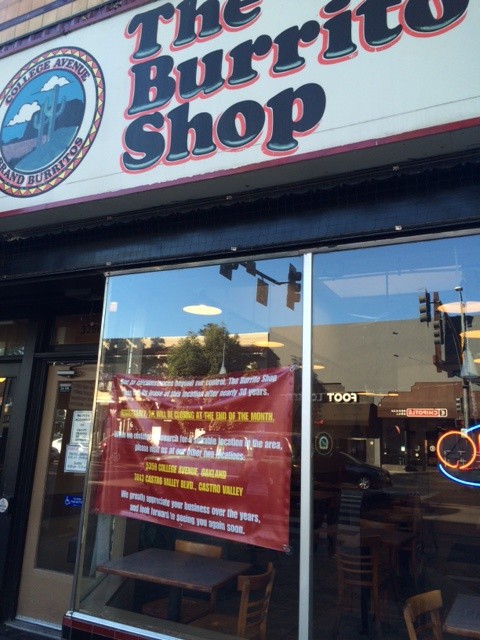
2) The Lakeshore location of Burrito Shop (3256 Lakeshore Ave., Oakland) closed at the end of September after nearly thirty years in business. Owner Dave Spott told me the restaurant lost its lease after he made multiple attempts to negotiate with his landlord on a higher, market-rate lease, but received no response. The local mini-chain’s other two locations, in Rockridge and in Castro Valley, remain open.
It had been widely assumed — by Spott and in earlier reports — that the Burrito Shop space would be used for an expansion of the Peet’s next door. But when I reached out to Peet’s, a spokesperson denied the rumor and said, via email, “We do not have plans to expand the Peet’s location on Lakeshore at this time.” The space is currently listed as available for lease.
3) In a clever bit of cross-promotion, it appears that Coach Sushi (532 Grand Ave., Oakland), one of the restaurants where East Side Sushi was filmed, now serves a version of the Green Diablo Roll, a Latin fusion sushi roll that the protagonist creates in the film. There’s a brief description of the roll, which is made with a roasted poblano pepper, in this Remezcla interview with filmmaker Anthony Lucero.
4) Inside Scoop reports that North Oakland vegan standby Shangri-La Vegan (4001 Linden St.) is adding a second location, at the former Tanjia/Doukkala spot (4905 Telegraph Ave.) in Temescal.
5) Over in Berkeley, the new incarnation of the beloved watering hole Spats (1974 Shattuck Ave.) is finally open, and the Cal-cuisine restaurant Gather (2200 Oxford St.) has a new chef: Tu David Phu, a veteran of Acquerello in San Francisco and Flora in Berkeley. (High-rollers can also check out Phu’s food at the UC Berkeley Botanical Garden’s $125 fundraiser dinner on Saturday.)
6) The newest addition to the revamped Emeryville Public Market will a location of the Portland-based natural grocery store New Seasons Market, Inside Scoop reports.
7) Berkeleyside Nosh reports that the Albany location of Little Star Pizza has completed its move — just next door, to 1181 Solano Avenue.
8) Despite complaints from neighbors concerned about noise, Acme Bar (2115 San Pablo Ave., Berkeley) just got approval from Berkeley City Council to expand alcohol service to the bar’s outdoor patio, the Bay Area News Group reports.
9) Finally, ICYMI, Perdition Smokehouse closed unexpectedly, and a new delivery service will bring growlers of draft beer to the doorsteps of East Bay residents.
Got tips or suggestions? Email me at Luke (dot) Tsai (at) EastBayExpress (dot) com. Otherwise, keep in touch by following me on Twitter @theluketsai, or simply by posting a comment. I’ll read ‘em all.
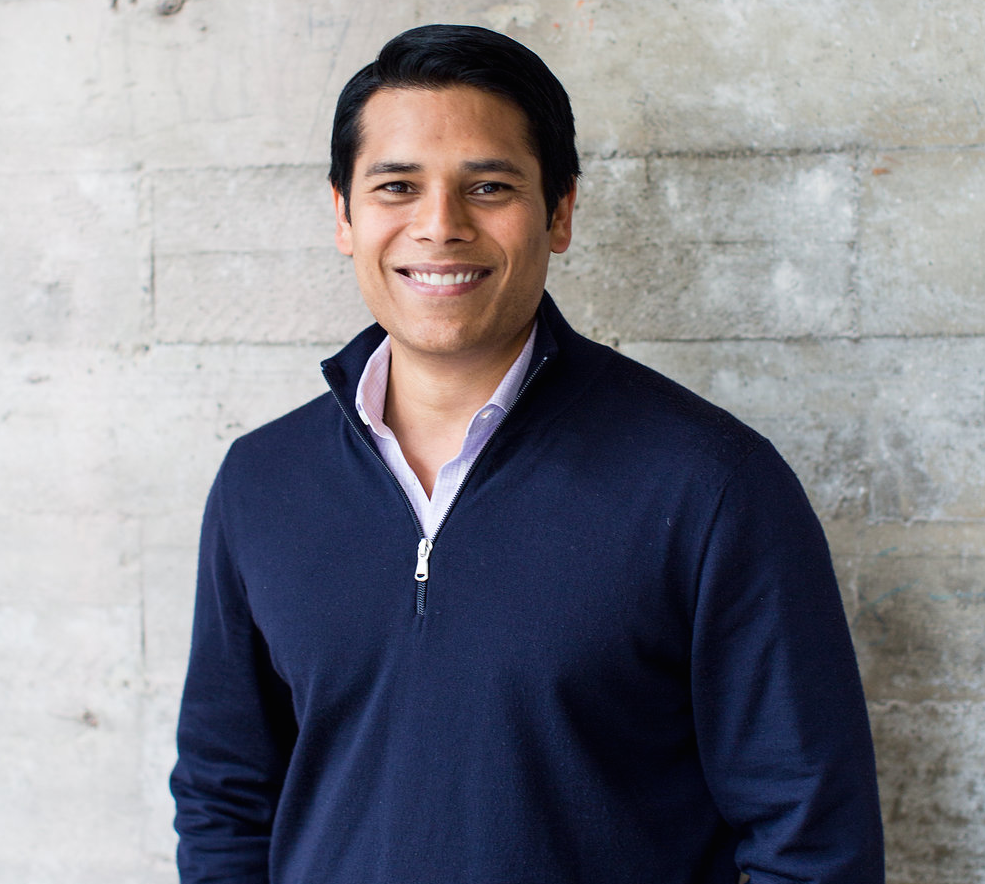
Nirav Tolia.
Credits: Nextdoor
Nextdoor.com co-founder and CEO Nirav Tolia has responded to the recent Express investigation into racial profiling on his website and has announced that the company plans to institute changes to the web platform and is considering new training procedures for staff. In last week’s cover story, “Racial Profiling Via Nextdoor.com,” I explored the ways in which white residents across Oakland have used the social networking site to racially profile their neighbors of color. Nextdoor, which provides a free platform for residents to blast messages to their neighbors, has become a popular virtual neighborhood watch site in Oakland with users posting “suspicious activity” warnings about people they observe. In some neighborhoods, residents have labeled innocent Black people as possible criminal suspects simply for walking or driving through a residential area.
In a blogpost published today on Nextdoor, titled “Racial Profiling: The Opposite of Being Neighborly,” Tolia cited the Express story and said that racial profiling is a “very difficult issue facing our neighborhoods today.” He wrote: “We are incredibly saddened that some neighbors have used Nextdoor in this way. Simply stated: we consider profiling of any kind to be unacceptable.”
[jump]
Tolia noted that the company has in its guidelines a policy prohibiting racial profiling and that when members violate that rule, Nextdoor will prohibit them from using the site. But Oakland activists who have launched initiatives to combat profiling on Nextdoor and other social networking sites have argued that the company’s guidelines don’t go far enough, and that Nextdoor should be more aggressive and proactive in its efforts to keep racially offensive posts off of the site. In his blogpost, Tolia said the company, which is headquartered in San Francisco, is now exploring opportunities to better tackle racial profiling: “Moving forward, we are creating ways to remind members of these Guidelines when they post in the Crime and Safety section. We are investigating better techniques for keeping divisive discussions productive, and we are partnering with conflict resolution experts for training and product feedback. This is an important cause for us and we won’t let up.”
Kelsey Grady, Nextdoor spokesperson, told me by phone this morning that the company has also scheduled an in-person meeting with Neighbors for Racial Justice, the Oakland-based group featured in my story. Later this month, the group will be meeting with Tolia, Nextdoor’s head of neighborhood operations, and the company’s product manager. Some of these Oakland advocates have been subject to repeated racial profiling in their own neighborhoods in the Oakland hills and have argued that vague and unsubstantiated Nextdoor posts about suspicious Black people have made the problem much worse. The site is also very widely used in the city — 176 Oakland neighborhoods have Nextdoor groups and 20 percent of all households in the city use the site, according to the company. Audrey Esquivel, who has been profiled in her own neighborhood, is a member of Neighbors for Racial Justice.
Credits: Bert Johnson / file photo
Neighbors for Racial Justice, along with experts on racial profiling, have suggested that, at the very least, Nextdoor should put in place a strongly worded message in the Crime and Safety section of the site that warns users before they post that profiling is not allowed. Based on Tolia’s post today, it appears the company is taking that recommendation seriously. Currently, the company’s definition of profiling is buried in an FAQ section on the site, which means users who go to the site to post suspicious activity warnings may not even know there is a policy against profiling in place.
In terms of Tolia’s mention of conflict resolution partnerships and potential new training procedures, Grady told me it was too soon to offer specifics. But she said the company is exploring opportunities to improve training both for staff and for the so-called “neighborhood leads,” who are the citizen moderators of the local pages. The leads are responsible for interpreting and enforcing guidelines and deleting offensive posts. But some in Oakland have argued that these leads have failed to adequately respond to complaints about racial profiling — and in some cases have even silenced people who speak out against profiling on the site.
Neighbors for Racial Justice has also written more extensive guidelines about how to report suspicious activity online, including encouraging users to focus on specific behaviors that suggest criminal activity. In terms of describing a suspect, users should emphasize distinct characteristics, such as shoes, tattoos, and car model — and race should be secondary to all that, according to the group. If users can’t cite very specific behaviors and physical descriptions, then they shouldn’t post anything. Otherwise, the steady stream of ambiguous warnings about Black people easily turn neighborhood residents and innocent passersby into suspects. The group has also suggested that Nextdoor explore the idea of requiring users to fill out a form and answer specific questions about behaviors and descriptions before posting crime warnings — a system that could help weed out profiling and force users to check their own biases before publishing baseless accusations.
Grady told me that Nextdoor groups across Oakland are now having productive conversations about profiling in response to the article. “There’s actually been a lot of really great dialogue between neighbors on the topic,” she said. “Neighbors are saying, ‘Hey, one of the best ways to curb this and hopefully end this once and for all is to get to know your neighbors.’ That’s definitely a message we want to be supportive of.”
Over the last week, I’ve also read many fairly constructive discussions about racial profiling on multiple Nextdoor groups in Oakland — although some groups seem to attract a small, but vocal handful of users who continue to defend profiling as a justifiable way to fight crime.
And while getting to know your neighbors is one way to help combat profiling, some advocates have also pointed out that people of color visiting neighborhoods in which they don’t live should feel safe to walk or drive around without being questioned as a possible suspect or reported online as a suspicious person.
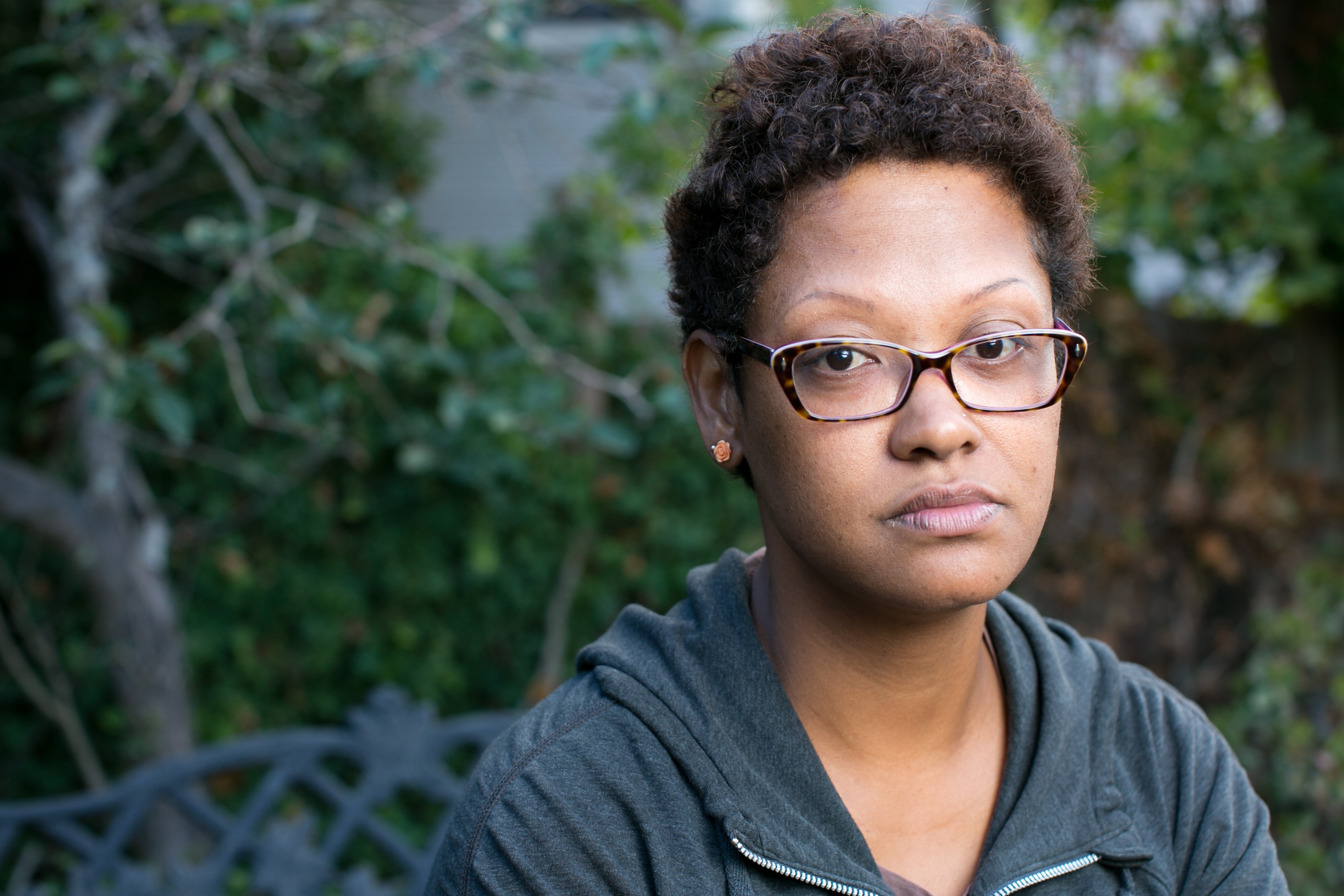
Shikira Porter, a member of Neighbors for Racial Justice, is one of the advocates who will be meeting later this month with Nextdoor.
Credits: Bert Johnson / file photo
With a unanimous vote of its board of supervisors this week, Contra Costa County joined the increasing number of Bay Area governments exploring or actually implementing “community choice energy” (CCE) systems. Marin and Sonoma counties are the only ones so far to have actually replaced PG&E as the electricity providers for their residents, but Alameda, San Francisco, Santa Clara and San Mateo counties are all in various stages of setting up similar programs.
In addition to allowing communities to find more “green” electricity, such as wind and solar, community choice electricity programs can also lower rates, as they have in Marin and Sonoma. Proponents in Contra Costa County also emphasize the potential for fostering local clean-energy development as an economic boost to the county.
At Tuesday’s board of supervisors meeting, the Contra Costa Clean Energy Alliance, which has been lobbying hard for CCE for more than a year, passed out a fact sheet stating that US Environmental Protection Agency has designated 40,887 acres of land in Contra Costa (mostly former industrial sites) as suitable for renewable energy generation. This means, according to the fact sheet, “Contra Costa’s local renewable production potential could power 1.27 million homes from local renewable energy production.“ It added, “there are 406,772 households in Contra Costa County.”
[jump]
Although it seems likely that the county will move toward some form of community choice energy, it faces several open questions. One is whether to create a Contra Costa CCE, join Marin Clean Energy, or ask to join Alameda County’s CCE when it’s set up — still probably several years in the future. Several supervisors have suggested that joining an established CCE could be more efficient. But in an interview, Supervisor Candace Anderson expressed a view shared by many community activists: “I’d just as soon create our own. It would give us more control to set up and encourage local energy production.” Walnut Creek and Lafayette have already sent nonbinding “letters of intent” asking to join Marin Clean Energy, but Walnut Creek also urged the supervisors to consider creating a Contra Costa County agency.
Another issue will be the status of unincorporated areas of the county. Speaking at the Tuesday meeting, El Sobrante resident Kook Huber pointed out that “the population of these unincorporated towns totals 170,000 and represents a total larger than any single city in the county.” Ann Puntch of Rodeo, another unincorporated town, expressed concern that in the survey of cities authorized by the board Tuesday, “we might just be overlooked.”
Any Contra Costa Community Choice system that may be created will also confront a controversy now simmering under the surface: labor standards for local green energy producers. Local 1245 of the International Brotherhood of Electrical Workers (IBEW), which represents PG&E workers, has created obstacles to community choice energy plans in other areas because of a concern that they will eliminate good union jobs. Tom Dalzell, Local 1245 business manager, pointed out that some “green energy jobs,” like installing rooftop solar panels, are typically low-paid and temporary.
“We support large-scale [energy projects] over rooftop solar,” Dalzell said, because they’re cheaper and they’re better jobs.” However, he said this could include local solar energy projects, such as the solar farm being built — with union labor — by the Sacramento Municipal Utility District.
The Contra Costa Clean Energy Alliance specifies that it wants local energy developers to create “family-sustaining, high-quality jobs,” prioritizing “union jobs” and “overcoming barriers to employment in … disadvantaged communities.” Local 1245 wants labor standards built into community choice energy systems, but that move will probably face resistance from decision-makers who, like Andersen, say they “prefer to leave that up to the free market.”
Gavin Newsom.
1. Lieutenant Governor Gavin Newsom, who is widely expected to run for governor in 2018, is launching a statewide initiative today to put a sweeping gun control measure on the November 2016 ballot, the LA Times$ reports. Newsom’s proposal, which comes amid a series of mass shootings around the country, would require background checks for ammunition purchases and ban the possession of large-capacity magazines. Newsom also is expected to strongly back a measure to legalize marijuana for adult recreational use on next year’s ballot.
2. Faculty members at California State University campuses, including Cal State East Bay, are gearing up for a strike vote on Monday, KQED reports (h/t Rough & Tumble). Faculty members, who are in a contract dispute with CSU, want a 5 percent salary hike and additional 2.65 percent for the lowest paid instructors. CSU is offering a 2 percent across-the-board pay increase.
[jump]
3. Folsom Lake, which is one of California’s major reservoirs, is at its lowest level in more than twenty years and is at just 17 percent of capacity because of the four-year drought, the SacBee$ reports. The reservoir is expected to reach record low levels by the end of this month.
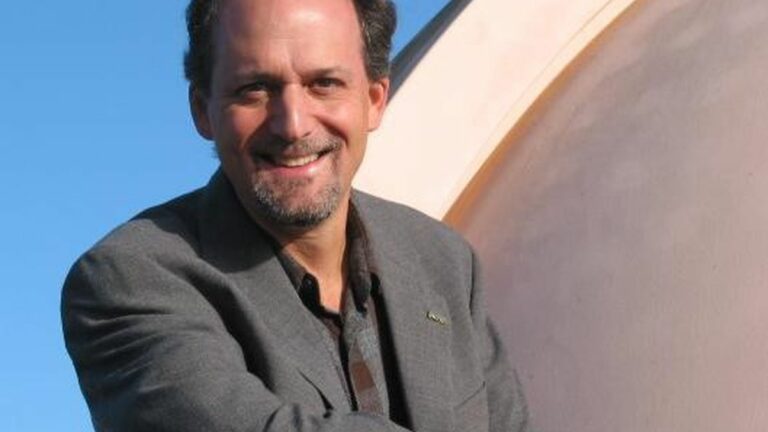
Geoff Marcy.
A famous UC Berkeley astronomer, Geoff Marcy, has decided to resign his post as professor at the university in the wake of a sex scandal in which he allegedly harassed female students for years on campus, BuzzFeed News reports. BuzzFeed News science reporter Azeen Ghorayshi, a former Express staffer, broke the news last week of the sexual harassment allegations against Marcy and UC Berkeley’s decision to allow him to keep teaching.
Ghorayshi, who reported the story from New York City, also noted that “Marcy has also resigned as principal investigator of the $100 million Breakthrough Listen project, a large scientific research program aimed at finding life beyond Earth.” Marcy had previously been mentioned as a potential Nobel Prize laureate.
[jump]
In last week’s investigative story, Ghorayshi reported that she had spoken to three of four women who had filed complaints against Marcy over his behavior. One of the women told UC Berkeley investigators that “Marcy placed his hand on her leg, slid his hand up her thigh, and grabbed her crotch,” according to BuzzFeed.
In a phone interview, Ghorayshi told me that she learned of the allegations of Marcy being a serial harasser from a tip. The women who had lodged harassment complaints against Marcy were upset that UC Berkeley effectively had given him a slap on the wrist, despite the fact that a campus investigation revealed that he had violated Cal’s official sexual harassment policies from 2001–2010. So the women decided to go to the press.
The women chose BuzzFeed likely because of its national reach and because the news organization has developed a reputation for seriously examining sexism in science. Earlier this year, BuzzFeed also reported on the chauvinistic comments made by British scientist Tim Hunt, a Nobel Prize winner, who said at a conference: “Let me tell you about my trouble with girls. You fall in love with them, they fall in love with you, and when you criticize them, they cry!”
Ghorayshi, a UC Berkeley grad in biology, said she did not know Marcy when she attended Cal. Ghorayshi won several journalism awards while she worked at the Express. She left the paper in 2013 to attend graduate school in London. She started working at BuzzFeed last year.
1. Washington DC pundits and the mainstream press declared Hillary Clinton the winner of last night’s first Democratic presidential debate, but online polls showed that a super-majority of Americans say Bernie Sanders was the victor. The debate was hosted by CNN and the network’s homepage this morning declared that Clinton was “Poised, passionate and in command ” and “Clinton triumphs in Democratic debate.” But CNN’s own social media poll, conducted through Facebook, showed that a whopping 81 percent of respondents said Sanders won the debate, with only 13 percent favoring Clinton. The contradiction fits with the mainstream’s press decision to mostly ignore Sanders even though he’s drawing record crowds to campaign events and leads Clinton in New Hampshire, the first primary state.
[jump]
3. The US Supreme Court turned down a challenge to California’s top-two primary law, the Chron reports. The appeal was sought by smaller political parties who contended that the state voting system, which advances the top two candidates in a primary, regardless of party affiliation, is unfair and illegal.
The most enigmatic new restaurant in Oakland sits in a residential section of the Longfellow neighborhood. Apart from a single, tired-looking burrito shop, Salsipuedes is the only dining establishment within a several-block radius. It’s a cozy corner shop lined with white tiles and metal stools, like a well-appointed beachside seafood shack.
Named after a pristine stretch of Baja California coastline near the city of Ensenada, Salsipuedes (literal translation: “get out if you can”) is the brainchild of restaurateur and San Diego transplant Jay Porter, who also runs the farm-to-table sausage and burger restaurant The Half Orange. For his new restaurant, he teamed up with chef Marcus Krauss, ice cream maker Luis Abundis (of the Fruitvale district stalwart Nieves Cinco de Mayo), and Bradford Taylor (of the wine shop Ordinaire).
Surf and turf on a bao.
Credits: Bert Johnson
Beef tongue and uni.
Credits: Bert Johnson
The hardest thing to figure out is how to categorize Salsipuedes — at least for those of us who haven’t spent much time in Ensenada. You hear Baja and see the casual seaside vibe of the restaurant, and you half-expect to be greeted with a spread of fish tacos. Instead, the menu consists of about a dozen somewhat pricey small plates, several of which have some element of “surf and turf” — a term that brings to mind steakhouse medleys of filet mignon, whole lobster, and ungodly quantities of deep-fried shrimp. But Krauss offers more refined and delicate variations on land-meets-sea cuisine: grilled octopus paired with crunchy chicharrones, beef tongue adorned with gold-orange dabs of uni. (The chef”s previous cooking gig was at Napa Valley’s three-Michelin-starred, $225-a-pop Restaurant at Meadowood.)
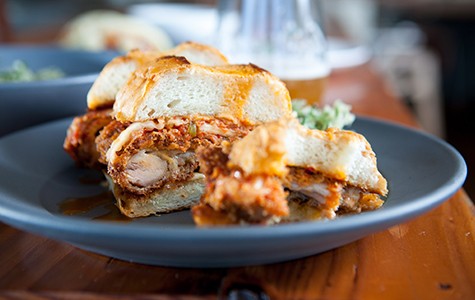
The drowned fried chicken torta is one of the best, most distinctive fried chicken sandwiches in Oakland.
Credits: Bert Johnson
In interviews, Porter has described the concept for Salsipuedes, variously, as “New Baja,” “California Rustic,” and “seaside barbecue.” At the end of the day, the restaurant serves what most Bay Area diners would recognize as a version of California cuisine, in its use of local produce and high-quality meat and seafood. But the restaurant’s primary reference point is a culinary movement started in the past decade by Tijuana native Javier Plascencia and a cadre of like-minded young chefs who, at mostly high-end restaurants along the coast of Baja California, started cooking globally inspired fusion dishes designed to make the most of the area’s pristine seafood, its ranches, and its excellent produce.
The style of cooking, known as “New Baja” or “Baja Med,” has yet to make inroads in the Bay Area, but Porter and Krauss figured, why not apply the same principles — so similar to the Cal cuisine we all know and love — to the Bay Area’s native ingredients? So, at Salsipuedes, you’ll encounter a dizzying array of influences, from Mexico to the Mediterranean and the Pacific Rim — the latter a nod to the impact of the Japanese fishing trade on the Baja region and the area’s large Chinese population, Krauss explained.
When these disparate elements come together just right, the results can be astounding. Case in point, the drowned fried chicken torta — the restaurant’s must-order dish. The chicken itself was breaded and deep-fried, katsu-style, to an impeccable degree of tenderness and crunch, and the kimchi provided just the right amount of complementary tang and funk. Drizzled overtop, Krauss’s housemade katsu sauce, less sweet and more loaded with umami than the stuff that comes out of a jar, soaked into torta-style bolillo roll, providing a pleasing contrast between the crunch of toasted surface of the bread and the soggy top — an effect not unlike what you get in a saucy meatball hero. All in all, it’s one of the best, most distinctive fried chicken sandwiches in a city that has no shortage of great fried chicken sandwiches.
On Tuesdays, the restaurant offers a “burger and fries” special. Twenty bucks buys you the torta, plus a draft beer and a side of tempura sea beans, which looked like strands of wispy green hair caught in a kakiage-style nest — fabulous in its crunch and in how it tasted of the sea — served with a housemade “Kewpie” mayonnaise.
You only need to sample a handful of dishes at Salsipuedes to pick up on the chef’s obsession with all manner of seaside vegetation: sea beans, seagrass, and several different varieties of seaweed. For instance, an heirloom bean “cioppino” featured clams, fish, and both green and purple varieties of seaweed from the Mendocino coast. The stew didn’t have a tomato base and, by Krauss’s own account, was less a fish dish than it was a bean dish — one that spoke to the restaurant’s commitment to high-quality ingredients: Rancho Gordo beans and impeccably fresh clams, whose juices, in combination with the charred seaweed, infused the soup with an intense brininess. It was an interesting dish, if a bit one-note — in need of some acidity to cut into all those murky, oceanic flavors.
Every dish at Salsipuedes had at least one component I found intriguing — an ingredient I hadn’t seen before, or a familiar ingredient prepared in a new and unexpected way. But some of the small plates proved to be more interesting than they were delicious. A plate of roasted corn, for instance, was fairly high-concept: The kernels were presented rustically, with bits of the stringy husks strewn here and there, but were topped with seagrass and trout roe that burst in my mouth with a briny pop. The whole mound was crowned with a pale yellow orb that turned out to be not a runny egg yolk or a knob of butter, but instead a scoop of ice cream the flavor of nixtamalized corn — a tortilla in ice cream form, basically. It tasted fine, but once I got past the initial surprise — ice cream in a savory appetizer! — I decided I probably would have preferred the egg or the butter.
The drowned fried chicken torta is one of the best, most distinctive fried chicken sandwiches in Oakland.
Credits: Bert Johnson
Better was the octopus melt bao, which Krauss explained was his take on the popular Ensenada combination of seafood and melted mozzarella. I liked the tenderness of the octopus and the tiny sautéed shrimp, the porky crunch of the chicharrones, and the appealing oddness of a “salsa” made with chopped-up sea beans, onions, and Fresno chilies. The only flaw was one of execution: The bun itself was stiff and dry, lacking the fluffiness of a proper Chinese steamed bao.
And, as much as I admire Abundis’ frozen treats at Nieves Cinco de Mayo, if a restaurant is only going to offer one dessert option, it should probably be something that’s more of a crowd-pleaser than what was available during both of my visits: rose petal ice cream topped with shiso-infused “tea” and intensely sour pickled strawberries.
But dishes that struck the right balance were truly great — as hearty and soulful as they were surprising and technically impressive. The aforementioned beef tongue was a spectacular cold appetizer: thick, mottled-pink slices that were as lush and satisfying as high-quality corned beef. Tiny dabs of uni (I’d have loved more) added briny richness, and the squishy, charred cactus paddle that served as the base of the dish somehow, in this context, evoked the ocean more than it did the desert. And, in what was probably the most entrée-like small plate — pork steak seared hard after a 24-hour soak in the sous vide machine made for a near-flawless dish — I only wished for a slightly brighter counterpoint than what the accompanying sourgrass “chimichurri” provided.
Even as communal seating becomes more commonplace, Salsipuedes is striking in the way it takes that approach to an extreme: The only seating is at the large communal table in the middle of the room, or at the counter that winds around the perimeter of the restaurant’s open kitchen. The idea, Krauss explained, is for diners to feel like they’ve been invited into his home for a meal. That’s a nice sentiment — one that was reinforced by the attentive and conscientious service. And Krauss, for his part, is the kind of dinner host who’s egging on his guests to try something new. If you’re up for the adventure, it’s some of the most interesting food in town.
A pretty young Spanish woman, the title character of Victoria, is ecstatically dancing the night away at a Berlin club, alone but caught up in the communal surge. She has reached that stage at which the electronic throb of the DJ’s music has essentially become the rhythm of her consciousness. Victoria is now operating at a low, measured simmer, her senses slow and languorous, her movements careless. The evening’s menu of alcohol, and possibly pills, have done their work, and she finds herself at a plateau. Time to get out and make her way home for a quick nap before reporting to her job at a cafe, preparing for the workday morning rush.
We don’t pay much attention to it in the early scenes, but director Sebastian Schipper’s remarkable echt-urban character study/thriller comes to us in one long, uninterrupted take — 138 minutes without a cut, shot on location with a handheld camera. This gimmick has been tried before — notable examples are Alfred Hitchcock’s Rope and Alexander Sokurov’s Russian Ark — but Schipper’s approach is not nearly so studious. Helter-skelter is more like it, at least on the surface.
Laia Costa as Victoria in Victoria.
Laia Costa as Victoria in Victoria.
Victoria (Barcelona native Laia Costa) is the portrait of loosey-goosey, and the four youngish guys she runs into on her way out of the club are the very definition of ambulance fodder. After Sonne, Boxer, Blinker, and Fuss (what happened to Donner and Blitzen?) are ejected by the bouncers, they go back to drunkenly lurching down the sidewalk, trying car door handles. Victoria is attracted to the most conventionally good-looking of the guys, Sonne (Frederick Lau), and accepts his offer to go for a ride with him and his car-boosting buddies. We instinctively recoil in our seats at this — that’s how women get raped. But the guys already have another job to do in the early morning hours, and Victoria, wiped out as she is, seems the best choice for getaway driver. And so our plucky-but-dumb barista joins up with the Gang That Couldn’t Think Straight, and they get into some serious trouble, in real time with mal-de-mer-producing camera work.
Right away, filmmaker Schipper — working from a screenplay he wrote with Olivia Neergaard-Holm and Eike Frederik Schulz — has a slight narrative problem. His female protagonist may be congenial in an uncomplicated way, but Sonne and his mates are actively stupid, the sort of meatheads that harmless “bro” comedies are built around, except that these dudes are serious lowlifes, and the characters to whom they “owe” their criminal job appear to be killers. Every single step Sonne and his pals take is a mistake. In their state, they can barely steal a few beers from a dozing shopkeeper. So they’re obviously all going to be killed, and probably Victoria as well for tagging along. We feel sorry for her, but only to a degree. The scenario of Victoria quickly becomes an academic exercise. We can see they’re all going to die; the only questions are how and how soon.
That frees us to relax and admire things like Schipper’s pacing (the speed of life, sometimes frantic, sometimes sluggish); Nils Frahm’s soundtrack music, plus such songs as “Burn with Me” by DJ Koze; and brazen little character touches, such as when Victoria unexpectedly sits down at the cafe’s piano and plays Franz Liszt’s “Mephisto Waltz” for the stupefied Sonne. Victoria is not a movie to make us leave the theater feeling crafty and daring. It’s hard to watch because they’re such morons, and frustrating because we naturally want the protagonists to succeed, no matter how dumb they may be. And yet it casts a certain spell. It’s an anti-heroic story that challenges us to empathize. Not for everyone, but the most interesting films seldom are.
Environmentalists, students, and indigenous activists continue to spar with the University of California over the future of a swath of land in Albany known as the Gill Tract. The most recent scuffle involves a group claiming indigenous rights to the land, and objecting to UC's plans to allow a developer to build housing and a commercial shopping strip on...
The City of Oakland's Planning Department has released a proposal to overhaul parking requirements for new developments — an effort that would eliminate some of the outdated policies that transportation and affordable housing advocates have increasingly criticized in recent years. As I outlined in an August 5 Express cover story, "A Green Solution to Oakland's Affordable Housing Crisis," Oakland's archaic...
King trumpet mushrooms at Millennium, one of the East Bay Bib Gourmand picks.
Credits: Bert Johnson / file photo
Welcome to the Mid-Week Menu, our roundup of East Bay food news.
1) Today, the Michelin food inspectors dropped their 2016 Bay Area “Bib Gourmand” list — for restaurants where you can get two courses and a glass of wine or dessert...
Nirav Tolia.
Credits: Nextdoor
Nextdoor.com co-founder and CEO Nirav Tolia has responded to the recent Express investigation into racial profiling on his website and has announced that the company plans to institute changes to the web platform and is considering new training procedures for staff. In last week's cover story, "Racial Profiling Via Nextdoor.com," I explored the ways in which white...
With a unanimous vote of its board of supervisors this week, Contra Costa County joined the increasing number of Bay Area governments exploring or actually implementing “community choice energy” (CCE) systems. Marin and Sonoma counties are the only ones so far to have actually replaced PG&E as the electricity providers for their residents, but Alameda, San Francisco, Santa Clara...
Stories you shouldn’t miss:
1. Lieutenant Governor Gavin Newsom, who is widely expected to run for governor in 2018, is launching a statewide initiative today to put a sweeping gun control measure on the November 2016 ballot, the LA Times$ reports. Newsom’s proposal, which comes amid a series of mass shootings around the country, would require background checks for ammunition purchases...
A famous UC Berkeley astronomer, Geoff Marcy, has decided to resign his post as professor at the university in the wake of a sex scandal in which he allegedly harassed female students for years on campus, BuzzFeed News reports. BuzzFeed News science reporter Azeen Ghorayshi, a former Express staffer, broke the news last week of the sexual harassment allegations...
Stories you shouldn’t miss:
1. Washington DC pundits and the mainstream press declared Hillary Clinton the winner of last night’s first Democratic presidential debate, but online polls showed that a super-majority of Americans say Bernie Sanders was the victor. The debate was hosted by CNN and the network’s homepage this morning declared that Clinton was "Poised, passionate and in command "...
The most enigmatic new restaurant in Oakland sits in a residential section of the Longfellow neighborhood. Apart from a single, tired-looking burrito shop, Salsipuedes is the only dining establishment within a several-block radius. It's a cozy corner shop lined with white tiles and metal stools, like a well-appointed beachside seafood shack.
Named after a pristine stretch...
A pretty young Spanish woman, the title character of Victoria, is ecstatically dancing the night away at a Berlin club, alone but caught up in the communal surge. She has reached that stage at which the electronic throb of the DJ's music has essentially become the rhythm of her consciousness. Victoria is now operating at a low, measured simmer,...