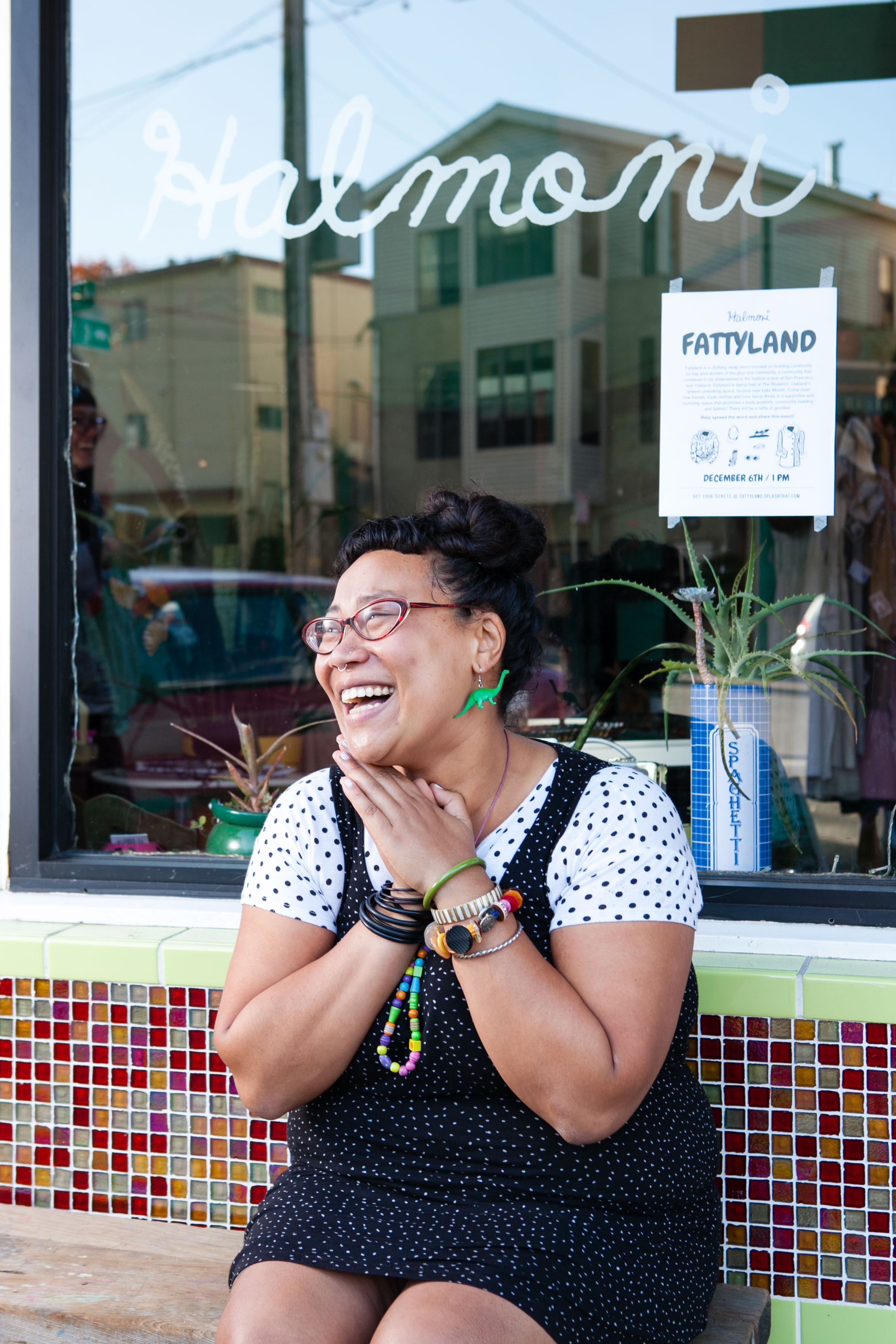
Natasha Harden has no qualms about self-confidence. “I’m a badass, fat bitch,” she said on a recent afternoon, inside her Lake Merritt vintage boutique, Halmoni (1601 2nd Ave., Oakland). The 34-year-old fashionista ended the exclamation with an effervescent laugh. Harden is, indeed, a force of nature, but of the friendliest sort. She brims with a sense of self love that’s contagious rather than competitive — a quality that’s too rare among women, especially in the fashion industry.
Harden opened her cozy shop in 2011 and almost immediately began to host clothing swaps called “Naked Lady Soirees.” She aims to make the monthly, $15 events feel as comfortable as a slumber party. The events include wine, snacks, and sweets, and Harden curtains up the shop to ensure privacy. She asks each of the twelve to twenty attendees to bring a bag full of clothes that they want to get rid of, then everyone picks through the cumulative pile together. Although there’s a dressing room available, Harden encourages attendees to strip down to their undies and try on items in front of others, asking for opinions and styling suggestions. The goal is to create a supportive, body-positive community of female-identifying people who love fashion.
Natasha Harden.
Credits: Bert Johnson
Natasha Harden.
Credits: Bert Johnson
Although Harden advertises the Naked Lady Soirees as being open to all body types, she soon realized that women who identify as fat, like her, weren’t showing up. “If you don’t specifically say it’s for fatties, they may not come,” said Harden, “because they don’t just wanna be leaving with accessories.” That’s why she’s starting another swap series, called Fattyland.
Fattyland swaps, the first of which will take place this Sunday, will occur every other month at venues that are more accommodating than Harden’s little shop and are accessible for people who walk with a cane or use a wheelchair. Plus, they will be specifically tailored to the fatty fashion community.
Natasha Harden.
Credits: Bert Johnson
Harden describes the fat-positive community — lead locally by icons like author Virgie Tovar — as a radical subculture of the plus-size community. “I think [using] ‘fat,’ for me, is me being radical about my body and my politics and making people feel uncomfortable in a way,” said Harden. “Because I am fat, and that’s not gonna go away, and just because you like to use the word ‘curvy’ or ‘plus-size’ because you think that that’s politically correct and it’s not gonna hurt my feelings — that’s not where I’m at.”
While plus-size fashion has been becoming increasingly visible in the media this past year, many “fatties” advocate for a more radical sense of body-positivity that includes a wider range of silhouettes than are typically represented by plus-size models. “Even though plus-size is kind of off the hook right now… ,” said Harden, “I think that the plus-size community doesn’t show all bodies.”
Fattyland is intended to be an opportunity for people who identify as fat to gather, make friends, and feel totally comfortable. Numerous plus-size and fat-positive businesses have donated items to the event, including lingerie from Hips and Curves, athletic wear from Rainbow Curves, and a free session with a body-positive life coach. Some freebies will be given away as raffle prizes, while others will be added to the swap items. Harden wanted the event to feel extra special, because fat women are often excluded from the fashion industry. “Its not only a fat event,” said Harden, “but a fat event where all these other companies are saying that you’re important.”
The first Fattyland will take place at The Blueprint (439 International Blvd., Oakland), a new co-working space and tea house, on December 6 at 1 p.m. Harden plans to eventually put on fatty flea markets and hopes to partner with other businesses and planners to create all sorts of fat-focused events under the Fattyland moniker. With each event, Harden hopes to help break down the stigma against “fat.”
“When I say that I’m fat, people are like, ‘Don’t say that!'” said Harden. “They’re like, ‘You’re not fat, you’re beautiful!’ and I’m like, ‘I know that, but I’m fat, and that’s a part of me, and it’s okay.'”
On a recent Friday night, Candace Lazarou, the singer of Mansion, stood where the pulpit would have been at an Oakland church that is now an underground music venue. Bathed in red light, Lazarou appeared stern and despotic, like a general rallying her troops. She addressed her audience with tense expressions and grandiose gestures, clenching her leather-gloved hands into tight fists as she wailed over a storm of screeching guitars and crashing cymbals.
While mixing genres is almost de rigueur in the Bay Area’s music scene, Mansion’s sound is notably category-resistant. On a first listen, the guitar-driven instrumentation on the group’s debut LP, Early Life (which — full disclosure — former Express music editor Sam Lefebvre put out through his fanzine-turned-label, Degenerate), might sound like a barrage of shrill distortion, but in actuality, its compositions are carefully articulated and rife with unexpected twists. Cacophonous pounding often lapses into digestible pop melodies; grating, messy chords fall into recognizable rhythms that borrow from doom metal and surf rock. Each track contains an assault of jarring noise but pulls back at the right moments to give the instruments room to breath.
Candance Lazarou of Mansion.
Credits: Madeline Allard
Candance Lazarou of Mansion.
Credits: Madeline Allard
The tempestuous album attests to the bandmembers’ penchant for pushing their instruments to their extremes until they take on alien and austere sonic qualities. Guitarists Matt Ferrara and Adam Keith tune their strings to an unusual pattern of C-C sharp and often continue to play even after their guitars have gone out of tune. They use broken distortion pedals to cultivate textured sounds that scrape, scratch, and howl.
Keith said in a recent interview that the musicians’ unconventional techniques were more arbitrary before the group’s previous guitarist, Ronny Burke, left the band. After Ferrara took his place, Mansion had to standardize its approach so that he could learn its material.
“In the beginning, we were trying to make songs sound really mechanized — like have a part in a song that just sounds like a factory or some process happening,” said drummer Jeff Cook.
Keith nodded. “Yeah, kind of removing the individuality from each instrument and making them all lock together so that all the instruments sound inseparable some way.”
Keith and Ferrara’s unconventional guitar playing is the main source of Mansion’s intensity, but the bandmates agreed that they take pains not to inundate their tracks with too much instrumentation. In previous interviews, they’ve described their songwriting process as “subtractive.” Keith and Ferrara rarely play simultaneously and often take turns repeating complementary phrases instead. They said not having a bassist in the lineup was a deliberate choice because Cook’s generous kick-drum use suffices for the rhythm section.
“When we’re writing, we have to be careful not to make the song unintelligible by having all the space filled at once,” Cook explained. “We often have the guitars in call-and-response because each guitar can be pretty big.”
Lazarou’s voice creates resounding harmonies with Keith and Ferrara’s guitar playing, and her vocal arrangements often blend with their riffs. Her acute, metallic timbre contrasts with the instruments’ low tones and adds to the music’s overall venom. On much of Early Life, she sings with a choleric delivery. But there are also tracks on which her style is more melodic and robust. On “California Priest,” she draws out reverberating low notes over a tick-tocking drum beat and intermittent guitar chords, creating a droning, hypnotic effect.
“Because [my bandmates] are pushing their instruments so much to sound like things that they’re not, I try to push the edges of my vocal ability and not be scared of my voice,” Lazarou said. “It’s important, especially for female singers, because we’re told not to sound ugly or disconcerting.”
By her own admission, Lazarou is somewhat of a misanthrope. Mansion’s aggressive compositions, she said, give her a platform to air out her frustrations with humankind through her lyrics.
“There are songs about people in the modern age behaving in ways they think are acceptable with each other that I don’t understand, so I try to write from their point of view,” she said.
What appalling behaviors make for the most compelling lyrical fodder? “Not being intentional — that’s the root of all evil. I trust evil schemers more than I trust people who are flailing in the world, not knowing if they’re hitting anybody else. At least the schemers have a trajectory.”
When he first saw the boarded-up East Oakland storefront four years ago, a Field of Dreams-like vision came to Emad Ghobrial. The building, a long-abandoned pizzeria, was located on a residential block of High Street with no other restaurants in sight, and Ghobrial immediately thought about breakfast. He envisioned pancakes and omelets and sausage patties. If he built it — this place he wound up calling Pyramids Restaurant & Grill — the people in this restaurant-starved neighborhood would surely come.
But Ghobrial also wanted to make his food — not just eggs over-easy, but the recipes he’d internalized as a kid who loved nothing better than to hang around his mother’s kitchen in Alexandria, Egypt. As a result, Pyramids, open since August, is a personal and idiosyncratic restaurant, where classic American breakfast foods coexist with home-style Egyptian specialties — the same way paintings of the pharaohs and Great Pyramids shared the walls, during my mid-November visits, with the kind of cheesy Thanksgiving cutouts you can find at any elementary school.
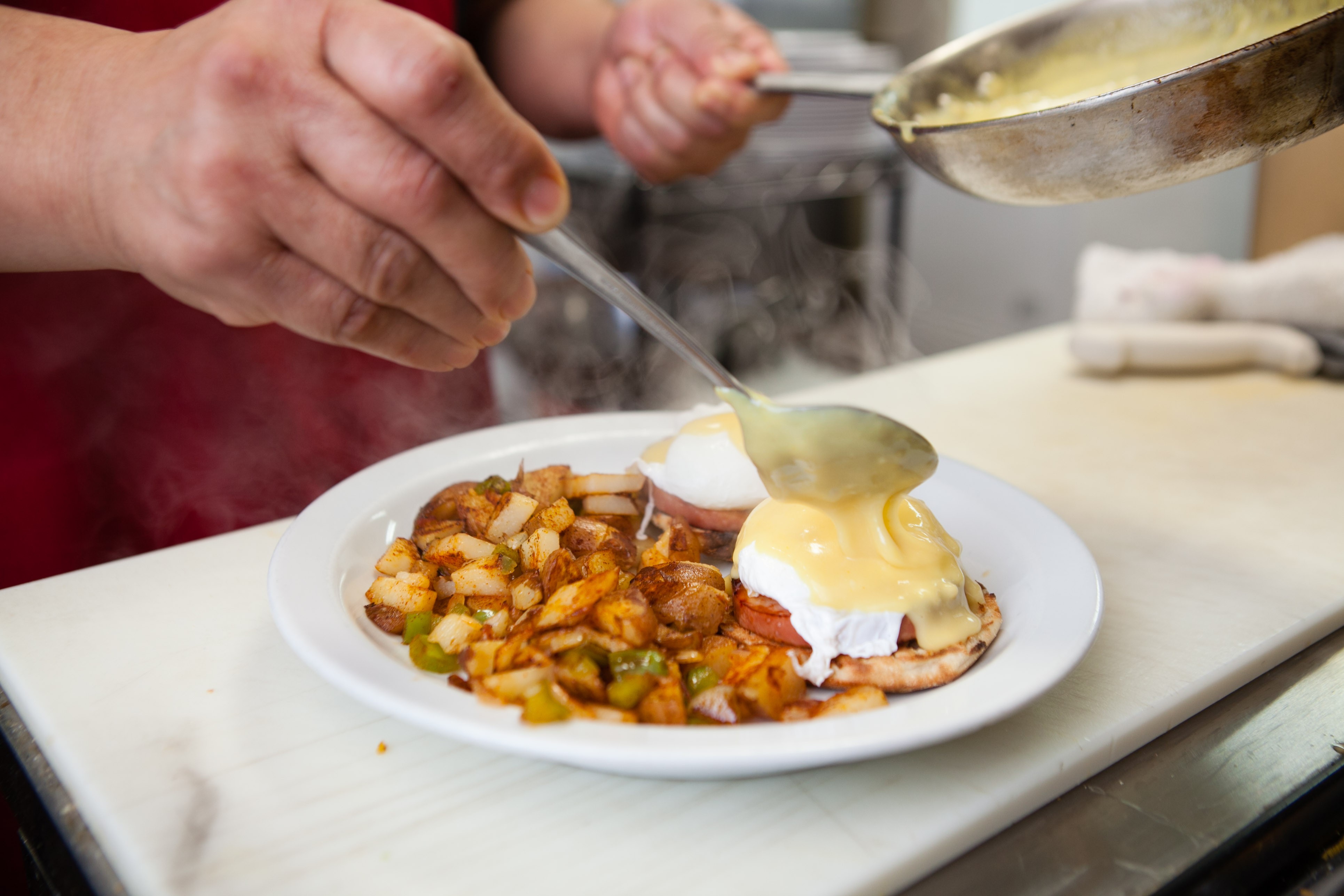
The eggs Benedict was nearly flawless.
Credits: Bert Johnson
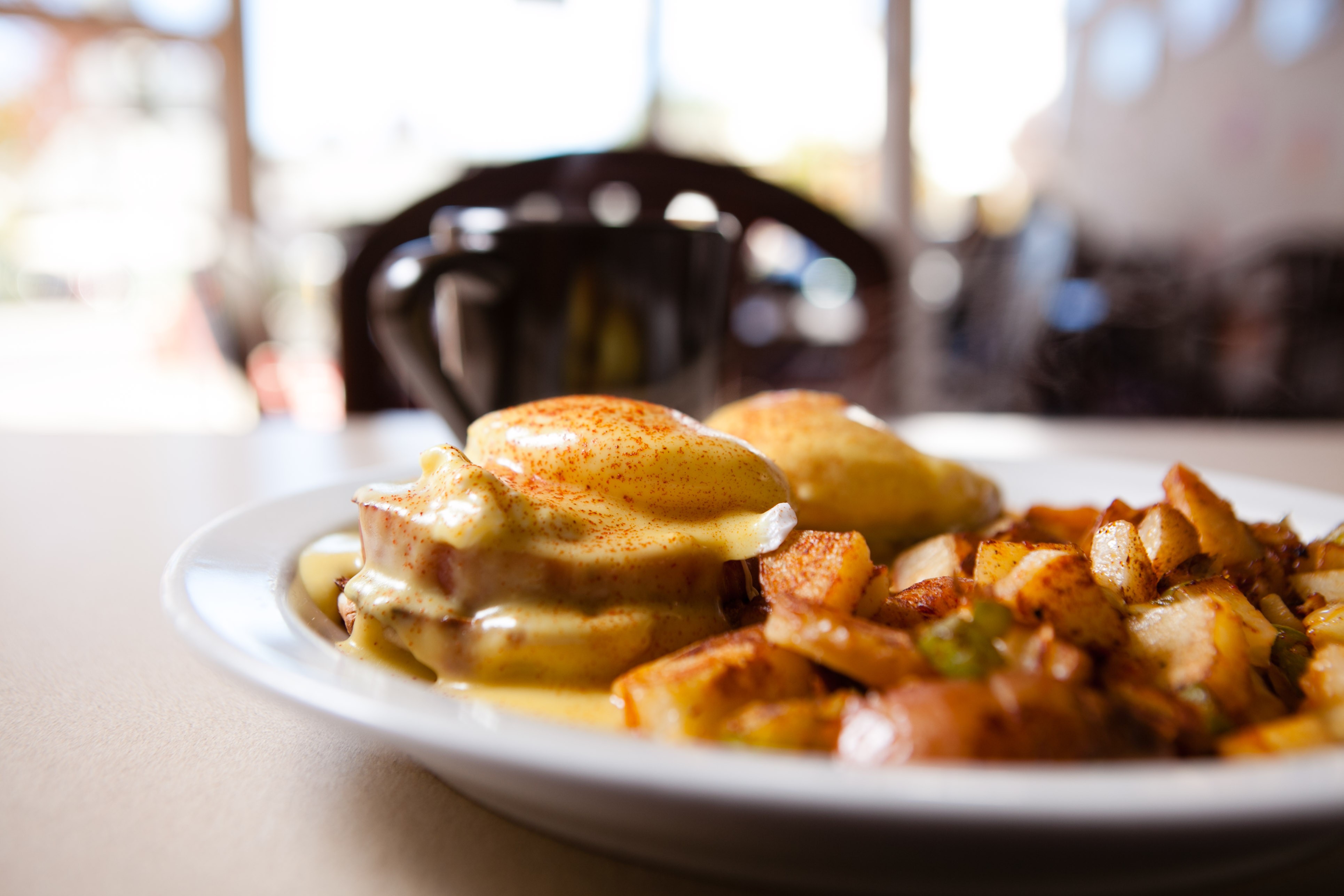
The eggs Benedict at Pyramids Restaurant & Grill.
Credits: Bert Johnson
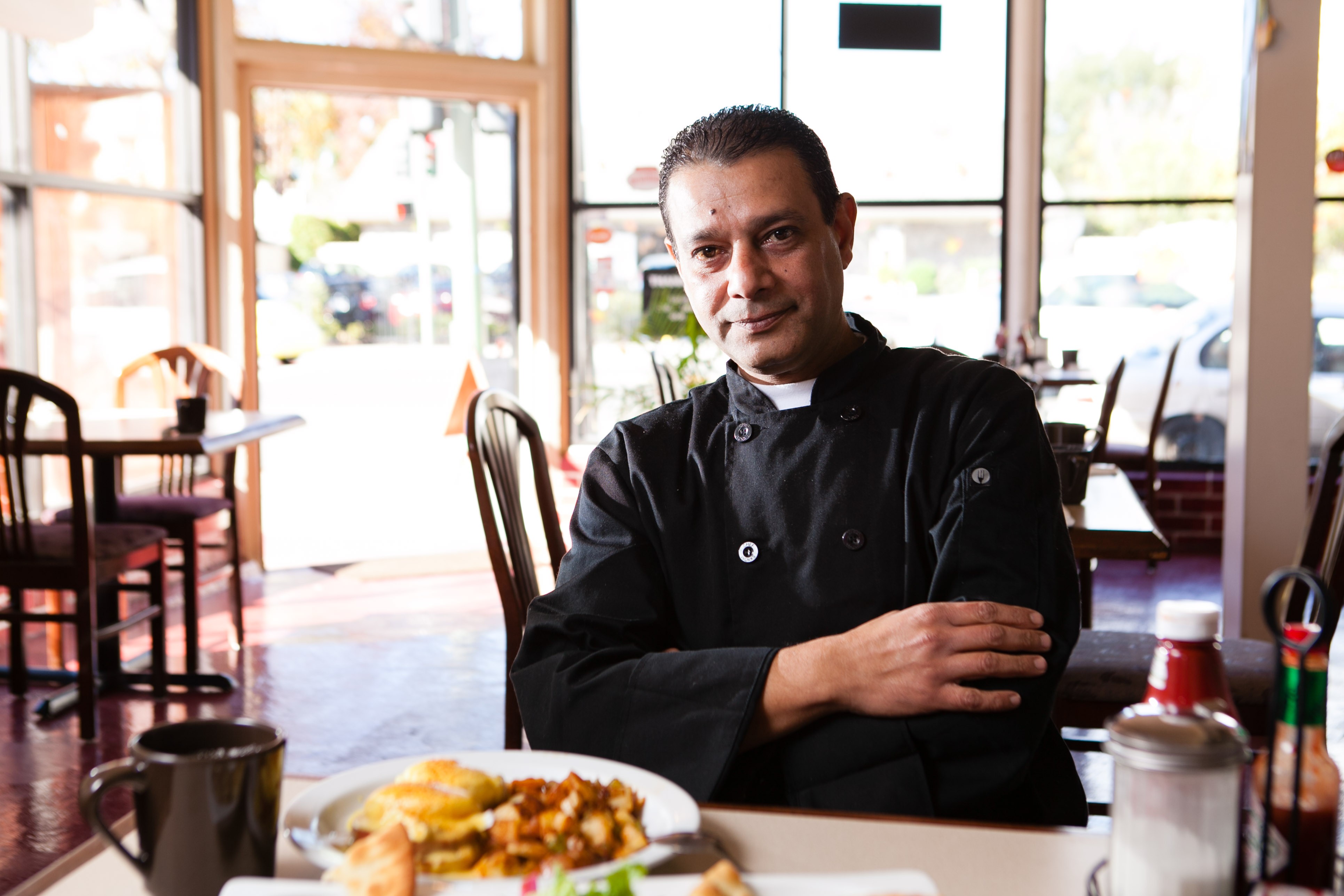
Emad Ghobrial had a vision of breakfast when he saw an abandoned pizzeria on High Street.
Credits: Bert Johnson
For those well-versed in the vocabulary of kebabs and falafel, the very fact that the East Bay is now home to a genuine Egyptian restaurant is cause enough for celebration. Previously, the closest thing we had was Royal Egyptian Cuisine, an Oakland-based food truck. At Pyramids, the Egyptian section of the menu looks identical to what you’d find at any generic Middle Eastern/Mediterranean spot, but often Ghobrial serves a version of a dish that’s unique to his home country — and, in at least one instance, to his hometown.
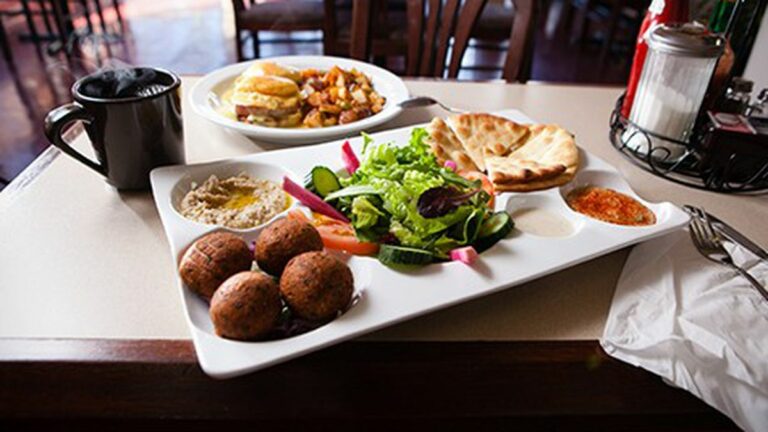
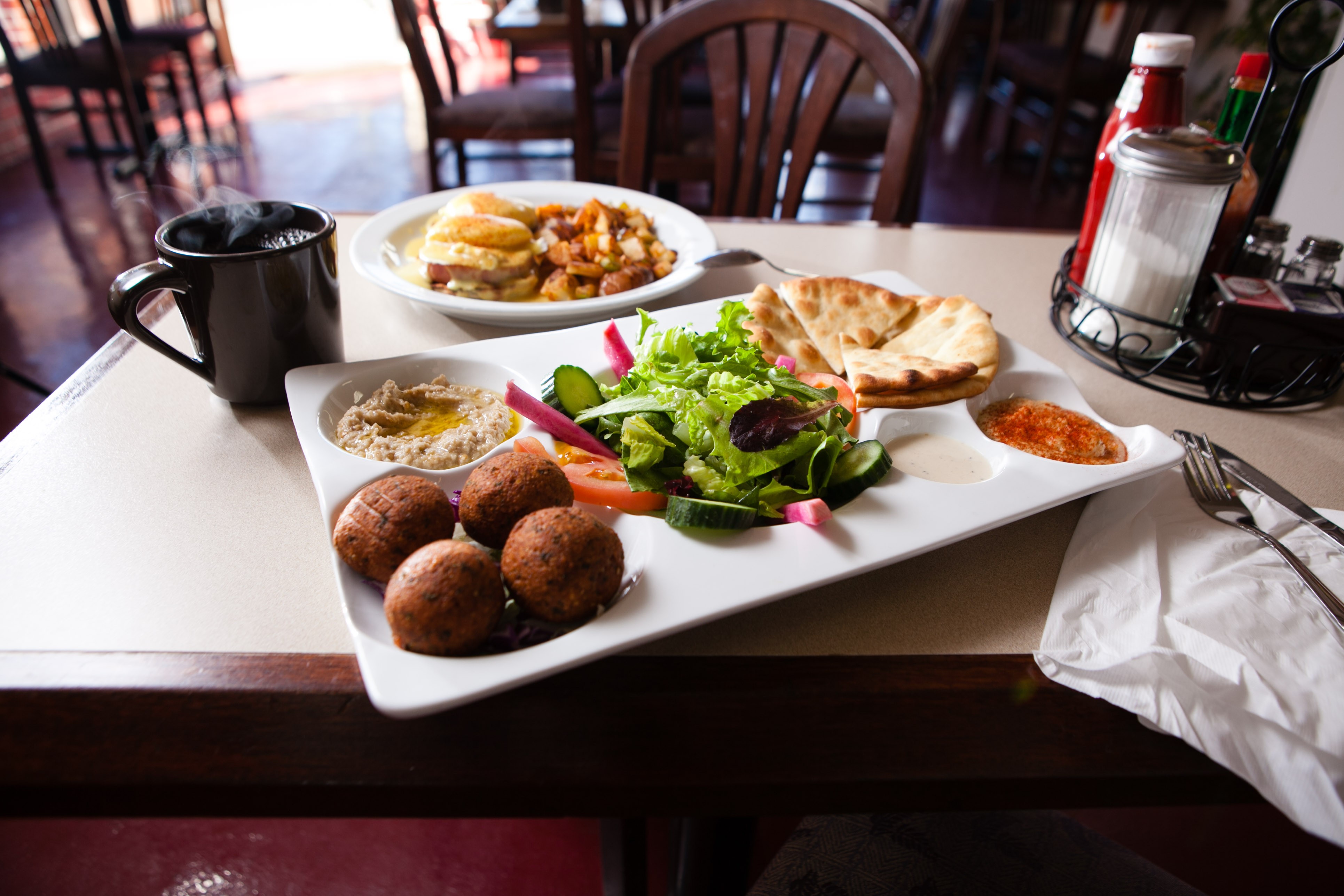
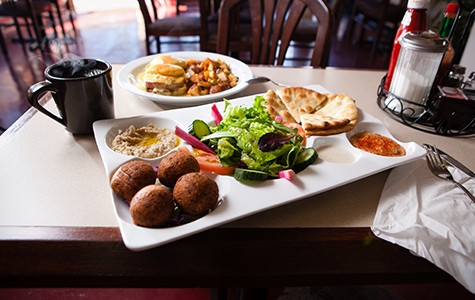
The mazza plate includes the Egyptian versions of several popular Mediterranean dips and small bites.
Credits: Bert Johnson
Take the dish listed on the specials board as the “Egyptian Breakfast,” aka ful mudames, a mash of soft-cooked fava beans that Ghobrial said 95 percent of Egyptian people eat for breakfast every day. That might be a slight exaggeration, but after having tried the version at Pyramids, I’d happily make the trek over once a week, at least, and start the day off right with a plate of Ghobrial’s ful (pronounced “fool”).
At its essence, ful mudames is a big plate of bean mush, cooked soft enough that you can smear it on a piece of grilled pita like you would hummus. Ghobrial simmers dried favas overnight over the lowest possible flame — soaking them more than really cooking them, he explained. The simplest ful is tossed with little more than olive oil and lemon juice, perhaps with some garlic, cumin, and tahini added for good measure. But Ghobrial serves the zestier Alexandrian version of the dish known as ful eskandarani, which is spiked with vinegar and chopped tomatoes and onions. Again, the comparison to hummus is apt — except soupier, brighter-tasting, and more texturally interesting. You’ll almost certainly need extra pita to finish it off, and, happily, Pyramids is the kind of generous, hospitable place where the server will refill your plate without you having to ask.
The other highlight of the Egyptian menu was a cumin-spiced lentil soup that was similar to what you’ll find at other Middle Eastern restaurants, with one notable embellishment that Ghobrial said is his own twist on the recipe: During the last step of the cooking process, he adds chopped onion that has been fried until it’s burnt. The little nubs of onion infused the soup with an earthy smokiness, and they were so luxuriously soft and rich that I mistook them for pieces of pork fat at first. (The soup is, in fact, entirely vegan.)
On the other hand, the gyro meat, available in a wrap or as part of a platter, was standard Mediterranean deli fare. It was fine, but you’re better off ordering this at restaurants where the cooks shave the meat off a vertical spit. Instead, consider sharing the abundant mazza plate, a spread of dips and small bites that shows off the Egyptian variations of several well-known dishes. It came, for instance, with three falafel balls, which I found somewhat dry and dense, though I liked the falafel’s almost cheese-like richness and its distinctive dried herb flavor. (The main difference, Ghobrial said, is that he uses a mix of fava beans and garbanzo beans, rather than just one or the other.) The dips were more interesting to me: a lemony hummus and a baba ghanoush that was one of the silkiest and most flavor-packed I’ve had — garlicky enough to make me thankful for the after-dinner mint that arrived with the check.
The mazza plate includes the Egyptian versions of several popular Mediterranean dips and small bites.
Credits: Bert Johnson
As tasty as all the Egyptian specialties were, at the end of the day, the restaurant has stayed true to Ghobrial’s original vision. It’s still a short-order breakfast spot first and foremost, and most of the customers around us were drinking coffee and eating omelets and toast. In that regard, I’m happy to report that Pyramids is solidly above average. The only fault I could find with the eggs Benedict was that the Hollandaise was a little thin. In every other important respect, it was a flawless rendition: the eggs poached just right, the craggy cut surfaces of the English muffin griddled until they had just the right amount of char. A side of hash browns were well-crisped if a little underseasoned. Meanwhile, the pancakes were buttery and fluffy and wide as a dinner plate: You’d be hard-pressed to find a more all-American version.
The only mistake I may have made when ordering was passing on the French toast, which Ghobrial said is by far the restaurant’s most popular item — made with thick Texas toast and exceedingly fluffy, he promised.
Ghobrial, who spent most of his career running banquet programs for luxury hotels and briefly owned a Chinese eatery in San Francisco, said he hopes to add dinner service sometime in the new year. He has already found another Egyptian cook to help him, and he plans to add a number of other traditional dishes: Egyptian-style stuffed grape leaves, for instance, and a kind of meat-stuffed bread called hawawshi, which Ghobrial likens to Egypt’s take on pizza.
For now, though, it is enough to take pleasure in the odd mix of cultures that Pyramids represents — where a cumin-spiced lentil soup might serve as precursor to a plate of pancakes, or where you use your last few sips of coffee to wash down a piece of flaky, honey-drenched baklava.
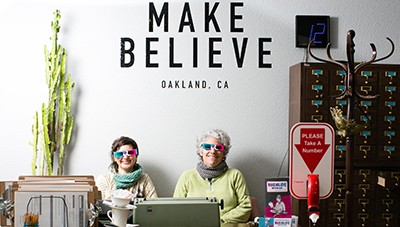
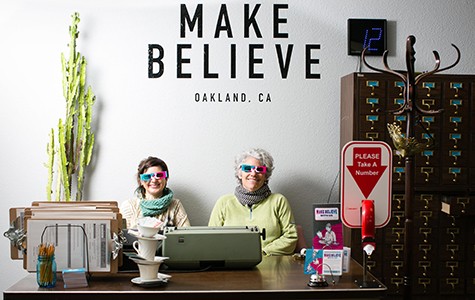
Last week, the front of Chapter 510‘s newly acquired home, an old church on the corner of Telegraph and 23rd Street, looked like any non-descript business about to open — complete with notices taped to the windows. But on closer inspection, the signage revealed an atypical whimsicality: “‘Public Notice of Application to Make Believe’ … issued by the Department of Dreams.”
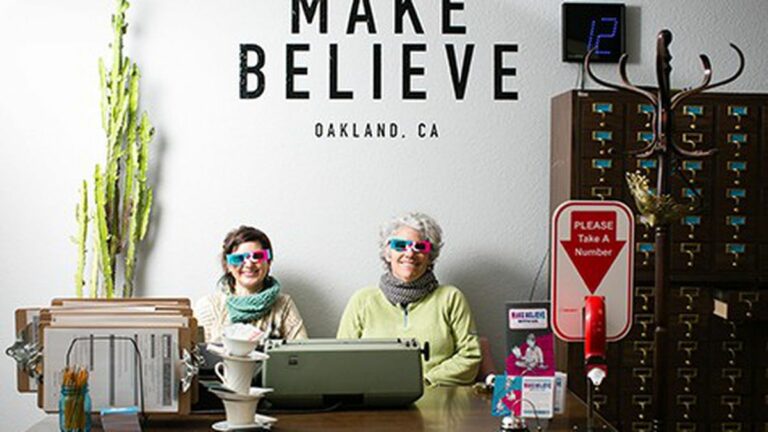
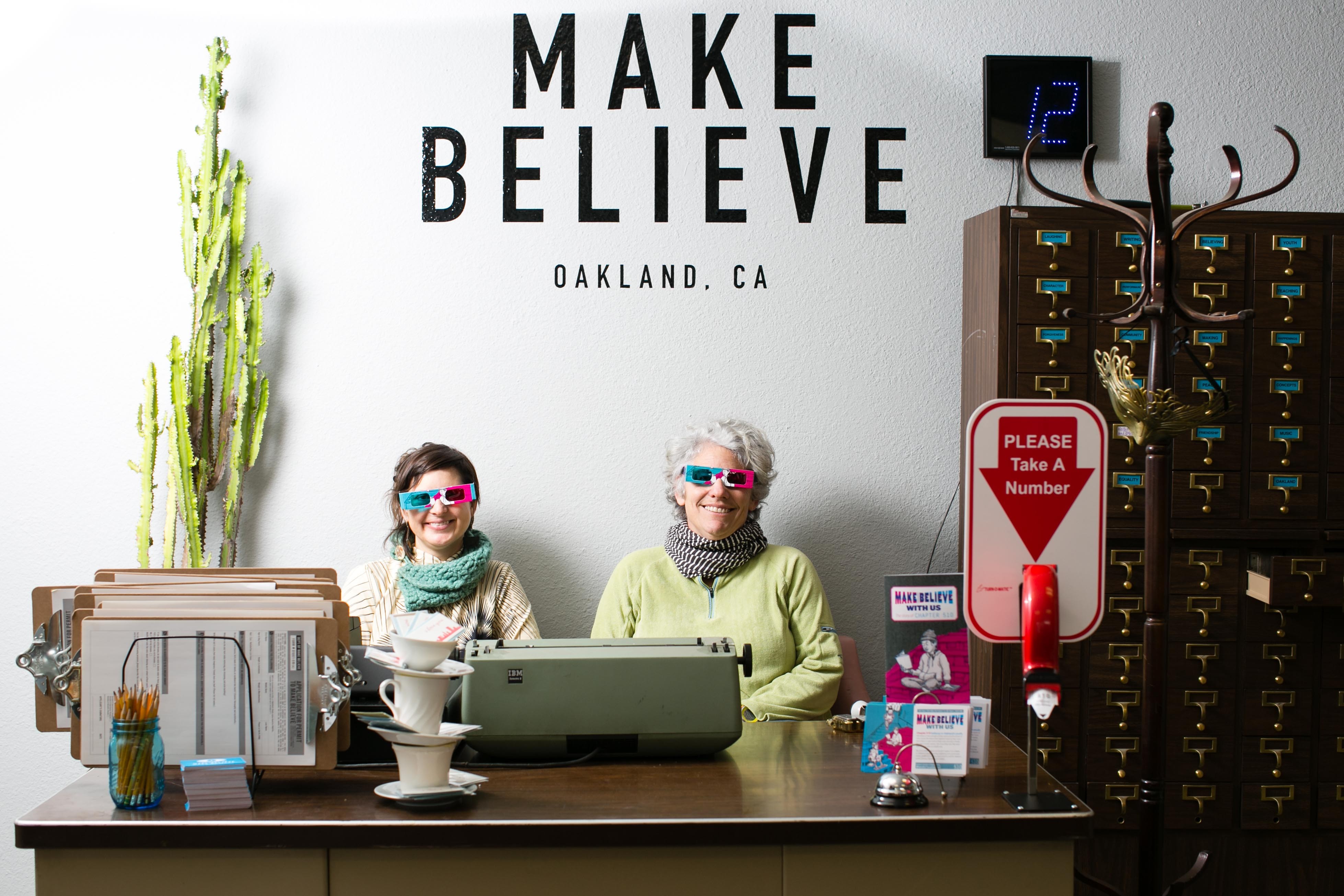
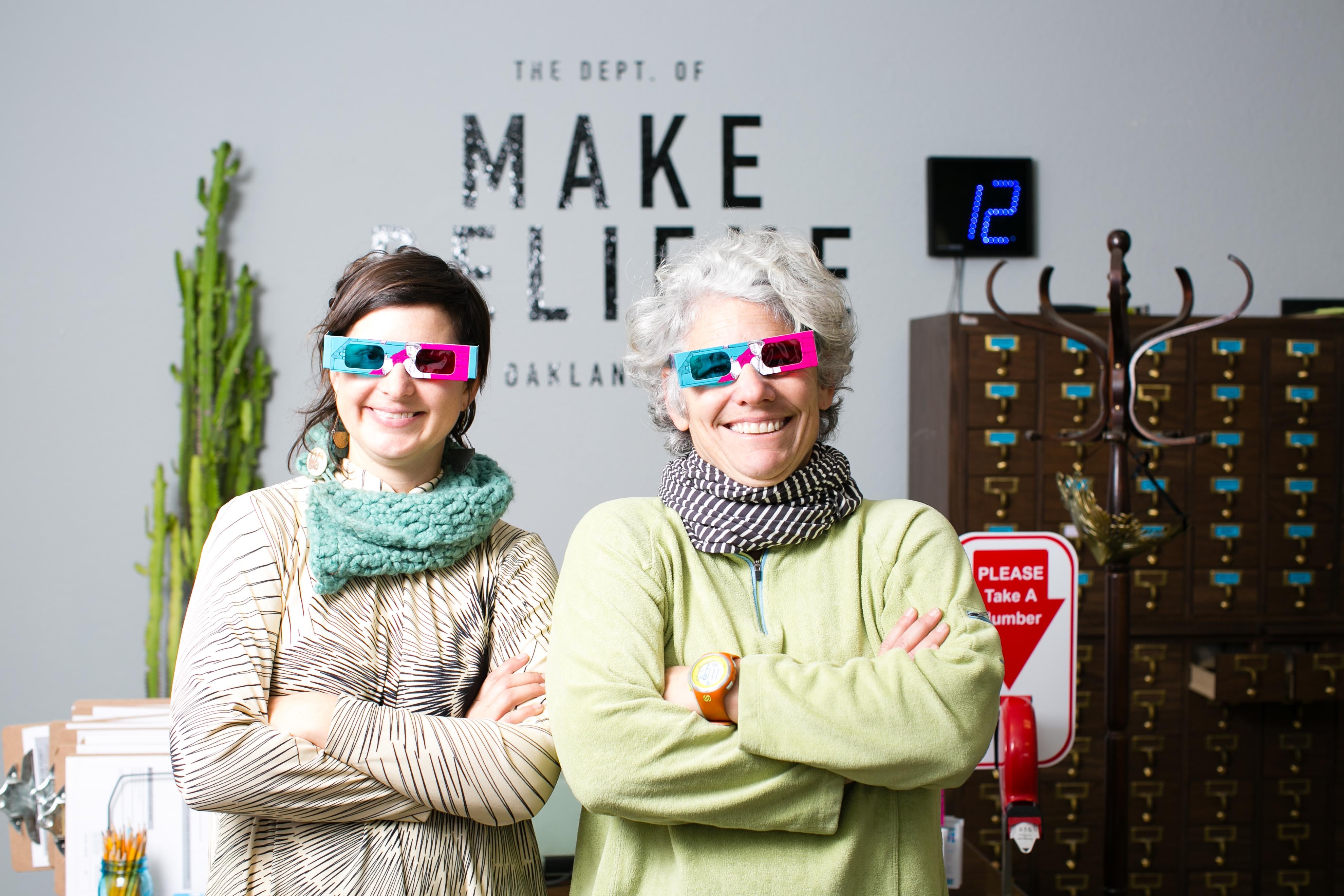
Chapter 510 is a small, volunteer-fueled youth organization that helps underserved Oakland students learn how to research, write, and publish books. Soon, it will open its first headquarters, where it will expand its in-school programming to afterschool hours. And to help fund the organization, the center will welcome students into an imaginative retail space, called The Department of Make Believe.
Tavia Stewart-Streit (left) and Janet Heller hope to flip bureaucracy on its head.
Credits: Bert Johnson
Tavia Stewart-Streit (left) and Janet Heller.
Credits: Bert Johnson
Chapter 510 was started in 2013 by Janet Heller (a long-time educator and founder of WritersCorps), with support from a group of Oakland librarians, educators, artists, and writers who were interested in bringing a literacy project in the vein of 826 Valencia to the East Bay. Also known as the Pirate Supply Store, 826 Valencia is a youth writing center located at its titular address in San Francisco’s Mission District and was founded in 2002 by author Dave Eggers. Eggers aimed to create a resource that brought in writers and educators as volunteers to give one-on-one tutoring attention to struggling children in the Bay Area. To conform with the retail requirement for the space he had acquired, he and his team turned the front of the center into a playful pirate-themed shop that would draw in children and transform their attitudes toward homework. The model worked so well that it caught on, resulting in Brooklyn Superhero Supply, LA’s Time Travel Mart, and many other iterations of the pairing.
Until now, Chapter 510 had focused on developing its own programs that utilize the effectiveness of one-on-one attention but are specifically tailored for Oakland youth. Currently, its team of approximately 25 volunteers is working with all grade levels of students at MetWest High School, North Oakland Community Charter School, and Acorn Woodland Elementary School offering tutoring during the day and helping with Community Action Research Projects as part of the curricula. In addition, they publish books written by and for Oakland youth to encourage literacy.
“We really feel a sense of urgency based on what our students are telling us,” said Heller. “They don’t have time to write, they want relationships with adults, they need our help … teachers are stretched.”
Heller was the sole full-time staff member of Chapter510 until Tavia Stewart-Streit joined her this past February. For ten years, Stewart-Streit was at NaNoWriMo (National Novel Writing Month), an organization that helps writers produce books. She originally moved to the Bay Area to volunteer at 826 Valencia. Together, the pair rallied to expand Chapter510, and started a 510 fundraising campaign that launched on May 10, 2014 and aims to raise $510,000 (through 510 donations of $51 or more) in 510 days, plus log 5,100 volunteer hours.
Tavia Stewart-Streit (left) and Janet Heller hope to flip bureaucracy on its head.
Credits: Bert Johnson
Heller and Stewart-Streit planned to find a building after raising the money, but as they were working out of their former office space in Rock Paper Scissors Collective, an opportunity fell in their laps. Two architects, Erik Bloom and Todd Bennett, together known as Parcel Projects, had come by to introduce themselves as new neighbors after purchasing the former church across the street in hopes of transforming it into a community center housing local organizations. A few months later, Heller and Stewart-Streit moved Chapter 510 into the largest portion of the 8,000 square foot building — happy to have found a perfect home, but with only a portion of their campaign money raised. To push for the next round of donations, they launched an Indiegogo campaign earlier this week.
The Department of Make Believe will also help raise funds by offering products assembled in-house, the profits from which will go directly back into the organization’s programming. Products will include licenses to dream, permits to make believe, worry containment units (tubes), instant serenity (ear plugs), intention candles, imaginary friend food, dreams masks (for night and day), and a curated selection of books in multiple languages. Although many of the items are simple products, the sharply designed packaging (created by E.M. Wolfman Small Interest Bookstore owner Justin Carder with ideas that came out of a public design charrette), transforms them into inspirational keepsakes. “We want to inspire not only our students to create, but everyone in Oakland,” said Stewart-Streit. “This is a store to come buy things to help you connect with that part of yourself that used to make believe all the time and play pretend.”
Chapter 510 will open its retail store with a grand opening party this Friday at 6 p.m. The writing center will gradually open up to the public for programming, but won’t be running full steam until after renovations take place in February. Eventually, the whole building will host the Oakland Book Festival, a community food project, and other local artists and nonprofits.
Once open, the center will offer free writing and bookmaking workshops, afterschool drop-in tutoring for K-12 students, professional training in publishing for high school students, access to free books, and a community space for young writers. But Heller and Stewart-Streit also want the center to morph continuously, in reaction to needs and desires expressed by students and community members.
“People say all the time, ‘I’m so surprised this hasn’t happened already,’ just because Oakland needs this so bad,” said Heller. “There’s so many talented, young voices and lots of really important things to say. So it’s just really exciting to see what’s already been said and what’s going to be written through our programs.”
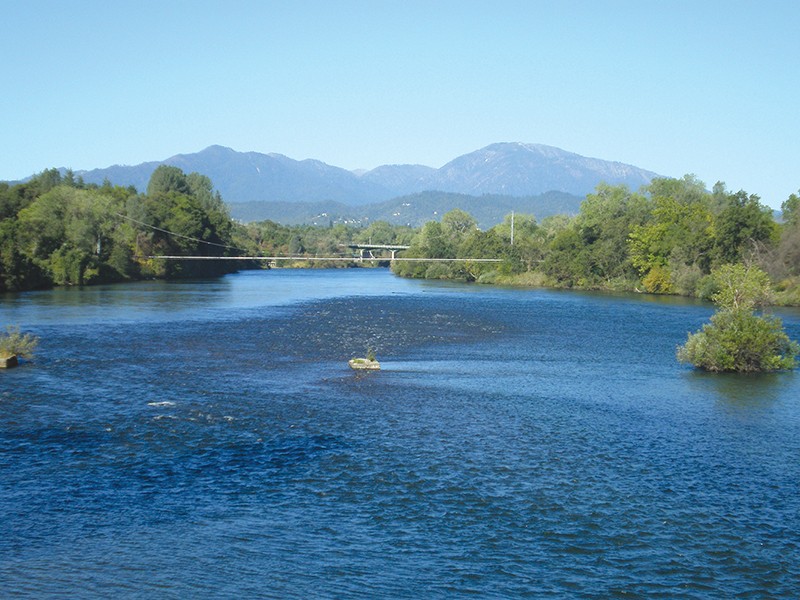
Last winter and spring, thousands of adult Chinook salmon nosed upstream past Richmond, through the Carquinez Straits and into the Sacramento-San Joaquin River Delta, on their way to spawn in the Sacramento River. At about the same time, officials at Shasta Lake, a few miles north of Redding, did something that critics say was stupid, negligent, and illegal: They opened the spigot on the reservoir’s outflow pipes in order to send extra water downstream for farmers — and they didn’t save enough for the fish.
Shasta Lake’s levels dropped so low, and the summer grew so hot, that even the deepest, darkest, coldest corner of the lake — the pocket of water abutting the base of the dam — grew steadily warmer. By the time the salmon had reached their summer spawning grounds, the water exiting Shasta Lake and flowing past the fish was almost 60 degrees Fahrenheit — dangerously warm for temperature-sensitive fertilized Chinook eggs. For the second summer in a row, environmentalists and fishermen say, an entire year class of the endangered winter-run Chinook was mostly annihilated.
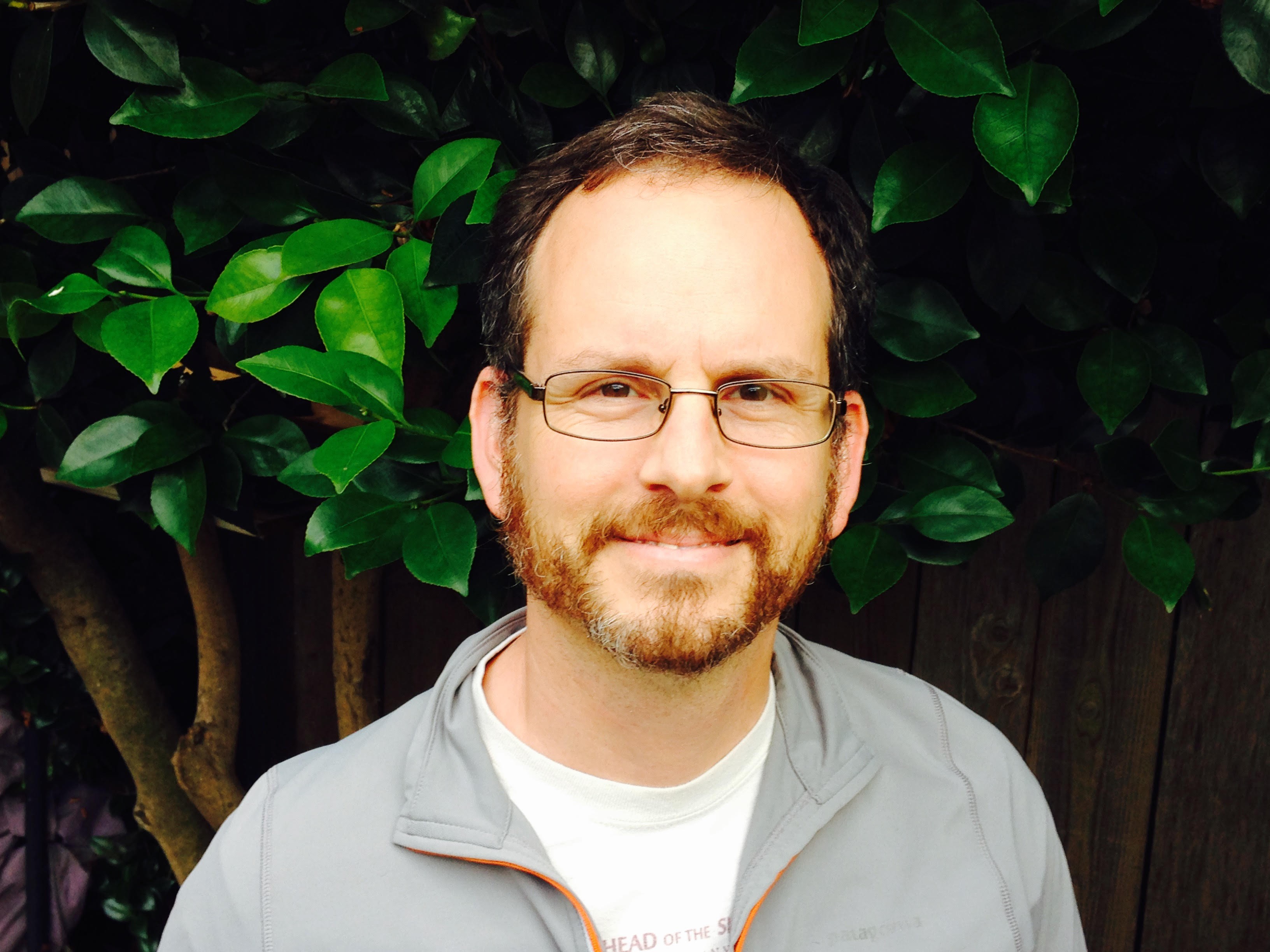
John McManus noted that when you protect the salmon fishery, you also protect habitat for other species.
The Sacramento River.
Just how this happened, and whether it could have been avoided, has been the source of finger pointing, excuse making, and legal wrangling. Officials with the US Bureau of Reclamation, the federal agency that operates Shasta Dam, have blamed the drought for the mass salmon die off and say there simply wasn’t enough water to go around. Louis Moore, spokesperson for the bureau, said in an interview that his agency worked with all stakeholders to insure that water was released from reservoirs at the most optimum time, considering the needs of farmers as well as fish and wildlife.
But environmentalists and fishermen note that by the end of summer 2015, many farmers in the Central Valley had received 75 percent of their water contract allotments, while at least 95 percent of the endangered winter-run Chinook’s fertilized eggs and newborn fish had been killed. Impacts to the fall-run Chinook — the run that supports the coastal fishery — are still being assessed.
Environmentalists say the Bureau of Reclamation had the power to protect the fish but opted to prioritize the state’s agricultural industry instead. “The way this keeps getting told is that drought killed the winter-run Chinook salmon,” said Jon Rosenfield, a conservation biologist at The Bay Institute. “But the agencies just chose not to protect the endangered winter run, the spring run, steelhead, and the fall run — which is commercially valuable.”
Indeed, there’s likely never been a worse time to be a salmon in California than right now. Dams and levees have made most of the state’s major rivers incapable of supporting wild salmon, and increasing human demand for water threatens what habitat remains. Governor Jerry Brown insists he has a plan to save the delta and its salmon, but critics warn that his vision of diverting the Sacramento River underground through two giant tunnels and into the San Joaquin Valley will destroy the delta ecosystem.
Global warming will also have its impacts on salmon. Long-term forecasts call for reduced precipitation and warmer winters, meaning less snowpack and cold water — exactly what salmon need during their inland life stages.
Salmon are known to be a resilient species. If their habitat remains intact, they can bounce back from population drops in just a generation or two, thanks to short life spans and female fish that carry thousands of eggs. That means if plenty of rain falls this winter and the next, the numbers of salmon in California could rise back toward the one-million-adult mark.
“But they’re only resilient to a point,” noted Doug Killam, a biologist with the California Department of Fish and Wildlife who studies the spawning fish each year near Redding. “The run is on the edge now. The bottom line is: Fish need water, and if it doesn’t rain soon, they’re going to be in real trouble.”
And so is California’s fishing industry.
If the state’s reservoirs don’t refill this winter, extinction of the winter-run Chinook will become an imminent threat. Fishery managers will probably curtail the ocean fishery in 2016, and may even close it to protect the winter run from decimation. If that were to happen, it could throw the coastal fishing economy — already reeling from the closure of the Dungeness crab season — into turmoil.
Last January, officials with the National Marine Fisheries Service (NMFS) sent a letter to California water officials warning them that their temperature modeling system wasn’t working. “[T]hroughout much of the summer of 2014, actual water temperatures … were upwards of 4 [degrees Fahrenheit] higher than Sacramento River temperature modeling results,” the letter stated.
NMFS regional administrators Maria Rea and William Stelle advised David Murillo, regional director of the Bureau of Reclamation, to recalibrate his agency’s temperature modeling system in order to avoid a repeat of 2014, when the bureau released warm water from Shasta Lake onto millions of winter-run salmon eggs and newborn fish, destroying nearly all of them.
The Natural Resources Defense Council (NRDC) and The Bay Institute sent water authorities a similar warning notice in May.
But in the end, almost the exact same thing happened in 2015 as the year before. “We classify this as a ‘year class failure,'” said Rea, referring to 2015, in an interview. “We think of the Chinook as a three-year fish, so losing two years in a row is serious.”
Before the Gold Rush, Chinook salmon swarmed for months each year in the Central Valley’s river system. There were easily a million spawners annually — and maybe twice that amount — with fish nearly clogging even the mightiest of California’s waterways. Numbers began declining as European Americans arrived and made California their home. Mining activities sent mountains’ worth of sediment into rivers, burying gravel beds where the fish spawned, while intensive fishing pressure curbed the population downstream.
Then, in the 1900s, as huge dams began appearing on most major rivers in the Central Valley, the Chinook became cut off from hundreds of miles of spawning grounds. Populations crashed. In the San Joaquin River, the fish never came back, while hatcheries in the Sacramento Valley, built specifically to offset the impacts of the dams, have helped maintain stable numbers of salmon. However, with more water leaving the delta than ever before via powerful pumps near Tracy, even the remnant runs of fish are now failing.
The Sacramento River’s wild Chinook salmon spawn in the cold water that flows out of Shasta Lake. By measuring water temperatures throughout the lake, knowing the current volume of the reservoir, and looking ahead through the year at agricultural demands from the valley downstream, dam operators are able to calculate precisely how much water they can release while preserving the cold water pocket at the base of Shasta Dam.
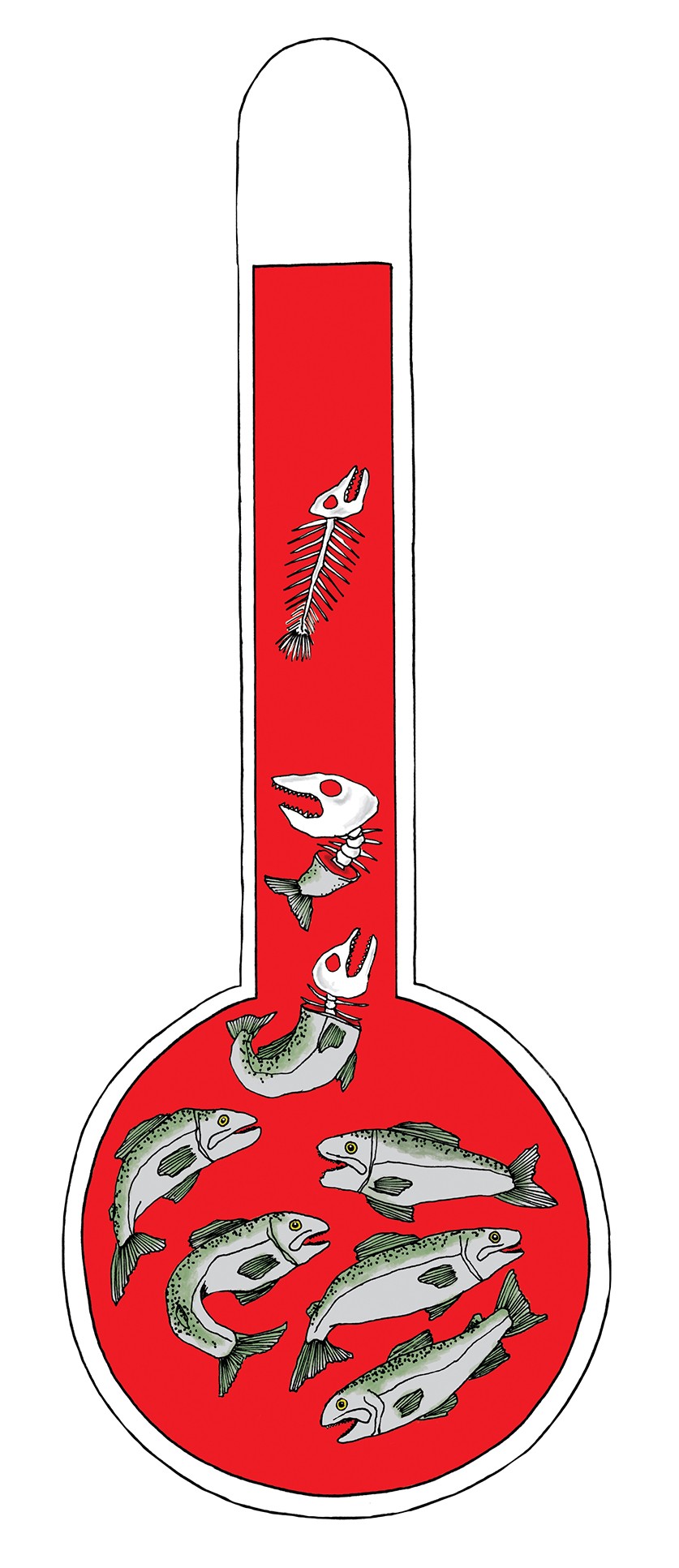
But sometimes they mess up. Bureau of Reclamation officials told me that a pivotal thermometer in the lake wasn’t working early this year.
“They also had a lame excuse that their temperature control device wasn’t working and they didn’t know,” said Tom Stokely, director of the environmental group California Water Impact Network.
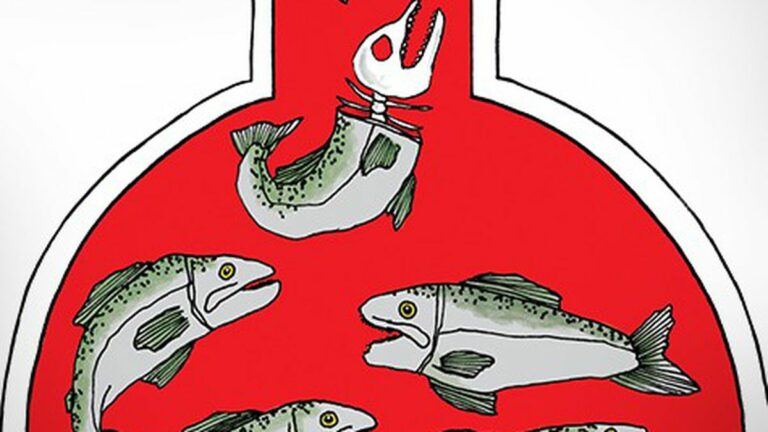
Credits: Illustration by Roxanne Pasibe.
The temperature control device to which Stokely was referring is a large metal box placed over the outlet hole on the inside face of Shasta Dam. It extends deep down into the cold bottom water that is so critical for salmon. On this box are shutters from top to bottom. When water managers open shutters at the bottom of the box, only cold water exits the lake, passing through electricity turbines as it heads into the Sacramento River. When salmon are not spawning downstream, shutters higher on the box open up, releasing warmer water and saving the cold water for later.
However, an exchange of letters in 2004 between Stokely and fishery managers with National Oceanic and Atmospheric Administration (NOAA) shows that federal agencies have known for at least the past eleven years that the temperature control device on Shasta Dam doesn’t function properly. In that exchange of letters, Rodney McInnis, regional administrator for NOAA fisheries at the time, suggested that entirely bypassing the turbines and using a separate outflow at the base of the dam could solve problems relating to releasing warm water into the Sacramento River.
That same solution could have been used this year to protect the spawning salmon in the river, Stokely noted. “But, of course, that would have meant losing hydropower generation, and the bureau wasn’t going to do that,” he said, referring to the fact that McInnis’ solution would have impacted the generation of electrical power by Shasta Dam.
Stokely also noted that water from the Trinity River, which is pumped through a tunnel in the coast range and into the Sacramento River system just below Shasta Dam, is usually several degrees warmer than the Sacramento’s water. He said the Bureau of Reclamation was pumping this water into the Sacramento during the summer spawning season. Holding off for a few weeks could have helped preserve the critical temperature levels.
“I am personally outraged at the deception and the lies by the Bureau of Reclamation and the fisheries regulatory agencies and how they just can’t cop to the fact that their priority is to send water to [agriculture],” Stokely said. “It’s not to save fish.”
Rosenfield said the Bureau of Reclamation officials wrote up a decent plan for releasing flows from Shasta through 2015 — but then changed it. “They said, ‘This is how much cold water we’ll need so we’re going to release water at a certain rate during the summer — this is our temperature plan,'” Rosenfield said. “Then they proceeded to not follow their temperature plan.
In its “Drought Contingency Plan,” issued last January, the bureau stated that it would release from Keswick Reservoir — a holding pool just below Shasta Lake — 3,250 cubic feet of water per second through much of the spring, and then start to increase flows in late May. Instead, the bureau boosted flows dramatically in mid April. By April 18, water was gushing out of the reservoir at a rate of 4,000 cubic feet per second, and then a little more than a week later, the releases reached 7,000 cubic feet per second. Saving just some of that water in Shasta, Rosenfield said, could have saved millions of salmon.
In a normal water year, when reservoir supplies are plentiful, the senior water rights holders in the Sacramento Valley receive about 2.1 million acre-feet of water. That’s enough to fill a skyscraper about 400 miles tall. This water comes mostly from Shasta Lake, but also from the Trinity River via a tunnel drilled decades ago in an aggressive maneuver to secure more water for farmers in the dry San Joaquin Valley. Because 2015 was a critical water year due to the drought, the Central Valley’s senior rights farmers didn’t receive their normal allotments of water and instead got 60 to 65 percent, according to Thad Bettner, general manager of the Glenn-Colusa Irrigation District, a consortium of farmers northwest of Sacramento.
But that’s still a lot of water, according to environmentalists and fishermen who think deliveries should have been cut even more. Just a fraction of that volume, they’ve argued, could have been enough to keep cold water for the salmon eggs.
Last month, the NRDC, The Bay Institute, the Winnemem Wintu Tribe, and several other groups filed a court complaint, alleging that the Bureau of Reclamation repeatedly violated the Endangered Species Act. They alleged that by releasing so much reservoir water from Shasta Lake for farmers, the bureau failed to safeguard the cold water in the lake that is critical for salmon. The complaint is being added to a decade-old lawsuit focused on delta smelt.
Credits: Illustration by Roxanne Pasibe.
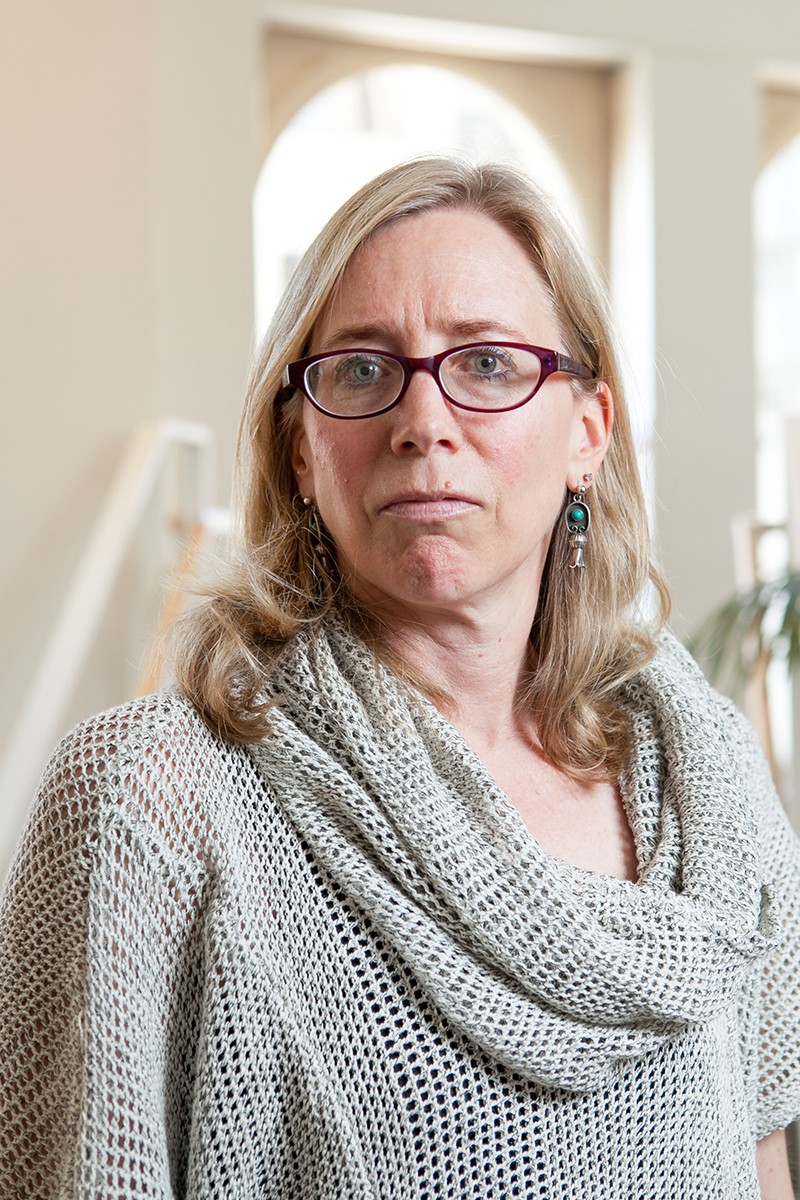
Kate Poole, a senior attorney with the NDRC, said in an interview that favoring farmers — no matter how senior their water rights — over endangered fish is illegal. Even protection of the fall-run Chinook, which is not listed as threatened or endangered but which is a commercially valuable resource, must be prioritized above senior water rights, she argued. “The seniority of water rights does not insulate [water agencies] from their obligations to protect public trust uses,” Poole said.
However, Bettner of the Glenn-Colusa Irrigation District, contends that the estimated mortality rate of 95 percent of the winter-run salmon this year from the lack of cold water in the Sacramento River may be exaggerated. He suspects that other factors are causing the low fish counts.
The counting method used to estimate the survival rate of the young salmon, Bettner suggested, could be skewed. He also speculates that predators, like striped bass and even native trout, may be eating the young salmon. He’s also argued that it’s possible that the 2015 brood of winter-run juveniles is still in the river and that they just haven’t migrated downstream past the fish counting station near Red Bluff, where a battery of rotary screw fish traps has been placed across the river.
But Jim Smith, a biologist with the US Fish and Wildlife Service, said in an interview that Bettner’s optimism isn’t supported by evidence. In most years, he said, the majority of juvenile winter-run salmon would have migrated out of the upper river by now. He believes the fish traps are working correctly and that mortality is indeed alarmingly high. He blames warm water. “Temperatures were higher in the river than they’ve been in 25 years,” he said.
Not only did salmon in the upper reaches of the system suffer this year. Downstream, too, in the delta, reduced flows of freshwater led to saltwater intrusion from San Francisco Bay and reduced water quality overall, according to Rosenfield. He noted that the higher-than-promised springtime releases from Shasta and Keswick could have been used to improve water conditions in the delta — as well as give a downstream push to the fall-run salmon smolts as they tried to reach the sea. Instead, he said, nearly half the excess flows were siphoned for farms.
“If there was ever a year when the state water board and the agencies were going to rise to the occasion and say, ‘You know what? We need to protect these vital resources that we will lose forever and give less water to rice farmers,’ this was the year,'” Rosenfield said.
The drought has brought misery to some farmers. In places, they have watched trees die and wells run dry. Heightened environmental restrictions on pumping from the delta caused additional burdens, and many farmers wound up with zero surface water allowances in the past two years, forcing them to irrigate their orchards with groundwater, buy surface water at high prices from others, or fallow their land.
Yet despite these challenges, farmers are still doing quite well in California. The state’s agriculture industry sold $54 billion worth of crops in 2014 — an all-time record, though that was partly due to inflated prices in foreign markets. The almond industry, increasingly a symbol of one arid region’s dependence on water imported from wetter places, is also thriving. Since June 2014, California farmers have planted 12 million almond trees — resulting in 75,000 acres of new orchards, according to the US Department of Agriculture. The almond industry, expanding rapidly for years, now occupies more than a million acres of California. That’s about 1,600 square miles.
Meanwhile, not far away from these lucrative trees, one of the most prolific estuaries in the world is dying, with a lineup of fish species edging briskly toward extinction. The delta smelt is now considered to be doomed, if not quite gone. Right behind them are green sturgeon, Central Valley steelhead trout, river lamprey, Sacramento splittail, and Longfin smelt. Now, both the winter- and spring-run Chinook seem to be edging into the queue for extinction.
But many farmers say the destruction of the state’s once-mighty salmon runs is not their fault. Mike Wade, director of the California Farm Water Coalition, a group that represents farmers throughout the Central Valley, claims that the decline of native fishes is largely the result of predators — like black bass, striped bass, and sunfish — that were introduced into the estuary.
And he said that because the restrictions on pumping that were intended to reverse the declines aren’t working, other factors must be more significant. “We’ve been curtailing our pumping for 25 years, and we’re still seeing fish declines,” said. “So we need to start being smarter.”
Wade argues that cyclical shutdowns of ocean productivity and loss of inland habitat where juvenile salmon used to spend the first months of their lives are key factors in Chinook declines. In fact, many scientists would agree and are now at work on projects that would restore the floodplains and wetlands alongside the Sacramento River, separated from these areas long ago by levees.
But scientists, environmentalists, and fishermen say the correlation between water pumping from the delta and declines in fish numbers is too strong to ignore. In the 1960s, when both striped bass and Chinook salmon were still very abundant (along with many other fish species), water diversions from the delta via the pumping stations near Tracy were about 1.5 million acre-feet a year. Water exports grew to about 4.5 million-acre feet annually in the 1970s and continued to steadily increase. In the early 2000s, water exports exceeded 6 million acre-feet for several years — record high pumping rates that were followed within three years by record low returns of salmon. The commercial salmon fishery was shut down for two years — a disaster for the state’s salmon fishermen.
Chinook salmon spawn in the cold water that flows out of Shasta Lake.
Nonetheless, Wade contends that the correlation between water exports and fish declines is just a coincidence that does not prove causation and does not merit denying farmers the water they need to prosper.
But Peter Moyle, a fisheries scientist at UC Davis, said many inter-related factors have affected salmon abundance, and while water diversions from the river system are not necessarily the direct cause of mortality, they have much to do with salmon survival rates — both in freshwater and in the ocean.
“Anyone who looks for a simple cause-and-effect relationship in [n]ature doesn’t understand how things work,” Moyle wrote in an email to me. “Flows rarely act alone in affecting salmon survival. The timing of flows, for example, may be more important than the amount of water. Warm water from low flows may increase survival of predators and competitors, resulting in lower survival of juvenile salmon. Adult salmon may die on the way to spawn because of warm water from inadequate flows, resulting in fewer fish in following years.”
Salmon fishermen, meanwhile, can’t help feeling that they and the fish they live on have been shortchanged by California’s water allotment system. “Salmon have just never gotten a fair shake on water to begin with,” said Chuck Cappotto, a retired commercial fisherman who sits on the board of directors of the Pacific Coast Federation of Fishermen’s Associations. “When 80 percent of the state’s [available] water is going to [2] percent of its gross domestic product, farmers have no room to complain whatsoever,” he said, referring to California’s agricultural industry.
Mike Hudson, a commercial salmon fisherman in Berkeley, said that aside from removing major dams, the most obvious fix for the state’s straggling salmon populations would be to cut the water pumping rates from the delta. Of the 35 to 40 million acre-feet of water used by agriculture in California each year, just 5 to 6 million acre-feet originate in the delta. “It’s basically a very small percentage of the water for farms,” said Hudson. “And we just want them to cut it back to 3 million acre-feet.” That’s the level of water that fishermen and environmental groups, including the Environmental Water Caucus, say could be a sustainably removed from the delta each year.
Hudson believes this would have a tremendously beneficial effect on salmon numbers at a relatively small cost to the state’s agriculture industry. “That the easiest thing to be done,” he said. “But it’s also the hardest thing.”
Environmentalists say the decision to favor agriculture over Chinook salmon was illegal.
For many commercial fishermen, the year ahead could be a financial disaster. The Dungeness crab season has been delayed indefinitely due to toxins detected in samples of crab flesh — an action that will cut into the incomes of thousands of people.
Now, to protect winter-run Chinook, fishing is probably going to be tightly restricted, if not closed entirely, next year. While fishermen on the ocean mostly catch the relatively abundant fall-run fish, baited hooks in the water can easily catch winter-run salmon. So imposing tighter restrictions on all salmon fishing in Northern California waters may be the only way to insure that the endangered fish are not eliminated.
Hudson knows this must be done — but he doesn’t think it’s entirely fair. “They’re allowed to kill almost all of the fish in the rivers and the delta, but when it comes to protecting the last few hundred adult fish, they will shut our whole industry down,” Hudson said. “They have a history of doing that.”
Along the entire coast, commercial salmon fishermen are wondering how they will cope. Many are thinking about buying a costly state permit to fish for rockfish. Some are gearing up to fish far from shore for deepwater sablefish, usually marketed as black cod.
Hudson has considered installing an expensive refrigeration system on his boat so he can motor north into Oregon waters to fish for tuna. But the investment would cost at least $20,000, he said, and he probably isn’t ready to take the plunge. “So, I’m looking at tying up the boat,” he said.
Cappotto said a shutdown of the salmon season in coming years will create financial hardships that many small-boat, independent fishermen will not be able to overcome. “Crab season has got this enormous interruption, and so it will deliver a two-punch combo to the small-boat fisherman,” he said. “In the past, we would balance our fisheries one against the other. When salmon was bad, hopefully we’d have a good crab season, and when crab was bad, hopefully we’d have a good salmon season.”
Cappotto added that restrictions on fishing commercially for bottom-dwelling rockfishes have become so tight that it’s nearly impossible for most boat owners to target them, even though the abundance of many rockfish species has boomed in the past five years. “So there’s really not a lot a guy can go out and make a living doing,” he said. “If either salmon or crab goes, there won’t be a lot to keep these fishermen in business.”
Cappotto said that before quitting fishing altogether, many struggling fishermen will defer boat maintenance to save costs, which puts them at risk of dangerous mishaps at sea. Such are the indirect but grave consequences, he said, of unfairly portioning Central Valley river water.
Jon Rosenfield said the Bureau of Reclamation ignored its own plan to save cold water for salmon this year.
Credits: Bert Johnson/File photo
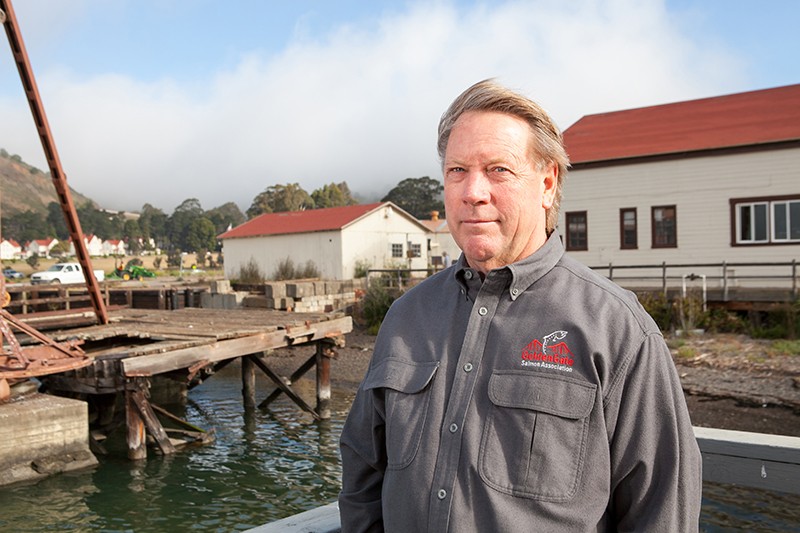
Protecting the salmon fishery benefits more than just fishermen, added John McManus, executive director of the Golden Gate Salmon Association. The fishing economy, he said, serves as a sort of protective umbrella for much of the state’s water resources. “When you’re protecting salmon habitat, you’re protecting freshwater habitat for many species,” he said. “Protecting fishermen’s jobs has been one of the most persuasive reasons for protecting the environment.”
Because the Central Valley’s watersheds have been so impacted by dams, pumps, canals, and levees, there would be almost no salmon at all if it weren’t for fish hatcheries. Several of these cement-and-steel facilities produce millions of Chinook every year. These fish are not farmed, but neither are they entirely wild. They are produced by capturing adult fish by hand from the river and combining their eggs and sperm in trays and eventually releasing the juveniles into the wild to live out their lives. Because many of the natural selection forces that hone the strength and instincts of wild fish are removed by the hatchery system, the salmon produced by it essentially constitute a domesticated species, scientists have said.
Purists in the fisheries science field want to see greater populations of truly wild California salmon, and some have even suggested closing the hatcheries down, since they interfere with wild fish populations. “But there isn’t enough habitat left to have wild fish,” said Hudson. “Without hatcheries we wouldn’t have any salmon at all.”
Kate Poole.
Credits: Bert Johnson/File photo
In spite of the hatcheries, the numbers of salmon continue to decline for a variety of reasons. Projects are advancing that could improve post-spawn conditions for Chinook. The group California Trout is behind a plan that would restore thousands of acres of the Sacramento Valley’s historic floodplains — wetlands that could provide critical habitat for newly born salmon and greatly improve their odds of reaching the ocean safely. The NMFS is also discussing plans to help transport adult salmon around Shasta Dam so they can spawn in the headwaters of the McCloud River, which flows off the slopes of Mount Shasta and runs icy cold all year long.
But the problems impacting salmon survival may be insurmountable. Some scientists believe the booming human population, its increasing demand for water, and a warming planet will eventually eliminate Pacific salmon, including Chinook as well as Coho, from the southern end of their range. According to these predictions, Chinook will be extinct in California before the end of the century.
But Hudson believes there is a future in California for salmon and fishermen. It depends, however, on leaving enough water in the delta and the state’s rivers.
From the perspective of California’s agriculture industry, on the other hand, farmers have already sacrificed enough. “I don’t know how much more water [environmentalists and fishermen] think that agriculture can give,” Wade said.
But environmentalists and fishermen note that, unlike salmon, California farmers are in no danger of extinction. In fact, they now grow more fruits and nuts than ever before. “Do they want to kill everything in the state just to grow a few more crops?” Hudson asked.
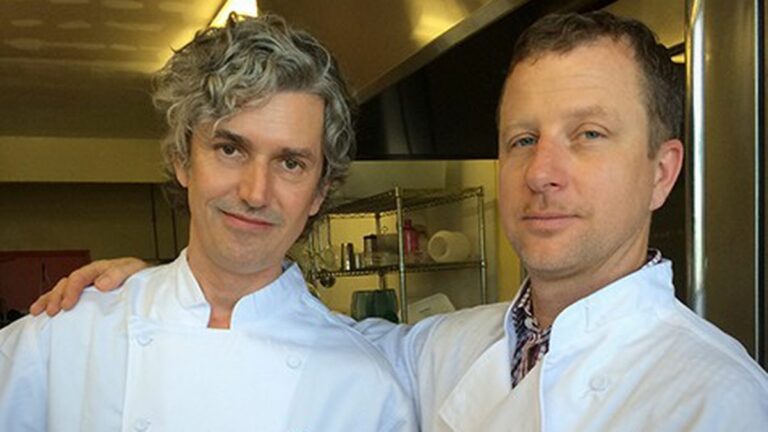
Chris Horvath and Chris Ferreira would like to think they know a little something about delivering pizza. For more than sixteen years, the two worked as delivery drivers for Pizza Rustica, a popular pizzeria in Oakland’s Montclair neighborhood, both of them moonlighting to pay the bills while they pursued careers in the arts during their off hours — Horvath as a filmmaker, Ferreira as a musician.
It made sense that when Horvath and Ferreira decided to go into business on their own, they would start a pizza delivery service, albeit one with a few twists that they developed based on their years of experience.
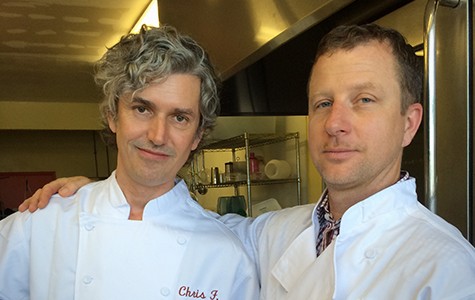
Chris Ferreira (L) and Chris Horvath.
Credits: Courtesy photo.
Chris Ferreira (L) and Chris Horvath.
Credits: Courtesy photo.
The latest in a growing list of Bay Area-based food-delivery startups, Pizza Matador has built its entire business model around the premise that a partially baked pizza finished in the customer’s oven at home will always result in a hotter, fresher final product than a pizza that has been sitting inside an insulated hot box for twenty or thirty minutes. So that’s what Horvath and Ferreira sell, exclusively: eight or nine options that can be pre-ordered prior to 2 p.m. each day to be delivered in time for dinner, at the time of your choosing, as well as a single pizza of the day that can be delivered on demand each evening. The limited, Oakland-only delivery area currently goes from Montclair to the Temescal district.
In an interview, Horvath explained that the company aims to take advantage of a niche market — in this case, customers who want higher-quality pizza delivered to their home. While the East Bay has a wealth of excellent pizza, many of the restaurants that make it lack the means, or the interest, to offer delivery. Of course, there’s no shortage of pizzerias that do deliver, but most of these tend to be larger chains. With its use of organic ingredients and promise of on-demand delivery within fifteen minutes, Pizza Matador aims to fill that gap.
But in contrast to the bulk of today’s food startups, Pizza Matador is refreshingly low-tech. Although customers place orders online, there isn’t a fancy, GPS-powered app, and for now, the entire company is a two-man operation: During the day, Horvath and Ferreira assemble and partially bake the pizzas, wrapping them up in parchment paper, and in the evening, they drive around Oakland like madmen. If you’ve ordered from Pizza Matador, one of the chef-owners is the person who arrived at your doorstep.
Perhaps more than anything, this is what sets Pizza Matador apart. It is a pizza company that was started by, and has at its center, the people who at most restaurants are the most disposable, lowest-tier employees: the delivery drivers. Horvath said that even back when he was just the pizza driver, and not the owner of the pizzeria as well, he loved the challenge of figuring out how to sequence the ten deliveries he might have on a single run — to navigate complex hills and to always, always arrive on time. “It’s like playing a competitive sport,” Horvath said.
As the San Francisco Chronicle recently reported, several ongoing class-action lawsuits have brought the plight of on-demand delivery drivers — who don’t get the benefit of employee status and are often paid deceptively low wages — into sharper focus. In contrast, Horvath said that even when Pizza Matador’s business scales up to the point that he and Ferreira no longer do all the deliveries, he always wants it to be a company that treats its drivers well. After all, they are the literal face of the business.
As for the pizza, Horvath described it as being somewhat reminiscent of the California thin-crust style you’ll find at places like The Cheese Board and Arizmendi — though, unlike those two East Bay pizza icons, Pizza Matador’s three-day-fermented dough doesn’t have a sourdough base. If you pre-order from the full menu, you’ll always find at least a couple of “California-style” pizzas, topped with an abundance of seasonal organic produce and a slather of garlic-infused olive oil. Meanwhile, the company also offers traditional New York-style pies and, most uniquely, “Matador”-style pies that feature a nut- and red pepper-based romesco sauce, manchego cheese, and other Spanish ingredients.
But Horvath explained that the matador theme wasn’t the result of any particular affinity that he and Ferreira have for Spanish cooking per se. Instead, the name is equal parts inside joke and divine inspiration of sorts. One night, soon after he started his job at Pizza Rustica, Ferreira had a dream in which he and Horvath were real-life matadors dressed in full regalia. The two chain-smoked Gitanes while waiting to take their turn in the bullring — which, for some reason, was located next to the 7-Eleven on Piedmont Avenue.
According to Horvath, after that dream the two friends formed a romanticized connection between pizza drivers and matadors: “In our irony-warped minds, they were both equally cool, skilled, and dangerous.”
So, when it came time for Horvath and Ferreira to name their new delivery business, Pizza Matador was the obvious choice. The name had a kind of “Old World” connotation that was appealing, and perhaps more importantly, it pointed to the deftness and agility that a truly masterful delivery driver needs to possess. If the two have their way, and their driver-centric pizza business continues to thrive, perhaps we’ll all start looking at our delivery drivers with newfound respect.
Our November 25 book review, “Murder in Palestine,” stated that Kate Raphael’s book was inspired by an abandoned car she encountered in 2003. In fact, she saw the car in 2004.
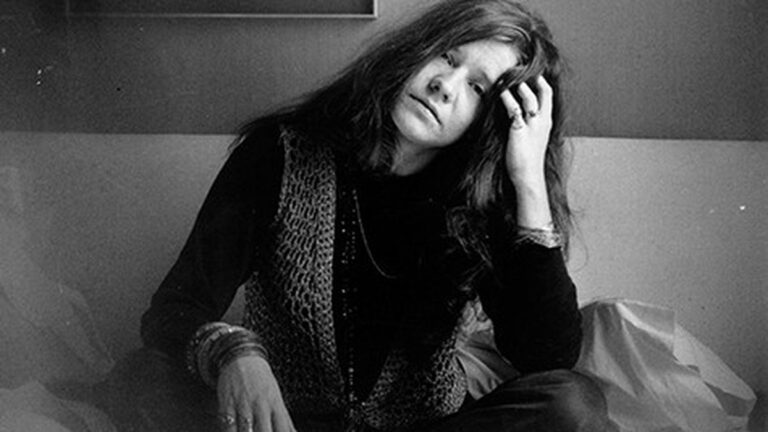
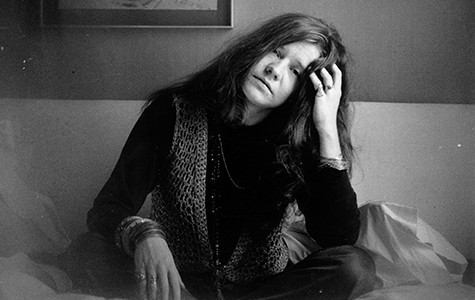
The concert segments of Amy J. Berg’s livewire documentary Janis: Little Girl Blue should amaze and surprise music fans who think they already know about the late Janis Joplin aka “Pearl,” as well as newcomers to the mystique. The filmed performances of “Women Is Losers,” “Cry Baby,” “Summertime,” and “Me and Bobby McGee” are standouts, but that’s only half the story behind the high-school outcast from Port Arthur, Texas who took hippie-fied San Francisco by storm by channeling Bessie Smith.
Like most other members of the “27 Club,” Joplin had issues. Snubbed as a teenager, picked on by angry men (“She was dangerous to take to a bar,” remembers one friend from her hootenanny days in Austin), emotionally needy, and later, all too eager to sample the ubiquitous crank, smack, and acid that was always available backstage, Joplin “could feel everybody’s pain.” All that apprehensiveness vanished once she got up in front of her band. The 1967 Monterey Pop Festival made her famous but she burned out early. “You can’t imagine how hard it is to be me,” she pleaded.
Janis Joplin lived hard and died young.
Janis Joplin
Cinema verité master D.A. Pennebaker was so thrilled with the Joplin/Big Brother footage he shot in Monterey, he followed her to a recording date in 1968 — some of the film’s best moments. Talk show host Dick Cavett admits/brags that he was more than just friends with her. Filmmaker Berg (West of Memphis) has a vested interest in chronicles of misunderstood young people. Every step of Joplin’s journey is tinged with underlying regret. As noted, her emotional honesty tended to give way to caricature. But when she settled into a blues the world ate out of her hand. Don’t believe it? Go see Janis.
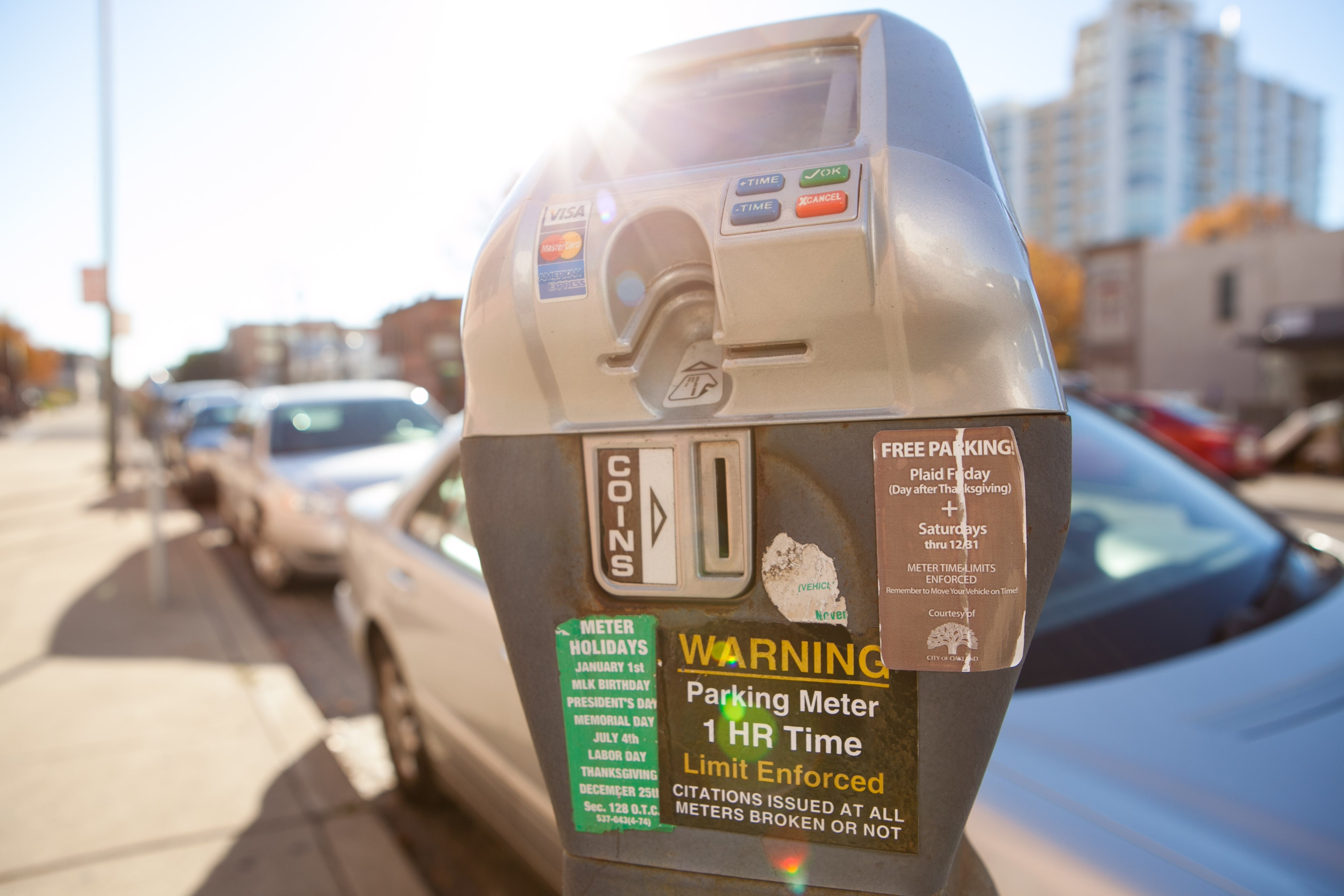
In a stated effort to support independent merchants this holiday season, the City of Oakland is offering free street parking every Saturday through the end of the year. In a recent press release announcing the free meters, which began on Friday and Saturday of Thanksgiving week, the city wrote: “The free parking encourages shoppers to get out and explore the plethora of local shopping options.”
But while free parking may initially sound like a pro-business move, transportation policy experts and cities across the country have repeatedly demonstrated that, in reality, free meters end up hurting businesses. That’s because, when there’s free parking on high-demand retail corridors, motorists and employees of area businesses hog spaces for hours at a time, resulting in low turnover and no available spaces for short-term shoppers. As a result, customers are forced to drive in circles looking for a spot, and when they can’t find one, they often decide not to stop at all — and instead spend their money in a different neighborhood or suburban mall where it’s easier to find parking.
Experts said Oakland’s free holiday parking will only make it harder for shoppers to find spots.
Credits: Bert Johnson
Matt Nichols, Oakland transportation policy director, said free parking can hurt businesses.
Credits: Bert Johnson
Experts say the best parking strategy to boost business and encourage shopping in a busy urban center is to set meter prices based on supply and demand. In this model, known as “demand-responsive parking,” cities increase fees for popular streets with high demand for parking, thereby creating steady turnover and ensuring that there are consistently one or two spots open per block. That means people who want highly coveted spots in front of restaurants and shops have to pay a bit extra — and with the right prices and time limits, they won’t occupy these spaces for too long. On less-crowded peripheral streets or in city garages that tend to have high vacancy rates, cities should set lower fees to incentivize drivers to take advantage of the underutilized parking supply. If the prices match demand and if clear signage directs people to cheaper spots, motorists won’t have to drive in circles anymore, which means businesses can get more customers and cities can significantly reduce greenhouse gas emissions.
Oakland officials are well aware of the benefits of this kind of progressive approach, which has proven successful in Berkeley, San Francisco, New York City, and elsewhere. As I reported in October (see “Oakland’s Sweeping Plan for Parking,” 10/28), Mayor Libby Schaaf is hoping to bring demand-responsive parking to business districts throughout the city, with the understanding that higher meter prices on busy streets in downtown, Temescal, Grand Lake, and other commercial districts will encourage turnover and help restaurants and shops better attract patrons.
Why, then, is the city rolling out a holiday parking plan that contradicts its own long-term goals? Matt Nichols, Schaaf’s transportation and infrastructure policy director — who is spearheading Oakland’s long-term parking plan and is an expert in demand-responsive pricing — did not have much of an explanation. “It could have the wrong effect,” he admitted during a phone interview after the city sent out a news release claiming that the free parking would help businesses. “You could have employees parking … for free and actually making things worse for customers. That could be counterproductive for both parking and economic development.”
The move is particularly surprising considering that in 2014, then-Councilmember Schaaf piloted the city’s first-ever demand-responsive parking effort in Montclair Village. Nichols also successfully brought this parking strategy to Berkeley, where he formerly worked as a principal transportation planner. What’s more, Nichols also previously studied with UCLA urban planning professor Donald Shoup, the preeminent expert on this pricing model and the author of The High Cost of Free Parking, a book outlining the many negative consequences that arise from the conventional — and incorrect — idea that free parking equals better business. In fact, Shoup has specifically criticized free holiday parking, writing in an article last year: “Parking holidays are well-intended, but the gift is more like a lump of coal for businesses that depend on parking turnover.”
Oakland’s free parking, available last Friday and on five consecutive Saturdays this season, extends to all metered spots as well as eight city-owned garages and lots in downtown, North Oakland, Grand Lake, and Montclair. The usual time limits, which range from thirty minutes to five hours, remain in place, meaning that people who want to park all day would have to move their cars. Oakland Grown — a program that supports local independent businesses (and which the Express co-sponsors) — is also promoting the free parking.
Experts said Oakland’s free holiday parking will only make it harder for shoppers to find spots.
Credits: Bert Johnson
Nichols noted that Oakland has done this kind of free weekend parking in December for years. He said that because the city is in the early stages of researching and expanding demand-based pricing, officials did not get around to rethinking the holiday parking strategy this season. Next year, he said, Oakland will likely adopt a more thoughtful approach. But experts noted that if Oakland at the very least maintained its year-round, on-street parking fees — typically two dollars per hour with a two-hour time limit — it’d be much better for holiday business this year than free parking across the board.
“People think free parking will encourage a lot of business, but, in fact, it undermines people’s access to that location,” explained Valerie Knepper, regional parking initiative manager for the Metropolitan Transportation Commission, the Bay Area transit agency. Free parking can result in cities not only losing meter revenue but also potentially losing sales tax revenue.
Although free parking is seen as a nice holiday gesture by a city, there are other creative ways municipalities can give back without eliminating the vital role that meters play in creating turnover and thus spurring economic development. Knepper, for example, noted that if Oakland is willing to forgo meter revenue during the holidays, it could instead donate meter fees to charities. The City of Santa Cruz chose this method as an alternative to free holiday parking after merchants complained that free meters hurt business because they result in no available parking.
Transportation experts note that another downside to free parking is that Oakland is incentivizing people to drive when officials should instead be promoting alternative modes of transportation — particularly in shopping districts that are easily accessible by public transportation, walking, and bicycling. Knepper suggested that if Oakland wanted to seriously invest in supporting holiday commerce, it could sponsor special holiday shuttles, which would help promote shopping and would be more environmentally friendly.
In San Francisco, businesses have generally supported the demand-responsive parking, which the city has expanded to roughly 25 percent of all metered spots over the last several years, according to Andy Thornley, San Francisco Municipal Transportation Agency senior administrative analyst. San Francisco has no holiday parking deals. “The better management of parking had a direct benefit on the businesses,” Thornley said, noting that the average time motorists spend searching for parking has decreased by 43 percent since the city instituted demand-based pricing. “Businesses … are not interested in having customers circle the block for 45 minutes. They’re interested in a customer pulling over, getting her wallet out, and spending money in their shop.”
Berkeley stopped offering free holiday parking a number of years ago when the city and small businesses realized it mostly made it harder for people to find a spot, recalled John Caner, CEO of the Downtown Berkeley Association. “There wasn’t much of an upside to it. … In general, there was consensus that the cost outweighed the benefits.”
Natasha Harden has no qualms about self-confidence. "I'm a badass, fat bitch," she said on a recent afternoon, inside her Lake Merritt vintage boutique, Halmoni (1601 2nd Ave., Oakland). The 34-year-old fashionista ended the exclamation with an effervescent laugh. Harden is, indeed, a force of nature, but of the friendliest sort. She brims with a sense of...
On a recent Friday night, Candace Lazarou, the singer of Mansion, stood where the pulpit would have been at an Oakland church that is now an underground music venue. Bathed in red light, Lazarou appeared stern and despotic, like a general rallying her troops. She addressed her audience with tense expressions and grandiose gestures, clenching her leather-gloved hands into...
When he first saw the boarded-up East Oakland storefront four years ago, a Field of Dreams-like vision came to Emad Ghobrial. The building, a long-abandoned pizzeria, was located on a residential block of High Street with no other restaurants in sight, and Ghobrial immediately thought about breakfast. He envisioned pancakes and omelets and sausage...
Thursday, December 3
Lulu (270 min., 2015). The Metropolitan Opera Encore (AMC Bay Street 16, Emeryville, 1:00)
Coriolanus (TBA, 2015). National Theatre Live (Rialto Cinemas Elmwood, Berkeley, 7:00)
The Wiz (134 min., 1975). (The New Parkway, Oakland, 8:00)
Santa and the Ice Cream Bunny (120 min., 1972). RiffTrax Live (Bay Street, 8:00)
Tokyo Godfathers (92 min., 2003). (Parkway, 9:30)
Friday, December 4
Sweet and Lowdown (95...
Last week, the front of Chapter 510's newly acquired home, an old church on the corner of Telegraph and 23rd Street, looked like any non-descript business about to open — complete with notices taped to the windows. But on closer inspection, the signage revealed an atypical whimsicality: "'Public Notice of Application...
Last winter and spring, thousands of adult Chinook salmon nosed upstream past Richmond, through the Carquinez Straits and into the Sacramento-San Joaquin River Delta, on their way to spawn in the Sacramento River. At about the same time, officials at Shasta Lake, a few miles north of Redding, did something that critics say was...
Chris Horvath and Chris Ferreira would like to think they know a little something about delivering pizza. For more than sixteen years, the two worked as delivery drivers for Pizza Rustica, a popular pizzeria in Oakland's Montclair neighborhood, both of them moonlighting to pay the bills while they pursued careers in the arts during their off hours...
Our November 25 book review, "Murder in Palestine," stated that Kate Raphael's book was inspired by an abandoned car she encountered in 2003. In fact, she saw the car in 2004.
The concert segments of Amy J. Berg's livewire documentary Janis: Little Girl Blue should amaze and surprise music fans who think they already know about the late Janis Joplin aka "Pearl," as well as newcomers to the mystique. The filmed performances of "Women Is Losers," "Cry Baby," "Summertime," and "Me and Bobby McGee" are standouts, but that's...
In a stated effort to support independent merchants this holiday season, the City of Oakland is offering free street parking every Saturday through the end of the year. In a recent press release announcing the free meters, which began on Friday and Saturday of Thanksgiving week, the city wrote: "The free parking encourages shoppers to get out...