This Weekend’s Top Six Events

Hurrah! The weekend has arrived!

Now what? See below. 

Hundred Dollar $tore
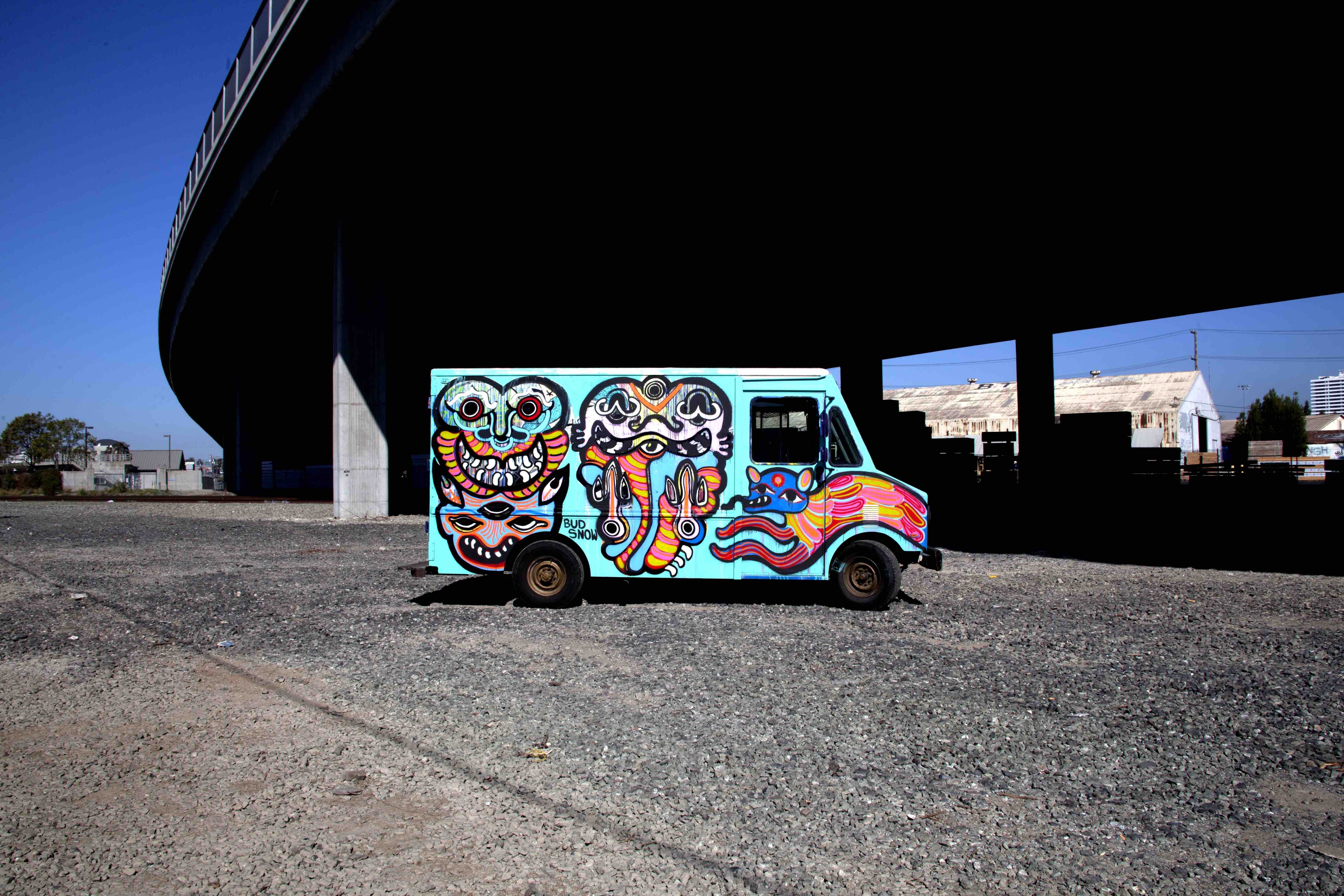
Oakland’s downtown will be welcoming its newest gallery into the 15th Street Corridor family on Friday, December 4. The Know Lodge (375 15th St.) is the brain child of local curator Joseph Lucas and street artist Julia Lewis aka Bud Snow. Lucas heads The Know Collective, which began as an Oakland-based micro radio station in 2004, and has been producing local art shows and performances for the past ten years. The first show he has curated for Know will open with the gallery. Entitled Hundred Dollar $tore, it will feature affordable art (all $100 or less) from celebrated local illustrator J. Otto Seibold, respected street artist Deadeyes, oil painter Alan Grizzell, and a handful of others. While the show is, in part, meant to encourage holiday shoppers to invest in the local artistic community, it’s also intended to be enjoyed by people who aren’t looking to buy art. As the venue’s name indicates, The Know Lodge hopes to be not only a gallery, but a place for artists and art appreciators to congregate. — Sarah Burke
Fri., Dec. 4, 6-10 p.m. Free. Facebook.com/KnowGallery

San Cha
Few things are off limits for singer, songwriter, and performance artist San Cha, whose onstage persona is something like a glamorous, high-femme Sid Vicious. The interdisciplinary musician made a name for herself in Oakland as a member of the queer electro-pop group Daddie$ Pla$tik, which combined a punk ethos with a loud, gender-bending club kid aesthetic that the band developed in the Bay Area’s drag scene. San Cha performs solo as well, and at one of her last shows before she left the Bay Area for an extended stay in Mexico and LA, she played a set wearing a white wedding dress before stripping down to sequined hot pants to sing a darkwave Madonna cover. A provocateur and exhibitionist, she joins The Lovemakers, The Trims, Irising, and Vainheim on stage at 924 Gilman on December 4. —Nastia Voynovskaya
Fri., Dec. 4, 7:30 p.m. $10. 924Gilman.org


Giorgio Moroder
While electronic music might seem like a young person’s game, Giorgio Moroder, one of its pioneers, is still active in the genre. The Italian musician is considered a founder of disco and made a name for himself in the European club scene before producing scores of hit songs for pop icons such as Donna Summer, Blondie, Janet Jackson, and Kylie Minogue in the Seventies and Eighties. For the past five decades, Moroder has been prolific as a solo artist, as well — though after putting out his fourteenth album in 1992, he took a hiatus from performing and focused on producing videogame soundtracks. However, he returned to pop after his features on Daft Punk’s 2013 album Random Access Memories sparked renewed interest in his work. Now, Moroder primarily performs as a DJ. He comes to 1015 Folsom on December 4. — N.V.
Fri., Dec. 4, 9:30 p.m. $25-$35. 
1015.com

The Weeknd
Since the release of his debut mixtape, House of Balloons, Canadian singer The Weeknd has had an immeasurable impact on R&B and hip-hop. Suffice it to say that, along with that of Drake and Kanye West, his work has ushered in a new era of vulnerable, melancholic lyricism that was largely absent on the radio before House of Balloons came out in 2011. Over the past four years, The Weeknd has enjoyed a meteoric rise from noteworthy indie artist to chart-topper. His latest album, Beauty Behind the Madness, examines the dark underbelly of fame and the excess that comes with it. With lyrics such as I only love it when you touch me, not feel me/When I’m fucked up that’s the real me, The Weeknd isn’t trying to be a role model: He’s writing songs for the brokenhearted and reckless. As part of his The Madness Fall Tour, he performs at Oracle Arena with “Antidote” rapper Travis Scott and singer Halsey. — N.V.
Sat., Dec. 5, 7:30 p.m. $38-$95. Coliseum.com


Temescal Alley Holiday Artisan Fair
During this time of year, holiday craft fairs abound — ranging in size from huge warehouses to small galleries. On December 6, shoppers can make the Temescal Alley Holiday Artisan Fair their next destination for gathering gifts. The fair, which will take place in the charming Temescal Alley (right off 49th Street, just East of Telegraph) with enough locally made goods to fill, well, an alley. Rather than quantity, the focus at this fair will be quality. Offerings will include the custom ceramics of Atelier Dion, the wooden home furnishings of Melanie Abrantes, and the hand-painted and dyed lingerie of Serpent and Bow, among many others. Shops in the alley will also hold special events, including a holiday print sale at Interface gallery featuring local artists. For sustenance, Dona Tomas will be serving loaded nachos, and Rose’s Taproom — which is slated to open in the alley in 2016 — will be pouring freshly crafted beer. — S.B.
Sun., Dec. 6, 11 a.m.-4 p.m. Free. TemescalAlleys.com


ReEntry
In the Bay Area, the experience of serving in the military is not a topic that often makes its way into casual conversation. But the newest production by Gritty City Repertory (GCR), entitled ReEntry, aims to offer a nuanced characterization of the experience of returning to civilian life after having served. GCR is a youth theater company and nonprofit with a cast made up entirely of at-Oakland high school students. And it doesn’t skirt topics that are difficult to digest. Through a cast of varied characters, from the wounded soldier to the commanding officer, ReEntry bravely tackles experiences of trauma and post-trauma re-assimilation. And in doing so, it offers a thoughtful analog for wars happening in Oakland’s own neighborhoods. “Oakland is a beautiful, diverse, vibrant city with a high-crime rate,” said Lindsay Krumbein, GCR’s founder and executive director, in a statement about the show. “Young people of color are disproportionately impacted. All kinds of studies show that the rate of PTSD in inner-city residents is as high or higher than that of Vietnam, Iraq, and Afghanistan war veterans.” ReEntry opens at the Flight Deck (1540 Broadway, Oakland) on December 3 at 8 p.m. and will continue through December 12. — S.B.
Through Dec. 12. $5-$50. GrittyCityRep.org

If your pockets are feelin’ light and you’re still yearning for more suggestions, we’ve got a ton, and these ones are all FREE! We’re Hungry: Got any East Bay news, events, video, or miscellany we should know about? Feed us at Sa*********@************ss.com.

Cal Students Stage Sit-In to Show Solidarity with Subcontracted Workers

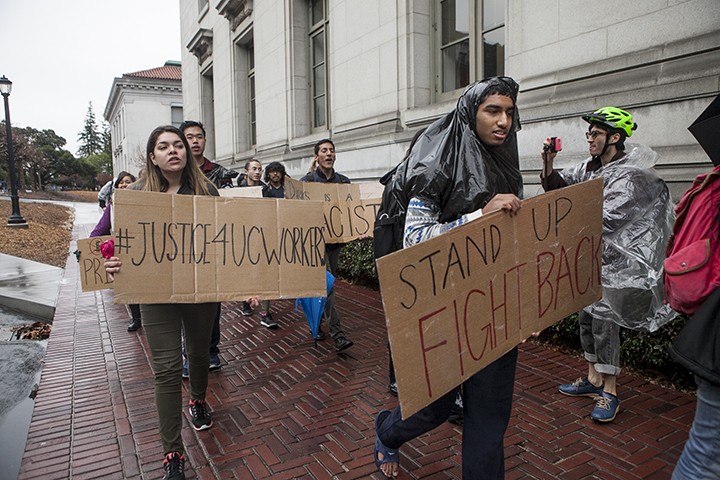
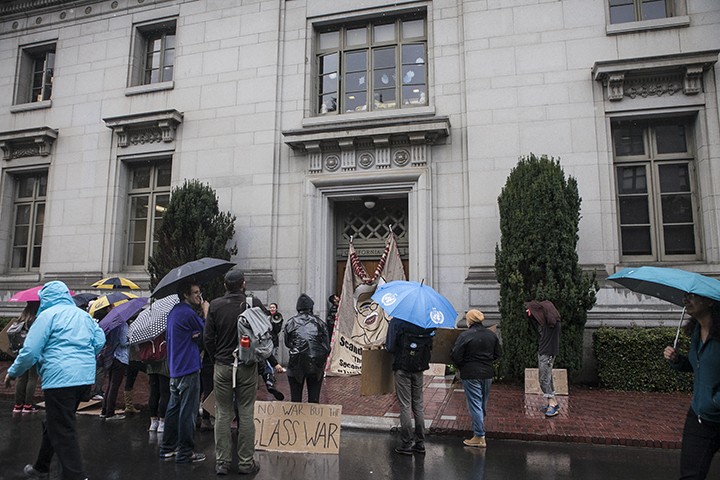
Police arrested and released roughly 25 UC Berkeley students, who staged a three-hour sit-in today at Chancellor Nicholas Dirks’ office on campus to demand fair benefits and protections for workers who are subcontracted with the university. Approximately fifty students filed into the hall but half left after being issued a dispersal order, said fourth-year Cal student Kristian Kim, who was one of the students arrested. At the same time, a group of roughly twenty students and workers marched through the rain outside the hall carrying signs reading “Stand Up Fight Back” and “#Justice4UCWorkers.”

Michelle Morris, a senior at Cal and member of the Student Labor Committee, which led the protest, said the group has been active since late August in speaking with and advocating for subcontracted workers. Those workers often do the same jobs as university employees but don’t get the same health and retirement benefits, and until recently, have been paid lower wages, she said. “There’s a huge discrepancy. [The subcontracted workers] don’t have the same protections that university employees have.”


[jump]
Antonio Ruiz said he has been a subcontracted worker at Cal for 22 years, and until October was making $11.50 per hour. He said he works two jobs to make ends meet and regularly pulls thirteen- to fourteen-hour days. “It’s been really hard for me working two jobs,” Ruiz said. “If I was a UC Berkeley employee, I could work one job like a normal person.”

In July, UC President Janet Napolitano announced the “Fair Wage/Fair Work Plan,” which guarantees that by October 2017, UC employees hired to work at least twenty hours per week would be paid at least $15 per hour. “The University of California’s new minimum wage policy applies not only to direct UC employees, but also to those working for contractors doing business with the university,” Cal spokesperson Janet Gilmore said in a statement. “This wage … exceeds both the state and federal minimum wage.”

But students say that wages are only part of the problem. Subcontracted workers don’t have the ability to unionize, are often afraid to report labor violations, and don’t receive the same health and retirement benefits as university employees, Morris said. Gilmore confirmed that the Fair Wage/Fair Work Plan only covers wages and not other benefits.

Elvira Puzul, a custodian at California Memorial Stadium, said she doesn’t get holiday or vacation pay, and if she doesn’t bring in a note from her doctor, she doesn’t receive sick pay, either.

Although Gilmore said contractors are required to follow all local, state, and federal laws, Puzul, who works for Performance First Building Services, said she hasn’t received job training for tasks that often require operating machinery, climbing onto ladders, and other other hazardous activities. Another Performance First employee, Consuelo Barrera, said she often works more than forty hours a week but does not get paid for those hours.

Jose Carnevali, a spokesperson for the US Department of Labor, confirmed the agency had launched a probe into Performance First, but said he could not elaborate on when the investigation began or what prompted it. “This is an open investigation,” Carnevali said, “so, we can’t comment.”

Barrera said that as a single mother of three children, including one with health problems, she relies on the government for food stamps and other benefits even though she works full time. Barrera said that before the university instituted its Fair Wage/Fair Work plan, she was making only $10 per hour. Currently, she is making $13, she said. “Our work is harder but we get paid less,” Barrera said, tears welling in her eyes. “I think we will win though. I really have faith that we will overcome this.”

Students are hoping to get the attention of Chancellor Dirks to eliminate subcontracted workers and bring those employees into the university fold, Kim said. “We want him to take responsibility for the subcontracted workers, who despite working for a different employer, are still part of the campus community,” Kim said.

Gilmore said the university was committed ensuring that “employees and contractors are treated equitably and with respect,” but said the students should take a different tact. “It is regrettable that this small group of students, by virtue of its continuing office occupations and disruptions, refuses to show the same degree of respect for campus employees who work hard to support the university. If this group believes that repeated violations of the basic ‘time, place, and manner’ rules that govern on-campus protests will help advance their agenda, they are mistaken.”

Caltrans and CHP Oust Homeless from Camp in Pouring Rain in Oakland

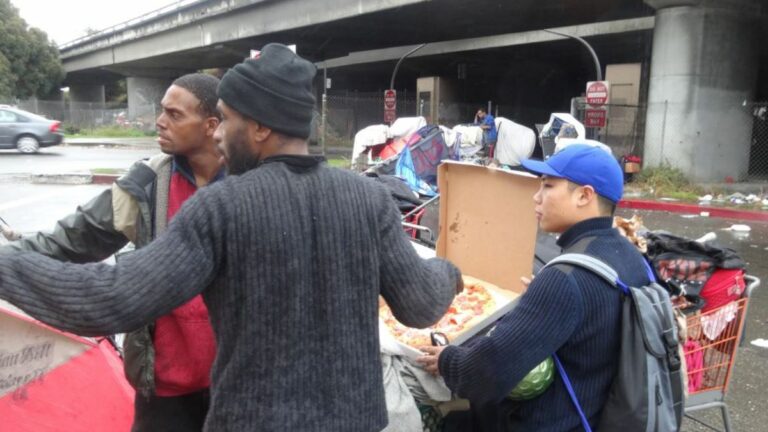
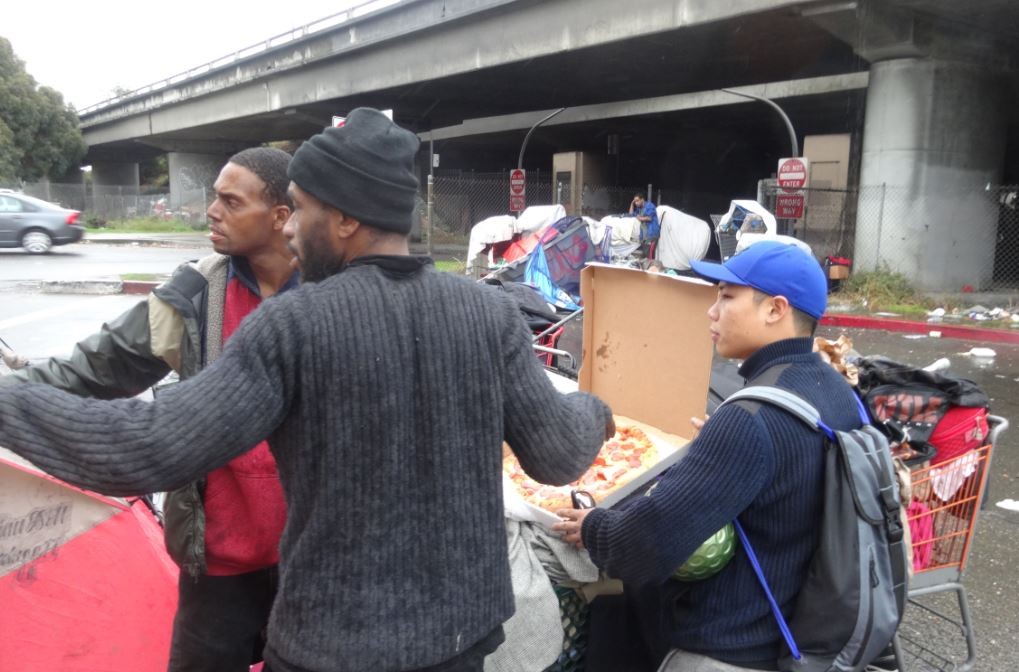
The California Department of Transportation and the California Highway Patrol evicted a homeless camp from underneath the 880 Freeway bridge in downtown Oakland today in the middle of a rainstorm. CalTrans used state prison parolees working through the Golden State Works program to throw away tents, mattresses, and other belongings in order to clear the camp.

“We got nowhere else to go, and it’s raining,” said a man who identified himself as Kevin. Kevin has been living under the bridge for several months along with at least a dozen other people. “We had something under the bridge, out of the rain. We cleaned up the area, and we’re not bothering nobody,” Kevin said.

Officer Sean Wilkenfeld of the CHP said the camp’s residents had been given advanced notice that a cleaning crew would be coming sometime between November 30 and December 4, and that they would be ordered to move out from under the bridge. “We got complaints,” said Wilkenfeld.

“This is our property,” said a Caltrans supervisor at the scene who did not give his name. “They’re trespassing.”

[jump]
Officer Wilkenfeld said the homeless camp was creating a biological hazard by scattering drug needles around the area, and that some residents of the camp had tapped into electrical lines.

Another homeless man who did not give his name said he had left the camp to buy food for himself and others when the Caltrans crew and CHP arrived. “It’s messed up, them doing this to us in the pouring rain,” he said. The man claimed that he was unable to save some of his belongings because they were thrown into a garbage truck’s compactor.

“If feels safer over here than it does just out walking the streets,” said a woman who lived in the camp. She said she and her husband, who are both homeless, have been attacked while living and sleeping at other locations around Oakland, but that the Caltrans site, an empty and unused parking lot under the bridge, was a place where people looked out for each other.

About two dozen Golden State Works employees were at the camp for more than an hour clearing the site and throwing homeless people’s belongings into a trash compactor. The Golden State Works program is run by the California Department of Corrections and Rehabilitation in cooperation with Caltrans. Parolees from state prisons enroll in Golden State Works and can earn the city’s minimum wage of $12.25 an hour while cleaning up litter, but the crews are sometimes used to remove homeless encampments.


Legalization Is NOT A Burning Issue for Californians

Here’s another wake-up call to anyone who thinks California is going to legalize cannabis for adult use in 2016.

A new poll finds legalization is not really a burning issue for Californians.

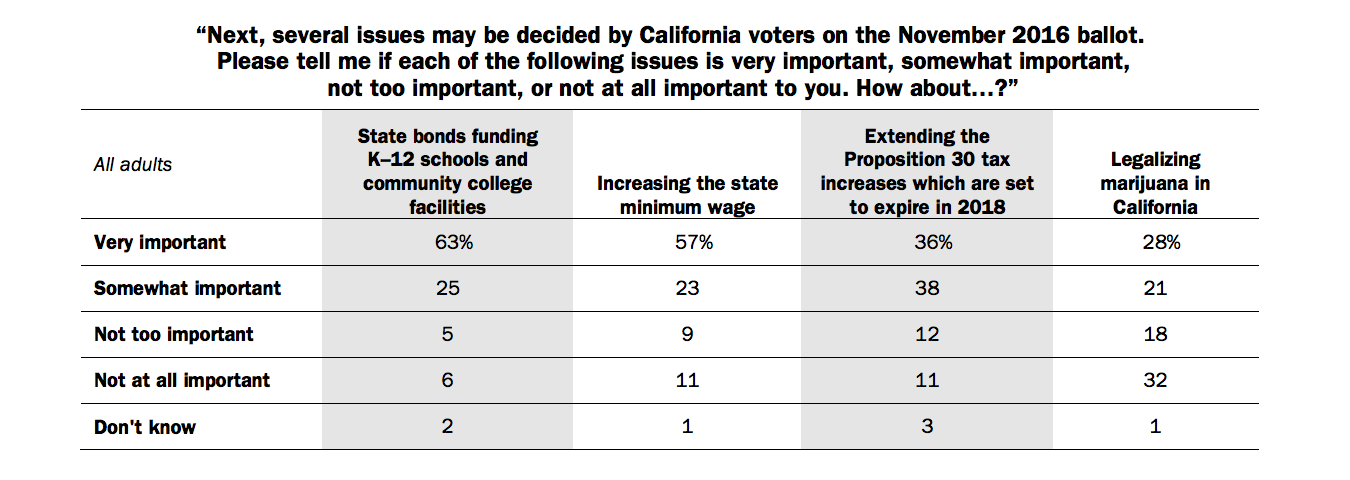
Just 30 percent of likely voters consider marijuana legalization “a very important issue,” The Public Policy Institute of California found. And about 32 percent of estimated California voters say legalizing marijuana in California “is not at all important.”

While about half of Californians are thought to support legalization, this new independent poll further illustrates how weak that support is.

By contrast, 63 percent of voters say “state bonds for schools are very important”.

Pot law reformers live in a little bubble. Meanwhile “Californians name water and the economy as the most important issues in the state.”

[jump]

Income inequality has also emerged as a new drag on legalization’s momentum. While “marijuana” used to be derided as a drug of poor, hippy drop-outs, cannabis legalization is now being attacked for potentially benefiting the rich.

“Two in three Californians say the state is divided into haves and have-nots,” PPIC finds, and only 40 percent of Californians feel like they are in the ‘haves.’ Last month, voters in Ohio chose to continue locking up young Blacks for pot, rather than legalize it and potentially further enrich whites.

Legalization’s weakest link remains Latinos, PPIC finds. Almost four out of five California Latinos do not consider legalization “very important,” which could be a huge liability if Latinos turn out to vote against a Republican like Donald Trump.

For its 69th “Californians and Their Government series,” PPIC asked of 1,703 adult residents of Californian via landline or cellphone: “Several issues may be decided by California voters on the November 2016 ballot. Please tell me if each of the following issues is very important, somewhat important, not too important, or not at all important to you. … How about legalizing marijuana in California?”

The full report is here. The Public Policy Institute of California provides independent research on major issues shaping California’s future. PPIC is a public charity established in 1994 with an endowment from William R. Hewlett.

About ten different groups have filed a legalization initiative with the state. Doing so costs just $200. It’ll take about $20 million to run a legalization campaign, experts estimate. And just one group, supported by the Drug Policy Alliance, Marijuana Policy Project, and technologist Sean Parker appears to have the funds to do it. That initiative has already come under attack not just from the political right, but also from the fringe legalization left.

Thursday Must Reads: NFL Pressures Oakland to Make Offer to Raiders; Authorities Search for Motive in San Bernardino Mass Slaying

Stories you shouldn’t miss:

1. The NFL set a December 28 deadline for the City of Oakland to make a final offer to the Raiders for a stadium deal in the city — or risk losing the team to Los Angeles, the LA Times$ reports. The league set the same deadline for San Diego and St. Louis, and likely will decide in January which two of three teams — the Raiders, Charges, and Rams — will move to Los Angeles. NFL Commissioner Roger Goodell said San Diego will not be able to make the deadline, because the city’s stadium financing plan is contingent on a public vote that won’t happen until next year. Oakland also may miss the deadline because the cash-strapped city cannot afford to make up the Raiders’ $400 million stadium funding gap.

2. Law enforcement officials in Southern California have not yet discerned a clear motive in the mass slaying of fourteen people yesterday in San Bernardino, the LA Times$ reports. The shooting suspects, Syed Rizwan Farook, 28, and Tashfeen Malik, 27, were killed during a massive gun battle with police a few hours after they had opened fire on a group of San Bernardino county employees during a gathering. Authorities said that Farook, a county employee, appears to have gotten into a disagreement at the meeting, left, and then came back heavily armed with Malik. However, police said they have not ruled out terrorism as a motive. The LA Times reports that Farook, a US citizen,  met Malik, who is from the Middle East, online. The two had a young baby, whom they dropped off at a family member’s house before the shootings. Authorities said that the long guns used in the mass slaying were purchased legally.

3. Just hours before the mass killings, doctors pleaded with members of Congress to overturn a twenty-year-old ban on research by the CDC on gun violence, the Washington Post$ reports. The San Bernardino mass murder was the 355th this year in the United States — more than one a day.


[jump] 4. San Francisco police shot and killed a man yesterday in an incident that was caught on video, the Chron reports. Police say the man was a stabbing suspect and had refused to drop his knife, but San Francisco Public Defender Jeff Adachi said the video proved that police did not have to shoot the man to death.

5. The San Francisco Police Commission approved a new policy on police body cameras that prohibits a cop from examining video footage in an officer-involved shooting before filing his or her report — unless the police chief makes an exception, the Chron reports.

6. And new Census data shows that even though household incomes have increased in the Bay Area in the past five years, the region’s poverty rate also rose, along with the huge spike in housing costs, especially in the East Bay, the Bay Area News Group$ reports. The poverty rate went up by 2 percent in Alameda County from 2009 to 2014, and 2.1 percent in Contra Costa County.

Oakland Named Top US City for Outdoor Enthusiasts

Oakland is one of the best cities in the United States for outdoor enthusiasts, according to a new analysis from SmartAsset, a personal finance technology company. The New York-based firm evaluated cities on five factors: parkland as a percent of land area, acres of parkland per resident, “water area” as a percent of total area, air quality, and the percent of commuters who walk or bike to work.

Out of the hundred most populous US cities, Oakland ranked number seven — with Honolulu, Anchorage, and New Orleans taking the top three spots. Of the five metrics, Oakland received the highest ranking — fifteen out of one hundred — in parkland as percentage of total city land area, and the lowest in air quality, according to SmartAsset data editor Nick Wallace.

“One of the things that we’re always looking at is helping people find the best place to live,” Wallace said. “A lot of people think about what might be close to the city… We wanted to focus on what’s actually in the city itself.”

[jump]

About 6,000 acres of Oakland’s total 33,181 acres (excluding airports and railyards) — roughly 17 percent — consist of parkland, according to a 2015 report by The Trust for Public Land’s Center for City Park Excellence. Of the parkland, about 84 percent is largely undisturbed and retained for its ecological value, as opposed to constructed for human use (such as a playground or sports field).

San Francisco ranked number ten on SmartAsset’s list, with parkland making up 19 percent of the city’s 29,980 acres. Only 54 percent of that parkland, however, is considered natural. Fremont, the only other East Bay city in the top 25 of the ranking, has just under 50 percent natural parkland. In Anchorage, the number two ranked city, natural parks comprise more than half the land.

The air quality rankings in the analysis are based on an Environmental Protection Agency index (from zero to five hundred, with higher rankings signifying worse air quality). Oakland’s air quality index is 48, which means the EPA considers overall air quality in the city to be “good,” although conditions vary from one neighborhood to the next. Earlier this year, for example, East Oakland residents succeeded in pushing for the reroute of polluting trucks from residential streets.

Nearly 7 percent of Oakland workers walked or biked to work between 2008 and 2012, according to the US Census Bureau. Oakland currently has various initiatives underway to expand bicycling infrastructure in the city, including protected bike lanes and other safety improvements on Telegraph Avenue, and plans to install new bike lanes on Grand Avenue. 

Mid-Week Menu: Souk Savanh Reopens, Dominique Crenn Consults on Berkeley Brasserie, and a Chez Panisse Chef Leaves for Japan

1) Last week, I had to scrap a review when a restaurant — Oakland’s Grand Fare — closed suddenly during the short span of days between my phone interview with the chef and the day the story was supposed to run, marking just the second time that’s ever happened during my tenure at the Express. The first? When the Laotian restaurant Souk Savanh (1927 International Blvd., Oakland) got shut down by the health department in May, just days before my enthusiastic review was supposed to drop. But on this latter front, I have good news to report: Souk Savanh reopened two weeks ago.

[jump]

Co-owner Nai Saelee told me there’s a new chef in the kitchen, but that the menu and recipes are more or less the same — which hopefully means the restaurant still serves some of the most delicious Lao food in town: the crunchiest nam kao (rice ball salad), the most addictive chicken wings, and a variety of soupy noodle dishes that are perfect for these chilly evenings. According to Saelee, the place looks pretty much the same too, apart from the installation of new flooring, new tables, and — most importantly — a new grease trap for the kitchen. Souk Savanh is now open 11 a.m.–3 p.m. and 5–9 p.m. daily. You can follow the restaurant’s Instagram account for updates.

2) Berkeley’s newly remodeled Claremont Hotel — now known as the Claremont Club & Spa — is getting a new restaurant with a big name attached to it. Inside Scoop reports that Dominique Crenn, of San Francisco’s Michelin two-starred Atelier Crenn, is working as a consultant for a new brasserie at the hotel, which is slated to open sometime in early 2016. Crenn, it should be noted, won’t be the chef at the Berkeley restaurant.

3) Elsewhere in Berkeley, Berkeleyside Nosh reports that the Mandarin Restaurant (2025 Shattuck Ave.) was gutted by two fires that struck early Friday morning. No word yet on when (or if) the restaurant plans to reopen.

4) Tablehopper has the scoop on a big change at Chez Panisse: Co-chef Jerome Waag will leave the most highly decorated of Cal cuisine eateries in January in order to open a restaurant in Japan. Amy Dencler will replace Waag, alternating six-month shifts with the other co-chef, Cal Peternell.

5) Oakland-based Hodo Soy is expanding. In a story that bids farewell to a two-generation family tofu business in Sacramento, the Sacramento Bee notes that Hodo Soy will take over the old Sacramento Tofu Co. production facility, likely doubling its current 20,000-pound-a-day production capacity.

6) In preparation for opening its first US location in Walnut Creek, Telefèric Barcelona is doing a Spanish popup dinner at Calavera this Sunday, December 6 (5:30–10 p.m.), in collaboration with Calavera chef Christian Irabien. According to a press release, the a la carte menu will include a selection of pintxos (two-bite snacks) and larger plates like wood-grilled octopus and a jamón Ibérico burger.

7) There are a number of beer events coming up, including The Trappist’s (460 8th St., Oakland) annual Kerstbier Fest, during which the bar will pour 21 winter/Christmas beers from both the Bay Area and around the world. The festival will start at 5 p.m. on Friday, December 11, and will run all day Saturday, December 12 as well. $27 buys a four-beer flight.

8) Two more in San Leandro this weekend: 21st Amendment Brewery (2010 Williams St.) is throwing a 1930s-style Repeal Day celebration on Saturday, December 5, in honor of the date — December 5, 1933 — when the ratification of the 21st amendment officially ended Prohibition. Period costumes are encouraged, and there will be live Dixieland jazz. Admission is free, or you get a slight discount on food and beer by buying an early-bird package in advance.

Meanwhile, Cleophus Quealy Beer Co. (448 Hester St.) is celebrating its one-year anniversary, also on December 5.

9) Finally, ICYMI, I wrote about Pizza Matador, a new pizza delivery service started by two longtime pizza drivers.

Got tips or suggestions? Email me at Luke (dot) Tsai (at) EastBayExpress (dot) com. Otherwise, keep in touch by following me on Twitter @theluketsai, or simply by posting a comment. I’ll read ‘em all.

Impact Fee Doesn’t Stop Development in Emeryville as Developer Agrees to 50 Affordable Units in Major Project

When the Emeryville City Council voted to increase the city’s affordable housing requirements for developers in October, some observers said the city would be discouraging major projects by making new market-rate housing less profitable. In spite of this, the city council increased its affordable housing impact fee on market-rate units from $20,000 to $28,000, currently the highest in the East Bay. Furthermore, under the previous rules, developers who didn’t want to pay the $20,000 impact fee could instead make 6.9 percent of the units in their projects permanently affordable to lower-income renters; the city council increased this to 12 percent.

Last night the Emeryville city council finalized a deal with City Center Realty Partners to build a 456 unit apartment complex with 50 affordable units, about 11 percent of the total. The city’s new, higher impact fee and on-site affordable requirements don’t actually take effect until December 19, but the development agreement with City Center Realty Partners roughly mirrors the new fee level, the new in-lieu affordable percentage, and other strengthened development rules. The deal may be a sign that developers are willing to pay more into affordable housing for the right to build in Emeryville’s market.

See also: Emeryville Is Finally Rethinking Development

See also: Facing the Housing Crisis, Berkeley and Emeryville Lawmakers Are Advancing Numerous Solutions; But Not Oakland

[jump] The Public Market Project has been a long time in the making. It was first approved in 2008, slowed due to the Great Recession, and then revived in 2013. It’s a complex project, involving realignment of a street and redevelopment of a public park.

In July, the city council was presented with a plan to build 462 apartments plus retail on the Public Market site. The council tabled the proposal because it would have only included 33 affordable housing units, or 6.9 percent of the total, and also because the city’s “family-friendly” policies encouraging the construction of two- and three-bedroom apartments would have been eased, and few large apartments would have been built.

Since then, the council increased their affordable housing impact fee and strengthened other development policies that require developers pay more for the right to build in Emeryville.

“The $28,000 fee, I don’t think that’s going stop development in Emeryville,” said Councilmember Jac Asher after last night’s vote to approve the Public Market project. “We’re still at the base of the Bay Bridge, and there are more developments in the pipeline and people are going be paying the fee.”

According to Emeryville’s Community Development Department, there are ten major projects in the development pipeline, in addition to the Public Market, that will have to comply with the city’s new rules. These projects include at least 775 units of housing, which could eventually generate as much as $21 million for the city, or 93 affordable units on-site.

Instead of slowing development, Asher said she is concerned that the impact fee will only raise money for the city, rather than pushing developers to build affordable housing in their projects.

“My worry is that people are going to be writing us checks, and the fee isn’t high enough to get the on-site units which is what we’d really prefer.” According to Asher, the Public Market project was unique in that the city had leverage over the developer in the form of land and permission to realign streets. This allowed the city to gain affordable housing in the project instead of merely collecting the impact fee payments.

City Center Realty Partners did not return phone calls seeking comment about the deal.

Wednesday Must Reads: Oakland May Make It Easier to Enroll in Charter Schools; Schaaf May Declare Coal a Health Hazard

Stories you shouldn’t miss:

1. The Oakland school district is considering a plan that would make it easier for parents to enroll their children in charter schools in the city, the Chron reports. The proposal, which is heavily supported by wealthy backers of charter schools, would allow parents to sign up for charter schools when they’re filling out school district enrollment forms. Currently, parents must go to the actual charter school to enroll. Opponents of the proposal say the district should not be promoting non-unionized schools.

2. Mayor Libby Schaaf may attempt to block the construction of a giant coal terminal at the former Oakland Army Base by declaring that shipping coal through West Oakland presents a serious health hazard, the Chron$ reports. A clause in the contract between the city and Army Base developer Phil Tagami allows the city to modify the deal’s terms if the development is “substantially dangerous to … health or safety” of local residents. Schaaf maintains that Tagami has gone back on a promise that coal would not be shipped through the new terminal at the Army Base.

3. Schaaf and Richmond Mayor Tom Butt are traveling to Paris this week to attend the UN Climate Change talks, the Bay Area News Group$ reports. Schaaf plans to talk about the efforts of cities to combat global warming, while Butt is scheduled to give a presentation about cities that have created clean energy consortiums. Richmond is part of Marin Clean Energy — a consortium that has replaced PG&E as the city’s energy provider.


[jump] 4. The Berkeley City Council voted 6-3 last night to finalize a plan to crack down on some behavior by homeless people, the Chron reports. The plan bans taking up more than a 2-square-foot space on the sidewalk, and strengthens an existing prohibition on public urination and defecation.

5. And Facebook founder Mark Zuckerberg announced that he will set aside 99 percent of stock in the company — valued at about $44 billion — for philanthropic efforts, the Bay Area News Group$ reports. 

Letters for the week of November 18-24

“Oakland Eyes Affordable Housing Plan in Secret,” News, 11/25

The City of Oakland Responds

I wanted to correct several misleading statements in the article. First, this administration is keenly aware of the urgency of Oakland’s housing crisis and how important it is to get the results of the nexus study and economic feasibility analysis before the city council. Far from “dragging [our] feet,” as [reporter Darwin BondGraham] noted, we have been working with key stakeholders — affordable housing advocates and housing developers — to craft a workable proposal that addresses the economic and public policy concerns of all the stakeholders.

Although the stakeholder meetings to date have been private gatherings to vet issues in a manner that encourages open and honest dialogue to reach the best solution in the interest of all parties as expeditiously as possible, we have made all of the information presented to date publicly available on our website: OaklandNet.com/ImpactFee. There are no secrets; the detailed results of the nexus study analysis have been made public, including the maximum legal affordable housing, transportation, and capital improvement fees proposal; research into comparable fees in the region; presentation of relevant data; and details of the analysis conducted to reach the maximum proposed fees.

Perhaps it wasn’t clear in my email response to [BondGraham’s] questions, but the reason the complete nexus study hasn’t been released is that it isn’t yet complete. There are several sections required by law to be included in the final report that are still being written. But the substantial analysis and results that will be presented in the final report have been released to the stakeholder group and made public on the website.

With respect to the economic feasibility study, now that we know what the maximum legal fees are, there are a number of policy considerations being discussed by the stakeholder group in advance of the presentation for broader public consideration through the legislative process. Questions being debated include the timing of the proposed impact fee — should it be implemented immediately or phased in over time — and how the impact fee revenue should be allocated among various categories, including affordable housing, transportation, and capital improvements, among other policy questions. Answering these questions is key to developing the proposal that will be presented to the city council for consideration.

I want to reiterate our commitment to completing this process in a transparent, timely manner, based on sound analysis and recent data, using a thorough process to reach the best solution possible to address this very real and urgent affordability crisis we face. We are optimistic about the progress that has been made and look forward to bringing this for public consideration in the coming weeks.

Karen Boyd, assistant to the city
administrator and communications director for the City of Oakland

Darwin BondGraham Responds

Ms. Boyd, I spoke with staffers from multiple cities in Alameda and San Mateo counties about their processes for studying and implementing impact fees. I described to them Oakland’s process, including its private stakeholder meetings. And none of the cities I talked to told me that they convened similar private meetings in which the general public could not attend. Any discussions they had with developers, affordable housing advocates, and other stakeholders were conducted in public.

It’s also not clear how the City of Oakland selected the stakeholders invited to the private impact fee meetings. A list I obtained through a public records request shows that the members included seven developer representatives, including some the largest contributors to Mayor Libby Schaaf’s 2014 mayoral campaign committee. These same developers and developer lobbyists and attorneys have also given large amounts of money to several city councilmembers. The stakeholder group included only four affordable housing advocates and three transportation advocates, along with various current and former city officials whose positions on affordable housing and impact fees aren’t immediately clear. No matter how the group was selected, it’s clear that developers, some of them outspoken opponents of impact fees, were given the most seats at the table.

The second feature of Oakland’s process that has been secretive concerns the nexus study’s methods. Yes, there are slides from presentations made to the stakeholders group available on the city’s website (as my story noted) that describe some of the economic data that went into the nexus study, but it doesn’t appear that the stakeholders have been allowed to review the methods used by the city’s consultant. If the point of the stakeholders group is to have an “open and honest dialogue to reach the best solution in the interest of all parties as expeditiously as possible,” then shouldn’t the stakeholders at least been given drafts of the nexus study and economic feasibility report and the methods used by the consultants to arrive at their conclusions?

As for the perception that the city is dragging its feet, I didn’t talk to anyone who specifically blamed Schaaf or City Administrator Sabrina Landreth. But previous mayors, city councils (including while Schaaf was a councilmember), and Oakland city staffers all have a history of considering, studying, and vetting equitable development policies, but ultimately not implementing them. In the case of impact fees, a transportation and capital impact fee was proposed in 2009, but the council did not provide funding for the necessary nexus studies in 2010. Planning Director Rachel Flynn wrote in a 2010 report to the council that a housing impact fee wasn’t even being considered because the city couldn’t find $700,000 to complete a nexus study. The current nexus study, which includes transportation, capital improvements, and housing, was initially approved by the city council in June 2013, and $1.1 million was allocated. The council asked that the nexus studies be completed by December 2014, but the actual contract wasn’t even issued until eighteen months after the council approved the funding. Many cities in Alameda County already have affordable housing impact fees. Oakland doesn’t, and the current timeline being discussed, according to city records, shows that an impact fee won’t be voted on by the council until next year, and that any approved fee will likely be phased in, meaning it will be several more years before Oakland collects these fees from developers in order to build more affordable housing in the city.

“Letters to the Future,” Feature, 11/18

We Need to Change

Your “Letters to the Future” item in your November 18 edition regarding the climate change issue was very compelling. It had some very good stuff and some stuff that I’ve been complaining about for years.

Jane Smiley’s letter, noting that humans refuse to change their destructive behavior of transporting themselves and their goods unnaturally, and that there are just too many of us, was excellent. Annie Leonard was made famous by her video, The Story of Stuff, which showed the harms caused by human overconsumption. Kim Stanley Robinson also states that overpopulation and overconsumption are root causes of the problem. Overpopulation and overconsumption are the roots of all environmental harms, and it’s really good that these issues were raised here. Unfortunately, many of the letter writers merely complained about the big bad corporations and their lackeys in government. While these groups certainly bear a lot, probably most, of the blame for climate change and other environmental problems, individuals must also take responsibility and reverse their bad behaviors of overbreeding and overconsuming. Instead, what I mostly hear in climate change demonstrations amounts to people childishly demanding that the government magically do something about the problem, without offering to do anything themselves, such as giving up their cars and putting solar panels on their roofs.

If we are going to have any chance of even mitigating the worst aspects of climate change or any other environmental harms, we must each look in the mirror and “be the change we want to see.” If humans aren’t willing to lower our population and consumption, then we have no legitimate complaints about what industry or the government do. There are no magical solutions to climate change or any other environmental problems, and we can’t have our cake and eat it, too. Either humans change their destructive behaviors of overconsumption and overpopulation or climate change will continue apace.

Jeff Hoffman, Berkeley

Great Letters

Extraordinary and sobering collection. Thanks to all who wrote. It reminds me of a line from the late U. Utah Phillips: “The planet is not dying. It’s being killed. And those doing the killing have names and addresses.” We are all complicit in varying degrees.

Recommended related reading: Alan Weisman’s 2007 The World Without Us.

Eric Mills, Action for Animals coordinator, Oakland

“Eviction and Rent-Hike Complaints Skyrocket in Oakland,” News, 11/18

Rent Control Isn’t the Answer

Rent control has been a disaster in San Francisco and elsewhere. It causes housing to be kept off the market and allows wealthy tenants to continue paying under-market rent, at the expense of landlords — who are not all faceless corporations but can also be retirees and others seeking to make a living from their property.

The goal of providing affordable housing is admirable, but the right way to do it is by a means-tested rent subsidy. This would focus the support on those who need it and not penalize randomly selected landlords to pay for the city’s social goal.

Yes, it would require the political will to raise taxes to pay for it. Rent control is a failure of political will that does not well serve its goal.

Dominic Haigh, Oakland

Burdening Landlords Isn’t the Answer, Either

Landlords are required, by the city, to provide the Rent Adjustment Program’s Notice to Tenants at the time the lease is signed and with every rent increase thereafter. This notice informs tenants of the existence of the rent board, rent control, and the other protections they have, like the new tenant protection ordinance.

If landlords are not providing this notice, they will automatically lose during a tenant petition, even for an otherwise legal rent increase. Landlords who are ignoring the rules have no ground to stand on at the rent board.

As a property manager (and tenant) in Oakland, I have been involved in multiple tenant petitions over the last two years (none prior to the upturn in the rental market, by the way), and we follow the rules. All were legal increases (we won), some were obviously legal because they were simply based on the allowable annual CPI increase. Petitions for obviously legal increases wastes everyone’s time.

It is not feasible for the city to process a landlord petition for every annual rent increase for every unit, including simple annual CPI increases. There needs to be an exclusion for simple annual CPI increases that relieves the city staff.

The more complex allowable increases, though they may be legal (if you don’t want Oakland properties to fall into complete disrepair), can be confusing to tenants and are sometimes greater than the annual allowable CPI increase. It may arguably be better if the landlord were required to get pre-approval of these more complex increases, but the current landlord pre-petition takes just as long as a tenant post-petition. Simply shifting the point of petition does nothing to solve the city’s workload. A new landlord pre-petition process would need to be designed and streamlined to save time and hassle on everyone’s part.

Aaron A. Young, Oakland

No Evidence

The Rent Adjustment [Program] does not deal with evictions, questionable or otherwise; they are dealt with in Alameda County Superior Court. Almost all evictions in Oakland are for non-payment of rent. The article does not provide any evidence, even anecdotal, that unjust evictions are a major problem. As a rule, tenants facing eviction receive assistance in defending themselves in court from the Eviction Defense Center and may even request a jury trial.

Carlon Tanner, Oakland

Stop Scapegoating Landlords

Mortgage, PG&E, EBMUD, insurance, property taxes, maintenance — it is not cheap to own a property, and rent increases are rarely done out of greed, but rather necessity. Many renters need to understand these minimal increases in Oakland do not go into the landlord’s pocket, but companies that constantly increase costs. So when you take that long shower, remember this post.

Garry Ovalbach, Oakland

“The Bad Old Days, Times 2,” Movie Reviews, 11/18

It’s Not So Simple

Kelly Vance’s review of Trumbo discusses Helen Mirren in her role as right-wing gossip columnist Hedda Hopper: “Her scene jerking Mayer’s chain in his office may startle 21st century audiences unaccustomed to hearing hate speech from the likes of Ms. Mirren.” Gee, Mr. Vance, how can you use the loaded term “hate speech” when you’ve just come out on the side of Trumbo and his personal right to belong to the much maligned Communist Party?

The issue the film sometimes simplistically examines is complex. On the one hand, it was, indeed, a travesty to have writers and directors kept from working for any film company because of their association with a despised political organization — that is, there was no justification for an across-the-board blacklisting of these artists, and if they could, I have no doubt that some more liberal producers would have hired the likes of Trumbo if they themselves would not have feared being subsequently punished for doing so.

On the other hand, it is indeed a producer’s right not to have to hire anyone, no matter how talented, if the producer had no desire to employ an artist who was or had been a member of a political party that the producer found repugnant to his values. And given that the Communist Party had sworn to destroy the capitalist United States, and that its parent organization in the Soviet Union had murdered millions and politically enslaved millions more, one can understand why a good number of producers would not wish to have anything to do with a writer or director affiliated with the Communist Party.

Today, there’s yet another irony. Most of the left would doubtless value Trumbo’s fine screen play for Spartacus. On the other hand, the left associated with the Communist Party hated the fine Trumbo-penned film about Israel’s founding, Exodus, a movie that incidentally holds up quite well — to the chagrin of today’s virulent anti-Israel lefty minion.

Dan Spitzer, Berkeley

“Oakland’s Toxic Future,” Feature, 11/11

Outsource City Hall

What a story! Evidently it takes a lot of chemicals to brew Oakland’s “secret sauce.”

As with other Oakland civic enterprises, like the cops and the schools, the city seems to do better when some other jurisdiction takes over after we flunk out.

Lately, Oakland’s housing market is gradually being dominated by out-of-towners. People come here from other parts of the Bay Area to open trendy restaurants and bars. Oakland’s downtown developments sure aren’t mostly homegrown.

Maybe we should simply outsource City Hall as a whole or just join another city. I wonder if San Leandro or Fremont would be interested in incorporating Oakland.

Hobart Johnson, Oakland

Stranger than Fiction

Maybe we can get mystery writer Donna Leon to switch the setting locale from Venice, Italy to Oakland, California — this is the perfect set-up for one of her crime novels.

Candy Wright, Oakland

Answers, Please

I’m very glad that this article was written, but the glaring omission from the article is: Why does the City of Oakland have so much hazardous waste to deal with in the first place? Where are these toxins coming from, and what are they doing being stored in a populated area? Are they collected from households; are they products ordered by the City of Oakland with out tax money and then not fully utilized? Are they products of commerce and industry?

Segue Fischlin III, Oakland

“Big Oil Brown Strikes Again,” Seven Days, 11/11

Time to Recall Brown

When are these money grubbers going to learn that we can’t buy more water if it isn’t falling from the sky, we can’t revive an extinct species once we kill it off, and we have no other environment we can “move” to once they have traded clean air and water for all the money?

I’m not much of one to favor a recall effort, except in this case. It’s past time for the governor to go. Between this and his twin tunnels, he’s ruining California.

Pamela Greaves, Vacaville

Brown Is a Rapacious Knave

California — the seventh to eighth largest regional economy in the world — is governed by a preening rapacious grandiose knave, second to none in the extent of his devouring hypocritical material greed.

So it clearly appears from your article.

(And, as it happens, he’s revoltingly punitive when it comes to crime-and-punishment.)

Eleanor Krasnow, Oakland

“Staircases to the Past,” Then and Now, 10/28

Thanks!

I am very much enjoying Laurel Hennen Vigil’s articles. Such a great idea to host a local high school student for interesting and well-written pieces! Thank you!

John Tinger, Oakland

“Damning California’s Future,” Feature, 10/21

Great Job!

Enjoyed [Will Parish’s] piece. Keep up the good work and fight! This is Pulitzer-caliber work. I hope it is widely reprinted and shared.

Bill Easton, Fiddletown, California

“Censored!: Ten Big News Stories the Media Ignored,” Feature, 10/14

Go, Tim!

Thank you for publishing Tim Redmond. I believe he is the best alternative journalist in the Bay Area and arguably the best in the country.

Alfreda Wright, Oakland

“Racial Profiling via Nextdoor.com,” Feature, 10/7

Turn Off the Computer

For cryin’ out loud! Has is not occurred to anyone that getting over the fear of what unknown (to you) people in your neighborhood might be up to is more easily cured by getting out of your house and meeting and talking to your neighbors than reporting them anonymously on a “social” website? Have we become a nation of chicken-shit tattletale hall monitors? Please find your balls, America.

David Lubertozzi, Richmond

Spot On!

Your article was absolutely spot on. I was initially introduced to Nextdoor from a charming gay couple I met at an open house when I was living in North Concord. Being a traditionally white, family-oriented neighborhood, I felt that a recommendation from a couple that didn’t fit the average description was a sign this site would be a good thing. And it is, in small ways. Neighbors communicate, get to know each other, and may even actually try to meet others in person, though that seems to be much rarer than anything else that happens on the site.

When I started using the site, I found people selling things, creating events, and trying to make the neighborhood closer. However, I did notice something odd. When an “unknown” Latino person was driving a nicer car, it was a cause of concern. With a fairly large Latino population, it was absolutely a routine occurrence and far from being odd. The only thing that was concerning was people being concerned about it.

After using the app for a year or so, I noticed it started to change. People would post pictures of someone walking down the street and say they looked “suspicious” without any information about why. Then most in my neighborhood would thank the person for posting the information. On more than one occasion, I wrote something as simple as “why don’t you say hello” or “why don’t you ask if they are lost.” I was surprised when I received a huge amount of backlash for this. Often, one would write something to the effect of “why would I endanger myself by talking to a criminal” or some would go as far as say “it’s obviously a criminal.” Occasionally, someone suggested calling the police, simply because someone they did not know was walking down a street. This is when I started really feeling this site may not be such a great thing.

In early 2015, our only African-American neighbors moved out. That was a big changing point for our family as my wife was now the only African American on our street.

The site then got really strange in a very bad way. Two African-American males were driving a U-Haul truck and my Nextdoor app blew up. “Be on alert, there are two African American males driving a U-Haul with Arizona plates by the pool.” They seemingly made a wrong turn, and the chatter started that they “were obviously trying to find homes nobody was at so they can load up everything our neighbors own.” Within fifteen minutes, I found pictures of license plates of that U-Haul, pictures of the home they were moving out of, as well as pictures of the people living there.

Surprisingly, suspicion started to play a stronger role than I could have thought. Photos of any vehicles in front of the home were posted on Nextdoor. I explained to concerned people that these have been your neighbors for quite a period of time and it makes no sense to assume that all the sudden they would be a problem or doing something wrong. I would guess that one-quarter of the people understood what I was saying, another quarter felt it was reasonable, but it seemed like half of my neighborhood was on edge, just because an African-American family was moving.

One of the family members I knew best often gave his father some money when he got home, which I had seen happen many times. Unfortunately, there were many eyes on this home at this time from Nextdoor, and he gave his father cash without knowing people were watching him. An exchange of cash between a young Black male and an older Black male was reported on Nextdoor. According to many on the site, it was “obviously a drug deal” and “the police need to get involved.” Later, the father walked down the street, something he did almost every single day for the two years I lived there. I read on the site that the same older African-American male was looking in people’s yards for things to steal.

I never saw a police car there, but I found it just so odd, and as well as really scary, that a simple wrong turn, combined with a ton of assumption created such a tale of criminality from neighbors who were doing very normal things. Furthermore, I just could not fathom why people could not listen to me, understand that I actually knew them, they were good people, and this activity was not only normal, it was routine and had been for a long time. If nothing had happened in two years, how do these people go from being unnoticed to people who would break into homes, sell drugs in their own front yard, and steal out of people’s yards while taking a walk?

I don’t believe that I ever encountered anyone on Nextdoor who was overtly racist. Instead, I found that a small amount of people were extremely paranoid, and racism was just under the surface. I saw this combination become extremely volatile incredibly quickly. I know that this would have never played out the same if it was an affluent white neighbor, or even an affluent Black neighbor for that matter.

One of the hardest parts of this whole incident was debating if I should tell my neighbors what was going on. How do you tell people that an entire neighborhood is on edge because of your skin color and appearance? I decided to not say anything, knowing that if I could not convince my own neighbors nothing was wrong, I may just end up causing hurt.

I really thought Nextdoor would be a great thing, and I used it consistently for over one-and-a-half years. The paranoia, combined with closet racism, made me decide to move on from it the second I moved to Oakland. It offers some great things, but when members can hide behind a profile, I feel it created situations where neighbors decided to not meet each other in person, not investigate things beyond a superficial, knee jerk reaction, and was a source for creating issues or problems, rather than solutions.

I sincerely thank you for writing this article, and I hope people will learn to understand their neighbors and have enough “courage” to go out of their way and meet members of their community. I know in my heart that if someone simply asked some questions to my neighbors, this whole situation would have been understood.

John Matthew Tammen, Oakland

It Confirmed Our Worst Fears

Several years ago, at the behest of a housemate, I joined Nextdoor Bushrod. A fair amount of the posts seemed to be reports like those you covered in your piece. A particularly galling example was a woman who posted that “a black man looked up at her house as he walked past. And then fifteen minutes later he walked back in the other direction.” Interestingly, you could see how long the poster had lived in the area and that they were inevitably new residents, confirming our worst fears of gentrification.

Paul Musso, Oakland

Not Surprised

The articles and letters about the social network Nextdoor have been very enlightening. I remember when Nextdoor was introduced to my neighborhood, and I was asked to join. I declined because for some reason I was reluctant to reveal personal information even though I’ve been in the neighborhood for almost two decades. I’m not surprised at the claims of racial profiling. Paranoia is well known in cities of multi-ethnic populations. Fear of the unknown, even though the unknown may live next door, is hard to explain. Yes, we are all different, but at the same time very much alike. Our ethnic cultures may separate us somewhat, but we are all human beings.

Dee Chacon, Richmond

Photos Would Help

Nextdoor could help a lot by requiring photos of the participants on the site. Knowing your neighbors in person and recognizing them means being less likely to jump to conclusions and suspicions. It’s sad that instead of building community this has spread resentment and fear. Trust will only happen when neighbors meet face to face, not anonymously online.

Janna Katz, Albany

Online Is Not a Neighborhood

I’m a white former Oaklander who works in the Golden Gate neighborhood, though I now live across the Bay in a neighborhood ravaged by gentrification. Nextdoor, in my experience, is mostly a forum for privileged whining, mostly about parking. We have an election coming up, so it’s lately been a nonstop flame-war. Nextdoor’s guidelines prohibit a great deal of what’s going on there, with no effect. I can’t say I’m impressed with guidelines that nobody actually needs to follow, or that have let Oakland forums reach this point.

I have noticed a distinct difference between the neighbors I encounter on Nextdoor and the ones I know in real life. One part of the problem here may be that people are spending their time shut indoors and mediating their “neighbor” experience with a website and aren’t getting to actually know the people around them. Sitting inside and not actually meeting anyone leaves too much room to make up stories unmoored from reality.

Nextdoor is trying to monetize the “neighbor” experience, but it doesn’t seem to be actually bringing people together (which is harder to monetize). Using it for racial profiling is the worst outcome of this that I’ve heard of so far. There is a solution, but it involves shutting off screens and meeting your neighbors in person.

Jym Dyer, San Francisco

A Brotherhood

A quote from Charles Johnson’s Taming the Ox: Buddhist Stories and Reflections on Politics, Race, Culture, and Spiritual Practice: “Martin Luther King Jr. observed in a sermon delivered in 1954 that ‘the great problem facing modern man is that the means by which we live have outdistanced the spiritual ends for which we live. … The real problem is that through our scientific genius we’ve made of the world a neighborhood, but through our moral and spiritual genius we’ve failed to make of it a brotherhood.'” Thanks to my professor, the poet Al Young, as this quote was in the required reading for his “Zen, Skin, Bones” class at [the California College of the Arts].

Audrey Esquivel, Oakland

Ashamed

Thanks to Sam Levin for the great article about racial profiling and Nextdoor. My husband and I left our neighborhood listserv for the reasons he described. As a mixed-race family (I’m Jewish, he’s Latino, and we have a young daughter), we love Oakland precisely because we can live with and get to know people from all different backgrounds. It’s distressing to realize that for so many of us white people, neighbor implicitly means “white person.” Ugh. I am ashamed to be white when I hear these kinds of stories.

For what it’s worth, I would like to convey a message of solidarity to all the people of color quoted in the article who are being unjustly deprived of their rights to live (jog, let their kids play, pick lemons) in their own neighborhoods. I will be seeking to join the Neighbors for Racial Justice organization and sincerely hope it has a surge in membership.

Lauren Levin, (no relation), Oakland

This Weekend’s Top Six Events

Hurrah! The weekend has arrived! Now what? See below.  A paint job by Bud Snow. Credits: Joseph Lucas Hundred Dollar $tore Oakland’s downtown will be welcoming its newest gallery into the 15th Street Corridor family on Friday, December 4. The Know Lodge (375 15th St.) is the brain child of local curator Joseph Lucas and street artist Julia Lewis aka Bud Snow. Lucas heads...

Cal Students Stage Sit-In to Show Solidarity with Subcontracted Workers

Police arrested and released roughly 25 UC Berkeley students, who staged a three-hour sit-in today at Chancellor Nicholas Dirks’ office on campus to demand fair benefits and protections for workers who are subcontracted with the university. Approximately fifty students filed into the hall but half left after being issued a dispersal order, said fourth-year Cal student Kristian Kim, who...

Caltrans and CHP Oust Homeless from Camp in Pouring Rain in Oakland

Residents of the camp gather in the rain after being removed from under the 880 Freeway bridge. Credits: Darwin BondGraham The California Department of Transportation and the California Highway Patrol evicted a homeless camp from underneath the 880 Freeway bridge in downtown Oakland today in the middle of a rainstorm. CalTrans used state prison parolees working through the Golden State Works...

Legalization Is NOT A Burning Issue for Californians

Here’s another wake-up call to anyone who thinks California is going to legalize cannabis for adult use in 2016. A new poll finds legalization is not really a burning issue for Californians. Just 30 percent of likely voters consider marijuana legalization “a very important issue,” The Public Policy Institute of California found. And about 32...

Thursday Must Reads: NFL Pressures Oakland to Make Offer to Raiders; Authorities Search for Motive in San Bernardino Mass Slaying

Stories you shouldn’t miss: 1. The NFL set a December 28 deadline for the City of Oakland to make a final offer to the Raiders for a stadium deal in the city — or risk losing the team to Los Angeles, the LA Times$ reports. The league set the same deadline for San Diego and St. Louis, and likely will decide...

Oakland Named Top US City for Outdoor Enthusiasts

Oakland is one of the best cities in the United States for outdoor enthusiasts, according to a new analysis from SmartAsset, a personal finance technology company. The New York-based firm evaluated cities on five factors: parkland as a percent of land area, acres of parkland per resident, "water area" as a percent of total area, air quality, and the percent of...

Mid-Week Menu: Souk Savanh Reopens, Dominique Crenn Consults on Berkeley Brasserie, and a Chez Panisse Chef Leaves for Japan

Nam kao at Souk Savanh Credits: Bert Johnson/File photo 1) Last week, I had to scrap a review when a restaurant — Oakland’s Grand Fare — closed suddenly during the short span of days between my phone interview with the chef and the day the story was supposed to run, marking just the second time that’s ever happened during my tenure...

Impact Fee Doesn’t Stop Development in Emeryville as Developer Agrees to 50 Affordable Units in Major Project

Parcel D of the Public Market project will include 223 apartments, 25 of which will be priced affordable. Credits: Avalon Bay Communities When the Emeryville City Council voted to increase the city’s affordable housing requirements for developers in October, some observers said the city would be discouraging major projects by making new market-rate housing less profitable. In spite of this, the...

Wednesday Must Reads: Oakland May Make It Easier to Enroll in Charter Schools; Schaaf May Declare Coal a Health Hazard

Stories you shouldn’t miss: 1. The Oakland school district is considering a plan that would make it easier for parents to enroll their children in charter schools in the city, the Chron reports. The proposal, which is heavily supported by wealthy backers of charter schools, would allow parents to sign up for charter schools when they’re filling out school district enrollment...

Letters for the week of November 18-24

"Oakland Eyes Affordable Housing Plan in Secret," News, 11/25 The City of Oakland Responds I wanted to correct several misleading statements in the article. First, this administration is keenly aware of the urgency of Oakland's housing crisis and how important it is to get the results of the nexus study and economic feasibility analysis before the city council. Far from "dragging...
19,045FansLike
17,709FollowersFollow
61,790FollowersFollow