Bella Feldman’s recent work includes a sculpture that resembles a menacing underwater mine. Two glass orbs are outfitted with sharp steel spikes and anchored to militaristic mounts made of heavy metal, then tethered to one another with a hefty chain. The piece embodies a glaring tension between force and fragility — a recurring characteristic in the 85-year-old artist’s body of work.
Feldman’s glass mine fits neatly into her “War Toys” series, an arsenal of combat-inspired steel and glass sculptures that she has been developing over the course of her prolific career — which now spans 62 years. The series is remarkably uniform and consistent, but also includes wildly imaginative works. Each sculpture is a fictitious piece of weaponry educed from the sprawling gap between the reality of war and the average American’s mediated experience of it. Feldman critiques that area of ignorance by creating sadistic imaginings of aestheticized violence — alluding to a mythologized theater of war for which each of her sculptures acts as a prop.
Steel sculptor Bella Feldman has been an artist for 62 years.
Credits: Vessel Gallery
Sculpture by Bella Feldman.
Credits: Vessel Gallery
Steel sculptor Bella Feldman has been an artist for 62 years.
Credits: Vessel Gallery
“War Toys” was only one of many series showcased in the Richmond Art Center’s 2013 retrospective of Feldman’s career (see “Reflecting on the Work of Bella Feldman,” 10/16/13). The Oakland-based artist was a pioneer among women sculptors, demanding attention with her massive steel contraptions, and the retrospective was an impressive testimonial to the pessimistic playscape that her work amounts to. Since, Feldman has continued to create, and her newest works are now at Vessel Gallery (471 25th St., Oakland) in an eponymous solo show concurrently on view with a solo show by fellow local artist Ron Weil.
The show at Vessel includes a handful of Feldman’s sculptures, but it is also a rare showcase of her mixed-media collage work — a practice she has maintained throughout her career but has come to focus on more in recent years. Almost ironically, these small collages are less exquisitely executed than her unwieldy industrial sculptures, but they nonetheless offer a compelling elaboration on her three-dimensional works by filling out the scenery of the world to which they allude. In the style of a retro-futurist storybook, Feldman pastes together illustrations to compose a science-fiction-like depiction of a machine-filled reality evocative of the industrial revolution.
The collages also offer an aesthetic bridge between Feldman’s sculptures and Weil’s adjacent charcoal dreamscapes. Although the two shows are merely concurrent solos, Weil’s many monochromatic textural landscapes, made by manipulating charcoal powder with water and air, offer an apt setting for Feldman’s artillery. Each painting is like a specter of smoke, evoking the oil fields central to some of the wars that Feldman critiques, and alluding, more broadly, to the turmoil latent in our environment, waiting to be released upon provocation.
Jennifer Freese and her husband lived across from Franklin Bros. Market in West Berkeley for more than a decade and a half before its longtime owner put the store up for sale. The bodega’s facade on Bancroft Way had been boarded with plywood for some time and the building needed a lot of work. “I just thought, ‘It’s so convenient to have a little corner store in your neighborhood,'” she said. “‘And wouldn’t it be nice if someone fixed it up and made it into a nice little corner store?'”
She envisioned a community convenience store where residents could grab a few items of fresh produce to round out a meal without having to get in a car. Freese said that after trying to convince every friend to take on the project themselves, one of her husband’s childhood friends, Brian Wright, agreed to invest if she came on board with him.
Larry Wilson examines some fruit before choosing what to buy at One-Stop Market in East Oakland, is working with the nonprofit HOPE Collaborative to bring healthy produce into corner stores.
Credits: Erin Baldassari
As part of the Healthy Foods, Healthy Neighborhoods pilot program, Berkeley’s Franklin Bros Market is offering fresh produce for residents.
Credits: Erin Baldassari
They purchased the store in 2014 and spent nine months operating it as it had always been, doing market research, and planning, Freese said, before they closed the bodega last summer for renovations, just as the City of Berkeley was soliciting store owners for a pilot program to introduce healthy produce in corner stores. The timing couldn’t have been more serendipitous, Freese said.
Galal Al-Hadhrami rings up items for two young boys at Friendly Market in Berkeley, one of two corner stores chosen to participate in the city’s Healthy Foods, Healthy Neighborhoods program.
Credits: Erin Baldassari
The city’s Office of Economic Development and Public Health Division, along with LifeLong Medical Care and the UC Berkeley Blood Pressure Project, secured a $33,500 grant in the spring of 2014 from the UC Berkeley Chancellor’s Community Partnership Fund to launch what they’ve dubbed the Healthy Foods, Healthy Neighborhoods program. The idea behind it, said economic development coordinator Jordan Klein, is to help people make healthier choices when eating, especially in areas where residents already suffer from poor health.
African Americans in South and West Berkeley experience disproportionately poor health as compared to the rest of the city’s population, according to the Public Health Division’s 2013 Health Status Report. More than 60 percent of Berkeley adults have a healthy weight, but among African Americans, the statistics are the opposite: According to the report, more than 60 percent of African Americans are considered obese. Nearly 30 percent of students enrolled in the Berkeley Unified School District are overweight or obese, though that number is higher for Black and Latino children, and it increases as the students reach high school age. The US Department of Health and Human Services’ National Heart, Lung, and Blood Institute has linked obesity to increased heart disease, high blood pressure, type 2 diabetes, strokes, arthritis, and reproductive problems, along with certain types of cancer.
In their grant application for the Healthy Foods, Healthy Neighborhoods program, city staffers noted that place matters when creating solutions to obesity. “The underlying causes of and solutions to obesity lie in the environments and neighborhoods in which people live, work, and raise their families,” the application reads. Providing better accessibility to healthy food within walking or biking distance … coupled with community oriented nutritional education is an important part of this puzzle.”
Although Berkeley doesn’t have any food deserts, which the US Department of Agriculture defines as urban neighborhoods and rural towns without ready access to fresh, healthy, and affordable food, it does have “food swamps,” or neighborhoods with a concentration of negative food options, Klein said. “People can’t make healthy choices if they don’t have the option,” he said. “It’s about having more access and more regular access to healthy foods.”
Klein said that after soliciting corner stores owners to participate in the program, city staffers selected two stores out of the ten whose owners expressed interest in participating; both stores were within a block of public schools. As part of the program, the city provides capital funds and technical assistance to help owners refurbish their store’s interior, place products effectively, add signage, implement a marketing strategy, and connect to wholesale vendors. After receiving one of the grants, Freese and Wright reopened Franklin Bros. Market in November.
Jennifer Freese and her business partner incorporated fresh produce as part of Berkeley’s Healthy Foods, Healthy Neighborhoods pilot program.
Credits: Erin Baldassari
It’s a model that is already underway in San Francisco and Oakland, where nonprofits have taken the lead in starting similar programs. In San Francisco, nonprofits have been working in one form or another for the better part of a decade to introduce healthy produce in corner stores in the Tenderloin and Bayview neighborhoods, where access to healthy, affordable food is scarce. The program was formalized in 2013 when Supervisor Eric Mar introduced legislation to house the program in the Mayor’s Office. In addition to assisting stores with business operations and physical improvements, the city also helps the store owners engage with the community to find out what kinds of products residents want, said Jorge Rivas, a project manager in the Mayor’s Office of Economic and Workforce Development. “Some of the stores may have limited produce and some don’t have any at all,” Rivas said. “Most have dedicated selling space to liquor and tobacco.”
Rivas said that instead of asking the stores to stop selling liquor and tobacco, which is a key source of revenue, program staffers work with the store owners to introduce new items and place those products in more prominent positions in the store.
In Oakland, the nonprofit HOPE Collaborative has taken a slightly different approach by focusing on prepared foods in addition to produce. Project associate Angela Hadwin said fresh produce can be hard to sell because the profit margins are thin and shelf lives are short. “By adding a deli we can provide healthy prepared food options that use fresh produce and create better (profit) margins for the business at the same time,” Hadwin said.
The challenge with prepared food, she said, is retrofitting stores to include a deli counter, which is more expensive and presents more regulatory burdens than produce alone. For that reason, the nonprofit is now taking a more gradual approach, beginning with produce and working toward prepared foods, Hadwin said. The HOPE Collaborative has also launched a new prepared food distribution company called Last Mile Foods, which is piloting a program to place small refrigerators at corner stores that Last Mile stocks with ready-to-go healthy sandwiches, salads, and wraps.
Because the programs are still very new — San Francisco’s stores are furthest along; they rolled out the produce this summer — city staffers haven’t fully evaluated the programs’ success. Only one store in Oakland, One-Stop Market, has introduced fresh produce under the HOPE program. The East Oakland market hosted a soft reopening in late September. One-Stop Market owners Leonard and Chelsea Charles offered anecdotal evidence, though, that neighborhood residents are responding to the changes.
Jennifer Freese and her business partner incorporated fresh produce as part of Berkeley’s Healthy Foods, Healthy Neighborhoods pilot program.
Credits: Erin Baldassari
“The bananas are very consistent, the oranges and apples are pretty good, the bell peppers, potatoes, those are the most consistent items that are moving right now,” Leonard Charles said. “It’s hard because I did have some persimmons about three weeks ago and I couldn’t keep them, and the brown pears, I couldn’t keep those.”
For the Charleses, one of the biggest challenges in introducing the fresh produce is not the capital investment, but changing public perception of the foods. Fewer people have time to cook, Leonard Charles said, and residents who are accustomed to packaged or fast foods may not be as willing to buy fresh produce. “People want something to fill their bellies,” Leonard Charles explained. “That’s what we’re up against.”
But Chelsea Charles said neighborhood residents are already taking note of the new items. “People are coming up to me and saying, ‘I’m really glad you started selling fruits and vegetables,'” she said. “That’s been the biggest thing.”
After worsening mental health confined her to a county mental hospital and cost Jodi Monahan her job at KTVU Channel 2 News in Oakland, she spent nine months staying in various hotels, living in her car in state parks, and sleeping on peoples’ couches as she battled drug addiction. But then Monahan called the nonprofit mental health agency Bonita House in Oakland, and found the Homeless Outreach Stabilization Team (HOST). “I knew I needed to make a change,” she recalled in a recent interview. “Desperation kind of breeds sanity: When you wake up in your car in a park, you realize you need help.”
Thanks to seven years as a “partner” in the HOST program, Monahan has turned her life around. HOST helped her find an apartment; provided her with a position at its employment center; and helped her receive the right rehab treatment and medication for her drug use and mental illness. HOST also helped her regain custody of her now sixteen-year-old daughter
Jodi Monahan.
Credits: Bert JohnsonJodi Monahan.
Credits: Bert Johnson
“HOST is an amazing program,” said Monahan. “There’s really nothing else like it.”
To date, HOST has served about 140 people in its seven years of operation, and a recent report shows that it cut their rates of hospitalization and incarceration, and their time spent on the street.
HOST is funded by the California Mental Health Services Act, which became effective in 2007 as part of an effort by the state to create so-called Full Service Partnerships (FSPs), which are designed to provide mental health treatment to populations previously unable to access it.
During an evaluation of funding for these partnerships in September, HOST reported that among 138 people in their first year of enrollment at Bonita House from 2007 to 2014, there was a 92.1 percent decrease in nights spent homeless, a 79.6 percent decrease in psychiatric hospital admissions, and a 74.5 percent decrease in the number of new incarcerations.
HOST’s unique approach begins with its involvement with clients, whom it refers to as “partners.” Staffers go out to the streets to find people whose needs qualify them for the program. “We were designed to do classic street outreach,” explained director Mark Shotwell. “When we began, a lot of it was under freeways and out in parks and in the woods where people were camped up.”
When HOST staffers find a person who agrees to be in the program, they set him or her up with housing that night, using housing subsidies to pay for a room in a hotel until the staffers can find the person a semi-permanent apartment. After securing housing, the staffers then ask the partner about his or her personal goals, whether he or she will be getting a job, going back to school, or focusing on health problems. “We work on a recovery plan,” said Monahan. “They put your feet to the fire in terms of being part of the process.”
HOST also acts as a hub for all of a partner’s care, thereby making resources feel more accessible for a population that isn’t used to doctor visits and making appointments. “The programs are designed to have all the services and practitioners that need to be in somebody’s life wrapped into the program,” said Shotwell. This differs from other case management programs that refer clients to a variety of outside services.
HOST staffers can also monitor the partner in between appointments, which improves efficacy, Shotwell said. “You know, ‘Do you do what the doctor said?’ Oftentimes we can report more accurately on what’s happening. Did this person eat right? Did they take their medications?”
Before serious progress can be made toward rebuilding a person’s life, however, HOST staffers use social outings to develop a relationship with partners and gain their trust. “We’ve done everything under the sun,” said Shotwell, recalling taking clients to the beach, to the park, to the movies, and out for meals.
“There may be more important things in our eyes that we could be doing with the partners [in the beginning], but what we do has to be important to them, too,” Shotwell explained. “Sometimes, food is the beginning. It’s amazing how many people, if you take them out for a burger, are willing to sit down and talk with us.” Shotwell described partners opening up over a meal in what he considers therapeutic conversation. “In the partner’s eyes, he’s getting a burger. And that’s fine with me,” Shotwell said. “It’s a great place to start a conversation.”
Shotwell believes HOST’s multifocused approach is the key to its success. He said that while affordable housing through housing subsidies is a crucial component in helping partners work toward independence, “if somebody can pursue education, can pursue employment, can get into work — if they’re capable of doing that, even if it’s working ten to fifteen hours a week and increasing their available funds — it really increases lots of choices.”
“Homeless people are not much different than anyone else in the world,” said Monahan. “They just have their own particular set of struggles.
“People come in here very raw,” she continued. “They look like people you might see on the street. Then you see them a year later and you wouldn’t be able to distinguish them from any other worker or resident in Oakland.”
Monahan said HOST is “sort of like a university for people who are formally homeless. It’s like a university of life.” She related how Host staffers helped her regain custody of her daughter. She said she was previously married to a destructive partner and was able to get herself out of that situation but didn’t have the means to bring her daughter with her. HOST provided someone to monitor Monahan’s visitations with her daughter — a type of service provider that she couldn’t find on her own — and helped her in court to achieve custody.
Now Monahan’s daughter lives with Monahan’s sister in upstate New York. “She wrote this beautiful thing called ‘A Tribute to My Mother,'” said Monahan. “She’s appreciative that I sent her to live with my sister.”
Monahan said she now has a new boyfriend. “I have a lot of friends. I talk to my daughter every day: I’m doing very well. I’ve been drug-free for more than a year. My mental health is good, I found a ‘magic recipe’ with my medication.”
Monahan is still a partner in HOST and is looking for work outside of the program with her employment coach. She wants to be a teacher and possibly go back to school to study social work so she can work with homeless people and give back what was given to her.
It’s a measure of success when partners graduate from the program, Shotwell said. “When someone moves on and they go get that job and get that [private] insurance, and they’re removed from the public system, then we know we really finished the job.”
A few years ago, 22 residents of Alameda County made the affordable housing crisis up close and personal for me. Encamping in front of our county administration building, these 22 people laid claim to public space when they couldn’t find a home of their own.
These 22 are not alone. According to a 2013 report by EveryoneHome, an Alameda County nonprofit collaborative that conducts a biannual homeless count, more than 4,200 people in Alameda County are on the streets on any given night.
Alameda County Supervisor Keith Carson.Alameda County Supervisor Keith Carson.
Working- and middle-class individuals and families have also felt the impact of the lack of housing. According to the real-estate company Trulia, it is estimated that Oakland rents increased more than 12 percent from January 2014 to January 2015.
The 22 in front of the administration building gave my staff and me 22 reasons to pay closer attention to housing for Alameda County’s most vulnerable populations. We invited each one of them to a roundtable discussion on how the county could best serve their needs. Also in the meeting were elected officials, representatives of community-based organizations, and health professionals. With the magnitude of this issue in Alameda County and the Bay Area, every voice needed to be at the table.
The county offers resources to provide relief to those hit hardest by the lack of housing. The Housing Authority of the County of Alameda administers the federal Section 8 program for our community. In addition, Eden I&R Inc. is the county’s “211” resource for those who need housing information and social services. The county even provides integrated services to homeless people, through the Public Health Department’s Healthcare for the Homeless program. By coordinating these existing services and specialized funding, we were able to permanently house these 22 people. However, to build toward a long-term solution, we need a different approach.
Business leaders, local community-based organizations, elected officials, and the people who experience the effects of scarce housing are in a unique position to work together to find housing solutions. Elected leaders and other stakeholders must work together to leverage our diverse resources to address this crisis.
Politicians often face intense pressure to award huge, taxpayer-funded handouts to wealthy sports team owners who threaten to move to a new city. And elected officials usually bow to such threats. Case in point: Politicians in St. Louis have promised $400 million in public subsidies to the billionaire owner of the St. Louis Rams to dissuade him from moving his team to Los Angeles, and public officials in San Diego are proposing $350 million in public subsidies to the rich owner of the San Diego Chargers so that he won’t relocate his team to Carson, just outside of Los Angeles.
But Oakland and Alameda County officials, led by Oakland Mayor Libby Schaaf, have resisted succumbing to such pressure and instead have refused to open the public purse for Raiders’ owner Mark Davis, who filed his official application on Monday to move his team to Southern California and share a new stadium with the Chargers. Schaaf and her colleagues deserve praise for their actions — not only because they’re right to demand that large private companies finance their own facilities, but also because their hardline stance against what amounts to legally sanctioned extortion might just work.
A rendering of a proposed new Raiders stadium in LA.
A rendering of a proposed new Raiders stadium in Oakland.
Granted, Schaaf benefits from the fact that Davis appears to be holding a bad hand of cards. Among the three teams vying for the LA market, the Raiders likely have the worst chance of gaining approval from the National Football League. Why? Davis is the least wealthy of the three team owners involved and can’t finance a new stadium without help. And he’s not very popular within the league.
Although funding a new stadium in Los Angeles is easier than Oakland, largely because of the lucrative TV rights and corporate sponsorships available in the LA area, Davis faces one potentially insurmountable hurdle: The NFL is expected to require any team that moves to Los Angeles to pay the league a $500 million “relocation” fee. But Davis doesn’t have that kind of money — as evidenced by his statements that he can’t finance a $900 million new stadium in Oakland because of a $400 million funding shortfall.
Davis’ odds of obtaining a waiver on the relocation fee also seem slim because he lacks league allies. He’s not a member of the NFL’s billionaire’s club, and he’s hampered by the fact that other team owners despised his late-father, Al Davis, for suing the league multiple times.
As such, it seems like a good bet the Raiders won’t win the LA lottery at the NFL owners’ meeting next week. And that would be good news for everyone involved — including the younger Davis.
The reason is that, despite reports to the contrary, Schaaf and her colleagues actually have a viable plan for the Raiders to build a new stadium in Oakland. No, it doesn’t include public subsidies of the kind that St. Louis and San Diego are offering, but it could still work. “We’re obviously ready and willing to sit down with the Raiders to discuss it further,” the mayor said in an interview on Monday.
A rendering of a proposed new Raiders stadium in LA.
Under Schaaf’s plan, the Raiders would lease about sixty acres of public property at the Coliseum site in a deal in which the team would agree to adequately compensate the public, plus provide “community benefits.” Schaaf said the compensation is open to negotiation. But it could include credit for the Raiders’ agreeing to use union labor, and perhaps building some affordable housing on site — if Davis decides to build housing.
For his part, Davis has complained that sixty acres is not large enough, because he wants lots of area for surface parking so that fans can tailgate before games. In fact, he has been demanding 169 acres of public property in and around the Coliseum because he claims that former Mayor Jean Quan once promised it to him. But there’s no way Schaaf can give in to Davis’ demands, because the city and county have a ten-year lease with the A’s at the current Coliseum.
Moreover, sixty acres is plenty big. Schaaf’s proposal would provide 8,000 parking spots, an amount that is close to the 9,500 the Coliseum has now, and there would still be property left over for both a new stadium and ancillary development, like housing, that could help finance it.
The mayor’s plan would also set aside about sixty acres at the Coliseum for the A’s to build a new ballpark (the Raiders would get the south side of the property and the A’s would get the north). However, the Raiders could end up receiving all 120 acres if the A’s decide to build closer to downtown.
Of course, that would be a win-win for all parties, especially if the A’s select the old Howard Terminal spot at the Port of Oakland. The Raiders would then have all the space they need at the Coliseum for a privately financed mega-development, and the A’s and Oakland would have a shiny new privately financed waterfront park that is about the same distance from downtown Oakland as the Giants’ stadium is from downtown San Francisco.
It’s a dream scenario, and it looks as if Schaaf’s tough stance against the Raiders provides the best opportunity for it to actually come true.
While on a business trip, Michael meets Lisa. He’s a motivational speaker and author of customer-service training books; she’s coincidentally a service rep herself, in town for the professional conference at which Michael is speaking. They hit it off over drinks at the hotel, one thing leads to another, and suddenly their casual chance meeting takes an unexpected turn.
Before we completely sink into Duke Johnson and Charlie Kaufman’s torpidly unsettling Anomalisa, the very first thing we notice is that Michael, Lisa, and all the rest of the characters are animated, in a distinctive stop-motion style. Their most remarkable physical features, aside from herky-jerky movements, are the clearly visible joints between the panels in their faces and bodies.
David Thewlis and Jennifer Jason Leigh lend their voices to Anomalisa.
David Thewlis and Jennifer Jason Leigh lend their voices to Anomalisa.
Other stop-motion animated characters, in such films as Frankenweenie or Fantastic Mr. Fox, were created to look sui generis. Michael (voiced by David Thewlis) and Lisa (Jennifer Jason Leigh), on the other hand, have been designed as deliberately robotic-looking beings — at one point, Michael even tries to unhinge one of his face panels. This exaggerated artificiality forces us to focus more closely on the “personality” of the characters and their ultra-banal dialogue, delivered with a snappish, David-Mamet-like rhythm. The things they say and do are just as off-putting as their appearance. Anomalisa may be animated, but it’s decidedly not for kids.
Middle-aged, paunchy, exhausted Michael, sitting alone in his sterile hotel room, is revealed to be a very lonely man, with strained family relations including an ex-wife. His attempts to do the right thing, as in the adult “toy” store scene, are hampered by his glum ill humor. In fact, he seems a likely candidate for suicide. By comparison, Lisa comes across as wounded but cheerful, an ordinary middle-class office worker, a bit self-conscious about the scar on her face but willing to play along with this older man, ostentatiously dragging his disconnectedness behind him.
Kaufman, the writer of Synecdoche, New York and Eternal Sunshine of the Spotless Mind, clearly relishes exploring the emptiness of modern life through characters like Michael and Lisa. The film is adapted from his audio-only “sound play” (written under the name Francis Fregoli), which was produced as an experiment with composer Carter Burwell, who does the music score for the film. The only actors are Thewlis, Jason Leigh, and Tom Noonan, who plays all the other figures in Michael and Lisa’s world.
We’re happy (is that the right word?) to go along with the psychodrama, up to a point. By the time we reach the “dream sequence” the air goes out of Kaufman’s allegorical balloon, as it did in Synecdoche and Sunshine, and we’ve had enough. “What is it to be alive?” Michael plaintively asks in front of an audience of uncomprehending, anonymous corporate underlings. Indeed. Anomalisa is a genuine thumb-sucker. Kaufman and animation pro Johnson dress the two lonely hearts’ relationship in some fairly interesting clothes, but they’re so bloodless — literally and figuratively — that sitting through this is like chewing cardboard and then congratulating ourselves on our ability to suffer. Kaufman’s dramas give introspection a bad name. We’d almost be better off listening to this in its original radio-play form, so as not to be distracted by the cartoon archetypes and their sad dance. “We need to stay together forever,” intones Michael. No, just for ninety minutes, and then we’re free.
I’m a 45-year-old straight male. Politically and socially, I consider myself an ardent feminist. There is nothing I enjoy more than giving a woman an orgasm or two. I’m very GGG and will cheerfully do whatever it takes. Fingers, tongue, cock, vibrator — I’m in. If it takes a long time, so much the better. I’m okay with all of that. Now and again, though, I really like a quickie, a good old-fashioned “Wham, bam, thank you, ma’am!” The only ladies I’ve found willing to engage in those cock-centric acts are sex workers. I’m okay with that, too. But the last time I paid for it, with a woman I had patronized before, I was just about to slip my cock in doggy-style when her phone rang. It was in reach, and she picked it up! I hesitated, but she didn’t pull away, and in fact pushed back a bit while she answered. I figured this was what I came for, so I proceeded. Her cavalier attitude toward being fucked from behind while having a trivial phone conversation wound up being a huge turn-on for me. By the time she finished her 20-second call, I was finished as well. I hadn’t come that quickly since I was a teen. She laughed that she should take calls more often. What kind of beast am I that I really enjoyed such utter indifference? Does this reveal some dark secret deep in my psyche? How can that mesh with my otherwise feminist views?
Premature Ejaculation Needs Some Introspective View Examined
First, PENSIVE, “enjoys giving women orgasms” sets the bar for “ardent feminist” just a bit low. So here’s hoping your feminism involves more than penetrating a willing partner with your fingers, tongue, cock, and whatever vibrators happen to be lying around. Because if your feminism doesn’t include support for pro-choice policies and candidates, regular donations to Planned Parenthood, backing equal pay for equal work, speaking up when other men say shitty/rapey/dehumanizing things about women (particularly when there isn’t a woman in the room whose pussy you want to lick until you come, because feminism!) — and more — then you’re not a feminist, ardent or otherwise.
Moving on… Why did it turn you on when the sex worker took a call during your session? Because it did. Turn-ons are subjective and mysterious. People who are curious about their turn-ons have to start with “this turns me on” and work backward from there. And to figure out why a particular fabric/adornment/attitude/scenario arouses us, we use the only tools available to us — guesswork and self-serving rationalizations — to invent a backstory that makes some sort of logical sense, and then we apply it to something (kinks, turn-ons, orgasms) that really defies logic.
So, PENSIVE, if I were to hazard some guesswork on your behalf, I’d probably go with this: Being treated with passive contempt by someone that you are supposed to be wielding power over (the woman you’re fucking, a sex worker you’ve hired) — being subtly humiliated and mildly degraded by that woman — taps a vein of eroticized self-hatred that makes you come quickly and come hard.
And while that’s wonderful for you, PENSIVE, it isn’t proof you’re a feminist.
I’m a 29-year-old gay trans man. On female hormones, I took a long time to come and usually wouldn’t come at all. I always enjoyed sex; I just wasn’t focused on coming. My partners would or wouldn’t, depending on their preferences. Since starting testosterone a few years ago, I now come quickly and easily. (Sometimes too quickly and easily.) My problem is that after I come, like most men, I’m done with sex. And the stronger the orgasm, the truer this is. A while ago, after a really fun time, I woke to find that I’d accidentally fallen asleep and left my longtime hookup buddy to fend for himself. Other times, I’m just tired and/or turned off. I definitely don’t want anyone inside me (it hurts), and while I’ve tried mustering enthusiasm for blowjobs, hand jobs, etc., my attempts come across as pretty tepid. So in the context of both ongoing relationships of various sorts and hookups, what’s the etiquette? I’ve found myself just avoiding things that’ll push me to come, because I don’t want to be rude. And since I’ve always enjoyed sex without orgasms, this doesn’t bother me mostly. But once in a while, I would like to come. How can I do this and still take care of the other guy?
Not Good At Sexy Abbreviations
Use your words, NGASA: “If it’s not a problem, I’d rather come after you do — my refractory period kicks in hard when I come and, like other men, I briefly lose interest in sex. On top of that, I’m a terrible actor. So let’s make you come first or let’s try to come at the same time, okay?”
My wife and I are bisexual — we’re a man and woman — and we’ve been tiptoeing right up to the edge of organizing a threesome or swap through 3nder. But we haven’t gone through with it yet — too many flakes and fakes. But we have no complaints— just contemplating a threesome has put amazing energy back into our sex life. Is there a name for the explosive sex you have with your longtime partner when you’re anticipating a group scene or threesome? If not, can we suggest the neologism “presome”? Rhymes with threesome!
Married With Anticipated High Jinks
The phenomenon you describe — the insanely hot sex a couple has before a threesome or other sexual adventure — has been noted by sex researchers and couples counselors. Dr. Margie Nichols, a psychologist and sex therapist, told The New York Times she frequently urges the non-kinky couples she sees to emulate kinky couples. “Kinky couples plan sex,” Nichols told Amy Sohn, “and simmer for days in advance.”
Many couples in the planning stages of a threesome do a lot more than simmer: Like you and the wife, MWAHJ, they find themselves having hot twosomes in anticipation of the impending (and hopefully hot) threesome. I think “presome” is a wonder term to describe that kind of sex — I’m officially endorsing your proposed neologism — but I don’t think it works as well for four-way swaps, group sex, BDSM play parties, etc., because it obviously rhymes with/riffs on “threesome.” But it’s an excellent term to describe the situation you and the wife are in.
To describe the sex you’ll have in the wake of your first successful threesome, I would propose the term “postsome.”
I thought your advice to SCRAPE, the guy whose penis was suffering due to his girlfriend’s shaved-but-stubbly labia, was spot-on — except in regards to waxing. As both a former professional waxer and a woman with very coarse pubic hair, I hope you don’t mind if I correct you: Waxed hair does not grow back as prickly as shaved hair. The hair follicle tapers from its root. When shaved, it is cut straight across at its thickest point. The hair, as it grows, continues to grow from there. When waxed, the hair is removed at its root, and a new hair will grow intact, with the softer taper. I cannot shave without extreme discomfort during regrowth (like needles in my undies!). SCRAPE’s girlfriend’s post-wax stubble may still be too uncomfortable for him, but it will doubtless be an improvement. Honestly, I’d be amazed if she’s not currently in more pain than he is!
“Labor’s Positive Progress,” Year in Review, 12/23
What About
Campus Labor?
Good article overall, but missing was a mention of all the labor activity on campuses, from adjunct organizing in private higher education to big ongoing contract fights (California State University system, University of California lecturers, and City College of San Francisco) and resistance to attempts to close CCSF (American Federation Teachers 2121 there and the Save CCSF Coalition). Other campus workers (grads, service, and clericals, etc) have also had big fights and won some. Labor, in many forms, is alive and well on campuses, and needs to be treated like the “real” workers and unions they are.
Joe Berry, Berkeley
“The Year of the Food Court,” Year in Review, 12/23
Yay for Old Oakland!
Whenever I have visitors, I send them to Swan’s Market as a starting point. It does not hurt that the surrounding blocks are beautifully restored. Old Oakland is turning into a gem!
Christian Petke, Oakland
“Year in Review,” 12/23
Progress on Privacy Rights
As an addition to your nearly exhaustive year-end review, I would add the progress [Oakland] City Hall has made in moving to protect the privacy rights of Oaklanders. After the city spent years operating surveillance equipment for years without safeguards, the city council in 2015 unanimously adopted two citizen-crafted privacy and data retention policies for the Domain Awareness Center and a thermal imaging camera. On December 15, the council’s public safety committee unanimously forwarded to the full council an ordinance to create a standing privacy committee to serve as an advisory body to the council. This ordinance is scheduled to be heard on January 5.
While the 2015 legislative sessions across the country produced a flurry of privacy-conscious bills, especially in California with the California Electronic Communications Privacy Act and bills SB 741 and SB 34, it was the sometimes heated and always robust conversation in Oakland that caught the national and statewide attention of elected leaders and good-government groups. Activists, regular citizens, law enforcement, and city staffers were all able to sit down and discuss what each needed to be comfortable in moving forward. The Domain Awareness Center helped ignite a necessary conversation. It is very encouraging to see Oakland lead the way.
Brian Hofer, member of the Oakland Privacy Working Group; chair of the Domain Awareness Center Ad Hoc Privacy Committee, Oakland
“Berkeley’s Win-Win,” Seven Days, 12/16
Harold Way Isn’t a Win
Contrary to your recent article, approval of the Harold Way Project for downtown Berkeley is a very unfortunate development. This project will close the Shattuck Cinemas, the heart of moviegoing in Berkeley, for three years. The ten-screen Shattuck Cinemas is the best place to see foreign and independent films, many of which will now not be shown in Berkeley. Harold Way construction will also negatively affect restaurants, cafes, and bars as many fewer moviegoers will visit downtown Berkeley.
The developer has promised to replace the theaters, but it would be best to believe that when you see it. Those with a long memory will recall that the promised Fine Arts Theater never managed to reopen. Also, the developer is apparently receiving financial “community benefits” credits for replacing theaters that are already functioning quite well as they are. By this logic replacing existing sidewalks should count as a “community benefit.”
The Harold Way Project will also be located just one short block from Berkeley High School and will strongly impact the educational environment for the immediate area. That’s why the Berkeley school board originally voted 6-1 to oppose the project.
Both of these negative impacts will result in only market-rate units affordable only to very high-income groups. I don’t oppose tall buildings in general, and I don’t oppose any other project now planned or being built in Berkeley. Harold Way is just the wrong kind of building in very much the wrong place.
Michael Fullerton, Berkeley
“Holiday Guide,” 11/25
Eye-Catching!
I found your holiday guide cover to be especially imaginative, eye-catching, and well-executed.
Demian Johnson knows he has to be extremely cautious when he’s around his fiancée. He can briefly hug her when she arrives and maybe give a short kiss before she leaves. Sometimes, he can hold her hand, but they can’t have any other physical contact.
Johnson is 51 years old and is currently incarcerated at Mule Creek State Prison, a men’s correctional facility in Ione, a small city in Amador County, two hours east of Oakland. His fiancée, Hilda Wade, a retired home health aide, tries to visit him every Saturday and occasionally stays overnight in a nearby hotel when she doesn’t want to do the ninety-minute drive to and from her Oakley home twice in one day.
During an interview after his parole denial, Antoine Jenkins asked me, “When is this nightmare going to end?”
Credits: Bert Johnson
Ann Johnson said the arbitrariness and the cruelness of the parole process has deeply affected her.
Credits: Bert Johnson
Keith Wattley.
Credits: Bert Johnson
Wade told me in a phone interview that they are careful not to break any rules when they talk in the waiting room of the overcrowded prison, which currently houses roughly 2,800 prisoners in a facility designed for 1,700 inmates. “We’re very respectful in there,” she said. “We don’t want him to get no write-ups.”
Wade and Johnson started dating in the summer of 2014. One of Wade’s friends, who is engaged to a fellow inmate of Johnson, suggested the two meet at Mule Creek. When Wade’s friend originally asked Wade to come with her to prison to meet Johnson, Wade scoffed. “I don’t want to be with no guy in jail!” she recalled, with a laugh.
But her friend spoke very highly of Johnson, and eventually Wade decided she would tag along. The connection between the two was strong from the beginning, Wade said. “When I first met him, it was like I’ve been knowing him for years. It was like this instant attraction.”
After regular visits, it became clear to Wade that she wanted to marry him — once he is finally released. “He is the best man I’ve ever met in my lifetime,” she said. “I love him to death.”
Johnson told me in a recent phone interview from prison that their time together means the world to him. “Whenever I get a visit,” he said, “it’s the closest I get to feeling free.”
After she got to know Johnson, Wade figured he would be released soon enough given his extensive progress and long list of accomplishments during the 33 years he has spent behind bars. Johnson has worked as a program office clerk, a chapel clerk, a law library clerk, and a tutor. He has received his GED and certificates in electrical works, paralegal studies, vocational screen-printing, and office services. Johnson also co-founded and ran a diversion and education group for convicts and has counseled at-risk youth inside prison as part of a program that was featured on an MTV show. He has completed a victim awareness class, Alcoholics Anonymous, Narcotics Anonymous, anger management and stress management courses, criminal behavior therapy groups, and many other self-help classes.
Additionally, Johnson has solid plans for his life after incarceration, including a standing job offer at a cleaning company in the East Bay and an acceptance letter from an Oakland-based program called Men of Valor, which provides transitional housing and other support services for people reentering society. He has several backup housing options and official letters of support from relatives and community members who have praised him extensively and written about the ways in which they would help him during the transition.
In short, Johnson’s prison case file shows that he has come a long way from the reckless eighteen-year-old boy who was arrested for murder on a rainy night in October 1982. Johnson, along with two teenage friends, who were drunk at the time, hopped in a cab in downtown Oakland to get back to his home in East Oakland, not far from the Coliseum. Their plan was to jump out of the cab before paying, according to Johnson’s later testimony. But just as they were getting ready to ditch the car, his friend, also eighteen, pulled out a .357 Magnum revolver — allegedly to intimidate the driver so he wouldn’t chase after them.
In an instant, Johnson saw a flash next to his face: The friend had fired a bullet, killing the driver. Hours later, Johnson was arrested, and eventually he agreed to a plea deal of second-degree murder, even though, according to official court records, he was not the one who had fired the weapon. A judge sentenced him to fifteen years to life in prison and he became eligible for parole — meaning a release back into society — on May 28, 1995 when he was thirty years old.
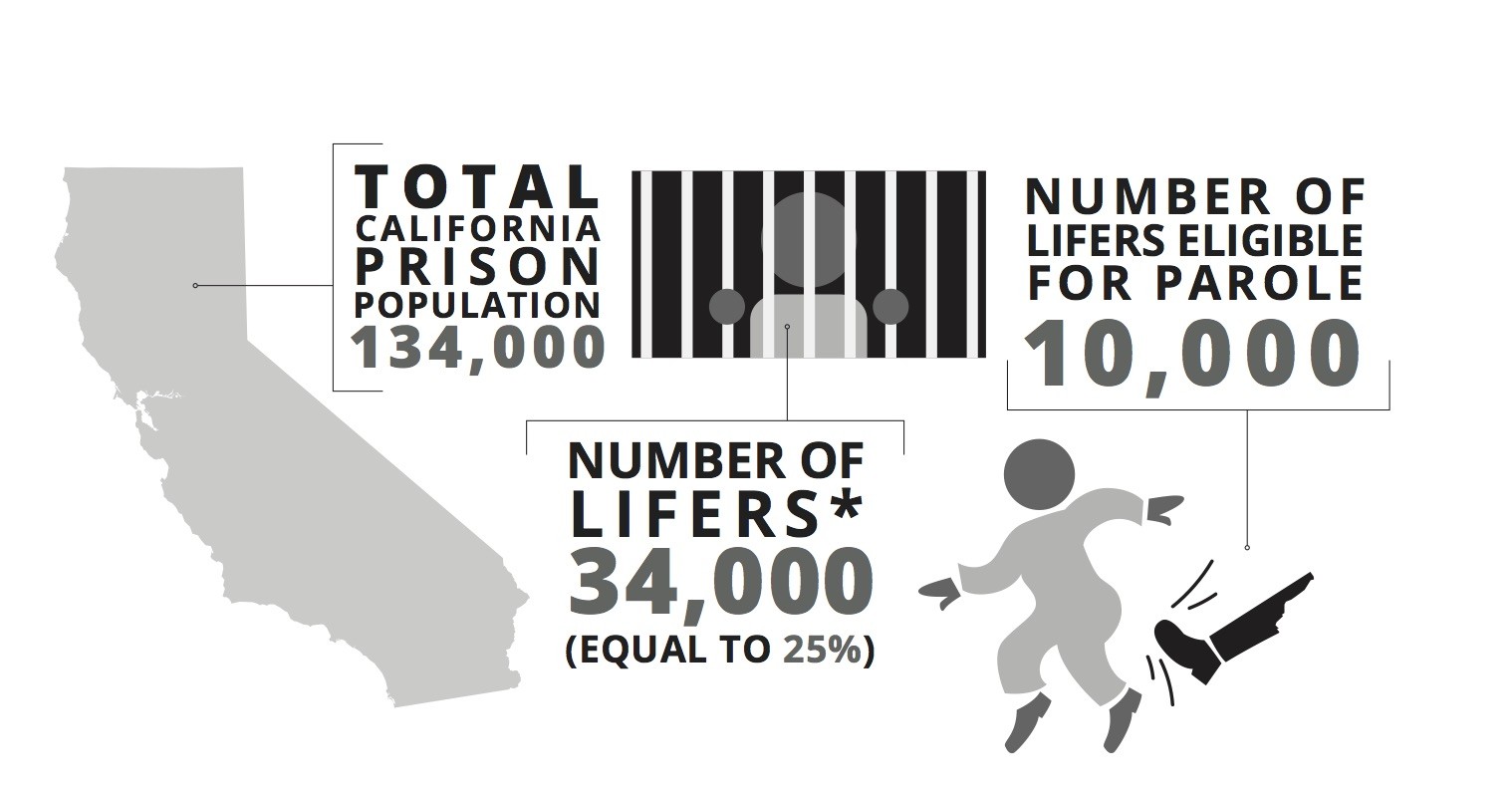
Twenty years after that eligibility date passed, and many unsuccessful parole hearings later, Johnson is still locked up — with little hope of finding freedom anytime soon. He is one of roughly 34,000 prisoners in California currently serving life sentences with the possibility of parole. Known as “lifers,” these inmates represent about 25 percent of the entire prison population in the state. Many lifers are men serving time for first- or second-degree murder convictions. Some have committed heinous acts of violence. Others were caught up in gang- and drug-related crimes that resulted in a homicide that they did not directly commit. And others were convicted under the state’s three-strikes law, which, for some offenders, mandates life sentences after three felony convictions. Lifers typically face sentences of a minimum of 7, 15, or 25 years, and many who serve those full sentences end up incarcerated for much longer. According to UnCommon Law, an Oakland-based nonprofit that supports California lifers and is representing Johnson, there are currently about 10,000 lifers in the state who have served their minimum sentences and are eligible for parole. But they remain confined to prison, trapped in a system that critics say is unnecessarily cruel.
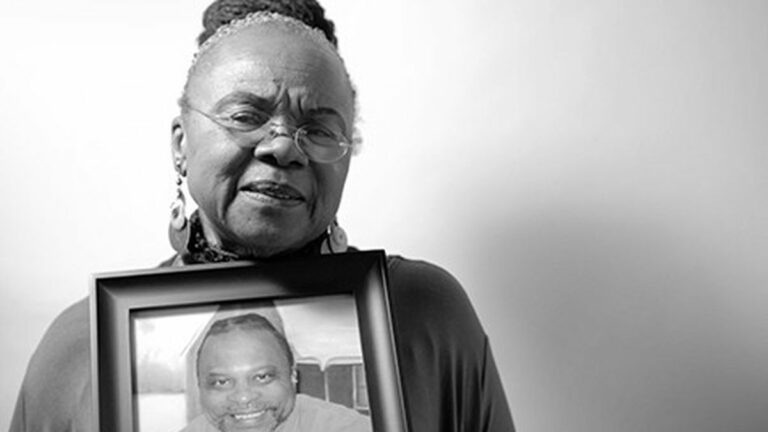
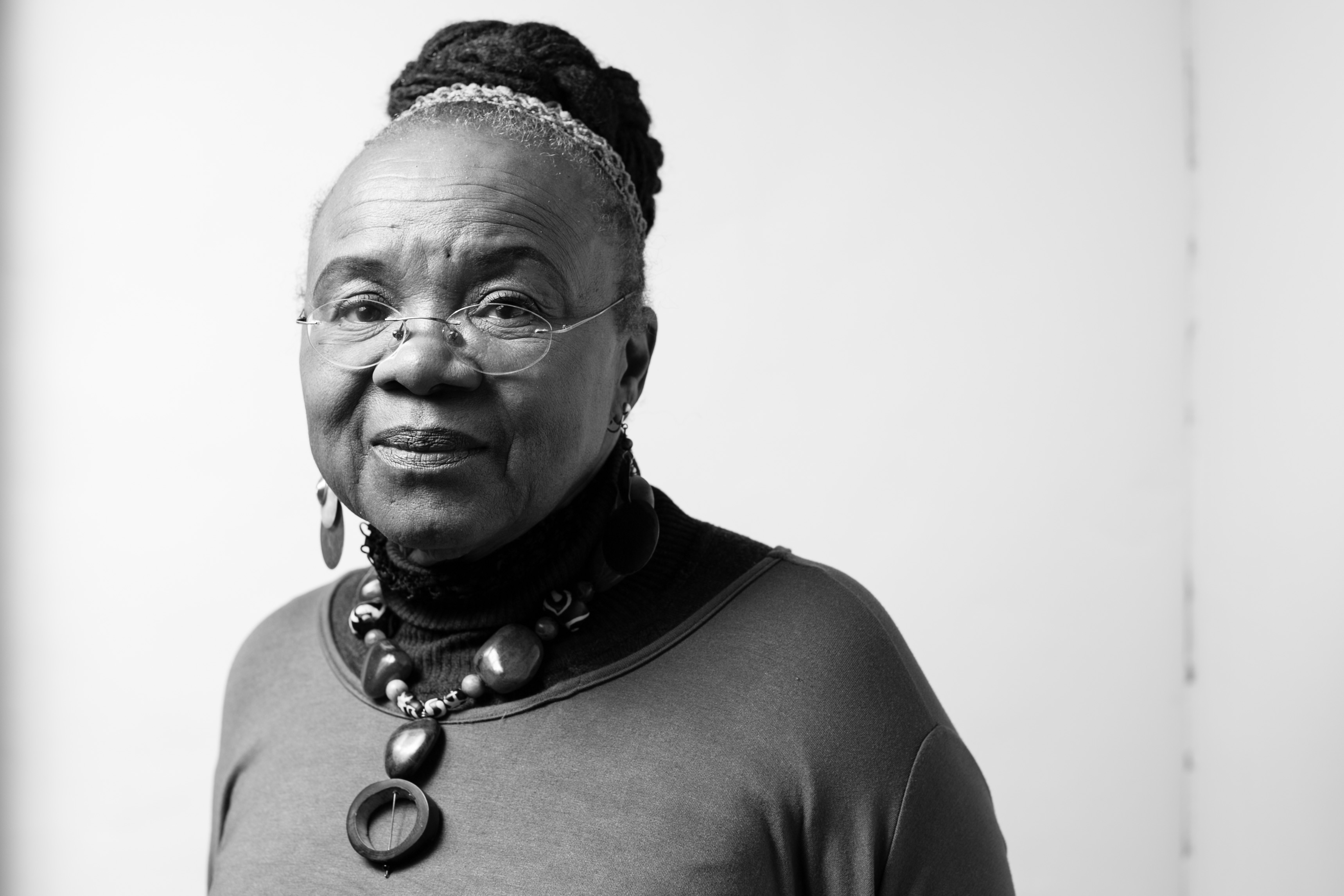
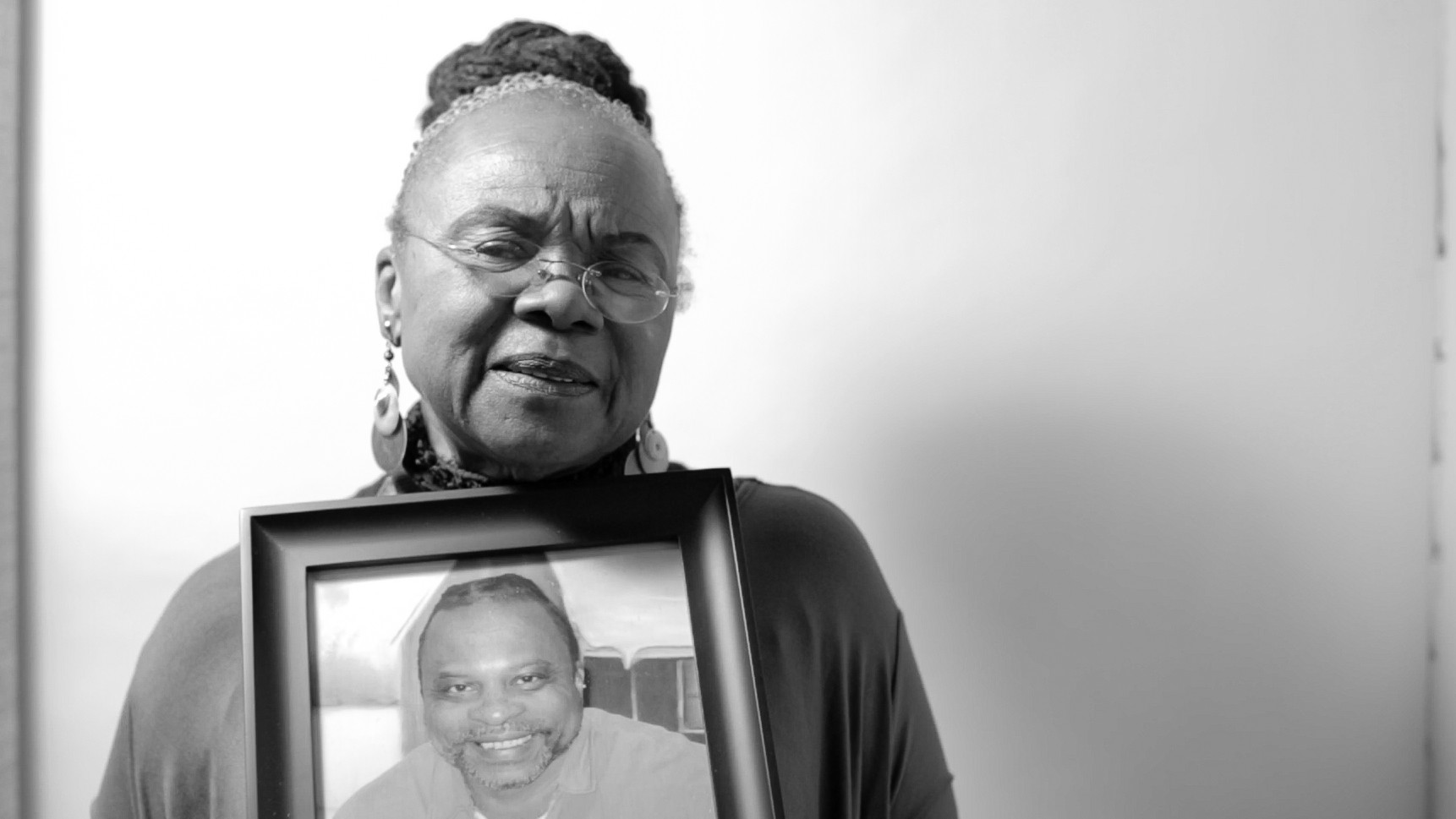
Despite the fact that Demian Johnson (in the framed photo) has a long list of accomplishments in prison, it may be a long time before he reunites with his mother, Ann Johnson.
Credits: Bert Johnson
Under state law, a parole board, made up of commissioners appointed by the governor, decides whether an individual is “suitable” for release. The law requires the parole board to release eligible inmates when they are no longer a danger to society. Commissioners are also supposed to remain unbiased and must not deny parole to an inmate merely because of the severity of the original crime.
But interviews with currently incarcerated lifers, recently released lifers, family members of inmates, and criminal defense attorneys — along with an extensive review of parole data and hearing transcripts and in-person observations of parole proceedings behind bars — paint a picture of a process plagued by harsh and arbitrary decisions that force people to stay locked up for many years after they have been rehabilitated. And inmates are regularly denied freedom due to petty disciplinary marks and questionable and biased conclusions of board commissioners.
For the majority of lifers who can’t afford counsel, their fate rests in the hands of state-appointed attorneys, who receive low pay and are usually burdened with heavy caseloads. These lawyers often do very minimal prep work before a hearing, making it easy for veteran prosecutors and tough board members to exploit the obscure vulnerabilities of a prisoner seeking parole. The most marginalized inmates — including those with mental illnesses and people who have previously suffered abuse and trauma — face particularly challenging parole battles (a topic covered in Part Two of the two-part “Trapped” series, which will be published in the January 14 Express).
From a policy and economic standpoint, experts have increasingly scrutinized this sector of the state prison system with the recognition that the continued imprisonment of lifers plays a major role in overcrowding and is incredibly costly to taxpayers. And from a personal and emotional standpoint, the cruel legal twists of the parole process can excessively punish reformed men and women while also inflicting immense pain on the lives of loved ones on the outside. People who committed crimes decades ago, when they were kids, are regularly denied second chances even when it seems they’ve done everything right in prison.
Just ask Johnson. In July 2015, he was denied parole for the ninth time — in part due to an alleged rule violation that was so surprising and arbitrary, he could barely process it when his parole commissioners raised it during his hearing. He had, they said, put his arm around his fiancée while she was visiting him on Valentine’s Day — an infraction that showed he is clearly unable to follow rules and is still a danger to society.
For decades, it was nearly impossible for California lifers to get released. In the 1980s and ’90s, “life with the possibility of parole was the functional equivalent of a sentence to life without parole,” said Kathryne Young, a postdoctoral fellow at Stanford University who has closely studied the parole process in California.
According to 2013 statistics (the most recent data available) from the California Department of Corrections and Rehabilitation (CDCR), roughly 70 percent of prisoners are serving out “determinate sentences,” meaning cases in which the courts sentence people to a finite amount of time, after which they are released. About 4 percent of prisoners (those convicted of the most serious crimes) are sentenced to life without the possibility of parole or are on Death Row.
The rest are like Johnson — lifers with “indeterminate sentences” who eventually become eligible for parole and are entitled to hearings to determine their suitability for release. From 1980 to 2008, fewer than 10 percent of the cases before the Board of Parole Hearings resulted in grants of release, according to a 2011 analysis by the Stanford Criminal Justice Center. And for the small group that the board deemed suitable to go home, very few were actually released. That’s because in 1988, California voters passed Proposition 89, which gave the governor the authority to overturn the board’s parole decisions in murder cases.
From 1999 to 2003, Governor Gray Davis reversed virtually all of the parole board’s grants of release. And from 2003 to 2011, Governor Arnold Schwarzenegger reversed 60 percent of grants and sent 20 percent back to the parole board for additional review. As a result of the low rate of parole grants by the board and the high rate of rejections by governors, the size of the lifer population as a percentage of the overall prison population has increased dramatically — from 8 percent in 1990 to 25 percent today, according to UnCommon Law. California has the highest rate of lifers of any state in the country, the Stanford report found.
Among the small group of lifers who have successfully reentered society in recent decades, many were incarcerated long after they had served their minimum sentences and had become eligible for release. For example, from 1999 to 2010, 701 lifers who were convicted of second-degree murder — an offense that typically carries a sentence of fifteen years to life — were granted parole and released after spending an average of twenty years behind bars, Stanford found. And for those convicted of crimes that typically bring sentences of “seven years to life,” 227 lifers were released during that same time period. They spent, on average, significantly more than seven years in prison — fourteen years for attempted murder and seventeen years for kidnapping for robbery or rape.
Unlike the rest of the prison population, lifers are statistically unlikely to reoffend — another reason why advocates say California has a moral and financial obligation to send more of these inmates home. Overall, according to the state’s 2014 recidivism report, roughly 54 percent of California prisoners return to prison within three years of their release. The recidivism rate for certain classes of lifers, however, is close to zero. From 1995 to 2011, of the 860 lifers who had been convicted of murder and were later released, only five people returned to jail or prison for new felonies — and none for crimes that carry life sentences, according to the Stanford report. Of 278 lifers released during the 2009–10 fiscal year, only 26 people — 9 percent — returned to prison, according to CDCR. And 25 of them returned because of parole violations. Meanwhile, 54 percent of inmates released during that fiscal year after serving determinate sentences returned to prison within three years.
Advocates of long prison sentences argue that the lifer recidivism rate is extremely low because California’s parole process is so rigorous. But critics say the data clearly shows that many lifers who present an incredibly low risk of reoffending remain locked up for unjustifiable reasons. Studies have further shown that people age out of crime and that people over age forty, and especially those older than fifty, pose a very low risk of committing new crimes on the outside. The state’s own risk assessment tool has concluded that 90 percent of lifers have a low or moderate risk of reoffending — compared to 56 percent of the general prison population, according to the Stanford report.
Reform advocates also have increasingly highlighted how much money the state could save if it regularly granted parole to inmates who have rehabilitated. California currently spends an average of nearly $64,000 per state prisoner each year, meaning incarcerating this population costs taxpayers more than $2 billion annually. If even just 10 percent of the lifers currently eligible for parole were released, the state would save nearly $64 million annually.
Continued overcrowding makes the need for increased lifer parole grants all the more urgent, advocates argue. California prisons are currently at 136 percent capacity, which equates to nearly 30,000 more inmates than the total capacity of its institutions and, prison activists say, can lead to inhumane conditions and inadequate services for inmates.
Still, eligible prisoners with extensive evidence of their successful rehabilitation, personal transformation, and suitability for reentry are routinely denied a second chance at the parole board. For many, that harsh reality is rooted in the fact that they are forced to enter their high-stakes parole hearings without a strong advocate by their side.
On the morning of August 6, 2015, Larry Johnson, an inmate at the California Institution for Men in Chino, an hour east of Los Angeles, woke up feeling prepared and eager for his parole hearing. The board had denied him parole in his first hearing in 2014, and he felt he had accomplished a lot since then and could make a strong case to the commissioners that he was ready to come home. But he was nervous about his attorney, John Ibrahim.
For starters, he hadn’t yet met Ibrahim, the lawyer appointed by the parole board to represent him. Earlier in the year, Ibrahim had called the prison and, according to Johnson, did very short back-to-back phone calls with a number of lifers whom Ibrahim would be representing at upcoming hearings. (Larry is not related to Demian Johnson, the Mule Creek inmate). This was Ibrahim’s official “client interview,” which lifer advocates said should always happen face-to-face. “The phone call lasted five minutes,” the 44-year-old Johnson said in a recent phone interview from prison. “He told me … this is the ‘getting to know me’ process.” Johnson said they went over the very basics of his case file — what self-help classes he had successfully completed and whether he had any serious rule violations during his incarceration (he did not). It felt like the conversation was over before it began. “I was kind of shocked, actually,” Johnson said.
When Johnson finally met Ibrahim in person, the attorney did not inspire confidence. According to Johnson, Ibrahim showed up at the last minute, said little to him, chatted briefly with the commissioners, and worked on his closing statement on his laptop minutes before the proceeding began. Ibrahim was still writing it when the commissioners officially started the hearing, Johnson said. “It was awful from start to finish. There was no connection between myself and the attorney,” said Johnson, who is serving a fifteen-years-to-life sentence for second-degree murder and recently became eligible for parole.
According to Johnson, Ibrahim said little on his behalf during the hearing, and it seemed doomed from the start. The commissioners denied him parole again. Due to a technical error, the board apparently did not properly record the audio, which means the state later had to dismiss the decision and grant him a new hearing, scheduled for April, CDCR records show. (There was thus no transcript of the hearing for me to review.) UnCommon Law is now representing Johnson.
Reached by phone, Ibrahim said he could not recall the specific case, but said it was likely he conducted a phone interview. “It’s just a common practice,” he said, noting that the state doesn’t pay for mileage driving to and from prisons. But he said all his interviews are at least twenty minutes and much more in-depth than how Johnson described it to me. “I can have the same quality of interview over the phone.”
Regardless, Johnson’s frustration with his attorney is common among lifers. Inmates who can’t afford private counsel are entitled to state-appointed lawyers, who are approved by the Board of Parole Hearings and are essentially independent contractors for the prisons. The attorneys get paid a maximum of $400 per client, and that amount is supposed to cover the costs of meeting with the client, reviewing hundreds of pages of case files, preparing for the hearing, travel time to and from prisons, and sitting through the hearing itself, which is often three or four hours long. With such low pay, even the most dedicated attorneys are limited in the time and effort they can devote to clients.
“It is a very underserved population,” said Kate Brosgart, a state-appointed attorney who is based in Berkeley, referring to inmates up for parole. Brosgart, who does lifer parole hearings full-time, said that with $400 per client, she is able to meet with each client once for about an hour usually two months or so before the hearing date and spends about four hours on her own prepping for the date. If hearings go long — sometimes five or even as long as eight hours, depending on the circumstances — she doesn’t receive extra compensation.
In a busy month, Brosgart can have more than 25 hearings — an incredibly intensive caseload that further limits her ability to meaningfully serve her clients. Even with the poor pay and busy schedule, Brosgart said she strives to vigorously defend each client and at least help them get one step closer to release. After I observed her during one of her hearings in November and had an extensive follow-up interview with her about lifers, it was clear to me that she is passionate about her responsibilities and has persisted in the job because she knows how desperately these inmates — whose families often can’t afford attorneys — need competent lawyers. “There’s a real beauty to working with people who have really rehabilitated themselves,” she said. “There are so many lifers who have just spent many, many years at this point becoming educated, becoming certified in different trade areas, who have very important responsibilities in the institution. … There’s nothing that makes that person still dangerous.”
Despite the fact that Demian Johnson (in the framed photo) has a long list of accomplishments in prison, it may be a long time before he reunites with his mother, Ann Johnson.
Credits: Bert Johnson
Many lifers with state-appointed attorneys aren’t so lucky to get matched with a caring advocate like Brosgart. She and other attorneys shared with me horror stories that they said are all too common. Brosgart said she has heard of cases in which attorneys essentially give up on their clients — deciding early on that the case is hopeless. They may decline to make a closing statement on their client’s behalf or fail to counter questionable claims by district attorneys, who also participate in hearings and often argue against a parole grant.
Jeremy Valverde, another Berkeley-based state-appointed attorney who represents lifers, said he is forced to depend on his private work and his wife’s salary to subsidize his parole practice. “I really believe in the right for everyone to have fair and adequate representation at their hearing,” he said, noting that when he meets lifers, many of whom have already been denied parole before, they are typically shocked by his enthusiasm and efforts. “They’re used to a certain amount of lethargy,” he said. “[The attorney] may just sit there and say nothing the whole hearing. That’s been the expectation.”
Valverde recently met a lifer with a very troubling story about his appointed lawyer. According to the inmate, the state-appointed attorney had pressured him to “stipulate” that he is unsuitable for parole, which means at the start of the hearing, he would tell the board he is not ready to go home — thus delaying any parole consideration for years. While a delay can be a smart move for someone who is truly unprepared — because the commissioners can deny parole for up to fifteen years — the inmate felt he was ready to make his case, Valverde said. It appeared that the lawyer simply hadn’t done the necessary prep work before the hearing. “You’re essentially trying to deprive this client of his rights to his trial, because you’re not prepared to go forward,” he said.
As some state-appointed attorneys struggle to make a difference within the confines of a process that seems to fundamentally devalue their roles, a small group of private attorneys and advocates are pushing for systemic changes — reforms that would help incarcerated people access the second chances to which they are legally and ethically entitled.
Lifers convicted of gruesome and unimaginable crimes must eventually be released — unless they continue to pose a clear threat to public safety. That is, at least, the directive written into California penal code, which states that the board “shall normally grant parole” the first time any lifer appears for a hearing. What that means is the state essentially has an obligation to release a lifer who is eligible for parole, as long as he or she is not a danger. And the board cannot determine that a lifer is a current risk simply because the original offense was horrible.
Keith Wattley, founder and director of UnCommon Law, the Oakland nonprofit that represents lifers, skillfully reminds commissioners of these kinds of obligations when he appears before the board. It’s hard to imagine someone who knows the ins and outs of lifers’ rights in California better than Wattley. He has been representing lifers in parole hearings since 2000 and has pushed for a wide range of policy changes through advocacy efforts and ongoing litigation. Wattley urges commissioners to grant parole to his clients based on hard facts and the particulars of relevant statutes — instead of letting the officials’ subjective assumptions and personal biases influence these life-altering decisions.
Wattley’s clients run the gamut in terms of offenses and progress behind bars, but he tends to work with people who are ready to do the hard work necessary to turn their lives around and confront the demons of their past that led them to prison. He doesn’t shy away from those convicted of heinous or unbelievable crimes — the ones who often most need his services. These are people who murdered loved ones, had particularly vulnerable victims, engaged in disturbing cover-ups, or committed frightening acts of violence. Most of the twelve commissioners in California who oversee parole hearings — an inmate goes before one commissioner and one deputy commissioner — have extensive law enforcement backgrounds and are reluctant to release these prisoners, Wattley explained. “They’ve spent their lives locking these people up and finding them to be dangerous,” he said. “It takes a lot to retrain them to look at people differently.”
*Lifers: People serving life sentences with the possibility of parole. Source: California Department of Corrections and Rehabilitation 2013 data/Uncommon Law.
Credits: Roxanne Pasibe
Wattley represents roughly half of his clients pro bono or for reduced fees based on income and often spends months or years getting to know the inmates. He schedules regular in-person visits — having in-depth conversations about a prisoner’s upbringing, the circumstances surrounding the crime, and what he or she has done to change and grow behind bars and prepare for a successful reentry. Wattley closely reviews case files and transcripts of previous failed parole hearings and helps clients chart a path to a successful hearing — advising them on the kind of programming, educational degrees, and counseling they should work on behind bars, both to improve their lives and to increase their chances of getting released. He works with his clients to help them uncover the root causes of why they committed the crime and often guides them to a place of deep and genuine remorse. In practice, he is more of a social worker, case manager, and therapist than he is an attorney and legal advisor for his clients.
Bernard Toller, a lifer whom I met at his parole hearing in November, told me that his sessions with Wattley helped him come to terms with some dark truths about his past and his offense. “To let all that out is actually a relief,” he said in an interview inside Deuel Vocational Institution, a prison in Tracy, as he waited for the commissioners to finish deliberations. “I told him things I never told anyone. Being honest and open was very difficult, but necessary for my growth. … It allowed me to see myself in the mirror.” Minutes later, Toller learned that the board was finally granting him parole — after he had endured several previous denials. Before guards escorted him away from the hearing room, he told me he felt exuberant. “I still have more life to live!”
Since UnCommon Law was formally incorporated as a nonprofit in 2012, 131 of Wattley’s clients have successfully left prison. None have committed crimes after their release, he said.
In recent years, Wattley has pushed to ensure that the state and individual commissioners follow through with various policy reforms, big and small, designed to make the process fairer for inmates. Most notably, in 2008, the California Supreme Court ruled that the state must base its determination of “current dangerousness” on a variety of facts in the record, not just the details of the offense — a game-changer for longtime inmates doing time for serious crimes.
Due to this reform and a number of other changes, today nearly 20 percent of annual parole hearings result in grants of release. Further, Governor Jerry Brown’s veto rate has overall been significantly lower than that of his predecessors. From 2011 to 2014, Brown has, on average, reversed fewer than 20 percent of grants each year.
But when commissioners are biased against inmates, they find ways to circumvent reforms and issue denials, Wattley said. For example, if they want to deny someone due to the disturbing nature of the crime or because they don’t like an inmate’s attitude or comments, commissioners will find a way to argue there is a “nexus” between the offense and a prisoner’s ongoing behavior or lack of “insight” or “remorse” — even when there’s little evidence to back those claims.
In other words, even when the laws and facts are on the prisoner’s side, commissioners often are not — and the consequences can be costly.
Parole hearings can feel claustrophobic and tend to be emotionally and mentally exhausting for everyone in the room. The first hearing I observed started at 8:44 a.m. on a Tuesday in November inside California Health Care Facility, a relatively new prison in Stockton. Up for parole was 47-year-old Antoine Jenkins, who was convicted in 1991 in a murder, robbery, and burglary case tied to a major drug operation that he apparently helped run when he was in his twenties. As is sometimes common in these cases, he did not pull the trigger in the murder, though he was clearly caught up in significant criminal activity for years and was involved in a major drug sale that turned deadly. He was sentenced to 29 years to life and was first eligible for release in 2010 (inmates generally become eligible for parole before finishing the full term of their sentence, usually because of good behavior).
The room that morning was freezing and looked like a small classroom. Jenkins, in a blue prison uniform, sat next to Wattley, his attorney, on one side of a table directly across from Commissioner Michele Minor and Deputy Commissioner Stewart Gardner, who each had desktop computers in front of them. A deputy district attorney from Los Angeles conferenced in by video. Two correctional officers stood guard throughout the hearing. And Express photographer Bert Johnson and I sat in a corner of the room, ten feet or so away from Jenkins.
This hearing, technically Jenkins’ second, was particularly high-pressure for him given the debacle of his first encounter with the board. In 2008, two years before he was eligible for release, Jenkins’ state-appointed attorney told him that he should delay his first parole hearing by one year because ongoing litigation would yield a change in the law that would benefit lifers. But, as he and Wattley explained during the recent hearing, Jenkins unknowingly signed a seven-year “stipulation” — an unnecessarily long delay for someone who was ready to be considered for parole. That meant that 2015, more than two decades after his arrest, was his first legitimate shot at freedom.
At parole hearings, commissioners conduct lengthy interrogations about the inmates’ childhoods and circumstances prior to the crime, the crime itself, accomplishments and discipline behind bars, and post-parole plans. District attorneys then question the inmate, the inmate’s attorney can question him or her as well, and all three of them can make closing statements. The commissioners deliberate on the spot and offer an immediate decision.
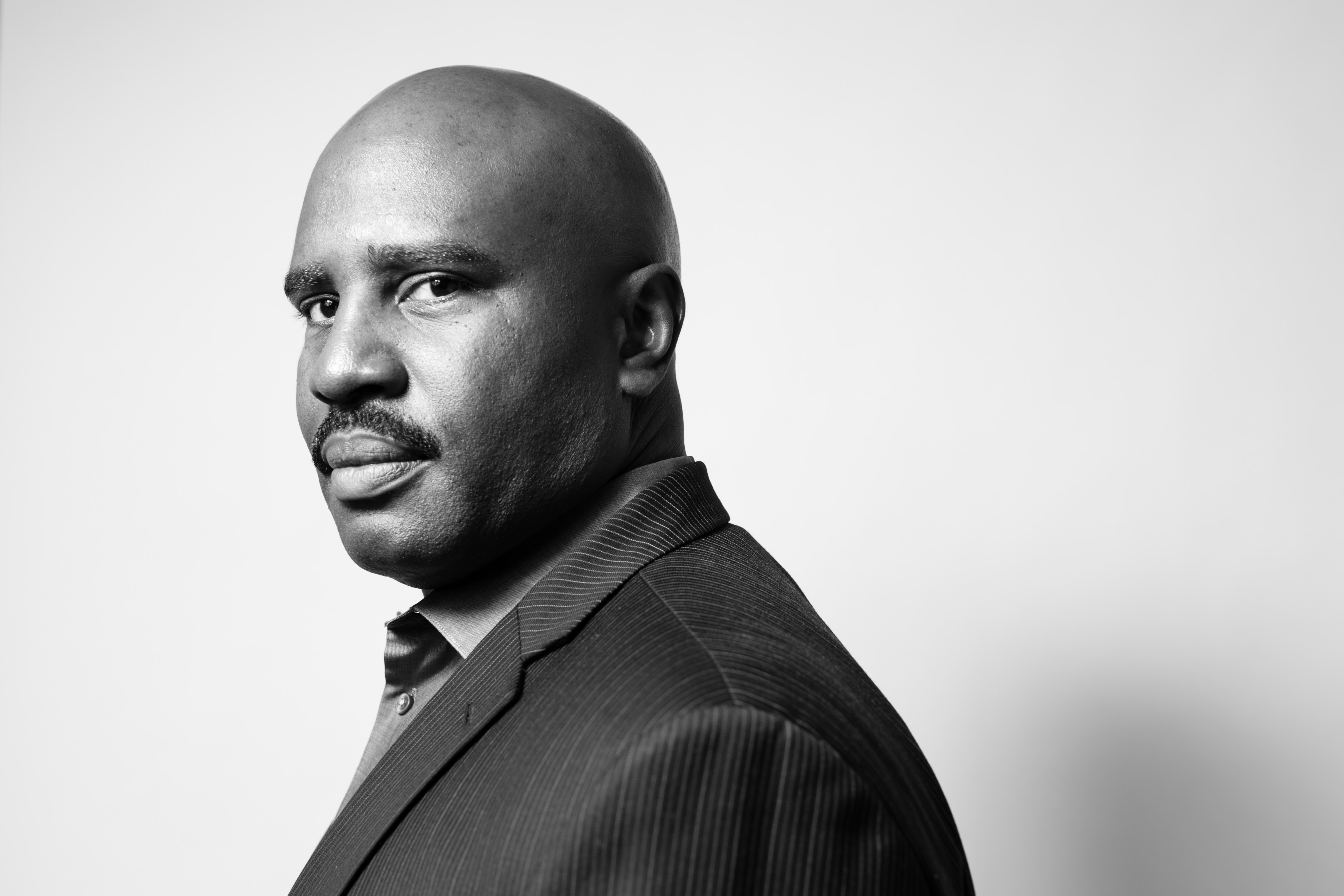
Keith Wattley is the founder and director of UnCommon Law, an Oakland nonprofit that represents lifers.
Credits: Bert Johnson
Not long after the hearing began, Jenkins broke down in sobs while discussing his late grandparents who had raised him and, as he described it, had given him a good childhood. “I let them down so much,” he said. “It hurts just to think about it.”
He broke down again when recalling a time that he thought his cousin had been shot. Jenkins repeatedly described to the commissioners how his greed and selfishness led him to commit the criminal and violent acts that landed him in prison.
When Commissioner Minor delivered her decision, at 11:45 a.m., three hours after the hearing began and after 36 minutes of deliberations, she offered a lot of praise for Jenkins: He has clearly accepted responsibility for the crime, he presents a reduced risk of recidivism at age 47, he has marketable skills and realistic parole plans, and he has not had a violent rule violation behind bars since 2000. She also noted that, according to the California Supreme Court, the board cannot consider the offense, prior criminality, or unstable social history as indications that he currently presents a risk of danger. But, she argued, various nonviolent rule infractions in recent years show he poses a continued threat to society. He was caught with tobacco in 2008. He was caught with a cellphone in 2012. And in July 2015, he was caught inappropriately grabbing his fiancée in the visiting hall, apparently briefly rubbing up against her. “That was a very selfish thing to do — same thing you were doing at the time of the crime,” Minor scolded, as Jenkins sat stoic, staring forward. “It is disrespectful to your visitor.”
At 11:59 a.m., the hearing was over: Minor and Gardner had refused to grant Jenkins parole and issued a five-year denial. He can petition the board to get an earlier hearing, but if that fails, his next chance at freedom won’t come until 2020.
“When is this nightmare going to end?” Jenkins asked me by phone a few weeks later. “I’m ready — now. You know what I mean? … I know for a fact that I would never come back to prison. … There is no way in hell I would commit another crime.”
His fiancée, Jennifer Chacon, said she was devastated by the denial — especially knowing that her alleged horseplay with Jenkins played a part in it. The idea that he had mistreated her in any way that day was absurd, she said, after I had mentioned to her that officials in the hearing characterized the touching as a sexual violation of her. “It is so ridiculous. If that were the case, why would I stay there? If I felt disrespected, I would’ve left.”
More broadly, she said it’s obvious that Jenkins is a completely different man today than he was decades earlier. “He was 22 when all this happened. … Now, Antoine is almost fifty years old, and you don’t think he’s changed?” she said. “I really want him to be home with me.”
The parole denial echoed the rejection of Demian Johnson, the other UnCommon Law client who failed to get parole in 2015 after he was accused of putting his arm around his fiancée on Valentine’s Day. According to the transcript of the July 2015 hearing, the commissioner in that case, Terri Turner, said of the incident, “It just, to me, demonstrates a pattern of behavior, where you have yet to recognize the boundary lines.”
Turner added: “If you can’t follow the rules and regulations in prison, then it’s difficult to believe that you’d get out of prison and follow the rules of society.” She further criticized Johnson for not taking full responsibility for the incident and seemingly trying to minimize the seriousness of the offense when questioned during the hearing.
But when I recently met Demian Johnson’s mother, Ann Johnson, of Oakland, she provided me with documents showing that her son had every reason to be defensive. Months after his denial, Demian had successfully appealed the Valentine’s Day write-up and had it removed from his file; a sergeant admitted the alleged conduct merited only a verbal warning. The sergeant further wrote: “Mr. Johnson has displayed exemplary behavior and conducted himself respectably and with decency, never disregarding boundaries or the sanctity of the visiting room.”
Hilda Wade, his fiancée, told me she had absolutely no memory of him even putting his arm around her that day.
“It’s like a kick in the gut when you get denied,” Demian told me by phone. “You’re kind of just like, ‘Wow. I can’t win.’ But I realize I can’t think like that. I can’t be depressed. … I feel like I’m fighting the good fight … and in the process I’m also growing and developing. Whatever time I have left, I’m using.”
Jennifer Shaffer, executive officer of the parole board, said she couldn’t discuss specific cases, and CDCR officials also declined to comment on the individual inmates in this story. In a lengthy phone interview, however, Shaffer defended the commissioners, arguing that they make very deliberate, careful decisions that are always based on a wide variety of factors and their obligations under the law. Shaffer, who became executive officer in 2011 and has made increased transparency a priority during her tenure, noted that the state has dramatically expanded training for commissioners in recent years.
“These are very, very difficult decisions made by human beings,” said Shaffer. “These decisions can be very emotional. It’s an extremely meaningful decision. You have somebody’s liberty at stake, and you have victims who have been significantly traumatized, and they’re very afraid. … If you really focus on the law, it gives you a clearer path to a decision. … It’s the only way to really have fair and unbiased hearings.”
Shaffer also said the board has specific guidelines for state-appointed attorneys, which outline the basic expectations for the tasks they should complete when representing lifers at hearings. But, she said, the board is fairly limited in its communication with and oversight of lawyers. “These people are all certified, licensed professionals, and they know what their ethical duties are to their clients,” she said, noting that inmates can file complaints if they believe their representation was inadequate.
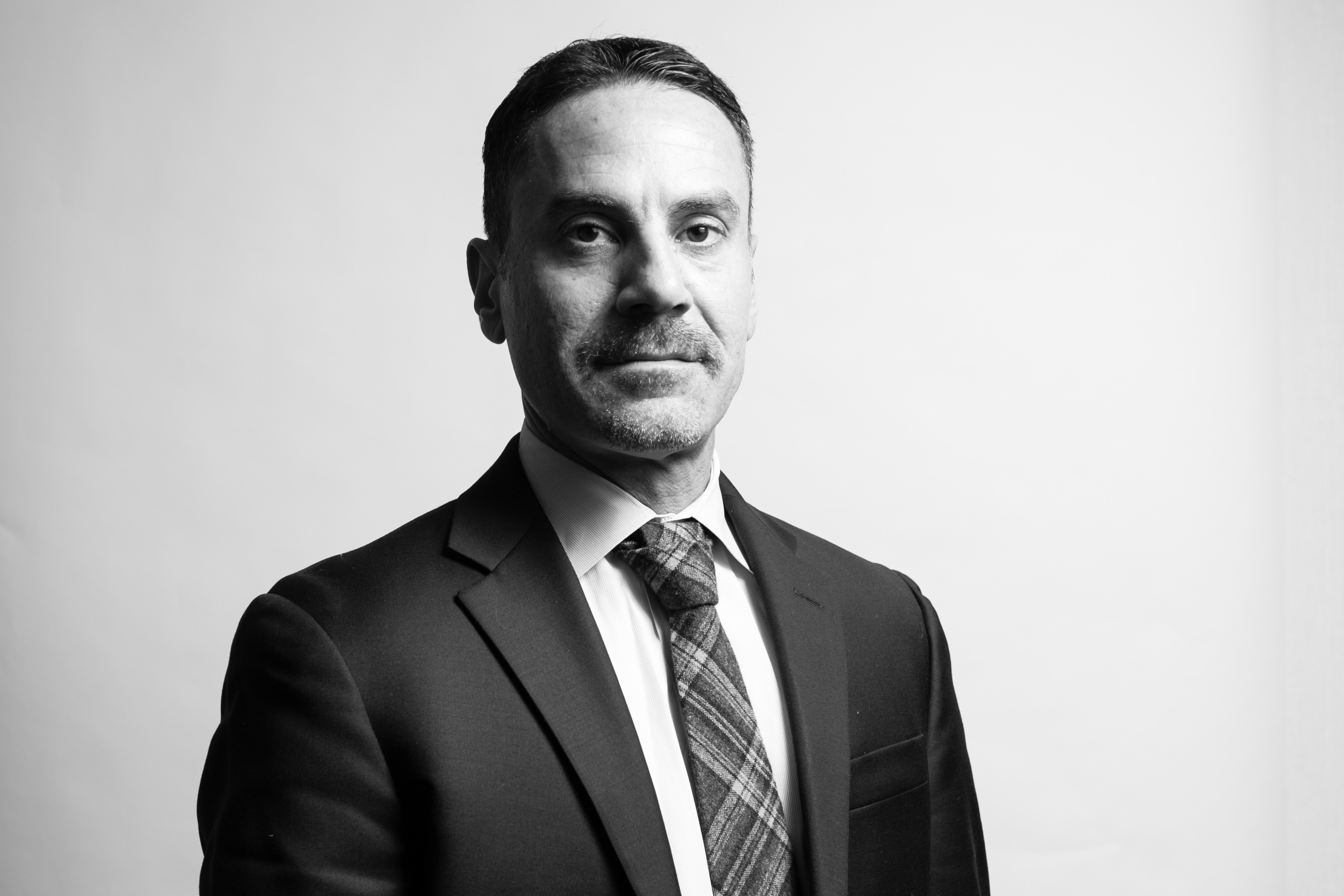
Jeremy Valverde, a Berkeley-based state-appointed attorney who represents lifers, said he is forced to depend on his private work and his wife’s salary to subsidize his parole practice.
Credits: Bert Johnson
But advocates said that better pay and stricter requirements for state-appointed parole attorneys — mandatory in-person meetings, for example — could go along way toward helping inmates defend themselves against denials over petty rule violations. Brosgart, one of the state-appointed attorneys, told me that when she privately represents lifers, she typically charges $4,000 — ten times the state’s rate. “You can have a very different relationship,” she said. “You can work together, give homework assignments, establish excellent parole plans.”
When attorneys have time to closely review case files and discuss with inmates potential flaws in their record, the lawyer and prisoner are both in a much better position to respond to various charges of commissioners and prosecutors, said Wattley.
More broadly, if California had parole commissioners from more diverse backgrounds — with expertise and experience beyond prison and law enforcement careers — inmates would be less likely to face denials for frivolous reasons, Wattley said. And if commissioners were to receive better training about the fact that many types of minor rule infractions have minimal connections to current dangerousness, then the board likely would send more inmates home.
Wattley and Brosgart also said that if lifers received long-term case management from dedicated, in-house social workers, prisoners would be much more prepared to face the board — and better equipped to ultimately return to society. Instead of relying on lawyers like Wattley to help them coordinate their programming behind bars and their post-parole reentry plans, inmates could move toward true rehabilitation in a more holistic way. Upfront investments in prisoners’ recovery could translate to major savings when they get earlier parole dates. And inmates could have more years to reconnect with loved ones on the other side.
Ann Johnson, Demian’s 72-year-old mother, told me that the arbitrariness and cruelty of the parole process has deeply affected her. “It’s taken a toll on me physically and emotionally. It’s heartbreaking. You try not to cry everyday.”
Driving to prison regularly is exhausting for her, and she spends hundreds of dollars a month talking to him on the phone. “It doesn’t get any easier,” she said.
The July parole denial took his family by shock. “I expected him to get a date,” Ann said. “It seems extremely unfair. … He’s a danger to society because he doesn’t follow the rules? I can’t make sense of it.”
Lifers’ loved ones told me that they try not to let the inmates know much pain the denials cause. “It hurt me. I cried so bad,” said Hilda, Demian’s fiancée. “But I didn’t let him know. I didn’t want to burden him. But it hurt me to the heart.”
Antoine Jenkins and Jennifer Chacon’s weekly visits mean everything. “He’s there for me emotionally, and we counsel each other on the situations we’re dealing with,” said Chacon, who lives in Sacramento and is a medical office coordinator. She said they’ve supported each other through various struggles they’ve faced in recent years — Jenkins preparing for the parole board and coping with the death of his mother; Chacon dealing with the hardships of taking care of sick relatives while working full-time.
“It’s like a vacation,” Jenkins said of Chacon’s visits. “You’re up here with all this chaos and you go there and have peace of mind.” He said they talk about sports, politics, church, family, and their life goals.
Bernard Toller said Wattley helped him come to terms with some dark truths about his past and his offense.
Credits: Bert Johnson
But the allegedly inappropriate waiting-room conduct in July 2015 cost Jenkins more than just a sizable delay in obtaining freedom. The prison also banned Chacon from visiting him again for several months. Chacon and Jenkins told me they’ve been fighting to get her visitation rights re-approved, but have run into difficulties. When they are finally approved, they will likely only be able to talk through a glass wall at first, Jenkins said. (A CDCR spokesperson declined to comment on Jenkins’ visiting privileges.)
Chacon said it was painful for both of them that she wasn’t able to visit him before his November hearing and help him prepare and stay calm. “We could’ve talked about it face-to-face, maybe rehearsed. … Now all we get are these fifteen-minute phone calls. Try fitting your whole day into fifteen minutes.”
She wants to meet with him as soon as possible so they can also start diligently planning how he can get another hearing date — and figuring out what he needs to do to make sure his next board appearance results in a grant.
Jenkins told me he initially feared that the termination of her visitation rights would create such a strain on them that it might ruin their relationship. But, they both said, they are simply trying to stay positive and strong — and they’re looking forward to when they can see each other again.
In Mothers of Men, a 1917 film set in the Bay Area, heroine Clara Madison (Dorothy Davenport) faces a moral dilemma: As the newly elected governor in a state in which women have recently won the right to vote, she must choose between pardoning her husband, who was wrongly convicted of a murder he didn’t commit, and preserving the achievements of the feminist movement by serving as an incorruptible enforcer of the law.
Oakland resident James Mockoski, a film archivist for Francis Ford Coppola’s company American Zoetrope, sought out Mothers of Men as an undergraduate student at UC Santa Cruz (UCSC). He is now partnering with the San Francisco Silent Film Festival to raise $60,000 to restore and premiere it at the annual festival in June.
In Mothers of Men, Dorothy Davenport (middle) stars as the first female governor of an unnamed state.
Credits: Courtesy James Mockoski
Scenes from the 1917 movie, Mothers of Men, were shot on Shattuck Avenue in Berkeley.
Credits: Courtesy James Mockoski
This rally scene from Mothers of Men was shot on Shattuck Avenue in Berkeley.
Credits: Courtesy James Mockoski
The unusual plot makes the movie a particularly rare find, said Mockoski in a recent interview. The dilemma that the female protagonist faces is an entirely human conundrum, divorced from the politics of gender, he added. “What [the film] does nicely is, it forecasts the future of women in politics and takes a slightly different angle than showing the fight, the struggle,” he said. “You think of suffragettes, and they’re militant. It tries to soften that whole persona.”
Set largely in Santa Cruz with scenes shot in Berkeley and elsewhere in the Bay Area, the film was a bit of a legend for local historians, but no one had seen it or knew of a copy that existed, Mockoski said. Ross Eric Gibson, a Santa Cruz filmmaking historian, wrote in a 1994 San Jose Mercury News column that finding the film was crucial to local filmmaking history because the movie’s cast contains so many local residents, and it was one the largest productions in the area at the time.
“Local historians always knew about this film, but they didn’t know it [still] existed,” Mockoski said. “They thought it was lost.”
While a student at UCSC, Mockoski wrote to film archives all around the world inquiring about Mothers of Men. In 1997, representatives at the British Film Institute responded, saying they had a copy of Every Woman’s Problem, a 1921 print with the same cast and crew. Mockoski, Gibson, and UCSC professor Shelly Stamp, a specialist in female roles in early films, then verified that this was the same film, just rereleased under a new title.
“When we saw it for the first time, we could see that this was exactly what they wrote, which scenes were shot when,” Mockoski said, adding that they relied on historical records of the film’s shoot at the time. “There was no way it wasn’t Mothers of Men.”
Like many films of the progressive era, Mothers of Men focused on one of the largest social issues of the day, Stamp said. Though women had narrowly won the right to vote in California in 1911, the national drumbeat for universal suffrage was growing louder.
“Films were the number-one commercial pastime in America. They were incredibly popular,” Stamp said. “Filmmakers took on all of the key issues of the day. And not just suffrage but child labor, the death penalty, addiction, alcoholism.”
San Francisco Silent Film Festival president and film preservationist Robert Byrne said the movie is not purely an advocacy film, but also one meant to entertain. “It’s not a table-pounding kind of film,” Byrne said. “It uses the suffrage movement as a plot device for drama, and it also makes the point that women can hold positions of power.”
In Mothers of Men, Dorothy Davenport (middle) stars as the first female governor of an unnamed state.
Credits: Vessel Gallery
Mockoski said that to restore the film, he and his colleagues first need to scan each individual negative digitally, so they can use software to remove scratches, bubbles, dust, and other blemishes. Although the movie was shot with black and white film, Byrne said it was typical for films at that time to actually have coloring — in this case, blue, pink, and amber hues that mark varying points in the plot. Once the film is scanned and has been colored to match the original version, the digital images will then be reprinted back onto film, which Mockoski said is still the best way to preserve films today. It will also be given a score, he said. As of this week, the team had raised just more than $34,000 toward that effort by soliciting donations through the movie’s website.
The movie will eventually be archived at the Library of Congress, Mockoski said, and he plans to show it at theaters around the Bay Area after the San Francisco Silent Film Festival. Mockoski is hoping that restoring the film will reinvigorate a conversation not just about local history, but also about the women’s movement. He was quick to point out that California has still never elected a female governor.
“Here in 2016, it’s still a very relevant conversation,” Mockoski said. “We’re still talking about things like equal pay. … This movie is a relic, but it reminds us that [the women’s movement] is still a movement that’s under attack. It’s still a battle.”
For more information about the film and how to donate, visit MothersFilm.com.
Bella Feldman's recent work includes a sculpture that resembles a menacing underwater mine. Two glass orbs are outfitted with sharp steel spikes and anchored to militaristic mounts made of heavy metal, then tethered to one another with a hefty chain. The piece embodies a glaring tension between force and fragility — a recurring characteristic in the 85-year-old...
Jennifer Freese and her husband lived across from Franklin Bros. Market in West Berkeley for more than a decade and a half before its longtime owner put the store up for sale. The bodega's facade on Bancroft Way had been boarded with plywood for some time and the building needed a lot of work. "I just thought,...
After worsening mental health confined her to a county mental hospital and cost Jodi Monahan her job at KTVU Channel 2 News in Oakland, she spent nine months staying in various hotels, living in her car in state parks, and sleeping on peoples' couches as she battled drug addiction. But then Monahan called the nonprofit mental health agency Bonita...
A few years ago, 22 residents of Alameda County made the affordable housing crisis up close and personal for me. Encamping in front of our county administration building, these 22 people laid claim to public space when they couldn't find a home of their own.
These 22 are not alone. According to a 2013 report by EveryoneHome, an Alameda County...
Politicians often face intense pressure to award huge, taxpayer-funded handouts to wealthy sports team owners who threaten to move to a new city. And elected officials usually bow to such threats. Case in point: Politicians in St. Louis have promised $400 million in public subsidies to the billionaire owner of the St. Louis Rams to dissuade him...
While on a business trip, Michael meets Lisa. He's a motivational speaker and author of customer-service training books; she's coincidentally a service rep herself, in town for the professional conference at which Michael is speaking. They hit it off over drinks at the hotel, one thing leads to another, and suddenly their casual chance meeting takes an unexpected turn.
Before...
I'm a 45-year-old straight male. Politically and socially, I consider myself an ardent feminist. There is nothing I enjoy more than giving a woman an orgasm or two. I'm very GGG and will cheerfully do whatever it takes. Fingers, tongue, cock, vibrator — I'm in. If it takes a long time, so much the better. I'm okay with all...
"Labor's Positive Progress," Year in Review, 12/23
What About
Campus Labor?
Good article overall, but missing was a mention of all the labor activity on campuses, from adjunct organizing in private higher education to big ongoing contract fights (California State University system, University of California lecturers, and City College of San Francisco) and resistance to attempts to close CCSF (American Federation...
Demian Johnson knows he has to be extremely cautious when he's around his fiancée. He can briefly hug her when she arrives and maybe give a short kiss before she leaves. Sometimes, he can hold her hand, but they can't have any other physical contact.
Johnson is 51 years...
In Mothers of Men, a 1917 film set in the Bay Area, heroine Clara Madison (Dorothy Davenport) faces a moral dilemma: As the newly elected governor in a state in which women have recently won the right to vote, she must choose between pardoning her husband, who was wrongly convicted of a murder he didn't commit, and...