Maya Songbird Writes Music for the Wild and Weird

0

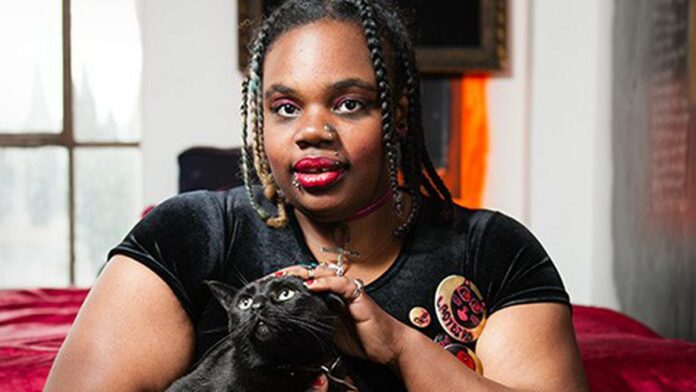
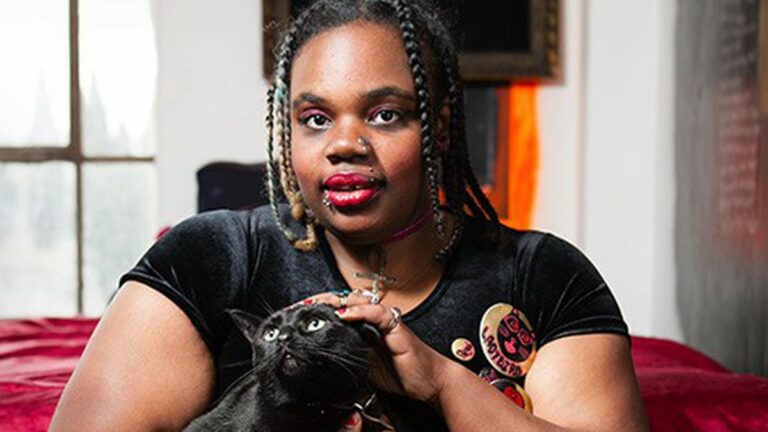
If you had to know only one thing about the singer Maya Songbird (Maya Ivy Benton), it’s that she wears her heart on her shoulder — literally. The San Francisco native has an upside-down heart-shaped birthmark at the top her left arm — an image that appears in her promotional photographs and is the logo of her multimedia company, Wired Weird Entertainment, which she plans to launch on January 28. It’s scrawled in chalk, silver gel pen, and paint on the walls of her East Oakland live-work space. And, it’s a handy metaphor for the unabashed self-love she champions in her music.

Songbird is gearing up for the release show for her new EP, Queen of Darkness (Ratskin Records), which takes place on January 28 at an underground West Oakland venue and doubles as the launch party for her new business. Although she’s been making music in the East Bay and San Francisco full-time since 2009, she said Queen of Darkness represents her unfiltered artistic expression and devotion to the occult, an identity she’s cultivated since she was a teenager. She joked that if the “prince of darkness” is Satan, then that makes her Satan’s mom, and indeed, she plans to enact a magic ritual at the beginning of the performance before taking the stage.

But despite Songbird’s dark aesthetic, her three-track EP is surprisingly effervescent. Producer Oji mixes piano riffs and bass lines with spacey synth sounds as Songbird’s voice glides over a disco-infused, infectiously danceable beat on “How the Sun Shines.” “Wicked Attraction” offers ominous organ samples that loom over poppy snare drum snaps. And “Delicate Chemistry,” which Songbird herself produced, is an explicitly sexual, thumping electropop tune with rich, velvety vocals that exude desire.

The EP is a buoyant departure from the down-tempo, neo-soul mixtape, Writing My Life, which debuted earlier this month on the Afrofuturist collective Bad Girl Confidence’s website. On the tape, Songbird’s viscous crooning drips like syrup over producer Trippy Sanders’ expansive, galactic samples.

Songbird compared the two projects to her hair — half of which is dyed a white gold and, on the particular day I spoke to her, was tinged with streaks of aquamarine and purple. Writing My Life, she explained, is like the naturally dark brown, accessible side, while Queen of Darkness is like the colorful, rainbow side — a protest against oppression, fear, self-loathing, and hate.

“I’m standing up for a lot of things,” she said of the EP. “I’m standing up for my right to be Black, my right to be dark Black, my right to be witchy, my right to somewhat be Satan’s mom — you know, just being my artistic, crazy self.”

And that’s the other thing to know about Songbird — she’s not afraid of contradictions. She acknowledges and accepts seemingly opposing beliefs, such as simultaneously praying to a monotheistic god and practicing witchcraft. But those polarities aren’t paradoxical to Songbird. As she explained, “Without darkness, there is no light.”
Songbird always felt like she was different. “My soul has lived on other planets,” she said. “That’s why I’m so weird on Earth.” Growing up in San Francisco’s Castro district, she said she spent her teenage years roaming the streets late at night, haunting clubs and other forbidden places. Her house was a refuge for neighborhood friends who felt ostracized at school or who were coming to terms with being queer. She’s never been afraid to express herself and wants to inspire others to do the same. That’s the message she wants to send in her songs: That it’s okay to be different, a little crazy, wild, or weird.

Her entertainment company, Wired Weird Entertainment, will be her “platform to corrupt the planet,” Songbird said, only half-jokingly. She plans to use its website to promote other artists, hawk wearable and visual art, and branch out into directing films and music videos, among other endeavors.

She has also teamed up with fellow musician and artist Amra Island for a collaborative album they’re calling Polo Apachery, set to be released on Ratskin Records later this year. And Songbird is hoping the upside-down heart logo, which she calls her “weird stamp,” can one day become a symbol of liberation, especially for young women.

“I’m so pussy powered,” she said. “I’m excited to be a voice for the wild, weird women who are not afraid.”
Why Yosemite Was Right to Change the Names of Iconic Places

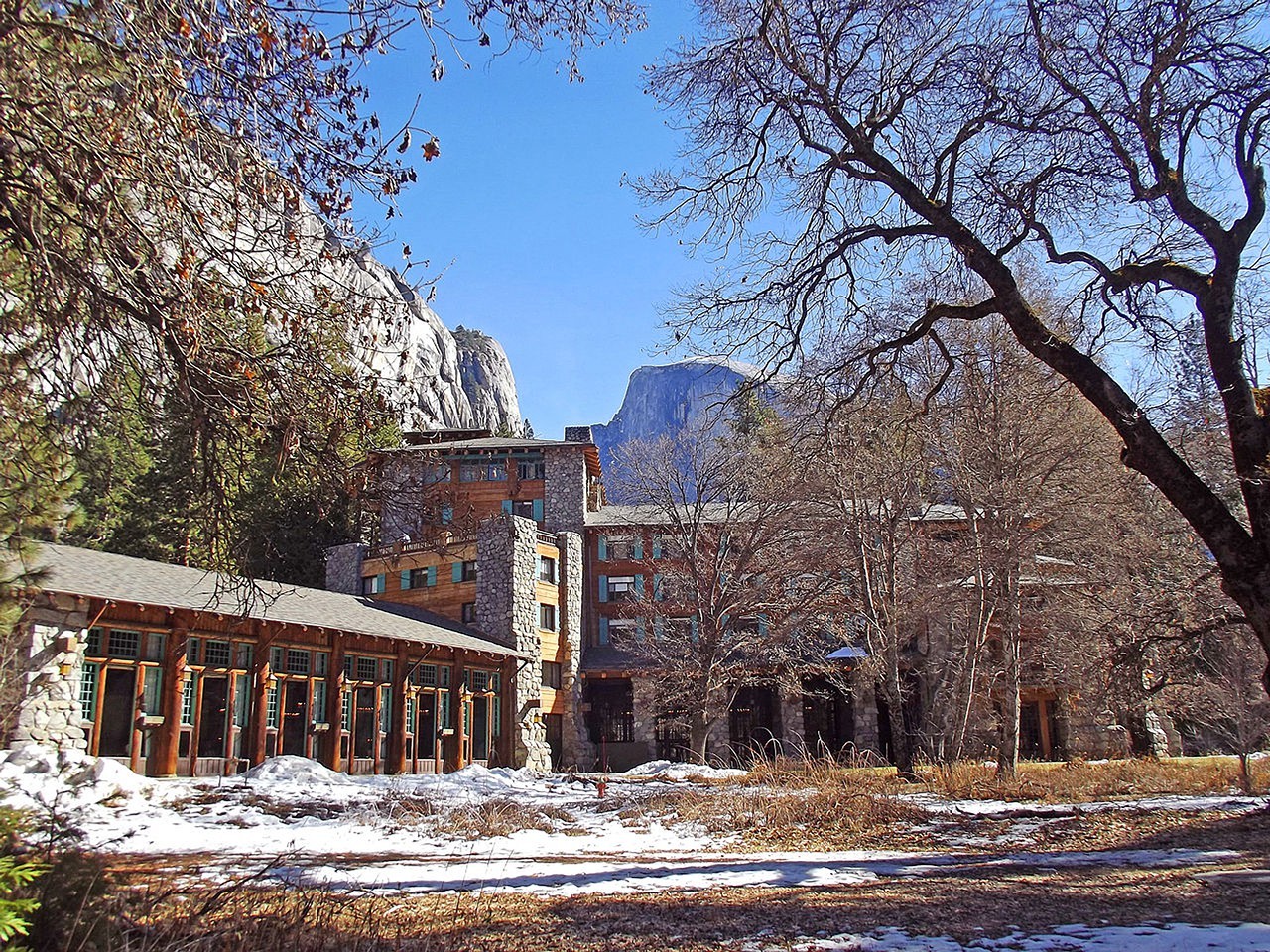
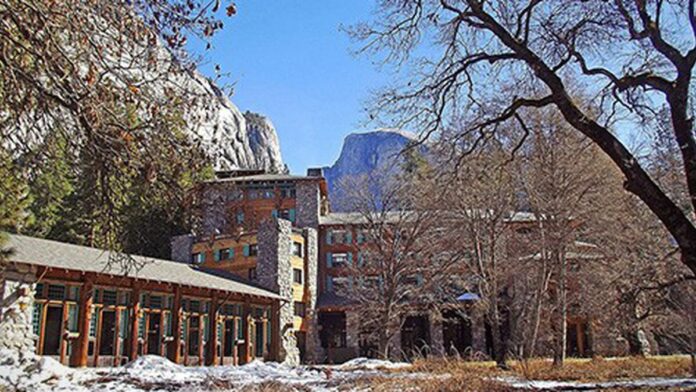
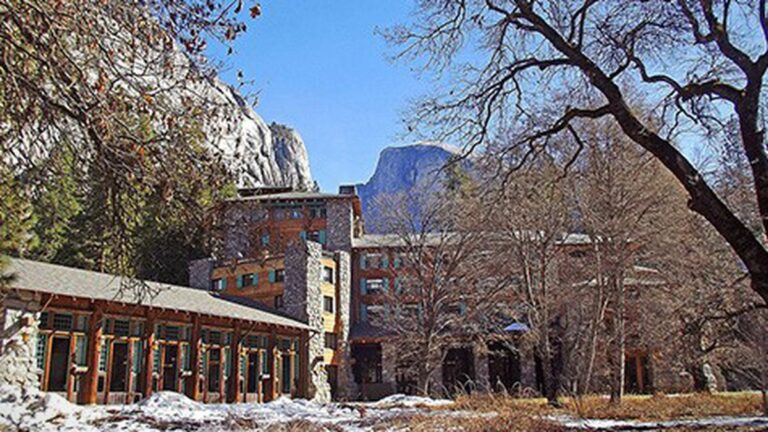
Yosemite National Park lovers expressed dismay last week when park officials announced they were changing the names of some of Yosemite’s most iconic places, including the Ahwahnee Hotel, the Wawona Hotel, and Badger Pass Ski Area. And for good reason. The claim by Delaware North, the ex-concessionaire of Yosemite, that it owns the legal rights to those names is an outrage. But the park’s decision to change the names, at least temporarily while it fights Delaware North in court, appears to have been the right move. Although distasteful, the name changes may give the National Park Service its best chance of maintaining legal control of the iconic names that Yosemite lovers hold dear.

As the Express was the first to report more than a year ago (see “Hijacking Yosemite,” 12/24/14), Delaware North informed the park service in 2014 that it had quietly trademarked the names of many of Yosemite’s most famous places. The Buffalo, New York company also told the park service that it must hand over $51 million for the rights to use those names if Yosemite hires a new concessionaire. Delaware North claimed that it gained control of the iconic place names when it took over the private concessions agreement in 1993 from the Curry Company, which had held it for nearly a century.

Last year, the park service awarded the $2 billion Yosemite concessions agreement to another company, Aramark of Philadelphia. Delaware North responded by filing suit, claiming that Aramark must pay $51 million to Delaware North if it wants to continue using the names Ahwahnee Hotel, Badger Pass, Curry Village, the Wawona Hotel, Yosemite Lodge, and others.

Environmentalists and park lovers have accused Delaware North of theft and extortion, arguing that the iconic names belong to the American people. And the park service has asserted in court that even if Delaware North proves that it does own the place names, its claim that the names are worth $51 million is wildly inflated.

Some experts agree. “The destination is much more important than the name of the place they’re going to stay,” noted Ira Kalb, a marketing professor at the University of Southern California, in an interview with the San Francisco Chronicle.

The park service’s decision to change the names likely will prove that Delaware North’s financial claims are greatly exaggerated. Yes, park visitors are angry that as of March 1, the Ahwahnee Hotel will become the Majestic Yosemite Hotel; Curry Village will be renamed Half Dome Village; the Badger Pass Ski Area will change its name to Yosemite Ski and Snowboard Area; the Wawona Hotel will become Big Trees Lodge; and Yosemite Lodge at the Falls will be renamed Yosemite Valley Lodge. But people are not going to stop going to those places just because they have new names. In fact, it’s highly doubtful that Yosemite’s attendance will be impacted by the name changes.

And that’s exactly why the park service is going win. The name changes eviscerate Delaware North’s claims. They essentially say, “You say you own the names, so what?”

Moreover, the name changes make it clear to everyone that Delaware North is the bad guy in this saga. That’s why Delaware North executives are so mad about what the park service has done. In a statement last week, Delaware North spokesperson Lisa Cesaro said the company was “shocked and disappointed that the National Park Service would consider using the beloved names of places in Yosemite National Park as a bargaining chip in a legal dispute … involving basic contract rights.” Former Delaware North Yosemite President Dan Jensen then later told the Chronicle that he thinks the park service is treating the company unfairly in the court of public opinion.

Actually, it’s impossible to treat Delaware North too unfairly in this situation. The company richly deserves the public’s scorn for trying to hijack what belongs to all of us. Hopefully, Delaware North will not only lose its intellectual property claims in court, but will never again receive another public concessions contract — and that the park service will refuse to renew its existing concessions contracts at Grand Canyon, Sequoia, Kings Canyon, and Shenandoah national parks.

The Gospel on Gun Violence

Ubuntu Theater Project’s newest production, The Gospel of Lovingkindness, begins before you even enter the venue. The experience starts at the ticket booth, where the attendant gives a warning: “There will be a gunshot and a scream, and they will both be loud.” The words could work as a poetic synopsis of the production, which is the first performance of celebrated Oakland native Marcus Gardley’s newest script.

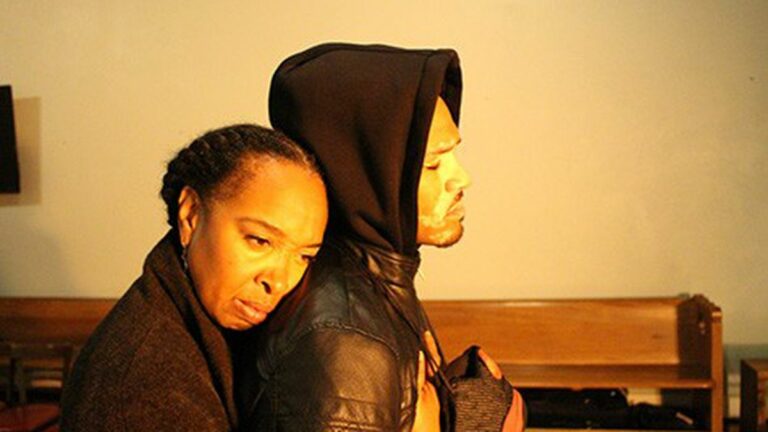
It would be simple to say that the play is about America’s urgent need for gun control. But that undersells the nuances of the script. The tightly wound plot centers on the death of Manny, a charismatic Black high school boy (powerfully played by William Hartfield) from modern day South Chicago whose parents work overtime to make the best life for him — even if that means sending him to a primarily white school on the other side of the city. Early on, Manny gets shot a block from his house. Throughout the beginning of the play, his mother, Mary (beautifully played by Dawn Troupe), lingers at the side of the stage, silently devastated. Her presence is a constant reminder of the trauma that ensues after such unexpected violence.

Hartfield also plays the part of Noel, another high school-age Black youth from South Chicago. But Noel’s circumstances are slightly more challenging — his father isn’t around, his mother is overworked, and he needs money immediately if he wants to survive. Between cigarette puffs, his mother (one of many parts tightly executed by Halili Knox) advises him not to follow the story written for him, but to write his own. It’s not easy though: As Noel attempts to avoid fulfilling a stereotype and becoming a statistic, he hits barriers at every corner. And on impact, he combusts with hopeless frustration. In one scene, Noel is denied a job by a dismissive Walmart manager who barely looks up from his phone to consider him, and breaks down into a crushing cry: “Look at me! Why won’t anyone look at me?”

Meanwhile, Mary meets the ghost of Ida B. Wells (Rolanda Dene) and becomes radicalized by her polemic speech on the broader, unjust circumstances that lead to Manny’s death. “Someone’s putting guns in their hands, putting them in the projects,” preaches Wells. “It’s a conspiracy.” And for the rest of the play, Mary increasingly devotes her life to the cause of fighting gun violence.

At times, the script is slightly heavy-handed as characters expound on the various factors of systemic inequality. But it does not come off as a piece with failed subtleties. Rather, it’s unabashedly confrontational and explanatory — and at times even a call to action. That also does not make it less emotional. Ultimately, it’s a worthwhile story about people. Gardley’s script, as delivered by the Ubuntu cast, brings heart to cold data and lifeless case studies.

It’s intimate, too. The audience occupies a mere four rows of seating on either side of a small chamber in Oakland City Church (the cast does a remarkable job of delivering a 360-degree performance). The show is dimly lit, with candles that illuminate the warm, red walls of the church. Actors address audience members directly, and when they sing gospel songs (which happens throughout the play) it feels as if they are singing in a choir with you, not to you. By the end of the two-hour show, every audience member is implicated — literally participating in a vigil, mourning so many losses. Even someone already devoted to the cause would leave with a heightened sense of responsibility.


Letters for the week of January 6-12

“Trapped Part One: Cruel and Indefinite Punishment,” Feature, 1/6

This Article Gives Me Pause for Thought

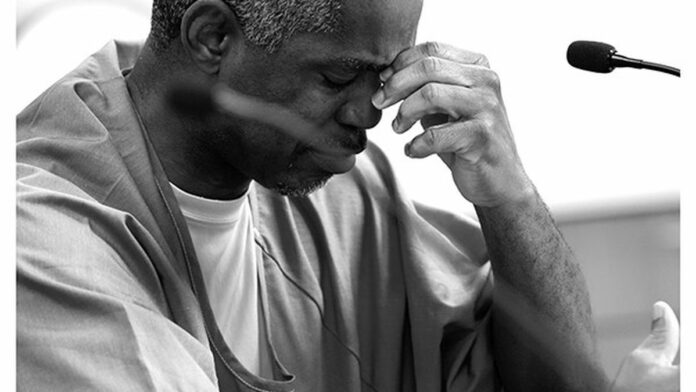
A well-written article packed with in-depth research and information on a matter that certainly seems to merit attention. In Demian Johnson’s case, it appears the parole system is not functioning to the benefit of taxpayers who must fund the continued incarceration of a man who appears to have been reformed. The matter of limiting state payments to $400 for the prisoner’s parole attorney seems especially troubling, and the very low recidivism rate of such past parolees is highly encouraging.

I’m normally a hard-nosed law-and-order advocate, but this article has given me pause for thought. The overall balance of justice should not allow any government to tip the scales with arbitrary and petty weights, otherwise the government itself becomes an offender worthy of public disdain.

Citizens are correct in having given the power to determine the future of offenders’ lives to their government, but along with that granting comes the solemn expectation that their government will not stack the cards against any person who could become a free, lawful, and productive citizen again.

William Thompson, Walnut Creek

“A Holistic Approach to Helping the Homeless,” News, 1/6

Here’s Another Example

Thank you for this article. As [author Isara Krieger] learned, getting people off the streets is not an easy thing to do. I wanted to bring your attention to St. Mary’s Center in Oakland. It also works with homeless people, but with those who are 55 years old and older. It is amazing how many senior homeless people are on our streets. St. Mary’s has a winter shelter open from December to April to get people out of the cold. St. Mary’s also does a great job of finding long-term senior housing and helping its clients get their social security and medical benefits that some don’t even know they are eligible for.

Louise Hill, Oakland

“Schaaf’s Stance on Raiders is Spot On,” News, 1/6

You’re Wrong About Parking

I’m a bit confused about the statement made regarding parking. Since when is a 15-percent reduction “close” to the original amount? I’m pretty confident if the author’s salary was reduced by 15 percent, he wouldn’t sign off on it stating it was close enough!

Wendy Nathan, Lincoln, California

Miscellaneous Letters

It’s Time, Berkeley

Most people see Berkeley as a progressives’ paradise. But when it comes to campaign finance, we are behind the curve. At a [recent] joint meeting between the League of Women Voters and Oakland’s Public Ethics Commission, Ann Ravel, former [Fair Political Practices Commission] chair and current commissioner on the Federal Election Commission, stressed the need for campaign finance innovation at the local level. Ravel said that in the aftermath of Supreme Court decisions like Citizens United, the best way to strengthen our democracy is to create small donor matching programs that amplify local voices, and to empower candidates to run small donor campaigns. Cities like Los Angeles and New York City both have very successful small donor matching programs, and now Berkeley has the opportunity to create the model for public financing and encourage other Bay Area cities to follow suit.

Leila Pedersen, Berkeley

Too Many People

Regarding no specific recent articles of yours, but related to several current issues you’ve covered, I’d like to propose something: It’s time to depopulate California. In a major way. If nothing else, the dire lack of water should be reason enough.

I predict that within two years, this idea (which I’m sure is not mine alone) will emerge from the dark corners of marginal opinion and the internet into the mainstream. Until then, I want to broach the topic here. Not that this will actually happen, of course: Current policy is, “Sure, move out here for your piece of the California dream” — nevermind that the state is about to turn into a desert, not to mention an exorbitantly overpriced playground for the mega-rich that excludes us lesser folk.

David Nebenzahl, Oakland

The Wild, Wild East

0

The so-called Romanian New Wave, now at least ten years old, has introduced foreign-film aficionados in this country to a remarkable coterie of challenging filmmakers: Cristi Puiu (Aurora; The Death of Mr. Lazarescu); Cristian Mungiu (4 Months, 3 Weeks and 2 Days), Corneliu Porumboiu (12:08 East of Bucharest; Police: Adjective), et al. Now the second wave has arrived in stateside art houses. With his multi-layered, sardonic costumed drama Aferim!, writer-director Radu Jude stakes his claim to further cinematic explorations of his off-the-beaten-track homeland. It’s a bitterly, brutally amusing vignette, shot in gorgeous black and white, lifted from Romania’s complicated history.

If the adventures of constable Constandin sin Georghe (played by Teodor Corban) and his son Ionita (Mihai Comanoiu), traveling on horseback through the wilds of Wallachia in 1835, seem to have the flavor of a classic western, that’s purely intentional. Filmmaker Jude evidently admires old Hollywood oaters. This sheriff’s mission is startlingly similar to something out of Tarantino, or perhaps 12 Years a Slave — to hunt down and bring back an escaped Rom (aka “Gypsy”) slave named Carfin (Toma Cuzin) on behalf of his master, the rich boyar Iordache Candescu (Alexandru Dabija). Bounty hunter Constandin has his orders: The boyar wants the slave brought back alive. Something about sexual indiscretions with the boyar’s wife.

“Search and seizure” is the order of the day. Lusty lawman Constandin, who favors a blow on the head as an accompaniment to his inquiries, never stops talking. His colorful patter (“Fish brains in a rabbit head!”; “A good butcher doesn’t fear thousands of sheep”) reflects the strife-filled social scene of 19th-century Eastern Europe, in which a man like Constandin harbors violent grudges against Russians, Jews, Roma, Turks (the movie’s Turkish title translates as “Bravo!”), and noblemen, among others. An equal-opportunity hater, he takes a high-handed manner with the locals while cursing everything from thieves to the plague, and dispensing corny aphorisms — picture Jeff Bridges’ Rooster Cogburn from the Coen brothers’ True Grit. The credits acknowledge that some of the dialogue and narrative situations have been taken from historical texts.

Working from a script he wrote with Florin Lazarescu, director Jude presents this picturesque festival of abuse with only the merest hint of implied commentary. In line with the dire straits of characters in the films of Jude’s Romanian colleagues, constable Constandin’s ancient Wallachia is a desperately unhappy place, and the comic absurdity of the bounty hunters’ journey is peppered with grotesque injustice and bloodletting. The result is the antithesis of warm and reassuring, hard to snuggle up to, but impossible to take our eyes off of, especially in light of Marius Panduru’s expressive black-and-white cinematography. Recommended for the open-minded.

Plainclothes Cops Monitor Renters at Alameda Council Meeting

As renters and landlords filed through the large foyer leading into Alameda’s Kofman Auditorium on January 5 to watch the Alameda City Council’s latest attempt to address the growing problem of rising rents and evictions on the island, Monty Heying’s job was to help renters sign up to speak in front of the council. But Heying, a member of the Alameda Renters Coalition, grew suspicious of three men watching the signup table. “I kept noticing them and was wondering what they were doing,” Heying said in a recent interview. “Then, I noticed a commotion and saw handcuffs fall to the ground that made this clattering sound.”

Once inside the auditorium, Heying alerted other members of the coalition’s leadership about the three men, whom he initially suspected were private security guards, possibly hired by Alameda landlords. Heying then led one renters coalition member to the lobby and pointed out the three men. One of the three men saw the exchange and later approached Heying. “Did you tell him we’re security?” Heying recalled the man saying. “You shouldn’t have done that. We’re here to make sure everything is peaceful.”

The exchange was anything but cordial, Heying said. “It was clear he wasn’t trying to be friendly,” Heying said of the man. “He was trying to be intimidating.”

It turns out that the three men were not security guards, nor were they renters fearful of 25-percent rent hikes, or landlords opposing rent control measures in Alameda; rather, the men were plainclothes Alameda cops, who were assigned by city officials to monitor renters.

Although it’s not uncommon for uniformed police officers to attend council meetings, the decision to assign undercover cops to keep tabs on renters at the Alameda meeting was unusual. Moreover, the move was not the result of any specific threat, but was in response to concerns raised by unnamed residents about safety at the meeting, Interim City Manager Liz Warmerdam stated in an email to Heying and another member of the renters coalition. “My goal was to ensure everyone’s safety without increasing the tension in the room,” she wrote. “The vast majority of those present had no idea our [plainclothes] officers were there. That was my goal.” Warmerdam did not respond to a request for an interview for this story.

In an interview, Alameda Police Chief Paul Rolleri confirmed that the three men whom Heying had spotted were police officers. Rolleri said the presence of plainclothes cops at the meeting was necessary because of what happened at the November 4 council meeting on rent control. At that meeting, uniformed police arrested two renters advocates who attempted to force their way into the council chambers after landlords had packed the meeting room and left no room for anyone else. At that meeting, an Alameda cop also threw a 68-year-old renter to the floor and bloodied her nose. Video and images of the incident went viral on social media and cast Alameda as a new flashpoint in the East Bay’s growing rental crisis.

Rolleri said that the city manager’s office made the call for a covert presence at the meeting, but that he agreed with the assessment and assigned the plainclothes cops and five other uniformed officers to be there. “I wanted to strike a balance between appropriate amounts of security, while not showing a large presence,” said Rolleri. “There was nothing to hide. The purpose is not to eavesdrop. We’re there to monitor whether someone is going to start a fight or an argument.”

Rolleri and other city officials maintained that the three plainclothes officers were not working undercover. When I asked the chief to clarify the difference, he said, “If they were really undercover, they would be actively trying not to be detected.”

Oakland civil rights attorney Dan Siegel scoffed at Rolleri’s comment. “So these guys weren’t trying as hard?” said Siegel, who also questioned the effect on public discourse when police officers conceal their identities at government meetings. “If APD is targeting individuals who they deem are tenant advocates, that would constitute discrimination,” said Siegel, arguing that it’s akin to reports nationwide of law enforcement spying on Muslims. “The harm is that this has a chilling effect on people who could be dissuaded from participating in government meetings.”

Siegel said the city’s over-the-top response to what occurred at the November 4 meeting is likely the result of its inexperience in handling incidents of civil disobedience. “I get the feeling the Alameda Police Department is not sophisticated in these kinds of things,” Siegel said. “I doubt they have much experience handling protests over there.”

Alameda Mayor Trish Spencer and other city leaders have also come under fire for what renters activists say has been a general overreaction to the November 4 meeting. At one subsequent meeting, after Spencer called for a ten-minute recess, she immediately headed toward the exit leading to the council chambers (the area where blood was spilled in November) and hurriedly cleared the hallway of the few members of the public and news media who were milling around. Later, during a December 15 council meeting, Spencer labeled the November meeting a “riot.” Then, just days before the eagerly awaited January 5 meeting to discuss potential permanent city rent control ordinances, Spencer appeared before the Alameda Renters Coalition at a Saturday afternoon strategy session. Several attendees described Spencer’s unexpected appearance as awkward, and they said she warned them to expect increased security at the upcoming meeting. Members of the coalition then asked Spencer to leave the strategy session.

“We weren’t thinking about protest. That’s the city’s thinking. That’s not why we’re here,” said John Klein, a member of the renters coalition and one of the two people arrested during the November meeting. Klein said that during the two months since that meeting, members of the renters group and city staffers had met on several occasions and had open and productive meetings in an effort to find a solution to the rental crisis. “We were working together with city staff on this issue — like it should be,” he said.

And what if the group decided to loudly protest during the council meeting? Klein asked. “They want to criminalize protest,” he said. “You don’t get to do that. If we stood up and started yelling, it’s our right.”

From Heying’s perspective, the covert police presence at the council meeting was completely unnecessary. “This seems to me to be an overreaction to the altercation in November,” said Heying. “It’s a suppression of freedom of speech.”

He said the experience already has him thinking about being more cognizant of his political speech in public. “I’m going to be more careful about chanting slogans and making gestures that might get their attention,” he said. “It’s going to have a dampening effect on me.”

One-Night Stands

At the River I Stand (56 min., 1993). Diversity film series. Thu., Jan. 21, 7-8 p.m., Free, DiversityFilmSeries.org. Ellen Driscoll Theater, 325 Highland Ave., Piedmont, 510-835-9227.

At The River I Stand (56 min., 1993). Appreciating Diversity Film Series. Sat., Jan. 23, 3 p.m. The New Parkway Theater, 474 24th St., Oakland, 510-658-7900.

A Ballerina’s Tale (85 min., 2015). Doc night. Tue., Jan. 26, 7 p.m. The New Parkway Theater, 474 24th St., Oakland, 510-658-7900.

The Bilderberg Group (50 min., 2012). Wed., Jan. 27, 7:30 p.m., $5 suggested donation. Humanist Hall, 390 27th St., Oakland, 510-451-5818, HumanistHall.org.

Cavalleria Rusticana/Pagliacci (180 min., 2016). The Royal Opera 2015-2016 Season. Sat., Jan. 23, 10 a.m. Rialto Cinemas Elmwood, 2966 College Ave., Berkeley, 510-433-9730.

Clueless (97 min., 1995). Thu., Jan. 21, 9 p.m. UA Berkeley 7, 2274 Shattuck Ave., Berkeley, 510-843-0193.

Florence and the Uffizi Gallery (100 min., 2016). Art and Architecture in Cinema series. Wed., Jan. 27, 7 p.m. AMC Bay Street 16, 5614 Shellmound St., Emeryville, 510-457-4AMC, www.moviewatcher.com/theatres/theatre_information.jsp?unit=215.

Frida (123 min., 2002). Berkeley Gray Panther Movie Fest and Fund Raiser. Sun., Jan. 24, 2-5 p.m., $10. Berkeley Art Festival, 2133 University Avenue, Berkeley, 510-526-2374.

The Goonies (114 min., 1985). Blockbuster night. Thu., Jan. 21, 9:30 p.m. The New Parkway Theater, 474 24th St., Oakland, 510-658-7900.

Jane Eyre (TBA, 2016). National Theatre Live. Mon., Jan. 25, 7 p.m.; Wed., Feb. 3, 7 p.m. Rialto Cinemas Cerrito, 10070 San Pablo Ave., El Cerrito, 510-273-9102, RialtoCinemas.com.

Labyrinth (101 min., 1986). Fri., Jan. 22, 4:30 p.m.; Sat., Jan. 23, 12:30 & 4 p.m.; Mon., Jan. 25, 9:30 p.m. The New Parkway Theater, 474 24th St., Oakland, 510-658-7900.

Les Pecheurs de Perles (175 min., 2016). Metropolitan Opera Live. Thu., Jan. 21, 1 p.m. AMC Bay Street 16, 5614 Shellmound St., Emeryville, 510-457-4AMC, www.moviewatcher.com/theatres/theatre_information.jsp?unit=215.

Life, Above All (100 min., 2010). Fri., Jan. 22, 3 p.m. Berkeley Public Library, Central Branch, 2090 Kittredge St., Berkeley, 510-981-6100, BerkeleyPublicLibrary.org.

Manpower (85 min., 2014). Wed., Jan. 27, 6:30-8:30 p.m. Boalt Hall, UC Berkeley, Berkeley, Berkeley.edu.

Manufactured Landscapes (86 min., 2006). Followed by a conversation on money in politics between MapLight’s Pamela Behrsin and the Earth Island Journal’s Maureen Mitra. Wed., Jan. 27, 7 p.m., $10. David Brower Center, 2150 Allston Way, Berkeley, 510-809-0900, BrowerCenter.org.

Spice World (93 min., 1997). Fri., Jan. 22, 6, 8:15, 10 & 10:30 p.m.; Sat., Jan. 23, 5, 7:15, 9:30 & 10 p.m.; Sun., Jan. 24, 4:55 & 9:15 p.m. The New Parkway Theater, 474 24th St., Oakland, 510-658-7900.

Taming of the Shrew (165 min., 2016). Bolshoi Ballet. Sun., Jan. 24, 9:55 a.m. AMC Bay Street 16, 5614 Shellmound St., Emeryville, 510-457-4AMC, www.moviewatcher.com/theatres/theatre_information.jsp?unit=215.

The Winter’s Tale (TBA, 2016). Kenneth Branagh Theatre Company Live. Tue., Jan. 26, 1 & 7 p.m.; Thu., Feb. 11, 1 & 7 p.m.; Tue., Feb. 23, 7 p.m. Rialto Cinemas Elmwood, 2966 College Ave., Berkeley, 510-433-9730.

The Winter’s Tale (TBA, 2016). Kenneth Branagh Theatre Company Live. Wed., Jan. 27, 7 p.m.; Mon., Feb. 1, 7 p.m.; Sat., Feb. 20, 10 a.m.; Mon., Feb. 29, 7 p.m. Rialto Cinemas Cerrito, 10070 San Pablo Ave., El Cerrito, 510-273-9102, RialtoCinemas.com.

The X-Files Premiere Party (42 min., 2016). Series premiere. Sun., Jan. 24, 7 p.m. The New Parkway Theater, 474 24th St., Oakland, 510-658-7900.

No Place for Old Dildos

I am no longer sexually active, but I have a significant collection of sex toys from earlier years. I’m thinking of getting rid of most of them, and it seems such a waste for them to end up in the landfill. What’s an environmentally responsible way to dispose of dildos? I wish there was a place I could donate the dildos where they could be used again. Many of them are quality silicone types, they’ve never been used on a person without a condom, and they’ve been thoroughly cleaned. I’d be happy to donate them to impoverished dildo users in need, if only I knew where to send them.

Reduce, Reuse, Recycle

Your question comes up frequently, RRR, and there really isn’t a satisfactory answer.

In Seattle, where I live, a community tool bank recently opened in my neighborhood—but they don’t collect and lend the kind of tools you’re looking to donate. I’ve heard about dildo graveyards in other cities (spots in parks where people bury their used sex toys), but burying sex toys isn’t environmentally responsible. And while high-quality dildos can be cleaned and safely reused, most people are pretty squeamish about the idea. Which is odd, considering that we routinely reuse actual cocks that have been enjoyed by others — so why not the fake ones?

But even if I can’t tell you what to do with your dildos, RRR, I can tell you what not to do with them: Do not ship your used dildos to the anti-government militia currently occupying a federal wildlife refuge in rural Oregon. After militia members asked supporters to send them supplies — via the US Postal Service — their spokesperson complained bitterly about all the dildos they were getting in the mail. So if you decide to put your used dildos in a box and send them somewhere, RRR, please make sure the address on the box doesn’t read: Bundy Militia, c/o Malheur National Wildlife Refuge, 36391 Sodhouse Lane, Princeton, OR, 97721.

I understand that monogamy is not something people are good at — and that’s fine. In fact, most of the people I know are in healthy poly or monogamish relationships. Here’s the thing: I’m monogamous. Not the “I’m attracted to other people but won’t act on it because it makes me uncomfortable or believe it’s wrong” kind of monogamous, but the “I genuinely have ZERO desire to fuck anyone but my partner” kind of monogamous. Fantasizing about others is fun, so is looking, so is porn and role-play. There’s a world of deliciously kinky, weird, and wonderful sex stuff I’d LOVE to explore until my sexy bits fall off. But I want to do those things with one partner and one partner only in a monogamous, intimate relationship. Here’s the kicker: I’d like my partner to feel the same way. I don’t want someone to enter into a monogamous relationship with me if in their heart/groin they’d genuinely like to fuck other people. Am I a lost cause? Surely I can’t be the only genuinely monogamous person there is? I’m 31 and still turn heads, but I worry my quest for a partner who feels as I do is impossible and a waste of my time.

One 4 One

You value monogamy, you want a monogamous commitment, and you want someone who feels the same. That’s great, O4O, and you have my full support. But you do acknowledge that fantasies about others can be fun, as can looking, as can porn (watching others) and role-play (pretending to be others). So while you may wanna fuck other people — hence the looking and fantasizing and role-playing — you have no desire to actually fuck other people.

If you’re having a hard time finding partners who want what you want — a monogamous commitment without the stress of maintaining the monogamous pretense/facade/fraud, i.e., pretending they don’t at least think about fucking other people — either you’re living in some sort of poly parallel universe where nonmonogamy is the default setting or you’re not giving others the same benefit of the doubt you’ve given yourself. You wanna fuck other people and you don’t seem to think that disqualifies you from making, honoring, and genuinely wanting both a monogamous commitment and a monogamous sex life. (The two don’t always go hand in hand.)

If you’re breaking up with people for admitting to the same things you’ve admitted to in your question — you might think about fucking other people, but you don’t want to actually fuck other people — then you’re the reason your quest to find a partner has been so frustrating.

I’m 33, blah blah blah, and live in a big city. I’ve been dating an age-appropriate person for a year and a half. Everything seemed fine (great sex, common interests and hobbies, similar work ethic, we even talked about raising children), but my partner is so damn angry and full of hate. Mostly it manifests itself in racism, and I really don’t like it. He says that I “don’t understand,” like he’s gone through experiences that would justify wholesale prejudice against entire groups of people. The passing of David Bowie has accentuated these differences between us. I want to live better and brighter, to love more, but my boyfriend just keeps hating. He’s unrelentingly racist. I shouldn’t have children with him — right? Better to be 33 and alone — right? This racist stuff is a deal breaker — right? DTMFA — right?

Racist Anger Gradually Ends Relationship

Right.

My best female friend is marrying her boyfriend in March and wants to go on a gay bar crawl on the night of her bachelorette party. She says it won’t be a problem because, as a bi woman, she’s part of the LGBT community too and because gay people can get married now. As a gay man, Dan, do you oppose bachelorette parties in gay bars?

Queer And Questioning

I oppose bachelorette parties in gay bars — or anywhere else, QAQ, and I feel the exact same way about bachelor parties.

A few weeks ago, you answered a letter from Seeks Discreet Call Service, a woman in an open marriage who was having Tinder hookups in hotel rooms while traveling for work. She was concerned about her safety and wanted to have someone check in on her, but she couldn’t tell her partner about her hookups (DADT arrangement) or her friends (she’s not out about her open marriage). She specifically asked if there was an app that might help, and you told her there wasn’t an app for that. You were wrong, Dan! There are actually several apps. PCWorld published a roundup of a few of them a couple of years ago (“5 Personal Safety Apps That Watch Your Back,” by Amber Bouman), and there’s an app called Kitestring (Kitestring.io) that has gotten some glowing reviews. The gist is that you use the app to set a timer, and when it goes off, you have to alert the app that you are okay. Otherwise, the app automatically contacts emergency services or a predetermined contact and lets them know you are in trouble at your location. So technology does have a solution for SDCS’s problem!

Technological Enhancements Can Help

Man, I really blew that response — so thanks to TECH and everyone else who clued me in to Kitestring, StaySafe, Watch Over Me, bSafe, and all the other apps out there that are exactly what SDCS was looking for.

The East Bay’s Most Interesting SF Beer Week Events

SF Beer Week, a weeklong celebration of the Bay Area’s craft beer scene, will take place January 22–31 this year. It seems as though a notable beer-centric business opens in the East Bay every couple of weeks, so it only makes sense that many of SF Beer Week’s most intriguing events will take place on this side of the bridge. Here are a few that caught my eye:

1. One of the most popular features of SF Beer Week is the tap takeover, wherein a bar designates all or most of its taps to a single brewery or a certain style of beer. This year’s Barrel-Aged Beer Fest at The Trappist (460 8th St., Oakland) on Saturday, January 23, noon–1:30 a.m., will be one of a handful of tap takeovers to focus specifically on beers that have been aged in wood barrels — a process that’s often used to imbue a traditional beer with the flavor of the wood itself or of whatever the barrel was used to produce in the past. Beer that has been aged in an oak whiskey barrel might take on some of the vanilla flavor associated with bourbon, explained Trappist manager Stephen Laborde.

For this all-day event, The Trappist will have 22 barrel-aged beers available on tap, ranging from sour beers to barrel-aged versions of popular West Coast porters and stouts. Laborde recommends the barrel-aged stouts in particular, which he described as being “very warming and very wintry.”

2. On Sunday, January 24, noon–4 p.m., the Japanese kitchen and glassware store Umami Mart will host Japan Beer Fest at The Trappist — its neighbor in Old Oakland — featuring a selection of about twenty draft beers and eleven bottled beers from Japan. Umami Mart co-owner Kayoko Akabori said she expects that it will be a festive event, with a chef from Oakland’s Ramen Shop on hand to dish out fried rice and Asahi Super Dry poured directly from a keg — a boon to fans of beer with a lot of creamy head. According to Akabori, one of the other highlights will be twelve different draft beers from Nagano-based Shiga Kogen, a star of Japan’s burgeoning craft brewery scene. Akabori said you’ll hardly ever find these beers in the United States because they aren’t widely available in canned or bottled form.

This is the third year that Umami Mart has organized the Japan Beer Fest, but it will be the event’s first iteration since the store unveiled its new Bottle Shop section — probably the most extensive selection of Japanese craft beers in the United States. That means if bar patrons taste something they like over at The Trappist, there’s a decent chance they’ll be able to stroll around the corner to Umami Mart afterward and pick up a few bottles or cans to bring home.

3. As is the case in so many fields, the women of the Bay Area’s craft beer industry don’t receive the recognition they deserve. To help rectify that, the beer bar and bottle shop and beer bar The Good Hop (2421 Telegraph Ave., Oakland) will host an evening of Celebrating Women in Beer on Sunday, January 24, 4–8 p.m. The event will serve in part as an art reception for photographer Natalie Jenks’ series on the women of the Bay Area craft beer scene — about twenty brewers and other craft beer luminaries, all of whom will be on hand to celebrate. Meanwhile, the vast majority of the bar’s sixteen taps will be dedicated to serving beer brewed by the women in the portraits, including Good Hop owner Melissa Myers.

4. On Monday, January 25, Salsipuedes (4201 Market St., Oakland) will collaborate with East Bay beer guru Sayre Piotrkowski (formerly of Hog’s Apothecary) to host what looks to be one of the most ambitious beer-pairing dinners of the week. Chef Marcus Krauss has put together a four-course dinner that will include roasted poisson, a dish of heirloom beans and wild mushrooms, bavette steak, and fennel-rosemary sponge cake. The catch is that Piotrkowski, a certified cicerone, has picked not one but two beers — six-ounce pours of one sour and one traditional beer — to complement each course. He explained that the idea is similar to certain “beer versus wine” dinners that he has seen, with the sour beer taking on the element of acidity normally associated with wine. The fun of the event will be in seeing whether diners gravitate toward those acidic flavors or the richer, more bitter flavors that you get from a traditional beer.

The dinner will have two seatings, one at 6:15 p.m. for $59 (tax and tip inclusive) and a later seating at 8:45 for $79 that will include an additional tasting of barleywines.


The East Bay’s Most Interesting SF Beer Week Events

SF Beer Week, a weeklong celebration of the Bay Area’s craft beer scene, will take place January 22–31 this year. It seems as though a notable beer-centric business opens in the East Bay every couple of weeks, so it only makes sense that many of SF Beer Week’s most intriguing events will take place on this side of the bridge. Here are a few that caught my eye:

[jump] 1. One of the most popular features of SF Beer Week is the tap takeover, wherein a bar designates all or most of its taps to a single brewery or a certain style of beer. This year’s Barrel-Aged Beer Fest at The Trappist (460 8th St., Oakland) on Saturday, January 23, noon–1:30 a.m., will be one of a handful of tap takeovers to focus specifically on beers that have been aged in wood barrels — a process that’s often used to imbue a traditional beer with the flavor of the wood itself or of whatever the barrel was used to produce in the past. Beer that has been aged in an oak whiskey barrel might take on some of the vanilla flavor associated with bourbon, explained Trappist manager Stephen Laborde.

For this all-day event, The Trappist will have 22 barrel-aged beers available on tap, ranging from sour beers to barrel-aged versions of popular West Coast porters and stouts. Laborde recommends the barrel-aged stouts in particular, which he described as being “very warming and very wintry.”

2. On Sunday, January 24, noon–4 p.m., the Japanese kitchen and glassware store Umami Mart will host Japan Beer Fest at The Trappist — its neighbor in Old Oakland — featuring a selection of about twenty draft beers and eleven bottled beers from Japan. Umami Mart co-owner Kayoko Akabori said she expects that it will be a festive event, with a chef from Oakland’s Ramen Shop on hand to dish out fried rice and Asahi Super Dry poured directly from a keg — a boon to fans of beer with a lot of creamy head. According to Akabori, one of the other highlights will be twelve different draft beers from Nagano-based Shiga Kogen, a star of Japan’s burgeoning craft brewery scene. Akabori said you’ll hardly ever find these beers in the United States because they aren’t widely available in canned or bottled form.

This is the third year that Umami Mart has organized the Japan Beer Fest, but it will be the event’s first iteration since the store unveiled its new Bottle Shop section — probably the most extensive selection of Japanese craft beers in the United States. That means if bar patrons taste something they like over at The Trappist, there’s a decent chance they’ll be able to stroll around the corner to Umami Mart afterward and pick up a few bottles or cans to bring home.


3. As is the case in so many fields, the women of the Bay Area’s craft beer industry don’t receive the recognition they deserve. To help rectify that, the beer bar and bottle shop and beer bar The Good Hop (2421 Telegraph Ave., Oakland) will host an evening of Celebrating Women in Beer on Sunday, January 24, 4–8 p.m. The event will serve in part as an art reception for photographer Natalie Jenks’ series on the women of the Bay Area craft beer scene — about twenty brewers and other craft beer luminaries, all of whom will be on hand to celebrate. Meanwhile, the vast majority of the bar’s sixteen taps will be dedicated to serving beer brewed by the women in the portraits, including Good Hop owner Melissa Myers.

4. On Monday, January 25, Salsipuedes (4201 Market St., Oakland) will collaborate with East Bay beer guru Sayre Piotrkowski (formerly of Hog’s Apothecary) to host what looks to be one of the most ambitious beer-pairing dinners of the week. Chef Marcus Krauss has put together a four-course dinner that will include roasted poussin, a dish of heirloom beans and wild mushrooms, bavette steak, and fennel-rosemary sponge cake.

The catch is that Piotrkowski, a certified cicerone, has picked not one but two beers — six-ounce pours of one sour and one traditional beer — to complement each course. He explained that the idea is similar to certain “beer versus wine” dinners that he has seen, with the sour beer taking on the element of acidity normally associated with wine. The fun of the event will be in seeing whether diners gravitate toward those acidic flavors or the richer, more bitter flavors that you get from a traditional beer.

The dinner will have two seatings, one at 6:15 p.m. for $59 (tax and tip inclusive) and a later seating at 8:45 for $79 that will include an additional tasting of barleywines

Maya Songbird Writes Music for the Wild and Weird

If you had to know only one thing about the singer Maya Songbird (Maya Ivy Benton), it's that she wears her heart on her shoulder — literally. The San Francisco native has an upside-down heart-shaped birthmark at the top her left arm — an image that appears in her promotional photographs and is the logo of her...

Why Yosemite Was Right to Change the Names of Iconic Places

Yosemite National Park lovers expressed dismay last week when park officials announced they were changing the names of some of Yosemite's most iconic places, including the Ahwahnee Hotel, the Wawona Hotel, and Badger Pass Ski Area. And for good reason. The claim by Delaware North, the ex-concessionaire of Yosemite, that it owns the legal rights to those names is...

The Gospel on Gun Violence

Ubuntu Theater Project's newest production, The Gospel of Lovingkindness, begins before you even enter the venue. The experience starts at the ticket booth, where the attendant gives a warning: "There will be a gunshot and a scream, and they will both be loud." The words could work as a poetic synopsis of the production,...

Letters for the week of January 6-12

"Trapped Part One: Cruel and Indefinite Punishment," Feature, 1/6 This Article Gives Me Pause for Thought A well-written article packed with in-depth research and information on a matter that certainly seems to merit attention. In Demian Johnson's case, it appears the parole system is not functioning to the benefit of taxpayers who must fund the continued incarceration of a man who...

The Wild, Wild East

The so-called Romanian New Wave, now at least ten years old, has introduced foreign-film aficionados in this country to a remarkable coterie of challenging filmmakers: Cristi Puiu (Aurora; The Death of Mr. Lazarescu); Cristian Mungiu (4 Months, 3 Weeks and 2 Days), Corneliu Porumboiu (12:08 East of Bucharest; Police: Adjective), et al. Now the second wave has arrived in...

Plainclothes Cops Monitor Renters at Alameda Council Meeting

As renters and landlords filed through the large foyer leading into Alameda's Kofman Auditorium on January 5 to watch the Alameda City Council's latest attempt to address the growing problem of rising rents and evictions on the island, Monty Heying's job was to help renters sign up to speak in front of the council. But Heying, a member of...

One-Night Stands

At the River I Stand (56 min., 1993). Diversity film series. Thu., Jan. 21, 7-8 p.m., Free, DiversityFilmSeries.org. Ellen Driscoll Theater, 325 Highland Ave., Piedmont, 510-835-9227. At The River I Stand (56 min., 1993). Appreciating Diversity Film Series. Sat., Jan. 23, 3 p.m. The New Parkway Theater, 474 24th St., Oakland, 510-658-7900. A Ballerina's Tale (85 min., 2015). Doc night. Tue.,...

No Place for Old Dildos

I am no longer sexually active, but I have a significant collection of sex toys from earlier years. I'm thinking of getting rid of most of them, and it seems such a waste for them to end up in the landfill. What's an environmentally responsible way to dispose of dildos? I wish there was a place I could donate...

The East Bay’s Most Interesting SF Beer Week Events

SF Beer Week, a weeklong celebration of the Bay Area's craft beer scene, will take place January 22–31 this year. It seems as though a notable beer-centric business opens in the East Bay every couple of weeks, so it only makes sense that many of SF Beer Week's most intriguing events will take place on this side...

The East Bay’s Most Interesting SF Beer Week Events

The Japanese beer selection at Umami Mart. Credits: Vanessa Castaneda SF Beer Week, a weeklong celebration of the Bay Area’s craft beer scene, will take place January 22–31 this year. It seems as though a notable beer-centric business opens in the East Bay every couple of weeks, so it only makes sense that many of SF Beer Week’s most intriguing events...
19,045FansLike
17,709FollowersFollow
61,790FollowersFollow