
Revolution and retrenchment revealed in ‘Forging Latino Power’

0

The U.S. Senate now includes six Latine members: Democrats Alex Padilla of California, Catherine Cortez-Masto of Nevada, Ben Ray Luján of New Mexico and Ruben Gallego of Arizona; and Republicans Ted Cruz of Texas and Bernie Moreno of Ohio.

But as David R. Ayón and George L. Pla detail in their exhaustively researched book, Forging Latino Power: The Politics of Inclusion, Backlash, and Resistance, released Dec. 2, the road to that milestone was both complex and continuously evolving.

The book’s forward, by California’s other senator, Adam Schiff, makes that clear, saying: “If there is any image that captures the enormous progress of Latino empowerment in the last century, and the fierce backlash it has prompted, it is this: a Latino US senator from the largest state in the union on the floor with his hands cuffed behind his back,” referring to the infamous June 12, 2025, incident in which Padilla was forcibly removed from a press conference held by Secretary of Homeland Security Kristi Noem after attempting to ask a question.

Barrios and colonias

Forging Latino Power follows Ayón and Pla’s Power Shift: How Latinos in California Transformed Politics in America, and much of the book continues exploring the importance of California in the evolution of Latine politics. “Latinos are the largest racial or ethnic group in California, with over 16 million people calling the state home,” the book points out.

In a phone interview, Ayón noted that early Mexican immigration to the state, and other parts of the West in the 1800s, was about labor, including the migrant worker bracero program, which ended in 1964. It also included mining. A little-known fact is that the “Mercury” in the name of the San Jose Mercury News refers to a major mercury mine on the “New Almaden” property.

But in the 20th century, as immigrants moved to urban areas, the barrios, especially the Boyle Heights neighborhood of East L.A., began to foment political organization. The former Jewish enclave already had a culture of activism. “Boyle Heights was the mold for the progressive Latino tradition,” Ayón said.

Yet at the same time, in other, rural parts of the state, farmworkers formed colonias, their own small communities that preserved traditions and values brought from conservative rural Mexico. Based on their experiences, these people were distrustful of politics, Ayón said, while at the same time, “Establishing a colonia is an act of resistance.”

This dichotomy is discussed extensively in the book and prefigured by this quote from the preface: “Progressive Latino politics generally can be seen as transitioning to a post-barrio era, one that more reflects suburban, small-town, and rural Latino interests, values, and perspectives, and is challenged by an increasingly divided electorate.”
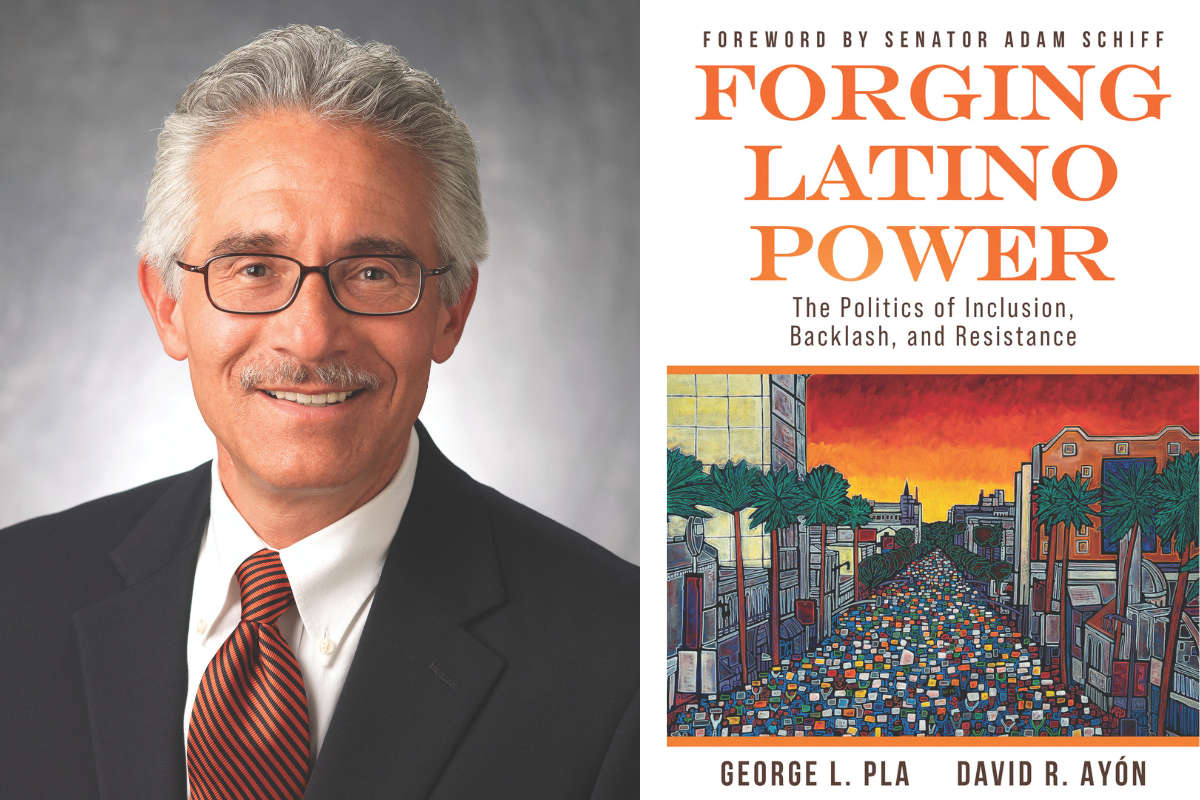
DEEP DIVE David R. Ayón, pictured, and George L. Pla released their exhaustively researched book, ‘Forging Latino Power: The Politics of Inclusion, Backlash, and Resistance,’ in December. (Photos courtesy of Berkeley Public Policy Press)

The power of narrative

A substantial part of Forging Latino Power is devoted to detailed narratives about pivotal Latine political figures. Even those familiar with the contributions of Dolores Huerta and Cesar Chavez will discover many unexplored nuances, particularly their participation in and eventual separation from the Community Service Organization.

In Part II, “Going National,” Ayón and Pla write, “Latinos as a group did not so much opt to be involved in national policy as they had national policy thrust on them, forcing a choice between silence, accommodation, or resistance.”

This section calls attention to the growing number of Latines in Washington during the Carter administration, including Lou Moret, Leo Estrada, Gloria Molina, Art Torres and Leonel Castillo. It also extensively documents that administration’s attempts to deal with immigration, and the rise of “casas,” service centers for resident undocumented immigrant workers.

“The Casas attracted young, idealistic Chicano-movement volunteers,” Ayón and Pla note. These included Oakland’s Maria Elena Durazo; future Los Angeles mayor and current candidate for governor of California, Antonio Villaraigosa; and future state assembly member, state senator and L.A. city council member, Gil Cedillo.

Also called out in this section is the growing profile of Latine media: L.A.’s La Opinión and KMEX, along with Univision.

Part III, “After IRCA: New Advances, Backlash, Resistance and Breakthroughs,” discusses the impact of the Immigration Reform and Control Act of 1986, which legalized some undocumented workers and attempted to penalize employers for hiring unauthorized workers, as well as 1982’s changes to the Voting Rights Act and the U.S. census. Major milestones reached in the 1980s faced backlash, with California approving “English as the official language” initiatives.

But 1993, Ayón and Pla write, was the dawn of a new political era, with leaders such as Kevin de León and Fabian Núñez emerging in Southern California. Then came “the Battle of 187,” fighting the anti-immigrant ballot proposition. Opposition to it catalyzed other leaders—including future senator, Alex Padilla. The proposition passed, but was declared unconstitutional and never allowed to take effect.

The Trump Era

Part IV of the book, “Always Another Battle,” covers the waves of advancement and backlash during the Obama, Biden and Trump administrations.

In the phone interview, Ayón emphasized that the shocking shift in Latine voters to Trump in 2024 was fueled by several factors: “Eight years of Trump MAGA propaganda,” he said, “and rising political cynicism also benefited Trump.” Polls show, he said, that Latine confidence in government, once as high as 60%, has fallen to about half that.

And there has been what Ayón views as a permanent shift in California to Democratic leaders such as Speaker of the House Robert Rivas, Senate President Pro Tempore Monique Limón and Congressman Pete Aguilar, who represent less-urban, less-progressive areas of the state.

But “Trump has squandered his equity with Latino voters,” he said. The book states, “The second Trump presidency, with its shockingly aggressive approach to US allies and neighbors in the world, also has the potential of provoking a new front of Latino, and specifically Mexican-American, resistance paired with pressure for inclusion.” The upcoming 2026 midterms, he said, will be a test of this.

For those committed to understanding the history of Latine politics, its shifts and its complexities, as well as its potential to shape the country’s future, Forging Latino Power is an ideal resource.

‘Forging Latino Power: The Politics of Inclusion, Backlash, and Resistance,’ by David R. Ayón and George L. Pla, Berkeley Public Policy Press, $24.99.

East Bay sounds showcase eclectic artistry

0

While it seems like ancient history, it is within living memory that releasing an album was an entirely reasonable economic decision for independent musicians. Back when people were accustomed to exchanging currency for physical objects embedded with sonic information, musicians could expect to cover their costs of an album’s production.

These days, it’s never been easier to record and release music. The process of writing, arranging, recording, mastering, sequencing and packaging a series of tracks that ideally add up to more than the sum of their parts can still play an essential role in a musician’s creative process. But producing an album is harder than ever to justify financially.

Yet hundreds of East Bay artists still seek to define and share their music by releasing CDs and even LPs, which invariably provide better sound and a more engaging experience than music disseminated solely online. Here are nine of my favorite albums released by local artists this year, in alphabetical order. Paying for the albums increases the likelihood these artists will be able to continue recording their music.

Actual Trio, “Spires”

Forged during a years-long regular gig at North Oakland’s long-defunct Actual Café, Berkeley’s Actual Trio features insistently exploratory guitarist John Schott and the supplely swinging team of bassist Dan Seamans and drummer John Hanes. The group’s third album, Spires, centers on a concise, three-part suite inspired by Simon Rodia’s Watts Towers, which neatly matches the trio’s spikey but discreet sound with the soaring, latticed South Central Los Angeles landmark.

Citta Di Vitti, “citta di vitti”

Though saxophonist Phillip Greenlief relocated from his longtime digs in Oakland to Maine last year, the collective trio Citta Di Vitti features the prolific Berkeley rhythm section tandem of bassist Lisa Mezzacappa and drummer Jason Levis. Inspired by the portentously spacious films of Michelangelo Antonioni, the eponymous project moves curiously through those cinematic vistas with a variety of undulating, rhythmically taut interactions.

Daggerboard & Erik Jekabson Orchestra, “The Axes Volume II: Summer Solstice”

Part of an ambitious, ongoing project featuring trumpeter Erik Jekabson’s orchestral works inspired by seasonal shifts, The Axes Volume II was recorded live at the Hillside Club in Berkeley and the Dresher Studio in West Oakland.

Stocked with an embarrassment of talent, the ensemble navigates Jekabson’s lustrous melding of jazz voicings, minimalism and chamber music with glorious results. Working closely with Gregory Howe, a writing and arranging partnership that records as Daggerboard, he’s created a sumptuous lyrical realm unlike any other on the scene.

B. DeVeaux, “Chrysalis”

It’s been a breakout year for Oakland soul singer/songwriter B. DeVeaux, whose luscious contralto and gift for crafting incantatory tunes have led to performances on illustrious stages. From the opening chords of “Because You”—cleverly repurposed from Tracy Chapman’s “Fast Car”—Chrysalis delivers a program of songs enhanced by the stripped-down production, with DeVeaux emerging as a fully formed musical force.

The Doodle Cats, “Reinventing the Wheel”

While I’d never heard of the Doodle Cats before receiving a link to the sextet’s second album, Reinventing the Wheel, a quick glimpse at the personnel led me to take a listen—and the experience was deliriously pleasurable.

Interpreting tunes by bassist and bandleader Mighty Joe Belson, the Cats swing with elegance and conviction, delivering tunes that sound like lost tracks from a Thad Jones session circa 1955. The cast includes some of the region’s most dependably eloquent improvisers, including El Cerrito trumpeter Erik Jekabson, Emeryville pianist Kevin Wong and El Sobrante drummer Julian Hogan.

Green Mitchell Trio, “Nature Channel”

One of 12 albums released as part of Lisa Mezzacappa’s 12/12 series on her Queen Bee Records label, Nature Channel features her on bass with frequent musical partner Jason Levis in a program of original tunes by Cory Wright on tenor sax and bass clarinet.

The Oakland-based Wright, an invaluable figure on the Bay Area improvised music scene, is heard much more frequently elevating ensembles led by his peers. His own music is always intriguing, unfurling with deliberation and muscular grace. Just when it seems he’s channeling his Apollonian inclinations through his tenor and his Dionysian impulses via his bass clarinet, he switches it up, leaving one guessing about his next move.

Myra Melford, “Splash”

Berkeley pianist/composer Myra Melford has a long track record of assembling volatile bands, and the trio Splash is a singular addition to her treasure-laden discography. Featuring powerhouse bassist Michael Formanek and the protean percussionist Ches Smith on vibraphone and drums, Splash is distinguished by a bright but earthy sound, full of dense harmonies and lapidary textures. It’s her latest project inspired by the cryptic canvases of Cy Twombly, and the music often evokes the rhythmic intensity and foreboding silences of his painting.

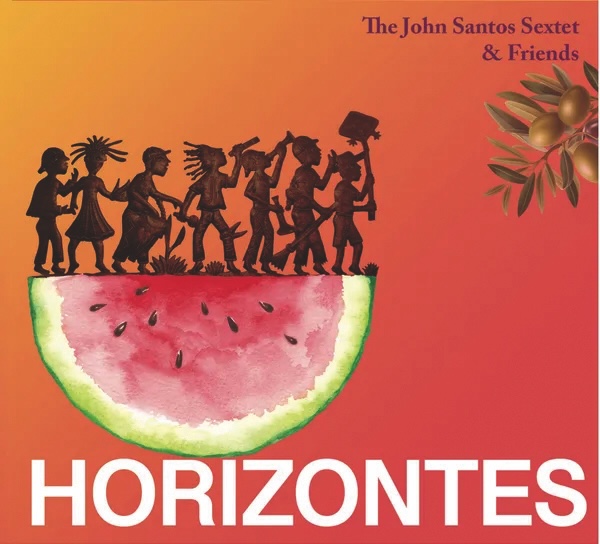
John Santos Sextet & Friends, “Horizontes”

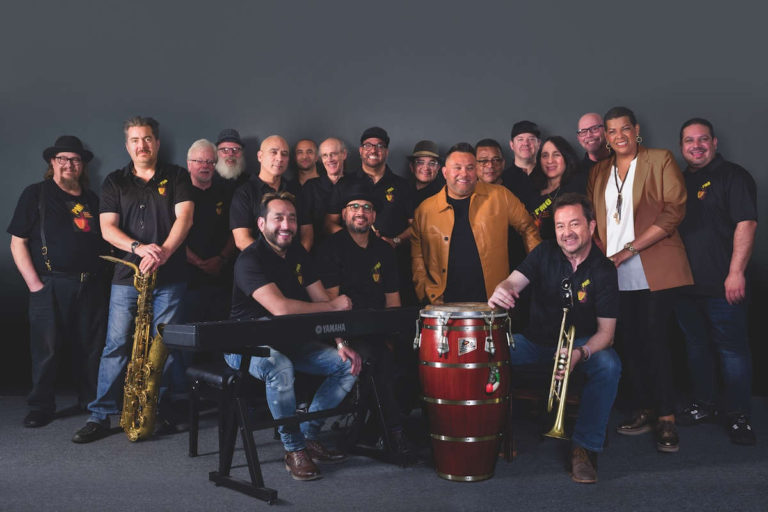
Oakland percussion maestro John Santos leads one of the best Latin-jazz bands in the country, and his compatriots John Calloway (flute), Marco Diaz (piano and trumpet), Saul Sierra (bass), Charlie Gurke (saxophones) and David Flores (drums) get plenty of room to express themselves on Horizontes.

But this passionate program is designed to showcase the band’s expansive web of musical relationships, which encompasses Puerto Rico, Cuba, New York and beyond. With guests such as clarion vocalist Jerry Medina, drum great Eric Harland and flutist Elena Pinderhughes, each track can serve as dance floor fodder, but invites closer scrutiny.

Ben Davis and Chris Brown, “Jongleurs”

Berkeley cellist Ben Davis, a jazz-steeped improviser, and Oakland pianist and electronics explorer Chris Brown, who spent three decades as co-director of the Center for Contemporary Music at Mills College, convene for a series of mercurial dialogues.More interested in granular textural details than thematic development, the Jongleurs conversations can sound aggressive, melancholy, playful and heady, while always feeling open to a sudden shift in perspective. Obscuring distinctions between composition and improvisation, the pieces develop with their own internal logic and dramaturgy.

Social Eyes: Week of Jan. 1-7

FRIDAY, JAN. 2

MAMBO

PACIFIC MAMBO ORCHESTRA

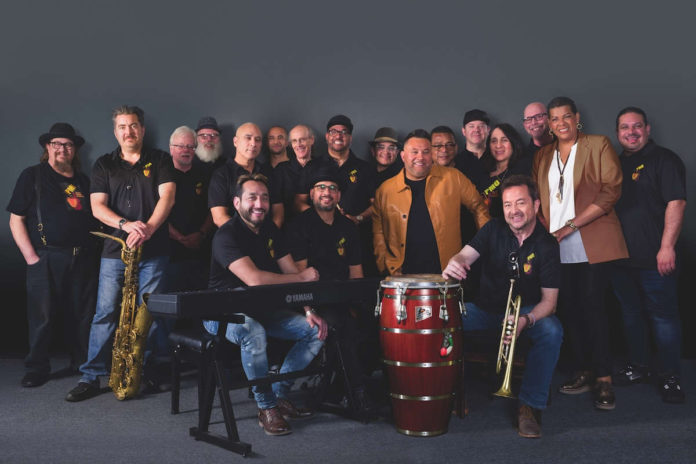
Get ready to mambo into the new year with one of San Francisco’s finest: the Pacific Mambo Orchestra. Founded in 2010 by pianist Christian Tumalan and trumpeter Steffen Kuehn, Pacific Mambo Orchestra went on to win a Grammy for their self-titled debut in 2014. This impressive group can at times contain up to 19 members and play an array of classic numbers mixed with modern pop. A Pacific Mambo Orchestra show can veer from traditional mambos to Stevie Wonder into Dizzy Gillespie in a matter of minutes. They will be performing two shows on Friday and two on Saturday, giving locals plenty of chances to catch their romantic sound. MAT WEIR

INFO: Fri, 8pm & 9:45pm, Yoshi’s, 510 Embarcadero West, Oakland. $35-$65. 510.238.9200. 

FRIDAY, JAN. 2

JAZZ

GUILHEM FOURTY QUARTET

Toulouse-born, New York–based drummer and composer Guilhem Fourty leads his quartet with a rare balance of control and curiosity. Shaping the music as much as driving it, Fourty treats the drum kit as an organizing force, guiding form, pacing and conversation. His work moves comfortably between intimate club rooms and major international jazz festivals, a range that reflects both ambition and craft. Joined by Skylar Tang on trumpet, Hannah Mayer on piano and Aidan McCarthy on bass, the Guilhem Fourty Quartet plays modern jazz that’s attentive and elastic. SONYA BENNETT-BRANDT

INFO: Fri, 7:30pm, The Sound Room, 3022 Broadway, Oakland. $30. 510.708.9691.

FRIDAY, JAN. 2

BENEFIT

HOOT! TORCH SONGS LIVE

Hoot history sings itself into life for this event benefiting the National Immigration Law Center. In 2020, Torch Songs – For Refugees, Detainees, and Immigrants Under Siege was the first HOOT! On Record album. This live show brings back performers and songs from the album, along with several new voices. The world needs music, melody and songs that cause communities to rise up and support immigrants. Celebrate the rhythm and richness of immigrant culture, the rights of refugees, the inherent dignity that every thinking person knows must govern the treatment of detainees and unprotected individuals, families and children seeking protection in the United States and worldwide. LOU FANCHER

INFO: Fri, 7pm, The Back Room, 1984 Bonita Ave., Berkeley. $25. 510.654.3808.

SATURDAY, JAN. 3

JAZZ

ANGEL BAT DAWID & 9MAGICFOREVER1

The Chicago jazz scene has long nurtured creative Afrocentric experimentation, and the duo of Angel Bat Dawid and 9MAGICFOREVER1 embodies that sonically expansive lineage. Co-presented with Folk Yeah, the 9th Gate Sonic Research Society (N.G.S.R.S.) brings together Dawid on clarinet, piano, electronics and vocals, and 9MAGICFOREVER1 contributing on electronics, guitar, saxophone, flute, bass, piano and drums. Laced with improvisation, their Afrofuturist soundscapes flow from out of the Art Ensemble of Chicago’s “ancient to the future” ethos, layering beats and harmonies that reference familiar idioms refracted through their idiosyncratic visions. ANDREW GILBERT

INFO: Sat, 8pm, The Freight, 2020 Addison St., Berkeley. $39-$44. 510.644.2020.

SATURDAY, JAN. 3

THEATER

‘DOG MAN: THE MUSICAL’

There is something surreal in the fact that, entering 2026, this musical based on the bestselling comic books of Dav Pilkey, the creator of Captain Underpants, will seem entirely realistic. A crime-fighting policeman with a transplanted dog’s head? Sure! A cyborg fish named Flippy commanding an army of Beasty Buildings to take over a city? Yes! How about evil Petey-clone cats bent on revenge and the loss of lunch, a major drama? Absolutely believable. Unlike real-life’s host of crazy characters and breaking news, this 2019 superhero comedy musical is pumped full of terrific tunes, positive energy and hilarious, heartwarming fun for everyone from age 5 to 105. Show on Sunday as well. – LF

INFO: Sat, 11am & 4pm, Henry J. Kaiser Center for the Arts, 10 10th St., Oakland. $25-70. 510.762.2277.

SUNDAY, JAN. 4

JAZZ

RICHARD HOWELL & SUDDEN CHANGES

Tenor saxophonist and vocalist Richard Howell has served as faculty at the Oaktown Jazz Workshops for decades, and this benefit concert for the program brings together a cast of players who came up under his wing—as well as bassist Ravi Abcarian, the Workshops’ director. The multigenerational lineup includes vibraphonist Gus Hurteau, pianist Ruben Green, alto saxophonist Max Nguyen and trumpeter Max Ehrhardt. Powering the combo is Richard’s son Elé Howell, a Workshop alum who’s become one of New York’s most sought-after young drummers. There’s something extraordinary about experiencing the father and son playing together with such impressive young talent. – AG

INFO: Sun, 3pm, Oaktown Jazz Workshops, 55 Washington St., Oakland. $40. 510.649.1785.

SUNDAY, JAN. 4

CLASSICAL

HAPPY DOG DUO

Eric Tran and Nathan Cheung, the Happy Dog Duo, don’t believe classical piano has to be all tuxedos and intense expressions. For 20 years, they’ve focused on “bringing humor and joy” to performances of four-hands classics, original music and transcriptions. The Stanford grads obviously love playing together, and their happy vibe—as well as their artistry—draws in their audiences. Fun fact: The HDD are among the very few who have performed on the only Pleyel Double Grand Piano in the Western Hemisphere. Cool. JANIS HASHE

INFO: Sun, 5pm, Piedmont Piano Company, 1728 San Pablo Ave., Oakland. $30/adv, $35/door. 510.547.8188.

SUNDAY, JAN. 4

FILM

‘NO SEPARATE SURVIVAL’

No Separate Survival is a short documentary that asks what safety, home and belonging actually mean for people seeking asylum across the U.S.–Mexico border. The participatory film finds those forced to leave home and then, crucially, invites them to get behind the camera. The screening will be preceded by a reception and followed by a conversation with director Shabnam Piryaei and the filmmakers, plus live music from Larry & Joe. Presented with East Bay Sanctuary Covenant, the evening is both a film event and a benefit supporting EBSC’s legal, educational and direct-aid work with Bay Area immigrants. – SBB 

INFO: Sun, 5:30pm, The Freight, 2020 Addison St., Berkeley. $34-$209. 510.644.2020.

WEDNESDAY, JAN. 7

PUNK

HELL BOUND POUND

This Wednesday, the fine folks at the Ivy Room are hosting Richmond’s own skate-punk trio, Hell Bound Pound. These guys released a split EP with Stay Out in May of last year, and it’s 17 minutes of pure skate-punk mania with fast riffs and harmonizing vocals. Part of the Ivy Room’s ongoing Bang The Bay Presents showcase—every first and third Wednesday of the month—they are joined by Neuro Trash, Black Leather Belt, Hyperdrive Kittens, Elegant Trash, Send the Vektors, Teeth on Wheels and MC Patty. – MW

INFO: Wed, 6:30pm, Ivy Room, 860 San Pablo Ave., Albany. $15-$25. 510.526.5888.

WEDNESDAY, JAN. 7

GUITAR MASTERCLASS

TUCK ANDRESS

The “Tuck” of the musical partnership Tuck & Patti is a master guitarist in both jazz and contemporary standard music genres. Tuck Andress comes to the Sound Room as part of its masterclass series, which is free and open to all ages and levels of experience. In an interview published in Vintage Guitar, Andress said, “I’ve learned how to hear the solos and details of phrasing, just the fabric of music and how to use it in a completely different way, with the fingerstyle approach that I love now.” The evening is a perfect opportunity to learn from one of the best. – JH

INFO: Wed, 6pm, The Sound Room, 3022 Broadway, Oakland. Free. 510.708.9691.

(Culinary) memories are made of this

It is time for stormy weather and a 2025 restaurant roundup. In this case, the 10 most memorable meals of the year. And, I’m happy to report, all are still open for business.

10th: Pizzeria Pappo

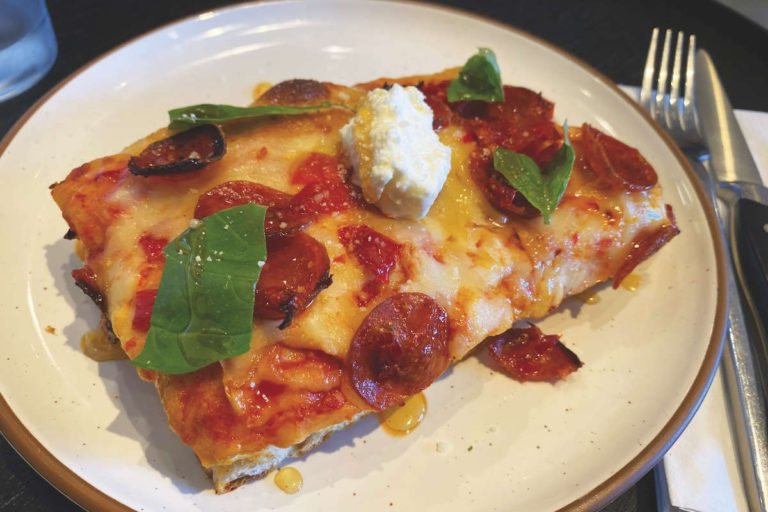
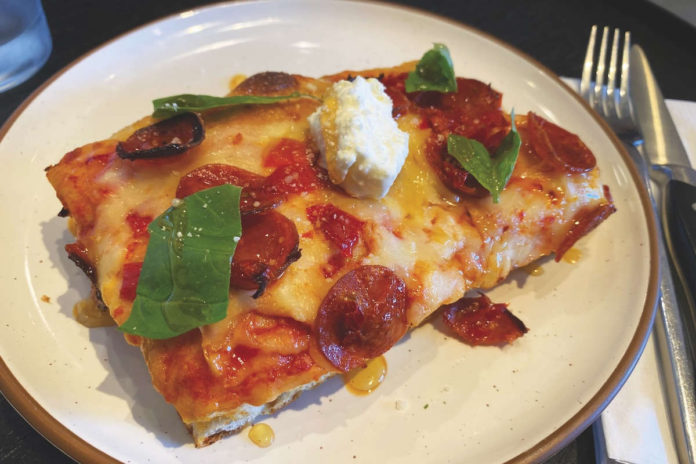
It’s no secret in my household that pizza is a sixth food group. Generally speaking, it combines four of the five other food groups together in one slice—all five if one orders the Hawaiian kind. Pizza-wise this year, most of the hype went June’s way, the new parlor in West Oakland. I get it. Big pies, cool location, showers of performative parmesan. But I fell for Pizzeria Pappo. Chef John Thiel had made a Sicilian pepperoni pie when I dropped by and it was exactly what I was in the mood for from the crust on up. He also introduced me to schiacciata, a sandwich bread that’s a delicious alternative to focaccia.

Pizzeria Pappo, 709 Santa Clara Ave., Alameda. pizzeriapappo.com

9th: Lucuma

Lucuma is interested in authenticity as a point of departure and not as a set of strict rules to cook by. Peruvians and their allies will recognize familiar ingredients and flavor profiles, but many of the dishes will taste like a series of revelations. Before eating dinner at Lucuma, I had come to think of Peruvian food as, primarily, roast chicken or stewed chicken sauced with aji, and a side of yucca fries. At Renzo Roca and Garrett Morris’ Oakland restaurant, my eyes were opened. Lucuma opened last summer, but I can still recall the white sauce slathering an oven-roasted piece of salmon. The sauce looked creamy and heavy but it was the opposite, lightened by ginger and lime. I brought a friend who loves short ribs, and we both marveled at how tender they were. Only a dry tres leches cake landed Lucuma lower on this persnickety list.       

Lucuma, 1700 Franklin St., Oakland. lucumakitchen.com

8th: Jaji

Jaji’s dining room is designed for celebrations. Our table of eight arrived without a birthday or anniversary in mind, but it still felt like an occasion. Sophia Akbar and Paul Iglesias, who also own nearby Parche, glided from table to table chatting up the guests while attending to their needs and wishes. In some ways, it felt like they’d invited us into their very large home to eat an elegant feast or banquet with them. The food is upscale Afghan—meaning the price point will have an impact on one’s bank account. Lamb lollipops and a whole roasted Cornish game hen are just two of the menu’s many high points.

Jaji, 422 24th St., Oakland. jajioak.com

7th: Cafe Brusco

God bless the inventor of the bagel and bagel makers everywhere. I have yet to find a store-bought bagel that tastes as good as the ones made at bakeries and delis. When Cafe Brusco opened, I had an inkling that the owners would know how to repurpose their dough. As co-owners of Rose Pizzeria, Gerad Gobel and Alexis Rorabaugh have received national acclaim for their pizzas. It’s logical then that their bagels, crispy on the outside, chewy on the inside, are also winning over customers. I crave bagels as often as I do pizza. At Cafe Brusco I tried an open-faced bagel with mozzarella cheese, a warm tomato purée and fresh basil leaves. It was the best of both worlds.


Cafe Brusco, 2000 University Ave., Berkeley. cafebrusco.com

6th: Lulu

Food is, of course, the whole point of going out to eat. But while my gray matter summons up a compilation of 2025’s culinary memories, this “best of” list also reflects my experience of a place. Lulu provided me with an invaluable opportunity to slow down and reconnect with an old friend. We both loved what we ordered for brunch as much as we loved spending time together in a welcoming, safe space. When I walk out the door to try a new place, I’m looking for that kind of comfort as much as I am a good meal. Certain restaurants excel at both cooking and hospitality. Lulu is one of them.

Lulu, 1106 Solano Ave., Albany. lulusolano.com

5th through 1st

The five finalists, plus a special guest appearance, will show up in next week’s “WTF.”

Free Will Astrology: Week of Dec. 31

0

ARIES (March 21-April 19): Before major eruptions, volcanoes may emit harmonic tremors. Lasting for hours or days, they are signals that pressure is building. A similar phenomenon is simmering in your sphere, Aries. Be alert. What rhythmic clues are vibrating through your system? What pressure is mounting that could eventually erupt? I’m not saying you should interpret them with a worried mind. In fact, they are offering you valuable intelligence about what needs to be released. You can either ignore them and let the eruption surprise you, or you can pay attention and arrange for controlled venting.

TAURUS (April 20-May 20): Your heartbeat isn’t regular like a metronome, but slightly irregular. The phenomenon is called heart rate variability and is a sign of health. A perfectly regular heartbeat is actually a warning sign. Your heart knows something your mind might not believe: Perfect consistency is pathological. Variation is vitality. The rhythm of life includes the beautiful irregularity of a system that’s alive enough to respond and adapt. Keep these truths uppermost in mind during 2026, Taurus. You will thrive on changeability and fluctuation.

GEMINI (May 21-June 20): The Greenland shark waits for animals to fall asleep, then eats them while they’re unconscious. Since it’s too slow to chase anything, it has evolved a patient approach to hunting. It acts on the understanding that everything eventually lets its guard down. I suggest you cultivate similar patience in 2026, Gemini. There’s no need to rush toward what you want. Position yourself correctly and wait for moments of opportunity. You’re playing a long game.

CANCER (June 21-July 22): Atmospheric rivers are massive moisture highways in the sky. Meteorologists have been documenting newly identified patterns in how these marvels work. They’ve learned that tiny changes in ocean temperature can redirect thousands of miles of incoming rain. This will be an excellent metaphor for you in 2026, dear Cancerian. You’ll be in atmospheric-river mode. Small shifts in perspective and slight recalibrations of intention will send your momentum flowing in different and better directions. No drama required! Simple micro-adjustments will reroute larger currents. Attend devotedly and zestfully to the subtleties.

LEO (July 23-Aug. 22): Certain fungi can break down pollutants like pesticides and plastics into less toxic substances. These mushrooms digest what’s considered indigestible, transforming poison into nutrients. I suspect you will have a metaphorically comparable capacity in 2026, dear Leo: a superpower that enables you to metabolize blight and taint. I predict you will exult as you eliminate stuff that’s useless and harmful. Please indulge your unusual talent to the max!

VIRGO (Aug. 23-Sept. 22): The U.S. Library of Congress adds 60,000 items to its collection every week but only catalogs a fraction of them immediately. So vast amounts of knowledge sit there, acquired but not yet processed, waiting for librarians to create the finding aids that make them accessible. You’re in a similar situation, Virgo. You’ve accumulated extraordinary amounts of information, experience and skill. But how much of it is cataloged? How much is accessible when you need it? In the coming months, I hope you won’t acquire more. Instead, you will spend time with your archives and process what you have already gathered. What do you know that you’ve forgotten you know? What experiences hold wisdom you’ve never extracted?

LIBRA (Sept. 23-Oct. 22): Vault doors often require two keys, turned simultaneously, to open. Why? Such a practice furthers risk reduction and fraud prevention. Let’s make this a potent metaphor for you in 2026, Libra. It will symbolize cooperation and balance as well as an enhancement of your security. The treasures you’ll be trying to access will require dual input. One key is yours: intellect, agility, charm, initiative. The second must come from a collaborator, a mentor, a friend, an unexpected stranger or even a spirit guide. Just assume that the vault won’t open through brilliance alone. It will require synchronization.

SCORPIO (Oct. 23-Nov. 21): In December 1968, U.S. astronaut Bill Anders was orbiting the moon inside the Apollo 8 spacecraft. He snapped a photo that showed the Earth as a blue-and-white sphere rising over the gray lunar surface against the blackness of space. This iconic image helped fuel the environmental movement and transformed how humans visualized their home. You’re at a comparable pivot, Scorpio. In 2026 you will see familiar situations from new angles, and this will reorganize your understanding of how life works. That’s a good thing! Be alert for watershed moments that bring revolutionary blessings.

SAGITTARIUS (Nov. 22-Dec. 21): The Giant’s Causeway in Northern Ireland is made of 40,000 interlocking basalt columns formed when ancient lava cooled and contracted. Legend says a giant built it as a bridge to Scotland. Both stories are true, one geologically and the other mythologically. Your life in the coming months will remind you that multiple explanations can coexist without canceling each other. The scientific story of lava cooling doesn’t make the giant story less meaningful. The giant story doesn’t make the geology less accurate. Conclusion: You don’t have to choose between competing narratives about your life as if only one can be true. What if both are? The practical explanation and mythic explanation describe the same phenomenon from different angles. You can be both the cooling lava and the giant building the bridge.

CAPRICORN (Dec. 22-Jan. 19): Computer scientist Tim Berners-Lee invented the World Wide Web. He helped ensure its core technologies were released to the world without patents or royalties. Universal, open access mattered more to him than personal profit. That single decision was a profound gift to the world. Billions benefited. In his generous spirit, dear Capricorn, I’ll ask whether there are any ideas, knowledge or resources you’re holding in reserve that could multiply through sharing. In 2026, I invite you to be like Berners-Lee: a magnanimous strategist who understands that things may gain value through distribution, not restriction. Your intelligence will be worth more unleashed than protected. Your innovations will need the crowd to fulfill their purpose.

AQUARIUS (Jan. 20-Feb. 18): In the myths of Mali’s Dogon people, Nommo is an amphibious, telepathic being who brought language, rhythm and balance to Earth—and then departed. If things fall out of harmony, it’s believed, Nommo will return, speaking the lost syllables that realign the cosmos. You’re a bit like Nommo these days, Aquarius. Parts of your world may be in disarray and your sacred task is to listen for the lost syllables. What’s missing in the dialogue? What notes aren’t being sung? If you seek gently and speak truly, restoration will follow.

PISCES (Feb. 19-March 20): The longest chess game theoretically possible is 5,949 moves, but most games end in under 40. Chess masters don’t win by seeing every possibility. Instead, they recognize patterns and anticipate which paths are worth exploring. Let’s apply this as a useful metaphor, Pisces. In 2016, it’s crucial that you don’t waste energy by considering improbable scenarios that will never materialize. You should be determined not to miss emerging themes because you’re too busy calculating unlikely variations. According to my prognosis, you don’t need to see further; you need to see more precisely and accurately. The chess master’s advantage isn’t exhaustive analysis; it’s knowing what to ignore. Ninety percent of your options don’t matter. Ten percent do.

Homework: What’s the best gift you can promise yourself in 2026? Newsletter.FreeWillAstrology.com

El Cerrito’s Little Hill Lounge is on the map

1

When word got around El Cerrito that Christ Aivaliotis was buying and taking over operations of Little Hill Lounge in 2022, locals worried he would turn it into a tiki bar. These weren’t necessarily unfounded concerns as Aivaliotis had run several tiki bars in Oakland. His most recent, Kon-Tiki, closed its doors in 2024 alongside a blistering post on Instagram about the difficulty involved in running a bar in Oakland. In fact, in Aivaliotis’ own words, “a big appeal of Little Hill is that it wasn’t in Oakland.”

Another of the bar’s draws was its preexisting clientele. These regulars, protective of their local haunt, took to Instagram to plead to the new ownership not to change anything. According to Julio Palacios, show booker for Little Hill, one regular, a 99-year-old woman named Ramona, went as far as to march her way into Kon-Tiki to tell Aivaliotis, “we don’t want no tiki bar.”

Aivaliotis said, “For a while we didn’t have a clear idea of what sort of bar it would be.”

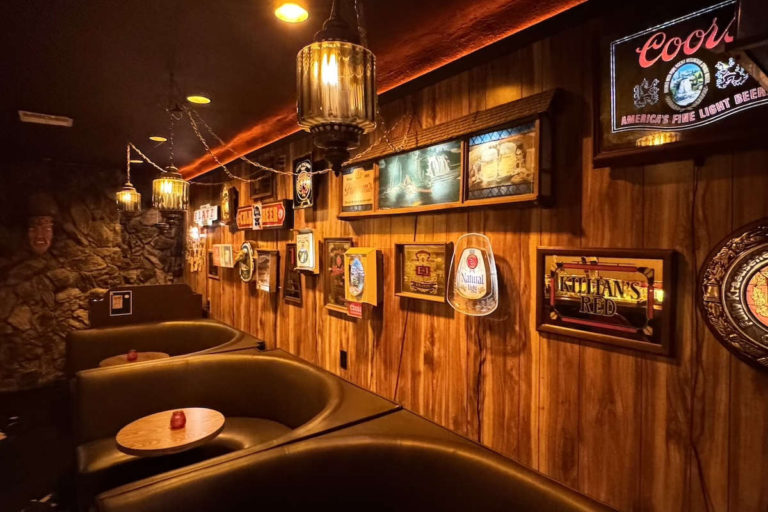
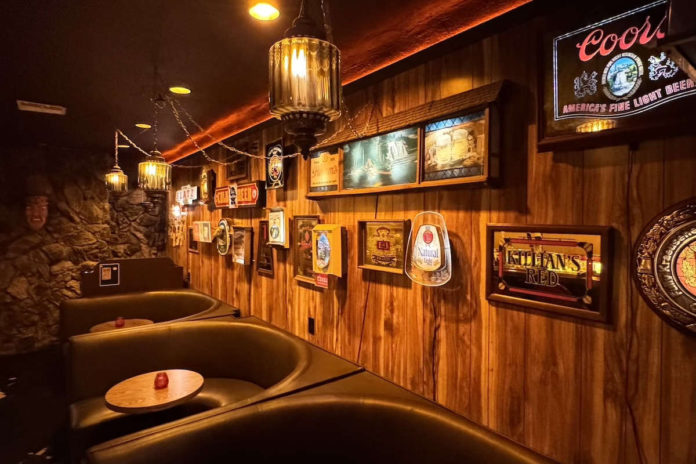
The pre-renovated Little Hill was a dive bar through and through, a dingy, wood-paneled main room with red vinyl booths along the wall and a long, island bar stretching the length of the center. A back room held a ping pong table and couches.

Instead of changing the aesthetics of Little Hill, Aivaliotis and his team updated and unified it. The interior of the main room is still a time capsule in all its wood-paneled glory, but the walls are crowded with vintage beer signs with their lights dimmed. The booths traded their red vinyl for a more neutral earth-tone where patrons can gather in soft, golden pools of light. It’s dim without being dingy, vintage without being dusty, curated without being overly ostentatious.

Aivaliotis grew up in Pittsburgh, Pennsylvania, and says his inspiration for the atmosphere landed somewhere between the working class bars he went to with his dad as a kid and Twin Peaks-era David Lynch.

Aivaliotis, who has bartended in some capacity since 2007, also paid great attention to the spirit selection.

“The spirits definitely elevate us beyond ‘dive bar’ status,” he said. Little Hill features an excellent selection of small-batch and boutique spirits and liquor. There are fresh ingredients for cocktails alongside the classic “beer and shot” combo for folks on a budget. While the menu features some pricey options, the bar also tries to maintain a healthy spectrum of affordability and price points. Well cocktails are $10, beers are $5.

Good vibes and drinks aside, the truly impressive part of Little Hill Lounge can be found in its back room. Gone are the couches and ping pong tables to make way for one of the most intimate music venues in the area. By intimate, I mean that an audience of more than 30 people in this space would be pushing it.

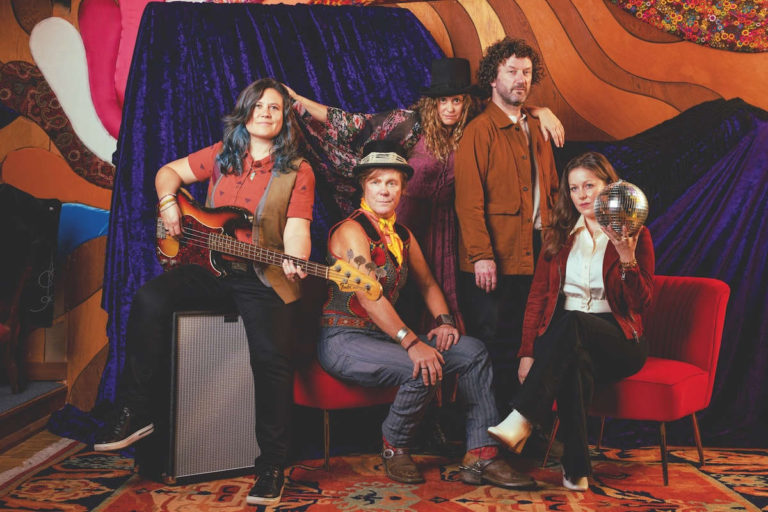
When Aivaliotis bought the bar, he refurbished the small space with a knee-high platform stage in the back corner, and dedicated a good deal of resources to a solid speaker and board setup. Elihu Knowles, the lead sound tech for Little Hill, takes a good deal of pride in the quality of the acoustics in the room. “People are surprised how good it sounds back here, and we get comments all the time about sound quality,” he said. 

THE LOUNGE Bar co-owner Christ Aivaliotis offers free shows and good sound, earning El Cerrito loyalty. (Photo by Jordan Ranft)

His claim lives up to the hype. While researching this story I went to a show where the band Balzac, a Prince Buster tribute band, packed some seven or eight people onto the small stage and played a full set of classic ska. Shoulder to shoulder with about 20 other showgoers, I was stunned at how clean everything sounded. The horns were warm and crisp, the vocals clear and beautiful, and the keys distinctive. It was a truly impressive-sounding show for such a small and unadorned room.

Shows at Little Hill are neither afterthoughts nor ornaments. Something happens in the venue space almost every day of the week. Bands, typically two to three per show, fill up the weekend dockets, DJs throw dance parties and Knowles himself runs a jazz night every Tuesday. The curation feels intentional—there are no open mic or trivia nights. As a result patrons have a certain level of trust and expectation when coming to the lounge to see live music.

Palacios, who books most of the shows with some help from Knowles, has been involved in event production in the East Bay for as long as he can remember. He has worked with Another Planet at the Fox and used to manage the Uptown—Rest in Peace. When Aivaliotis showed him the space at Little Hill, he was excited by the possibilities and began drawing from his connections to book small bills in the back room.

“I really only bring in acts that I know personally,” Palacios said. Luckily, he seems to know almost everyone in the East Bay scene, so has a wide talent pool to draw from. That isn’t to say bands aren’t welcome to reach out and try to book with him, but rather that he favors the ability to personally vouch for the quality of music he brings into the space.

Every show at Little Hill Lounge is also free. The venue doesn’t sell tickets or charge at the door. Because of this, it doesn’t offer guarantees to bands it books. Instead the lounge pays out 15% of all bar sales, from the time of doors to the end of a show, back to the bands. According to Palacios, this has created a self-sustaining ecosystem for the venue.

“People are more willing to come to a free show, so we typically have a solid turnout,” he said. 

Bar regulars and folks looking for an inexpensive night out see a free show being advertised and attend alongside fans and friends of the booked band—this increases drink sales for the bar and at the same time fattens the payment for the band.

“We’ve had everything from album-release parties to a band’s first live show here,”  Knowles said. “It’s a great place for the community.”

While unable to provide a definitive figure, Palacios estimates Little Hill has paid out over $35,000 to bands through bar sales since opening in fall 2022.

It seems Aivaliotis is successfully walking several tight ropes at once. Little Hill Lounge, dubbed “El Cerrito’s Living Room” on Instagram, maintains its reputation as a watering hole for the locals who love it, while at the same time broadening its scope and becoming a hub for the music scene. While it isn’t located super centrally to Oakland, it’s definitely worth the trip to check it out on any given night for an affordable drink and a good show.

Little Hill Lounge, 10753 San Pablo Ave., El Cerrito. Open 5-11pm, Sun-Thu; 5pm to midnight, Fri-Sat. littlehillelcerrito.com

Museum café expands exhibit engagement

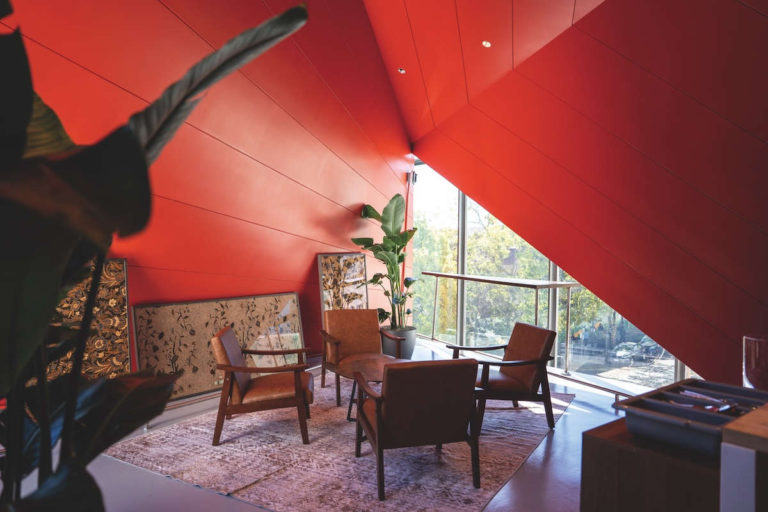
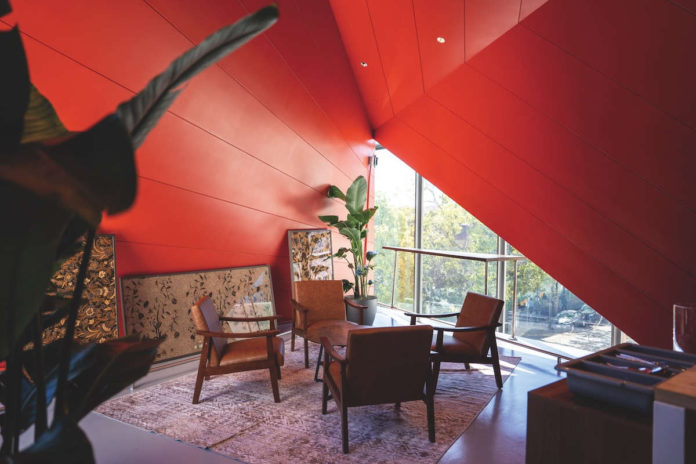
The upstairs café at Berkeley Art Museum and Pacific Film Archive (BAMPFA) peers down on a gallery two floors below. This café is at once part of the museum and in its own liminal space. We walk into museums wondering how we’ll engage with the artwork. Talking about the exhibit over a meal afterwards is its own separate reward. Some visitors will invert this approach after they eat at Nora Haron’s Kopi Bar and Bakery. 

Sans umbrella, I made my way to Kopi in the middle of a rainstorm. My timing was off that day. With her café newly relocated to BAMPFA from the original Walnut Creek location, Haron sat down with me to talk about the move and her career. While we talked, members of the kitchen staff approached our table and gently tapped her on the shoulder. Haron took note of the serious looks on their faces. She was still in the process of training her sous chefs. After only a few days of cooking for the public, they still needed her guidance.

Each time the chef returned from the kitchen, she brought me one of her dishes to try. Haron’s food is especially restorative when one is shivering in damp clothes. Between sips of soto ayam and bites of beef rendang chili, Haron sketched out her long and varied East Bay cooking career. Before stints at Farley’s and Blue Bottle, she owned and operated three locations of Créma Coffee Bar. But she first served her now signature Indonesian-Singaporean dishes at Drip Line in West Oakland. “That’s how my food became popular,” she said.

Nasi goreng—chicken fried rice—the gado gado salad, laksa and kaya toast were all popular items there. When she introduced a brunch menu at Drip Line, Haron said, “People were lining up out the door.” Even though the café was popular, her landlord slowly came to the conclusion that the profit margins weren’t enough to sustain the business. She also understood it was time to move on after someone shot a hole in the door of her car parked nearby. Then the pandemic shut everyone’s doors.

Without a restaurant kitchen, Haron, like many other pandemic-era chefs, started a pop-up. IndoMex married Indonesian dishes with Mexican tacos and burritos. “I was making a rendang version of a quesabirria sauce,” she said. “We would do laksa albondigas.” The pop-up did really well. “I remember just working my butt off for IndoMex. And that’s how I survived during the pandemic.”

The success of IndoMex caught the attention of the owners of Killiney Kopitiam, a Singaporean restaurant based in Palo Alto. They were trying to expand the franchise, but during the shutdown they couldn’t bring experienced chefs from Singapore to train the cooks. Haron was hired to review the menu and taste everything. She understood that “it takes a person who has already eaten this food to know how to do this, right?”  

Haron taught the employees a crucial technique in Asian cooking. “When you blend the paste—what we call rempah—it’s usually onions, garlic, ginger, coriander and chilies. In Indonesian food, we want the oil to separate when we stir fry it,” he told them. In French cuisine, when a sauce breaks like this, it’s a bad thing. But for Haron, after the sauce splits, she drains the oil “so you won’t taste that rawness in broths and soups,” she said.


With Haron as their culinary manager, Killiney Kopitiam’s sales and reputation improved. The owners partnered with the chef to open a location in Walnut Creek. The space they leased was huge and the rent, $28,650 a month, reflected the cost of operating it on a busy downtown street. They built out SanDai, a sit-down restaurant, and the first iteration of Kopi Bar café right next to each other.

For the first year, the business did well. Toward the end of the second year, reservations began to decline. At the same time, Haron noticed an alarming trend. “Opa! closed. The Indian restaurant next door closed. The restaurant across the street closed. The wine bar behind me closed,” she said.

To keep the business going, Haron tried a number of options but couldn’t make any of them work in Walnut Creek. After regrouping and zeroing in on her culinary strengths, she decided to hire a realtor, who subsequently brought her to BAMPFA. She was initially dubious about the space. “I was like, ‘But it’s a museum. It’s not street level. I need to be on the street level,’” she said. But after her first visit, she fell in love with it.

Haron went downstairs to the gallery in which “Routed West: Twentieth-Century African American Quilts in California” had recently opened. She looked at the quilts and said, “I want my café to be part of the museum experience. How can I do that?”

In her pitch to BAMPFA, Haron knew she had the food nailed down but wondered how to make Kopi stand out among the competitors. “I wanted to be a partner,” she said. “I didn’t want to just be a coffee shop operator.” While she prepared her business plan, she made a sketch of a cookie that resembled one of the quilts. “Every time the museum has a new exhibit, I want to do a culinary representation of it,” she said. BAMPFA was “gung ho” and supportive of her ideas. “In my first meeting with the leadership group, it was all women,” Haron said. “And I was like, ‘Yes, let’s do this.’”

After I got home and into a dry outfit, I texted Haron to thank her for taking the time to meet with me during a busy opening week. But I also told her how much I appreciated the food she’d made. Sitting in the calm museum café, I glimpsed the quilts on display downstairs. Sipping the turmeric coriander chicken broth in Haron’s soto ayam wasn’t just warming; it was restorative. Haron texted me back, “Food is Medicine.”

Kopi Bar and Bakery at BAMPFA, 2155 Center St., Berkeley; Wed-Sun, 11am to 5pm. bampfa.org/page/kopi-bar-and-bakery-bampfa

Rapper reports on Oakland and himself

0

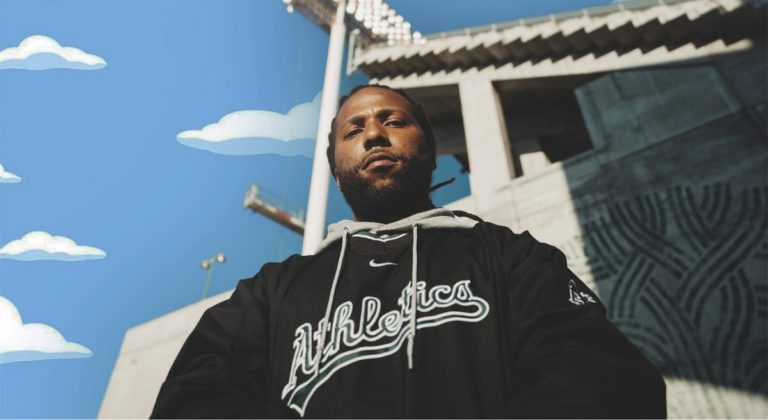
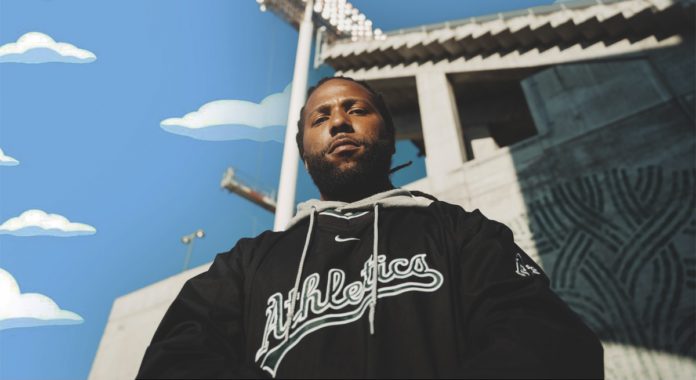
As a middle-schooler, when most kids woke up to cartoons or played video games, a young Philip Bank$ did something far less expected: He read the newspaper. He didn’t flip straight to the comics or check the Warriors box scores. He studied the city, absorbing homicide reports, city council dust-ups and the complicated rhythm of Oakland long before he had the language to name what drew him in. That impulse, to document the world around him with curiosity, empathy and precision, animates East Bay Times, the Oakland rapper’s debut solo album and the most complete statement of his voice yet.

“With the title East Bay Times, I’m reporting on myself, my inner thoughts, as well as what’s going on in the city,” Bank$ said. “That’s how the title came.”

Across nine Hiright-produced tracks Bank$, now 35, a Morehouse-trained sociologist and a third-generation Oakland native, delivers the kind of grounded, community-rooted storytelling often missing from today’s rap landscape. His voice is steady but emotionally agile, never preaching and never posturing. He simply reports live from the city that raised him.

“I’m trying to encapsulate what’s going on in Oakland,” he said. The clarity of purpose is woven into every detail.

Many first met Bank$ as one-third of Trey Coastal, the Oakland group that went mildly viral with its “Polynesian Sand” video. The group performed on a couch floating across Lake Merritt while threading humor into critiques of gentrification and shifting city culture. Their work carried the DNA of classic Bay Area mischief, equal parts social commentary and comedic chaos.

After the trio’s 2023 EP, Bank$ slowed his musical output. Behind the scenes, he wrestled with the idea of striking out solo. East Bay Times is actually his third attempt at a solo project. “It wasn’t a linear process,” he admitted. “I would get overwhelmed. Life was happening, and the responsibility of wanting to get it right weighed on me.”

He recorded some songs in late 2023, while others trace back to the years immediately after the pandemic, a period he describes as creatively rich but emotionally heavy.

“It was a consistent effort, especially over the last year and a half,” he says. “The songs cover the last two or three years of my life. I’m recapping and processing. The project definitely expands life post-pandemic.”

Bank$ began writing raps at 12, pulling inspiration from Oakland legends like Yukmouth and Too $hort, as well as New York icons like Nas. After high school, he moved to Atlanta for college and paused his rap ambitions to focus on academics. That sociology training informs his writing now. His observations are sharp, people-centered and grounded in the belief that the personal is always connected to the political, especially in a city like Oakland.

On “Land of the Oak,” an early standout, Bank$ trades verses with Ian Kelly as they map out the emotional and economic terrain of modern Oakland. The song touches on grief, the criminal justice system and the grind of staying independent as an artist.

The Bay Area remains Bank$’s creative foundation. Outside of music, he is a founding member of the Black Rock Collective, a group dedicated to creating safe and affirming spaces for Black climbers and outdoor newcomers. It was during one of those climbing sessions that he wrote “Ventilate,” the album’s breeziest lyrical exhibition. The song is almost meditative and exudes the skill and calm confidence that come from someone who has done real internal work.

“Oakland Unified” follows and marks the album’s emotional shift toward its heaviest material. On “Jason’s Lyric,” Bank$ grieves his late cousin and processes what it means to carry someone’s legacy. The writing is tender and intimate. He captures the quiet moments grief disrupts: birthdays, school milestones and family gatherings that feel incomplete.

The album closes with “Hyphy Kids Got Trauma,” a title taken from graffiti that stopped him in his tracks. It serves as a thesis statement for the project. It reflects what it means to come of age in a city that has endured some of its highest crime rates while still producing so much brilliance. He remembers the tension it created for his mother, who watched her son venture into a world she could not fully protect him from.

In the end, East Bay Times delivers exactly what its name promises. It’s a front-page dispatch from an Oakland son who grew up reading the news and now understands how to write it with rhythm, introspection and a reporter’s devotion to truth.

Listen to ‘East Bay Times’ by Philip Bank$ at Spotify.

Hats off: Berkeley Hat Company says goodbye

0

A beloved East Bay hat store is hanging up its last cap after 50 years in business.

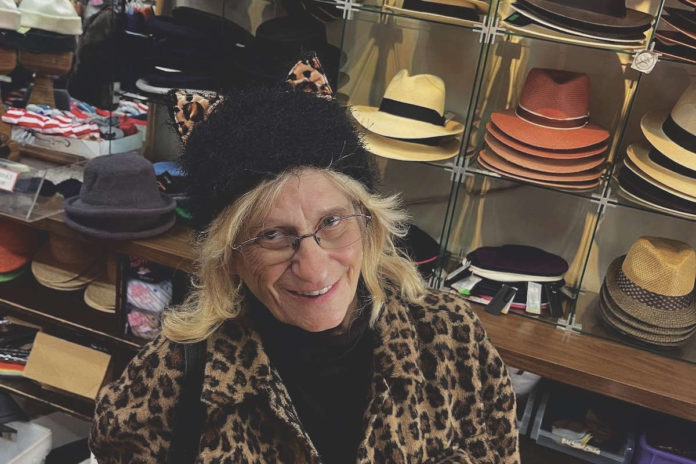
The Berkeley Hat Company will close its 2510 Telegraph Ave. storefront on Jan. 31, 2026. The shop, located just four blocks south of UC Berkeley, is known for hosting the largest selection of hats for men and women in the Bay Area.

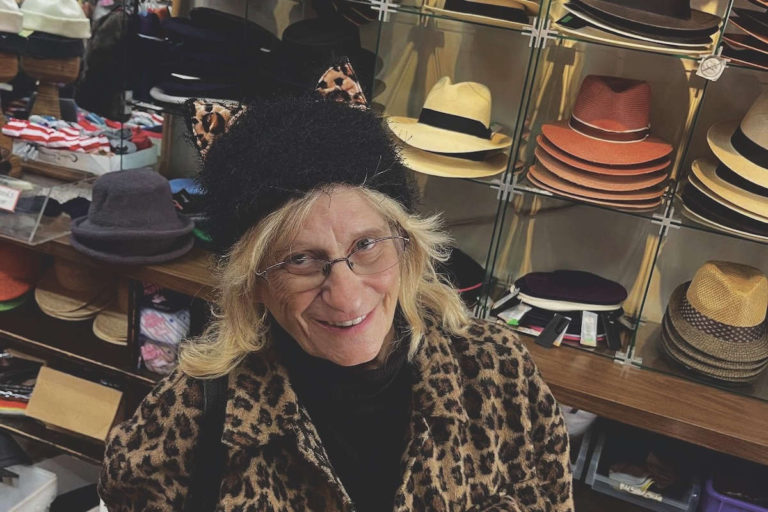
Founder and owner Carol Lipnick, 77, said the decision to close has been on her mind for years. The Oakland resident looks forward to “writing a new chapter” in her life by spending more time with her four grandchildren, traveling the world and enjoying her other hobbies.

“The store has been extremely good to me and the customers have been wonderful … I’m very glad to be a part of it,” Lipnick said.

To celebrate the store’s longstanding legacy, all new and old hats are on sale from now until the closing date. Store hours are Tuesday to Saturday from 10:30am to 6pm, and Sunday from noon to 4pm.

Lipnick, formerly a registered nurse, was introduced to the world of hats through her late husband, Ed Dougherty. A New York native, Lipnick moved to Berkeley in the ’70s, where she met Dougherty. Dougherty was intrigued with importing and learning about Panama hats, a type of tightly woven straw hat made from Toquilla Palm. He recruited Lipnick to decorate each one. “The stack [of hats] went all the way up to the ceiling,” she said.

Soon they were selling the Panamas for $8 each at local fairs and festivals. Encouraged by the feedback and sensing a promising market for selling hats, the couple opened their first brick-and-mortar store on University Avenue in 1978. Two years later they moved to Telegraph.

For decades, the two supplied locals with all sorts of quirky caps. Each wall in the store is lined with endless selections: vintage-styled ones, designer products made for famous events like the Kentucky Derby, snapback baseball caps, berets and even hats fitted with ostrich, peacock or pheasant feathers.

The company offers an online shopping option as well, where customers can browse through photos and descriptions of several iconic hats. These include their signature Panama hats, Irish caps made from wool tweed, and sleeker ones ideal for fancy tea parties or weddings.

 “People really call me the ‘Hat Lady’ all the time, and I respond to it,” Lipnick said.

Berkeley Hat Company has even supplied the Cal Marching Band’s signature straw boaters. Before Spirit Halloween stores existed, locals lined up outside the hat company to buy costumes. In addition to hats, accessories like boas, masks, facepaint and costume jewelry were available. At one point, the hat company served as the exclusive East Bay ticket outlet for the Burning Man festival.

Throughout the company’s 50-year run, staff witnessed locals and celebrities alike flow through its doors.

In 2009, the company hosted a public appearance by designer Luke Song—best-known for creating Aretha Franklin’s hat during her performance at President Obama’s first inauguration. In 2011, the hat was inducted into the Smithsonian Museum.

More recently in May, Grammy-nominated artist Kenny Lattimore dropped by the store to purchase a hat, according to the store’s Instagram page. Angus Cloud, HBO’s former Euphoria star and an Oakland native who passed away in 2023, also paid a visit to the hat company in 2022.

Lipnick said she and Dougherty enjoyed getting to meet so many people over the years. 

“I really feel like I put a hat on everyone in Berkeley,” she said.

Dougherty passed away in 2017, and Lipnick continued to work in the storefront six days a week. She considered selling the store to a new owner, but had difficulty finding someone to do so. “It’s a full-time job,” she said, “People are looking for things that are easier.”

Lipnick hopes locals take advantage of the ongoing sale. Any leftover items will be donated or resold to organizations.

“I really want to thank Berkeley for allowing me to have a successful business all these years,” Lipnick said. “I’ve really appreciated it, and it’s been really fun.”

Social Eyes: Week of Dec. 25-31

THURSDAY, DEC. 25

RECREATION

ICE SKATING IN THE EAST BAY

Invite ice to become part of the winter holiday tradition. No, not that ICE. Actual ice—as in frozen water Zamboni’d to glossy smoothness and perfect for skating. The East Bay offers options: Oakland Ice Center, operated by Sharks Sports & Entertainment. In Walnut Creek, the Bay Area’s only outdoor ice rink and ice slide in Civic Park celebrates the season with the annual Walnut Creek on Ice. In San Ramon, go Olympic at the Kristi Yamaguchi Holiday Ice Rink. Proceeds from the rink benefit Yamaguchi’s Always Dream foundation. The locations offer skate rentals, lessons, special holiday events and access to food/beverages. Goes through the holiday season. LOU FANCHER

INFO: Thu, hours and costs vary, check websites for details—oaklandice.com, walnutcreekdowntown.com, citycenterbishopranch.com.

FRIDAY, DEC. 26

HIP-HOP

DJ QUIK

Straight out of Compton, L.A. born, legendary rapper and producer DJ Quik is the exemplary prognosticator of the sounds we now call West Coast hip-hop in the G-Funk style. Working with Snoop Dogg (“Buss’n Rocks”), 2Pac (“Heartz of Men”) and even Shaquille O’Neal (“Strait Playin’”), DJ Quik cemented his towering role in rap and hip-hop. Yoshi’s has become a favorite stop for DJ Quik and his band, and this is a hot ticket. Last year, DJ Quik paired with JasonMartin for the funny, groove-centric CHUPACABRA, and with the world being what it is, you know there’s going to be some fresh tracks up ahead. Shows go through Dec. 28. – DNA

INFO: Fri, 8 and 10pm, Yoshi’s, 510 Embarcadero West, Oakland. $86. 510.238.9200.

SATURDAY, DEC. 27

CINEMA

VEGAN DINNER & A MOVIE

Even before the 2020 global shutdown, movie theaters scrambled to figure out ways to fill seats. With instant, at-home streaming, more people are opting to wait to see the year’s biggest films from the comfort of their couch. Theaters have come up with unique and innovative ways to bring us back to the big screen—including renovated recliner seats and updated food/beverage menus. The New Parkway has done even better and now offers a monthly Five-Course Vegan Dinner and Movie deal. Enjoy a cruelty-free appetizer, soup, salad, entree and dessert before or after your movie of choice for a unique and tasty dining experience that keeps the magic of cinema alive. MAT WEIR

INFO: Sat, 6pm, The New Parkway, 474 24th St., Oakland. $100-$130. 510.338.3228. 

SATURDAY, DEC. 27

BLUES

JEFFREY JAMES

A journeyman blues guitarist from the South Bay, Jeffrey James has paid dues for two decades and is beginning to gain recognition as a bandleader and frontman with a repertoire encompassing songs associated with B.B. King, Buddy Guy, Jimi Hendrix and Prince, as well as originals. After winning the Golden Gate Blues Society’s 2024 band competition, James tore it up at a recent fundraiser with his solo prowess. Joined by Back Room proprietor Hurricane Sam Rudin, a jazz-inflected blues piano powerhouse, James plays the Berkeley venue to raise funds for a trip to the Blues Foundation’s 2026 International Blues Challenge in Memphis, a showcase that has boosted the careers of several Bay Area artists. ANDREW GILBERT

INFO: Sat, 8pm, The Back Room, 1984 Bonita Ave., Berkeley. $20. 510.654.3808.

SATURDAY, DEC. 27 

AMERICANA

SEAN HAYES

California crooner Hayes shares the bill with songwriter/guitarist John Courage. The fine musicians drive a mighty music wagon loaded with soul, country, folk, roots, rock and reggae tunes. Hitched to the back is something that never gets old: fantastic fingering on acoustic and electric guitars, terrific sense of rhythm and pacing, voices with just the right jaggedness to make a smooth curve sound authentic, and lyrics true to life. Want to dance? Cry in your beer? Travel the “Lost Highway” or get “Trapped by a Thing Called Love”—two songs on Hayes’ EP, Biography—or get “Stuck in Encinitas” (Courage’s album, Lovers Without a Care)? It’s all there in one unforgettable evening at the Ivy Room. – LF

INFO: Sat, 8pm, Ivy Room, 860 San Pablo Ave., Albany. $40. 510.526.5888.

SUNDAY, DEC. 28

JAZZ

TUCK & PATTI

Possessing a rich, warm mezzo-soprano, Patti Cathcart sounds as commanding as ever at 76, whether she’s molding a standard to the contours of her voice or interpreting a love-besotted original. Tuck Andress is a dazzling guitarist in any setting, but collaborating with his wife he provides orchestral accompaniment, supplying rhythmic drive, harmonic support and melodic counterpoint. As a vocal/guitar duo, they stand alone in the lush territory where jazz, pop and soul overlap. – AG

INFO: Sun, 7pm, The Freight, 2020 Addison St., Berkeley. $39-$44. 510.644.2020.

MONDAY, DEC. 29

JAZZ

BONEY JAMES

Veteran saxophonist Boney James brings his 19th album, Slow Burn, to the last days of December, shaping the night around a record built for after-hours listening and unhurried momentum. The title fits: James has built his career patiently, letting feel, tone and groove do the heavy lifting. Across the record, the mood is confidently adventurous and unrushed, the result of three decades of refinement rather than nostalgia. Slow Burn doesn’t chase climaxes; it accumulates warmth like a coal, settling in late and lingering long past midnight. Shows go until Dec. 31. SONYA BENNETT-BRANDT 

INFO: Mon, 7:30pm, Yoshi’s, 510 Embarcadero West, Oakland. $85-$149. 510.238.9200.

TUESDAY, DEC. 30

ALTERNATIVE

PRIMUS

With bassist Les Claypool leading the way like a combination of Weird Al and Frank Zappa, the trio known as Primus is one of rock ’n’ roll’s most dynamic triads. Guitarist Larry “Ler” LaLonde has been a staple of America’s oddest ducks since 1989, but drummer John Hoffman only officially joined the band earlier this year. Beating out 6,200 other drummers in an interstellar drum derby, Hoffman rejuvenated Primus and they are firing on extra-dimensional cylinders. Primus was, after 30 years, still blowing minds on the “Sessanta Tour” with A Perfect Circle and Puscifer, but this show is all about new chapters with the “Onward & Upward Tour.” – DNA

INFO: Tue, 8pm, Fox Theater, 1807 Telegraph Ave., Oakland. $78-$251. 510.302.2250.

WEDNESDAY, DEC. 31

YACHT ROCK

MUSTACHE HARBOR

What exactly is “Yacht Rock”? Call it music built for breezy SoCal sunsets, smooth cocktails and the radical idea that not everything has to be hard to be good. For over a decade, soft-rock tribute band Mustache Harbor has treated the “easy listening” canon with obsessive care and world-class chops, recreating the sleek grooves of the ’70s and ’80s with precision and humor. This is a band that knows the Piña Colada song and how to throw a party. Their New Year’s celebration will certainly feature polished songs, cool shades and enough swagger to sail straight into midnight. – SBB 

INFO: Wed, 10pm, Cornerstone, 2367 Shattuck Ave., Berkeley. $40. 510.214.8600.

WEDNESDAY, DEC. 31

ROCK

FLEETWOOD MACRAMÉ

They say, “Don’t stop thinking about tomorrow,” and what better way to do that than with Fleetwood Macramé—the premiere Fleetwood Mac tribute band—ringing in the New Year? 2025 was a rough one. For some, it felt like they climbed a mountain, then turned around. Others saw their reflections in the snow-covered hills, till a landslide brought it down. But they persevered, breaking the silence, damning the dark and damning the light. After all, thunder only happens when it’s raining, so why not go your own way, run through the shadows and make it to the Ivy Room for New Year’s Eve? – MW

INFO: Wed, 9pm, Ivy Room, 860 San Pablo Ave., Albany. $56.18. 510.526.5888.

Revolution and retrenchment revealed in ‘Forging Latino Power’

Revolution and retrenchment revealed in 'Forging Latino Power'
The U.S. Senate now includes six Latine members: Democrats Alex Padilla of California, Catherine Cortez-Masto of Nevada, Ben Ray Luján of New Mexico and Ruben Gallego of Arizona; and Republicans Ted Cruz of Texas and Bernie Moreno of Ohio. But as David R. Ayón and George L. Pla detail in their exhaustively researched book, Forging Latino Power: The Politics of...

East Bay sounds showcase eclectic artistry

East Bay sounds showcase eclectic artistry
While it seems like ancient history, it is within living memory that releasing an album was an entirely reasonable economic decision for independent musicians. Back when people were accustomed to exchanging currency for physical objects embedded with sonic information, musicians could expect to cover their costs of an album’s production. These days, it’s never been easier to record and release...

Social Eyes: Week of Jan. 1-7

Social Eyes: Week of Jan. 1-7
This week's calendar picks (aka Social Eyes: Week of Jan. 1-7) features Pacific Mambo Orchestra, Guilhem Fourty Quartet, HOOT! 'Torch Songs' Live, Angel Bat Dawid and 9MAGICFOREVER1, 'Dog Man: The Musical,' Richard Howell & Sudden Changes, the Happy Dog Duo, 'No Separate Survival,' Hell Bound Pound, and Tuck Andress' guitar masterclass.

(Culinary) memories are made of this

(Culinary) memories are made of this
It is time for stormy weather and a 2025 restaurant roundup. In this case, the 10 most memorable meals of the year. And, I’m happy to report, all are still open for business. 10th: Pizzeria Pappo It’s no secret in my household that pizza is a sixth food group. Generally speaking, it combines four of the five other food groups together...

Free Will Astrology: Week of Dec. 31

Free Will Astrology: Week of Jan. 14
Happy New Year! What astrological omens are in store for you in 2026?

El Cerrito’s Little Hill Lounge is on the map

El Cerrito’s Little Hill Lounge is on the map
When word got around El Cerrito that Christ Aivaliotis was buying and taking over operations of Little Hill Lounge in 2022, locals worried he would turn it into a tiki bar. These weren’t necessarily unfounded concerns as Aivaliotis had run several tiki bars in Oakland. His most recent, Kon-Tiki, closed its doors in 2024 alongside a blistering post on...

Museum café expands exhibit engagement

Museum café expands exhibit engagement
The upstairs café at Berkeley Art Museum and Pacific Film Archive (BAMPFA) peers down on a gallery two floors below. This café is at once part of the museum and in its own liminal space. We walk into museums wondering how we’ll engage with the artwork. Talking about the exhibit over a meal afterwards is its own separate reward....

Rapper reports on Oakland and himself

Rapper reports on Oakland and himself
As a middle-schooler, when most kids woke up to cartoons or played video games, a young Philip Bank$ did something far less expected: He read the newspaper. He didn’t flip straight to the comics or check the Warriors box scores. He studied the city, absorbing homicide reports, city council dust-ups and the complicated rhythm of Oakland long before he...

Hats off: Berkeley Hat Company says goodbye

Hats off: Berkeley Hat Company says goodbye
A beloved East Bay hat store is hanging up its last cap after 50 years in business. The Berkeley Hat Company will close its 2510 Telegraph Ave. storefront on Jan. 31, 2026. The shop, located just four blocks south of UC Berkeley, is known for hosting the largest selection of hats for men and women in the Bay Area. Founder and...

Social Eyes: Week of Dec. 25-31

Social Eyes: Week of Dec. 25-31
This week's expertly curated calendar picks features local ice skating, DJ Quik, New Parkway's 'Vegan Dinner + a Movie,' Jeffrey James, Sean Hayes, Tuck & Patti, Boney James, Primus, Mustache Harbor, and Fleetwood Macramé.
19,045FansLike
17,709FollowersFollow
61,790FollowersFollow